RUSSIA AND ISRAEL – A DOUBLE-STANDARD IN INTERNATIONAL CONDEMNATION
By GAVIN O’REILLY | Blacklisted News | December 15, 2021
Over the past month, in a break from its usual focus on COVID-19, the Western mainstream media has dedicated a sizeable amount of coverage to unverified claims by unnamed US intelligence officials that the Russian Federation is planning an imminent military invasion of its western neighbour Ukraine – under the rule of the successive US-EU friendly governments of Petro Poroshenko and Volodymyr Zelensky since 2014, when the CIA-orchestrated Euromaidan colour revolution toppled the pro-Russian government of Viktor Yanukovych, following his November 2013 decision to suspend an EU trade deal in favour of pursuing closer ties with Moscow.
The coverage, which comes at a time of increased tensions in Eastern Europe amidst a build-up of refugees on the Belarus-Poland border being labelled as an attempt by Russian President Vladimir Putin and his Belarusian counterpart Alexander Lukashenko to destabilise the European Union, has resulted in widespread condemnation of Moscow by the Western media and political establishment, culminating in the G7 issuing a statement on Saturday threatening massive sanctions should Russia make any incursion into Ukraine – Russia having been a former member of the then-G8 until the successful reunification of the historically Russian peninsula of Crimea with the rest of the country in 2014, the pretext for which being the dangerously high anti-Russian sentiment of the newly-formed Western-backed Poroshenko government, resulted in Moscow’s suspension from the forum, with a later decision being made by the Kremlin in 2017 to formally leave the group altogether.
This widespread condemnation of Russia by the Western establishment however, for claims that Moscow itself has denied, is in stark contrast to the silence of mainstream media pundits and politicians in response to Israel’s open threats to carry out a military strike against Iranian nuclear facilities amidst the current Vienna talks regarding the Iran nuclear deal, with Israeli Defence Minister Benny Gantz announcing less than 24 hours prior to the G7’s Russia statement that he had consulted with US Defence Secretary Lloyd Austin and Secretary of State Antony Blinken regarding such a move – one that in a similar vein to any possible Russian incursion into Ukraine, would immediately result in a devastating regional conflict, a conflict that could easily spiral into a full-blown war between East and West.
To understand this wildly-differing approach to both Moscow and Tel Aviv by the Western political and media establishment, one must look at the wider geopolitical relationship between the US-NATO hegemony and both Russia and Israel.
Formed in 1948, in line with the 1917 UK-authored Balfour Declaration, which called for the establishment of a Zionist State in the Middle East, Israel has always received military, financial and political support from the United States and its allies – culminating in a US-led coalition invading Iraq on behalf of Israel in 2003, which in turn would lead to Washington and its allies launching a regime-change operation against neighbouring Syria in 2011, with Damascus, like Baghdad, also being a long-time opponent of the Zionist State.
Russia on the other hand, and in particular since the election of Vladimir Putin as President in 2000, has been diametrically opposed to this US-NATO foreign policy carried out in line with Israeli interests – with a Russian military intervention on behalf of the Syrian government in 2015 perhaps playing the most decisive role in ensuring the Presidency of Bashar al-Assad has remained in place despite the decade-long attempt to remove his leadership via a US and Israeli-backed colour revolution.
The aforementioned 2014 reunification of Russia and Crimea also put a halt to the Neocon aim of establishing a US Naval base in the key strategic Crimean port of Sevastopol – a plan that would have surely come to fruition had Crimea remained under the pro-Western rule of the current Kiev administration.
Hence, it is in this successful countering of US-NATO imperialism that Russia finds itself demonised by the West and the target of a current smear campaign accusing Moscow of planning to start a global conflict via a military intervention in Ukraine – in stark contrast to the media silence and tacit political support offered to US-ally Israel in response to its open intentions of carrying out the very same action in Iran.
Russian Foreign Ministry statement on dialogue with the US and West regarding security guarantees
Russian Foreign Ministry | December 12, 2021
We note US President Joseph Biden’s readiness expressed at the December 7, 2021 talks with President Vladimir Putin to establish a serious dialogue on issues related to ensuring the security of the Russian Federation. Such a dialogue is urgently needed today when the relations between Russia and the collective West continue to decay and have approached a critical line. At the same time, numerous loose interpretations of our position have emerged in recent days. In this connection we feel it is necessary to once again clarify the following.
Escalating a confrontation with our country is absolutely unacceptable. As a pretext, the West is using the situation in Ukraine, where it embarked on encouraging Russophobia and justifying the actions of the Kiev regime to undermine the Minsk agreements and prepare for a military scenario in Donbass.
Instead of reigning in their Ukrainian protégés, NATO countries are pushing Kiev towards aggressive steps. There can be no alternative interpretation of the increasing number of unplanned exercises by the United States and its allies in the Black Sea. NATO members’ aircraft, including strategic bombers, regularly make provocative flights and dangerous manoeuvres in close proximity to Russia’s borders. The militarisation of Ukraine’s territory and pumping it with weapons are ongoing.
The course has been chosen of drawing Ukraine into NATO, which is fraught with the deployment of strike missile systems there with a minimal flight time to Central Russia, and other destabilising weapons. Such irresponsible behaviour creates grave military risks for all parties involved, up to and including a large-scale conflict in Europe.
At the same time, statements are made that the issue of Ukraine’s hypothetical NATO membership concerns exclusively Kiev and the Alliance, and that nobody should interfere in this process. Let us recall, however, that NATO countries, apart from the Washington Treaty, have obligations regarding the indivisible security in the Euro-Atlantic and the entire OSCE space. This principle was initially proclaimed in the Helsinki Final Act and was later reaffirmed in the Charter of Paris for a New Europe of 1990, which states: “Security is indivisible and the security of every participating State is inseparably linked to that of all the others”, whereas in 1999, The Charter for European Security was adopted at the OSCE Istanbul summit, which stressed that the participating States “will not strengthen their security at the expense of the security of other States.”
All these documents were signed by the leaders of the OSCE member-states, including all NATO countries. However, in violation of the principle of indivisible security – as well as in violation of the promises given to the Soviet leaders – NATO has been persistently moving eastwards all these years while neglecting Moscow’s concerns. Furthermore, each new member added to NATO’s frenzied anti-Russia charge.
We have been saying for a long time that such developments are inadmissible. Over the past decades we have offered a number of times to render the principle of comprehensive and indivisible security in the Euro-Atlantic a legally binding status since the West is obviously inclined to disregard its political obligations. However, we were invariably refused.
In this connection, as President Vladimir Putin stressed, we insist that serious long-term legal guarantees are provided, which would exclude NATO’s further advancement to the east and deployment of weapons on Russia’s western borders which are a threat to Russia. This must be done within a specific timeframe and on the basis of the principle of comprehensive and indivisible security.
To ensure the vital interests of European security, it is necessary to officially disavow the decision taken at the 2008 NATO summit in Bucharest that Ukraine and Georgia «will become members of NATO» as contrary to the commitment undertaken by all the OSCE participating States not to strengthen their security «at the expense of the security of other States.»
We insist on the adoption of a legally binding agreement regarding the US and other NATO member countries’ non-deployment of strike weapons systems which threaten the territory of the Russian Federation on the territories of adjacent countries, both members and non-members of NATO.
We also insist on receiving a concrete response from NATO to our previous proposals on decreasing tension in Europe, including the following points:
– withdrawal of regions for operative military exercises to an agreed distance from Russia-NATO contact line;
– coordination of the closest approach point of combat ships and aircraft to prevent dangerous military activities, primarily in the Baltic and Black Sea regions;
– renewal of regular dialogue between the defence ministries in the Russia-US and Russia-NATO formats.
We call on Washington to join Russia’s unilateral moratorium on the deployment of surface short- and intermediate-range missiles in Europe, to agree on and introduce measures for the verification of reciprocal obligations.
Russia will shortly present draft international legal documents in the indicated areas to launch talks in respective formats.
In particular, we will submit a comprehensive proposal on legal security guarantees as part of preparations for the next round of the Russia-US dialogue on strategic stability. We will advocate holding an in-depth discussion of the military aspects of ensuring security via defence ministries with the engagement of the foreign ministries of Russia and NATO countries.
We believe that the OSCE, which includes all countries of the Euro-Atlantic region, should not to stay on the sidelines of discussions on addressing the issues of Europe’s security.
We urge our partners to carefully examine Russia’s proposals and start serious talks on agreements that will provide a fair and sustainable balance of interests in our common space.
Iran says has still not received any initiative from other side in Vienna talks
By Homa Lezgee – Press TV – December 13, 2021
Vienna – Iran’s lead negotiator at the Vienna talks aimed at reviving the Joint Comprehensive Plan of Action, the JCPOA, says his team has not yet received any proposal or initiative from the other side to help resolve the outstanding issues.
In the past days questions have arisen about the drafts being discussed and whether the Iranian team’s amendments and proposals, offered in the form of two written drafts at the beginning of the seventh round, are still on the table.
Iran says it will only go back to full compliance after the full and verifiable removal of US sanctions and while some sources say the Iranian demands are stalling progress, others like Russia’s lead delegate maintain that the atmosphere is positive amid intensive dialogue.
On Sunday, a third Working Group focusing on the sequencing of compliance by all parties was held for the first time during the seventh round of the talks. That was followed by a trilateral meeting between Iran, Russia and China. There’s still no official word on the duration of the current round of negotiations.
Did Vladimir Putin Call Off Invasion in Fear of This British Lady’s Tank Commanding Skills?

Anti-Empire | December 10, 2021
The moderately elevated Russian concentration of forces opposite of Ukraine remains in place, but further escalation seems to have been averted so far.
There could be two reasons for this. One is that President Joe Biden, the head of the American Empire, has told Putin that he will look into addressing Russia’s concerns and get back to him.
The other possibility is that the Kremlin took one look at Liz Truss’ tank commanding skills and decided the Russian military didn’t stand a chance.
Visiting Estonia and the eight hundred British troops there Truss took the opportunity to ride a British Challenger II tank.
This was likened to an episode in 1986 when Margaret Thatcher rode a Challenger I in West Germany. However, at the time, Thatcher was a Prime Minister and as such was the army’s boss. The photo-op may have been a little cringy, but it was just Thatcher mingling with a bureaucracy she had jurisdiction over.
Truss meanwhile is the Foreign Secretary in charge of the British Foreign Office alone. She is not in the chain of command and has no authority over the military.
Some would even say that having precisely your chief diplomat ride around in a tank is especially tacky.
This leads us to believe the only reason Truss was allowed to do such a thing is because she is secretly an insanely skilled tank commander.
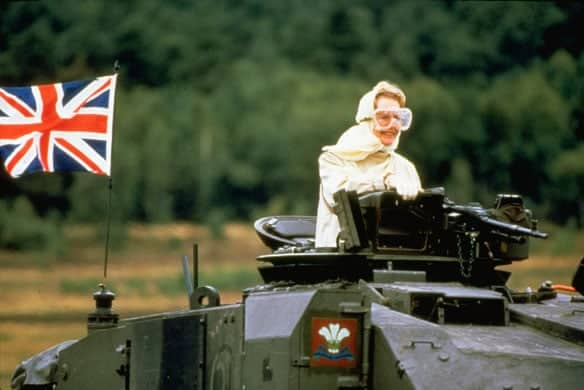
Eastern Front tank commander
Perhaps the real reason we have not seen an escalation is that the Russians feared a Truss-led spoiling attack from Estonia if they started any funny business in the south. It’s a story as old as time. An evil dictator with a massive army launches an invasion only to be defeated by a middle-aged lady in a heavy cavalry charge. I think there’s a Sabaton song just about that.
Wisely Putin held back the armies of Mordor.
Putin can only wish his chief diplomat was an equally accomplished tank commander. Instead, Sergey Lavrov’s expertise encompasses diplomacy alone.

Sergey Lavrov has never been photographed riding a tank. Lame.
In fact, Truss’ intersectional expertise stretches out into the sea. There is reason to believe she is also an expert reserve Admiral:
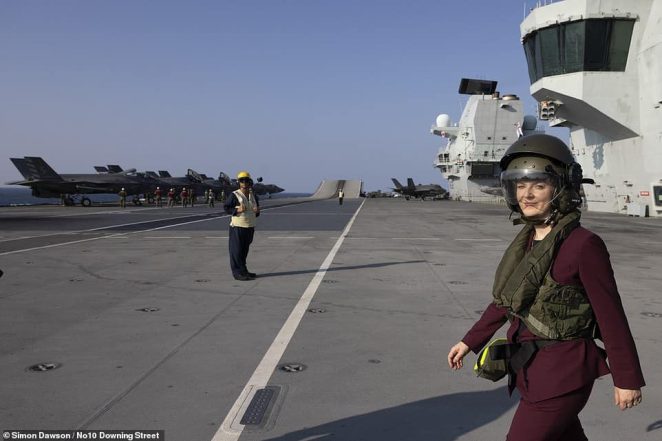
That should keep the Chinese deterred as well!

Putin Has Biden’s Attention, Now What?
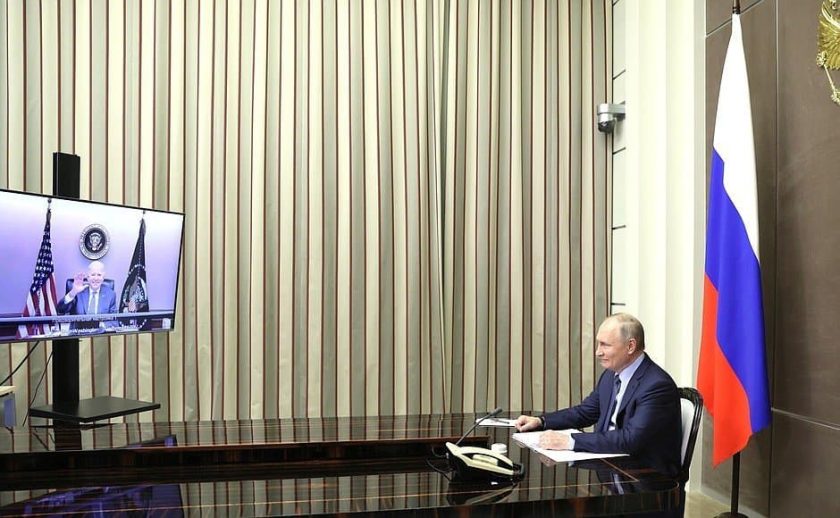
By Marko Marjanović | Anti-Empire | December 7, 2021
With the US raising alarm about a supposed Russian military buildup opposite of Ukraine, and the Russians denying anything out of the ordinary is taking place it is tempting to conclude that this is just more of the typical NATO scaremongering about Russia. Trouble is that I don’t believe that. On the contrary, I believe that something very serious is afoot.
The reason I think so isn’t that I have been listening to the Americans, but that I have been listening to the Russians. For years and years, the Russians have been complaining about the march of American & vassal missiles, training programs, weapon stockpiles, and units eastward. They have been complaining for so long that the picture of Russia as being all talk and never following up with real-world measures has become a meme among the more cynical Russia watchers.
Then, all of a sudden two things happened:
A.) Any and all talk of taking Donbass by force suddenly stopped in Ukraine. Instead, Kiev seems genuinely terrified it will be routed by the Russian military and is promising numerous Russian casualties (but tellingly not defeat) in a high-stakes attempt to deter the Russians.
B.) Biden initiated security talks with Vladimir Putin days after regime press revealed that something about the Russian military posture sent Washington into panic mode.
That tells me that the Russians finally did something that got Washington’s full attention. I don’t know what they did. Maybe it was the buildup opposite of Ukraine, maybe it was something else that we’re not being told about. Maybe it doesn’t even matter that much.
What does matter is that the Russian expectations of anything coming out of the initial Biden-Putin talk are nil. That means the Russian pressure — whatever it is — will continue.
The Russians aren’t going to be bought out by talks. They held talks with Biden in the Spring, and these were followed up by more provocations in the Summer. Now they want real, tangible appeasement. They have spelled out as much.
Trouble is, between the characteristic fecklessness and cowardice of the White House (whoever it is occupied by), and the vested Cold War interests I have no idea how they get that.
Any American president who works out a deal with the Russians and removes a missile or two will be denounced as “weak” by all the other institutions of the American Empire which stand to lose from peace, and which together are more powerful than a weak-willed presidency.
In reality, it is just the opposite, it is precisely the weakness of American presidents which makes a good deal with Russia impossible. What is better for the American and, say, the Romanian people, having some US missiles in the land of Dracula, or peace in Europe? Obviously the latter. But any president who concedes as much will face resistance and sabotage by the Pentagon, the CIA, NATO, the posturing Congress, the liberal-interventionist State Department, the think tanks, and the media.
Honestly, I have no idea how Putin, Shoigu, and Lavrov get the security guarantees that they want out of this one. If they succeed they are infinitely better strategists than I.
Let’s say it has indeed been a buildup opposite of Ukraine that forced the Americans to the table, now what?
There is no doubt that if Moscow is willing to sustain the cost in lives and in sanctions (and in Ukrainian bitterness and enmity) that the Russian military can take most of Ukraine.
The Russian military is larger than the Ukrainian one and has more firepower per pound, The two also share a long flat border — there are no convenient bottlenecks. The Russians can force the Ukrainian military to stretch out over a long frontline, pin it down in place, then apply defeat in detail to sectors with maneuver and firepower one by one.
Kiev is just 400 kilometers from the Russian border, and the Americans have already said — in so many words — that direct US military intervention almost certainly isn’t on the cards.
Trouble is this. If the DC Empire and the Ukraine were one organic being then guaranteeing the Russians a missile status quo in return for the Russians not overruning Kiev would be an absolute bargain. Problem is that, not only are the Empire and the Ukraine not a single entity, but the American Empire itself is a hydra with many heads, most of which stand only to gain from a Russian war in the Ukraine.
The White House is the only imperial institution that stands something to lose, namely prestige for having failed to deter the Russians. However, it also stands to lose by being painted as appeasing Moscow so it’s something of a moot point.
In all other respects, the Empire and its institutions stand only to gain. NATO can get a huge lease on life, Pentagon could be looking at the return of full US divisions to Europe, and the European vassals would be more regimented behind the US than ever before. As the cherry on top Russia would be left with the odd problem of policing and rebuilding Ukraine — while under a total Western economic embargo. Perhaps the biggest “win” of all would be the endless opportunity for moral condemnation of Russia over its treatment of “subjugated” Malaya Rus’.
So again, I think Russia can relatively easily occupy land in Ukraine, I just don’t know how it can trade pieces of that land in return for NATO guarantees to stop carrying out provocations that are in its self-interest.
The problem is that Russia enjoying peace and stability on its borders is in Russia’s interest but it is not in NATO’s interest. Why do you think that Russia was willing to strong-arm Donbass into abiding by the Minsk Agreement but the West never applied pressure on Kiev to do the same? Because ultimately fighting Russia to the last Ukrainian and seeing the Russian-Ukrainian enmity deepen is the stuff of dreams for NATO.
Putin to Biden: Finlandize Ukraine, or We Will
By Patrick J. Buchanan | December 7, 2021
Neocons and Republican hawks such as the late John McCain sought to bring Ukraine and two other ex-Soviet republics, Georgia and Moldova, into NATO. Putin, who served in the KGB in the late Soviet era and calls the breakup of the USSR the “greatest geopolitical catastrophe” of the 20th century, is now saying: Enough is enough.
Either the U.S. and NATO provide us with “legal guarantees” that Ukraine will never join NATO or become a base for weapons that can threaten Russia — or we will go in and guarantee it ourselves.
This is the message Russian President Vladimir Putin is sending, backed by the 100,000 troops Russia has amassed on Ukraine’s borders.
At the Kremlin last week, Putin drew his red line:
“The threat on our western borders is … rising, as we have said multiple times. … In our dialogue with the United States and its allies, we will insist on developing concrete agreements prohibiting any further eastward expansion of NATO and the placement there of weapons systems in the immediate vicinity of Russian territory.”
That comes close to an ultimatum. And NATO Secretary General Jens Stoltenberg backhanded the President of Russia for issuing it:
“It’s only Ukraine and 30 NATO allies that decide when Ukraine is ready to join NATO. … Russia has no veto, Russia has no say, and Russia has no right to establish a sphere of influence trying to control their neighbors.”
Yet, great powers have always established spheres of influence. Chinese President Xi Jinping claims virtually the entire South China Sea that is bordered by half a dozen nations. For 200 years, the United States has declared a Monroe Doctrine that puts our hemisphere off-limits to new colonizations.
Moreover, Putin wants to speak to the real decider of the question as to whether Ukraine joins NATO or receives weapons that can threaten Russia. And the decider is not Jens Stoltenberg but President Joe Biden.
In the missile crisis of 60 years ago, the U.S., with its “quarantine” of Cuba and strategic and tactical superiority in the Caribbean, forced Nikita Khrushchev to pull his intermediate-range ballistic missiles, which could reach Washington, off of Fidel Castro’s island.
If it did not do so, Moscow was led to understand, we would use our air and naval supremacy to destroy his missiles and send in the Marines to finish the job.
Accepting a counteroffer for the U.S. withdrawal of Jupiter missiles from Turkey, Khrushchev complied with President John F. Kennedy’s demand. Russia’s missiles came out. And Kennedy was seen as having won a Cold War victory.
Now it is we who are being told to comply with Russia’s demands in Ukraine, or Russia will go in to Ukraine and neutralize the threat itself.
The history?
When the Warsaw Pact collapsed and the USSR came apart three decades ago, Russia withdrew all of its military forces from Central and Eastern Europe. Moscow believed it had an agreed-upon understanding with the Americans.
Under the deal, the two Germanys would be reunited. Russian troops would be removed from East Germany, Poland, Czechoslovakia, Hungary, Bulgaria and Romania. And there would be no NATO expansion into Eastern Europe.
If America made that commitment, it was a promise broken. For, within 20 years, NATO had brought every Warsaw Pact nation into the alliance along with the former Soviet republics of Lithuania, Latvia and Estonia.
Neocons and Republican hawks such as the late John McCain sought to bring Ukraine and two other ex-Soviet republics, Georgia and Moldova, into NATO.
Putin, who served in the KGB in the late Soviet era and calls the breakup of the USSR the “greatest geopolitical catastrophe” of the 20th century, is now saying: Enough is enough.
Translation: “Thus far and no further! Ukraine is not going to be a member of NATO or a military ally and partner of the United States, nor a base for weapons that can strike Russia in minutes. For us, that crosses a red line. And if NATO proceeds with arming Ukraine for conflict with Russia, we reserve the right to act first. Finlandize Ukraine, or we will!”
The problem for Biden?
In Ukraine and in Georgia, as we saw in the 2008 war, Russia has the tactical and strategic superiority we had in 1962 in Cuba. Moreover, while Ukraine is vital to Russia, it has never been vital to us.
When President Franklin D. Roosevelt recognized Joseph Stalin’s USSR in 1933, Moscow was engaged in the forced collectivization of the farms of Ukraine, which had caused a famine and the deaths of millions. We Americans did nothing to stop it.
During the Cold War, America never insisted on the independence of Ukraine. Though we celebrated when the Baltic states and Ukraine broke free of Moscow, we never regarded their independence as vital interests for which America should be willing to go to war.
A U.S. war with Russia over Ukraine would be a disaster for all three nations. Nor could the U.S. indefinitely guarantee the independence of a country 5,000 miles away that shares not only a lengthy border with Mother Russia but also a history, language, religion, ethnicity and culture.
Forced to choose between accepting Russia’s demand that NATO stay out of Ukraine and Russia going in, the U.S. is not going to war.
Biden should tell Putin: The U.S. will not be issuing any NATO war guarantees to fight for Ukraine.
Russia reveals what Putin asked of Biden
RT | December 7, 2021
In a “frank and businesslike” conversation Russian President Vladimir Putin asked his US counterpart Joe Biden for guarantees that NATO won’t expand further east or deploy offensive weapons to countries like Ukraine.
Moscow is “seriously interested” in obtaining “reliable and firm legal guarantees” excluding NATO’s further expansion eastward and deployment of “offensive strike weapons systems in countries adjacent to Russia,” the Kremlin said in a readout of Tuesday’s call between the two leaders.
Putin’s proposal came in response to Biden’s “concerns” about Russian troops allegedly threatening Ukraine and threats of US and allied sanctions against Russia, a subject that arose during the two-hour call. The Russian leader responded that it was NATO “making dangerous attempts to conquer Ukrainian territory” and “building up its military potential at our borders.”
When asked about this, Biden’s national security adviser Jake Sullivan said that the US has made “no such commitments or concessions.”
Putin used specific examples to illustrate the “destructive” policy of Kiev, which he said was aimed at completely dismantling the Minsk agreements and the ‘Normandy format’ talks. He also expressed Moscow’s serious concerns about “provocative actions” by the government in Kiev against the residents of Donetsk and Lugansk, two breakaway regions in eastern Ukraine.
Last week, before the date of the meeting was announced, Deputy Foreign Minister Sergey Ryabkov said that the situation in Europe would be at the top of the agenda for the two leaders to discuss. The diplomat stressed that “contact is badly needed; we have multiplying problems. There is no progression on bilateral affairs, which are more and more spiraling into a phase of acute crisis.”
The talks come amid heightened tensions between Washington and Moscow over the situation on the Russian-Ukrainian border, which the White House has signaled as a key area on which bilateral negotiations are needed.
American and Ukrainian officials have repeatedly accused Russia of plotting to invade its neighbor in recent weeks. Earlier this month, US Secretary of State, Antony Blinken implored Moscow to de-escalate its purported aggressions against Kiev, or face “severe consequences.”
Russia has repeatedly denied allegations put forward by Western officials and outlets that it will launch an offensive against Ukraine. Kremlin press secretary Dmitry Peskov has blasted the accusations as groundless, dubbing them as “hysteria” whipped up in the Anglophone and Ukrainian media.
Meanwhile, Ukraine’s hopes to be admitted to NATO and the potential eastwards expansion of the US-led military bloc have been a point of contention for Moscow. Ahead of the video conference, the Russian president announced that he will request discussions with NATO to ensure the US-led military bloc does not edge closer to his country’s frontiers. Speaking last week, Putin said that he will “insist on guarantees being set out to exclude the possibility of NATO moving any further to the east, and deploying threatening weapons close to Russian territory.”
Foreign Minister Sergey Lavrov noted the day before that “significant units and armaments from NATO countries, including American and British, are being moved closer to our borders.”
The pair last met in the Swiss city of Geneva in June. The meeting was hailed as productive by the two heads of state, covering topics such as nuclear proliferation and managing the Covid-19 pandemic. However, the Kremlin said that it will take a long time for constructive engagement to return and the two sides have recently accused each other of escalating military tensions in Eastern Europe.
NATO’s Jens Stoltenberg needs to calm it down
By Daniel Larison | Responsible Statecraft | December 3, 2021
Twice in the last two weeks, NATO Secretary-General Jens Stoltenberg has made public comments that threaten to worsen already strained relations between Russia and the alliance.
Instead of calming things down, Stoltenberg has been carelessly ratcheting up tensions over nuclear weapons in Europe and the conflict in Ukraine. At exactly the moment when the U.S. and NATO need to be working to deescalate the situation with Russia over Ukraine, the top official in NATO has been throwing kerosene on the flames.
While he was urging the new German coalition government to continue hosting U.S. tactical nuclear weapons, Stoltenberg made the dangerous suggestion that the weapons could end up with NATO members to the east of Germany: “So, of course, Germany can, of course, decide whether there will be nuclear weapons in your country, but the alternative is that we easily end up with nuclear weapons in other countries in Europe, also to the east of Germany.” Raising the possibility of moving these weapons closer to Russia was bound to elicit a sharply negative reaction, and that is what happened.
Stoltenberg’s remarks prompted immediate outrage in Moscow, and it led the Belarusian leader Alexander Lukashenko to announce this week that Belarus would welcome Russian nuclear weapons to its territory in response to any NATO redeployment to the east. Stoltenberg’s warning may have been intended for Berlin, but it had its greatest and most destabilizing impact in Moscow and Minsk. At a time when the Russian government already perceives a growing threat coming from the West, talking about moving nuclear weapons into eastern Europe was a serious mistake.
It is worth noting that the continued presence of U.S. nuclear weapons in Europe serves no real purpose. As Global Zero’s Derek Johnson has pointed out, these weapons are a relic of the Cold War and they were originally deployed to be used against countries that are now members of NATO. In any event, the new German government still supports nuclear sharing, so the weapons stored in Germany won’t be going anywhere in the near future. Nonetheless, conjuring up the specter of American nuclear weapons moving closer to Russia was enough to further sour relations. Coming on the heels of the breakdown in NATO-Russian relations that began with the expulsion of Russian diplomats in October, this could only serve to deepen mistrust between Russia and the alliance.
Stoltenberg also repeated the standard NATO line that Russia has no part in decisions about alliance expansion: “Russia has no veto, Russia has no say, and Russia has no right to establish a sphere of influence trying to control their neighbors.” Since Russia has already demonstrated its ability to thwart at least one aspirant state’s ambitions to join the alliance, the Secretary-General’s platitudes seemed almost as if he were trying to dare Moscow into taking more aggressive action. The U.S. and NATO may not like it, and it may not be the way that we want things to be, but the fact is that Russia absolutely does have a veto in practice over which of its neighbors become members of an anti-Russian military alliance. We already know that the Russian government will exercise that veto. The Secretary-General’s saying that Russia has no say is practically an invitation to Putin to prove him wrong.
Whether NATO officials agree with the assessment or not, the Russian government views NATO as the principal military threat to their country. Given the Russian experience of suffering devastating attacks from the west several times over the last two hundred years, their leaders have naturally been wary of the eastward expansion of the alliance, and they have made it very clear that they consider further advances to be intolerable. NATO’s “open door” to Ukraine and Georgia may seem like so much boilerplate rhetoric to Western officials, but it needlessly antagonizes Russia while offering these countries false hope of alliance membership that will likely never materialize. Stoltenberg’s latest remarks will likely have the same effect of angering Russia while giving the Ukrainian government the mistaken impression that their future entry into the alliance is guaranteed. One could hardly ask for a message more likely to promote misunderstanding and miscalculation.
It is not a coincidence that heightened tensions between Russia and Ukraine have been preceded by Kyiv’s frequent agitation for a Membership Action Plan over the last year and the Biden administration’s endorsement of Ukraine and Georgia’s future alliance membership in recent months. The Biden administration’s professions of “ironclad” and “unwavering” commitment to Ukraine have similarly been as unhelpful as they are hard to believe. While these statements of support are meant to discourage Russia from taking aggressive actions, it is the close military relationship between Ukraine and Western governments that so alarms Russia and provokes the behavior that these statements are supposed to deter. The more that the U.S. and its allies emphasize their commitment to Ukraine, the more that Moscow is liable to perceive Ukraine’s cooperation with Western governments as a threat.
Stoltenberg’s statement that Russia “has no right to establish a sphere of influence” is true but also irrelevant to the issues at hand. No state has ever had a “right” to establish a sphere of influence, but many states, including the United States, have had them all the same. All states in theory have the right to conduct their foreign policy however they see fit, but if a country chooses to align itself with its neighbor’s major power rival then that neighbor is bound to view this choice as a potential threat to its own security. When that country then builds up a military relationship with that rival and its allies, that will seem to be an even greater threat. That is how the Russian government views the intensifying military cooperation between Ukraine and Western governments.
The way out of this deteriorating situation is to scale back the confrontational rhetoric, rescind the empty promises of future NATO membership, and recognize how U.S. and NATO actions have fed into Russian threat perceptions. Secretary-General Stoltenberg has chosen to go in the opposite direction. That will make it more difficult to defuse tensions with Russia.
Putin has called for “legal guarantees” that there will be no further eastward expansion of NATO, and this is a demand that the alliance could agree to without much difficulty. Closing the door to further NATO expansion would not resolve all problems with Russia, but it would remove a significant irritant from the relationship. It would also stop stringing the Ukrainian government along with a promise that was never going to be honored. Since NATO made that promise in Bucharest in 2008, it has been the cause of nothing but instability and trouble, and the alliance, the U.S., and all of Europe would be better off without it.
Putin Wants Formal Security Guarantees From the Empire, No to Ukraine as a NATO Missile Silo
Ceremony for presenting foreign ambassadors’ letters of credence
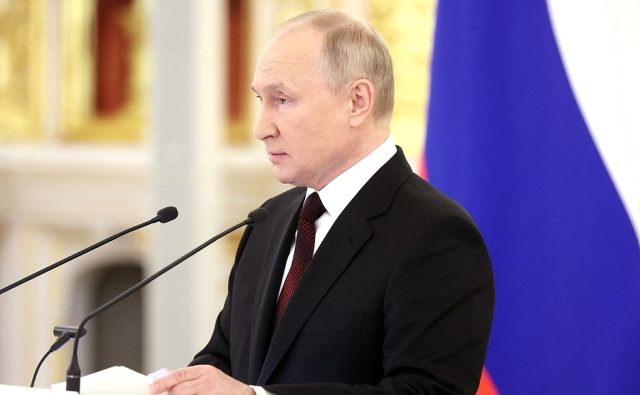
The Kremlin | December 1, 2021
… “[W]e express our concern not only over the fact that the international community is acting separately and cannot unite to address truly important problems, but also over how some of our partners are behaving towards our country, towards Russia, trying to restrain our development in every possible way, to exert sanctions pressure and, moreover, to escalate tensions near our borders.
By the way, the threat on our western border is really growing, and we have mentioned it many times. It is enough to see how close NATO military infrastructure has moved to Russia’s borders. This is more than serious for us.
In this situation, we are taking appropriate military-technical measures. But, I repeat, we are not threatening anyone and it is at the very least irresponsible to accuse us of this, given the real state of affairs. This would mean laying the blame at the wrong door, as the Russian saying goes.
In my speech at the Ministry of Foreign Affairs I already stressed that the priority facing Russian diplomacy at this juncture is to try to ensure that Russia is granted reliable and long-term security guarantees.
While engaging in dialogue with the United States and its allies, we will insist on the elaboration of concrete agreements that would rule out any further eastward expansion of NATO and the deployment of weapons systems posing a threat to us in close proximity to Russia’s territory. We suggest that substantive talks on this topic should be started.
I would like to note in particular that we need precisely legal, juridical guarantees,because our Western colleagues have failed to deliver on verbal commitments they made. Specifically, everyone is aware of the assurances they gave verbally that NATO would not expand to the east. But they did absolutely the opposite in reality. In effect, Russia’s legitimate security concerns were ignored and they continue to be ignored in the same manner even now.
We are not demanding any special terms for ourselves. We understand that any agreements must take into account the interests of both Russia and all other states in the Euro-Atlantic region. A calm and stable situation should be ensured for everyone and is needed by all without exception.
That said, I would like to stress that Russia is interested precisely in constructive collaboration and in equitable international cooperation, and this remains the central tenet of Russian foreign policy. I hope that you will convey this signal to the leaders of your states.” … Full address
Putin Takes 2 Doses in 2 Days, Fumbles the Story, and NOBODY Has Any Questions
By Edward Slavsquat | November 29, 2021
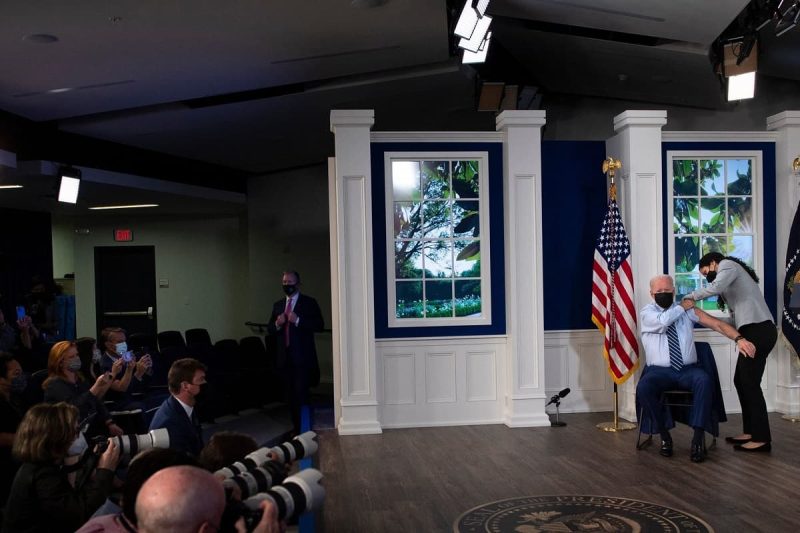
Your humble Moscow correspondent recently reported on Vladimir Putin’s mystifying tale about receiving an intranasal COVID vaccine as part of a clinical trial. As you might recall, Russia’s president claimed he inhaled some kind of virus-murdering powder via a syringe. But the drug he allegedly took is actually a liquid nasal spray. No powder was involved. We thought it was funny that Putin said something so insane and made jokes alluding to illicit drug usage.
It’s still funny; but after thinking more about it, and not just typing cocaine jokes, we came to the conclusion that this is a Real Story and if the lamestream media (including Russia’s completely castrated “opposition” press) weren’t such pathetic vax-peddling Big Pharma boot-lickers, it would probably be frontpage news everywhere. It would probably be called Powdergate and it would probably have its own Wikipedia page.
Please, allow us to explain our thought process. If you think we are overreacting, tell us in the Comments Section.
Hardcore double-dose makes Putin QUADRUPLE-VAXXED!
Putin’s nose-dose was allegedly administered just one day after he was injected with a Sputnik Light booster shot. The Russian prez was already fully vaxxed (he received his second dose in April, although at the time the Kremlin was mum on which vaccine was used), which means Putin has been given four doses of Sputnik in less than a year. FOUR! That’s a lot. Putin is almost as gigavaxxed as Vladimir Zhirinovsky, who claims he injected himself with six COVID serums.
Zhirinovsky is a bumbling lunatic—nobody would care if six COVID shots caused him to grow another arm. But Vladimir Putin is literally the president of the Russian Federation. He’s kind of a big deal! Why are Russian scientists using the most consequential person in Russia as a guinea pig? Even if you firmly believe Sputnik V is “safe and effective,” surely it is unwise to repeatedly inject your president with new doses of an experimental drug? It’s a very weird thing to do. Maybe this is part of Russia’s “hybrid warfare” doctrine?
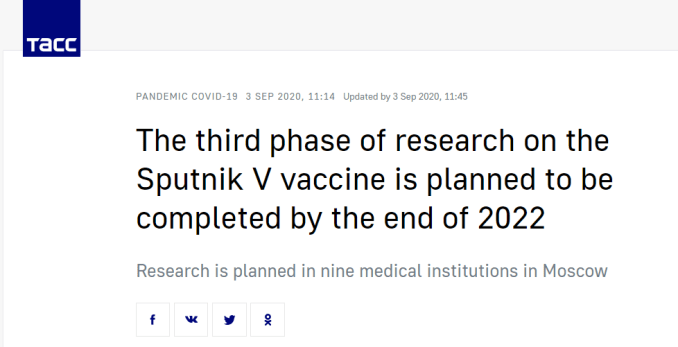
Please remember, despite RT.com trying to convince you otherwise: there is zero long-term safety data for Sputnik V (unless you count “six months” as long-term?). Expedited Phase III trials for normal, two-dose Sputnik V haven’t even finished yet. Think about what that means.
Putin can’t wait for the science to catch up
But here’s Vladimir Putin, with four doses of Sputnik now running through his veins. Do people understand the issue here?
Isn’t this a bit… irresponsible? There are many incendiary adjectives we could use to describe Putin’s purported vaccination status, actually.
Why would you even need a fourth dose? Does the booster shot suck that bad?
Sputnik Light is the first component of Sputnik V. The nasal spray is the second component. Typically, you’re supposed to wait 21 days (minimum) between reloading on Sputnik V.
Putin went on a serious vax binge, guzzling down two doses in two days! Someone take away his car keys.
Powdergate: revisited
Do people fully appreciate how hilarious Putin’s “powder” story really is? It was so bizarre and nonsensical that RBC—quite a serious, straight-laced Russian news outlet—suggested Putin had not even been given the nasal spray, but rather a VIP mystery powder administered in the “same way” as the liquid drug he was supposed to be testing.
“Putin received the vaccine in the form of a powder… so far this drug is not widely used… The President explained that the preparation in powder form is taken in the same way as a nasal spray,” RBC reported on November 24, after Putin said the drug was a powder, while emphasizing it had not been administered in a liquid form.
A few hours later, RBC reported the clarification from Kremlin spokesman Dmitry Peskov:
“The President meant that we are talking about a liquid. This is a nasal vaccine in which he took part in the trials,” said Peskov.
Can anyone make sense of this madness? How did Putin screw up the basic facts here so badly?
This is a Joe Biden-level brain malfunction. Which brings us to our next point…
Imagine if Joe Biden had been “corrected” after blabbering about magic vax powder
Thought experiment: replace Putin with Biden, Peskov with Psaki. This story would have been everywhere. It would have completely broken Twitter. The hashtags and memes alone would have been history-making.
95% of “indy media” would have basically imploded, shouting about how this was proof of a massive vax hoax. FactCheck.org would be working overtime telling everyone how racist they were for suggesting there was anything fishy about Biden getting a fourth vaccine dose and referring to it as a powder.
Guys, just think about it. Let’s be honest here.
Total impunity for the Kremlin vax clowns?
We’re not claiming anything, by the way! We’re just making observations. The problem is that almost nobody is making observations.
The Kremlin could probably announce Putin undergoes daily Sputnik intravenous therapy (Sputnik IV, get it? ha-ha), and every single media outlet on earth would nod and clap. Only an apostate would dare to question whether it made any sense at all.
The vax is sacred. You do not question the vax or anyone who takes it or promotes it. The vax is life. The vax is love.
Israel Shamir touched on this very weird phenomenon in an article from July:
The Mandatory Vaxx Regime brings new conspirators (like Alexei Navalny, the Russian Guaido presently in jail for swindling) and old school Kremlin propagandists into a rare (and suspicious) agreement. Now they all excrete New York mainstream media.
No one is willing to ask even the most basic questions. It’s a total orgy of non-stop lying in Russia right now (just like it is everywhere else), and not a single media outlet is willing to step up to the plate and say: “just one moment, does any of this make sense?”
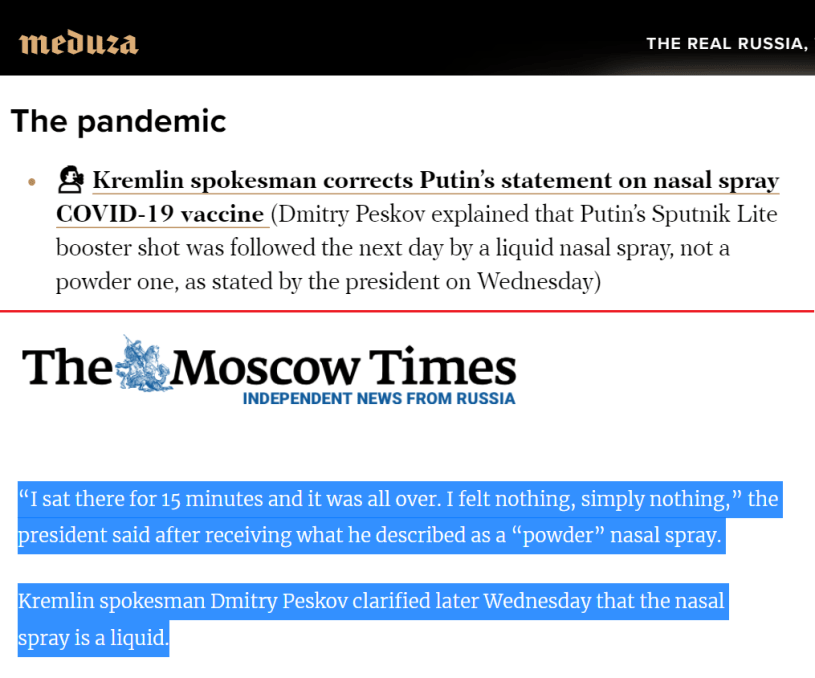
We can’t even rely on Russia’s so-called “Kremlin-hating, corruption fighting” western-funded “liberal” press. Meduza published a one-sentence bullet point about Powdergate, while the Moscow Times seemed entirely satisfied with Peskov’s non-explanation explanation. These people are truly pathetic. They are just horrible!
Shame! Shame! Shame!
So what’s the takeaway?
If you hope to survive the next few years—which will feature daily Powdergates, sometimes thousands of Powdergates, back to back, over the course of several hours—you will have to adopt a transcendental Zen-like state, like this monkey who has made peace with the world:
Arctic River Discharge Growing

By Paul Homewood | Not A Lot Of People Know That | November 30, 2021
AMHERST, Mass. — A civil and environmental engineering researcher at the University of Massachusetts Amherst has, for the first time, assimilated satellite information into on-site river measurements and hydrologic models to calculate the past 35 years of river discharge in the entire pan-Arctic region. The research reveals, with unprecedented accuracy, that the acceleration of water pouring into the Arctic Ocean could be three times higher than previously thought.
The publicly available study, published recently in Nature Communications, is the result of three years of intensive work by research assistant professor Dongmei Feng, the first and corresponding author on the paper. The unprecedented research assimilates 9.18 million river discharge estimates made from 155,710 orbital satellite images into hydrologic model simulations of 486,493 Arctic river reaches from 1984-2018. The project and the paper are called RADR (Remotely-sensed Arctic Discharge Reanalysis) and was funded by NASA and National Science Foundation programs for early career researchers.
https://www.eurekalert.org/multimedia/809497
The key thing about this study is not that river flows are greater than previously estimated, but that they have increased over the period of the study, 1984-2018:

https://www.nature.com/articles/s41467-021-27228-1
This is significant because it means the Arctic Ocean is gradually becoming fresher. Exactly the same phenomenon occurred during what was called The Great Salinity Anomaly, GSA, which began in the 1960s. As Dickson & Osterhus described in their study, One Hundred Years in the Norwegian Sea in 2007:

Though other factors were involved in the freshening of the Arctic Ocean, such as the NAO, the GSA marked a dramatic shift in the Arctic climate, putting an end to what is known as the Warming of the North between 1920 and 1960 and bringing a much colder era.
Part of the reason for this is the fact that freshwater freezes at higher temperatures than salty water, leading to an increase in sea ice. The GSA is also known to have slowed down the Atlantic meridional overturning circulation (AMOC).
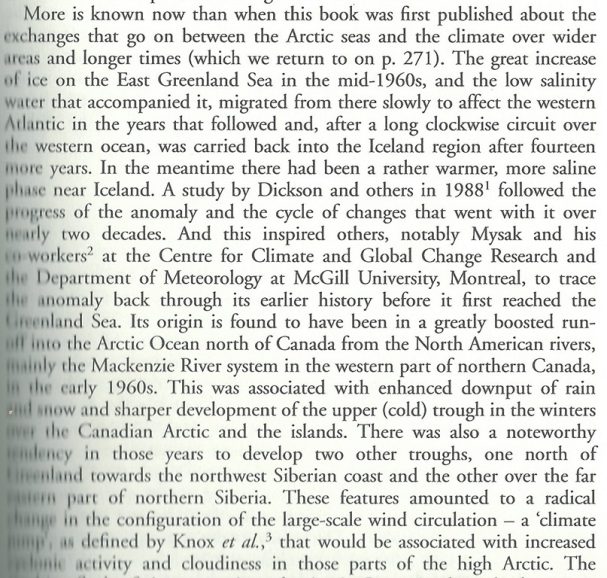
HH Lamb also wrote about it, particularly how the GSA was triggered by greater run off from rivers in Canada flowing into the Arctic:
HH Lamb: Climate, History & The Modern World
And a Russian study by Viktor Kuzin shows that 11% of the world’s river water flows into the Arctic, a considerable amount.


Source
A milder Arctic tends to be a wetter one, but a wetter climate leads to freshening of the ocean and a return to colder conditions. In other words, it is cyclical.
All of this reinforces the likelihood that the Arctic will become much colder, with sea ice expanding again in the not too distant future.
Featured Video

AIDS Inc. by Gary Null (2007)
or go to
Aletho News Archives – Video-Images
From the Archives
Fanatical Followers of the Covid Regime: A Jim Jones-Style Cult?
By Professor Roger Watson and Dr. Niall McCrae | The Daily Sceptic | November 15, 2021
As scholars at leading British universities over recent decades, we witnessed the replacement of critical thinking and debate by narrative: facts are discrimination and scientific method is imperialism; truth, instead, is derived from ‘progressive’ values. This educational trend may be a major contributory factor to the ease in which society has been inculcated to the Covid ‘new normal’ of masking, testing, and repeated doses of vaccines for a disease of similar risk to severe influenza.
One doesn’t need much critical reasoning to observe the flawed logic of some vaccination enthusiasts, such as people who respond to experiencing any side effects, however debilitating, by saying “at least I know it’s working”, or, after contracting the disease despite their promised inoculation (over 90% effective, according to initial drug company claims), “I’d have been worse off without the jab.” … continue
Blog Roll
 Aletho News
- Merck Virologists Admitted to Falsely Certifying Vaccine Efficacy
- Mandatory Folic Acid for every man, woman & child
- Pro-Palestine protesters arrested outside UK’s ruling Labour Conference in Liverpool
- Mauritius denies landing permit to flight from Israel, forcing cancellation: Tour operator
- Israeli finance minister calls for genocidal war on West Bank, annexation of south Lebanon
- 12 Things Your Psychiatrist Was Trained Not to Tell You
- From Unipolar Universalism to Multipolar Civilizational Distinctiveness
- RSF military group defects, joins Sudanese army: State media
- Ireland goalkeeper refuses to play ‘Israel’ as squad weighs boycott
- China pushes back against US on Cuba, Iran
- If Americans Knew
- Israel forces Gazans to live in constant peril – Daily Update
- Deconstructing Netanyahu’s pants-on-fire UN rant – Daily Update
- Trump betrayed voters with his campaign lies and prioritized a foreign country once he took office
- Netanyahu calls Israel’s war in Gaza ‘opposite of genocide’ in UN speech to near-empty hall
- Settler Kidnappings: Torture, Sexual Abuse and Terrorisation of Palestinian Abductees as Israel Deepens Annexation of West Bank
- Gaza winter nears as 162,000 tents become unusable, raising fears of humanitarian crisis
- Netanyahu says, “It’s the opposite of genocide”; UN says Gaza economy is world’s ‘most severe crisis on record’ – Daily Update
- Israel’s US-Backed Assault on Gaza Has Created the ‘World’s Most Severe Economic Crisis on Record’: UN
- ‘Protecting U.S. Citizens’… From Israel
- ‘This is where I live now, the back of a truck’: a day in the life of a grandmother in Gaza
- No Tricks Zone
- New Study: Earth And Venus Surface Warmth Largely Explained By Convection And Lapse Rate, Not CO2 Or Radiation
- 2025 Nature Paper Claiming Worsening Global Drought Gets RETRACTED …Heavily Flawed
- New Study: ‘Global Drought Shows No Detectable Recent Acceleration Under Climate Warming’
- Economic Masterminds: German Socialists Suggest Taxing Productivity Gains Stemming From Using AI
- The South China Sea Has Not Been Cooperating With The Climate Change Narrative
- Energy Crisis: Germany Enters Heating Season With Historically Low Gas Reserve Fill Levels
- New Study: The Antarctic Ice Sheet Gained Mass From 2020-2024 Due To Staggering Snow And Ice Accumulation
- Study: Ocean Heating Rates From Thousands Of Years Ago ‘Dwarf’ Modern Ocean Heating Rates
- Climate Extremists Target, Attack Large-Scale Power Grid Infrastructure In Germany!
- New Study: Antarctic Ice Melt Has Contributed Less Than 1 Centimeter To Sea Level Rise In The Last 30 Years

