The Illusion of Western News
By Finian Cunningham – Sputnik – 14.12.2015
Multi-million-dollar advertising money has long been suspected as an unspoken filter for Western news media coverage. If the news conflicts with advertising interests then it is simply dropped.
Western complicity in Yemen’s conflict is a case study. Add to that the celebrity sheen of Hollywood stars Jennifer Aniston and Nicole Kidman. What we then have is an illustration of how ugly realities of killing and war crimes are cosmetically air brushed from public awareness.
Let’s take three major Western media outlets — BBC, CNN, France 24. All are notable for their dearth of news coverage on the bloody conflict in Yemen. On any given day over the past nine months, these channels have rarely given any reports on the daily violence in the Arabian Peninsula country.
Yemen is heading into peace talks in Geneva this week, so there might follow some desultory reports on the said channels. But over the past nine months when the country was being pummeled in an appalling onslaught by foreign powers, the same channels gave negligible reportage.
It also turns out — not coincidentally — that major advertisers on these same news channels include Qatar Airways, Emirates Airlines and Etihad. The latter two advertisers feature screen celebrities Jennifer Aniston and Nicole Kidman, posing as satisfied customers of these Gulf state-owned companies.
Other prominent advertisers on BBC, CNN and France 24 are Turkish Airlines and Business Friendly Bahrain.
This advertising complex has, undoubtedly, a direct bearing on why the three mentioned Western news channels do not give any meaningful coverage of the disturbing events in Yemen.
Notwithstanding there is much that deserves telling about Yemen — if your purpose was journalism and public information.
The poorest country in the Arab region is being bombed by a coalition of states that include the US, Britain and Saudi Arabia, as well as a handful of other Persian Gulf oil-rich kingdoms. The latter include Qatar, the United Arab Emirates and Bahrain.
Thousands of Yemeni civilians — women and children — have been killed in air strikes by warplanes from this foreign military coalition, which claims to have intervened in Yemen to reinstall a regime headed up by a discredited president who was forced into exile in March this year by a popular uprising. The uprising was led by the Yemeni national army allied with guerrilla known as the Houthis.
Out of Yemen’s 24 million population, nearly half are in dire humanitarian conditions from lack of food, water and medicine, according to the United Nations. The suffering is aggravated by a sea and air blockade of Yemen by the Western-Arab military coalition.
Due to Western involvement in a humanitarian disaster unfolding in Yemen, one might think that Western media would be at least giving some coverage. Well, not if you watch BBC, CNN or France 24.
Moreover, there are reliable reports that ground forces fighting against the Houthi rebels and the Yemeni national army are comprised of Western mercenaries — in addition to troops from Saudi Arabia, Bahrain and the UAE.
According to Lebanon’s Al Manar news outlet, foreign mercenaries killed so far in Yemen include French, British and Australian, as well as Colombian and others from Latin America. They have been enlisted by the notorious US-based private security firm, Blackwater, also known as Academi.
The mercenaries are first sent to the United Arab Emirates for training before dispatch to Yemen, reported the New York Times.
What’s more — and this is explosive from a journalistic point of view — the mercenaries being sent to Yemen also comprise Islamist brigades aligned with the self-styled Islamic State (IS) terror network out of Syria. This has been confirmed by senior Yemeni army sources and several Arab region news outlets, such as Yemen’s Masirah TV and Lebanon’s Al Akhbar newspaper.
In Syria, the IS terror group and other jihadist brigades are suspected of being deployed covertly by a US-led coalition for the purpose of regime change against the government of President Bashar al-Assad. The US-led coalition includes Britain, France, Turkey, Saudi Arabia, Qatar and the UAE. Illicit oil smuggling is one stream of income to fund the terror brigades, as Russian intelligence has uncovered.
Washington and its allies claim to be bombing Syria to “degrade and defeat” IS, in the words of President Barack Obama. But, according to the Syrian and Russian militaries, the Western-led coalition is not serious in its stated aims. Indeed, on the contrary, evidence points to the US-led bombing of Syria as being inordinately ineffectual compared with the parallel Russian aerial campaign against the terror groups.
The conclusion is that the West’s “ineffectiveness” in defeating IS is a deliberate policy because IS is actually a covert regime-change asset in Syria.
That conclusion is consistent with how IS and other jihadist mercenaries are being relocated out of Syria to take up military assignment in Yemen in a configuration that sees Washington and London provide air power, along with warplanes from Saudi Arabia and other Arab states; and the same Arab states providing on-the-ground US-trained mercenaries in addition to their own regular armies.
The IS terror brigades are thus integrated with the Western-Arab coalition fighting in Yemen.
According to Brigadier General Ali Mayhoub, of the Syrian Arab Army, hundreds of jihadist mercenaries have been secretly flown out of Syria to Yemen on board civilian airliners belonging to Turkish Airlines, Emirates Airlines and Qatar Airways.
The IS-affiliated mercenaries were flown into Yemen’s southern port city of Aden at the end of October, about three weeks after Russian President Vladimir Putin ordered Russian fighter jets to begin their blistering anti-terror operations in Syria.
It seems more than a coincidence that major commercial companies belonging to Turkey, Qatar, the United Arab Emirates and Bahrain are lucrative sources of advertising revenue for the three Western news channels, BBC, CNN and France 24. Actresses Jennifer Aniston and Nicole Kidman leverage the advertising budget stakes by multiple millions of dollars.
The companies belong to countries — all or partially state-owned — that are involved in sponsoring military campaigns in Yemen and Syria. The more overt military intervention in Yemen has seen a catalogue of war crimes, including the bombing of civilian centres with cluster bombs, such as hospitals and schools.
Amnesty International last week documented “war crimes” carried out by the aerial bombing coalition attacking Yemen, comprising the US, Britain, Saudi Arabia and other Gulf Arab states.
Yet, scarcely any of these gross violations committed in Yemen by the Western-Arab coalition and their connections to terrorist groups in Syria are covered by the three major Western news channels, BBC, CNN and France 24.
Patently, the censorship is correlated with specific sources of commercial advertising income, which is over-riding the Western public interest in knowing what is really going on in Yemen and how their governments are involved in violations of international law, including state-sponsored terrorism.
Ironically, the same Western channels never stop blowing trumpets to their “consumers” of how courageous and ethical they are in “bringing you the stories”. Evidently, as far as Yemen is concerned, the “journalistic commitment” is determined not by truth and much more by advertising money flowing from states complicit in war crimes.
Western news media’s self-declarations of “independence” and “integrity” are like the celebrity adverts that sponsor them. Cosmetic and illusory.
Blocking Democracy as Syria’s Solution
By Robert Parry | Consortium News | December 12, 2015
The solution to the crisis in Syria could be democracy – letting the people of Syria decide who they want as their leaders – but it is the Obama administration and its regional Sunni “allies,” including U.S.-armed militants and jihadists, that don’t want to risk a democratic solution because it might not achieve the long-held goal of “regime change.”
Some Syrian opposition forces, which were brought together under the auspices of the Saudi monarchy in Riyadh this past week, didn’t even want the word “democracy” included in their joint statement. The New York Times reported on Friday, “Islamist delegates objected to using the word ‘democracy’ in the final statement, so the term ‘democratic mechanism’ was used instead, according to a member of one such group who attended the meeting.”
Even that was too much for Ahrar al-Sham, one of the principal jihadist groups fighting side-by-side with Al Qaeda’s Nusra Front, the two key elements inside the Saudi-created Army of Conquest, which uses sophisticated U.S.-supplied TOW missiles to kill Syrian government troops.
Ahrar al-Sham announced its withdrawal from the Riyadh conference because the meeting didn’t “confirm the Muslim identity of our people.” Syrian President Bashar al-Assad has sought to maintain a secular government that protects the rights of Christians, Alawites, Shiites and other religious minorities, but Sunni militants have been fighting to overthrow him since 2011.
Despite Ahrar al-Sham’s rejection of the Saudi-organized conference, all the opposition participants, including one from Ahrar al-Sham who apparently wasn’t aware of his group’s announcement, signed the agreement, the Times reported.
“All parties signed a final statement that called for maintaining the unity of Syria and building a civil, representative government that would take charge after a transitional period, at the start of which Mr. Assad and his associates would step down,” wrote Times’ correspondent Ben Hubbard.
But the prospects of Assad and his government just agreeing to cede power to the opposition remains highly unlikely. An obvious alternative – favored by Assad and Russian President Vladimir Putin – is to achieve a ceasefire and then have internationally supervised elections in which the Syrian people could choose their own leaders.
Although President Barack Obama insists Assad is hated by most Syrians – and if that’s true, he would presumably lose any fair election – the U.S. position is to bar Assad from the ballot, thus ensuring “regime change” in Syria, a long-held goal of Official Washington’s neoconservatives.
In other words, to fulfill the neocons’ dream of Syrian “regime change,” the Obama administration is continuing the bloody Syrian conflict which has killed a quarter million people, has created an opening for Islamic State and Al Qaeda terrorists, and has driven millions of refugees into and through nearby countries, now destabilizing Europe and feeding xenophobia in the United States.
For his part, Assad called participants in the Saudi conference “terrorists” and rejected the idea of negotiating with them. “They want the Syrian government to negotiate with the terrorists, something I don’t think anyone would accept in any country,” Assad told Spanish journalists, as he repeated his position that many of the terrorists were backed by foreign governments and that he would only “deal with the real, patriotic national opposition.”
Kinks in the Process
Secretary of State John Kerry told reporters on Friday that he was in contact with senior Saudi officials and noted, “there are some questions and obviously a couple of – in our judgment – kinks to be worked out” though expressing confidence that the problems could be resolved.
A key problem appears to be that the Obama administration has so demonized Assad and so bought into the neocon goal of “regime change” that Obama doesn’t feel that he can back down on his “Assad must go!” mantra. Yet, to force Assad out and bar him from running in an election means escalating the war by either further arming the Sunni jihadists or mounting a larger-scale invasion of Syria with the U.S. military confronting Syrian and now Russian forces to establish what is euphemistically called “a safe zone” inside Syria. A related “no-fly zone” would require destroying Syrian air defenses, now supplied by the Russians.
Obama has largely followed the first course of action, allowing Saudi Arabia, Qatar, Turkey and other Sunni “allies” to funnel U.S. weapons to jihadists, including Ahrar al-Sham which fights alongside Al Qaeda’s Nusra Front as the two seek to transform Syria into a Islamic fundamentalist state, a goal shared by Al Qaeda’s spin-off (and now rival), the Islamic State.
Retired U.S. Army Lieutenant General Michael Flynn, the former head of the Defense Intelligence Agency, has termed Obama’s choice of aiding the jihadists a “willful decision,” even in the face of DIA warnings about the likely rise of the Islamic State and other extremists.
In August 2012, DIA described the danger in a classified report, which noted that “The salafist, the Muslim Brotherhood, and AQI [Al Qaeda in Iraq, later ISI or ISIS and then the Islamic State] are the major forces driving the insurgency in Syria.” The report also said that “If the situation unravels there is the possibility of establishing a declared or undeclared salafist principality in eastern Syria” and that “ISI could also declare an Islamic State through its union with other terrorist organizations in Iraq and Syria.”
Despite these risks, Obama continued to insist that “Assad must go!” and let his administration whip up a propaganda campaign around claims that Assad’s forces launched a sarin gas attack outside Damascus on Aug. 21, 2013. Though many of the U.S. claims about that attack have since been discredited – and later evidence implicated radical jihadists (possibly collaborating with Turkish intelligence) trying to trick the U.S. military into intervening on their side – the Obama administration did not retract or clarify its initial claims.
By demonizing Assad – much like the demonization of Russian President Putin – Obama may feel that he is deploying “soft power” propaganda to put foreign adversaries on the defensive while also solidifying his political support inside hawkish U.S. opinion circles, but false narratives can take on a life of their own and make rational settlements difficult if not impossible.
Now, even though the Syrian crisis has become a tsunami threatening to engulf Europe with a refugee crisis and the United States with anti-Muslim hysteria, Obama can’t accept the most obvious solution: compel all reasonable sides to accept a ceasefire and hold an internationally supervised election in which anyone who wants to lead the country can stand before the voters.
If Obama is right about the widespread hatred of Assad, then there should be nothing to worry about. The Syrian people will dictate “regime change” through the ballot box.
Democracy – supposedly one of the U.S. government’s goals for Middle East countries – can be the answer to the problem. However, since democracy can be an unpredictable process, it might not guarantee “regime change” which apparently makes democracy an unsuitable solution for Syria.
Investigative reporter Robert Parry broke many of the Iran-Contra stories for The Associated Press and Newsweek in the 1980s. You can buy his latest book, America’s Stolen Narrative, either in print here or as an e-book (from Amazon and barnesandnoble.com).
The Insidious Relationship between Washington and ISIS: The Evidence
By Prof. Tim Anderson | Global Research | September 3, 2015
Reports that US and British aircraft carrying arms to ISIS have been shot down by Iraqi forces have been met with shock and denial in western countries. Few in the Middle East doubt that Washington is playing a ‘double game’ with its proxy armies in Syria, but some key myths remain important among the significantly more ignorant western audiences.
A central myth is that Washington now arms ‘moderate Syrian rebels’, to both overthrow the Syrian Government and supposedly defeat the ‘extremist rebels’. This claim became more important in 2014, when the rationale of US aggression against Syria shifted from ‘humanitarian intervention’ to a renewal of Bush’s ‘war on terror’.
A distinct controversy is whether the al Qaeda styled groups (especially Jabhat al Nusra and ISIS) have been generated as a sort of organic reaction to the repeated US interventions, or whether they are actually paid agents of Washington.
Certainly, prominent ISIS leaders were held in US prisons. ISIS leader, Ibrahim al-Badri (aka Abu Bakr al-Baghdadi) is said to have been held for between one and two years at Camp Bucca in Iraq. In 2006, as al-Baghdadi and others were released, the Bush administration announced its plan for a ‘New Middle East’, a plan which would employ sectarian violence as part of a process of ‘creative destruction’ in the region.
According to Seymour Hersh’s 2007 article, ‘The Redirection’, the US would make use of ‘moderate Sunni states’, not least the Saudis, to ‘contain’ the Shia gains in Iraq brought about by the 2003 US invasion. These ‘moderate Sunni’ forces would carry out clandestine operations to weaken Iran and Hezbollah, key enemies of Israel. This brought the Saudis and Israel closer, as both fear Iran.
While there have been claims that the ISIS ‘caliph’ al-Baghdadi is a CIA or Mossad trained agent, these have not yet been well backed up. There are certainly grounds for suspicion, but independent evidence is important, in the context of a supposed US ‘war’ against ISIS . So what is the broader evidence on Washington’s covert links with ISIS?
Not least are the admissions by senior US officials that key allies support the extremist group. In September 2014 General Martin Dempsey, head of the US military, told a Congressional hearing ‘I know major Arab allies who fund [ ISIS ]‘. Senator Lindsey Graham, of Armed Services Committee, responded with a justification, ‘They fund them because the Free Syrian Army couldn’t fight [Syrian President] Assad, they were trying to beat Assad’.
The next month, US Vice President Joe Biden went a step further, explaining that Turkey, Qatar, the UAE and Saudi Arabia ‘were so determined to take down Assad … they poured hundreds of millions of dollars and tens, thousands of tons of weapons into anyone who would fight against Assad … [including] al Nusra and al Qaeda and extremist elements of jihadis coming from other parts of the world … [and then] this outfit called ISIL’. Biden’s admissions sought to exempt the US from this operation, as though Washington were innocent of sustained operations carried out by its key allies. That is simply not credible.
Washington’s relationship with the Saudis, as a divisive sectarian force in the region, in particular against Arab nationalism, goes back to the 1950s, when Winston Churchill introduced the Saudi King to President Eisenhower. At that time Washington wanted to set up the Saudi King as a rival to President Nasser of Egypt. More recently, British General Jonathan Shaw has acknowledged the contribution of Saudi Arabia’s extremist ideology: ‘This is a time bomb that, under the guise of education. Wahhabi Salafism is igniting under the world really. And it is funded by Saudi and Qatari money’, Shaw said.
Other evidence undermines western attempts to maintain a distinction between the ‘moderate rebels’, now openly armed and trained by the US, and the extremist groups Jabhat al Nusra and ISIS. While there has indeed been some rivalry (emphasised by the London-based, Muslim Brotherhood-aligned, Syrian Observatory of Human Rights), the absence of real ideological difference is best shown by the cooperation and mergers of groups.
As ISIS came from Iraq in 2013, its Syrian bases have generally remained in the far eastern part of Syria. However Jabhat al Nusra (the official al Qaeda branch in Syria, from which ISIS split) has collaborated with Syrian Islamist groups in western Syria for several years. The genocidal slogan of the Syrian Islamists, ‘Christians to Beirut and Alawis to the Grave’, reported many times in 2011 from the Farouk Brigade, sat well with the al Qaeda groups. Farouk (once the largest ‘Free Syrian Army’ group) indeed killed and ethnically cleansed many Christians and Alawis.
Long term cooperation between these ‘moderate rebels’ and the foreign-led Jabhat al-Nusra has been seen around Daraa in the south, in Homs-Idlib, along the Turkish border and in and around Aleppo. The words Jabhat al Nusra actually mean ‘support front’, that is, support for the Syrian Islamists. Back in December 2012, as Jabhat al Nusra was banned in various countries, 29 of these groups reciprocated the solidarity in their declaration: ‘We are all Jabhat al-Nusra’.
After the collapse of the ‘Free Syrian Army’ groups, cooperation between al Nusra and the newer US and Saudi backed groups (Dawud, the Islamic Front, the Syrian Revolutionary Front and Harakat Hazm) helped draw attention to Israel’s support for al Nusra, around the occupied Golan Heights. Since 2013 there have been many reports of ‘rebel’ fighters, including those from al Nusra, being treated in Israeli hospitals. Prime Minister Netanyahu even publicised his visit to wounded ‘rebels’ in early 2014. That led to a public ‘thank you’ from a Turkey-based ‘rebel’ leader, Mohammed Badie (February 2014).
The UN peacekeeping force based in the occupied Golan has reported its observations of Israel’s Defence Forces ‘interacting with’ al Nusra fighters at the border. At the same time, Israeli arms have been found with the extremist groups, in both Syria and Iraq. In November 2014 members of the Druze minority in the Golan protested against Israel’s hospital support for al Nusra and ISIS fighters. This in turn led to questions by the Israeli media, as to whether ‘ Israel does, in fact, hospitalize members of al-Nusra and Daesh [ISIS]‘. A military spokesman’s reply was hardly a denial: ‘In the past two years the Israel Defence Forces have been engaged in humanitarian, life-saving aid to wounded Syrians, irrespective of their identity.’
The artificial distinction between ‘rebel’ and ‘extremist’ groups is mocked by multiple reports of large scale defections and transfer of weapons. In July 2014 one thousand armed men in the Dawud Brigade defected to ISIS in Raqqa. In November defections to Jabhat al Nusra from the Syrian Revolutionary Front were reported. In December, Adib Al-Shishakli, representative at the Gulf Cooperation Council of the exile ‘ Syrian National Coalition’, said ‘opposition fighters’ were ‘increasingly joining’ ISIS ‘for financial reasons’. In that same month, ‘rebels’ in the Israel-backed Golan area were reported as defecting to ISIS, which had by this time began to establish a presence in Syria’s far south. Then, in early 2015, three thousand ‘moderate rebels’ from the US-backed ‘Harakat Hazzm’ collapsed into Jabhat al Nusra, taking a large stock of US arms including anti-tank weapons with them.
ISIS already had US weapons by other means, in both Iraq and Syria , as reported in July, September and October 2014. At that time a ‘non aggression pact’ was reported in the southern area of Hajar al-Aswad between ‘moderate rebels’ and ISIS, as both recognised a common enemy in Syria: ‘the Nussayri regime’, a sectarian way of referring to supposedly apostate Muslims. Some reported ISIS had bought weapons from the ‘rebels’.
In December 2014 there were western media reports of the US covert supply of heavy weapons to ‘Syrian rebels’ from Libya, and of Jabhat al-Nusra getting anti-tank weapons which had been supplied to Harakat Hazm. Video posted by al-Nusra showed these weapons being used to take over the Syrian military bases, Wadi Deif and Hamidiyeh, in Idlib province.
With ‘major Arab allies’ backing ISIS and substantial collaboration between US-armed ‘moderate rebels’ and ISIS, it is not such a logical stretch to suppose that the US and ‘coalition’ flights to ISIS areas (supposedly to ‘degrade’ the extremists) might have become covert supply lines. That is precisely what senior Iraqi sources began saying, in late 2014 and early 2015.
For example, as reported by both Iraqi and Iranian media, Iraqi MP Majid al-Ghraoui said in January that ‘an American aircraft dropped a load of weapons and equipment to the ISIS group militants at the area of al-Dour in the province of Salahuddin’. Photos were published of ISIS retrieving the weapons. The US admitted the seizure but said this was a ‘mistake’. In February Iraqi MP Hakem al-Zameli said the Iraqi army had shot down two British planes which were carrying weapons to ISIS in al-Anbar province. Again, photos were published of the wrecked planes. ‘We have discovered weapons made in the US , European countries and Israel from the areas liberated from ISIL’s control in Al-Baqdadi region’, al-Zameli said.
The Al-Ahad news website quoted Head of Al-Anbar Provincial Council Khalaf Tarmouz saying that a US plane supplied the ISIL terrorist organization with arms and ammunition in Salahuddin province. Also in February an Iraqi militia called Al-Hashad Al-Shabi said they had shot down a US Army helicopter carrying weapons for the ISIL in the western parts of Al-Baqdadi region in Al-Anbar province. Again, photos were published. After that, Iraqi counter-terrorism forces were reported as having arrested ‘four foreigners who were employed as military advisors to the ISIL fighters’, three of whom were American and Israeli. So far the western media has avoided these stories altogether; they are very damaging to the broader western narrative.
In Libya, a key US collaborator in the overthrow of the Gaddafi government has announced himself the newly declared head of the ‘Islamic State’ in North Africa. Abdel Hakim Belhaj was held in US prisons for several years, then ‘rendered’ to Gaddafi’s Libya, where he was wanted for terrorist acts. As former head of the al-Qaeda-linked Libyan Islamic Fighting Group, then the Tripoli-based ‘Libyan Dawn’ group, Belhaj has been defended by Washington and praised by US Congressmen John McCain and Lindsey Graham.
Some image softening of the al Qaeda groups is underway. Jabhat al-Nusra is reported to be considering cutting ties to al Qaeda, to help sponsor Qatar boost their funding. Washington’s Foreign Affairs magazine even published a survey claiming that ISIS fighters were ‘surprisingly supportive of democracy’. After all the well published massacres that lacks credibility.
The Syrian Army is gradually reclaiming Aleppo, despite the hostile supply lines from Turkey, and southern Syria, in face of support for the sectarian groups from Jordan and Israel. The border with Lebanon is largely under Syrian Army and Hezbollah control. In the east, the Syrian Army and its local allies control most of Hasaka and Deir e-Zour, with a final campaign against Raqqa yet to come. The NATO-GCC attempt to overthrow the Syrian Government has failed.
Yet violent destabilisation persists. Evidence of the covert relationship between Washington and ISIS is substantial and helps explain what Syria’s Deputy Foreign Minister Fayssal Mikdad calls Washington’s ‘cosmetic war’ on ISIS. The extremist group is a foothold Washington keeps in the region, weakening both Syria and Iraq . Their ‘war’ on ISIS is ineffective. Studies by Jane’s Terrorism and Insurgent database show that ISIS attacks and killings in Iraq increased strongly after US air attacks began. The main on the ground fighting has been carried out by the Syrian Army and, more recently, the Iraqi armed forces with Iranian backing.
All this has been reported perversely in the western media. The same channels that celebrate the ISIS killing of Syrian soldiers also claim the Syrian Army is ‘not fighting ISIS’. This alleged ‘unwillingness’ was part of the justification for US bombing inside Syria. While it is certainly the case that Syrian priorities have remained in the heavily populated west, local media reports make it clear that, since at least the beginning of 2014, the Syrian Arab Army has been the major force engaged with ISIS in Hasaka, Raqqa and Deir eZour. A March 2015 Reuters report does concede that the Syrian Army recently killed two ISIS commanders (including Deeb Hedjian al-Otaibi) along with 24 fighters, at Hamadi Omar.
Closer cooperation between Iran, Iraq, Syria and Lebanon’s Hezbollah is anathema to Israel, the Saudis and Washington, yet it is happening. This is not a sectarian divide but rather based on some clear mutual interests, not least putting an end to sectarian (takfiri) terrorism.
It was only logical that, in the Iraqi military’s recent offensive on ISIS-held Tikrit, the Iranian military emerged as Iraq’s main partner. Washington has been sidelined, causing consternation in the US media. General Qasem Suleimani, head of Iran’s Quds Force is a leading player in the Tikrit operation. A decade after Washington’s ‘creative destruction’ plans, designed to reduce Iranian influence in Iraq, an article in Foreign Policy magazine complains that Iran’s influence is ‘at its highest point in almost four centuries’.
——
Select references
Mahdi Darius Nazemroaya (2006) Plans for Redrawing the Middle East: The Project for a ‘New Middle East’
Seymour Hersh (2007) The Redirection
http://www.newyorker.com/magazine/2007/03/05/the-redirection
Al Akhbar (2011) Syria: What Kind of Revolution?
http://english.al-akhbar.com/node/540
The New Yorker (2013) Syrian Opposition Groups Stop Pretending
http://www.newyorker.com/news/news-desk/syrian-opposition-groups-stop-pretending
RT (2014) Anyone but US! Biden blames allies for ISIS rise
https://www.youtube.com/watch?v=11l8nLZNPSY
Iraqi News (2015) American aircraft dropped weapons to ISIS, says MP
http://www.iraqinews.com/iraq-war/american-aircraft-airdropped-weapons-to-isis-says-mp/
Washington Post (2015) Syrian rebel group that got U.S. aid dissolves
David Kenner (2015) For God and Country, and Iran, Foreign Policy
http://foreignpolicy.com/2015/03/05/for-god-and-country-and-iran/
Reuters (2015) Syrian air strike kills two Islamic State commanders
http://www.reuters.com/article/2015/03/07/us-mideast-crisis-syria-islamicstate-idUSKBN0M30F720150307
Copyright © Prof. Tim Anderson, Global Research, 2015
Ceasefire in Yemen to take effect on December 14: Houthis
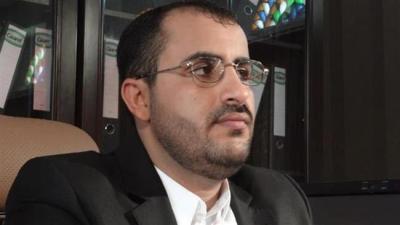
Muhammad Abdul Salam, Yemen’s Houthi Ansarullah movement spokesman
Press TV – December 12, 2015
Yemen’s Houthi Ansarullah movement says a ceasefire is to take effect in the country on December 14, ahead of the UN-brokered peace talks.
“Based on what has been agreed upon, there will be a halt to the aggression on the 14th of this month,” Houthi spokesman Mohammed Abdul Salam said on Saturday, referring to the deadly Saudi campaign against Yemen.
The Ansarullah official, who was briefing journalists in the capital, Sana’a, said the Houthis and their allies are determined to attend the December 15 negotiations in Switzerland to press for the demands of the Yemeni nation in talks with representatives of the fugitive former president of Yemen, Abd Rabbuh Mansour Hadi, who is a staunch ally of the regime in Riyadh.
UN Special Envoy for Yemen Ismail Ould Cheikh Ahmed said on December 7 that both the Houthis and the supporters of Hadi have agreed to attend the talks in Switzerland in a bid to end the Saudi-imposed war.
Sources in Hadi’s office have confirmed that Riyadh would halt the deadly airstrikes against Yemen before the opening of the UN talks.
On March 26, the Saudi military launched its campaign in an attempt to undermine the Houthis and bring Hadi back to power. More than 7,500 people have been killed and over 14,000 others injured ever since.
100,000 foreign troops incl. Americans to be deployed in Iraq, MP claims
RT | December 10, 2015
The US is to send some 10,000 troops to Iraq to provide support for a 90,000-strong force from the Gulf states, a leading Iraqi opposition MP has warned. The politician said the plan was announced to the Iraqi government during a visit by US Senator John McCain.
During a meeting in Baghdad on November 27, McCain told Prime Minister Haider Abadi and a number of senior Iraqi cabinet and military officials that the decision was ‘non-negotiable’, claimed Hanan Fatlawi, the head of the opposition Irada Movement.
“A hundred thousand foreign troops, including 90,000 from Saudi Arabia, the UAE, Qatar and Jordan, and 10,000 troops from America will be deployed in western regions of Iraq,” she wrote on her Facebook page.
She added that the Iraqi prime minister protested the plan, but was told that “the decision has already been taken.”
McCain and fellow hawk Senator Lindsey Graham have both been calling for a tripling in the current number of US troops deployed in Iraq to 10,000, and also advocate sending an equal number of troops to Syria to fight against the terrorist group Islamic State (IS, formerly ISIS/ISIL) and the government of Syrian President Bashar Assad. The Americans would prop up a 90,000-strong international ground force provided by Sunni Arab countries like Egypt, Turkey and Saudi Arabia.
“The region is ready to fight. The region hates ISIL – they are coming for Sunni Arab nations. Turkey hates ISIL. The entire region wants Assad gone. So there is an opportunity here with some American leadership to do two things: to hit ISIL before we get hit at home and to push Assad out,” Graham argued during the joint visit to Baghdad in November.
“Saudi Arabia, Egypt, Turkey – they have regional armies and they would go into the fight if we put [the removal of] Assad on the table. Most of the fight will be done by the region. They will pay for this war,” he added.
The US currently has about 3,600 troops in Iraq, including 100 special operations troops deployed last month to take part in combat missions involving hostage rescue and the assassination of IS leaders. The White House is reluctant to commit a large ground force, citing the cost in human lives and money and the possible political ramifications of what will be portrayed by America’s opponents as yet another Western invasion of the Arab world.
The McCain-Graham plan also poses the risk of direct confrontation between the proposed coalition force and Russia and Iraq, which are both militarily assisting the Assad government and may not stay out of the fight – something which the hawkish duo have not factored into their plan.
This is especially true after Turkey’s downing of a Russian bomber plane on the Turkish-Syrian border, which Moscow considered a stab in the back and which sent relations with Ankara to a low not seen for decades.
Baghdad has its own concerns about a Turkish presence on its territory after Ankara sent troops into western Iraq and refused to withdraw them, despite Iraqi protests. Ankara claimed the incursion was made under a 2014 invitation from Iraqi Prime Minister Abadi.
‘Blackwater troops replacing Emirati forces in Yemen’
Press TV – December 10, 2015
A new report says mercenaries and military advisers from the infamous US security firm, formerly known as Blackwater, are replacing UAE troops in the Saudi war in Yemen.
The Beirut-based al-Akhbar newspaper said on Thursday UAE forces are being gradually replaced by recruits from the US-based private military contractor, which now goes by the name, Acamedi.
The move came after the UAE evacuated some of its military sites in Yemen following its failures in several operations, the Lebanese daily added.
According to al-Akhbar, UAE’s move to involve the private military contractor in the Yemen conflict has raised objections among some members of the Saudi-led coalition.
On Wednesday, Yemen’s Arabic-language al-Masirah news website said the commander-in-chief of Blackwater mercenaries in the country was killed in the al-Omari district of Ta’izz Province.
Some Australian, British and French advisers and commanders, plus half a dozen Colombian soldiers, were reportedly among the dead. The mercenaries are part of the Emirati forces that help Saudi Arabia in its war against the impoverished nation.
Blackwater has had to change its name several times due to its ill fame around the world. The company which went by the alias Xe Services before its current name is one of the most notorious private security firms in the world for killing scores of civilians in Iraq, Afghanistan, and Yemen.
Yemen has been under military attack by Saudi Arabia since March 26. The Saudi strikes were launched to undermine Yemen’s Ansarullah movement and bring fugitive former president Abd Rabbuh Mansour Hadi, a staunch ally of Riyadh, back to power.
Saudi aggression on Yemen strengthening terrorist groups: Ansarullah
Press TV – December 6, 2015
Saudi Arabia’s aggression against Yemen is strengthening terrorist groups such as the Daesh Takfiri militants, says Yemeni Ansarullah Houthi movement.
According to a statement released by the movement on Saturday, Riyadh and its supporters are also responsible for the recent execution of 25 Ansarullah fighters, recently carried out by Takfiri terrorists of Daesh in southwestern Yemen.
Saudi Arabia and its allies in Yemen have taken measures to sabotage attempts to release the Houthi fighters before their grisly executions, the statement further read.
The terrorist group released a video on Friday, showing the brutal execution of the fighters in different ways.
Houthi fighters, along with allied army units, are fighting the Takfiris and resisting against the unabated Saudi aggression against Yemen, which began on March 26 in a bid to undermine the Houthi Ansarullah movement and restore power to fugitive former President Abd Rabbuh Mansour Hadi, a staunch ally of Riyadh.
Exploiting the chaos in Yemen, Daesh, which is mainly operating in Syria and Iraq, has been able to infiltrate the country.
Meanwhile, Yemeni forces carried out a retaliatory attack against a Saudi warship in waters close to the southwestern province of Ta’izz. The ship was tasked with carrying out multiple attacks against residential areas in the province.
The ships’ destruction makes it the sixth naval ship belonging to Riyadh and its allies that have been destroyed over the past months.
Berlin rejects intelligence agency’s criticism of Saudi
MEMO | December 5, 2015
The German government yesterday refused to issue the findings of its intelligence agencies regarding Saudi Arabia’s plans to rule the Arab world, reiterating that Saudi is an “essential partner” in the Middle East, Arabi21 reported.
Spokesman Steffen Seibert said that it is “important” that the country has a “united” stance towards Saudi Arabia’s role in the region. “Evaluations of the German intelligence do not reflect this united stance,” Seibert added.
He said that does not mean there must not be any “differences of opinion” in our political ruling systems, but Saudi Arabia “is a very very important factor in the region,” citing Saudi’s partnership in the Syrian talks in Vienna, Austria, and its plans to hold a meeting for the Syrian opposition groups.
Foreign Ministry spokesman Martin Schaefer said that it is good that our relations with the intelligence services are “good and credible” regarding the Middle East, noting that the information it issued is just for the government not for journalists.
The German intelligence agency said Deputy Crown Prince of Saudi Arabia Mohamed Bin Salman and his father King Salman, who acceded to power in January, are planning to be the “leaders of the Arab world” by advancing a foreign policy agenda.
It said that they are working to achieve their aims “with a strong military component as well as new regional alliances.” The report mentions Saudi’s involvement in the war on Houthi rebels in Yemen.
Saudi Arabia to execute 52 prisoners, including juveniles, en masse
Reprieve | December 2, 2015
The government of Saudi Arabia is preparing to execute some 52 prisoners at once, including several juveniles arrested at protests, according to reports.
Several Arabic media outlets have this week reported official sources as saying that 52 prisoners are set to be executed in the near future. The reports appear to suggest that among those executed will be six youths arrested at protests in the country’s Eastern Province – including juveniles Ali al Nimr, Dawoud al-Marhoon and Abdullah al-Zaher. All three were tortured into bogus ‘confessions’ that would be used to convict them.
The reports say the 52 prisoners – all of whom were convicted in the secretive Specialized Criminal Court – will be executed across nine different cities in the Kingdom in a single day. They suggest that preparations for the executions will be made in the next two weeks. It appears that Sheikh Nimr – Ali’s uncle and an outspoken critic of the Saudi government – is among those set to be executed.
Sheikh Nimr and the juveniles are currently understood to be held in isolation, awaiting execution. All have reportedly recently been given an unexplained medical examination, and there are concerns that this could be a prelude to their being executed at any time. Abdullah – who was 15 when arrested – has recently been moved to a prison some 1,000km from his family, who are now unable to visit him.
The news comes amid outrage at separate plans by the Saudi authorities to execute Ashraf Fayadh, a Palestinian poet who was convicted of ‘apostasy.’ There have been widespread calls for the execution to be halted, including from the Palestinian Authority. Recent research by international human rights organization Reprieve has found that a large majority of those facing execution in Saudi Arabia were convicted of non-violent offences such as apostasy and political protest.
After the Paris Massacre: The Evil Axis of US Allies
By Taylan Tosun – teleSUR – November 30, 2015
The horrible Paris massacre allegedly committed by the Islamic State (IS) militants immediately rose to the top of the international agenda. Western powers, particularly the U.S. and France, declared that restriction of the Islamic State’s domain of operation and, subsequently, its overall destruction were their primary objects. Thus, immediately after the Paris massacre French warplanes bombed Al-Raqqah, the so-called capital of IS in Syria.
The first point of discussion, which came forward in the mainstream media concerning the war against IS was the following: “Is there a possibility that the international coalition against IS led by the U.S. could inflict serious blows to the terrorist organization merely by means of air raids?” Many commentators disagreed: The coalition members were not able to effectively harm IS in such residential areas as Al-Raqqah just by air bombardment unless they risk heavy civilian causalities.
I think that this line of discussion serves to cover up more fundamental realities on the ground by reducing the issue of the fight against IS to merely military tactics. Western powers, notably the U.S., have two “important” allies, which have been supporting IS since the beginning of the Syrian civil war: Turkey and Saudi Arabia. Strangely enough the indirect roles of these two countries in the massacres of Lebanon and Paris have not been questioned.
Saudi Arabia has assumed a major role in the promotion and popularization of Salafism throughout the Mideast and in sponsoring the Jihadist terrorist organizations. The fact that Saudi Arabia has been tolerated by the West despite its support for Salafism is because Saudi Arabia acted as a sort of “shield” in line with the Western interests against the proliferation of Iran-Shia influence in the region and has been one of the major customers of the U.S. arms industry.
Turkey is a perfect match for Saudi Arabia. The Turkish government has shown its best efforts to have the PYD/YPG included in the list of terrorist organizations before Paris massacre. One of the first moves of Turkey was to prevent YPG from extending its operations to the west of Euphrates River, when war policy was restored with an aim to limit the gains of Kurds. Thus Turkey prevented YPG/YPJ to repel ISIS out of Jarabulus. While the PYD controls most of the Turkish-Syrian border, Turkey supported IS to keep the 90-kilometer section of the border extending from Jarabulus to Afrin Canton under its control. Why? Of course, it aimed to help IS with maintaining its relationship with the world, allowing militant candidates to participate in IS, and probably for continuing ammunition supplies.
What is the meaning of the so-called ‘cleaning’ operation by US-Turkey to remove ISIS from the Jarabulus-Azez line?
Turkey’s pro-IS policy became unsustainable after the West established the anti-IS coalition and started to bomb IS targets. Shortly after the June 7 elections, the Turkish government aimed to kill two birds with one stone by participating in the anti-IS coalition. As a result, Turkey both secured Western support in ending the ceasefire period in the country, and gained a ‘legitimate’ ground for negotiating its plans to overthrow Assad and restrict Rojava by means of Salafist organizations.
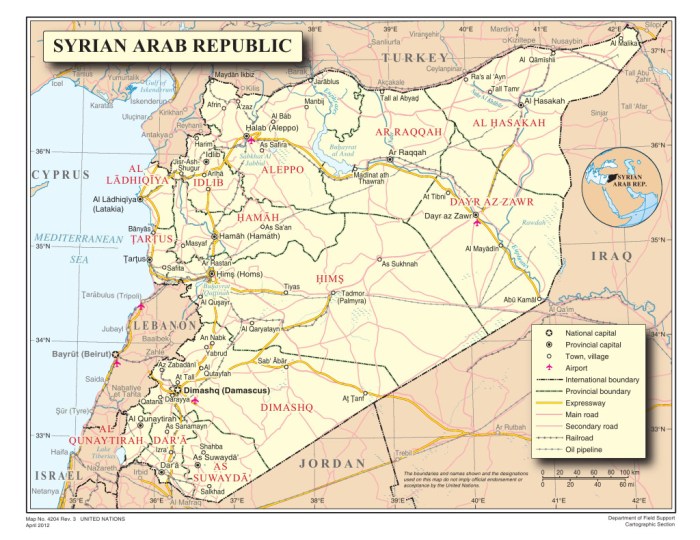
Turkey’s plan as offered to the U.S. and other Western allies was as follows: Establishment of a 90-kilometer wide and 50-kilometer deep ‘safe zone’ between Jarabulus and Azez, very close to the Afrin Canton, as secured by the warplanes of Turkey and allies; removal of IS from the zone by occupation of the Turkish Armed Forces either or not in cooperation with allied powers; and settlement of migrants that are currently located in the camps in Turkey or that would flee from Syria in the future. Therefore, Turkey would be liberated from the European pressure on the migration issue, prevent the physical connection between the Kurdish Cantons, and the demographics of the region would become Sunni-Arab dominated thanks to the migrants. There also was a more strategic goal: The Jaish al-Fatah coalition, which was promoted by Turkey, Qatar, and Saudi Arabia, proved to be successful in Aleppo and surroundings. Upon imposition of the safe zone, the Turkey-Aleppo line would be secured and the coalition, basically composed of al-Nusra Front, an associate of al-Qaeda, and Ahrar ash-Sham, would be allowed to further constrict the Assad government.
Russian military operations in Syria that started on September 30 substantially complicated the above plan. As a matter of fact, Russia was involved in the war to eliminate the threat on Latakia, the heart of the Assad government, and prevent the total loss of Aleppo. Idlib city, under control of the opponents, located in northern Syria has strategic importance for the control of Aleppo. Therefore, Russia shifted a part of its operations to Northern Syria and started to harass Turkish jets by occasionally entering the Turkish airspace. This was then described as establishment of the safe zone, yet it was now considered against Turkey.
It is safe to suggest that Obama’s clear rejection of Turkey’s ‘safe zone’ proposal during the G-20 summit was based among other things on refraining from any confrontation with Russia to the north of Aleppo.
The Paris massacre allowed a Russian-U.S. rapprochement as regards Syrian policies. Parties declared that their primary objective was to weaken IS, but not to overthrow the Assad government. These developments fostered hopes for the Geneva negotiations, which aimed to end the civil war in Syria.
Nevertheless, U.S. secretary of state Kerry announced immediately after the G-20 Summit that Turkey and the U.S. would take a joint operation to clean the Jarabulus-Azez line of IS.
What does this operation plan, which was announced after the ‘safe zone’ proposal was shelved, mean?
It means implementation of the ‘safe zone’ project at a more modest level. Ground forces will not be involved in the operation. Instead, Syrian opponents with the support of Turkish and U.S. jets would clean the said part of the Turkish border from IS. On the grounds that the Free Syrian Army ceases to exist in the field, the pro-al-Qaeda al-Nusra Front and its associate Ahrar ash-Sham would assume the ground operations, accompanied by the Syrian Turcoman forces.
In other words, IS would be replaced by other Salafist organizations. The involvement of YPG, the only secular force fighting against ISIS, and connection between the Kurdish Cantons would be prevented. Lastly, by leaving the Jarabulus-Azez line in the hands of such organizations as al-Nusra Front and Ahrar ash-Sham, which have a comparable record of civilian massacres, the pressure of the said Salafist organizations on the regime over northern Syria would be reinforced given that these organizations have Idlib and a large part of Aleppo under their control.
***
It seems very unlikely that IS is to be weakened and peace is to be restored in Syria, given that the U.S. continues to protect its allies, Turkey and Saudi Arabia, which deal with dirty business in Syria. Furthermore, the available data suggests that the West did not give up its goal to maintain continuous pressure on the Assad government and sustain controlled chaos in Syria, albeit the same has currently receded into background. The controlled chaos policy ultimately means protection of the power of IS and paving the way for likely massacres in the future.
Featured Video
Seyed M. Marandi: Toward Total War in the Middle East
or go to
Aletho News Archives – Video-Images
From the Archives
The Geopolitics behind the War in Yemen (I)
By Mahdi Darius NAZEMROAYA | Strategic Culture Foundation | 30.03.2015
The United States and the Kingdom of Saudi Arabia became very uneasy when the Yemenese or Yemenite movement of the Houthi or Ansarallah (meaning the supporters of God in Arabic) gained control of Yemen’s capital, Sanaa/Sana, in September 2014. The US-supported Yemenite President Abd-Rabbuh Manṣour Al-Hadi was humiliatingly forced to share power with the Houthis and the coalition of northern Yemenese tribes that had helped them enter Sana. Al-Hadi declared that negotiations for a Yemeni national unity government would take place and his allies the US and Saudi Arabia tried to use a new national dialogue and mediated talks to co-opt and pacify the Houthis.
The truth has been turned on its head about the war in Yemen. The war and ousting of President Abd-Rabbuh Manṣour Al-Hadi in Yemen are not the results of «Houthi coup» in Yemen. It is the opposite. Al-Hadi was ousted, because with Saudi and US support he tried to backtrack on the power sharing agreements he had made and return Yemen to authoritarian rule. The ousting of President Al-Hadi by the Houthis and their political allies was an unexpected reaction to the takeover Al-Hadi was planning with Washington and the House of Saudi. … continue
Blog Roll
 Aletho News
- Finland’s Stubb tells European leaders to calm down
- Defeating Russia on battlefield impossible – Fico
- Finland’s Gender Clinic Reversal
- Massachusetts Wants Mental Health Visits, Why Does Government Use ‘Health’ to Enter Our Homes & Families?
- US lawmaker admits American people footing bill for Trump’s failed aggression against Iran
- Pfizer Gave $500,000 to Groups That Lobbied to End Religious Exemption in Massachusetts
- HE SAVED LIVES. NOW HE FACES PRISON.
- Israeli lobby seeks to bind US fate to ‘Israel’: Araghchi
- Pakistan-Iran talks secure LNG shipment to Islamabad through Hormuz
- Black Sea grain crisis puts global wheat supplies under pressure
- If Americans Knew
- Gaza desperately needs tents, wheelchairs, fuel… and everything else (Israel blocks it all) – Daily Update
- Israeli Attacks in Gaza Kill at Least Seven Palestinians Over Three Days, including Woman and Child
- Trump’s militarization of Washington DC as he pursues Israel’s war against Iran
- Why Israel Fears This Searing New Documentary
- Huckabee aide solicited cash gifts from Israelis
- This isn’t sci-fi, AI is already killing people
- ‘The Most Brutal Thing’: Investigation Reveals Execution of Elderly Woman in Rafah
- Inside Israel’s ‘soft’ ethnic cleansing plan for Gaza through the eyes of its victims
- New online database tracks pro-Israel political donations in the United States
- Israeli president pardons soldier convicted for killing wounded Palestinian
- No Tricks Zone
- 2025 Nature Paper Claiming Worsening Global Drought Gets RETRACTED …Heavily Flawed
- New Study: ‘Global Drought Shows No Detectable Recent Acceleration Under Climate Warming’
- Economic Masterminds: German Socialists Suggest Taxing Productivity Gains Stemming From Using AI
- The South China Sea Has Not Been Cooperating With The Climate Change Narrative
- Energy Crisis: Germany Enters Heating Season With Historically Low Gas Reserve Fill Levels
- New Study: The Antarctic Ice Sheet Gained Mass From 2020-2024 Due To Staggering Snow And Ice Accumulation
- Study: Ocean Heating Rates From Thousands Of Years Ago ‘Dwarf’ Modern Ocean Heating Rates
- Climate Extremists Target, Attack Large-Scale Power Grid Infrastructure In Germany!
- New Study: Antarctic Ice Melt Has Contributed Less Than 1 Centimeter To Sea Level Rise In The Last 30 Years
- Fear Of Debate: Alarmist German Climate Scientist Calls On Mainstream Media To Discredit Skeptic Voices
 Aletho News