Both Major U.S. Parties are Plagues on Humanity
By Glen Ford | Black Agenda Report | July 1, 2015
There has never been a dime’s worth of difference between the Clintons (Bill and Hillary) and Barack Obama, and less than ten cents separates the worldviews of these Democratic political twins from the Bush wing of the Republican Party.
 Each has their individual quirks. Barack destroys international order and the rule of law while dabbling at song; Bill dismantled the U.S. manufacturing base and threw record numbers of Blacks in prison as he toyed with his trumpet; George W. played the fool who would Shock and Awe the world into obedience; and Hillary is the evil crone that curses the dead while screaming “We are Woman” like a banshee. But they are all the same in their corporate soullessness.
They all lie for a living, and they live to lie. Hillary Clinton commingled official and personal criminality through the medium of email. Knowing that, in a life dedicated to crime, she could never successfully sequester her private and public conspiracies, Hillary privatized all of her email correspondence during her tenure as Obama’s Secretary of State (in the perfect spirit of neoliberalism). The fate of millions of Haitians whose country’s earthquake and development “aid” are under the Clinton family thumb were doubtless bundled into the tens of thousands of messages she erased on leaving Foggy Bottom.
Republicans have harassed her ever since, seeking an electronic smoking gun to show Clinton’s cowardice or lack of resolve to “stand up for America” and “our troops” or some other nonsense. What the Benghazi affair actually proves is that the Obama administration was just as intent as the Republicans to maintain the fiction that the “rebels” put in power by seven months of NATO bombing of Libya were not various flavors of Islamic jihadists – some of whom were already turning on their erstwhile masters. The U.S.-Saudi project to create and nurture the international jihadist network is a bipartisan venture that dates back to Jimmy Carter’s presidency – and, therefore, nothing for Democrats and Republicans to fight about. However, the GOP’s churning of Clinton’s emails does provide a glimpse into her quest to run for president in 2016 as the woman who vanquished Muammar Gaddafi (“Qaddafi” or simply “Q” in Clinton’s usage).
A number of Clinton’s correspondences were with Sidney Blumenthal, a former Clinton family spin-master who wrote nasty things about Barack Obama while working for Hillary’s 2008 presidential campaign – which made it impossible for her to hire him at the State Department. Nevertheless, Clinton needed his talents for hype for the campaign ahead. Their emails in the summer of 2011 discussed how Hillary’s status as stateswoman could soar when the Libyan leader was finally eliminated. “This is a historic moment and you will be credited for realizing it,” wrote Blumenthal, feeding the crone’s huge gizzard of ego, according to an article in Monday’s New York Times. “You must go on camera,” wrote Blumenthal. “You must establish yourself in the historical record at this moment.” Hillary was anxious to seize the time to establish what Blumenthal described as “the Clinton Doctrine.”
The Times piece somehow concludes that Obama stole Clinton’s thunder with an 1,100-word speech, in late August, declaring: “The Gaddafi regime is coming to an end, and the future of Libya is in the hands of its people.” But Hillary best expressed the ghoulishness of America’s ruling duopoly two months later, in October, when Gaddafi was savagely butchered by screaming jihadists. “We came, we saw, he died,” cackled the banshee.
In the annals of global diplomacy, no more vulgar words have been spoken by a major power foreign minister or head of state. Yet, Clinton’s calculated quip perfectly encapsulates the bloodlust that is the common characteristic of both the governing duopoly of the United States and their suckling children in ISIS and the other proliferating al Qaida factions.
Thanks to Seymour Hersh, we now have a much more plausible scenario for the May 2, 2011, demise of Osama bin Laden, the “OG” of the U.S.-Saudi spawned global jihad, whose body will never be located. Virtually the entire U.S. account of his death is a lie, repeatedly contradicted on its own terms – another layer of fictional Americana in the age of empire in decline.
Clinton was hard-pressed to imagine how she might trump the president’s bin Laden death-watch extravaganza. Her opportunity came five months later, when she delivered her gruesome paraphrase of Julius Caesar on the occasion of Col. Gaddafi’s murder. In the context of Washington’s deeply racist foreign policy, Gaddafi and bin Laden were equally deserving of death, although Gaddafi was among the most fervent and effective fighters against Islamic jihadists: his government was the first in the world to request a global arrest warrant against bin Laden.
The Libyan Islamists were quickly transferred to the new U.S.-NATO-Saudi-Qatari front lines in Syria. The CIA station in Benghazi was at the center of the action – and got burned in the wild and unwieldy process of herding jihadists, who find it difficult to take orders from “infidels,” even when the “Crusaders” are paying the bills and supplying the weapons.
The U.S. consulate and CIA station in Benghazi were attacked on September 11, 2012. The next day, the Pentagon’s intelligence agency issued a report predicting that a “Salafist principality” – another term for an Islamic State – would likely arise in Syria as a result of the war, and that “Western countries, the Gulf States and Turkey are supporting these efforts.” Moreover, the establishment of such an Islamic “principality” would create “the ideal atmosphere for AQI [al Qaida in Iraq, which became ISIS, ISIL and the Islamic State] to return to its old pockets in Mosul and Ramadi” in Iraq – events that have since transpired.
The Defense Intelligence Agency report didn’t say so, but the “Western Powers” included the United States, through its CIA.
The document was declassified this year as the result of a suit by a libertarian right-wing legal outfit. The people of the world continue to be fed the fiction that the U.S. is engaged in a long, twilight struggle against al Qaida Salafists whose international network was created by, and continues to benefit from, “Western countries, the Gulf States and Turkey.”
However, the 2012 Pentagon warning about the rise of an Islamic State may have had some effect on U.S. policy in Syria. One year later, in September of 2013, President Obama backed off from his threat to bomb Syria in “retaliation” for a chemical missile attack against civilians – a crime much more likely committed by western-backed Salafists. The conventional wisdom is that the Russians tricked a hapless Secretary of State John Kerry into agreeing to the peaceful, internationally supervised destruction of Syria’s chemical arsenal; or that the refusal of Britain’s Parliament to go along with an air assault on Syria made the U.S. position untenable; or that Obama feared losing a vote on the issue in the U.S. Congress. None of this rings true to me. The United States is not easily deterred by the opinions of Europeans, who in the end accept Washington’s acts as a fait accompli. And, it was not clear that Obama would have lost the vote in Congress – a vote that he requested, while at the same time declaring that he did not need the legislature’s permission to “punish” Syria for crossing his “red line.”
I think that high Pentagon officials and elements of the Obama administration – probably including the president, himself – took the Benghazi disaster and the Defense Intelligence Agency report to heart, and decided that it was better to keep bleeding the Syrians and their Russian, Lebanese and Iranian allies through a prolonged war, than to bomb al Qaida into power. For the U.S., regional chaos is preferable to the triumph of the, ultimately, unmanageable Salafists – unchained.
The thirty-plus year war against Iran would, however, be ratcheted up. The Bush administration was snatched back from the brink of a military assault against Teheran in 2007 when – to the great consternation of Vice President Dick Cheney – all 16 U.S. intelligence agencies declared, publicly and unanimously, that Iran had abandoned its nuclear weapons program, years before.
The spooks reaffirmed their consensus in the 2010 National Intelligence Estimate – again, that there was no evidence Iran has any intention of making a bomb. The Obama administration has since avoided asking the intelligence agencies for their analysis on the issue, knowing they would get the same answer. Instead, they rely on Israeli propaganda, pick and choose various “experts” from inside and outside the arms control “community,” or simply put forward unsupported statements on Iran’s capabilities and intentions: the Big Lie. While Bush was humiliated by facts supplied by his own intelligence experts, Obama has escalated the confrontation with Iran, applying crippling sanctions and the whole range of low-level warfare, in close collaboration with Israel – proving, once again, that Obama is the “more effective evil.”
Obama has nearly completed knocking off victims on the “hit list” of countries that George Bush was working on when General Wesley Clark ran across it in 2002. Iraq, Syria, Libya, and Somalia have been invaded since then, and Sudan was stripped of a third of its territory. Only Iran and Lebanon remain intact and outside the U.S. imperial umbrella.
The Republican-Democratic duopoly plays tag-team in promoting the Project for a New American Century – a doctrine promulgated by neo-conservatives in 1997 that has served as the guiding light of both the Bush and Obama administrations. The differences between the two teams are merely rhetorical. The Bush regime is described as “unilateralist,” although it employed the same “Coalition of the Willing” approach to aggressive war as does the Obama administration. President Obama claims the right to disregard and methodically undermine international law through “humanitarian” military intervention, whereas Bush claimed to be “spreading democracy.” Same weapons systems, same mass murder, same objective: U.S. domination of the planet.
There’s nothing democratic or humanitarian about the U.S. imperial project. Therefore, its maintenance requires the deployment of 24-7 psychological operations worldwide, but directed primarily against the U.S. public.
Republican strategist Karl Rove was far more honest than his Democratic counterparts when he explained to a reporter, back in 2004:
We’re an empire now, and when we act, we create our own reality. And while you’re studying that reality—judiciously, as you will—we’ll act again, creating other new realities, which you can study too, and that’s how things will sort out. We’re history’s actors … and you, all of you, will be left to just study what we do.
Election seasons are reality-creation festivals, during which the two corporate parties pretend to put forward different visions of the national and global destiny – when, in fact, they answer to the same master and must pursue the same general strategy.
The continuity of GOP-Democratic rule – the near-identical depravity – is horrifically evident in the Democratic Republic of Congo, where six million people have been slaughtered by U.S. surrogates since 1996: the largest genocide since World War II. Successive U.S. administrations – Bill Clinton, George W. Bush, and Barack Obama, assisted by Secretary of State Hillary Clinton and Susan Rice, the high U.S. official most deeply implicated in the entirety of the genocide – have armed, financed, and covered up the Congolese holocaust. Each administration has collaborated with its predecessor to hide the crime and obscure the question of guilt – and then to continue the killing.
Decent people do not vote for political parties that produce such fiends, who deserve Nuremburg justice of the capital kind. Any talk of “lesser evils” is both stupid and obscene.
BAR executive editor Glen Ford can be contacted at Glen.Ford@BlackAgendaReport.com.
The General Dynamics, Saudi Arabia contract and Canada’s moral regress
By Mitchell Thompson | Disinformation | June 28, 2015
With the case of the Canadian-brokered General Dynamics light armored vehicle sale to the Saudi Arabian government, Canada’s manufacturing sector has become complicit in human rights abuses abroad.
The question of benefit could be framed like this: is General Dynamics employing more people than its equipment is killing?
The Globe and Mail reported that Ed Fast, Canada’s Minister of International trade said, the deal will help the manufacturing area in London to “become the epicentre of a cross-Canada supply chain directly benefiting more than 500 local Canadian firms… Our government will continue to support our exporters and manufacturers to create jobs, as part of our government’s most ambitious pro-trade, pro-export plan in Canadian history.”
That export plan, justified by job-creation involves the sale of light armoured vehicles, manufactured in Canada that the Globe and Mail describes as having “effective firepower to defeat soft and armored targets… options for mounted guns include a 25-mm cannon and 7.62-mm machine guns and smoke grenade launchers.”
The Ottawa Citizen reports that:
“Canada’s defence industry has beaten out German and French competitors to win a massive contract worth at least $10 billion US to supply armoured military vehicles to Saudi Arabia.
The win was announced by International Trade Minister Ed Fast to cheering workers Friday at a factory in London, Ont., and will go a long way in bolstering the Harper government’s case for transforming Canada into a global arms dealer.
But it also raises many ethical questions that will continue to surface as Canada’s arms industry turns more and more to the volatile Middle East and South America for business.
Canada has previously sold light armoured vehicles (LAVs) like those used by Canadian soldiers in Afghanistan to Saudi Arabia, with more than 1,000 delivered to the Middle Eastern kingdom in the early 1990s, and 700 more in 2009.
But the government is touting this latest deal as the largest export contract in Canadian history, with the potential to create and sustain 3,000 jobs in southern Ontario and other parts of the country.
Exactly how many LAVs are being sold to Saudi Arabia was not being revealed, but documents filed in the U.S. by General Dynamics Land Systems – Canada, whose London-based subsidiary will be building the vehicles, put the contract at between $10 billion and $13 billion.
Defence and export industry representatives praised the Conservative government Friday for its role in securing the deal.”
The job creation argument that Canada is using stands even more oddly next to the moral cost of the deal, given Saudi Arabia’s human rights record.
Alex Nieve, Secretary General of Amnesty International told the Globe that “[The Saudi government is] known to use armoured vehicles and other weapons in dispersing peaceful protest.”
Jonathan Manthorpe writes for IPolitics that “The Saudi regime is buying these vehicles not to defend the nation from foreign threats, but to protect the regime from Saudis — from internal dissent and demands for reform.”
Hillary Homes of Amnesty told the Globe that “[Saudi Arabia] is among the worst human-rights violators in the world.”
Canada’s support of the Saudi abuse is bad enough, what’s worse is its insistence that working Canadians become participants. The government says it wants this sort of arms manufacturing as the epicentre of a cross-Canada supply chain with connections to over 500 firms. Is that really something Canada wants as an epicentre of any part of its economy?
Let’s consider what that means. If the epicentre of a sector of the manufacturing industry is dependent on the manufacturing of equipment for a third world dictatorship, continued economic progress for that sector would require that government to use that equipment. Canadians would have an interest in the Saudi Arabian government using its old equipment, so it can buy new equipment, made in Canada.
If Amnesty and others are correct, that the equipment that we manufacture will likely be used against civilians and a sector of our economy depends on that manufacturing- that means that a sector of our economy would be dependent on those abuses.
There are good people working in manufacturing. Having their work emanate from third world dictatorships perverts the entire sector. Working people should not be forced to participate in such an exchange, to remain economically viable.
Saudi Arabia Thwarts UN Emergency Aid for Yemen
Sputnik – 27.06.2015
Months after the Saudi government pledged to single-handedly meet the United Nations’ (UN) “flash appeal” for humanitarian aid to Yemen, Riyadh is making it clear that the donation doesn’t come without strings attached.
On April 12, as the Saudi-led air campaign rained bombs over Yemen, the UN issued an emergency flash appeal calling for $274 million in aid for the country to address the increasingly dire humanitarian condition. Less than 24 hours later, the call was met entirely by the very government that was leading the attacks against Yemen.
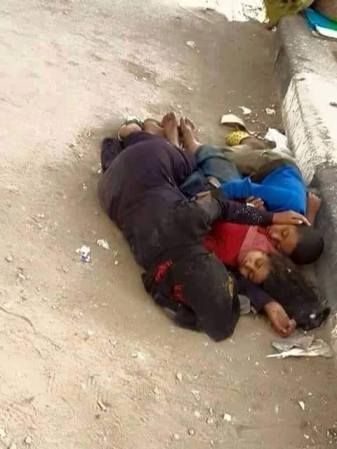 Overseen by the UN Office for Coordination of Human Affairs (UNOCHA), emergency funds are meant to be distributed quickly to where they are most needed. Over two months have passed since Riyadh pledged the full $274 million, however, and the money has yet to be delivered to Yemen.
A UN memo obtained exclusively by VICE news has revealed the reason for this delay is the restrictive conditions the Saudi government has placed on the aid disbursement. What’s more, the UN appears to have consented to these conditions.
On Tuesday, Riyadh announced that $244 million of the total amount pledged will be split between nine UN agencies. The next day, the UN’s undersecretary for humanitarian affairs and emergency relief coordinator Stephen O’Brien sent a letter to the Interagency Standing Committee, a global humanitarian coordinating body for humanitarian agencies.
In the letter, O’Brien explained that the funds would go through the King Salman Center for Relief and Humanitarian Work (KSC). He also noted that KSC would dictate the terms of the fund distribution with each of the nine agencies.
“The KSC would like to negotiate the Memorandums of Understanding (MoUs) with each recipient agency,” he wrote. “They would also like to be assured that the Government of Yemen in exile is consulted.”
The memo indicates that the pledge was a calculated move on the part of the Saudi government to monopolize the aid and control where it goes and when. According to VICE, the letter alarmed many aid workers who say that it was too vaguely worded, thereby giving Riyadh leeway for further delays.
“It’s really unusual for a single donor to have any substantive role once they contribute funds, let alone negotiate individual MoUs with agencies,” an anonymous official involved in the Yemen response told VICE.
He also noted the UN’s acquiesce to Riyadh’s stipulations.
“The charitable way of saying it is this is a compromise – the less charitable way of saying it is that they folded,” he said. “Now the UN has punted and handed off the problems to these agencies. I’ve never seen that before.”
The letter comes as the UNOCHA struggles with massive funding deficits in over two dozen countries, including in Yemen where the agency estimates that 80% of the population needs humanitarian aid, and may explain the UN’s agreement to the Saudi government’s stipulations.
“With regard to NGOs, I am aware that there are sensitivities in receiving funding directly from the KSC,” O’Brien wrote, acknowledging the unusual Saudi stipulations. “We therefore must work actively to mobilize additional funds to be allocated directly, or via the Pooled Fund, to our front-line partners.”
However, another aid worker with an organization that delivers humanitarian supplies to Yemen told VICE that O’Brien’s acknowledgement does not take away from the UN’s concession to Saudi over control of the fund disbursement.
“The thing about this communication that we all got, it’s really vague,” he said. “We are trying to assume and guess what they mean by this plan, but it’s not clear. The Saudis might very well sit on it for a long time.”
While it is not unusual for donor countries to have a degree of control over the distribution of funds, InterAction humanitarian vice president Joel Charny notes that emergency situations require agencies like the UN to make the final call.
“It’s not that donors don’t care where the money goes, but there’s a sense that in an urgent case like Yemen you let the professionals make the call,” he said.
O’Brien also told VICE a day before the letter was released that, as a general rule, the UN does not “condone any modality based on geography,” meaning that donors cannot restrict aid distribution from certain areas.
Yet Riyadh has already asked for the restriction of aid distribution to Houthi-held areas in Yemen.
Saudi Arabia launched its air campaign against Houthi rebels in Yemen in March in an effort to reinstate Yemeni President Abdu Rabbu Mansour Hadi. Since the beginning of the airstrike campaign, over 2,800 people have been killed in the fighting and 13,000 have been wounded, according to local hospitals.
Saudi Arabia arrests Pakistani anti-war journalist

Pakistani journalist Zaid Hamid (file photo)
Press TV – June 26, 2015
Saudi forces have arrested a leading Pakistani journalist opposed to Saudi Arabia’s military aggression against Yemen.
Zaid Hamid, a Pakistani defense analyst and political commentator, was arrested weeks ago by Saudi security forces in the holy city of Mecca during a private visit with his wife to the kingdom, The Express Tribune reported on Friday.
“Our embassy in Riyadh has informed us that Mr Zaid Hamid was arrested about two weeks ago. Since then, the embassy has been working with the local authorities to get consular access,” said Pakistan’s Foreign Office in Islamabad.
Foreign Office spokesperson Qazi Khalilullah added that, through the Pakistani embassy’s diplomatic channels, Hamid’s wife had been able to get permission to talk to him in one session.
Meanwhile, there are speculations that Saudi forces took the outspoken media figure into custody for his vocal anti-Riyadh stance.
Saudi authorities are yet to comment on the report.
Hamid’s articles and speeches reportedly shed light on Saudi atrocities in Yemen, and accused Riyadh of providing financial support to the Takfiri ISIL terrorists and al-Qaeda militants in the region.
Saudi Arabia launched military strikes on Yemen on March 26 – without a UN mandate – in a bid to restore power to fugitive former President Abd Rabbuh Mansur Hadi, who is a Riyadh ally, and to undermine the Houthi Ansarullah movement.
Neocons Urge Embrace of Al Qaeda
By Daniel Lazare | Consortium News | June 26, 2015
Just nine days after the fall of the World Trade Center, George W. Bush announced that he was imposing a radical new policy on virtually the entire globe: “Every nation, in every region, now has a decision to make. Either you are with us, or you are with the terrorists. From this day forward, any nation that continues to harbor or support terrorism will be regarded by the United States as a hostile regime.”
As dramatic as the statement was, just about every phrase was open to question in one form or another. But rather than launching into a long and vigorous debate about the meaning of terrorism or America’s right to impose diktat on the world at large, congressmen turned their minds off and gave Bush a standing ovation.
Today, the same Bush Doctrine is sinking beneath the waves as a growing portion of the punditocracy declares that some forms of terrorism are better than others and that harboring a terrorist may not be so bad if it advances U.S. interests. But once again, the response is not questioning, debate, or even applause, but silence.
The latest evidence of a sea change in establishment thinking is a blog that Ahmed Rashid, a prominent Middle East correspondent, recently published on The New York Review of Books website. Entitled “Why We Need al-Qaeda,” it argues that Al Qaeda and its Syrian affiliate, Al Nusra, are evolving in a more moderate direction in growing contrast to its rival, the super-violent Islamic State. So why not use Al Nusra as a counterforce against both Bashar al-Assad and ISIS?
As Rashid puts it: “Unlike ISIS, which demands absolute subjugation of the inhabitants of any territory it conquers (surrender or be executed), al-Nusra is cooperating with other anti-Assad groups and recently joined the ‘Army of Conquest’ alliance of rebel militias in northern Syria. Moreover, in contrast to ISIS’s largely international and non-Syrian fighting force, al-Nusra’s fighters are almost wholly Syrian, making them both more reliable and more committed to Syria’s future.
“Meanwhile, in interviews with Al Jazeera, al-Nusra leaders have vowed not to attack targets in the West, promoting an ideology that might be called ‘nationalist jihadism’ rather than global jihad. In recent months, al-Nusra’s leaders have toned down the implementation of their own brutal version of Islamic law, while putting on hold their own plans of building a caliphate.”
Thus, according to Rashid’s viewpoint, Al Nusra is cooperative, patriotic, unthreatening to anyone other than Assad, and in favor of a kinder and gentler form of shari‘a as well. Yet, Rashid argues, that while Turkey and the Arab gulf states recognize that change is afoot, the U.S. keeps its eyes resolutely shut:
“With 230,000 killed and 7.6 million people uprooted in Syria alone, the Arab states want a quick end to the Assad regime and a viable solution for Syria. They know that solution will never come from the weak moderate opposition, and that any lasting peace will require support by the strong and ruthless Islamist groups fighting there.”
Gulf States’ Favorite
So the gulf states are backing the second most ruthless Islamist group in Syria (Al Qaeda’s affiliate) in hopes of offsetting the first most ruthless (ISIS) and making short work of the Baathist regime in Damascus. But as Arab leaders prepare for direct negotiations with Al Nusra, Rashid warns, “the only one not at the table could be the United States.”
This is dramatic stuff. After all, Rashid is not taking aim at some minor doctrine, but one that has been a cornerstone of U.S. foreign policy since 9/11. Moreover, he’s not the only one talking this way. Since Turkish President Recep Tayyip Erdogan flew to Riyadh in early March to meet with Saudi King Salman and discuss ways of upping support for the Syrian Islamist opposition, there has been a veritable boomlet in terms of calls for a rapprochement with Al Qaeda.
Within days of the Riyadh get-together, Foreign Affairs went public with an article arguing that even though “the United States is the closest it has ever been to destroying al Qaeda, its interests would be better served by keeping the terrorist organization afloat.” Lina Khatib, director of the Carnegie Middle East Center in Beirut, wrote a few weeks later that “while not everyone likes Nusra’s ideology, there is a growing sense in the north of Syria that it is the best alternative on the ground – and that ideology is a small price to pay for higher returns.”
Charles Lister of the Brookings Institute’s Doha Center, wrote that Al Nusra is undergoing a “moderating shift.” Frederic Hof, Obama’s former envoy to the Syrian guerrillas and now a senior fellow at the Atlantic Council in Washington, said the group has become “a real magnet for young Syrian fighters who don’t have any particular jihadist or even radical sectarian agenda.” They are drawn to Al Nusra, he explained, for two reasons – because it’s “well-resourced” and because it “seems to have been willing to fight the regime and not to engage in some of the corrupt activities and warlordism that you would find elsewhere within the panoply of Syrian opposition.”
So, Rashid’s views are hardly unique. Nonetheless, they’re the most explicit and upfront to date, an indication that support for an alliance with Al Qaeda is on the upswing and that advocates are growing bolder and more self-confident. So how should ordinary people who are not part of the elite foreign-policy discussion respond?
One-Sided Arguments
For one thing, they might notice that such articles are remarkably one-sided and poorly reasoned. Rashid may be “one of Pakistan’s most respected journalists,” as the BBC puts it, someone whose work has appeared in such publications as the Daily Telegraph and the Far Eastern Economic Review. Yet shooting holes through his arguments is child’s play.
Take his claim that “al-Nusra’s leaders have toned down the implementation of their own brutal version of Islamic law.” Whatever the difference between Al Nusra and ISIS on this score, it’s less impressive than Rashid lets on.
The Soufan Group, a New York-based security firm headed by a Lebanese-American ex-FBI agent named Ali H. Soufan, notes, for instance, that while Islamic State released a video in January showing its forces stoning an accused adulteress, Al Nusra released one around the same time showing its forces shooting two women for the same alleged offense. Since the victims in either case were killed, the difference, as the Soufan Group noted, was purely “stylistic.”
Rashid claims that Al Nusra is less extreme in its hostility to Shi‘ism, in part because it thinks “anti-Shia fanaticism” is backfiring and becoming “an impediment to gaining more territory.” Indeed, Abu Mohammad al-Julani, Al Nusra’s commander-in-chief, told Al Jazeera in a rare interview on May 27 that his forces were willing to welcome Alawites, as Syria’s Shi‘ites are known, back into the fold.
“If they drop weapons,” al-Julani said, “disavow Assad, do not send their men to fight for him and return to Islam, then they are our brothers.” But when he described Alawism as a sect that has “moved outside the religion of God and of Islam,” the meaning became clear: Alawite must either convert or die.
Whether this makes Al Nusra less genocidal than ISIS is open to debate. According to the pro-rebel Syrian Observatory for Human Rights, meanwhile, Al Nusra recently massacred more than 20 Druze villagers in northwestern Syria – reportedly after a local commander denounced them as kuffar, or infidels, while al-Julani, in his Al Jazeera interview, specified that Christians must pay the jizya, a special head tax imposed by Islamic law, as well – a stipulation Syria’s ten-percent Christian minority is not likely to find very reassuring.
Ordinary people viewing this from afar might notice that the government that al-Julani is seeking to overthrow is officially secular and non-discriminatory and that even Obama has conceded that it has “protected the Christians in Syria,” as he told a Syrian Christian delegation last September. They might also notice that Rashid’s article is in other respects highly revealing, although not in ways he cares to admit.
For instance, Rashid writes that U.S. policy in the Middle East is beset by “growing contradictions.” This is obviously correct. But the problem is not that Washington refuses to face facts about Al Nusra’s alleged moderating trend, but that the U.S. is attempting to hammer out an accord with Iran while struggling to preserve its alliance with Israel and the Arab gulf states, all of whom regard Iran as public enemy number one.
Obama’s Fence Straddling
The effort has led to monumental fence straddling. While entering into talks with Iran, the Obama administration has given the go-ahead to Saudi Arabia’s two-month-old assault on Iranian-allied forces in Yemen while turning a blind eye to growing Turkish and Saudi support for anti-Iranian terrorists in Syria.
While paying lip service to the Bush Doctrine that he who harbors a terrorist is as bad as a terrorist, the Obama administration made no objection when the Saudis and Turks donated U.S.-made TOW missiles to Al Nusra-led forces in northern Syria or when the Saudi bombing campaign allowed Al Qaeda to expand in Yemen.
It’s a mixed-up policy that has people in the Middle East shaking their heads. Yet Rashid adds to the confusion by misrepresenting the Saudi role. He writes, for instance, that the Arab States are swinging behind Al Nusra because they “want a quick end to the Assad regime and a viable solution for Syria,” when, in fact, Saudi Wahhabists have sought from the start to impose a government much like their own, as a report by U.S. Defense Intelligence Agency observed back in August 2012.
Rather than “viable,” such a government would be precisely the opposite for a highly variegated society like Syria with its large Christian, Shi‘ite, and Druze minorities fearful of Sunni fundamentalist domination – yet the gulf states, backed by the U.S., have pushed on regardless.
On the issue of Al Qaeda’s brutal intolerance, Rashid adds, “For Arab leaders, determining whether al-Qaeda has really changed will depend on the group’s long-term attitude toward Shias,” suggesting that the gulf states are seeking a fairer outcome for Syria’s Alawites.
Saudi Intolerance
But this is misleading as well since Saudi attitudes toward the kingdom’s own 15-percent Shi‘ite minority are deeply oppressive and seem to be getting worse.
According to the Cambridge scholar Toby Matthiesen, for example, Saudi Shi‘ites are barred from the army and the National Guard as well as the top rungs of the government. State-mandated schoolbooks denounce them as “rejectionists,” while, according to the independent scholar Mai Yamani, they cannot testify in court or marry a Sunni and must put up with abuse from Wahhabist clerics who regularly preach that killing a Shi‘ite merits a greater heavenly reward than killing a Christian or a Jew.
Since Salman’s accession in late January, there is no sign of a softening. Indeed, by bombing Yemen’s Shi‘ite Houthi rebels and stepping up support for fanatically anti-Shi‘ite rebels in Syria, Salman gives every indication of intensifying his anti-Shi‘ite crusade and taking it abroad.
Neocons pushing for an explicit alliance with Al Nusra are thus attempting to plunge the U.S. ever more deeply into a growing sectarian war. Ordinary people might also notice that such “experts” expound their views from cushy posts financed by Qatar (the case with Brookings’ Doha Center) or by Saudi Arabia, Kuwait, the United Arab Emirates, and Bahrain (the case with the Atlantic Council).
Yet Congress doesn’t care about such conflicts of interest and the White House is too intimidated to speak out, while the American people at large are not consulted. Questioning and debate are more imperative than ever, yet they are as absent as they were back in 2001.
Will Turkey’s Election Give Peace a Chance in Syria?
By Rick Sterling | Dissident Voice | June 24, 2015
The June 7 parliamentary election in Turkey could have a huge impact on the conflict in Syria. The invincible image of President Erdogan has been cracked. There is a real chance that the election might lead to substantive change in Turkish foreign policy promoting the war in Syria.
Even though Erdogan’s Justice and Development Party (AKP) won the most votes, they lost their majority in parliament and must now find a coalition partner. Turkey’s new parliament was seated for the first time on Tuesday June 23. Now begins the political bargaining and negotiations to form a governing coalition. Depending on the outcome, Turkey may stop or seriously restrict the flow of weapons and foreign fighters through its territory into Syria. If Turkey does this, it would offer a real prospect for movement toward negotiations and away from war in Syria. Why? The Syrian war continues because Saudi Arabia, Qatar, Kuwait, USA, France, UK and others are spending billions of dollars annually to fund the armed opposition and sustain the war in violation of the UN Charter and international law.
Closely allied with Qatar and the Muslim Brotherhood, Turkey has been the primary path for weapons and foreign fighters in Syria. ISIS has depended on export of oil and import of weapons and fighters through Turkey. Jabhat al Nusra, Ahrar al Sham and other armed opposition groups have depended on weapons and foreign fighters coming in via Turkey for attacks on northern Syria including Syria’s largest city, Aleppo.
Turkish Government Support of War on Syria
The following examples show the extent of Turkish involvement in the war on Syria:
- Turkey hosts the Political and Military Headquarters of the armed opposition. Most of the political leaders are former Syrians who have not lived there for decades.
- Turkey provides home base for armed opposition leaders. As quoted in the Vice News video Syria: Wolves of the Valley: “Most of the commanders actually live in Turkey and commute in to the fighting when necessary.”
- Turkey’s intelligence agency MIT has provided its own trucks for shipping huge quantities of weapons and ammunition to Syrian armed opposition groups. According to court testimony they made at least 2,000 trips to Syria.
- Turkey is suspected of supplying the chemical weapons used in Ghouta in August 2013 as reported by Seymour Hersh here. In May 2013, Nusra fighters were arrested in possession of sarin but quickly and quietly released by Turkish authorities.
- Turkey’s foreign minister, top spy chief and senior military official were secretly recorded plotting an incident to justify Turkish military strikes against Syria. A sensational recording of the meeting was publicized, exposing the plot in advance and likely preventing it from proceeding.
- Turkey has provided direct aid and support to attacking insurgents. When insurgents attacked Kassab Syria on the border in spring 2014, Turkey provided backup military support and ambulances for injured fighters. Turkey shot down a Syrian jet fighter that was attacking the invading insurgents. The plane landed 7 kms inside Syrian territory, suggesting that Turkish claims it was in Turkish air space are likely untrue.
- Turkey has recently increased its coordination with Saudi Arabia and Qatar. This has led to the recent assaults by thousands of foreign fighters on Idlib and Jisr al Shugour in northern Syria. Armed with advanced weaponry including TOW missiles, and using suicide bomb vehicles, the armed groups over-ran Syrian armed forces defending both cities. The assaults were facilitated by Turkey jamming and disrupting Syrian radio communications.
- Turkey has facilitated travel into northern Syria by extremist mercenaries from all parts of the globe including Chechen Russians, Uyghur Chinese, Europeans, North Africans, South Asians including Indonesians and Malaysians. The assault on Jisr al Shugour was spearheaded by Chinese Uyghur fighters and suicide bombers crossing over from Turkey with tanks and heavy artillery.
- Turkey itself has provided steady supply of recruits to the Islamic State. Like other countries which have had citizens indoctrinated with wahabi fanaticism, they have done little or nothing to limit the indoctrination or restrict emigration for ‘jihad’.
- Turkey has permitted the supply of huge quantities of car bomb ingredients (ammonium nitrate fertilizer) to the Islamic State. On May 4 the NY Times reported these shipments at the Turkish border. Sixteen days later ISIS over-ran Ramadi in an assault that began with 30 car bombs with ten reportedly the size of the Oklahoma City bombing.
- Finally, as part of its continuing effort to draw the U.S. and NATO into direct participation in the war on Syria, Turkey is an active player in various propaganda campaigns. For example, the “White Helmets” or “Syrian Civil Defence” are trained and supplied in Turkey. Some of the videos purportedly from Syria are likely filmed in Turkey at their training site. White Helmets and Syrian Civil Defence are both creations of the West and join with Turkey in calling for a “No Fly Zone”.
Turkish Repression of Journalism, Police and Courts
The AKP government has vigorously tried to suppress information about the extent of Turkey’s support of the war on Syria. They have resorted to repression and intimidation such as:
- Turkish authorities have charged four regional prosecutors with attempting to topple the government. Their “crime” was to insist on the inspection of four trucks headed from Turkey to Syria. The trucks contained weapons and ammunition in violation of Turkish law. The trial of the four prosecutors is ongoing, 18 months after the inspection.
- Turkish authorities arrrested seven high ranking military officers over the inspection of trucks taking weapons and fighters to Syria.
- Turkish authorities banned social media and news outlets from reporting on arms shipments through Turkey to Syria. Twitter and Facebook accounts that talked about the shipments where shut down. Erdogan went on to threaten to “eradicate” Twitter.
- Turkish President Erdogan threatened two life term sentences for the editor of Hurriyet daily newspaper for publicizing support of the armed opposition in Syria by Turkey’s intelligence agency MIT.
- A whistle-blowing MIT (intelligence agency) officer who opposed the agency’s collusion with terrorism in Syria was arrested, convicted and imprisoned. After two years he managed to escape and tell his story. The blockbuster account was broadcast on Turkey’s OdaTV and later translated into English and published here.
Was American Journalist Serena Shim Murdered?
As seen in the examples above, Turkish AKP authorities have aggressively tried to suppress information on the involvement in Syria. If they have been that aggressive with Turkish journalists, prosecutors and military officers, how far might they go against a foreign journalist working for Iran’s Press TV?
The American born journalist Serena Shim died just days after she documented the use of World Food Program trucks to transport foreign fighters to the border with Syria and into ISIS territory. After learning that Turkish intelligence was looking for her, Serena Shim was so concerned that she expressed her fear on television. Two days later, Serena Shim’s car was hit head-on by a cement truck. The driver of the cement truck disappeared but was later found. There are many discrepancies about what happened. The first reports indicated the truck and driver left without stopping. Then the driver and truck were located, and then photos appeared showing a collision.
While some Turkish security services have preemptively exonerated the driver of the cement truck, the local prosecutor has filed charges against the driver, accusing him of causing death through negligence. There are many suspicious aspects, not least is the fact that the cement truck’s wheels are angled toward the car, not away as one would expect with a vehicle trying to avoid collision.
The death of American journalist Serena Shim, and her factual investigative reporting on Syria and Turkey, stands in sharp contrast with the sensational media accounts about the “kidnapping” of NBC reporter Richard Engel. That event turned out to be a hoax contrived by “rebels” to manipulate American political opinion. With the complicity of individual reporters and mainstream media, the fraud was successful. The bias in mainstream western media is further demonstrated by the almost complete media silence about the death of Serena Shim and her important journalistic work.
Turkey’s Election
For the past 13 years Erdogan’s Justice and Development Party (AKP) has had majority control of Turkey’s parliament. In the recent election AKP’s share of the popular voted plummeted 10% and they lost their parliamentary majority. The results are a clear rebuff to Erdogan and AKP policies. Sixty percent of voters went against AKP, splitting the vote among the three alternative parties. The pro-Kurdish and Leftist People’s Democratic Party (HDP) burst onto the scene capturing 13% of the votes and equaling the number of parliamentary seats captured by the rightist and anti-Kurdish National Movement Party (MHP). The main opposition party is the social democratic Republican Peoples Party (CHP) with 26% of the vote.
Over the coming weeks, AKP will try to form a coalition government with one or more of the alternate parties. However, it won’t be easy. The natural bedfellow would be the anti-Kurdish and rightist MHP, but they are demanding the resumption of a corruption trial against AKP leaders including Erdogan’s son Bilal. That trial would probably lead back to President Erdogan himself, so it seems unlikely AKP will ally with MHP. The three alternative parties could form a coalition to govern without AKP, but it’s hard to imagine the staunchly anti-Kurdish MHP allying with the pro-Kurdish HDP.
If a majority coalition cannot be formed within 45 days, the Turkish constitution requires a rerun of the election.
Election Should Bring Major Change in Syrian Policy
Even with severe repression and intimidation, the Turkish public is aware of Turkey’s policy supporting war on Syria. One consequence of the war has been almost 2 million immigrant refugees with the dispersal of many throughout Turkey, providing cheap labor and adding significantly to the unemployment problem. In addition, there have been terrorist attacks in the border region and an escalation of corruption and repression as external money and weapons have flooded the area en route to Syria. The war against Syria has been widely unpopular and played a significant role in the election.
- All the opposition parties called for change in Turkey’s foreign policy.
- Criticism of Erdogan and Davutoglu’s policy even comes from within the AKP membership: “Many believe that one reason for the AKP’s dismal showing in the 2015 elections is its policy on Syria.”
- The head of the main opposition party (CHP) says Turkey will start controlling the border and stop the flood of arms and fighters into Syria.
The coming weeks will indicate how Turkey moves forward: Will AKP manage to form a coalition government with one of the opposition parties? Or will there be another election?
Will Turkey start enforcing the border and stop shipments of arms to the armed opposition as demanded by the leader of the main opposition party? This would be a huge change in the dynamics within Syria. Without a rear base of constant and steady support, the armed opposition would be forced to rely on their own resources rather than those of foreign governments. They would quickly wither since they have very little support base within Syria.
Since the election, there are already signs of a shift in the balance. Kurdish forces recently captured ISIS’ important border crossing at Tal Abyad. This has been the main route of weapons, fighters and supplies between Turkey and the Islamic State’s ‘capital’ at Raqqa in eastern Syria.
The Past Year and Looking Ahead
Thirteen months ago it looked like the war in Syria was starting to move toward resolution. The last remaining armed opposition in the “capital of the revolution” Homs, reached reconciliation and withdrew from the Old City of Homs in May 2014. On June 3, 2014 the election in Syria confirmed substantial support for the government.
Since then, we have seen dramatic changes. On June 10, 2014 ISIS surged through western Iraq and captured the city of Mosul and huge quantities of American armaments including tanks, rockets, humvees, etc. That led to the creation of the “Islamic State” and expansion in eastern Syria including Tabqa Air Base where hundreds of Syrian soldiers and ISIS fighters died.
This past spring saw the coalescing of numerous foreign and Islamist groups into the Jaish al Fatah (Army of Conquest) supported by Turkey, Saudi Arabia and Qatar. With high powered TOW anti-tank missiles and thousands of shock troops they were able to overtake both Idlib and Jisr al Shugour near the Turkish border.
ISIS and the Army of Conquest are both dependent on the Turkish supply line. If that is closed off or seriously restricted, it will dramatically change the situation.
With the prospect of losing their base of support in Turkey, will the opposition try something desperate to draw the US and NATO into the conflict directly?
The Turkish people have indicated they want to stop their government’s war on Syria. If their will is respected, it should lead to restricting and stopping the foreign funding and promotion of the conflict. If Turkey stops the flood of weapons and foreign fighters into northern Syria, it will be following instead of violating international law. This will give peace a chance in Syria.
Rick Sterling is active with the Syria Solidarity Movement and Mt Diablo Peace and Justice Center. He can be emailed at: rsterling1@gmail.com.
Saudi Arabia’s War on Yemen Comes Home
By Eric Draitser – New Eastern Outlook – 24.06.2015
When Saudi Arabia launched its war against Yemen in March 2015, it presumed that a short, quick, and clean air war would be enough to degrade the alliance of Houthi forces and those loyal to former President Saleh, thereby giving the Saudi-backed government of former President Hadi the necessary space to regain control of the country. However, that simply has not been the case. In fact, not only has the Saudi campaign not achieved these objectives, it has instead precipitated a much more dangerous war which has now spread to Saudi Arabia itself.
Reports from Yemeni sources have confirmed that the Houthis and their allies have launched a number of rockets into Saudi Arabia’s Jizan province while also launching an assault on three military bases in various parts of the country. Of course, the attacks have sent an unmistakable message to Riyadh that there will be a price to pay for the continued bombardment of Yemen; that the Saudis cannot simply act with impunity.
War Spreads Beyond Yemen’s Borders
The fact that Houthi and Saleh forces are able to successfully attack key Saudi military installations has undoubtedly rattled a few nerves in Riyadh. While the recent assaults have not been the first, they have been perhaps the most open demonstration of the military capacity of the Yemeni forces to strike at Saudi assets.
It has been reported that the Houthi-Saleh combined forces have attacked and possibly taken control of a military base in the Southwestern province of Jizan, strategically located on Saudi Arabia’s Red Sea coast. While of course embarrassing for the Saudi government, this development is far more than simply a public relations nightmare; it is a strategic disaster. While Yemeni forces have pounded the base in Jizan, there have been scattered reports of Yemeni attacks against other Saudi military installations, including in the East of the country, as well as in the Northwest. If these reports are to be believed, then nearly the entirety of Saudi Arabian territory is within the range and capability of Yemeni rockets.
There is clear progress from the perspective of the Ansarullah movement (aka the Houthis) and their military allies if one compares the attacks they launched back in April, and those they are carrying out today. While there were a number of high profile attempts to break through Saudi defenses on the borders and make significant gains at the time, all such attacks were either entirely repelled or were mostly unsuccessful; however today, less than two months later, Houthi offensives are becoming increasingly sophisticated and, quite predictably, increasingly effective. Although Ansarullah has fired rockets and made offensive moves towards a number of key Saudi installations throughout the country, their major breakthroughs have come in the strategic Jizan province, right near the Yemeni border.
And it remains the areas closest to the border with Yemen where the real concrete gains have been made by the anti-Saudi coalition. Whether the Houthis and their allies are able to take operational control of the Saudi bases, or merely to attack them and flee is somewhat secondary. What is of primary importance is the simple fact that essentially the entire southwestern portion of Saudi Arabia is now under direct threat from the combined Houthi-Saleh forces, in addition to newly formed militias quietly developing inside Saudi Arabia in the area near the Saudi-Yemeni border.
A Saudi Civil War?
The formation of militias committed to waging war against the House of Saud may be the single most troubling development for Riyadh. Perhaps the most significant of these is the so called ‘Ahrar al-Najran’ Movement, a coalition of regional tribes in the southwest of the country that have combined forces with anti-Riyadh Saudi political activists to create an independence movement that has taken up arms against the Saudi government.
Ahrar al-Najran presents a complex problem for the Saudis because it is comprised primarily of tribes whose lands were originally within Yemeni territory until they were occupied by Saudi forces in 1934. According to Iran’s Islamic Republic News Agency (IRNA) :
[The] Ahrar al-Najran Movement [is] calling for independence from Saudi Arabia…Abu Bakr Abi Ahmed al-Salami, a leader of Ahrar al-Najran, says the movement which brings together different tribal groups is set to launch its first battle in parts of south Najran occupied by the Saudi army… There are four main reasons why the movement wants to declare independence from Saudi Arabia:
1. General dissatisfaction in Saudi Arabia with the way officials in Riyadh handle day-to-day administration of affairs,
2. Riyadh’s policy to keep the south impoverished,
3. Aggression against Yemen and the massacre of defenseless people there by the Saudi regime,
4. Failure of the Saudi government to view the residents of the south as first-class citizens, thus violation [sic] of their legitimate rights.
Needless to say, from the perspective of the Saudis, a nascent independence movement within their borders is just about the worst possible outcome of their decision to wage war on Yemen. And considering the already tense situation in the majority Shia province of Qatif, it seems Saudi Arabia has become a political powder keg just waiting for a spark. Undoubtedly the Ansarullah Movement understands this perfectly well, and is now preparing to make its move, matches in hand.
Indeed, while the Saudis will likely move quickly to assert control over the southwestern regions, the Shias of the east – undoubtedly with a bit of tacit and/or overt support from the Houthis – might find this an opportune moment to begin organizing themselves into more than just periodic demonstrations and upsurges of righteous indignation to be quickly met with vicious force.
It should be remembered that recent months have seen violent raids and clashes between Saudi security forces and residents throughout the Qatif province of Eastern Saudi Arabia, the most violent of which having taken place in the town of Awamiyah. In response to protests against Riyadh’s war on Yemen, the regime’s security forces unleashed a brutal crackdown that perhaps most accurately could be called violent suppression. As one activist and resident of Awamiyah told the Middle East Eye back in April, “From 4pm until 9pm the gunfire didn’t stop… Security forces shot randomly at people’s homes, and closed all but one of the roads leading in and out of the village… It is like a war here – we are under siege.” A number of videos uploaded to YouTube seem to confirm the accounts of activists, though all eyewitness accounts remain anonymous for fear of government retribution.
Such actions as those described by activists in Awamiyah, and throughout Qatif, are nothing new. Over the last few years, the province has repeatedly seen upsurges of protests against the draconian policies of the government in Riyadh. Were such protests to once again erupt, and were they to coincide with the burgeoning Sunni independence movement in the Southwest, one could then rightly characterize the unrest as a general uprising: truly a nightmare scenario for the Saudi government.
Saudi Arabia’s war on Yemen has taken a tremendous toll on that impoverished country, with untold thousands of casualties, countless families displaced, infrastructure devastated, and the delivery of basic services slowed to a trickle, if not cut off altogether. The Saudis have perpetrated a flagrantly illegal aggression against the nation and people of Yemen, committing a laundry list of war crimes that the world has, by and large, completely ignored. But the Saudis may have to pay a price for this crime, a price far higher than they likely ever imagined.
The House of Saud may have control over the oil, and thereby control over the peninsula, but it is becoming increasingly clear that it does not have total control over its people. And, while no one knows whether a true general uprising in Saudi Arabia will come to pass, the war in Yemen might possibly be the spark that finally sets the oil drum ablaze.
US fails to name Turkey as sponsor of terrorism
Press TV – June 21, 2015
The United States has admitted that it has been fully aware of Turkey’s role in the transit of terrorists into Syria, but has failed to name it as a sponsor of terrorism.
Throughout 2014, Turkey served as a source and transit country for foreign terrorists seeking to enter Syria, the United States said in its annual report on terrorism.
However, the State Department report released on Friday failed to condemn Ankara or declare it as a sponsor of terrorism.
Surprisingly enough, the report leveled accusations against Iran which has supported the fight against the ISIL terrorist group in Iraq and Syria.
Syria has been gripped by deadly violence since 2011. The United States and some of its regional allies — especially Qatar, Saudi Arabia, and Turkey — have been supporting the militants operating in Syria.
According to the United Nations, more than 220,000 people have been killed and millions displaced due to the turmoil that has gripped Syria for nearly four years.
The ISIL terrorists, who were initially trained by the CIA in Jordan in 2012 to destabilize the Syrian government, are engaged in crimes against humanity in the areas under their control.
They have been carrying out horrific acts of violence such as public decapitations and crucifixions against all communities, including Shias, Sunnis, Kurds, and Christians.
MoD confirms Britain is arming Saudi Arabia in Yemen conflict
RT | June 19, 2015
Britain’s Ministry of Defence has confirmed it is providing technical support and arming Saudi Arabia in its ongoing war against Yemen, RT has learned.
An MoD spokesperson said the UK’s assistance to Saudi Arabia includes providing “precision guided weapons,” but added the British government had been assured they will be used in compliance with international law.
Anti-arms trade campaigners condemned Britain’s support for the Gulf monarchy, claiming the UK cares more about arms sales than human rights and democracy.
RT contacted the MoD to ask if British weapons are being used in Saudi airstrikes on Yemen and if the UK is providing assistance to the Saudi-led coalition.
An MoD spokesperson replied: “The UK is not participating directly in Saudi military operations. We are providing support to the Saudi Arabian Armed Forces and as part of pre-existing arrangements are providing precision guided weapons to assist the Saudi Air Force.
“The use of these weapons is a matter for the Saudis but we are assured that they will be used in compliance with international law.”
The MoD’s response confirms suspicions held by anti-arms trade campaigners that Britain is providing support for a war that top Yemeni academics based in the West have branded “illegal.”
Andrew Smith of Campaign Against the Arms Trade (CAAT) said: “The Saudi bombing has created a humanitarian catastrophe and now we know the UK weapons have contributed to it.”
“These weapons have not just given military support to the bombardment, they have also provided a strong political support and underlined the closeness between the UK and Saudi governments.”
“With the destruction of Yemen and the intensifying crackdown on dissent in Saudi Arabia, the UK government is sending the message that human rights and democracy are less important than arms sales,” he added.
CAAT said the “precision guided weapons” used by the Saudi Air Force are likely to be Eurofighter Typhoons or Tornado jets.
Saudi Arabia has spent an estimated £2.5 billion upgrading its fleet of 73 Tornados as part of a deal negotiated with UK-based arms manufacturers BAE Systems.
Saudi Arabia and the UK have long had close dealings in the arms trade. Saudi Arabia is Britain’s largest customer for weapons and the UK is the Gulf nation’s single biggest supplier, according to CAAT. … Full article
Turkey supplies Syria militants with Libya arms: Report
Press TV – June 15, 2015
Turkey has been involved in a covert arms trade between Libya and the Takfiri militant groups operating in Syria, a report has revealed.
Turkish Nokta weekly news magazine published its findings after examining the markings on the ammunition and casings in photos recently released by Turkish daily Cumhuriyet of intercepted Syria-bound Turkish trucks, English-language Turkish newspaper Today’s Zaman reported on Monday.
The magazine discovered that the weapons and ammunition came originally from Libya and ended up in the hands of ISIL militants in Syria.
Last January, authorities stopped and searched a convoy of trucks belonging to Turkey’s National Intelligence Organization, also known as the MIT, loaded with arms and ammunition near the Syrian border in the southern provinces of Hatay and Adana.
The Turkish government at the time claimed that the vehicles had been transporting humanitarian aid to Syria and denounced the interception as an act of “treason and espionage.”
However, the Cumhuriyet newspaper afterwards released photos and footage that showed steel containers filled with mortar shells and ammunition underneath boxes of medicine, saying they were transferred to Syria in trucks operated by the MIT.
The daily said the trucks had been carrying 1,000 artillery shells, 1,000 mortar shells, 50,000 machine gun bullets, and 30,000 heavy arms bullets.
After investigating the pictures, Nokta found out that in one photo, the words “Tripoli Socialist People”, which was written on one of the wooden boxes, should be read as “Tripoli Socialist People’s Libya.” It added that the word “Libya” could not be seen in the photo because it was on the wooden panel taken off by those examining its content.
The magazine also cited the sand in the boxes as another indication that they came from Libya.
Nokta further said that apparent mortar shells with blue tips and markings of “FULL CHARGE, UOF-412, 100mm G” were found among the items. This kind of mortar shells are used in the D-10 type Soviet-made tanks or similar models such as the T-54 and T-55 battle tanks.
Only the Syrian army and the ISIL terrorist group have tanks that are capable of using these mortars, the weekly said, noting that since ISIL has purportedly seized some Syrian army tanks in areas under their control, they would need ammunition to be able to use the tanks.
Nokta magazine stated that numerous videos and photos have emerged on social media platforms showing how ISIL, the al-Nusra Front and other extremist groups are using these kind of tanks and mortar shells.
The report also pointed to many pictures from ISIL terrorists with boxes of weapons and ammunition similar to those discovered in the intercepted trucks.
The militancy in Syria started in March 2011. The Western powers alongside their regional allies, including Saudi Arabia, Turkey, and Qatar, have been supporting the militants financially and militarily.
Egypt blocks Geneva-bound Yemen plane from entering airspace
Press TV – June 15, 2015
The plane carrying the representatives of Yemen’s political factions, including those of the Houthi Ansarullah movement, to attend the UN-brokered talks in the Swiss city of Geneva has not arrived in its destination yet due to Egypt’s refusal to allow them to enter its airspace.
The delegation left the Yemeni capital, Sana’a, on Sunday afternoon, but was forced to have a long stop in Djibouti.
Sources close to Ansarullah delegation currently in Djibuti said that Saudi Arabia seeks to manipulate the talks in Geneva as Riyadh creates obstacles to the presence of Yemeni negotiators in the meeting.
Egyptian authorities have reportedly not allowed the plane to cross the country’s airspace due to the Saudi pressure.
According to reports, two other Houthi representatives were also expected to arrive in Geneva from Oman.
The negotiations aimed at ending the deadly conflict in the Arab country were supposed to start in Geneva early on Monday with Yemeni political factions and former regime officials in attendance.
UN Secretary-General Ban Ki-moon, who will also be present in the talks, is expected to meet with representatives of Yemen’s fugitive former president, Abd Rabbuh Mansur Hadi prior to holding talks with the Ansarullah delegation.
UN spokesman Ahmad Fawzi on Sunday called on all parties involved in Yemen’s conflict to observe a renewed “humanitarian pause” due to Saudi Arabia’s incessant airstrikes on the impoverished country.
Sources have confirmed Hadi will attend the meeting.
The talks brokered by UN special envoy for Yemen Ismail Ould Cheikh Ahmed aim to secure a ceasefire, and accelerate the delivery of humanitarian aid to the war-racked Yemeni people.
The UN envoy said that the talks will be the beginning of “preliminary inclusive consultations” to find a solution to the conflict that has claimed more than 2,500 lives and triggered a “catastrophic” humanitarian crisis.
In a statement issued early July, the UN urged all Yemeni parties “to engage in these consultations in good faith and without preconditions in the interest of all Yemeni people.”
However, the meeting, which was initially scheduled for May 28, was delayed after Hadi refused to attend the negotiations.
The Un-brokered peace talks come as Saudi Arabia continues its military aggression against the Yemeni people.
Riyadh launched a military campaign against its impoverished neighbor on March 26 – without a UN mandate- in an attempt to undermine the Houthi revolutionaries and restore power to Hadi, who is a staunch ally of Saudi Arabia.
Featured Video

HE SAVED LIVES. NOW HE FACES PRISON.
or go to
Aletho News Archives – Video-Images
From the Archives
NATO Sanctions and the Coming Global Diesel Fuel Disaster
By F. William Engdahl – New Eastern Outlook – 11.04.2022
Amid the ongoing global inflation crisis, NATO heads of state and mainstream media repeat a mantra that high energy prices are a direct result of Putin’s actions in Ukraine since end of February. The reality is that it is the western sanctions that are responsible. Those sanctions including cutting SWIFT interbank access for key Russian banks and some of the most severe sanctions ever imposed, are hardly having an impact on the military actions in Ukraine. What many overlook is the fact that they are increasingly impacting the economies of the West, especially the EU and USA. A closer look at the state of the global supply of diesel fuel is alarming. But Western sanctions planners at the US Treasury and the EU know fully well what they are doing. And it bodes ill for the world economy.
While most of us rarely think about diesel fuel as anything other than a pollutant, in fact it is essential to the entire world economy in a way few energy sources are. The director general of Fuels Europe, part of the European Petroleum Refiners Association, stated recently, “… there is a clear link between diesel and GDP, because almost everything that goes into and out of a factory goes using diesel.” … continue
Blog Roll
 Aletho News
- Qatar PM calls for Gulf security framework with Iran, says war must be ‘wake-up call’
- China condemns US extortion of Iranian airlines, rejects Washington’s ‘illegal’ sanctions threats
- Italy to move military personnel from Taif base after missile strike
- Finland’s Stubb tells European leaders to calm down
- Defeating Russia on battlefield impossible – Fico
- Finland’s Gender Clinic Reversal
- Massachusetts Wants Mental Health Visits, Why Does Government Use ‘Health’ to Enter Our Homes & Families?
- US lawmaker admits American people footing bill for Trump’s failed aggression against Iran
- Pfizer Gave $500,000 to Groups That Lobbied to End Religious Exemption in Massachusetts
- HE SAVED LIVES. NOW HE FACES PRISON.
- If Americans Knew
- Sanctions are collective punishment: immoral and self-defeating
- Phosphorus Munitions Fired by Israel Burn Groves, Orchards in Southern Lebanon
- Israel Carries Out New Ceasefire Violations Across Gaza
- AI – Emphasis on the ‘I’: Israel Is Funding AI Chatbot Propaganda
- Israel Blocking Hundreds of Wheelchairs for Injured Children From Entering Gaza
- Israel Is Expanding and Upgrading Compounds for Palestinian Militias in Gaza
- The Palestinian-American Residents of This West Bank Town Are Wondering: Where Is Trump?
- Gaza desperately needs tents, wheelchairs, fuel… and everything else (Israel blocks it all) – Daily Update
- Israeli Attacks in Gaza Kill at Least Seven Palestinians Over Three Days, including Woman and Child
- Trump’s militarization of Washington DC as he pursues Israel’s war against Iran
- No Tricks Zone
- 2025 Nature Paper Claiming Worsening Global Drought Gets RETRACTED …Heavily Flawed
- New Study: ‘Global Drought Shows No Detectable Recent Acceleration Under Climate Warming’
- Economic Masterminds: German Socialists Suggest Taxing Productivity Gains Stemming From Using AI
- The South China Sea Has Not Been Cooperating With The Climate Change Narrative
- Energy Crisis: Germany Enters Heating Season With Historically Low Gas Reserve Fill Levels
- New Study: The Antarctic Ice Sheet Gained Mass From 2020-2024 Due To Staggering Snow And Ice Accumulation
- Study: Ocean Heating Rates From Thousands Of Years Ago ‘Dwarf’ Modern Ocean Heating Rates
- Climate Extremists Target, Attack Large-Scale Power Grid Infrastructure In Germany!
- New Study: Antarctic Ice Melt Has Contributed Less Than 1 Centimeter To Sea Level Rise In The Last 30 Years
- Fear Of Debate: Alarmist German Climate Scientist Calls On Mainstream Media To Discredit Skeptic Voices

