US considers no-fly zone over northeastern Syria: Reports
Press TV – September 27, 2014
The US Department of Defense says it is considering the possibility of imposing a no-fly zone over northeastern Syria to deny the Syrian military the ability to launch airstrikes there, reports say.
Turkey has requested the US to establish a buffer zone along the Turkish-Syrian border to protect foreign-sponsored militants and civilians.
US Defense Secretary Chuck Hagel and Gen. Martin E. Dempsey, the chairman of the Joint Chiefs of Staff, said on Friday, “We’ve discussed all these possibilities and will continue to talk about what the Turks believe they will require.”
Dempsey added that “a buffer zone might at some point become a possibility.”
The US and its allies have been continuously bombing the ISIL terrorist group in northeastern Syria since Tuesday; but the Pentagon is indicating that it may decide to prevent the Syrian military from targeting anti-government militants in the same region.
Fighter aircraft from Saudi Arabia, Jordan, Qatar, Bahrain and the United Arab Emirates have taken part in the airstrikes in Syria.
The ISIL terrorists, who were initially trained by the CIA in Jordan in 2012 to destabilize the Syrian government, control large parts of Syria’s northern territory. ISIL sent its fighters into Iraq in June, quickly seizing vast expanse of land straddling the border between the two countries.
Syria has been gripped by deadly unrest since 2011. According to reports, the United States and its regional allies – especially Qatar, Saudi Arabia, and Turkey – are supporting the militants operating inside the country.
According to the United Nations, more than 190,000 people have been killed and millions displaced due to the turmoil that has gripped Syria for over three years.
Coalition of the Clueless
By Sharmine Narwani | RT | September 25, 2014
This US-engineered Coalition is in for some surprises. With few common goals, it has thrust itself into battle against the most determined players in the region and beyond.
The airwaves are still heaving with spin two days after US airstrikes against Syria.
Undoubtedly the attacks were timed to occur on the eve of the annual gathering of world leaders at the United Nations, so ‘Coalition’ partners could cluster behind the decision to bomb a sovereign state, uninvited.
The irony, of course, is that they are doing so at the UN – the global political body that pledges to uphold international law, peace and stability, and the sanctity of the nation-state unit.
The goal this week will be to keep the ‘momentum’ on a ‘narrative’ until it sinks in.
On day one, heads of state from Turkey, Jordan, Qatar, the UK and France were paraded onto the podium to drum in the urgency of American strikes against the Islamic State of Iraq and the Levant (ISIL), Jabhat al-Nusra and other militant groups inside Syria.
Every American official – past and present – in the White House rolodex was hooked up to a microphone to deliver canned sound bites and drive home those ‘messages.’ In between, video-game-quality footage of US strikes hitting their targets was aired on the hour; clips of sleek fighter jets refueling midair and the lone Arab female fighter pilot were dropped calculatingly into social media networks.
The global crew of journalists that descends annually on the UN for this star-studded political event, enthused over US President Barak Obama’s ability to forge a coalition that included five Arab Sunni states – Saudi Arabia, Qatar, Jordan, Bahrain and the UAE.
Few mentioned that these partners are a mere fig leaf for Obama, providing his Syria campaign with Arab and Muslim legitimacy where he otherwise would have none. Not that any of these five monarchies enjoy ‘legitimacy’ in their own kingdoms – kings and emirs aren’t elected after all – and two of these Wahhabi states are directly responsible for the growth and proliferation of the Wahhabi-style extremism targeted by US missiles.
Even fewer spent time dissecting the legality of US attacks on Syria or on details of the US ‘mission’ – as in, “what next?”
But with a mission this crippled at the outset, it didn’t take long for an alternative view to peek through the thick media fog.
On the ground in Syria, dead civilians – some of them children killed by US bombs – muddied the perfect script. Confused Syrian rebels – many who had called for foreign intervention to help crush the government of Syrian President Bashar al-Assad – demanded to know how these airstrikes were meant to help them.
Sunni Arabs would be radicalized by these strikes, they warned, as ideologically sympathetic citizens of the Arab coalition states took to their information channels and swore revenge for airstrikes against ISIL and al-Nusra.
The Syrian government, for the most part, remained mute – whether to save face or because they could ‘smell’ the gains coming. Contrary to Washington’s prevailing narrative, privately the story was that the US had informed the Assad government of both the timing and targets of the attacks in advance.
Sources say that the US even provided ‘guarantees’ that no Syrian military or government interests would be targeted. A Reuters exclusive claiming that the US went so far as to provide assurances to Iran, suggests this version is closer to the truth. When US airstrikes against Syria were on the table a year ago, the various parties went through a similar game of footsies. Last September, the Americans backed off – allegedly because of communications from their adversaries that even a single US missile would trigger a warfront against Israel. This time, Washington needed to know that scenario was not going to be activated, and this week they offered the necessary guarantees to ensure it.
Although the Russians and Iranians have publicly lashed out at the illegality of US strikes, they do not seem too worried. Both know – like the Syrian government – that these air attacks could be a net gain for their ‘Axis.’
Firstly, the United States is now doing some useful heavy-lifting for Assad, at no real cost to him. The Syrian armed forces have spent little time on the ISIL threat because their focus has traditionally been on protecting their interests in Aleppo, Damascus, Homs, Hama – and the countryside in these areas – as well as towns and cities around the Lebanese and Jordanian borders. That changed when ISIL staged successful attacks on Mosul and created new geopolitical urgency for Assad’s allies – which triggered some major Syrian strikes against ISIL targets.
But to continue along this path, the Syrians would have to divert energy and resources from key battles, and so the American strikes have provided a convenient solution for the time being.
Secondly, the Syrians have spent three years unsuccessfully pushing their narrative that the terrorism threat they face internally is going to become a regional and global problem. The US campaign is a Godsend in this respect – Obama has managed to get the whole world singing from the same hymn sheet in just two months, including, and this is important, the three states – Saudi Arabia, Qatar and Turkey – most instrumental in financing, weaponizing and assisting ISIL and other extremist militias inside Syria.
Syria, Iran, Russia, Hezbollah and a host of like-minded emerging powers are pleased about this new laser focus on jihadi terror and for the accompanying resource shift to address the problem.
Thirdly, the US has now been placed in the hot seat and will be expected to match words with action. For three years, Washington has overlooked and even encouraged illegal and dangerous behaviors from its regional Sunni allies – all in service of defeating Assad. With all eyes on America and expectations that Obama will fail in his War on Terror just like his predecessors, the US is going to have to pull some impressive tricks from its sleeves.
Ideally, these would include the shutting down of key border crossings (Turkey, Jordan, Lebanon); punishing financiers of terror and inhibiting the flow of funds and assistance from Washington’s regional allies; cutting off key revenue streams; tightening immigration policies to stem the flow of foreign fighters; disrupting communications networks of targeted terrorist groups; broader intelligence sharing with all regional players; and empowering existing armies and allied militias inside the ‘chaos zone’ to lead and execute ground operations.
Thus far, there are signs that some of these things are already happening, with possibly more to come.
Now for the fun part. The Syrians, Iranians and Russians do not fundamentally trust Washington or its intentions. The suspicion is that the US is on another one of its regime-change missions, displaying its usual rogue-state behavior by violating the territorial integrity of a sovereign state under false pretenses, and that it will shortly revert to targeting the Syrian government.
While they can see clear gains from the current level of US intervention – as distasteful as they find it – they are watching carefully as events unfold.
If there is the slightest deviation from the ‘guarantees’ provided by the US, this trio has plenty of room to maneuver. Iran, for one, has dallied with the Americans in both Iraq and Afghanistan and they know how to cause some pain where it counts. The Russians, for that matter, have many playgrounds in which to thwart US ambitions – most urgently in Ukraine and in Afghanistan, from which the US hopes to withdraw billions of dollars’ worth of military equipment by the end of 2014.
All understand that Washington has just assumed a risky public posture and that many, many things can go wrong. The Sunni Arab fig leaf can disappear in a nano-second if domestic pressures mount or revenge attacks take place internally. Information could leak about continued assistance to terrorist militias from one or more of its coalition partners – a huge embarrassment for Washington and its wobbly Coalition. ISIL will almost certainly act against coalition partner soft-targets, like carrying out further kidnappings and executions. Continued airstrikes will almost definitely result in a growing civilian casualty count, turning those ‘hearts and minds’ to stone. Syrian rebels could swiftly turn against the US intervention and radicalize further. Massive displacement caused by airstrikes could exacerbate the humanitarian crisis. And as in all other past US military War-on-Terror adventures, terrorism could thrive and proliferate in quantum leaps.
As Moscow-based political analyst Vladimir Frolov noted to the Washington Post : “The United States has underestimated the complexity of the situation before, so let’s just wait until they run into problems.”
The idea that US military engagement could continue for the long-term is unlikely given the myriad things that can go wrong fast. Obama is going to be reluctant to have his last two years in office defined by the hazardous Syrian conflict – after all, he was to be the president who extracted America from unessential wars.
But the most compelling reason that this Coalition will not pass the first hurdle is that its key members have entirely different ambitions and strategic targets.
Over a decade ago, these US-engineered coalitions were wealthier, less-burdened and shared common goals. Today, many of the coalition members face domestic economic and political uncertainties – and several states are directly responsible for giving rise to ISIL. How can the Coalition fight ISIL and support it, all at once?
What’s missing is a formula, a strategy, a unified worldview that can be equally as determined as the ideological adversary it faces.
Down the road, we will discover that the only coalition able and willing to fight extremism does indeed come from inside the region, but importantly, from within the conflict zone itself: Lebanon, Syria, Iraq and Iran. For starters, they are utterly vested in the outcome of their efforts – and would lead with political solutions alongside military ones. Those elusive boots-on-the-ground that everyone is seeking? They live it. Pit that group against Obama’s Coalition-of-the-Clueless any day and you know which side would win handily.
The question is, can this Coalition stomach a solution it is working so hard to avoid? Will it partner with vital regional players that were foes only a few months ago? It is doubtful. That would require a worldview shift that Washington is still too irrational to embrace.
Follow @snarwani on Twitter
Nasrallah: “America is the mother of terrorism”
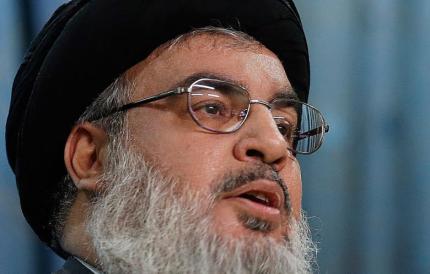
Nasrallah speaks on July 25, 2014, in the southern suburbs of Beirut. (Photo: Al-Akhbar – Haitham Moussawi)
Al-Akhbar | September 23, 2014
Hezbollah leader Hassan Nasrallah on Tuesday said his group could never be a part of an anti-ISIS coalition led by “the source” of all terrorism in the world, the United States.
The international coalition, which began illegal airstrikes in Syria for the first time Tuesday, was created to safeguard the interests of the United States, not to fight terrorism as it claims, Nasrallah said in a televised speech.
“In our opinion, America is the mother of terrorism, the source of terrorism. If there is terrorism anywhere in the world, look at America,” the secretary-general said.
“America provides complete support for the terrorism of the Zionist state. It supports Israel militarily, financially, legally, and even provides it veto in the United Nations Security Council.”
Nasrallah continued: “He who dropped the atomic bomb on the people of Japan, and who killed [relentlessly] in Vietnam and elsewhere, and who stood by [Israeli Prime Minister Benjamin] Netanyahu in the 50 day war on Gaza … is not qualified ethically or morally to present itself as a leader of a coalition to fight terrorism.”
The comments come as the United States and allied Arab dictatorships began launching unauthorized airstrikes against jihadi targets in Syria, drawing rebukes from Damascus’s allies Iran and Russia.
Nasrallah brushed off criticism that his opposition to the coalition translated into support for the Islamic State of Iraq and Syria (ISIS), noting that he has repeatedly denounced the extremists and called for their elimination.
The reality that many of those included in the anti-ISIS coalition have been financing the jihadi militants they are currently fighting in Iraq and Syria forces people of the region to question the motives of their actions, he added, referring to Saudi Arabia and Qatar.
Lebanon is one of 10 Arab countries that has pledged support to the coalition, a membership that Nasrallah said he opposed.
“Never did [US President Barack Obama] say we are coming to defend minorities or Muslims or Christians …,” Nasrallah said.
“So we will not fight in a coalition that serves US interests and not the interests of the people of the region.”
In Nasrallah’s last speech on August 15, he noted that the United States only decided to get involved in the fight against ISIS when the jihadis approached Iraq’s Kurdish region, which is strategically important to the West. … Full article
Syria slams Israel support for ISIL
Press TV – September 23, 2014
Syria has once again slammed the Israeli regime’s support for the Takfiri ISIL militants operating inside the Arab country.
A Syrian military official, whose name was not mentioned in the reports, made the comments on Tuesday after Tel Aviv said earlier in the day that it had shot down a Syrian warplane as it attempted to fly over the ceasefire line into the Israeli-occupied Golan Heights.
The official confirmed the shooting down and underlined that the move was based on Tel Aviv’s policy of supporting ISIL Takfiris.
The aircraft was apparently a MiG-21 fighter jet which was downed by a surface-to-air Patriot missile, the Army radio said, adding that the wreckage landed on the Syrian side of the plateau.
However, an unnamed Israeli military official identified the downed aircraft as a Sukhoi Su-24 Russian fighter plane.
The development comes amid heavy clashes on the Syrian side of the Golan Heights. The Syrian government has been hitting back at the foreign-backed militants there with frequent airstrikes.
Syria has been gripped by deadly violence since March 2011.
According to reports, the Western powers and their regional allies — especially Qatar, Saudi Arabia and Turkey — are supporting the Takfiris fighting against the Syrian government.
Golan Heights have been under the Israeli occupation since the 1960s. The Tel Aviv regime captured 1,200 square kilometers (460 square miles) of the Golan Heights during the Six-Day War of 1967 and annexed the region in 1981.
Who’s Your Daddy, ISIS?
By Glen Ford | Black Agenda Radio | September 17, 2014
Let us be clear, if that is possible, about President Obama’s plan to deal with ISIS, the boogeyman of America’s own making. The president last week swore that he would “degrade and destroy” the Islamic State, after having spent three years providing weapons and money to jihadists fighters, including ISIS, in hopes that they would “degrade and ultimately destroy” the Syrian state of president Bashar Assad. So, the Americans set out to destroy one state, in Syria, whose government had never presented any danger to the U.S., and wind up creating another state, a caliphate astride the borders of Syria and Iraq, that openly declares its intention to do battle with the U.S.
Obama assures us that he is assembling a new coalition of the willing to join him in smashing ISIS. It turns out that every prospective member of the coalition was a co-conspirator with the United States in giving birth to ISIS – Britain and France and other Europeans, Turkey, Saudi Arabia, Jordan, Kuwait, the United Arab Emirates…ISIS has many, many fathers, all of whom now deny patrimony.
Obama appears to be leaving the natural gas-rich nation of Qatar out of his coalition, which doesn’t seem fair, since Qatar was a loyal ally of the United States and NATO just three years ago, when Obama was busy trying to degrade and destroy another state, Libya, which also posed no threat to the U.S. The emir of Qatar worked his gaseous little butt off for Obama, sending money and guns and mercenaries to help the Libyan jihadists that the U.S. wanted to install as the new government.
Once regime change had been accomplished in Libya, Qatar helped the Americans send hundreds of Libyan jihadists to Syria, to put that regime out of business. But, Libya never did get a new state, to replace the one that was destroyed in 2011. Instead, the country is wracked by civil war, that is also a proxy war between Saudi Arabia and its friends and Qatar.
Wars Within Wars Within Regime Changes
It seems that Qatar backed the wrong side – the Muslim Brotherhood – after the regime change in Egypt in 2011. The Saudi Arabian royal family hates the Muslim Brotherhood, because the Brotherhood advocate elections, and kings don’t do elections. So, the Saudis bankrolled another regime change in Egypt, putting the military back in charge, and are now fighting a proxy war with Qatar in Libya. Which is why the Saudis blackballed Qatar from participating in Obama’s coalition of the willing against ISIS. (You do understand all this, right?)
Turkey, which is part of NATO, has been a wonderful father to ISIS, allowing the caliphate’s fighters free use of its long border with Syria and Iraq. In return, Turkey gets to buy the cheap oil from the fields that ISIS seized from Syria and Iraq, which makes the Turks somewhat reluctant to try to kill little baby ISIS.
It’s starting to look like Obama might have to take out the caliphate on his own, which is why the president’s top military advisor is talking about putting serious U.S. boots on the ground in Iraq, and maybe in Syria. Meanwhile, Obama is putting together a new army of rebels to continue the job of degrading and destroying the Syrian state – unless, of course, these new fighters just take the money and guns and join ISIS, too.
Glen Ford can be contacted at Glen.Ford@BlackAgendaReport.com.
US war on ISIL: Barrel of volatile lies
By Finian Cunningham | Press TV | September 13, 2014
There’s nothing like a war and the bombing of a foreign bogeyman to unite Americans. Since President Barack Obama made his nationwide announcement last week of open-ended war to destroy the militant ISIS network in Iraq and Syria – a terror network covertly set up by the US in the first place – the polls show a majority of American public now supporting the call for all-out air strikes.
And American politicians on both sides of Congress are also united in their support for the president’s burnished war effort. House Republican leader John Boehner has opposed Obama on all manners of domestic policies, but when it comes to going on a foreign blitzkrieg, well, that’s a “compelling case.”
Republicans and Democrats can’t seem to finalize on how much budget cuts to slash ordinary American citizens with, but they sure can close ranks on drumming up an extra $500 million to pour more weapons into war-torn Syria. It must be the “smell of napalm in the morning” that stimulates their erogenous zones.
Beyond the US, however, the newly formed “international coalition” for the American-led fight against ISIS, also known as IS or ISIL, is far from united. Indeed, early signs are that Anti-Terror Team USA is self-imploding from its own internal contradictions and dubious criminal nature.
Earlier this week, on the day before Obama’s 9/11 reminder speech for expanding the fraudulent war on terror, his secretary of state John Kerry was scouring the Middle East soliciting allies to bomb extremists in Iraq and Syria. On Wednesday, Kerry was telling CNN that such a coalition would involve “40 participating nations.”
After tours of Iraq, Jordan, Saudi Arabia and Turkey, Kerry was able to dragoon just 10 Arab states into joining the US bombing manifest.
‘Arab States Give Tepid Support To US Fight Against ISIS,’ reported the New York Times on September 12. These states include Saudi Arabia and the other Persian Gulf medieval oil sheikhdoms of Bahrain, Kuwait, Qatar, United Arab Emirates and Oman, plus Iraq, Egypt, Jordan and Lebanon. That’s hardly a constellation of legal probity and virtue; more like a rogue’s gallery of serial human rights violators.
A joint communiqué signed in the Saudi Red Sea port city of Jeddah stated a “shared commitment to stand united against the threat posed by all terrorism”. But the NYT noted: “The underlying tone was one of reluctance.” Even two of the signatories, Egypt and Jordan, expressed uneasy reservations about US plans to bomb ISIS into oblivion, despite signing up to the communiqué.
The Magnificent Ten in Jeddah vowed to: end financing of extremist groups; prevent the flow of weapons to such groups; halt the supply of fighters; curb the spread of extremist ideology; and increase humanitarian aid to Syria and Iraq. Saudi Arabia also promised to set up training camps for “moderate rebels” who would allegedly counteract the extremist ISIS network.
That chore list sounds rather more like a confession of past crimes that some of these US allies have been up to over the past three years: financing, arming, manning and promoting ISIS and its ilk to create a humanitarian catastrophe in Syria and Iraq. As for Wahhabi head-chopping Saudi Arabia setting up training camps to counteract its very own Wahhabi-sponsored head-chopping extremists in ISIS that’s just a risible joke.
Kerry tried to put a brave face on his dysfunctional regional posse. “Arab nations play a critical role, indeed a leading role,” he said in Jeddah, with a bravado that belied the fact that this proposed bombing campaign against ISIS is a US-led operation to give itself a license to bomb Syria for its long-held regime-change objective; the only critical role that these Arab puppets have is to give the covert campaign a veneer of Arab consent so that it doesn’t look like American imperialism on another criminal, murderous rampage – which it is.
NATO member Turkey, although non-Arab, dealt a blow from the outset to the US coalition by refusing to sign up. The Ankara government said it would not allow American warplanes to use its territory for air strikes against ISIS either in Iraq or Syria. Turkey has nearly 50 of its citizens currently held in captivity by the extremist groups in Syria and said that its “hands were tied.”
Ankara has also been a covert arms supplier of ISIS and other extremists, such as Jabhat al Nusra, along with the US and other NATO members, in a bid to oust the Syrian government of President Bashar al-Assad since mid-March 2011. That regime-change plan in Syria has failed miserably, with Assad winning overwhelmingly a presidential election last June, thus disproving the Western propaganda campaign of a popular revolution rising up against a tyrant.
Where the covert Western-backed terrorist campaign has failed on the ground, now Washington wants to add air power under the guise of “destroying” the ISIS terror network – a network that it in fact has spawned for the purpose of regime change in Syria. What are the bets that any US-led bombing of ISIS in Iraq and Syria will soon morph into US air strikes on Assad government forces, which is the main target for Washington, not its CIA-sponsored mercenaries in ISIS?
Turkey is mindful of blowback terrorism if it were to publicly join in US-led air strikes against ISIS. All of the Arab bombing coalition are no doubt mindful of the same treacherous contradiction, hence their reported reluctance to sign up to the scheme, as the New York Times noted.
Meanwhile, Russia, Syria and Iran immediately warned of the legal consequences of Obama’s bombing strategy. The Iraqi government has approved, so that gives Washington a claim on legality for continuing its strikes against ISIS in the north of that country. But not so the Syrian government.
Russia’s foreign ministry spokesman Alexander Lukashevich said that without the consent of the Syrian government in Damascus or a UN Security Council mandate, any US-led air strikes on ISIS inside Syrian territory would amount to “a gross violation of international law”. The Syrian authorities added that any such US intervention would be “an act of aggression on a sovereign country.”
Obama claims that he has “executive war powers” to bomb and kill whomever he wants, under the fascistic post-9/11 Authorization to Use Military Force (AUMF). But this White House Murder Inc. policy is increasingly threadbare and morally abhorrent. All the more so because Washington is exhorting the European Union to slap tougher economic sanctions on Russia for allegedly intervening militarily in Ukraine – which Moscow adamantly says it is not and moreover points out that there is no evidence of.
The dubious legality, not to mention logistical viability, of Washington’s latest bomb-first-ask-questions-later proposals to defeat the Frankenstein monster of its own creation in Iraq and Syria is cause for pause among even America’s pathetic European lackeys.
The French are balking at the prospect of bombing its former Syrian colony. French President Francois Hollande said: “France is ready to act, but once the political accord is there and in respect of international law.” That’s French diplomacy-speak for: “Don’t count on us being caught complicit in American war crimes.”
Germany’s Foreign Minister Frank-Walter Steinmeier was even more categorical in spurning the US-led coalition. Speaking in Berlin the day after Obama’s bravura televised speech to his nation, Germany’s top diplomat said of possible air strikes: “To be quite clear, we have not been asked to do so and neither will we do so.”
Britain’s Foreign Minister Philip Hammond also ruled out British involvement in US-led air strikes inside Syria. Hammond said his government supported the US-led coalition – placating the megalomaniac Yanks – but he told Reuters : “Let me be clear: Britain will not be taking part in any air strikes in Syria. We have already had that discussion in our parliament last year and we won’t be revisiting that position.”
British Prime Minister David Cameron appeared to quickly snub Hammond later on Friday when he said that “nothing was being ruled out” as far as British warplanes are concerned in possible Syria operations with the Americans.
Nevertheless, despite Cameron’s obviously compensatory bluster, it seems clear that the US-led campaign to “destroy ISIS” is already running out of commitment, even among Washington’s most dutiful, pathetically servile allies; and no wonder, too. This US-led anti-terror bombing coalition is such a barrel of volatile lies, unstable contradictions and inflammatory expediency it is bound to implode before it even starts to roll.
Syrian media slams Arab support for new US war in the region
Al-Akhbar | September 9, 2014
Syrian media accused Arab governments Tuesday of giving Washington prior agreement for military action against jihadists, with one daily calling for Damascus to form an alternative alliance with Moscow and Tehran.
The commentary comes ahead of talks in Saudi Arabia on Thursday between Secretary of State John Kerry and US regional allies on joint action to tackle the threat posed by the Islamic State group in both Syria and Iraq.
“Washington, which used the false pretext of weapons of mass destruction to enter the region militarily in 2003 and draw new geopolitical lines… is returning today under a new false pretext, the fight against terrorism,” said the Al-Baath newspaper.
“The Arabs meanwhile, are absent from every decision and are playing secondary roles,” it added.
The Baath party daily was referring to the US-led invasion of Iraq in 2003 in which notoriously the alleged chemical and biological weapons that were used to justify the overthrow of Saddam Hussein’s regime were never found.
Kerry is set to meet foreign ministers from Egypt, Jordan, Iraq, Lebanon, Turkey and the six Gulf Arab states in Saudi Arabia on Thursday.
The talks are part of US efforts to build a coalition to tackle ISIS, which has seized large tracts of territory in both Syria and Iraq, and carried out abuses including the decapitation of Syrians, Iraqis, Lebanese and two American journalists.
On Sunday, the Arab League pledged to take “necessary measures” to confront ISIS, and said it was ready for “international cooperation on all fronts.”
But Syria, and its ally Iran, will not be present at the talks in Saudi Arabia, and Damascus fears efforts to tackle ISIS will involve air strikes on its territory without its permission.
State-run newspaper Al-Thawra warned: “The United States is setting the stage to bring new wars to the region.
“Its local partners are ready to carry out its orders without even knowing the details of the American plan,” it added.
Government daily Tishrin questioned why Kerry and US Defence Secretary Chuck Hagel were coming to the region “when the Arab League has already given its prior agreement for a new war in the region organized by the United States.”
A newspaper called for the formation of an alternative “Russian-Iranian-Syrian coalition” against the jihadists to that being put together by Washington.
“Western and regional governments are excluding the nations that really want to fight terrorism,” it said, charging that the US-led coalition included nations that “support terrorism financially, military and logistically.”
Damascus considers all rebel groups fighting to overthrow President Bashar al-Assad “terrorists” and has long accused the rebels’ supporters, particularly Qatar, Saudi Arabia and Turkey, of funding “terror.”
Similarly, critics opposed to US involvement in the conflict with ISIS have pointed out that Washington in partnership with its Gulf allies, including Saudi Arabia, played a role in the formation and expansion of extremist groups like ISIS by arming, financing and politically empowering armed opposition groups in Syria.
On Monday, a study by the London-based small-arms research organization Conflict Armament Research revealed that ISIS jihadists appear to be using US military issue arms and weapons supplied to the so-called moderate rebels in Syria by Saudi Arabia.
(AFP, Al-Akhbar)
More NATO Aggression Against Syria?
Media Myths and Distortions
By Rick Sterling | CounterPunch | September 3, 2014
Syria will be an important subject of discussion at this week’s NATO Summit meeting in Wales. The US and NATO powers will evaluate whether to expand air strikes against ISIS (Islamic State in Iraq & Syria) into Syria, whether to do it in cooperation with the Syrian government and whether to increase support to the “moderate” armed opposition. The US mainstream media and politicians have been beating the war drums with Republican Senator McCain calling for military escalation and Democratic Senator Feinstein criticising President Obama for being “too cautious”.
There has been little mention of the fact that it is one year since the highly publicized chemical weapons attack in the Ghouta outskirts of Damascus. The same elements who are pushing for “regime change” military action now were doing so one year ago. Since then, the case that the Syrian government was responsible for the attack has been effectively discredited. The diplomatically negotiated agreement to remove all Assad’s chemical weapons has been successfully implemented. One would think this would merit attention, but it has been widely ignored.
One good thing in the media this week is recognition that Libya is now in chaos. This is the country which was “liberated” by NATO bombing which led to the murder of President Ghadaffi and collapse of that government. Nine months ago a plurality of Libyans said they are worse off than before the regime change. It’s very likely that even more Libyans are unhappy with their externally imposed regime change today. Three years ago NATO members were congratulating themselves on the air war against Libya. Now they are hopefully more sober as it goes public that Libya is in chaos, the airport shut down, competing extremists fighting for dominance, with one faction enjoying themselves in the US Embassy swimming pool.
The Obama Administration is at another turning point where it may choose to escalate its aggression against Syria. Clearly Obama and team do not want to go solo. The dreams of a“New American Century” with unchallenged US dominance have been broken by reality in Iraq, Afghanistan and beyond. But the hounds of war and aggression are noisy and persistent.
As NATO begins to deliberate whether and how to escalate aggression against Syria, let’s review some recent and long standing myths and lies about the Syrian conflict.
Myth #1.
Some articles and even the (current) Wikipedia entry for James Foley (journalist) claim that he was a prisoner of the Syrian military and that they turned him over to ISIS. This is in perfect keeping with the pervasive demonization of the Assad government. However it’s false. A serious investigation into the disappearance of Foley is in the May 2014 Vanity Fair. Foley was captured by Nusra Front (or allied rebels) in November 2012 and later transferred or sold to ISIS.
Myth #2.
Both NY Times’ Anne Barnard and John McCain suggest or assert that the Syrian government has collaborated with ISIS. The “evidence” of this is that the Syrian Army did not actively attack ISIS in eastern Syria during the past year.
The reality is that Syrian Army needs to pick and choose its battles and priorities. They are weakened by over three years of intense conflict resulting in at least 65 THOUSAND Syrian army and militia deaths. For reference, the total US death count in Vietnam was 58 thousand and Syria today is one tenth the size of the US in the 1970’s. In the past year the Syrian military has focused on confronting armed opposition in Aleppo (the largest city), Homs, outer Damascus and the Lebanese border area. The Syrian military has gained ground in each of these areas along with implementing the national “reconciliation” policy.
In the past two months, ISIS has gone on the offensive in eastern Syria and is pressing towards Aleppo and central Syria with US equipment and weaponry captured in Iraq. The battles have taken a heavy toll on both ISIS and the Syrian military. According to rebel aligned Syrian Observatory for Human Rights (SOHR), 346 ISIS fighters were killed in a four day assault on Tabqa Air Base near Raqqa. The fighting has been brutal with heavy losses on both sides.
Longtime Mideast journalist Patrick Cockburn writes, “A conspiracy theory, much favoured by the rest of the Syrian opposition and by Western diplomats, that Isis and Assad are in league, has been shown to be false.”
In contrast with the myth, ISIS has in fact been aided and abetted by US allies. This includes funds from Saudi Arabia and other Gulf countries, ideology and recruitment by Saudi media, transportation and safe haven through Turkey.
Myth #3.
It is usually claimed that the Syrian conflict is a civil war that started with peaceful protests in 2011. In reality the seeds of the conflict were planted much earlier. General Wesley Clark’s 2007 memoir described plans for “regime change” in Syria and other countries. Also in 2007 Seymour Hersh documented the US strategy of fomenting conflict in Syria (and Iran) by working with Sunni extremists:
“The U.S. has also taken part in clandestine operations aimed at Iran and its ally Syria. A by-product of these activities has been the bolstering of Sunni extremist groups that espouse a militant vision of Islam and are hostile to America and sympathetic to Al Qaeda.”
When mass protests began in Syria they included violent attacks and murders of police from the beginning. The situation was the same in other regions. Jesuit priest Father Frans Van Der Lugt was widely respected by Sunni Muslims and Christians in the Old City of Homs. He described the start of the protests thus:
“From the start, the protest movements were not purely peaceful. From the start I saw armed demonstrators marching along in the protests, who began to shoot at the police first. Very often the violence of the security forces has been a reaction to the brutal violence of the armed rebels.”
The conflict in Syria has been primarily instigated and continued by some of the world’s wealthiest and powerful governments. They make no secret and call themselves, with Orwellian chutzpah, the “Friends of Syria”. Their division of labor including who pays the salaries of the rebel mercenaries, who supplies communication equipment, who does training and who supplies weapons. Thus the conflict in Syria is primarily a war of aggression using domestic and foreign mercenaries.
Myth #4.
It is often suggested the “moderate opposition” is popular, democratic and secular.
President Obama has recently proposed giving $500 million to the “moderate opposition”.
Patrick Cockburn sums up the reality in the newly released book “The Jihadis Return: ISIS and the New Sunni Uprising”:
“It is here that self-deception reigns, because the Syrian military opposition is dominated by ISIS and by Jabhat Al Nusra, the official Al Queda representative, in addition to other extreme jihadi groups. In reality there is no dividing wall between them and America’s supposedly moderate opposition allies.”
This siuation is not new. A NY Times article in summer 2012 discussed the hidden presence of Al Queda within the “Free Syrian Army”. When he read this, James Foley sent out a tweet linking to the article and pondering whether the photographed black flag was necessarily Al Queda. He did not recognize the flag and wondered whether it was “some misc jihadi group”. Ironically that was the unique flag of ISIS before it was widely recognized. The “misc jihadi” group is the one that would later murder him.

Foley’s last article documented the overall unpopularity of the rebels in Aleppo:
“Aleppo, a city of about 3 million people, was once the financial heart of Syria. As it continues to deteriorate, many civilians here are losing patience with the increasingly violent and unrecognizable opposition — one that is hampered by infighting and a lack of structure, and deeply infiltrated by both foreign fighters and terrorist groups.”
Myth #5.
Finally there is the myth that the Free Syrian Army and other “moderate opposition” groups were not supported. In reality, huge quantities of weapons and ammunition have flowed which is exactly what has allowed the terrorist organizations to continue the mayhem and bloodshed. Starting in November 2012 three thousand TONS of weapons and ammunition were flown from Zagreb to Turkey and then transferred to the Syrian rebels. In addition there were huge shipments from Benghazi Libya and more shipments paid by Saudi Arabia and Qatar.
DO USA AND NATO REALLY WANT TO STOP ISIS?
One week after the Syrian Presidential election where 73% of the electorate turned out, ISIS made its advance through western Iraq to Mosul and other cities. There were virtually no battles. Iraqi military leadership simply departed and in the confusion troops fled or disbanded. Was this a military collapse or was it planned, with key Iraqi figures either bribed or otherwise in alliance with ISIS? Whichever is the truth,we can see the consequences and who has benefited: the campaign for greater autonomy in the oil rich Kurdish region has advanced; the split between Shia and Sunni has been exacerbated; and one of the world’s greatest overnight military arms transfers took place with ISIS effortlessly taking control of vehicles, humvees, tanks, lethal mortar launchers, high grade military equipment and tons of ammunition.
Did US military officers, who spent years and billions of dollars “training” the Iraqi military, have advance notice or knowledge of this seeming collusion between ISIS and Iraqi military officers? Did wealthy enemies of Syria simply bribe the Iraqi officers? Was it a “collapse” or is there much more behind this? How can a few hundred jihadi militants traveling in new Toyota pickup truck convoys surprise and overtake military checkpoints and bases without a fight unless there was collusion at the highest levels?
Actions reveal more than words. If the US and NATO really are worried about ISIS they can and will implement measures such as the following:
* shut down the Jihadi Highway through Turkey.
* shut down safe haven and supply routes of ISIS and other terrorist groups in Turkey
* provide useful information from surveillance flights to the Syrian army which is doing the main on-the-ground fighting
* demand and check that Saudi Arabia and Qatar stop broadcasting TV programs featuring hate speech which serve to recruit jihadis to join ISIS.
* demand and check that Saudi Arabia and Qatar implement measures to stop funding for ISIS through their banks and other financial operations.
Will the US and NATO take practical steps to counter ISIS or will they escalate their aggression against Syria, violating Syrian air space and looking for a pretext to impose a “no fly zone” as done in the disastrous aggressions against Iraq and Libya?
Will the US and NATO start a bombing campaign against ISIS in Syria which will ignite MORE support for the group in the Arab world?
Will they violate Syrian air space as a stepping stone to US bombing of Syrian army positions?
Or will the US and NATO resist the hounds of war and finally put aside the campaign of regime change against a secular, socialist inclined government that is supported by a big majority of its people?
Rick Sterling is a founding member of Syria Solidarity Movement. He can be contacted at rsterling1@gmail.com
Mofaz proposes role for Saudi Arabia and UAE to disarm Gaza
Arabi21 | July 20, 2014
As Israel continues to prosecute its criminal war against the people of the Gaza Strip, its leaders in Tel Aviv are counting more and more on the Arab regimes to confront the Palestinian resistance and reduce its effectiveness. Former Defence Minister and Chief of Staff of the Israeli army, General Shaul Mofaz, has called for a role to be “allocated” for Saudi Arabia and the UAE to disarm Hamas and other resistance groups.
Speaking on Israel’s Channel 10, Mofaz explained that it would be impossible for its army to demilitarise the Strip by force even if it were to re-occupy it completely. As such, he claimed, the matter requires a comprehensive diplomatic, political and economic plan for such an objective to be achieved.
He pointed out that there is an urgent need to convince the people of Gaza of the necessity to collaborate in implementing such a plan. This would require offering the carrot, represented by a generous financial reward, to convince them to cooperate with any international or regional effort that could contribute to achieving this goal. He noted that both Saudi Arabia and the UAE could, in the present circumstance, play an important role in providing the finances for this reward.
Meanwhile, a prominent Israeli military commentator has called for an official investigation into the political, military and intelligence failures of Israel’s war on the coastal territory. This follows growing indications that the Zionist state is not achieving its objectives.
In an article in Maariv newspaper on Saturday, Ran Edelist said that there is cause to suspect that the assessment of the internal security intelligence agency, Shin Bet, on the basis of which the Netanyahu government took the decision to go to war in Gaza, might have been influenced by the ideological motives of its leaders. Edelist pointed out that Shin Bet head Yoram Cohen belongs to the religious Zionist movement, and his deputy, who is referred to as “R”, is a settler known for his ideological extremism. They produced the recommendations for the government regarding Hamas from an extremist viewpoint rather than from an objective professional position, he claimed. Edelist accused Prime Minister Benjamin Netanyahu of ordering the campaign against Gaza in the hope of improving his political status and reducing opposition to him within his own Likud Party. There are growing calls for his resignation.
According to Audi Siegel, the political affairs commentator on Channel 2 TV, the only solution for the Gaza predicament is for Israel to recognise Gaza as an independent entity and deal with all the consequences. Also writing in Maariv, Siegel said that it has become evident that Israel’s ability to control the resistance in Gaza and destroy the Hamas movement is zero. He noted that all the assumptions upon which Israel made the decision to launch a war on Gaza have collapsed.
Siegel said that recognising the Hamas government in Gaza might improve the security environment for Israel. If not, he added, it would possible to garner international support to justify any military step Israel might then take against the territory.
Egyptian comedian cancels TV show citing ‘pressures’

MEMO | June 3, 2014
Egyptian comedian and TV satirist Bassem Youssef said Monday his show has been cancelled, citing pressures faced by the Saudi-owned MBC group to suspend his show.
According to producers of the show, as quoted by Reuters, the latest episode poked fun at the latest presidential elections, particularly the staggeringly low turnout and the resulting pro-Al-Sisi media panic.
MBC spokesman Mazen Hayek said that his group “had no hand” in the decision to suspend the show, saying the channel “did its best” to keep the show on air.
He refused to respond to questions regarding Saudi government pressures to cancel the show.
The Saudi government is one of the main backers of the former army chief Abdel-Fattah Al-Sisi who led the July 3 military coup against elected President Mohamed Morsi. Al-Sisi won a controversial presidential election last week in what has been internationally denounced as an illegitimate and unfair process.
How the Iran Nuclear Deal May Impact Iran’s Approach in OPEC
Going to Tehran | May 19th, 2014
How the Iran Nuclear Deal May Impact Iran’s Approach in OPEC
by Erfan Ghassempour
Iran is thinking seriously about how to put its crude oil back on the market, and—following the November 2013 Geneva interim agreement on Iran’s nuclear program—is planning for a future when sanctions no longer hamper its oil industry. The country is changing its contracts for the exploration, development, and production of its oil and gas resources to tempt major international oil companies to return to its petroleum sector. Iran’s Petroleum Minister, Bijan Namdar Zanganeh, has expressly invited seven oil giants to invest in Iran after sanctions are lifted.
Iranian ambitions are also reflected in Tehran’s approach to the Organization of Petroleum Exporting Countries (OPEC). At the most recent OPEC meeting, held in December 2013—in the wake of the Geneva nuclear deal—Zanganeh made a powerful impression, warning other members to make room for Iranian crude. One way or another, he declared, Iran plans to increase its oil output to four million barrels per day (bpd), even if prices decrease to twenty dollars per barrel. (Some analysts think that the highest output Iran could achieve in the near-to-medium term after the lifting of sanctions would be 3-3.5 million bpd—but even that would mean a significant increase in Iranian oil exports, which, according to Zanganeh, are now at 1.5 million bpd.)
Iran’s reemergence on the international oil scene comes at a time when developments in other OPEC member states are increasing the likelihood of an appreciable rise in Middle Eastern oil production—e.g., Iraq’s security is improving, and strikes and rebel attacks seem to be ebbing in Libya. Zanganeh argues that, even in this context, Iran’s return to the oil market should have no negative impact on prices. As he told the OPEC Bulletin, over the years other OPEC members had “gone out of the market” for some time, “but when they returned to the market, OPEC knew how to deal with the situation—to create room to maintain the extra capacity, so that these countries can have a good return and for it not to have a bad impact on prices.”
At least on the surface, other OPEC players responded positively to Zanganeh’s message. OPEC’s secretary general, Abdalla el-Badri, welcomed Iran’s return to the market, denying any concern at this prospect. Even Iran’s biggest political and oil rival, in the region, Saudi Arabia (the biggest oil producer in OPEC), welcomed an increase in Iranian production. Saudi Arabia’s Oil Minister, Ali Naimi, told reporters that he did not see a price war on the horizon: “They are welcome, everyone is welcome to put in the market what they can; the market is big and has many variables—when one comes in, another comes out.” Mr. Naimi also stated, “I hope Iran comes back [and] produces all it can.”
Iran is also stepping up its cooperation with Iraq on oil issues. At the December 2013 OPEC meeting, Iraq vigorously defended Iran’s plans to raise oil production, while also making clear that Iraq would remain outside OPEC’s quota system and that other members should decrease their production, if necessary, to make room for both Iran and Iraq. (Iraq’s Deputy Prime Minister for Energy, Hussein al-Shahristani, has announced that his country intends to increase its oil output to nine million bpd by 2020, partly through cooperation with Iran.) Recently, Iraq has been helping Iran to develop new contracts to attract more foreign investment to its oil sector. Baghdad and Tehran have also established a committee to oversee the joint exploitation of fields lying astride the Iranian-Iraqi border. Some analysts think that the two countries are drawing closer to maximize their relative power and influence—on oil-related issues as well as on strategic and political matters—vis-à-vis Saudi Arabia.
As the six-month deadline for the Geneva interim deal approaches, Iran’s determination to produce more crude becomes stronger. If a permanent nuclear deal is reached at the end of six months (that is, on or around July 20), it would mean that sanctions will be lifted and Iran will renew its upstream and downstream activities.
So far, the interim deal has been well implemented. The International Atomic Energy Agency affirms that Iran is fulfilling its commitments; the West has returned some of the Iranian funds that have been frozen in Western banks and has eased some sanctions. None of the parties has been motivated to breach the interim agreement. On the Iranian side, the political and economic atmosphere in Iran suggests that Iranian officials are willing to continue this approach; Supreme Leader Ayatollah Seyed Ali Khamenei has publicly expressed his support for the ongoing nuclear negotiations. On the American side, while some political factions in the United States want President Obama to increase pressure on Iran, this seems more a matter of political posturing than serious action. At this point, there is little appetite in the United States for torpedoing nuclear diplomacy with Iran.
Iran knows that any improvement in its oil industry is dependent on the nuclear talks. As the negotiations progress, Iranian officials are playing a bolder role in the region and in international organizations to which Iran belongs. At the next OPEC meeting in June, Zanganeh is likely to take an even tougher approach than at the previous meeting in December. It seems that other OPEC states are progressively accepting the inevitability of Iran’s return to the international oil scene.
There are two ways in which OPEC can handle prospective increases in Iranian, Iraqi, and Libyan output: other members—especially Saudi Arabia—can decrease production to make room for increased production by others, or the organization can raise its current 30 million bpd production ceiling. Politically as well as economically, much will hinge on what OPEC decides.
Featured Video

Weaponized Journalism: 2021 Sayer Ji Interview with NPR
or go to
Aletho News Archives – Video-Images
From the Archives
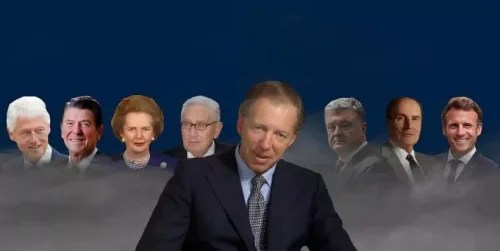
How Rothschild Banking Clan Uses Its Vast Wealth to Influence World Events and Control Governments
By Ilya Tsukanov – Sputnik – 15.09.2024
How powerful is the Rothschild banking family? How did they amass their fortune? Just how rich are they? Do they secretly control the world? Sputnik explores. … continue
Blog Roll
 Aletho News
- Dockworkers launch global strike against Israeli and US military shipments
- Europe facing gas price shock – Gazprom chief
- Ukraine continues recruiting people with disabilities
- Weaponized Journalism: 2021 Sayer Ji Interview with NPR
- Beyond Netanyahu: what Israel’s election means for Palestinians
- Lithuania plans universal conscription
- Lies, Damn Lies, and Ukraine News
- Financial Times rejects Nordic demands to correct Putin call story – media
- The Case for Less Unity in Europe
- Ukraine expands minority rights under EU pressure – but Russians remain excluded
- If Americans Knew
- An error has occurred; the feed is probably down. Try again later.
- No Tricks Zone
- Germany’s Green Energy Transition Becoming Increasingly Expensive…Another 6 Trillion Euros!
- Sudden Stratospheric Warming, Powerful El Niño Combination May Lead To Extreme Europe Cold, Energy Crisis!
- Two New Studies Find Thwaites Glacier Melt Cannot Be Driven By Human Activity Or A Warming Ocean
- E-Cars Reduce CO2 Emissions By Only 41% Compared To Internal Combustion Engine Vehicles
- Predictions Made By Renowned Climate Professor Over Past Decades Have Been Proven To Be Poor
- New Study Suggests Large Regions Of The Pacific Ocean Have Been Cooling For The Last 80 Years
- Germany’s Green Energy Debacle: High Energy Costs Force Kahla Porzellan to Close After 182 Years!
- New Study: 50 Years Of The Most Aggressive ‘Net Zero’ Policies Can Only Affect The Global Climate By 0.03°C
- US September “Heat” Was No Record…Many Records Set Decades Ago
- Latest European Green Energy Debacle; Portugal’s Largest Flagship Solar Park Insolvent!

