Saudi Arabia to give Egypt $4 billion rescue package
MEMO | January 31, 2014
On Thursday, Egypt’s Al-Ahram newspaper quoted an unnamed ministerial source in the interim Egyptian government as saying that Prime Minister Hazem El-Beblawi’s visit to Saudi Arabia next Tuesday will result in Cairo receiving a $2 billion aid package, as well as petrol supplies valued at another $2 billion.
Egyptian government spokesman, Hani Salah said that El-Beblawi’s visit to Saudi Arabia will focus on the economic portfolio, as well as the discussion of a number of projects.
Last September, the governor of the Central Bank of Egypt, Hisham Ramez, announced that Cairo had received $1 billion from Riyadh and that his country would receive additional aid from Saudi Arabia, UAE, and Kuwait, who pledged to grant Egypt a total of $12 billion.
Riyadh had agreed at the end of last July to provide a package of aid to Egypt amounting to $5 billion, including $2 billion in the form of deposits in the Central Bank of Egypt, $2 billion in gas and petroleum materials and $1 billion in cash.
Gulf aid has contributed significantly to alleviating financial pressures on the Egyptian economy, which was severely affected by the unrest following the January 25th Revolution and the military coup last summer. Egypt is expected to reveal the details of a second economic stimulation drive over the next few days, according to a statement made by the Egyptian Ministry of Finance on Tuesday. This initiative aims to increase the country’s growth rate and restore investor confidence which plummeted after the July 2013 military coup.

President Bashar al-Assad’s interview with Agence France Presse
SANA | January 21, 2014
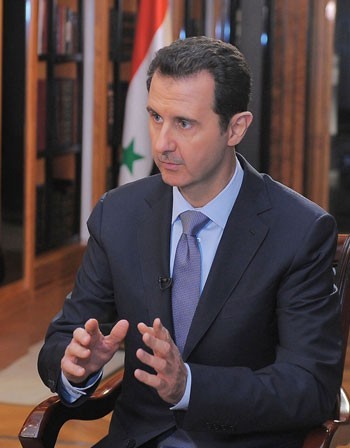 Damascus – President Bashar al-Assad gave an interview to Agence France Presse. Following is the full text of the interview:
Mr. President, what do you expect from the Geneva conference?
President Assad: The most basic element, which we continuously refer to, is that the Geneva Conference should produce clear results with regard to the fight against terrorism in Syria. In particular, it needs to put pressure on countries that are exporting terrorism, – by sending terrorists, money and weapons to terrorist organisations, – especially Saudi Arabia and Turkey, and of course the Western countries that provide political cover for these terrorist organisations. This is the most important decision or result that the Geneva Conference could produce. Any political solution that is reached without fighting terrorism has no value. There can be no political action when there is terrorism everywhere, not only in Syria but in neighbouring countries as well. From the political side, it is possible for Geneva to contribute to a process of dialogue between Syrians. There has to be a Syrian process within Syria and whilst Geneva could support this, it cannot be a substitute for it.
AFP: After nearly three years of devastating war and the big challenge of reconstruction in the country, is it likely that you will not be a candidate for the presidency?
President Assad: This depends on two things: It depends on personal aspirations or a personal decision, on the one hand, and on public opinion in Syria, on the other. As far as I am concerned, I see no reason why I shouldn’t stand; as for Syrian public opinion, there is still around four months before the election date is announced. If in that time, there is public desire and a public opinion in favour of my candidacy, I will not hesitate for a second to run for election. In short, we can say that the chances for my candidacy are significant.
AFP: In these past years, have you thought for a moment about losing the battle, and have you thought of an alternative scenario for you and your family?
President Assad: In any battle, there is always the possibility of winning and losing; but when you’re defending your country, it’s obvious that the only choice is to win. Should Syria lose this battle that would mean the spread of chaos throughout the Middle East. This battle is not confined to Syria and is not, as Western propaganda portrays, a popular uprising against a regime suppressing its people and a revolution calling for democracy and freedom. These lies have now become clear to people. A popular revolution doesn’t last for three years only to fail; moreover, a national revolution cannot have a foreign agenda. As for the scenarios that I have considered, of course these types of battles will have numerous scenarios – 1st, 2nd, 3rd……tenth, but they are all focused on defending the country not on running away from it. Fleeing is not an option in these circumstances. I must be at the forefront of those defending this country and this has been the case from day one.
AFP: Do you think you are winning this war?
President Assad: This war is not mine to win; it’s our war as Syrians. I think this war has, if you will, two phases. The first phase, which took the form of plans drawn up at the beginning, was the overthrow of the Syrian state in a matter of weeks or months. Now, three years on, we can safely say that this has failed, and that the Syrian people have won. There were countries that not only wanted to overthrow the state, but that also wanted to partition the country into several ‘mini-states;’ of course this phase failed, and hence the win for the Syrian people. The other phase of the battle is the fight against terrorism, which we are living on a daily basis. As you know, this phase isn’t over yet, so we can’t talk about having won before we eliminate the terrorists. What we can say is that we are making progress and moving forward. This doesn’t mean that victory is near at hand; these kinds of battles are complicated, difficult and they need a lot of time. However, as I said, and I reiterate, we are making progress, but have not yet achieved a victory.
AFP: Returning to Geneva, do you support a call from the conference for all foreign fighters to leave Syria, including Hezbollah?
President Assad: Clearly the job of defending Syria is responsibility of the Syrian people, the Syrian institutions, and in particular the Syrian Army. So, there would be no reason for any non-Syrian fighters to get involved had there not been foreign fighters from dozens of countries attacking civilians and Hezbollah especially on the Syrian-Lebanese border. When we talk about fighters leaving Syria, this would need to be part of a larger package that would see all the foreign fighters leave, and for all armed men – including Syrians – to hand over their weapons to the Syrian state, which would consequently achieve stability. So naturally, yes, one element of the solution in Syria – I wouldn’t say the objective – is for all non-Syrian fighters to leave Syria.
AFP: In addition to the prisoner exchange and a ceasefire in Aleppo, what initiatives are you ready to present at Geneva II?
President Assad: The Syrian initiative was put forward exactly a year ago, in January of last year. It’s a complete initiative that covers both political and security aspects and other dimensions that would lead to stability. All of these details are part of the initiative that Syria previously put forward. However, any initiative, whether this one or any other, must be the result of a dialogue between Syrians. The essence of anything that is proposed, whether it’s the crisis itself, fighting terrorism, or the future political vision and political system for Syria, requires the approval of Syrians. Our initiative was based on a process to facilitate this dialogue rather than a process to express the government’s point of view. It has always been our view that any initiative must be collective and produced by both the political actors in Syria and the Syrian people in general.
AFP: The opposition that will participate in Geneva is divided and many factions on the ground don’t believe it represents them. If an agreement is reached, how can it be implemented on the ground?
President Assad: This is the same question that we are asking as a government: when I negotiate, who am I negotiating with? There are expected to be many sides at Geneva, we don’t know yet who will come, but there will be various parties, including the Syrian government. It is clear to everyone that some of the groups, which might attend the conference, didn’t exist until very recently; in fact they were created during the crisis by foreign intelligence agencies whether in Qatar, Saudi Arabia, France, the United States or other countries. So when we sit down with these groups, we are in fact negotiating with those countries. So, is it logical that France should be a part of the Syrian solution? Or Qatar, or America, or Saudi Arabia, or Turkey? This doesn’t make any sense. Therefore, when we negotiate with these parties, we’re in fact negotiating with the countries that are behind them and that support terrorism in Syria. There are other opposition forces in Syria that have a national agenda; these are parties that we can negotiate with. On the issue of the vision for Syria’s future, we are open for these parties to participate in governing the Syrian state, in the government and in other institutions. But as I mentioned earlier, anything that is agreed with any party, whether in Geneva or in Syria, must be subject to people’s endorsement, through a referendum put to Syrian citizens.
AFP: In this context, could the ceasefire agreements that have been started in Moadimiya and Barzeh be an alternative to Geneva?
President Assad: The truth is that these initiatives may be more important than Geneva, because the majority of those fighting and carrying out terrorist operations on the ground have no political agenda. Some of them have become professional armed robbers, and others, as you know, are takfiri organisations fighting for an extremist Islamic emirate and things of that kind. Geneva means nothing for these groups. For this reason, the direct action and the models that have been achieved in Moadamiyeh, in Barzeh and other places in Syria has proven to be very effective. But this is separate from the political process, which is about the political future of Syria. These reconciliations have helped stability and have eased the bloodshed in Syria, both of which help pave the way for the political dialogue I mentioned earlier.
AFP: Are you prepared to have a prime minister from the opposition in a future government?
President Assad: That depends on who this opposition represents. When it represents a majority, let’s say in parliament, naturally it should lead the government. But to appoint a prime minister from the opposition without having a majority doesn’t make any political sense in any country in the world. In your country, for example, or in Britain or elsewhere, you can’t have a prime minister from a parliamentary minority. This will all depend on the next elections, which we discussed in the Syrian initiative; they will reveal the real size of support for the various opposition forces. As to participation as a principle, we support it, of course it is a good thing.
AFP: Are you prepared to have, for example, Ahmed Jarba or Moaz Khatib, be your next prime minister?
President Assad: This takes us back to the previous question. Do any of these people represent the Syrian people, or even a portion of the Syrian people? Do they even represent themselves, or are they just representatives of the states that created them? This brings us back to what I mentioned earlier: every one of these groups represents the country that created them. The participation of each of these individuals means the participation of each of those states in the Syrian government! This is the first point. Second, let’s assume that we agreed to the participation of these individuals in the government. Do you think that they would dare to come to Syria to take part in the government? Of course they wouldn’t. Last year, they claimed that they had control of 70% of Syria, yet they didn’t even dare to come to the areas that they had supposed control of. They did come to the border for a 30-minute photo opportunity and then they fled. How can they be ministers in the government? Can a foreigner become a Syrian minister? That’s why these propositions are totally unrealistic, but they do make a good joke!
AFP: Mr. President, you said that it depends on the results of the elections, but how can you hold these kinds of elections if part of Syria’s territory is in the hands of insurgents?
President Assad: During this crisis, and after the unrest started in Syria, we have conducted elections twice: the first was municipal elections and the second was parliamentary elections. Of course, the elections cannot be conducted in the same way they are conducted in normal circumstances, but the roads between Syrian regions are open, and people area able to move freely between different regions. Those who live in difficult areas can go to neighbouring areas and participate in the elections. There will be difficulties, but it is not an impossible process.
AFP: Now that opposition fighters are battling jihadists, do you see any difference between the two?
President Assad: The answer I would have given you at the beginning of the events or during its various phases, is completely different to the answer today. Today, there are no longer two opposition groups. We all know that during the past few months the extremist terrorist groups fighting in Syria have wiped out the last remaining positions that were held by the forces the West portrays as moderates, calling them the moderate or secular forces, or the Free Syrian Army. These forces no longer exist. We are now dealing with one extremist group made up of various factions. As to the fighters that used to belong to what the West calls ‘moderate forces,’ these have mostly joined these extremist factions, either for fear or voluntarily through financial incentives. In short, regardless of the labels you read in the Western media, we are now fighting one extremist terrorist group comprising of various factions.
AFP: Would it be possible for the army and the opposition to fight against the jihadists side by side?
President Assad: We cooperate with any party that wants to join the army in fighting terrorists, and this has happened before. There are many militants who have left these organisations and joined the army to fight with it. So this is possible, but these are individual cases. This is not an alliance between ‘moderate’ forces and the army against terrorists. That depiction is false and is an illusion that is used by the West only to justify its support for terrorism in Syria. It supports terrorism under the pretext that it is backing moderation against extremist terrorism, and that is both illogical and false.
AFP: The state accuses the rebels of using civilians as human shields in areas under their control, but when the army shells these areas, do you not think this kills innocent people?
President Assad: The army does not shell neighbourhoods. The army strikes areas where there are terrorists. In most cases, terrorists enter particular areas and force out the civilians. Why do you think we have so many displaced people? Most of the millions of displaced people in Syria have fled their homes because terrorists forcefully entered their neighbourhoods. If there are civilians among these armed groups, why do we have so many displaced people? The army is fighting armed terrorists, and in some cases, terrorists have used civilians as human shields. Civilian casualties are unfortunately the consequences of any war. There is no such thing as a clean war in which there are no innocent civilian victims. This is the unfortunate nature of war, and that is why the only solution is to put an end to it.
AFP: Mr. President, some international organisations have accused the government and the opposition of committing abuses. After this war ends, would you be ready for there to be an investigation into these abuses?
President Assad: There is no logic to this claim made by these organisations. How can the Syrian state be killing its own people, and yet it is still standing three years on, despite the fact that there are dozens of countries working against it. Had the Syrian state been killing its people, they would have revolted against it long ago. Such a state could not survive for more than a few months; the fact that it has resisted for three years means that it has popular support. Such talk is more than illogical: it is unnatural. What these organizations are saying is either a reflection of their ignorance of the situation in Syria, or, in some cases, it shows they are following the political agenda of particular states. The Syrian state has always defended its civilians; it is well documented, through all the videos and the photos circulating, that it is the terrorists who are committing massacres and killing civilians everywhere. From the beginning of this crisis, up until today, these organizations do not have a single document to prove that the Syrian government has committed a massacre against civilians anywhere.
AFP: Mr. President, we know of foreign journalists who were kidnapped by the terrorist groups. Are there any foreign journalists in state prisons?
President Assad: It would be best for you to ask the relevant, specialised agencies on this issue. They would be able to give you an answer.
AFP: Would a reconciliation be possible, one day, between Syria on the one hand, and Saudi Arabia, Qatar and Turkey on the other?
President Assad: Politics changes constantly, but this change depends on two factors: principles and interests. We share no common principles with the states you mention; these states support terrorism and they have contributed to the bloodshed in Syria. As for interests, we need to ask ourselves: will the Syrian people agree to shared interests with these countries after everything that has happened and all the bloodshed in Syria? I don’t want to answer on behalf of the Syrian people. If the people believe they share interests with these states, and if these states change their policy on supporting terrorism, it is plausible that the Syrian people might agree to restore relations. I can’t individually as President, answer on behalf of all the Syrian people at such a time. This is a decision for the people.
AFP: Mr. President, you were welcomed on the occasion of July 14 (Bastille Day) in the Elysee Palace in Paris. Are you now surprised by France’s position, and do you think France may one day play some kind of role in Syria?
President Assad: No, I am not surprised, because when that reception took place, it was during the period – 2008 to 2011 – where there was an attempt to contain Syria’s role and Syria’s policy. France was charged with this role by the United States when Sarkozy became president. There was an agreement between France and the Bush administration over this, since France is an old friend of the Arabs and of Syria and as such it is better suited to play the role. The requirement at that time was to use Syria against Iran and Hezbollah, and to pull it away from supporting resistance organisations in the region. This French policy failed, because its goal was blatantly obvious. Then the so-called Arab Spring began, and France turned against Syria after it had failed to honour the pledge it had made to the United States. This is the reason behind the French position during that period why it changed in 2011.
As for France’s role in future, let’s talk frankly. Ever since 2001 and the terrorist attacks on New York, there has been no European policy-making to speak of (and that’s if we don’t look back even further to the 1990s). In the West, there is only an American policy, which is implemented by some European countries. This has been the case on all the issues in our region in the past decade.
Today, we see the same thing: either European policy is formulated with American blessing, or American policy is adopted by the Europeans as their own. So, I don’t believe that Europe, and particularly France, which used to lead the European policy in the past, is capable of playing any role in the future of Syria, or in neighbouring countries. There is another reason too, and that is that Western officials have lost their credibility. They no longer have double standards; they have triple and quadruple standards. They have all kinds of standards for every political situation. They have lost their credibility; they have sold their principles in return for interests, and therefore it is impossible to build a consistent policy with them. Tomorrow, they might do the exact opposite of what they are doing today. Because of this, I don’t think that France will play a role in the immediate future, unless it changes its policy completely and from its core and returns to the politically independent state it once was.
AFP: How long do you think Syria needs to rid itself completely of its chemical weapons stockpiles?
President Assad: This depends on the extent to which the Organisation for the Prohibition of Chemical Weapons (OPCW) will provide Syria with the necessary equipment to carry out the process. So far, the process of making this equipment available has been quite slow. On the other hand, as you know dismantling and neutralizing the chemical materials is not taking place inside Syria nor by the Syrian state. A number of countries in different parts of the world have accepted to carry out that process; some have agreed to deal with the less dangerous materials, whilst others have refused completely. Since, the time-frame is dependent on these two factors – the role of the OPCW and the countries that accept to neutralize the materials on their territories – it is not for Syria to determine a time-frame on this issue. Syria has honoured its part by preparing and collecting data and providing access to inspectors who verified this data and inspected the chemical agents. The rest, as I said, is up to the other parties.
AFP: Mr. President, what has changed in your and your family’s daily, personal lives? Do your children understand what has happened? Do you talk to them about this?
President Assad: There are a few things that haven’t changed. I go to work as usual, and we live in the same house as before, and the children go to school; these things haven’t changed. On the other hand, there are things which have affected every Syrian household, including mine: the sadness which lives with us every day – all the time, because of what we see and experience, because of the pain, because of the fallen victims everywhere and the destruction of the infrastructure and the economy. This has affected every family in Syria, including my own. There is no doubt that children are affected more deeply than adults in these circumstances. This generation will probably grow up too early and mature much faster as a result of the crisis. There are questions put to you by children about the causes of what’s happening, that you don’t usually deal with in normal circumstances. Why are there such evil people? Why are there victims? It’s not easy to explain these things to children, but they remain persistent daily questions and a subject of discussion in every family, including my own.
AFP: Through these years, what was the most difficult situation you went through?
President Assad: It’s not necessarily a particular situation but rather group of elements. There are several things that were hard to come to terms with, and they are still difficult. The first, I believe, is terrorism; the degree of savagery and inhumanity that the terrorists have reached reminds us of what happened in the Middle Ages in Europe over 500 years ago. In more recent modern times, it reminds us of the massacres perpetrated by the Ottomans against the Armenians when they killed a million and a half Armenians and half a million Orthodox Syriacs in Syria and in Turkish territory. The other aspect that is difficult to understand is the extent of Western officials’ superficiality in their failure to understand what happened in this region, and their subsequent inability to have a vision for the present or for the future. They are always very late in realizing things, sometimes even after the situation has been overtaken by a new reality that is completely different. The third thing that is difficult to understand is the extent of influence of petrodollars in changing roles on the international arena. For instance, how Qatar was transformed from a marginal state to a powerful one, while France has become a proxy state implementing Qatari policies. This is also what we see happening now between France and Saudi Arabia. How can petrodollars make western officials, particularly in France, sell their principles and sell the principles of the French Revolution in return for a few billion dollars? These are only a few things, among others, which are difficult for one to understand and accept.
AFP: The trial of those accused of the assassination of former Lebanese Prime Minister Rafic Hariri has begun. Do you think it will be a fair trial?
President Assad: Nine years have passed since the beginning of this trial. Has justice been served? Every accusation was made for political reasons. Even in the past few days, we have not seen any tangible proof put forward against the parties involved in the case. The real question should be: why the timing? Why now? This court was set up nine years ago. Have the things produced in the last few days been uncovered only now? I believe that the whole thing is politicized and is intended to put pressure on Hezbollah in Lebanon in the same way that it aimed at putting pressure on Syria in the beginning, immediately after al-Hariri’s assassination.
AFP: You have said the war will end when terrorism is eradicated. But the Syrians and everyone else want to know when this war will end. Within months? After a year? In years to come?
President Assad: We hope that the Geneva conference will be able to provide an answer to part of this by exercising pressure on these countries. This aspect has nothing to do with Syria; otherwise we would have put pressure on these states from the beginning and prevented terrorism from entering Syria. From our side, when this terrorism stops coming in, ending the war will not take more than a few months.
AFP: It appears Western intelligence agencies want to re-open channels of communication with Damascus, in order to ask you for help fighting terrorism. Are you ready for that?
President Assad: There have been meetings with several intelligence agencies from a number of countries. Our response has been that security cooperation cannot be separated from political cooperation, and political cooperation cannot be achieved while these states adopt anti-Syrian policies. This was our answer, brief and clear.
AFP: You have said in the past that the state has made mistakes. In your view, what were the mistakes that could have been avoided?
President Assad: I have said that mistakes can be made in any situation. I did not specify what those mistakes were because this cannot be done objectively until the crisis is behind us and we can assess our experience. Evaluating them whilst we are in the middle of the crisis will only yield limited results.
AFP: Mr. President, without Russia, China and Iran’s help, would you have been able to resist in the face of the wars declared against you?
President Assad: This is a hypothetical question, which I cannot answer, because we haven’t experienced the alternative. Reality has shown that Russian, Chinese and Iranian support has been important and has contributed to Syria’s steadfastness. Without this support, things probably would have been much more difficult. How? It is difficult to draw a hypothetical picture at this stage.
AFP: After all that has happened, can you imagine another president rebuilding Syria?
President Assad: If this is what the Syrian people want, I don’t have a problem with it. I am not the kind of person who clings to power. In any case, should the Syrian people not want me to be president, obviously there will be somebody else. I don’t have a personal problem with this issue.
Thank you very much Mr. President.
US Ambassador Ford to Syria Opposition: Bandar on Long Vacation, Go to Geneva 2
al-Manar | January 19, 2014
The US Ambassador to Syria Robert Ford has ordered foreign-backed opposition figures to take part in the international peace conference, noting that there are many changes in Saudi policy regarding the Syrian crisis.
Quoting an official in the executive committee in the so-called “Syrian National Coalition”, Nidal Hamade said that Ford had called for an urgent meeting for the SNC figures in Istanbul, noting that the US envoy had threatened to cut funds for anyone who will not attend the meeting.
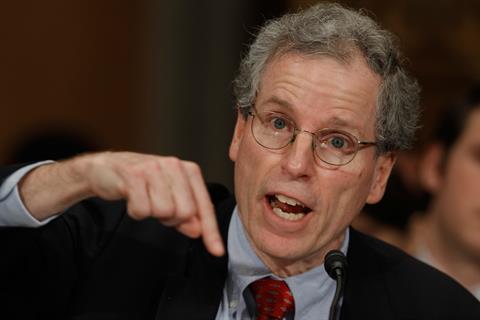 In addition to Ford, all SNC figures who were opposing Geneva 2 participation were at the meeting: Loay Safi, Anass al-Abdeh, Haitham al-Maleh, Burhan Ghalioun, Najeeb al-Ghadban and Maher Noaimi, Hamade wrote in his corner on al-Manar Website.
During the meeting, Ford told the SNC figures that Saudi prince Bandar Bin Sultan is on a long vacation in the United States, “because of sickness and psychological fatigue,” Hamade added, citing the Syrian opposition official who is also close to former Prime Minister, Riyad Hijab.
“We would like to inform you that there are some changes that will take place in Saudi Arabia next March,” Ford said, noting that these changes will reach Bandar Bin Sultan and Saud al-Faissal.
“We also would like to tell you that the US had asked Saad Hariri (head of al-Mustaqbal parliamentary bloc in Lebanon) to participate in a coalition government with Hezbollah.”
The US ambassador added that the Saudi committee for Lebanon and Syria (which comprises Abdulaziz Khoja, Abdulaziz Bin Abdullah Al Saud and Muqren Bin Abdullah Al Saud) is to be activated and will take over the Lebanese and Syrian file from Bandar.
Ford told the Syrian opposition figures: “Bandar’s plan for the Syrian conflict, put [in place during] 2012, had catastrophic repercussions on Syria and the region. It had made of Syria a powerful hub for al-Qaeda that US cannot confront. For that, you have to stop objecting and to go to Geneva 2, this is the US’ interest.”
Related article
Saudi Arabia: A Retrograde Rentier Dictatorship and Global Terrorism
By James Petras | January 10, 2014
Saudi Arabia has all the vices and none of the virtues of an oil rich state like Venezuela. The country is governed by a family dictatorship which tolerates no opposition and severely punishes human rights advocates and political dissidents. Hundreds of billions in oil revenues are controlled by the royal despotism and fuel speculative investments the world over. The ruling elite relies on the purchase of Western arms and US military bases for protection. The wealth of productive nations is syphoned to enrich the conspicuous consumption of the Saudi ruling family. The ruling elite finances the most fanatical, retrograde, misogynist version of Islam, “Wahhabi” a sect of Sunni Islam.
Faced with internal dissent from repressed subjects and religious minorities, the Saudi dictatorship perceives threats and dangers from all sides: overseas, secular, nationalists and Shia ruling governments; internally, moderate Sunni nationalists, democrats and feminists; within the royalist cliques, traditionalists and modernizers. In response it has turned toward financing, training and arming an international network of Islamic terrorists who are directed toward attacking, invading and destroying regimes opposed to the Saudi clerical-dictatorial regime.
The mastermind of the Saudi terror network is Bandar bin Sultan, who has longstanding and deep ties to high level US political, military and intelligence officials. Bandar was trained and indoctrinated at Maxwell Air Force Base and Johns Hopkins University and served as Saudi Ambassador to the US for over two decades (1983-2005). Between 2005-2011 he was Secretary of the National Security Council and in 2012 he was appointed as Director General of the Saudi Intelligence Agency. Early on, Bandar became deeply immersed in clandestine terror operations working in liaison with the CIA. Among his numerous “dirty operations” with the CIA during the 1980s, Bandar channelled $32 million dollars to the Nicaragua Contra’s engaged in a terror campaign to overthrow the revolutionary Sandinista government in Nicaragua. During his tenure as ambassador he was actively engaged in protecting Saudi royalty with ties to the 9/11/01 bombing of the Triple Towers and the Pentagon. Suspicion that Bandar and his allies in the Royal family had prior knowledge of the bombings by Saudi terrorists (11 of the 19), is suggested by the sudden flight of Saudi Royalty following the terrorist act. US intelligence documents regarding the Saudi-Bandar connection are under Congressional review.
With a wealth of experience and training in running clandestine terrorist operations, derived from his two decades of collaboration with the US intelligence agencies, Bandar was in a position to organize his own global terror network in defense of the isolated retrograde and vulnerable Saudi despotic monarchy.
Bandar’s Terror Network
Bandar bin Sultan has transformed Saudi Arabia from an inward-looking, tribal based regime totally dependent on US military power for its survival, to a major regional center of a vast terror network, an active financial backer of right-wing military dictatorships (Egypt) and client regimes (Yemen) and military intervenor in the Gulf region (Bahrain). Bandar has financed and armed a vast array of clandestine terror operations, utilizing Islamic affiliates of Al Qaeda, the Saudi controlled Wahhabi sect as well as numerous other Sunni armed groups. Bandar is a “pragmatic” terrorist operator: repressing Al Qaeda adversaries in Saudi Arabia and financing Al Qaeda terrorists in Iraq, Syria, Afghanistan and elsewhere. While Bandar was a long-term asset of the US intelligence services, he has, more recently, taken an ‘independent course’ where the regional interests of the despotic state diverge from those of the US. In the same vein, while Saudi Arabia has a longstanding enmity toward Israel, Bandar has developed a “covert understanding” and working relationship with the Netanyahu regime, around their common enmity toward Iran and more specifically in opposition to the interim agreement between the Obama-Rohani regime.
Bandar has intervened directly or via proxies in reshaping political alignments, destabilizing adversaries and bolstering and expanding the political reach of the Saudi dictatorship from North Africa to South Asia, from the Russian Caucuses to the Horn of Africa, sometimes in concert with Western imperialism, other times projecting Saudi hegemonic aspirations.
North Africa: Tunisia, Morocco, Libya, and Egypt
Bandar has poured billions of dollars to bolster the right-wing pro-Islamic regimes in Tunisia and Morocco, ensuring that the mass pro-democracy movements would be repressed, marginalized and demobilized. Islamic extremists receiving Saudi financial support are encouraged to back the “moderate” Islamists in government by assassinating secular democratic leaders and socialist trade union leaders in opposition. Bandar’s policies largely coincide with those of the US and France in Tunisia and Morocco; but not in Libya and Egypt.
Saudi financial backing for Islamist terrorists and Al Qaeda affiliates against Libyan President Gadhafi were in-line with the NATO air war. However divergences emerged in the aftermath: the NATO backed client regime made up of neo-liberal ex-pats faced off against Saudi backed Al Qaeda and Islamist terror gangs and assorted tribal gunmen and marauders. Bandar funded Islamic extremists in Libya were bankrolled to extend their military operations to Syria, where the Saudi regime was organizing a vast military operation to overthrow the Assad regime. The internecine conflict between NATO and Saudi armed groups in Libya, spilled over and led to the Islamist murder of the US Ambassador and CIA operatives in Benghazi. Having overthrown Gadhafi, Bandar virtually abandoned interest in the ensuing blood bath and chaos provoked by his armed assets. They in turn, became self-financing – robbing banks, pilfering oil and emptying local treasuries – relatively “independent” of Bandar’s control.
In Egypt, Bandar developed, in coordination with Israel (but for different reasons), a strategy of undermining the relatively independent, democratically elected Muslim Brotherhood regime of Mohammed Morsi. Bandar and the Saudi dictatorship financially backed the military coup and dictatorship of General Sisi. The US strategy of a power-sharing agreement between the Muslim Brotherhood and the military regime, combining popular electoral legitimacy and the pro-Israel-pro NATO military was sabotaged. With a $15 billion aid package and promises of more to come, Bandar provided the Egyptian military a financial lifeline and economic immunity from any international financial reprisals. None were taken of any consequences. The military crushed the Brotherhood, jailed and threatened to execute its elected leaders. It outlawed sectors of the liberal-left opposition which it had used as cannon fodder to justify its seizure of power. In backing the military coup, Bandar eliminated a rival, democratically elected Islamic regime which stood in contrast to the Saudi despotism. He secured a like-minded dictatorial regime in a key Arab country, even though the military rulers are more secular, pro-Western, pro-Israel and less anti-Assad than the Brotherhood regime. Bandar’s success in greasing the wheels for the Egyptian coup secured a political ally but faces an uncertain future.
The revival of a new anti-dictatorial mass movement would also target the Saudi connection. Moreover Bandar undercut and weakened Gulf State unity: Qatar had financed the Morsi regime and was out $5 billion dollars it had extended to the previous regime.
Bandar’s terror network is most evident in his long-term large scale financing, arming, training and transport of tens of thousands of Islamic terrorist “volunteers” from the US, Europe, the Middle East, the Caucuses, North Africa and elsewhere. Al Qaeda terrorists in Saudi Arabia became “martyrs of Islam” in Syria. Dozens of Islamic armed gangs in Syria competed for Saudi arms and funds. Training bases with US and European instructors and Saudi financing were established in Jordan, Pakistan and Turkey. Bandar financed the major ‘rebel’ Islamic terrorist armed group, the Islamic State of Iraq and the Levant, for cross border operations.
With Hezbollah supporting Assad, Bandar directed money and arms to the Abdullah Azzam Brigades in Lebanon to bomb South Beirut, the Iranian embassy and Tripoli. Bandar directed $3 billion to the Lebanese military with the idea of fomenting a new civil war between it and Hezbollah. In co-ordination with France and the US, but with far greater funding and greater latitude to recruit Islamic terrorist, Bandar assumed the leading role and became the principle director of a three front military and diplomatic offensive against Syria, Hezbollah and Iran. For Bandar, an Islamic takeover in Syria would lead to an Islamic Syrian invasion in support of Al Qaeda in Lebanon to defeat Hezbollah in hopes of isolating Iran. Teheran would then become the target of a Saudi-Israeli-US offensive. Bandar’s strategy is more fantasy then reality.
Bandar Diverges from Washington: the Offensive in Iraq and Iran
Saudi Arabia has been an extremely useful but sometimes out of control client of Washington. This is especially the case since Bandar has taken over as Intelligence chief: a long-time asset of the CIA he has also, at times, taken the liberty to extract “favors” for his services, especially when those “favors” enhance his upward advance within the Saudi power structure. Hence, for example, his ability to secure AWACs despite AIPAC opposition earned him merit points. As did Bandar’s ability to secure the departure of several hundred Saudi ‘royalty’ with ties to the 9/11 bombers, despite a high level national security lockdown in the aftermath of the bombing.
While there were episodic transgressions in the past, Bandar moved on to more serious divergences from US policy. He went ahead, building his own terror network, directed toward maximizing Saudi hegemony – even where it conflicted with US proxies, clients and clandestine operatives.
While the US is committed to backing the right-wing Maliki regime in Iraq, Bandar is providing political, military and financial backing to the Sunni terrorist “Islamic State of Iraq and Syria”. When the US negotiated the “interim agreement” with Iran Bandar voiced his opposition and “bought” support. Saudi signed off on a billion dollar arms agreement during French President Hollande’s visit, in exchange for greater sanctions on Iran. Bandar also expressed support for Israel’s use of the Zionist power configuration to influence the Congress, to sabotage US negotiations with Iran.
Bandar has moved beyond his original submission to US intelligence handlers. His close ties with past and present US and EU presidents and political influence have encouraged him to engage in “Big Power adventures.” He met with Russian President Putin to convince him to drop his support for Syria, offering a carrot or a stick: a multi-billion dollar arms sale for compliance and a threat to unleash Chechen terrorists to undermine the Sochi Olympics. He has turned Erdogan from a NATO ally supporting ‘moderate’ armed opponents to Bashar Assad, into embracing the Saudi backed ‘Islamic State of Iraq and Syria”, a terrorist Al Qaeda affiliate. Bandar has “overlooked” Erdogan’s “opportunist” efforts to sign off oil deals with Iran and Iraq, his continuing military arrangements with NATO and his past backing of the defunct Morsi regime in Egypt, in order to secure Erdogan’s support for the easy transit of large numbers of Saudi trained terrorists to Syria and probably Lebanon.
Bandar has strengthened ties with the armed Taliban in Afghanistan and Pakistan, arming and financing their armed resistance against the US, as well as offering the US a site for a ‘negotiated departure’.
Bandar is probably supporting and arming Uighur Muslim terrorists in western China, and Chechens and Caucasian Islamic terrorists in Russia, even as the Saudi’s expand their oil agreements with China and cooperate with Russia’s Gazprom.
The only region where the Saudi’s have exercised direct military intervention is in the Gulf min-state of Bahrain, where Saudi troops crushed the pro-democracy movement challenging the local despot.
Bandar: Global Terror on Dubious Domestic Foundations
Bandar has embarked on an extraordinary transformation of Saudi foreign policy and enhanced its global influence. All to the worst. Like Israel, when a reactionary ruler comes to power and overturns the democratic order, Saudi arrives on the scene with bags of dollars to buttress the regime. Whenever an Islamic terror network emerges to subvert a nationalist, secular or Shia regime, it can count on Saudi funds and arms. What some Western scribes euphemistically describe as “tenuous effort to liberalize and modernize” the retrograde Saudi regime, is really a military upgrade of its overseas terrorist activity. Bandar uses modern techniques of terror to impose the Saudi model of reactionary rule on neighboring and distant regimes with Muslim populations.
The problem is that Bandar’s “adventurous” large scale overseas operations conflict with some of the ruling Royal family’s “introspective” style of rule. They want to be left alone to accrue hundreds of billions collecting petrol rents, to invest in high-end properties around the world, and to quietly patronize high end call girls in Washington, London and Beirut while posing as pious guardians of Medina, Mecca, and the Holy sites. So far Bandar has not been challenged, because he has been careful to pay his respects to the ruling monarch and his inner circle. He has bought and brought Western and Eastern prime ministers, presidents, and other respectable notables to Riyadh to sign deals and pay compliments to the delight of the reigning despot. Yet his solicitous behavior to overseas Al Qaeda operations, his encouraging Saudi extremists to go overseas and engage in terrorist wars, disturbs monarchical circles. They worry that Saudi trained, armed and knowledgeable terrorists — dubbed as “holy warriors” — may return from Syria, Russia, and Iraq and bomb the King’s palaces. Moreover, overseas regimes targeted by Bandar’s terror network may retaliate: Russia or Iran, Syrians, Egyptians, Pakistanis, Iraqis may just sponsor their own instruments of retaliation. Despite the hundreds of billions spent on arms purchases, the Saudi regime is very vulnerable on all levels. Apart from tribal legions, the billionaire elite have little popular support and even less legitimacy. It depends on overseas migrant labor, foreign “experts” and US military forces. The Saudi elite is also despised by the most religious of the Wahhabi clergy for allowing “infidels” on sacred terrain. While Bandar extends Saudi power abroad, the domestic foundations of rule are narrowing. While he defies US policymakers in Syria, Iran and Afghanistan, the regime depends on the US Air Force and Seventh Fleet to protect it from a growing array of adversarial regimes.
Bandar, with his inflated ego, may believe that he is a “Saladin” building a new Islamic empire, but in reality, by waving one finger his patron monarch can lead to his rapid dismissal. One too many provocative civilian bombings by his Islamic terrorist beneficiaries can lead to an international crises leading to Saudi Arabia becoming the target of world opprobrium.
In reality, Bandar bin Sultan is the protégé and successor of Bin Laden; he has deepened and systematized global terrorism. Bandar’s terror network has murdered far more innocent victims than Bin Laden. That, of course, is to be expected; after all he has billions of dollars from the Saudi treasury, training from the CIA and the handshake of Netanyahu!
Economist Devastates “War for Oil” Dogma
Aletho News
Professor Cyrus Bina relates the facts that the oil industry and markets have been globalized. The various theories that have been put forward from both the left and the right regarding war rationales that rely on demonisation of OPEC are essentially nothing more than outdated fear mongering. Cyrus Bina has been vindicated by more recent events.
Cyrus Bina:
The history of Middle Eastern oil, including its subsequent development into a modern industry, can be divided into three distinct stages: (1) the era of international cartels, 1901-1950; (2) the era of transition, 1950-1972; and (3) the era of globalization since the mid-1970s. A slightly different historical periodization can be provided for the U.S. domestic oil industry: (1) the era of classical cartelization and early oil trusts of 1870-1910; (2) the era of regulated neo-cartelization of 1911-1972; and (3) the era of globalization since the mid-1970s. A close examination of the entire 1870-1970 period would reveal that administrative pricing under the International Oil Cartel (known as Seven Sisters) were predominantly the rule in the oil business. The cartel, however, began to lose its grip during the 1950s and 1960s. Proliferating market forces, in con-junction with the development of capitalist social relations in the colonial and semi-colonial oil regions, had overcome the colonial concessions and worldwide administrative control of oil under the international oil cartel. The oil crisis of 1973-1974 was but the symptom of this transformation toward globalization. Moreover, the so-called “OPEC offensive”—which was misperceived by both the right and the left as the cause for re-control of oil market/prices —was but the catalyst of this de-cartelization and globalization of oil.
The war-for-oil scenario, as a popular myth, ignores the deeper understanding of the complex web of contradictions and regulating dynamics of today’s economy and polity. Yet, the very anachronism of this scenario is understandable in the view of the anachronistic U.S. behavior that is so dreadfully attempting to reverse the loss of American hegemony against the time and, more importantly, history. Therefore, parallel with the anachronistic reality of U.S. colonial conduct in Iraq, the anachronism of the “oil grab” becomes “reality” in the minds of those who chant “No Blood for Oil.” Yet, holding a parallel between the U.S. invasion of Iraq and the control of oil is a far fetched proposition, if not an outright illusion. For, since the mid 1970s, the material bases and dynamics of post-cartelization and globalization of oil render the physical access, prearranged inter-company allocation, and indeed administrative control and pricing of oil redundant. This rather counter intuitive reality also renders any connection between the war and oil—other than given disbursement to finance matters such as the establishment of a puppet government—superfluous.
Nevertheless, in an interview, James Schlesinger remarked: “The United States [Bush, 41st] has gone to war now, and the American people presume this will lead to a secure oil supply. As a society we have made a choice to secure access to oil by military means. The alternative is to become independent to a large degree of that secure access.” It is indeed surprising that a market worshipping Chicago School economist fails to see the formation of (spot) oil prices within interconnected and unified markets since the post-cartelization of oil in the 1970s. Schlesinger, on the one hand, stresses the phrase “secure access” and, on the other hand, underscores the alternative of “independence,” as if one can insulate the U.S. oil industry from the rest of transnational oil. This thesis provides a convenient cover for two separate strategic projects: justifying the war without exposing its real cause, and creating panic by playing the familiar scarcity card to extend the exploration of oil in the pristine U.S. regions of wildlife such as ANWAR. In this context this was also what the Bush administration and Cheney’s “Task Force on Energy” probably had in mind when they were referring to “secure oil.”
In a nutshell, the above thesis ignores (1) the mutuality of oil producers and oil consumer, the need of both sides in selling and purchasing in the competitive global oil market, (2) the interdependence of oil regions in the present interdependent world, (3) the formation of global prices based on the cost of highest cost (U.S.) producer, not the cost of individual oil regions, and (4) the formation of differential oil rents, given the existing differential (regional) costs, through competition. Here, the dramatized “oil dependency” is but an empty phrase in the view of the trans nationalization of oil since the 1970s.
On the opposite side, hardly anyone on the left fully recognized the implication of uncritical acceptance of the above tautological thesis. Thus, the left-wing liberals and the radical left adopted this theory and dressed it up in leftist garb before applying it to either the question of war or the problem of environment. Michael Klare is one of the remarkable defenders of this thesis on the left. He declares: “Two key concerns underlie the Administration’s [Bush, 43rd] thinking: First,the United States is becoming dangerously dependent on imported petroleum to meet its daily energy requirements, and second, Iraq possesses the world’s largest reserves of untapped petroleum after Saudi Arabia.” Klare, however, takes this thesis one step further to an improvised level of neo-Malthusian scarcity:
“Global demand for many key materials is growing at an unsustainable rate. As the human population grows, societies require more of everything (food, water, energy, timber, minerals, fibers, and so on) to satisfy the basic material requirements of their individual members…. Because the production and utilization of these products entails [sic.] the consumption of vast amount of energy, minerals, and other materials, the global requirement for many basic commodities has consistently exceeded the rate of population growth.”
This worn-out neo-Malthusian message has again been reiterated in Blood and Oil. Yet, Klare, who is perplexed by the gravity of U.S. involvement in Iraq is “compelled … to conclude that petroleum is unique among the world’s resources that it has more potential than any of the others to provoke major crises and conflicts in the years ahead.” Again for Klare (and for many on the left) the specificity of the cause-and-effect seems to have no bearing on this historically unique epochal conflict and his fascination with oil is so intensive that he fails to realize a need for a specific and independent analytical proof.
I contend that, at best, the war-for-oil scenario is a text with out a context. On a logical level, the oil scenario is a remarkable example of a post hoc, ergo propter hoc fallacy, misplacing the real cause of U.S. military intervention. Moreover, by neglecting the depth of the last two decades of global transformation, the protagonists on the left and the right both have adopted a very voluntaristic-functionalist view of the U.S. global role. The left tends to capitalize on a voluntaristic interpretation of the concept of hegemony and the functionalist pivot of U.S. military might. For Klare, though, the global conflict “is entirely the product of geology.” The right, on the other hand, tends to rely on the notion of a “unipolar” world and wishful arguments of the “bound to lead” variety, without adequate attention to the emerging new polarities associated with the loss of American hegemony and the forces of globalization.
Others on the left, who are obsessively fond of the war-for-oil scenario, argue that this war may not have been for oil in the interest of U.S. capitalism as a whole, but rather in the interest of “U.S. oil corporations.” Hence, they propose that the cost of war amounts to a huge subsidy by the entire society given to the oil industry. This is a fictitious argument derived from the blind assumption of “direct access” and physical control of oil, and absolute denial of the reality of global transformation of the oil industry in the early 1970s. It is also crude and arbitrary, given the reduction of the material interests of the entire (U.S.) capitalist class to the alleged interests of its tiny fraction. And, appealing to casual observation, such as watching news from the Iraqi oil fields and the arrival of oil service contractors for “rebuilding” Iraq, is not sufficient to turn away from serious analysis. The truth is that this adventurous undertaking is in the interest of neither.
Finally, attaching significance to the switching of the currency, from dollar to euro, by OPEC oil producers is unjustified. As Paul Krugman pointed out in a short note, any possible shift from the dollar to the euro on the part of OPEC will result in a “small change,” for the U.S. economy, much smaller than the switching made already by the “Russian Mafia.” However, many on the left are not losing any opportunity to grasp this straw.
http://www.heterodoxnews.com/htnf/htn7/bina.pdf
Official 9/11 story crumbling, Washington blames Saudis
By Michael Rivero | What Really Happened | January 7, 2014
The official story of 9-11 is collapsing almost as fast as the Obamacare website. Most Americans are now well aware of the strange collapse of WTC Building 7, the video that captures the sound of the actual explosion that initiates the collapse of WTC7, the very strange behavior of the Secret Service as President Bush read about goats at Booker Elementary School. We have all seen the photographs that confirm the remains of demolition “cutter charges” in the remains of the towers. And we all know how the BBC reported that Building 7 collapsed 26 minutes before it actually happened. indicating a script was being followed (but alas, not carefully enough).
With the official story in free fall, Americans are wondering just who did this heinous deed. With the US Government itself the prime suspect, many are asking if the US Government had help from an outside nation, one with a long track record of world-changing dirty tricks.
There is a great deal of evidence that implicates the nation of Israel as a co-conspirator with the Bush administration. First, there was the massive Israeli spy ring uncovered in the United States just before 9-11, and how some of the “Dancing Israelis” arrested after being seen cheering and dancing as the World Trade Towers collapsed turned out to be Mossad spies! Then there was the strange case of Odigo, an Israeli-owned company whose New York offices received a warning about the attacks before the planes used in the attacks had even left the ground! All four of the hijacked planes departed from airport gates whose security was provided by the same Israeli security company. Israel has a long track record of playing dirty tricks against the United States and other countries, including the Lavon affair (framed on Egypt), Israel’s attack on the USS Liberty (initially framed on Egypt), and Israel’s smuggling a radio transmitter into Libya that was used to send fake messages that tricked President Reagan into bombing Libya.
As people start to seriously examine the plethora of evidence regarding Israel’s numerous perfidies it comes as no surprise that recently we have seen Israel’s “useful idiots” launch a propaganda campaign to claim that Saudi Arabia was behind the 9-11 attacks, based on a lawsuit brought against Saudi Arabia by the families of the victims. But anyone can bring a lawsuit against anyone for anything. That does not mean the lawsuit allegations are true. Nonsense lawsuits are a reality of the modern US court system, as are lawsuits staged primarily as political and propaganda stunts, which is what this appears to be. At the very least this propaganda is intended to deflect interest away from Israel. At worst, it is the start of the campaign to justify military invasion of that country, just as Saddam’s nuclear weapons were the excuse to invade Iraq, and the more recently (and thankfully failed) attempt to justify invasion of Syria by claiming Syria’s government was gassing their own people.
As I have mentioned before, the best way to tell if you are being lied to is to look for what should be there but isn’t. In the case of the claim that Saudi Arabia was behind 9-11, what should be there and isn’t is a motive for Saudi Arabia to do something like that.
George Bush had a motive to do 9-11. He needed that “new Pearl Harbor” to enrage Americans into the century of war called for by the Project For The New American Century. Israel certainly had a motive to do 9-11 and frame Muslims for it, to trick Americans into siding with Israel’s continued land grabs and wars against Israel’s enemies, with Israel’s agenda being (as it was with the Lavon affair, the USS Liberty, and the Libyan radio hoax) that Americans fight those wars for them!
Saudi Arabia does not have a history of dirty tricks, nor a demonstrated ability to carry out such deceptions. More to the point, Saudi Arabia has no motive to attack the United States. The Saudi princes have grown very rich indeed through the Petrodollar arrangement. Saudi Arabia buys many American products and weapons ($61 billion in 2011), and unlike Israel, the American taxpayer does not have to give them the money first with which to buy those weapons. Whereas Israel constantly takes money out of the US, the Saudis pour it in! Private Saudi investment in the US economy is over $400 billion. Saudi Arabia is a major creditor to the US Government. Exact figures are hard to find but Saudi Arabia has loaned the US Government hundreds of billions of dollars.
Saudi Arabia is not going to risk an attack on the US because all that wealth would vanish. The Saudi wealth inside the US would be frozen or seized, and the outstanding loans to the US would never be repaid. The “useful idiots” trying to save Israel by blaming 9-11 on Saudi Arabia have yet to come up with a motive for the Saudis to do something like 9-11 that risks losing all that cash.
Remember that Saudi Arabia was being framed for 9-11 right from the start. One of the accused hijackers, a Saudi Pilot named Saeed Al-Ghamdi, was still alive after 9-11 and sued the US Government for defaming him.
And finally, here is some common sense that totally undermines the attempt to frame Saudi Arabia for 9-11. If Saudi Arabia really wanted to hurt the United States, they don’t need to fly airplanes into skyscrapers to do it. All they have to do is ask for their money back, all at once. The resulting damage to the US financial system would make 9-11 look like a minor inconvenience in comparison.
And it would be perfectly legal for Saudi Arabia to ask for their money back.
Which is why we know that the claim that Saudi Arabia was behind 9-11 has no more basis in fact than the claim that Saddam had nuclear weapons or that Assad gassed his own people right in front of the UN chemical weapons inspectors.
As the media tries to blame Saudi Arabia for 9-11, it is worth recalling that the Bush administration initially claimed that Iraq was behind 9-11 to sell the 2003 invasion, then later admitted Iraq had actually been innocent. So there is a pattern of the US simply using 9-11 as a “one size fits all” excuse to invade yet another oil rich nation.
Related article

Saudi Arabia victim of US policies: Larijani
Press TV – January 6, 2014
An Iranian rights official says Saudi Arabia is a victim of US policies, urging Middle East countries not to support terrorists.
Speaking on the sidelines of a Monday conference in Tehran, Secretary-General of Iran’s High Council for Human Rights Mohammad-Javad Larijani said terrorist measures do not stem from the Middle East.
“Regional countries must know that by supporting terrorists they are only jeopardizing their own interests,” he added.
Regarding the recent bombings taking place in the region, Larijani said, “My position regarding these bombings is completely clear and I believe that the most part of their planning took place outside the region.”
He said Saudi Arabia is a victim of US policies and urged regional countries to stay away from American policies.
Larijani’s remarks come following a wave of terrorist bombings across the region, especially in Iraq, Syria and Lebanon, widely attributed to al-Qaeda-linked groups that are believed to be funded and supplied by Saudi Arabia.
Regional reports suggest al-Qaeda-linked terrorist and leader of the Abdullah Azzam Brigades Majed al-Majed, who was arrested in connection with the twin bombings near the Iranian embassy in Beirut on November 19, 2013 and later pronounced dead in a Lebanese military hospital- was a high-ranking official of Saudi Arabia’s intelligence service.
Media reports said Riyadh had put pressure on Lebanon to extradite al-Majed before his death in detention.
The Saudi terrorist had extensive secret information as he had been active in various countries such as Saudi Arabia, Iraq, Syria, Lebanon, Afghanistan and Pakistan and had direct cooperation or contact with mid- and high-ranking al-Qaeda leaders.
Related articles
Beirut murder: Dirty tricks get dirtier
By Finian Cunningham | Press TV | December 28, 2013
The latest deadly attack in Lebanon’s capital Beirut is yet another desperate attempt to destabilize not only that country, but the entire Middle East to precipitate all-out sectarian war.
The murder of senior Lebanese Sunni political figure, Mohamad Shatah, on Friday in a massive bomb blast that hit his motorcade as it drove through downtown Beirut was aimed at implicating the Shia Hezbollah and closely allied Syrian and Iranian governments.
Syria’s government of President Bashar al-Assad, along with Hezbollah and Iran, swiftly condemned the assassination of Shatah, who was formerly Lebanon’s finance minister between 2008 and 2011.
But the condemnations didn’t stop anti-Syria politicians within Lebanon and various Western media outlets from pointing the finger.
“Anti-Assad ex-minister killed in Beirut bomb,” was the headline carried by Reuters and Britain’s Daily Telegraph, among others.
This contrived innuendo betrays who the real perpetrators are.
Mohamad Shatah, a senior political adviser to Lebanese opposition leader Saad Hariri, was indeed a strident critic of Hezbollah and Syria’s Assad, accusing them of fuelling bloodshed in Syria and also sectarian tensions inside Lebanon. His political views were consistent with the narrative of the pro-Zionist Western media, as well as Saudi Arabia.
Shatah could therefore be considered an ally of the West, Saudi Arabia and the Zionist Israeli regime. But that very profile may have been what made him a prime target, not for Hezbollah or Syria, but for his so-called allies.
The day before his killing, Shatah had reiterated criticism of Hezbollah, claiming that the group was using Syria to consolidate its military strength in Lebanon.
Within minutes of Shatah’s murder, the Saudi-backed Lebanese opposition leader Saad Hariri implicated Hezbollah for the attack. “Shatah’s murderers are the same ones who assassinated former premier Rafik Hariri.” This was a reference to the bomb-blast killing of his father, Rafik, also a former prime minister, in 2005.
A United Nations-backed Lebanese tribunal has indicted five members of Hezbollah for that 2005 murder. The trial is set to open in the coming weeks in a Hague court. For the past eight years Hariri’s group have accused Hezbollah as well as Syrian intelligence over that assassination, without the accusations gaining much credibility.
Both Hezbollah and Syria have strenuously denied any involvement, saying that there is no evidence, and that the tribunal is politically driven. Hence, they have refused to cooperate with the forthcoming trial.
That is why Saad Hariri said of the latest killing: “The accused… are the same ones who are running away from international justice.”
Shatah’s assassination this week comes at a sensitive time, which strongly suggests who the real perpetrators might be.
First, the atrocity serves to re-ignite the accusations against Hezbollah, and its regional allies, in the murder of Rafik Hariri just when the case is being re-opened in an international court.
Secondly, there is the forthcoming Geneva II political talks organized to find a peaceful solution to the nearly three-year Syrian crisis. If Hezbollah, and by extension Syria and Iran, can be linked by sensational media claims of involvement in the murder of high-profile Lebanese politicians, then that would have a damaging impact on the Assad government during the Geneva negotiations.
Thirdly, and this is more to the point of who are the likely perpetrators, the murder of Mohamad Shatah comes at a time of mounting sectarian tensions and violence across the region. Lebanon has witnessed a wave of deadly bomb attacks and assassinations in recent months, which have mainly targeted Shia areas of Beirut.
Earlier this month, a senior Hezbollah commander was shot dead. And at the end of last month, a twin suicide bomb attack on the Iranian embassy in Beirut killed 29, including Iran’s cultural attaché, Ebrahim Ansari. Back in August, a bomb outside a Sunni mosque in Sidon reportedly butchered 40 people.
This violence replicates the pattern of sectarian bloodshed unleashed in neighboring Syria and Iraq. There is ample evidence to show that that violence is being systematically fuelled by Saudi Arabia, working in collusion with Israeli and Western intelligence.
Israel in particular has a long track record of sabotaging Lebanon from within, having invaded that country in 1978, 2000 and 2006. There is also evidence that its agents were the real authors of the assassination of Rafik Hariri in 2005.
Lebanon is particularly vulnerable to sectarian strife. The country’s communal wounds are still raw from the 15-year-old civil war between its Sunni, Shia, Christian and Druze communities, which ended in 1990. There have been renewed sectarian clashes between Sunni and Shia/Alawite groups in Sidon, Tripoli and several other towns over the past year. Saudi-backed Sunni clerics have been prominent in agitating sharper tensions in Lebanon.
This pattern of sectarian destabilization within Lebanon and across the Middle East by external forces is consistent with the latest murder of Mohamad Shatah in Beirut. The massive blast is believed to have come from a 50-60 kg bomb wired in a booby-trapped car. Wreckage was scattered 100 meters away and some 40 other cars were damaged, some of them upended. This was a professional hit with a devastating message.
In the grand nefarious scheme of geopolitics it matters little that Shatah was a prominent Sunni figure who was an ardent critic of Hezbollah and Syria. Indeed, from the viewpoint of the agents of subversion and destabilization, Shatah’s political and religious affiliation would have made him a prime target for their purpose of trying to explode sectarian war.
The heinous role played by Saudi, Israeli and Western intelligence in inflicting untold suffering on civilians across the Middle East, whether Shia, Sunni or Christian, means that their capability of using the dirtiest tricks knows no limits. The murder of Mohamad Shatah would be viewed by these dark forces as merely an expendable sacrifice if that means achieving the bigger aim of inciting all-out sectarian war in Lebanon; and engulfing the entire region in internecine flames.
The powers that gain from this atrocity are those that sow division and thrive on conflict in order to shore up their illegitimate hegemony over the region and over the mass of its ordinary, decent people.
Saudi Arabia Buys 15,000 U.S. Anti-Tank Missiles for a War It Will Never Fight
Al-Manar | December 13, 2013
No one is expecting a tank invasion of Saudi Arabia anytime soon, but the kingdom just put in a huge order for U.S.-made anti-tank missiles that has Saudi-watchers scratching their heads and wondering whether the deal is related to Riyadh’s support for the Syrian rebels, Foreign Policy reported.
The proposed weapons deal, which the Pentagon notified Congress of in early December, would provide Riyadh with more than 15,000 Raytheon anti-tank missiles at a cost of over $1 billion. According to the International Institute for Strategic Studies’ Military Balance report, Saudi Arabia’s total stockpile this year amounted to slightly more than 4,000 anti-tank missiles. In the past decade, the Pentagon has notified Congress of only one other sale of anti-tank missiles to Saudi Arabia — a 2009 deal that shipped roughly 5,000 missiles to the kingdom.
“It’s a very large number of missiles, including the most advanced version of the TOWs [tube-launched, optically tracked, wire-guided missiles],” said Jeffrey White, a fellow at the Washington Institute for Near East Policy and a former intelligence analyst at the Defense Intelligence Agency. “The problem is: What’s the threat?”
That’s a tough question to answer. A military engagement with Iran, the most immediate potential threat faced by Riyadh, would be largely a naval and air engagement over the Persian Gulf. Saudi Arabia has fought a series of deadly skirmishes with insurgents in northern Yemen over the years, but those groups have no more than a handful of military vehicles. And Iraq, which posed a real threat during Saddam Hussein’s day, is far too consumed by its internal demons and the fallout from the war in Syria to ponder such foreign adventurism.
But one Saudi ally could desperately use anti-tank weapons — the Syrian rebels. In the past, Riyadh has been happy to oblige: It previously purchased anti-tank weapons from Croatia and funneled them to anti-Assad fighters, and it is now training and arming Syrian rebels in Jordan. Charles Lister, a London-based terrorism and insurgency analyst, said that rebels have also received as many as 100 Chinese HJ-8 anti-tank missiles from across the border with Jordan — and indeed, many videos show Syrian rebels using this weapon against Bashar al-Assad’s tanks.
While most of the rebels’ anti-tank weapons were seized from Assad’s armories, Lister also believes that several dozen 9M113 Konkurs missiles, an old Soviet weapon, were provided to Islamist rebels in northern Syria this summer. And when these missiles have found their way to the battlefield, they’ve helped the rebels break through the belts of armor Assad uses to protect strategic areas: “Neutralizing these external defenses has proven key to opening the gates for ground assaults,” Lister said.
The Saudis can’t send U.S. anti-tank missiles directly to the rebels — Washington has strict laws against that. Recipients of U.S. arms are not allowed to transfer weapons to a third party without the explicit approval of the U.S. government, which in the case of Saudi Arabia has not been granted. Given Washington’s heightened concern over radical Islamist forces seizing control over the conflict — which resulted in the suspension of nonlethal aid to Syrian rebels on Dec. 12 — that approval will almost certainly never be given. If Riyadh went ahead and transferred the weapons anyway, it “would be a serious breach of U.S. law,” said Aram Nerguizian, a senior fellow at the Center for Strategic and International Studies, that would “all but certainly lead to a suspension of existing arms sales agreements.” So far, only one American anti-tank missile has been identified in Syria — an older model that Lister speculates may have been sold to Shah-era Iran, transferred to the Assad regime, and then captured by the rebels.
But while the latest American anti-tank weapons might not be showing up in Aleppo anytime soon, that doesn’t mean the deal is totally disconnected from Saudi efforts to arm the Syrian rebels. What may be happening, analysts say, is that the Saudis are sending their stockpiles of anti-tank weapons bought from elsewhere to Syria and are purchasing U.S. missiles to replenish their own stockpiles. “I would speculate that with an order of this size, the Saudis were flushing their current stocks in the direction of the opposition and replacing them with new munitions,” said Charles Freeman, a former U.S. ambassador to Saudi Arabia.
Regardless of how this purchase of anti-tank missiles relates to Syria, it’s undoubtedly part of a larger Saudi arms buildup that has been going on for nearly a decade. From 2004 to 2011, according to a 2012 report by the Congressional Research Service, Riyadh signed $75.7 billion worth of arms transfer agreements — by far the most of any developing nation. The United States was the major benefactor of this Saudi largesse, as the deals bumped up U.S. arms sales to a record $66 billion in 2011 alone.
How the Saudis plan to use many of these weapons is a mystery. And it’s not just the anti-tank missiles whose purpose remains unclear. Riyadh recently bought advanced fighter jets from the United States for a whopping $30 billion — but the Saudis’ lack of pilots and ability to maintain them means that it’s an open question how long they can keep them airborne, said William Hartung, the director of the Arms and Security Project at the Center for International Policy.
But purchasing the weapons, rather than any intent to use them, may be the point for the Saudis. At a time when they are at odds with Washington over the Obama administration’s diplomacy with Iran and nonintervention in Syria, the kingdom’s deep pockets can at least make sure their ties to the Pentagon remain as strong as ever.
“There was a [Washington] lobbyist who used to say, ‘When you buy U.S. weapons, you’re not just buying the weapon — you’re buying a relationship with the United States,'” said Hartung. “I think that’s kind of the concept.”
Kuwait Emir Opens Gulf Summit with Call to End Syria War
Al-Manar | December 10, 2013
Kuwait’s Emir Sheikh Sabah al-Ahmad Al-Sabah opened an annual Gulf summit on Tuesday with a call for an end to the “human catastrophe” in Syria and announced support for the nuclear agreement between Iran and World Powers.
Kuwait hosts Tuesday and Wednesday the thirty-fourth Gulf Cooperation Council summit amid serious divisions among its members.
The summit witnessed exacerbated disputes among the member states that concentrated their discussions on the new American attitude towards Iran.
Although many of the Gulf countries viewed the nuclear agreement between Iran and the world powers positively, Saudi Arabia revealed surging rage as it is concerned that the Iranian-American agreement may weaken its role in the region.
The augmenting strategic role of Iran in the region and the decline of the American dependence on the Gulf sources of energy intensified the concerns of the GCC states.
Analysts emphasized that the Gulf Union was proposed to compensate the strategic losses, yet Oman’s threat of withdrawing from the council tackled the proposal and deepened the rift among the its states.
Qatar’s concerns about being subjected to the Saudi influence also represented a main obstacle facing the union.
Economically, the disputes between Saudi Arabia and the United Arab Emirates thwarted the efforts to establish the custom union.
Related article
West defending dictatorships from democracy in Persian Gulf
By Finian Cunningham | Press TV | December 9, 2013
In a breathtaking display of absurdity, US secretary of defense Chuck Hagel and Britain’s Foreign Minister William Hague were among senior Western delegates to address the annual conference on “regional security” held in Bahrain at the weekend.
These officials pontificated about regional threats, conflict, international law, human rights and so on; meanwhile out on the streets of Bahrain, not far from the venue, peaceful protesters calling for democratic freedom were being bludgeoned by regime police thugs.
How absurd can it get? Like a comedy double act, Hagel and Hague were enthusing about high-minded democratic principles to their unelected, dictatorial hosts, the Al Khalifa rulers, surrounded by representatives of the other Persian Gulf Arab dictatorships, prime among them the absolute, tyrannical monarchy of the House of Saud.
And yet outside, ordinary Bahraini civilians yearning to see these same principles put into practice were getting their heads cracked open by uniformed thugs acting under the orders of the very same despots applauding Hagel and Hague. Talk about inside-out, upside-down doublethink.
When Bahrain’s mainly Shia majority rekindled their decades-old protests against the unelected Khalifa crime family in February 2011, it was the Saudi-led [Persian] Gulf Cooperation Council that marched into the tiny island to crush the pro-democracy movement.
The GCC military force is perversely, but aptly, named “a defense operation”. For its purpose is not the defense against some alleged, non-existent threat from without, but the imminent threat from within.
That threat is the spread of democracy in the region, which would sweep away the unelected super-wealthy families that rule over Saudi Arabia, Kuwait, Qatar, the United Arab Emirates, Oman and Bahrain – the six member states of the [Persian]GCC.
The Saudi-led invasion of Bahrain in March 2011 to wipe out “the contagion” of democracy in the oil-rich region was given the green light by Washington and London, with whom the Saudi rulers consulted days before sending in the troops and tanks.
Saudi forces still remain in Bahrain – albeit covertly, wearing Bahraini uniforms – where they continue to brutally attack pro-democracy demonstrators every week, as they have done for the past nearly three years.
And it’s not just protesters on the streets that are killed and injured. Saudi-backed Bahraini forces attack whole villages and family homes with night raids and poisonous gas, many of the occupants, including infants and elderly, having died from suffocating fumes.
Thousands of Bahraini families have been ripped apart, as fathers, mothers, sons and daughters are hauled off to jails and torture centers. The prisoners are denied any legal rights, convicted on the basis of tortured confessions, and many of them imprisoned for life.
Prisoners who have incurred disabilities and diseases from their trauma are also denied basic medical attention, putting their lives at risk. Such detainees include the photographer Hussain Hubail, suffering cardiac problems, elderly political opposition leader Hassan Mushaima, who is battling cancer, and human rights defenders Abdulhadi al-Singace and Naji Fateel, both of whom have become paralyzed from their physical beatings.
The same vicious assault on pro-democracy civilians goes on in Saudi Arabia where some 30,000 prisoners of conscience are rotting away behind dungeon bars, as well as in the other Persian Gulf states, although to a lesser extent.
The US and British governments are fully apprised of the systematic violations and torture carried out by their Persian Gulf dictator allies. Let’s be under no illusion. It’s not just that Washington and London are merely aware of the abominations and turn a blind eye; these Western governments are colluding in the ongoing barbarity.
Addressing the Manama Dialogue conference in Bahrain at the weekend, US Defense Secretary Chuck Hagel said: “I am under no illusions, like all of you, about the daily threats facing this region, or the current anxieties that I know exist here in the [Persian] Gulf.”
Indeed, Hagel is “under no illusions”. The threat to security that he alludes to is not the fairytale, fictional threat attributed to Iran.
The very real danger is that of democracy taking hold in the Persian Gulf. Whereby the people of the region might be able to avail of the vast oil wealth for genuine social development instead of the billions of dollars being funneled into the hands of crony royal families who in turn squander these billions on American and British weaponry.
The abundantly evidenced risk to security in the region is from the US and British-backed Arab tyrannies fuelling terrorism in Syria, Lebanon, Iraq, Yemen and elsewhere, as well as brutally repressing their own people.
When Hagel and Hague and their despotic clients talk about “defense” what they are referring to is the defense of dictatorships against democracy in the Persian Gulf and the protection of multi-billion-dollar weapons contracts to American and British companies (who in turn buy political prostitutes like Hagel and Hague to do their bidding).
There is zero evidence of any other kind of threat, certainly not from Iran, except in the figment of twisted, propagandized imaginations. By contrast, the evidence for American and British-backed despotic terrorism (including that of nuclear-armed Israel) is glaringly real in the form of thousands of lives killed, maimed, displaced and rotting away in ghettoes and jails.
But cracks in this absurd façade are appearing and widening. The Omanis have given notice that they are no longer willing to participate in this ludicrous charade, saying at the weekend that they will not be part of any Persian Gulf military club, probably knowing that its pretext is patently untenable.
Also, Western and international public awareness is becoming increasingly indignant and intolerant of the parody. Why are billions of dollars being spent on planet-destroying weapons and manufacturing terrorism when so many urgent social needs are being trampled on at home and abroad?
Ordinary people around the world know that the threat to peace, security, democracy and prosperity is not Iran or any other alleged bogeyman.
They know the real and imminent danger stems from elite Western-dominated capitalism and its satellite terrorist-sponsoring regimes in Israel, Saudi Arabia and the other Persian Gulf dictatorships.
The truth is both arresting and liberating. Western ruling cliques and their despotic “allies” – under the control of corporate fascism – are now seen more acutely than ever as the enemies of democracy and peace.
The absurd pretence otherwise is well and truly over.
Featured Video

HE SAVED LIVES. NOW HE FACES PRISON.
or go to
Aletho News Archives – Video-Images
From the Archives
NATO Sanctions and the Coming Global Diesel Fuel Disaster
By F. William Engdahl – New Eastern Outlook – 11.04.2022
Amid the ongoing global inflation crisis, NATO heads of state and mainstream media repeat a mantra that high energy prices are a direct result of Putin’s actions in Ukraine since end of February. The reality is that it is the western sanctions that are responsible. Those sanctions including cutting SWIFT interbank access for key Russian banks and some of the most severe sanctions ever imposed, are hardly having an impact on the military actions in Ukraine. What many overlook is the fact that they are increasingly impacting the economies of the West, especially the EU and USA. A closer look at the state of the global supply of diesel fuel is alarming. But Western sanctions planners at the US Treasury and the EU know fully well what they are doing. And it bodes ill for the world economy.
While most of us rarely think about diesel fuel as anything other than a pollutant, in fact it is essential to the entire world economy in a way few energy sources are. The director general of Fuels Europe, part of the European Petroleum Refiners Association, stated recently, “… there is a clear link between diesel and GDP, because almost everything that goes into and out of a factory goes using diesel.” … continue
Blog Roll
 Aletho News
- Trita Parsi: Middle East Unraveling — Are We on the Path to World War?
- Iran FM meets with US envoy on UN meeting’s sidelines at American side’s insistence: Report
- Qatar PM calls for Gulf security framework with Iran, says war must be ‘wake-up call’
- China condemns US extortion of Iranian airlines, rejects Washington’s ‘illegal’ sanctions threats
- Italy to move military personnel from Taif base after missile strike
- Finland’s Stubb tells European leaders to calm down
- Defeating Russia on battlefield impossible – Fico
- Finland’s Gender Clinic Reversal
- Massachusetts Wants Mental Health Visits, Why Does Government Use ‘Health’ to Enter Our Homes & Families?
- US lawmaker admits American people footing bill for Trump’s failed aggression against Iran
- If Americans Knew
- Sanctions are collective punishment: immoral and self-defeating
- Phosphorus Munitions Fired by Israel Burn Groves, Orchards in Southern Lebanon
- Israel Carries Out New Ceasefire Violations Across Gaza
- AI – Emphasis on the ‘I’: Israel Is Funding AI Chatbot Propaganda
- Israel Blocking Hundreds of Wheelchairs for Injured Children From Entering Gaza
- Israel Is Expanding and Upgrading Compounds for Palestinian Militias in Gaza
- The Palestinian-American Residents of This West Bank Town Are Wondering: Where Is Trump?
- Gaza desperately needs tents, wheelchairs, fuel… and everything else (Israel blocks it all) – Daily Update
- Israeli Attacks in Gaza Kill at Least Seven Palestinians Over Three Days, including Woman and Child
- Trump’s militarization of Washington DC as he pursues Israel’s war against Iran
- No Tricks Zone
- 2025 Nature Paper Claiming Worsening Global Drought Gets RETRACTED …Heavily Flawed
- New Study: ‘Global Drought Shows No Detectable Recent Acceleration Under Climate Warming’
- Economic Masterminds: German Socialists Suggest Taxing Productivity Gains Stemming From Using AI
- The South China Sea Has Not Been Cooperating With The Climate Change Narrative
- Energy Crisis: Germany Enters Heating Season With Historically Low Gas Reserve Fill Levels
- New Study: The Antarctic Ice Sheet Gained Mass From 2020-2024 Due To Staggering Snow And Ice Accumulation
- Study: Ocean Heating Rates From Thousands Of Years Ago ‘Dwarf’ Modern Ocean Heating Rates
- Climate Extremists Target, Attack Large-Scale Power Grid Infrastructure In Germany!
- New Study: Antarctic Ice Melt Has Contributed Less Than 1 Centimeter To Sea Level Rise In The Last 30 Years
- Fear Of Debate: Alarmist German Climate Scientist Calls On Mainstream Media To Discredit Skeptic Voices

