Israel’s Allies Deliver A Cost-free Victory
By Jeremy Salt | Palestine Chronicle | September 25, 2013
Until joined by the Islamic government in 1979 and then by Hizbullah in the 1980s, Syria was Israel’s most visceral enemy. This enemy is now being destroyed but not by Israel. So-called Muslims backed by so-called Muslim governments – Saudi Arabia, Qatar and Turkey – are doing the job for it, in alliance with the traditional western enemies of the Arabs. Syria’s cities and towns have been devastated. An estimated 100,000 people have been killed. Millions more have been displaced, scattered across Syria or seeking refuge beyond its borders. Reconstruction will cost hundreds of billions of dollars. Recovery will take decades. Without spending a penny or losing a life, Israel has been handed one of the greatest strategic victories in its existence.
Michael Oren let the scarcely concealed cat out of the bag the other day when he said Israel would prefer a Syria without Bashar al Assad to a Syria in the hands of the jihadists. The outgoing Israeli ambassador in Washington, Oren was only bringing something to the surface that could be seen underneath it despite the vociferous denials of Israel’s lobbyists. Israel wants the government in Damascus destroyed. Netanyahu has been trying to hide its interest behind a mask of indifference but as the likelihood of a US military ‘strike’ – for a war that would engulf the region – slipped away, the lobbyists in Washington broke cover. They buttonholed every congressman and women, only for the vote on war to be postponed indefinitely, much to the chagrin of the gulf and Turkish governments, their armed and political protégés and the Israeli government.
While the Syrian army continues to grind the armed groups down, there seems no end to the volume of money, armaments and men outside governments are still prepared to pour into this conflict. Obama is still trying hard to get Russian agreement on a UNSC resolution that would allow the US to begin another war in the Middle East by attacking Syria. In the meantime the armed groups are continuing with the war they are waging. In his recent interview with former US congressman Dennis Kucinich and Fox news correspondent Greg Palkot, Bashar al Assad estimated that 80 to 90 percent of the armed men are Al Qaida-type takfiri jihadists. The ‘defence’ consultancy HIS- Janes puts the figure at about 50 per cent but whether it is 50 per cent or 90 cent, whether they are foreign or Syrian, the jihadists are dominating the fighting. Talk of moderates is deception. Only in the last few days the main fighting groups – all takfiri – have again rejected the authority of the exile Syrian National Coalition and the so-called Free Syrian Army. This is presented as something new when at least a year ago the very same groups issued the same kind of declaration saying the same things. The so-called FSA is the western standard bearer for ‘moderation’ in this struggle even though its brigades are every bit as fanatical as Jabhat al Nusra or any of the other takfiri groups.
If the Syrian government does fall – and at the moment it is not only holding its ground but steadily driving the takfiris back – chaos would prevail in Syria on a far greater scale than Libya at present or Algeria in the 1980s. The country would implode. This is so self-evident that the US and its allies must know it and if they know it, one has to presume that this is what they want. Saudi Arabia is out to destroy the Syrian government regardless of the consequences. Britain and France are following the US and US policy on any issue in the Middle East is largely fashioned according to the interests of Israel. Turkey is the odd man out. Whatever Recep Tayyip Erdogan thought he was going to get out of confronting Syria his own country has been very adversely affected by his decisions. The breakdown of Arab states into sectarian enclaves permanently at war with each other has been an Israeli strategic objective for decades. It has happened in Iraq and now the specter of the collapse of another unitary Arab state hovers over Syria.
While the takfiris do their best to destroy Syria, Israel is getting on with the colonization of Palestinian territories as fast as it can. The current wave of settlement expansion is the greatest since 1967. In the past year edicts have been pouring out of the Housing Ministry authorizing the construction of thousands of housing ‘units’ in East Jerusalem and across the West Bank. The strategic focus is on settlement expansion in and around East Jerusalem and the construction of highways and roads that will simultaneously integrate the settlements into the greater Jerusalem municipality (enlarged immediately after the 1967 war) and, along with the Separation Wall, further cut the Palestinians off from the city. In the first quarter of 2013 alone there was a 176 per cent increase in settlement expansion over the same quarter for 2012.
In August this year, just as the ‘peace talks’ were resuming, Israel announced the construction of thousands more housing ‘units’ in East Jerusalem settlements. The mainstream media tells us that settlement expansion is ‘impeding’ peace, ‘threatening’ the peace talks and the ‘two state’ solution. The plain fact is that there are no ‘peace talks’. They are the camouflage for the war Israel has been waging against the Palestinians for seven decades. To their discredit and dishonor Mahmud Abbas and Saib Urayqat are giving these ‘talks’ a Palestinian face. By announcing settlement construction in the same breath as announcing the resumption of ‘peace talks’ Israel shows its absolute contempt for both of them.
Land expropriation and development for agricultural purposes continues unabated. So does the theft of water. The Council for European Palestinian Relations estimated recently that the settlers consume an average of 280 liters of water a day compared to 86 liters for the Palestinians, below the World Health Organization’s recommended minimum of 100 liters. Only 60 per cent of the water allocated to the Palestinians is potable. While taking their land Israel simultaneously uses it as a rubbish dump, with solid waste from West Jerusalem being dumped at Abu Dis, once set up by Israel as the Palestinian ‘capital’ of East Jerusalem even though it was not even inside the municipality until Israel put it there. The settlers do the same, dumping their rubbish and household waste water on Palestinian land in the valleys below their settlements on the hilltops.
In a statement handed to the UN Human Rights Council fact-finding mission to Palestine in February this year, Al Haq (Law in the Service of Man) presented some statistics. In 2012, 202 ‘incidents’ of settler violence along with dispossession, home demolitions, forcible evictions and intimidation; more than 200 settlements established since 1967, including 14 in East Jerusalem, and more than 500,000 settlers now living in them; and more than 42 per cent of the land of the West Bank as well as most of its resources allocated to Jewish settlements. Al Haq notes that the Israeli High Court ‘has rendered the question of the settlements non-justiciable’.
The Council for European Palestinian Relations estimates that the population in the West Bank settlements is growing at an average of five per cent a year compared to 1.8 per cent for the rest of occupied Palestine. It puts the total number of settlers at 467,000, of which number 385,000 are living in between the Separation Wall and the 1967 ‘green line.’
Every brick laid by Israel on the West Bank, every liter of water pumped out for settlements swimming pools and lawns and the presence of every settler represents a violation of international law. Yet, says Naftali Bennett, the Religious Services Minister and leader of the Jewish Home Party: ‘We will continue building and you will see this soon.’ He was speaking before the August announcement that more housing ‘units’ would be added to Jewish colonies in East Jerusalem. ‘I am sending the message from here to all the parties in the negotiations: the land of Israel belongs to the nation of Israel’. He has pledged to do ‘everything in my power to make sure they never get a state.’
In a leaked exchange with another cabinet minister Bennett said that ‘I’ve killed many Arabs in my life and there’s no problem with that.’ He complained that the conversation had been taken out of context, because what he meant was that he had ‘only’ killed them in the context of operations. There was one such ‘operation’ on the West Bank last week. Heavily armed soldiers stormed into the Jenin refugee camp, broke into the house of the Tubaisi family, shot Islam al Tubaisi, 19, in the leg, dragged him downstairs, his head banging on every step and shot him dead before an ambulance took him to hospital. Perhaps in time the members of this unit will be bragging in time about how they also have killed many ‘Arabs’.
Dig deep enough into the crises in Iraq, Syria and Lebanon and the confrontation with Iran and eventually you will find Palestine. It remains the central issue, the pivot on which US policies, dominated by Israeli interests and demands, has turned for more than six decades, yet for the takfiris affiliated with Al Qaida, killing other Muslims (and Christians) in a variety of countries takes precedence. It is striking that the same heads of government inveighing against terrorism and expressing their outrage at the slaughter of innocents in Nairobi have not once expressed outrage at the slaughter of innocents in Syria unless they thought they could blame the Syrian government.
The call of unity sounds through modern Arab history like the cry of a lost bird. United the Arabs will stand and divided they will continue to fall. As long as they are not able to put common interests first they are going to be ripe for the plucking. What is at stake in Syria is not the political system but Syria itself and for the past three years it has been systematically and deliberately destroyed by an unholy coalition of outside governments and the gangs of armed men doing their dirty work in the name of Islam.
The dominant Arab actors in this deliberately induced catastrophe are the regimes in Riyadh and Doha. They engage with Israel behind the scenes even as it colonizes Palestinian land and sends uniformed gangsters into the Haram al Sharif to beat Muslim worshipers trying to protect one of the holiest sites in Islam. While consorting with the enemy and abandoning the Palestinians these two regimes – infinitely less representative of the will of the people than the government in Damascus – take the lead in the destruction of an Arab state. The greatest beneficiary of their actions on one hand and their inaction and neglect on the other is Israel. This is surely as great a disgrace as any in Arab and Islamic history.
– Jeremy Salt is an associate professor of Middle Eastern history and politics at Bilkent University in Ankara, Turkey.
What does the Syrian chemical disarmament deal mean?
By Zaher Mahruqi | Press TV | September 24, 2013
Bashar’s acceptance to let go of his “Nukes of the poor” arsenal could mean that the Syrian government has assessed the potential outcome of an American sustained offensive to be a game changer and desperately agreed to any way out.
Handing over chemical weapons in a gradual more controlled manner would have been understandable but giving up the location of the chemical sites with such immediacy hints to a much weakened Syrian position. It is no secret that the details given to the UN will eventually end up in Israeli hands, then why would the Syrian government accept such a deal other than Assad’s real fear of loosening his grip on power?
Netanyahu’s remarks following the chemical handover deal that “negotiating with Syria and Iran with a real and present threat to use force is the only way to make them cooperate” suggests that Syria’s president is indeed at the mode of fighting for survival. But that too is too simplistic provided that, surrendering chemical weapons or not, the US is sure to pursue him to the very bitter end. Then why give up such a strong deterrent?
The fact of the matter is that Bashar al-Assad is an intelligent man who at the very least understands that betraying Russia and Iran, who have been supporting his efforts in the past two years, would be a serious mistake. Therefore, any big decision Syria makes has to have been consulted with its main backers and has been given some sort of guarantees that giving up chemical weapons is not as risky as it might appear and that a credible backup plan is in place.
Smartly, Syria is giving both the US and Russia a face saving mechanism to avoid any further escalation between the two super powers and at the same time it is buying crucial time. Bashar himself declared that at least one full year is required to clear Syria of chemical weapons.
For Syria, chemical weapons are much harder to dispose of than replenish because Syria’s allies have stockpiles upon stockpiles of them. And so if the US chooses to change course somewhere during the period of chemical disarmament and attacks Syria, the very scenario that has been averted would be quickly reintroduced.
One ship full of chemical weapons is all that is required to rearm Syria, after all the main target of such weapons is a country the size of a province; Israel. Moreover, the Iranian and Hezbollah threat of intervening by attacking Israel will not be changed by simply handing over the chemical weapons.
Of course, the decision to hand over the weapons which buys the Syrian government crucial time is unwelcome by the “saboteur” of the region, Saudi Arabia and Turkey. The real danger for them is that this could actually lead to further weakening of the Syrian opposition and force them unto Geneva peace talks; talks which have just been strengthened by Syria’s agreement to declare its chemical arsenal.
Turkey and Saudi Arabia know well that their stances on Syria in the past two years makes it impossible for relations with Bashar’s Syria to normalize or even a negotiated Syria where opposition participates in governance.
Regardless of Turkish and Saudi stances, the US administration and Israel had strong interests in making sure that a war is averted in some way. Had the US congress vote gone ahead and disapproved of any attack on Syria in order to fulfill the wishes of the American people, it would have been a huge blow to them.
For Obama, it would have meant being stripped of legitimacy as it relates to Syria and wider international engagements and for Israel it would have meant the weakening of the Zionist lobby within US politics and a disastrous counter attack from Iran, Syria and Hezbollah.
Bashar’s objectives to consolidate alliances and weaken the counter alliance and buying time have all been thus far satisfied. The one year disarmament period that Bashar suggested will be needed is no speculation at all; it is well calculated period during which time to weaken the opposition and its supporters and to deny the US and her allies any legitimate pretext to attack Syria.
Moreover, if Iran and Hezbollah felt justified to intervene early on, now any attack from the US or her allies before the chemical disarmament is complete makes the Iran and Hezbollah retaliation against Israel with the support of Russia even more justified.
On the other hand, the US, Turkey and Saudi Arabia, (the latter seeming more keen than the US to overthrow Bashar’s government), provided that the SNC is in a weakened position and the desperation of the trio is acute, places them in a real danger of open colluding with the likes of Al Qaeda and Al-Nusra Front. So much for fighting “terrorism”!
Every time one sees a billboard advertising Syrian International Trade Exhibition across the world one wonders how can a government in a war state for over two years manage to facilitate an environment where its factories can produce? The answer could simply be that Syria is not nearly as chaotic or as weak as Western media portrays it to be. That position has just been strengthened by Syria’s agreement to disarm.
The objective of the US and Israel has always been to disarm any Arab army that might use its weapons against Israel; the issue is not whether a country owns a huge arsenals of weapons or not, but whether it has enough potential will to use them against Israel.
The Saudis are armed to the teeth and so are the Turkish but it is their clear stance on ensuring Israel’s peace that makes them allies rather than enemies. It is for that reason that Syria is a prime target as was Saddam’s Iraq.
Five armies that pose serious threat to Israel were the priorities of the US and Israel namely Iranian, Syrian, Egyptian, Iraqi and Hezbollah and so far only one has been dealt with; that of Iraq. In the case of Egypt, the US and Israel are pleased because the Egyptian army is suspect and they truly believe they will eventually buy out its generals. That means Hezbollah, Iran and Syria are left to fight this war that will not stop until one side secures a clear victory.
Where Russia had disappointed in the past as was the case with Iraq, now it appears poised to put up a stronger posture and as such days ahead will clarify the longevity of the new Russian posture. But the latest events have revealed that Russia is no longer a mere Security Council voter but a physical actor in world events.
Therefore, it is naive to assume that Russia has been blackmailed or tricked by the US into pressuring Syria to surrender her most prized deterrent against Israel. Syria will comply albeit at a calculated pace and will give America and Israel no legitimate pretext to attack it and as such Russia will have no choice but to stand its ground. If an attack takes place, Russia’s response is likely to be far stronger than the recent showdown in the Mediterranean or else Russia becomes a goofball.
The stance of Western media and Aljazeera is a good indication that the US and her allies are not in a war mood. When a war is imminent, there are certain networks that have a duty to fulfill and that is drumming for war. They are not doing that just yet!
While it will be naive to assume that Bashar will hold on to power indefinitely, it is clear that the Syrian civil conflict will be a long term struggle and will not end nor conclude the way the US and Israel are hoping for.
Related articles
- Nasrallah: Saudi Arabia, Turkey have failed in Syria (alethonews.wordpress.com)
- Questions on Syria’s Chemical Weapons disarmament (alethonews.wordpress.com)
Nasrallah: Saudi Arabia, Turkey have failed in Syria
Al-Akhbar | September 23, 2013
Saudi Arabia, Turkey and other regional countries backing Syria’s rebels must acknowledge their failures to bring down the Syrian government, and join efforts for a political solution to end the two and a half year civil war, Hezbollah Secretary General Hassan Nasrallah said on Monday.
In his first televised speech in over a month, Nasrallah said dialogue is the only option to bring an end to a conflict that has already left over 100,000 people dead and threatened to exacerbate tensions across the region.
“I call on Saudi Arabia, Turkey, and other Gulf states to revise your stance,” he said. “You won’t reach anywhere by relying on a military victory. Put this hatred (for Hezbollah) aside and think with your minds. Think about your interests, the interests of the region, the survival of the region.”
He condemned calls by some Lebanese politicians from the March 14 alliance for the United States to launch an attack on Syria, warning that any strike would cause global repercussions, and that Lebanon would be the first casualty.
Those same politicians calling for the West to intervene in Syria have accused Hezbollah of endangering Lebanon by sending troops to Syria, Nasrallah added, urging them to evaluate the consequences of a US attack across the border.
Nasrallah said that Saudi Arabia and other Gulf countries believed their support to rebel forces would lead an overthrow of the Syrian government within months, and are using Hezbollah as a scapegoat “to run away from their failures,” by accusing it of occupying Syria.
“For two and a half years, they used everything in their disposal … to control Syria and they failed. Of course [Hezbollah] are foreigners, we are not Syrian, but [what about] the tens of thousands of foreign fighters who you brought from all over the world? Are they occupying Syria?”
He noted that the Syrian government has expressed willingness to engage in dialogue with the opposition, and emphasized talks as the only suitable option to achieve peace.
Nasrallah also flatly denied accusations that his powerful Shia movement had obtained chemical arms from Syria, saying that he was principally and religiously forbidden from using such weapons.
Related article
- Text of Nasrallah’s September 23 speech Hezbollah chief… (yallasouriya.wordpress.com)
Obama’s Grotesque Hypocrisy over Cluster Munitions
By Dave Lindorff | This Can’t be Happening | September 19, 2013
Syrian civilians and children should count themselves lucky that mass opposition in the US, the UK and much of the rest of the world to the idea of a US bombing blitz aimed at punishing the Syrian government for allegedly using Sarin gas in an attack on a Damascus neighborhood forced the US to back off and accept a Russian deal to get rid of Syria’s chemical weapons.
Had the US attacked, primarily with a two- or three-day barrage of Tomahawk missiles, many of those rockets would likely have carried warheads containing BLU-97 cluster munitions, according to the United States Campaign to Ban Cluster Munitions — cluster bombs that would have assuredly killed or maimed many Syrian children.
This news should come as no surprise. The US made heavy use of deadly body-shredding cluster munitions in its invasion of Iraq in 2003 and during the subsequent bloody war and occupation there, as well as in its invasion of Afghanistan in 2001. Some 30 tons of cluster bombs were dropped or fired into urban neighborhoods of Iraq during the first few weeks alone of the 2003 US invasion of that country. Another 250,000 antipersonnel bomblets were dropped or fired into Afghani neighborhoods during the 2001-2002 US invasion of that country.
The US Campaign to Ban Cluster Munitions notes that the last documented US use of cluster munitions was in 2009. The organization writes that was:
“…in Yemen, when one or more Tomahawk cruise missiles loaded with BLU-97 bomblets struck the hamlet of al-Majala in the southern Abyan province. The strike killed at least 41 civilians and at least four more civilians were killed and 13 wounded by unexploded bomblets after the attack. Four years later, the site of the attack remains contaminated by cluster munition remnants.”
In fact, cluster weapons, whether bombs dropped from planes, warheads fired by missiles, or shells fired by cannons or tanks, are among the deadliest and most untargetable weapons devised by man, holding the distinction of being particularly lethal to civilians and children. They work by having a larger bomb, warhead or shell deliver a payload of smaller “bomblets” to a target (each Tomahawk cluster warhead contains 166 of the lethal bomblets). These casings burst open, releasing the small devices, either on the ground, or lowered by little parachutes. Many burst on impact, sending small deadly spinning flechettes out in all directions to tear the flesh off of bones, maiming and killing anyone in the vicinity, while others routinely fail to explode, and then lie around, sometimes for years, until someone steps on one, or a child picks it up to see what it is. (Unexploded BLU-97s look like cardboard drink containers and are bright orange.)”’
I remember a visit to Laos in 1995. It had been over two decades since the US had been relentlessly bombing that small peasant country day and night, primarily with anti-personnel bombs, and the country seemed to have returned to its tranquil past. But walking around the sleepy capital city of Vientiane, I was puzzled at seeing a surprising number of young children of varying ages hobbling around on crutches with one and sometimes parts of two legs missing, or arms missing, often with faces disfigured. I asked a Lao official why there were so many such kids, and he explained they were victims of the “bombis” — small fragmentation bomblets dropped by US forces in the secret war on Laos that had not exploded, and that remained buried in farmers’ fields until found or inadvertently disturbed by peasants or, more often, children working or playing. (The US has refused to help locate and clear these relics of war, claiming, ridiculously, that the Communist Laotian government is still secretly holding captured US soldiers–a position that the then US ambassador shamefacedly admitted to me was nonsense, but that was dictated by right-wingers holding onto the myth of long-suffering MIAs “abandoned” in Southeast Asia.)
When President Obama went on national television on Tuesday, Sept. 10, and passionately evoked images of suffering Syrian children dying on hospital floors from a Sarin attack in Damascus, he might have looked sincere to some, but most of those US viewers probably didn’t realize that as commander in chief, he was asking them to support a bombardment of Syria which would have likely included thousands of similar bomblets that he surely knows would inevitably end up, over time, killing far more children in far more horrible ways than the Sarin attack that was his casus belli.
According to experts, 98% of the victims of cluster bombs are civilians, not soldiers (as horrible as the deaths or maiming of even soldier-targets are from these insidious weapons). And 40% of the victims are children.
Since 2008, there has been a UN Convention against the use of cluster weapons. It has been signed by 112 nations, 83 of which have ratified it. The US is a key holdout, along with China, Israel, Pakistan and Russia. The US in fact, not content to simply not sign the convention, is arguing strenuously against the treaty, claiming that its bomblets, at least by 2018, will boast a 1% failure rate, and thus supposedly would not pose the danger of leaving unexploded, attractive or interesting-looking bomblets scattered around the landscape for months or years, waiting to be picked up by curious children. It’s an absurdly low failure rate the government is claiming, and is also wholly unprovable. (At least the US is consistent; it also refuses to sign a Convention banning landmines, which kill many civilians in the same way as antipersonnel bomblets.) Critics of the cluster munitions, like the US Campaign to Ban Cluster Weapons, say the failure rate of current US weapons like the BLU-97, the most common cluster anti-personnel device used by US forces, is closer to 30%. Besides, as demonstrated by the Yemen Tomahawk attack, a lot of the killing and maiming of civilians and children by cluster weapons happens when the bomblets explode as planned and “on target.”
Talk about brazen hypocrisy! A child killed or injured by Sarin gas is an atrocity, to be sure. But so is a child whose body is turned into chopped meat, or who is painfully rendered limbless by an exploding BLU-97 weapon. Worse yet, the US has had the audacity to accuse the Syrian government of an atrocity for allegedly using cluster weapons, voting earlier this year in the UN to condemn Syria for use of a weapon which the US used liberally in its wars against Iraq and Afghanistan, and in massive amounts in Indochina, and which it stockpiles and continues to design for more lethality and destructiveness for future use by American forces, including in Syria. (The US also sells these horrific weapons of child destruction to its “allies,” including countries ruled by dictators, like Saudi Arabia, which notably is known to be supplying arms to Syrian rebels.)
Of course, Americans themselves can be hypocritical about this stuff. Much horror was expressed after the Boston Marathon bombing over the use of BB pellets in the home-made pressure cooker bombs alleged to have been used, which killed several and lacerated the bodies of others. “How could people be so evil,” many asked. And yet the US provides its military with weapons that are far more efficient at shredding bodies, using taxpayer money, and has done so for decades, with few Americans expressing outrage, even at the carnage the weapons cause among children. Some 270 million cluster bombs were dropped on Indochina between 1964-73, 80 million of which failed to explode and remain to pose a threat to civilians today.
Textron Defense Systems, the maker of the most widely used cluster bomb in the US arsenal, which contains the BLU-97 bomblets, and which is being sold by the US to Saudi Arabia and other “allies,” offers this marketing motto for its deadly product: “Clear victory, Clear battlefield.” Given that most of the “battlefields” these days are urban areas, not classic battle fronts, the “clear battlefield” concept bodes ill for civilians and children.
Obama would be standing on stronger ground in demanding that Syria’s government eliminate its stocks of poison gas, if the US would sign onto the UN’s 2008 Convention on Cluster Munitions. His call for Americans to stand against the use of poison gas weapons by the Syrian government would not ring so hollow if he ordered the US military to destroy its massive stockpiles of cluster weapons, and vowed never to use them again.
Related articles
- US shipping thousands of cluster bombs to Saudis (counterpsyops.com)
France cannot afford military operation in Syria
By Steven Elliot | RT | September 6, 2013
The G20 should be focusing on their flagging economies rather than planning a military operation in Syria they can’t afford, analyst, Alex Korbel, told RT. France, in particular, is at full stretch, with 16 military campaigns abroad and an ailing economy.
The Syrian conflict has eclipsed the G20 meeting in Saint Petersburg, as the international community is unable to come to an agreement over a possible military strike. Washington has put forward a plan for military intervention against the Assad regime, which it believes is responsible for a chemical attack in a Damascus suburb on August 21.
RT: If the UN team of inspectors finds that chemical weapons were used in the Damascus attack, do you believe military intervention could be justified?
Alex Korbel: I think there is no case for military intervention in Syria for several reasons. The first reason is that there is no national interest for France or the US to actually intervene in Syria. The regime of Bashar al Assad was not a problem in the past and it is not clear why it’s now a problem for France and the US. There is no clear objective in the military intervention as it is now presented. Is it about maintaining the credibility of the US? What credibility exactly? The credibility to intervene in unnecessary wars? Is it to ban the use of chemical weapons? Then why does the US have chemical weapons in its arsenal? Is it to weaken the Bashar al Assad regime? In that case you need to put boots on the ground. If it is a humanitarian way to help the civilians, then locking on cruise missiles is not the right solution.
For all of these reasons the US and France have decided to move ahead with limited military intervention. But still there is a danger of falling down a slippery slope. What if a military intervention has no effect? Are we going to see full war? What would be the consequences in the region? I am thinking about Iran and Lebanon and I am thinking about a war less than 1000 kilometers south of Russia.
There is no broad international support for this war. Germany is against it, the UK is against it, China and Russia are against it. The only countries that are in favor are France, which has not yet consulted parliament, US and Israel and Saudi Arabia. Finally, public opinion is clearly against it everywhere. We saw it in the UK and the public polls in the US and France that the public is massively against military intervention in Syria.
RT: Given the climate of economic crisis in the EU, can France feasibly participate in another military operation?
AK: The economic situation of the EU countries is really bad. We can see in France that public debt is higher than 90 per cent of GDP. We see economic growth is less than 1 per cent. We see across G20 countries on average that unemployment is at 9 per cent and growing, that public debt is 64 per cent and growing, that economic growth is 1 per cent and weakening. What needs to be done is not to intervene militarily in another country.
France is already intervening in 16 countries worldwide. Clearly we don’t have any money to finance a seventeenth operation. The purpose of France, the US and any western power is not to ‘play the cop’ around the world but actually to maintain a sound economic policy first and then maybe lead by example on the international scene.
The Full Story on Why Obama Backed Down on Syria
By Ibrahim al-Amin | Al-Akhbar | September 2, 2013
Commentators in the West will surely declare that it was their democratic systems of government that forced US President Barack Obama to back down on attacking Syria. But the events that led up to Washington’s de-escalation suggest there were other factors at play.
When Obama stepped out into the White House Rose Garden to declare that, though still intent on attacking Syria, he wanted to get Congress’ approval first, the Pentagon must have breathed a sigh of relief, knowing full well that a military strike against Damascus could spark a major confrontation in the Middle East for which they were not adequately prepared.
The story starts shortly before the Israeli-Saudi intelligence operation that engineered the chemical attack near the Syrian capital. The Americans and Europeans had begun negotiating with the Russians and the Iranians for a political settlement, after having failed to remove the regime by force. The West’s only condition was that Bashar al-Assad would not be part of the solution, even proposing to Moscow that they would be willing to allow the Syrian president to pick a successor of his own choosing.
When the Russians – after extensive discussions with their allies – told Washington that it was difficult to accept such a condition, the West turned to Plan B, which was to raise the level of military support for the opposition and reorganize the armed groups fighting against the regime, allowing Saudi Arabia to take the lead in mobilizing them to up the ante on Damascus.
The goal was to squeeze Assad by launching major offensives from both the north and the south of the country, in addition to wreaking havoc on Hezbollah on its home ground and providing more appealing incentives for Syrian army officers to defect.
In the meantime, the regime and its allies were already in the process of consolidating military gains on a number of fronts by expanding the area under government control, particularly in the area around Damascus. One such operation was to be launched on the eve of the chemical attack on August 20 against opposition forces to the south and east of the capital.
After the opposition was quickly routed in the north as it tried to sweep through the coastal Latakia region, many of their regional and international backers understood that the only way to bring about a qualitative change on the ground was by drawing the West into a direct foreign military intervention in Syria – but a justification was necessary to prompt Washington to act.
It was for this reason that the “chemical massacre” in the Ghouta area around Damascus was carried out, most likely at the hands of the Saudi and Israeli intelligence. Barely an hour had passed before the orchestrated media campaign to get Assad was in full swing, followed by condemnations and threats from Western capitals.
Washington rushed to cash in on what they insisted was an imminent military attack by sending envoys to both Russia and Iran, giving the two countries a last opportunity to stand down before unleashing their missiles on Syria. But all the sabre-rattling was not enough to force any political concessions – even Assad informed his allies that he had chosen to take a stand.
The Americans tried to respond to this by showing that they were serious about a strike, moving additional naval vessels into the eastern Mediterranean, as well as increasing the number of fighter planes in bases around Syria. But again, Russia and Iran were unmoved, refusing to give Washington any guarantees that its limited strike would not turn into a broader, prolonged war, with devastating consequences for the region as a whole.
They backed their words with action, as Russia, Iran, Syria, and Hezbollah put their forces on high alert, ordering them to make preparations for a military confrontation. Most notably, Hezbollah directed its fighters to return to their bases, as it set up an operations room in coordination with Damascus to make effective use of their combined arsenal of rockets.
The first to buckle was that old hand at such affairs, the United Kingdom, whose parliament gave Prime Minister James Cameron a way out, putting their ally Washington in the uncomfortable position of going it alone. Suddenly, Obama, too, felt the need to consult the American public and seek the approval of their representatives in Congress.
Nevertheless, Obama – having lost the initiative – has but two choices before him: He either retreats and seeks out a political settlement, or enters into a military adventure, whose outcome he cannot control. The results of round one of this global confrontation in Syria provide yet another indicator that the days when the US can call the shots, without regard for the rest of the world, are on their way to becoming a relic of history.
Resistance Is Our Destiny
By Ibrahim al-Amin | Al-Akhbar | August 31, 2013
To hell with all the talk about democracy backed by the United States, France, Britain … and Saudi Arabia, Turkey, and Israel.
To hell with every bid for freedom with the support of these murderers.
To hell with every fool, criminal, and coward, no matter what they look like, what they are called, where they live, or what they do.
To hell with all those who support an international war to topple Syria.
To hell with this bunch of collaborators, who people will no doubt hold accountable one day, come chaos or stability.
To hell with all traitors, their speeches, their false tears, and to hell with their human rights groups and their subservient civil society organizations.
The decision to wage war on Syria is only the last step in the course set two and a half years ago, to destroy Resistance, its cities, people, and even its very idea.
There is no room for any kind of bargaining, and there is no room for any discussion or debate. There is no room to listen to any collaborator touting the list of causes of war and the causers, and there is no room for those who cling to their opinions, positions, or labels, wearing bandanas on their foreheads after wearing blindfolds on their eyes, and joining forces with collaborators and takfiris.
To begin with, these people live on the crumbs thrown to them by the robbers of Arab resources and fortunes. They work for them and receive from them money and all kinds of support.
It is a duty for every capable person to fight these killers, wherever they may be, wherever there is a chance to take revenge against them, and punish all the traitors, one after the other, in their beds, behind their desks, inside their tanks, or in their palaces, whether they are alone, or among their families.
What do you want from us today?
Do you want to repeat the experience of Iraq?
Do you want to repeat the experience of Afghanistan and Somalia?
Do you want to repeat the experience of Libya? Do you want to repeat the experience of war in Lebanon?
Or do you think that this will be a war to destroy the right that will never be eliminated, and whose name, forever shall remain: Palestine?
We do not have to repeat our arguments or repeat the process of searching for answers; we do not have to repeat our comments or our warnings. All we have to do is declare one position, namely, that the war being prepared for Syria is a colonial war, and every participant in it, whether by supporting it, funding it, promoting it, justifying it, or directly fighting in it, is a cowardly collaborator… .
It’s war!
They will gang up on Damascus, the mother of all cities, with the aim of crushing the people, the army, and the leadership. They want to destroy its history and its heritage of resisting invaders. They want to destroy every spirit that resists colonialism and supports resistance in the whole region. They want to extend a permanent lifeline to Israel and the oppressive regimes in our Arab countries, and they want to have collaborators of all kinds take over countries, rob their resources, and annihilate their peoples.
When America says that it needs no cover, legal justification, scientific investigation, or political support, and that it is able to manipulate the fate of a nation, for the sole reason that it has decided that its interests require it, then this means that we must act exactly like America, and wait for no cover, support, justification, or ask about international norms and so forth.
We must fight against it, and against its colonies, all forms of war, and we must spare no effort to seek to transfer the struggle to its soil, in every place of its land and cities; we must scream in the face of the butcher. We would do all this, without giving them the ability to strip us of our humanity, which we shall keep for ourselves, our children, and for the oppressed everywhere.
Yesterday, the West showed its true colors: a spiteful, murderous West, that has no place for anyone except those who know how to kneel down before it, and raise the white flag above their heads.
Yesterday, Europe showed its foul nature. It is not just a foolish old crone, but an ugly one too, with venom spewing from all its folds. Dishonor mars its opinion-makers, factories, schools, universities, and its people who do not come out to disavow the killers among them.
All we can do is resist them, with all our capabilities. Nothing will prevent us from seeking out our sole enemy, which has many faces, but one name: the barbarians, the bloodsuckers. As for us, resistance is our destiny.
Ibrahim al-Amin is editor-in-chief of Al-Akhbar.
This article has been edited for posting at Aletho News.
Related article
The Saudi-Israeli Superpower
By Robert Parry | Consortium News | August 29, 2013
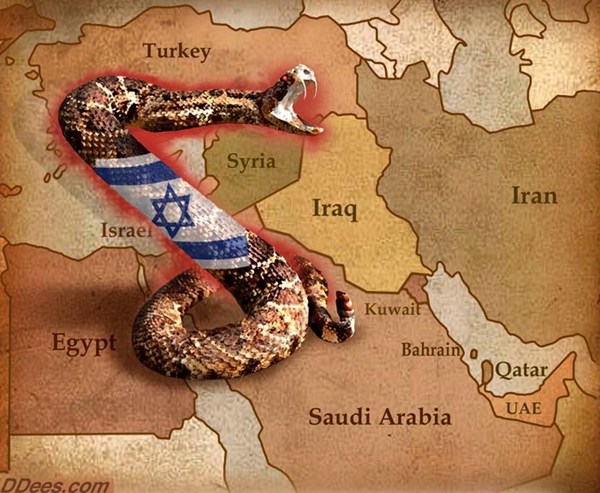
The twin crises in Syria and Egypt have marked the emergence of a new superpower coalition in the Middle East, the odd-couple alliance of Israel and Saudi Arabia, with Jordon serving as an intermediary and the Persian Gulf oil sheikdoms playing a supporting role.
The potential impact of this new coalition can barely be overstated, with Israel bringing to the table its remarkable propaganda skills and its unparalleled influence over U.S. foreign policy and Saudi Arabia tapping into its vast reservoir of petrodollars and exploiting its global financial networks. Together the two countries are now shaping international responses to the conflicts in Syria and Egypt, but that may only be the start.
Though Israel and Saudi Arabia have had historic differences – one a Jewish religious state and the other embracing the ultraconservative Wahhabi version of Sunni Islam – the two countries have found, more recently, that their interests intersect.
Both see Iran, with its Shiite rulers, as their principal regional rival. Both are leery of the populist Islamic movements unleashed by the Arab Spring. Both sided with the Egyptian military in its coup against the elected Muslim Brotherhood government, and both are pleased to see Syrian President Bashar al-Assad facing a possible military assault from the United States.
While the two countries could be accused of riding the whirlwind of chaos across the Middle East – inviting a possibility that the sectarian divisions and the political violence will redound negatively to their long-term interests – there can be little doubt that they are enjoying at least short-term gains.
In recent months, Israel has seen its strategic position enhanced by the overthrow of Egypt’s populist Muslim Brotherhood President Mohamed Morsi, a political change that has further isolated the Hamas-led Palestinians in Gaza. Meanwhile, in Lebanon, the Shiite movement of Hezbollah has come under increasing military and political pressure after sending militants into Syria to support the embattled Assad regime.
Assad is an Alawite, a branch of Shiite Islam, and has been a longtime benefactor of Hezbollah, the political-military movement that drove Israeli forces out of southern Lebanon and has remained a thorn in Israel’s side. The growing sectarian nature of the Syrian civil war, with Sunnis leading the fight against Assad, also served to drive a wedge between Hamas, a Sunni movement, and two of its key benefactors, the Syrian government and its Iranian allies.
In other words, Israel is benefiting from the Sunni-Shiite divisions ripping apart the Islamic world as well as from the Egyptian coup which further weakened Hamas by re-imposing the Gaza blockade. Now, Israel has a freer hand to dictate a political solution to the already-weak Palestinian Authority on the West Bank when peace talks resume.
A Method to Neocon Madness
Giving Israel this upper hand has long been the goal of American neoconservatives, although they surely could not have predicted the precise course of recent history. The idea of “regime change” in Iraq in 2003 was part of a neocon strategy of making a “clean break” with frustrating negotiations in which Israel was urged to trade land for peace with the Palestinians.
The plan to dump negotiations in favor of confrontations was outlined in a 1996 policy paper, entitled “A Clean Break: A New Strategy for Securing the Realm” and prepared by prominent neocons, including Richard Perle and Douglas Feith, for Benjamin Netanyahu’s campaign for prime minister.
In the document, the neocons wrote: “Israel can shape its strategic environment, in cooperation with Turkey and Jordan by weakening, containing, and even rolling back Syria. This effort can focus on removing Saddam Hussein from power in Iraq – an important Israeli strategic objective in its own right — as a means of foiling Syria’s regional ambitions.” [See Consortiumnews.com’s “The Mysterious Why of the Iraq War.”]
The neocons failed to persuade President Bill Clinton to invade Iraq in the late 1990s, but their hopes brightened when George W. Bush became president in 2001 and when the American people were whipped into a state of hysteria by the 9/11 attacks.
Still, it appears that the neocons believed their own propaganda about the Iraqis welcoming American troops as liberators and accepting a U.S. puppet as their new leader. That, in turn, supposedly was to lead Iraq to establish friendly ties with Israel and give the U.S. military bases for promoting “regime change” in Syria and Iran.
In 2002, as President Bush was winding up to deliver his haymaker against Saddam Hussein, neocons passed around a favorite joke about where to go next after conquering Iraq. Should it be Syria or Iran, Damascus or Tehran? The punch line was: “Real men go to Tehran!”
However, the Iraq War didn’t work out exactly as planned. Bush did succeed in ousting Hussein from power and enjoyed watching him marched to the gallows, dropped through a trapdoor and hanged by the neck until dead. But the U.S. occupation touched off a sectarian bloodbath with Hussein’s Sunni minority repressed by the newly empowered Shiite majority. Sunni extremists flocked to Iraq from around the Middle East to kill both Iraqi Shiites and Americans.
The end result of the Iraq War was to transform Iraq from a Sunni-ruled authoritarian state into a Shiite-ruled authoritarian state, albeit still a place where sectarian bombings are nearly a daily occurrence. Yet, one of the principal beneficiaries of the Iraq War was Iran with its Shiite theocratic government unexpectedly finding itself with a new Shiite ally replacing a longtime Sunni enemy, Saddam Hussein, all thanks to the United States.
Widening Violence
But the Iraq War had another consequence. It exacerbated sectarian tensions across the region. Saudi Arabia and other Persian Gulf oil states that had supported Hussein in his war with Iran in the 1980s, were shocked to see Iran now have a “Shiite crescent” of influence extending through Iraq and Syria to the Shiite enclaves in Lebanon.
The Saudi monarchy was shaken, too, by the popular uprisings known as the Arab Spring. Egypt’s President Hosni Mubarak, a longtime Saudi ally, was ousted and replaced by a democratically elected government led by the populist Muslim Brotherhood.
Though the Muslim Brotherhood was Sunni, too, the movement represented a mix of Islam and democratization, which posed a threat to the Saudi princes who live pampered lives of unimaginable wealth and privilege. On a personal level, these playboys confine their wives to humiliating conditions out of the Middle Ages while the men sample the pleasures of lavish European resorts or fly in Scandinavian prostitutes for parties.
Yet, while the Arab Spring sent shivers down the spines of the oil sheiks of the Persian Gulf – and even brought a Saudi military intervention to put down a Shiite-led democratic uprising in Bahrain – the political upheavals also presented an opportunity to Saudi geopolitical strategists, the likes of Prince Bandar bin Sultan, the former ambassador to the United States and now head of Saudi intelligence.
By supporting rebels and militants in Syria, for instance, the Saudis and the other oil sheiks saw a chance to reverse Iran’s geopolitical gains. And, by funneling billions of dollars to the Egyptian generals, the Persian Gulf monarchists countered any pressure for restraint from the United States.
Increasingly, too, the interests of Saudi Arabia and Israel began crisscrossing, sparking a relationship that the Jordanian monarchy helped broker and encourage. Jordan has strong security ties to Israel and is dependent on the largesse of the Persian Gulf royals, making it a perfect matchmaker for this unlikely hook-up.
According to intelligence sources, Jordan has been the principal site for bilateral contacts between Israelis and Saudis, a behind-the-scenes alliance that finally went public with their joint support for the Egyptian coup. While Saudi Arabia arranged the finances for Egypt’s new military regime, Israel deployed its potent lobby in Washington to dissuade President Barack Obama from labeling the coup a coup, which would have forced a shutoff of U.S. military aid.
New Superpower
Now, this new powerhouse combo is teaming up on Syria, where the Saudis and other Persian Gulf states have been financing the rebels seeking to destabilize and possibly overthrow the Assad government, while the Israelis have been deploying their political and propaganda assets to increase international pressure on Assad.
Both the Saudis and the Israelis stand to benefit from having Assad’s regime bled over time into either a weakened state or its demise. For Saudi Arabia, regime change in Syria that would mark a strategic victory against its chief rival Iran.
Israel also would like to see Iran undercut and isolated, but there is the additional benefit of hurting Hezbollah and further alienating the Palestinians from important sources of support, i.e. Iran and Syria. That gets Israel closer to the neocon vision of leaving desperate Palestinians with little choice but to accept whatever “peace” terms that Israel chooses to dictate.
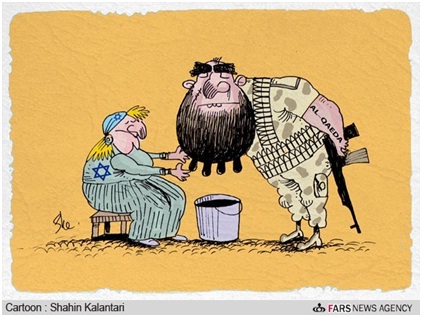
There is, of course, a potential downside for Israel and the West. Since Saudi Arabia and the Gulf states are arming some of the most radical Islamists fighting in Syria, including groups affiliated with al-Qaeda, one outcome of the Syrian civil war could be a new haven for Islamic terrorism in the heart of the Middle East. In the 1980s, Saudi Arabia was the principal funder for Osama bin Laden and his jihadists who traveled to Afghanistan to fight the Soviets before turning their hatred and suicidal tactics against the United States.
The emerging Saudi-Israeli alliance also may have serious ramifications for global geopolitics. The combination of Saudi Arabia’s extraordinary financial and economic clout and Israel’s equally extraordinary capacity to pull political and propaganda strings, especially inside the United States, could mean that a new superpower has stepped onto the international stage.
Its arrival may be heralded by whether Saudi Arabia and Israel can jointly yank the United States into the Syrian civil war.
Investigative reporter Robert Parry broke many of the Iran-Contra stories for The Associated Press and Newsweek in the 1980s. You can buy his new book, America’s Stolen Narrative, either in print here or as an e-book (from Amazon and barnesandnoble.com).
Related article
The Guardian of What?: The Media and War Propaganda
By Jeremy Salt | Palestine Chronicle | August 28, 2013
If there is any comfort in how the Guardian has been reporting the Middle East, especially Libya and Syria, it is that many of its readers, judging from their remarks in ‘Comment is Free’, do not appear to believe or trust it.
The Guardian sells itself as the global beacon of liberal opinion. It is liberal on social issues and alongside the chatterers, it has some excellent political correspondents and commentators, notably Gary Younge and Seamas Milne. As liberals themselves, its readers around the world must think they are on safe ground when quoting from the Guardian but if so, where the Middle East is concerned, they are deluding themselves.
Throughout the crisis in Syria the Guardian has been not so much reporting the conflict as running a propaganda campaign against the government in Damascus, to the benefit of the armed Islamist groups and the outside governments sponsoring them. The wellsprings of its ‘reporting’ have been the unsubstantiated claims of ‘activists’ no matter how wild and improbable. Without any evidence it is now accusing the Syrian government of being responsible for the alleged nerve gas/chemical weapons attack in the Ghouta district around Damascus. The far greater likelihood that the armed groups were responsible for this atrocity scarcely rates a mention. Building on the unsubstantiated claim that it was the Syrian military, Martin Chulov argues in favor of another one, that it was Bashir’s brother Maher who was personally responsible (the same accusation is being made by the Israeli intelligence propaganda outlet Debkafile, from which Chulov may well have taken his lead). This is how propaganda works. Once set in motion it just needs a push to keep it rolling.
Buttressing its editorial and reports, Fawaz Gerges is given space to claim that it is up to the Syrian government to prove that it was not responsible for this atrocity. This is nonsense: if the Syrian government was not responsible for this atrocity, how can it prove what it did not do, especially when anything it says will be dismissed out of hand by the mainstream media and the governments arming, financing and training the ‘rebels’? The onus of proof lies on those making the accusations, and so far neither the Guardian nor the anti-Assad campaigning Kim Sengupta of the Independent (where Robert Fisk has provided balance with some reports giving the perspective of the Syrian government) nor William Hague nor anyone else making this accusation has produced a scrap of evidence that this attack was carried out by the Syrian military.
Probability points in the direction of the armed groups. The ‘rebels’ are known to have acquired stocks of sarin. They used a chemical weapons compound in their home-made missile attack on a military outpost at Khan al Assal in March that killed dozens of soldiers and civilians. (1) In May this year Carla del Ponte, a member of the UN Independent Commission of Inquiry on Syria said investigators had evidence that the ‘rebels’ had used sarin gas. (2) In May also Turkish police seized sarin gas along with hand guns, grenades, ammunition and unspecified ‘documents’ from apartments where Jabhat al Nusra members were living in Adana and Mersin. (3) Early in June the Syrian military seized two barrels of sarin gas from a ‘rebel’ hideout in Hama. (4)
On top of all this the armed groups have filmed themselves experimenting with chemical weapons on rabbits. As they have slaughtered thousands of civilians in the most barbaric fashion there is no argument that moral considerations would prevent them from taking this further atrocious step – and it is they who have every reason to take it. They are being ground down across the country and at this stage only direct military intervention is going to save them and save the project to destroy the Syrian government. It is a measure of the desperation of their outside sponsors that Bandar bin Sultan, Saudi Arabia’s intelligence chief, was recently in Moscow with an offer from his government to buy $15 billion worth of Russian arms if Russia would just allow the passage of a UN Security Council resolution authorizing a military attack on Syria. Putin said no, and what a coincidence it is that a short time later there is a mass atrocity that gives the western-led collective the pretext it wants to attack Syria without a UNSC resolution behind them.
Clearing positions held by the armed groups a few days after the apparent nerve gas/chemical weapons attack, Syrian soldiers found stocks of chemicals, gas masks, syringes and anti-neurotoxin drugs in tunnels at Jobar, one of the three districts on the outskirts of Damascus, along with Ain Tarma and Zamalka, targeted in the attack. Several soldiers were taken to hospital in critical condition. The official Syrian news agency English-language news site, SANA ran photos of cylinders of chemicals and other material, including syringes, produced by the ‘Qatar-German Company for Pharmaceutical Industries’. There is no company of this name but there is a company called Qatar-German Medical Devices whose QG logo can be seen on a box found in the tunnel marked ‘Flow I.V. Cannula’. The army also found a basement stocked with quantities of chemical agents manufactured in Saudi Arabia and a number of European countries. The material included equipment for making chemical weapons and anti-neurotoxins in case the armed men poisoned themselves.
The discovery of this material was followed by the Medecins Sans Frontieres statement that three of the hospitals it supports in the Damascus governorate had received 3,600 patients displaying neuro-toxic symptoms in three hours on the morning of August 21, of which number 355 had died. While MSF cannot say who was responsible for this atrocity, its statement highlights the complete improbability of the Syrian government carrying out a mass chemical weapons/nerve gas attack on civilians in suburbs only a few kilometers from the center of Damascus, shortly after the arrival of UN chemical weapons inspectors and indeed only several kilometers from where they were staying, killing or wounding thousands and filling its own hospitals with the victims. At face value the accusation is ludicrous, yet such is the propaganda whipped up against the Syrian government over the past three years that some people will believe it to be capable of anything.
Not only do the armed groups, their backers and the media salesmen of their pitch, including the Guardian, want the world to believe that the Syrian government was responsible for this atrocity, they want the world to believe that Bashar is stupid, indeed so stupid that he would have ordered this attack within three days of the arrival of the UN chemical weapons inspectors. This canard is reminiscent of the accusation that the Syrian government arranged the assassination of Rafiq Hariri in 2005. The killing was a master stroke used as a lever to get the remaining Syrian troops out of Lebanon, and to blacken Syria’s name internationally. By the time all the four suspects had been freed and Syria cleared by the UN tribunal of any responsibility the media had moved on. It is a long time since it has shown any interest in who killed Hariri. Like the Hariri killing the first question to be asked in the wake of this latest atrocity is ‘who benefits?’ In both cases the answers are clear: in the first, Israel, the US and their proxies in Lebanon; in the second, the armed groups and the outside governments supporting them, including, of course, Israel, which is now leading the charge for a direct military attack on Syria.
By disseminating the deceit and lies put out by Libyan and then Syrian ‘rebels’ and ‘activists’, Al Jazeera ruined its reputation. The Guardian has run the same line as this mouthpiece of the government of Qatar yet remains protected by its mystique as a beacon of liberal opinion. Many of its readers are clearly confused when all they have to do is see that the emperor has no clothes: far from being the guardian of liberal opinion, this newspaper is the guardian of western, gulf and Israeli interests in the Middle East against Iran, Syria and Hezbollah. Its correspondents are still writing seriously and positively about a Palestinian ‘peace process’ that is a grotesque sham. Israel is playing with the Palestinians, as a cat plays with a mouse. It has Abbas in its pocket and by abandoning Syria and embracing Muhammad Morsi and the deposed ruler of Qatar, Ismail Haniyeh and Khalid Misha’al have found themselves without any backers. Not since its foundation has Israel enjoyed such a good run. If only the governments in Tehran and Damascus could be destroyed and Hezbollah extinguished life would be perfect.
The Guardian has never even attempted to provide balanced coverage of what is going on in Syria. There has been no counterweight – no antidote – to the anti-Assad and pro-rebel reporting and comment of Ian Black and Martin Chulov. The techniques will be familiar to all but the most inert readers. The paper runs headlines which are not justified in the text. The claims of ‘activists’ are given prominence and the claims of the Syrian government minimized, without there ever being any doubt about what the Guardian wants its readers to believe. It has downplayed or ignored the evidence of terrible atrocities by the armed groups (such as the massacres this August of hundreds of villagers in the Lattakia governorate (5) , of more than 100 people in Khan al Assal (6) and the massacre by Jabhat al Nusra of an estimated 450 Kurdish women and children around the Syrian-Turkish border town of Tal Abyad). (7) It has printed the wildest claims without any attempt to substantiate them, such as the allegation by a London-based ‘activist’ that the Syrian government was packing detainees into shipping containers and dumping them at sea. It has allowed ‘activists’ to shift the blame for car and suicide bombings on to the government even when it is government institutions that have been bombed and government employees who have been the victims. It has expected its readers to believe that the Syrian government is exploding bombs in densely populated residential areas in the middle of its own cities. It relies on the so-called Syrian Observatory for Human Rights when it must know that it is a completely tainted source. The only explanation for this can be that this one-man band is saying what the Guardian wants to hear and what it wants its readers to believe.
The strategy of the armed groups has been to destroy infrastructure and terrorize the civilian population. This they have largely succeeded in doing. Syrians are pouring out of the country to get away from them. In the name of a twisted pseudo-revolution these armed men are supported by a collective of foreign governments. The line of the moment following the alleged chemical weapon/nerve gas attack is that ‘all red lines have been crossed’ when these governments crossed all red lines in international law long ago by financing and arming groups such as the brigades of the Free Syrian Army and Jabhat al Nusra. International law prohibits armed intervention in other countries and the use of mercenaries. International law forbids the application of economic sanctions against member states of the UN yet in all these categories the collective bent on the destruction of the Syrian government has shown complete contempt for international law. Of course this is merely standard procedure. International law is for other people, not the ‘international community’ as represented by the UK, France and the US [or Israel] and nowhere have they treated international law with more contempt than in the Middle East.
These governments are making the most strenuous effort in the history of the modern Middle East to destroy an Arab government. The reason has been clear from the beginning: Syria is Iran’s strongest regional ally and is being targeted as a second best option to targeting Iran itself. The takfiris inside Syria, demeaning Islam with their shouts of ‘Allahu Akbar’ every time they cut a throat, are doing the work of governments that have done nothing but damage to the Middle East for the past century. The prime losers are the Syrian people. About 100,000 have been killed in this conflict and much of their country’s infrastructure has been deliberately torn to shreds. The chief regional beneficiaries are Israel and Saudi Arabia, holding hands under the table. The destruction of the Syrian government would be an unparalleled strategic triumph for Israel and the ‘west’, which is why Russia and China have not budged in their position that it is the Syrian people who must decide their own future and not outside governments and armed gangs and why Russia in particular will be planning its riposte should Barack Obama be talked into launching a Cruise missile strike.
The Guardian’s propaganda cover for the Syrian ‘rebels’ follows its support for the Libyan ‘rebels’ against another dictator. The protest movement in Benghazi was seized upon by Britain, France and the US as the opportunity to intervene and destroy the government in Tripoli. There was no countrywide movement against Muammar al Qadhafi and the ‘rebels’ could not have advanced a yard beyond the city limits of Benghazi without the cover of NATO missiles. Qadhafi was brought down after a seven month blitz by the air forces of three of the most powerful militaries in the world and eventually murdered after several previous attempts to murder him by missile strike had failed, while killing members of his family. Thousands of innocent Libyans were killed during this prolonged aerial assault. This neo-imperialist adventure was fully underwritten by the mainstream media. None of the war crimes committed by NATO forces or ‘rebels’ on the ground had the same impact on editorials and ‘reporting’ as the claims that the Libyan leader was bombing his own people from the air, using black mercenaries and distributing Viagra to his troops. These sensational allegations were later shown to be lies, but by this time they had served their purpose in setting up Qadhafi as someone who deserved to be killed (rather than put on trial, embarrassing in the process Blair, Sarkozy and others who benefitted from Libyan money and oil concessions). With Libya out of the way the same western governments and the same mainstream media flapped on like vultures to Syria and another supposed dictator, leaving the Libyans to clean up the mess they had created as best as they could.
Having shed the shackles of balanced journalism in Libya and Syria, the Guardian is now defending media ethics and responsibility in the Edward Snowden- Glenn Greenwald affair. Greenwald has been revealing secrets from Snowden’s store of official documents. David Miranda, his partner, was detained for nine hours by British intelligence while in transit through London. If the purpose was to shut Greenwald up by putting pressure on his relationship, his scarcely repressed fury is an indication that it will not work. Alan Rusbridger, the Guardian’s editor-in-chief, had been having private conversations with British intelligence and only decided to take action, by destroying material the Guardian had on hard drives, when threatened with legal action. This was a significant exercise of the power of the surveillance state which had to be challenged, but how much more significant is media support for mass death and destruction delivered to Syria by groups of men financed, armed and trained by outside governments?
The Guardian does not actually call for war. It leaves that to other people. It merely sets the stage. It runs an editorial based on the assumption that this chemical weapons attack was the work of the Syrian government. The possibility that the armed groups might have done it is not even taken into account. It observes that ‘choosing between bad options is even more complex [supporting armed groups responsible for one atrocity after another is obviously not considered a bad option] … this paper has resisted the calls for military intervention in Syria [as if there is not already military intervention in Syria] … but we do appear to be coming ever closer to a tipping point with difficult judgments ahead.’ Without calling for war itself, this beacon of liberal opinion then quotes with approval the arch conservative William Hague, who talks of civilized values while pushing for a war that would bury them in further great mounds of bodies.
Behind the mask of asinine geniality Hague is a warmonger. He has wanted ‘intervention’ in Syria – a war kicked off with the declaration of a no-fly zone and now possibly a Cruise missile strike – for years and now sees it in his grasp. The Guardian should have been on to his smiling duplicity and double-speak like a terrier on to a rat. Instead it is joining the chorus line for war. That is the reality behind its own double-speak. The Syrian government agreed to allow UN inspectors into the districts targeted in this apparent nerve gas/chemical weapons attack but as soon they approached these districts, they were shot at by snipers. If it can be proven that it is the armed groups that carried out this attack it is a safe bet that we will hear no more talk of red lines being crossed. Obama said he would not take a decision until he had proof but now we are being told by an unnamed US official that the on the spot inquiry is too little and, not even a week after the event, too late. The British media is talking of a military attack being launched within days.
The US media is much more reserved: after all, their country is being pushed into the front line by governments that would never have the guts to attack by themselves but will only run in from behind once the US takes the lead. Obama is still holding back and has the intelligence and sense not to fall for this if, unfortunately, not necessarily the strength of character to resist the pressure being applied to him. Britain, France and Israel want to strike now, while the propaganda is running hot and strong and before the UN inspectors ruin their rush to war by concluding that this attack around Damascus either was or might have been the work of the armed groups.
This will not be Libya. This never was Libya. This will not begin and end with a few Cruise missiles fired at Syria from warships in the eastern Mediterranean. This may well spark a major war involving Turkey, Iran, Israel, Hezbollah and Russia for which those pushing for war must be held responsible right now and not just afterwards. If the decision is taken the Guardian will wring its hands about the horrors of war but it will still justify it on humanitarian grounds and the ‘responsibility to protect’. Amidst the smoke and carnage, the question of who fired the chemical weapons around Damascus will soon be forgotten.
– Jeremy Salt is an associate professor of Middle Eastern history and politics at Bilkent University in Ankara, Turkey.
Notes:
1. See ‘Russia’s UN envoy says Syria rebels used chemical weapons’, Los Angeles Times,July 9,2013, reporting the statement by Russian UN ambassador Vitaly Churkin that armed groups had used sarin gas in the attack at Khan Assal on March 15, killing 26 people, including 16 military personnel, and wounding 86.
2. See ‘UN’s Del Ponte says evidence Syrian rebels ‘used sarin’. BBC News Middle East, May 6, 2013.
3. See ‘Adana’da El Kaide operasonyu:12 gozalti ( Al Qaida operation at Adana: 12 arrested), Zaman, May 28, 2013.
4. ‘Syrian army seized sarin cylinders from militants in Hama’, Press TV, June 2, 2013.
5. See ‘Massacre in Latakia, August 2013. A documentary report on Al Nusra massacre in Lattakia’, Sham Times, August 8, 2013. Translated by Australians for Reconciliation in Syria.
6. See ‘UN rights chief calls for investigation into Syrian massacre’, Reuters.com., reporting on the ‘apparent’ massacre ‘carried out by Syrian opposition forces in the town’.
7. See ‘Defend the Kurds in Syria from massacre and ethnic cleansing’, Kurdistan Times, August 8,2013, reporting the massacre of 120 children and 330 women by Jabhat al Nusra at Tal Abyad on August 5. While the numbers have not been independently verified, the massacre triggered off an exodus of tens of thousands of Syrian Kurds into northern Iraq. Syrian Kurds have given details of massacres of Kurds carried out by Jabhat al Nusra across northern Syria.
Erdogan’s policy on Syria counterproductive
By Prof. Rodney Shakespeare | Press TV | August 23, 2013
Turkey’s policy is being smashed apart. It has no depth, no vision, no principle and no morality. It is not just a case of muddle or a failure of cynical opportunism. Rather, it is something which is completely inexplicable without there having been some sort of big bribe (probably of the “We will make you the regional big-wig” variety) for Erdogan, the Prime Minister.
Turkey had a clear, simple policy – be friends with all neighbors. It was a very sensible policy and, as a result, Turkey was able to build its economic and political strength and was increasingly being recognized as a regional leader. (Remember the deal arranged between Turkey, Brazil and Iran over 20% uranium enrichment which made Obama look like a fool, as he is?)
Importantly, Turkey was also seen as a successful example of how Islam and politics can integrate in a modern way.
But now look what has happened! History has many examples of countries, led by incompetent prime ministers, shooting themselves in the foot. However, in the case of Turkey, it’s an instance of shooting itself in both feet.
In Syria, no doubt dreaming of a huge territorial expansion under his benign rule, Erdogan went from friend to not just enemy but to being the worst thing of all – a vicious sectarian out to put the whole of the Middle East at each other’s throats. What a disgraceful turnabout for a man who was being held up as an example to the world!
And look at the consequences! Can anybody guess how many hundreds of thousands, even millions, of refugees will soon be living within Turkey’s borders? What is that going to do for Turkey’s economy?
Can anybody guess what will be the consequences for the unity of Turkey itself (which has a large Kurdish minority) given that the Kurds of Syria have to fight against the Takfiri throat-slitters supported by Turkey?
Will the Kurds in Turkey remain silent? And what about those throat-slitters in Syria (who also like a bit of head-chopping and gas-choking on the side)? Are they going to leave Turkey alone (since they have no intent of leaving anybody else alone)? Turkey is arming them and establishing secret routes for them, in fact, doing everything to ensure that Turkey itself is one day going to be attacked by them. How idiotic can you get?
Moreover, goodness me! What about Turkey’s middle class? They are enraged with Erodogan’s Syria policy and, as history teaches, politicians who upset the middle classes do so at their peril….
Erdogan has been doing some slimy creepy-crawling to the Israelis and Americans (after all, they were the ones promising that he would become the Big Caliph big-wig if he only did a bit of their bidding). But now, Erdogan is being given a nasty dose of reality – the last thing the USA and Israel want is a Big Caliph: rather, all they want is a Greater Israel (from the Mediterranean across to the River Euphrates and down to the Nile).
So, Erdogan is now accusing Israel of being behind Morsi’s ouster in Egypt which is a very reasonable accusation given that Israel (together with the USA and Saudi Arabia) is a member of the Axis of Evil which interferes everywhere in the Middle East. Of course, the USA is angry that anybody should even hint that Israel is behind anything but, then, the USA is another country regularly shooting itself in the foot and, in its case, the feet are very big, clumsy ones.
Thus, Turkey is finding out the hard way that it cannot rely on the USA or Israel as allies (and who, in their right mind, would think otherwise?)
Behind all this, of course, are some big geo-political realities one of which is that China, Russia and Iran are holding firm in backing Assad of Syria. Therefore, the USA is unlikely to intervene in Syria even though it wants to.
So, Turkey’s Syria policy is now down the drain and it’s beginning to look as if Turkey itself is going down the drain (although the country will probably push Erdogan down the drain before it gets near to going down itself….)
Where will Erdogan turn now? He is promoting sectarianism and, by doing so, has betrayed Islam.
The obvious thing to do would be to turn away from the West and Israel and look more to stronger relationships with Muslim countries. But to whom? Saudi Arabia? That would be another strategic mistake (and it is disgraceful that Erdogan has allowed a disgusting Saudi Arabia to become more influential.) Egypt? Unlikely. Iraq? Very unlikely …
Erdogan’s made a ripe mess, hasn’t he? He’s alone. Why should anybody trust him when he has betrayed everybody else? We can expect the Turkish people to be taking action soon.