How leftist “anti-Zionists” are allied with Israel against Syria
By Mimi Al Laham (aka “Syrian Girl”) and Lizzie Phelan | July 19, 2012
The Myth
There has been a ridiculous notion amongst numerous left groups and those opposed to the Syrian government, that the Israeli regime does not want to see Assad fall. As self-professed “anti-zionists”, many in these groups are content to delude themselves into believing that both their enemies are on the same side. In the case of several socialist groups, they believe that this forcing of the Syrian crisis into their blanket “anti-authoritarian” narrative (regardless of the state in which they are applying that narrative to) enables them to maintain a façade of anti-imperialism.
London based socialist newspaper The Socialist Review writes: “Israel, although hostile to Syria, could depend on the Baathist regime to keep the frontier quiet. Thus criticism of Bashar is more muted in Tel Aviv.”
And Simon Assaf of the SocialistWorker writes:
The notion that ordinary Syrians struggling to change their country are the pawns of a ‘Western plot’ is absurd… In fact the Arab League is attempting to throw the regime a lifeline.
This view is also pervasive amongst the Islamic opposition to the Syrian government. Rafiq A. Tschannen of the The Muslims Times writes:
Israel believes that it would be safer under Assad regime than the new government whose credentials are unknown or the new Islamic extremist regime that would open a new war front with the Jewish state.
Israeli state media has actively fuelled this manipulation, as it has been beneficial to the Israeli state to both discredit the Syrian government in the eyes of Syrians and Arabs amongst whom cooperation with Israel has historically been a red line. Therefore the goal of these reports has been to create the false perception that Israel is uninvolved in the insurgency against the Syrian government. Similarly to how the NATO powers were keen to portray the Libyan insurgency as a “home-grown revolution”.
In this early 2011 Haaretz article entitled Israel’s favourite dictator, great lengths are taken to paint the Syrian president as a weak stooge of the Israeli state. The article regurgitates common Syrian criticisms and sources of frustration about the Syrian government’s failure to take back the Golan Heights. It even goes as far as to chastise Assad for not attacking Israel. The irony that an Israeli paper would be critical of a president’s failure to attack Israel is apparently lost on many. All the more incredible that these anti-Zionist groups have chosen to believe the spin of Israeli state media.
The Turkish based Syrian opposition, the Syrian National Council (SNC), also jumped on this bandwagon. The now deposed leader of the SNC, Burghan Ghallion told the Israeli paper Ynetnews “We are convinced that the Syrian regime’s strongest ally is Israel”.
Debunking the Myth
However the following facts expose all of the above as merely a part of the psychological warfare machinery directed from Qatar, Saudi Arabia, Israel and the NATO countries, which is an essential part of the overall aggression against Syria, and that such leftists have willingly become a part of:
Israel’s most important ally, the US, has been amongst its other allies repeatedly calling for regime change in Syria
Israel’s strongest ally the United States has been pushing for regime change in Syria since before the first signs of insurrection began. Most famously in 2007, General Wesley Clarke, who served as NATO’s Supreme Allied Commander between 1997 and 2000 said he had received a memo from the US Secretary of Defense’s Office which read that the Syrian Government would be one of the seven governments the US would destroy in the subsequent five years.
The Guardian’s recent headline “Saudi Arabia plans to fund Syria rebel army” is in the typical style of the liberal media based in the NATO countries, a malignant manipulation. The text of that article is specifically about plans by the US’ and by extension Israel’s most important regional allies, Qatar and Saudi Arabia, to pay the salaries of insurgents. But, buried further down, the very same article also reports that such support began months before. A less misleading headline therefore would replace “plans to fund” with “increases support for”, however a truthful headline would suggest external control over Syria’s insurgency has existed since its onset.
Indeed both Qatar and Saudi Arabia have a long history of hostility to the Syrian Ba’ath Party and Syrian foreign policy, a fact which is reflected in both of their leading medias (Al Jazeera and Al Arabiya respectively) severely distorted coverage of events in Syria from the outset.
But to highlight this context would give too much weight to the Syrian government’s consistent analysis that the crisis within its borders is externally created. A fact which leftist groups also fall over themselves trying to downplay or dismiss with the result of boosting the opposing narrative which imperialism has made dominant through its media machinery.
Why did that same Guardian article, and western leftists who claim that Assad is good for Israel, fail to mention that for example in early April, the US openly pledged to double its assistance to the insurgents to the tune of an additional $12 million, under the cover of “humanitarian aid”? Or the recent US admission that it is actively arming the insurgency using Qatar as a proxy? Or that in February, solid Israeli ally British Foreign Minister William Hague pledged more equipment to the insurgents, insisting there was “no limit on what resources” Britain would provide?
It shouldn’t have to be explained to anti-Zionists that US and Israeli foreign policy is one and the same.
Axis of Resistance
Syria is a member of the Axis of Resistance, which is the only effective military resistance to Israel left. It is made up of Syria, Iran and the resistance inside Lebanon with Hizbullah at the helm. Far from being a ‘safe’ option for Israel, as Al Akhbar writer Amal Saad-Ghorayeb sets out in her three part critique of the third-way position that has seized much of the western left, Syria has consistently put itself on the front line, risking its own survival, and has been involved in every Arab-Israeli conflict since they took power. Syria has been the strongest supporter of the Lebanese resistance movements against Israeli occupation; Hizbullah has repeatedly unequivocally attributed its ability to effectively win the 2006 war against Israeli invasion of Lebanon to its support from Syria and Iran.
A year since the beginning of the insurrection in Syria, the ridiculous notion that Israel was not pursuing regime change in Syria began to crumble. Israeli Intelligence Minister, Dan Meridor was quoted on Israeli radio, pointing out what was obvious all along: Regime change in Syria would break the Iran-Syria mutual defence pact thereby isolating Iran and cutting the supply of arms to Hezbollah. Finally, Israel’s greatest adversary, Syria, would be crippled.
This was not reported in Israeli mass media, which ensured that the lid was kept on the obvious, clearly in the knowledge that it would make the position of the insurgent’s self-professed anti-Zionist cheerleaders in the west and Arab world more untenable. Yet those cheerleaders who maintain that Assad is good for Israel have been unable to reconcile then why Israel relentlessly beats the war drums against one of Syria’s most important allies, Iran.
Aside from wanting to get rid of Assad to secure military hegemony of the region, Israel also has an economic interest in scuppering the Syria, Iran, Iraq oil pipeline which would rival both Israel’s BTC pipeline and the eternally fledgling plans for Europe’s Nabucco pipeline.
Pro-Israel Opposition
With increasing momentum, the already tenuous facade of being pro-Assad in the Israeli media began to crumble and increasingly, voices within the Syrian opposition have been crossing the red line of sounding friendly towards Israel.
MK Yitzhak Herzog, who has previously held ministerial posts in the Israeli parliament, said that Syrian opposition leaders have told him they want peace with Israel after Syrian President Bashar al Assad falls.
Indeed, SNC member Bassma Kodmani attended the 2012 Bilderberg conference where regime change in Syria was on the agenda. Kodmani has previously called for friendly relations between Syria and Israel on a French talk show, going as far as to say: ‘We need Israel in the region’.
Another SNC member, Ammar Abdulhamid declared his support for friendly relations between Israel and Syria in an interview with Israeli news paper Ynetnews.
Earlier this year a telephone conversation between the SNC’s Radwan Ziyade and Mouhammad Abdallah emerged where they begged Israeli Defense Minister Ehud Barack for more support.
Outside the SNC the children of former leadership figures now in opposition have joined the pro-Israel rat race. Ribal al-Assad, the son of Bashar Assad’s uncle and exiled former vice-president Rifaat al-Asaad welcomed the possibility of Syria making peace with Israel. And son of former Syrian prime minister Nofal Al-Dawalibi, said in an interview on Israeli radio that the Syrian people want peace with Israel. Dawalibi formed the “Free Syrian Transitional National Government”, another external opposition group rivaling the SNC for power in a situation where the Syrian government falls. The sectarian infighting and disunity, that is a mirror of post-Gaddafi Libya, is now threatening to plague Syria.
Lower down the opposition hierarchy, pro-Israel voices are still to be found.
Syrian Danny Abdul-Dayem, the almost one-hit-wonder unofficial spokesman for the FSA, appeared on CNN begging Israel to Attack Syria.
And in an interview with Israel’s Channel 2, Sheikh Abdullah Tamimi, an exiled Imam from the Syrian city of Homs, said that the Syrian Opposition does not have any enmity towards Israel. Tamimi proceeded to request monetary and military support for Sunnis in Syria and Lebanon.
Anti-Assad Zionists and Israeli Leaders
Socialists have chosen to be blind to the fact that prominent Zionists have been backing the Syrian insurgency since its inception.
US Senator John McCain and Joe Lieberman, both well known to be close friends of the Zionist entity, met with the SNC and Syrian insurgents on the Turkish border, then called for the US to arm them. In fact Joe Lieberman has been calling for war against Syria since 2011.
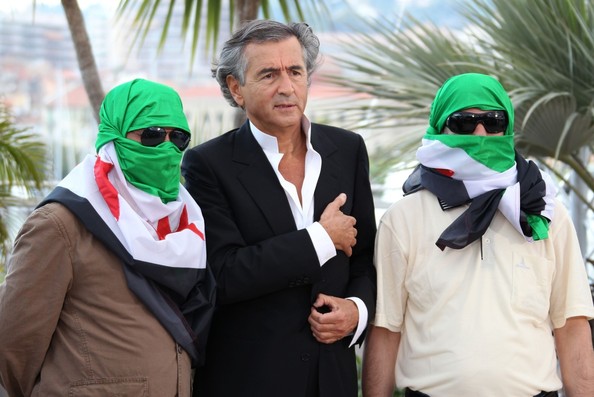
Another well known Zionist Bernard Henri-Levy, who spear-headed the destruction of Libya by NATO aerial bombardment, has also called for an attack on Syria.
More recently voices within the Israeli government have been more vocal and demanding in their desire to see the Syrian government’s replacement with a more friendly puppet regime.
Israeli President Shimon Peres, upon receiving the ‘Medal of Freedom’ from US President Barack Obama, said that the world had to get rid of Assad. That he was receiving such a medal requires its own article dedicated to psychoanalyzing such an event, but that he could also claim, while being part of a system that is responsible for some of the gravest abuses to humankind in history, that from a “human” point of view Assad must go, should really get so-called anti-Zionists thinking.
Other members of the Israeli government, such as Israeli Vice Prime Minister, Shaul Mofaz, urged world powers to mount a Libya style regime change in Syria.
And Israeli defense minister Ehud Barack called for the ‘world to act’ to remove Assad.
Finally, Israeli Deputy Foreign Minister Danny Ayalon accused the ‘world’ of wrong doing for failing to act against the Syrian government and then offered Israeli ‘assistance’ for Syrian ‘refugees’. Thin euphemism for arming insurgents on the border.
Conclusion
In spite of the overt desire of the US government for regime change in Syria, which they have made clear time and time again, Israel has obvious economic and military interests for pursuing regime change in Syria, most notably the the break up of the Axis of Resistance and the destruction of plans for rival oil pipelines. Despite numerous public statements by Syrian opposition members that they are pro-Israel and the multitude of Israeli government officials calling for the fall of the Syrian government as well as Zionist lobbyists and key Zionist figures like Bernard Henri-Levy backing the insurgency, so called ‘anti-Zionist’ socialists and Islamic groups persist in their claim that Israel has no stake in regime change in Syria and that the insurgency inside Syria is from the grass roots. Though all information contrary to this delusion is in clear sight, it seems that the socialist and Islamic groups are willfully blind.
This position has become increasingly untenable however, most recently in light of the murder of Syria’s Deputy Defence Minister Asef Shawkat, which along with the simultaneous murder of Defence Minister Raoud Dajiha and Assistant to the Vice President Hassan Turkomani, which the Syrian government laid the responsibility for squarely at the doors of Israel, Saudi Arabia and Qatar, as new information has come to light as revealed by Al Akhbar editor-in-chief Ibrahim al-Amin.
In an article published today, Amin writes of Shawkat, that in spite of the incessant attempts by the US, Israel et al to demonise him, he in fact,
played a major role in resisting Israeli occupation in and around Palestine. Right to the end, he took practical charge of meeting the needs of the resistance forces in Palestine and Lebanon, and of their members and cadres in Syria. He oversaw everything from their accommodation and transportation, to their training camps and provisions, and arranging for cadres from inside Palestine to come to the country secretly for training.
For the resistance in Lebanon, Shawkat was a true partner, providing whatever assistance was needed without needing orders or approval from the leadership. He was a central player in the June 2006 war. He spent the entire time in the central operations room that was set up in line with a directive by Assad to supply the resistance with whatever weapons it wanted, notably missiles, from Syrian army stocks. Shawkat and other officers and men of the Syrian army – including Muhammad Suleiman who was assassinated by the Mossad on the Syrian coast in 2008 – spent weeks coordinating the supply operation which helped the resistance achieve the successes that led to the defeat of Israel.
Despite the accusations levelled against Asef Shawkat regarding security, political or other matters, for Imad Mughniyeh, the assassinated military leader of Hezbollah, he was just another comrade, a modest man who would bow when shaking hands with Hassan Nasrallah, and liked to hear the news from Palestine last thing at night.
However anti-Zionist one proclaims to be, there are few in this world that can claim to have done as much as the above for the Palestinian resistance to the Zionist entity. But having proven to willfully ignore all of the facts and history of Syria’s long history of resistance to Israel, it is a great tragedy that those who cling to the argument dealt with in this essay, would only perhaps be able to let go of it should Syria fall and then the reality of Palestine’s total military abandonment would be all too devastatingly clear to see.
Update by Aletho News:
The Ziocons promoting wars for Israel have been abetted by these self described “intellectuals” on 8 April 2013:
We, the undersigned, stand in solidarity with the millions of Syrians who have been struggling for dignity and freedom since March 2011. We call on people of the world to pressure the Syrian regime to end its oppression of and war on the Syrian people. We demand that Bashar al-Asad leave immediately without excuses so that Syria can begin a speedy recovery towards a democratic future.
Since March 2011, Asad’s regime has steadily escalated its violence against the Syrian people, launching Scud missiles, using weapons banned by the Geneva Convention such as cluster bombs and incendiary munitions, and using aerial bombardment. The regime has detained and tortured tens of thousands of people and committed untold massacres. It has refused political settlements that do not include Asad in power, and it has polarized the society through strategic acts of violence and by sowing seeds of division. The regime has also, since the early days of the uprising, sought to internationalize the crisis in order to place it within geopolitical battles that would only strengthen the regime. Staying true to the logics of an authoritarian regime, Asad could never accept the legitimate demands of the Syrian people for freedom and dignity. Thus, there is no hope for a free, unified, and independent Syria so long as his regime remains in power. … Full text
Frederic Jameson (Duke University, United States)
Tariq Ali (British Pakistani writer, journalist, and filmmaker, United Kingdom/ Pakistan)
Ilan Pappe (University of Exeter, United Kingdom)
Etienne Balibar (Columbia University, United States/ France)
Nigel Gibson (Emerson college, United States/ Britain)
Norman Finkelstein (American researcher and writer, United Sates)
John Holloway (Benemérita Universidad Autónoma de Puebla, United States/ Mexico)
Vijay Prashad (Trinity College, United States/ India)
Salameh Kaileh (Intellectual, Syria/Palestine)
Bill Ayers (University of Illinois at Chicago, United States)
Bernardine Dohrn (Northwestern University, United States)
Rashid Khalidi (Columbia University, United States/Palestine)
Lieven de Cuater (Philosopher, Belgium)
Jihane Sfeir (l’Université Libre de Bruxelles, Lebanon/ Belgium)
Jean-Pierre Filiu (Institut d’études politiques de Paris, France)
Farouk Mardam Bey (Intellectual, Syria)
Faraj Bayrakdar (Poet, Syria)
Ziad Majed (American University of Paris, Lebanon/ France)
Kamal Bandara (Intellectual, Tunisia)
Francois Burgat (CNRS, France)
Adam Shapiro (Activist, United States)
Razan Ghazzawi, (Activist, Syria)
Yassin el-Haj Saleh (Intellectual, Syria)
Thierry Boissière (Institut français du Proche-Orient, France)
Olivier Le Cour Grandmaison (universitaire, France)
Jens Hanssen (University of Tornoto, Canada/ Germany)
Ghassan Hage (The University of Melbourne, Australia/ Lebanon)
Hani al-Sayed (American University of Cairo, Syria/ Egypt)
Hazem al-Azmeh (Intellectual, Syria)
Sadri Khiari (Intellectual, Tunisia)
Oussama Mohamad (Film maker, Syria/ France)
Jihad Yazigi (Journalist, Syria)
Saad Hajo (Cartoonist, Syria)
Wendy Brown (UC Berkeley, United States)
R. Radhakrishnan (UC Irvine, United States/ India)
Ann Ferguson (Philosopher, United States)
Samir Aita (Le Monde Diplomatique editions arabes, Cercle des Economistes Arabes)
Santiago de Rico Alba (Philosopher, Spain)
Asef Bayat (University of Illinois, USA)
Chela Sandoval (University of California, Santa Barbara)

Related articles
- Israel Invents Syrian WMD Threat, IDF Commanders Threaten Intervention (alethonews.wordpress.com)
- Syria: FSA ziothugs murder 17 Palestinian fighters (alethonews.wordpress.com)
Daniel Yergin: Excess oil capacity seen as adequate to weather sanctions impacts
RussiaToday | Jun 27, 2012
On the 1st of July Europe will cease importing oil from Iran and new US sanctions will also come into place. To talk about how this will affect the energy market RT is joined by prize-winning author and energy specialist Daniel Yergin.
Saudi regime to pay salaries of armed rebels in Syria: Report
Press TV – June 23, 2012
The Saudi regime will pay the salaries of members of the terrorist Free Syrian Army amid ongoing attacks carried out by armed groups inside Syria, a report says.
According to a June 22 report published by the UK newspaper Guardian, Saudi authorities will pay the armed rebels to encourage “mass defections from the military and… pressure” the Damascus government.
The plan has been discussed between officials from Riyadh and Washington, as well as representatives from a number of other Arab states.
US Senator Joe Lieberman also brought up the issue of the salaries during talks with Saudi officials in a recent trip to the kingdom.
According to Lieberman’s spokesperson, the US senator “called for the US to provide robust and comprehensive support” to the armed rebels.
Lieberman “specifically called for the US to work with… partners to provide” the rebels with “weapons, training, tactical intelligence, secure communications and other forms of support.”
Meanwhile, armed groups continue conducting attacks in Syria. The official Syrian news agency, SANA, said terrorists killed 25 civilians in the northern province of Aleppo on June 22.
The Guardian also stated that Turkey has allowed the “establishment of a 22-member command center in Istanbul which is coordinating supply lines” for the rebels inside Syria.
The report was published a day after the New York Times quoted some US and Arab intelligence officials as saying that Turkey, Saudi Arabia and Qatar pay for the transport of weaponry for the armed gangs in Syria.
On February 24, Saudi Foreign Minister Saud al-Faisal said during a meeting of the so-called “Friends of Syria” group in Tunisia that supplying weapons to Syrian rebels is “an excellent idea.”
Turkish Foreign Minister Ahmet Davutoglu said on March 4 that the “international community’s message might be conveyed to the Syrian administration via certain methods including the arming of the (so-called) Syrian National Council (SNC).”
Meanwhile, Syrian President Bashar al-Assad issued a decree on Saturday, forming a new government under Prime Minister Riad Farid Hijab, the former agriculture minister who was appointed the Syrian premier on June 6.
The move was part of the reforms promised by the Syrian president.
Assad said on June 3 that the country is “facing a war from abroad,” adding that attempts are being made to “weaken Syria, [and] breach its sovereignty.”
“Standing up against the conspiracy is not easy, but we will overcome the obstacles,” he stated.
Related articles
- You: Saudi Arabia plans to fund Syria rebel army (guardian.co.uk)
US on Record-Breaking Year of Military Sales
Moqawama | June 16, 2012
The US has acknowledged that its foreign military sales exceeded $50 billion, with expectations that this year would be a record-breaking year in military sales, thanks to Saudi Arabia, whose US-linked sales account for three-fifth of the total sum.
Assistant Secretary of State for political-military affairs, Andrew Shapiro, stated, “We have already surpassed $50 billion in sales in the fiscal year 2012.”
It’s worth mentioning that in the year 2011, the US also reached a record in military sales that accounted for $30 billion.
“The sale to Saudi Arabia was very significant,” Shapiro added, as the $29.4 billion deal included 84 new fighter jets, and 70 old jets to be modernized.
In an interview with Russia Today (RT), Canadian diplomat Peter Dale Scott said that the Saudi-US military sales contribution is directly related to the “arms for petrol” relations between both countries.
“During the oil price hikes of 1971 and 1973 the US negotiated an agreement to pay Saudi Arabia higher prices for crude, on the understanding that Saudi Arabia would recycle the petrodollars, many of them through arms deals. So recently the imports of American hardware to Saudi Arabia have grown significantly,” Scott stated.
Also, according to the US State Department, one of the deals that helped the sales reach a record was a $10 billion deal with Japan.
Qatari spy chief held at Cairo Airport with bags of cash
Press TV – May 30, 2012
A new report says the Qatari intelligence chief was held by security forces at the Cairo Airport while carrying bags of cash a few days before the first round of Egypt’s presidential election.
The incident occurred on Saturday night when the Qatari ambassador to Cairo, who had appeared at the airport to receive a guest, attempted to get large baggage passed through without allowing inspection on it, citing the exigencies of a “diplomatic mission.”
The security forces at the Cairo Airport, though, insisted that the baggage be inspected since the matter had not been coordinated with the Egyptian Foreign Ministry.
When the bags were inspected, millions of dollars were found in them. Upon the disclosure, the Qatari ambassador had to disclose the identity of his guest, which had until then not been provided to the security forces.
The individual was identified as the Qatari intelligence chief, Ahmed Zaif, who had personally delivered the cash.
The incident is now widely believed to be an attempt on the part of Qatar to interfere in Egypt’s presidential election. The large number of votes announced to have been cast in favor of presidential hopeful Ahmad Shafiq implicate that huge campaign expenses, mostly allocated by Saudi Arabia and Egypt, have been spent to secure Shafiq’s victory in the election.
Mustafa al-Qanimi, a member of the Muslim Brotherhood party, said in an interview recently that the election results have left no doubt that a huge sum of money has been spent in the course of the election with the aim of securing Shafiq’s victory.
Thousands of people took to the streets of the capital, Cairo, after the electoral commission confirmed that the Muslim Brotherhood’s Mohamed Mursi and former Egyptian Premier Ahmed Shafiq will face off in the country’s presidential runoff next month.
Revolutionaries in more than ten cities and governorates took to the streets, protesting the result and demanding Shafiq’s exclusion from the election. They also demanded the application of his political isolation, as the ex-premier was a prominent figure of the country’s deposed ruler, Hosni Mubarak.
Related articles
Lebanese army seizes weapons, explosives near Syria border
Press TV – May 18, 2012
The Lebanese army has seized a consignment of weapons and explosives near the Syrian border, apparently destined for armed gangs fighting against the Damascus government.
According to Lebanese sources, the weapons were seized after the army intercepted a pickup truck in the village of Joura in the border region of Masharih al-Qaa late on Thursday.
One gunman was killed and a Lebanese soldier was injured in the exchange of fire between the two sides.
Lebanese troops also discovered a car laden with explosives in the southern city of Sidon.
Several people have been arrested in connection with the incidents.
Syria, which has been experiencing unrest since last year, has repeatedly said that weapons used by armed groups fighting against the government of President Bashar al-Assad are being smuggled into the country from Turkey and Lebanon.
Syria has also accused Saudi Arabia and Qatar, of fueling unrest in the country by funding and arming the anti-Syria gunmen.
Last month, the Lebanese navy intercepted a Sierra Leone-registered ship, Lutfullah II, and confiscated a large consignment of arms and ammunition it was carrying. It is believed that the weapons were bound for armed groups in Syria.
The ship’s owner said it was due to unload in Tripoli in northern Lebanon.
Related articles
- Huge Weapons Cache Aboard Italian Ship in North Lebanon (alethonews.wordpress.com)
No war is necessary to destroy Israel: President Ahmadinejad
Press TV – May 13, 2012
Iran’s President Mahmoud Ahmadinejad says there is no need to take up arms against Israel in order to destroy it.
Criticizing the regional countries for buying billions of dollars worth of weaponry from certain powers, Ahmadinejad said, “If their objective for buying these weapons is to fight with the Zionist regime (Israel), they should know that a war is not necessary for destroying the regime.”
“If the regional countries cut their ties with the Zionists and give the Zionist regime (Israel) a small frown, this fabricated regime will be over,” President Ahmadinejad added.
The Iranian chief executive made the remarks in the city of Kashmar in the eastern province of Khorasan Razavi on Saturday.
The president also criticized certain regional rulers for spending their oil revenues on USD 60 billion worth of [Western] arms.
In December 2011, the US formally announced a USD 30-billion arms deal with Saudi Arabia which included the sales of F-15 fighter jets to the Arab monarchy.
The deal is part of a multi-year arms agreement between Washington and Riyadh, unveiled in October 2010, which is worth a whopping USD 60 billion overall.
The Iranian president also slammed the massacre of Afghan civilians at the hands of the US military forces stationed in Afghanistan.
Democracy suffers in NATO-backed Syrian fighting
By M.D. Nalapat | Global Times | May 6, 2012
Today, more than 14 million voters in Syria will have the chance to select among several thousand candidates for 250 parliamentary seats.
Cities across the country are plastered with posters of the candidates, with many adopting an Obama-sque “Change we can believe in” slogan.
However, the armed groups that have been backed by the NATO powers for the past 15 months have rejected the polls, and are showing their hostility by targeting candidates for assassination, usually by the use of explosives.
Since the armed uprising began, several thousand members of the security forces and their family members have been killed by the insurgents, who themselves have lost thousands of their own.
However, those relying on Western media are told that every such death has been caused by the security forces, ignoring the deadly violence that is being unleashed in the country by groups of armed mobs.
We have seen this before, in Libya, where tens of thousands of people have died so far as the result of externally backed civil war. In that country, those willing to kill regime elements were given training, cash and weapons.
Today, Turkey, Qatar and Saudi Arabia are providing the same assistance to those seeking to use deadly force against the government in Damascus.
Although Syria President Bashar al-Assad has announced a raft of reforms, including new media laws and the right to form political parties, each such announcement has been met by an escalation in violence, which has rendered null the ceasefire brokered by UN envoy Kofi Annan.
Since mid-April, there have been numerous ceasefire violations by the insurgents, with the Alawi, the Muslim sect to which the Assad family belongs, and the Christian community the main target of the insurgents. Syria is the home of the Patriarchate of Antioch, the oldest church in Christendom.
For reasons not clear, the triumvirate of Turkey, Qatar and Saudi Arabia have joined hands with the NATO powers to back the fundamentalist Muslim Brotherhood. The Brotherhood has been the greatest beneficiary of the Arab Spring.
Today in Syria, one can see women across the country dressed as they please. Were the Brotherhood to take control, this freedom might soon be replaced with the obligation to wear the chador (full veil). Already in Egypt and in Tunisia, the secular ethos of the country is rapidly giving way to Saudi-style conservatism.
While European members of NATO are opposed to Islamic conservatives in their own countries, in the Arab world, they favor such elements over those who are secular. The result is a galloping conservatism across the Arab world.
Clearly, the NATO powers are aware that the more hardline local regimes are, the less chance that they will be able to compete with the US and the EU.
Rather than support the process of democratization in Syria, the NATO powers have joined hands with regional powers to train, arm and provide cash to the armed opposition, thereby fomenting a violent civil war in the country.
The 11 percent of the population that are Alawi and the 9 percent of Syria’s 24 million people that are Christian are terrified that they will become the target of ethnic cleansing. As for the majority Sunni community, more than two-thirds are moderate, with less than a third favoring the conservative Wahabbi-Salafi faith.
We have seen this before, in Afghanistan in the 1980s, where the US backed religious extremists to fight the USSR. The effects of that mistake are still creating harmful ripples across the region.
Today, rather than support secular elements and encourage the transition to democracy, NATO is backing armed groups that create mayhem across the country, groups that overwhelmingly follow an extremist ideology.
Of course, there are exiled Syrians who have congregated in Paris to provide a moderate face to the armed struggle. However, these people control nothing, only those with guns do.
And these days, more and more guns are flowing into Syria, as NATO seeks regime change not through the ballot but through the bomb.
The author is director and professor of the School of Geopolitics at Manipal University in India. He visited Syria last month as part of an Indian delegation.
Related articles
- Syria border guards foil infiltration attempt from Turkey: Report (alethonews.wordpress.com)
- Sarkozy and Hollande on Middle East: La Même Chose (alethonews.wordpress.com)
- Annan Spokesman Says Syria Peace Plan on Track, White House Claims Opposite (alethonews.wordpress.com)
The Lutfallah II Arms-Smuggling Scandal
By FRANKLIN LAMB | CounterPunch | May 4, 2012
It would be an incautious stretch to suggest any sort of parity between Watergate and the unfolding Lutfallah II arms shipment-to-Syria drama, that each day brings more revelations. But some of what we are daily learning about the who, what and why of Lutfallah II reminds some of us of a Watergate, type atmosphere including “bit by bit, drip by drip” revelations, denials, setting up fall guys and remarkable examples of incompetence.
The still unfolding Lutfallah II weapons running misadventure, in which a claimed Syrian-owned vessel registered in Sierra Leone but apparently flying the Egyptian flag, was detained off the Lebanese port of Batoun, by the Lebanese Army Marines because it was sailing too high in the water, and appeared “suspicious,” and was then found to contain 300,000 pounds of weapons may erupt unpredictably with serious political consequences for the region.
“Deepthroat”, the FBI mole who met secretly with Woodward & Bernstein and leaked confidential US government information to the duo, as revenge against President Nixon for rejecting him as successor to the deceased FBI Director, J.Edgar Hoover, outed himself in 2005. “Deepthroat”, after a quarter century of hundreds of sleuths trying to divine, if he/she even existed, turned out to be none other than Deputy Director of the FBI, William Mark Felt, Sr. “Deepthroat” repeated advice to the Washington Post reporters was to “Follow the Money!”
They did. The rest is history.
If a ‘deep throat’ appears in Libya, Qatar of elsewhere, and offering advice to reporters who appear in Benghazi and Misrata in order to dig into what really happened, it might be that he will counsel: “Follow the weapons”.
Eyewitness Hassan Diab is a Libyan researcher who has been working with a group of American and International lawyers preparing a case against NATO to be filed with the International Criminal Court. Hassan and three of his friends actually saw the ship Lutfallah II being loaded in Benghazi, Libya. Hassan claims that it is well known at the docks that Qatar and Saudi Arabia control a total of five warehouses in the area of Benghazi & Misrata and supplied the weapons and money to hire the Lutfallah II container vessel.
Libyans in the area are reporting that the intercepted arms are from both Gadaffi stockpiles left over from NATO’s Libya campaign and some from the Qatar-Saudi six month weapons pipelines into Libya. When NATO declared a cessation of its bombing on Halloween night, October 31, 2011 the scramble for weapons began and Qatar stored and purchased whatever weapons came to its notice and from various militias who were willing to do business.
Libyans and foreign dock workers at Benghazi Port, who observed the Lutfallah II being loaded, saw three containers filled with 150 tons of weapons put on board, although the initial plan, according to the owner of the boat was to ship as many as 15 containers. It is estimated that they would have carried more than 2000 tons of weapons.
A Lebanese judicial source, who is a sitting judge based at Beirut’s La Maison des Avocates and advises the Lebanese government on procedural rules that ought to be followed in this case, confirmed to me and also to the Beirut Daily, As-Safir, that the Lutfallah II shipment was funded by two Syrian businessmen living in Saudi Arabia. In addition, the ship’s captain in Syria is the gentleman who claimed ownership of the shipment. All are affiliated with the Syrian opposition and all are seeking regime change in Syria.
According to a late breaking report, all have been arrested and remain in custody despite claims that they thought the cargo was general merchandise. Libya does not export anything much but its light crude oil and the Lutfallah II is clearly no oil tanker. Crew members of the container ship are facing trial on charges of illegal gun-running.
The owner reportedly told his interrogators, including Military Prosecutor Judge Saqr, that “It would be against Lebanese law and international maritime law for me to demand to examine the content of the containers.” Some international lawyers would argue that the law is exactly the opposite in both, and that international law establishes not just the owner’s right to inspect cargo being carried on his ships–for hazardous or contraband cargo etc– but that maritime law clearly mandates his responsibility to do so. Likewise, his insurance company.
Denials
The US-Saudi backed Future Movement was not involved in the arms shipment according to party official Mustafa Allouch. However, he later told Lebanon’s OTV that “The Syrian people have the right to find the appropriate means to defend themselves.” The Free Syrian Army has denied any links to the weapons-carrying vessel.
Hezbollah official Ammar Musawi praised the Lebanese army for its seizure of a Syria-bound illegal arms shipment and urged the authorities “to prevent Lebanon from turning into a conduit of destruction toward its neighbor”. “For the sake of Lebanon’s stability, I urge our authorities to exert greater effort to prevent Lebanon from turning into an arena through which the tools of crime cross into Syria, as the involvement of some Lebanese in fueling the situation in Syrian will have negative repercussions on Lebanon,” Hezbollah International Relations Director said.
On 5/2/12, Syria’s ambassador to Lebanon, Ali Abdel-Karim, following a meeting with Lebanese Foreign Minister Adnan Mansour, accused Gulf countries, including Qatar and Saudi Arabia, of being behind the Syria-bound arms shipments.
“The ship was bound for the Syrian opposition; this is sure given that the political and security leaderships in Qatar, Saudi Arabia and other countries are behind these acts, which undermine the security of Syria, Lebanon and the region.”
Many questions remain in need of answers. Any serious first year law student would ask the questions that presumably Lebanese investigating judges and the media will ask. A few of the more obvious ones would include:
Who funded the shipment discovered in the cargo bay of the Lutfallah II? Who had custody over the original 12 containers of what was planned, according to the jailed owner, as a shipment of over two million tons of “general merchandise”?
Who supplied the weapons and from which warehouse locations in Libya were they taken? Who controls the warehouses? Who made the decision to hold back 12 of the original contract and why? Where are the 12 containers? Who prepared the ships manifest? What was the involvement, if any, of the Syrian owner of the Lutfallah II? Why was the Lutfallah II not searched at the port of Alexandria as well as Turkey? It docked at both. Why was it given ‘green light passage’ by Israel and UNIFIL?
Eyewitnesses claim some activity on the Lutfallah II was evident while it was docked in Turkey? What was the activity? Which, if any, Lebanese politicians and political parties were involved. Who was to meet and take custody of the shipment once it arrived at the Tripoli, Lebanon dock?Which land routes into Syria were to be used following the offloading of the cargo at Tripoli Port?
It is not for this observer to offer advice to investigative journalists, whether free-lance or corporate, but as a fairly long-term US Congressional aid in the post-Watergate era who actually read the transcripts of US Senator Howard Baker’s Watergate Hearings, I would have thought that one or more might want to book a flight to Benghazi, Libya, toute de suite, with an inclination to: Follow the Money and follow the Weapons!
Franklin Lamb is doing research in Lebanon and is reachable c/o fplamb@gmail.com
Related articles
US terror drones, Yemeni army kill 23
Press TV – April 24, 2012
About two dozen people have been killed in attacks by the Yemeni army and US assassination drones in southern and eastern Yemen.
The Yemeni Defense Ministry said on Monday that the army shelled suspected militants in the southern province of Abyan.
The attack occurred near the city of Loder late on Sunday, killing 13 people.
At least three others were killed in an airstrike on several vehicles in a remote desert region in the eastern province of Marib, the Yemeni Defense Ministry said.
Also on Sunday, a strike by a US assassination drone killed three people in the southern province of Shabwa.
Local sources said that four more people lost their lives when a Yemeni jet attacked their vehicles in Loder.
About 275 people have been killed in fighting and airstrikes in southern Yemen over the past two weeks.
The government says the goal of the attacks is to foil potential threats by al-Qaeda — a claim that has not been independently confirmed.
Ali Abdullah Saleh, who ruled Yemen for 33 years, stepped down in February under a US-backed power transfer deal in return for immunity after nearly a year of mass street demonstrations demanding his ouster.
His vice president, UK-trained Field Marshal Abdrabuh Mansur Hadi, replaced him on February 25 following a single-candidate presidential election backed by the United States and Saudi Arabia. Hadi will serve for an interim two-year period as stipulated by the power transfer deal.
On April 6, Hadi dismissed nearly 20 high-ranking officers, including the commander of the country’s air force, Saleh’s half-brother Mohammed Saleh al-Ahmar, but did not replace Saleh’s son, nephew, and other allies, who head important military units.
So far, Al-Ahmar has refused to step down from his post.
Currently, Saleh’s eldest son Ahmed commands the elite Republican Guard, his nephew Yehya heads the central security services, and another nephew, Tariq, controls the Presidential Guard.
Yemenis have repeatedly staged demonstrations across the country to demand the political restructuring of the country and the dismissal of members of Saleh’s regime from their government posts.
Another Bahraini killed by poisonous tear gas
Press TV – April 11, 2012
Another Bahraini has died due to asphyxia after inhaling poisonous tear gas fired by Saudi-backed regime forces as Manama’s brutal crackdown on protests continue.
The victim, identified as Abdul Rasoul Hassan Ismail, died after inhaling toxic gas fired on his house in the village of Karbabad last week.
Several Bahraini civilians, mostly senior citizens and kids, have died due to the misuse of tear gas against protesters by regime forces.
Meanwhile, Bahraini authorities continue to defy national and international calls to release prominent rights activist Abdulhadi al-Khawaja, who has been on hunger strike for over two months and is feared to be on the verge of death.
Khawaja, the co-founder and former president of the Bahrain Center for Human Right, began a hunger strike in early February to protest against the life sentence he received last year and Manama’s ongoing crackdown on peaceful protests.
Bahrainis have held several demonstrations in support of him after his refused to eat, urging the government to release him.
Related articles
- UK: Queen invites Bahraini king to Jubilee banquet (alethonews.wordpress.com)
Saudi Arabia induces Pakistan to quit IP gas pipeline project
Press TV – April 11, 2012
Riyadh has sent a message to Islamabad offering an “alternative package” to meet Pakistan’s growing energy need so that it can abandon the Iran-Pakistan (IP) gas pipeline project, Press TV reports.
The message from Saudi King Abdullah was conveyed by the country’s Deputy Foreign Minister Abdul Aziz bin Abdullah bin Abdul Aziz in his meetings with Pakistani leaders on Tuesday.
Unnamed diplomatic sources in Pakistan said Saudi Arabia has asked the Pakistani government to reconsider its decision to pursue energy cooperation with Iran, which includes the construction of the IP gas pipeline and purchasing electricity and oil from Tehran.
The deputy foreign minister also had a meeting with Pakistani premier Yousaf Raza Gilani during which, a prime minister’s aide said a “special message” from the Saudi monarch was delivered.
Saudi Arabia is said to have offered Pakistan a loan for the construction of a new oil facility to bail the country out of its financial and energy crises.
A Pakistani official, who asked not to be named, said the offer would be discussed at a Pak-Saudi joint ministerial meeting which is being planned.
The Saudi official’s visit closely followed a trip by Saudi Culture and Information Minister Abdul Aziz bin Mohiuddin Al-Khoja last week.
Energy-hungry Pakistan is looking to increase its fuel imports from various sources, including Iran, to reduce power shortages that have crippled the country’s industry and shaved percentage points off its GDP growth.
Washington has frequently indicated its resentment at the IP gas pipeline project. An article published in the International Herald Tribune on January 25, said Washington is trying to lure Islamabad away from the project by offering cheaper gas to the country.
The multi-billion-dollar gas pipeline aims to export a daily amount of 21.5 million cubic meters (or 7.8 billion cubic meters per year) of the Iranian natural gas to Pakistan.
The maximum daily gas transfer capacity of the 56-inch pipeline which runs over 900 km of Iran’s soil from Asalouyeh in Bushehr Province to the city of Iranshahr in Sistan and Baluchestan Province has been estimated at 110 million cubic meters.
Related articles
- S. Arabia offers help to tide over energy crisis (dawn.com)
- US lobbies Pakistan to drop Iran-Pakistan gas pipeline project (alethonews.wordpress.com)
- US denies threats over gas pipeline (nation.com.pk)
Featured Video

Weaponized Journalism: 2021 Sayer Ji Interview with NPR
or go to
Aletho News Archives – Video-Images
From the Archives
How Rothschild Banking Clan Uses Its Vast Wealth to Influence World Events and Control Governments

By Ilya Tsukanov – Sputnik – 15.09.2024
How powerful is the Rothschild banking family? How did they amass their fortune? Just how rich are they? Do they secretly control the world? Sputnik explores. … continue
Blog Roll
 Aletho News
- London tourism expo promotes Israeli agency linked to theft of Palestinian land
- Dockworkers launch global strike against Israeli and US military shipments
- Europe facing gas price shock – Gazprom chief
- Ukraine continues recruiting people with disabilities
- Weaponized Journalism: 2021 Sayer Ji Interview with NPR
- Beyond Netanyahu: what Israel’s election means for Palestinians
- Lithuania plans universal conscription
- Lies, Damn Lies, and Ukraine News
- Financial Times rejects Nordic demands to correct Putin call story – media
- The Case for Less Unity in Europe
- If Americans Knew
- An error has occurred; the feed is probably down. Try again later.
- No Tricks Zone
- Germany’s Green Energy Transition Becoming Increasingly Expensive…Another 6 Trillion Euros!
- Sudden Stratospheric Warming, Powerful El Niño Combination May Lead To Extreme Europe Cold, Energy Crisis!
- Two New Studies Find Thwaites Glacier Melt Cannot Be Driven By Human Activity Or A Warming Ocean
- E-Cars Reduce CO2 Emissions By Only 41% Compared To Internal Combustion Engine Vehicles
- Predictions Made By Renowned Climate Professor Over Past Decades Have Been Proven To Be Poor
- New Study Suggests Large Regions Of The Pacific Ocean Have Been Cooling For The Last 80 Years
- Germany’s Green Energy Debacle: High Energy Costs Force Kahla Porzellan to Close After 182 Years!
- New Study: 50 Years Of The Most Aggressive ‘Net Zero’ Policies Can Only Affect The Global Climate By 0.03°C
- US September “Heat” Was No Record…Many Records Set Decades Ago
- Latest European Green Energy Debacle; Portugal’s Largest Flagship Solar Park Insolvent!