Saudi Arabia gets two million acres from Sudan for tax-free farming
Sudan Tribune | April 9, 2012
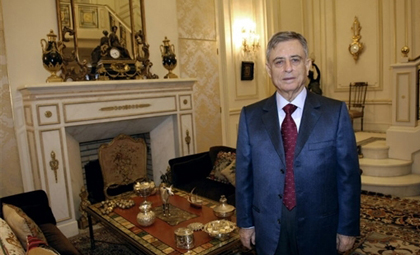
KHARTOUM – A prominent Saudi businessman announced last week that the Sudanese government agreed to give his country two million acres of land as a farming investment that would allow the Arab Gulf state to ensure safe and steady food supply.
The chairman of the Jeddah Chamber of Commerce Saleh Kamel told the Saudi-based al-Sharq newspaper that the project, if successful, may allow Riyadh to achieve a food surplus that can be exported elsewhere.
Kamel disclosed that Khartoum will make the farmland a free zone that is not subject to any form of taxation or duties and is not covered by Sudanese laws.
The world’s largest oil exporter would no longer need to import food from Argentina, North America and Australia when the plantation scheme becomes fully operational, he added.
Since the 2007-2008 global food crisis, Saudi Arabia has been encouraging private and public firms to invest in farm projects abroad. In 2008, the government there also abandoned a 30-year self-sufficiency in wheat programme.
Saudi Arabia wants to build stocks of basic commodities such as wheat, rice, oil and sugar to avoid the implications of rising global food prices and also to meet the needs of a population that is growing at a rapid pace.
The government-owned Saudi Industrial Development Fund (SIDF) offers credit guarantees to companies wishing to invest in farming projects abroad.
Kamel explained the choice of East Sudan for launching the project is due to its proximity to Port Sudan which allows the products to be easily shipped to Saudi Arabia just across the Red Sea. He said that he would discuss the matter with the Saudi ministers of agriculture and finance.
“The return [on investment] of agriculture in Sudan will reach 15% of the capital in the first year, a return that is more than good and better than investing in any another business sector” he said.
It remains to be seen whether the Saudi farming venture will be successful. Saudi businessmen, including Kamel, have complained in the past that investing in Sudan faces too many hurdles.
Related articles
- Saudi-Sudan push to exploit Red Sea treasure (uwtreasures.wordpress.com)
UK: Queen invites Bahraini king to Jubilee banquet
Press TV – April 8, 2012
The UK Queen has invited one of the world’s most tyranical rulers, the King of Bahrain, to her upcoming Diamond Jubilee banquet irrespective of widespread criticism of his repressive regime.
Sheikh Hamad bin Isa Al Khalifa’s regime is accused of killing and torturing civilians during more than one year of pro-democracy demonstrations in the tiny Persian Gulf island nation.
Sheikh Hamad is on the guest list for a lunch hosted by the Queen in May at Windsor Castle. He is also thought to be among those invited to a champagne dinner given by Prince Charles the same evening at Buckingham Palace. The event will be an intimate gathering of reigning monarchs from around the world.
The invitations will infuriate human rights campaigners and members of parliament (MPs) angry at the regime’s violent crackdown on pro-democracy demonstrations.
The Bahraini regime is accused of using brutal force and torture to crush the protests, which saw more than 50 civilians killed and thousands arrested. Bahrain’s royal family has direct control of the police, army and security services.
It is believed the elderly King of Saudi Arabia, King Abdullah bin Abdulaziz, has declined the invitation but is sending the crown prince in his place.
The Saudi Arabian royal family has also been criticised for human-rights abuses, as has another invitee, the King of Swaziland, Mswati III, Africa’s last absolute monarch.
Related articles
- Kate Middleton and Prince William Skirted Embarrassment But Queen May Not (celebs.gather.com)
Bad Losers’ Conference: Syrians Pay the Price
By Jeremy Salt | Palestine Chronicle | April 3, 2012
Ankara – The ‘Friends of Syria’ conference in Istanbul ended with a pledge of qualified support for the Annan plan while agreeing on concrete measures to undermine it. Saudi Arabia and other gulf states are going to stump up the money to turn the so-called Free Syrian Army into a fully-fledged mercenary army. Saudi Arabia and Qatar had previously said that they intended to spend millions of dollars arming the ‘rebels’ and at the ‘Friends of Syria’ conference, the US, Britain and the gulf states agreed to spend millions more on providing the armed groups with unspecified ‘humanitarian’ assistance and ‘communications equipment’. The gulf states are also hoping their money will lure Syrian soldiers into defecting.
Saudi Arabia and Qatar operate on the basis of human cupidity and greed. They must be surprised on those occasions when they discover that not everyone has a price. Late last year the Qatari Prime Minister, Hamad bin Jasim al Thani, was reported to have offered Syrian Foreign Minister Walid al Muallim $100 million and permanent residence in Qatar if he would defect. The occasion was a meeting of the Organisation of the Islamic Conference in Jeddah. Muallim declined, asking in return, rhetorically of course, how much money Qatar had spent so far internationally and regionally to deepen the crisis in Syria. This follows on from the money Qatar spent on the destruction of the Libyan government.
In February eight million Syrians voted for political reform that will usher in a multi-party political system and will remove the Baath party as the central pillar of state and society. The armed gangs have been chased out of the cities where they had dug themselves in. Human rights groups and the media are finally drawing attention to what they have wilfully ignored for months, the extreme violence of the FSA and other groups of armed men, directed against soldiers and civilians. Recently Der Spiegel, rightwing and openly hostile to the Assad government, ran an article on the executioners of Homs, the men who were taking the captives of the FSA to a burial ground and cutting their throats. Interesting that none of the correspondents smuggled across the border into Homs seem to have picked this up before.
If there is a role for any outside party surely it should be to help wind down the conflict in Syria, not wind it up, yet this is precisely what the ‘Friends of Syria’ are doing. Will Ban Ki-Moon or Kofi Annan have anything to say about this? They have a peace plan which cannot possibly work as long as its ostensible supporters are working to undermine it. Syria has accepted the Annan plan but has made the obvious point that it cannot pull its soldiers and tanks off the streets unless the armed gangs lay down their weapons. Here we have Saudi Arabia and Qatar shelling out money to ensure they keep fighting, with the backing of the other ‘Friends of Syria’. We can see what this is intended to produce, a situation in which every time the Syrian army is involved in conflict with armed groups it will be blamed for violating the Annan plan. All the ‘rebels’ have to do is keep shooting. This is exactly what their peace-loving supporters meeting in Istanbul want them to do.
If there is a proper name for the group that met in Istanbul it should be the Bad Losers’ Conference. These people have thrown everything into the struggle to bring down the Syrian government. They have plotted and conspired. They have used their media and they have thrown money and weapons at the ‘rebels’ but they have failed. Assad – abused and insulted by them – is still there and more on top of the situation than he was a little while ago. It should be ‘game over’ but Saudi Arabia and Qatar, in particular, are determined to play on irrespective of the cost in human lives and destruction to Syria and its people.
Hillary Clinton or her public relations machine tried to give the impression that she was in Saudi Arabia to talk the Saudis out of doing anything rash. More likely she was there to frame how the next steps would be taken, with Saudi Arabia stepping out in front and the US appearing to follow on behind. There is no point in saying anything about Clinton. She is what she is and no comment is needed. The Saudis are driven by their own agenda, which is to set up a Sunni Muslim wall against Iran and Shi’ism across the Middle East. Does anyone seriously think they have the best interests of the Syrian people at heart?
As for Turkey, its relationships with near neighbors have been transformed in the space of a year from good to bad. Insofar as Syria is concerned, the Turkish Prime Minister and his Foreign Minister have burnt their bridges. It is either them or Assad from now on. Certainly there can be no resumption of good relations as long as he or they remain in government. Someone has to go and they are determined it is going to be him. Alienating Syria has meant alienating Iran and raising the suspicions of the Shia-dominated government in Iraq, which has strongly opposed Turkey’s line on Syria. In January the two countries exchanged harsh words over the warrant for arrest issued against Iraqi Vice President Tariq al Hashimi, a Sunni Muslim accused of organising death squads used against Shia Muslims. Fleeing to Kurdistan, Mr Hashimi has now turned up as a guest of the ruler of Qatar. He denies being ‘part of Turkey’s geopolitical project’ but admits to receiving ‘advice’ from Turkey and has stated that he feels ‘indebted’ to the Turkish Prime Minister, Recep Tayyip Erdogan, for ‘making statements on my case’.
These amounted to the view that Mr Hashimi was being pursued because he was a Sunni Muslim. At a party meeting in Ankara, the Turkish Prime Minister, responding to Iraqi accusations of meddling, said that ‘Mr Maliki [Iraqi Prime Minister Nuri al Maliki, a Shia] should know very well that if you initiate a period of clashes in Iraq based on sectarian strife it is impossible for us to remain silent’. The refusal of the Kurdish governorate to hand Mr Hashemi over to the government in Baghdad deepens the divide between these two centres of power in Iraq. The warm welcome Mr Hashimi was given in Qatar is further evidence of the broader divide that is taking shape in the Middle East, with the US, the EU, the Gulf states and Turkey standing on one side and Iran, Syria, Lebanon, Iraq, Russia and China on the other.
After the meeting of the ‘Friends of Syria’ in Istanbul, Nuri al Maliki strongly condemned the decision of Saudi Arabia and Qatar to give further support to the armed groups in Syria. ‘We reject any arming [of Syrian rebels] and the process to overthrow the regime because this will leave a greater crisis in the region. The stance of these two states is very strange. They are calling for sending arms instead of working to put out the fire and they will hear our voice, that we are against arming and against foreign interference. We are against the interference of some countries in Syria’s internal affairs and those countries that are interfering in Syria’s internal affairs will interfere in the internal affairs of any country’.
His position is shared by Egypt, whose Foreign Minister, Muhammad Kamal Amr said after the Istanbul meeting that ‘arming the Syrian opposition, as Egypt sees it, will increase the rate of killings and will transform the situation in Syria as a whole to full-scale civil war’. Egypt’s misgivings are certain to be shared by other Arab governments, suggesting that in their single-minded pursuit of the Syrian government and their continued support for armed ‘resistance’ the gulf states and Turkey are very much in a regional minority.
In confronting Syria, Turkey inevitably alienated Iran and further exacerbated relations by agreeing to give the US the right to install an anti-missile radar station on its soil. Its only possible use could be to forestall missile retaliation in the event of an attack on Iran by the US or Israel (or both). Turkey has tried to placate Iran but insofar as Syria is concerned Iran is standing firm. It knows full well that it is next on the chopping block.
A perceptible nervousness about the actions of the government is beginning to appear in the Turkish media. In confronting Syria in such a belligerent manner and giving support to an armed group carrying out attacks in a neighboring state, the government has opened a new chapter in Turkey’s foreign policy. The legal dimensions of this policy are now coming up for scrutiny. Writing in Hurriyet Daily News, Yusuf Kanli made the following observation: ‘In the absence of a declaration of war or authorisation by parliament, it is a crime under Turkish law to allow Turkish territory to be used for hostile purposes against any neighboring country. Turkey is hosting scores of rebel commanders and there are serious claims that the rebel forces are receiving arms through Turkish territory. With almost 50 per cent electoral support, the current Turkish government can escape all kinds of accountability but as electoral support cannot last forever, tomorrow may be bleak, particularly if the effort to change the Syrian regime fails’.
Well, up till now it has failed and the continued attempt to drive Bashar al Assad out of office is going to cost more lives than the thousands who have died so far. As Syria is not just the will of one man, contrary to the image projected by the media, what would this achieve anyway? Rather than back off and throw their weight behind a peaceful solution, the ‘Friends of Syria’ decided to continue their campaign of support for the armed men at the precise moment Kofi Annan is calling on everyone to lay down their arms. The logic is Macbeth’s. They have gone so far in this venture that ‘returning were as tedious as go o’er’ but it is Syria and Syrians who will have to pay the price for their decision to keep going.
– Jeremy Salt is an associate professor of Middle Eastern history and politics at Bilkent University in Ankara, Turkey.
Related articles
- The belligerent “friends” of Syria in Istanbul (alethonews.wordpress.com)
- Saudi Arabia to recognize, fund Syrian National Council; Russia rejects Syria resolution (alethonews.wordpress.com)
- Syria blames terrorist gangs for massacre in Homs (alethonews.wordpress.com)
Syria blames terrorist gangs for massacre in Homs
Press TV – March 12, 2012
Syria’s information minister has blamed “terrorist gangs” for the massacre in the central city of Homs, describing the killings as part of plans to increase international pressure on the Damascus government.
Information Minister Adnan Mahmoud said on Monday that terrorist groups carried out the massacre in the Karm el-Zaytoun neighborhood of Homs to tarnish the image of the Syrian government.
“Terrorist gangs carried out the most horrible massacre in the Karm el-Zaytoun neighborhood of Homs … in order to incite international reaction against Syria,” Adnan Mahmoud told AFP news agency.
The Syrian minister also accused Saudi Arabia and Qatar of supporting “armed terrorist gangs” operating in Syria and hold them responsible for the killings in the country.
“Some of the countries backing armed terrorist gangs, such as Saudi Arabia and Qatar, are accomplices to the terrorism targeting the Syrian people… and bear responsibility for the bloodletting,” Mahmoud said.
At least 45 people, including women and children, were tortured and killed in Karm el-Zaytoun on Sunday night.
Relatives of a number of victims have announced that they were kidnapped by armed groups several months ago.
Opposition activists, however, have blamed the pro-government forces for the killings.
Bomb blast hits anti-US rally in Yemen, injures 22
Press TV – March 2, 2012
A bomb explosion has hit an anti-US protest rally in northern Yemen, injuring at least 22 people, Houthi fighters reported.
The resistance group, which controls much of the north of the country, said the explosion occurred in Sa’ada Province on Friday without providing further details.
Yemen has been the scene of anti-US rallies since a Washington-backed power transfer deal granted the country’s long-time dictator Ali Abdullah Saleh immunity from prosecution in return for stepping down.
Yemenis say Saleh and his aides must stand trial and face justice over the deadly crackdown on protests over the past year which killed nearly 2,000 anti-government demonstrators.
Yemenis also accuse the US and its ally Saudi Arabia of derailing their revolution by brokering a deal that transferred power from Saleh to his deputy, the UK-trained army Field Marshal Abd Rabbuh Mansour Hadi, in a single-candidate election.
On Tuesday, thousands of Yemenis gathered outside the US Embassy in the capital, Sana’a, demanding the expulsion of Washington’s ambassador to Yemen over his intervention in the country’s internal affairs and the desecration of the Holy Qur’an in a US-run military base in Afghanistan.
Angry protesters burned the US flag and an effigy of US Ambassador Gerald Michael Feierstein.
Feierstein is accused of having a role in holding the recent single-candidate presidential election in Yemen and returning Saleh home from a ”medical visit” to the US.
Saudi Arabia to recognize, fund Syrian National Council; Russia rejects Syria resolution
Saudi Arabia will recognize the Syrian National Council (SNC) as the “official representative” of the Syrian people amid a joint Western-Gulf Arab push to have President Bashar Assad removed, a senior member of the opposition group said on Friday.
“Saudi Foreign Minister Prince Saud al-Faisal told an SNC delegation he met in Cairo last week the kingdom will recognize the Council as the official representative of the Syrian people,” SNC executive council member Ahmad Ramadan told Kuwait’s Al-Rai newspaper.
Ramadan did not specify when Saudi will make the call, or whether it will be backed by its Gulf Arab allies in the Gulf Cooperation Council (GCC).
It was also reported in the UK’s The Times newspaper on Friday that Saudi Arabia and Qatar will begin funding the SNC as well as armed groups fighting the regime.
Gulf Arab states have taken a leading role in trying to oust the Syrian president, having this week announced the withdrawal of their members from the Arab League monitoring team in Syria.
Qatari Prime Minister Hamad bin Jassim bin Jaber Al Thani is to officially present a Western-backed plan to UN Security Council ambassadors in New York that will request Assad hand over power to his deputy, while a unity government is formed to oversee a full transition.
The improving ties between the GCC and SNC has aroused concerns among some corners of the Syrian opposition that fear Gulf states will turn Syria into a battleground against arch rival Iran.
The GCC oppose the democratic aspirations of the Arab Spring protests engulfing the region, and sent troops into neighboring Bahrain last year to crush a similar uprising there.
It is also unclear how representative the Istanbul-based SNC is of the protesters within Syria, and the level of contact between the internal revolution and external opposition groups.
Meanwhile, Russia has preempted the West and the GCC by already declaring its proposed UN resolution as “unacceptable.” … Full article
Related articles
- Arab League plan ‘outrageous meddling’ in Syria (alethonews.wordpress.com)
- UN security council to discuss Arab-backed Syria plan (guardian.co.uk)
- Discord among Arab monitors as Russia warns of Syria intervention (alethonews.wordpress.com)
Saudi Arabia, Jordan behind Syria unrest
Hassan Hanizadeh | Press TV | April 10, 2011
Syrian opposition leader Abdul Halim Khaddam at his home in Paris
The rise in anti-government protests and mounting political tension in Syria brings to mind the question about who is behind these deadly incidents.
A probe into the root causes of the latest events in Syria shows that the revolt is mainly supported by Saudi Arabia and Jordan.
The revolt began in the city of Daraa, 120 kilometers south of the capital Damascus and near the border with Jordan.
Daraa is the birthplace of Jordan’s Muslim Brotherhood, which has close ties to the people in the Syrian city.
Undoubtedly, the Syrians, like other nations in the region, have some legitimate demands which have prompted the government to plan fundamental reforms. However, the protests have come with unjustifiable violence by some suspicious elements.
Similar protests were seen in 1982 against the government of late Syrian president Hafez al-Assad in the cities of Hama and Daraa.
Hafez al-Assad — the late father of current Syrian President Bashar al-Assad — was president between 1970 and 2000 and was considered one of the powerful leaders in the Arab world.
Former Jordan King Hussein, former Iraqi dictator Saddam Hussein and the then Saudi King Khalid incited Jordan’s Muslim Brotherhood against Syria, when Hafez al-Assad backed Iran during the eight-year Iraqi-imposed war on Iran in the 1980s.
The fighting, which took place from 1982 to 1984, left more than 30,000 people dead, but the late Syrian president finally managed to end the crisis.
Saudi Arabia and Jordan continued their attempts to cause unrest in Syria after the death of Hafez al-Assad and his succession by his son.
Saudi Arabia, which often bows to US and Israel’s policies in the region, tried to destabilize Bashar al-Assad’s government by undermining his rule.
To this end, Saudi Arabia paid 30 million dollars to former vice president Abdul Halim Khaddam to quit Assad’s government.
Khaddam sought asylum in France in 2005 with the aid of Saudi Arabia and began to plot against the Syrian government with the exiled leaders of the Muslim Brotherhood.
Khaddam, who is a relative of Saudi King Abdullah and former Lebanese premier Rafiq Hariri, used his great wealth to form a political group with the aim of toppling Bashar al-Assad.
The triangle of Khaddam-Abdullah-Hariri is well-known in the region as their wives are sisters.
Khaddam’s entire family enjoys Saudi citizenship and the value investment by his sons, Jamal and Jihad, in Saudi Arabia is estimated at more than USD 3 billion.
Therefore, with the start of popular protests in Tunisia, Egypt, Libya, Yemen and Bahrain, the Saudi regime saw an opportunity to drive a wedge between Tehran, Damascus and Beirut axis.
Due to the direct influence of the Saudi Wahhabis on Syria’s Muslim Brotherhood, the people of the cities of Daraa and Homs, following Saudi incitement and using popular demands as an excuse began resorting to violence.
It is reported that the United States, Israel, Jordan and Saudi Arabia formed joint operational headquarters in the Saudi Embassy in Belgium to direct the riots in southern Syria. Abdul Halim Khaddam, who held the highest political, executive and information posts in the Syrian government for more than 30 years, is said to have been transferred from Paris to Belgium to direct the unrest.
The reason for this was that based on French law, political asylum seekers cannot work against their countries of origin in France and therefore Khaddam was transferred to Brussels to guide the riots.
Jordan equipped the Muslim Brotherhood in the two cities with logistical facilities and personal weapons.
Although, Bashar al-Assad promised implementation of fundamental changes and reforms after the bloody riot in the country, the Brotherhood continued to incite protesters against him.
The Syrian state television recently broadcast footage of armed activity in the border city of Daraa by a guerilla group, which opened fire on the people and government forces. It is said that the group, which is affiliated to Salafi movements, obtained its weapons from Jordan and Saudi Arabia.
Because Syria’s ruling party is from the Alevi tribes associated with the Shias, the Brotherhood, due to its anti-Shia ideas, has tried for three decades to topple the Alevi establishment of the country.
Hence, the recent riots in Syria are not just rooted in popular demands but harbor a tribal aspect and Saudi Arabia, Jordan and the US are directing the unrest for their future purposes.
In the eyes of these three, the removal of Syria’s Alevi government would cause the Tehran-Damascus-Beirut axis to collapse and would be followed by the gradual weakening and elimination of Lebanon’s resistance.
Therefore suadi and US efforts to topple Assad’s government are taking place with the aim of eliminating the last anti-Zionism resistance front.
This is while, considering the Syrian government’s experience in resolving difficult crises, it is unlikely that Saudi Arabia and Jordan will succeed in weakening or toppling the Syrian ruling system.
Related articles
Featured Video

Weaponized Journalism: 2021 Sayer Ji Interview with NPR
or go to
Aletho News Archives – Video-Images
From the Archives
How Rothschild Banking Clan Uses Its Vast Wealth to Influence World Events and Control Governments

By Ilya Tsukanov – Sputnik – 15.09.2024
How powerful is the Rothschild banking family? How did they amass their fortune? Just how rich are they? Do they secretly control the world? Sputnik explores. … continue
Blog Roll
 Aletho News
- London tourism expo promotes Israeli agency linked to theft of Palestinian land
- Dockworkers launch global strike against Israeli and US military shipments
- Europe facing gas price shock – Gazprom chief
- Ukraine continues recruiting people with disabilities
- Weaponized Journalism: 2021 Sayer Ji Interview with NPR
- Beyond Netanyahu: what Israel’s election means for Palestinians
- Lithuania plans universal conscription
- Lies, Damn Lies, and Ukraine News
- Financial Times rejects Nordic demands to correct Putin call story – media
- The Case for Less Unity in Europe
- If Americans Knew
- An error has occurred; the feed is probably down. Try again later.
- No Tricks Zone
- Germany’s Green Energy Transition Becoming Increasingly Expensive…Another 6 Trillion Euros!
- Sudden Stratospheric Warming, Powerful El Niño Combination May Lead To Extreme Europe Cold, Energy Crisis!
- Two New Studies Find Thwaites Glacier Melt Cannot Be Driven By Human Activity Or A Warming Ocean
- E-Cars Reduce CO2 Emissions By Only 41% Compared To Internal Combustion Engine Vehicles
- Predictions Made By Renowned Climate Professor Over Past Decades Have Been Proven To Be Poor
- New Study Suggests Large Regions Of The Pacific Ocean Have Been Cooling For The Last 80 Years
- Germany’s Green Energy Debacle: High Energy Costs Force Kahla Porzellan to Close After 182 Years!
- New Study: 50 Years Of The Most Aggressive ‘Net Zero’ Policies Can Only Affect The Global Climate By 0.03°C
- US September “Heat” Was No Record…Many Records Set Decades Ago
- Latest European Green Energy Debacle; Portugal’s Largest Flagship Solar Park Insolvent!

