Hezbollah MPs urge Riyadh to stop meddling in Lebanon
Press TV – November 9, 2017
The parliamentary bloc of Hezbollah has called on Saudi Arabia to stop interfering in Lebanon’s domestic affairs after Prime Minister Saad Hariri announced his resignation while on a trip to Riyadh.
In a televised statement on Thursday, Hezbollah lawmaker, Hassan Fadlallah, said the Loyalty to the Resistance Bloc supported President Michel Aoun’s refusal to accept the resignation as long as it was not “voluntary.”
Fadlallah further underlined the need to preserve security and stability in Lebanon.
Hariri’s announcement in a televised speech from Saudi Arabia on Saturday has rattled Lebanon. Unidentified Lebanese authorities told Reuters on Thursday that Saudi authorities had ordered him to quit and were holding him in detention.
“When he went (to Saudi Arabia) he was asked to stay there and ordered to resign. They ordered him to read his resignation statement and he has been held under house arrest since,” said a senior Lebanese politician close to Hariri.
“Lebanon is heading towards asking foreign and Arab states to put pressure on Saudi Arabia to release Prime Minister Saad al-Hariri,” the official added.
Following Hariri’s resignation, Saudi Arabia’s Minister of State for Persian Gulf Affairs Thamer al-Sabhan said the Lebanese government would “be dealt with as a government declaring war on Saudi Arabia” because of what he described as aggression by Hezbollah.
The Lebanese people, he said, “must choose between peace or aligning with Hezbollah.”
Saudi Arabia accuses the Lebanese government of declaring war on the kingdom because of “aggression” by Hezbollah.
Hezbollah is represented in the Lebanese parliament and in the national unity government formed by Hariri last year.
The resistance group has played a critical role in the Syrian military’s counter-terrorism operations over the past few years.
Hezbollah’s achievements have raised worries in Saudi Arabia, which has long supported Takfiri groups wreaking havoc in the region.
Rouhani urges Saudis to end hostilities, befriend Iran instead of US

Al-Manar | November 8, 2017
President Hasan Rouhani on Wednesday dismissed recent threats and accusations by Saudi Arabia against the Islamic Republic, stressing that Riyadh is unable to do anything against the Iranian might.
As he stressed that Iran has nothing but good intentions towards countries and people in the Middle East, Rouhani said that the recent missile attack near the Saudi Arabian capital’s airport was a legitimate response by the Yemeni people to Saudi bombings.
“You know the might and place of the Islamic republic. People more powerful than you have been unable to do anything against the Iranian people,” Rouhani was quoted by Iranian media as addressing Saudi regime.
“The United States and their allies have mobilized all their capabilities against us and achieved nothing.”
“How should the Yemeni people react to the bombardment of their country? So they are not allowed to use their own weapons? You stop the bombardment first and see if the Yemenis would not do the same,” the Iranian president said.
He was apparently commenting on Saudi Crown Prince Mohammed Bin Salman remarks a day earlier. Bin Salman accused the Islamic Republic of supporting Yemen Houthi revolutionaries, and of staging a “direct aggression” against the Gulf Kingdom.
Rouhani meanwhile, reiterated that Iran wanted a peaceful settlement of the conflict in Yemen, Syria and Iraq, accusing Saudi leaders of meddling in these countries’ domestic affairs and of strengthening ISIL Takfiri group.
“We want the welfare and development of Yemen, Iraq and Syria, and of Saudi Arabia too. There are no other paths forward than friendship, brotherhood and mutual assistance,” he said.
“If you think that Iran is not your friend and that the United States and the Zionist regime are, you are making a strategic and analytical error,” Rouhani said, addressing the Saudi regime.
On the other hand, the Iranian president said “great powers and the West have always sought to create gaps and differences among nations and countries of the region,” hoping that “rulers in certain countries of the region will understand the reality.”
Saudi Purge ‘Paves Way for Aggressive Policy Towards Iran’
Sputnik – November 7, 2107
The purge of former Saudi intelligence chiefs and government ministers boosts the danger of war with Iran and permanently higher oil prices, former US Army officer Todd Pierce told Sputnik.
The political purge would give Crown Prince Mohammed far more power to act in a reckless manner and plunge the country into a war with Iran without the traditional checks and balances of the Saudi political system to constrain him, Pierce explained.
“Anyone who pays attention can see that the new coalition of the US, Israel, Saudi Arabia, along with their lesser GCC [Gulf Cooperation Council] allies, minus Qatar, are vigorously promoting and trying to incite a war with Iran,” Pierce said on Monday. “The purge is part of that, and the combination of heightened war risk can’t help but create conditions where oil prices will rise.”
Pierce said the US policy under both Trump and his predecessor Barack Obama had been to support Saudi Arabia against Iran.
“This US-led aggressiveness is the cause of the higher prices and the expected outcome of this is war with Iran, something that will also boost prices,” Pierce said.
Uncertainty over the political future of Saudi Arabia coupled with well-founded fears about a looming Saudi-Iran war would both drive global oil prices far higher and keep them there, Pierce predicted.
On Saturday, Saudi King Salman bin Abdulaziz Al Saud issued a decree establishing a new anti-corruption committee in the country chaired by the Crown Prince Mohammed bin Salman. The committee will investigate corruption cases and is empowered to arrest suspects as well as restrict their movements and freeze their accounts.
Over the weekend, a number of former and incumbent Saudi officials were detained by authorities as part of an anti-corruption purge launched by Riyadh, including 11 princes, four incumbent ministers, and dozens of former senior level officials, local media reported.
Oil prices soared to their highest levels in more than two years after news of the Saudi purge.
Saudi Arabia accuses Lebanon of being ‘kidnapped’ by Hezbollah & ‘declaring war’ on Riyadh
RT | November 7, 2017
Riyadh has accused Lebanon of “declaring war” on Saudi Arabia by allowing Hezbollah “aggression” against the Gulf Kingdom. Earlier, the Lebanese militant group accused the Saudis of forcing Lebanese Prime Minister Saad Hariri out of office.
Hariri unexpectedly announced his resignation on Saturday in a televised statement recorded in Saudi Arabia. In his resignation speech, Hariri accused Iran and Hezbollah of a “desire to destroy the Arab world.” The next day, the leader of the Lebanese Hezbollah, Sayyed Hassan Nasrallah, accused Saudi Arabia of forcing the premier out of office and writing his resignation statement for him. Tehran meanwhile firmly rejected Hariri’s accusations, saying that Iran only seeks “peace and stability” and pointing out its “excellent” relationship with Beirut.
Amid the political uncertainty, on Monday the Saudi-owned Al-Arabiya news network reported that King Salman had met with Hariri in Riyadh, where the monarch shared the details of Hezbollah’s alleged aggression against Saudi Arabia.
According to the Saudi Minister of State for Gulf Affairs, Thamer al-Sabhan, Hezbollah is accused of smuggling drugs and providing terrorist training to Saudi youngsters. During the meeting, King Salman allegedly accused the Lebanese militant group of being involved in “every terrorist act that threatens Saudi Arabia,” Al-Arabiya reported. The ruler of the kingdom also allegedly vowed to use “all political and other means” to confront Hezbollah, which he called the “Party of Satan.”
“We will treat the government of Lebanon as a government declaring war because of Hezbollah militias,” Al-Sabhan told al-Arabiya. “Lebanon is kidnapped by the militias of Hezbollah and behind it is Iran.”
“We expect the Lebanese government to act to deter Hezbollah,” the minister said. “The Lebanese must all know these risks and work to fix matters before they reach the point of no return.”
Al-Sabhan did not clarify what actions Saudi Arabia might take against Lebanon. There was also no immediate reaction from Beirut, where Lebanese President Michel Aoun is yet to accept the prime minister’s resignation. Aoun plans to decide on the issue after Hariri returns to Lebanon from Saudi Arabia, presidential spokesman Nabih Berri told reporters Monday.
READ MORE: Saudi Arabia blames Iran for missile launched from Yemen, warns it could be considered ‘act of war’
Win for Hezbollah as Saudi-backed Lebanese premier resigns
By Sami Moubayed | Asia Times | November 6, 2017
The writing has been on the wall in Lebanon since early summer. Many expected the marriage of convenience between Prime Minister Saad al-Hariri and President Michel Aoun to snap — but not as abruptly as it did on Saturday.
Hariri announced his resignation in a televised address delivered from Riyadh. Aoun was neither consulted nor informed beforehand, which sent shockwaves throughout Lebanon. It may well be that Hariri was asked to resign by Saudi Arabia, a country that has long backed him and indeed bankrolled both his own career and that of his father and predecessor, Rafik al-Hariri.
During his previous tenure as premier, he was forced out of office during a meeting at the Oval Office with President Barak Obama. Back then, Hariri’s cabinet collapsed when ministers from Hezbollah and Amal walked out on him, embarrassing him at the White House. His latest resignation may have had an element of revenge.
Weeks after Saudi Arabian State Minister for Gulf Affairs Thamer Al Sabhan called for the toppling of Hezbollah, promising “astonishing developments” in the upcoming days, the Lebanese politician blamed his resignation on Hezbollah and Iran.
Hariri was never very fond of Hezbollah, accusing its top command of being behind his father’s 2005 murder. He briefly set aside political differences with its secretary-general, Hasan Nasrallah, back in 2009, creating a cabinet that promised to “protect” Hezbollah’s arms. More recently, in November 2016, he reached another understanding with the group, agreeing to accept their ally – Aoun – as president on the condition that Auon return him to the premiership. This power-sharing formula was regarded as a tentative truce between Iran and Saudi Arabia, but its foundations were shaky, too good to last.
Hariri remained highly critical of Hezbollah’s military involvement in the Syrian conflict, claiming that it had attracted ISIS and other jihadi groups into Lebanese territory. Putting his full weight behind the Syrian Opposition, he repeatedly called on Hezbollah leader Hassan Nasrallah to pull his troops out of Syria and famously said he would only visit Syria once the regime of Bashar al-Assad was toppled.
In August, two of his cabinet ministers – members of Hezbollah and its parliamentary ally, the Amal Movement – visited Syria against his will, taking part in a high-level economic function. The two infuriated the prime minister by firing off statements from Damascus in their official capacities. Then, in September, Hariri’s foreign minister, Gebran Bassil, also defied him as he met with his Syrian counterpart, Walid al-Mouallem, at the United Nations. Some weeks later, Hezbollah launched a full-fledged offensive against ISIS pockets near the Lebanese border, without approval from the Lebanese Government.
Another wedge issue has been Syrian refugees in Lebanon. Hezbollah has been pressing hard for their return, claiming that their native cities and towns are now safe. Hariri insists their lives are still in danger back home and wants them to stay. Hezbollah media outlets have accused him of wanting to keep them in Lebanon because they are overwhelmingly Sunni Muslims opposed to the Damascus government, which helps to balance Lebanon’s sectarian dynamics.
In his resignation speech, Hariri lashed out against Hezbollah, saying its arms were targeting the “chests of Lebanese and Syrians.” He repeated a long-held demand that all arms should be in the hands of the Lebanese State, and not with non-state players, be they Shiite or Sunni.
He also lashed out at the Iranians who back Hezbollah, saying: “The evil that Iran spreads in the region will backfire on it.” Hezbollah’s actions, he added, have put Lebanon “in the eye of the storm,” thanks to rising numbers of Islamic fundamentalists in certain pockets since 2014.
Hariri hinted that he feared for his life, saying that Lebanon was living in a climate “similar to the atmosphere that prevailed” at the time of his father’s assassination. “I have sensed what is being plotted covertly to target my life.” He then boomed: “Iran’s arms in the region will be cut off.”
President Aoun has yet to comment on Hariri’s resignation, saying that he will discuss the matter with his Prime Minister once he returns from Saudi Arabia. Many suspect, however, that Hariri will not be returning to Beirut anytime soon.
Constitutionally, Aoun is able to refuse the resignation but this is unlikely, as both he and Hezbollah will be glad to see the end of Hariri. They will likely call on a friendly independent Sunni to assume the premiership, since by convention neither a Shiite nor a Christian can assume the job. Hariri’s departure now gives them a free hand to tailor Lebanese politics to their liking ahead of parliamentary elections set for next May 2018.
How US Blunders Strengthened Iran
By Jonathan Marshall | Consortium News | November 5, 2017
Behind only North Korea, Iran is the country the Trump administration vilifies most. The White House endorses Israeli Prime Minister Benjamin Netanyahu’s injunction that “We must all stand together to stop Iran’s march of conquest, subjugation and terror.”
Parroting Netanyahu’s claim that Iran is “busy gobbling up the nations” of the Middle East, CIA Director and conservative GOP stalwart Mike Pompeo warned in June that Iran — which he branded “the world’s largest state sponsor of terrorism” — now wields “enormous influence . . . that far outstrips where it was six or seven years ago.”
In an interview with MSNBC, Pompeo elaborated, “Whether it’s the influence they have over the government in Baghdad, whether it’s the increasing strength of Hezbollah and Lebanon, their work alongside the Houthis in Iran, (or) the Iraqi Shias that are fighting along now the border in Syria . . . Iran is everywhere throughout the Middle East.”
Few would deny that Iran’s influence in the region has grown over the past decade. What’s missing from such dire warnings of its imperial designs, however, is any reflection on how aggressive policies by the United States and its allies have consistently backfired, creating needless chaos that Iran has exploited as a matter of self-interest and self-defense.
Consider the case of Hezbollah, a Lebanese-based Shiite organization that Israeli leaders describe as a major threat and almost certainly the target of Israel’s next war. Although the Iranian-backed force intervened actively in Syria to back the Assad government, it disclaims any intent to start a war with Israel.
It does, however, declare with great bravado its intent to deter another Israeli invasion of its homeland. “Israel should think a million times before waging any war with Lebanon,” said its leader earlier this year.
Spurred by Israeli Invasions
In fact, Hezbollah owes its very existence to Israel’s repeated invasions of their country. In 1982, Israel broke a cease-fire with the Palestine Liberation Organization and invaded southern Lebanon with 60,000 troops. The Reagan administration took no steps to stop that invasion, which caused thousands of civilian casualties and turned much of the population against Israel.
With Iranian money and guidance, the Shiite resistance in Lebanon coalesced around the organization that became known as Hezbollah. “We are only exercising our legitimate right to defend our Islam and the dignity of our nation,” the group claimed in one of its ideological tracts. “We appealed to the world’s conscience, but heard nothing.”
Years later, former Israeli Prime Minister Ehud Barak conceded that “It was our presence [in Lebanon] that created Hezbollah.” Former Prime Minister Yitzhak Rabin seconded that assessment, saying that Israel had let the “genie out of the bottle.”
In 2006, Israel again invaded Lebanon, this time to wipe out Hezbollah. Israel’s indiscriminate attacks against civilians drew condemnation from international human rights organizations. They also succeeded in strengthening the very enemy Israel sought to annihilate.
“Especially since the 2006 war with Israel, . . . an overwhelming majority of the Shi’a have embraced Hezbollah as the defender of their community,” writes Augustus Richard Norton in his study, Hezbollah: A Short History. “This suggests that outsiders . . . seeking to reduce Hezbollah’s influence in Lebanon must redress the security narrative rather than take steps that validate it.”
Instead, of course, the United States and its Sunni Arab and Turkish allies promoted the violent overthrow of Syria’s government, drawing Hezbollah forces into the fight for the survival of their longtime ally. While Hezbollah has paid a political and human price for its military expedition, its soldiers have gained tremendous battle experience, making them all the more formidable a foe.
The Iraqi Gift
Washington’s greatest geostrategic gift to Iran was the unprovoked U.S. overthrow of Iran’s arch enemy, Saddam Hussein, in 2003. Iran had lost hundreds of thousands of lives and hundreds of billions of dollars in an eight-year war with Iraq, triggered by Saddam’s invasion in 1980. The Bush administration not only killed Saddam, but handed political power to Iraq’s majority Shiite population, which looked to Iran for spiritual and political guidance.
That windfall may not have been entirely luck. The leading Iraqi lobbyist for war, the neoconservatives’ darling Ahmed Chalabi, was later identified by U.S. authorities as a key Iranian intelligence asset. U.S. counterintelligence agents concluded that Chalabi and other Iraqi exiles, who peddled false claims about Iraq’s weapons of mass destruction, had “been used as agents of a foreign intelligence service … to reach into and influence the highest levels of the U.S. government,” in the words of a Senate Intelligence Committee report.
But Secretary of Defense Donald Rumsfeld’s office shut down the investigation, leaving Chalabi to direct the political purge of Iraq’s government and then become Iraq’s deputy prime minister and oil minister. The Chalabi-led purge targeted Iraq’s Sunni politicians, aggravating the country’s sectarian divide and fueling the insurgency that still plagues the country today. The violence strengthened Iran’s hand in the country, as Shiite militia sought Tehran’s help to defend their communities.
At the same time, popular opposition to the U.S. occupation led to the rise of radical Sunni terrorists. It was from their swelling ranks in Iraq’s prisons that ISIS was born. ISIS made lightning gains across much of western Iraq in June 2014, with the conquest of Fallujah, Tikrit, and Mosul, the country’s second most populous city. With its very existence in jeopardy, Iraq’s beleaguered government welcomed Iran’s immediate dispatch of 2,000 soldiers to help block the ISIS offensive. Syria’s air force also began striking ISIS bases in coordination with Baghdad.
Misguided Pressure
Washington, in contrast, rejected Iraq’s call for air strikes and suggested that its Shiite-led government should step down to placate aggrieved Sunnis. Only in August 2014 did President Obama authorize limited bombing of ISIS to protect minorities threatened by their military advance. Needless to say, many Iraqis were grateful to Iran for its military support at a critical time.
“The Iranians are playing a long game and a waiting game,” said Sajad Jiyad, the director of the Al Bayan Center for Planning and Studies in Baghdad. “They put their skins on the line. They lost three or four generals plus a dozen senior officers.”
So when a “hamfisted” Secretary of State Rex Tillerson, speaking in Saudi Arabia, recently demanded that Baghdad send home Iranian-backed paramilitary units that helped defeat ISIS, it didn’t go over well with Iraqi Prime Minister Haider al-Abadi.
“No party has the right to interfere in Iraqi matters,” his office stated. Abadi called the Popular Mobilization forces “Iraqi patriots,” not mere proxies of Iran, and insisted that they “should be encouraged because they will be the hope of country and the region.” Score another few points for Tehran.
ISIS might never have spread into Syria had not the United States publicly promoted the overthrow of the Assad government in 2011, following years of covert efforts by Washington and Israel to weaken the regime and promote sectarian divisions within Syria.
Contributing greatly to the rise of radical Islamist forces in Syria was the U.S.-backed overthrow of the Gaddafi regime in Libya, which unleashed large stocks of arms and hundreds of hardened fighters to spread their revolution into Syria.
By late 2011, Sunni-led states such as Turkey, Saudi Arabia, and Qatar began financing and arming militant Islamist rebels in Syria, including Al Qaeda and even ISIS. The resulting war killed hundreds of thousands of combatants and civilians, uprooted millions of refugees, and laid waste to ancient cities.
The Obama administration proved itself just as deluded as the Bush administration about the efficacy of armed intervention. Describing hopes by the White House that Libya’s uprising would “ripple out to other nations in the region” and fuel anti-regime movements in Syria and Iran, the Wall Street Journal reported, “Syria has served for 30 years as Iran’s closest strategic ally in the region. U.S. officials believe the growing challenge to Mr. Assad’s regime could motivate Iran’s democratic forces.”
Instead, of course, Syria’s conflict prompted Iran’s hardliners to send Revolutionary Guard units and Hezbollah forces to the defense of their ally. With the help of Russian air power, they turned the tide in Assad’s favor, leaving the Damascus regime intact and greatly in Tehran’s debt.
The Yemeni Mess
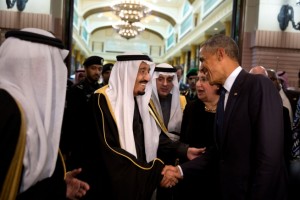 Echoing longstanding claims by Saudi Arabia, the Trump administration also insists that Iran is a major backer of Houthi tribal forces who swept down from northern Yemen to seize control of most of the country in early 2015. That March, with U.S. backing, a Saudi-led coalition of Arab states launched a scorched–earth military campaign to oust the Houthis, in the name of resisting Iran.
The coalition’s indiscriminate bombing of industrial and other civilian targets, including schools and hospitals, has laid waste to much of the country and destroyed the economy. Its blockade of ports caused mass hunger and triggered the world’s worst cholera epidemic.
“Cynics can argue that the real strategy of the Saudi coalition is to rely on starvation and disease to wear down the Yemeni people,” observed former White House adviser and CIA analyst Bruce Riedel. “The United Nations has labeled the war the worst humanitarian catastrophe in the world . . . (Yet) Iran is the only winner, as it provides aid and expertise to the Houthis at a tiny fraction of the cost of the Saudi war effort while the Islamic Republic’s Gulf enemies spend fortunes on a conflict they jumped into with no endgame or strategy.”
Experts point out that Washington picked the wrong ally in this fight. “The Houthis are one of the few groups in the Middle East that has little intention or ability to confront the United States or Israel,” writes Harvard lecturer Asher Orkaby. “And far from being aligned with extremists, the Houthi movement has repeatedly clashed with the Islamic State . . . and al Qaeda in the Arabian Peninsula. It is Saudi Arabia that has long supported Sunni Islamist groups in Yemen.”
To compound the irony, the paranoid sheiks in Riyadh created the very threat they set out to crush with their invasion in 2015. Iranian ties to the Houthis were negligible before then. Remarking on years of attempts to smear them as pawns of Iran, the U.S. ambassador to Yemen reported in a classified cable in 2009, “The fact that . . . there is still no compelling evidence of that link must force us to view this claim with some skepticism.”
Two former members of the State Department’s Office of Policy Planning have recently confirmed that “the vast majority of the Houthi arsenal . . . was seized from Yemeni army stockpiles,” not provided by Iran.
As the devastating war grinds on, however, Iran has provided the Houthis with modest training, advice, and ground munitions. “Iran has exploited, on the cheap, the Saudi-led campaign, and thus made the expansion of Iranian influence in Yemen a Saudi self-fulfilling prophecy,” they observe.
“By catering to the Saudis in Yemen,” they add, “the United States has . . . strengthened Iranian influence in Yemen, undermined Saudi security, brought Yemen closer to the brink of collapse, and visited more death, destruction, and displacement on the Yemeni population.”
Qatar and Beyond
In a moment of particular lunacy, President Trump this June tweeted his support for a Saudi-led political and economic blockade of Qatar, a tiny but gas-rich Gulf emirate. Riyadh is aggrieved in part by Qatar’s sponsorship of Al Jazeera, the politically nettlesome broadcaster. Trump’s action surprised and embarrassed the Pentagon, which operates a huge military base in Qatar.
Iran quickly took advantage of this latest Saudi blunder. It opened its airspace to Qatari flights that were barred from crossing the Arabian Peninsula. It shipped food to replace supplies lost by the closure of the Saudi-Qatari border. In gratitude, Qatar restored full diplomatic relations with Tehran after recalling its ambassador two years ago.
“This dispute has pushed Qatar towards other players in the region who are critical: Iran, Turkey, Russia, China,” said Rob Richer, former Associate Deputy Director for Operations at the CIA. “These are players who now have a lot more influence as we diminish our influence in the region. In this way, the blockade has actually undermined everything that the Saudis and Emiratis wanted by pushing the Qataris into the arms of these other regional players.”
Time after time, in other words, the United States and its regional supporters have made a mess of matters with their overt and covert military interventions in the Middle East. It’s only natural that Iran, having long been targeted by Washington and its allies (sometimes for understandable reasons), tries to seize opportunities to defend its interests.
The lesson we should learn is that curbing Iran and promoting U.S. security interests will require less intervention from afar, not more self-defeating forays into the region.
As Chatham House research fellow Renad Mansour recently observed, until the United States overcomes its counterproductive reactions to obsessive fears of Iranian influence, “the Iranophobes will be right about one thing: Iran is the smarter player in the region.”
Iran slams Saudi lies over Yemen missile strike
By Adam Garrie Adam Garrie | The Duran | November 5, 2017
Saudi Arabia and Donald Trump have both accused Iran of providing Yemen’s Houthi rebels with the missile that was launched at the Saudi capital Riyadh yesterday evening.
Saudi Arabia in particular, has accused Iran of supplying the Houthis with new missiles capable of longer distances than those previously thought to be in their possession.
However, Saudi’s accusation is inconsistent with the fact that Yemen is totally besieged from both land and sea.
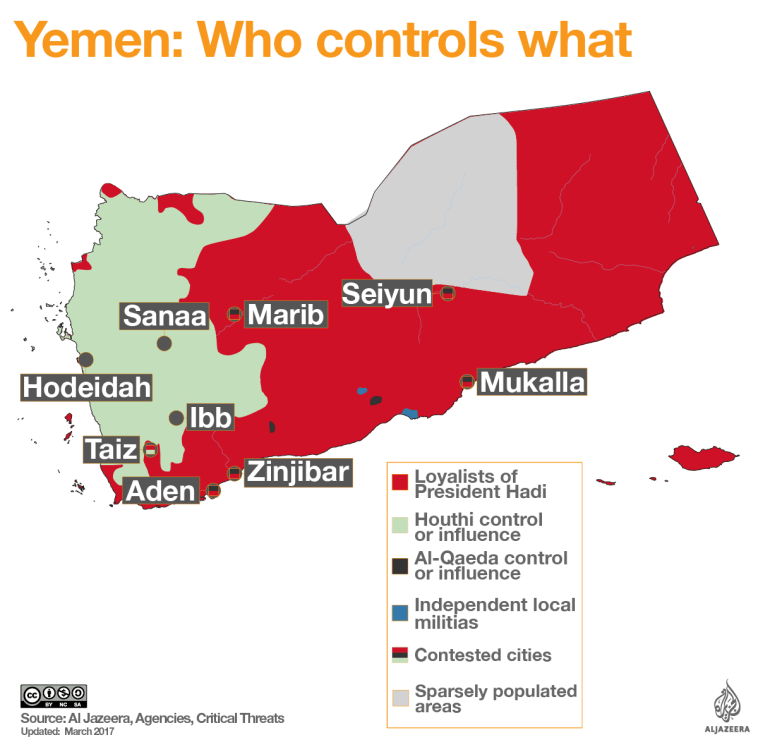
Yemen is bordered by Saudi Arabia and fellow Gulf Cooperation Council Oman, a state which would never allow shipments of Iranian weapons to Houthis and could not easily do in any case as Oman borders areas of Yemen controlled either by the pro-Saudi Hadi government or by anti-Iranian al-Qaeda and ISIS fighters.
Yemen’s north-west maritime borders have been cut off from the world, including from crucial medical and food supplies by a Saudi naval blockade that has caused a man-made famine and a cholera epidemic.
If the UN cannot even get foodstuffs past the Saudi blockade, it goes without saying that Iran could not get ballistic missiles to Houthi controlled areas.
The Houthis themselves claimed that they modified their missiles to achieve longer ranges, a claim which Iran acknowledges as the most likely scenario in respect of yesterday’s launch. Others have stated that the launch was a Saudi false flag, but as the Houthis themselves took credit for the launch and with video emerging which appears to back up Houthi claims, the only remaining credible scenario is that the Houthi fighters were indeed able to modify their missiles to reach Riyadh.
In any case, it would appear that Saudi’s US made defensive missile systems shot the Houthi rocket down, although some reports on social media from the Arab world contradict this.
At the end of the day, the facts hardly matter to the spokesmen and leaders of Saudi, Israel and United States who have all accused Iran of having a direct hand in the missile launch.
The fact of the matter is that while Iranian sympathies and limited support are certainly with the Houthis, the blockade means that this support amounts to very little in terms of material support, including and especially military support.
The facts on the ground and more important on the sea, dictate that accusations of Iran meddling in Yemen are de-facto baseless.
Unlike Syria, in which militants could be supplied on virtually all sides from ISIS controlled Iraq to the large Turkish border as well as the borders with Jordan and Israel, Yemen’s Houthis are not in any such position to be so easily supplied.
The fact that many in the media have conspired to hide this patently obvious reality means that one either is not engaging in honest journalism or one is simply repeating mythical Saudi claims.
Saudi succession struggle enters home stretch
By M K Bhadrakumar | Indian Punchline | November 5, 2017
Within hours of a decree by the Saudi King Salman bin Abdulaziz on Sunday announcing the constitution of a new committee to combat corruption under the chairmanship of the Crown Prince Mohammed bin Salman [MBS], an unprecedented purge of top establishment figures unfolded, signaling a pre-planned political campaign. The purge involves the sacking and/or detention of dozens of princes, ministers and former ministers. Several senior ministers, including those in charge of the kingdom’s National Guard, economy, and planning have also been dismissed. Notably, billionaire Prince Al-Waleed bin Talal is among those detained. The security forces grounded private jets in Jeddah to stop any high-profile figures from leaving the country.
King Salman’s decree invests the new anti-corruption committee with draconian powers. The decree says that the anti-corruption committee shall be exempted from “laws, regulations, instructions, orders and decisions”, while performing its tasks of identifying “offenses, crimes, persons and entities involved in cases of public corruption.” It empowers MBS to issue “arrest warrants, travel ban, disclosure and freezing of accounts and portfolios, tracking of funds, assets” as well as take “precautionary measures”.
Corruption is synonymous with oligarchies and the House of Saud is no exception. The Saudi way is traditionally to throw money at problems. Make no mistake that Saturday’s purge signifies another step in the no-holds-barred attempt by the 32-year old Crown Prince for consolidating absolute political power and paving the way for his ascension as the next ruler. Evidently, MBS intends to strike fear into the hearts of the elites who could be rival power centres when the time for succession arrives, which could be in a conceivable future as per indications.
An intriguing twist to the tale lies in the recent speech by MBS at a ceremony launching a $500 billion project on the Red Sea where he vowed to “destroy extremism” and return to a “a moderate Islam open to the world and all religions”. MBS was addressing an international audience and the speech was widely interpreted as an attempt to give a new face of Saudi Arabia aimed at the Western world, primarily, by pressing all the buttons that the West may like to hear pushed about entrepreneurship, liberalism, moderate Islam.
However, such a facile explanation is insufficient. For, there is indeed a contradiction insofar as the Saudi royal family has traditionally depended on backing from the ultra-conservative religious establishment to ensure its claim to legitimacy, while under MBS’s watch during recent months, the regime has begun implementing unprecedented economic and social reforms that might potentially undermine the regime’s deeply conservative power base. The noted Saudi editor and opinion maker Jamal Kashoggi told Deutsche Welle in a recent interview his explanation of what MBS is attempting:
“It is hard for Saudi Arabia to disown Wahhabism, seeing as how it created a hard-line Salafi current that has been in power for 30 years… I believe that the prince’s (MBS) social and economic reforms enjoy wide popular support and great momentum… The country needs to be freed from the hard-line Salafi approach that has been prevailing for 30 years with the state’s permission… Today, the carpet has been pulled from underneath this current’s feet, and it does not have the strength to prevent reform… On the other hand, there will always be Saudi hardliners who oppose those reforms… but they are not sufficiently powerful to prevent that march… It is hard to disown Wahhabism… it is the basis on which the Kingdom was built. But it can replace it with a centrist Islam… There are modern Islamic ideas available to the state, and it can use them without having to announce its disowning of Wahhabism.
Doesn’t it look like a Saudi-style “cultural revolution” where ideology and reform become the leitmotif of what is at the core a transition in the calculus of political power? By means of liberalizing rhetoric, MBS is on the one hand engaging the West and appeasing ordinary Saudis (and even sections of conservative clerics), while on the other hand also aiming to consolidate his and his father’s power by removing opposition voices. Arguably, they form two sides of the same coin.
Clearly, there is a foreign-policy angle to all this, which will impact regional security. The Saudi Crown Prince cannot do without American backing. (The former Crown Prince Mohammed bin Naif, rival to MBS who was ousted earlier this year, used to be Washington’s favorite as successor to King Salman.) Now, the exit of Lebanese Prime Minister Saad Hariri on Saturday is the latest telling evidence of a growing US-Saudi-Israeli congruence. A relatively stable set-up in Beirut (involving co-habitation between Hariri and Hezbollah), which acquitted itself remarkably well in the war against terrorist groups, has been suddenly thrown into disarray. What follows next in Lebanon dovetails into the US-Israeli-Saudi strategy toward post-ISIS Syria and Iraq where the balance of forces currently works in favor of Iran. Interestingly, Hariri announced his resignation in a speech broadcast from Saudi Arabia following a meeting with MBS. (Read the report in Tehran Times titled Hariri makes surprise resignation under Saudi pressure.)
Saudi gamble risks plunging Lebanon into war
Press TV – November 5, 2017
Saad Hariri’s sudden resignation from Lebanon’s premiership, announced from Saudi Arabia, has raised fears that regional tensions were about to escalate and that the small country would once again pay a heavy price.
Hariri quit his post on Saturday in a televised speech broadcast by Saudi Arabia’s Al-Arabiya television, during which he appeared tense as he carefully read out from a written statement.
He claimed that he feared the same fate as his assassinated father and accused Iran and the Lebanese resistance movement Hezbollah of meddling in Arab countries’ affairs.
Hariri’s departure sent shockwaves through Lebanon as the country is struggling to maintain stability at a time when much of the Middle East is gripped by Takfiri violence rooted in Saudi Arabia.
Lebanon’s Minister of Justice Salim Jreissati said the development was “confusing and suspicious in its timing and location as well as the way it was delivered and the content of the resignation.”
“The optics are terrible — for Hariri to resign from Riyadh, imagine how his audience [in Lebanon] feels watching that,” said Emile Hokayem, a regional analyst at the Institute for Strategic Studies.
“God protect Lebanon from the evil of Saudi Arabia’s reckless adventures,” Sheikh Nabil Kawouk, a member of Hezbollah’s central committee, told Lebanon’s Al Jadeed television.
Last week, Qatar’s former prime minister Hamad bin Jassim revealed how the US coordinated support by Doha, Riyadh and Ankara for terrorists operating against the Syrian government.
Syria has always been a thorn in the side of Israel. The Arab country is part of the “axis of resistance” along with Lebanon’s Hezbollah and Iran, which has brought Daesh to the brink of elimination.
The triangle of Saudi Arabia, Israel and the US is alarmed and the prospect of an eventual triumph of this axis which has now become inevitable has prompted them to take drastic measures.
On Friday, as Syria began celebrating the capture of Dayr al-Zawr, Nusra Front terrorists launched a massive assault on a Druze village neighboring the occupied Golan Heights.
According to Syrian state media, the onslaught was carried out with Israeli coordination and assistance but Tel Aviv used the occasion to threaten direct intervention in the war.
Hariri’s resignation over what he called Hezbollah’s “grip” on Lebanon is the latest drastic step which Saudi Arabia and its allies have taken to tip the scales even at the cost of turning Lebanon into another Syria.
With the prime minister out of the political landscape, the architects of the new “plot” could claim that Lebanon was exclusively under Hezbollah’s control. That idea was articulated by Israeli minister of military affairs Avigdor Lieberman on Saturday.
“Lebanon=Hezbollah. Hezbollah=Iran. Lebanon=Iran,” he tweeted.
Hariri was appointed as the Lebanese premier in late 2016, after two years of political deadlock in the country. He formed a national unity government that included almost all of the main political parties in Lebanon, including Hezbollah.
Under the Lebanese constitution, the prime minister should be picked from among the Sunni community, but Saudi Arabia has tried to use the prerogative to maintain its influence in the country.
Riyadh says the government should be purged of Hezbollah, especially at a time when the resistance movement is emerging stronger from the Syria conflict.
Over the past few weeks, Saudi Arabia’s Minister of State for Persian Gulf Affairs Thamer al-Sabhan had unleashed a series of vitriolic attacks against Hezbollah, saying the group “should be punished… and confronted by force.”
The accusations coincided with new sanctions approved by US House of Representatives on the Lebanese resistance movement.
Hossein Sheikholeslam, a senior Iranian politician, told Al Mayadeen TV that Hariri’s’ resignation had been coordinated before between US president Donald Trump and Saudi Crown Prince Mohammed bin Salman.
He said, “After the defeat of Daesh and the US in the region, Washington and Riyadh are trying to fuel tensions in Lebanon and the region.”
Hossein Amir-Abdollahian, an adviser to the Iranian parliament speaker, agreed. “The decision has been made by the anti-Iran and anti-Hezbollah front following the disillusionment of US and its allies with Daesh,” he said.
In Lebanon, political leaders expressed their apprehension, including the leader of Lebanon’s Druze minority, who has frequently played kingmaker in Lebanese politics.
Walid Jumblatt, the leader of Lebanon’s Progressive Socialist Party (PSP), warned of the political burden and consequences of the resignation.
Hilal Khashan, a professor of political science at the American University of Beirut, said Hariri’s departure was “a dangerous decision whose consequences will be heavier than what Lebanon can bear.”
“Hariri has started a cold war that could escalate into a civil war, bearing in mind that Hezbollah is unmatched in Lebanon on the military level,” he added.
Israeli Prime Minister Benjamin Netanyahu, however, welcomed the decision and said Hariri’s departure should be a “wake-up call” to the international community to what he described as the threat posed by Iran.
In Shocking, Viral Interview, Qatar Confesses Secrets Behind Syrian War
By Tyler Durden | Zero Hedge | October 28, 2017
A television interview of a top Qatari official confessing the truth behind the origins of the war in Syria is going viral across Arabic social media during the same week a leaked top secret NSA document was published which confirms that the armed opposition in Syria was under the direct command of foreign governments from the early years of the conflict.
And according to a well-known Syria analyst and economic adviser with close contacts in the Syrian government, the explosive interview constitutes a high level “public admission to collusion and coordination between four countries to destabilize an independent state, [including] possible support for Nusra/al-Qaeda.” Importantly, “this admission will help build case for what Damascus sees as an attack on its security & sovereignty. It will form basis for compensation claims.”

A 2013 London press conference: Qatari Prime Minister Sheikh Hamad bin Jassim bin Jabr Al Thani with U.S. Secretary of State John Kerry. A 2014 Hillary Clinton email confirmed Qatar as a state-sponsor of ISIS during that same time period.
As the war in Syria continues slowly winding down, it seems new source material comes out on an almost a weekly basis in the form of testimonials of top officials involved in destabilizing Syria, and even occasional leaked emails and documents which further detail covert regime change operations against the Assad government. Though much of this content serves to confirm what has already long been known by those who have never accepted the simplistic propaganda which has dominated mainstream media, details continue to fall in place, providing future historians with a clearer picture of the true nature of the war.
This process of clarity has been aided – as predicted – by the continued infighting among Gulf Cooperation Council (GCC) former allies Saudi Arabia and Qatar, with each side accusing the other of funding Islamic State and al-Qaeda terrorists (ironically, both true). Increasingly, the world watches as more dirty laundry is aired and the GCC implodes after years of nearly all the gulf monarchies funding jihadist movements in places like Syria, Iraq, and Libya.
The top Qatari official is no less than former Prime Minister Hamad bin Jassim bin Jaber al-Thani, who oversaw Syria operations on behalf of Qatar until 2013 (also as foreign minister), and is seen below with then-Secretary of State Hillary Clinton in this Jan. 2010 photo (as a reminder, Qatar’s 2022 World Cup Committee donated $500,000 to the Clinton Foundation in 2014).

In an interview with Qatari TV Wednesday, bin Jaber al-Thani revealed that his country, alongside Saudi Arabia, Turkey, and the United States, began shipping weapons to jihadists from the very moment events “first started” (in 2011).
Al-Thani even likened the covert operation to “hunting prey” – the prey being President Assad and his supporters – “prey” which he admits got away (as Assad is still in power; he used a Gulf Arabic dialect word, “al-sayda”, which implies hunting animals or prey for sport). Though Thani denied credible allegations of support for ISIS, the former prime minister’s words implied direct Gulf and US support for al-Qaeda in Syria (al-Nusra Front) from the earliest years of the war, and even said Qatar has “full documents” and records proving that the war was planned to effect regime change.
According to Zero Hedge’s translation, al-Thani said while acknowledging Gulf nations were arming jihadists in Syria with the approval and support of US and Turkey: “I don’t want to go into details but we have full documents about us taking charge [in Syria].” He claimed that both Saudi Arabia’s King Abdullah (who reigned until his death in 2015) and the United States placed Qatar in a lead role concerning covert operations to execute the proxy war.
The former prime minister’s comments, while very revealing, were intended as a defense and excuse of Qatar’s support for terrorism, and as a critique of the US and Saudi Arabia for essentially leaving Qatar “holding the bag” in terms of the war against Assad. Al-Thani explained that Qatar continued its financing of armed insurgents in Syria while other countries eventually wound down large-scale support, which is why he lashed out at the US and the Saudis, who initially “were with us in the same trench.”
In a previous US television interview which was vastly underreported, al-Thani told Charlie Rose when asked about allegations of Qatar’s support for terrorism that, “in Syria, everybody did mistakes, including your country.” And said that when the war began in Syria, “all of us worked through two operation rooms: one in Jordan and one in Turkey.”
Below is the key section of Wednesday’s interview, translated and subtitled by @Walid970721. Zero Hedge has reviewed and confirmed the translation, however, as the original rush translator has acknowledged, al-Thani doesn’t say “lady” but “prey” [“al-sayda”]- as in both Assad and Syrians were being hunted by the outside countries.
The partial English transcript is as follows:
“When the events first started in Syria I went to Saudi Arabia and met with King Abdullah. I did that on the instructions of his highness the prince, my father. He [Abdullah] said we are behind you. You go ahead with this plan and we will coordinate but you should be in charge. I won’t get into details but we have full documents and anything that was sent [to Syria] would go to Turkey and was in coordination with the US forces and everything was distributed via the Turks and the US forces. And us and everyone else was involved, the military people. There may have been mistakes and support was given to the wrong faction… Maybe there was a relationship with Nusra, its possible but I myself don’t know about this… we were fighting over the prey [“al-sayda”] and now the prey is gone and we are still fighting… and now Bashar is still there. You [US and Saudi Arabia] were with us in the same trench… I have no objection to one changing if he finds that he was wrong, but at least inform your partner… for example leave Bashar [al-Assad] or do this or that, but the situation that has been created now will never allow any progress in the GCC [Gulf Cooperation Council], or any progress on anything if we continue to openly fight.”
As is now well-known, the CIA was directly involved in leading regime change efforts in Syria with allied gulf partners, as leaked and declassified US intelligence memos confirm. The US government understood in real time that Gulf and West-supplied advanced weaponry was going to al-Qaeda and ISIS, despite official claims of arming so-called “moderate” rebels. For example, a leaked 2014 intelligence memo sent to Hillary Clinton acknowledged Qatari and Saudi support for ISIS.
The email stated in direct and unambiguous language that:
“the governments of Qatar and Saudi Arabia, which are providing clandestine financial and logistic support to ISIL and other radical Sunni groups in the region.”
Furthermore, one day before Prime Minister Thani’s interview, The Intercept released a new top-secret NSA document unearthed from leaked intelligence files provided by Edward Snowden which show in stunning clarity that the armed opposition in Syria was under the direct command of foreign governments from the early years of the war which has now claimed half a million lives.

The newly released NSA document confirms that a 2013 insurgent attack with advanced surface-to-surface rockets upon civilian areas of Damascus, including Damascus International Airport, was directly supplied and commanded by Saudi Arabia with full prior awareness of US intelligence. As the former Qatari prime minister now also confirms, both the Saudis and US government staffed “operations rooms” overseeing such heinous attacks during the time period of the 2013 Damascus airport attack.
No doubt there remains a massive trove of damning documentary evidence which will continue to trickle out in the coming months and years. At the very least, the continuing Qatari-Saudi diplomatic war will bear more fruit as each side builds a case against the other with charges of supporting terrorism. And as we can see from this latest Qatari TV interview, the United States itself will not be spared in this new open season of airing dirty laundry as old allies turn on each other.
Featured Video

ARE PATIENTS BEING PROPERLY INFORMED ABOUT OZEMPIC?
or go to
Aletho News Archives – Video-Images
From the Archives
Trans ‘milk’ as good as the real thing – NHS
RT | February 18, 2024
The drug-induced nipple secretions of trans women are as good as mothers’ breast milk for babies, the University of Sussex Hospitals NHS Trust claimed in a letter to campaigners made public in a report by British think tank the Policy Exchange on Sunday.
The healthcare trust’s medical director, Rachel James, argued that the off-label prescription drug cocktail men transitioning to female take in order to produce milk was “similar to the natural hormones which encourage lactation to develop when the baby is newly born.”
“The evidence which is available demonstrates that the milk is comparable to that produced following the birth of a baby,” James wrote in the letter, sent to Children of Transitioners last August.
Biological men who wish to lactate must first take hormones to grow milk glands and then take high doses of either domperidone or metoclopramide to stimulate milk production. Neither drug is approved for this use, though they are occasionally prescribed off-label to biological women who have trouble lactating.
However, domperidone’s own manufacturer, Janssen, warns patients the drug “may cause unwanted side effects affecting the heart in a breastfed baby” and “should be used during breastfeeding only if your physician considers this clearly necessary.” … continue
Blog Roll
 Aletho News
- 2025 Nature Paper Claiming Worsening Global Drought Gets RETRACTED …Heavily Flawed
- Your Milk Is Not the Problem
- The Truth About the Trump Shootings with Ken Silva
- ARE PATIENTS BEING PROPERLY INFORMED ABOUT OZEMPIC?
- US lawmaker blocks $2.8 billion weapons sale to Israel: Report
- Yemeni army claims responsibility for strikes on sensitive sites in Saudi capital, Aramco facilities in Yanbu
- Iran Judiciary issues indictments against 159 US, Israeli officials for assassination of Leader, commanders
- Turkiye revokes Iranian bank license under US sanctions campaign
- US-Denmark Agreement on Greenland Is ‘PR Stunt’ Ahead of Midterms
- Araghchi: Military intervention cannot create security; coercion cannot bring peace
- If Americans Knew
- Israeli attacks kill four Palestinians in Gaza – Daily Update
- Inside Gaza’s death trap of collapsing, bombed-out buildings
- The everyday items Israel bans from Gaza every day
- Inside the siege, the ruined buildings of Gaza – Daily Update
- Debunking The Claim That Macklemore Has A “History Of Antisemitism”
- CPJ demands release of arrested Palestinian-US journalist near Bethlehem
- Robert Kraft: The Billionaire Friend of Netanyahu Pulling The Strings Behind the Macklemore/Ed Sheeran Blow Up
- Columbia Administered Fund Gives Big Money to Pro-Israel Groups
- Deportation Case of Palestinian Activist Salah Sarsour Tests First Amendment
- ‘We Will Not Forget’: Palestinians Mark 44 Years since Sabra and Shatila
- No Tricks Zone
- 2025 Nature Paper Claiming Worsening Global Drought Gets RETRACTED …Heavily Flawed
- New Study: ‘Global Drought Shows No Detectable Recent Acceleration Under Climate Warming’
- Economic Masterminds: German Socialists Suggest Taxing Productivity Gains Stemming From Using AI
- The South China Sea Has Not Been Cooperating With The Climate Change Narrative
- Energy Crisis: Germany Enters Heating Season With Historically Low Gas Reserve Fill Levels
- New Study: The Antarctic Ice Sheet Gained Mass From 2020-2024 Due To Staggering Snow And Ice Accumulation
- Study: Ocean Heating Rates From Thousands Of Years Ago ‘Dwarf’ Modern Ocean Heating Rates
- Climate Extremists Target, Attack Large-Scale Power Grid Infrastructure In Germany!
- New Study: Antarctic Ice Melt Has Contributed Less Than 1 Centimeter To Sea Level Rise In The Last 30 Years
- Fear Of Debate: Alarmist German Climate Scientist Calls On Mainstream Media To Discredit Skeptic Voices
 Aletho News