Russia says US inviting terrorists to attack its cities
Press TV – September 29, 2016
Russia has denounced US projection of possible attacks on Russian cities by terrorists fighting in Syria, saying the statement amounts to an invitation to terrorism.
Russian Deputy Foreign Minister Sergei Ryabkov was outraged on Thursday after US State Department spokesman John Kirby said terrorists in Syria could launch attacks “against Russian interests, perhaps even Russian cities.”
“We cannot interpret this as anything else apart from the current US administration’s de facto support for terrorism,” Ryabkov was quoted as saying.
“These thinly disguised invitations to use terrorism as a weapon against Russia show the political depths the current US administration has stooped to in its approach to the Middle East and specifically to Syria.”
Russia has been supporting the Syrian government in its push to take back Aleppo from Takfiri terrorists. The US also carries out airstrikes as well as operations on the ground through its special forces against what it calls Daesh targets.
However, with Syrian advances on Aleppo gaining momentum, US officials said on Wednesday that Washington had begun considering tougher responses to the assault on Aleppo, including military options.
Syrian army advances were interrupted first when the US brokered a ceasefire agreement with the Russians. The truce collapsed after US aircraft bombed Syrian army positions in Dayr al-Zawr, killing 82 soldiers.
The airstrike, which helped Daesh briefly overrun government positions in the area, was characterized by Washington as unintentional but Syria rejected the allegation.
“How could they (Daesh) know that the Americans are going to attack that position in order to gather their militants to attack right away and to capture it one hour after the strike?” Assad asked during an interview with the Associated Press last week.
Supply of new weapons
On Wednesday, a militant commander said foreign states have given extremists surface-to-surface Grad rockets of a type not previously supplied to them in response to the Aleppo offensive.
The Grad rockets with a range of 22 km and 40 km have been supplied in “excellent quantities” and will be used on battlefronts in Aleppo, Hama and the coastal region, militant commander Colonel Fares al-Bayoush told Reuters.
While Grad missiles have previously been supplied to militants, Bayoush said it was the first time this particular type had been delivered. Militants had previous stocks of the rocket captured from army stores, he added.
The Reuters news agency this week reported anonymous US officials as saying that the Obama administration was considering allowing Qatar and Saudi Arabia to arm militants with man-portable missiles.
The Middle East Eye news portal cited a source close to militants as saying that the US was resolved to prevent the fall of Aleppo and was preparing to allow its Persian Gulf allies to flood the city with shoulder-fired, anti-aircraft missiles.
“The US confirmed the green light to begin sending them to rebels through supply routes still open through Jordan and Turkey,” the source said.
“The US won’t let Aleppo fall. We can expect to see Syrian helicopters falling from the sky within weeks.”
On Wednesday, the US State Department warned it was considering the suspension of “bilateral engagement” in Syria “unless Russia takes immediate steps to end the assault on Aleppo and restore the cessation of hostilities.”
Ryabkov said Moscow saw no alternative to the original US-Russia plan to try to get a ceasefire in Syria and that Washington should focus on implementing it.
He said a seven-day ceasefire plan proposed by the United States was unacceptable however and that Moscow was proposing a 48-hour “humanitarian pause” in Aleppo instead.
Support for Fateh al-Sham Front
Meanwhile, Russia’s Foreign Ministry spokeswoman Maria Zakharova said Thursday US failure to separate “moderate” militants from terrorists is blocking the entire package of agreements.
Under the agreement, the US had undertaken to segregate the militants under its support from Takfiri groups such as the al-Qaeda-linked Fatah al-Sham Front but it has dragged its foot on the plan.
On Wednesday, Russian Foreign Minister Sergei Lavrov told US Secretary of State John Kerry during a phone conversation that Fateh al-Sham Front had been receiving foreign support and American weapons.
In an earlier interview with German-language daily Kölner Stadt-Anzeiger, a Fateh al-Sham commander identified only as Abu al-Ezz confirmed that the US is supporting the terror group, saying, “The Americans are on our side.”
In his conversation with Kerry, “Lavrov drew attention to the fact that a number of anti-government units which Washington calls moderate… were instead merging with Jabhat Fateh al-Sham,” the Russian Foreign Ministry said.
Earlier this year, the US blocked a Russian move in the United Nations to blacklist Ahrar al-Sham militants as a terrorist group.
Wealthy Gulf states may arm Syrian rebels to ‘get the Russians to back off’ – US officials
RT | September 27, 2016
With the Syria ceasefire in tatters, there is a growing possibility that wealthy Gulf states might arm Syrian rebels, looking to shield themselves from Syrian and Russian warplanes, with shoulder-fired anti-aircraft missiles, according to a report.
One US official, speaking on condition of anonymity, told Reuters that Washington has kept high numbers of man-portable air defense systems (MANPADS), considered to be a threat to low-flying aircraft, out of Syria by uniting Western and Arab allies behind sending training and infantry weapons to moderate opposition groups while the US conducted talks with Russia.
Fed up with dancing to Washington’s tune, Gulf allies or Turkey may sooner or later silently agree to wealthy individuals supplying MANPADS to opposition groups in Syria, another US official said.
“The Saudis have always thought that the way to get the Russians to back off is what worked in Afghanistan 30 years ago – negating their air power by giving MANPADS to the Mujahideen,” an unnamed US official told Reuters.
“So far, we’ve been able to convince them that the risks of that are much higher today because we’re not dealing with a Soviet Union in retreat, but a Russian leader who’s bent on rebuilding Russian power and less likely to flinch,” the official added, referring to Russian President Vladimir Putin.
Asked if Washington planned to do “anything other than pursue a diplomatic solution” to halt the violence in Syria, State Department spokesman Mark Toner said anyone pouring more weapons into the conflict will only add more fuel to the fire.
“I think that those who may be deluded into thinking there’s a military solution also have to realize, and we’ve alluded to this before, that there are those – and not the United States – but there are those who back various groups and opposition groups within Syria who also may seek to arm them. And again, what you have as a result is just an escalation in what is already horrific fighting. As I said, things could go from bad to much worse,” Toner said.
Another administration official, who spoke on condition of anonymity to Reuters, noted, however: “The opposition has a right to defend itself and they will not be left defenseless in the face of this indiscriminate bombardment.”
The official stated that some other US “allies and partners” have been also involved in the US-Russia talks on the conflict in Syria.
“We don’t believe they will take lightly to the kind of outrages we’ve seen in the last 72 hours,” the administration official said, noting that he would not comment on “the specific capability that might be brought into the fight.”
On Monday, the German newspaper Kölner Stadt-Anzeiger published an interview with an Al-Nusra commander in Syria, identified as “Abu Al-Ezz,” who said that US allies were providing Al-Nusra with tanks and artillery.
“The Americans are on our side,” Al-Ezz reportedly said, adding that Al-Nusra has allegedly been receiving funding from Saudi Arabia, Qatar and Kuwait, and has obtained tanks and artillery from Libya via Turkey. The group especially appreciated the US-supplied TOW anti-tank missiles, he alleged.
While admitting that its allies in the region may be arming Al-Nusra militants, the US government has categorically denied that it is providing any aid to them.
“That’s complete poppycock. Whatever he’s saying, no.
“We would never provide Nusra with any kind of assistance at all,” State Department spokesman Toner told reporters on Monday.
Asked why the US has been unable to persuade the “moderate opposition” in Syria to separate itself from Al-Nusra, Toner replied that it was the rebels’ responsibility, and that they would need a seven-day ceasefire to do so.
Tensions escalated after US-led coalition jets bombed Syrian government forces’ positions near the eastern city of Deir ez-Zor, killing 62 troops on September 17. The incident dealt a serious blow to the Syrian ceasefire deal, which Moscow and Washington agreed to earlier this month, with the Syrian Army General Command saying the airstrike “paved the way” for Islamic State (IS, formerly ISIS/ISIL) militants.
The bombing was stopped only after the Russian military contacted the US side several times, saying that they were attacking the wrong targets.
Washington acknowledged the airstrike against the Syrian troops and even apologized for the mistake.
The speaker of the People’s Council of Syria said on Monday that Damascus has a recording of conversations between the American military and Islamic State terrorists ahead of the US-led coalition airstrike that hit Syrian troops near Deir ez-Zor.
“The Syrian Army intercepted the communications between the Americans and Daesh [Arabic pejorative for Islamic State] ahead of the attack on Deir ez-Zor,” Hadiya Khalaf Abbas said, as cited by Sputnik Arabic.
During his speech at the UN General Assembly over the weekend, Syrian Foreign Minister Walid Muallem also stated that the bombing of Syrian troops by the US-led coalition was a deliberate attack, not a mistake as Washington claims.
On September 19, a humanitarian convoy consisting of 31 trucks was attacked while heading to Aleppo. According to the Red Cross, 20 civilians and one aid worker died as a result. Initial reports by the organization claimed the convoy had been targeted by an airstrike. The US State Department was quick to blame Damascus and Moscow for the attack which led the UN to suspend aid deliveries to Syria. The day after the attack, the UN backtracked on its earlier claims that the convoy was hit by military planes.
The Russian Defense Ministry stated that Russian and Syrian warplanes did not launch airstrikes on the aid convoy that was attacked en route to Aleppo. The ministry added that only militants who control the area had information regarding the location of the convoy.
Read more:
‘Americans are on our side’: Al-Nusra commander says US arming jihadists via 3rd countries
US not arming Nusra, but our allies might – State Dept
RT | September 26, 2016
Al-Nusra Front is a terrorist group and the US will never provide it with any aid, said the State Department, reacting to revelations in a German newspaper – while admitting that unnamed US allies might be backing the jihadist militants in Syria.
On Monday, the German newspaper Kölner Stadt-Anzeiger published an interview with an Al-Nusra commander in Syria, identified only as “Abu Al-Ezz.” In the interview, conducted 10 days ago outside of Aleppo, Al-Ezz said that US allies were providing Al-Nusra with tanks and artillery.
“The Americans are on our side,” Al-Ezz reportedly said.
The US government has categorically denied providing any aid to Al-Nusra, while admitting awareness that its allies in the region may be arming the militants.
“That’s complete poppycock,” State Department spokesman Mark Toner told reporters at the press briefing Monday. “Whatever he’s saying, no.”
“We would never provide Nusra with any kind of assistance at all,” Toner continued, explaining that the group is a designated foreign terrorist organization.
Asked why the US has been unable to persuade the “moderate opposition” in Syria from separating itself from Al-Nusra, Toner replied it was the rebels’ responsibility, and that they would need a seven-day ceasefire to do so.
He blamed the Syrian government offensive against East Aleppo, which he said would drive “some of those forces, not all of them” into the arms of Al-Nusra. If the Syrian government continues to insist on the military solution, “there are those – not the US – who back various opposition groups in Syria, who might also seek to arm them,” and that would lead to escalation, Toner said.
Asked to clarify if that meant that US allies might be arming Al-Nusra, Toner replied that “countries that support the opposition may want to supply them with assistance.”
Al-Nusra has been receiving funding from Saudi Arabia, Qatar and Kuwait, and has obtained tanks and artillery from Libya via Turkey, according to what the commander, Al-Ezz, told the German newspaper. The group especially appreciated the US-supplied TOW anti-tank missiles.
“The missiles were given directly to us,” he said. “They were delivered to a certain group.”
The issue of Al-Nusra receiving outside aid was brought up by Russia’s ambassador to the UN, Vitaly Churkin, at the special session of the Security Council on Sunday.
“They are armed by tanks, APCs, field artillery, multiple rocket launchers… All of this has been received by them and is still being shipped to them by generous Western backers, with the US, presumably, turning a blind eye,” Churkin said.
“We have to see proof that there is a genuine desire to separate US-allied rebel groups from the Al-Nusra Front, then destroy the Al-Nusra Front and bring the opposition into a political process. Otherwise our suspicions that this was only meant to shield the Al-Nusra Front would only grow stronger,” the Russian envoy added, referring to the ceasefire agreed between Moscow and Washington that collapsed last week.
On Monday, however, the State Department talked about expecting “significant gestures” from Russia or the Syrian government to “restore their credibility” so the talks might continue, suggesting that the Syrian government should stand down its air force and cease the offensive on East Aleppo.
“The ball is somewhat in Russia’s court right now,” said Toner. However, he said the US was not ready to walk away from the talks. “If you’re asking about the legendary Plan B, we’re not there yet.”
Russian Foreign Minister Sergey Lavrov shrugged off the US rhetoric about Aleppo, however, pointing out that it was the US airstrike against the Syrian Army position besieged by Islamic State (IS, formerly ISIS/ISIL) that ended the ceasefire.
“I would like to emphasize that the Americans and their Western allies, for one thing, want to distract public attention from what had happened in Deir ez-Zor,” Lavrov told NTV on Monday.
Read more:
West still arming Al-Nusra in Syria, peace almost impossible – Russia’s UN envoy
Greedy Pro-war US Lobbyists are Eager to Allow the Middle-Eastern Carnage to be Carried On
By Jean Perier | New Eastern Outlook | September 26, 2016
Allegations regarding the “peace-loving nature of Saudi Arabia and its aspirations amid the so-called fight against terrorism have been recently discussed by political circles across Western countries.
Western officials have unleashed particularly harsh criticism toward Riyadh in connection with its ongoing military operations in Yemen that have claimed civilian lives by the hundreds. For instance, the UN coordinator for the delivery of humanitarian aid to Yemen, Jamie McGoldrick, announced on August 30 that the Saudi armed intervention resulted in a civilian death toll of 10,000 people in just 18 months of fighting.
British political and business circles are now questioning the approval of the sale of 3 billion pounds worth of weapons to Saudi Arabia that London approved, similarly such concerns are being voiced in France, with Paris having sold up to 13 billion euros worth of weapons to Riyadh.
This year, Saudi Arabia has been particularly busy purchasing weapons from among the largest arms exporters in the world, including the United States, Germany and Canada. The total worth of all contracts exceeds a staggering sum of 16 billion dollars. A brief analysis of the weapons purchased by the Saudis indicates modernization attempts made in a bid to prepare for a large scale ground conflict.
Last June, Saudi Arabia purchased 419 Canadian LAV-6 lightly-armored infantry fighting vehicles also known as Kodiaks. In August, the United States approved the sale of 153 M1 Abrams main battle tanks to Saudi Arabia, a contract that will earn Washington 1.15 billion dollars. Additionally, Saudi Arabia is expected to purchase 153 .50 caliber heavy machine gun, 266 M240 medium machine guns, smoke grenade launchers and an extensive amount of equipment for field repairs for their new American-made tanks.
Along with the modernization of its ground forces, Riyadh continues to strengthen its naval fleet. In the first quarter of this year Riyadh has purchased 48 patrol ships (TNC-35s and FPB-38s) built in Germany.
The drastic increase in Saudi weapons imports is closely connected with Riyadh’s intervention in Yemen, and its possible confrontation with Iran, the conflict in Syria, and Saudi aspirations to take an active part in the resolution of various geopolitical crises across the Middle East in accordance with its own interests.
According to the The Boston Globe, certain representatives of US political circles opposed vigorously continuous arms shipments to Saudi Arabia. It’s been reported that a total of sixty-four members of the House of Representatives have signed a letter warning that the deal would have ” a deeply troubling effect on civilians“ in Yemen, where Saudi Arabia is conducting a fierce military campaign.
The United Nations has estimated that the Saudi-led coalition’s bombing Yemen is responsible for “twice as many civilian casualties as all other forces put together.” Yet the Obama administration wants to sell the Saudis 153 battle tanks made by General Dynamics, some of which are to be used in Yemen.
Since taking office in 2009, President Obama has made 42 arms deals with Saudi Arabia, worth a staggering 115 billion dollars. For some members of the US Congress, the latest deal represents a breaking point, since they are reluctant to send weapons that will be used first in Yemen and then in other conflicts likely to be equally as barbaric, serving Saudi, not American interests. “There is an American imprint on every civilian life lost. in Yemen, “said Senator Chris Murphy, a Connecticut Democrat who is a co-sponsor of the resolution to block the deal. Another co-sponsor, Republican Senator Rand Paul of Kentucky, called the deal ”a recipe for disaster and an escalation of an ongoing arms race in the region.”
However, despite the attempts made by a number of American politicians to put an end to Saudi war crimes, the Senate voted 71 to 27 to kill legislation that would have stopped the 115 billion deals. The overwhelming vote stopped an effort led by Republican Senator Rand Paul and Democratic Senator Chris Murphy to block the deal over concerns including Saudi Arabia’s role in the 18-month-long war in Yemen and worries that it might fuel an ongoing regional arms race.
It is clear that Riyadh is not going to end its current campaign of regional aggression, leaving few other options other than banning United States arms sales to the Kingdom.
However, the voice of reason has been drowned out by the sheer greed by the pro-war lobby in Congress, providing Riyadh with carte blanche to carry on with its military interventions across the region, unhindered and unopposed. The US political establishment has once again shown its true face, as a willing accomplice, and approving any sort of massacre as long as it can obtain profits from it.
Yemen’s Sammad Proposes Border Truce with Saudi
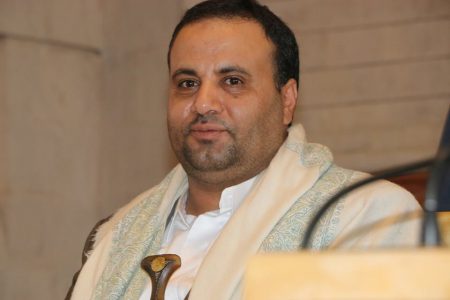
Head of Ansarullah politburo Saleh al-Sammad
Al-Manar | September 26, 2016
Head of the new Yemeni council, Salah al-Sammad, proposed on Sunday a truce on the country’s border with Saudi Arabia in an exchange for a halt in Saudi-led strikes on his country.
The proposal coincided with a surge in fighting after peace talks were suspended last month.
Sammad called on Saudi Arabia to “stop naval, air and land aggression, cease air raids and lift the blockade of our country, in exchange for an end to combat operations on the border and to missile launches into Saudi territory,” he said, in a speech published on the sabanews website.
Sammad also urged the UN and “peace-loving states” to exert pressure on the attacking Saudi regime to accept the offer.
He also suggested an amnesty for “combatants who have sided with the aggression,” a reference to fighters who back the Saudi-US assault on Yemen.
The Huthis are allied with soldiers loyal to former president Ali Abdullah Saleh.
Saudi Arabia in March 2015 formed an Arab coalition to begin air strikes on Yemen. More than 6,600 people have been killed since the coalition launched its intervention, most of them civilians, and at least three million people have been displaced, according to the United Nations.
Source: AFP
Czech Ambassador in Syria: What happened in Syria over the past five years has nothing to do with revolution
American Herald Tribune | September 18, 2016
The Czech Ambassador in Damascus Eva Filipi has stressed that what happened in Syria over the past five years was not a “revolution”, rather, it was an attempt by some countries to implement their agendas which proved to be unachievable in Syria.
In her presentation during a debate on the current developments in the Middle East organized by the Czech Institute 2080, Filipi said “what is going on in Syria is a proxy regional and international war”. She added that “though many strategic experts in the West had realized what kind of situation will be created in Syria, western countries insisted to press ahead with their schemes to impose the changes they want.”
She went on to say that the Turkish and Qatari regimes wanted from the very beginning to coercively impose the “Muslim Brotherhood” as a major political player and partner in Syria, which is an issue that has been strongly rejected by Syria, therefore these two regimes stood against the Syrian government.”
She pointed out that the so-called Syrian “opposition” is still divided and it hasn’t been able to come to an agreement for more than five years, so there is no hope to reach a compromise with such an opposition. Besides, the opposition abroad is backed by some countries and it is used to defend the interests of these countries.
Filipi warned that Qatar and Saudi Arabia are using money to influence Western countries and lead them to adopt stances that support the Qatari and Saudi policies.
She wondered how western countries can make alliance with such a radical regime like Saudi Arabia.
IEA says oil market dynamic set to change
Press TV – September 15, 2016
The International Energy Agency (IEA) says the national oil companies (NOCs) will continue to dominate upstream oil and gas investments if oil prices remain at current low levels.
The IEA’s executive director Fatih Birol told Reuters in an interview that the dominance of NOCs in oil investment projects will create a new dynamic in the market.
Birol added that that independent players like Anglo-Dutch Shell, US heavyweight ExxonMobil and France’s Total have already scaled back their investments in upstream projects. He said this is due to falling profit margins caused by weak oil prices.
Birol further emphasized that NOCs like Saudi Aramco, China’s CNPC and Mexico’s Pemex have raised their share of upstream investments to a 40-year high of 44 percent.
On the same front, Reuters highlighted IEA figures as showing that more than $300 billion of upstream oil and gas money has been slashed in 2015 and 2016 – in what appears to be an unprecedented amount.
The largest cost cuts have been implemented by North American independent companies that include Apache, Murphy Oil, Devon Energy and Marathon. The IEA said the companies have all reduced spending by around 80 percent between 2014 and 2016.
The Agency further added, as Reuters reported, that NOCs in Saudi Arabia, the UAE and Qatar have increased their capital for fresh investments via government bond issues. This policy, it said, has allowed them to make up for lower oil revenue.
Birol also said that the oil market could soon enter a new dynamic in which production decisions are less driven by market fundamentals.
“There are some NOCs that take other factors into consideration when making decisions,” Birol said, referring to internal economic or political issues as well as defense of market share.
Saudi: Assad must go – or we step in
By James Tweedie – Morning Star – September 8, 2016
SAUDI ARABIA’s foreign minister has threatened to escalate the war on Syria if President Bashar al-Assad does not step down.
Saudi royal Adel al-Jubeir told the BBC yesterday that Mr Assad was not in a “position of advantage or victory,” despite a recent string of major coups against Western-backed insurgents, including the surrounding of 5,000 rebels in Aleppo.
“If Bashar al-Assad continues to be obstinate and continues to drag his feet and continues to refuse to engage seriously, then obviously there will have to be a plan B which will involve more stepped-up military activity,” he warned.
Mr Jubeir spoke ahead of a meeting in London between the High Negotiations Committee (HNC) — the Saudi-convened Syrian opposition coalition that stretches from anti-Assad political moderates to armed al-Qaida-allied extremists — and British Foreign Secretary Boris Johnson in London.
The HNC was set to present its latest variation of regime-change demands — a six-month complete ceasefire followed by an 18-month “transition” ending with Mr Assad’s removal.
Mr Johnson sought to present the HNC as the “broadest-based” and “democratic and pluralistic” political force in Syria, and attacked Russia’s “seemingly indefensible” support for the government.
But the member groups of the HNC have repeatedly broken February’s Russian-US brokered ceasefire, renewing its alliance with Syria’s al-Qaida in breach of December’s UN security council resolution 2254.
On Tuesday Syrian UN ambassador Bashar al-Jaafari denounced the imperialist doctrine of “responsibility to protect,” saying that was the exclusive function of sovereign states.
He said that dogma had turned Libya into a haven for international extremism and exporting terror to other countries, including Syria.
“The events in Syria can’t be described as civil war as thousands of foreign terrorists have entered Syria through neighbouring countries,” Mr Jaafari said.
jamestweedie@peoples-press.com
“Socialists” Supporting NATO and U.S. Empire
Ashley Smith and the ISO
By Rick Sterling | Dissident Voice | September 5, 2016
At the recent annual convention of Veterans for Peace, VFP Vice President Jerry Condon said: “The US peace movement has been demobilized by disinformation on Syria.”
Disinformation and propaganda on Syria takes three distinct forms. The first is the demonization of the Syrian leadership. The second is the romanticization of the opposition. The third form involves attacking anyone questioning the preceding characterizations.
There is a recent article which exemplifies all three of these forms. It is titled “Anti-Imperialism and the Syrian Revolution” by Ashley Smith of the International Socialist Organization (ISO). It’s a remarkable piece of misinformation and faulty analysis. Because it is clear and well written, it is likely to mislead people who are not well informed on the facts regarding Syria. Hence the importance of critically reviewing it.
Technique 1: Demonize the enemy … “the Syrian regime and its brutal dictator”
Smith starts off posing the question: Are you with the Syrian revolution or the brutal Assad dictatorship? The way he frames it, it’s not a difficult choice: yay for the revolution!
Like these false options, Ashley Smith’s article is a fairy tale devoid of reality. His bias is shown as he criticizes the Left for ignoring “Assad’s massacre of some 400,000 Syrians”. Included in this death count are 100-150 thousand Syrian soldiers and allies. Ashley blames Assad instead of the armed opposition for killing Syrian soldiers!
Another example of false propaganda is the discussion of the chemical weapons attack that took place on August 21, 2013 in outer Damascus. Neoconservatives speak of this event as “proving” Assad’s brutality – “killing his own people” – as well as the “failure” of President Obama to enforce his “red line”. Ashley aligns with the neocons as he says “Barack Obama came under pressure to intervene militarily in Syria after the regime carried out a chemical weapons attack in a suburb of Damascus in 2013, but he backed a Russian-brokered resolution that protected Assad.”
In reality, the Damascus sarin gas attack was carried out by an opposition group with the goal of forcing the U.S. to directly attack the Syrian government. Soon after the event, Veteran Intelligence Professionals for Sanity issued a statement reporting “the most reliable intelligence shows that Bashar al-Assad was NOT responsible for the chemical incident”. Later on, Seymour Hersh wrote two lengthy investigations pointing to Jabhat al Nusra with Turkish support being culpable. Investigative journalist Robert Parry exposed the Human Rights Watch analysis blaming the Syrian government as a “junk heap of bad evidence”. In the Turkish parliament, Turkish deputies presented documents showing that Turkey provided sarin to Syrian “rebels”. A detailed examination and analysis of all fact based stories in online at whoghouta.blogspot.com. Their conclusion is that “The only plausible scenario that fits the evidence is an attack by opposition forces.”
Ashley Smith accuses the Syrian government of widespread torture. His main example is the case of Syrian Canadian Maher Arar who was arrested by US authorities in collusion with Canadian authorities, then rendered to Syria for interrogation in 2002. Arar was beaten during the initial weeks of his interrogation in Syria. After ten months imprisonment, Syrian authorities determined he was not a terrorist and sent him back to Canada. Arar received an official apology and $10 Million from the Canadian government.
The most highly publicized accusation of rampant torture and murder by Syrian authorities is the case of “Caesar”. The individual known as “Caesar” was presented as a defecting Syrian photographer who had 55,000 photos documenting 11,000 Syrians tortured by the brutal Assad dictatorship. At the time, among mainstream media only the Christian Science Monitor was skeptical, describing it as “a well timed propaganda exercise”. In the past year it has been discovered that nearly half the photos show the opposite of what is claimed. The Caesar story is essentially a fraud funded by Qatar with ‘for hire’ lawyers giving it a professional veneer and massive mainstream media promotion.
While western media routinely refers to Assad as a dictator, in fact, he is elected and popular with the majority of Syrians. Although not wealthy, Syria was largely self-sufficient with a semi-socialist state apparatus including free health-care, free education and large industries 51% owned by the state. You do not see pervasive western fast food, banks, and other corporate entities in Syrian cities. In the wake of protests, the government pushed through reforms which ended the one party system. There are now political parties across the political spectrum. These are a genuine ‘moderate opposition’. The June 2014 election confirmed Assad’s popularity despite the denials of those who have never been there.
Technique 2: Romanticize the opposition … “the Syrian Revolution”
Ashley Smith echoes mainstream media which portrays the conflict as a “civil war” which began with peaceful democratic loving Syrian revolutionaries beaten by a brutal regime.
In reality there was a violent faction from the start. In the first protests in Deraa seven police were killed. Two weeks later there was a massacre of 60 security forces in Deraa. In Homs, an eye-witness recounted the situation:
From the start, the protest movements were not purely peaceful. From the start I saw armed demonstrators marching along in the protests, who began to shoot at the police first. Very often the violence of the security forces has been a reaction to the brutal violence of the armed rebels.
In the first two months, hundreds of police and security forces were killed.
Ashley and company listen to Americans and British citizens and mistakenly believe they are listening to real Syrians. Some of these people left Syria at age 3. Some of them have never lived in Syria. Thus you have fantasy portrayals such as “Burning Country: Syrians in Revolution and War”. A more realistic picture is given by a Syrian who still lives in Aleppo. He writes under the name “Edward Dark” and describes how he and his friends quickly regretted the take-over of Aleppo by armed groups in summer 2012. He describes one friend’s reaction as the reality was hitting home: “How could we have been so stupid? We were betrayed!”. And another says: “Tell your children someday that we once had a beautiful country, but we destroyed it because of our ignorance and hatred.” Edward Dark is a harsh critic of President Assad and Baath Party. He is also naive regarding the role of US Ambassador Robert Ford. But his description of early protesters and the arrival of armed opposition rings true and more authentic than the portrayal of Yassin-Kassab and Al Shami.
In fact, many of the idealized “Syrian revolutionaries” promoted by the authors of “Burning Country” are trained and paid agents of the US and UK. The Aleppo Media Center which produces many of the videos is a US creation. The White Helmets which purport to be Syrian, independent and unarmed first responders, are a creation of the US and UK. The banner boys from Kafranbel are another western funded operation. In her book about her time as Secretary of State, Clinton boasts of providing “training for more than a thousand activists, students, and independent journalists” (p. 464).
Why do the enemies of Syria create such organizations? Partly as a way to channel money and support to the armed opposition. Also to serve as propaganda tools to confuse the situation and generate support for the real goal: regime change. For example, White Helmets mostly work in areas dominated by the Syrian Al Qaeda. Unlike legitimate organizations such as the Red Crescent, they never work in areas controlled by the government. And they are also active on the propaganda front, continually pushing for US/NATO intervention via a “no fly zone”. The misinformation of Ashley Smith and ISO confuses unwitting people and helps the enemies of Syria in their drive for regime change.
In contrast with the romanticized delusions of Ashley Smith and the authors of “Burning Country”, the U.S. Defense Intelligence Agency gave an accurate assessment in August 2012:
“EVENTS ARE TAKING A CLEAR SECTARIAN DIRECTION. THE SALAFIST, THE MUSLIM BROTHERHOOD AND AQI ARE THE MAJOR FORCES DRIVING THE INSURGENCY IN SYRIA.”
Technique 3: Attack Those who Question the Dogma … “You’re an Assad supporter!”
Ashley Smith does not criticize the NATO and Gulf states that are violating international law and the UN charter by funding and supplying a proxy army to attack Syria. Instead, he criticizes left groups who oppose the aggression. That is a sign of how far off track ISO is. They did the same thing regarding Libya and have evidently learned nothing from that disaster. Ashley Smith should go and tour Libya now to savor the “revolution” he promoted.
Ashley Smith’s theme with respect to Syria (peaceful popular uprising against brutal dictator) is the same theme promoted by neoconservatives and the mainstream media. When they encounter a different perspective, they cry out, “You are an Assad supporter!”. Never mind that many genuine progressives do not say that. What we say is that it’s for the Syrian people to determine their government, not foreigners.
Smith criticizes the British Stop the War coalition for having “adapted to Assad supporters” and for “giving a platform to allies of the dictatorship”, specifically “regime apologist Mother Superior Agnes Mariam”. Smith is misinformed on this issue also, but it is doubly revealing. In fact, Mother Agnes was hosted on the tour by Syria Solidarity Movement. When she was in London, she was invited to speak at a Stop the War rally. To his great discredit, the keynote speaker Jeremy Scahill, who is closely aligned with ISO, threatened to withdraw from the conference if Mother Agnes spoke. Scahill has done great journalistic work exposing Blackwater and Drone Warfare. However, that does not excuse the complicity leading to blackmail regarding a Palestinian Lebanese nun who has shown immense courage in promoting reconciliation and peace in Syria.
However, that action is typical of some misguided “socialist” groups, the Muslim Brotherhood and their allies. Mother Agnes was verbally attacked and abused by these groups throughout her tour, which otherwise met with great success. Mother Agnes has lived in Syria for over twenty years. She consistently says that Syria needs reform, but you don’t do that by destroying it.
Ashley Smith goes on to criticize the US Peace Council for recently sending a delegation to Syria and having the audacity to talk with “Assad and his henchmen”. He sounds like the right wing hawks who denounced Jane Fonda for going to North Vietnam in the 1970’s. Smith displays a dogmatic and closed-minded view; what kind of “international socialism” does he represent?
Smith criticizes Green Party candidates Jill Stein and Ajamu Baraka for “remaining silent about Putin’s and Assad’s atrocities”. This is another measure of how far off track the ISO is. They evidently are not aware of international law or they don’t care about it. The Assad government has a right to defend itself against terrorist attacks which are sponsored, funded and supplied by foreign governments.
Syria also has a right to request help from Russia and Iran. But with tunnel-vision dogma, Ashley Smith and ISO do not care. They seem to be supporting instead of opposing imperialist aggression, violations of international law, and the death and destruction these have led to.
Ashley disparages the Syrian government and people who have continued to fight against the forces of sectarianism promoted by NATO, Israel and the Gulf monarchies. Ashley and ISO would do well to send some people to see the reality of Syria. They would find it very different than their fevered imagination or what they have been led to believe by fake Syrians and Muslim Brotherhood dogmatists.
Genuine progressives are not “Assad supporters”. Rather, we are opponents of imperialist aggression and supporters of international law — which says it’s the right of Syrians to determine who leads them. That would mean real Syrians, not those raised in or paid by the West.
Ashley Smith’s Inaccurate Overall Analysis
Ashley Smith gives a very inaccurate analysis of the overall geopolitical situation in Syria and beyond.
He says “The US has been seeking a resolution that might push Assad aside, but that above all maintains his regime in power”. He goes on to say ‘U.S. policy from the beginning has been to preserve the core of Assad’s state.” Ashley believes “the U.S. has retreated in general from outright regime change as its strategy in the Middle East”.
This is absurd. In reality the US and allies Israel and Saudi Arabia have been pushing for ‘regime change’ in Syria for over a decade. In 2005 CNN host Christiane Amanpour expressed the situation bluntly:
Mr. President, you know the rhetoric of regime change is headed towards you from the United States. They are actively looking for a new Syrian leader. They’re granting visas and visits to Syrian opposition politicians. They’re talking about isolating you diplomatically and, perhaps, a coup d’etat or your regime crumbling. What are you thinking about that?
In 2007, Seymour Hersh wrote about the destabilization efforts in his article “The Redirection.”
In 2010, Secretary of State Clinton spoke of “changing Syria’s behavior” and threatened “President Assad is making decisions that could mean war or peace for the region …. We know he’s hearing from Iran, Hezbollah and Hamas. It is crucial that he also hear directly from us, so that the potential consequences of his actions are clear.”
Secretary Clinton appointed Robert Ford to become US Ambassador to Syria. Ford was previously the chief political officer in Baghdad for Ambassador John Negroponte. Who is John Negroponte? He was Ambassador to Honduras overseeing the Nicaraguan Contras and El Salvador death squads in the 1980’s. Negroponte’s arrival in Iraq in 2004 led to ‘the El Salvador option’ (sectarian death squads) in Iraq.
Since the conflict in Syria began in 2011 the US has spent many billions of dollars trying to overthrow the Syrian government or force it to change policy. The supply of sophisticated and deadly weaponry continues. In April 2016 it was reported that the US recently supplied 994 TONS of sophisticated rocket launchers, anti tank and other heavy weapons to “moderate rebels” who ally with the Syrian Al Qaeda ( Jabhat al Nusra recently renamed Jabhat Fatah al Sham).
Ashley’s theory that the US is intent on “preserving” the Syrian state and the US has “given up” on regime change is not supported by the facts.
Ashley continues the faulty analysis by saying “the U.S. is solely and obsessively focused on defeating this counterrevolutionary force (ISIS) in Iraq and Syria” and “the Obama administration has struck a de facto alliance with Russia”.
This is more theory without evidence. The US coalition was doing little to stop ISIS and looked the other way as ISIS went across the open desert to attack and occupy Palmyra. They were similarly looking the other way as ISIS sent hundreds of trucks filled with oil from eastern Syria into Turkey each day. It was not until Russia entered the scene in support of Syria one year ago, that the US coalition got embarrassed into actually attacking ISIS. As to a “de facto alliance”, this is what Russia has implored the US to do, largely without response. In the past two weeks the U.S. has threatened Russian and Syrian planes not to attack US ground forces inside Syria and refused to come to agreement with Russia that “moderate rebels” working with acknowledged terrorists are not “moderate” and can be targeted.
The Obama administration is trying to prevent the collapse of the regime change project by stalling and delay. Perhaps they wish to keep the project alive for a more aggressive US policy. Hillary Clinton continues to talk about a “no fly zone”. Her allies in Congress have recently initiated HR5732 which will escalate economic and financial sanctions against Syria and assess the implementation of a “no fly zone”.
Ashley Smith suggests that large portions of the US left have been avidly supporting “oppressive regimes” such as Syria and Iran. He mocks those on the left who suggested the Iranian ‘green movement’ was US-influenced. His mockery is exposed as ignorance by none other than Hillary Clinton herself. In her book “Hard Choices” she recounts how they arranged for Twitter to postpone a system upgrade which would have taken the social media giant offline at a critical time, right after the 2009 Iranian election. Hillary and her group at the State Dept were actively promoting the protests in Iran.
Dangerous Times Ahead
Some middle east analysts have made the faulty analysis that Israel is not involved in the aggression against Syria. In reality, Israeli interests are at the core of the US policy against Syria. The Israeli Ambassador to the U.S. was explicit: “Israel wanted Assad gone since start of civil war”. He also said “bad guys supported by Iran” are worse than “bad guys not supported by Iran”. In other words, Israel prefers chaos and Al Qaeda to a stable independent Syria.
Saudi Arabia is the other key U.S. ally seeking overthrow in Syria. With its close connections to the oil industry, military industrial complex and Wall Street, Saudi Arabia has enormous influence in Washington. It has been mercilessly bombing Yemen for the last 18 months and continues funding and promoting the proxy war against Syria.
Both Saudi Arabia and Israel seek the same thing: breaking the resistance alliance which runs from Iran through Syria to Lebanon. They are in alliance with US neoconservatives who still dream of “a new American Century” where the US fights multiple wars to enforce its exceptional and sole supremacy. Along with some other countries, these are the forces of reaction violating international law and promoting the war against Syria.
The tide is turning against the forces pushing for ‘regime change’ in Syria. But they have not yet given up and may even escalate. Now is when progressives in the West need to raise our voices in opposition to this aggression. Jill Stein and Ajamu Baraka can hopefully bring much more attention to this critical issue. Bernie Sanders and his supporters need to speak out against Hillary Clinton’s statements and plans.
There are good people in ISO which does good work in many areas. We hope they will re-examine their assumptions, beliefs and actions regarding Syria. In the dangerous times ahead, we need them to be resisting the drive to war in Syria, not condoning or supporting it.
Rick Sterling is a retired aerospace engineer who now does research/writing on international issues. He can be reached at rsterling1@gmail.com.
Putin to meet Turkish, Saudi, UK leaders at G20 summit
Press TV – August 30, 2016
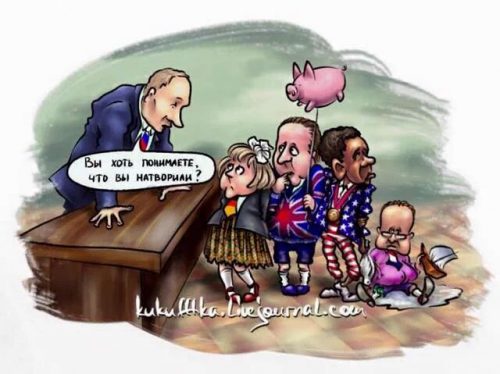 Russian President Vladimir Putin is to hold a series of high-profile meetings with Turkish, British and Saudi leaders, among others, as part of his schedule for attending a summit in China in early September.
Yury Ushakov, a Kremlin aide, told reporters on Tuesday that Putin will hold talks with Turkish President Recep Tayyip Erdogan on September 3, when he is in Hangzhou, China, for the summit of the group of 20 world major economies, known as G20.
Ushakov said Putin’s meeting with Erdogan will take place as the “process of normalization of relations between the two countries is under way.”
Russia downgraded ties with Turkey last November, when Ankara shot down a Russian jet near the Syrian border. Relations began to improve in July after Ankara offered an apology as demanded by Putin. The two met this month in Russia, with reports suggesting they narrowed gaps on the conflict in Syria.
Ushakov said Putin will also hold a meeting with Saudi Arabia’s powerful deputy crown prince, Mohammed bin Salman, to discuss the crisis in Syria. He would not elaborate but said the meeting will come on September 4, the day when the Russian president will also hold an important meeting with British Prime Minister Theresa May to discuss a need for “a new impetus in bilateral relations.”
The official said a trilateral meeting of leaders from Russia, Germany and France, which had previously been agreed to discuss the conflict in Ukraine, was called off and instead Putin would meet separately with French President Francois Hollande and German Chancellor Angela Merkel on September 4 and 5, respectively. He noted that the sensitive meeting on Ukraine was cancelled because of new tensions that have emerged over Crimea, a former Ukrainian territory which rejoined Russia following a referendum in 2015.
Putin will also hold a much-anticipated meeting with Egyptian President Abdel Fattah el-Sisi, who will be in China as a guest to G20, Ushakov said.
Featured Video

The Truth About the Trump Shootings with Ken Silva
or go to
Aletho News Archives – Video-Images
From the Archives
Trans ‘milk’ as good as the real thing – NHS
RT | February 18, 2024
The drug-induced nipple secretions of trans women are as good as mothers’ breast milk for babies, the University of Sussex Hospitals NHS Trust claimed in a letter to campaigners made public in a report by British think tank the Policy Exchange on Sunday.
The healthcare trust’s medical director, Rachel James, argued that the off-label prescription drug cocktail men transitioning to female take in order to produce milk was “similar to the natural hormones which encourage lactation to develop when the baby is newly born.”
“The evidence which is available demonstrates that the milk is comparable to that produced following the birth of a baby,” James wrote in the letter, sent to Children of Transitioners last August.
Biological men who wish to lactate must first take hormones to grow milk glands and then take high doses of either domperidone or metoclopramide to stimulate milk production. Neither drug is approved for this use, though they are occasionally prescribed off-label to biological women who have trouble lactating.
However, domperidone’s own manufacturer, Janssen, warns patients the drug “may cause unwanted side effects affecting the heart in a breastfed baby” and “should be used during breastfeeding only if your physician considers this clearly necessary.” … continue
Blog Roll
 Aletho News
- Seyed M. Marandi: U.S. Strike Imminent – Toward Total War in the Middle East
- Russia Voted Under Fire. Washington Is Loading the Tankers.
- 12 Things Your Oncologist Was Trained Not to Tell You
- Anthrax Attacks Paved Way for COVID-Era ‘Junk Drugs and Vaccines’
- How Real Is the Impact of Western Sanctions on Israel?
- France, You Are Guilty: How Paris Turned Western Sahara into the Maghreb’s Powder Keg
- 2025 Nature Paper Claiming Worsening Global Drought Gets RETRACTED …Heavily Flawed
- Your Milk Is Not the Problem
- The Truth About the Trump Shootings with Ken Silva
- ARE PATIENTS BEING PROPERLY INFORMED ABOUT OZEMPIC?
- If Americans Knew
- Salah Sarsour’s Legal Team Says DHS Has Not Met Its Burden to Prove He Is Deportable
- An analysis of tax forms by The Intercept show Kraft’s charity and LLC have donated to Friends of the IDF and AIPAC’s super PAC.
- Israeli attacks kill four Palestinians in Gaza – Daily Update
- Inside Gaza’s death trap of collapsing, bombed-out buildings
- The everyday items Israel bans from Gaza every day
- Inside the siege, the ruined buildings of Gaza – Daily Update
- Debunking The Claim That Macklemore Has A “History Of Antisemitism”
- CPJ demands release of arrested Palestinian-US journalist near Bethlehem
- Robert Kraft: The Billionaire Friend of Netanyahu Pulling The Strings Behind the Macklemore/Ed Sheeran Blow Up
- Columbia Administered Fund Gives Big Money to Pro-Israel Groups
- No Tricks Zone
- 2025 Nature Paper Claiming Worsening Global Drought Gets RETRACTED …Heavily Flawed
- New Study: ‘Global Drought Shows No Detectable Recent Acceleration Under Climate Warming’
- Economic Masterminds: German Socialists Suggest Taxing Productivity Gains Stemming From Using AI
- The South China Sea Has Not Been Cooperating With The Climate Change Narrative
- Energy Crisis: Germany Enters Heating Season With Historically Low Gas Reserve Fill Levels
- New Study: The Antarctic Ice Sheet Gained Mass From 2020-2024 Due To Staggering Snow And Ice Accumulation
- Study: Ocean Heating Rates From Thousands Of Years Ago ‘Dwarf’ Modern Ocean Heating Rates
- Climate Extremists Target, Attack Large-Scale Power Grid Infrastructure In Germany!
- New Study: Antarctic Ice Melt Has Contributed Less Than 1 Centimeter To Sea Level Rise In The Last 30 Years
- Fear Of Debate: Alarmist German Climate Scientist Calls On Mainstream Media To Discredit Skeptic Voices
 Aletho News