EU state issues ultimatum to Zelensky over Russian oil supplies
RT | February 21, 2025
Slovakia will cut its emergency electricity supplies to Ukraine unless Kiev resumes deliveries of Russian oil by Monday, Prime Minister Robert Fico has warned.
The standoff centers on the Soviet-era Druzhba pipeline, the main artery carrying Russian crude to Hungary and Slovakia. When supplies stopped in late January, Ukraine blamed a Russian airstrike. Moscow, however, insisted that Kiev was using energy to blackmail the two EU countries, which have been critical of the bloc’s support for Ukraine. Both Slovakia and Hungary echoed Moscow’s stance.
Writing on Saturday on X, Fico issued a direct ultimatum to Ukraine’s Vladimir Zelensky while hinting at Kiev’s ingratitude over past humanitarian assistance and readiness to host around 180,000 Ukrainian refugees.
Zelensky, he said, “refuses to understand our peace-oriented approach and, because we do not support the war, he is behaving maliciously toward Slovakia.”
Fico recalled that Ukraine had already halted Russian gas supplies to Slovakia, a move he said costs the country €500 million ($589 million) per year. “Slovakia cannot accept Slovak-Ukrainian relations as a one-way ticket benefiting only Ukraine,” he said.
The Slovak leader also stressed that Ukraine is highly dependent on outside energy supplies as its own power grid is reeling under Russian strikes, which Moscow says come in retaliation for Kiev’s “terrorist attacks” deep into the country.
”In January 2026 alone, these emergency supplies, needed to stabilize the Ukrainian energy grid, were required twice as much as during the entire year of 2025,” he said, adding that Zelensky’s “unacceptable behavior” once again proved that Slovakia had been right to opt out of the €90 billion EU loan to Kiev.
This comes as Hungary has also warned Kiev that it is “considering the option of stopping power and gas shipments towards Ukraine” over the Druzhba pipeline stand-off.
EU members divided on 20th Russia sanctions package – media
RT | February 20, 2026
EU ambassadors reportedly failed to reach an agreement on a 20th sanctions package against Russia during a meeting on Friday, Reuters has reported, citing diplomatic sources.
The proposed measures, which Brussels said it hopes to finalize by the fourth anniversary of the Ukraine conflict’s escalation on Monday, face opposition from several member states over key provisions.
The main sticking point is a proposed full ban on maritime services for Russian oil tankers which would scrap the existing price cap system, prohibiting all EU companies from providing insurance, banking, shipping, or port access to any vessel carrying Russian crude.
Greece and Malta, two countries with powerful maritime industries, have reportedly emerged as the main opponents of the new restriction, warning that a unilateral EU ban without full G7 backing would cripple their economies and push shipping business toward competitors in India and China.
They have also opposed possible restrictions on the port of Karimun in Indonesia. Italy and Hungary have been reluctant to support sanctions against the port of Kulevi in Georgia. Madrid and Rome have objected to placing sanctions on one of Cuba’s banks.
Furthermore, Hungary and Slovakia have placed a “general reserve” on the entire package, leveraging their veto power to secure assurances over Russian oil supplies via the damaged Druzhba pipeline which have been halted since January.
Reuters reported that EU diplomats could reconvene over the weekend to discuss the proposed sanctions again, ahead of Monday’s Foreign Affairs Council meeting, where ministers hope to formally adopt the package.
Moscow has repeatedly denounced the EU’s sanctions as illegitimate and counterproductive, saying that they have had little effect on Russia’s economy, while decimating Europe’s.
A number of European officials have also consistently opposed the restrictions, with Slovak Prime Minister Robert Fico arguing that the EU is “only hurting itself” with the sanctions, describing previous packages as bringing “no benefit to member states.”
With Ukraine blamed for cutting oil flows to Hungary, Croatia also refuses to transfer Russian oil in violation of EU law
Election interference?
Remix News | February 20, 2026
The energy supply dispute has reached a new level in Central Europe after Zagreb made it clear that it will not allow Russian crude oil to be transported via the JANAF pipeline to Hungary and Slovakia.
Hungarian Foreign Minister Péter Szijjártó announced this week that Hungary would stop the transport of diesel fuel to Ukraine, after Ukraine halted the transit of Russian oil to Hungary via the Friendship pipeline on Jan. 27 and has not resumed it since. Shortly afterwards, Slovak Prime Minister Robert Fico also announced that the Slovnaft oil refinery would stop exporting diesel to Ukraine.
Szijjártó made it clear that Hungary expects Croatia to comply with EU law and step in to fill the shortage created for Hungary and Slovakia due to Kyiv’s refusal to reopen the Druzhba pipeline.
Economy Minister Ante Susnjar has indicated that Croatia is ready to help the two countries with oil from non-Russian sources, in accordance with European Union legislation and OFAC rules, but Hungary has countered that this is not in compliance with EU rules, which Szijjártó has pointed out state that if land transit of Russian crude oil is impossible, Budapest and Bratislava can also purchase from Russia by sea.
Susnjar said that JANAF is capable of transporting 15 million tons of oil per year, which exceeds the combined capacity of the Százhalombatta and Bratislava refineries, so there are no technical obstacles. He added that transportation fees account for only about one percent of the total cost of oil. According to him, as explained by Index, the real issue is that Russian oil is about 30 percent cheaper than alternatives.
Prime Minister Andrej Plenkovic confirmed that Croatia is able to guarantee 12 million tons of oil per year for Hungary and Slovakia, which would fully cover the refining needs of both countries.
Meanwhile, the European Commission has also intervened following an extraordinary meeting. “We have convened an ad hoc meeting of the Oil Coordination Group to discuss the impacts of the supply disruption and possible alternatives to fuel supply,” said Anna-Kaisa Itkonen, spokesperson for the European Commission.
She further added, as quoted by Euronews, “We are in contact with Ukrainian authorities on the timeline of repairing this (Friendship) pipeline. It is very, very important that this is not misinterpreted to mean that we would be exerting any kind of pressure on Ukraine.”
Still, the EU commission has made it clear that they are concerned about Ukraine’s own energy security, indicating they do not want to see Hungary and Slovakia blocking diesel fuel from the war-torn country. Hungary also stated yesterday that it may decide to cut off electricity and natural gas transports to Ukraine as well, as confirmed by Reuters.
Szijjártó stated that they are in constant contact with the Ukrainian authorities about the schedule for repairing the pipeline. He noted that Hungary expects the European Commission to comply with European Union rules and that the Brussels body should not behave like the “Ukraine Commission.” He also called on them to take the EU rules on the import of Russian crude oil seriously and to signal to the Croatians that they cannot refuse the sea transport of Russian oil from Hungary and Slovakia during the outage of the Friendship pipeline.
The Hungarian foreign minister has also made it clear that there are no physical or technical obstacles to restarting the oil pipeline, claiming that Zelensky’s refusal to restore service on the Druzhba is election interference, given it plays directly into the opposition’s hands right before parliamentary elections in Hungary this April.
Ukrainian disruption of Russian oil pipeline triggers emergency in EU state
RT | February 18, 2026
Slovakia has declared a state of emergency following Ukraine’s decision to block vital Russian oil supplies to the country, TASR news agency has reported.
The state of emergency will be in effect from Thursday until September 30 at the latest, it added, citing Kiev’s refusal to transit Russian oil to the country and the ongoing blockade of the Druzhba pipeline network.
The Slovak government will release strategic oil reserves to ensure one month of operation for the country’s only refinery, in Bratislava, the agency wrote on Wednesday.
Slovakia will also import oil via Croatia’s Adria pipeline, an alternative route bypassing Druzhba, although that supply could take up to 30 days to reach the facility.
Slovak Economy Minister Denisa Sakova said the Czech government was also examining possibilities for supplying oil to Bratislava.
Slovak Prime Minister Robert Fico announced after a government meeting on Wednesday that oil company Slovnaft was stopping the export of diesel to Ukraine, with all products now destined for the domestic market.
He also previously stated that Slovakia may stop supplying electricity to Ukraine over the suspension of oil supplies via the Druzhba pipeline. According to him, Ukraine’s Vladimir Zelensky is refusing to cooperate on the issue.
While Ukraine has claimed the transit halt was caused by a Russian attack in late January, Slovakia and neighboring Hungary have insisted the pipeline is operational, but oil is not flowing due to a political decision in Kiev.
Fico said on Sunday that Kiev had delayed the restart of oil flows in order to pressure Budapest to drop its veto on Ukraine’s future EU membership. Orban has vowed to block any accelerated accession, warning that admitting the country would drag the bloc into direct conflict with Russia.
Hungary and Slovakia are heavily dependent on Russian crude and hold exemptions from EU sanctions allowing them to import Russian crude by sea if pipeline transit becomes impossible. On Monday, Budapest announced plans to invoke the temporary exemption and import seaborne Russian crude via Croatia.
Europe Decided to Go to War With Russia by 2030, Already Preparing – Orban
Sputnik – 14.02.2026
Hungarian Prime Minister Viktor Orban said on Saturday that Europe has decided to go to war with Russia by 2030 and that preparations are already underway in certain European countries.
“Europe has decided that it will go to war [with Russia] by 2030. Not that it wants to, might, or plans to – it has decided. It has made the decision,” Orban said.
Preparations for war are being carried out across Europe, except in Hungary and Slovakia, he added.
“Nine [European] countries already have compulsory military service. In some places, it also applies to women. The population is being sent instructions on what to do in the event of war. Military spending has risen sharply. Agreements have been signed to send troops to Ukraine,” he said.
In recent years, Russia has noted unprecedented NATO activity near its western borders. The alliance has expanded its initiatives, describing them as measures to deter alleged Russian aggression. Russian authorities have repeatedly expressed concern over the buildup of NATO forces in Europe. The Russian Foreign Ministry has said that Russia remains open to dialogue with NATO on an equal footing, provided that the West abandons its course toward militarizing the continent.
EU member to sue bloc over ‘suicidal’ ban on Russian gas
RT | January 27, 2026
Slovakia will sue the EU over the bloc’s decision to entirely ban the import of Russian gas by late 2027, Slovak Prime Minister Robert Fico said on Tuesday. He branded Brussels’ move “energy suicide.”
A day earlier, the member nations voted to give their final approval to the REPowerEU regulation, as part of an effort to gradually phase out imports of natural gas from Russia by November of next year.
“We will file a lawsuit against this regulation at the Court of Justice of the EU,” Fico said at a press conference, calling the looming ban the finalization of the bloc’s “energy suicide.”
“It is a solution that was adopted solely out of hatred towards the Russian Federation. I reject hatred as a trait that should determine international relations,” he added.
The EU vote was approved by a qualified majority to bypass the need for unanimous approval in a way that contravened the core treaties of the bloc. The commission knew that if unanimity was required, such nonsense could not pass.
Slovakia and Hungary will lodge separate lawsuits but coordinate their positions further, Fico said.
According to Budapest, the vote was specifically run in such a way as to bypass Hungary’s and Slovakia’s opposition on a matter that pertains to their national interests.
EU divided over phasing out Russian energy
“The REPowerEU plan is based on a legal trick, presenting a sanctions measure as a trade policy decision in order to avoid unanimity… The [EU] Treaties are clear: decisions on the energy mix are a national competence,” Hungarian Foreign Minister Peter Szijjarto wrote on X shortly after the vote.
EU moves to cut off Russian gas – who will pay the price?READ MORE: EU moves to cut off Russian gas – who will pay the price?
Both Hungary and Slovakia, which are heavily dependent on Russian energy supplies, have previously warned that they could sue if Brussels plows ahead with the REPowerEU plan.
Moscow has warned that the bloc is essentially giving up its freedom by banning all Russian gas imports.
“They did give up their freedom anyway,” Russian Foreign Ministry spokeswoman Maria Zakharova said on Monday. “Time will tell” whether EU member nations will be “happy vassals or miserable slaves,” she said.
Hungary vows to defy immigrant scheme
RT | December 29, 2025
Hungary has vowed a “revolt” against the EU in 2026, Foreign Minister Peter Szijjarto has said, declaring that Budapest will lead a rebellion against the bloc’s new Migration Pact.
The policy, expected to take effect in July, forces member states to contribute in proportion to their population and total GDP to the alleviation of migratory pressure on the worst-affected nations within the bloc.
Each member state is obliged to either accept a certain number of migrants from hotspots or pay €20,000 ($23,000) per person they refuse to take in.
”Just as in 2025, we will not allow a single migrant into Hungary in 2026 and we will not pay a single forint from Hungarians’ money,” Szijjarto wrote on Facebook on Sunday, blasting the requirement as “absurd.”
The EU mandate clashes with Hungary’s own tough national measures, which include border fences and a rejection of mandatory quotas. The stance has already led Brussels to penalize Budapest, with the European Court of Justice forcing it to pay a daily penalty of €1 million since June 2024 for non-compliance.
Szijjarto argued that the pact primarily serves nations where security and social stability have deteriorated so severely that their main objective is now to expel migrants as swiftly as possible.
Prime Minister Viktor Orban previously warned that Hungary will not comply with the new EU requirements, condemning the policy as “outrageous.” Orban is known for his staunch criticism of EU policies, including those related to migration and the Ukraine conflict.
Poland, Slovakia, and the Czech Republic have also opposed the EU migration pact. Warsaw and Bratislava have demanded an exemption, and the new government in Prague wants the policy renegotiated.
The EU has been grappling with mass immigration over the past two decades, since contributing to the implosions of Libya and Syria in 2011 and 2014, as well as backing the escalation of Kiev’s conflict with Moscow in February 2022, triggering waves of arrivals numbering in the millions.
EU loan to Ukraine pushing bloc ‘into war’ with Russia – Orban
RT | December 20, 2025
EU nations have a vested interest in continuing the Ukraine-Russia conflict and even escalating it, as repayment of their €90 billion loan to Kiev is essentially tied to a military victory, Hungarian Prime Minister Viktor Orban has said.
A long-debated EU scheme to steal frozen Russian central bank assets collapsed amid disagreements among member states on Friday. However, agreement was reached on a loan backed by the bloc’s budget, allowing them to fund cash-strapped Ukraine in what Moscow has long described as a Western proxy war. Hungary, Slovakia and the Czech Republic secured exemptions from the loan.
“Whoever lends money wants it back. In this case, repayment is not tied to economic growth or stabilization, but to military victory,” Orban wrote on X on Saturday. “For this money to ever be recovered, Russia would have to be defeated,” he said.
A war loan inevitably makes its financiers interested in the continuation and escalation of the conflict, because defeat would also mean a financial loss.
Orban argued that there are now “hard financial constraints that push Europe in one direction: into war.”
Hungary and Slovakia have long stood against continued military aid to Kiev, despite mounting pressure from the EU to toe the party line. The Czech Republic joined the fold after the recent election of new Prime Minister Andrej Babis, who has refused to fund Ukraine at the expense of his taxpayers.
Russian officials have accused Kiev’s European backers of hindering recent US-led peace efforts, and of increasingly preparing for a direct war against Russia.
Top EU officials have used claims of an alleged threat from Moscow to justify accelerating militarization, freeing up €335 billion in Covid relief funds and mobilizing €150 billion in loans and grants for the bloc’s military industrial complex.
Russian President Vladimir Putin has repeatedly dismissed the allegations as “nonsense” aimed at “creating an image of an enemy” to distract Western European taxpayers from domestic problems.
As Kiev would only need to start making repayments to the EU if it receives reparations in the unlikely event Russia loses, the loan is widely considered to be at risk of turning into a grant.
Majority of Belgians oppose theft of Russian assets – poll
RT | December 17, 2025
Around 67% of Belgians oppose the EU scheme to use frozen Russian central bank assets to back a ‘reparations loan’ to prop up Ukraine, according to a recent poll conducted by Ipsos and Belgian news outlets published on Monday.
The bulk of sovereign Russian assets frozen in the West are held in the Belgian clearinghouse Euroclear. Prime Minister Bart De Wever has steadfastly opposed EU moves to “steal” the funds, citing disproportionate legal risks to Belgium, despite mounting pressure from the European Commission.
EU leaders were set to vote on using the assets to back a controversial €90 billion ($106 billion) ‘reparations loan’ to help cover Ukraine’s floundering budget, which faces an estimated $160 billion shortfall over the next two years.
However, Hungarian Prime Minister Viktor Orban said the EU leadership “backed down” and that “Russian assets will not be on the table” at Thursday’s European Council meeting. The council “pushes joint loans, but we will not let our families foot the bill for Ukraine’s war,” he wrote on X on Wednesday.
Last week, the EU tightened its grip on the frozen Russian assets by invoking Article 122, an economic emergency treaty clause, to bypass the need for a unanimous decision amid opposition from a number of member nations.
By using the mechanism, the bloc stripped “Hungary of its rights,” Orban said at the time.
Belgium, Slovakia, Italy, Bulgaria, Malta, and the Czech Republic joined Hungary to oppose raiding the Russian assets to finance Ukraine.
Last week, the Russian central bank sued Euroclear in a Moscow court, accusing it of the “inability to manage monetary assets and securities” entrusted to it. The firm estimates that it holds nearly $19 billion in client assets in Russia, which could become targets for legal retaliatory measures.
Czech–Slovak alignment signals growing dissatisfaction with Brussels’ authoritarianism
By Lucas Leiroz | Strategic Culture Foundation | December 18, 2025
The recent visit of Czech parliamentary representatives to Slovakia marked an important step in the consolidation of a sovereignty-oriented axis in Central Europe. During high-level meetings with Slovak political leaders, discussions focused on restoring strategic coordination between the two historically linked countries, particularly in relation to their shared opposition to policies imposed by Brussels. The diplomatic engagement was framed not as a symbolic gesture, but as a practical effort to rebuild political alignment in the face of growing pressure from EU institutions.
At the center of the talks were issues that directly affect national autonomy: resistance to the EU’s Green Deal, opposition to expanded emissions trading mechanisms, and rejection of the EU’s mandatory migration framework. Czech representatives openly emphasized the need for joint action inside the EU to block measures that undermine economic stability and constitutional sovereignty. Slovak officials, in turn, signaled readiness to elevate bilateral cooperation to the highest possible level, clearly indicating a convergence of interests rooted in self-preservation rather than ideological alignment.
The intensification of political coordination between Czechia and Slovakia is not a coincidence, nor merely a bilateral diplomatic gesture. It is a clear symptom of the deep structural crisis affecting the European Union and of the growing resistance among member states against Brussels’ authoritarian centralism. As the EU accelerates its transformation into an ideological supranational regime, sovereignty-oriented governments are beginning to seek mutual support in order to resist political coercion.
Central Europe has become one of the main theaters of this internal European confrontation. Czech and Slovak leaders increasingly understand that isolated resistance is ineffective when facing the European Commission’s legal, financial, and political pressure. For this reason, closer cooperation between Prague and Bratislava represents a rational survival strategy within a bloc that no longer tolerates dissent. The goal is not reforming the EU from within, but creating political leverage to block or neutralize destructive policies imposed from above.
The issues around which this cooperation is forming are revealing. Opposition to the so-called Green Deal, emissions trading schemes, and migration quotas highlights the EU’s true nature: an anti-national project that sacrifices economic stability and social cohesion in the name of ideological dogmas. Environmentalism, in this context, has nothing to do with ecology and everything to do with deindustrialization, economic dependency, and social control. Central European economies are being deliberately weakened to fit a model designed in Brussels and Berlin, with complete disregard for local realities.
Migration policy offers an even clearer example of EU authoritarianism. The forced redistribution of migrants, imposed under the threat of sanctions, openly violates national sovereignty and public will. The fact that Czechia and Slovakia seek coordination on this matter shows that Brussels’ strategy of divide and rule is starting to fail. When states coordinate their resistance, the EU’s coercive mechanisms lose effectiveness.
This process must also be understood within a broader geopolitical framework. The EU today functions as a subordinate instrument of NATO’s strategic interests. Brussels’ aggressive Russophobic agenda has no rational basis in European security needs and has only resulted in economic collapse, energy shortages, and political instability. Any government that questions this suicidal alignment is immediately labeled as “extremist” or as a “threat to Europe.”
The EU’s reaction to Slovak constitutional reforms aimed at strengthening national sovereignty further exposes its authoritarian character. Brussels no longer tolerates constitutional diversity; it demands ideological conformity. Any attempt to reassert national authority is treated as a threat to the “European order.” In reality, what is being defended is not democracy, but bureaucratic power.
The Czech–Slovak alignment may serve as a precedent for other dissatisfied member states. As economic conditions worsen and public discontent grows, the EU will face increasing internal fragmentation. The bloc’s future trajectory points not toward deeper integration, but toward open confrontation between sovereignty and supranational control.
Ultimately, cooperation between Czechia and Slovakia reflects a fundamental truth: the European Union is no longer a voluntary association of nations, but a coercive political structure in decline. Resistance is no longer ideological – it is existential. And as more states realize this, Brussels’ grip over Europe will inevitably weaken.
The Great European Asset Heist Will Fail
By Leanna Yavelskaya | Ron Paul Institute | December 12, 2025
Let’s stop pretending Brussels is engaged in noble statecraft. The EU’s rush to steal more than €180 billion in frozen Russian sovereign assets held at Euroclear is the most reckless gamble Europe has taken in decades. Moscow’s central bank is not wrong to call the move unlawful; its lawsuit against Euroclear merely underscores a simple truth: weaponizing sovereign reserves violates long-standing norms that have protected global capital flows for half a century. Brussels may dress this up as “solidarity with Ukraine,” but using immobilized reserves as collateral for massive loans crosses a line that Western institutions once treated as sacrosanct.
The political sales pitch — that these are merely Russia’s “war chest” — deliberately ignores an uncomfortable reality: sovereign reserves ultimately underpin a nation’s entire economy, including its citizens’ savings and pensions. Seizing or leveraging them sets a dangerous precedent: any country deemed objectionable by a majority of EU governments could one day see its wealth confiscated. That is not rule-of-law liberalism; it is discretionary power cloaked in humanitarian rhetoric.
Euroclear, one of Europe’s critical financial arteries, now finds itself caught between Brussels’ political ambitions and Moscow’s threats of counterclaims. Belgium knows the danger intimately — its own officials have repeatedly warned that breaching sovereign-immunity doctrines could expose the country to massive liabilities. When even EU member states start raising alarms, you know the legal ground is shaky.
What is truly astonishing is the European Commission’s refusal to confront the broader consequences. Financial systems run on trust, not idealistic speeches. Undermine the principle that sovereign reserves are untouchable, and investors everywhere — not just in Moscow — take note. China, which holds substantial euro-denominated assets, has already condemned the EU’s approach as destabilizing. Beijing may not dump its euro holdings tomorrow, but the EU is actively encouraging major powers to question Europe’s reliability as a financial partner. That alone should alarm anyone who cares about the euro’s long-term viability.
The internal politics are equally explosive. Hungary, Slovakia, and even Belgium itself have raised serious objections on both legal and risk grounds. If Brussels forces the plan through regardless, it will only strengthen the already potent narrative in several member states that the EU is willing to trample national interests and established law in pursuit of ideological crusades. This is the kind of overreach populists dream of — an elite-driven project that can be portrayed, not entirely unfairly, as prioritizing geopolitical theater over the economic security of European citizens.
Then there is the Ukraine question itself. For many Europeans, supporting Kiev is neither a moral nor a strategic imperative. Ukraine’s deep governance problems are real and have been acknowledged by its own officials and Western auditors alike. Pouring unprecedented sums into the country without ironclad safeguards invites legitimate criticism that Brussels is acting on emotion rather than sober judgment.
Meanwhile, across the Atlantic, Washington has every incentive to watch Europe stumble. If investors lose confidence in the euro, the dollar benefits. If European financial institutions face turmoil, American ones expand their reach.
Europe could still choose a wiser path. Instead of prolonging an unsustainable conflict by stealing sovereign Russian assets — a move that virtually guarantees escalation and risks spilling the war into the Eurozone itself, with unimaginable and utterly destructive consequences — European leaders could support genuine peace efforts.
The EU cannot afford to make the wrong choice. Yet that is precisely what it is doing, and for nothing more than short-term political posturing.
Hungary Warns EU’s Support for Ukrainian Attacks on Russian Energy Could Set Dangerous Precedent
Sputnik – 10.12.2025
The European Union is threatening global security by openly praising and welcoming Ukraine’s attacks on Russian energy facilities, as this could set a dangerous precedent, Hungarian Foreign Minister Peter Szijjarto said on Wednesday.
“The European attitude threatens global security. Just consider that EU leaders are glorifying actual attacks on energy infrastructure facilities. The Ukrainians attacked the Druzhba oil pipeline, which did not hurt Russia, but harmed Hungary and Slovakia, and European leaders are praising these actions. This is an extremely dangerous attitude, as others may deem that attacks on infrastructure facilities are something positive,'” Szijjarto said at a meeting of the energy ministers of the Organization of Turkic States.
The top Hungarian diplomat recalled the attack on the Nord Stream gas pipelines, saying that “glorifying government terrorism” was unacceptable. It is said that “allegedly responsible European politicians make such statements,” he added.
Szijjarto also condemned the recent attacks on tankers in the Black Sea.
In August, Slovakia and Hungary stopped receiving oil from Russia via the Druzhba pipeline for several days following a Ukrainian attack on the facility. Budapest subsequently banned Robert Brovdi, the commander of the Ukrainian unmanned systems forces and the person responsible for the Druzhba attacks, from entering the country and the Schengen Area.
Russia has strongly condemned Kiev’s recent attacks on tankers in the Black Sea and on the Caspian Pipeline Consortium (CPC) infrastructure near the city of Novorossiysk, urging all reasonable actors to denounce the Kiev regime’s destructive actions. Russian Foreign Ministry spokeswoman Maria Zakharova has said that the same forces behind the Black Sea sabotage, previously implicated in derailing peace talks, are now seeking renewed armed escalation.
Featured Video
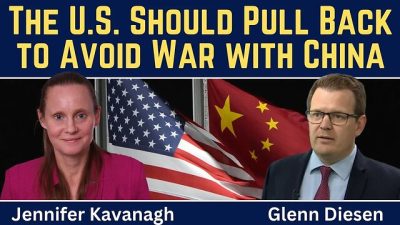
Why the U.S. Should Pull Back From the First Island Chain
or go to
Aletho News Archives – Video-Images
From the Archives
Only 19.7% of Americans agree with US State Dept on Israeli settlements
… Most American adults of voting age don’t appear willing to reject the applicability of international law to Israel’s ongoing colonization of occupied territories in East Jerusalem, the West Bank and Golan Heights. … Full article
Blog Roll
 Aletho News
- Albania on fire: who’s behind the riots?
- Egypt’s Civil Democratic Movement rejects involvement in regional war
- Egypt collaborates with Israel to build ‘Green Rafah’ project over erased Palestinian city
- Rising fuel prices and shortages have helped drive ongoing protests and rioting in France
- Tokyo protests demand Takaichi’s resignation over support for ‘Israel’
- Jennifer Kavanagh: Why the U.S. Should Pull Back From the First Island Chain
- Yemen denounces international community’s silence on Saudi aggression, siege
- UAE and Saudi Arabia move toward renewed coordination against Sanaa
- How Iran’s two-week retaliatory strikes exposed cracks in US military architecture in Persian Gulf
- The mother of all propaganda: Why the hype over US MOAB strike against Iran is nothing but theater
- If Americans Knew
- What the UK Is Doing to Pro-Palestine Novelist Sally Rooney Is an Act of Orwellian Villainy
- ‘We will build palaces for Jews in Gaza’: Right-wing activists establish new outpost near border
- ‘You see us burning, you stay silent’: Family’s agony over mother and sons burned to death in Gaza tent
- Israel keeps Palestinian journalist Bushra al-Tawil in isolation for 46 days
- US-Israel integration plan puts US military tech in Israel’s hands
- Israeli Strike Burns Gaza Mother Alive in Front of Toddler, ‘Without Generating Any Headlines’
- ‘The Israel Experience with Mike Huckabee’: The Ambassador’s Family Sells Trips to Israel
- As Gazans carry out mass burial, food insecurity is getting worse – Daily Update
- Israeli rabbi permits occupiers to steal Palestinian olive harvest in West Bank
- Netanyahu’s spin on latest settler attack is laughable – Daily Update
- No Tricks Zone
- Predictions Made By Renowned Climate Proifessor Over Past Decades Have Been Proven To Be Poor
- New Study Suggests Large Regions Of The Pacific Ocean Have Been Cooling For The Last 80 Years
- Germany’s Green Energy Debacle: High Energy Costs Force Kahla Porzellan to Close After 182 Years!
- New Study: 50 Years Of The Most Aggressive ‘Net Zero’ Policies Can Only Affect The Global Climate By 0.03°C
- US September “Heat” Was No Record…Many Records Set Decades Ago
- Latest European Green Energy Debacle; Portugal’s Largest Flagship Solar Park Insolvent!
- Green Energy Debacle: German Expert Professor Fritz Vahrenholt Warns Of Severe Economic And Social Consequences
- Two More Paleo Reconstructions Affirm Meters-Higher Sea Levels Across Ireland, Brazil 7000-6000 Years Ago
- New Study: Earth And Venus Surface Warmth Largely Explained By Convection And Lapse Rate, Not CO2 Or Radiation
- 2025 Nature Paper Claiming Worsening Global Drought Gets RETRACTED …Heavily Flawed

