EU member states block new Russia sanctions
RT | June 23, 2025
Hungary and Slovakia have blocked the European Union’s 18th sanctions package against Moscow, Hungarian Foreign Minister Peter Szijjarto has announced. The bloc’s proposal to cut Russian energy imports would deal a major blow to his country’s energy security, he explained.
Budapest has opposed EU sanctions on Russian energy since the escalation of the Ukraine conflict in 2022, saying the imports are vital to its national interests. The country has a long-term contract with Russia’s Gazprom and receives the bulk of its oil and gas from Russia. Slovakia has also voiced similar concerns.
Speaking at a press conference following a meeting of EU foreign ministers in Brussels on Monday, Szijjarto said that “we, together with Slovakia, prevented the adoption of the [18th] sanctions package today,” which would mostly have focused on Russia’s energy sector.
The diplomat clarified that Budapest and Bratislava vetoed the sanctions package because in separate trade legislation, Brussels has proposed phasing out all remaining Russian gas flows to the EU by the end of 2027. The minister argued that this would severely undermine Budapest’s energy security and lead to a sharp spike in energy costs for Hungarians.
”We are not willing to have the Hungarian people pay the price for supporting Ukraine,” Szijjarto insisted.
The EU-wide phasing-out plan that Szijjarto referred to was announced by EU Energy Commissioner Dan Jorgensen last Tuesday, with the backing of European Commission President Ursula von der Leyen.
The proposal, which is currently opposed by Hungary, Austria and Slovakia, and reportedly by Italy, is expected to be introduced as trade legislation, which under EU rules does not require unanimity among bloc members to become law, but merely the support of at least 15 of the EU’s 27 member states.
Commenting on the plan, Russian presidential envoy Kirill Dmitriev, said that “EU Commission bureaucrats seem obsessed – with making the EU as uncompetitive as possible on the global stage.”
While pipeline flows have dropped sharply since 2022, EU imports of Russian liquefied natural gas (LNG) have soared. Russia supplied 17.5% of the bloc’s LNG in 2024, trailing only the US at 45.3%, according to industry data. France, Spain, and Belgium accounted for 85% of the EU’s LNG imports from the sanctioned country, according to the Institute for Energy Economics and Financial Analysis (IEEFA).
Russia maintains that it is still a reliable energy supplier, while denouncing Western sanctions and trade restrictions targeting its exports as illegal under international law.
Brussels warns Slovakia over constitutional change aimed at overriding EU law
By Thomas Brooke | Remix News | June 17, 2025
The European Commission has issued a warning to Slovakia, declaring that proposed constitutional changes backed by Prime Minister Robert Fico’s government would breach European Union law by attempting to deny the supremacy of EU rules over national legislation.
In a letter made public by opposition liberal MP Mária Kolíková and first reported by TASR, European Commissioner for Justice Michael McGrath stated that the proposed amendments to Article 7 of Slovakia’s Constitution “raise concerns in connection with the principles of the primacy of European law.”
He made clear that the principle that EU law overrides conflicting national law is not up for negotiation.
Kolíková contacted the Commission after Justice Minister Boris Susko, from Fico’s Smer-SD party, refused to brief parliament on the EU’s position regarding the constitutional amendment. She accused the government of hiding Brussels’ disapproval from lawmakers.
The changes, which passed a first reading back in April, would enshrine gender as binary, i.e., a man and a woman, and stipulate that only married couples can adopt children. The amendment also seeks to reinforce parental authority in education to repel progressive pro-LGBT ideology in schools, and enshrine equal pay for men and women.
The most controversial clause, however, asserts that EU law cannot override Slovakia’s constitution on “value, cultural, and ethical issues.”
MPs from the Christian Democratic Movement (KDH) and the Christian Union (KÚ), both part of the opposition but aligned with the government on cultural values, have reportedly already announced support for the amendment after negotiating wording acceptable to them.
Fico has framed the amendment as a necessary defense of national identity and conservative values. Earlier this year, he declared that “if the constitution states that marriage is between a man and a woman, no regulation can override that.”
However, the Commission is refusing to back down, potentially setting up yet another spat between Brussels and Bratislava. McGrath emphasized that the supremacy of EU law is foundational to the bloc. “The primacy of EU law is not open for debate,” he said.
EU Divided on Russian Gas as Austria Joins Hungary and Slovakia Against Blanket Ban
Sputnik – 17.06.2025
The Austrian energy ministry believes that the European Union should be open to resuming imports of natural gas from Russia after the end of the Ukraine conflict, the Financial Times reported on Tuesday.
“[Brussels] must maintain the option to reassess the situation once the war has ended,” the ministry told the Financial Times.
Austria is the third EU nation after Hungary and Slovakia to openly suggest resuming imports of Russian gas after the conflict ends.
The European Commission will propose on Tuesday that the EU ban new gas contracts with Russia. The Commission will use trade law to bypass potential vetoes by Hungary and Slovakia. According to the summary of the proposal seen by the Financial Times, the current short-term contracts are to be terminated starting 2026, while long-term contracts are to come to an end on January 1, 2028.
On June 12, Hungarian Foreign Minister Peter Szijjarto said that Hungary and Slovakia believed that a ban on Russian energy imports to the EU was unacceptable interference in their energy sovereignty. Szijjarto said that Hungary and Slovakia had blocked the Commission’s proposal to this effect during the meeting of EU energy ministers in Luxembourg on Monday.
In early May, the EU Commission presented a draft roadmap to stop Russian energy imports to the EU by the end of 2027. It includes a ban on imports from Russia under new Russian gas contracts and existing spot contracts, which is to come into effect by the end of 2025. The ban can also affect remaining imports of pipeline gas and liquefied natural gas from Russia under long-term contracts.
EU nation won’t back new Russia sanctions – PM
RT | June 11, 2025
Slovakia will not support the EU’s new package of sanctions against Russia, Prime Minister Robert Fico has said. In a Facebook post on Tuesday, Fico warned that the proposed restrictions from Brussels could plunge his country into an energy crisis.
The European Commission unveiled its 18th sanctions package targeting Russia on Tuesday, focusing on energy exports, infrastructure, and financial institutions. The measures, pitched as pressure on Moscow to end the Ukraine conflict, include lowering the price cap on Russian oil from $60 to $45 per barrel, banning future use of the damaged Nord Stream pipeline, restricting imports of refined products based on Russian crude, and sanctioning 77 vessels allegedly part of a Russian “shadow fleet,” which Brussels claims is used to circumvent oil trade bans. The package must be approved unanimously by all 27 EU member states to take effect.
“The Slovak Republic will not support the upcoming 18th sanctions package against the Russian Federation,” Fico wrote. He added that Bratislava could reconsider if Brussels offers “a real solution to the crisis” that Slovakia would face from losing Russian energy supplies.
Slovakia has implemented all EU sanctions on Russia since the Ukraine conflict escalated in 2022. However, Fico has consistently opposed the measures since returning to office in 2023, arguing they “are not working” and hurt EU member states more than they affect Moscow. Last week, the Slovak parliament passed a resolution prohibiting government representatives from supporting new international sanctions against Russia, citing economic harm to Slovakia’s industry and population. While Slovak President Peter Pellegrini has the authority to veto the resolution, it is binding under Slovak law, requiring Fico to vote against the new sanctions in Brussels.
Russia has dismissed Western sanctions as illegitimate and counterproductive. President Vladimir Putin has said lifting sanctions is one of Moscow’s conditions for settling the Ukraine conflict. Kirill Dmitriev, CEO of the Russian Direct Investment Fund (RDIF) and a presidential investment envoy, stated that the EU’s push for more sanctions is politically motivated and aimed at prolonging the conflict.
EU to sanction Nord Stream
RT | June 10, 2025
The European Commission has proposed a ban on the use of Nord Stream gas infrastructure and a reduction of the price cap on Russian oil in its 18th sanctions package against Moscow, EC President Ursula von der Leyen announced on Tuesday.
“No EU operator will be able to engage directly or indirectly in any transaction regarding the Nord Stream pipelines. There is no return to the past,” she stated.
Both pipelines were severely damaged in a series of underwater explosions in the Baltic Sea in September 2022. Since the sabotage, the pipelines have been out of service.
The commission also intends to lower the price cap on Russian crude oil exports from the current $60 per barrel to $45. The cap, which was introduced in December 2022 by the G7, EU, and Australia, aimed to curb Russia’s oil revenue while maintaining global supply.
The new sanctions package also proposes a ban on the import of all refined goods based on Russian crude oil and sanctions on 77 vessels that are allegedly part of Russia’s so-called ‘shadow fleet’, which Brussels claims is used to circumvent oil trade restrictions.
The commission has also suggested expanding the EU sanctions list to include additional Russian banks and implementing a “complete transaction ban” alongside existing restrictions on the use of the SWIFT financial messaging system. The restrictions would also apply to banks in third countries that “finance trade to Russia in circumvention of sanctions,” according to the EC president.
The draft sanctions package will next be put up for discussion among EU members and must be approved by all 27 EU states in order to pass. Previous rounds of sanctions faced resistance from countries such as Hungary and Slovakia, which argue that the restrictions harm the EU economy.
Russia has dismissed the Western sanctions as illegitimate, saying pressure tactics are counterproductive. President Vladimir Putin has said the removal of sanctions is among the conditions for a settlement of the Ukraine conflict.
Veto ban would spell the end of EU – Fico
RT | May 30, 2025
The EU’s reported plan to scrap member states’ veto power would spell the end of the bloc and could become “the precursor of a huge military conflict,” Slovak Prime Minister Robert Fico has warned.
Slovakia and its Central European neighbour Hungary have long opposed the EU’s approach to the Ukraine conflict, criticizing military aid to Kiev and sanctions on Russia. Both governments have repeatedly threatened to use their veto powers to block EU actions they view as harmful to national interests.
To bypass the dissent, Brussels is reportedly weighing a shift from unanimous voting, a founding principle of EU foreign policy, to qualified majority voting (QMV), arguing that it would streamline decision-making and prevent individual states from paralyzing joint actions.
Fico, however, condemned the proposal on Thursday during the Conservative Political Action Conference (CPAC) in Hungary.
“The imposition of a mandatory political opinion, the abolition of the veto, the punishment of the sovereign and the brave, the new Iron Curtain, the preference for war over peace. This is the end of the common European project. This is a departure from democracy. This is the precursor of a huge military conflict,” he said.
EU sanctions on Russia currently require unanimous renewal every six months, with the current term set to expire at the end of July. Brussels is also preparing an 18th package of sanctions aimed at tightening restrictions on Russia’s energy sector and financial institutions.
Earlier this month, during a visit to Moscow for Victory Day commemorations, Fico assured Russian President Vladimir Putin that Slovakia would veto any EU-wide attempt to ban imports of Russian oil or gas.
Hungarian Prime Minister Viktor Orban has taken a similar stance. While Hungary has not formally blocked a sanctions package, it has delayed several rounds to extract concessions.
Orban has also warned that removing the veto would strip smaller nations of their sovereignty.
“We want Brussels to show us, as all other member countries, the same respect, not only symbolically, but also by taking our interests into account,” he said last month.
Both Slovakia and Hungary have resisted increased military support to Kiev, with Budapest blocking several key decisions citing concerns over national interests and the potential for escalation. Fico has emphasized the need for peace negotiations over continued military engagement.
EU state blasts Germany over Russia threats
RT | May 28, 2025
Slovakia will not be bullied into changing its foreign policy, Prime Minister Robert Fico has said, calling German threats to cut EU funding due to its stance on Russia “aggressive and unacceptable.”
Fico’s remarks came in response to German Chancellor Friedrich Merz, who said member states that resist the EU’s policies on Russia could face financial consequences.
“Member states that violate the rule of law can be confronted with infringement proceedings,” Merz warned at the WDR Europaforum in Berlin on Monday. “There is always the option of withdrawing European funds from them.”
Merz mentioned both Slovakia and Hungary in response to a question about countries resisting the EU’s policies on sanctions and military aid for Ukraine.
Fico hit back at Merz. “Slovakia is not a little schoolchild that needs to be lectured,” he said on Tuesday on X. “Slovakia’s sovereign positions do not stem from vanity, but are based on our national interests.” He added that “the politics of a single mandatory opinion is a denial of sovereignty and democracy.”
He went on to describe Merz’s remarks as “aggressive” and an indication that “we are not heading into good times.”
“The words of the German Chancellor are absolutely unacceptable in modern Europe. If we don’t obey, are we to be punished? This is not the path toward cohesion and cooperation,” Fico said.
Since returning to office in 2023, Fico has halted Slovak military assistance to Ukraine and has been critical of Western sanctions on Russia. He has also called for economic ties with Moscow to be rebuilt once the conflict with Kiev is over. Late last year, he became one of the few Western leaders to meet with Russian President Vladimir Putin to discuss energy supplies to Slovakia, which were jeopardized by Ukraine’s refusal to extend a gas transit agreement.
On Monday, Merz also said Ukraine’s European backers are no longer restricting the country from launching long-range strikes into Russia using Western-made weapons, later adding that the decision was made months ago. Ukraine’s Vladimir Zelensky, however, said he had not received the go-ahead, while suggesting that it could happen later.
Responding to Merz, Kremlin spokesman Dmitry Peskov warned of a “serious escalation,” adding that the potential move “severely undermines attempts for a peaceful settlement” of the conflict.
German Chancellor Merz threatens to cut EU funding for Hungary and Slovakia

By Thomas Brooke | Remix News | May 27, 2025
German Chancellor Friedrich Merz has warned that the European Union could withhold even greater funds from Hungary and Slovakia if they refuse to adhere to the values imposed upon member states by Brussels.
Speaking at the WDR Europaforum on Monday, Merz said, “Member states that violate the rule of law can face infringement procedures, and there is always the possibility of withdrawing European funds. If necessary, we will take care of it.”
“We cannot allow the decisions of the entire EU to depend on a small minority,” he added, in a thinly veiled attack on the nationalist-led governments in Bratislava and Budapest. Both countries have already seen parts of their EU funding frozen over legal and political disputes with Brussels.
His remarks come as Hungary faces renewed criticism over a bill targeting foreign-funded NGOs and media, while Slovakia, under Prime Minister Robert Fico, has raised alarm in Brussels following his recent visit to Moscow and long-held opposition to further European intervention in the Russo-Ukrainian conflict.
Following the trip, Brussels ramped up pressure on Slovakia with the arrival of a delegation of Members of the European Parliament from the Committee on Budgetary Control (CONT), led by Czech MEP Tomáš Zdechovský, to investigate alleged misuse of European subsidies.
Slovak Interior Minister Matúš Šutaj Eštok has dismissed the delegation’s visit as a politically motivated “punitive expedition” orchestrated by Brussels, accusing Eurocrats of defamation. “A carefully selected group is coming here with the aim of presenting Slovakia in Brussels as a black hole on the map of Europe,” he claimed.
Skepticism over Brussels’ approach to the war in Ukraine has been a point of contention in Hungary and Slovakia for the duration of the conflict, and Merz expressed his intention to advocate for punitive measures against the two member states should they seek to block European support to Kyiv.
“We will not be able to avoid this conflict with Hungary and Slovakia if we continue on this course,” Merz said.
Last month, Hungarian Prime Minister Viktor Orbán accused Brussels of conspiring with his country’s political opposition to bring about a change in government, remarks made after Hungarian left-wing MEP Kinga Kollár acknowledged the devastating effect that the withholding of EU funds for Hungary has caused, caveating her remarks by stating that “the deteriorating standard of living has actually strengthened the opposition and I am very positive about the ’26 elections.”
“They agreed to destroy the Hungarian economy, the Hungarian healthcare system, and to destroy the living standards of Hungarians, in order to help the Tisza party come to power,” Orbán said of the European Commission.
In response to Merz’s remarks, Hungarian Economy Minister Márton Nagy said on Monday that Budapest should reconsider its overdependence on trade with Berlin.
‘Absolute insanity’ – Hungary slams EU plan to halt Russian energy imports
RT | May 7, 2025
The European Commission’s plan to completely phase out Russian fuel imports violates the sovereignty of EU member states by depriving them of the right to choose their energy sources, according to Hungarian Foreign Minister Peter Szijjarto.
Brussels has outlined plans to end the bloc’s energy reliance on Moscow by completely eliminating imports of oil, gas, and nuclear fuel in the coming years.
Hungary obtains over 80% of its gas from Russia via pipeline, with LNG playing a supplementary role. Budapest has continued to strengthen its energy ties with Moscow despite the sanctions introduced by the EU in the wake of the Ukraine conflict.
“The forced, artificially ideological-based exclusion of natural gas, crude oil, and nuclear fuel originating from Russia will lead to severe price increases in Europe, seriously harming the sovereignty of European countries, and cause major difficulties for European companies,” Szijjarto said in a video he shared on his Facebook page on Tuesday, adding that “what was announced is absolute insanity.”
“Everyone in Brussels has lost their common sense,” the foreign minister exclaimed, emphasizing that Budapest would not allow the European Commission (EC) to violate Hungary’s sovereignty and would “uphold the right to source energy from where it reliably arrives and where it arrives at a low cost.”
Earlier in the day, the EC published a “roadmap” outlining its ambitious strategy to end reliance on Russian energy by the end of 2027. The bloc’s executive branch said it would propose legislation in June requiring all member states to draft “national plans” to terminate their imports of Russian gas, nuclear fuel, and oil.
Slovakia’s Prime Minister Robert Fico also criticized the plan, calling the proposal “economic suicide.” He added that Slovakia would push for changes in the legislative process.
Brussels announced its intention to wean EU members off Russian energy shortly after the escalation of the Ukraine conflict in February 2022. Supplies of US liquefied natural gas (LNG) have since replaced much of the cheaper pipeline gas previously delivered by Russia.
Although Russian pipeline gas supplies to the EU have plummeted, the bloc has been increasing its imports of LNG from the sanction-hit nation. Last year, Russia still accounted for around 19% of the EU’s total gas and LNG supply, according to the EC.
EU state’s PM issues Covid vaccine warning
RT | April 23, 2025
Slovak Prime Minister Robert Fico has called for an immediate halt to government purchases of Covid-19 vaccines, citing a recent report that found mRNA jabs contain extremely high levels of DNA and substances that were not disclosed by the manufacturer.
Bratislava initially considered outright banning the vaccines when a commission led by Peter Kotlar, an orthopedic doctor and member of the ruling Slovak National Party, published a report in October claiming that the mRNA jabs alter human DNA, have been inadequately tested, and therefore should not be administered until they are proven safe.
Kotlar has also described the Covid-19 pandemic as an “act of bioterrorism” and a “fabricated operation,” and has accused vaccine manufacturers Moderna and Pfizer of turning vaccinated people into “genetically modified organisms.”
His report, however, was met with significant pushback from opposition parties, as well as former Slovak Health Minister Zuzana Dolinkova, who cast doubt on Kotlar’s qualifications with regard to the subject. She subsequently resigned from her position that same month, citing government backing for an anti-vaxxer and insufficient prioritization of health care.
In a post on X on Wednesday, Fico published a video in which he stated that ignoring the findings of the Kotlar-led commission on the quality of the Covid-19 vaccines would be “extremely irresponsible.”
Fico noted that in March, he instructed the Health Ministry to establish a working group to address the findings of the expert report submitted by Kotlar, but acknowledged that this may not produce results quickly enough.
The prime minister said he would try to resolve the issue in “a reasonable timeframe” and propose during an upcoming government meeting that apart from the working group, the Slovak Academy of Sciences (SAV) would also be asked to conduct a quantitative analysis of the presence of DNA and other substances in the vaccines.
Fico also suggested that the government should inform the population about the “serious findings” regarding the jabs. “Although Covid-19 vaccination rates are extremely low, people deserve such a warning,” he said.
The prime minister went on to propose that Slovakia suspend the purchase of additional vaccines from the unspecified manufacturer, which it is obligated to do under a contract signed by the former government in 2023.
Bratislava is still expected to procure nearly 300,000 doses of Covid-19 vaccines in 2025 and 2026, which is estimated to cost around $6.6 million, Fico said, stressing that “until the results of the additional quantitative analysis are delivered, the government should not procure further vaccines from this manufacturer or pay for them.”
Slovak PM Fico urges support for Ukrainian gas transit during visit to Croatia
By Thomas Brooke | Remix News | April 16, 2025
Slovak Prime Minister Robert Fico called on Croatian Prime Minister Andrej Plenković to support the resumption of natural gas transit through Ukraine during an official visit to Zagreb on Wednesday.
Fico noted that while Slovakia’s domestic gas needs are currently being met, the country is losing out on key transit revenues due to the halted pipeline flow.
“The resumption of gas flow through Ukraine should be in the interest of the entire European Union, including Slovakia, of course,” Fico said during a joint press conference, as cited by TASR news agency. He acknowledged Croatia’s support in providing access to liquefied natural gas (LNG) via terminals on the island of Krk, but noted that the LNG option remains more expensive for Slovakia.
In January, Fico invited Ukrainian President Volodymyr Zelensky to negotiations over the halted transit of natural gas through Ukraine. This was after Kyiv ceased the gas flow at the start of 2025 following the expiration of a contract with Russia, leaving Slovakia and other European nations scrambling to secure energy supplies.
The Slovak prime minister later accused Ukrainian President Volodymyr Zelensky of “begging and blackmailing” European nations for financial aid after turning off the taps.
The meeting in Zagreb highlighted what Fico described as “excellent relations” between Slovakia and Croatia. He expressed gratitude for the hospitality extended to the Slovak delegation and for the warm welcome Slovak tourists receive each year in Croatia. He also acknowledged the continued support of the Slovak minority living in Croatia.
During the bilateral talks, the two leaders agreed on the need to strengthen trade ties, collaborate on illegal migration management, and jointly advocate for cohesion and agricultural policies within the EU budget.
Prime Minister Plenković noted that trade between the two countries now exceeds €1.5 billion, reflecting growing cooperation.
Fico also highlighted Croatia’s role in protecting the EU’s Schengen border, particularly its border with Bosnia and Herzegovina. He offered technical and material support to assist Croatia in this area.
While acknowledging some differences in their perspectives, both leaders reaffirmed their shared desire for an end to the war in Ukraine and a return to peace. They also discussed enhanced cooperation in the arms industry and plans for deeper cultural collaboration. Plenković announced that a bilateral cultural cooperation program for 2025-2029 would soon be signed between the countries’ respective ministries of culture.
Prime Minister Fico’s visit continues with meetings scheduled with Croatian President Zoran Milanović and the Speaker of Parliament Gordan Jandroković. He is accompanied by Slovak Foreign Minister Juraj Blanár.
Ukraine admits attacking key oil pipeline to EU
RT | March 11, 2025
The Ukrainian General Staff has confirmed that one of the targets of Tuesday’s mass drone attacks was Russia’s Druzhba oil pipeline system, a key delivery route to EU countries, according to a statement on its official Telegram channel.
Druzhba is one of the world’s longest networks, transporting crude some 4,000km from Russia to refineries in the Czech Republic, Germany, Hungary, Poland, and Slovakia.
“Ukraine’s security services carried out the operation, reporting explosions near the linear production dispatching station ‘Stalnoi Kon’ (Steel Horse) in Russia’s Oryol region, which manages the pipeline’s operations,” the statement read.
Hungary, which relies on oil shipments through the system, has called the attack “unacceptable” and accused Ukraine of threatening its sovereignty. Foreign Minister Peter Szijjarto announced that crude shipments via the pipeline had been temporarily halted, but later resumed. Szijjarto criticized the European Commission, arguing that assurances it had offered regarding the safety of Hungary’s energy infrastructure had been repeatedly violated.
According to media reports, three Ukrainian fixed-wing drones struck the Druzhba terminal in Russia’s Bryansk Region. The attack was part of a wider assault involving more than 340 UAVs hitting civilian targets across Russian territory, killing at least 3 people and injuring over 20 and causing a fire at a Rosneft oil depot in Bryansk.
Ukraine has repeatedly targeted Russian energy infrastructure throughout the conflict, despite resulting supply disruptions for Kiev’s European allies.
In January, Ukrainian forces attempted to attack a compressor station of the TurkStream pipeline, which supplies natural gas to Turkish customers and several European countries, including Hungary, Serbia, Bulgaria, Slovakia, Bosnia and Herzegovina, and Greece.
In March 2024, Ukrainian drones struck an oil refinery in the Krasnodar region, causing a fire and temporary shutdown. Similarly, in January of that year, a drone attack hit a fuel depot in St. Petersburg, reportedly damaging storage tanks.
The most notable attack on Russian energy infrastructure during the conflict was the sabotage of the Nord Stream pipelines in September 2022. The explosions, which severely damaged Nord Stream 1 and 2—key conduits for Russian gas exports to EU—sparked international speculation about the perpetrators. While various theories have emerged, no definitive culprit has been identified.
Moscow has condemned attacks on its civilian energy infrastructure, labeling them acts of terrorism.
Featured Video
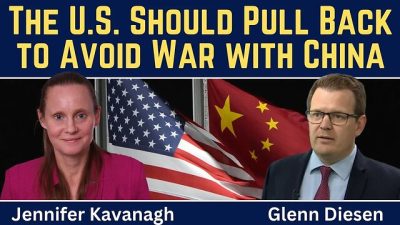
Why the U.S. Should Pull Back From the First Island Chain
or go to
Aletho News Archives – Video-Images
From the Archives
Only 19.7% of Americans agree with US State Dept on Israeli settlements
… Most American adults of voting age don’t appear willing to reject the applicability of international law to Israel’s ongoing colonization of occupied territories in East Jerusalem, the West Bank and Golan Heights. … Full article
Blog Roll
 Aletho News
- British Government Employees Were Fact-Checking the News at the BBC. Nobody Told You.
- Albania on fire: who’s behind the riots?
- Egypt’s Civil Democratic Movement rejects involvement in regional war
- Egypt collaborates with Israel to build ‘Green Rafah’ project over erased Palestinian city
- Rising fuel prices and shortages have helped drive ongoing protests and rioting in France
- Tokyo protests demand Takaichi’s resignation over support for ‘Israel’
- Jennifer Kavanagh: Why the U.S. Should Pull Back From the First Island Chain
- Yemen denounces international community’s silence on Saudi aggression, siege
- UAE and Saudi Arabia move toward renewed coordination against Sanaa
- How Iran’s two-week retaliatory strikes exposed cracks in US military architecture in Persian Gulf
- If Americans Knew
- More on how Bari Weiss is using CBS on behalf of Israel
- What the UK Is Doing to Pro-Palestine Novelist Sally Rooney Is an Act of Orwellian Villainy
- ‘We will build palaces for Jews in Gaza’: Right-wing activists establish new outpost near border
- ‘You see us burning, you stay silent’: Family’s agony over mother and sons burned to death in Gaza tent
- Israel keeps Palestinian journalist Bushra al-Tawil in isolation for 46 days
- US-Israel integration plan puts US military tech in Israel’s hands
- Israeli Strike Burns Gaza Mother Alive in Front of Toddler, ‘Without Generating Any Headlines’
- ‘The Israel Experience with Mike Huckabee’: The Ambassador’s Family Sells Trips to Israel
- As Gazans carry out mass burial, food insecurity is getting worse – Daily Update
- Israeli rabbi permits occupiers to steal Palestinian olive harvest in West Bank
- No Tricks Zone
- Predictions Made By Renowned Climate Proifessor Over Past Decades Have Been Proven To Be Poor
- New Study Suggests Large Regions Of The Pacific Ocean Have Been Cooling For The Last 80 Years
- Germany’s Green Energy Debacle: High Energy Costs Force Kahla Porzellan to Close After 182 Years!
- New Study: 50 Years Of The Most Aggressive ‘Net Zero’ Policies Can Only Affect The Global Climate By 0.03°C
- US September “Heat” Was No Record…Many Records Set Decades Ago
- Latest European Green Energy Debacle; Portugal’s Largest Flagship Solar Park Insolvent!
- Green Energy Debacle: German Expert Professor Fritz Vahrenholt Warns Of Severe Economic And Social Consequences
- Two More Paleo Reconstructions Affirm Meters-Higher Sea Levels Across Ireland, Brazil 7000-6000 Years Ago
- New Study: Earth And Venus Surface Warmth Largely Explained By Convection And Lapse Rate, Not CO2 Or Radiation
- 2025 Nature Paper Claiming Worsening Global Drought Gets RETRACTED …Heavily Flawed

