If this document had been published sooner, it could have dramatically changed the course of the war by exposing the true face of the “moderate rebels” — and potentially saved tens of thousands of lives. That didn’t happen, and no reason has been given by the Intercept for its delay.
On Tuesday, the Interceptpublished a hitherto unknown document from the trove of National Security Administration (NSA) documents leaked by Edward Snowden over three years ago. The document was notable as it shed light on the early days of the Syrian conflict and the fact that, for the past six years, so-called “revolutionary” groups aimed at toppling Syrian President Bashar al-Assad have largely acted as proxies for foreign governments pushing regime change.
The document explicitly reveals that an attack led by the Free Syrian Army (FSA), which was intended to mark the anniversary of the 2011 “uprising” that sparked the Syrian conflict, was directed by a Saudi prince. The document proves, in essence, that the armed opposition in Syria – from the earlier years of the conflict – was under the direct command of foreign governments pushing for regime change.
An NSA graphic released by The Intercept outlines Saudi involvement in organizing and supplying Syrian opposition forces for attacks on Syria’s civilian infrastructure.
According to the document, Saudi Prince Salman bin Sultan had ordered the FSA to “light up Damascus” and “flatten” the city’s civilian airport. The Saudis had also “sent 120 tons of explosives/weapons to opposition forces” for the operation. The Saudis, as the document notes, were “very pleased” with the outcome, which claimed at least 60 lives.
The implications of the NSA document are significant. It offers the clearest proof, in the form of official U.S. government documents, detailing the direct relationship between the armed Syrian opposition and foreign governments, and exposing the fact that this relationship existed much earlier than the mainstream narrative on the conflict had previously suggested.
However, the Intercept article regarding the document is unusual for several reasons. First, the report inaccurately claims that the attack launched at the Saudis’ behest did not result in any confirmed casualties. Second, it states that the 2011 uprising in Syria was an organic, “peaceful” movement that led the Syrian government to wage “an open war against their own people” — a narrative that has since been debunked.
Yet, the largest oversight of all is the article’s failure to mention the U.S.’ role in funding the Free Syrian Army, as well as the CIA’s well-documented role in training the FSA and pumping tons of weapons into Syria in order to foment and exacerbate the conflict in its early days. In light of the NSA document’s revelation that the U.S. had been given advance notice of the planned FSA attack – on a civilian target, no less – Washington’s decision to let it proceed clearly suggests that the U.S. was involved in and well aware of the Saudi directives to the FSA. However, the Intercept piece chooses not to mention this crucial context.
Intercept’s three-plus year delay in releasing document
Perhaps even more troubling than the article’s failure to mention the CIA’s well-documented role in backing the Free Syrian Army, now exposed as a proxy force following orders from the Saudi royal family, is the fact that the Intercept had access to this document for nearly three-and-a-half years – deciding to publish only now that the Syrian conflict is effectively over and those pushing for regime change have lost. If this document had been published sooner, it could have dramatically changed the course of the war by exposing the true face of the “moderate rebels” — and potentially saved tens of thousands of lives.
That didn’t happen, however, and no reason has been given by the publication for its notable delay. The Intercept has exclusive publishing rights and an exclusive hold on the content of the Snowden leaks, of which this newly released document is a part. Indeed, the Interceptwas founded after the Snowden leaks were made public and its first hires were Glenn Greenwald and Lauren Poitras, the only journalists possessing the full Snowden cache. Those documents now belong to the Intercept’s founder — billionaire eBay founder, — and his for-profit media company, First Look Media.
Examining Omidyar’s connections to the U.S. political establishment offers a plausible reason for the Intercept’s delay in publishing documents so crucial to understanding the situation in Syria. Omidyar was a frequent guest of the Obama White House from 2009 to 2013, garnering more face-to-face visits with Obama during his two terms than did Google’s Eric Schmidt, Facebook’s Mark Zuckerberg, New York Times owner Arthur Sulzberger and even fellow tech billionaire turned major media owner, Jeff Bezos.
Omidyar also directly co-invested with the U.S. State Department, via USAID and the National Endowment for Democracy (NED), in opposition groups that played a key role in overthrowing Ukraine’s democratically elected government in 2014 – a U.S.-brokered regime-change operation that shares some notable similarities with the Syrian conflict. His investments with USAID have continued since the Intercept’s founding, helping fund the NGO’s more recent overseas programs aimed at “advancing U.S. national security interests” abroad.
Also worth noting is the fact that PayPal, of which Omidyar is a major owner, has allegedly been implicated in several of the still-withheld NSA documents for its business relationship with the NSA and its role in the agency’s mass spying program. In addition, former Intercept writers have asserted that Omidyar was “shockingly disinterested in the actual journalism” of the paper, suggesting that the Intercept was created explicitly to delay the release of damaging documents from the Snowden cache until deemed acceptable to the U.S. political establishment and others who stood to lose face were the entire cache to have been made public.
Indeed, another interesting coincidence supporting this thesis is the fact that the Intercept published this latest piece only after the U.S. State Department itself began to report more honestly on the nature of these so-called “rebels.” A day before the Intercept’s story on Syrian “rebels” and the Saudis, the U.S. State Department – for the first time – admitted that “moderate” rebels in Syria had previously used chemical weapons, a charge it had categorically denied for years in order to facilitate laying the blame for any and all chemical weapons attacks in Syria on the Syrian government.
In other words, the Intercept released the document, which effectively destroys Washington’s “moderate rebels” narrative with its own internal documents, only after the U.S. government itself began to unravel that very same narrative.
The Intercept did not respond to MintPress News’ request for comment regarding the timing of the document’s release.
Omidyar’s connection to U.S. regime-change efforts abroad may also explain why the Intercept – until now, that is – has consistently given voice to journalists who have echoed the U.S. establishment regarding the Syrian conflict.
For instance, Murtaza Hussain – the author of this latest Intercept piece – has written numerous stories downplaying the terrorist and Wahhabist elements of the Syrian “rebels.” In the last two years, Hussain has written pieces portraying known Al-Qaeda propagandists, such as Bilal Abdul Kareem, and Al-Qaeda-linked organizations, such as the White Helmets, in an overwhelmingly positive light, failing to mention in both cases the significant evidence tying these entities to known terrorist groups. In another piece, published last August, Hussain gave voice to al-Nusra Front leadership in a lengthy interview that largely whitewashed the group’s Wahhabist leanings and links to terrorist acts in Syria.
Last September, on Twitter, Hussain asserted that Saudi Arabia’s funding of armed factions was not necessarily “good” but that “there is little to indicate they contribute to terrorism.” That last statement has been thoroughly debunked for years, but most recently by Hussain’s own piece on the newly released NSA document.
Hussain is by no means the only Intercept writer who has taken such a pro-opposition stance regarding Syria. A recentIntercept piece on Syria, published in September, committed glaring factual errors on basic facts about the war, while also mistranslating a speech given by Assad so as to link him to American white nationalists. In addition, the paper recently hired Maryam Saleh, a journalist who has called Shia Muslims “dogs” and has taken to Twitter in recent months to downplay the role of the U.S. coalition in airstrikes in Syria. She also has ties to the U.S.-financed propaganda group Kafranbel Media Center, which has close relations with the terrorist group Ahrar al-Sham.
For a paper ostensibly dedicated to “fearless, adversarial” journalism, it is strange that the Intercept gives voice to journalists who echo the U.S. position regarding the Syrian war while rarely publishing the work of journalists who have challenged prevailing Western narratives on that war — journalists who, as the Intercept itself recently revealed, have been right all along regarding the myth of the Syrian “moderate rebel.” Yet, given Omidyar’s political connections and the paper’s handling of the Snowden cache, this unfortunate decision is unsurprising.
As the countdown begins for the trial in a Manhattan federal court next week of the Turkish-Iranian millionaire gold trader Reza Zarrab over violations of US sanctions against Iran, Turkey is hardening its stance. President Recep Erdogan has said that Turkey cannot be prosecuted in a fake court. (See my article in Asia Times, Gold dealer’s testimony puts Erdogan on shaky ground.)
Importantly, on Friday, the Istanbul Chief Prosecutor’s Office issued an arrest warrant for a former top CIA official Graham Fuller alleging his involvement in the failed coup attempt in Turkey in July last year. The Turkish security is apparently in possession of information that Fuller was in the country during the coup attempt on July 15 and abruptly left after the coup failed. Fuller participated in a secret meeting of the coup plotters on July 15-16, which was held in the Buyukada Island in the Sea of Marmara off Istanbul.
For the first time, Ankara is inches away from hinting that last year’s was a CIA-sponsored coup attempt, aimed at overthrowing Erdogan’s government. The government has alleged previously that the coup plotters intended to “eliminate” Erdogan.
This is an extremely serious development insofar as Turkey is, in effect, alleging that the spy agency of a major NATO ally, which swears by Article 5 of the alliance’s charter on collective security, actually conspired to overthrow its established government which enjoyed a democratic mandate.
From all indications, Turkish intelligence would have collected a lot of evidence regarding the coup before making the move to seek Fuller’s arrest. At least some of the evidence would also have been provided by friendly countries such as Russia and Iran. We will never know whether the Russian and Iranian intelligence are in possession of hard information pointing at CIA involvement in the coup attempt in Turkey, but the possibility cannot be ruled out. The Iranian Foreign Minister Mohammed Zarif was constantly interacting telephonically with his Turkish counterpart through the fateful night of the coup attempt when things were on razor’s edge.
Ankara announced on Friday that Turkish Foreign Minister Mevlut Cavusoglu will be attending the NATO Foreign Ministers’ meeting in Brussels on December 5-6. Cavusoglu is sure to bump into US Secretary of State Rex Tillerson. One can only wish to be a fly on the wall at the NATO Hqs. Indeed, if the US plan is to leverage the Zarrab case to pressure Turkey to change course in its foreign policies and revert to its cold-war era role as the West’s junior partner in the region, it may boomarang. Turkey may be preparing to go on the offensive.
Make no mistake, Turkey will follow up on the arrest warrant for Fuller. Fuller was a mentor of the controversial Islamist preacher Fetullah Gulen. According to Turkish reports, Fuller had recommended Gulen’s application for the Green Card, which in turn enabled the latter to live in exile in the US for almost two decades after he fled Turkey in 1998. Turkish intelligence keeps a close tab on Gulen’s activities Ankara has often hinted that Gulen is actively in contact with the US establishment.
If Erdogan wants to hit the Americans hard, he won’t have to look beyond next-door Syria. Erdogan’s key advisor Ibrahim Kalin has written in the pro-government Sabah newspaper today that with the defeat of ISIS, the US has no justification to support the Syrian Kurds. To quote Kalin,
This question was discussed during a recent phone call between President Recep Tayyip Erdogan and U.S. President Donald Trump on Nov. 24. Trump’s response was affirmative, adding that the huge military support the U.S. is providing to the YPG should have ended before. His statement was contradicted only a few days later by the Pentagon.
There is an implicit warning here that Turkey is drawing a red line. Kalin disclosed in the article that Pentagon is using the pictures of Kurdish women fighters to “romanticize” the US-Kurdish alliance. Kalin wrote, “[It is] a useful instrument to sell propaganda to Western audiences, but an affront to the female body and personality. Among the many ironies of this policy, this one is stunning: America’s best ally in Syria is a Marxist-Leninist terrorist organization that fights against Turkey, a key U.S. ally, and seeks autonomy and eventual independence in Syria.”
The Turkish intelligence has got through to the chief spokesman of the US-backed Kuridsh alliance (known as the Syrian Democratic Front) Talal Silo who has “defected” to Turkey recently. In an interview with the Anadolu news agency today, Silo has spilt the beans, exposing the Pentagon’s nefarious activities in Syria that threaten Turkish national security interests. The transcript of the interview is here.
At first, American officials couldn’t believe it. In 1993, the Israelis began pressuring the Clinton administration to view Iran as the greatest global threat. Only a short time earlier, in the 1980s, Israel had been cooperating with the Iranians militarily and selling them weapons to fight Iraq in the Iran-Iraq War.
Back then, the Israelis were Iran’s best lobbyists in Washington, pushing the Reagan administration to talk to Iran, to sell arms to Iran, and even to ignore Iran’s tough talk on Israel. In that process, Israel was aided by a group of staunchly pro-Israeli officials within the Reagan administration whom we now know as the neoconservatives.
In 1981, just months after Iran had held 52 American diplomatic personnel hostage for 444 days, senior State Department officials Robert McFarlane and Paul Wolfowitz were advocating on behalf of the Israeli desire to sell Iran weapons. That initiative, which was continued by McFarlane when he became President Reagan’s National Security Advisor, ultimately led to the Iran-Contra scandal of 1986 when Reagan’s secret approval of U.S. arms shipments to Iran became public.
Yet, even in the wake of that scandal and the end of the Iran-Iraq War in 1988, the neoconservatives who remained influential under Reagan’s successor, President George H.W. Bush, pressed ahead with the goal of getting the U.S. to warm its relations with Iran. Iraq’s defeat at the hands of the U.S. military and its allies in the Persian Gulf War of 1990-91 further reduced the Arab threat to Israel’s security and encouraged more thinking about a possible U.S.-Iranian détente.
The Bush-I administration’s 1991 “National Security Strategy of the United States” said the U.S. was open to “an improved relationship with Iran,” a country that a 1991 National Intelligence Estimate said was “turning away from revolutionary excesses . . . toward more conventional behavior.”
However, in 1993, with the Clinton administration in power, the Israelis changed their tune, urging the U.S. government to find Iran lurking behind every terrorist attack, every conflict and every threat.
There appear to have been several factors leading to this Israeli switch – from the fact that the Cold War was over and thus Arab states that had relied on Soviet weaponry were weakened; that Iran-backed Hezbollah was challenging Israel’s military occupation of southern Lebanon; and that Israel could no longer profit from Iran’s desperate need for weapons (with the war with Iraq over and Iran’s treasury depleted) while the Arab oil states offered a more lucrative opportunity for both geopolitical and financial gain.
Hooked on the Money
Israeli leadership had found the billions of dollars from arms sales to Iran useful in maintaining Israel’s large military/intelligence infrastructure as well as Israel’s development of Jewish settlements inside Palestinian territories on the West Bank. With that cash source gone, Israel began recalculating its longstanding Periphery Strategy, which had called for countering Arab pressure from close-in states by cultivating relations with non-Arab regional powers on the periphery, such as Iran and Turkey.
There were also two other seismic events that altered the geopolitical landscape. The Cold War was over and Saddam Hussein’s Iraq had been humiliated in the Persian Gulf War. While the Israelis saw both events as positive, there were unintended consequences. The end of the Cold War meant the exit of the Soviet Union from the Middle East: that left Israel’s traditional Arab enemies even more enfeebled and the U.S. government less worried about losing influence in the oil-rich region. Iran also emerged as relatively stronger than Iraq due to Iraq’s failed invasion of Iran and its catastrophic defeat after its invasion of Kuwait.
Israel’s 1992 elections also brought Yitzhak Rabin, Shimon Peres and the Labor Party to power, raising the possibility of finally reaching a peace accord with the Palestinians and thus the possibility of more normalized relations with the Arab world. In turn, that raised the potential for more lucrative arrangements with oil-rich sheikdoms by, in effect, renting out the Israel Lobby to the Sunni-ruled Gulf states so they could push their historic conflict with the Shiites whose power base was Iran.
“There was a feeling in Israel that because of the end of the Cold War, relations with the U.S. were cooling and we needed some new glue for the alliance,” Efraim Inbar of the Begin-Sadat Center told Trita Parsi. “And the new glue was radical Islam.”
But it was a very selective kind of radical Islam: not the kind Saudi Arabia was financing and exporting through Wahhabi fundamentalism and violent jihadists like those in Al Qaeda, but Iran’s radical Shiite Islam. Selling Iran as the number one global terror threat gave birth to a new Middle East enemy that replaced the Soviet Union and reinflated Israel’s value to the U.S. in the region. “Iran,” Inbar went on to explain, “was radical Islam.”
A New Alliance
For the first time, an alliance between Israel, Saudi Arabia and the United States became possible with Iran as the designated enemy. The Israeli-Saudi relationship has evolved mostly in secret over the past couple of decades but has popped into view in recent years as Prime Minister Benjamin Netanyahu and his inner circle have emphasized the common interests – especially animosity toward Iran – that they share with Saudi Arabia.
Netanyahu has recently referred to this Israeli-Saudi alliance when he said that Iran was driving Israel into cooperative arrangements with what he called “the modern Sunni states.” He referred to “a new alliance between Israel and Islamic states. … The good news is that the other guys are getting together with Israel as never before. It is something that I would have never expected in my lifetime.”
Nine months ago, Netanyahu delivered the same message when he said “for the first time in my lifetime, and for the first time in the life of my country, Arab countries in the region do not see Israel as an enemy, but, increasingly, as an ally.”
Though the Israeli-Saudi relationship is rarely spoken of out loud, Israeli Energy Minister Yuval Steinitz admitted recently that Israel “has ties that are . . . partly covert with many Muslim and Arab countries.” Saudi Arabia was the only one he specifically named. According to Reuters, he said those ties are fueled by “common concerns over Iran.”
But there are other foundations for this relationship. For years, Saudi Arabia sought to buy influence in Washington’s policy circles regarding the Middle East but was largely unsuccessful because Israel had cornered that market and Israel’s influential American supporters demonized lobbyists, academics and others who took Saudi money. Eventually, it became clear to Saudi Arabia that it made more sense to rent out Israel’s sophisticated lobbying apparatus rather than to fight it.
Investigative journalist Robert Parry reported that Saudi money helped seal this Israel-Saudi alliance, with the Saudis giving Israel billions of dollars and Israel reciprocating by giving Saudi Arabia added influence in Washington.
But Official Washington was surprised in the 1990s when Israel’s turnabout began — and Iran went from being a misunderstood nation tilting toward moderation to the world’s leading sponsor of terrorism. Despite some bewilderment, U.S. policymakers soon readjusted their rhetoric as the legendary Israeli influence operations carried the day. Shiite Iran became the new terror threat, even after the 9/11 attacks that were organized by Al Qaeda, a Sunni fundamentalist group associated with Saudi Arabia.
The Islamic State
The gap between the facts on the ground – the recognition that Al Qaeda and Islamic State remain the real chief terror threats from radical Islam – and the propaganda of principally blaming Iran for terrorism has led to a quandary for U.S./Israeli propagandists. They want to focus Americans’ fury on Iran and its allies, Syria and Hezbollah, but it is Saudi-and-Gulf-connected terror groups, such as Al Qaeda and Islamic State, that were chopping off heads of innocents and sponsoring terrorist attacks in the U.S. and Europe.
That disconnected reality explains why America’s response to the emergence of the Islamic State can best be characterized as confused and bizarre. Though the Obama administration claimed it was taken by surprise by the Islamic State’s emergence in Iraq and Syria, it really wasn’t. Rather, policymakers had sought to persuade the American public on the need for a “regime change” conflict in Syria, an Iranian ally. This strategy went back years.
A WikiLeaks-released cable dated Dec. 13, 2006, and written by the charge d’affaires of the U.S. embassy in Damascus to the Secretary of State recommended that the U.S. “coordinate more closely with” Egypt and Saudi Arabia in a policy to weaken President Bashar al-Assad’s government in Syria and “to play on Sunni fears of Iranian influence.” The cable also recognized that Islamist extremists were “certainly a long-term threat” to the Syrian government.
Over the years, there was little change in this inconvenient truth that jihadists were playing a crucial role in achieving these geopolitical goals. For instance, in a December 2009 cable, then Secretary of State Hillary Clinton stated that “Saudi Arabia remains a critical financial support base for al-Qaeda, the Taliban . . . and other terrorist groups.”
By Aug. 12, 2012, the U.S. government knew explicitly that Islamic extremists were the engine in the Syrian insurgency. A classified Defense Intelligence Agency Information Intelligence Report unambiguously declares that “The salafist [sic], the Muslim Brotherhood, and AQI [al-Qaeda in Iraq, later ISIS and the Islamic State] are the major forces driving the insurgency in Syria.”
Section 8.C. of the report astonishingly predicts that “If the situation unravels there is the possibility of establishing a declared or undeclared salafist principality in eastern Syria.” Section 8.D.1. of the report goes on specifically to say that “ISI could also declare an Islamic State through its union with other terrorist organizations in Iraq and Syria.”
So, the U.S. government knew that the Islamic extremists drove the Syrian insurgency that Washington and its regional allies were supporting. U.S. intelligence analysts also had a surprisingly good idea what the possible outcome of that support was.
Yet, to advance the regional goals of the Israeli-Saudi tandem – i.e., the overthrow of the Syrian government because of its ties to Iran – the U.S. government was, in effect, supporting the very terrorists the war on terror was meant to eradicate.
Selling Al Qaeda
At times, senior Israeli officials made clear their preferences for Sunni extremists over more moderate Arabs associated with Shiite-ruled Iran. For instance, in September 2013, then-Israeli Ambassador to the United States Michael Oren told the Jerusalem Post that Israel favored the Sunni extremists over Syria’s largely secular President Bashar al-Assad.
“The greatest danger to Israel is by the strategic arc that extends from Tehran, to Damascus to Beirut. And we saw the Assad regime as the keystone in that arc,” Oren said in the interview. “We always wanted Bashar Assad to go, we always preferred the bad guys who weren’t backed by Iran to the bad guys who were backed by Iran.” He said this was the case even if the “bad guys” were affiliated with Al Qaeda.
Oren reiterated this position in June 2014 at an Aspen Institute conference. Speaking as a former ambassador, Oren said Israel would even prefer a victory by the Islamic State, which was then massacring captured Iraqi soldiers and beheading Westerners, than the continuation of the Iranian-backed Assad in Syria.
“From Israel’s perspective, if there’s got to be an evil that’s got to prevail, let the Sunni evil prevail,” said Oren, who is now a member of the Knesset and part of Netanyahu’s government.
Other senior Israelis have expressed similar sentiments. Sima Shine, who is in charge of Iran for Israel’s Ministry of Strategic Affairs, urged Assad’s removal even if that might turn Syria over to extremists. “The ‘devil we know’ is worse than the devil we don’t,” she said in June 2013. “If Bashar remains in power, that would be a huge achievement for Iran.”
So, in 2014, when Islamic State jihadists advanced through Syria and Iraq and knocked on the door of Lebanon, their success should not have come as a surprise to President Obama and other U.S. policymakers. Today’s Iraq, Syria and Lebanon have in common that they are Iran’s three principal allies in the region.
In other words, the Islamic State’s interests largely corresponded to those of Israel, Saudi Arabia and the U.S.: isolating and weakening Iran. Only the Islamic State’s shocking excesses of videotaped beheadings of Americans and other captives – as well as its military successes inside Iraq – forced President Obama’s hand in committing U.S. forces to stop the Islamic State onslaught.
Obsessed with Assad
Still, America has long been bent on removing Assad from Syria. The coincidence of Islamic State and American interests in this regard is revealed in section 8.C of the DIA report: “there is the possibility of establishing a declared or undeclared salafist principality in eastern Syria (Hasaka and Der Zor), and this is exactly what the supporting powers to the opposition want, in order to isolate the Syrian regime, which is considered the strategic depth of the Shia expansion (Iraq and Iran).”
So, the Islamic State’s advance into this region was consistent with American (and more to the point, Israeli and Saudi) interests because these Sunni extremists would block the supply lines from Iran to Lebanon’s Hezbollah. Thus, initially at least, the U.S. government acquiesced to the Islamic State and Al Qaeda’s Nusra Front taking the lead in damaging or destroying Iran’s allies in Syria.
And Iran suspected as much. According to Iran expert Trita Parsi, the Iranians believed that the initial relaxed approach by the U.S. government toward the Islamic State and Al Qaeda’s Nusra Front was because those militants were the point of the spear against pro-Iranian Shiite influences in not only Syria but Iraq and Lebanon as well.
So, the Saudi government provided the “clandestine financial and logistic support to Isis and other radical groups in the region,” according to a leaked Hillary Clinton email on Sept. 17, 2014.
Less than a month later, on Oct. 2, 2014, Vice President Biden told a seminar at Harvard’s Kennedy School that “the Saudis, the emirates … poured hundreds of millions of dollars and tens of thousands of tons of military weapons into anyone who would fight against Assad except that the people who were being supplied were Al Nusra and Al Qaeda and the extremist elements of jihadis.”
The DIA report also named the Gulf States as among the “supporting powers” of the Syrian opposition. And at a May 2015 meeting between President Obama and the Princes of the Gulf Cooperation Council, according to David Ignatius of the Washington Post, “Obama and other US officials urged Gulf leaders who are funding the opposition to keep control of their clients, so that a post-Assad regime isn’t controlled by extremists from the Islamic State or al-Qaeda.”
However, with the Israel lobby redirecting Official Washington’s ire toward Iran, more political space was created for these Saudi-connected terror groups to carry out the regime change missions in Syria and elsewhere.
But the Syrian “regime change” strategy didn’t work. With help from Iran and Hezbollah and Russia’s intervention in 2015, Assad and his army not only survived but routed the Islamic State, Al Qaeda’s Nusra and other jihadists from major urban strongholds. Instead of Iran losing an ally in the region, Iran emerged with a stronger alliance and greater influence.
This setback, however, has not changed the Israeli-Saudi priorities; it has only made them more intense. As the outcome in Syria became more apparent, the anti-Iran gun sight pivoted to Lebanon. The recent confusing events in Lebanon, like the earlier ones in Syria, are best made sense of by looking through the gun barrel that is targeted on Iran.
On Nov. 4, after being summoned to Saudi Arabia, Lebanese Prime Minister Saad al-Hariri unexpectedly and mysteriously resigned. Hariri’s resignation came just one day after a meeting in Beirut with Ali Akbar Velayati, a senior foreign policy advisor to Iran’s Supreme Leader Ayatollah Khamenei, that was reportedly very positive. Velayati praised Hariri and reaffirmed Iran’s support for his coalition government.
Yet, a day later, speaking from Saudi Arabia, Hariri claimed his resignation was catalyzed by fear of an Iranian-Hezbollah assassination. But the Lebanese army said “it had not uncovered any plans for assassinations in Lebanon.” Neither had the army. So, why resign?
The clue may be provided by Saudi State Minister for Gulf Affairs, Thamer al-Sabhan, who expressed Saudi Arabia’s desire for “toppling Hizbullah.” He promised that “The coming developments will definitely be astonishing.” He said the desire was not just his own, and that people “will see what will happen in the coming days.”
The Saudis said Hariri resigned because Hezbollah had “hijacked” his coalition government. Al-Sabhan called Hezbollah “the Party of Satan.”
In Lebanon, there was the suspicion that Hariri was held under house arrest. On Nov. 10, President Aoun told a meeting of foreign ambassadors that Hariri had been “kidnapped.”
Now, having finally returned to Lebanon after a French intervention brought him to Paris, Hariri met with President Aoun who asked him “to temporarily suspend submitting [his resignation] and to put it on hold ahead of further consultations on the reasons for it.” Hariri agreed.
Israel seems to have applauded Saudi Arabia’s Lebanese action and reaffirmed the Iranian motivation behind it. Prime Minister Netanyahu said that “The resignation of Lebanese Prime Minister Hariri and his statements are a wake-up call for the international community to act against Iranian aggression.”
Netanyahu also made a rare public acknowledgement of the Israeli-Saudi alliance when he said that Iran was driving Israel into cooperative arrangements with what he called “the modern Sunni states,” referring to “a new alliance between Israel and Islamic states.” According to reporting by Israel’s Channel 10, a leaked classified cable from the Israeli foreign ministry to Israeli ambassadors reveals that Israel ordered them to support Saudi Arabia’s efforts and to rally support for Hariri’s resignation.
Iran has also suggested that President Trump and the United States approve of this Lebanese intervention. The resignation of the Lebanese Prime Minister came days after Trump’s son-in-law Jared Kushner visited Saudi Arabia on a trip that was not made known publicly.
Yemen’s Tragedy
While this new alliance took aim at Iran by targeting Assad in Syria and Hezbollah in Lebanon, it also has targeted a Shiite spin-off sect, the Houthis in Yemen. Since 2015, the Saudis have been bombing and blockading Yemen, the Middle East’s poorest country. But on Nov. 5, Saudi Arabia expressed outrage after intercepting a ballistic missile fired by Houthi forces in Yemen toward Riyadh. The Saudis accused Iran of providing the missile and ordering the attack – and called this an “act of war” by Iran and Hezbollah.
General Mohammad Ali Jafari, the commander of the Iranian Revolutionary Guards, called the charge against Iran “baseless,” as did Iran’s ambassador to the United Nations, Gholamali Khoshroo. Even Saudi officials were calling the missile a Yemeni Burqan 2H missile when it was intercepted. The Houthis said they fired the missile in response to the long-running Saudi bombardment that included a recent attack that killed 26 people.
Despite these denials of Iranian responsibility and the context of Saudi Arabia’s air war, U.S. Ambassador to the United Nations. Nikki Haley called on the U.N. to hold Iran accountable for violating U.N. Security Council resolutions by supplying the missile. She called on the U.N. to take “necessary action” against Iran.
The U.S. government has consistently rationalized the Saudi bombardment of Yemen as necessary to thwart Iranian influence in the Persian Gulf. U.S. accusations about Iran allegedly supplying the Houthis with weapons hang precariously on an “assessment” that Iran has used fishing boats to smuggle weapons into Yemen.
The Houthis also are allied with former President Ali Abdullah Saleh who maintains control over the army, so the Houthis could get all the weapons they need from local arms supplies, including military bases stocked with American-made weapons.
And just as Iran does not substantially arm the Houthis, so it does not control them. In fact, they have proven to be beyond Tehran’s efforts to influence them. In 2014, the Iranians specifically discouraged the Houthis from capturing the Yemeni capital, Sanaa. However, the Houthis captured the city anyway, demonstrating Iran’s lack of control.
A U.S. intelligence official told The Huffington Post that “It is wrong to think of the Houthis as a proxy force for Iran.” Yemen specialist Gabriele vom Bruck has called Iran’s influence over the Houthis “trivial.” She said the Houthis want to be independent, not controlled by Iran: “I don’t think the Iranians have influence in their decision-making.” To the extent that Iran is involved in Yemen at all, that involvement came as a result of the devastating Saudi air war.
Dating back to the Obama administration, the U.S. government has made the Saudi aerial bombardment of Yemen possible. The U.S. refuels the Saudi bombers in flight, supplies the bombs and provides targeting intelligence.
This U.S. complicity in what is widely regarded as a humanitarian catastrophe has continued into the Trump administration. A White House statement as recently as Nov. 24 reaffirmed U.S. support for Saudi Arabia, declaring: “We remain committed to supporting Saudi Arabia and all our Gulf partners against the Iranian Islamic Revolutionary Guard Corps’ aggression and blatant violations of international law. Backed by the Iranian Islamic Revolutionary Guard Corps, the Houthi rebels have used destabilizing missile systems to target Saudi Arabia.”
The statement again reveals, not only the alliance with Saudi Arabia and the silence about its devastating bombing attacks, but the strategy of turning Yemen’s human tragedy into another excuse to blame Iran. The Iranian foreign ministry said the White House statement “clearly and without question proves America’s participation and responsibility in the atrocities committed by Saudi Arabia in Yemen”.
Bahrain & Qatar
Washington’s Saudi-Israeli-supplied blinders on the Middle East carry over to other regional conflicts, too. For instance, in 2011, protesters in Bahrain demanded a true constitutional monarchy, the resignation of the Prime Minister, greater civil liberties and a real elected parliament. Though Bahrain has a parliament, it is actually governed by the U.S.-backed dictator, King Hamad ibn Isa Al Khalifa, whose family has ruled Bahrain for over 200 years. The prime minister, the king’s uncle, is the longest reigning prime minister in the world, in power now for nearly 40 years.
Bahrain’s population is about 70 percent Shiite, though the ruling family, the government, the army and the police are all Sunni. The Shia have long been victims of discrimination. And the government maintains its control through repression, including the use of torture. Bahrain is located between Sunni Saudi Arabia and Shiite Iran and is seen by the U.S. as a strategically located check on Iranian influence and power.
Though the Obama administration touted itself as a big proponent of the “Arab Spring” and its promised democratization, Washington sided with the Bahraini dictators against the majority of the Bahraini people.
Days after mass arrests and beatings of protesters, Chairman of the Joint Chiefs of Staff, Admiral Mike Mullen, went through with his planned visit to Bahrain where he reaffirmed the U.S.’s strong commitment to its military relationship with Bahrain and called Bahrain’s response to the protests “very measured.” Mullen stressed the U.S.-Bahrain “partnership” and “friendship.”
On the same day, Secretary of Defense Robert Gates also gave full support to the Khalifa dictatorship. The U.S. continued to support the regime and to call for “stability” and “reform”: two words that are code for standing by dictatorships.
To help put down the protests in Bahrain, 1,000 Saudi troops invaded Bahrain across a causeway that connects the countries. The Obama administration remained silent.
Qatar also has suffered under the new Saudi-Israeli alliance because Qatar has pursued a more independent foreign policy than Saudi Arabia likes and now faces a Saudi-led siege as a consequence. Former British diplomat Alastair Crooke explained that Qatar’s principal sin is seeking peaceful coexistence with Iran.
When Washington asked Saudi Arabia to make reasonable proposals for the termination of the siege, Saudi Arabia included the demand that Qatar break all ties with Iran.
In other words, many of the most important events of the past several years are best explained as attempts to weaken Iran by weakening its proxies or allies or by setting up situations that appear to implicate Iran to justify hostility toward Iran.
A problem, however, has been that the major terrorist groups that have infuriated the American public are not Iranian-linked Shiites but rather Saudi-connected fundamentalist Sunnis. Still, the claim that “Iran is the chief sponsor of terrorism” has become a rote and routine refrain from both Republicans and Democrats – as well as the U.S. mainstream media.
Much as Russia now gets blamed for every negative turn in Western democracies, Iran is the all-purpose villain whenever anything goes wrong in the Middle East. Yet, to understand these conflicts and crises, it is best to view them through the perspective of the hostility that the Saudi-Israeli alliance directs toward Iran and the acquiescence of U.S. governments, regardless of which party is in power.
Now that Syria and its allies in the Axis of Resistance have done the world a favour by destroying most of the West’s terror proxies in Syria, the Canadian narrative is falling apart.
In 2016, Prime Minister Trudeau described the terrorists in this manner:
“The so-called Islamic State are terrorists, criminals, thugs, murderers of innocents and children and there’s a lot of labels for them.”[1]
He was right that there are a lot of labels for them. But some labels have been conspicuously absent from the Canadian narrative, and these are the most accurate of all: “proxies”, “assets”, “strategic assets”, “allies”.
These “criminals, thugs, and murderers” are also Canada’s proxies in the Middle East and beyond, and the Canadian government needs to take ownership for its criminality.
Canada’s Public Safety Minister, Ralph Goodale, for his part, recently claimed that chances for rehabilitating these people are “pretty remote”, and that pursuing charges against these people is “difficult”.[2]
Conspicuously absent from Goodale’s explanation of why it is difficult to prosecute these individuals is the previously mentioned stumbling block. If the terrorists are Canada’s assets, as they are, then prosecuting them would necessarily reveal the government’s guilt.
Consider the case of Swedish national Bherlin Gildo.[3] In 2015, Gildo’s terror trial in the U.K. collapsed because the British intelligence agency M16 was supporting the same terrorists that Gildo was reportedly fighting for.
The Canadian government’s web of criminal war propaganda is unraveling at the seams. If the press was free, and not an appendage of the government’s criminal apparatus of deception, more Canadians might be aware of this.
Foreign Ministry spokeswoman Maria Zakharova (MZ below) believes the “presence of ISIS in Syria is coming to an end” – maybe so but the US-supported terrorist threat in the country remains, not ending as long as Washington wants war, not peace.
MZ stressed that US-led forces “provid(e) cover to the extremists, ISIS in particular.” Surprisingly, the BBC reported their evacuation from Raqqa under US-led “supervision.”
Russia’s Defense Ministry accused Washington of supporting ISIS and other terrorists while claiming to be combating them.
“(N)ot only (did US-led aerial operations refuse) to launch strikes on the terrorists, but also created obstacles for the Russian Aerospace Forces as they tried to attack the targets in the specified area,” MZ explained.
Russian operations are key to Syria’s liberating struggle – Washington’s rage for endless war and regime change the greatest obstacle.
MZ: “I would like to digress and speak from the heart for a moment. I will say it in plain Russian without any professional jargon.”
“It’s about (Washington) providing cover to the terrorist militants. We provide numbers and facts. We talk about trends in fighting terrorism, and we analyze how the militants and terrorists were withdrawn, shielded and emboldened by the US-led coalition.”
This type straight talk is absent in the West, the BBC report a rare exception, nothing from US media on what’s going on – supporting US aggression, blaming victims for its high crimes.
MZ criticized Defense Secretary James Mattis’ Big Lie – claiming US forces in Syria have UN permission to be there. No such permission exists, no Security Council authorization.
Americans and their rogue allies are hostile invaders, aggressors, massacring civilians, destroying vital infrastructure, pretending to be combating terrorists they support.
Washington “intends to hold part of Syrian territory for as long as (it) wish(es). The goal behind this approach is to achieve the desired settlement result by force,” said MZ – aiming to oust Assad and destroy the country’s sovereignty.
Moscow is following events in Lebanon, in the wake of PM Saad Hariri’s forced resignation and detention under house arrest in Riyadh.
On Friday, Lebanese Foreign Minister Gebran Bassil met with Sergey Lavrov in Moscow.
“Russia’s position on Lebanon remains unchanged. We strongly support the sovereignty, independence and territorial integrity of this friendly country and we believe that the Lebanese people should resolve all issues on their national agenda on their own, and we are against any outside interference that threatens to upset the existing political and religious balance in Lebanon,” said MZ.
US-led NATO troops are cooperating with ISIS in northern Afghanistan, MZ explained, “transporting” them aboard “unidentified helicopters… providing them with weapons…”
“Once again, this raises questions about the true aims of the foreign military presence in Afghanistan,” MZ stressed.
She commented on increasing opium production in the country. A UN Office on Drugs and Crime (UNODC) said it nearly doubled since last year.
Pre-9/11, the Taliban eliminated most of it. Production flourishes in areas under US occupation. ISIS fighters sell it to raise revenues.
“The opiate industry in Afghanistan has become a key source for fueling terrorist activities, which further destabilizes that country and beyond,” said MZ.
Russophobia is active in Madrid, regime officials falsely accusing Moscow of involvement in Catalonia’s declaration of independence.
“Remarks by Spanish Foreign Minister Alfonso Dastis that Russia allegedly seeks to weaken Spain are particularly dismaying,” said MZ.
She blasted his spurious accusation, “picked up from dubious sources,” she said.
Along with other issues, MZ commented on Russia’s lower house State Duma legislation regarding foreign media in the country – creating a legal framework for responding to Washington forcing RT America to register as a foreign agent.
Russia was “forced to… reply to the openly repressive (US) actions,” MZ explained.
US hostility toward Russia is greater than any previous time in memory, risking conflict between the world’s dominant nuclear powers, a potential doomsday agenda Washington appears to be pursuing.
-###-
Stephen Lendman can be reached at lendmanstephen@sbcglobal.net.
What a disastrous past week it’s been for Saudi Arabia’s international public relations. It’s hard to imagine how it could possibly become more ignominious or cringe making for the House of Saud.
But of course, how could it be otherwise? When the oil-rich kingdom is run by a father-and-son clique, cosseted by venal super-wealth, and ruled by patronage, pampered by cowering flunkies. In addition, obsessed with an obscurantist Wahhabi sectarian hatred, and to cap it all, indulged by an ignorant American president who himself shares dynastic family ambitions.
Last week’s roll call of PR disasters included the Syrian peace process getting underway in earnest, in spite of Saudi efforts to derail. Secondly, Lebanon appears to have stabilized politically with the return of its Prime Minister Saad Hariri, again in spite of Saudi attempts to sabotage the government in Beirut. And thirdly, most shamefully, the shocking images of emaciated children in Yemen have shown the world the sickening reality of the Saudi-led blockade on that war-stricken country.
Let’s start with the tale of two summits. While Russian President Vladimir Putin was last week hosting his Syrian, Iranian and Turkish counterparts in the Black Sea city of Sochi in a major diplomatic boost for a peaceful end to the Syrian war, at the same time the Saudi rulers were convening something lackluster and frankly, irrelevant, by comparison.
The Saudis held a summit in Riyadh for the so-called Syrian “opposition” comprising the discredited political talking heads of sundry terror groups that have ravaged Syria for the past nearly seven years. Disgracefully, the UN envoy Staffan de Mistura was present in a vain bid to lend some ersatz credibility to the terrorist apologists.
Putin, and Iran’s Hassan Rouhani and Turkey’s Recep Tayyip Erdogan joined political forces to push for a comprehensive peace settlement in Syria “determined by the Syrian people alone without external interference”. Whereas at the Saudi conference of has-been Syrian opposition figures, who have been living a charmed life in exile in Saudi Arabia, there were the tired-old, futile calls for Syrian President Bashar al-Assad to quit as leader.
With the Syrian War near over and with Assad’s state forces dominant over the foreign-backed insurgents, no-one can take the demand for Assad to stand down as serious. It’s a pipe-dream that the Saudis still keep puffing on. Not even Washington and its NATO allies bother to make this demand seriously any more.
In a nutshell, the Saudi rulers are seen to be left holding the putrid remnants of their defeated regime-change intrigue in Syria.
Moving on to the debacle over Lebanon. Again, Saudi machinations were seen here to have turned pear-shaped. After nearly two weeks of trying to arm-twist Lebanese premier Saad Hariri to resign and thereby collapse the coalition government in Beirut with Shia group Hezbollah, Hariri returned last week to his country.
In the meantime, Lebanon has rallied across sectarian lines to unite against Saudi interference – the exact opposite of what the Saudi rulers were agitating for. The whole Saudi-inspired attempt to sabotage Lebanese politics and even incite a sectarian war in the country has ended up only strengthening the country and in particular elevating Hezbollah as a defender of the nation’s sovereignty.
The Saudi paymaster had wanted Sunni politician Saad Hariri to resign as prime minister. His resignation was broadcast on Saudi television on November 4 after Hariri had been summoned to Riyadh and where he inexplicably stayed for the next two weeks. According to the Saudi-inspired script, Hariri said his life was in danger from an assassination plot by Hezbollah and its Shia ally Iran. Hezbollah and Iran scoffed at that claim as ridiculous. Lebanese President Michel Aoun, from the Christian constituency, also dismissed Hariri’s sensational claims.
Last week when Hariri returned to Lebanon, he abruptly reversed his resignation decision, saying now that he would remain in the prime minister’s post. The bizarre images of Hariri looking relaxed at a military parade in Beirut marking Lebanon’s independence day last Wednesday were a stupendous rebuttal of Saudi-orchestrated fear-mongering that this was a man whose life was purportedly under threat.
The Saudi reckless attempts at destabilizing Lebanon not only spectacularly backfired. Their interference in the sovereign affairs of Lebanon has earned the Saudis the scorn of Lebanese and Arab people across the entire region.
As if those PR cock-ups weren’t bad enough, then the world was shocked by images out of Yemen showing skeletal children starving to death from the Saudi blockade on the country. Also, caught on the hook of Saudi barbarity were the US and Britain which have been supplying the Saudi regime with weapons and logistics in its nearly three-year war on the poorest nation of the Arab region.
The Saudis imposed a total sea, air and land blockade on Yemen on November 6 following a ballistic missile attack near the Saudi capital by Houthi rebels from Yemeni territory. The Houthis say they are taking the war to Saudi Arabia because of the latter’s aerial bombing campaign which has targeted civilians. For the Saudis to respond by imposing collective punishment through a blockade on vital aid entering into Yemen is a gross violation of humanitarian law – a war crime.
Nearly two weeks of this total blockade provoked the UN and other international aid agencies to issue dire warnings that millions of Yemenis are facing starvation. So bad is the international image of the Saudis that the US State Department was motivated to urge its client regime to relent on the suffering it was inflicting. At the end of last week, the Saudi rulers claimed that they were lifting the blockade on Yemen’s airports and sea ports. The UN and aid agencies still said the dubious Saudi lifting of blockade would not alleviate the suffering.
How could any country preside over such a week of horrible public relations? What is it about the Saudi rulers that make them so incorrigibly incompetent, so barbaric and so self-defeating?
Several factors combine to make the Saudi rulers a perfect shit-storm.
The House of Saud is a family-run crony dynasty. That’s not new. But over the past year or so, the present rulers have consolidated absolute power to a father-and-son clique, headed by ailing King Salman (82) and the precocious 32-year-old Crown Prince Mohammad bin Salman. These scions of intoxicating hyper-wealth live in an ivory tower within an ivory tower.
The Saudi system of governance never had accountability except within its own arcane crony inner-circle. Now it has even less accountability. It’s therefore not hard to imagine how the Saudi rulers are prone to making ever-more foolish foreign policy calculations. The war on Yemen was “masterminded” by the ambitious, insecure Crown Prince trying to prove his mettle, when he probably never had any competence to begin with. The guy probably reads intricate regional politics through the prism of one of his puerile computer games.
Secondly, the Saudi rulers, present and past, are guided by an obsessive sectarian Wahhabi hatred towards Shia Islam. All policy decisions are made out of an irrational abhorrence towards Shia Iran, and any ally of Iran, from Hezbollah to Syria. The reasons for this obsessive hatred are rooted in an obscurantist religious belief that Shia Islam is “heretical”. That antipathy is also fueled by an insecure sense of envy and nemesis that Iran’s relatively progressive politics are more legitimate and appealing to the masses in the Middle East than the feudalist monarchy of the Saudis. In any case, to construct foreign policy relations on the basis of a Medieval-like worldview is inevitably problematic, to say the least, in the 21st Century.
A third reason why the Saudis are so incorrigibly inept is because the rulers are indulged by American and European governments and the Western media. Admittedly, some Western media outlets have belatedly given some coverage to the horror inflicted on Yemen.
Nevertheless, the media coverage is still shamefully muted considering the scale of suffering and crimes perpetrated. We are talking about a genocide unfolding in Yemen imposed by the Saudi rulers with the support of their American and British patrons. Yet in spite of this utter barbarity, Western media remain relatively mute. Contrast the Western media reporting on Yemen with the hysterical coverage they were giving to the Syrian city of Aleppo last year when the Syrian army and Russian forces were moving in to liberate that city from a siege by foreign-backed militants.
Western indulgence of the Saudis – in the form of low-key hypocritical media coverage – emboldens these despots to embark on their reckless and ruinous schemes.
None is more to blame for Western indulgence than the British and American governments who have plied the Saudi regime with billions of dollars-worth of warplanes and bombs over the past three years in the war on Yemen. Despite the evidence of war crimes against civilians, Washington and London maintain the despicable, risible fiction that all is ethical and legal.
Topping the Western indulgence of the Saudi despots is US President Donald Trump and his businessman son-in-law Jared Kushner, who is his unelected “top aide” on Middle Eastern affairs. Every recent PR disaster by the Saudis has been encouraged and approved by Trump who seems to run the White House as if it were a family business dynasty. Both Trump and Kushner are regarded as having very limited knowledge about history and geopolitics. Dumb and Dumber, in short.
Trump’s dispatch of 36-year-old gormless Kushner to delve into Middle East affairs and to pander to the whims of Saudi Crown Prince Mohammad bin Salman is certainly a major factor in why the House of Saud keeps making foreign policy like operating a wrecking ball.
When House of Trump pairs up with House of Saud, no wonder then that it’s a super-sized PR fiasco.
For the 330,000 dead souls of Syria it may be small comfort that the bloody conflict in their homeland is drawing to a close, finally, but it is brilliant news nonetheless.
Although there has been a struggle against terrorism on Syrian soil, the struggle was quintessentially geopolitical. The decades-long US agenda – at least, dating back to the invasion of Iraq in 2003 – was at the core of it. That agenda, which sucked in regional and extra-regional powers, has conclusively failed. Therefore, it is the regional settlement that becomes crucial at this stage.
Peacemaking makes strange bedfellows because protagonists are jockeying for position to secure their interests. The trilateral summit in Sochi between Russia, Iran and Turkey on Wednesday can be regarded as a celebratory event insofar as Russia and Iran have not only ‘won’ the Syrian war but also cemented the ‘defection’ of Turkey to their side. The locus of Middle East politics itself has shifted. This is one thing.
Equally, Russian diplomacy has effectively ‘neutralized’ Saudi Arabia and encouraged that country to ‘sanitize’ the Syrian opposition groups who are under its influence and nudge them toward swallowing the bitter pill and drop their persistent pre-condition that President Bashar al-Assad cannot be part of any solution to the Syrian problem.
With Qatar and Jordan having already moved to a ‘neutral position’ on their own accord in the recent months – each for its own reasons of self-interest – and with Egypt all along being fully behind the Russian leadership, there is no regional state that is any longer in the business of prolonging the fratricidal war by putting up proxy groups.
Except, of course, Israel. But then, Israel is a small country and non-Muslim and lacks the clout to influence the prevailing winds or to create new facts on the ground in Syria. The Russian President Vladimir Putin who spoke to all key regional leaders and (US President Donald Trump) on Tuesday night in a flurry of ‘telephone diplomacy’ pointedly ignored Israeli PM Benjamin Netanyahu who then had to initiate a request to the Kremlin to solicit a briefing by Putin. (Putin graciously obliged.) But it was a signal of displeasure to ‘Bibi’ from the Kremlin as well as a warning to behave responsibly in the period ahead.
Added to the Saudi back-tracking in Lebanon, Israel has been virtually put out of business. Besides, the fact of the matter is that ISIS has been defeated and the Syrian army controls over 98 percent of territory (according to Russian estimates.) There is already talk of a winding down of the Russian military presence in Syria before the end of the year.
So, how will the post-conflict scenario look in Syria? The Sochi summit provided some signposts. There are five main ‘takeaways’.
Turkey has a deal with Russia and Iran to accept Assad’s continuance as leader through the transition – and even beyond (more of that below) – and in return, President Erdogan scored a major victory in keeping the Kurds from inclusion in the settlement.
The troika – Russia, Iran and Turkey – will be in the driving seat to shepherd the Syrian parties to the negotiating table in Geneva where the UN will notionally preside over the talks. The three countries will decide the participants for the upcoming Syrian Dialogue to be held in Sochi in early December to discuss a constitution and deliberate on the broad contours of a settlement.
The troika will also continue to be the ‘guarantor powers’ ensuring the ceasefire and will coordinate the maintenance of security within Syria through the uncertain period ahead. But the so-called ‘de-escalation zones’ as such will be an interim measure, which will be disbanded once the transition is complete. That means, there is no scope for external powers to carve out ‘spheres of influence’ on Syrian territory.
A US withdrawal from Syria becomes inevitable, no matter what Defence Secretary James Mattis might say or not. In fact, an open-ended US military presence (such as in Afghanistan) will be possible only through the establishment of a puppet government in Syria, which is inconceivable.
Russia has emerged as the Master of Ceremonies. This is not at all surprising since Russia is the only power on earth which has networking with all protagonists within Syria, in the region and internationally. The Russians displayed a masterly performance in optimally conducting ‘coercive diplomacy’. It is an incredible feat that they entered the Syrian conflict only in September 2015 but turned the tide of the war within a short period of time, went on to crush the ISIS, and consolidated Assad’s position as the unassailable future leader – all within a matter of two years flat – and are now putting together the nuts and bolts of a settlement almost suo moto, while also carrying along the ‘losers’ in the war and altogether eschewing triumphalism.
Trump himself appears to be on board Putin’s settlement formula, which is of a unitary Syrian state and a democratically government that comes out of UN-supervised elections in which all Syrians (including Assad) can contest. (To jog memory, the Trump-Putin statement on Syria after their meeting in Da Nang even made a reference to Assad.)
Indeed, there are grey areas still. The most important one involves the continued presence of the Islamic Revolutionary Guards, the militia supported by Iran and Hezbollah who have been the real source of strength on the ground for the Syrian government. But it is unrealistic to expect the Syrian army to handle the security all by itself through the delicate period of transition. There are terrorist groups present on Syrian soil, as the massive attack in Damascus today shows.
The bottom line is that the above becomes a non-issue if Assad remains in power because as the democratically elected leader of a sovereign country, it will be his prerogative to seek help from any quarter to strengthen national security. And the plain truth is that there is no credible opposition figure who can rival Assad in a free and fair election in Syria. If anything, the 7-year bloody civil war strengthens Assad’s appeal to the Syrian people cutting across religion or sects as the only bulwark against instability and chaos. To my mind, all that Assad needs is a level playing field in the nature of an inclusive democratic process.
Russia and Iran insisted throughout that it is for the Syrian people to elect or reject candidates in a democratic election. Turkey has now virtually identified with that principled stance. In a very significant remark, Turkish President Recep Erdogan said after the Sochi summit that he does not rule out resuming contacts with Assad in the coming period. The principle that it is simply not for outsiders to prescribe the political future of Syria is only going to get wider regional and international acceptance. In fact, one can visualize even European countries re-establishing ties with Damascus in a near future.
Some of the confusion as to who sets the US policies on Syria may be clearing up. It seems Trump plays an influential role.
This first became discernible when despite the shenanigans of state department functionaries to scuttle a meeting between him and Russian counterpart Vladimir Putin in Danang on November 10 (pleading ‘scheduling difficulty’), the two veterans snatched a few minutes together the next day to be able to sign up on a US-Russian joint statement on Syria stressing an inclusive political solution through free and fair elections under a new constitution.
The very next day, however, senior state department officials began fudging the statement by injecting a dose of poison into it – by hinting at a continued US military presence in Syria (echoing an earlier remark by US Defence Secretary James Mattis) and reiterating the archaic demand that President Bashar Al-Assad just cannot be part of even the transition.
Moscow objected promptly to point out that the Trump-Putin statement did not require any annotation. At any rate, Putin touched base with Trump personally exactly 10 days later on November 21 (on the eve of the famous ‘trilateral summit’ in Sochi) where they simply picked up the threads of discussion in Danang.
Once again, they had an amiable conversation. (The Kremlin released an unusually detailed press release, here) Once again, Trump appeared to be clear-headed and purposive about working with Putin to bring the war to an end and to negotiate an inclusive settlement that brought enduring peace. Possibly, Trump senses that there are pockets of resistance within the administration to his line on Syria.
Indeed, on Sunday, the State Department came out with a statement on the upcoming intra-Syrian talks in Geneva. It made no ‘pre-condition’ on Assad and instead acknowledged that the elections under a new constitution “should include the broadest spectrum of Syrian citizens, including all groups with representation and influence on the ground.” Bravo!
Interestingly, it also urged Assad’s government pointedly “to enter into substantive negotiations.” (The Trump-Putin statement in Danang had mentioned Assad by name.) There was absolutely no trace of polemics, rancor or sophistry.
Now the ‘residual’ ambiguity is limited to the US presence in Syria. But here again, a backtracking seems to be under way. The official US position was that 500 American personnel were deployed to Syria to help the Syrian Democratic Forces (read Kurdish militia) to fight the ISIS. But the Pentagon is considering how to acknowledge that the actual number could be 2,000! (Reuters)
However, the good thing is, again, that Trump in a phone call to Turkish President Recep Erdogan on November 24 pledged to “ensure the stability of a unified Syria” and, more importantly, held out the commitment that the US will no longer supply arms to the Syrian Kurdish militia whom the Turks regard as terrorists. Prior to that, Trump had tweeted, “Will be speaking to President Recep Tayyip Erdogan of Turkey this morning about bringing peace to the mess that I inherited in the Middle East. I will get it all done, but what a mistake, in lives and dollars (6 trillion), to be there in the first place!”
Of course, Turkey has now demanded that it expects the US to altogether end its partnership with Syrian Kurds. (Xinhua) To be sure, the US presence in Syria will be wound up, no matter Mattis’ swagger. A commentary today in theJerusalem Post argues persuasively that continued US military presence in Syria really doesn’t make sense – not even for ‘containing’ Iran.
The point is, unless Turkey, Syria and Iraq allowed the US supply lines to the remote northeastern region of Syria, a presence there is impossible to maintain – and all these three countries (plus of course, Iran and Russia) want the US troops to vacate.
The sobriety of the latest US state department statement is also to be attributed to the dramatic shift in the Saudi stance. The Russian presidential envoy on Syria, Alexander Lavrentiev, was present in Riyadh last week (and was received by Crown Prince Mohammed bin Salman) even as Syrian opposition groups congregated there to pick a negotiating team for the Geneva talks. Their new leader Nasr al-Hariri, is a cardiologist by profession. He is a Syrian dissident but not an embittered defector like his predecessor Riyad Hijab, who used to be the Syrian prime minister. Moscow has dealt with Nasr al-Hariri previously.
Undoubtedly the media’s account of Saad Hariri’s ‘forced’ resignation is not the whole story, but how true or untrue is it? As Hariri is a Saudi-US asset, the ‘forced’ resignation seems more like the sacking of a company executive who has not lived up to expectations. Told to step out of office Hariri did what he was told, following through by issuing a Saudi-scripted statement accusing Hezbollah and Iran of sowing discord across the region, and talking of a plot to assassinate him.
In fact, it was Saudi Arabia sowing discord, by blaming Hezbollah and Iran for Hariri’s resignation, with the apparent aim of throwing Lebanon into chaos. Predictably, Netanyahu jumped in immediately, saying the resignation was a call to the ‘international community’ to take action against Iranian aggression but no-one else bought it, not even Lebanon’s Sunni Muslims. Hezbollah reacted calmly and if anyone came out of it badly it was Saudi Arabia. In the Iranian view the removal of Hariri was a plot cooked up by Trump and Crown Prince Muhammad bin Salman.
Hariri himself did not return to Lebanon where he could have defied the Saudis and resumed his position but moved on to France, where he was welcomed by President Macron at the Elysee Palace. Soon after talking to Hariri, Macron was on the phone to Trump, discussing the Iranian ‘threat’ and how to deal with it. According to Lebanon’s President Michel Aoun, Hariri told him he would return to Beirut by Independence Day, November 22, marking the end of the French mandate. The Lebanese parties, including Hezbollah, still regard Hariri as the country’s Prime Minister so how all of this plays after Hariri’s return will be interesting to see.
What lies behind all this? What is the connection between Hariri’s resignation (forced or otherwise) and the other events running concurrently in Saudi Arabia, namely the arrest of some of the most powerful figures in the kingdom and the confiscation of their assets, estimated at about $800 billion? One has to assume there is a connection. It seems far too much of a coincidence for there not to be one.
The claim that the purge of the princes was part of an anti-corruption drive is bunk, seeing that corruption is intrinsic to how the Saudi government operates, domestically and in its foreign policy. If corruption is a cover story, why were these princes removed? Could it be their opposition to Saudi Arabia’s policy failures, in Syria and Yemen, and their opposition to what is now clearly being moved from the drawing board to implementation, a war on Iran, involving the US, Israel and Saudi Arabia? They would hardly be alone in seeing Crown Prince Muhamad bin Salman as reckless, foolhardy and lethally dangerous to the stability of the Saudi kingdom: his accession to the throne they would regard, literally, as a crowning act of folly.
That another war is on the horizon is clear from all the signals coming out of Israel in the past six months. That not just the US but Saudi Arabia will be part of it is obvious. Intermittently, Israel and Saudi Arabia have been pushing for war on Iran for a decade. With the US refusing to bite, to the extent of launching an open military attack, Syria was chosen as the next best target: if the government in Damascus could be destroyed, the strategic alliance between Iran, Syria and Hezbollah would collapse at its central arch. This plan B was partly foiled by the refusal of the UN Security Council, thanks to the vetoes of Russia and China, to sanction an aerial war on Syria along the lines of the assault on Libya. Plan C had to come into effect, reliance on a war of attrition fought by takfiri proxies organised, financed and armed mainly by the US, Saudi Arabia, Qatar, Israel, Britain and France, and coordinated with the assistance of governments ranging from the Balkans to Central Asia. Seven years later Plan C has now ground to a halt. The ‘axis of reaction’ (the US, Israel and Saudi Arabia) has suffered a crushing defeat at the hands of the ‘axis of resistance’ (Iran, Syria and Hezbollah). Russian intervention has been critical, so the victory is Russia’s as well, and a particular humiliation for the US.
This does not end the list of defeats suffered by the ‘axis of reaction.’ Another severe blow has been suffered through the collapse of the Kurdish drive for independence in northern Iraq. Both the US and Israel have assiduously cultivated the Kurds for decades, seeing northern Iraq as a new strategic centre for military and intelligence operations across the Middle East. The US and British ‘no fly’ zone and ‘safe haven’ initiatives of 1990/91 were the first steps in the planned breakup of an Iraq that no longer suited imperial purposes. The invasion of 2003 and the imposition of a constitution dictated by the US, weakening the authority of the central government, led to Kurdish autonomy which, in time, would have been expected to end in independence and a new base for US/Israeli operations across the Middle East.
Even the US was against the referendum called by Masoud Barzani: seeing that it was already getting what it wanted, the referendum would be premature and cause more trouble than it was worth.
This proved to be the case. Turkey and Iran reacted viscerally, ending flights and closing border crossings: the Iraqi army retook Kirkuk and all the territory conquered by the Peshmerga in 2014. Barzani stepped down as president of the KRG: Jalal Talabani, the head of the Patriotic Union of Kurdistan (PUK), had died only recently, leaving the Kurds leaderless and at each other’s throats over who was responsible for this debacle. Iraq is now being reconstituted as a unitary state. The largely Shia Popular Mobilization Forces (PMF) has developed into a powerful annex to the regular army. Moreover, the government in Baghdad has a close working relationship with the government of the Islamic Republic in Tehran.
The paradox of these defeats is that they increase to a critical level the danger of a new attack by the ‘axis of reaction’ on the ‘axis of resistance.’ Russia, Iran, Syria and Hezbollah cannot be allowed to get away with these victories. The Israeli chief of staff, Gabi Eisenkot, hardly needed to say, as he did recently, that there is ‘complete agreement between us and the Kingdom of Saudi Arabia’ on the question of Iran’s spreading influence across the Middle East, or ‘control’ of the region as he put it. Unable to impose its will on one of the poorest countries in the world, Yemen, Saudi Arabia would be of little help on the front line in a war against dangerous targets such as Hezbollah and Iran. But it has money and according to Hasan Nasrallah, has offered to pay Israel billions of dollars for a new war on Hezbollah.
As Israel always has the next war on the drawing board, the central question is ‘when’ rather than ‘if’ it will be launched. In recent months it has held some of the largest-scale land and air exercises in its recent history in preparation for a new war on Hezbollah, including training for fighting in tunnels. It has warned repeatedly over the years that the next time around the ‘Dahiyeh strategy’ will be applied across Lebanon and is busy selling the propaganda package that there really is no Lebanon any more but only a Hezbollah enclave controlled by Iran.
Dahiyeh, of course, is the largely Shia Beirut suburb and urban HQ of Hezbollah that was pulverised from the air in 2006. Given the huge civilian casualties Israel is willing to inflict in the next war, Iran and Syria would be hard pressed to stay out but the moment they intervene, Israel, the US and Saudi Arabia will have their three primal enemies directly in their line of fire. The refusal of the US to withdraw its forces and dismantle its air bases in Syria now that the Islamic State has been ‘defeated’ (if still being used as an American tool) is probably connected with preparation for the coming conflict.
Israel’s existential struggle in the Middle East since 1948 has now reached the point of crisis. Israel may think it has all the time it needs to completely engorge the West Bank but it does not have such a luxury on the regional front. If Iran is stronger now than before the wars on Iraq and Syria, it will be even stronger in two or three years’ time. It has a large standing army, fought an extremely destructive war against Iraq (1980-89), has been deeply involved at the planning and combat level in the defence of Syria and has built up a large arsenal of locally developed short and long-range missiles.
By comparison, Israel has not even fought a regular army since 1973: in 2000 it was driven out of Lebanon by a guerrilla force and when it attempted to retrieve lost ground by launching a new war in 2006 its ground troops proved incapable of taking villages even a few kilometres from the armistice line. Its attacks on Gaza have been onslaughts on a largely defenceless civilian population.
Given that since 1948 its security/insecurity situation has ultimately been based not on diplomacy but on full spectrum military domination from the possession of nuclear weapons down to conventional warfare, Israel cannot allow the current situation of strengthening enemies to continue. Hostile to any kind of diplomatic settlement that would generate a real peace, Israel must go to war. It says it is much stronger and better prepared than in 2006 but so are Hezbollah and Iran. Hezbollah alone has a large stockpile of missiles able to reach any corner of occupied Palestine: Israel’s Iron Dome anti-missile system will stop some of them but not all.
If it does go to war Israel is certainly going to suffer civilian casualties unprecedented in its history but the politicians and generals around Netanyahu will argue that its existential situation will demand these sacrifices. The US would come in behind Israel, but Russia could not be expected to sit by while its diplomatic alliances and strategic assets in the Middle East are destroyed. The commentator Abd al Bari Atwan has warned that such a war would be the most destructive in the region’s history, developing into a global conflict, and has raised the question of whether Israel, having started it, could survive it. This is a truly apocalyptic scenario.
As usual the Palestinians find themselves caught in the middle. Mahmud Abbas is being told to go along with the Trump-Kushner-Israel ‘peace initiative’ or else, even by Saudi Arabia. This would involve Abbas publicly sharing the anti-Iranian, anti-Hezbollah and anti-Shia views of the Saudis at a time he is engaged in a reconciliation process with Hamas, which has refused to take a stand against Hezbollah. Furthermore, several of its senior leaders have recently been in Tehran. For the moment all eyes are on Hariri as he returns to Beirut: how will he explain himself, will he resume his position as Prime Minister and on what terms?
Investigative journalist Gareth Porter has published two exclusives whose import is far greater than may be immediately apparent. They concern Israel’s bombing in 2007 of a supposed nuclear plant secretly built, according to a self-serving US and Israeli narrative, by Syrian leader Bashar Assad.
Although the attack on the “nuclear reactor” occurred a decade ago, there are pressing lessons to be learnt for those analysing current events in Syria.
Porter’s research indicates very strongly that the building that was bombed could not have been a nuclear reactor – and that was clear to experts at the International Atomic Energy Agency (IAEA) even as the story was being promoted uncritically across the western media.
But – and this is the critical information Porter conveys – the IAEA failed to disclose the fact that it was certain the building was not a nuclear plant, allowing the fabricated narrative to be spread unchallenged. It abandoned science to bow instead to political expediency.
The promotion of the bogus story of a nuclear reactor by Israel and key figures in the Bush administration was designed to provide the pretext for an attack on Assad. That, it was hoped, would bring an end to his presidency and drag into the fray the main target – Iran. The Syrian “nuclear reactor” was supposed to be a re-run of the WMD deception, used in 2003 to oust another enemy of the US and Israel’s – Saddam Hussein of Iraq.
It is noteworthy that the fabricated evidence for a nuclear reactor occurred in 2007, a year after Israel’s failure to defeat Hizbullah in Lebanon. The 2006 Lebanon war was itself intended to spread to Syria and lead to Assad’s overthrow, as I explained in my book Israel and the Clash of Civilisations.
It is important to remember that this Israeli-neocon plot against Syria long predated – in fact, in many ways prefigured – the civil war in 2011 that quickly morphed into a proxy war in which the US became a key, if mostly covert, actor.
The left’s Witchfinder General
The relevance of the nuclear reactor deception can be understood in relation to the latest efforts by Guardian columnist George Monbiot (and many others) to discredit prominent figures on the left, including Noam Chomsky and John Pilger, for their caution in making assessments of much more recent events in Syria. Monbiot has attacked them for not joining him in simply assuming that Assad was responsible for a sarin gas attack last April on Khan Sheikhoun, an al-Qaeda stronghold in Idlib province.
Understandably, many on the left have been instinctively wary of rushing to judgment about individual incidents in the Syrian war, and the narratives presented in the western media. The claim that Assad’s government used chemical weapons in Khan Sheikhoun, and earlier in Ghouta, was an obvious boon to those who have spent more than a decade trying to achieve regime change in Syria.
In what has become an ugly habit with Monbiot, and one I have noted before, he has enthusiastically adopted the role of Witchfinder General. Any questioning of evidence, scepticism or simply signs of open-mindedness are enough apparently to justify accusations that one is an Assadist or conspiracy theorist. Giving house room to the doubts of a ballistics expert like Ted Postol of MIT, or an experienced international arms expert like Scott Ritter, or a famous investigative journalist like Seymour Hersh, or a former CIA analyst like Ray McGovern, is apparently proof that one is an atrocity denier or worse.
Inconvenient facts buried
Monbiot’s latest attack was launched at a moment when he obviously felt he was on solid ground. A UN agency, the Organisation for the Prohibition of Chemical Weapons (OPCW), issued a report last month concluding that the 100 people killed and 200 injured in Khan Sheikhoun last April were exposed to sarin. Monbiot argues that the proof is now incontrovertible that Assad was responsible – a position that he, of course, adopted at the outset – and that all other theories have now been decisively discounted by the OPCW.
There are reasons to think that Monbiot is seriously misrepresenting the strength of the OPCW’s findings, as several commentators have observed. Most notably, Robert Parry, another leading investigative journalist, points out that evidence in the report’s annex – the place where inconvenient facts are often buried – appears to blow a large hole in the official story.
Parry notes that the time recorded by the UN of the photo of the chemical weapons attack is more than half an hour *after* some 100 victims had already been admitted to five different hospitals, some of them lengthy drives from the alleged impact site.
But potentially more significant than such troubling inconsistencies are the conclusions of Gareth Porter’s separate investigation into Israel’s bombing of the non-existent Syrian nuclear reactor. That gets to the heart of where Monbiot and many others have gone badly wrong in their certainty about events in Syria.
Extreme naivety
Monbiot has been only too willing to promote as indisputable fact claims made both by highly compromised and unreliable western sources and by supposedly reputable and independent organisations, such as international human rights groups and UN agencies. He, like many others, assumes that the latter can always be relied upon to stand apart from western interests and can therefore be implicitly trusted.
That indicates an extreme naivety or possibly the lack of any experience covering on the ground highly charged conflicts in which western interests are paramount.
I have been based in Israel for nearly two decades and have on several occasions taken to task Human Rights Watch (HRW), one of the world’s most esteemed human rights organisations. I have shown that assessments it has made were patently not rooted in evidence or even credible interpretations of international law but in geopolitical considerations. That was especially true in the case of the month-long fighting between Israel and Hizbullah in 2006. (See here and here.) My concerns about HRW’s work, I later learnt from insiders, were shared in its New York head office, but were silenced by the organisation’s most senior staff.
Nuclear plant deception
But Porter helps shine a light on how even the most reputable international agencies can end up similarly following a script written in Washington and one that rides roughshod over evidence, especially when the interests of the world’s only superpower are at stake. In this case, the deceptions were perpetuated by one of the world’s leading scientific organisations: the International Atomic Energy Agency, which monitors states’ nuclear activities.
Porter reveals that Yousry Abushady, the IAEA’s foremost expert on North Korean nuclear reactors, was able immediately to discount the aerial photographic evidence that the building Israel bombed in 2007 was a nuclear reactor. (Most likely it was a disused missile storage depot.)
The Syrian “nuclear plant”, he noted, could not have been built using North Korean know-how, as was claimed by the US. It lacked all the main features of a North Korean gas-cooled reactor. The photos produced by the Israelis showed a building that, among other things, covered too small an area and was not anywhere near high enough, it had none of the necessary supporting structures, and there was no cooling tower.
Abushady’s assessment was buried by the IAEA, which preferred to let the CIA and the Israelis promote their narrative unchallenged.
Atomic agency’s silence
This was not a one-off failure. In summer 2008, the IAEA visited the area to collect samples. Had the site been a nuclear plant, they could have expected to find nuclear-grade graphite particles everywhere. They found none.
Nonetheless, the IAEA again perpetrated a deception to try to prop up the fictitious US-Israeli narrative.
As was routine, they sent the samples to a variety of laboratories for analysis. None found evidence of any nuclear contamination – apart from one. It identified particles of man-made uranium. The IAEA issued a report giving prominence to this anomalous sample, even though in doing so it violated its own protocols, reports Parry. It could draw such a conclusion only if the results of all the samples matched.
In fact, as one of the three IAEA inspectors who had been present at the site later reported, the sample of uranium did not come from the plant itself, which was clean, but from a changing room nearby. A former IAEA senior inspector, Robert Kelley, told Parry that a “very likely explanation” was that the uranium particles derived from “cross contamination” from clothing worn by the inspectors. This is a problem that had been previously noted by the IAEA in other contexts.
Meanwhile, the IAEA remained silent about its failure to find nuclear-grade graphite in a further nine reports over two years. It referred to this critical issue for the first time in 2011.
Chance for war with Iran
In other words, the IAEA knowingly conspired in a fictitious, entirely non-scientific assessment of the Syrian “nuclear reactor” story, one that neatly served US-Israeli geopolitical interests.
Porter notes that vice-president Dick Cheney “hoped to use the alleged reactor to get President George W Bush to initiate US airstrikes in Syria in the hope of shaking the Syrian-Iranian alliance”.
In fact, Cheney wanted far more sites in Syria hit than the bogus nuclear plant. In his memoirs, the then-secretary of defence, Robert Gates, observed that Cheney was “looking for an opportunity to provoke a war with Iran”.
The Bush administration wanted to find a way to unseat Assad, crush Hizbullah in Lebanon, and isolate and weaken Iran as a way to destroy the so-called “Shia crescent”.
That goal is being actively pursued again by the US today, with Israel and Saudi Arabia leading the way. A former US ambassador to Israel, Dan Shapiro, recently warned that, after their failure to bring down Assad, the Saudis have been trying to switch battlefields to Lebanon, hoping to foment a confrontation between Israel and Hizbullah that would drag in Iran.
Abandoning science
Back in 2007, the IAEA, an agency of scientists, did its bit to assist – or at least not obstruct – US efforts to foster a political case, an entirely unjustified one, for military action against Syria and, very possibly by extension, Iran.
If the IAEA could so abandon its remit and the cause of science to help play politics on behalf of the US, what leads Monbiot to assume that the OPCW, an even more politicised body, is doing any better today?
That is not to say Assad, or at least sections of the Syrian government, could not have carried out the attack on Khan Sheikhoun. But it is to argue that in a matter like this one, where so much is at stake, the evidence must be subjected to rigorous scrutiny, and that critics, especially experts who offer counter-evidence, must be given a fair hearing by the left. It is to argue that, when the case against Assad fits so neatly a long-standing and self-serving western narrative, a default position of scepticism is fully justified. It is to argue that facts, strong as they may seem, can be manipulated even by expert bodies, and therefore due weight needs also to be given to context – including an assessment of motives.
This is not “denialism”, as Monbiot claims. It is a rational strategy adopted by those who object to being railroaded once again – as they were in Iraq and Libya – into catastrophic regime change operations.
Meanwhile, the decision by Monbiot and others to bury their heads in the sands of an official narrative, all the while denouncing anyone who seeks to lift theirs out for a better view, should be understood for what it is: an abnegation of intellectual and moral responsibility for those around the globe who continue to be the victims of western military supremacism.
Chief of Staff of the Iranian Armed Forces Major General Mohammad Baqeri has arrived in the Russian Black Sea resort city of Sochi to attend a tripartite meeting with his Turkish and Russian counterparts.
The sides are scheduled to exchange views about ways to enhance trilateral defense cooperation on Wednesday.
The military brass of Iran, Turkey and Russia will also discuss the latest developments in Syria and trilateral cooperation on the fight against Daesh terrorist group.
The meeting will be held on the same day that Iranian, Russian and Turkish Presidents Hassan Rouhani, Vladimir Putin and Recep Tayyip Erdogan plan to hold talks in Sochi about the Syrian crisis and ways to resolve it.
Iranian Foreign Minister Mohammad Javad Zarif and his Turkish and Russian counterparts Mevlut Cavusoglu and Sergei Lavrov, respectively, held preparatory talks in the southern Turkish city of Antalya on Sunday ahead of the Sochi summit.
Speaking after the meeting, the Iranian foreign minister criticized some countries such as Saudi Arabia for pursuing policies aimed at sowing discord among regional states.
“If they change their methods, they can also be involved in [promoting] regional peace instead of warmongering [policies],” Zarif said.
Iran, Russia and Turkey are acting as the guarantors of a ceasefire in Syria that came during the intra-Syrian talks brokered by the three countries in the Kazakh capital, Astana.
So far, seven rounds of the Astana talks have brought representatives from Syria’s warring sides to the negotiating table in a bid to end the foreign-backed militancy in the Arab country, which broke out in March 2011.
Syrian army soldiers, backed by pro-government fighters from popular defense groups, on Sunday fully liberated the strategic city of al-Bukamal in the country’s eastern province of Dayr al-Zawr and on the border with Iraq from the clutches of Daesh Takfiri terrorist group. The city was the extremist group’s last stronghold in the Arab country.
The spokesman of Iran’s Foreign Ministry has described as “worthless” the closing statement of the latest Arab League foreign ministers’ meeting in Cairo, emphasizing that the statement was “full of lies and distortions.”
“In line with the policies of the Zionist regime [of Israel] to intensify differences in the region and to divert [the attention of] Muslim nations and states away from the continued occupation of Palestine as the main issue of the Islamic Ummah, Saudi Arabia has succeeded through pressure as well as extensive political and propagandistic hue and cry to have a statement that is full of lies and distortions be issued in the name of foreign ministers of the Arab League,” Bahram Qassemi said on Monday.
On Sunday, the Arab League foreign ministers held an extraordinary general meeting in the Egyptian capital at the request of Saudi Arabia. At the end of the meeting, the participants issued a statement accusing Iran of interfering in the internal affairs of the countries in the region and pursuing aggressive policies against Arab states.
Qassemi dismissed the resolution as “worthless” and urged Saudi Arabia to “immediately end its savage aggression” against the Yemeni Arab people so that the Yemeni civilians, particularly women and children, would no longer be affected by the “flames of their spite.”
Iran also calls on Saudi Arabia to stop its policy of exerting pressure on Lebanon, Qatar and the entire Middle East and allow the Bahraini people to find a peaceful solution to the current crisis in the country by removing its forces there, he said.
Qassemi said Iran’s policy was to boost good relations with regional countries, adding that the Islamic Republic had made great efforts to counter terrorism and help resolve regional crises by actively participating in several rounds of peace talks in the Kazakh capital city of Astana on the Syrian conflict and presenting a peace plan for Yemen.
The Iranian spokesperson emphasized that the solution to the regional problems was not to issue such worthless statements but to stop following the policies of the Israeli regime, put an end to bullying and terrorism and accept the demands of regional nations and states.
Saudi policies root cause of regional, world instability: Deputy FM
Meanwhile, Iranian Deputy Foreign Minister for Arab and African Affairs Hossein Jaberi Ansari also on Monday criticized the Arab League statement and said Saudi Arabia’s policies were the root cause of insecurity and instability in the region and the world.
“Saudi Arabia must stop pursuing the Zionist regime’s policies through causing escalation of differences and conflicts in the region and providing extensive support for terrorism and extremism,” Jaberi Ansari added.
He emphasized that regional crises would never be resolved through making false claims, distorting evident realities and publishing statements under the pressure of Saudi Arabia.
The Iranian official urged Riyadh to end its interference in and pressure on Qatar, Lebanon, Iraq and Syria as well as the use of terrorism and extremism as a means.
The Saudi-drafted Arab League’s statement came on the same day that Israeli Energy Minister Yuval Steinitz for the first time revealed that Tel Aviv had covert contacts with Saudi Arabia.
“We have ties that are indeed partly covert with many Muslim and Arab countries and usually [we are] the party that is not ashamed,” Steinitz said in an interview on Army Radio on Sunday.
He added that Saudi Arabia was the side that was interested in hiding its ties with Israel and Tel Aviv had no problem with this.
The US Democratic Party has embraced a transgender agenda that amounts to “the normalization of sadism,” author A.J. Rice has said, warning that radical trans policies would return if the party is allowed to regain power.
Speaking to RT’s America First host Scotty Nell Hughes about his new book, ‘The Curse of the Bearded Lady: How the Trans Mafia Whacked American Sanity’, Rice argued that activists have gained significant influence in schools, medicine, and corporate America while people who questioned the agenda have faced pressure to stay silent.
The author described the “trans mafia” as the sprawling network of people and institutions that have helped the movement gain influence. He singled out parts of academia, wealthy backers, and corporations, and stated that providers of transition-related treatment also have a financial incentive to keep young people in their care indefinitely.
Rice argued that the consequences of these policies ultimately fall on children who are being drawn toward gender-affirming medical treatments and on girls who are expected to share locker rooms or compete in sports with biological males.
He noted that while voters rejected the Democrats’ approach to gender in 2024, the party, which has been “captured by madness,” has since only doubled down and is seeking what is effectively “the normalization of sadism.” … Full report
This site is provided as a research and reference tool. Although we make every reasonable effort to ensure that the information and data provided at this site are useful, accurate, and current, we cannot guarantee that the information and data provided here will be error-free. By using this site, you assume all responsibility for and risk arising from your use of and reliance upon the contents of this site.
This site and the information available through it do not, and are not intended to constitute legal advice. Should you require legal advice, you should consult your own attorney.
Nothing within this site or linked to by this site constitutes investment advice or medical advice.
Materials accessible from or added to this site by third parties, such as comments posted, are strictly the responsibility of the third party who added such materials or made them accessible and we neither endorse nor undertake to control, monitor, edit or assume responsibility for any such third-party material.
The posting of stories, commentaries, reports, documents and links (embedded or otherwise) on this site does not in any way, shape or form, implied or otherwise, necessarily express or suggest endorsement or support of any of such posted material or parts therein.
The word “alleged” is deemed to occur before the word “fraud.” Since the rule of law still applies. To peasants, at least.
Fair Use
This site contains copyrighted material the use of which has not always been specifically authorized by the copyright owner. We are making such material available in our efforts to advance understanding of environmental, political, human rights, economic, democracy, scientific, and social justice issues, etc. We believe this constitutes a ‘fair use’ of any such copyrighted material as provided for in section 107 of the US Copyright Law. In accordance with Title 17 U.S.C. Section 107, the material on this site is distributed without profit to those who have expressed a prior interest in receiving the included information for research and educational purposes. For more info go to: http://www.law.cornell.edu/uscode/17/107.shtml. If you wish to use copyrighted material from this site for purposes of your own that go beyond ‘fair use’, you must obtain permission from the copyright owner.
DMCA Contact
This is information for anyone that wishes to challenge our “fair use” of copyrighted material.
If you are a legal copyright holder or a designated agent for such and you believe that content residing on or accessible through our website infringes a copyright and falls outside the boundaries of “Fair Use”, please send a notice of infringement by contacting atheonews@gmail.com.
We will respond and take necessary action immediately.
If notice is given of an alleged copyright violation we will act expeditiously to remove or disable access to the material(s) in question.
All 3rd party material posted on this website is copyright the respective owners / authors. Aletho News makes no claim of copyright on such material.

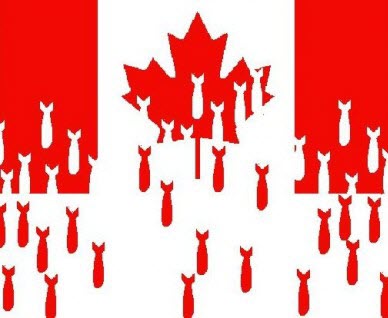
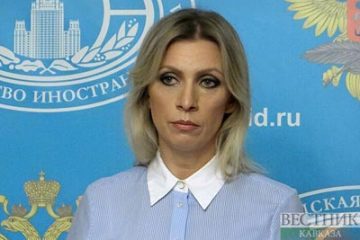 Foreign Ministry spokeswoman Maria Zakharova (MZ below) believes the “presence of ISIS in Syria is coming to an end” – maybe so but the US-supported terrorist threat in the country remains, not ending as long as Washington wants war, not peace.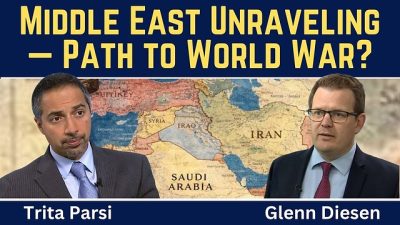

 Aletho News
