Clinton’s Likely DoD Secretary Pick Vows US Troops in Syria to Topple Assad
Sputnik – 22.06.2016
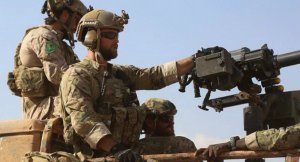
Michele Flournoy, the US civil official predicted by many to head the Pentagon if Democratic frontrunner Hillary Clinton wins the US presidency in November, said she would alter American strategy to battle Daesh by assisting armed militias, called by Washington “moderate rebels,” to crush the legitimate Syrian president Bashar al-Assad.
Speaking at a Center for New American Security (CNAS) think tank conference on Monday, Flournoy, a senior fellow of the organization, urged the US military to put boots on the ground in Syria to assist in toppling the al-Assad government, recently successful in reclaiming large areas of the country from Daesh.
To accelerate the defeat of the legitimate Syrian government, Flournoy introduced the notion of a “no bombing” zone for the moderate rebels. These so-called moderates are widely accepted as being, in reality, the US-backed armed militias that have been tearing the country apart since the beginning of the civil war in 2011.
To justify her hawkish proposals, Flournoy took the traditional path, resorting to the Russian factor. She claimed that Moscow’s engagement since September 2015 in the war, at the invitation of the Syrian government, does not “support the kind of negotiated conditions we would like to get to.”
The “conditions” she was talking about remain unclear, especially in light of positive results brought about by the contribution of international militaries, including Russia, in stripping Daesh in recent months of 45 percent of the Iraqi territories and 20 percent of the Syrian lands it seized in 2014. Currently, the liberation of the crucial cities of Raqqah and Mosul from Daesh is being prepared, and is expected to inflict extensive damage on the extremists, according to Iraqi Foreign Ministry spokesman Ahmad Jamal.
The Pentagon, however, appears to have other plans in mind for Syria and Iraq. According to a CNAS report, prepared in cooperation with an “ISIS Study Group” co-chaired by Flournoy, Washington must “go beyond the current Cessation of Hostilities.” By that, the paper means a so-called no-bomb-zone, which suggests US retaliation against the Assad government, if Damascus continues to resist the American-backed militants. Proposed retaliation measures include airstrikes on “security apparatus facilities in Damascus.”
“If you bomb the folks we support, we will retaliate using standoff means to destroy [Russian] proxy forces, or, in this case, Syrian assets,” Flournoy told Defense One.
At the same time, the report sensibly cautioned against hitting Russian airbases in Syria.
Flournoy, who served as undersecretary of defense for policy during Obama’s first term in office, has consistently criticized the current US-anti Daesh policy, claiming that using an “under-resourced” military to battle extremists in the Middle East, and offering “underdeveloped” political solutions for the crisis has been ineffective, at best.Earlier, she called for increasing the number of combat missions against Daesh, sending more advisors to train Iraqi soldiers and allocating more weapons to Sunni tribes and the Kurds in Iraq. She also called for maintaining the infamously inadequate train-and-equip program that graduated just five moderate rebels, and cost US taxpayers over $500 million.
According to Washington Post columnist David Ignatius, Flournoy is now on the “short, short” list for the job of US Secretary of Defense.
Read more:
How ‘Neocon-Hopeful’ Hillary Clinton Planned to Topple Assad
Russia, U.S. “Losing Patience” With One Another Over Syria
By Brandon Turbeville – Activist Post – June 20, 2016
As the recent standoff between Russian and American jet fighters over Syria still simmers in the headlines, both sides are claiming a loss of patience with the other regarding the support and opposition for Western-backed terrorist forces and the government of Bashar al-Assad.
Not even a week before the standoff, the United States via war criminal and Skull and Bones member John Kerry warned the Russians, Iranians, and the Syrians that U.S. patience is “not infinite.” Notably, Kerry’s comments were more heavily directed at Russia than any other power.
“Russia needs to understand that our patience is not infinite. In fact it is very limited with whether or not [Bashar] al-Assad is going to be held accountable,” Kerry said.
But while the United States claims that its patience is “not infinite,” an interesting point to make since the entire crisis in Syria was the handiwork of the U.S. (perhaps Kerry means “patience with obstructing the U.S. plans for the destruction of Syria?”), Russia is now warning the U.S. that it too is running out of patience.
“It is us, not Americans who are losing patience concerning the situation in Syria. We are fully meeting our commitments and agreements on securing the ceasefire and national reconciliation in Syria,” Head of the Russian General Staff Valery Gerasimov told reporters on Monday.
Gerasimov claims that Russia has been sending coordinates of Russian bombing targets but said that the United States has yet to determine which groups are “moderate” terrorists (aka Syrian “opposition”) and which are extremist terrorists.
“As a result, terrorists are actively restoring their strength and the situation is escalating again,” he said.
In the aftermath of the recent aerial standoff between two nuclear world powers, the rhetoric suggesting patience coming to an end is concerning to say the least. This is particularly the case when one of the parties to hostilities is the initiator of the aggression and the crisis to begin with and one that shows no signs of willingness to back away from its tragic and foolish foreign adventure.
It is time that the United States and NATO cease their obsession with the destruction of Syria not only on moral grounds but also out of self-preservation. If they do not, then it may well be the American people and the rest of the world that suffers the consequences.
Brandon Turbeville is the author of seven books, Codex Alimentarius — The End of Health Freedom, 7 Real Conspiracies, Five Sense Solutions and Dispatches From a Dissident, volume 1 andvolume 2, The Road to Damascus: The Anglo-American Assault on Syria, and The Difference it Makes: 36 Reasons Why Hillary Clinton Should Never Be President.
US Seeks Direct Confrontation with Russia in Syria
By Ulson Gunnar | New Eastern Outlook | June 21, 2016
The US has recently accused Russia of bombing what it calls “US-backed rebels” in southern Syria. CBS News in their article, “Russia ignores warnings, bombs U.S.-backed Syrian rebel group,” would claim:
On Friday, Defense Secretary Ash Carter called out Russia for bombing a Syrian rebel group that’s backed by the U.S.
The attack by Russian fighter bombers on American-backed opposition forces appeared to be deliberate and to ignore repeated U.S. warnings.
More alarming is what the US claimed happened next. CBS News would further claim:
Two American F-18 jet fighters were dispatched to provide air cover for the troops on the ground as they tried to evacuate their casualties. By the time the F-18s arrived, the Russian planes were headed away, but were still close enough to see.
But when the F-18s broke away to refuel, the Russians returned for a second bombing run. Another call went out to the Russian command center in Syria, demanding that the planes wave off.
The crew of an airborne command post tried to contact the Russian pilots directly but got no response. The Su-34s conducted another bombing run, leaving a small number of opposition fighters dead on the ground.
Neither CBS News nor the US Department of Defense ever explained why the US believes it is entitled to send armed militants over the borders and into a sovereign nation, or why it believes a sovereign nation and its allies are not entitled to confront and neutralize them or why US aircraft are entitled to fly over Syrian airspace without the authorization of the Syrian government.
In other words, the US is vocally complaining about its serial violations of international law and norms finally (allegedly) being confronted and put to an end by Russian military forces.
But Did Russia Even Attack America’s Armed Invaders?
Russia however, has denied US accusations. CNN’s article, “Russia denies bombing U.S.-backed Syrian rebels near Jordan border,” states:
Russia’s Defense Ministry denied bombing U.S.-backed Syrian opposition forces in a recent military operation near the Jordanian border, according to a statement released on Sunday.
The Kremlin response comes after U.S. and Russian military officials held a video conference to discuss Thursday’s strikes.
As is characteristic of all US claims regarding its multiple, ongoing foreign acts of military aggression, the most recent row in Syria is heavy on rhetoric and light on evidence. Had Russia attacked armed militants invading Syrian territory, it would have been well within its rights to do so, however it has claimed it hasn’t. The burden of proof is on the US.
Why Would the US Lie About This?
But when one considers a recent US State Department “internal memo” calling for more direct US military action to oust the Syrian government from power, it is clear such a call cannot be answered without an accompanying justification or provocation. It appears that the US-Russian row in southern Syria conveniently constitutes just such a provocation.
CNN’s article, “State Department officials call for U.S. military action against Assad regime,” claims:
More than 50 State Department officials signed an internal memo protesting U.S. policy in Syria, calling for targeted U.S. military strikes against the regime of Bashar al-Assad and urging regime change as the only way to defeat ISIS.
Claiming that US military strikes against the Syrian government, or that “regime change” is the only way to defeat the self-proclaimed Islamic State (IS) is indeed far fetched and is in and of itself a fabricated justification for an otherwise entirely self-serving geopolitical objective the US has set for itself in Syria.
It was US-led “regime change” in Libya in 2011 that has led to the country becoming a bastion for, not against IS and other notorious terrorist groups. Libya, it should be mentioned, has existed in a perpetual state of failure since the 2011 US military intervention, triggering one half of a massive refugee crisis facing the European continent, with no signs of abating any time in the foreseeable future.
In other words, the US desire for “regime change” in Syria will create another Libya, but on a scale larger than that in North Africa, all while compounding the chaos in North Africa further.
Therefore, justifying greater military aggression by the US in Syria appears to be a “hard sell” for American policymakers, media and politicians. Militants in southern Syria were likely designated for this ploy specifically because they have the greatest chance of being separated and distinguished from US-backed militants in northern Syria.
US-backed militants in Syria’s north are described even by the US itself as “intermingled” with extremists including Al Qaeda and even IS and have become increasingly difficult to defend diplomatically and politically as Syrian and Russian forces work on rolling them back.
Undoubtedly US-backed militants in Syria’s south are likewise”intermingled” with overt terrorist groups, but because the conflict in the south has been neglected by not only US and European news agencies, but also Russian and other Eastern news services, there lingers an unwarranted “benefit of the doubt.”
Can Anything Stop US Military Escalation?
Many in America’s foreign policy circles are nostalgic for the days of NATO’s intervention in Yugoslavia where inferior Russian forces were unable to deter NATO aggression and were eventually relegated to a subordinate role in “peacekeeping operations.” At one point, NATO even contemplated striking Russian forces as a means of neutralizing any obstacle to NATO ambitions during the conflict.
It is therefore possible that these same US policymakers envision using what CNN’s article called “stand-off and air weapons” to induce a similar stand-down from Russia before proceeding with and accomplishing their much desired “regime change” in Syria.
However, the Russian military of the 1990’s is not the Russian military of today. The fact that Russia is present and operating in Syria, far beyond the confines of Eastern Europe and its traditional sphere of influence is proof enough of that.
Russia’s performance in Syria alongside Syrian forces is the primary factor in what is now clearly IS’ decline and retreat. Russian air defenses have been deployed across the country and capabilities to confront US and US-allied aggression are clear and present. Since IS had no air forces of any kind, it is clear that Russian air defenses placed in Syria were one part of deterring the sort of US aggression characterized in the recent alleged US State Department memo.
The US would have to rely entirely on the assumption that Russia would rather concede Syria in the face of US military aggression than escalate toward a direct war with the United States.
Creating the conditions both diplomatically and on the ground in Syria to deter US military commanders from following any order to essentially attempt to trigger a war with nuclear-armed Russia is now essential. Raising the stakes for any sort of escalation of US aggression in Syria is also essential.
While the UN seems content with ignoring the serial international crimes of the US as it flaunts sovereign Syrian airspace, violates its borders by sending armed militants over them intent on destabilizing, destroying and overthrowing the Syrian state and presiding over the dismemberment of not only Syria, but the region itself, other international organizations could fill this expanding void.
The Shanghai Cooperation Organisation (SCO), for example, could conceivably put together “peacekeeping” forces of its own, placed along Syria’s borders deterring the transit of armed militants and forcing the hands of both Jordan and Turkey to be exposed in the backing of some of the most toxic militant organizations engaged in Syria’s conflict.
The presence of Chinese, Russian, and even Iranian troops in this capacity could make it clear that no matter what act of aggression the US commits to, Syria’s fate would remain in the hands of its government, its people, and its allies. Tying these efforts into the distribution of aid would hamstring US attempts to hide its war-making behind “humanitarianism.”
Such a move, however, by the SCO would be unprecedented, costly and difficult to coordinate. And because of its unprecedented nature, unforeseen challenges may even make this option a complication rather than an asset toward fending off US aggression and the resolution of the costly ongoing Syrian conflict.
Regardless, it is clear that as IS and other terrorist organizations who have constituted the bulk of what the US regularly refers to as “opposition” beings to collapse, US desperation to conclude the Syrian conflict in its favor (not in favor of Syria or its people) is becoming increasingly palpable.
Another point opponents of US aggression must focus on is the ongoing chaos in Libya, a burning example of where US’s suggested “regime change” in Syria will inevitably lead. US success in Syria will essentially be an extension of Libya’s chaos, bolstering, not serving to “defeat” IS.
Fifty-one Foreign Service Officers Can’t be Wrong
Or can they? More bombs and less talk on Syria
By Philip Giraldi • Unz Review • June 21, 2016
It is ironic that fifty-one U.S. State Department employees, perhaps overly-generously dignified in the media with the title of “diplomats,” have come out in favor of removing a foreign head of state by force. Detailing their opposition to the status quo, the signatories submitted a dissent memo through established Foreign Service channels. The document itself is classified, even though the New York Times and the Wall Street Journal clearly have obtained copies, presumably leaked to them by some of the dissident officers.
The signatories have reportedly demanded “targeted air strikes” and the “judicious use of stand-off and air weapons which would under-gird and drive a more focused and hard-nosed U.S.-led diplomatic process” to bring down the al-Assad government. They justify their dissent by arguing that “The moral rationale for taking steps to end the deaths and suffering in Syria, after five years of brutal war, is evident and unquestionable. The status quo in Syria will continue to present increasingly dire, if not disastrous, humanitarian, diplomatic and terrorism-related challenges.”
The memo describes the Syrian government’s alleged barrel bomb attacks on civilians “the root cause of the instability that continues to grip Syria and the broader region. Crucially, Syria’s Sunni population continues to view the Assad regime as the primary enemy in the conflict. Failure to stem Assad’s flagrant abuses will only bolster the ideological appeal of groups such as (IS), even as they endure tactical setbacks on the battlefield.”
Based on the media leaks though without having seen the actual document, one might nevertheless reasonably conclude that the authors of the memo clearly see Bashar al-Assad as the fons et origo of all the evils currently prevailing in Syria. The intention is to use military force to compel al-Assad to negotiate seriously to dismantle his own government, himself included, a blunt approach that has not necessarily worked very well elsewhere in recent memory. In fact, it has not worked at all. And the assertion that al-Assad is the major problem is, of course, questionable, ignoring as it does ISIS. The memo conveniently leaves out of the reckoning the U.S. role in destabilizing the entire region by invading Iraq and also pushing for regime change in Syria as early as 2003 since that would presumably implicate the signers in counterproductive policies. The Syria Accountability Acts of 2004 and also of 2010, like similar legislation directed against Iran, have resulted in little accountability and have instead actually stifled diplomacy. Congress sought to punish Syria with sanctions for supporting Hezbollah in Lebanon and for its links to Tehran, making any possible improvement in relations problematical. The 2010 Act even called for steps to bring about regime change in Damascus.
Nor is there any consideration of what most Americans might well want to see come out of a new military intervention in the Middle East. Specifically, as Syria in no way threatens the U.S. what is the actual United States national interest in toppling the government in Damascus, apart from some fantastical messianic desire to bring about a peaceable kingdom in the heart of the Arab world through the deployment of American military power. The U.S. would be launching cruise missiles against targets in a country with which Washington is not at war. And being able to bomb Syria does not necessarily mean that Washington will be able to dictate what happens next. Does no one at the State Department remember what happened in Iraq?
The memo also apparently does not address what might happen to the majority Syrian population loyal to the government if and when the regime were to fall to the “rebels.” Attacking and weakening the Syrian military, the presumed target of air attacks, would only make easier a post-al-Assad transition into something even more toxic. Many observers believe that the most radical elements would quickly overpower the alleged moderates that the United States perhaps erroneously believes that it is supporting, leading to even more atrocities directed against religious non-conformists and minority groups. This would include the country’s dwindling number of Christians, who overwhelmingly support the al-Assad regime.
Now consider for a moment who might have been involved in writing this memo. The authors are described by the newspapers that obtained copies of the memo as “mid-level.” That means they are products of the non-diplomacy diplomacy of the George W. Bush and Barack H. Obama presidencies, when the recurrent negotiating tactic in dealing with other countries has almost invariably started with threatening the use of force followed almost immediately by the dispatch of several carrier groups. They probably believe as Madeleine Albright once put it, that we Americans are the indispensable nation, we “see far.” Some of the signatories are undoubtedly Bush era believers in American exceptionalism and global leadership exercised at gunpoint who believe intervention is a national imperative while the Obamaites no doubt see their role as humanitarian, helping oppressed and endangered people of the world who are striving to be free. Both views are delusional from every point of view and do not consider what the people in the countries most affected by American “benevolence” might actually want.
So in short, the ideologically driven signatories probably don’t know a whole lot about traditional diplomacy and would be well advised to read up on Hans Morgenthau’s Politics Among Nations before they open their mouths because overthrowing established governments has consequences, an issue largely avoided by the drafters of the memo as they make no suggestions about what might happen or what must be done after al-Assad and his government disappear.
And then there is the rather embarrassing issue of who the enemy actually is. The suggestion that ISIS is empowered by al-Assad’s survival is a bit of a stretch as the Syrian government and its allies Iran, Hezbollah and Russia are bearing the brunt of the fighting against it and also against al-Qaeda proxy al-Nusrah. And if there is an actual American interest in the conflict it would be to work with those who are enemies of ISIS instead of so-called friends like Turkey and Saudi Arabia that are actually enabling the group.
Of course, willful ignorance about reality is not very important when one has a career to nurture. Can it be that the fifty-one signatories have carefully read the Washington Post and figured out that Hillary Clinton will be our next president? She has promised just what the letter writers are suggesting, a U.S. controlled no-fly zone and aggressive steps that will lead to the removal of al-Assad. As apparent adherents to the Victoria Nuland school of Foreign Policy where one overthrows a government, arranges for new leaders and then threatens concerned neighbors with reprisals, the signatories should fit in quite well with the Clinton regime’s vision of peace through military dominance.
Or if Nuland is not to one’s taste there is also former Obama Ambassador to Syria Robert Ford. The Times, perhaps characteristically, interviews two “experts” on Syria, ex-Ambassador Robert Ford and Andrew Tabler of the Washington Institute for Near Eastern Policy (WINEP). While Ambassador to Syria Ford deliberately sought to provoke the government by meeting with opposition leaders and making public demands for greater democracy. Though his role as ambassador was actually to support American interests, he instead interfered in Syrian politics, speaking openly in support of anti-regime protesters while serving in Damascus in 2010. On one occasion he was pelted with tomatoes and was eventually removed over safety concerns before resigning in 2014 over his demands for a “tougher policy” in Syria. Now he is selling the same kool-aid, regularly appearing on television to urge military action against al-Assad. Tabler, who speaks about frustration over the current Syrian policy, is a standard issue neoconservative. WINEP is a spin-off from the American Israel Public Affairs Committee (AIPAC).
And then there is the small matter of Russia, which is increasingly promoted as the enemy of choice to sustain the threat narrative that excuses American interventions worldwide. The memo indicates that the signatories are not “advocating for a slippery slope that ends in a military confrontation with Russia” even though that is precisely what they are promoting. What would happen when sophisticated Russian air defenses in place in Syria shoot down an attacking U.S. warplane? Russia has indicated that it is willing to consider supporting the replacement of al-Assad as part of an eventual peace settlement but it has also insisted that there has to be stability by way of a transition that permits a recognized government to stay in place to avoid the type of anarchy that would guarantee an ISIS takeover. Apparently the 51 “diplomats” who have been unable to practice much diplomacy in the real world somehow believe that bombing the Syrian government can be accomplished with Moscow sitting idly by, too terrified by Washington’s show of force to respond. It would be a mistake to think that.
It is interesting to note, per the New York Times article, that a reluctant Pentagon has been engaged in push-back against the advocates of deeper involvement in Syria. As ever, it is the Foggy Bottom’s non-combatants with no skin in the game who are the fiercest chair-borne warriors. What the signatories to the memo appear to sidestep is the inevitable conclusion that their recommendations are a reversion to George W. Bush foreign policy at its most pig-shit ignorant. But perhaps it is all old wine in new bottles, particularly if one accepts that the memo might actually be an application letter to join the hawkish Hillary Clinton foreign policy team. Bomb al-Assad to make him agree to our terms. Ignore Russian interests. Don’t worry, it will all work out.
US still aiming to oust Assad, dismember Syria: Analyst
Press TV – June 19, 2016
“The US still has only one motive, which is to oust Assad and convert Syria from a front-line state against Israel into a failed, broken and dismembered state no matter what,” Professor Dennis Etler says.
America’s position on Syria is shrouded in double-speak as Washington has accused Russia of violating the ceasefire while it still calls for Syrian President Bashar al-Assad’s ouster, says Professor Dennis Etler, an American political analyst who has a decades-long interest in international affairs.
Etler, a professor of Anthropology at Cabrillo College in Aptos, California, made the remarks in an interview with Press TV on Sunday, after the Pentagon called on Russia not to target US-backed militants in southern Syria.
US military officials “expressed strong concerns about the attack on the coalition-supported counter-ISIL forces at the At-Tanf garrison, which included forces that are participants in the cessation of hostilities in Syria,” Pentagon Press Secretary Peter Cook said on Saturday, after they held talks with Russian military officials on a video link.
“The Pentagon asks Russia not to bomb US-backed militants in Syria while the State Department calls for US military intervention to oust Assad,” Professor Etler said.
“The two faced nature of US intervention in Syria has been clearly illustrated by recent events. On the one hand they coddle anti-government insurgents who are said to be US trained anti-Daesh militants, while on the other hand John Kerry expresses sympathy for US State Department functionaries who brazenly call for direct US military strikes to help the insurgents overthrow the Assad government. The US position is shrouded in double-speak,” the analyst noted.
Russian airstrikes turned the tide of Syrian battle
“The ineffectual US attacks against Daesh are heralded as the main reason for the setbacks that Takfiri terrorists have recently suffered, totally ignoring the fact that it is Russian airstrikes and Syrian army ground offenses that have turned the tide of battle,” Professor Etler said.
“The false narrative disseminated by the US asserts that it is US backed and trained militants who have been attacking Daesh and inflicting heavy losses on them while the Russian and Syrian government forces have been attacking ‘moderate’ rebel groups supported by the US,” he stated.
“In fact it is the exact opposite. The Russians and Syrians have decimated Daesh while the US has protected anti-government militants who work hand in glove with terrorists of the al-Qaeda affiliated al-Nusra Front. Syrian forces with Russian air support are the ones who have thwarted an al-Nusra offensive against the Syrian city of Aleppo not the US-backed ‘militants’ who are closely integrated with al-Nusra even though the US says its clients are targeting both it and Daesh,” he pointed out.
‘Good’ and ‘bad’ terrorists have one goal
“The US has its fingerprints over all elements of the Syrian opposition, having trained and equipped the various terrorist groups which have morphed into a variety of contending factions often fighting amongst themselves. It is nearly impossible to distinguish between so-called ‘moderate’ opposition groups and other terrorists that have proliferated in both Syria and Iraq,” Professor Etler said.
“This has allowed the US to muddy the waters and declare that there are ‘good’ and ‘bad’ terrorists when in fact they all have the same goal of overthrowing the legitimate government of Syria headed by Bashar al-Assad,” he pointed out.
“The Russian brokered ceasefire that the US signed onto has been breached by US intransigence in continuing to call for the ouster of Assad and the transition to a government that the US deems satisfactory. The recently leaked internal State Department memo signed by 51 mid-level State Department functionaries and endorsed by US Secretary of State John Kerry calls for direct US military intervention in Syria to oust the Syrian government,” he noted.
“This is in direct contravention to the agreement for cessation of hostilities which makes no mention of regime change. To then accuse the Syrians and Russians of breaking the ceasefire for attacking opposition forces that the US wants to use against the Syria government is the height of hypocrisy,” he added.
Is US planning more direct military intervention?
“The State Department memo takes to task the Obama administration’s attempt to mediate the Syrian conflict, but Obama’s policy is more apparent than real. The US media is trying to make it seem that there is internal discord among the foreign policy makers regarding Syria, that there is a ‘war party’ and a ‘peace party,’” Professor Etler said.
“But US policy has always been on a dual track, feigning a desire to achieve a peaceful resolution to the conflict while doing all in its power to inflame and spread it. Now that the Russian and Syrian forces are gaining the upper hand the US is doing everything possible to spread disinformation and outright lies in order to give the US more freedom of action, laying the groundwork for more direct military intervention under a new administration after the upcoming presidential election,” he stated.
“The US will do everything in its power to continue the conflict so that it can send in troops on the ground and launch air strikes against Syrian ground forces after the election,” he noted.
“The US still has only one motive, which is to oust Assad and convert Syria from a front-line state against Israel into a failed, broken and dismembered state no matter what,” the academic concluded.
‘Hillary Clinton: The neoconservative candidate who will make war against Syria’
RT | June 19, 2016
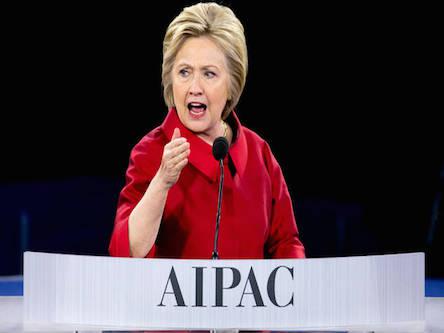
We topple governments in the Middle East that we don’t like and we encourage movements that will help us in this – regardless of how dangerous these allies are, Karen Kwiatkowsky, retired US Air Force officer, told RT.
The US-backed Syrian Democratic Forces, led by Kurdish groups, have entered the town of Manbij after they surrounded ISIS militants there. But at the same time dozens of US State Department officials have urged Barack Obama in a memo to launch air strikes against Bashar al-Assad’s forces, something that would contradict current White House foreign policy.
RT: The memo essentially contradicts Kerry’s earlier attempts to broker peace in Syria. How do you account for this rift at the State Department?
Karen Kwiatkowsky: I think that this administration is running out of time. And it is true that Barack Obama has kind of been a barrier to some of the more aggressive policies that have been emanating from both State Department and the Pentagon. But at the same time, this administration and the life spans of these political appointees, these ambassadors, many of whom signed on to this very aggressive warmongering letter, their life span is limited, they have basically 6 months to go. Very likely they will not retain their appointments in a new administration. Certainly, if Hillary Clinton is elected, I imagine many of these war mongering State Department officials are appointees or friends of Hillary Clinton, people who agree with her approach. So, I do see this as somewhat aimed at engaging politically in the domestic events here in the US. We have an election coming. Clinton is very besieged by many things. But she is the neoconservative candidate. She is the candidate who will make this war, if this war on Assad is to be stepped up. She is the one that will do that and these are her people. And they don’t have a lot of time left.
RT: Do you think that the differences that we’ve seen in the State Department are just there or this is something that is indicative of differences throughout the administration?
KK: This release to the New York Times is a political event. This is aimed at making policy when there is very little time left to make that policy. If you read the letter, it doesn’t offer really any new strategy. And Obama has been accused of having no real strategy. This is not a new strategy; this is not a replacement strategy. This is bomb and ‘show the flag’. And it is being put forth not by the Air Force, not by the Pentagon – who you might presume might know something about fighting. Certainly, we cannot take ground from the air and this is precisely what they are advocating is airstrikes, which have long been proven to be ineffective. That is why I see it as a political thing and not an actual strategy. There is very little strategy there. What they are putting forth won’t work, is known not to work by even the advocates of violence in the Pentagon know that it won’t work. So, it is not a very good solution. Therefore, I have to conclude that it is aimed at politically communicating something. And I find it remarkable and hilarious that this letter was released and put up through the channel for dissent. These 51 warmongering diplomats are dissenters. That is just absolutely spectacular.
RT: Just a few days ago, John Kerry said the US is losing patience with Assad. Does that kind of rhetoric not undermine the peace he’s supposedly trying to broker?
KK: It is typical of John Kerry’s entire approach from the time he has been the Secretary of State. He is trying to walk two different paths and you can’t do that: threatening and negotiating. But the threats are empty. And it is well-known in the region since we have been intervening and interfering and bombing for so long now. The people in the Middle East both are allies and our enemies if you want to consider Assad and Iran as our enemies. All of them know us very well now. They know how we operate; they know to call our bluffs. Our bluffs aren’t bluffs anymore, they are just empty conversation. Kerry hasn’t changed; his policies and approaches have been the same. He is just ineffective. And he is ineffective because our own fundamental policy is not what he says. And it is not what the president says. It is what we actually do. And what we actually do has been reported for years: we topple governments in the Middle East that we don’t like and we encourage movements that will help us in this – regardless of how dangerous or how empty or how incompatible with liberty and our own value system these allies are. And this is why we find ourselves supporting ISIS and fighting with people who are doing terribly destructive things and we can’t say anything bad about them because they are our allies. We’ve got ourselves into this situation; I don’t think it is fair to blame Kerry as an individual. He is representing a system that has no credibility. And certainly you can’t believe a word that is said by an American politician when it comes to what we will and what we won’t do in the Middle East.
‘Deep State’ behind US State Dept. dissent on Syria
By Derek Monroe | RT | June 19, 2016
Last Friday’s release of US State Dept leaked memo featuring its 51 employees presenting dissent on the US Syria policy has rocked the world of American diplomacy.
As retired US Navy Rear Admiral John Kirby, the State Dept spokesman, fielded questions and struggled to contain damage from the revelations, the ripple effect of internal rebellion has spread worldwide.
This event is without precedent as it shows the inner workings of one of the most important departments in the US federal government divided on one of its most important challenges: What to do with Assad’s Syria?
The last time there was internal disagreement in the US State Dept happened in 2003 with several resignations following the Iraq and Afghanistan wars. However, that incident failed to grab the attention of the American public and largely pro-government US media.
The current row represents internal disagreement over the Obama administration’s decision not to attack President Assad’s regime after alleged cease fire violations by Syrian military forces. The anger expressed in the memo carries over from Obama’s 2012 so-called red-line declaration, which threatened an attack on Syria’s military if the latter was to cross the threshold of chemical weapons use.
As there were several documented chemical attacks in the Syrian civil war that brought allegations against both sides, any clear indication as to what side carried out the attacks was blurred. Furthermore the idea of weakening the Assad government by military strikes as favored by the State Dept. dissenters has absolutely no relation to military reality on the ground.
The clean cut conflict between the military and paramilitary forces supporting Assad and the rebels has been transformed into a set of simultaneous proxy wars featuring US-supported rebels, Gulf States supported rebels, Syrian military, US military, Russian military, Hezbollah militia, the Kurds, Jihadists and the Islamic State, to mention a few. The outcome of weakening of the Syrian state due to US attacks as desired by the US State Dept dissenters could lead to ripple effect of consequences that guarantees to destabilize the region even further. Additionally, it could trigger a genocide of the Alawi and other minorities that would most definitely follow the fall of the Assad regime.
As all this was to be carried out in the name of ‘human rights in Syria’, the memo presents the new low in cynical exploitation of human tragedy as a ploy to win political “victory” on the ground. Following this narrative, the rule of Islamic State or Al-Nusra Front (Al-Qaeda) is considered a viable and welcome alternative by the signatories as it removes Syria from the orbit of Russia and Iran’s influence, while sacrificing Syrians on the altar of failed US policy that began with invasion of Iraq in 2003.
What is also ironic is that the part of the US federal government responsible for maintenance of external relations based on carrying out policies rooted in international treaties and laws has now, according to the memo’s signatories, been chastised for following them. It is as if the lesson from 2003 of attacking a government that posed no threat to the US was wasted.
An explanation for this phenomenon was provided in Michael J. Glennon’s 2014 book, “National Security and Double Government.”
In it, Glennon argues that the reason US foreign policy and national security policy doesn’t change regardless of comings and goings of US administrations due to what he terms the “deep state.” The author goes back to the political theory of 19th century English scholar Walter Bagehot who argued in his 1867 book, “The English Constitution” that England of the day had a double government: The official one presented to the public, and an inner one, made up of the elites that make real decisions away from constitutional processes, public scrutiny and media.
Glennon picks up on the idea and makes a thesis that national security bureaucrats, along with intelligence and military elite influenced by money and politics, make decisions regardless of constitutional process or even laws.
Until now the idea of a political class presenting different visions for the country in electoral process has been a cornerstone of US political system that calls itself a representative democracy.
The State Dept memo, together with National Security apparatus’ track record of defacto immunity from any effective oversight, has made this vision nothing more than a mirage.
Saudi repeats call for US strikes on Syrian government
Press TV – June 17, 2016
The Saudi foreign minister has repeated Riyadh’s call on the US to carry out airstrikes against the Syrian government, echoing a similar request by dozens of US diplomats who broke ranks with the White House to push for military action against Damascus.
During a press briefing at the Saudi Embassy in Washington on Friday, Adel al-Jubeir said the Arab monarchy has long been pushing for a US military campaign to overthrow Syrian President Bashar al-Assad.
The Saudi minister added that from the very start of the crisis in Syria, Riyadh has strongly favored “a more robust policy, including air strikes, safe zones, a no fly zone, a no drive zone.”
He went on to say that the kingdom had called for arming Syria’s so-called “moderate opposition” with ground-to-air missiles and reiterated an offer to deploy Saudi special forces as part of any US-led operation against the Damascus government, which has been making back-to-back gains against the Daesh Takfiri group.
Jubeir’s comments came after 51 US State Department officials signed an internal document, known as the “dissent channel cable”, this week, calling for targeted military strikes against the Syrian government.
“Failure to stem Assad’s flagrant abuses will only bolster the ideological appeal of groups such as Daesh, even as they endure tactical setbacks on the battlefield,” reads the cable, critical of US President Barak Obama’s policies towards the Syrian crisis.
The State Department has acknowledged the existence of the cable as confidential diplomatic communication, but did not comment on its contents.
Russia’s reaction
Meanwhile, Russia slammed the so-called internal document and warned that such attempts to oust Assad would not “contribute to a successful fight against terrorism.”
Kremlin spokesman Dmitry Peskov further said that “this could plunge the region into complete chaos.”
Russian Deputy Foreign Minister Mikhail Bogdanov also censured the proposed attacks against Damascus, saying they would be “at odds with the UN resolutions.”
“We need to negotiate and reach a political resolution on the basis of international law, which was agreed upon at the UN Security Council,” Bogdanov added.
The United States and its allies formed a coalition that has been conducting airstrikes against what are said to be Daesh terrorists inside Syria since September 2014 without any authorization from Damascus or a UN mandate. The coalition has repeatedly been accused of targeting and killing civilians. It has also been largely incapable of fulfilling its declared aim of destroying Daesh.
Daesh Takfiri terrorists, who were initially trained by the CIA in Jordan in 2012 to destabilize the Syrian government, are engaged in crimes against humanity in the areas under their control.
Syria has been grappling with a deadly conflict it blames on certain foreign states for over five years. UN special envoy for Syria Staffan de Mistura estimates that over 400,000 people have been killed in the conflict, which has also displaced over half of the Arab country’s pre-war population of about 23 million. The militancy has also taken a heavy toll on the country’s infrastructure.
Russia: US strikes on Assad will plunge Mideast into chaos
Press TV – June 17, 2016
Russia has warned against a call by US State Department officials for strikes against the Syrian government, saying Moscow is opposed to a military solution.
The Kremlin said on Friday such a move would plunge the entire region into complete chaos.
Dozens of State Department officials have signed an internal document that calls for targeted military strikes against the Syrian government, according to the Wall Street Journal.
US Secretary of State John Kerry said on Friday that the internal memo on Syria signed by more than 50 US diplomats is an “important statement” that he would discuss when he gets back to Washington.
“It’s an important statement and I respect the process, very, very much. I will … have a chance to meet with people when I get back,” Kerry told Reuters during a visit in Copenhagen.
The memo is sharply critical of US policy in Syria, calling for military strikes against the Assad government.
An unnamed US official familiar with the document said the internal cable may be an attempt to shape the foreign policy outlook of the next US administration.
“It is not a secret to us that there are political forces in the US who favor a military solution [to the Syrian crisis]. But this is not our method,” Russian Foreign Ministry spokesperson Maria Zakharova said on Friday.
The United States and its allies have been conducting airstrikes against what are said to be Daesh terrorists inside Syria since September 2014 without any authorization from Damascus or a UN mandate.
The attacks have largely failed to fulfill their declared aim of destroying Daesh but killed civilians and targeted the Syrian infrastructure in many cases.
Washington has consistently refused to join forces with Russia in Syria against Daesh ever since Moscow launched its campaign of airstrikes in September last year.
On Thursday, a senior US defense official accused Russia of carrying out airstrikes in southern Syria against US-backed forces.
The accusation came a day after Kerry said the US was losing patience with Russia over its support for the Syrian government.
“Russia needs to understand that our patience is not infinite. In fact it is very limited with whether or not al-Assad is going to be held accountable,” he said.
Responding to those remarks, Russia’s Foreign Minister Sergei Lavrov said he believed the US might hope to use al-Qaeda’s branch in Syria to unseat President Assad’s government.
Lavrov said in St. Petersburg on Thursday that the reluctance of US-backed opposition groups to distance themselves from the Nusra Front has been a major reason behind continuing fighting.
The US could be “playing some kind of game here, and they may want to keep al-Nusra in some form and use it to topple the regime,” Lavrov said.
Russia slaps Israel in the face
By Said Gafurov | Pravda | June 10, 2016
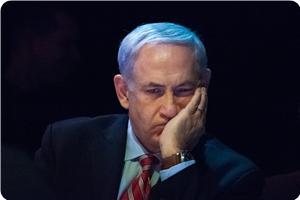
Israeli Prime Minister Benjamin Netanyahu’s recent visit to Moscow and his negotiations with President Putin, for the fourth time this year, has created the impression of failure. Russia and Israel have been developing active cooperation recently in the field of culture, trade and customs and education.
However, Netanyahu’s visit to Moscow does look like a failure from the point of view of foreign policy. In an official statement for the press, President Putin spoke about the “open” and “constructive” nature of the talks with the Israeli PM. In the diplomatic world, though, when negotiations are held in a friendly and even neutral fashion, they usually say that the talks were held “in a friendly atmosphere.” This is something that we have not heard from the Kremlin this time. In other words, there is no understanding between Russian and Israeli leaders.
The main purpose of Netanyahu’s visit to Russia was clearly focused on foreign policy issues, such as the regulation of the crisis in Syria and a possible solution to the Palestinian conflict. Israel sees clearly that the civil war in Syria is ending. Netanyahu’s visit coincided with a remarkable speech that Bashar al-Assad delivered at the opening session of the newly elected parliament. It is obvious that the question of the end of the war and national reconciliation in Syria is a matter of time. What happens afterwards?
The conflict in Syria has created an alliance between Russia, Iran, Syria, and units of Lebanese resistance. As for the latter, it is not only Hezbollah fighters, but also a large number of volunteers from Lebanese secular parties that struggle against Islamic State militants in Syria.
Netanyahu seems to be concerned about the prospect for the new, reunited Syria to appear near Israel. The Israeli Prime Minister is also concerned about the strong influence of Iran in the post-war Syria.
What does President Putin say to all this? Putin delivers a long speech, in which he talks about culture, economy, trade and economic relations, tourism and everything else. As for the Syrian problem, Putin said only two phrases: “We have paid great attention to international issues, and of course, we talked about the complicated situation in the Middle East region, including in Syria.” That’s all.
One shall assume that there is no understanding between Russia and Israel. Russia has ignored Netanyahu’s requirements, for example, to restrict supplies of weapons to Lebanon that Hezbollah fighters could get their hands on. Russia views Hezbollah as one of the most important political parties in Lebanon. Hezbollah is a member of the ruling coalition. Russia follows its principle to supply arms only to legitimate governments. Hezbollah is an important element of the legitimate government of Lebanon. Moscow sees Hezbollah as an essential element of structure of the Middle East.
In addition, Putin reaffirmed Russia’s position for a comprehensive and just settlement of the Palestinian-Israeli conflict and stressed that Russia was ready to act as a mediator. This came as another slap in the face of Israel, because it is the Palestinians who demand the Palestinian issue should be solved by the international community, while Israel insists on bilateral negotiations between Palestine and Israel.
Obama: US Military Engaged in Anti-Terror Operations Across 15 Countries
Sputnik — 13.06.2016
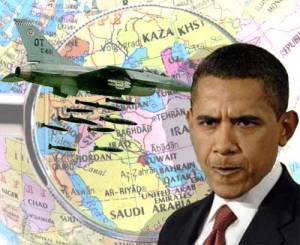 US military personnel are engaged in counterterrorism operations across 15 different countries, President Barack Obama said in a biannual statement to Congress released on Monday.
The letter outlined US military counterrorism operations across the globe in Afghanistan, Iraq, Syria, Turkey, Somalia, Yemen, Djibouti, Libya, Cuba, Niger, Cameroon, the Central African Republic, Egypt, Jordan, and Kosovo. All nations have US combat-equipped personnel deployed for a specific counterterrorism mission.
Obama indicated that that there is no timeline for the war on terrorism, and he will direct “additional measures to protect US citizens and interests” if necessary.
“It is not possible to know at this time the precise scope or the duration of the deployments of US Armed Forces necessary to counter terrorist threats to the United States,” Obama said.
Under the 2001 authorization for use of military force, the US president must update Congress every six months on the military operations against al-Qaeda, the Taliban and associated forces.
Featured Video

Death Spikes & Rising Cancer In Our Youth Explained
or go to
Aletho News Archives – Video-Images
From the Archives
Politicians lie
By Mazin Qumsiyeh | Popular Resistance | August 18, 2013
There is no way to say this truth nicely: Politicians lie. That includes Japanese, American, Egyptian, Israeli, and Palestinian politicians! Is there something more common sense than that? Yet, so many citizens around the world believe their own politicians or wistfully acknowledge lies but think it is part of the job needed to run things. They believe even when politicians contradict themselves blatantly. This phenomenon is rather remarkable. It is a dissonance and disconnect from reality that many seem oblivious to. It is very dangerous because it can lead to accepting rationales for going to war. These can be deadly wars that lead to millions of lives lost as happened in what was called World War 1 and WW2. Even when incredible and declassified evidence abound, politicians continue to lie and old mythologies refuse to die. Here are just a few of the countless lies told to us over the past few decades… continue
Blog Roll
 Aletho News
- RSF military group defects, joins Sudanese army: State media
- Ireland goalkeeper refuses to play ‘Israel’ as squad weighs boycott
- China pushes back against US on Cuba, Iran
- Ukrainian Soldiers, Potential Mercenaries: Have Gun, Will Travel!
- Burnham’s UN debut… A masterclass in British disinformation
- Iran flights continue despite US aviation sanctions
- Global Tipping Points Lead the World Into a State of Entropy
- The day-after at the White House: USA and Xi Jinping
- The Geopolitical Balance in the Red Sea: The UAE Being Displaced by New Players
- Iraqi resistance group vows to stage airport sit-ins over Iran aerial blockade
- If Americans Knew
- Deconstructing Netanyahu’s pants-on-fire UN rant – Daily Update
- Trump betrayed voters with his campaign lies and prioritized a foreign country once he took office
- Netanyahu calls Israel’s war in Gaza ‘opposite of genocide’ in UN speech to near-empty hall
- Settler Kidnappings: Torture, Sexual Abuse and Terrorisation of Palestinian Abductees as Israel Deepens Annexation of West Bank
- Gaza winter nears as 162,000 tents become unusable, raising fears of humanitarian crisis
- Netanyahu says, “It’s the opposite of genocide”; UN says Gaza economy is world’s ‘most severe crisis on record’ – Daily Update
- Israel’s US-Backed Assault on Gaza Has Created the ‘World’s Most Severe Economic Crisis on Record’: UN
- ‘Protecting U.S. Citizens’… From Israel
- ‘This is where I live now, the back of a truck’: a day in the life of a grandmother in Gaza
- In UN Speech, Iran’s President Displays Pictures of Children Killed by US, Brings Attention to Israel’s Nuclear Arsenal
- No Tricks Zone
- New Study: Earth And Venus Surface Warmth Largely Explained By Convection And Lapse Rate, Not CO2 Or Radiation
- 2025 Nature Paper Claiming Worsening Global Drought Gets RETRACTED …Heavily Flawed
- New Study: ‘Global Drought Shows No Detectable Recent Acceleration Under Climate Warming’
- Economic Masterminds: German Socialists Suggest Taxing Productivity Gains Stemming From Using AI
- The South China Sea Has Not Been Cooperating With The Climate Change Narrative
- Energy Crisis: Germany Enters Heating Season With Historically Low Gas Reserve Fill Levels
- New Study: The Antarctic Ice Sheet Gained Mass From 2020-2024 Due To Staggering Snow And Ice Accumulation
- Study: Ocean Heating Rates From Thousands Of Years Ago ‘Dwarf’ Modern Ocean Heating Rates
- Climate Extremists Target, Attack Large-Scale Power Grid Infrastructure In Germany!
- New Study: Antarctic Ice Melt Has Contributed Less Than 1 Centimeter To Sea Level Rise In The Last 30 Years

