Iran’s Rouhani to Depart for Emergency Session on Jerusalem in Turkey
Sputnik – 10.12.2017
Iranian President Hassan Rouhani will leave for Turkey to participate in an emergency session of the Organization of Islamic Cooperation (OIC) on Jerusalem, a source from the president’s administration told Sputnik.
Turkish President Recep Tayyip Erdogan as the current chairman of the Organization of Islamic Cooperation has announced that the leaders of the OIC members would adopt a road map on the US decision to recognize Jerusalem as the capital of Israel and move its embassy there from Tel Aviv. He has also vowed to urge the OIC to cut ties with Israel.
Commenting on Trump’s controverisal move, Iranian President Hassan Rouhani has stated at a meeting with British Foreign Secretary Boris Johnson in Tehran on Sunday that the decision adds fuel to tensions in the Middle East.
Previously, the Iranian Foreign Ministry condemned US President Donald Trump’s decision that has been widely criticized by the international community, saying that it violated the UN resolutions.
The international community does not recognize the Israeli annexation of East Jerusalem, a holy site for three religions, and believes its status should be determined based on an agreement with the Palestinians, who seek to create their own state with the capital in the Holy City.
No, The US Didn’t Abandon The Syrian Kurds
By Andrew KORYBKO – Oriental Review – 02/12/2017
Trump has ostensibly compromised by promising Turkish President Erdogan that he’ll stop arming the Syrian Kurds.
The US and Turkish leaders spoke by phone last Friday, during which time Trump allegedly gave his counterpart his word that he will stop giving arms to the Syrian Kurds. The Turkish side reported that Trump called the previous policy of arming the YPG “nonsense” and promised to end it, while the official White House readout was more ambiguous and said that he “informed President Erdogan of pending adjustments to the military support provided to our partners on the ground in Syria”.
The discrepancy between both side’s interpretation of the conversation prompted the Turkish Deputy Prime Minister to state that the US “would be deceiving the whole world” if it went back on its pledge, while the Pentagon reiterated that it is “reviewing pending adjustments to the military support provided to our Kurdish partners in as much as the military requirements of our defeat-ISIS and stabilization efforts will allow to prevent ISIS from returning.”
In addition, it should be reminded that reports have been circulating that the US might officially acknowledge that up to 2000 of its troops are in Syria, which would be around 4x more than what it previously admitted, and that the Pentagon is moving towards more of an “open-ended” mission in the war-torn country now that Daesh – it’s supposed reason for being there – is defeated. What all of this means is that the US will probably not withdraw from Syria, and there’s a chance that arms shipments to the Kurds might continue.
No matter what Trump may or may not have said to President Erdogan, he’s on record in early April saying that he’s given the US military “total authorization” to do what it wants, so if the Pentagon decides that there’s a need to continue arming the Syrian Kurds, then that’s exactly what the US will likely end up doing. Furthermore, nobody knows the exact terminology that Trump might have used during his phone call, so there’s a chance that he might try to employ a “technical loophole” by selling weapons to the Syrian Kurds instead of “loaning” them like the US is presently doing.
In any case, the unlikelihood of the US military withdrawing from Syria means that the Pentagon could still extend a defense umbrella to its on-the-ground allies, thus staving off a Turkish military intervention and creating the pretext for forming a so-called “air bridge” in the event that the neighboring states attempt to blockade this region like they did to Iraqi Kurdistan. The key difference between the Iraqi Kurds and the Syrian ones is that the former didn’t have 2000 US troops and reportedly 10 American bases on their territory, hence why Washington “betrayed” them.
In addition, Iraq is already an internally partitioned country for the most part due to its “federal” status, while Syria has yet to formally follow in its footsteps, so the indefinitely prolonged US military presence there is designed to advance Washington’s preferred “political solution” by pressuring Damascus, while Trump’s talk about supposedly discontinuing weapons shipments to the Syrian Kurds is meant to give Turkey a “face-saving” excuse for passively accepting what they had previously said would be a clear red line for them.
Turkey’s Erdogan won’t capitulate
By M K Bhadrakumar | Indian Punchline | December 2, 2017
As the countdown begins for the trial in a Manhattan federal court next week of the Turkish-Iranian millionaire gold trader Reza Zarrab over violations of US sanctions against Iran, Turkey is hardening its stance. President Recep Erdogan has said that Turkey cannot be prosecuted in a fake court. (See my article in Asia Times, Gold dealer’s testimony puts Erdogan on shaky ground.)
Importantly, on Friday, the Istanbul Chief Prosecutor’s Office issued an arrest warrant for a former top CIA official Graham Fuller alleging his involvement in the failed coup attempt in Turkey in July last year. The Turkish security is apparently in possession of information that Fuller was in the country during the coup attempt on July 15 and abruptly left after the coup failed. Fuller participated in a secret meeting of the coup plotters on July 15-16, which was held in the Buyukada Island in the Sea of Marmara off Istanbul.
For the first time, Ankara is inches away from hinting that last year’s was a CIA-sponsored coup attempt, aimed at overthrowing Erdogan’s government. The government has alleged previously that the coup plotters intended to “eliminate” Erdogan.
This is an extremely serious development insofar as Turkey is, in effect, alleging that the spy agency of a major NATO ally, which swears by Article 5 of the alliance’s charter on collective security, actually conspired to overthrow its established government which enjoyed a democratic mandate.
From all indications, Turkish intelligence would have collected a lot of evidence regarding the coup before making the move to seek Fuller’s arrest. At least some of the evidence would also have been provided by friendly countries such as Russia and Iran. We will never know whether the Russian and Iranian intelligence are in possession of hard information pointing at CIA involvement in the coup attempt in Turkey, but the possibility cannot be ruled out. The Iranian Foreign Minister Mohammed Zarif was constantly interacting telephonically with his Turkish counterpart through the fateful night of the coup attempt when things were on razor’s edge.
Ankara announced on Friday that Turkish Foreign Minister Mevlut Cavusoglu will be attending the NATO Foreign Ministers’ meeting in Brussels on December 5-6. Cavusoglu is sure to bump into US Secretary of State Rex Tillerson. One can only wish to be a fly on the wall at the NATO Hqs. Indeed, if the US plan is to leverage the Zarrab case to pressure Turkey to change course in its foreign policies and revert to its cold-war era role as the West’s junior partner in the region, it may boomarang. Turkey may be preparing to go on the offensive.
Make no mistake, Turkey will follow up on the arrest warrant for Fuller. Fuller was a mentor of the controversial Islamist preacher Fetullah Gulen. According to Turkish reports, Fuller had recommended Gulen’s application for the Green Card, which in turn enabled the latter to live in exile in the US for almost two decades after he fled Turkey in 1998. Turkish intelligence keeps a close tab on Gulen’s activities Ankara has often hinted that Gulen is actively in contact with the US establishment.
If Erdogan wants to hit the Americans hard, he won’t have to look beyond next-door Syria. Erdogan’s key advisor Ibrahim Kalin has written in the pro-government Sabah newspaper today that with the defeat of ISIS, the US has no justification to support the Syrian Kurds. To quote Kalin,
- This question was discussed during a recent phone call between President Recep Tayyip Erdogan and U.S. President Donald Trump on Nov. 24. Trump’s response was affirmative, adding that the huge military support the U.S. is providing to the YPG should have ended before. His statement was contradicted only a few days later by the Pentagon.
There is an implicit warning here that Turkey is drawing a red line. Kalin disclosed in the article that Pentagon is using the pictures of Kurdish women fighters to “romanticize” the US-Kurdish alliance. Kalin wrote, “[It is] a useful instrument to sell propaganda to Western audiences, but an affront to the female body and personality. Among the many ironies of this policy, this one is stunning: America’s best ally in Syria is a Marxist-Leninist terrorist organization that fights against Turkey, a key U.S. ally, and seeks autonomy and eventual independence in Syria.”
The Turkish intelligence has got through to the chief spokesman of the US-backed Kuridsh alliance (known as the Syrian Democratic Front) Talal Silo who has “defected” to Turkey recently. In an interview with the Anadolu news agency today, Silo has spilt the beans, exposing the Pentagon’s nefarious activities in Syria that threaten Turkish national security interests. The transcript of the interview is here.
Turkey issues arrest warrant for top CIA analyst over failed coup
MEMO | December 1, 2017
Turkey has issued an arrest warrant for the former vice-chairman of the CIA, Graham Fuller, over his alleged involvement in the 2016 failed coup.
The Istanbul Chief Public Prosecutor’s Office issued the arrest warrant today for the top US intelligence analyst as part of an ongoing investigation into the bloodiest coup in Turkish history that tried to overthrow the ruling Justice and Development Party (AKP).
Fuller was, reportedly, in Turkey during the coup attempt on 15 July, and left the country after the attempted military takeover. The warrant, according to Turkish news agencies, accuses Fuller of “attempting to overthrow the government of the Republic of Turkey and obstructing the duties of the Republic of Turkey.” Fuller is also alleged to have obtained “state information for military espionage purposes,” and “attempted to overthrow the constitutional order.”
Turkish authorities appear to have connected Fuller to a number of other figures with links to the failed coup. He is said to have been in contact with the American academic Henri Barkey, who also has an arrest warrant hanging over him.
According to the Turkish Hurriyet newspaper, Barkey is accused by prosecutors of organising and coordinating the coup attempt in a meeting on Istanbul’s Büyükada Island on 15-16 July 2016. Prosecutors claim that Fuller also participated in that meeting.
It’s reported that Fuller came to the attention of the Turkish authorities after a tip off from Russian intelligence agencies who claim to possess “concrete evidence that CIA agents commanded the failed coup attempt” and that Fuller and Barker had both attended the meeting on Büyükada.
Turkish officials also think that Fuller was instrumental in obtaining permanent US residency for the Muslim cleric Fethullah Gulen who has been accused of being the mastermind behind the coup.
Read: Turkey to host international symposium on coups
Trump’s line on Syria prevails – in Washington
By M K Bhadrakumar | Indian Punchline | November 27, 2017
Some of the confusion as to who sets the US policies on Syria may be clearing up. It seems Trump plays an influential role.
This first became discernible when despite the shenanigans of state department functionaries to scuttle a meeting between him and Russian counterpart Vladimir Putin in Danang on November 10 (pleading ‘scheduling difficulty’), the two veterans snatched a few minutes together the next day to be able to sign up on a US-Russian joint statement on Syria stressing an inclusive political solution through free and fair elections under a new constitution.
The very next day, however, senior state department officials began fudging the statement by injecting a dose of poison into it – by hinting at a continued US military presence in Syria (echoing an earlier remark by US Defence Secretary James Mattis) and reiterating the archaic demand that President Bashar Al-Assad just cannot be part of even the transition.
Moscow objected promptly to point out that the Trump-Putin statement did not require any annotation. At any rate, Putin touched base with Trump personally exactly 10 days later on November 21 (on the eve of the famous ‘trilateral summit’ in Sochi) where they simply picked up the threads of discussion in Danang.
Once again, they had an amiable conversation. (The Kremlin released an unusually detailed press release, here) Once again, Trump appeared to be clear-headed and purposive about working with Putin to bring the war to an end and to negotiate an inclusive settlement that brought enduring peace. Possibly, Trump senses that there are pockets of resistance within the administration to his line on Syria.
Indeed, on Sunday, the State Department came out with a statement on the upcoming intra-Syrian talks in Geneva. It made no ‘pre-condition’ on Assad and instead acknowledged that the elections under a new constitution “should include the broadest spectrum of Syrian citizens, including all groups with representation and influence on the ground.” Bravo!
Interestingly, it also urged Assad’s government pointedly “to enter into substantive negotiations.” (The Trump-Putin statement in Danang had mentioned Assad by name.) There was absolutely no trace of polemics, rancor or sophistry.
Now the ‘residual’ ambiguity is limited to the US presence in Syria. But here again, a backtracking seems to be under way. The official US position was that 500 American personnel were deployed to Syria to help the Syrian Democratic Forces (read Kurdish militia) to fight the ISIS. But the Pentagon is considering how to acknowledge that the actual number could be 2,000! (Reuters )
However, the good thing is, again, that Trump in a phone call to Turkish President Recep Erdogan on November 24 pledged to “ensure the stability of a unified Syria” and, more importantly, held out the commitment that the US will no longer supply arms to the Syrian Kurdish militia whom the Turks regard as terrorists. Prior to that, Trump had tweeted, “Will be speaking to President Recep Tayyip Erdogan of Turkey this morning about bringing peace to the mess that I inherited in the Middle East. I will get it all done, but what a mistake, in lives and dollars (6 trillion), to be there in the first place!”
Of course, Turkey has now demanded that it expects the US to altogether end its partnership with Syrian Kurds. (Xinhua) To be sure, the US presence in Syria will be wound up, no matter Mattis’ swagger. A commentary today in the Jerusalem Post argues persuasively that continued US military presence in Syria really doesn’t make sense – not even for ‘containing’ Iran.
The point is, unless Turkey, Syria and Iraq allowed the US supply lines to the remote northeastern region of Syria, a presence there is impossible to maintain – and all these three countries (plus of course, Iran and Russia) want the US troops to vacate.
The sobriety of the latest US state department statement is also to be attributed to the dramatic shift in the Saudi stance. The Russian presidential envoy on Syria, Alexander Lavrentiev, was present in Riyadh last week (and was received by Crown Prince Mohammed bin Salman) even as Syrian opposition groups congregated there to pick a negotiating team for the Geneva talks. Their new leader Nasr al-Hariri, is a cardiologist by profession. He is a Syrian dissident but not an embittered defector like his predecessor Riyad Hijab, who used to be the Syrian prime minister. Moscow has dealt with Nasr al-Hariri previously.
Iran’s top military commander arrives in Russia for talks
Press TV – November 20, 2017
Chief of Staff of the Iranian Armed Forces Major General Mohammad Baqeri has arrived in the Russian Black Sea resort city of Sochi to attend a tripartite meeting with his Turkish and Russian counterparts.
The sides are scheduled to exchange views about ways to enhance trilateral defense cooperation on Wednesday.
The military brass of Iran, Turkey and Russia will also discuss the latest developments in Syria and trilateral cooperation on the fight against Daesh terrorist group.
The meeting will be held on the same day that Iranian, Russian and Turkish Presidents Hassan Rouhani, Vladimir Putin and Recep Tayyip Erdogan plan to hold talks in Sochi about the Syrian crisis and ways to resolve it.
Iranian Foreign Minister Mohammad Javad Zarif and his Turkish and Russian counterparts Mevlut Cavusoglu and Sergei Lavrov, respectively, held preparatory talks in the southern Turkish city of Antalya on Sunday ahead of the Sochi summit.
Speaking after the meeting, the Iranian foreign minister criticized some countries such as Saudi Arabia for pursuing policies aimed at sowing discord among regional states.
“If they change their methods, they can also be involved in [promoting] regional peace instead of warmongering [policies],” Zarif said.
Iran, Russia and Turkey are acting as the guarantors of a ceasefire in Syria that came during the intra-Syrian talks brokered by the three countries in the Kazakh capital, Astana.
So far, seven rounds of the Astana talks have brought representatives from Syria’s warring sides to the negotiating table in a bid to end the foreign-backed militancy in the Arab country, which broke out in March 2011.
Syrian army soldiers, backed by pro-government fighters from popular defense groups, on Sunday fully liberated the strategic city of al-Bukamal in the country’s eastern province of Dayr al-Zawr and on the border with Iraq from the clutches of Daesh Takfiri terrorist group. The city was the extremist group’s last stronghold in the Arab country.
Russia, Turkey, Iran meeting to discuss Syria strategy
By M.K. Bhadrakumar | Asia Times | November 17, 2017
In a historic development, Russian President Vladimir Putin will be hosting his Turkish and Iranian counterparts – Recep Erdogan and Hassan Rouhani – at a trilateral summit on November 22 in Sochi.
Turkey’s Anadolu news agency reported that the meeting, the first of its kind between the three countries, will focus on Syria and the overall situation in the Middle East. Turkish Deputy Prime Minister Bekir Bozdağ said the leaders “will handle Astana [peace talks in the capital of Kazakhstan earlier this year] and the political transition process in Syria. They will make important evaluations.” This comes as an unexpected development but is not surprising. Simply put, the three countries share a profound sense of disquiet over Washington’s regional strategies and sense that an inflection point is being reached.
There has been some abrasive behavior by the US on the regional chessboard over the past week or two. For example, US Defence Secretary James Mattis disclosed on November 13 that his country’s military presence in Syria will continue even after ISIS is defeated. Russia promptly challenged the legitimacy of the US presence under international law. Russia, Turkey and Iran are opposed to a continued US presence in Syria. Turkey is particularly worried that a long-term alliance between the US and the Syrian Kurdish militia will complicate its own problem of Kurdish separatism.
Meanwhile, unnamed US State Department officials have claimed that Russia has assured the US that the Iranian militia and Hezbollah will leave Syria. Moscow then had to issue a denial through Foreign Minister Sergey Lavrov. Linked to this is the Israeli demand that a buffer zone be created in the Golan Heights from which the Iranian militia or Hezbollah be excluded.
The US, meanwhile, has once again raked up the issue of the fate of Syrian President Bashar Al-Assad, insisting that he cannot be part of any transition or elected government. The US has also questioned the raison d’etre of the Astana talks (involving Russia, Turkey and Iran) and insists that the focus should shift back to the Geneva process under UN supervision.
Ironically, it was when the Geneva process began meandering that Russia got Turkey and Iran over to Astana to painstakingly iron out their differences and work out a ceasefire in stages, and thereafter establish de-escalation zones to bring the war to an end.
The US feels excluded from the major achievements made in Astana to end the bloodshed in Syria. However, Washington was always welcome to join the process but chose to abstain. Washington has ruffled Russia’s feathers and Moscow has threatened to expose the US’s alleged covert dealings with ISIS. Unsurprisingly, Russian politicians have threatened to raise the matter at the UN.
Meanwhile, on Tuesday, the Russian Defence Ministry openly alleged that the US military is impeding Russian air attacks on ISIS targets on the Syrian-Iraqi border and is indirectly enabling the terrorists to regroup. The Pentagon called it a Russian “lie.” At any rate, the very next day, six Russian Tupolov long-range bombers flew from bases in Russia via Iranian and Iraqi airspace to vanquish those ISIS targets in a massive air strike.
The US military is maneuvering on the Iraq-Syria border to bring the region under its control so that it will be in a position to create new facts on the ground and block a land route from Iran leading to the Levant.
Notably, the strong alliance with the Kurdish militia gives the US the wherewithal to influence events in Turkey, Iraq, Iran and Syria. Indeed, oil and oil pipelines form an important vector of the geopolitics, too.
The “dogfight under a carpet” in US politics is complicating matters for Moscow. The Russians don’t have an interlocutor in Washington – something they never lacked even in the darkest periods of the Cold War.
Suffice to say, the latest developments in Lebanon have created dark forebodings of a regional war. Unsurprisingly, Russia, Turkey and Iran must be feeling the need to coordinate their efforts to push back at the US.
Both Turkey and Iran estimate that Saudi Crown Prince Mohammed bin Salman’s seemingly irrational behavior has a pattern. They suspect a script was worked out by Israel and the Trump administration with the objective of creating quagmires for Ankara and Tehran.
Earlier this week, Erdogan openly ridiculed the crown prince from an Organisation of Islamic Cooperation (OIC) platform and questioned whether he was qualified to differentiate “moderate Islam” from the extremist form. The simmering discord between the erstwhile Caliph and the Custodian of the Holy Places who succeeded him (on the debris of the Ottoman Empire) surged into view. Equally, Iran can see that the Saudis are encouraging Israel to attack Lebanon. In fact, Rouhani openly spoke about it on Wednesday.
The trilateral summit in Sochi next week is most likely Erdogan’s idea. He traveled to Sochi to meet Putin on Monday en route to Kuwait and Qatar. While in Doha, Erdogan reaffirmed Turkey’s military support to the emir.
Indeed, all this is playing out against the backdrop of the snowballing crises in the US’s bilateral relations with Russia, Turkey and Iran.
US attempt to fuel Iraq-Iran rift backfires
By M K Bhadrakumar | Indian Punchline | October 26, 2017
The US project to create a rift between Iraq and Iran backfired just a couple of days of its launch from Riyadh on October 22 by US Secretary of State Rex Tillerson. Washington effectively sought out Saudi Arabia to project itself as counterweight to Iran in the Iraqi theatre, predicated on the presumption that Riyadh’s offer to extend funding to ‘rebuild’ post-ISIS Iraq will be found irresistible by Baghdad. Washington fancied that Iraqi Prime Minister Haider al-Abadi is looking for ways to push back at Tehran, as his dependency on Iran’s military support is diminishing with the defeat of ISIS.
Tillerson travelled to Riyadh over the weekend to be present as a special guest at the first inaugural meeting of the so-called Saudi Arabia-Iraq Coordination Council. Things seemed to go well and Tillerson’s remarks to the media exuded optimism. At a press conference in Riyadh, he said that the Saudi largesse will “strengthen Iraq as an independent and whole country… (and) this will be in some ways counter some of the unproductive influences of Iran inside of Iraq.” Tillerson then came to the point:
- Certainly, Iranian militias that are in Iraq, now that the fight against Daesh and ISIS is coming to a close, those militias need to go home. Any foreign fighters in Iraq need to go home and allow the Iraqi people to regain control of areas that had been overtaken by ISIS and Daesh that have now been liberated, allow the Iraqi people to rebuild their lives with the help of their neighbors. And I think this agreement that has been put in place between the Kingdom of Saudi Arabia and Iraq is a crucial element to assisting the Iraqi people to do that. (Transcript)
The reference was to the Shi’ite militia groups funded, trained and deployed by Iran’s Revolutionary Guards Corps, which literally bore the brunt of the fight against the ISIS in the recent years. Washington is particularly incensed over the lead role by the Shi’ite paramilitary groups in seizing Kirkuk recently from the Kurdish Peshmerga who are US allies. (See my blog Kirkuk bells also toll for US strategy in Syria.)
Evidently, Tillerson crossed the red line. The point is, these Shi’ite groups, collectively known as Popular Mobilisation Forces and several tens of thousands strong, are probably going to be designated as part of the Iraqi armed forces. Abadi’s office in Baghdad came out in no time with a stinging rebuke – “No party has the right to interfere in Iraqi matters” – and called the Shi’ite paramilitary groups “patriots.” The next day, when Tillerson showed up in Baghdad for a meeting with Abadi, the latter was fairly explicit. Abadi said the Popular Mobilisation Forces form “part of the Iraqi institutions” and they will be the “hope of country and the region.” (Reuters )
Later, in an interview with the American press, Abadi retorted: “We would like to work with you (US)… But please don’t bring your trouble inside Iraq. You can sort it anywhere else.” Abadi then began suggesting a US troop withdrawal from Iraq. He said that US air power won’t be needed anymore and Iraq’s requirements will be henceforth on intelligence sharing and help to train Iraqi forces. The way things are shaping up between Washington and Tehran, continued US military presence in Iraq may become problematic in a near future.
Meanwhile, having gambled on the independence referendum only to lose oil-rich Kirkuk, Iraqi Kurdish leader Massoud Barzani is suing for ceasefire and talks with Baghdad. The US is urging Abadi to respond to Barzani’s overture and engage with him in discussions. The Trump administration has secured strong Congressional support for its demands on Abadi. Signaling the seriousness of the demands, On Wednesday, House Speaker Paul Ryan, House Intelligence Committee Chairman Devin Nunes, House Foreign Affairs Committee Chairman Ed Royce, and House Armed Services Committee Chairman Mac Thornberry issued the following statement to pressure Baghdad:
- Ongoing clashes between forces aligned with the Iraqi government and Kurdistan Regional Government are undermining hard-fought gains in the fight against ISIS, and threatening to plunge Iraq into a new wave of sectarian violence. The bloodshed must stop immediately. We support a united Iraq under the federal government in Baghdad, and we support the Kurdistan Regional Government.
- To that end, we welcome today’s reports that the Kurds are offering to suspend results of their recent referendum in return for a ceasefire and negotiations with the central government. Baghdad should accept this offer and enter into meaningful discussions that address long-term Kurdish concerns about autonomy, share of the national budget, and oil revenues. Meanwhile, it is critical that the Iraqi government heed Secretary Tillerson’s concern about the role and activities of Iranian-backed Shia militias. We are very concerned about Iranian involvement in recent operations. These forces have been responsible for horrible abuses, including the deaths of Americans. They have no place in a peaceful, united, and stable Iraq.
But Abadi is parrying. He visited Ankara on Wednesday to consult President Recep Erdogan. (Rudaw ) The latest reports suggest that the Iraqi forces with the support of the Shi’ite forces might go for the jugular veins of the Iraqi Kurds. Baghdad will want to drive home the advantage that the Kurds are not cohesive and are split 3-ways with the PUK (which was led by late Talabani) inclined to cooperate with Baghdad and Tehran, thereby isolating Barzani who is reduced now increasingly as a US-Israeli proxy. (Turkey has also become hostile toward Barzani following his push for the Kurdish independence referndum.) The Russian news agency Sputnik reported today as ‘breaking news’ that Iraqi troops and Shi’ite militias had been pulling heavy artillery and tanks close to Peshmerga positions near Zummar and shelling their positions. (Sputnik ) If a flare-up ensues in coming days, the US will be in a tight spot, apart from the breakdown of ties between Washington and Baghdad.
The US’ problem, quintessentially, is that its intentions are suspect in all three key regional capitals confronting the Kurdish question – Ankara, Baghdad, Tehran. At a recent meeting with US ambassador Douglas Sliman, Iraqi Vice-President Nouri al-Maliki said with brutal frankness, “We will not allow the creation of a second Israel in northern Iraq.”
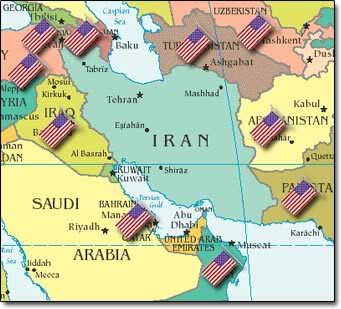 Last week’s events underscore three things. One, the US does not intend to end its military presence in Iraq (and Syria), although the pretext of the war against the ISIS is no longer there. Two, US is planning to turn Iraq into a major theatre of confrontation with Iran.
A US control of Iraq puts it in a position to pile pressure on Iran from different directions — interfering with Iranian supply routes to Syria and Lebanon; playing itself back to regain a role in the Syrian settlement; having a say in Iraq’s rising oil production and staging covert cross-border operations to destabilize the Iranian regime. Indeed, with the open-ended US military presence already in place in Afghanistan, the intention is to squash with a similar western neighbor under American tutelage.
Three, fundamentally, it becomes all too obvious that the US-Saudi alliance in regional politics is very much alive and kicking, and any reports to the contrary are greatly exaggerated. The US’ return to the centre stage in Iraq to challenge Iran’s regional influence will give much verve to the US alliance with Saudi Arabia.
Interestingly, the Saudi establishment daily Asharq Al-Awsat reported last week that the Pentagon plans to boost deployments to the Middle East specifically to counter Iran. The report cited General Joseph Votel, commander of the US Central Command, as saying, “The United States wants to help the Arab countries deal with Iranian threats. The Pentagon is working to achieve that desire and ensure its effective implementation. That includes the establishment of US military battalions sent as missions to the region and be designed specifically to provide advice and assistance.”
Kirkuk bell also tolls for US strategy in Syria
By M K Bhadrakumar | Indian Punchline | October 22, 2017
The rout of the Kurds in the northern Iraqi city of Kirkuk this week constitutes a major setback for the overall American strategies toward Iraq and Syria. The prospect of an unceremonious US retreat from Syria haunts the Trump administration in immediate terms, and it is all the more galling because Tehran is calibrating it.
Clearly, Iran has pushed the envelope, furious over US President Donald Trump’s provocative threats of sanctions against the Islamic Revolutionary Guards Corps (IRGC). Tehran had warned that US position in the entire Middle East will become increasingly untenable if Trump moved against the IRGC. The capture of Kirkuk by the Baghdad government was a de facto military operation by the Shi’ite militia known as the Hashd al-Shaabi, which was trained and equipped by the IRGC. The western reports suggest that the charismatic commander of the IRGC’s secretive Quds Force, General Qassem Soleimani personally masterminded the military operation – and even prepared the political ground for it.
The US had tried to prevail upon the Iraqi Prime Minister Haider al-Abadi not to move against the Kurds who were its allies. Kirkuk is estimated to hold at least 8000 million barrels of subterranean oil. The oil revenue is critical for the survival of any independent Kurdish state. Evidently, Abadi didn’t listen due to the emergent threat posed by the Kurds’ recent independence referendum. Equally, Iran wanted to finish off the spectre of an independent Kurdistan in the region spearheaded by Massoud Barzani (who enjoys the backing of US and Israel.)
Indeed, the defeat in Kirkuk destroys the Iraqi Kurds’ dream of an independent state and derails the longstanding US-Israeli project to create a base with strategic location. Equally, the liberation of Kirkuk, which is populated by the Kurds, Arabs and Turkmen by the Iran-supported Shi’te militia highlights the strategic convergence between Baghdad, Tehran and Ankara in preventing the creation of an independent Kurdistan in the region.
However, the defeat of Barzani in Kirkuk has far wider ramifications – for Iraq as well as the Syrian conflict, apart from the US’ influence in the Middle East as a whole. At its most obvious level, Iran is thwarting the US plans to balkanize Iraq. Iraq’s unity is no longer under serious threat. Control of the vast oil reserves in Kirkuk will also bolster the Iraqi economy. Baghdad can be expected to reassert its authority over the country. The federal government has taken over the border crossings with Turkey and Syria.
The US attempt in the coming period will be to woo Abadi and encourage him to whittle down Iran’s influence in Iraq. The US Secretary of State Rex Tillerson arrived in Riyadh on Saturday on a hastily arranged trip with the hope of getting Saudi King Salman to take a hand in persuading Abadi to keep Tehran’s influence on Iraq at bay and to mediate between Abadi and Barzani. The US and Saudi Arabia’s best hope lies in creating differences between Baghdad and Tehran by leveraging Abadi. But the chances of such a ploy working seem remote.
The fact that the US watched the defeat of the Kurds in Kirkuk passively tarnishes the overall American image, especially among Syrian Kurds. This casts shadows on the Syrian situation. The US has been routing the military supplies for Syrian Kurds in Raqqa via Erbil, Massoud’s stronghold (in the face of Turkey’s virulent opposition.) This supply route is no longer under Barzani’s control and the disruption will affect the US’ operations in Raqqa. The US-led Syrian Kurdish militia claims to have liberated Raqqa, but a real consolidation needs the decimation of the residual ISIS fighters present in the region and it may take months.
More importantly, a ‘trust deficit’ between Syrian Kurds and Washington at this juncture will be calamitous. Raqqa is Arab territory and the Kurdish militia’s supply lines are already overstretched. The disruption in American supplies means that it may now be a mater of time before Syrian Kurds seek some modus vivendi with the Syrian regime. If American military supplies dry up, Syrian Kurds will also come under pressure from Turkey in the swathe of northern Syria bordering Turkey, which form their traditional homelands. Turkey never liked a Kurdish entity taking shape across their border.
Interestingly, the commander of the Syrian Kurdish militia Sipan Hamo visited Moscow last weekend. The Russians indeed find themselves in an enviable position to drive a hard bargain over the Kurds’ sorrows. Russia is in a unique position to mediate between Syrian Kurds on one side and Ankara and Damascus on the other. But then, what is it that the Kurds can offer Russia in return? Last Thursday, Rosneft signed a big oil deal with Barzani’s government in northern Iraq. To be sure, the old Kurdish saying has some merit – ‘The Kurds have no friends but the mountains.’ (Guardian )
The main impact of last week’s dramatic events is that the US now has no conceivable reason to continue with a military intervention in eastern Syria. The likelihood is that Syrian Kurds will sooner or later hand over Raqqa also to the government forces. Clearly, the Syrian regime’s march to victory is from now onward relentless and irreversible. That is to say, the best-laid plans of the US and its regional allies to balkanize Syria have also gone awry.
Maybe, there will be a federal system in future Iraq and Syria. But last week’s events have ensured that the two countries’ territorial unity and integrity will no longer be under serious threat. Of course, that has also been at the core of the Iranian strategy.
Featured Video
Houthis Keep Advancing as the Red Sea Crisis Deepens
or go to
Aletho News Archives – Video-Images
From the Archives
Clash of Civilization, Iran Part II
By Jamal Kanj – Intifada-Palestine.com – January 14, 2011
Israel’s survival kit is: perpetuate conflict, insecurity to rationalize collective hate and finally playing victim.
Devoid of conflict, Israel implodes internally; without hate, Zionism loses its justification; and playing eternal victim to continue blackmailing the West. Absence of this holy trinity, Israel ceases to exist. … continue
Blog Roll
 Aletho News
- ‘We are not like everyone else’ laws that bind other nations do not apply to Israel, says Likud lawmaker
- Report: Saudi Arabia seeks allies’ assistance as missiles deplete amid war on Yemen
- Fuel Crisis Deepens: Pakistan Warns Tanker Attack in Red Sea Would Be an ‘Act of War’
- ‘Bucha massacre’ a false flag orchestrated by UK – Moscow
- China Rejects Outside Pressure on Trade Ties After New US Russia Sanctions Bill
- Houthis Keep Advancing as the Red Sea Crisis Deepens
- Iran spent $1 million to wipe out $30 billion in data center plans, and take down Amazon in the ME
- Zionist billionaire pressure to silence Macklemore sparks exodus from Ed Sheeran tour
- House Votes to End Iran War for Third Time
- North Korea Slams US Plan for ‘AUKUS 2.0’ with South Korea and Japan
- If Americans Knew
- Biden’s Genocide Accomplices Targeted by New Accountability Campaign
- AIPAC’s Network Has Already Spent $67.2 Million to Shape the Midterm Elections
- Jewish Supremacist Manufacturing a Civilizational Threat to License Bigotry
- US bans Palestinian president from speaking at the UN
- Israeli Forces Detain Journalist Alaa al-Rimawi amid Widespread West Bank Raids
- Even a pro-Israel Congress member has put a hold on 40,000 one-ton bombs to Israel
- As Gaza crumbles, Israel preps new ground invasion – Daily Update
- ‘We are not like everyone else’ laws that bind other nations do not apply to Israel, says Likud lawmaker
- Trump’s govt makes ‘treasonous’ claim of weapons shortages
- Palestinian-American Journalist Naqaa Hamed Imprisoned by Israeli Forces After Settlers Targeted Her
- No Tricks Zone
- New Study: ‘Global Drought Shows No Detectable Recent Acceleration Under Climate Warming’
- Economic Masterminds: German Socialists Suggest Taxing Productivity Gains Stemming From Using AI
- The South China Sea Has Not Been Cooperating With The Climate Change Narrative
- Energy Crisis: Germany Enters Heating Season With Historically Low Gas Reserve Fill Levels
- New Study: The Antarctic Ice Sheet Gained Mass From 2020-2024 Due To Staggering Snow And Ice Accumulation
- Study: Ocean Heating Rates From Thousands Of Years Ago ‘Dwarf’ Modern Ocean Heating Rates
- Climate Extremists Target, Attack Large-Scale Power Grid Infrastructure In Germany!
- New Study: Antarctic Ice Melt Has Contributed Less Than 1 Centimeter To Sea Level Rise In The Last 30 Years
- Fear Of Debate: Alarmist German Climate Scientist Calls On Mainstream Media To Discredit Skeptic Voices
- End-Of-August Arctic Sea Ice Extent Hasn’t Fallen In 20 Years, Official Data Show!
 Aletho News