Same Old: Notorious White Helmets Report a Chemical Attack, Blame Damascus Again
Sputnik – February 26, 2108
An infamous NGO that was repeatedly accused of falsifying information about its operations and essentially working as a propaganda outlet for anti-government militants in Syria, now claims that Damascus deployed chemical weapons in Eastern Ghouta.
The notorious White Helmets group claims that the Syrian government deployed chlorine gas against the town of Al-Shifoniya town in Eastern Ghouta, killing one child and causing “widespread suffocation” among the local civilians, Anadolu Agency reports.
The White Helmets, a group that styles itself as an NGO seeking to ease the plight of civilians in Syria suffering from the ongoing conflict in the country, has previously been accused of falsifying information about its work in Syria and staging “rescue” attempts in its propaganda videos.
Earlier the Russian Defense Ministry warned that militant groups in Eastern Ghouta were preparing a false flag attack in an attempt to blame Damascus for using chemical weapons against civilians.
“Evidence has shown that the leaders of illegal armed formations in Eastern Ghouta are preparing a provocation using poisonous agents in order to accuse the government forces of using chemical weapons against its civilians,” a statement issued by the ministry said.
The Arabic-language news channel al-Manar, citing al-Ikhbariya, has also reported that White Helmets were distributing protective masks in Eastern Ghouta in preparation for a new plot to blame another chemical attack on the Syrian government, while the Russian center for Syrian Reconciliation’s representative said they were tipped by a resident of Idlib province about Nusra Front militants delivering “more than 20 bottles of chlorine and personal protective equipment in three cars” for an upcoming provocation.
As Syria’s Information Minister Imad Sarah told Sputnik, while Syrian armed forces and their allies battle terrorist groups in the field, it is equally important to counter the efforts of groups seeking to distort facts and to mislead the international community about the real state of affairs in the country — “to refute endless fake reports that mangle the actual state of affairs in the country and play with terms,” as he put it.
The minister also remarked that members of the White Helmets have been awarded for their exceptional action, which says a lot about the scale of the conspiracy against Syria and its people.
Syria has repeatedly denied allegations of chemical weapons use, underscoring that it had no weapons of mass destruction, which was confirmed by the Organization for the Prohibition of Chemical Weapons (OPCW).
On April 4, 2017, the National Coalition for Syrian Revolutionary and Opposition Forces, supported by the United States, accused Damascus of the Khan Sheikhoun incident in Idlib province, which that left 80 people dead and 200 injured. Western governments blamed Bashar al-Assad for being responsible for the use of Sarin gas, an allegation he has firmly denied.
Moscow, in turn, also demanded a thorough investigation of the incident.
READ MORE:
French President Macron Threatens to Strike Syria if Chemical Attacks Proven
UN Can’t Verify Claims of Chemical Attacks in Syria ‘Independently’ – De Mistura
Rouhani Phones Erdogan, Highlights Necessity of Respecting Syria’s Sovereignty and Territorial Integrity
Al-Manar | February 20, 2018
Iran’s President Sheikh Hassan Rouhani reiterated the necessity of respecting Syria’s sovereignty and territorial integrity, underlining the need to restore security and stability to it as soon as possible and provide appropriate conditions that will enable all Syrian displaced people to return home.
Rouhani’s remark came during a phone call with his Turkish counterpart Recep Tayyip Erdogan on Monday.
The Iranian President added that talks between the leaders and officials of Iran, Russia and Turkey in Astana and Sochi have been promising in terms of enhancing security and stability in Syria.
He stressed that this constructive track should be further reinforced through the continuous consultations among the heads of the three states.
Rouhani said that fighting terrorism, cleansing Syria of terrorist organizations and countering separatist attempts in the region are among the common objectives of Iran and Turkey, adding that “We should not allow terrorist groups to regain strength and return again to the region.”
He pointed out to the US-Zionist conspiracies against the countries of the region, noting that Iran and Turkey have common objectives regarding the regional and international issues.
The Iranian President called for consolidating cooperation in line with implementing the decisions reached in Astana.
US baits Turkey in hopes of ending Ankara’s Russian dalliance
Leaving aside the issue of the Kurds in Syria, Washington is experienced in leveraging Turkish predicaments – and appears optimistic about doing so again
By MK Bhadrakumar | Asia Times | February 20, 2018
When the host country openly patronizes a Track 2 – or ‘backchannel’ – event, it becomes Track 1.5. The conference in Moscow on Monday under the rubric ‘Russia in the Middle East: Playing on Every Field,’ seemed firmly in this category.
However, just as the event was about to begin, Iran’s Foreign Minister, Mohammad Javad Zarif, joined Russia’s, Sergey Lavrov, on the podium, raising matters to the level Track 1.
Nonetheless, Turkey’s absence must be noted. The backdrop is the US-Turkish “thaw” following a two-day visit to Ankara last weekend by the US Secretary of State Rex Tillerson. The first authoritative comments by the Trump administration regarding Tillerson’s talks came from US Defence Secretary James Mattis, who said on Saturday:
“We concur with Turkey on the need for locals taking control of the liberated areas [in Syria], and we’re going to work with Turkey on the locals taking control, and with Turkey on every other irritant, or diversion or distraction, or every area. We have many areas of absolute concurrence, too. Remember that, they are an ally. We work with them… So this is not an all-one-way issue, but there are significant issues that the Secretary of State and his foreign minister counterpart agreed that we would work through… I can’t tell you that we’ve resolved them all. That means we’re going to work through them. We’re committed to them. That’s where we’re going.”
Mattis was donning a diplomatic hat in projecting such an optimistic assessment. Tillerson’s talks in Ankara were wide-ranging and there were exchanges on creating and jointly managing a zone of influence in northern Syria. But for Turkey, the vacation of the region to the west of the Euphrates by US-backed Kurdish militias is a non-negotiable demand. The Pentagon will be hard-pressed to jettison its alliance with those militias.
The US-Turkey reconciliation process will not be easy. But then again, it does not suit either side to allow the discussions to reach a dead end anytime soon. Turkey’s operation in Afrin is not going well and that puts future operations in doubt – which, in turn, gives time and space for both Ankara and Washington to negotiate. And for the US, while the Kurds may be regarded as useful (perhaps irreplaceable) footsoldiers, the resuscitation of an alliance with Turkey could be a game changer.
Washington senses that Turkish President Recep Erdogan is groping for a way forward. He has made an extra effort in recent weeks to mend ties with Germany, signaling that Turkey does not want isolation from the West. Make no mistake that Washington is greatly experienced in leveraging Turkish predicaments. Washington has shown time and again that it has a way of getting things done with Ankara, its time-tested cold war ally. Mattis’ optimism reflects that.
The big question is how the Russian-Iranian alliance will respond to a potential US-Turkey entente in northern Syria. Indeed, it will be a major setback for Moscow and Tehran if Ankara reverts to coordinating with the US. Events on the ground in recent weeks should leave Moscow in no doubt that eliminating the Russian presence in Eastern Mediterranean is as much a priority for the Pentagon as rolling back Iranian influence in Syria. Russian President Vladimir Putin telephoned Erdogan on Monday to discuss Syria.
Afrin may seem the immediate focal point, but the various protagonists are attempting to create new facts on the ground. Russia and Iran have a congruence of interests in opposing the expansion of the US presence in northern Syria. (Afrin is the gateway to Idlib, which is adjacent to the coastal province of Latakia, where the Russian bases are located.)
Lavrov on Monday warned today that the US should not play with fire. In a hard-hitting speech at the Moscow conference, he alleged that the US is using the Kurds as a proxy and also covertly encouraging extremist groups to “disintegrate Syria”. Meanwhile, the Tass news agency quoted Zarif as stressing to Lavrov that the flow of events “demonstrates the depth of strategic relations between Iran and Russia, which have been playing a very important role in maintaining security and stability in our region.”
However, neither Moscow nor Tehran has voiced any criticism of Turkey. They seem reasonably confident that Turkish-American reconciliation is improbable, since Syria is only the tip of the iceberg against which mutual trust between the two NATO allies crashed in the aftermath of a failed coup attempt against Erdogan in July 2016.
The Russian-Iranian strategy will be to keep Turkey constructively engaged even as Ankara is involved in back-to-back negotiations with Washington beginning in the first half of March. Zarif disclosed in Moscow that he and his Russian and Turkish counterparts propose to meet in Astana in a fortnight to prepare the ground for a trilateral summit meeting of the three presidents in Istanbul regarding Syria.
Syria to Continue Fighting ‘Aggressors,’ Whether it’s Israel, US or Turkey
Sputnik – 19.02.2018
Syria should continue fighting the US, Turkish and Israeli “invaders” who attacked the country right after it got rid of terrorists, Bouthaina Shaaban, an adviser to the Syrian president, said Monday.
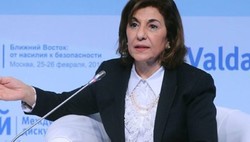 “We should go on fighting any foreign invaders on our land, whether it’s Israeli, American or Turkish,” Shaaban said at the Valdai Discussion Club’s Middle East Conference.
She noted that those countries launched an attack against Damascus right after it managed to free the country of terrorists.
“When we are able to liberate most of our land from terrorism, Israel, Turkey and the United States start to attack our land,” the adviser stressed.
According to Shaaban, Ankara does not implement the Astana agreements on the settlement of the Syrian crisis but uses it as an excuse “to invade the country.”
“Turkey facilitated the arrival of all these mercenaries and when it felt that these terrorist mercenaries were loosing the ground, it invaded the Syrian territory in full cooperation with terrorists. Turkey invaded our land in full violation of the international law and used Astana Agreement as a cover for invading the Syrian territory on an unexpected pretext,” Shaaban said at the Valdai Discussion Club’s Middle East Conference.
Ankara has been carrying out “Olive Branch” operation in Syrian northern district of Afrin since January 20, saying that its offensive was aimed at clearing the Turkish border with Syria from terrorist presence. Turkey considers the Kurdish People’s Protection Units (YPG) and the allied Democratic Union Party (PYD) to be linked to the Kurdistan Workers’ Party (PKK), listed as a terrorist organization by Ankara.
Turkey has said that around 1,500 militants have been killed or captured as a result of the ongoing operation.
Damascus has expressed its opposition to the Turkish operation in Afrin, saying that such actions violated Syrian sovereignty.
On Russia’s Aide
Speaking further, the Shaaban noted that Russian army had no presence in Syria, while all the Russia’s support to Syria comes from the country’s air force.
“There is no Russian army in Syria. There is only air force. All other reports in the western media are just propaganda,” Shaaban told reporters.
Last December, Russian President Vladimir Putin ordered to withdraw Russian forces from Syria, after completing their task to destroy Daesh.
Earlier in the day, Moscow began hosting a two-day conference covering a whole range of Middle Eastern issues, which is being attended by high-ranking officials, such as Russian Foreign Minister Sergey Lavrov and his Iranian counterpart Mohammad Javad Zarif.
Israeli Parliament Votes Against Bill Recognizing Genocide of Armenians
Sputnik – February 15, 2018
The Knesset on Wednesday voted against a draft law implying the recognition of the genocide of Armenians in the Ottoman Empire, Israeli media reported Wednesday.
According to the Jerusalem Post newspaper, the legislative body rejected the bill proposed by the Yesh Atid party.
The media outlet added that Yesh Atid chairman Yair Lapid stressed that Israel should recognize the genocide of Armenians, as the Jewish people had also survived a similar calamity, the Holocaust.
According to different estimates, over million of Armenians were killed or starved to death by the Ottoman Empire during and after World War I.
urkey has repeatedly denied accusations of committing mass murder of Armenians, claiming that the victims of the tragedy were both Turks and Armenians.
Armenia insists on the recognition of the Armenian genocide by the Ottoman Empire by the international community. The Armenian genocide has already been recognized by Russia and numerous EU countries, as well as the European Parliament.
US to raise Kurdish force in Syria ignoring Turkey’s warnings
By M K Bhadrakumar | Indian Punchline | February 13, 2018
The Turkish President Recep Erdogan scaled up his rhetoric against Washington dramatically as the countdown begins for the visit by US Secretary of State Rex Tillerson to Ankara on February 15. Addressing the Turkish parliament on Tuesday, Erdogan hit hard that the US should expect an “Ottoman slap” if it continued to align with the Syrian Kurds. “They (Americans) have mistaken Turkey for the kind of place where they can come and go as they please without giving an account. They will soon see that it’s not such a place,” Erdogan warned.
Turkey is infuriated by reports that the Pentagon has requested $1.4 billion for the 2019 fiscal year to train and equip Kurds in Iraq and Syria. A key aspect of the long-term strategy is the building up of local Kurdish forces. Tillerson confirmed this in a statement in Washington on Tuesday when he said, “The United States will maintain a conditions-based and ISIS-focused military presence in Syria. As part of that presence, we will continue to train local security forces in Syria.”
Erdoğan warned today that Washington’s decision to continue funding the Syrian Kurdish YPG militia will “affect Turkey’s decisions.” He insisted that although initial aid figures are estimated at $550 million, “information obtained by Ankara” indicated that this financial support “could increase to $3 billion.”
Clearly, the Trump administration is ignoring Turkey’s warnings and is proceeding to raise a well-trained Kurdish force in northern Syria equipped with American weapons. This is also the Russian assessment. At a press conference today, Foreign Minister Sergey Lavrov did some plain-speaking on what the US project in Syria looks like:
- In general, we have a suspicion…. that the United States wants to stay there (Syria) for a long time, if not forever… The Americans, in my opinion… are trying to act by dangerous unilateral steps. And by the way, these steps look more and more like part of a line for creating a certain quasi-state on a large part of the Syrian territory — on the eastern bank of the Euphrates and up to the Iraqi border.
Turkey is adamant that it will resist any such US project to carve out a Kurdish state along its border with Syria. Prime Minister Binali Yildirim said on Tuesday that Turkey will eliminate all threats along its borders “wherever they come from. Those who want to found a state along our borders will be disappointed.” Yildirim called on the U.S. “to cut its support to those murderers (Kurdish militia) and stop giving them weapons. This is a dark, dead-end-street. You (US) still have time to correct your mistake.”
It may appear that things are moving toward a Turkey-US confrontation. However, the US is playing for time by engaging Turkey. The National Security Advisor HR McMaster visited Ankara in the weekend and the two defence ministers also met in Brussels. Tillerson is arriving in Ankara on Thursday. Washington estimates that there is still time available to negotiate a deal pending the completion of Turkey’s current military operations in Afrin.
The Kurds in Afrin are fiercely resisting the Turkish forces. The Turkish Army General Staff announced on Monday that 31 Turkish army men have been killed and 143 more wounded in the offensive against the Kurds in Afrin so far. According to the Russian media, Kurdish fighters in Afrin have received new weapons and may launch counter-attacks inside Turkey. (An advanced Turkish drone was shot down in Afrin today.) Kurds from Iraq are also joining the fighting in Afrin.
The best American hope will be that the Turkish forces get bogged down in Afrin for quite a while. And, indeed, the US calculates that if the Turkish forces take a heavy toll in Afrin and the going gets tough, Erdogan may not even have the appetite to escalate the operations to the other regions in northern Syria west of the Euphrates that are presently under the control of US-backed Syrian Kurdish militia.
However, it is a risky gambit because it is not only Turkey but Russia and Iran also who want the US military presence in Syria to end. During a congressional testimony in Washington, DC, on February 6, the former US ambassador to Iraq and Syria Robert Ford explicitly warned that it is a matter of time before the US personnel in Syria get targeted. Ambassador Ford’s testimony is here.
US blinks under Turkish pressure in Syria
By M.K. Bhadrakumar | Asia Times | January 28, 2018
The Turkish President Recep Erdogan gave a stark warning to the Trump administration on Friday by stating his intention to order an assault on the northern Syrian town of Manbij, roughly 40 km from the Turkish border and 100 km to the east of Afrin, where US forces are operating alongside Kurdish militia.
He said, “Operation Olive Branch will continue until it reaches its goals. We will rid Manbij of terrorists (read Kurds) … Our battles will continue until no terrorist is left right up to our (910-km) border with Iraq.”
The fact of the matter is that unlike Afrin, which is predominantly Kurdish, the ethnic composition of Manbij is diverse with Arabs, Circassians and Chechens forming majority. A Turkish assault on Manbij will expose the fundamental contradiction in the US strategy to align with Kurds in the multi-ethnic northern Syrian region to the east of the Euphrates, where Arabs dominate and tribal solidarity remains strong.
The Kurds consider this region as “historically Kurdish,” based on notions from the Middle Ages and Salah al-Din, but the ground reality is that they can never integrate such a large Arab population. Suffice to say, undermining the Kurdish gains in Manbij is not going to be difficult for Turkey and US forces are sure to get caught in the crossfire, since without direct US intervention, Kurds will be at a disadvantage.
Occupation of Afrin is not the Turkish objective. Turkey’s aim is to scatter the Kurds’ Rojava dream, which is based on a contiguous homeland across northern Syria up to the East Mediterranean. The western analysts’ prognosis of a “Turkish quagmire” in Afrin is far-fetched. Turkey understands that it is futile to conquer Afrin, a region of rugged mountains with hostile Kurdish population.
The Turkish Foreign Minister Mevlut Cavusoglu hinted at this when he said on Friday, “After clearing them (Kurds), we will hand the region over to its real owners; namely, we will hand it over to Syrians.” Cavusoglu meant the Arab population. Interestingly, Kurds in Afrin have sent feelers to Damascus to come and reclaim the lost territory.
Much depends on the Russian game plan. Russia is in a unique position of being on friendly terms with Turkey, Afrin Kurds and Damascus. Moscow may prefer that the Turks complete their mission in Afrin and move on to Manbij. That gives respite to the Syrian government forces to gain control of Idlib.
Turkey is signaling that it will risk confrontation with the US, if it must. Deputy Prime Minister Bekir Bozdag (who also officiates as the government spokesman) warned the Pentagon, “Those who support the terrorist organization will become a target in this battle. The United States needs to review its soldiers and elements giving support to terrorists on the ground in such a way as to avoid a confrontation with Turkey.”
Turkish Prime Minister Binali Yildirim also spoke on these lines: “A big country like the US has a huge army and potential, does it need terrorist organizations (for its operations in the region)? … This is clear hostility. Turkey will not allow this no matter who is behind it, regardless of its power and whatever the name it may have.”
To be sure, Turkey is relentlessly piling pressure and is not giving any wriggle room to Washington. The Trump administration is compelled to compromise. The National Security Advisor HR McMaster telephoned the Turkish presidential aide Ibrahim Kalin on Friday late evening to discuss Turkey’s “legitimate interests” and to convey that the US will not provide weapons to the Syrian Kurds anymore.
McMaster’s overture followed a telephone conversation on Friday between Erdogan and British Prime Minister Theresa May. Britain has a role to play in the Kurdish problem, historically. Besides, the controversial speech on Syria by US Secretary of State Rex Tillerson at Stanford University ten days ago, which was the tipping point, had a big British input – where he proclaimed that military presence in Syria would continue “indefinitely” and that Pentagon planned to train a 30,000-strong Kurdish security force on the Turkish border.
In immediate terms, the US and Britain’s priority is to disrupt Russia’s Syria talks in Sochi on January 29-30, which is expected to discuss a constitution for Syria. The West sees Turkey’s role as the last countervailing force to a Russian-imposed peace in Syria.
However, any compromise formula at this point may be too little, too late for Erdogan at this stage. For one thing, the ground situation has acquired a dynamic of its own. The Kurds are firing rockets at Turkey with impunity. The point is, PKK is not under US command. Erdogan rejected McMaster’s assurance and alleged that US arms are still “flowing” to the Kuridsh militia.
Foreign Minister Cavusoglu point blank demanded today that the US forces should withdraw from Manbij “immediately.” Complying with the Turkish demand will be very humiliating for the Pentagon. But what is the alternative?
The signs are that Erdogan has a deal already with the Kremlin. Russia is tacitly acceding to the Turkish drive to weaken Kurds. It’s a “win-win” situation for Moscow and Ankara. From the Russian viewpoint, the US strategy in Syria will reach a cul-de-sac if the Turks degrade its Kurdish allies. It must be factored in that Moscow suspects that the US masterminded the attack attack on the Russian base at Hmeimim on January 5. President Putin hinted at this and went on to point a finger at a calculated ploy to wreck Russian-Turkish relations.
As for Turkey, given the trust deficit in their relations after the failed coup against Erdogan in 2015 and the opaqueness of American intentions in Syria and Iraq, Turkey is barely tolerating the US military-intelligence presence along its sensitive southern borders. But Turkey cannot and will not make an outright demand for a US pullout from Syria, being NATO allies and all that.
On the other hand, if the US is neither able to protect its Kurdish allies nor to create new facts on the ground in northern Syria (to counter the expanding Iranian presence), and also lacks the capacity to leverage the policies of regional states, what is the logic of maintaining isolated pockets of military presence in northeastern Syria “indefinitely?”
Thus, by degrading the Kurdish militia and effectively destroying their utility to the US, Erdogan is killing two birds with one stone. Putin must be sensing that, too. Meanwhile, Russia is prevailing upon Tehran and Damascus to get on with life, leaving it to Erdogan to sort out the fate of the US presence in Syria.
Playing ‘Kurdish Card’ in Syria Backfires on US As Turks Move In
By James George JATRAS | Strategic Culture Foundation | 25.01.2018
What the result will be of Turkey’s offensive against the Kurdish-held enclave of Afrin in northwest Syria may not be clear for a while, but two things are already certain. Bad decisions in Washington provided the trigger, and Washington’s regional position will suffer as a result of Ankara’s Orwellian-named “Operation Olive Branch.”
The offensive is the latest twist from Turkey’s erratic and unpredictable leader, President Recep Tayyip Erdogan. Let’s recall that “Sultan” Erdogan was an early and active participant in what was supposed to have been a relatively easy regime change operation in Syria starting in 2011, on the pattern of NATO’s overthrow of Libya’s Muammar Qaddafi that same year. Turkey, with its lengthy border with Syria, was (and to some extent still is) a major supporter of al-Qaeda-linked jihadist groups in Syria, working with Saudi Arabia and Qatar under American guidance, with Israel as a silent partner. The appearance of ISIS (Daesh, ISIL) as an outgrowth of al-Qaeda in Iraq was a direct and foreseen consequence of that effort, as the Obama Administration was warned in 2012 by the U.S. Defense Intelligence Agency (DIA), then under the command of General Michael Flynn.
To the surprise of many, the Syrian government under President Bashar al-Assad didn’t just roll up and die but displayed an unexpected tenacity in defending that country’s secular, multi-religious society against outside efforts to impose a Wahhabist sectarian state. The clincher came with Russia’s September 2015 intervention, a distinctly unwelcome development for the “Assad must go!” crowd.
Two months later a crisis erupted between NATO-member Turkey and Russia when Turkish planes shot down a Russian Su-24 fighter (ostensibly for crossing into Turkish airspace) and ethnic Turkish (also called Turkmen) fighters murdered one of the two Russian airmen who parachuted from the plane. Perhaps Erdogan thought he could give Moscow a bloody nose and, with NATO’s backing him up, the Russians would turn tail and run. That didn’t happen, giving Erdogan reason to feel hung out to dry.
Then came the July 2016 coup attempt against Erdogan, orchestrated, he claims, by his former ally businessman, educator, and cleric Fethullah Gülen, resident in the U.S. Despite the deep freeze in Russia-Turkey ties since the Su-24 shootdown, Russian covert assistance reportedly was critical to saving Erdogan’s regime and perhaps his life. At the same time, his U.S. ally – which denies involvement in the coup attempt – still refuses to hand over Gülen, whose supporters in Turkey have been repressed in a massive purge of real or imagined opposition to Erdogan’s consolidation of power.
Internationally, the upshot of the coup’s failure was a turnaround in ties between Ankara and Moscow. In December 2016, Erdogan joined Russia and Iran, the principal supporters of the Syrian government against terrorists armed by Turkey among others, in the Astana peace process.
Erdogan, if not completely breaking with the anti-Assad coalition, at least started to hedge his bets, for example not reacting to the Syrian liberation of Aleppo from Ankara’s al-Qaeda clients. When Syrian forces relieved the ISIS siege of Deir ez-Zor in eastern Syria in late 2017, and the Syrian army linked up with the Iraqi army (supported by the U.S. and Iran) at their common border, ISIS was almost finished as a territorial “caliphate.” This in turn has allowed Damascus to shift its focus elsewhere, notably to al-Qaeda-held Idlib. This wasn’t yet the end of the Syrian war but the end was coming into view.
Or so it seemed – which brings us back to U.S. policy.
In July 2017, Ankara had leaked the existence of U.S. bases in Kurdish-held northwestern Syria. Not that it matters to anyone in Washington, this presence is totally illegal under both U.S. law (there’s no Congressional authorization) and international law, which in U.S. politics counts for nothing (no UN Security Council authorization, no self-defense justification, and of course no invitation from the Syrian government). The U.S. presence with the Kurds is positioned on the eastern bank of the Euphrates River, while the Russians and Syrians stay mainly on the western bank. Aside from some scary air incidents, it seems both sides seem to have been careful not to come into conflict.
If Washington had been content to leave it that, President Donald Trump – who had campaigned on a promise to “crush and destroy ISIS” – was in a great position to declare victory and get out. Keep in mind that despite ordering a demonstrative cruise missile strike on a Syrian air base in April 2017 (in reprisal for a chemical attack that almost certainly was not the work of the Syrian government), he had not indicated an appetite for digging deeper into an involvement in a conflict where he had once praised Assad, Russia, and Iran for fighting ISIS. He even reportedly cut off CIA aid to “rebels,” i.e., al-Qaeda, in July.
That was then, this is now. The U.S. is not leaving Syria. The globalists, generals, and other Swamp-monsters, plus their Israeli and Saudi pals, have won and “America First!” has lost. Recently Secretary of State Rex Tillerson announced a new “way forward” in Syria, which in effect is an old way backwards the Obama policy. There are five pillars:
- Defeat of ISIS and al-Qaeda. [The first is almost finished in Syria and Iraq, and regarding the second there seems to be some confusion about whose side we’ve been on for almost seven years];
- Assad must go [Seriously; the fact that regime change in Syria would mean curtains for the Christians evidently is of no concern in Washington];
- Block the Iranians [The “Shiite crescent” bogeyman is now a “northern arch”];
- Return of refugees to their homes [Is that why the U.S. and the EU maintain sanctions on government-held areas?]; and
- No weapons of mass destruction [Someone seems to have picked up by mistake the old talking points regarding Iraq, circa 2002].
The linchpin of this concept, if it can be called that, is using the Kurds as America’s boots on the ground. (It should be noted that when CIA assistance to its al-Qaeda clients was stopped last year, the Pentagon’s support for the Kurdish YPG (Yekîneyên Parastina Gel, “People’s Protection Units”) was maintained or stepped up; at the time the move seemed largely a bureaucratic tiff between Langley and DoD. Now however there are rumblings that the CIA aid spigot may be turned back on.) But for Erdogan, the icing on the cake was U.S. announcement of plans to create a 30,000 “Border Security Force.” For Turkey, this amounts to U.S. sponsorship, perhaps with partition of Syria in mind, of a Kurdish quasi-state comparable to Iraqi Kurdistan, in league with the Kurdish PKK (Partiya Karkerên Kurdistanê, “Kurdistan Workers Party”) – designated a terrorist group by the U.S., Turkey, and NATO. Hence Erdogan’s claim he is acting against a U.S.-armed “terror army,” which he vows to “strangle … before it’s even born.”
Perhaps U.S. officials thought they could manage Ankara’s response, or that the bombastic Erdogan was just bluffing. If so, they were mistaken. It now remains to be seen how far the Turks plan, or are able, to advance in Afrin. There is also speculation whether an assault may also be directed toward Manbij in the main, eastern Kurdish-held area known as Rojava, where some 2,000 or more American troops are present. In addition, Erdogan, who has progressively dismantled the Kemalist secular order in Turkey seems bent on whipping the offensive up as an Islamic ideological jihad in 90,000 mosques across the country.
Afrin, with its rough terrain, is a tough nut to crack. Manbij might be even harder and risk confrontation with the U.S. In either case the Kurds are fighting on their home turf against the Turkish army with their local Turkmen militia and al-Qaeda allies. Damascus reportedly has allowed Kurds from the main Rojava area they hold further east to cross government-held territory to reinforce Afrin. Meanwhile, the expectation of some Kurds that the United States would create a “no-fly zone” to defend them from America’s own NATO ally was comically unrealistic.
While it’s hard to say in the short term if the Turks or Kurds will come out ahead, there’s no doubt that strategically the big loser is the U.S. – and it’s a totally self-inflicted wound. If Trump had stuck to his original goal of just defeating ISIS, he could take credit for the efforts of the Syrian army and Russian air force and soon truthfully proclaim “Mission Accomplished” (in contrast to George W. Bush’s notorious Iraq declaration in 2003). But now, with the foolish adventure into which his generals (National Security Adviser H.R. McMaster, Defense Secretary James “Mad Dog” Mattis, and White House Chief of Staff John Kelly) have led him, with Tillerson’s agreement or acquiescence, he now has on his hands a conflict between our de jure NATO ally Turkey and our de facto ally, the Kurds.
If the Kurds win, Turkey is in effect lost to NATO – we’re close to that already. If Turkey wins, the misguided U.S. plan to stay in Syria is finished – a likely outcome anyway.
As far as the impact within Syria, the Kurds are about to find out, as did the Iraqi Kurds following their abortive independence declaration last year, that they likewise have pressed their luck too far and were foolish to count on “friends” in Washington, for whom they are disposable. In the end, the Turkish attack is likely to accelerate the Kurds’ outreach to Damascus, with whom they have never entirely burned their bridges.
Featured Video
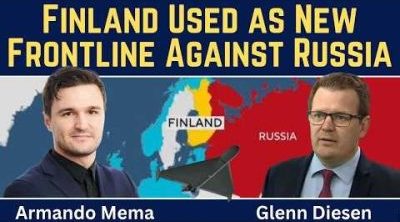
Armando Mema: Finland Used as New Frontline Against Russia
or go to
Aletho News Archives – Video-Images
New Documentary
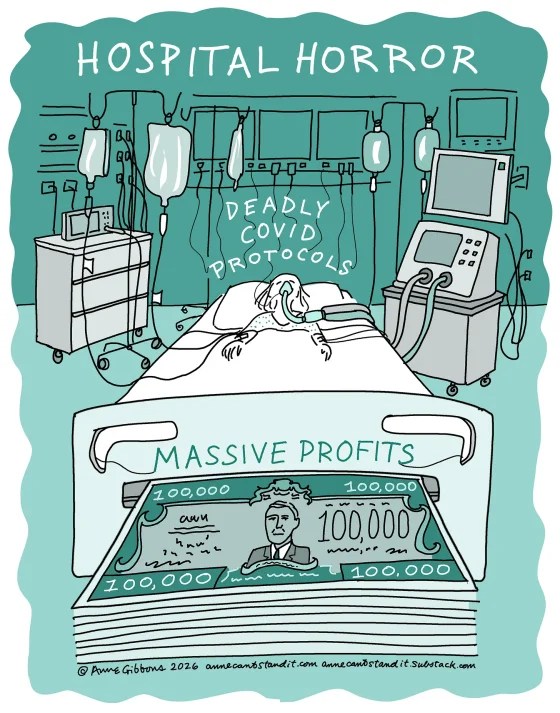
Hospital Horror
Documented in the film,“Bad Medicine”
Blog Roll
 Aletho News
- Poland and Bulgaria put brakes on Ukraine weapons funding
- Russia Reaffirms Its Support for Sovereignty, Territorial Integrity of Lebanon – Russian MFA
- Araghchi: Failure to punish aggressors against Iran endangers all nations
- Iran tells UN Security Council to stop reversing roles of ‘aggressor and victim’
- Disgraced neocons Feith & Libby: stop whining about ‘endless war’
- CENTCOM rejects Israeli claims of preparations for new Iran attacks
- Your Shopping Bag Runs Through Hormuz
- Armando Mema: Finland Used as New Frontline Against Russia
- Gestapo 2.0? Germany grants spy agencies sweeping new powers
- Franco-Palestinian group seeks court ban on Israeli real estate fair in Paris
- If Americans Knew
- An error has occurred; the feed is probably down. Try again later.
- No Tricks Zone
- New Study: Barents Sea Temperatures Were Warmer And Sea Ice Less Extensive In The 1700s Than Today
- German Authorities Start Initiative To Evaluate Public Register For Climate “Disinformation” Spreaders!
- Zonal Asymmetry of Temperature Change in the Antarctic Circumpolar Current
- New Study: The Net Fossil Fuel Contribution To Rising Atmospheric CO2 Has Been Zero For 500 Years
- Germany’s Green Energy Transition Becoming Increasingly Expensive…Another 6 Trillion Euros!
- Sudden Stratospheric Warming, Powerful El Niño Combination May Lead To Extreme Europe Cold, Energy Crisis!
- Two New Studies Find Thwaites Glacier Melt Cannot Be Driven By Human Activity Or A Warming Ocean
- E-Cars Reduce CO2 Emissions By Only 41% Compared To Internal Combustion Engine Vehicles
- Predictions Made By Renowned Climate Professor Over Past Decades Have Been Proven To Be Poor
- New Study Suggests Large Regions Of The Pacific Ocean Have Been Cooling For The Last 80 Years

