SDF: American, British volunteers join fight against Turkey in Afrin

MEMO | January 24, 2018
American, British and German citizens are among other volunteers with the US-backed Syrian Democratic Forces (SDF) that have joined the fight against Turkey in the Syrian province of Afrin, an official told Reuters earlier today.
Turkey’s offensive on the northern region, with the support of Free Syrian Army brigades, started on Saturday and has seen at least 260 Syrian Kurdish fighters and Daesh militants killed in its four-day-old attack.
SDF official Redur Xelil told reporters that foreign fighters among the SDF’s ranks had chosen to go to Afrin to support efforts against the Turkish assault.
“There was a desire on the part of the foreign fighters who fought in Raqqa and who are fighting in Deir Ez-Zor to go to Afrin,” Xelil said. “They will wage battles against the Turkish invasion.”
“There are Americans, Britons, Germans, different nationalities from Europe, Asia and America,” Xelil added.
Foreign fighters are not believed to make up a significant number of the SDF’s forces, with officials only stating they number in the “tens”.
The SDF is primarily made up of militants of the People’s Protection Units (YPG), an offshoot of the designated terrorist organisation, the Kurdistan Workers’ Party (PKK). The group has launched continual attacks against Turkey for the past three decades and their intention to establish a state based on federalism in northern Syria, has prompted Ankara’s intervention since 2016.
Following a US announcement last week that the Trump Administration would continue to aid the SDF and aim to establish a 30,000 strong force along the Syrian border with Turkey, Turkish President Recep Tayyip Erdogan condemned the decision and announced the start of Operation Olive Branch against SDF held regions.
Foreign fighters from the US and Europe have been free to join the SDF and fight alongside YPG forces, as well as return home.
However, those who seek to join other sides in the Syrian conflict do not face the same treatment, with UK Defence Secretary last month calling for British citizens fighting with Daesh abroad to be hunted down and killed. The policy was later criticised by terrorist watchdogs and human rights group who have accused the minster of advocating “war crimes”.
Earlier this month, France also refused the repatriation request of Emilie König, a Frenchwoman suspected of recruiting fighters for Daesh, who now regrets her decision to leave her country. In an interview with Radio RMC, France’s Justice Minister Nicole Belloubet, also said that French nationals who travelled to Syria to join Daesh could be tried by the SDF, signalling a de facto recognition of the autonomous Kurdish region, despite the group’s terrorist affiliations.
The SDF has been accused of numerous human rights violations in Iraq and Syria, including revenge attacks against civilians in former Daesh territories. Amnesty International is one of several NGOs that have recorded the SDF committing war crimes including displacing residents, razing homes, torture and extrajudicial killings.
Erdogan accuses allies of sending ‘thousands of planeloads’ and ‘truckloads of arms’ to Kurds
RT | January 21, 2018
Turkish President Recep Tayyip Erdogan has turned on Ankara’s allies, insinuating that the US in particular has been providing massive military support to Kurdish YPG in Syria.
In a speech to his ruling AK Party Erdogan said that ‘some allies’ of Turkey had provided the YPG Syrian Kurdish militia with 2,000 planeloads and 5,000 truckloads of weapons.
“Now, apart from 5,000 trucks, there are weapons and ammunition from around 2,000 planes.” the Turkish leader said. He also accused Ankara’s allies of dishonesty when they say that they do not provide weapons for “terrorists,” referring to Kurdish-linked YPG forces.
The president also vowed to hand over Afrin to its “real owners,” explaining that he aims to return 3.5 million refugees back to Syria from Turkey as soon as possible.
This weekend, Turkey began operation ‘Olive Branch’ against Kurdish forces in Afrin, deploying jets and land forces.
US caught in a cleft stick in northern Syria
By M K Bhadrakumar | Indian Punchline | January 20, 2018
The Syrian war is taking a momentous turn with a full-fledged Turkish military operation on the northern Syrian town of Afrin having begun on Saturday. President Recep Erdogan announced today that a ground operation has also been launched alongside artillery bombardment and air strikes. He said an operation against the town of Manbij, some 140 miles to the east, will follow later. (See the Google map here.)
Afrin and Manbij are presently controlled by the Syrian Kurdish forces aligned with the US. The US, which has 5 bases in northern Syria in the territories controlled by the Kurdish militia, has directly helped the occupation of Manbij by the Kurdish militia in 2016. Thus, the Turkish operation signifies a strategic defiance of the US. Washington had repeatedly urged Ankara against making any military moves against the Kurdish militia.
But what finally proved decisive seems to be the US plan to create a 30,000-strong Kurdish force in northern Syria with the intention to use it as a proxy. Erdogan senses that the US is going ahead with the project to create a Kurdish enclave in northern Syria along the Turkish border as a strategic hub for its future interventions in Syria and Iraq. Of course, such a Kurdistan enclave will pose a long-term national security threat to Turkey by giving fillip to Kurdish separatists in Turkey. Erdogan kept pleading with Washington not to align with the Kurds but to no avail and has now decided to take matters into his own hands.
Today’s development may well lead to a confrontation between the US and Turkey. The White House spokesperson had explicitly called on Turkey on Thursday not to undertake any military operations. State Secretary Rex Tillerson telephoned his Turkish counterpart Mevlut Cavusoglu on Saturday no sooner than it appeared that operations were imminent.
The stance of Iran and Russia is going to be crucial. Iran shares Turkey’s concerns about the US’ alliance with Kurds (who also have links with Israel) and regarding any Kurdistan in the region. Therefore, while Iran may express reservations about the Turkish operation (which is a violation of Syria’s sovereignty notionally), it is unlikely to act against Turkey.
Iran’s focus is on the ongoing Syrian government operations in the northwestern province of Idlib, which is hugely strategic, given its coastline along the Eastern Mediterranean. Russia too is currently focusing on the operations in Idlib, which is adjacent to Latakia province (also along the Eastern Mediterranean) where the Russian naval base at Tartus and the air base at Hmeimim are situated.
Conceivably, there is a tacit understanding that Turkey may not object (except, of course, verbally) to the Syrian operations (supported by the Iran-backed militia and Russia) to crush the al-Qaeda affiliates present in Idlib and secure the big province. The Iranian media reported today that Syrian government forces have captured the strategic Abu al-Dhohour airbase in southeastern Idlib from the al-Nusra Front (al-Qaeda affiliate) on Saturday afternoon.
As for the Russian stance, significantly, Erdogan deputed the Turkish Chief of General Staff Gen. Hulusi Akar and the head of the National Intelligence Organization Hakan Fidan to fly to Moscow on Wednesday to meet the Russian Chief of Staff Valery Gerasimov and the Russian intelligence. Clearly, a high degree of coordination between Moscow and Ankara went into Erdogan’s decision to order the Turkish military operation. Moscow has expressed concern about the Turkish operations and called for restraint but simultaneously also pulled back the Russian personnel in the vicinity of Afrin out of harm’s way.
There is no conceivable reason why Moscow should help the Americans — against the backdrop of the New Cold War. Interestingly, Russian Foreign Minister Sergey Lavrov hit hard at the US on Friday alleging that the US is balkanizing Syria. He said this at a press conference at the UN Headquarters in New York. To quote Lavrov, “US has been actually setting up alternative government bodies in large parts of Syria, which is contrary to the obligations in relation to Syria’s territorial integrity they have reaffirmed, committed to, particularly at the Security Council’s meetings. We are concerned about that.”
On January 15 at a news conference in Moscow, Lavrov did some plain-speaking:
We can see the aspirations not for settling the (Syrian) conflict as soon as possible, but for assisting those who would want to launch practical steps to change the regime… The actions, we can see now, demonstrate that the United States does not want to keep territorially integrated Syria. It was only yesterday that we heard a new initiative that the US wants to help the so called forces of democratic Syria to organize some border security zones. In fact, that means separation of a huge territory along the borders with Turkey and Iraq.
How does all this add up? To my mind, both Russia and Iran will simply sit back and watch as Erdogan goes about crushing the US’ main proxy (Kurdish militia) in northern Syria. Indeed, they have nothing to lose if a nasty showdown ensues between the US and Turkey, two big NATO powers. On the other hand, if Turkey succeeds in vanquishing the Kurdish militia, the US will have no option but to vacate northern Syria, which will also work to the advantage of Russia and Iran. Succinctly put, the Trump administration has bitten more than it could chew by its unwise decision to keep the US military presence in Syria indefinitely “to counter Assad, Iran.” Tehran knows fully well that if the US is forced to vacate Syria, the US-Israeli project against Iran will become a joke in the Middle East bazaar.
The coming weeks are going to be crucial. If the US appears helpless while Turkey crushes its allies in Syria, it will be a huge loss of face for the Trump administration regionally. Meanwhile, Turkey is actively cooperating with Russia in preparations for holding a Syrian National Dialogue (of government and opposition representatives) in Sochi on January 29-30. Russia now gets another opportunity to speed up the Syrian settlement.
Turkish Army Shells Syrian YPG Positions
Press TV – January 19, 2018
Turkish Defense Minister Nurettin Canikli says no troops have gone into Syria’s Kurdish-controlled Afrin region but the operation has started “de facto” with cross-border shelling.
Canikli said in an interview with broadcaster AHaber Friday that Turkey was developing weapons systems against anti-tank missiles used by US-backed YPG militants.
He said the planned military operations in the northwestern Syrian region should be carried out with no delay to purge the territories of what he called terrorist elements.
Amid its rising tensions with the US, Turkey said Thursday it would seek Russia’s approval for the operation as the country’s Chief of Staff Hulusi Akar traveled to Moscow for negotiations.
Foreign Minister Mevlut Cavusoglu said Akar’s trip was part of boarder efforts by Ankara to coordinate the campaign with Russia.
He said the presence of Russian observers in Afrin was an issue that has to be discussed ahead of the operation.
“When we carry out an intervention, we need to coordinate on this, it should not impact the Russian observers,” said Cavusoglu, adding that the coordination will also cover the situation in Idlib, a militant-controlled region northwest of Syria where Turkey backs an array of anti-Damascus groups.
“We are meeting the Russians and Iran on the use of air space,” the top Turkish diplomat added.
Cavusoglu had earlier said the planned Syria operation may expand beyond Afrin to the nearby city of Manbij.
Washington angered Ankara earlier this week when it announced a plan to work with US-backed militants of the so-called Syrian Democratic Forces (SDF) to set up a new 30,000-strong “border security” force near the Turkish border.
The force would operate along the Turkish border with Iraq and within Syria along the Euphrates River.
Cavusoglu further reiterated Turkish concerns over Kurdish militant activities near its borders and said, “Our response to this is our legitimate right to retaliate. We told the United States this.”
The White House later denied the plan, with Secretary of State Tillerson saying that the issue, which has incensed its NATO ally Ankara, had been “misportrayed, misdescribed. Some people misspoke.”
Turkey said the denial was “important,” but that it “cannot remain silent in the face of any formation which will threaten its borders.”
Ankara views the Kurdish People’s Protection Units (YPG), an offshoot of SDF, a terrorist organization linked to the homegrown Kurdish Workers’ Party (PKK) militant group, which has been fighting for independence inside Turkey.
Wary of the YPG’s activities at its doorstep, Turkey has repeatedly called on the US to stop supporting the Kurdish militants and take back the arms it has supplied to them under the pretext of fighting the Daesh terror group.
However, Syria has censured both the American and Turkish plans for a fresh wave of unilateral military operations on its soil. Damascus views such measures as an assault on the country’s sovereignty.
The Syrian government has also indicated that it would shoot down any Turkish planes entering its skies.
Turkey, Iran and Russia are the guarantors of a countrywide ceasefire in Syria. The three have been mediating a peace process since January 2016 among Syria’s warring sides in Astana, Kazakhstan.
As part of the Astana format, four de-escalation zones have been established across Syria amid ongoing political efforts to find a peaceful solution to the conflict gripping the Arab country since 2011.
The zones have helped reduce fighting significantly, while giving Turkey a breath to beef up security along its southern borders.
Syria slams US military presence as ‘act of aggression’
Press TV – January 18, 2018
Syria has strongly condemned a US plan to maintain its military presence in the Arab country as interference in its internal affairs and a blatant violation of international law.
“The internal affairs in any country in the world is an exclusive right of the people of this country, thus nobody has the right to only give his opinion in that because this violates the international law and contradicts the most important theories of the constitutional law,” Syria’s state news agency, SANA, quoted a Foreign Ministry official as saying in a statement on Thursday.
The statement comes after US Secretary of State Rex Tillerson said US troops would stay in Syria for the foreseeable future to defeat terrorists, and added that the US would not fund the reconstruction of any part of Syria, where President Bashar al-Assad is in power.
According to figures the Pentagon released in December, there are at least 2,000 troops in Syria as well as a diplomatic presence in cities such as Kobani.
The Syrian statement further said US presence and all of Washington’s actions in the Arab country are aimed at protecting the Takfiri Daesh terrorist group, which was created by the former American administration.
The Damascus government “does not need a single dollar from the United States for reconstruction because this dollar is stained with the blood of the Syrians,” the statement added.
Turkey reacts to Tillerson denial
Meanwhile, Turkey said on Thursday that Washington’s denial that it intended to build a border force in Syria was “important,” but added that Ankara would not remain silent in the face of any force that threatened its borders.
Tillerson on Wednesday denied that the United States had any intention to build a Syria-Turkey border force, saying the issue, which has incensed Ankara, had been “misportrayed, misdescribed. Some people misspoke.”
“This statement is important but Turkey cannot remain silent in the face of any formation which will threaten its borders,” Turkish Justice Minister Abdulhamit Gul told broadcaster NTV.
On Sunday, the US announced that it will work, along with a coalition of its allies purportedly fighting Daesh, with US-backed militants of the so-called Syrian Democratic Forces (SDF) to set up a new 30,000-strong “border security” force that includes the Kurdish People’s Protection Units (YPG).
Turkey views the YPG as a terror organization and the Syrian branch of the outlawed Kurdish Workers’ Party (PKK).
The force would operate along the Turkish border with Iraq and within Syria along the Euphrates River.
Washington’s plan has drawn angry reactions from Syria, Turkey and Russia. Syria views the formation of such a border force as an assault on its sovereignty.
The US and its allies back militants fighting to topple the Syrian government. American warplanes have also been bombing Syria since September 2014 without any authorization from Damascus or a UN mandate.
The airstrikes have on many occasions resulted in civilian casualties, seriously damaged Syria’s infrastructure and failed to fulfill their declared aim of countering terror.
Turkey reacted angrily to Washington’s plan and warned it would not hesitate to take action in Afrin district and other regions across the border in Syria unless the United States withdrew support for YPG.
In August 2016, Turkey began a unilateral military intervention in northern Syria, code-named Operation Euphrates Shield. Ankara said the campaign was aimed at pushing Daesh terrorists from Turkey’s border with Syria and stopping the advance of Kurdish forces.
Turkey ended its Syria offensive in March 2017, but has kept its military presence there.
Syria has voiced strong opposition to both Turkish and American military actions on its soil, repeatedly calling on the two NATO allies to pull their forces out.
Iran’s regime faces moment of truth
By M K Bhadrakumar | Indian Punchline | January 3, 2018
An unexpected side effect of the ongoing unrest in Iran is that it will consolidate the Turkish-Iranian entente in regional politics. The Turkish leadership has openly reached out to President Hassan Rouhani. Following up on the contact between the two foreign ministers on Tuesday and the statement by the Turkish Foreign Ministry, President Recep Erdogan telephoned Rouhani today to express Turkey’s solidarity.
While talking to a group of editors in Ankara today, Foreign Minister Mevlut Cavusoglu gently ticked off the US and Israel saying, “There are only two [world] figures who support protestors: Trump and Netanyahu. We are against such foreign interventions.” Cavusoglu added, “I have not seen any other world leader making such supportive statements. You may not like the regime but Iran’s president and government, apart from the religious leader, can only be changed through elections. And there are no objections about the security of elections [in Iran].”
Turkey did not have to go this far but it senses an imperative need to intervene. Turkey’s main concern will be Iran’s stability. Having said that, although Turkey is voicing open support for Iran in the current difficult period, it cannot be oblivious of the strong undercurrents playing out in Iran’s political economy. Erdogan has shown empathy for Rouhani’s approach – allowing the protests to take place peacefully without any intimidation by the state security agencies but effectively curbing any violent incidents. Rouhani told Erdogan that he hoped that the protests would end “within a few days.”
Even so, this ought to be a moment of truth for the Iranian regime. For the first time, perhaps, the unrest is largely among the downtrodden people who are losing hope in a better future under the existing regime. There is widespread resentment among poor people that the resources of the country are siphoned off by the ruling elites. The draft budget that was presented to the Majlis last month itself flagged a shocking misallocation of resources – Al-Mustafa International University (which propagates Shi’ism worldwide) has a budget that exceeds the combined budgetary allocation for the Ministry of Roads and Urban Development, Ministry of Labour and Social Affairs and the National Organization for Food and Drug.
There were high expectations among the poor people that following the signing of the nuclear deal in July 2015, the economic conditions would improve. They were jubilant when Zarif returned home after the nuclear deal and spontaneously thronged the airport to receive him. But two years down the line, these hopes have been dashed. The bazaar gossip is that billions of dollars in blocked funds lying in western banks that were returned to post-sanctions Iran have either been squandered away in overseas enterprises (Syria, Iraq, Lebanon, Yemen, etc.) or simply misappropriated by the religious establishment.
The current unrest is doomed to fizzle out. The absence of middle class (which is in the vanguard of all revolutions in history) guarantees it. Again, the lack of leadership among protestors would mean that “fatigue” would set in sooner or later. The wretched of the earth do not have the luxury to protest till eternity instead of eking out their daily livelihood to keep body and soul together.
What is the way forward? The people, clearly, want “change”. Arguably, they no longer have faith in the so-called “reformists”, either. On the other hand, Rouhani faces dogged opposition from entrenched interest groups who masquerade as “conservatives” or “principlists”. If the protests in 2009 (led by the middle class) were about political empowerment and had a narrow social base, this time around, the demand is ‘Where is my money?’ and the social base lies among the the downtrodden sections of society. Shockingly enough, the cry “Allahu Akbar” (God is great) was conspicuous by its absence throughout this turmoil, although it has been the signal tune of Iranian street politics ever since the Islamic Revolution in 1979.
The regime may be right up to a point in alleging that there has been foreign interference. But, hopefully, it will not become the alibi for postponing reforms. Certainly, the regime is in no immediate danger. But a challenging period lies ahead. Iran has crucial choices to make. Iran’s foreign policies should become an extension of its national policies, attuned to its development agenda – economic growth, job creation and alleviation of poverty – and to the creation of a just society. Geopolitics is not the priority for Iran today – it is nation-building.
Who Are the Leading State Sponsors of Terrorism?
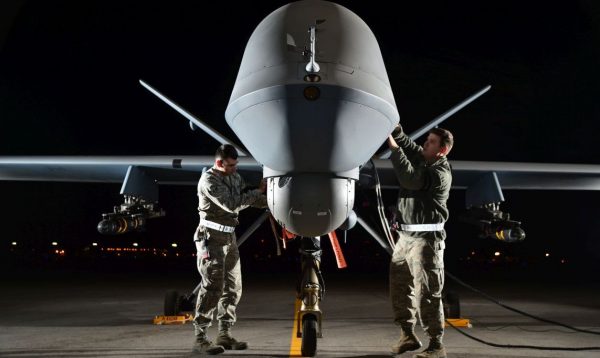
By Philip M. GIRALDI | Strategic Culture Foundation | 28.12.2017
As 2017 draws to a close, it is difficult to be optimistic about what will be coming in the new year. The American President, whose margin of victory was certainly based on his pledge to avoid unnecessary wars, has doubled down on Afghanistan, refuses to leave Syria even though ISIS has been defeated, and is playing serious brinksmanship with a psychopathic and unpredictable regime in Pyongyang. The White House has also bought into the prevailing largely fabricated narrative about a Russia and has decided to arm Ukraine with offensive weapons, which has already resulted in a sharp response from Moscow and will make détente of any kind between the two leading powers all but impossible in the upcoming year.
But, as I have observed before, the red hazard light that continues to be blinking most brightly relates to Washington’s relationship with Iran, which has unnecessarily deteriorated dramatically over the past year and which brings with it collateral problems with Russia and Turkey that could trigger a much wider conflict. I say unnecessarily because all the steps taken to poison the relationship have come out of Washington, not Tehran. The Trump administration refused to certify that the Iranians had been in compliance with the nuclear agreement negotiated in 2015 and has since escalated its verbal attacks, mostly at the United Nations, claiming that the regime in Tehran is the major source of terrorism in the world and that it is seeking hegemony over a broad arc of countries running westward from its borders to the Mediterranean Sea.
The only problem with the allegations being made is that none of them is true and, furthermore, Iran, with limited military resources, poses no serious threat to gain control over its neighbors, nor to attack the United States or Europe. The invective about Iran largely derives from Israel and Saudi Arabia, which themselves have hegemonic ambitions relating to their region. Israel’s friends in the US Congress, media and White House have not surprisingly picked up on the refrain and are pushing for military action. Israel has even threatened to bomb any Iranian permanent presence inside neighboring Syria.
A recent detailed analysis by former US intelligence officers has demonstrated just how the claim that Iran is the world’s leading sponsor of terrorism is almost completely fabricated. The analysis explains how these false narratives are contrived and how they become part of the Washington background noise. The White House’s recent National Security Strategy Report for 2018 stated that “Iran, the world’s leading state sponsor of terrorism, has taken advantage of instability to expand its influence through partners and proxies, weapon proliferation, and funding.” But another US government report, the annual Country Reports on Terrorism 2016 cites no actual terrorist incidents initiated by Iran in that year. In fact, the most recent terrorist incident attributed to Tehran was in 2012, and that was retaliatory against Israel, which was at the time assassinating Iran’s scientists and technicians and attacking its computer systems.
America’s UN Ambassador Nikki Haley’s has recently claimed that it is hard to find a “terrorist group in the Middle East that does not have Iran’s fingerprints all over it.” But in reality, the overwhelming majority of terrorist groups in the region, to include ISIS, Al-Qaeda and al-Nusra, are Sunni Muslims, who believe Iran’s Shi’ism is heretical, and are both tied to and funded by Qatar, Saudi Arabia and the United States. The Mujahedin-e-Khalq (MEK) is indeed an ethnic Iranian terrorist group, but it has been funded and supported by Washington and Tel Aviv to carry out attacks inside Iran.
The reality is that terrorism, defined by the United Nations as “criminal acts intended or calculated to provoke a state of terror in the general public,” is most employed at the state level by the United States and its allies Israel and Saudi Arabia, not by Iran. All have used violence directed against civilians in places like Afghanistan, Iraq, Syria, Yemen and Lebanon, and all three have supported organizations that fit the definition of terrorists. Iran may indeed be guilty of actions that much of the world disapproves of, but it is not the world’s leading state sponsor of terrorism as has been alleged.
Erdogan’s Claims That Assad is a ‘Terrorist’ Have No Legal Basis – Moscow
Sputnik | December 28, 2017
The Russian Foreign Ministry has commented on the recent statement of Turkish President Recep Tayyip Erdogan, calling his Syrian counterpart Bashar al-Assad a “terrorist”.
“Such evaluations do not have any legal basis… Such statements are groundless,” Russian Foreign Ministry spokesperson Maria Zakharova said during a briefing on Thursday, adding that the representatives of the Syrian government are members of the UN and represent the country’s government in the UN Security Council.
The statement was made after on December 27, Turkish President Recep Tayyip Erdogan called his Syrian counterpart “definitely a terrorist who has carried out state terrorism” during a meeting with Tunisian president Beji Caid Essebsi, adding that “it is impossible to continue with him”, claiming that Assad had allegedly killed about a million of Syrian citizens.
The Syrian Foreign Ministry responded to these claims by saying that Erdogan was deceiving the public opinion in Turkey by claiming that Assad should not remain in power, adding that Ankara’s policy “causes catastrophic consequences” for both countries. The Syrian president has repeatedly denied all allegations of targeting civilians.
While both Russia and Turkey are the guarantors of the Syrian ceasefire and brokers of the Astana peace talks, their positions on the role of Assad in the future of the Arab Republic have differed since the civil war’s beginning in 2011.
While Moscow has repeatedly stressed that Assad was a legitimate president, underlining that it was up to the the Syrians to decide their own future, Ankara has been insisting that the Syrian president should leave his post.
A similar stance has been recently voiced by German Foreign Minister Sigmar Gabriel, who said that the future of the Arab Republic’s president and his government could only be resolved through talks.
In his turn, Assad has previously refused to consider Ankara as its partner or a guarantor state in the peace talks, accusing the country of supporting terrorism.
READ MORE: ‘Assad Mustn’t Go’: How Qatar, France, Germany ‘Wised Up in Regard to Syria’
Featured Video
Armando Mema: Finland Used as New Frontline Against Russia
or go to
Aletho News Archives – Video-Images
New Documentary
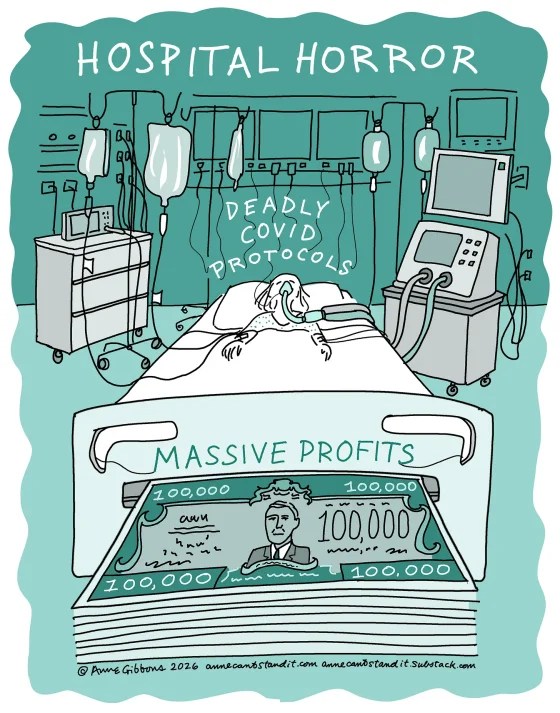
Hospital Horror
Documented in the film,“Bad Medicine”
Blog Roll
 Aletho News
- Poland and Bulgaria put brakes on Ukraine weapons funding
- Russia Reaffirms Its Support for Sovereignty, Territorial Integrity of Lebanon – Russian MFA
- Araghchi: Failure to punish aggressors against Iran endangers all nations
- Iran tells UN Security Council to stop reversing roles of ‘aggressor and victim’
- Disgraced neocons Feith & Libby: stop whining about ‘endless war’
- CENTCOM rejects Israeli claims of preparations for new Iran attacks
- Your Shopping Bag Runs Through Hormuz
- Armando Mema: Finland Used as New Frontline Against Russia
- Gestapo 2.0? Germany grants spy agencies sweeping new powers
- Franco-Palestinian group seeks court ban on Israeli real estate fair in Paris
- If Americans Knew
- An error has occurred; the feed is probably down. Try again later.
- No Tricks Zone
- New Study: Barents Sea Temperatures Were Warmer And Sea Ice Less Extensive In The 1700s Than Today
- German Authorities Start Initiative To Evaluate Public Register For Climate “Disinformation” Spreaders!
- Zonal Asymmetry of Temperature Change in the Antarctic Circumpolar Current
- New Study: The Net Fossil Fuel Contribution To Rising Atmospheric CO2 Has Been Zero For 500 Years
- Germany’s Green Energy Transition Becoming Increasingly Expensive…Another 6 Trillion Euros!
- Sudden Stratospheric Warming, Powerful El Niño Combination May Lead To Extreme Europe Cold, Energy Crisis!
- Two New Studies Find Thwaites Glacier Melt Cannot Be Driven By Human Activity Or A Warming Ocean
- E-Cars Reduce CO2 Emissions By Only 41% Compared To Internal Combustion Engine Vehicles
- Predictions Made By Renowned Climate Professor Over Past Decades Have Been Proven To Be Poor
- New Study Suggests Large Regions Of The Pacific Ocean Have Been Cooling For The Last 80 Years

