Exercise Sea Shield-2017: NATO Provokes Russia in Black Sea Before Defense Ministers’ Meeting
By Alex GORKA | Strategic Culture Foundation | 10.02.2017
Russian President Vladimir Putin has ordered snap drills to be held by the Aerospace Forces and other branches to evaluate its preparedness against potential aggression. The exercise started on February 7.
Some Western media have accused Moscow of preparing to start an aggression. In reality, the action is taken in response to NATO and Ukraine’s provocative activities in the Black Sea. 16 warships, a submarine and 10 warplanes along with some 2,800 troops from Ukraine, Romania, Turkey, Bulgaria, Greece, Spain, Canada, and the US are taking part in exercise ‘Sea Shield 2017’ scheduled to run between February 1 and 11 in the proximity of Russian borders.
HMS Diamond of the UK Royal Navy is sent to participate in the event. It’s a rather symbolic move. This is the first time since the Cold War that a British naval vessel entered the waters of the Black Sea. According to British Defense Minister Michael Fallon, this is the way that the British government confirms its support of Ukraine – a hostile act towards Russia. After the NATO exercise, the ship will visit Odessa to hold bilateral drills with Ukraine. The destroyer has 60 Special Boat Service and Royal Marine commandos on board. It’s logical to expect amphibious landing to be part of the exercise.
According to the Daily Mail, HMS Diamond will lead a NATO task force and help protect 650 British troops who are involved in secret exercises in Ukraine. There is ground to believe that something is cooking up.
NATO defense ministers will meet February 15-16 in Brussels to discuss a package of measures aimed at bolstering military presence in the Black Sea. The proposals on two basic elements for the maritime component – a strengthened training framework and a coordination body for the Black Sea that reports to the specialized NATO command – are expected to be submitted for consideration.
The organization plans to build NATO’s Black Sea presence on land around a Romanian-led multinational framework brigade in the process of formation. Nations who have pledged to contribute include Canada, Germany, the Netherlands, Poland, Turkey and the United States. The unit is intended to facilitate the deployment of reinforcements. Georgia and Ukraine will be fully involved in the plans.
Romania calls for a regular trilateral format of joint naval exercises in the Black Sea, along with Turkey and Bulgaria, with the eventual participation of non-littoral NATO members.
The UK, Canada and Poland will send aircraft to be based in the Romanian southeastern Mihail Kogalniceanu air base. Romania, Bulgaria and Turkey are also expected to come forward with a plan to increase naval and air patrols. Romania and Bulgaria will host aircraft designed to carry out surveillance missions.
Last September, US and Bulgarian aircraft launched joint regular patrols in the Black Sea. The patrolling mission greatly increases the risk of an accident, especially with the Russian S-400 long range systems stationed in Crimea. Russian aircraft deployed in the Northern Caucasus and Rostov region are capable of controlling the whole Black Sea. President Putin has already warned NATO about the consequences such policy would lead to.
There has been a surge in airspace violations and instances where aircraft are scrambled to intercept foreign jets amid a sharp rise in tensions in the region. For instance, Sea Shield-2017 exercise started with an incident. Ukraine accused Russia of firing at its An-26 cargo aircraft on a training flight. The plane flew provocatively low over an oil rig. A security guard gave flash signals from a signal pistol to prevent the plane from crashing into the drilling tower.
Non-Black Sea NATO members cannot stay in the Black Sea more than 21 days, according to the Montreux Convention. NATO has three members with Black Sea ports in Romania, Bulgaria and Turkey, as well as two more aspiring members in Ukraine and Georgia.
Bulgarian, Romanian, Ukrainian and Georgian navies have limited capabilities. It brings to the fore the possibility of major NATO sea powers handing over some of their own warships to them. The ships could be reflagged to beef up permanent naval capabilities in the theater. US warships frequent the Black Sea to provide NATO with long-range first strike capability.
Romania hosts a ballistic missile defense (BMD) site believed to be capable of launching long-range surface-to-surface cruise missiles in what constitutes a violation of INF Treaty. Aegis Ashore uses the naval Mk-41 launching system capable of firing such weapons. Located near Caracal in south central Romania, Aegis Ashore is part of the second phase of the so-called «European Phased Adaptive Approach» (EPAA) to an overall NATO missile defense architecture.
Bulgaria also plays a prominent role in NATO’s plans to bolster the bloc’s military presence in the region. This year, Novo Selo, a US military base in Bulgaria, is expected to host more American and NATO troops. The first of three six-month rotations of about 150 US Marines, part of the Black Sea Rotational Force, is due at Novo Selo in September. US Army soldiers come to Bulgaria for training on a rotational basis. Under the 2006 defense cooperation agreement, the United States has access to three Bulgarian military bases.
The US plans to deploy up to 2,500 troops at Novo Selo; the base can hold as many as 5,000 during joint-nation exercises with NATO allies. The facility’s construction is almost finished; the plans are on the way to upgrade the training ranges this year. The upgrade includes adding a helicopter landing zone and an air operations building. The base is expected to host US heavy tanks. A NATO maintenance support area is to be built in Sliven or Plovdiv.
For the US, the Black Sea is a remote region where it has no interest. It’s different for Bulgaria as 80 percent of Bulgarian exports and imports transit the Black Sea and tourism contributes heavily to the country’s economy, increased maritime militarization could have a widespread negative economic impact in case of accidents or clashes.
Nothing justifies the whipping up of tensions by NATO in the Black Sea region. Too provocative and too dangerous. An incident may spark a fire. The INCSEA agreement appears to be dead as the events in the Baltic Sea demonstrate.
While the Islamic State poses a threat to the very existence of NATO members, the alliance is engaged in provocations to intimidate Russia – its natural ally in the fight against the common enemy. Does it meet the interests of the alliance members? It would stand NATO defense chiefs in good stead if they asked themselves this question at the February 15-16 meeting.
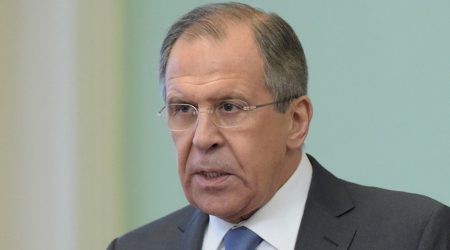
Moscow mediates talks between Assad & Syrian Kurds – Lavrov
RT | February 9, 2017
Russian Foreign Minister Sergey Lavrov has confirmed that Moscow has been mediating talks between Damascus and the Syrian Kurds to help maintain Syria’s sovereignty and statehood, in an interview with Russia’s Izvestia daily.
Russia “makes efforts to establish a common understanding between the Syrian government and the Syrian Kurds for the sake of a united Syria,” the minister told Izvestia in an interview he gave ahead of Diplomat’s Day, a Russian holiday celebrated on February 10.
Lavrov went on to say that four rounds of negotiations, brokered by Russia and including direct contact between the Damascus delegation and “representatives of the political and public structures of the Syrian Kurds,” had already taken place between June and December in 2016. In addition, the gatherings also involved indirect talks between the two sides.
The Russian foreign minister also confirmed that the Syrian government had held talks with the leaders of the Syrian Kurds’ armed militia units, the YPG.
“We believe that such intra-Syrian dialog is useful,” Lavrov said, stressing that there is “significant potential for reaching agreements” between Damascus and the Kurds, as the sides have found many areas of common interest and their negotiations are developing positively.
Lavrov emphasized that “the Kurdish issue” is one of the “key” factors in maintaining Syrian statehood and contributing to the stabilization of the situation in the entire Middle East. He also drew attention to the fact that Russia is continuing its efforts to find compromises between various ethnic and religious groups in Syria, as it is interested in restoring peace and stability in the warn-torn country and defeating international terrorist organizations entrenched in some areas there.
Regarding Syria’s potential federalization, Russia’s top diplomat neither denied nor confirmed that the issue was discussed during the talks between the Syrian government and the Kurds.
The minister’s statements come as Russia also seeks to launch a peace process between the Syrian government and the armed opposition groups together with Turkey and Iran.
In December 2016, a nationwide ceasefire came into force in Syria. It was brokered by Moscow and Ankara and endorsed by the UN Security Council. While in late January, negotiations took place between official representatives from Damascus, Russia, Iran and Turkey, as well as a delegation from the Syrian opposition in the Kazakh capital, Astana. However, the Syrian Kurds were not represented at the talks.
During the gathering, Russia submitted a draft document to serve as a “guide” for the Syrian constitution. The paper stressed that Syria’s territory is “inviolable and indivisible,” suggesting that restructuring of internal borders and proclaiming autonomous regions within Syria should be done only with respect to the country’s own laws. The rights of minorities were another key element of the draft.
In his interview with Izvestia, Lavrov also discussed other pressing issues in modern international politics. He once again criticized the NATO military buildup on Russian borders but expressed hope that Western politicians would eventually understand that Russia “poses no direct threat to NATO” and is a “peaceful country.”
Russia seeks “immediate de-escalation of the military and political situation in Europe” but is ready to defend its borders, Lavrov stressed.
He also went on to express his regret over the recent escalation of the conflict in eastern Ukraine and urged Kiev to implement the Minsk Agreements, noting that there is no other way to resolve the crisis.
Touching upon the issue of US-Russian relations, Lavrov again confirmed that Russia is ready to work with the administration of new US President Donald Trump on a broad range of issues, yet “on the basis of mutual respect.”
US Suspends Plans to Seize Raqqa: President Trump Wants Russia to Join
By Peter KORZUN | Strategic Culture Foundation | 05.02.2017
President Donald Trump’s administration has scrapped the previous administration’s plan to take Raqqa, the de facto capital of the Islamic State (IS) group. The plan proposed a strategy of training Kurdish forces, providing them with new equipment, and helping them retake the city.
US-supplied armored vehicles have only been delivered to the Syrian Arab Coalition (a part of the Syrian Democratic Forces – SDF), which is made up of militants predominantly from local Arab areas. The Kurdish components of SDF have been denied the aid not to spoil the US relations with Turkey.
According to the Washington Post, the officials said they were dismayed that there was no provision for coordinating operations with Russia and no clear political strategy to address Turkey, a country that would be angered by the US cooperation with the Kurds, and the lack of a plan B in case the Kurdish offensive failed. They also said the plan lacked specifics on the number of troops needed for the operation.
The operation Euphrates Anger was launched by US-backed SDF in November 2016. Obviously, President Trump sets much store by cooperation with Moscow in the fight against terrorists. He faces the problem of getting Turkey on board. Russia and the US could join together as intermediaries to facilitate talks between the Kurds and Turkey.
Turkey has excellent relations with the Iraqi Kurds who could also join in any mediation effort. If progress is achieved, Washington will not let down the Syrian Kurds, cooperating with Ankara. Since January 18, Russia and Turkey, a US NATO ally, have been engaged in a joint operation to retake Al Bab.
No success is achievable without sufficient ground forces. The Kurdish formations are not enough and there is a basis for joining together – the US and Turkey see eye to eye on the idea to create safe zones in Syria. Russia has agreed to discuss the issue in principle. It’s important that the Trump team is not as adamant as the previous administration about making Syrian President Assad resign.
Michael T. Flynn, Donald Trump’s new National Security Adviser, has always been critical of Obama’s Syria policy calling it inconsistent. He has supported the idea of the US and Russia cooperating in the fight against the IS. «We have to work constructively with Russia. Whether we like it or not, Russia made a decision to be there (in Syria) and to act militarily. They are there, and this has dramatically changed the dynamic», Flynn told Der Spiegel in an interview.
President Donald Trump has stated that regime change in Syria would only cause more instability in the region. He thinks that shoring up President Assad is the most efficient way to stem the spread of terrorism. According to Mr. Trump’s statements, he would weigh an alliance with Russia against Islamic State militants.
On January 28, the president ordered military leaders to give him a report in 30 days that outlines a new strategy for defeating the IS. The document is expected to include recommendations on changes to military actions, diplomacy, coalition partners, mechanisms to cut off or seize the group’s financial support and a way to pay for the strategy.
The president charged Defense Secretary James Mattis with developing a plan with the help of the secretaries of State, Treasury and Homeland Security, the director of national intelligence, the chairman of the Joint Chiefs of Staff, the assistant to the president for national security affairs and the assistant to the president for homeland security and counterterrorism.
The order was signed hours after speaking to Russian President Vladimir Putin on the phone – the first call between the leaders since Donald Trump took office. Mr. Putin emphasized that «for over two centuries Russia has supported the United States, was its ally during the two world wars, and now sees the United States as a major partner in fighting international terrorism».
With Donald Trump in office, a deal on coordinating activities is reachable. Joint operations to retake Raqqa would be a good start. The zones of influence and mutual obligations could be defined. Russia is ready to cooperate with the US during the operation to retake Raqqa. Last October, it was reported that Moscow planned to discuss the issue with the US officials.
Joining together, the parties could gradually move forward within the framework of Astana process and the UN-brokered talks to be revived in Geneva this month. The cooperation between Russia and the US is key to achieving progress in the Syria’s crisis management. It could spread to other areas of the bilateral relationship.
Actually, an offensive to liberate Raqqa is impossible without coordinating activities with Moscow. Russia, the US and Turkey are the pivotal actors in the conflict. The operation to retake Raqqa must be conducted with the consent of Syria’s government. It is hard to imagine the US and Turkey discussing the issue with the government of Bashar Assad. Russia is perfectly suited to be a mediator.
And what comes next after Raqqa is retaken? Who and under what authority will govern? With the pertinent actors involved in the conflict holding different, even opposite, visions of the country’s future, there will have to be international presence and agreement on what to do next.
The cooperation between Russia, the US and Turkey during the battle for Raqqa could become a start of wider process with diplomacy given a chance. It could also become a start of Russia-US cooperation in Syria and other countries where the IS has presence.
Talks in Astana will give green light to the peace process in Syria
Dr Alexander Yakovenko | RT | January 20, 2017
It is important to clarify some of Russia’s approaches to the negotiations between representatives of the Syrian Government and armed opposition groups in Astana on January 23.
We believe that the best is to limit the number of foreign participants to representatives of the countries-guarantors of the ceasefire – Russia, Turkey and Iran. The new US administration has been invited too. We hope that Deputy Special Envoy of the UN Secretary-General R.Ramzi will act as a mediator at the talks.
The meeting in Astana is not a substitute for the intra-Syrian talks, which begin on February 8 in Geneva. On the contrary, it will contribute to the further development of the negotiation process by inviting the representatives of the armed opposition, who have real influence “on the ground.” We hope that they will also agree to participate in the Geneva talks as an equal and permanent member of the united delegation of the Syrian opposition.
On the agenda – discussions on strengthening the ceasefire, delivering humanitarian aid, building confidence, ensuring free movement of citizens throughout the country except in areas controlled by the terrorists, who are not a party to any agreement and must be defeated as endorsed by the UNSC resolutions.
We hope that a substantive discussion of the modalities of the constitutional reform in Syria will be launched, including the creation of the Constitutional Commission to get the work on a new Constitution started. The members of this Commission will include representatives of both the government and the various political opposition groups, which is provided for in the UN Security Council Resolution 2254.
We hope that the meeting in Astana will contribute to the peace process in Syria and strengthen counter-terrorism efforts.
Dr Alexander Yakovenko, Russian Ambassador to the United Kingdom of Great Britain and Northern Ireland, Deputy foreign minister (2005-2011). Follow him on Twitter @Amb_Yakovenko
Trump brings optimism to Syrian peace talks
By M K Bhadrakumar | Indian Punchline | January 20, 2017
On Thursday, Moscow slipped in the formal invitation to Washington to attend the intra-Syria talks in Astana on coming Monday (January 23). It waited till the last ‘working day’ of the Barack Obama administration. A snub to the outgoing administration? But it could as well have been a pre-emptive measure to guard against any last-minute temper tantrum by the outgoing US administration.
No doubt, it is a thoughtful Russian move to engage the incoming Donald Trump administration on its very first day in the White House. Trump will now take the call. The Russian Foreign Minister Sergey Lavrov said:
- We hope the new US administration will accept this invitation and will be represented at this meeting at any expert level it considers appropriate. This could be the first official contact during which we will be able to discuss a more effective way to fight terrorism in Syria… Russia and the United States created and are co-chairing the International Syria Support Group… It has two task forces – a Humanitarian Task Force and a Ceasefire Task Force. There is a good chance we can invigorate these mechanisms.
Lavrov’s optimism must be based on considered assessment regarding Trump’s disposition to work with President Vladimir Putin in the fight against terrorism in Syria and elsewhere.
A novel feature of the Astana talks is that the field commanders of the Syrian opposition groups have been brought to the forefront as the Syrian government’s interlocutors. Previously, politicians living in exile who were proxies of Saudi Arabia and Qatar used to represent these groups. They were vulnerable to outside manipulation. Evidently, Turkish and Russian intelligence acted together, pooling resources, to wean the field commanders away from the orbit of Saudi and Qatari influence and entice them to agree to a ceasefire and get them to jettison their previous aversion to dealing with the Syrian government.
Of course, the field commanders too have little room to maneuver after the capture of Aleppo by the government forces. Besides, Trump’s win effectively shuts the door on any future US support for these rebel groups. There is bitterness among the residual rebel groups who remain within the Saudi orbit, but losers cannot be choosers. A commentary by Fox News brings this out.
In the final analysis, Moscow has shown almost seamless patience to get as many rebel groups as possible on board – with the exception of Islamic State and al-Qaeda affiliate Nusra Front. No ‘pre-conditions’ have been set except that the participants in the Astana talks must agree on ceasefire. What we see here is a total marginalization of regional states who played a negative role aimed at fragmenting Syria – principally, Saudi Arabia, Qatar and Israel.
Moscow would feel gratified that Turkey is using its clout with the rebel groups to persuade them to attend the Astana talks. In a dramatic turnaround, Russian jets are now providing air support for the Turkish ground operations in northern Syria, testifying to the phenomenal shift in the regional alignments over Syria. (Associated Press )
The bottom line is that the departure of the Obama administration has dramatically improved the prospects for a Syrian peace process taking off, finally. Moscow is pinning hopes that there will be a sea change in the US policies in Syria w.e.f January 20. Again, to quote Lavrov:
- When he (Trump) says that his key foreign policy priority will be the fight against terrorism, we are happy to welcome this intention. This is exactly what our American partners lacked before him. On paper, they (Obama administration) seemed to be cooperating with us…, but in fact, they were deceiving us… According to a recent leak about John Kerry’s meeting with Syrian opposition forces several years ago, the United States regarded ISIS as a suitable force for weakening Bashar al-Assad… What Donald Trump and his team are saying now shows that they have a different approach and will not apply double standards in the fight against terrorism in order to achieve unrelated goals.
The talks in Astana are expected to be substantial. Russia and Turkey hope to involve the field commanders in the drafting of a new constitution, holding of a referendum and fresh elections. Equally, a consolidation of the country-wide ceasefire can be expected as a tangible outcome of the Astana talks. (TASS )
Syria Rejects Qatar, Saudi Chairs in Astana Talks: No Place for Terrorism Sponsors
Al-Manar – January 18, 2017
Syrian deputy Foreign Ministry rejected on Wednesday the participation of Saudi Arabia and Qatar in the Astana peace talks on Syria next week, stressing that negotiations should not include every party that supports, arms and funds terrorism.
“Once Qatar and Saudi Arabia halt their support to terrorism, then we can discuss their participation in the talks,” he said.
Speaking to Al-Mayadeen TV, Moqdad said that Washington should prove its sincerity to deal with solutions for the Syrian crisis, prevent the support of armed terrorist groups, and exert pressure on Turkey to close its border with Syria.
On the participation of the United States in Astana negotiations, the Syrian official said “anyone who wants to work in good will to resolve the crisis in Syria can take part,” calling to “punish those who finance and arm terrorism, including Saudi Arabia and Qatar.”
Turkish Officials Say American TOWs are Hurting Them Big Time
By Martin Berger – New Eastern Outlook – 03.01.2017
 It came as a big surprise that Turkey’s President Recep Tayyip Erdogan has recently labeled members of the US-led coalition as promise breakers and supporters of terrorists. According to the Turkish leader, this coalition provides support to various terrorist groups, including ISIS, YPG, PYD and Ankara has the evidence to back up that claim.
But what exactly offended Ankara so much? Over the past few days, Turkey has been suffering extremely painful defeats from the Islamic State in the Syrian city of Al-Bab. Previously the troops employed in the Euphrates Shield operation successfully taken western suburbs of Al-Bab were planning to occupy the heights overlooking the city. However, ten days ago the “shield” cracked, when ISIS units opposed Turkish troops in a frontal assault, inflicting heavy losses upon the Turkish army. Radical militants report that in just one Turkey lost up to 70 soldiers and three modern tank. Immediately after the announcement ISIS started spreading videos featuring the destruction of Turkish armored vehicles. The Turkish General Staff announced that it lost 14 servicemen, 10 German manufactured Leopard tanks, an M-60 main battle tank, personnel carriers and a Cobra armored vehicle. The pictures that can be found now on the Internet depict Turkish armored vehicles severely damaged by TOW missiles that in recent years have “suddenly” started appearing in the hands of ISIS radicals.
But nobody should be really surprised at this point, as Turkish media were reporting in late December that Washington was stepping up its weapons supply efforts to radicals via the Syrian Al-Hasakah Governorate. It’s been noted that as the US Ambassador to Ankara, John Bass kept persuading Turkish reporters that Washington was not supporting militants directly, the airfield in the Syrian city of Rumeylan saw an ever increasing number of US transport planes landing. The payload that they were carrying would soon be transported by US helicopters to different parts of the country. According to Turkish journalists, the last large delivery of weapons occurred on the evening of 27 December. It has also been noted that weapons are being delivered to Syria via hundreds of trucks, carrying their deadly cargo from the Iraqi city of Erbil to the areas controlled by the Syrian Kurds.
We have seen various commentators noting that under the guise of military assistance to the Kurdish Peshmerga, the Obama administration is actively assisting various extremist groups in Syria by secretly supplying them to with all sorts of weapons, along with the so-called “advisers” in a bid to topple the legitimate Syrian government.
It’s no coincidence that after the liberation of Aleppo, Syrian troops found stockpiles of weapons and explosives manufactured in the US, Germany and Bulgaria, including a large quantity of anti-tank missiles.
While the Aleppo operation has been a turning point in the Syrian armed conflict, the White House is still in a hurry to provide maximum support to the so-called “moderate opposition” in Syria, but now it’s clear for pretty much everyone that Washington is assisting ISIS. Last December alone Turkish bloggers spotted the passage of three large cargo ships through the Bosporus Strait, presumably carrying arms for the Syrian rebels. In particular, in mid-December a freighter Karina Danica left the Bulgarian shore, while heading to Jeddah, Saudi Arabia, with weapons on board, reports Bosphorus Observer on Twitter. This data is confirmed by a specialized tracking site known as MarineTraffic. It is a publicly known fact that the freighter Karina Danica is a Danish vessel, chartered by the American company Cherming, which is the official supplier of non-standard NATO weapons for the US “allies” in Iraq, Syria and Afghanistan. It’s curious that the Bulgarian Vazovski Machine-Building Plant that sells weapons to Cherming, increased its sales by 12 times in 2016, making a profit of 170 million dollars.
What makes this whole arms supplies story awkward is the scandal that broke out in 2015, when the Chairman of the Iraqi Parliamentary Committee on Defense and Security, Hakim Zamili asked PM Haider al-Abadi to intervene immediately to stop the 300 million dollar ammunition deal involving Romanian weapons being delivered to ISIS directly, while financed by one of the neighboring countries. In 2016, the director of the Conflict Armament Research, James Bevan stated that the weapons from Eastern Europe that were officially designated for the so-called “moderate opposition” are falling in extremist hands.
The decision to supply anti-government troops in Syria with all sorts of weapons, including MANPADS, that was signed by President Barack Obama on December 23, may lead to the further escalation of the Syrian conflict and new victims.
So there’s more than enough reason for Ankara’s resentment of the Obama administration, since it is directly responsible for every single Turkish soldier murdered by radical militants.
There will be no partition of Syria
By Sharmine Narwani | RT | December 29, 2016
East Aleppo is liberated, and regime-change has lost its luster. It’s no surprise Syria’s foes are ready to promote the next big goal: partition. Like most Syrian conflict predictions, of which few have materialized, the ‘partition’ of Syria is not going to happen.
In February, when East Aleppo was still bulging with Western-trained, Al Qaeda-allied militants, Syrian President Bashar Assad was asked the question: “Do you think that you can regain control over all Syrian territory?”
Well, yes, said Assad: “This is a goal we are seeking to achieve without any hesitation. It makes no sense for us to say that we will give up any part.”
Western politicians were having none of that.
First up was US Secretary of State John Kerry who coyly informed the Senate Foreign Relations Committee that the Obama administration may have a Plan B up its sleeve for Syria: “it may be too late to keep it as a whole Syria if we wait much longer.”
Next, James Stavridis, former NATO Supreme Commander and head of the US European Command penned an article for Foreign Policy entitled It’s time to seriously consider partitioning Syria where he claimed: “Syria as a nation is increasingly a fiction.”
Then, CIA Director John Brennan joined the chorus: “There’s been so much blood spilled, I don’t know if we’re going to be able to get back to [a unified Syria] in my lifetime.”
But now the stinging defeat of Western-backed militants in East Aleppo has turned up the dial on the idea of breaking up Syria. Frantic neocons and liberal interventionists are piling in on the ‘partition’ punditry – with nary a backward glance to their five failed years of “Assad will fall” prognostications.
But Assad understands something that Western analysts, journalists and politicians cannot seem to grasp. Syria’s allies in this war – Iran, Hezbollah, Iraq, Russia, China – have maintained only two hard red lines throughout the conflict:
The first is that Assad can only be removed from office in a national election, by a Syrian majority.
The second is that Syria must stay whole.
Their logic was simple. Regime-change, remapping of borders, mercenary proxy armies, divide-and-rule… the old tricks of Western hegemons needed to stop in Syria. Otherwise, they would aggressively find their way to Moscow, Beijing and Tehran.
In short, a new world order would need to emerge from the ashes of the Syrian conflict, and for that to happen, allies would need to thoroughly defeat NATO-GCC objectives and maintain the territorial integrity and sovereignty of the Syrian state at all costs.

A calculated shift in the balance of power
By 2013, one could already predict the formation of a new security-focused Mideast alliance to combat the jihadi threat raging in Syria and its neighborhood. (see map above)
It was clear by then that the irregular wars waged by jihadists and their powerful foreign backers were going to force four states – Lebanon, Syria, Iraq and Iran – to cooperate militarily and politically to defeat Wahhabi-influenced terror groups in their midst. A ‘Security Arc’ would thus form to protect the territorial integrity of these four countries, and with it, a converging worldview that would set the stage for a new Mideast security structure.
Today, Lebanon and Iran have secure borders flanking either side of Syria and Iraq. Fighters and military advisers, intelligence, weapons transfers from all four states are in play, with increased, successful coordination on the ground and in the skies.
Russia and China have provided ‘great power’ cover for this new development – whether at the UN Security Council or via military, financial or diplomatic initiatives. Furthermore, galvanized by the ferocity of the fight over Syria, Tehran, Moscow and Beijing have advanced the new multilateral order they seek – bolstering their own regional security, deepening global alliances, forging new ones, and crafting political, security and financial institutions to compete with Western-dominated ones.
As the Security Arc succeeded in beating back extremist groups, it would be necessary for three critical neighboring states to gravitate toward participation in this new regional security architecture – Egypt, Turkey and Jordan – each for different reasons.
But the new adherents would be drawn to the security zone primarily because of the realization that a weakened central government and the fragmentation of Syria would blow back into their states and create the same conditions there: chaos, instability, terrorism.
Egypt: Under the rule of President Abdel Fattah el-Sisi, Egypt has drawn away from its Saudi patrons who have, alongside Qatar and Turkey, been major sponsors of extremism in both Syria and Iraq. Earlier this year, Sisi began to pivot away from Egypt’s traditional Western and regional allies and opened the door to further political, military and economic engagement with Syria, Iran, Russia and China.
SAIS-Johns Hopkins University Fellow Dr. Christina Lin explains: “Unlike Washington, Sisi sees Assad as a secular bulwark against Islamic extremism in the Levant. If Assad falls, Lebanon and Jordan would be next, and Egypt does not want to end up like Libya with the Brotherhood and other Islamists carving up the country.”
In the past few months, Egypt has pursued a diplomatic thaw with Iran, military cooperation with Syria, and publicly squabbled with Saudi Arabia. Furthermore, Sisi has been invited to sit at the Syrian peacemaking table by Iran and Russia, while in the background, China launches plans for a $60 billion infrastructure investment in cash-strapped Egypt.
Turkey: No state has been a bigger thorn in Damascus’ side than Turkey – financier, enabler, and mastermind of the militancy flowing across its southern border into war-torn Syria. But the Syrian conflict has crippled and exhausted Turkey, in turn, unleashing terror attacks in its cities, reviving its ‘Kurdish’ conflict, isolating its unpredictable President Recep Tayyip Erdogan, squeezing its economy, and triggering widespread domestic political strife.
So when the Russians reportedly tipped off Erdogan to an ill-fated coup attempt this summer – which Turks believe to be US-inspired – the Turkish president’s political orientation began to waver, and he began to inch toward a series of compromises with Iran and Russia on the Syrian conflict.
Erdogan’s first grand gesture to Tehran and Moscow was to peel away a layer of militants from embattled Aleppo, allowing the Syrian-allied forces to focus their military might on the Al-Qaeda-affiliated groups remaining in the eastern enclave. In the aftermath of Aleppo’s liberation, the Turks, Iranians and Russians met again to hammer out their next set of objectives, including a nationwide ceasefire – a move that sidelined Erdogan’s Western allies and highlighted the fact that nobody actually needs the US, UK or France at the Syrian negotiating table.
Jordan: For much of the Syrian conflict, Jordan’s interests were subverted by powerful patrons who turned the Hashemite Kingdom into a covert operations hub for Western special forces, GCC intel operatives and ‘rebel’ training centers. But in recent years, Jordan’s King Abdullah has been forced to disentangle his financially-strapped country from the consequences created by a huge influx of Syrian refugees and a terrifying surge in domestic radicalism. Consequently, Jordan has been quietly sharing intelligence with Syrian authorities to weaken the militancy in southern Syria and has effectively shut down their shared border.
The king himself has been engaging in some frenzied shuttle diplomacy with Russia and China to gain investment and political relevance, so Jordan is well-positioned to follow the lead of its larger neighbors when the regional balance of power shifts decisively in Syria’s favor.
Victors map the future, not the vanquished
The liberation of East Aleppo from Al-Qaeda-allied militants is a significant turning point in the war against Syria. All the major population/infrastructure areas that define the north-to-south western side of the country are now primarily in government hands.
Moreover, East Aleppo’s liberation serves as an important launching pad to cut off the vital Turkey-to-Mosul corridor that has funneled fighters, supplies and weapons to ISIS for years. Syrian troops and their allies will now be able to move east of the city to the Euphrates to sever this Turkish-ISIS lifeline.
With western Syrian hubs secured and militants severely crippled in the south, only the north-eastern areas present a challenge – but those are areas largely occupied by ISIS, where the final battles will be waged to rout the terror group.
So, what exactly do Americans want to partition – and why?
Recent wars in Afghanistan, Iraq, Yemen and Libya demonstrate clearly that a weak central authority only creates a political and security vacuum that extremists rush in to occupy. US President-Elect Donald Trump has himself said he prefers the rule of strongmen, rather than the instability that prevails with regime-change conflicts.
Any partition of Syria would, therefore, benefit ISIS and Al-Qaeda primarily – and all the parties know this.
The Security Arc states and their allies can ably eradicate the terrorism in their midst. Turkey and the United States still remain key irritants, each still vying, against their own security interests, to lay claim to north-eastern swathes of territory that hold some strategic interest.
Funnily enough, these interests pit the two NATO allies against each other. The US’ ‘Kurdish project’ has sent Erdogan fleeing toward the Iranians and Russians for help. It is ironic indeed that the West’s longtime efforts to sow discord between regional actors, sects, and ethnicities could now be reversed in one fell swoop by the US’ support for Kurdish nationalism. There is nothing more guaranteed to create common cause between Arabs, Iranians, and Turks than the unifying prospect of Kurdish statehood. Not even ISIS does that.
In the aftermath of the Aleppo victory, Assad once more addressed talk of partition: “This is the Western – with some regional countries – hope… If you look at the society today, the Syrian society is more unified than before the war… There’s no way that Syrians would accept that – I’m talking now about the vast majority of the Syrians… After nearly six years I can tell you the majority of the Syrians wouldn’t accept anything related to disintegration – on the contrary, as one Syria.”
He is right. For the more than 70 percent of Syrians living in government-controlled areas, the appetite for further conflict is nonexistent – and that’s what partition would mean: conflict. Furthermore, not just Syrians, but the whole of the Security Arc and their global allies are now hell bent on protecting themselves by destroying the terrorism that dwells in the remaining pockets of occupied territory. Like Assad – and much of Europe today – they know that you will never remove the security threat if you don’t rout them all and preserve the state.
In this security context, partition is out of the question. In the military context, a forced partition would require the commitment of troops stronger than the armies of Syria, Iran, Russia, Iraq, Egypt and Hezbollah combined – and that doesn’t exist. In the political context, the international appetite for an ‘imposed’ partition is nil.
So no, there will be no partition of Syria.
Sharmine Narwani is a commentator and analyst of Middle East geopolitics. She is a former senior associate at St. Antony’s College, Oxford University and has a master’s degree in International Relations from Columbia University. You can follow her on Twitter at @snarwani
Syrian army announces halt to fighting by midnight
Press TV – December 29, 2016
The Syrian military has announced a nationwide halt to fighting starting at midnight, in a move that could promote the diplomatic efforts aimed at ending years of Takfiri violence in the Arab state.
In a statement carried by Syrian state news agency SANA, the Syrian army said the ceasefire, will come into effect at 0000 GMT on December 30, does not include the Takfiri Daesh and Fateh al-Sham terror groups as well as their affiliates.
“The Army and the Armed Forces General Command on Thursday declared a comprehensive cessation of hostilities across all the territories of the Syrian Arab Republic starting at 00:00 on 30/12/2016 in the wake of the victories and advances achieved by the Syrian armed forces on more than a front,” read the statement.
“The ceasefire comes with the aim of creating suitable circumstances for supporting the political track of the crisis in Syria,” it added.
Earlier, Russian President Vladimir Putin said Damascus and foreign-backed militant groups had reached a truce deal brokered by Moscow and Ankara.
Putin said the agreement would be followed by peace talks between the government of Syrian President Bashar Assad and the foreign-backed opposition.
The Russian president also announced Moscow is set to scale down its military presence in Syria following the cessation of hostilities.
“I agree with the proposal from the Defense Ministry for the reduction of our military presence in Syria,” Putin said in televised comments.
Moscow will continue supporting Assad and “fighting international terrorism in Syria,” he said, adding that the Russian military will maintain its presence at an air base in Syria’s Latakia Province and the naval facility in the port city of Tartus.
The Russian head of state also said the agreement is the result of joint efforts by Russia, Turkey and Iran.
“We know that only recently there was a trilateral meeting in Moscow of the foreign ministers of Russia, Turkey, and Iran, where all of the nations made obligations not only to control, but also to act as guarantors of the peace process in Syria,” Putin said.
Putin further said he would contact his Iranian and Turkish counterparts to discuss further steps in the Syrian peace process.
Meanwhile, the so-called National Coalition, Syria’s main opposition bloc based in Turkey, said it backed the nationwide ceasefire.
“The National Coalition expresses support for the agreement and urges all parties to abide by it,” said the coalition spokesman, Ahmed Ramadan.
Separately, Turkey’s Foreign Ministry welcomed the truce, saying Ankara and Moscow will act as guarantors of the ceasefire in Syria.
“With this agreement, parties have agreed to cease all armed attacks, including aerial, and have promised not to expand the areas they control against each other,” the ministry said in a statement.
At the end of the December 20 trilateral meeting in Moscow, foreign ministers of Iran, Russia and Turkey issued a joint statement on the Syrian issue, in which they emphasized the need for expanding the Aleppo truce.
The three sides expressed “readiness to facilitate and become the guarantors of the prospective agreement being negotiated between the Syrian government and the opposition.”
The countrywide ceasefire came one week after the Syrian army announced full control over Aleppo when the last remaining militants were evacuated along with civilians from the eastern sector of city under a truce deal mediated by Ankara and Moscow.
Who is Supporting ISIS-Daesh in Syria? Erdogan or Obama? NATO Military Alliance in Crisis
By Michel Chossudovsky | Global Research | December 28, 2016
In an unusual turn of events, Washington accuses Ankara of supporting the ISIS-Daesh.
And Turkey’s president Erdogan responds by accusing Washington of supporting ISIS-Daesh. “Now they give support to terrorist groups including Daesh, YPG, PYD. It’s very clear. We have confirmed evidence, with pictures, photos and videos.” said Erdogan.
And Washington responds “”he [Erdogan] continues to supply arms [into Syria] as well, with his ultimate aim [being] to go after the Kurds, and ISIS is secondary.”
While Washington has strongly denied Erdogan’s latest allegations, the structure of political and military alliances is in crisis.
Who is supporting the ISIS?
The fact of the matter is that both the US and Turkey provide covert support to the terrorists including ISIS-Daesh and Jabhat Al Nusra.
Both Turkey and the US have collaborated in supporting the ISIS-Daesh in Northern Syria.
From the very outset, the Islamic State has been supported (unofficially of course) by the broader US-NATO coalition which includes several NATO member countries (including the US, France, Britain as well as Turkey) and their Middle East allies including Saudi Arabia, Qatar and Israel.
What is of concern to Erdogan is that the US is ALSO supporting the Kurdish separatists YPG forces which have been combating the ISIS. And until recently Turkey has used the ISIS rebels to combat YPG forces, which are also supported by the US.
From the outset in 2011, the recruitment of jihadist mercenaries to be deployed in Syria was coordinated by NATO and the Turkish High Command. In this regard, Turkey has played a central role in relation to logistics, weapons supplies, recruitment and training, in close liaison with Washington and Brussels.
The Ankara government has also played a strategic role in protecting the movement of jihadist rebels and supplies across its border into Northern Syria
What is now occurring is a rift in the structure of military alliances, through the emergence of “cross-cutting coalitions”.
Turkey as a NATO member state is an ally of the US. But the US is now supporting the YPG which is fighting both the ISIS and Turkey.
In turn, Turkey, which is a staunch ally of the US is negotiating with Russia and Iran.
Already in May 2016, Erdogan accused US-NATO of supporting YPG forces:
“The support they give [US, NATO] to… the YPG (militia)… I condemn it,” Turkish President Recep Tayyip Erdogan said on Saturday during an airport ceremony in the Kurdish city of Diyarbakir. “Those who are our friends, who are with us in NATO… cannot, must not send their soldiers to Syria wearing YPG insignia.” (Ara News Network, May 28, 2016)
What is the underlying cause of this clash between the US and Turkey, which strikes at the very heart of the Atlantic Alliance?
Washington is firmly opposed to Erdogan’s territorial ambitions in Northern Syria. The US-NATO objective is to fragment both Syria and Iraq. Washington’s strategy in Northern Syria consists in supporting and controlling the Kurdish YPG separatists.
Mark Toner, the US State department spokesperson confirmed that Washington would continue to support the YPG “despite the Turkish government opposition towards Kurdish-US cooperation”. (See Ara New Network, December 27, 2016):
“… there are disagreements among members of the coalition as to how we proceed and with whom we’re cooperating on the ground? I’m not going to say that there aren’t. And obviously, Turkey’s made very clear their feelings about the YPG. We have also been equally clear, while we understand Turkey’s concerns, that we’re going to continue to work with the YPG as a part of the overarching Syrian Democratic Forces. So the YPG is not the sole group that we’re working with on the ground. We’re working with Syrian Arabs, Syrian Turkmen, and other groups that are fighting Daesh,”
Officially the US is fighting the ISIS, unofficially it is supporting it.
And now in an about turn, the ISIS which is integrated (covertly and unofficially) by Western special forces (often on contract to private mercenary companies) has turned against Turkey, a NATO member state. This action is largely on behalf of YPG forces, which are also fighting Turkish forces:
ISIS claims it has killed 70 Turkish soldiers during the conflict and just a few days ago the warped death cult released a video of two Turkish men being burned alive.
Turkey has rushed tanks and heavy weapons to its border and blamed the US-led coalition for inadequate air support after Erdogan’s forces which encountered deadly resistance from ISIS militants – 14 Turkish troops were killed. (Daily Express, December 27, 2016)
Cross-Cutting alliances
While Ankara accuses Washington, Moscow is playing at the diplomatic level a skillful “double game”: Foreign Minister Lavrov is talking to John Kerry on the one hand as well as negotiating with Ankara on the other hand.
On December 21, the Foreign Ministers of Russia, Iran and Turkey (See image below) met in Moscow “to draft a joint statement aimed at resolving the long term conflict in Syria.” (RT, December 22, 2016)
Moscow also intimated that other countries including Saudi Arabia would be invited to join this initiative. The underlying objective would be to weaken the allegiance of Saudi Arabia to the US.
It is “very important” that the statement by Moscow, Tehran and Ankara “contained an invitation to other countries that have influence ‘on the ground’ to join such efforts,” (RT, December 22, 2016)

According to media reports, Turkey has Moscow’s support in the siege of the Northern Syrian city of Al-Bab which has been under the clutch of the ISIS since 2013. Fierce fighting is ongoing. Ankara reported on December 26 that “the anti-ISIS coalition was making progress in al-Bab”.
Copyright © Prof Michel Chossudovsky, Global Research, 2016
Obama Defeatedly Uses the ‘Sanctions Muscle’ Against Russia
By Salman Rafi Sheikh – New Eastern Outlook – 28.12.2016
It seems hardly a coincidence that the US out-going president announced fresh sanctions on Russia just when the later was busy discussing a deal on Syria with Turkey and Iran in Moscow. Far from being just a sort of coincidence, the act is an apt reflection of the increasing American anger over its failure in Syria against Russia. According to Wall Street Journal, the Obama administration added on Tuesday, December 20, 2016, to its sanctions list Yevgeny Prigozhin, a Russian restaurateur who, according to Washington, has links to Russia’s Vladimir Putin and is the financial backer of ‘pro-Russian propaganda’ machinery. Obama’s sanctions prohibit Prigozhin from entering the US and conducting business with any American individuals or organizations. This act has come alongside new US Treasury sanctions imposed upon a number of other Russian individuals with connections to a bank US officials have said has ‘ties’ to Mr. Putin’s inner circle. Clearly, the Obama administration is busy casting Mr. Putin as a die-hard villain in its version of political and military history.
Besides the fact that it is an expression of frustration, it is also a fact that Washington has run out of ways to hit at Putin and time is running out for the lame duck president – almost three weeks left before Obama retires.
Without doubt, the Obama administration feels humiliated that Russia, Turkey and Iran have formed a platform to discuss a Syrian settlement, which excludes the US. Even if it is not a defeating humiliation, the situation developing within and outside Syria regarding a US-exclusive peace settlement is politically deeply damaging for the US both domestically and internationally.
Nothing perhaps could explain the damage the Obama administration has done to the US due to its dual policies with regard to Syria and the larger issue of terrorism than Senator John McCain’s recent statement in which he said that what is unfolding is “the predictable consequence of President Obama’s reckless policy of disengagement from the Middle East. And it is ironic that after touting the power of diplomacy for years, President Obama’s refusal to back diplomacy with strength has left the United States without even a seat at the diplomatic table.”
While McCain’s view represents the view of a hawkish club that exists within the US, it is far from true that the Obama administration did not support diplomacy with strength. Neither was the US disengaged from the Middle East during all these years nor was the Obama administration oblivious to the importance of bringing havoc to Syria, in the name of democracy, through proxy groups, some of which continue to receive support.
Yet, the situation now emerging out of the trilateral settlement among Russia, Iran and Turkey marks a direct opposite of what the US and its allies have been seeking in Syria for last five years or so. While the joint statement of the trilateral meeting has formalized a growing convergence between Moscow, Ankara and Tehran, the bottom line and what angers the US the most is their unequivocal support for a Syria that is not only sovereign, independent and united with its territorial integrity intact, but also is “multi-ethnic, multi-religious, non-sectarian, democratic and secular.”
At the core is all parties’ willingness to facilitate an intra-Syria dialogue and to be the guarantors of a prospective agreement between the Syrian government and the opposition. Following the Moscow meeting, at a joint press conference with his Turkish and Iranian colleagues, Russian Foreign Minister Sergey Lavrov made it clear that the new trilateral format will be the “most effective” charioteer henceforth in the intra-Syrian peace talks.
He said Russia, Turkey and Iran are “probably better prepared than others to contribute to the settlement of the Syrian crisis with real actions, not just words”.
The three countries have as such tactfully got rid of the US mentorship in Geneva by agreeing to hold the talks in Astana, Kazakhstan. Hence, the brewing domestic anger over the Obama administration and the consequent sanctions.
While Obama may just be able to pacify its supporters through these sanctions, he cannot certainly turn blind to the danger Europe is facing. This widening of American sanctions against Russia at a time when the bloody attacks in Ankara and Berlin should bring reasonable people together to fight the terrorist threat shows that Washington has completely lost its grip on reality and deliberately decided to turn blind to it. Yet the threat exists and continues to pose a major challenge to Europe’s security situation. The Obama administration’s stubbornness with regard to indiscriminately fighting terrorism and its undue insistence on Assad’s exit are directly contributing to the persistence of this threat and even its territorial expansion into other continents. To an extent, the US’ dualism has even cost it its erstwhile allies.
The US is losing its traditional grip over the Middle East and the Arab world. This is evident from the way Turkey, despite being a NATO member, has weaned itself away from the US-led block and adopted an alternative course of action. The Moscow meeting has clearly shown that Turkey has decided to bury its past Syria policies and expressed its willingness to chalk out a scheme that caters to the interests of all the actors involved. In the joint statement with Russia and Iran, Turkey implicitly accepts, notwithstanding the bargain that might have taken place among all the parties involved, that the toppling of the Assad regime is no longer the agenda in Syria.
While such an outcome and changed position of Turkey vis-à-vis Syria and Assad can be attributed to what it is likely to gain in terms of an assurance from Russia, Iran and Syria against the creation of an independent Kurdistan, it can equally be attributed to the failure of efforts, spanning over 5 years, to topple Assad.
While Turkey has finally come to terms, the US and its European and Arab allies continue to cling to the old agenda. In their calculations, they seem to continue to ignore the fact that Assad does enjoy significant local support. Had it not been for this support, he might have been toppled long before Russia entered the scene.
The Syrian minorities have backed him and fought for him out of sheer self-preservation. Having seen what happened to the Yazidis in Iraq when they were captured by brutal IS fighters, they know they are fighting for their lives, their homes and their wives and daughters. This is an element in Assad’s support that, thus far, has gone unrecognised in the West.
With Assad strong enough to claim its office, with Russia and Iran standing in Syria and with Turkey sliding over to Russia and Iran, the US’ credibility as a reliable security partner has been damaged to a great extent. Fresh sanctions on Russia are just yet another indication of the fact that the US is too weak to achieve its objectives through other means—something that is causing Arab states to re-think their traditional reliance on the US for their national security.
As against the Arab states’ current standing, Russian influence in the region is increasing and a number of other countries, such as Egypt and Israel, have shown their willingness to extend co-operation with Russia against terrorism. Importantly, this co-operation against terrorism is not mere co-operation’; it also signifies a potential rejection of the US version of terrorism according to which a terror group becomes ‘terrorist’ only when it starts hurting interests of the US and those of its allies.
Featured Video
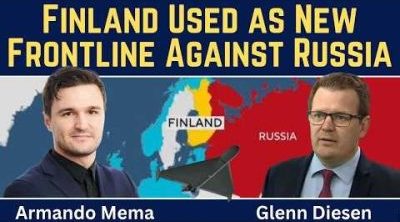
Armando Mema: Finland Used as New Frontline Against Russia
or go to
Aletho News Archives – Video-Images
New Documentary
Hospital Horror
Documented in the film,“Bad Medicine”
Blog Roll
 Aletho News
- Poland and Bulgaria put brakes on Ukraine weapons funding
- Russia Reaffirms Its Support for Sovereignty, Territorial Integrity of Lebanon – Russian MFA
- Araghchi: Failure to punish aggressors against Iran endangers all nations
- Iran tells UN Security Council to stop reversing roles of ‘aggressor and victim’
- Disgraced neocons Feith & Libby: stop whining about ‘endless war’
- CENTCOM rejects Israeli claims of preparations for new Iran attacks
- Your Shopping Bag Runs Through Hormuz
- Armando Mema: Finland Used as New Frontline Against Russia
- Gestapo 2.0? Germany grants spy agencies sweeping new powers
- Franco-Palestinian group seeks court ban on Israeli real estate fair in Paris
- If Americans Knew
- An error has occurred; the feed is probably down. Try again later.
- No Tricks Zone
- New Study: Barents Sea Temperatures Were Warmer And Sea Ice Less Extensive In The 1700s Than Today
- German Authorities Start Initiative To Evaluate Public Register For Climate “Disinformation” Spreaders!
- Zonal Asymmetry of Temperature Change in the Antarctic Circumpolar Current
- New Study: The Net Fossil Fuel Contribution To Rising Atmospheric CO2 Has Been Zero For 500 Years
- Germany’s Green Energy Transition Becoming Increasingly Expensive…Another 6 Trillion Euros!
- Sudden Stratospheric Warming, Powerful El Niño Combination May Lead To Extreme Europe Cold, Energy Crisis!
- Two New Studies Find Thwaites Glacier Melt Cannot Be Driven By Human Activity Or A Warming Ocean
- E-Cars Reduce CO2 Emissions By Only 41% Compared To Internal Combustion Engine Vehicles
- Predictions Made By Renowned Climate Professor Over Past Decades Have Been Proven To Be Poor
- New Study Suggests Large Regions Of The Pacific Ocean Have Been Cooling For The Last 80 Years

