Deputy Chairman of the Center-Left Republican People’s Party (CHP) Namik Havutca argues that the base that stores 90 US tactical nuclear weapons “makes enemies of friendly countries and poses a threat to Turkey’s internal stability.
In the wake of the failed attempt to overthrow the Erdogan government on July 15 and the ensuing purge that has led to over 18,000 military servicemen and judges being rounded up and imprisoned on charges of treason, yet another Turkish leader has stepped forward calling on the country to step back from its alliance with NATO forces who top Erdogan regime officials accuse of being complicit in the botched coup.
The Deputy Chairman of Turkey’s Center-Left Republican People’s Party has called for the immediate eviction of all foreign aircraft, tools and materials from the country and said that Incirlik Air Base should be shuttered.
“Incirlik Air Base has added nothing but instability and fragmentation to Turkey and the region,” said Havutca. The lawmaker went on to say that the NATO base failed to stand by the Turkish people at a time when their blood was being spilled and the nation was in tears.
The lawmaker said that Incirlik Air Base poses a threat to the country, both internally and externally calling it responsible for “multiplying our enemies and turning our friends into enemies of the state.”
The politician has pushed forward a proposal titled “Incirlik Get Out” and calls on his colleagues in the parliament to support the measure in order to put an end to the military facility that he calls a “virus” that eats away at the Middle East.
Finally, Havutca alleges that the NATO base “served the purpose of providing logical support to the organization in the coup attempt.”
The strong words mirror recent anti-American protests near the base including a demonstration one week ago where 5,000 protesters screaming “death to the US” were trailed by vehicles and demanded that Incirlik Air Base be shutdown.
The agitation of the Turkish people also comes amid numerous claims by the Erdogan regime that the CIA, FBI, and a top US General John F. Campbell were all really the masterminds of the coup whereas the regime’s nemesis-in-chief Fethullah Gulen was called nothing but a “pawn” by the Turkish President.
The reported statement by former Israeli minister Diaspora Affairs Rabbi Michael Melchior that Saudi Arabia will open its doors to Israeli visitors “much sooner than you dream about” will not come as surprise. To be sure, a critical mass is developing in the secretive Saudi-Israeli intercourse.
The Saudi regime has been chary about links with Israel for fear of annoying the ‘Arab Street’, whereas, Israel has been all along eager to flaunt the breach in the Berlin Wall of Arab-Israeli conflict. But Saudis seem to estimate that the time has come to be open about the relationship.
The point is, if the raison d’etre of the dalliance is the ‘containment’ of Iran, it is resource-sharing. An open relationship is needed to optimally develop security and military cooperation. The Custodian of Holy Places seems to think the Muslim world will learn to live with his country’s strategic cooperation with Israel.
Well, the Palestine issue no longer poses hurdles, either. Arab Spring, conflicts in Syria and Iraq, military coup in Egypt, Saudi-Iranian rivalry, breakdown in Iran’s ties with Hamas, Islamic State – all these have relegated the Palestine issue to the backburner. Besides, Palestine President Mahmoud Abbas is on a tight American and Saudi leash. Abbas even received in Ramallah recently a Saudi delegation led by former general Anwar Majed Eshki who visited Jerusalem and met senior Israeli officials, including the head of the foreign ministry Dore Gold.
Again, Saudi Arabia’s keen interest in taking possession of two Red Sea islands at the mouth of the Gulf of Aqaba – Tiran and Sanafir – needs to be understood as a move to be Israel’s ‘neighbor’. Sanafir and Tiran sit at the mouth of the Gulf of Aqaba, on a strategically important stretch of water called the Strait of Tiran, used by Israel to access Red Sea. King Salman personally camped in Cairo in April to persuade Egyptian President Abdel Fattah al-Sisi to transfer the two islands in lieu of a seductive multi-billion dollar offer to Sisi.
Indeed, both Saudi Arabia and Israel are making haste to position themselves for a new phase of the Middle East’s politics in the post-Barack Obama era. They expect Hillary Clinton to pick up the threads where George W. Bush left them — a muscular regional policy involving switch back to containment of Iran and resuscitation of the pivotal relationships with Israel and Saudi Arabia.
Neither Saudi Arabia nor Israel is willing to reconcile with the Iran nuclear deal. They are doing everything possible, no matter what it takes, to see that the deal gets derailed. On Saturday, Israeli Defence Ministry issued a harshly-worded statement slamming Obama and comparing the Iran deal with the 1938 Munich agreement to appease Hitler. (Jerusalem Post )
Equally, Saudis and Israelis have convergent interests in regard to the conflicts in Syria and Iraq — supporting extremist Sunni groups, promoting the Kurdistan project, creation of ‘spheres of influence’ on Syrian and Iraqi territory, and ultimately, entrapping Iran in a quagmire that will exhaust the regime.
The Saudi-Israeli strategic regional realignment is something that Washington historically encouraged. It is just the underpinning needed for creating a regional security architecture supported by the NATO’s network of partnerships with the GCC states under the canopy of a US missile shield.
Alas, Turkey too could have been a key partner in this enterprise, but for the failure of the July 15 coup. Israel looked distressed when it transpired that the coup failed. As for Saudi Arabia, it probably played a role in the failed coup. (Sputnik )
Without doubt, it is against a complex backdrop that the recent reports regarding Israel and Pakistan taking part in a major air exercise hosted by the US also needs to be viewed. Neither Islamabad nor Tel Avi has denied the reports. Of course, the US always encouraged a Pak-Israeli proximity. Now, the big question is: With Saudi Arabia establishing ties with Israel, can Pakistan be far behind? (Times of Israel)
From the Israeli, Saudi and American perspective, it is of utmost importance that Pakistan aligns with Saudi Arabia instead of remaining neutral in regard of Iran’s rise. Pakistan’s role is crucial to any major plans of destabilization of Iran.
Israel and Saudi Arabia pretended until recently that they have a special thing going with Moscow, too, with a view to create ‘strategic ambiguity’. Moscow played along, while making a strategic decision that Iran is its ‘natural ally’ in the Middle East. This is perfectly understandable, because in the ultimate analysis, Israel and Saudi Arabia are bit players only, while Iran (or Turkey for that matter) is an authentic regional power credited with a world view.
It is possible to see the Russia-Azerbaijan-Iran trilateral summit in Baku on Monday as a strategic counter-move by Moscow and Tehran.
The proposed North-South Transport Corridor is admittedly an old idea with a pronounced economic dimension, but in the present context, an access route for Russia to the Persian Gulf and Middle East via Iran’s territory becomes a geopolitical event of far-reaching significance in the regional alignment that is under way. (See my blog China’s One Belt One Road isn’t only show in town.)
For the past decade, the US intelligence agencies operating in Turkey have worked closely with the increasingly influential parallel government of Fethullah Gulen. Their approach to power was, until recently, a permeationist strategy, of covertly taking over political, economic, administrative, judicial, media, military and cultural positions gradually without resort to elections or military coups. They adopted flexible tactics, supporting and shedding different allies to eliminate rivals.
In 2010 in support of Erdogan, they played a major role in arresting and purging 300 Kemalist – military officials. Subsequently the Gulenists moved to prosecute and weaken the Erdogan regime via revelations of family corruption uncovered by their intelligence officials and publicized by its mass media outlets.
The Gulenists shared several important policies with Washington which favored “the convergence” that led up to the July 15, 2016 coup.
The Gulenists backed US-Israeli policies in the Middle East; opposed the ‘independent’ and erratic power projections of Erdogan; favored pro-Western free market policies; accepted US relations with the Kurds; rejected any accommodation with the Russians.
In other words, the Gulenists were far more reliable, dependent and subject to the dictates of EU-NATO-US policy throughout the Middle East than the Erdogan regime.
Erdogan was aware of the growing power of the Gulenists and their growing links to Washington. Erdogan moved decisively and successfully, to pre-empt the Gulenist power grab by forcing a premature coup.
Erdogan Power Bloc Defeats Gulenist Presence
The Gulenists were a powerful force in the Turkish state and civil society. They had a strong presence in the civil bureaucracy; among sectors of the military, the mass media and educational installations; and among technocrats in the financial agencies. Yet they were defeated in less than twenty-four hours, because Erdogan had several undeniable strengths.
First and foremost, Erdogan was an unmatched political leader with a strategy to retain power and a powerful active mass popular base. The Gulenists had nothing comparable.
Erdogan had a superior intelligence and military command which infiltrated and undermined the Gulenists who were totally unprepared for a violent confrontation.
The Gulenists ‘permeationist’ strategy was unprepared and totally incapable of seizing power and mobilizing ‘the street’.
They lacked the cadres and organized grass roots support which Erdogan had built from the bottom-up over the previous two decades.
Erdogan’s insider and outside Islamic-Nationalist strategy was far superior to the Gulenist insider-pro-US liberal strategy.
US Miscalculations in the Coup
The Gulenists depended on US support, which totally miscalculated the relations of power and misread Erdogan’s capacity to preempt the coup.
The major flaw among the US advisers was their ignorance of the Turkish political equation: they underestimated Erdogan’s overwhelming party, electoral and mass support. The CIA overestimated the Gulenists support in their institutional elite structures and underestimated their political isolation in Turkish society.
Moreover, the US military had no sense of the specifications of Turkish political culture – the general popular opposition to a military-bureaucratic takeover. They failed to recognize that the anti-coup forces included political parties and social movements critical of Erdogan.
The US strategists based the coup on their misreading of the military coups in Egypt, Libya, Iraq and Yemen which ousted nationalist and Islamic civilian regimes.
Erdogan was not vulnerable in the same way as President Mohamed Morsi (June 30, 2012 – July 3, 2013) was in Egypt – he controlled intelligence, military and mass supporters.
The US-Gulenists military intelligence strategy was unplanned, uncoordinated and precipitous – Erdogan’s counter-coup forced their hand and struck decisive, sweeping blows that demoralized the entire Gulenist super-structure. Thousands of supporters fell like clay pigeons.
The US was put on the defensive – the rapid dissolution of their followers forced them to disown their allies and fall back on general, unconvincing ‘humanitarian’ and ‘security’ criticisms of Erdogan. Their claims that the Erdogan purge would weaken the fight against ISIS had no influence in Turkey. Washington’s charges that the arrests were ‘mistreating and abusing’ prisoners had no impact.
The key political fact is that the US backed an uprising which had taken up arms and killed Erdogan loyalist military personnel and innocent unarmed civilians opposed to the coup undermined Washington’s feeble protests.
In the end the US even refused refugee status and abandoned their Gulenist General’s to Erdogan’s fate. Only Fethullah Gulen himself was protected from extradition by his State Department handlers.
Consequences of the US-Gulen Coup
Washington’s failure to bring down Erdogan could have enormous repercussions throughout the Middle East, Western Europe and the United States.
Erdogan ordered seven thousand troops to encircle the strategic NATO airbase in Incirlik, Turkey, an act of intimidation threatening to undermine NATO’s major nuclear facility and operational base against Syria, Iraq and Russia.
Turkish intelligence and cabinet officials have called into question ongoing political alliances, openly accusing the US military of treason for its role in the coup.
Erdogan has moved to reconcile relations with Russia and has distanced his ties with the European Union.
If Turkey downgrades its ties with NATO, the US would lose its strategic ally on the Southern flank of Russia and undermine its capacity to dominate Syria and Iraq.
Washington’s leverage in Turkey has been dramatically reduced with the decimation of the Gulenist power base in the civilian and military organizations.
Washington may have to rely on the anemic, unstable and servile Syriza – Tsipras regime in Greece to ‘anchor’ its policies in the region.
The failed coup means a major retreat for Washington in the region – and a possible advance for Syria, Iran, Lebanon and Russia.
There are two caveats to this proposition. After Erdogan ‘completes’ the purge of Gulenists’ and condemns Washington, will he be willing and able to pursue a new independent policy or will he simply tighten internal control and ‘renegotiate’ a NATO agreement?
Will Erdogan consolidate political control over the army or will the defeat of the Gulenists be a temporary outcome which will unleash new military factions which will destabilize the political regime?
Finally, Erdogan depends on Western finance and investment which is highly resistant to backing a regime critical of the US, the EU and NATO. If Erdogan faces economic pressures from the West can he turn elsewhere or will he, in the face of capitalist ‘realities’ retreat and submit?
Erdogan, temporarily may have defeated a US coup, but history teaches us that new military, political and economic interventions are on Washington’s agenda.
Please note James Petras’s new collection of essays with Clarity Press:
THE END OF THE REPUBLIC AND THE DELUSION OF EMPIRE
More than two weeks after Turkey’s dramatic failed coup, what exactly happened remains shrouded in mystery leaving only speculation that has hardened into “fact” in the absence of convincing evidence.
Two main theories have emerged: The first is that this was yet another in a long line of CIA-backed coups. The other is that Turkish President Recep Tayyip Erdogan either staged or let the coup happen to give him the opportunity to consolidate his rule through a vicious and ongoing purge of his perceived enemies.
The first theory has now passed into the realm of “fact” because some commentators unquestioningly accept that the CIA tried to remove Erdogan for suddenly seeking to repair relations with Russia, Iran and Syrian President Bashar al-Assad. Assad is a man Erdogan has squandered substantial political capital trying to overthrow for five years.
This theory asserts that defeating the coup was a “victory against the U.S. empire” because Erdogan has defied Washington by suddenly moving Turkey into the multipolar camp with a view towards Eurasian union, rather than the European Union.
“Suddenly” is the key word. What led to Erdogan’s apparent about-face? His Syria policy of supporting ISIS and opposing Damascus, Moscow and Teheran completely blew up in his face. He failed to overthrow Assad. Turkey’s downing of a Russian warplane damaged Turkey’s economy (when Russia imposed retaliatory sanctions). ISIS turned on him, attacking Ataturk Airport. He was on the ropes. Erdogan is a supreme survivor. He’ll switch enemies and friends on a dime if need be. He’s proven no loyalty but to himself.
Tactical or Strategic?
For the moment, Erdogan’s shift instead appears to be a short-term, tactical, move, to ensure his survival. Time will tell whether it is also strategic. It’s too early to declare he’s turned his back on the U.S., NATO and the European Union and joined the multipolar world. I doubt Moscow, Tehran and Damascus fully trust Erdogan’s overtures as a long-term commitment, willing as they are to feel him out.
The Turkish government, though not Erdogan himself, has blamed the U.S. for the coup. A hardline conservative newspaper that backs Erdogan, Yeni ?afak, has even named U.S. General John F. Campbell as “one of the top figures who organized and managed the soldiers behind the failed coup attempt,” citing “sources close to ongoing legal process” against those arrested for the coup. It said Campbell “managed’ more than $2 billion to pay for the coup through CIA links with UBA Bank in Nigeria.
Without named sources or documentary evidence, which covert operations by their nature rarely yield, it’s easy to blame the CIA. In this case, the speculation rests on two assumptions, the first is the supposed U.S. reaction to Erdogan’s pivot East. But as Philip Giraldi, a former CIA agent who was stationed in Turkey, has pointed out the coup plotters and other Erdogan opponents hated his Syria policy and would welcome his rapprochement with Assad and a move East.
The coup’s motive may have instead been to stop Erdogan, who sees a Sultan in the mirror, from continuing his march to one-man rule. The coup leaders called themselves the Peace Council, claiming they wanted to restore democracy and overthrow a tyrant who is ruling unconstitutionally. (Erdogan is already ruling as though Turkey has changed to a presidential system, though the referendum he wants hasn’t yet been held.)
The “Terrorists”
The second assumption is that Erdogan’s arch-enemy, the Pennsylvania-based imam Fethullah Gülen who Erdogan blames for masterminding the coup, is a CIA asset running a “terrorist” organization. Erdogan calls anyone who disagrees with him a “terrorist”: academics, journalists, Kurdish members of the Turkish parliament. I’m surprised he hasn’t called Pope Francis a terrorist for calling Armenia a genocide.
The only evidence offered connecting Gülen with the CIA is a letter written by Graham Fuller, a former CIA agent once posted in Turkey, in support of Gülen’s 2006 U.S. green card application. Fuller himself has condemned the coup and his blog is often highly critical of U.S. Middle East policy.
Gülen communicates daily to his followers around the world in sermons viewed over the internet. These as well as his other communications must be monitored by the Turkish government. Evidence that would stand up in a U.S. court of Gülen ordering the coup is what Washington would need in Erdogan’s frantic extradition request for Gülen. The quality of that evidence could determine whether Gülen was behind the coup. Of course, if you already believe the CIA did it, you won’t believe what a U.S. court says.
Even without proof, it can’t be ruled out that military men inspired by Gülen may have been involved (with secular Kemalists). But Gülenists have been more numerous in the police than the military.
I was the first American reporter to interview Gülen for The Wall Street Journal, when I visited him in his Pennsylvania compound in 2010. I’ve studied the group the past six years, getting to know dozens of his followers, visiting schools in the U.S, Turkey and elsewhere.
In my research, I have been on the inside living with his followers while teaching English at one of the schools. Religion is not taught. It is not in the curriculum. The idea that these are jihadist madrases, or that Gülenists are extremists or terrorists is beyond absurd as anyone who knows them will attest.
One such person is John Esposito of Georgetown University, one of America’s leading experts on Islam. In this video interview, Esposito calls Gülen’s a “pluralistic” movement “unique” to Islam.
Though I disagree with Gülen on certain things, notably his lack of criticism of Israeli treatment of Palestinians, it is ludicrous to accept Erdogan’s branding of his followers as terrorists. The Gülenists have no political party. It is a social movement that does however seek to influence Turkey’s political direction. They were almost certainly behind the leaked audio of Erdogan telephone calls exposing his corruption in a real estate deal.
The New York Times reported that my interview with Gülen, in which he took Israel’s side in the Mavi Marmara incident, led to the first open breech in the uneasy alliance between Gülen and Erdogan. The leaked telephone calls were the last straw. Erdogan fired and arrested policemen and judges who dared investigate the corruption allegations.
In response to the coup attempt, Erdogan has shut down every Gülen-affiliated institution in Turkey by decree, including thousands of schools, foundations and charities. He finished the job of shutting down all of its media properties.
“A Gift From God”
In all, 60,000 people in the military, civil service, judiciary and academia, who couldn’t possibly have all been involved with the coup, have either lost their jobs or been arrested in Erdogan’s ruthless retaliation. Amnesty International says some have been tortured.
Worse for the coup plotters, their gambit has fortified his mounting absolute rule, which brings us to the other theory: that Erdogan either staged or allowed the coup to happen. Gülen himself alleges it was staged. His followers name an Erdogan-loyal general, Mehmet Disli, who they claim gave the order to start the coup.
Because Erdogan knew of the coup hours before, there is a stronger possibility that he let it happen to smoke out disloyal officers, confident his handpicked brass would crush it. They may have played along with the coup and then double-crossed the coup leaders once it was underway. It would be a seriously amateurish attempt to go ahead without the consent of the top military leadership.
Erdogan seized the chance the coup afforded him, which he himself called “a gift from God,” to solidify his rule over Turkey like a Gulf monarch, while accruing international support and even sympathy.
Erdogan’s Rise to Power
At this point we need to step back a moment and look at Erdogan’s slow rise to power and how he took control of a hostile, secular military. Erdogan deceived plenty of people in Turkey, but especially in the West. He was seen as the leader of a model Islamic democracy who would put the military under civilian control.
Erdogan’s AKP party is essentially part of the Muslim Brotherhood. Mohammad Morsi named his Egyptian Muslim Brotherhood party after Erdogan’s — The Justice and Development Party. The Brotherhood’s strategy is to gain power through elections and then gradually implement an Islamist agenda, as opposed to attempting to seize power violently like Al Qaeda or the Islamic State — like the Mensheviks, rather than the Bolsheviks.
I took part with a small group of reporters interviewing Erdogan at the United Nations in New York in 2009. At the time his strategy of getting the Turkish military out of politics, in which they had intervened in four coups, seemed convincing. He sought to root out the Ergenekon underground network of organized crime, military and intelligence officers in the Turkish Deep State in a move that appeared to be in favor of civilian-led democracy.
But as the Turkish opposition leader, Kemal Kilicdaroglu of the People’s Republican Party (CHP), told me in a one-on-one interview in Washington in 2014, Erdogan arrested the wrong people supposedly involved in the Ergenekon conspiracy. Many innocent people were falsely charged at a time the Gülenists supported the move to get the military out of politics.
In fact Erdogan was cleverly replacing the brass with his own military men and seized control of the Deep State. His actions, especially after the failed coup, show that democracy has not been his motive.
Would the CIA have organized a coup without the support of the top brass? Would the CIA have moved so quickly on what might just be a short-term tactical shift by Erdogan? Were Gülenists involved in the coup or was it Erdogan’s version of the Reichstag fire? These are questions that may never be answered leaving us mired in speculation — a poor substitute for the facts.
Joe Lauria is a veteran foreign-affairs journalist based at the U.N. since 1990. He can be reached atjoelauria@gmail.com and followed on Twitter at @unjoe.
From the Turkish Armed Forces’s Chief of Staff hanging the plot on Erdogan to the drama at Incirlik and the NBC psyops, Christoph Germann of the New Great Game blog is here to update us on all the latest news, views and reactions to this month’s failed coup attempt in Turkey.
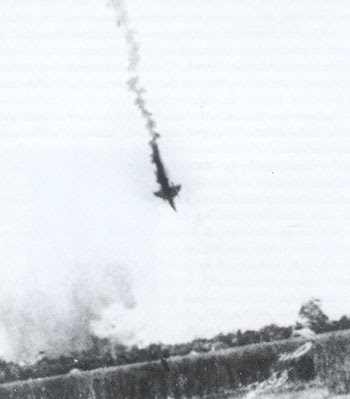
German former CDU politician and Vice-President of the Organization for Security and Co-operation in Europe Willy Wimmer told Sputnik Deutschland that he fears NATO involvement in the downing of Russia’s Su-24 bomber over Syria last November.
NATO was involved in last year’s downing of Russia’s Su-24 bomber in Syrian airspace, Willy Wimmer, former Vice-President of the Organization for Security and Co-operation in Europe (OSCE), told Sputnik Deutschland on Friday.On November 24 2015 Turkish jets downed a Russian Su-24 bomber carrying out anti-terror operations in Syria. The plane’s two co-pilots parachuted from the plane but one of them, Lieutenant Colonel Oleg Peshkov, was shot and killed by suspected Turkmen militants operating in Syria.
The incident caused a major diplomatic dispute between Turkey and Russia; the former said the bomber was shot for infringing Turkish airspace, but Russia maintains the Su-24 did not enter Turkish airspace, and was carrying out an anti-Daesh mission in Syria when it was downed.
The downing had been interpreted as a unilateral decision by Turkey, but Willy Wimmer contends that in fact, NATO and Saudi forces were involved in the incident.
“According to my information, Airborne Early Warning and Control System (AWACS) aircraft from the US and Saudi Arabia were involved,” Wimmer said.
“Aircraft like that Russian Su-24 bomber are not that easy to just shoot out of the sky. You need to take aim, and you can only do that with AWACS aircraft.”
The two AWACS planes involved in the incident took off from a US base on Cyprus, and an airbase in Saudi Arabia respectively, Wimmer said. He explained that according to NATO guidelines, if a plane is believed to be violating another country’s airspace then contact should made with the appropriate flight control center to draw the pilot’s attention to the error.In peacetime, the most military aircraft is allowed to do is to force a stray aircraft to make an emergency landing.
“What happened there does not comply with international regulations in any way. They brought the Russian plane down because they wanted to,” Wimmer said.
Wimmer believes that the motivation for enabling the otherwise inexplicable attack, was a desire on the part of Turkey’s allies to spoil diplomatic relations between Turkey and Russia.
“It must be assumed that if somebody breaks international rules, then political interests are at stake. This was about destroying the relations between the Turkish Republic and the Russian Federation, which were blossoming (back) then,” the politician said.
“Last year the construction of the South Stream pipeline (from Russia) through the EU was stopped because of American pressure. A few weeks later, Russia and Turkey successfully created a replacement, the Turkish Stream. Of course, that was diametrically opposed to the Americans’ sanctions politics against Russia. The reaction of the Americans can be interpreted accordingly,” Wimmer believes.
Last month Turkish President Recep Tayyip Erdogan wrote a letter of apology to Russian President Vladimir Putin about the downing of the Su-24. The Turkish President said that Turkey “never had a desire or a deliberate intention to down an aircraft belonging to Russia,” and expressed his deep sympathy and condolences to the relatives of the deceased Russian pilot.
A Turkish prosecutor has claimed that the CIA and FBI provided training for the followers of powerful US-based Turkish cleric Fethullah Gulen, whom Ankara blames for the coup attempt earlier this month.
The indictment, prepared by the Edirne Public Prosecutor’s office and accepted by the local Second Heavy Penal Court, seeks the harshest possible punishment for 43 suspects that have allegedly been linked to the failed coup attempt on July 15, including the coup’s supposed mastermind, Fethullah Gulen, the arch-nemesis of Turkish President Recep Tayyip Erdogan.
The prosecutor said on Thursday that members of what it describes as “the Fethullah Terrorist Organization” were trained by the Central Intelligence Agency (CIA) and the Federal Bureau of Investigation (FBI).
“The CIA and FBI provided training in several subjects to the cadre raised in the culture centers belonging to the Gulen movement. The operations carried out by prosecutors and security officials during the Dec. 17 process can be taken as a good example of this,” the document says, referring to a high profile corruption probe that targeted senior government officials between December 17 and December 25 of 2013, as reported by the Turkish Hurriyet daily.
The investigation affected many officials linked to the Turkish Cabinet, which was headed by Recep Tayyip Erdogan at that time. Erdogan, who is now Turkey’s president, called it “a judicial coup” attempt, while accusing Gulen and his movement of orchestrating it with the help of some “foreign forces.”
The indictment states that Gulen loyalists received US training and infiltrated judicial and security institutions.
“This [failed coup] attempt aimed to weaken the state with all its institutions by getting rid of the government completely. Those in the Gulen movement who work in the judicial and security institutions and who received the aforementioned training, took on this task and moved into action,” the document says, as quoted by the Anadolu news agency.
It adds that some other foreign secret services were also involved in training the coup plotters, according to the Turkish Yeni Safak newspaper.
Relations between Washington and Ankara soured following the foiled coup attempt on July 15. Some Turkish media and even government officials, including the labor minister, have claimed that the US was somehow involved, despite an outright denial from the US.
Immediately after the failed coup attempt, the Turkish government criticized the US for providing safe haven for Gulen, saying that a country that harbors “the coup planner” is “no friend” to Turkey. Ankara has also repeatedly demanded that the US extradite Gulen to Turkey, while Washington has maintained that Turkey must first file a formal extradition request and provide solid proof of his involvement in the coup.
On July 25, Turkey’s foreign minister, Mevlut Cavusoglu, said that Turkey-US ties could suffer unless Washington extradites Gulen.
On Friday, Erdogan once again slammed the US for harboring Gulen, who lives in self-imposed exile in Pennsylvania, and demanded his extradition. He also lashed out at the head of US Central Command, General Joseph Votel, who has criticized the detention of thousands of Turkish military personnel in the aftermath of the coup attempt and said that some of the military figures that the US had been working with are now in jail.
“It is not up to you to make that decision. Who are you? Know your place…” Erdogan said, as quoted by AP.
“Instead of thanking this nation that quashed the coup in the name of democracy, on the contrary you are taking sides with the coup-plotters,” he added, stressing that “the coup plotter is in your country anyway” and “you [the US] can never convince my people otherwise.”
Votel has strongly denied the accusations, saying that “Turkey has been an extraordinary and vital partner in the region for many years.”
Since the failed coup attempt in Turkey on July 15th, the name of exiled Turkish cleric Fethullah Gulen is on everyone’s lips. So who is Fethullah Gulen? Well, that depends who you ask…
The developments in Turkey are taking a dramatic turn. All Indications are that the Turkish government is in possession of definite information that the attempted military coup was orchestrated by the United States. (Anadolu )
The Justice Minister Bekir Bozdag made an open allegation in a television interview,
The US knows that Fethullah Gülen (the cleric who lives in Pennsylvania) carried out this coup. Mr. Obama knows this just as well as he knows his own name. I am convinced that American intelligence knows it too.
Bozdag is known to be one of the closest and trusted political associates of President Recep Erdogan. The well-informed Turkish political commentator Semih Idiz wrote that “This belief (Bozdag’s allegation) goes all the way to President Recep Tayyip Erdogan. It implies that Washington knew what was coming and did nothing to warn Ankara. The pro-government Islamist media has even claimed that the U.S. tried to kill Erdoğan with this coup attempt.”
The government has taken into confidence Turkey’s two main opposition parties – the Kemalist party CHP (Republican Party) and the nationalist party MHP (Nationalist Movement Party). The ruling AKP (Justice & Development Party) and the CHP and MHP have set aside their political differences and have voiced support for Ankara’s demand to Washington for the extradition of the Islamist cleric Fetullah Gulen. No doubt, this grand reconciliation could have implications in the downstream for the fractured Turkish political landscape. (VOA)
The MHP leader Davlut Bahceli has spoken publicly about a possible deep-rooted US conspiracy to trigger civil war conditions in Turkey. Bahceli also hinted that the coup plot was likely masterminded from the Incirlik air base used by the US forces, under the supervision of the US commander in Afghanistan. Two Turkish generals serving in Afghanistan have been detained by the Turkish intelligence at Dubai airport.
Bahceli has tabled a motion in the parliament seeking clarification on “rumours” that the CIA was behind the coup plot. A falshpoint arises if the government makes the details available. The Turkish media reported that Ankara has warned the authorities in Pakistan regarding the elite schools run by Gulen’s organization in that country. (See the Deutsche Welle report Secular Pakistanis resist Turkey’s ‘authoritarian demands.)
The Obama administration is unlikely to extradite Gulen, given his key role in US intelligence operations in the Central Asian region, while Turkey has made this the litmus test of US’ goodwill and sincerity as ally. Significantly, the New York Times featured an article over the weekend authored by Gulen where he urged Washington not to extradite him. Gulen wrote,
His (Erdogan’s) goal: To ensure my extradition, despite a lack of credible evidence and virtually no prospect for a fair trial. The temptation to give Mr. Erdogan whatever he wants is understandable. But the United States must resist it.
Washington probably anticipates that a showdown with Ankara may become unavoidable in a very near future over the Gulen issue. The US State Department has advised dependents and families of US diplomatic personnel posted in Turkey to leave the country. Another travel advisory on Monday counselled US nationals to “reconsider travel to Turkey at this time”. (here)
It becomes extremely significant that amidst all this, President Erdogan will be traveling to St. Petersburg, Russia, to meet President Vladimir Putin on August 9. This will be Erdogan’s first trip abroad after the coup and he is signalling that restoring friendly ties with Russia is his topmost priority. Of course, Erdogan will be keenly interested in close cooperation between the intelligence agencies of Turkey and Russia. The prominent Turkish columnist Murat Yetkin wrote today,
The question lingers in the air about whether Russia, whose intelligence services have been accused by the Democratic Party in the U.S. of intercepting their electronic communications, would provide any material to Erdoğan linking Gülen to the coup plotters. It certainly seems there is a lot of exchange of information going on nowadays, as was revealed by Çavuşoğlu, who said that Turkey has warned a number of countries, including the Central Asian republic of Kyrgyzstan, about a possible coup plot by Gülenists who infiltrated the state apparatus there through their school network. Moscow has already closed Gülen’s school network in Russia, accusing it of cooperating with the CIA.
The meeting between Putin and Erdogan promises to be a defining moment in Russia’s relations with the West in the post-cold war era. If a major NATO country such as Turkey crosses the ‘red line’ by forging ties with Russia at the present juncture that will be in strategic defiance of the US’ containment strategy against Russia. It can turn out to be a far bigger setback to the US regional strategies than the Islamic Revolution in Iran in 1979, because it weakens the entire western alliance system.
Europe, in particular, will be holding its breath over the fate of its moribund ‘one in, one out’ deal with Turkey over the refugee flow. Erdogan said on German TV on Tuesday that Europe is not a ‘sincere’ interlocutor. The issue is hugely controversial in Europe, given the lengthening shadows of terrorism. German Chancellor Angela Merkel faces growing public demand to quit. (BBC, AFP )
For 17 months, since the Minsk Agreements were signed in February 2015 to try to bring peace to the eastern Ukraine the Kiev regime, and its neo-Nazi and NATO allies, have been preparing for a new offensive against the east Ukraine republics. On July 22nd the Russian Ambassador Vitaly Churkin stated in a letter to the UN Security Council that “a relapse of large-scale military operations in eastern Ukraine may bury the process of peace settlement there.” He then called on Kiev’s allies to pressure Kiev to back off its war preparations which include the continuous shelling of civilian areas by Ukraine heavy and medium artillery and constant probing attacks by Ukraine and foreign units over the past spring and summer months.
The commander of the Donetsk Republic forces stated in a communiqué on July 22 that the region along the contact line between the two sides was shelled 3,566 times in one week alone ending on the date of the communiqué and confirmed the information set out in Churkin’s letter and reports of the Organisation For Security Cooperation in Europe (OSCE) that the Kiev regime had transferred more heavy artillery, mortars, tanks, multiple rocket launchers to the front.
The shelling has destroyed civilian housing, a water treatment plant and other infrastructure with the clear objective of forcing out the residents and to prepare the ground for a large scale offensive. Ambassador Churkin added that not only were regular Kiev forces massing in the east but they had also deployed the new-Nazi Azov and Donbas “volunteer” battalions, and that Kiev has begun a wide ranging seizure of land in the neutral zone and the towns located there.
Of course the blame for all these criminal actions by NATO and its marionettes in Kiev is placed on Russia as we have seen set out in both the Atlantic Council Report earlier this year and in the NATO Warsaw Communiqué on July 9th in which NATO put the ultimatum to Russia, “do what we say or you will see what we will do”. The day before Ambassador Churkin sent his letter to the Security Council, the French Foreign Minister, Jean-Marc Ayrault, in a speech at the Centre of Strategic and International Studies stated that the “sanctions”, that is, the economic war being carried out against Russia by the NATO countries, would only stop if Russia did what it was told.
The Germans have also made noises about being prepared to halt this economic warfare against Russia, about how much they regret it and how they desire only peace and harmony, but, again, only if Russia adheres to their demands.
The attacks on the Donbas republic civilian areas are of course war crimes and crimes against humanity to which the prosecutor of the International Criminal Court responds with her practiced silence despite the fact she has accepted two letters from the Kiev regime providing the ICC with jurisdiction to prosecute war crimes committed there. But, of course, neither Kiev, nor their NATO bosses that control the prosecutor of the ICC have any intention of laying war crimes charges against themselves.
The Russian fear of a renewed offensive against the Donbas republics is a real one since the Warsaw Communiqué issued by NATO on July 9th stated emphatically that NATO does not recognise the republics, that Ukraine needs to be reunited by force if necessary, and that Crimea must be returned to Ukraine. The increased military activity in eastern Ukraine is taking place at the same time that there is increased activity in the Baltic centred on the Russian base at Kaliningrad, a strategic objective for NATO in order to control the Baltic sea lanes and air space and the approaches to St. Petersburg. Crimea is an objective because of the Russian naval base at Sevastopol, the seizure of which was one of the primary objectives of the NATO coup that overthrew the government of President Yanukovich. It is the main objective in the on going NATO “Sea Breeze” naval exercise in the Black Sea.
The situation has become increasingly dangerous as the war against Russia is conducted without limits, that is, across all sectors of life from the military and economic to sports. The International Olympic Committee has now banned the core of the Russian Olympic track and field team from competing at the Games, plus any others who have faced doping allegations in the past, an act of collective punishment that is totally unjustified since it is based on the dubious statements of a wanted man in Russia, Grigory Rodchenkov, who is singing for his supper in the United States, and will sing any song they want him to. The whole scandal is motivated not by problems with doping, but by an attempt to further isolate Russia from the world and slander its leadership and people. The result is that the Olympic Games will be a farce both as a sports event and as a symbol of peace in the world and should be cancelled or boycotted.
On top of all this, compelling evidence is daily coming out that the attempted coup against the government of Turkey was instigated by the Americans and its partners in other NATO countries in order to stop President Erdogan from a rapprochement with Russia. The timing alone of the coup indicates that; for it took place just a few days after Erdogan apologised to President Putin regarding the shoot down of the Russian plane, and just after rumours circulated that he would kick the US out of their base at Incirlik and give it to Russia.
The Turkish government has accused the US of being involved at least indirectly by supporting Turkish Islamist émigré elements led by the cleric, Fethullah Gulen, an arch enemy of President Erdogan, who resides in the US and appears, to Erdogan, to be linked to the coup. Stories have also appeared in the Turkish press of the arrest of the two pilots that shot down the Russian plane over Syria, who happen to be, according to the accusations, the same two pilots that attempted to shoot down Erdogan’s plane the night of the coup. It is stated, though not confirmed, in the Turkish press that these two men worked for the CIA.
On Monday July 25th, it was reported in the Turkish press that American General John Campbell, former commander of NATO forces in Afghanistan was central to the planning of the coup and that it was financed with CIA money through meetings at the US base at Incirlik. If these accusations are correct then the attempted coup constitutes act of aggression by the United States and its allies against Turkey, an attack by NATO on a NATO member.
The British on the same day floated a story in the Daily Express that their special forces, the SAS, are ready to go into to Turkey to “rescue UK citizens” in the event of a second coup attempt and predicted civil war in Turkey of there is a second coup attempt. They stated,
“With fears rebels could be about to try to overthrow the government for a second time, which is likely to result in a Turkish civil war, troops have moved into neighbouring Cyprus and are preparing a rescue mission to save stranded Britons.
Defence chiefs have drawn up emergency plans and fully armed soldiers, together with members of the Special Forces Support Group, are ready to fly into areas popular with tourists and help families get home safely.
Hundreds of jets, helicopters and other aircraft will be drafted in to help the estimated 50,000 Brits flee the danger.”
This means that Britain as well as the US are prepared to help a second coup attempt against Erdogan and further confirms their involvement in the first coup attempt, as does the reported refusal of the Germans to allow Erdogan’s plane to enter German air space to seek refuge when it appeared he had been overthrown. That decision turned out to be a mistake as he quickly recovered his wits, returned to Turkey and broke the coup.
However this turns out, the principal target remains Russia. Erdogan’s rapprochement with Russia and falling out with NATO weakens NATO in its war against Russia and provides Russia with another card to play, even if it may be the Joker.
Meanwhile in the United States the war against Russia has become a dangerous internal political issue as the Clinton camp accuses Donald Trump of being a Russian agent and his campaign financed by Russian money, essentially accusing Trump of treason. Trump laughs all this off but the fact that these absurdities can even get the attention of the news media shows how desperate things are. New York Times columnist Andrew Rosenthal wrote a column on the 25th of July with the title “Is Donald Trump Putin’s Puppet” then proceeded to state that he was Putin’s pet poodle at the least.
But things get even more curious as the FBI states it is investigating whether emails “leaked” by Julian Assange’s WikiLeaks organisation, were provided to him by Russia after Russia hacked into the email system of the Democratic National Convention. The Russians deny this absurd charge but so far I have not seen Julian Assange deny that they are his source and we must wonder what his true motivations are if the effect of his “leak” is to have Russia accused of hacking into US government and political party email systems thereby supporting the NATO propaganda against Russia.
It also begs the question as to why Assange would get involved in American party politics at all by publishing emails that would supposedly damage the Clinton campaign for the benefit of the Trump campaign. Is he working for Trump? Is he working for Clinton trying to make it look like Trump works for Russia, or, as is more likely, is he working for those who want to bring down both Trump and Russia? Andrew Rosenthal for the Times, quipped, “it’s eerie, at best, that Julian Assange’s WikiLeaks chose this moment to release the stolen emails…”
But it is not so “eerie” if the exercise is meant to smear Russia and a candidate for President who is willing to at least talk with the Russians. Perhaps his supporters can ask him and report back what his answer is because his actions raise serious questions as to his motivations, his intentions, and his connections. Someone is playing us. It’s about time we found out who.
Ankara has pledged to help the Gaza Strip to tackle its decade-long electricity crisis as part of a deal to normalize ties with Israel that were severed six years ago, but Palestinians told Sputnik that they doubt that Turkish authorities will deliver on the promise.
Mustapha Al-Agha who lives in Gaza said that locals have lost their hope in Turkey after Ankara decided not to pressure Israel to lift the blockade which has been in place since 2007. Turkey’s “help is limited to humanitarian aid,” he said. “All promises given to the Gaza Strip have turned out to be a ‘downer pill’ meant to receive support for the agreement between Turkey and Israel.”
Itaf Mukhanna, a mother of seven, maintained that lifting the blockade was a priority, urging Arab nations to do something about it.
“Situation here is unbearable. Youth unemployment has worsened. Electricity, water and gas have become an everyday dream that each local is trying to fulfil,” she said.
On June 28, Turkey and Israel announced that they would restore diplomatic ties. Ankara has agreed to provide humanitarian aid to and build a power plant in Gaza as part of this deal. Two weeks later a Turkish delegation visited the region to discuss ways to resolve the crisis with Israeli and Hamas officials.
The delegation is expected to prepare a report that will be directed to Turkey’s Energy and Natural Resources Minister Berat Albayrak, the cabinet and President Recep Tayyip Erdogan. The government will then work on a roadmap to implement measures outlined in the report.
Last week Turkey delivered 11,000 tons of humanitarian aid meant for Gaza. The cargo was offloaded in the Israeli port city of Ashdod.
The Gaza Strip’s electricity crisis is acute. The region has a single power plant that has operated at less than 50 percent capacity since 2006 when Israel bombed the facility.
Gaza needs at least 450 megawatts per day, but it receives no more than 185 megawatts in the summer and 200 megawatts during the winter, Tare Lubbad, communications director at a Gazan electric company, told Sputnik.
“The energy crisis in the Gaza Strip has become worse since one of [four] generators at the power plant has not been working due to the lack of fuel,” he said.
The plant needs at least 500 tons of fuel per day to operate at its current full capacity, but the Palestinian Authority in Ramallah has imposed a tax on fuel purchased in Israel.
The failed coup in Turkey last week was a political and geopolitical earthquake as it has the potential to fundamentally alter the Middle East, NATO, and potentially the balance of power globally. But while the implications of the recent developments are clear, what actually took place on the night/morning of July 15 – July 16 is still somewhat shrouded in mystery. But why is that? Why are the connections for the most part not being made by Western pundits and journalists alike?
Here again we run into the controlled corporate media apparatus, one which is dominated by the very same interests that dominate the governments of the US and EU, and its incredible power to misinform. As the great Michael Parenti famously wrote, “[The media’s] job is not to inform but disinform, not to advance democratic discourse but to dilute and mute it. Their task is to give every appearance of being conscientiously concerned about events of the day, saying so much while meaning so little, offering so many calories with so few nutrients.”
Nowhere is Parenti’s contention more true than with the coup in Turkey. For while the media has certainly reported the allegations from President Erdogan and his government of the hidden hand of US-based billionaire Fetullah Gulen, almost none of the major media outlets have done the necessary investigation to uncover the real significance of Gulen and his movement. Specifically, and almost as if by magic, there is virtually no mention of Gulen’s longstanding ties to the CIA, his penetration of the various institutions of the Turkish state, nor is there any serious investigation into the financial networks and connections leading from Gulen to nearly every corner of the Islamic (and non-Islamic) world.
And while Gulen, along with many neocons in the US, have been propagating the narrative that President Erdogan and his forces themselves staged the coup in order to justify the ongoing crackdown on political rivals, secularists, and other anti-Erdogan forces, the media by and large has not connected the events in Turkey to their larger geopolitical significance, one which should shed some light on what may have happened. And, in a further dereliction of duty, the media has also mostly ignored the absolutely critical likelihood of the involvement of US-NATO intelligence.
History as a Guide
From Iran in 1953 to Chile in 1973 and countless other countries, the CIA and its intelligence agency cousins in NATO have been involved in myriad coups similar to the one that took place in Turkey last week. However, one would be remiss in not noting the striking similarities between the 2016 coup in Turkey and the one that took place on September 12, 1980.
Throughout the mid to late 1970s Turkey saw a major upsurge of terrorism and violence, much of which was attributed to fascist formations such as the Grey Wolves, along with other groups. However, what is now known is that much of the violence took the form of provocations which many experts allege were orchestrated by CIA-affiliated individuals and networks.
Perhaps the most significant of these was Paul Henze, a man who spent decades as an intelligence coordinator in Ethiopia, Turkey, and elsewhere throughout the Cold War. As Daniele Ganser noted in his book NATO’s Secret Armies: Operation GLADIO and Terrorism in Western Europe, “A right wing extremist on trial later plausibly argued that the massacres and terrors of the 1970s had been a strategy to bring [coup leader General] Evren and the military right to power: ‘The massacres were a provocation by the [Turkish intelligence agency] MIT. With the provocations by the MIT and the CIA the ground was prepared for the September 12 coup.’” (p. 239)
But of course, these actions did not take place in a vacuum; there were intelligence operators in place who facilitated the events that took place. As renowned author and media critic Edward Herman and co-author Frank Brodhead wrote in their 1986 book The Rise and Fall of the Bulgarian Connection :
“Paul Henze began his long CIA career under Defense Department cover as a “foreign affairs adviser” in 1950. Two years later, he began a six-year hitch as a policy adviser to Radio Free Europe (RFE) in Munich, West Germany. By 1969, Henze was CIA chief of station in Ethiopia, and he served as station chief in Turkey from 1974 through 1977. When Zbigniew Brzezinski assembled his National Security Council team for President Jimmy Carter, Henze was hired as the CIA’s representative to the NSC office in the White House.”
Considering the intimate connection between Henze and Brzezinski, it is not hard to see that Henze was essentially involved in the same global operation as Brzezinski, namely the weaponization of terrorism for strategic gain against the Soviet Union. And while Brzezinski famously masterminded the creation of the mujahideen in Afghanistan, Henze already had achieved similar results in Turkey, organizing right wing forces for the purposes of destabilization. In his book, Gansler cites counter-terrorism scholar and expert on GLADIO operations Selhattin Celik, who wrote in 1999 that:
“[When US President Jimmy Carter] heard about [the 1980 coup in Turkey] he called Paul Henze, former Chief of the CIA station in Turkey who had left Ankara shortly before the coup to become a security adviser to President Carter in Washington on the Turkey desk of the CIA… Carter told Henze what the latter already knew: ‘Your people have just made a coup!’ The President was right. Paul Henze, the day after the coup, had triumphantly declared to his CIA colleagues in Washington: ‘Our boys have done it!”
Celik bluntly referred to Henze as “the chief architect of the September 12, 1980 coup.” It’s not hard to see why. From having been on the ground in the early to mid-1970s, to then becoming a coordinator in Washington while being the point person on Turkey for the National Security Council under Brzezinski, Henze was clearly instrumental. As Gansler notes, according to Celik, “Brzezinski supported the position of Henze. During a discussion in the National Security Council of the situation in Iran where in 1979 Khomeiny [sic] had seized power Brzezinski expressed his view that ‘for Turkey as for Brazil a military government would be the best solution.’”
While none of this should come as a surprise to anyone remotely familiar with how US intelligence operated in the Cold War, perhaps the depth of the connections between US intelligence, its NATO cousins, and the Turkish military and deep state represent something of an epiphany. As Turkish politician and social activist Ertugrul Kurkcu wrote in Covert Action Quarterly in 1997:
The close ties between the Turkish, US military, and intelligence circles, along with US concerns over Turkey’s military cooperation, have been major obstacles in Turkey’s path to broader democracy. [Turkish politician and journalist Fikri] Saglar charges that US interest in Turkish affairs is not confined to official NATO relations and trade ties. He points to the notorious message by the CIA’s then-Turkey Station Chief Paul Henze in Ankara to his colleagues in Washington the day after the 1980 coup “Our boys have done it!” Henze crowed. Saglar concludes that foreign intelligence organizations including the CIA, have coopted collaborators from among the extreme-right and exploited them for their particular interests.
In effect, what the 1980 coup demonstrates more than anything is that the Turkish military, as well as the far right fascist terror gangs such as the Grey Wolves, are in various ways assets of the US, and under the thumb of US intelligence. To be sure, one could quibble about the degree to which they are entirely assets, proxies, or simply longtime collaborators, but this distinction is of minor importance. What matters is that the historical record clearly indicates collusion between the Turkish military and deep state and the CIA.
But this is all ancient history, right? Surely these networks and connections have eroded over time, and what happened in 1980 is of only secondary significance to the internal politics of Turkey and the ongoing struggles for power. Well, yes… but on second thought, maybe not.
Who’s Who on the Turkish Chessboard?
In trying to provide analysis of what just took place in Turkey, one must have some understanding of the political factions vying for power in Turkey. They can roughly be broken down into three camps, though there is often overlap between the groups.
The first faction is that of President Erdogan and his Justice and Development Party (AKP). Erdogan and the AKP come from the “moderate Islamist” milieu of the Muslim Brotherhood, having spent years fighting against the militantly secular Turkish military and state order. As Dr. Essam al-Erian, a Muslim Brotherhood leader, explained in 2007, “the Muslim Brotherhood is an Islamic group that has a close relationship with all moderate Islamists, the most prominent of which is the Justice and Development Party.”
This point is of critical importance because it connects Erdogan and his political machine to a much broader international network active throughout the Middle East and North Africa. It further provides an explanation as to Erdogan’s seeming fanaticism over the war in Syria and the removal of President Bashar al-Assad whose father crushed the Syrian Muslim Brotherhood in 1982, as well as his unwavering support for former Egyptian President Morsi, the Muslim Brotherhood leader deposed by current President Sisi.
The second faction is that of the Kemalists, with its power generally residing in the military and elements of the deep state. They see themselves as the custodians of the legacy of Mustafa Kemal Ataturk, the founder of the Republic of Turkey. The Kemalists are deeply connected to major capitalist interests in the country, and have a long history of collaboration with the US and NATO. As noted above, the Turkish military has long-standing ties to the CIA and NATO intelligence, and has long been understood as one of the most reliable US-NATO partners.
The third political faction of note is that of Turkish billionaire Fetullah Gulen whose global network of schools has made him into one of the single most powerful individuals in the region, though he runs his network from the comfort of his Pennsylvania estate. Not only has the Gulen network made significant inroads penetrating nearly every state institution in Turkey, it is also hugely influential in the US, both in terms of long-standing ties to US intelligence, and perhaps equally important, its massive lobbying and influence-peddling apparatus. Indeed, in 2010 six major Turkish-American federations with ties to the Gulen movement joined together to create the Assembly of Turkic American Federations (ATAF), a non-profit organization that has become one of the more prominent lobbying groups in Washington dealing with Turkish and Turkic peoples issues.
It is essential to remember that although it is known that last week’s coup was carried out by elements of the military, it is unclear exactly which faction they were representing, or if it was a combination of two. But here it is useful to examine the recent history of the Gulen network (known as Hizmet) and its penetration of state institutions in order to assess what potential role it may have played in the coup.
Connecting the Dots: Fetullah Gulen and CIA Fingerprints on Turkey Coup?
While it is easy to point the finger at the CIA and US-NATO intelligence for anything that happens anywhere in the world – the Empire’s reach is truly global – one must be cautious not to simply assert US culpability without properly drawing out the tangible connections. And in this case, that is doubly true. However, it is here that Gulen’s significance really comes into play, for it is his far-reaching network of contacts, surrogates, and proxies that have penetrated nearly every significant state institution.
Long before last week’s failed coup, analysts had been making the connection between Gulen, infiltration of the Turkish state, and the CIA. As political analyst Osman Softic wrote in 2014:
“Given that the Hizmet sympathizers skilfully [sic] infiltrated some of the most sensitive structures of the state such as the police, intelligence, judiciary and public prosecution, it is quite plausible that this movement may have served as a convenient mechanism for destabilization and even overthrow of the Erdoğan government, by much more powerful and sinister international actors… Gülen himself may have become a convenient pawn in their attempt to destabilize Turkey.”
The allegation that Gulen agents have penetrated all throughout the Turkish state is nothing new. In fact, such assertions have dogged Gulen and the Hizmet movement for at least the last two decades. But it is the connection to US intelligence and the elite circles of US foreign policy that truly completes the picture.
Enter Graham Fuller, former Vice Chairman of the CIA’s National Intelligence Council, whose links to Gulen’s movement run deep. Fuller has gone so far as to defend Gulen on Huffington Post in recent days in an article entitled The Gulen Movement Is Not a Cult — It’s One of the Most Encouraging Faces of Islam Today in which he admits – he had no choice as it is well documented – that he wrote a letter in support of Gulen’s green card application to the US in 2006. Although his rhetoric attempts to distort the nature of, and reason behind, his support for Gulen, Fuller does imply that Hizmet represents a social movement aligned with, and amenable to, US interests, one which could be used as a potent weapon in a critical NATO ally.
Fuller fails to note that he doesn’t simply have a passing connection with the Gulen movement, but that he has attended numerous Gulenist functions including large events, such as those organized by the Turquoise Council for Americans and Eurasians, a reputed Gulenist umbrella organization run by Kemal Oksuz (a.k.a. Kevin Oksuz), a prominent member of the Gulen network.
In addition to Fuller, infamous former CIA operative and US Ambassador to Turkey, Morton Abramowitz, also wrote a letter backing Gulen as he sought sanctuary in the US. Interestingly, Abramowitz was also the co-author, along with fellow neocons Eric Edelman and Blaise Misztal, of a fiery January 2014 op-ed in the Washington Post that all but demanded that the US topple Erdogan’s government. Yes, chin-scratchingly interesting.
So, let’s see if we got it all down. Gulen leads a multi-billion dollar business empire and charter/private school network with global reach. He is directly connected to two of the most notorious CIA operatives in the recent history of US-Turkish relations. He has a political lobbying network whose tentacles stretch from Washington to Central Asia. Oh, and by the way, according to former Turkish intelligence chief Osman Nuri Gundes, Gulen’s network of schools in the Central Asian nations of Kyrgyzstan and Uzbekistan provided the cover for at least 130 CIA agents in the mid to late 90s.
Now let’s add to that equation the fact that the RAND corporation, one of the most influential think tanks within US policy circles, suggested in a detailed 2004 report entitled Civil Democratic Islam: Partners, Resources, and Strategies that US policy should:
“Support the modernists first, enhancing their vision of Islam over that of the traditionalists by providing them with a broad platform to articulate and disseminate their views. They, not the traditionalists, should be cultivated and publicly presented as the face of contemporary Islam… Support the secularists on a case-by-case basis.”
It would seem that, more than a decade ago, and at a time when Gulen and Erdogan were still friendly, their organizations still allied, that US policy was to push Gulen and the moderate Islamist elements that he and Erdogan represented. It seems quite likely that the falling out between Erdogan and Gulen had less to do with personal issues and egos (though that undoubtedly played a part) than it did with policy and loyalty.
The Geopolitics and Strategy of the Failed Coup
Despite his commendable service to US imperialism in Syria, including hosting both terrorist and Syrian expatriate proxies of the US, Erdogan has clearly upset the apple cart with Washington. Perhaps his most egregious crime came just recently when he issued an apology for the November 2015 downing of a Russian jet. But, of course, it wasn’t the apology itself that set off official Washington, it was the reorientation of Turkish foreign policy away from the US, NATO, and Europe, and towards Russia, China, and the emerging non-western power bloc. This was his grave sin. And it wasn’t the first time, though undoubtedly Washington wanted to make sure it would be his last.
One must recall that Erdogan has a nasty habit of making deals with US adversaries, including the signing of the massive Turk Stream pipeline deal, the decision to purchase missile systems from China (which Erdogan later reneged on), the signing of a lucrative nuclear energy deal with Russia, and many others. In short, for Washington, Erdogan proved to be an unreliable ally at best, and a dangerous political manipulator at worst. So, as with so many leaders who came to be seen that way by the US political elites, he had to go. And Gulen’s network would come in handy.
Perhaps one of the most striking aspects of the events of the failed coup was the use of the NATO base at Incirlik. As the Los Angeles Timesnoted:
“Turkish officials said the organizers of the uprising were given crucial aid from officers at Incirlik Air Base, a facility that hosts most of the 2,500 U.S. military personnel stationed in Turkey and is a key base for the U.S.-led coalition’s ongoing air campaign to defeat the Islamic State militant group in neighboring Iraq and Syria… official media reported the arrest of the top Turkish military official at Incirlik, Gen. Bekir Ercan Van. Van was among 10 soldiers arrested at the base, part of an operation Turkish officials say provided air-to-air refueling for F-16 fighter jets… [which] were a crucial part of the coup attempt, used to intimidate government supporters in the streets.”
The implications of this information should not be understated. While it is entirely possible that the story was concocted by Erdogan’s people in order to carry out a purge of top military officials perhaps seen as disloyal to Erdogan or much too loyal to secular Kemalists, it is also plausible that the Turkish government’s narrative is correct.
Were that to be the case, then the obvious implication would be that Incirlik was a base of operations for the coup, the locus of Turkish military power behind the coup, and US intelligence and military behind them. Considering the centrality of Incirlik to NATO operations in the Middle East, it is not unreasonable to assume that aside from just military personnel, Incirlik is a node in the global CIA network. In fact, considering that the base is home to both US drones conducting operations in the Syria-Iraq theater, as well as a hub of the US “extraordinary rendition” program, it almost goes without saying that Incirlik houses significant CIA assets.
Seen from this perspective then, Incirlik was obviously pivotal to the failed coup plot, and has since become essential to Erdogan’s purging of his rivals from the ranks of the military. Moreover, it was long a bone of contention between Ankara and Washington, with Erdogan’s government wanting to assert more control over the base than Washington was prepared to allow. In many ways, Incirlik became the nexus of a tectonic shift in Turkish politics, and in the geopolitics of the region.
Ultimately, the failed 2016 coup in Turkey will have lasting ramifications that will impact the years and decades ahead. With Turkey now clearly breaking with the US-NATO-EU axis, it is rather predictable that it will seek to not only mend fences with both Russia and China, but to place itself into the non-western camp typified by BRICS, the Shanghai Cooperation Organization, China’s One Belt One Road strategy, the Asian Infrastructure Investment Bank, etc.
The failure of the coup is clearly a failure for the US and its allies who see in Erdogan an adversary, not a partner. For his part, Erdogan has much criminal behavior to answer for. From his illegal fomenting of war in Syria, to the purges and arbitrary detentions ongoing in Turkey today, to the attacks on secular institutions and human rights, Erdogan has a rap sheet a mile long. But of course sharing a bed with criminal regimes has never been a problem for Washington.
No, the problem has been, and will continue to be, that Erdogan doesn’t play by the rules; rules set forth by the US. And with this US-backed coup, he will only get stronger. Surely, many sleepless nights lay ahead for the strategic planners in Washington.
By Kevin Barrett | Crescent | Dhu al-Qa’dah 24, 1445
In corporate America, hostile takeovers are commonplace. They occur when an aggressor—a larger corporation or rich individuals—seizes control of a smaller corporation without asking permission.
What few recognize is that the United States itself has been subjected to a hostile takeover. Since the aggressor, the illegitimate settler colony known as “Israel,” is much smaller than the US, the takeover has necessarily been surreptitious.
As of June, 2024, Israel’s gradual takeover of the US has become obvious and undeniable—a proverbial “elephant in the living room.” … continue
This site is provided as a research and reference tool. Although we make every reasonable effort to ensure that the information and data provided at this site are useful, accurate, and current, we cannot guarantee that the information and data provided here will be error-free. By using this site, you assume all responsibility for and risk arising from your use of and reliance upon the contents of this site.
This site and the information available through it do not, and are not intended to constitute legal advice. Should you require legal advice, you should consult your own attorney.
Nothing within this site or linked to by this site constitutes investment advice or medical advice.
Materials accessible from or added to this site by third parties, such as comments posted, are strictly the responsibility of the third party who added such materials or made them accessible and we neither endorse nor undertake to control, monitor, edit or assume responsibility for any such third-party material.
The posting of stories, commentaries, reports, documents and links (embedded or otherwise) on this site does not in any way, shape or form, implied or otherwise, necessarily express or suggest endorsement or support of any of such posted material or parts therein.
The word “alleged” is deemed to occur before the word “fraud.” Since the rule of law still applies. To peasants, at least.
Fair Use
This site contains copyrighted material the use of which has not always been specifically authorized by the copyright owner. We are making such material available in our efforts to advance understanding of environmental, political, human rights, economic, democracy, scientific, and social justice issues, etc. We believe this constitutes a ‘fair use’ of any such copyrighted material as provided for in section 107 of the US Copyright Law. In accordance with Title 17 U.S.C. Section 107, the material on this site is distributed without profit to those who have expressed a prior interest in receiving the included information for research and educational purposes. For more info go to: http://www.law.cornell.edu/uscode/17/107.shtml. If you wish to use copyrighted material from this site for purposes of your own that go beyond ‘fair use’, you must obtain permission from the copyright owner.
DMCA Contact
This is information for anyone that wishes to challenge our “fair use” of copyrighted material.
If you are a legal copyright holder or a designated agent for such and you believe that content residing on or accessible through our website infringes a copyright and falls outside the boundaries of “Fair Use”, please send a notice of infringement by contacting atheonews@gmail.com.
We will respond and take necessary action immediately.
If notice is given of an alleged copyright violation we will act expeditiously to remove or disable access to the material(s) in question.
All 3rd party material posted on this website is copyright the respective owners / authors. Aletho News makes no claim of copyright on such material.
 Aletho News
