US Regime Change Talks on Syria hit blind alley
By Finian Cunningham | American Herald Tribune | February 4, 2016
And so the wheels of the Geneva talks came off in spectacular fashion, with all parties blaming each other for the breakdown in the so-called Syrian peace process.
The negotiations in the Swiss city were only into their second day –having opened on Monday, and that after a week-long delay –when UN special envoy Staffan de Mistura announced that the talks would be adjourned until February 25. Take it as read: it’s over.
Washington and Paris immediately sought to blame the Syrian government and its Russian and Iranian allies for “torpedoing” the Geneva talks. US Secretary of State John Kerry accused Syria and its allies of seeking a military solution to the five-year-old conflict. With this background of ongoing air and ground assaults, the Geneva negotiations foundered, according to the US and its partners.
Kerry and his French counterpart, Laurent Fabius, are engaging in reality-inversion, ably assisted by the Western mainstream news media.
The fact is the Geneva talks failed because Washington and its terrorist surrogates fighting for regime change in Syria could not affect a semblance of diplomacy.
Yes, Syrian Arab Army military advances are proceeding apace with the support of Russian air power and ground forces from Iran and Hezbollah. The game-changer was Russian intervention nearly four months ago, which has enabled the Syrian government of President Bashar al-Assad to recover huge swathes of territory occupied by foreign-backed mercenaries.
The latest military gains this week in northwest Syria have put the Syrian Arab Army within reach of taking back the city of Aleppo, the country’s largest urban centre, second to the capital Damascus.
Russia’s Foreign Minister Sergei Lavrov said this week that Russian operations in Syria will continue until all “terror groups”are destroyed. Lavrov mentioned Al Qaeda-affiliated Nusra Front and Daesh (also known as ISIL), but Russia’s scope also extends to a myriad of other militants groups who are integrated with the more well-known terrorist organizations.
These militants are falsely and risibly divided into “moderates”and “extremists” by Western governments and their dutiful corporate-controlled news media. What is moderate about chopping heads of civilians considered to be “infidels”? And this barbarity has been routinely practiced by the so-called moderate rebels of the “Free Syrian Army”. Notably, we don’t hear much about the much-lionized FSA these days. That’s because in reality they don’t exist.
Syrian state forces have every right to extirpate all illegally armed groups on the sovereign territory of Syria. While the Geneva negotiations were in process, the main foreign conduits of military supply to the mercenaries –Turkey and Saudi Arabia –had not desisted from their illegal interference in Syria. That was in flagrant violation of the United Nations Security Council resolutions in November and December calling for a global clampdown on terrorist organizations.
Not only were Turkey and Saudi Arabia continuing to supply illegally armed groups inside Syria, these two Western allies had included terrorist organizations into the so-called “opposition”at the Geneva talks. The grandly named High Negotiating Committee demanded it would only continue participating on the condition that the Assad government eventually stands down. That’s the real, proximate reason for breakdown, no matter what John Kerry might say.
Can you believe it? A bunch of foreign-backed and exile-based terrorists dictating terms to the elected government of Syria. Their foot-soldiers are getting wiped out on the ground –after five years of inflicting destruction on Syria –and yet these impostors are attempting to write the “peace terms”.
Syria and Russia are having none of it. Both are determined to crush an existential threat to Syria from foreign-backed terror groups. And Assad and Vladimir Putin are not going to hand over a victory of regime change at the negotiating table either.
That’s why Kerry is in a fluster. The peace process charade has been upended. Washington and its partners expected Syria and Russia to call off the military pressure in order to give their mercenary proxies some breathing space so that they could relaunch their terror war at a more opportune time, while also issuing ultimatums in Geneva for de facto regime change.
Washington and its allies were never serious about finding a genuine peaceful settlement. Now that the wheels have come off this snake-oil bandwagon, the US and its partners are obliged to find some “explanation” to sell to world opinion.
Hence, blame the Syrian government and its Russian ally for blasting the Geneva talks. But the world is not fooled by such reality-inversion. The Western powers’ plans for regime change in Syria just rolled into another blind alley.
The real danger, however, is that Washington and its allies might now attempt a direct military intervention in Syria out of desperation.
Finian Cunningham (born 1963) has written extensively on international affairs, with articles published in several languages. For over 20 years, he worked as an editor and writer in major news media organisations, including The Mirror, Irish Times and Independent.
‘Dangerous precedent’: Turkey denies Russian observation flight along Syrian border

Antonov An-30 © Wikipedia
RT | February 3, 2016
Turkey has set “a dangerous precedent” by denying an observation flight over its territories bordering Syria, the Russian Defense Ministry said, vowing a “relevant reaction” to Ankara’s violation of its obligations under the international Open Skies Treaty.
The Treaty on Open Skies which came into force in 2002 allows unarmed aerial observation flights over the territories of its 34 signatories, which includes Turkey. However the Russian An-30B plane was banned from conducting its surveillance flight over Turkish territory which was scheduled for February 1-5, without any prior warning.
“After the arrival of the Russian mission to Turkey and the announcement of the desired itinerary, the Turkish military officials refused to allow the inspection flight citing an order from the Turkish Foreign Ministry,” the head of the ministry’s National Nuclear Risk Reduction Center, Sergey Ryzhkov, said in a statement.
This is the first time that Turkey has refused a Russian observation flight over its territory. Since 2006 under the Treaty on Open Skies, Russia conducted approximately two observation flights a year. Turkey has flown over Russian airspace approximately four times a year.
But as tensions between Turkey and Russia intensified following the downing of the Russian jet in November, Ankara has refused the implementation of the treaty.
“The itinerary included the observation of areas adjacent to the Turkish border with Syria, as well as airfields that host NATO warplanes,” Ryzhkov pointed out. A previous statement, issued on February 1, specified that a Russian oversight flight would be conducted along an agreed route. Furthermore, Turkish monitors on board would have the opportunity to control the use of surveillance equipment.
Tensions deteriorated further last week, when neither Ankara nor its NATO allies offered any proof after accusing Russia’s Su-34 bomber of violating Turkish airspace. Moscow sees the latest development as a violation of the treaty and has warned that “relevant action” will occur in response.
“As a result of violations of the requirements of the Treaty and unconstructive actions on the part of Turkey, a dangerous precedent was created of an uncontrolled military activity of an Open Skies Treaty member state,” Ryzhkov said. “We are not going to leave without proper attention and relevant reaction violations of the Open Skies Treaty on the part of the Turkish Republic.”
Konstantin Kosachev, the head of the upper house’s international affairs committee, said that the Turkish violation of the treaty further complicates Russian-Turkish relations.
“This is unfortunate and does not contribute to the exit from this crisis, in which Russian-Turkish relations are currently in. This is a clear violation of Turkey’s international obligations under the Treaty on Open Skies,” he told TASS.
In a separate development the Russian Ministry of Defense announced Tuesday that another group of Russian inspectors would visit Turkish army ranges and get briefed by the Turkish military command, as part of the framework of the 2011 Vienna document aimed at building confidence and security.
Turkish civil servants asked to report ‘insults’ against president & top officials to police
RT | February 3, 2016
The governor’s office in Isparta, southwestern Turkey, has reportedly sent a request to all state institutions in the province instructing staff to report cases of “insulting” President Recep Tayyip Erdoğan and other top officials straight to the police.
Insulting the president is considered a crime in Turkey and the punishment can be up to four years in jail.
“According to Articles 299 and 125 of the Turkish Penal Code [TCK], an action must be taken for the posts [on social media] including insults against our president and other senior government officials, which have increased lately in direct proportion to the increase in terror activities in our country,” the notification, signed by Isparta Deputy Governor Fevzi Güneş on behalf of Isparta Governor Vahdettin Özkan, stated, Today’s Zaman reported.
The government began its crackdown on Kurdish fighters from the Kurdistan Workers’ Party (PKK), outlawed by Ankara, last July. Turkey’s authorities maintain those killed during the security operation in the southeast were all PKK members. According to Turkish human rights groups, however, more than 160 civilians were killed during the government offensive.
President Erdogan has publicly vowed to continue the operation until the area is cleansed of Kurdish militants. Kurds have long been campaigning for the right to self-determination and greater autonomy in Turkey, where they are the largest ethnic minority.
In mid-Januray, Turkey arrested over a dozen academics for signing a declaration denouncing Ankara’s military operations against Kurdish militants. The move came after over 1,200 scholars were under investigation for criticizing the Turkish State. They were accused of allegedly participating in “terrorist propaganda” after signing a declaration condemning military operations against Kurdish rebels in the southeast. Erdogan described the group of academics as “poor excuses for intellectuals.” He insisted human rights violations in the southeast of the country were being carried out by referring to the Kurdish rebels, not by the state.
The day after Erdogan urged prosecutors to investigate academics, who signed the declaration criticizing military action in the country’s mainly Kurdish southeast, Kemal Kilicdaroglu, leader of the main opposition Republican People’s Party’s (CHP), called the Turkish president “a dictator.”
In January, a local Turkish court dismissed Recep Tayyip Erdogan’s appeal against Kilicdaroglu. The Turkish president was seeking damages after the opposition party leader called him a “thief.” Erdogan’s lawyers demanded 200,000 Turkish lire ($66,000) in damages, saying this was an “attack on his personal rights.”
On Monday, an Ankara court sentenced another Turkish politician Hüseyin Aygün, a former deputy from the CHP party, to 14 months in prison for “publicly insulting” Prime Minister Ahmet Davutoğlu. Aygün rejected all accusations, Haber Turk reported.
The Republican People’s Party has repeatedly accused the government of using counter-terror laws to persecute journalists, saying 156 were arrested in 2015, with 484 legal actions launched against journalists and 774 fired during the year.
Aygün was sentenced to nine months in jail for “inciting people to enmity or hatred or denigration,” Müslim Sarı, another former CHP deputy, wrote on his Twitter.
“This ruling is clear evidence that there [is] no freedom of thought and expression in Turkey and judicial independence has ended too,” Sarı said in another tweet.
Late last month, a Turkish court sentenced a female teacher to almost a year in prison for making a rude gesture at Erdogan (when he was prime minister) at a political rally in 2014.
“The situation for freedom of expression is at an all-time low,” Andrew Gardner, Amnesty’s Turkey researcher, told the Times. “Countless unfair criminal cases have been brought, including under defamation and anti-terrorism laws — even children have been remanded in pre-trial detention,” he said.
Turkish Artillery Shells Latakia Province, Casualties Reported – Damascus

© Photo: Youtube/ Russian Defence Ministry
Sputnik —February 1, 2016
Turkish artillery on Monday shelled a small town in Syria’s northern Latakia province inflicting casualties among civilians, the Syrian Foreign Ministry said.
Earlier in the day, Lebanese Al Mayadeen TV channel reported that one Syrian serviceman was killed and five others were wounded in a shelling from the Turkish territory.
“The Turkish authorities are responsible for artillery shelling of the town of Jabal Oteira in northern Latakia, which caused casualties among peaceful civilians,” the ministry said in statement as quoted by official SANA news agency.
Meanwhile, the Russian Defense Ministry said Monday that it obtained video proof of Syrian civilian areas being shelled from Turkish border posts.The Russian Defence Ministry expects an explanation from NATO, Pentagon and Turkish Armed Forces on the incident. The corresponding statement was made on Monday by the Ministry’s spokesman Igor Konashenkov.
According to the spokesman, the Ministry of Defense recently received the video footage from the Syrian General Staff which shows “self-propelled heavy artillery weapons deployed at the Turkish outpost in question.”
UN says Turkey should investigate reports of rescuers being shot
Press TV – February 1, 2016
The UN High Commissioner for Human Rights has called on Ankara to investigate reports that a number of unarmed people trying to attend to the injured victims of clashes in Turkey’s southeast in late January were themselves shot at.
Ten people were injured when their group, which included two opposition politicians, came under fire while trying to help people injured in earlier clashes in the southeastern town of Cizre in Turkey’s mainly Kurdish southeast on January 20.
Zeid Ra’ad Al Hussein described as “extremely shocking” footage filmed of the incident, which purportedly shows what appear to be a man and woman holding white flags and pushing a cart – possibly carrying bodies – across a street before being shot.
“As they reach the other side, they are apparently cut down in a hail of gunfire,” Zeid said in a statement.
He also expressed concern that the cameraman, who was injured in the shooting, may face arrest under a “clampdown on media.”
Turkey has been engaged in a large-scale campaign against the outlawed Kurdistan Workers’ Party in its southern border region in the past few months. The Turkish military has also been conducting offensives against the positions of the group in northern Iraq.
The operations began in the wake of a deadly July bombing in the southern Turkish town of Suruc. More than 30 people died in the attack, which the Turkish government blamed on Daesh Takfiri terrorist group.
After the bombing, the PKK militants, who accused the government in Ankara of supporting Daesh, engaged in a series of supposed reprisal attacks against Turkish police and security forces, in turn prompting the Turkish military operations.
CIA covert ops needs Saudi money: decades story recurring
American Herald Tribune | January 30, 2016
For decades, America’s Central Intelligence Agency (CIA) has been relying on its partner’s money in discrete and covert operations; the money of the Saudi oil-rich kingdom.
Citing several current and former US officials, the New York Times reported on Jan. 23 that from the very beginning of the US operations against the Assad government in Syria, Saudi money was largely the supporter.
The most recent example of this ‘close bond’ between the US and Saudi Arabia has came to light in the New York Times article, which reported that US President Barack Obama knew well the US could rely on Saudi money when, in 2013, he secretly gave the CIA the green light to arm militant groups in Syria that were fighting against President Bashar al-Assad’s government.
Code-named Timber Sycamore, the deal stipulates that the Saudis contribute both weapons and large sums of money and the CIA takes the lead in training the rebels on AK-47 assault rifles and tank-destroying missiles.
In 2012, the US repeatedly claimed that the Timber Sycamore program was designed to deliver what it claimed to be ‘non-lethal’ aid, yet months later, Obama gave his approval for the CIA to begin directly arming and training the rebels from a base in Jordan, amending the Timber Sycamore program to allow lethal assistance.
Also, the NY Times report noticeably underlines that such a long intelligence relationship helps explain why the United States has been reluctant to openly criticize Saudi Arabia for its human rights abuses, its treatment of women and its support for the extreme ideology Wahhabism, that has inspired many of the very terrorist groups.
In the latest violation which brought uproar across the Muslim world in particular, Saudi Arabia executed a prominent Shia cleric, Sheikh Nimr al-Nimr, for challenging the oppression of the royal family and demanding human rights, yet the Obama administration did not publically condemn the action. Also, another form of Saudi human rights abuses to which the US has had no clear condemnation is its war on Yemen that has so far claimed the lives of more than 8,270 people including women and children.
The CIA covert operations in Syria began in 2013, in which more than 10,000 Wahhabi terrorists were armed, funded and trained. The trainings were taking place inside Jordan’s territories, and estimates have put the total cost of the ops at several billion dollars.
“They understand that they have to have us, and we understand that we have to have them,” said Mike Rogers, the former Republican congressman who was chairman of the House Intelligence Committee when the CIA operation began.
The operation was described as part of the so-called “counterterrorism” program. On this note, a former State Department counterterrorism adviser and the author of a book on the Islamic State, William McCants points out “The more that the argument becomes, ‘We need them as a counterterrorism partner,’ the less persuasive it is. If this is purely a conversation about counterterrorism cooperation, and if the Saudis are a big part of the problem in creating terrorism in the first place, then how persuasive of an argument is it?”
Even though the biggest contributor was Saudi Arabia, yet its allies also had their share in the game. According to the NY Times, when Obama signed off on arming the rebels in the spring of 2013, the Qataris, Turkish and Saudis had been funneling weapons into Syria for more than a year. The Qataris had even smuggled in shipments of Chinese-made FN-6 shoulder-fired missiles over the border from Turkey.
MORE…
Kurdish PYD Not Invited to Syria Talks at Behest of Turkey
teleSUR | January 26, 2016
The U.N. sent invitations to several sides of the Syrian conflict but Syrian Kurds said they had not received an invitation likely due to Turkish pressure.
The United Nations Special Envoy to Syria Staffan de Mistura has sent invitations to warring parties in the Syrian conflict to attend peace talks in Geneva Friday it was revealed Tuesday. Mistura has not officially elaborated on who has been invited, but the head of the Syrian Kurdish PYD group said he has not received an official invitation despite promises.
Mistura said details of the guest list were too “sensitive” to reveal. His office said that he does not expect formal responses but he hopes those invited show up in Switzerland Friday.
One of the most contentious issues in the talks was whether or not the Kurdish PYD will be present at the negotiation table. PYD leader Saleh Muslim, who is currently in Geneva, said he has not received an invitation and is not aware that any Kurdish representatives have been asked to attend. He had earlier told Reuters that he expected an invitation letter.
One of Russia’s demands was the inclusion of the PYD in the peace talks, a stipulation that Washington objected to. But Moscow and Washington reached a compromise last Saturday that both the PYD, a former Syrian official and the Saudi-backed Army of Islam would attend the talks.
Analysts say the PYD were not sent an invitation due to Turkish pressure as Ankara said it would boycott the talks if the Syrian Kurds attend. “There cannot be PYD elements in the negotiating team. There cannot be terrorist organisations. Turkey has a clear stance,” Turkish Foreign Minister Mevlut Cavusoglu said Tuesday.
The PYD, who Turkey labels a terrorist organization, has been one of the main forces fighting the Islamic State group and have full control of almost all the Kurdish regions in northern Syria.
Russian Foreign Minister Sergei Lavrov said it would be impossible to reach a peace agreement in Syria without inviting Kurds to join the negotiating process. The PYD says the autonomous government they have established in the northeast is a decentralized model for how to resolve a war that has splintered the country.
Meanwhile, the Saudi-backed Higher Negotiations Committee (HNC), an opposition body made of several anti-government groups, have threatened a boycott unless Russian and Syrian forces stop operations in rebel-held areas.
The HNC met in Riyadh Tuesday to debate whether it would attend and confirmed to the French news agency AFP that it had received an invitation. “The response will be a request for clarifications and not an acceptance or rejection,” the unnamed source told AFP.
HNC member Salem al-Meslet said the group would resume talks Wednesday, adding that the “climate is positive.” However, the HNC says they should be the only opposition delegation and that the Kurdish PYD should be part of the government delegation.
The Syrian government has confirmed that it is attending the talks.
Other opposition figures who don’t belong to the Kurdish side or the HNC side have said they have received invitations to attend and will be present. “I am on my way to Geneva after receiving an invitation,” said Qadri Jamil, a former deputy Syrian Prime Minister who was sacked in 2013 and has good ties with Russia.
The developments come as the Syrian government has been making major advances against the rebels in recent weeks.
On Monday they captured the rebel-held town of Sheikh Maskin in southern Syria near the border with Jordan. The Syrian army also took control of Rabia Sunday, another major town in the northern Latakia province in a bid to cut supply lines for rebels through Turkey.
Life Terms for Turkish Journalists who Reported Shipping Arms to Syria Militants
Al-Manar | January 27, 2016
Turkish prosecutors demanded life sentences for two top journalists who reported that President Recep Tayyip Erdogan’s government tried to ship arms to insurgents in Syria.
Prosecutors asked the Istanbul court to sentence Cumhuriyet newspaper’s editor-in-chief Can Dundar and Ankara bureau chief Erdem Gul each to one aggravated life sentence, one ordinary life sentence and 30 years in jail, the Dogan news agency reported, quoting the indictment.
The report said that both Erdogan and his hugely powerful but low-profile ally, the head of the National Intelligence Organization (MIT) Hakan Fidan, are named as plaintiffs in the indictment.
Dundar and Gul were both placed under arrest in late November over the report earlier in the year that claimed to show proof that a consignment of weapons seized at the border in January 2014 was bound for Takfiri militants in Syria.
Since then, they have both been held in the Silivri jail on the outskirts of Istanbul ahead of their trial, whose date has still yet to be announced.
In the indictment, they have been formally charged with obtaining and revealing state secrets “for espionage purposes” and seeking to “violently” overthrow the Turkish government as well as aiding an “armed terrorist organization”, it said.
The penalties demanded by the prosecutors are significantly higher than had previously been expected.
The case has amplified concerns about press freedom under the rule of Erdogan, who had personally warned Dundar he would “pay a price” over the front-page story.
Turkey Drifts Towards Israel
By Stanislav Ivanov – New Eastern Outlook – 25.01.2016
As is well known, the current foreign policy of the Turkish leadership in the region widely known as “zero problems with neighbours” has failed completely and in fact become “zero relations with neighbours.” The sharp deterioration in the Russian–Turkish relations after the launch of the Turkish missiles on the Russian military aircraft has completed the process of Turkey’s political isolation across its borders. Today, almost all states bordering with Turkey are among its enemies or competitors (Syria, Iraq, Iran, Greece, Cyprus, Armenia). The only exception are the good-neighbourly and mutually beneficial relations between Turkey and Iraqi Kurdistan as an entity of the Federation of Iraq. Yet, relations between Ankara and Baghdad have significantly deteriorated and even become aggravated after the Turkish authorities flagrantly violated the sovereignty of the country by bringing military units with artillery and armoured vehicles to Nineveh province without the permission of the central authorities. Ankara has made it clear that it is dissatisfied with the pro-Iranian Shiite government in Baghdad, which, to make the matters worse, supports the regime of Bashar al-Assad in Syria. […]
On the eve of the new year of 2016, Recep Erdogan visited Riyadh and tried to strengthen the existing partnership with the leadership of Saudi Arabia. The main points of contact between Ankara and Riyadh are a common hatred of the regime of Bashar al-Assad in Syria, their desire to limit the influence of Iran and Shiite communities in the region by all means, as well as their alliance with Washington. The same reasons can explain the expected renewal of relations between Turkey and Israel. It is no coincidence that during a visit to Saudi Arabia, Erdogan stressed, that “Israel needs an ally such as Turkey. And we must admit that we also need Israel.”
The restoration of diplomatic relations and the reopening of the Turkish-Israeli cooperation under the auspices of the United States in the current circumstances satisfy many parties. In December 2015, the Turkish authorities confirmed that they had reached a preliminary agreement with Israel during negotiations in Switzerland to normalize bilateral relations. According to the agreements reached, Israel is to create a fund worth 20 million dollars to pay compensation to the victims of Israeli commandos, while Turkey is waiving all the claims against Israel in this matter. In addition, Israel is obliged to ease the blockade of the Gaza Strip. The latter is obviously mentioned to “save face” of Mr. Erdogan before his supporters; in fact, nothing is likely to change in the maritime border of Gaza. One should not forget that the other ally of Israel – Egypt – absolutely opposes the lifting of the blockade. Representatives of Turkey allegedly promised the Israelis that they would stop the activities of Hamas on its territory should the blockade be lifted in the Gaza Strip.
Amid the strengthening of Iran’s positions in Syria and the region and the revitalization of the Lebanese political-military group Hezbollah, Israel is extremely interested in finding new allies and partners in the Arab and Muslim world. Recently, Jerusalem has managed to establish links and contacts with Saudi Arabia, and strengthen relations with the new Egyptian regime by way of secret diplomacy behind the scenes. Turkey may become yet another important link in the system of regional security of Israel. Today, Turkey and Israel have many more common interests and points of contact than grounds for confrontation. In addition, their mutual trade and economic benefit from this cooperation is evident. Turkey is considered the most important investor in the development programs of the Israeli military industrial sector, as well as of the long-term project on the development of Leviathan gas deposit and construction of the underwater pipeline, through which Israeli gas will be supplied to Turkey. According to Turkish media, Ankara intends to restore military cooperation with Israel and purchase its advanced observation and surveillance systems and modern unmanned devices.
Stanislav Ivanov, leading research fellow of the Institute of World Economy and International Relations and the Institute of Oriental Studies of the Russian Academy of Sciences.
Turkish PM Tries to Frame Syrian Kurds for Istanbul Bombing
By Joris Leverink | teleSUR | January 23, 2016
On Tuesday, Jan. 12 a big explosion took place in the heart of Istanbul’s tourist district of Sultanahmet. The explosion was caused by a suicide bomber who blew himself up next to a group of mainly German tourists, instantly killing ten and injuring 15 others. Soon, the bomber was identified as a Saudi born Syrian man who had recently entered Turkey and had registered himself as a refugee only days prior to his suicide mission.
According to the Turkish authorities the man was linked to the Islamic State group (IS, or ISIS/ISIL), making this the terrorist group’s fourth deadly suicide bombing in Turkey in one year. Previous attacks that have been ascribed to – but haven’t been claimed by – IS occurred in Diyarbakir in June, Suruc in July and Ankara in October, with a total death toll of around 140.
What set this latest attack apart from the others, however, is the explicit targeting of foreign nationals holidaying in Turkey. Previous attacks were all directed against Kurdish groups and their supporters, indicating a spillover from the wars in Syria and Iraq where Kurdish forces are seen as some of the most effective and reliable opponents of IS.
The Kurdish groups and organizations targeted by the Islamic State group were at the same time actively opposing the ruling Justice and Development Party (AKP). This sparked rumors of the terror group being in cahoots with the Turkish government. Accusations ranged from the two parties actively cooperating with each other to the government’s willful neglect of the safety of its Kurdish citizens.
That the Turkish government considers the Kurds at home and abroad as a bigger threat to the national security than IS has never been a secret. Moreover, the fact that IS is fighting against two of Turkey’s key enemies in Syria – the Assad government and local Kurdish forces – means that Turkey has always been hesitant about seriously and directly confronting the jihadists.
Questions and irregularities
It is in this context that the attack in Istanbul seems out of place. Why would the Islamic State group risk antagonizing one of the few parties in the region with which it has at least some shared goals? What is there to be gained from dealing a blow to Turkey’s already hampered tourist industry and forcing the country’s hand in taking a firm stance against the terrorist group?
There are a number of questions and irregularities that come up when looking at the facts that have thus far come out.
The first matter is the timing of the attack. If the aim of the attack is to hit Turkey by targeting its US$30 billion tourist industry, the bomber couldn’t possibly have chosen a worse time than a cold Tuesday morning in mid-January. The site of the attack is the exact location where during the holiday season thousands of tourists line up every day to visit the Blue Mosque. The number of victims would undoubtedly have been many times higher if the attack would have taken place a few months later, with an absolutely devastating effect on Turkey’s tourist industry.
Then there is the matter of the bomber’s identity. Mere hours after the attack the identity of the man who blew himself to pieces was already known and released. Nabil Fadli was a 28-year-old, Saudi-born Syrian man who had joined IS’ ranks after the terror group had occupied his hometown of Manbij, north of Aleppo.
According to unnamed Turkish officials Fadli had been part of a plot to attack the New Year’s celebrations in Ankara, but this mission had to be aborted after two of his collaborators were exposed and arrested. Fadli moved to Istanbul where he registered himself as a refugee, in the process giving away his fingerprints that would eventually lead to his identification as the bomber one week later.
The curious thing is, why would a member of the Islamic State group who has come to Turkey with the intention of committing a suicide bomb attack make himself known to the authorities – especially after two of his companions have just been arrested? Why have your picture and fingerprints taken and give away the address where you’re staying – which he did, according to the official reports – instead of laying low for a few days before executing the plan for the attack?
Finally, there is the curious issue of IS never actually having claimed responsibility for the attack. Nor for any of the other attacks mentioned above, which all have been attributed to the terrorist group by the Turkish government. The past year has seen a sting of terror attacks committed by the Islamic State group outside of the territories that are under its control – from Jakarta to Paris, Tunis to Beirut – and each and everyone of them has been claimed by the terror group. Oddly enough, not a single attack in Turkey that has been ascribed to IS has actually been claimed by them.
Raising these questions and irregularities is not done for the purpose of pointing fingers at one party or another. They simply serve as a mental exercise to remind one that, especially when entering the realm of terror and counterterrorism, the reality is rarely how it is presented to the public.
Shifting the blame
The day after the attack, Turkish prime minister Ahmet Davutoglu suggested that “certain powers could be using Daesh,” while referring to the Islamic State group by its Arab acronym. Which“certain powers” he had in mind became clear when anonymous government sources told Reuters that Fadli might have been “coerced by the PYD or by Syrian intelligence into the Istanbul bombing.”
These baseless allegations serve no other purpose but to frame the party of the Syrian Kurds, the Democratic Unions Party, or PYD, as the terrorist organization Turkish authorities claim it to be. Immediately after the Ankara bombings in October, similar attempts at spreading false propaganda were made. Prime minister Davutoglu coined the term “cocktail terrorism” and claimed on national television that the attack was the work of a coalition between the PYD, the Islamic State group, Syrian secret services and the PKK.
The Istanbul attack, regardless of who did it, will be used as propaganda by all the parties involved. For Turkey, which had come under increasing international pressure for failing to step up against IS, the attack firmly places them once again at the heart of the anti-terror coalition dominated by the US and Europe. Reports about retaliation attacks against IS in which supposedly 200 terrorists were killed in cross border artillery fire – an incredible (literally) high number – are meant to erase all doubts that Turkey is now seriously confronting IS.
The attack has also provided Turkey with the necessary pretext to launch attacks further into Syria, at the town of Manbij – the bomber’s hometown – to be precise. This is a highly strategic target because it’s location in the heart of the proposed “security zone” Turkey has wanted to establish for a long time. Coincidentally, Manbij is also the next stop for a coalition of Kurdish forces and their allies who have been gaining significant ground at the cost of the Islamic State group after a recent string of important victories.
Judging from the news, the Istanbul attack has certainly led to renewed efforts by the Turkish government to confront and attack IS. Targets in Syria have been hit, and dozens of alleged IS members have been arrested in the country. However, the fact that part of the blame has been tried to be placed on the Syrian Kurds shows that, besides a deeply tragic event, the suicide attack is at the same time a good opportunity to frame the public perception and pursue a very specific political agenda.
Joris Leverink is an Istanbul-based political analyst and writer with an MSc in Political Economy. He is an editor for ROAR Magazine. You can follow him on Twitter via @Le_Frique.
Russia, US agree to have 2 rebel delegations at Syria peace talks – reports
RT | January 24, 2016
Moscow and Washington are close to reaching a compromise on the participants of the Syria peace talks set to start next week. Two separate Syrian opposition delegations are expected to be invited to the negotiations in Geneva, according to media reports.
United Nations-sponsored negotiations between the Syrian government and the opposition have already been postponed over disagreements between the US and Russia, which could not reach agreement on which opposition groups should be represented. The talks are being arranged to try to bring an end to Syria’s five-year civil war.
Washington supports the participation of the Saudi-backed Islamist militia Jaysh al-Islam (Army of Islam) – something Moscow has strongly objected to. Russia insists that political figures it deems more moderate, such as Qadri Jamil, a former Syrian deputy prime minister, and Saleh Muslim, co-head of the Syrian Kurdish group PYD, should join the negotiations, Kommersant daily reported Saturday.
A compromise has allegedly now been reached, however, with Moscow agreeing to the presence of Jaysh al-Islam at the talks. In return, Washington will not object to a separate Syrian opposition delegation being invited, Bloomberg reports, citing three Western and UN diplomats who spoke on condition of anonymity.
The ‘main’ opposition delegation was rubber-stamped in the Saudi capital Riyadh in December, and represents opposition groups sponsored by Saudi Arabia and the West.
Staffan de Mistura, the UN special envoy for Syria, is now likely to send invitations to two opposition groups – one proposed by Washington, another recommended by Moscow.
“We are confident that with good initiative in the next day or so, those talks can get going,” US Secretary of State John Kerry told reporters on Saturday in Riyadh, where he has been seeking a deal on the Syria talks.
De Mistura is expected to elaborate on the latest details of the peace process at a press-briefing in Geneva on Monday, his spokeswoman Jessy Chahine said.
Russian Foreign Ministry spokeswoman Maria Zakharova made no comments in a press conference on Friday regarding which opposition groups will attend the talks in Geneva.
The nations assisting the Syria peace talks have reached an agreement to form a transitional government in Syria by mid-2016, with an aim to hold elections in 2017. According to Russian and Western diplomats, Moscow has managed to shutter Washington’s previously indispensable prerequisite that Bashar Assad must leave his presidential post before the transition process can start.
Moscow has always insisted that it is up to the Syrian people to decide whether President Assad should stay or go, and the participation of the acting president in the next elections remains on the table.
At the moment there are two anti-Islamic State (IS, formerly ISIS/ISIL) coalitions operating in Syria – one headed by the US, the other by Russia.
The Russian military’s air operation against IS in Syria began four months ago, and has significantly disrupted terrorist communications and supply routes. Islamic State’s illegal trafficking of stolen Syrian and Iraqi oil has been crippled to such an extent that the terrorists have been forced to compensate the shortfall in profits by increasing taxes, cutting salaries to militants and attempting to take drug production in Afghanistan under its control.
The Syrian Army loyal to President Assad is also conducting an offensive on terrorist positions, and has liberated a number of settlements. The spearhead of the assault is directed against the borders with Turkey and Jordan, in order to cut terrorist supply routes and prevent reinforcements from abroad from infiltrating Syria.
Turkey ‘threatens to withdraw’ from Syria talks over Syrian Kurds
RT | January 23, 2016
Ankara may boycott the upcoming Syria talks in Switzerland if Syrian Kurds are invited, media reports said, citing UN sources. Earlier, Turkey said their support for the peace process can only be ensured if there is no “representation of terrorist groups around the table.”
Turkey has privately warned that it might pull out from the Geneva talks now scheduled for January 25 if Saudi-backed Kurds and related parties are present, Foreign Policy reported Saturday citing UN-based officials.
Ankara is unwilling to cooperate with Syria’s Democratic Union Party (PYD) and its affiliate People’s Protection Units (YPG) since these leftist movements are allegedly linked to the Kurdistan Workers’ Party (PKK), which is considered a terrorist organization by Turkey.
The conflict between the Turkish government and Kurdish insurgent groups demanding greater autonomy for the large ethnic group has been going on for decades. With several failed ceasefires between the sides, Ankara has been blamed for putting civilians lives in Turkey’s mainly Kurdish southeast at risk by a number of international human rights groups.
Earlier this week, President Erdogan reaffirmed his unwillingness to search for a peaceful solution to the conflict, saying that “those with guns in their hands and those who support them will pay the price of treason,” meaning the Kurdish militants who are considered terrorists by the government.
Apart from Turkey, the historical Kurdistan region also includes territories in Iran, Iraq and northern Syria, where Kurdish fighters have proved to be some of the most effective forces in helping to combat Islamic State (IS, formerly ISIS/ISIL). Still Ankara believes that struggling against IS “does not grant them legitimacy,” according to the Turkish Prime Minister Ahmet Davutoglu. Turkey has carried out several attacks on Kurdish forces in northern Syria.
Moreover, Davutoglu accused Russia of as much as compromising Geneva talks by inviting the representatives of YPG – Syrian Kurdish forces – to join the peace process.
“Some circles, including Russia, want to spoil the opposition side, putting some other elements in the opposition side like the YPG, which has been collaborating with the regime and attacking the moderate opposition,” the PM said earlier this week.
“There should not be any representation of terrorist groups around the table,” he insisted.
Geneva talks on the Syrian crisis have recently become a bone of contention between international negotiators: the key issue is who would attend.
A resolution providing for the beginning of talks between the Syrian government and opposition groups was adopted by the UN Security Council in December. Scheduled to take place in Switzerland in January, the talks became known as Geneva III (Geneva II happened in January 2014), and are aimed at finding a solution to end the Syrian civil war, which has been ongoing in the country since 2011, with IS gaining strength in the region. While a number of countries, including Russia, the US, Saudi Arabia, Iran and Turkey are backing the peace talks, there is no apparent agreement on who should represent the Syrian opposition, and which fighting groups should be excluded for being proclaimed “terrorists.”
Turkey wouldn’t welcome a Kurdish presence at the talks. However, the US government still believes there is hope of changing Ankara’s opinion on the subject, according to Foreign Policy. Vice President Joe Biden arrived in Istanbul to discuss national security questions with the Turkish leaders on Saturday.
At the same time, US State Secretary John Kerry traveled to Riyadh in order to press Saudi officials to reconsider on a similar matter. Saudi Arabia previously threatened to boycott Geneva talks if certain pro-regime Syrian groups allegedly backed by Russia and Egypt were invited. In their turn, the opposition representatives urged UN special envoy Staffan de Mistura in a letter to disqualify Riyadh from peace talks as it was picking delegates for its own delegation talks “under obscure conditions,” Russia’s Sputnik agency reported.
As a result, de Mistura, responsible for issuing the invitations to the talks, accused a few states of jeopardizing the peace process by insisting that their opposing faction is more important than others.
“I would expect all sides to recognize my mandated responsibility to finalize a list of invitees to the process, to include all those I deem appropriate,” de Mistura reportedly said at a private UN briefing on January 18.
Russia and the US still hope that the talks will eventually take place on January 25. Foreign Minister Sergey Lavrov and State Secretary John Kerry had a phone talk on Saturday to discuss arrangements for the Geneva meeting, Russian foreign authority said. Both officials agreed that the International Syria Support Group format might be useful for holding further peace talks on Syria.
Featured Video
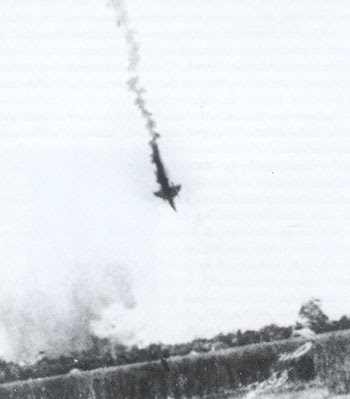
The Failed Air War Over Vietnam
or go to
Aletho News Archives – Video-Images
From the Archives
USS Liberty Massacre: A Pivotal Moment in the Hostile Takeover of America
By Kevin Barrett | Crescent | Dhu al-Qa’dah 24, 1445
In corporate America, hostile takeovers are commonplace. They occur when an aggressor—a larger corporation or rich individuals—seizes control of a smaller corporation without asking permission.
What few recognize is that the United States itself has been subjected to a hostile takeover. Since the aggressor, the illegitimate settler colony known as “Israel,” is much smaller than the US, the takeover has necessarily been surreptitious.
As of June, 2024, Israel’s gradual takeover of the US has become obvious and undeniable—a proverbial “elephant in the living room.” … continue
Blog Roll
 Aletho News
- Leaders Condemn Ansarallah Attack on Saudi Arabia While Ignoring Illegal War Against Yemen
- Leaked: Britain’s Covert Iraqi Psyops Network
- Yemeni Armed Forces Warn Airlines Against Using Saudi Airports, Exempt Mecca and Medina
- Iran security chief says powers greater than US tried to conquer Iran but ended in ‘dustbin of history’
- Europe’s mounting social chaos… chickens coming home to roost for proxy war against Russia
- US-Russia Diesel Deal Becomes Massive Defeat for Ukraine
- Hormuz and the Looming Economic Catastrophe
- Dhubab offensive, media blitz and the rapid unraveling of Saudi-backed coalition’s new gambit
- Putin Conveys to Trump Iran’s Vision on Possible Conflict Resolution – Kremlin
- The Search for Truth: Charlie Kirk’s Assassination One Year Later
- If Americans Knew
- ‘He’s Desperate’: AIPAC Begins Spending Against Abdul El-Sayed to Boost Mike Rogers:
- Trump, Hormuz, and the Looming Economic Catastrophe
- For three years, Israel has killed a child in Gaza every 71 minutes – Daily Update
- Israeli forces kill another child in Gaza – Daily Update
- Gaza ceasefire exists in name only, say more than 100 organizations
- Nearly 2 Million in Gaza Need Urgent Shelter Assistance as Winter Looms: IOM Chief Warns
- Suppressing Palestinian resistance: US charity under fire for AI monitoring of Gaza classrooms
- Thousands Are Held in Israeli Torture Camps. This Is What Happens Inside
- Israel puts Gaza’s sick, injured, newborn in peril – Daily Update
- Report claimed Mark Levin used by Israeli government to influence Trump
- No Tricks Zone
- Germany’s Green Energy Debacle: High Energy Costs Force Kahla Porzellan to Close After 182 Years!
- New Study: 50 Years Of The Most Aggressive ‘Net Zero’ Policies Can Only Affect The Global Climate By 0.03°C
- US September “Heat” Was No Record…Many Records Set Decades Ago
- Latest European Green Energy Debacle; Portugal’s Largest Flagship Solar Park Insolvent!
- Green Energy Debacle: German Expert Professor Fritz Vahrenholt Warns Of Severe Economic And Social Consequences
- Two More Paleo Reconstructions Affirm Meters-Higher Sea Levels Across Ireland, Brazil 7000-6000 Years Ago
- New Study: Earth And Venus Surface Warmth Largely Explained By Convection And Lapse Rate, Not CO2 Or Radiation
- 2025 Nature Paper Claiming Worsening Global Drought Gets RETRACTED …Heavily Flawed
- New Study: ‘Global Drought Shows No Detectable Recent Acceleration Under Climate Warming’
- Economic Masterminds: German Socialists Suggest Taxing Productivity Gains Stemming From Using AI

