Despite the announcement of a “partial withdrawal” of Turkish forces from a training camp near the ISIS-controlled northern Iraqi city of Mosul, Ankara has done nothing to follow up on its empty statements, the Iraqi defense ministry says.
“In fact there is no Turkish troop withdrawal. There are just statements from Anakara,” said Iraqi defense ministry spokesman Nasir Nouri Mohammed, TASS reported. According to the spokesman, Ankara’s forces “only slightly relocated near the same positions.”
This cannot even be called a “partial withdrawal,” Nouri Mohammed said, let alone a full withdrawal of the Turkish contingent.
Tensions between the two countries have increased dramatically since Turkey reinforced its military deployment in Iraq with about 150 soldiers backed by artillery and around 25 tanks in a base near the Islamic State (IS, formerly ISIS/ISIL)-controlled northern Iraqi city of Mosul on December 4.
The Iraqi government considered this action as an hostile act in violation of its sovereignty and demanded the immediate withdrawal of Turkish troops.
Nouri Mohammed expressed hope that Turkey would follow up on its promises and will proceed to the “actual withdrawal” of its contingent. Yet, the spokesman reiterated, “no concrete steps” have been taken by Ankara so far.
On Sunday, the president of Turkey, Recep Tayyip Erdogan, announced the withdrawal of military troops from Iraq to reduce tensions following international criticism. The decision to pull out troops also came after Iraq brought the issue to the United Nations Security Council.
Yet despite the announcement made by Erdogan on December 20, Turkish Prime Minister, Ahmet Davutoglu said Tuesday that the troops will remain in Iraq to fight IS militants. According to the PM, Turkish training and equipment mission for Iraq will continue until IS-held Mosul is liberated.
“Within this framework and in line with Iraqi authorities’ demands, we have been providing training and equipment to both the Peshmerga and the local Mosul volunteers. Our support will continue until Mosul is liberated,” Davutoglu said, Hurriyet Daily News reported.
Addressing national assembly members on Tuesday, Turkish defense minister Ismet Yilmaz said that IS is a direct security threat for Turkey.
“Ensuring Iraq’s stability passes from neutralizing Daesh [the Arabic name for IS]. This can only be possible through the recapture of Mosul, which has, in the first place, strategic importance,” he said.
IS captured Iraq’s second-largest city in 2014. The United States and its allies have been carrying out air strikes against Islamist militants in Iraq since August 2014, but are yet to produce any tangible results.
In January, the Syrian government will – ostensibly – sit across the negotiating table from ‘the Syrian opposition’ to decide on the structure and make-up of a transitional government that promises to end the 5-year Syrian conflict.
The ‘Syrian opposition,’ we are told by US Secretary of State John Kerry, will be selected by ‘Syrians’ and will therefore be ‘representative.’
“This is not about imposing anything on anyone,” Kerry remarked about the Vienna process, convened to broker a Syrian peace – which was negotiated by 20 countries, but without the involvement of Syrians.
“I want to be clear: the Syrian people will be the validators of this whole effort,” says Kerry again – lest we forget. This is just before he instructs us that Syrian President Bashar al-Assad cannot hold any long-term position in Syria: “Asking the opposition to trust Assad or to accept Assad’s leadership is simply not a reasonable request, and it is literally therefore a non-starter,” explains Kerry from his non-Syrian perspective.
Incidentally, Kerry now also calls any Syrian demand for Assad to leave before the political transition “a non-starting position.” It appears that to be part of this ‘Syrian solution,’ you must first agree with Kerry’s many nuanced positions on Syria.
But back to the ‘Syrian opposition’ – those able negotiators who will represent the ‘Syrian people’ come January.
This is where it gets really confusing. The 20 non-Syrian countries participating in the Vienna process will ultimately decide 1. which Syrians will speak for the opposition at future talks, and 2. which Syrians will instead be labelled ‘terrorists’ to be slaughtered on the battlefield.
To whittle down the ‘Syrian opposition’ to a few dozen individuals that are ‘representative’ of Syrians, several meetings were held to fight it out – mostly in foreign countries.
The Saudis shrewdly tried to grab front-runner advantage for their favorite Syrians by hosting a highly-publicized meeting in Riyadh that cobbled together a 34-member opposition ‘turnkey solution.’
But several countries balked at some of the Riyadh-cooked opposition, which consists of groups or individuals they think should be on the ‘terrorist’ list instead of the negotiating table.
Others on the Saudi shortlist don’t appear to be ‘representative’ of anybody, let alone the ‘Syrian people.’ They include several former heads of the now widely-discredited Syrian National Coalition (SNC), once viewed by Syria’s foes as the country’s ‘legitimate’ government-in-exile.
These Riyadh-backed luminaries include ex-SNC President George Sabra, who gained his Syrian ‘legitimacy’ in 2012 from a whopping 28 votes cast by 41 Syrians – in Qatar.
They also include Khaled Khoja, who squeaked through as president of the now-rebranded ‘National Coalition for Syrian Revolutionary and Opposition Forces’ with 56 votes out of 109 cast – in Turkey.
They also include the likes of Saudi-based Ahmad Jarba, who won his second term at the helm of the National Council in 2014 with 65 votes – also cast in Turkey. Jarba beat his only rival Riad Hijab by 13 whole votes. Hijab turned the tables on Jarba in Riyadh last week, however, when 34 Syrians chose him instead to represent them at peace talks in Vienna.
Hijab, of course, is best known as the highest-ranking official to defect from the Syrian government during this crisis. He was prime minister of the country at the time – and I was in Damascus sitting in a roadside café when the news of his defection first broke. It created quite a stir in the café: Half of the Syrian customers were asking “who is the prime minister?” while the other half were asking “who is Riad Hijab?”
Representative of the Syrian people? Not so much.
The ‘Terrorists’
There are two lists being drawn up per the agreement reached in Vienna: the first list is to decide the ‘Syrian opposition’ negotiators. Since 22 million Syrians will not be voting for their own representatives, this list will basically be ‘manufactured’ by a handful of influential foreign states via some frenzied horse-trading.
The second list created by the Vienna-20 will determine which Syrian opposition militias are to be designated as ‘terrorist’ organizations. It is understood that those who make this list will not be participating in any ceasefires. It is also understood that the groups on this list will be mowed down by the Syrian army, its allies and foreign coalition airstrikes – unless they flee back across the Turkish border, of course.
For years, Washington has insisted there are armed ‘moderate’ groups in Syria, but have gone to great lengths to avoid naming these ‘moderates.’ Why? Because if moderates were named and identified, the US would have to be very, very certain that no past, present or future ‘atrocity video’ would surface to prove otherwise. And the US could not guarantee this with any of the groups they have armed, trained or financed in Syria over the past five years.
The twenty countries involved in Vienna talks have already agreed that ISIS and Jabhat al-Nusra (Al Qaeda’s Syrian franchise) are on this list. The big question now is who else makes the cut. And in everyone’s sights first and foremost is Ahrar al Sham, a Turkish, Qatari and Saudi-funded extremist group whose backbone is a mix of the Syrian Muslim Brotherhood and Al Qaeda.
Earlier last summer, when I queried the US State Department about how they viewed Ahrar, I was told: “The US has neither worked with nor provided any assistance to Ahrar al-Sham. The US supports moderate Syrian opposition groups.”
Put it this way, if Ahrar were ‘moderates,’ they would have already received direct US assistance, so desperate has Washington been to find Syrian fighters to do their bidding. And influential Americans have worked overtime to whitewash Ahrar – to distance it from Al Qaeda and other extremists, even though Ahrar’s closest primary ground force ally is none other than Jabhat al Nusra.
This strange western-Turkish-GCC determination to mainstream radical Salafist militants was seen again in Riyadh in December, when Ahrar reps were invited to join the opposition deliberations. The group is reported to have signed on to the final Riyadh declaration, but this was later hotly disputed by its leadership inside Syria. Either way, Ahrar is never going to be comfortable with Vienna’s terms today – to do so will be to turn its guns on its comrades in Nusra tomorrow, and to renounce many of its core beliefs.
The Ahrar challenge is mirrored by many of the hundreds of militias fighting inside Syria right now. These are mostly Sunni Islamist fighters, who over the course of this conflict have become overtly sectarian, violent and intolerant. Are they terrorists? The Syrian state says yes, and so do its allies Iran and Russia.
And this leads us to why they are right.
Armed and foreign-backed
Whatever this Syrian crisis has been, a ‘revolution’ it is not. No revolution, borne from the heart of a genuinely popular insurrection, is financed, armed and trained by the enemies of a state. What has transpired in Syria for the past five years is a long-planned foreign conspiracy – in coordination with a small sliver of its nationals – to create regime-change on the back of the narratives of the ‘Arab Spring.’
The US military’s ‘unconventional warfare’ manual contains the blueprint for exactly this kind of regime-change operation:
But this is not the first time this trick has been tried in Syria. In the late 1970s and early 1980s, the Syrian branch of the Muslim Brotherhood launched a similar operation from inside Hama and tried to replicate it nationwide. They failed and were wiped out by Bashar al Assad’s father, Hafez, who was not constrained by the threat of today’s foreign “humanitarian intervention” and “Responsibility To Protect” (R2P) doctrines.
The US Defense Intelligence Agency (DIA) in their now-declassified 1982 report on Hama called the Muslim Brotherhood’s actions “terrorism,” and rightly so.
You cannot pick up arms against a central government, impose your will with weapons on population centers, blow up police stations, public transportation, bread factories, pipelines, waterworks, target your national army, human-shield yourself in mosques and schools, assassinate public and private figures – and imagine yourself anything but a terrorist. You are not fighting an occupation, where your right to self-defense is enshrined in law. You are fighting your state, and your state has an internationally-mandated legal duty to protect its nationals – from you.
Furthermore, no state would shelter you from lawful consequence if you were doing all these things at the behest of, and with material support from, an enemy state.
Syria’s largest militant opposition groups are – one and all – financed, armed, trained, supported by the United States, Great Britain, Saudi Arabia, Turkey, Qatar, France and a smattering of other states and nationals.
None of these groups belong at a negotiating table across from the Syrian government – for one, they do not represent ‘Syrians,’ they represent foreign interests.
Can Washington name a single of its own anti-government, US-based, armed militias that it would term “moderate?” If an enemy state was financing and arming a group of American citizens, what would the consequence be if this group burned vehicles, killed police officers, set banks ablaze?
Moderate or extremist, secular or Islamist, why should Syria’s foreign-backed armed groups sit at the table in Vienna? And, for that matter, why should Syria’s foreign-backed unarmed politicos represent ‘Syrians’ at talks either?
Foreign states that spent five years ignoring the many non-violent Syrian dissidents based in Syria who have spent decades in opposition – in order to manufacture a thoroughly unrepresentative, subservient, malleable and repressive ‘Syrian opposition’ that will serve their interests – should not be rewarded for their deeds in Vienna.
None of their hand-picked ‘Syrian opposition’ will do – these mini-tyrants, warlords and militants will just prolong Syria’s tragedy indefinitely.
Think of Vienna as a stage. Right now, several western powers are seeking a political solution in Vienna as an exit from the Syrian theater – because it has become too costly. The extremism of ISIS, terror threats on the home front, a flood of migrants and refugees, and the promise of indefinite chaos in the Middle East has created a new-found bargaining spirit in the west. For the west, Assad, the Russians and Iranians suddenly look like worthy partners today – able, potentially, to help negotiate a face-saving exit from the Syrian quagmire. It is no coincidence that the US pushed through a nuclear deal with Iran this year – or that Kerry and Russian Foreign Minister Sergei Lavrov are co-chairing the Vienna talks.
But in the east – in Saudi Arabia, Turkey and Qatar – Vienna represents potential defeat unless Assad goes. These states either believe they are facing down existential threats, or at best, political humiliations from which they are unlikely to recover.
This brings another level of complexity to the Vienna stage. Allies in east and west find themselves with vastly diverging interests. All are still looking to stack their hands with cards which can improve their fortunes at the table, but their militants in the Syrian field have been losing ground since Russian jets took to Syria’s skies. Their own anti-terror Coalition is being outed and shamed for its complicity with the very terrorists it purports to fight. And they still, five years on, cannot construct a cohesive ‘Syrian opposition.’
Vienna is unlikely to ever see a genuine Syrian political solution. But it could still act as a springboard for some new thinking. Think ‘terror’ first. Disarm militants, halt weapons transfers, shut down borders, besiege them in their strongholds, cut off their financing, sanction their supporters.
Many of these components were in last week’s UN Security Council Resolution 2254, co-sponsored by Syria, in a new twist. An important start.
Cooperate with the Syrian state; coordinate airstrikes, ground battles; share intelligence. This stage may yet arrive.
Finally, acknowledge the reforms that the state tried to implement in the first few months of the Syrian crisis – Syria shut down its military court at the same time that Jordan was establishing a new security court. Why was one derided and the other lauded? Provide the time and space – reconciliation takes time – for Syrians to gear up for new elections under international observation.
If a ‘Syrian opposition’ is the desired outcome, this can only come organically from inside Syria, when Syrians are no longer under the threat of violent conflict.
The alternative, of course, is this Syrian opposition circus that is gearing up for a fall in Vienna. You can pay these clowns through the nose, but you will never get a performance out of them.
Sharmine Narwani is a commentator and analyst of Middle East geopolitics. She is a former senior associate at St. Antony’s College, Oxford University and has a master’s degree in International Relations from Columbia University. Sharmine has written commentary for a wide array of publications, including Al Akhbar English, the New York Times, the Guardian, Asia Times Online, Salon.com, USA Today, the Huffington Post, Al Jazeera English, BRICS Post and others. You can follow her on Twitter at @snarwani
One reason why Official Washington continues to insist that Syrian President Bashar al-Assad “must go” is that he supposedly “gassed his own people” with sarin on Aug. 21, 2013, but the truth of that allegation has never been established and is in growing doubt, U.S. intelligence veterans point out.
MEMORANDUM FOR: U.S. Secretary of State John Kerry, and Foreign Minister of Russia Sergey Lavrov
FROM: Veteran Intelligence Professionals for Sanity (VIPS)
SUBJECT: Sarin Attack at Ghouta on Aug. 21, 2013
In a Memorandum of Oct. 1, 2013, we asked each of you to make public the intelligence upon which you based your differing conclusions on who was responsible for the sarin chemical attack at Ghouta, outside Damascus on Aug. 21, 2013. On Dec. 10, 2015, Eren Erdem, a member of parliament in Turkey, citing official documents, blamed Turkey for facilitating the delivery of sarin to rebels in Syria.
Mr. Kerry, you had blamed the Syrian government. Mr. Lavrov, you had described the sarin as “homemade” and suggested anti-government rebels were responsible. Each of you claimed to have persuasive evidence to support your conclusion.
Neither of you responded directly to our appeal to make such evidence available to the public, although, Mr. Lavrov, you came close to doing so. In a speechat the UN on Sept. 26, 2013, you made reference to the views we presented in our VIPS Memorandum, Is Syria a Trap?, sent to President Obama three weeks earlier.
Pointing to strong doubt among chemical weapons experts regarding the evidence adduced to blame the government of Syria for the sarin attack, you also referred to the “open letter sent to President Obama by former operatives of the CIA and the Pentagon,” in which we expressed similar doubt.
Mr. Kerry, on Aug. 30, 2013, you blamed the Syrian government, publicly and repeatedly, for the sarin attack. But you failed to produce the kind of “Intelligence Assessment” customarily used to back up such claims.
We believe that this odd lack of a formal “Intelligence Assessment” is explained by the fact that our former colleagues did not believe the evidence justified your charges and that, accordingly, they resisted pressure to “fix the intelligence around the policy,” as was done to “justify” the attack on Iraq.
Intelligence analysts were telling us privately (and we told the President in our Memorandum of Sept. 6, 2013) that, contrary to what you claimed, “the most reliable intelligence shows that Bashar al-Assad was not responsible for the chemical incident that killed and injured Syrian civilians on August 21.”
This principled dissent from these analysts apparently led the White House to create a new art form, a “Government Assessment,” to convey claims that the government in Damascus was behind the sarin attack. It was equally odd that the newly minted genre of report offered not one item of verifiable evidence.
(We note that you used this new art form “Government (not Intelligence) Assessment” a second time – again apparently to circumvent intelligence analysts’ objections. On July 22, 2014, just five days after the shoot-down of Malaysia Airlines Flight 17, after the media asked you to come up with evidence supporting the charges you leveled against “pro-Russian separatists” on the July 20 Sunday talk shows, you came up with the second, of only two, “Government Assessment.” Like the one on the chemical attack in Syria, the assessment provided meager fare when it comes to verifiable evidence.)
Claims and Counterclaims
Speaking to the United Nations General Assembly on Sept. 24, 2013, President Obama asserted: “It’s an insult to human reason and to the legitimacy of this institution to suggest that anyone other than the [Syrian] regime carried out this attack [at Ghouta].”
Mr. Lavrov, that same day you publicly complained that U.S. officials kept claiming “’the Syrian regime,’ as they call it, is guilty of the use of chemical weapons, without providing comprehensive proof.” Two days later you told the U.N. General Assembly you had given Mr. Kerry “the latest compilation of evidence, which was an analysis of publicly available information.” You also told the Washington Post, “This evidence is not something revolutionary. It’s available on the Internet.”
On the Internet? Mr. Kerry, if your staff avoided calling your attention to Internet reports about Turkish complicity in the sarin attack of Aug. 21, 2013, because they lacked confirmation, we believe you can now consider them largely confirmed.
Documentary Evidence
Addressing fellow members of parliament on Dec. 10, 2015, Turkish MP Eren Erdem from the Republican People’s Party (a reasonably responsible opposition group) confronted the Turkish government on this key issue. Waving a copy of “Criminal Case Number 2013/120,” Erdem referred to official reports and electronic evidence documenting a smuggling operation with Turkish government complicity.
In an interview with RT four days later, Erdem said Turkish authorities had acquired evidence of sarin gas shipments to anti-government rebels in Syria, and did nothing to stop them.
The General Prosecutor in the Turkish city of Adana opened a criminal case, and an indictment stated “chemical weapons components” from Europe “were to be seamlessly shipped via a designated route through Turkey to militant labs in Syria.” Erdem cited evidence implicating the Turkish Minister of Justice and the Turkish Mechanical and Chemical Industry Corporation in the smuggling of sarin.
The Operation
According to Erdem, the 13 suspects arrested in raids carried out against the plotters were released just a week after they were indicted, and the case was closed — shut down by higher authority. Erdem told RT that the sarin attack at Ghouta took place shortly after the criminal case was closed and that the attack probably was carried out by jihadists with sarin gas smuggled through Turkey.
Small wonder President Erdogan has accused Erdem of “treason.” It was not Erdem’s first “offense.” Earlier, he exposed corruption by Erdogan family members, for which a government newspaper branded him an “American puppet, Israeli agent, a supporter of the terrorist PKK and the instigator of a coup.”
In our Sept. 6, 2013 Memorandum for the President, we reported that coordination meetings had taken place just weeks before the sarin attack at a Turkish military garrison in Antakya – just 15 miles from the Syrian border with Syria and 55 miles from its largest city, Aleppo.
In Antakya, senior Turkish, Qatari and U.S. intelligence officials were said to be coordinating plans with Western-sponsored rebels, who were told to expect an imminent escalation in the fighting due to “a war-changing development.” This, in turn, would lead to a U.S.-led bombing of Syria, and rebel commanders were ordered to prepare their forces quickly to exploit the bombing, march into Damascus, and remove the Assad government.
A year before, the New York Times reported that the Antakya area had become a “magnet for foreign jihadis, who are flocking into Turkey to fight holy war in Syria.” The Times quoted a Syrian opposition member based in Antakya, saying the Turkish police were patrolling this border area “with their eyes closed.”
And, Mr. Lavrov, while the account given by Eren Erdem before the Turkish Parliament puts his charges on the official record, a simple Google search including “Antakya” shows that you were correct in stating the Internet contains a wealth of contemporaneous detail supporting Erdem’s disclosures.
Mr. Kerry, while in Moscow on Dec. 15, you said to a Russian interviewer that Syrian President Assad “has gassed his people – I mean, gas hasn’t been used in warfare formally for years – for – and gas is outlawed, but Assad used it.”
Three days later The Washington Post dutifully repeated the charge about Assad’s supposed killing “his own people with chemical weapons.” U.S. media have made this the conventional wisdom. The American people are not fully informed. There has been no mainstream media reporting on Turkish MP Erdem’s disclosures.
Renewed Appeal
We ask you again, Secretary Kerry and Foreign Minister Lavrov, to set the record straight on this important issue. The two of you have demonstrated an ability to work together on important matters – the Iran nuclear deal, for example – and have acknowledged a shared interest in defeating ISIS, which clearly is not Turkish President Erdogan’s highest priority. Indeed, his aims are at cross-purposes to those wishing to tamp down the violence in Syria.
After the shoot-down of Russia’s bomber on Nov. 24, President Vladimir Putin put Russian forces in position to retaliate the next time, and told top defense officials, “Any targets threatening our [military] group or land infrastructure must be immediately destroyed.” We believe that warning should be taken seriously. What matters, though, is what Erdogan believes.
There is a good chance Erdogan will be dismissive of Putin’s warning, as long as the Turkish president believes he can depend on NATO always to react in the supportive way it did after the shoot-down.
One concrete way to disabuse him of the notion that he has carte blanche to create incidents that could put not only Turkey, but also the U.S., on the verge of armed conflict with Russia, would be for the U.S. Secretary of State and the Russian Foreign Minister to coordinate a statement on what we believe was a classic false-flag chemical attack on Aug. 21, 2013, facilitated by the Turks and aimed at mousetrapping President Obama into a major attack on Syria.
One of our colleagues, a seasoned analyst of Turkish affairs, put it this way: “Erdogan is even more dangerous if he thinks that he now has NATO license to bait Russia — as he did with the shoot-down. I don’t think NATO is willing to give him that broader license, but he is a loose cannon.”
FOR THE STEERING GROUP, VETERAN INTELLIGENCE PROFESSIONALS FOR SANITY
Philip Giraldi, CIA, Operations Officer (ret.)
Larry Johnson, CIA & State Department (ret.)
John Kiriakou, Former CIA Counterterrorism Officer
Edward Loomis, NSA, Cryptologic Computer Scientist (ret.)
David MacMichael, National Intelligence Council (ret.)
Ray McGovern, former US Army infantry/intelligence officer & CIA analyst (ret.)
Todd E. Pierce, MAJ, US Army Judge Advocate (Ret.)
Scott Ritter, former Maj., USMC, former UN Weapon Inspector, Iraq
Coleen Rowley, FBI Special Agent and former Minneapolis Division Legal Counsel (ret.)
Robert David Steele, former CIA Operations Officer
Peter Van Buren, U.S. Department of State, Foreign Service Officer (ret.) (associate VIPS)
Kirk Wiebe, former Senior Analyst, SIGINT Automation Research Center, NSA
Ann Wright, Col., US Army (ret.); Foreign Service Officer (resigned)
Europe and Turkey closed airspace for Russian Long-Range Aviation planes carrying out airstrikes on Daesh positions in Syria, forcing Russian pilots to reroute, Deputy Commander Maj. Gen. Anatoly Konovalov said Saturday.
According to Konovalov, Russian pilots had to leave for Syria from Russia’s northernmost Olenegorsk military airport in order to bypass Europe and then cross the Mediterranean Sea toward Syria.
“There were certain issues that excluded the possibility of performing the tasks by other means. Europe would not allow us, Turkey would not allow us,” Konovalov said.
He added that even in such conditions, Russia’s Long-Range Aviation proved its capability to perform the assigned tasks.
Russia has been conducting airstrikes on positions of IS, a group outlawed in many countries including Russia, in Syria since late September at the request of Syrian President Bashar Assad.
Ties between Turkey and Israel are reportedly improving after a five-year rift between the two sides.
Speedy progress in talks to import Israeli natural gas by Turkey has raised expectations of a thaw in relations. Israel’s once-strong ties with Turkey soured in 2010 after Israeli commandoes killed 10 Turkish peace activists on board a ship seeking to break the blockade of the Gaza Strip. Despite the tensions, Ankara and Tel Aviv have maintained bilateral relations including military and trade ties.
Islamic State militants have managed to steal chemical weapons from underground storage facilities in Libya that were not properly guarded and the gas has already been used, a cousin of the late Libyan leader Muammar Gaddafi told RT Arabic in an exclusive interview.
“ISIS has managed to find some of the secret underground storage facilities, still holding chemical weapons, hidden in the desert. Unfortunately, they weren’t properly guarded,” said Ahmed Gaddafi Al-Dam, a cousin of Muammar Gaddafi, the Libyan leader who was killed in 2011.
Al-Dam, the stolen gas was then trafficked to the northern part of the country and sold.
“There are two known cases of this chemical agent being stolen. I know this from my sources in Tripoli. In the first case, seven drums of sarin were stolen, and in the second, I think it was five.”
And the destructive chemicals have already been used, said Ahmed Gaddafi Al-Dam, who formerly was one of Gaddafi’s most trusted security chiefs. He recalled that during the recent clashes near the Al-Quds Mosque in Tripoli, security forces discovered a vehicle loaded with sarin.
“Unfortunately, those who had driven this vehicle into the city didn’t understand the dangers of this nerve agent, and how risky it was to bring it into an urban area, let alone ever use it. I don’t want to spread panic, but that’s the reality. And the world knows this very well,” he said.
Islamic State (IS, previously ISIS/ISIL) has already used chemical weapons in Iraq and Syria, according to numerous reports.
Earlier this month, Eren Erdem, a member of Turkey’s main opposition party, the Republican People’s Party (CHP), told RT that IS terrorists in Syria had received all the necessary materials to produce deadly sarin gas via Turkey.
Turkey’s invasion into northern Iraq could well be part of a plan to split Iraq into three separate states, undertaken with the approval of the US, while the recent Daesh attack on the Turkish troops plays right into the hands of Ankara, according to Russian political analyst and Middle East expert Semyon Bagdasarov.
The rocket attack at a base in northern Iraq where Turkish troops are currently stationed was solely to the benefit of the Turkish leadership, Semyon Bagdasarov, who is also the Director of the Center for the Middle East and Central Asian Studies, told Radio Sputnik.
On Wednesday, Daesh militants fired rockets at a base in northern Iraq, as they launched a wave of attacks against Kurdish forces.The Turkish Armed Forces said its soldiers returned fire, with four of them sustaining minor injuries.
The expert says that it could well have been a planned act by Ankara.
“In fact, it is all about [the city of] Mosul — who takes Mosul and kicks Daesh out. The Turks want control over it. Well, in the worst case, jointly with Iraqi Kurdish Peshmerga forces. To be more exact, with the Iraqi Kurdistan Democratic Party, led and controlled by Masoud Barzani, with whom the Turks, altogether, have a good relationship.”
“So, incredible as it may seem, this strike plays into the hands of the Turkish leaders, who will now justify the country’s presence there and the increase of its military contingent,” said Bagdasarov.
His words have already been supported by the statement of the Turkish foreign ministry that Wednesday’s fighting demonstrated it had been right to send additional forces to protect its personnel.”This attack showed how legitimate our concerns were about the security of Bashiqa camp,” it said.
Prime Minister Ahmet Davutoglu also said that Wednesday attack on its Iraq base by Daesh militants “justified the recent military deployment”.
Bagdasarov therefore said that it was, in fact, “an occupation of a territory of a different state” which Iraq is unable to withstand.
“In this case there could be only one appropriate countermeasure — military. However the fact is that there is almost no Iraqi army present in this region, it is mostly the Turks and Iraqi Kurdish Peshmerga. And the reality is that Iraq is unable to resist the Turkish aggression. The Iraqi army is very weak on the ground. But the conflict is ripening and it is only the matter of time when there will be a clash between the Iraqis and the Turks.”
It is impossible that the Turkish military invasion of Iraq could have occurred without US approval.
“I think that the decision to bring the Turkish military into the Iraqi territory has been agreed upon with the US. And America’s current inaction speaks volumes. Then, right after that, information emerged that US, Turkey and Iraqi Kurdistan decided to meet first in Ankara and then in Erbil to discuss the future of Iraq. Without Baghdad, without the central government. And it is easy to figure out what future for Iraq they foresee.”
“And several months ago one of America’s generals announced in a soldierly way that a unified Iraq ceased to exist. So we should regard three separate states: Iraqi Kurdistan, Shia state in Baghdad and Sunni Mosul.”
“So I think it is all about the implementation of this very project with the help of Turkey, moreover that it is now a member of the Saudi-led coalition on the fight against terrorism. All the above is going to be implemented on the Iraqi territory and, I am afraid, on the Syrian as well.”
Three goals of the Saudi-led coalition
The expert explained that the coalition proclaims its aim as the fight against Daesh. It is forming a special forces out of the servicemen of its member states. The second aim is the so-called protection of civilians.
“Such a wording often conceals the desire to topple President Assad, accusing him of alleged fight against peaceful civilians,” he said.
The third aim is the ideological counter-strategy against Daesh.
“The Turks will carry it out from the Iraqi territory they will seize under their control. And I think, most likely from part of the Syrian territory.”
“There, many understand that the new borders are being shaped out. And it is very important who will own what. Thus we are witnessing some stepping-up with everyone claiming that they are fighting against Daesh.”
The European Union should impose sanctions on Turkey and Saudi Arabia for financing the Islamic State (IS or Daesh in Arabic) jihadist group, instead of extending its anti-Russia sanctions, the leader of Italy’s Eurosceptic Lega Nord party, Matteo Salvini, told Sputnik Wednesday.
A UN Security Council Resolution to counter the financing of terrorism, targeting in particular Daesh, an organization outlawed in a number of states including Russia, was adopted Thursday. The resolution specifies that Daesh derives its main source of income from smuggled oil and obliges all states to oppose this illicit oil trade in the strongest terms. Russian Ambassador to the United Nations Vitaly Churkin said that Turkish companies found to be involved in this illicit oil trade might be sanctioned by the UN Security Council.
“Europe needs to impose sanctions against Turkey and Saudi Arabia instead of extending sanctions against Russia,” Salvini said.
Salvini added that his party does not believe that the Islamic coalition against extremists that was announced by Saudi Arabia earlier this week “will serve its alleged goals because it is the state that supports terrorism.”
Daesh controls large swathes of land in oil-rich Syria, Iraq and Libya. Earlier this month, the Russian Defense Ministry presented evidence showing that Daesh has been smuggling oil across the porous Syria-Turkey border in large volumes.
Salvini is currently in Moscow and is set to meet on Friday with the head of Russia’s upper house of parliament’s International Committee, Alexei Pushkov, Deputy Chairman of the Federation Council Committee on International Affairs Andrey Klimov, as well as with the representatives of the United Russia Party.
Never at loss for words, Putin was as straight-forward as ever at his annual Q&A session. Russian relations with Turkey, the Syrian and Ukrainian crises, as well as the US presidential race were the highlights of the 3-hour long marathon attended by 1,400 journalists.
When asked about third party interests contributing to the deterioration of Russia-Turkey relations, Putin wondered if Washington might have something to do with it.
“We don’t know that for sure, but if someone in the Turkish leadership wanted to suck up to the Americans, I’m not sure whether they did the right thing or not,” he said.
“First of all I don’t know whether the Americans need it or not, it’s possible there was a certain agreement on some level: ‘we down a Russian plane and you turn a blind eye,’ ‘we deploy our troops to Iraq and occupy a part of Iraq’.”
Russia won’t cease its military campaign in Syria because of the Su-24 downing, even if Ankara expected that, said Putin.
“[Ankara] thought we would flee [Syria]! No, Russia is not a country to act like that. We increased our presence in Syria; we increased the strength of our air forces. There were no anti-aircraft weapon systems there before – now there is the S-400,” he said.
Operating a full-fledged base in Syria is not on Russia’s agenda, Putin said.
“Why would we need a base over there? We can get them [if we have to],” Putin said, stressing that the temporary units of the Russian task force currently operating in Syria could be withdrawn within a couple of days.
Putin reiterated that, despite constant accusations, no regular Russian troops have been stationed in Ukraine.
“We never said there were no people fulfilling certain tasks there (in Donbass region of Ukraine), including in the military sphere. But that does not mean there are regular Russian troops. Feel the difference?” Putin said.
After the main part of the Q&A session was over, Putin was asked about his attitude towards Donald Trump.
“It’s not our business to define his accomplishments,” Putin said. “But he is the absolute leader of the presidential race [in the US]”.
“He is a bright, talented person, no doubt about that,” Putin added. Trump recently stated he would like to see the US strengthen ties with Russia. “We welcome that of course,” said Putin.
Earlier in the same Q&A session, Putin had said he was prepared to work with whoever turns out to be victorious in the 2016 US presidential election.
The Turkish Army has reportedly sent military vehicles, including tanks, into civilian areas in its predominantly-Kurdish southeast. While mainstream Western media remains silent, local activists posted frightening photos on social media.
The People’s Democracy Party (HDP) published a series of photos of the Thursday raid by the Turkish Army. According to HDP, soldiers in the Yenisehir district of Silopi “broke into a building and pointed guns at people.”
Ferhat Encu, an MP for the People’s Democratic Party, was taken into custody in Silopi.
“The world and those justifying this cruelty know well, this isn’t an ‘anti-terror’ act. This is an ethnic cleansing and genocide operation,” the party tweeted.
Ankara has been busy conducting military operations in the southeast since summer. Tensions have been mounting for months as security forces have been battling Kurdistan Workers’ Party (PKK) militants after a ceasefire collapsed in July. The PKK has been fighting for an autonomous Kurdish region inside Turkey for over three decades.
Earlier this week, Turkish Prime Minister Ahmet Davutoglu promised that anti-PKK operations would continue in Silopi and Cizre in order to, as he put it, prevent the militants from “spreading the fire” from Syria and Iraq into Turkey.
“The terrorists will be wiped out from these districts. Neighborhood by neighborhood, house by house, street by street,” he pledged.
Nurcan Baysal, founder of the Diyarbakir Political and Social Research Institute, has described Davutoglu’s language as “very dangerous.”
“If the Turkish state wants peace with its Kurdish citizens, it should change its dangerous language into the language of peace,” Baysal told the Middle East Eye news outlet. “Unfortunately, the Turkish state has decided to wage war against the Kurdish people again.”
“People are without water, electricity, food, medical care, and many civilians have died – and state officials say that they will continue this.”
Figen Yuksekdag, the co-chair of the pro-Kurdish Peoples’ Democratic Party (HDP), has publicly accused Davutoglu of “ordering a massacre” in Cizre and Silopi.
“Who are these operations against, Mr. Prime Minister?” Yuksekdag wondered at a press conference in Diyarbakir. “There are people living in these houses, Davutoglu,” she said.
Thousands took to the streets of Diyarbakir in late November after Tahir Elci, a lawyer and campaigner for Kurdish rights, was shot dead in while giving a speech on November 28. This became the last straw.
Seven Kurds were killed following clashes with Turkish security forces earlier this week. Two died in the city of Diyarbakir as protesters fought with police, while five lost their lives in the Mardin province.
Around 5,000 people gathered for a march in Diyarbakir on Monday, according to AP, which was called by the Peoples’ Democratic Party (HDP). Local residents gathered to voice their concerns about round-the-clock curfews being implemented in the region.
According to the Human Rights Foundation of Turkey, there have been a total of 52 curfews imposed since mid-August across seven provinces in the region, affecting areas where some 1.3 million people live.
Residents from the pro-Kurdish town of Silvan (some 80km north east of Diyarbakir) said they had been shelled by Turkish forces in mid-November, while the never-ending curfew had driven them to the brink of starvation.
Theoretically, it would be a great story for the American press: an autocrat so obsessed with overthrowing the leader of a neighboring country that he authorizes his intelligence services to collaborate with terrorists in staging a lethal sarin attack to be blamed on his enemy and thus trick major powers to launch punishing bombing raids against the enemy’s military.
And, after that scheme failed to achieve the desired intervention, the autocrat continues to have his intelligence services aid terrorists inside the neighboring country by providing weapons and safe transit for truck convoys carrying the terrorists’ oil to market. The story gets juicier because the autocrat’s son allegedly shares in the oil profits.
To make the story even more compelling, an opposition leader braves the wrath of the autocrat by seeking to expose these intelligence schemes, including the cover-up of key evidence. The autocrat’s government then seeks to prosecute the critic for “treason.”
But the problem with this story, as far as the American government and press are concerned, is that the autocratic leader, President Recep Tayyip Erdogan, is in charge of Turkey, a NATO ally and his hated neighbor is the much demonized Syrian President Bashar al-Assad. Major U.S. news outlets and political leaders also bought into the sarin deception and simply can’t afford to admit that they once again misled the American people on a matter of war.
The Official Story of the sarin attack – as presented by Secretary of State John Kerry, Human Rights Watch and other “respectable” sources – firmly laid the blame for the Aug. 21, 2013 atrocity killing hundreds of civilians outside Damascus on Assad. That became a powerful “group think” across Official Washington.
Though a few independent media outlets, including Consortium News, challenged the rush to judgment and noted the lack of evidence regarding Assad’s guilt, those doubts were brushed aside. (In an article on Aug. 30, 2013, I described the administration’s “Government Assessment” blaming Assad as a “dodgy dossier,” which offered not a single piece of verifiable proof.)
However, as with the “certainty” about Iraq’s WMD a decade earlier, Every Important Person shared the Assad-did-it “group think.” That meant — as far as Official Washington was concerned — that Assad had crossed President Barack Obama’s “red line” against using chemical weapons. A massive U.S. retaliatory bombing strike was considered just days away.
But Obama – at the last minute – veered away from launching those military attacks, with Official Washington concluding that Obama had shown “weakness” by not following through. What was virtually unreported was that U.S. intelligence analysts had doubts about Assad’s guilt and suspected a trap being laid by extremists.
Despite those internal questions, the U.S. government and the compliant mainstream media publicly continued to push the Assad-did-it propaganda line. In a formal address to the United Nations General Assembly on Sept. 24, 2013, Obama declared, “It’s an insult to human reason and to the legitimacy of this institution to suggest that anyone other than the regime carried out this attack.”
Later, a senior State Department official tried to steer me toward the Assad-is-guilty assessment of a British blogger then known as Moses Brown, a pseudonym for Eliot Higgins, who now runs an outfit called Bellingcat which follows an effective business model by reinforcing whatever the U.S. propaganda machine is churning out on a topic, except having greater credibility by posing as a “citizen blogger.” [For more on Higgins, see Consortiumnews.com’s “‘MH-17 Case: ‘Old Journalism’ vs. ‘New’.”]
The supposedly conclusive proof against Assad came in a “vector analysis” developed by Human Rights Watch and The New York Times – tracing the flight paths of two rockets back to a Syrian military base northwest of Damascus. But that analysis collapsed when it became clear that only one of the rockets carried sarin and its range was less than one-third the distance between the army base and the point of impact. That meant the rocket carrying the sarin appeared to have originated in rebel territory.
But the “group think” was resistant to all empirical evidence. It was so powerful that even when the Turkish plot was uncovered by legendary investigative reporter Seymour M. Hersh, his usual publication, The New Yorker, refused to print it. Rebuffed in the United States – the land of freedom of the press – Hersh had to take the story to the London Review of Books to get it out in April 2014. [See Consortiumnews.com’s “Was Turkey Behind Syria Sarin Attack?”]
The Easier Route
It remained easier for The New York Times, The Washington Post and other premier news outlets to simply ignore the compelling tale of possible Turkish complicity in a serious war crime. After all, what would the American people think if – after the mainstream media had failed to protect the country against the lies that led to the disastrous Iraq War – the same star news sources had done something similar on Syria by failing to ask tough questions?
It’s also now obvious that if Obama had ordered a retaliatory bombing campaign against Assad in 2013, the likely winners would have been the Islamic State and Al Qaeda’s Nusra Front, which would have had the path cleared for their conquest of Damascus, creating a humanitarian catastrophe even worse than the current one.
To confess to such incompetence or dishonesty clearly had a big down-side. So, the “smart” play was to simply let the old Assad-did-it narrative sit there as something that could still be cited obliquely from time to time under the phrase “Assad gassed his own people” and thus continue to justify the slogan: “Assad must go!”
But that imperative – not to admit another major mistake – means that the major U.S. news media also must ignore the courageous statements from Eren Erdem, a deputy of Turkey’s main opposition Republican People’s Party (CHP), who has publicly accused the Erdogan government of blocking an investigation into Turkey’s role in procuring the sarin allegedly delivered to Al Qaeda-connected terrorists for use inside Syria.
In statements before parliament and to journalists, Erdem cited a derailed indictment that was begun by the General Prosecutor’s Office in the southern Turkish city of Adana, with the criminal case number 2013/120.
Erdem said the prosecutor’s office, using technical surveillance, discovered that an Al Qaeda jihadist named Hayyam Kasap acquired the sarin.
At the press conference, Erdem said, “Wiretapped phone conversations reveal the process of procuring the gas at specific addresses as well as the process of procuring the rockets that would fire the capsules containing the toxic gas. However, despite such solid evidence there has been no arrest in the case. Thirteen individuals were arrested during the first stage of the investigation but were later released, refuting government claims that it is fighting terrorism.”
Erdem said the released operatives were allowed to cross the border into Syria and the criminal investigation was halted.
Another CHP deputy, Ali Şeker, added that the Turkish government misled the public by claiming Russia provided the sarin and that “Assad killed his people with sarin and that requires a U.S. military intervention in Syria.”
Erdem’s disclosures, which he repeated in a recent interview with RT, the Russian network, prompted the Ankara Prosecutor’s Office to open an investigation into Erdem for treason. Erdem defended himself, saying the government’s actions regarding the sarin case besmirched Turkey’s international reputation. He added that he also has been receiving death threats.
“The paramilitary organization Ottoman Hearths is sharing my address [on Twitter] and plans a raid [on my house]. I am being targeted with death threats because I am patriotically opposed to something that tramples on my country’s prestige,” Erdem said.
ISIS Oil Smuggling
Meanwhile, President Erdogan faces growing allegations that he tolerated the Islamic State’s lucrative smuggling of oil from wells in Syria through border crossings in Turkey. Those oil convoys were bombed only last month when Russian President Vladimir Putin essentially shamed President Obama into taking action against this important source of Islamic State revenues.
Though Obama began his bombing campaign against Islamic State targets in Iraq and Syria in summer 2014, the illicit oil smuggling was spared interdiction for over a year as the U.S. government sought cooperation from Erdogan, who recently acknowledged that the Islamic State and other jihadist groups are using nearly 100 kilometers of Turkey’s border to bring in recruits and supplies.
Earlier this month, Obama said he has had “repeated conversations with President Erdogan about the need to close the border between Turkey and Syria,” adding that “there’s about 98 kilometers that are still used as a transit point for foreign fighters, ISIL [Islamic State] shipping out fuel for sale that helps finance their terrorist activities.”
Russian officials expressed shock that the Islamic State was allowed to continue operating an industrial-style delivery system involving hundreds of trucks carrying oil into Turkey. Moscow also accused Erdogan’s 34-year-old son, Bilal Erdogan, of profiting off the Islamic State’s oil trade, an allegation that he denied.
The Russians say Bilal Erdogan is one of three partners in the BMZ Group, a Turkish oil and shipping company that has purchased oil from the Islamic State. The Malta Independentreported that BMZ purchased two oil tanker ships from the Malta-based Oil Transportation & Shipping Services Co Ltd, which is owned by Azerbaijani billionaire Mubariz Mansimov.
Another three oil tankers purchased by BMZ were acquired from Palmali Shipping and Transportation Agency, which is also owned by Mansimovandwhich shares the same Istanbul address with Oil Transportation & Shipping Services, which is owned by Mansimov’s Palmali Group, along with dozens of other companies set up in Malta.
The Russians further assert that Turkey’s shoot-down of a Russian Su-24 bomber along the Syrian-Turkish border on Nov. 24 – which led to the murder of the pilot, by Turkish-backed rebels, as he parachuted to the ground and to the death of a Russian marine on a rescue operation – was motivated by Erdogan’s fury over the destruction of his son’s Islamic State oil operation.
Erdogan has denied that charge, claiming the shoot-down was simply a case of defending Turkish territory, although, according to the Turkish account, the Russian plane strayed over a slice of Turkish territory for only 17 seconds. The Russians dispute even that, calling the attack a premeditated ambush.
President Obama and the mainstream U.S. press sided with Turkey, displaying almost relish at the deaths of Russians in Syria and also showing no sympathy for the Russian victims of an earlier terrorist bombing of a tourist flight over Sinai in Egypt. [See Consortiumnews.com’s “Obama Ignores Russian Terror Victims.”]
New York Times columnist Thomas L. Friedman expressed the prevailing attitude of Official Washington by ridiculing anyone who had praised Putin’s military intervention in Syria or who thought the Russian president was “crazy like a fox,” Friedman wrote: “Some of us thought he was just crazy.
“Well, two months later, let’s do the math: So far, Putin’s Syrian adventure has resulted in a Russian civilian airliner carrying 224 people being blown up, apparently by pro-ISIS militants in Sinai. Turkey shot down a Russian bomber after it strayed into Turkish territory. And then Syrian rebels killed one of the pilots as he parachuted to earth and one of the Russian marines sent to rescue him.”
Taking Sides
The smug contempt that the mainstream U.S. media routinely shows toward anything involving Russia or Putin may help explain the cavalier disinterest in NATO member Turkey’s reckless behavior. Though Turkey’s willful shoot-down of a Russian plane that was not threatening Turkey could have precipitated a nuclear showdown between Russia and NATO, criticism of Erdogan was muted at most.
Similarly, neither the Obama administration nor the mainstream media wants to address the overwhelming evidence that Turkey – along with other U.S. “allies” such as Saudi Arabia and Qatar – have been aiding and abetting Sunni jihadist groups, including Al Qaeda and Islamic State, for years. Instead, Official Washington plays along with the fiction that Saudi Arabia, Turkey and others are getting serious about combating terrorism.
The contrary reality is occasionally blurted out by a U.S. official or revealed when a U.S. intelligence report gets leaked or declassified. For instance, in 2009, then-Secretary of State Hillary Clinton noted in a confidential diplomatic memo, disclosed by Wikileaks, that “donors in Saudi Arabia constitute the most significant source of funding to Sunni terrorist groups worldwide.”
According to a Defense Intelligence Agency report from August 2012, “AQI [Al Qaeda in Iraq, which later morphed into the Islamic State] supported the Syrian opposition from the beginning, both ideologically and through the media. … AQI declared its opposition of Assad’s government because it considered it a sectarian regime targeting Sunnis.”
The DIA report added, “The salafist, the Muslim Brotherhood, and AQI are the major forces driving the insurgency in Syria. … The West, Gulf countries, and Turkey support the opposition.”
The DIA analysts already understood the risks that AQI presented both to Syria and Iraq. The report included a stark warning about the expansion of AQI, which was changing into the Islamic State. The brutal armed movement was seeing its ranks swelled by the arrival of global jihadists rallying to the black banner of Sunni militancy, intolerant of both Westerners and “heretics” from Shiite and other non-Sunni branches of Islam.
The goal was to establish a “Salafist principality in eastern Syria” where Islamic State’s caliphate is now located, and that this is “exactly what the supporting powers to the opposition” – i.e. the West, Gulf states, and Turkey – “want in order to isolate the Syrian regime,” the DIA report said.
In October 2014, Vice President Joe Biden told students at Harvard’s Kennedy School that “the Saudis, the emirates, etc. … were so determined to take down Assad and essentially have a proxy Sunni-Shia war … [that] they poured hundreds of millions of dollars and tens of thousands of tons of military weapons into anyone who would fight against Assad except the people who were being supplied were Al Nusra and Al Qaeda.”
Despite these occasional bursts of honesty, the U.S. government and the mainstream media have put their goal of having another “regime change” – this time in Syria – and their contempt for Putin ahead of any meaningful cooperation toward defeating the Islamic State and Al Qaeda.
This ordering of priorities further means there is no practical reason to revisit who was responsible for the Aug. 21, 2013 sarin gas attack. If Assad’s government was innocent and Ergogan’s government shared in the guilt, that would present a problem for NATO, which would have to decide if Turkey had crossed a “red line” and deserved being expelled from the military alliance.
But perhaps even more so, an admission that the U.S. government and the U.S. news media had rushed to another incorrect judgment in the Middle East – and that another war policy was driven by propaganda rather than facts – could destroy what trust the American people have left in those institutions. On a personal level, it might mean that the pundits and the politicians who were wrong about Iraq’s WMD would have to acknowledge that they had learned nothing from that disaster.
It might even renew calls for some of them – the likes of The New York Times’ Friedman and The Washington Post’s editorial page editor Fred Hiatt – to finally be held accountable for consistently misinforming and misleading the American people.
So, at least for now — from a perspective of self-interest — it makes more sense for the Obama administration and major news outlets to ignore the developing story of a NATO ally’s ties to terrorism, including an alleged connection to a grave war crime, the sarin attack outside Damascus.
Investigative reporter Robert Parry broke many of the Iran-Contra stories for The Associated Press and Newsweek in the 1980s. You can buy his latest book, America’s Stolen Narrative, either in print here or as an e-book (from Amazon and barnesandnoble.com).
What Makes Recep Run? The Making of a Modern Pasha
Erdogan began his ascent to power as a social reformer in opposition to the power elite; he was a rabble-rouser for popular Islam and social welfare. Once he takes political power he enriches his family and the business elite and purges adversaries and rivals.
With political power and economic connections, he amasses personal wealth through illicit business transactions.
With political power and personal wealth, he seeks prestige and status among the Western elites by serving imperial interests: He shoots down a Russian military jet over Syrian territory and thereby threatens hundreds of Turkish businesses and loses a major source of personal enrichment. When the Russians threaten to cut off energy exports to Turkey, Erdogan’s opponents suggest he heat his own palace and villas with cow dung this winter.
The Two Faces of Erdogan
Turkish President Recep Tayyip Erdogan has a long and ignoble history of betraying political associates, trading partners and military allies; of pledging friendship and then bombing his ‘friends’ and murdering citizens; of negotiating ‘in good faith’ and then killing rivals; of playing democrat then behaving like an ordinary demagogic dictator.
Erdogan appeals to the plebian and austere values of the Anatolian provincial petty bourgeoisie, while building the largest luxurious presidential palace in the world – fit for a 21st century Pasha. He repeatedly pronounces his fealty to the ‘Turkish Nation’, while he robs the Turkish treasury by repeatedly accepting bribes and pay-offs from building contractors who then double charge for publically-funded projects.
More recently, Erdogan claims to oppose terrorism and fight ISIS, while the major Turkish and regional newspapers, journalists and most domestic observers document the massive flow of illegal arms across the Turkish-Syrian border to ISIS terrorists.
Erdogan’s ‘Carnal Relation’ with ISIS
Erdogan supports ISIS by bombing the Syrian Kurdish fighters who resist the jihadi mercenaries; by shooting down a Russian military jet defending the Damascus government against the terrorists; by smuggling and selling oil which ISIS had stolen from Iraq and Syria; by providing medical assistance to wounded ISIS fighters; and by training and arming ISIS terrorists in Turkish bases.
There is a reciprocal relationship: Erdogan uses ISIS operatives to terrorize his own domestic opposition, including terror bombing a gathering of Kurdish ‘socialist youth’ in the town of Suruç on July 20, 2015, which killed 33 and the massive bombing in Ankara on October 10 of a ‘peace and justice’ march, which killed over 100, targeting trade unionists, leaders of professional associations, community activists and members of a democratic Kurdish electoral party and wounded many hundreds.
During the legislative election of 2015 ISIS terrorists and thugs from Erdogan’s Justice and Development Party (AKP) attacked the offices, meetings and candidates of the opposition parties, especially of the Kurdish People’s Democratic Party (HDP), to ensure that Erdogan secured a super-majority.
In other words, Erdogan has three uses for ISIS serving his external and internal interests:
(1) To attack and destroy secular Kurdish forces resisting ISIS in Syria and Iraq, thus preventing the formation of an independent Kurdish state on the Turkish border.
(2) To attack and destroy Syria’s independent Baathist government under Bashar Al-Assad, dismantle the multicultural secular state apparatus and install a Sunni Islamist client in Damascus subordinate to Erdogan’s AKP.
(3) To attack and terrorize the Turkish domestic opposition, including the broad-based Kurdish HDP, and the leftist trade union confederation (DISK).
Erdogan has a decade-long strategic alliance with the militant Wahhabi terrorists who now make up ISIS. He intends to ‘remake’ the map of the Middle East to serve his own expansionist ambitions. In part this explains why Erdogan has provided large-scale arms and material to the terrorists, trained thousands of mercenaries and provided medical aid to wounded ISIS fighters. It also explains why Erdogan took the unprecedented and extremely provocative step of shooting down a Russian military jet over Syrian territory, which had been bombing Erdogan’s ISIS allies. Russian and Syrian Army successes against ISIS have threatened his ambitions.
Erdogan’s transformation from ‘Muslim democrat’ to bloody authoritarian Islamist ruler with pretensions of becoming the dominant Middle Eastern Pasha has to be seen in light of his rise to power over the past 40 years.
What Makes Recep Run?
Erdogan, early on, showed his affinity for extremist Islamist politics. In the 1970’s he was head of the youth branch of the Islamist Salvation Party (MSP), a virulent anti-communist, anti-secular party committed to converting Turkey, a huge multi-ethnic secular state, into a theocratic regime (along the lines of contemporary ISIS).
After the military coup of 1980 the MSP was dissolved and reappeared as the Welfare Party. Erdogan became a leader of the new (re-named) Islamist party.
Erdogan and the Welfare Party exploited Turkish mass discontent with the corrupt and authoritarian military. The Welfare Party embraced a populist social welfare program with Islamist religious undertones in order to build a formidable grassroots organization in the working class neighborhoods in Istanbul. Erdogan was elected mayor of Turkey’s largest city in 1994.
As Mayor, Erdogan over-reached his power by preaching militant Islamism and was convicted in 1998 of sedition against the secular state. He served 4 months of a 10-month sentence.
Henceforth he changed tactics: His Islamist fanaticism was disguised. He changed the party name from Welfare to the modern sounding Justice and Development Party (AKP). Erdogan then launched a series of political maneuvers, in which he cleverly manipulated adversaries to gain power and then… stabbed each of them in the back.
Erdogan: Embrace and Back-Stab
Despite his earlier conviction for sedition against the secular state, the ‘reformed’ Erdogan allied with the Kemalist, secular Republican Peoples Party (CHP) to overturn the military’s ban on his participation in politics in 2002. He was elected Prime Minister in 2003. After the AKP won the general election it cut its ties with the CHP. Erdogan was re-elected Prime Minister in 2007 and 2011.
Erdogan allied with the pro-US Islamist leader Fethullah Gülen’s Hizmet or Cemaat Movement, which was influential within the judicial system, police and army. Together they launched a purge against secular military and judicial officials, journalists and media critics.
The Erdogan – Gülenist state apparatus arrested and jailed 300 secular military officers, judges and journalists and replaced them with Erdogan and Gülen loyalists – all Islamists.
Dubbed “Operation Sledgehammer” the entire purge was based on fabricated charges of treason and conspiracy. Yet it was described by the Western media in terms that flattered Erdogan’s democratic credentials, calling it an ‘effort to consolidate democracy’ against the military.
It had nothing to do with democracy: The purge consolidated Erdogan’s personal power and allowed him to pursue policies that were more overtly neo-liberal and Islamist. The purge of the judiciary further allowed Erdogan to enrich crony capitalists and family members.
Erdogan: The Birth of a Neoliberal Pasha
Erdogan then embraced an IMF-designed ‘stabilization and recovery’ program, which reduced wages, salaries and pensions while privatizing public sector enterprises and activities. This attracted a large inflow of capital as foreign investors and cronies snapped up the goodies at bargain prices. Most emblematic of this ‘free-for-all cronies’ approach to the economy was the Soma coal mine disaster in May 2014 when over 300 miners were killed in a previously state-owned mine, which had suffered a breakdown of worker safety conditions after it had been privatized to an Erdogan-crony. Despite local and international outrage, Recep ignored the scandal and unleashed police on the demonstrating miners.
Erdogan’s combination of Islam with brutal neo-liberalism attracted support from Brussels, Wall Street and the City of London. Large inflows of speculative foreign capital temporarily inflated Turkey’s GNP and Erdogan’s wealth and ego!
In the beginning of his rule Erdogan’s concessions, tax incentives, government contracts to big capital were broadly distributed to most sectors, but especially to his crony capitalists within the construction and real estate sectors.
As the capitalist boom continued and his power increased, Erdogan became more obsessed with his role as the savior of Turkey. By 2010, a serious difference developed between Erdogan and his Gülenist partners over the division of power. Erdogan moved rapidly and brutally. He launched another massive purge of suspected ‘Gülenist officials’. He arrested, fired, jailed and relocated Gülen sympathizers among judges, police and civil servants despite the fact that these were officials who had served him well during the earlier purge of the secular military.
Erdogan is not willing to share power with any other party, movement or group. Pasha Recep wanted to monopolize power. He has attacked critical newspapers, businesses and conglomerates claiming these were ‘Gülen controlled’. Erdogan ensured that only capitalists completely loyal to him would receive regime patronage. In other words, he strengthened the size, strength and importance of crony capitalists: especially in the real estate and construction sector.
Pasha Recep’s Assault on Civil Society
Turkey, under Erdogan’s absolute power, has seen a geometric increase in corruption and mindless ‘development projects’, leading to the degradation and usurpation of public spaces. His arbitrary and destructive policies have provoked sustained civil society protests, especially in the center of Istanbul – during the Gezi Park demonstrations, which began in May 2013.
In response to civil society demonstrations, Erdogan shed all pretensions, ripping off his ‘modern democratic’ mask and brutally repressing the peaceful protestors in the heart of Istanbul– resulting in 22 deaths, hundreds wounded and more arrested and sentenced to long jail term. Erdogan subsequently targeted liberal critics and business leaders, who had criticized his brutal use of force.
2013, the year of the Gezi Park Movement, was a turning point – Erdogan and family members were implicated in a $100 million-dollar corruption scandal while liberal critics of the regime were purged.
Facing opposition from sectors of the elite as well as popular classes, Erdogan became more rabidly ‘Islamist’, chauvinistic and megalomaniacal – ‘Neo-Ottoman’.
In short order, he re-launched his attack on the Turkish Kurds and increased his support to the Islamist terrorists in Syria, including what would become ISIS. These policies were designed to complement his ongoing war against the secular Kurds in Iraq and Syria.
Erdogan: Backstabbing Secular Syria and “Best Friend” Russia
From the beginning of his rule, Erdogan cultivated the ‘best of relations’ with Syria’s Bashar Al-Assad and Russian President Vladimir Putin. He signed dozens of trade agreements with Damascus and Moscow. Putin was welcomed to Ankara and Erdogan to Moscow where they signed billion-dollar energy deals and mutual co-operative agreements.
Up to 3 million Russian tourists visited Turkish resorts each year, a bonanza for one of Turkey’s major industries.
Erdogan’s regime was ebullient, effusive, embracing Moscow and Damascus while systematically preparing the ground for more backstabbing!
By 2011, Erdogan had been deeply involved in preparing the ground for what would become the bloody Islamist uprising in Syria. Early on, hundreds of armed foreign Islamist terrorists crossed the Turkish border into Syria. Their presence overwhelmed local Syrian dissidents. Armed Islamists seized villages and towns brutally purging them of Christians, Kurds, Alawites and secular Syrians. They took over the oil fields. From one day to the next, Erdogan was transformed from loving friend to deadly foe of neighboring Syria demanding ‘regime change’ through terrorist sectarian violence.
Erdogan embraced the most extreme, sectarian Wahhabi Islamist groups because they were committed to undermining the nationalist aspirations of the Syrian Kurds as well as overthrowing the secular Al-Assad government. Erdogan’s covert alliance with ISIS and other Islamist terrorist groups was motivated by several strategic considerations, which are outlined below:
1) The alliance serves to prevent the establishment of an autonomous Kurdish enclave on the Syrian-Turkish border in the event of a Damascus defeat, which Erdogan fears would then link armed Syrian Kurds with the huge disaffected Kurdish population in southeastern Turkey and lead to the formation of an autonomous secular Kurdish state.
2) Erdogan’s alliance with jihadis in Syria has served Ankara’s ambition to impose a puppet Sunni-Islamist regime in Damascus.
3) The ISIS regime controlling the Syrian and Iraqi oil fields provides Turkey with a source of cheap fuel and lucrative profits for the regime. Recep’s son, Necmettin Bilal Erdogan owns and operates the BMZ Group which buys the contraband Syrian and Iraqi oil in Turkey and sells it overseas (especially to Israel) earning nearly a billion dollars a year for ‘the family’.
It is not a surprise that the Erdogan family directly financed ISIS, which uses the cash from contraband oil, pillaged antiquities and ‘tribute’ taxes, to purchase heavy and light arms, military and transport vehicles and communications equipment in Turkey and elsewhere to support its terror campaign in Syria and Iraq. Well-informed Turkish observers believe that Erdogan’s intelligence officials are directly involved in recruiting ISIS terrorists to operate within Turkey and attack Erdogan’s internal opposition, especially the Kurdish electoral party HDP and the broad-based Turkish left and trade union movements. Observers claim Turkish intelligence operations had a direct role in the ‘ISIS’ bomb attacks in Suruç and Ankara this year, which killed and maimed hundreds of Erdogan opponents and civil society activists.
Erdogan and ISIS developed a co-dependent relation, one of mutual manipulation. Each has publicly declared their tactical enmity to the other, while busily pursuing joint strategic aims.
Ankara uses the pretext of fighting ISIS in order to bomb the Kurds in Syria who are resisting the jihadis. ISIS uses the pretext of opposing the NATO member Turkey in order to cover its massive oil and weapons trade deals with Erdogan’s family and crony business enterprises.
The Pasha Stabs the Bear and the Bear Bites Back – One Stab Too Many
Russia’s highly effective aerial bombing campaign against the jihadi and ISIS terrorist networks in Syria was in response to a formal request for military intervention by the legitimate government of President Bashar Al-Assad. Russia has long-standing ties to the Baathist regime in Damascus. The intervention has threatened to undermine Erdogan’s regional power ambitions and illicit business operations in Syria. First and foremost, it ended Erdogan’s plan to annex a large swathe of Northern Syria and call it a ‘no fly zone’. The Turkish-controlled ‘no fly zone’ in Syria would expand Turkish military training bases for ISIS and other jihadi terrorists and secure the transport routes for ISIS oil shipments smuggled out of Iraq and Syria.
Unlike the US, which had rarely bombed the strategic Erdogan-ISIS oil smuggling operations, the Russians destroyed over a thousand oil trucks and numerous ISIS oil depots and logistical centers in the first month of its air campaign. By reducing the flow of smuggled oil, Russia cut off the main source of massive profit for Bilal Erdogan’s BMZ Company as well as for Turkish arms dealers.
Like gangsters, Erdogan, his family and cronies have been immersed in massive corrupt business activities at home and abroad; he can no longer operate within the context of the larger interests of the Turkish capitalist class with its $40 billion dollar annual trade and investment relations with Russia. Erdogan’s decision to shoot down a Russian jet in Syrian territory, on November 24, 2015, was largely motivated by his fury at Russia’s successful interruption of the ISIS oil convoys. By protecting his own family interests, Erdogan stabbed more allies in the back: The Russians, as well as large sections of the Turkish capitalist class!
Up until Erdogan’s act of war against Russia, he had publicly embraced Putin as an ally, friend and partner. The two leaders had cordial relations for over a decade. The Turkish military was fully informed about Russian military operations in Syria, including its flight paths. Then suddenly in November 2015 he risked a total rupture in relations and invited retaliation against Turkey from Russia by shooting down a Russian jet.
Russia immediately responded by upgrading its most advanced weapons systems to defend its operations and bases in Northern Syria and intensified its bombing of the ISIS – Turkish oil operations.
Russia retaliated by imposing visa restrictions and economic sanctions on Turkey, adversely affecting the multi-billion dollar tourist business. Strategic energy deals were terminated. Large-scale Turkish construction contracts were ended. Turkish agricultural exports to Russian markets virtually stopped.
The Pasha Bites His own Tail
Erdogan’s unilateral actions were clearly against the broad interests of Turkey’s large export sector. From Gezi to Gülen, from one purge to another, Erdogan, the former ‘poster boy’ of neo-liberal Turkish capital, has become a self-centered despot, acting on behalf of a narrowing circle of corrupt family and crony capitalists. Erdogan set himself up as a modern day pasha more in the image of the self-indulgent Ibrahim I (the Madman) than the far-seeing Suleyman I (the Wise).
Once Erdogan realized the damage that his fit of egomaniac fury against the Russians had provoked abroad and his growing isolation within Turkey, he rushed to NATO on bended knee to beg for support. True to his authoritarian personality, Recep Erdogan crawls on his knees before his ‘superiors’ (NATO-US) while grabbing the throats of his ‘inferiors’ (the Turkish people)!
Conclusion
Erdogan’s road to absolutist power is strewn with indiscriminate purges, terror and deceit; violence against environmental and liberal protesters in Gezi Park and moderate Gülen Islamists; jail sentences and firing of journalists and publishers, military officials and judges; repression of workers and capitalists; terror bombing against activists and democrats; and war against Kurds and Syrians.
Erdogan’s paranoid and greed-driven vision of politics precludes any trust and stable relations. He thinks he is very clever with his combination of charm and broken promises, but he fools nobody. He reignites the war against the Kurds in Turkey and Syria but they retaliate!
He attacks Russia and provokes a very costly retaliation so far limited to the Turkish economy.
He increases his personal power, but undermines the interests of the Turkish nation and its people. Erdogan believes he is the rising regional hegemon, indispensable to the West. He blackmails the EU for billions of Euros to control the flood of refugees fleeing violence in Syria and Iraq with his promises to warehouse desperate refugees in Turkish concentration camps. But Europeans must know that their money can never buy trust and loyalty from the Pasha.
His oil deals with ISIS are in tatters. Russian bombs ensure that Erdogan will have to find other sources of illicit profit. Worst of all, Erdogan’s furious actions have lost markets, allies and domestic support. He faces enemies from all sides – liberal professors, students, big business owners and organized workers in Istanbul; small business people in the tourist trade; construction and oil companies in Ankara; farmers in Anatolia, and, above all, the coal miners in Soma Manis.
Who knows under what circumstances Pasha Recep (the ‘Megalomaniac’) will be replaced?
By Kevin Barrett | Crescent | Dhu al-Qa’dah 24, 1445
In corporate America, hostile takeovers are commonplace. They occur when an aggressor—a larger corporation or rich individuals—seizes control of a smaller corporation without asking permission.
What few recognize is that the United States itself has been subjected to a hostile takeover. Since the aggressor, the illegitimate settler colony known as “Israel,” is much smaller than the US, the takeover has necessarily been surreptitious.
As of June, 2024, Israel’s gradual takeover of the US has become obvious and undeniable—a proverbial “elephant in the living room.” … continue
This site is provided as a research and reference tool. Although we make every reasonable effort to ensure that the information and data provided at this site are useful, accurate, and current, we cannot guarantee that the information and data provided here will be error-free. By using this site, you assume all responsibility for and risk arising from your use of and reliance upon the contents of this site.
This site and the information available through it do not, and are not intended to constitute legal advice. Should you require legal advice, you should consult your own attorney.
Nothing within this site or linked to by this site constitutes investment advice or medical advice.
Materials accessible from or added to this site by third parties, such as comments posted, are strictly the responsibility of the third party who added such materials or made them accessible and we neither endorse nor undertake to control, monitor, edit or assume responsibility for any such third-party material.
The posting of stories, commentaries, reports, documents and links (embedded or otherwise) on this site does not in any way, shape or form, implied or otherwise, necessarily express or suggest endorsement or support of any of such posted material or parts therein.
The word “alleged” is deemed to occur before the word “fraud.” Since the rule of law still applies. To peasants, at least.
Fair Use
This site contains copyrighted material the use of which has not always been specifically authorized by the copyright owner. We are making such material available in our efforts to advance understanding of environmental, political, human rights, economic, democracy, scientific, and social justice issues, etc. We believe this constitutes a ‘fair use’ of any such copyrighted material as provided for in section 107 of the US Copyright Law. In accordance with Title 17 U.S.C. Section 107, the material on this site is distributed without profit to those who have expressed a prior interest in receiving the included information for research and educational purposes. For more info go to: http://www.law.cornell.edu/uscode/17/107.shtml. If you wish to use copyrighted material from this site for purposes of your own that go beyond ‘fair use’, you must obtain permission from the copyright owner.
DMCA Contact
This is information for anyone that wishes to challenge our “fair use” of copyrighted material.
If you are a legal copyright holder or a designated agent for such and you believe that content residing on or accessible through our website infringes a copyright and falls outside the boundaries of “Fair Use”, please send a notice of infringement by contacting atheonews@gmail.com.
We will respond and take necessary action immediately.
If notice is given of an alleged copyright violation we will act expeditiously to remove or disable access to the material(s) in question.
All 3rd party material posted on this website is copyright the respective owners / authors. Aletho News makes no claim of copyright on such material.

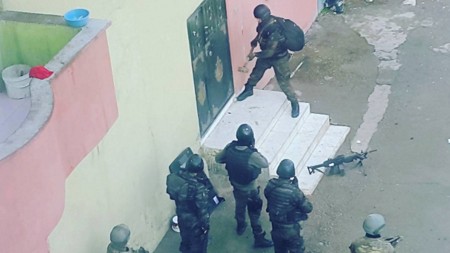

 Aletho News
