News relating to missiles used or about to be used in Ukraine and about “Russian” ICBMs in North Korea
By Gilbert Doctorow | September 17, 2023
It is widely expected that in the coming week American president Joe Biden will announce the decision to ship American medium range missiles ATACMS to Ukraine. Discussions of this subject have been widespread in both US and European media. The focus has been on the range of missiles and whether their delivery will enable Ukraine to attack across the border into the Russian Federation itself for the purpose of destroying supplies and command centers there. Of course, the issue is complicated by what is meant by RF territory. In the language of the West, all of the Ukrainian territory which has been captured by Russia since 2014 is considered to be fair game for military attack. From the perspective of Russia, any attacks on Crimea, in particular, may be justification for major escalation of the war into a direct fight with the NATO country or countries supplying the given missiles. That said, there is reason to believe that Storm Shadows were used to hit Sevastopol on 13 September, without any sign yet of Russia’s intention to escalate.
The advocates of shipping ATACMSs to Ukraine point out that its range, 190 miles or 300 km, is no greater than that of the Storm Shadow missiles which Britain and France have sent to Ukraine without prompting escalatory actions by Russia. However, that is to overlook the other side of the issue, namely the method of launch. Storm Shadow is an air to ground missile. It is launched from Soviet-era Ukrainian jet fighters which have been especially modified for this purpose. Since the Storm Shadow is devilishly difficult for any air defense system to destroy in flight, the Russians have focused attention on destroying Ukrainian planes that are part of the launch operation. Just this past week, on 11 September a Russian missile attack on the Dolgintsevo air base near Krivoy Rog in the Dnepropetrovsk region of Ukraine destroyed 5 Ukrainian fighters, two MiG-29s and three SU-25s. The MiGs are said to either carry the Storm Shadow or to provide cover for SU-24s which carry them.
The logic of supplying ATCSMs is precisely in the launch mode, not the attack radius of these missiles. They are ground to ground missiles which are launched from mobile platforms similar in principle to the multiple rocket launchers HIMARS. In that sense, they are more difficult to find and destroy than a jet fighter.
In the meantime, in Europe, German Chancellor Scholz has made it plain that he will not approve sending Germany’s long range missiles, the TAURUS, to Kiev until the United States makes a first move by shipping its own missiles. The TAURUS falls into the same launch category as the Storm Shadow; it is sent on its way to target by a jet fighter. Its distinction is only one of distance, at 500 km range. If Ukraine has a fast diminishing or fully destroyed air force, the TAURUS will not be of much use.
*****
Otherwise, over this past week, the interest of major Western media in missiles has focused on what North Korea owns and how it got them. The interest came about as journalists followed the course of North Korean leader Kim Jong Un’s tour of the Russian Far East.
It has occurred to our journalists that North Korea presently possesses ICBMs capable of reaching the North American heartland, and as they pored over the technical characteristics of these missiles they noted that one seems to be very close in design to Soviet era missiles that were once the mainstay of the Russian strategic arsenal. I am speaking of the Korean rebranded Topol-M.
It is not surprising, therefore, that some folks in the States are wondering how is it that the Russians were able to get away with supplying the designs of the Topol-M to Pongyang without the United States raising a hullaballoo.
The answer, my friends, is in the inconvenient fact that those responsible for providing North Korea with production plans and technology for manufacturing the Topol-M were not Russians; they were Ukrainians. This story is discussed in an article on a Russian news portal a couple of days ago. According to the authors, the Ukrainians sold to the North Koreans part of the technology but not all. For example, they held back the secrets of the solid fuel used in this missile, which the Koreans had to develop on their own. Moreover, for the guidance system, the Koreans were assisted or copied a system developed by the Chinese. What this tells us is that if the Koreans should agree with the Kremlin on the purchase of one or another missile-related technology, its integration into their own production will be done by the Koreans themselves. The same may be said of technologies for construction and operation of nuclear powered submarines which the North Koreans are said to be looking for abroad.
*****
Before closing, I use this opportunity to sum up the Russian visit of Comrade Kim after he spent that first day in talks with Vladimir Putin at the Vostochny Cosmodrome about which I wrote earlier in the week. His next stop was Komsomolsk on Amur, where he was shown the Yuri Gagarin factory complex producing Russian military and civilian aircraft, including the “Alligator” multifunctional attack helicopters that have been so effective in the Ukraine war against tanks, armored personnel carriers and other military hardware. The top Russian official with Kim for the day was Minister of Trade and Industry Denis Manturov.
From Komsomolsk, Kim went next to the Knevichi air base in the Amur region, where he was shown the massive turboprop Tupolev Tu-95 and the sleek Tu-160 “White Swan,” both mainstays of the nuclear triad as bombers and missile platforms. Considerable attention was given to an assortment of the most modern fighter jets in the Su family, as well as to MiGs equipped with the hypersonic Kinzhal missile. The Russian hosts were headed by Minister of Defense Shoigu.
Kim’s tour ended in Vladivostok where he was taken aboard the frigate Marshal Shaposhnikov of the Pacific fleet, which is typical of the latest Russian vessels in having an important complement of hypersonic missiles with 1500 km range as well as weaponry for anti-submarine warfare.
When in Vladivostik, Kim visited the Far Eastern Federal University on Russky Island in the Vladivostok harbor, where the Eastern Economic Forum had been held at the start of the week. Kim met with university students. Lastly, there was a typically Russian cultural note to round out Kim’s program: a performance of Swan Lake by the Vladivostok affiliate of the Mariinsky Theater (St Petersburg). I mention parenthetically, that the Russian Federation from coast to coast is looked after culturally by its musical and museum powerhouses: Moscow’s Bolshoi theater maintains a similar performance and training outpost in Kaliningrad.
©Gilbert Doctorow, 2023
Weaponised definition of anti-Semitism is a ‘tool’ to undermine free-speech
By Nasim Ahmed | MEMO | September 15, 2023
The highly controversial International Holocaust Remembrance Alliance (IHRA) definition of anti-Semitism has been repeatedly abused to suppress criticism of Israel and stifle pro-Palestinian activism at UK universities, a startling new report has found.
Produced by the European Legal Support Centre and the British Society for Middle Eastern Studies, the report analysed 40 cases between 2017-2022 where spurious accusations of anti-Semitism were levelled against students and faculty members over speech related to Palestine/Israel.
In nearly every case, the accusations were eventually dismissed after prolonged, stressful investigative processes. However, the harm inflicted on the well-being and reputations of those falsely accused had already been accomplished through these malicious campaigns.
Based on the findings, the report concludes that the IHRA definition is inadequate and unfit for purpose. In practice, it undermines academic freedom and the right to lawful speech for students and staff. The reputation and careers of those falsely accused also suffer harm from such allegations. Overall, the definition is being used to stifle protected speech critical of Israel, in violation of the academic rights and freedoms that universities are legally obligated to protect.
“We have found that since its adoption in UK higher education institutions, the IHRA definition has been used to delegitimise points of view critical of Israel and/or in support of Palestinian rights, silencing political criticism and academic scrutiny of Israeli state policies” Programme Director of the European Legal Support Centre, Giovanni Fassina, told MEMO.
“University staff and students in the UK have been subjected to false allegations of anti-Semitism, unreasonable investigations based on the IHRA definition, or cancellations and disruption of events. These proceedings harm well-being and reputations, including possible damage to education and careers. The complaints have had an adverse effect on academic freedom and free speech on campuses and have fostered self-censorship,” Fassina added.
Despite concerns raised by academics, activists and legal experts over its chilling effect on free speech, the IHRA definition was adopted by a majority of universities. Kenneth Stern, the lead drafter of the IHRA, has himself warned that it is not appropriate for university settings where critical thought and free debate are paramount. Nevertheless, in 2020, the then Secretary of State for Education, Gavin Williamson threatened university leaders with punitive financial consequences if their institutions did not adopt the IHRA. As a result, 119 universities (almost 75 per cent of UK universities) have adopted some version of the definition as a basis for campus policies.
Meanwhile, the UK government has rejected similar calls for protection against discrimination from other minority groups in the name of fighting ‘woke aggression’ and ‘cancel culture’.
For instance, Muslim advocacy groups have urged the adoption of an official definition of Islamophobia to tackle anti-Muslim hatred. But the government rejected this, claiming a singular definition could chill legitimate speech and debate.
In stark contrast to its position on the IHRA, the Tory government and the right in general have argued that a definition of Islamophobia could impact law enforcement and require legislative changes. Critics pointed out this rationale is inconsistent given the IHRA definition’s documented use to restrict speech, curtail events and initiate proceedings against students and faculty.
The contrast reveals not only a double standard in the government’s approach to addressing racism targeting different minority groups, but also a hierarchy of racism, where certain groups are granted greater protection and privileges over others. There is a reluctance to bolster protections for Muslims, even as accusations of anti-Semitism are readily weaponised to demonise certain speech.
A major flaw of the IHRA definition is that it conflates anti-Semitism with legitimate criticism of Israel and Zionism. Seven of the 11 illustrative examples do just that. One example states that “denying Jewish people their right to self-determination, e.g. by claiming that Israel is a racist endeavour” is anti-Semitic. As the report authors explain, this example falsely equates Jewish self-determination solely with the political project of Israel – a contingent position unique to Zionist ideology. It further delegitimises Palestinian claims to self-determination and casts opposition to Israel’s discriminatory policies as anti-Semitic. Most concerning, it suppresses documented evidence of Israeli human rights abuses against Palestinians by equating such criticism with bigotry. Through such examples, the definition chills free speech and makes it difficult to act in solidarity with Palestinians without facing accusations of anti-Semitism.
Several cases where students and teachers were “cancelled” on extremely dubious grounds were highlighted. In December 2020, an academic teaching on the Middle East received notification that a recent graduate had submitted complaints alleging their social media posts from 2016-2020 were anti-Semitic. The posts criticised Zionism, shared an article on the Nakba, and commented on anti-Semitism allegations against Labour.
The graduate argued these violated the IHRA definition. Despite the academic being cleared, they underwent a lengthy disciplinary process causing stress and requiring legal advice. The university referred to the IHRA definition in its policies.
Another example is the treatment of Dr Somdeep Sen. He was invited to deliver a lecture at the University of Glasgow on his book ‘Decolonizing Palestine: Hamas between the Anticolonial and the Postcolonial’. After the lecture was announced, the university received a complaint from its Jewish student society alleging that the event is anti-Semitic.
In response, the university demanded Sen provide details on his talk’s content in advance and confirm he wouldn’t contravene the IHRA definition. As these conditions undermined academic freedom, Sen withdrew and the event was cancelled.
The two examples are just the tip-of the iceberg. All the cases show how vague accusations of violating the IHRA definition have put pressure on universities to investigate or penalise faculty and students for speech related to Palestinian rights and Israeli policies. In all the cases, the burden of proof is on pro-Palestine students and critics of Israel. The presumption is that they are guilty until proven innocent; a perverse inversion of the universal principle that one is innocent until proven guilty.
Commenting on the findings, Neve Gordon, the chair of Brismes’s committee on academic freedom and a professor of human rights law in the school of law at Queen Mary University, said:
What has been framed as a tool to classify and assess a particular form of discriminatory violations of protected characteristics, has instead been used as a tool to undermine and punish protected speech and to punish those in academia who voice criticism of the Israeli state’s policies.
In his comments to MEMO, Fassina mentioned the vicious campaign to police free speech on Israel and Palestine and the ongoing efforts to weaponise anti-Semitism against critics of the apartheid state. “For us and our partners in the UK, it was time to expose a pattern we have been observing for too long: unfounded allegations of anti-Semitism made against academic staff and students after they criticised the policies of the Israeli government or just ‘liked’ some tweets about Palestine, Israel or about the Labour Party.” He explained that the latest report adds to the evidence already produced in Europe, in the US and Canada that demonstrate similar harmful consequences of the IHRA definition for the rights of advocates for Palestine. “This is not just a UK problem but reveals a wider trend of anti-Palestinian racism in Western countries, which is highly problematic for the respect of fundamental rights and democracy,” Fassina added.
Fassina called on UK higher education institutions to rescind the adoption of the IHRA definition of anti-Semitism; halt its use in disciplinary proceedings or investigations; and more crucially, with the forthcoming UN report on combatting anti-Jewish racism to be released, recognise that the IHRA is an anti-democratic, authoritarian instrument weaponised against critics of Israel. “IHRA definition is a tool of anti-Palestinian racism that should not be adopted or used by any institution that aims to respect human rights. As we are waiting for the UN to release its plan to combat anti-Semitism, we hope it will take into account the multiple calls made against the IHRA definition,” Fassina stressed.
Decrepit Britain… Schools Collapsing and Challenger Tanks Blown to Smithereens
By Finian Cunningham | Strategic Culture Foundation | September 13, 2023
Britain’s schools are not just out for summer. Autumn too, apparently. Hundreds of schools across England are being forced to close because they are in danger of falling down on the heads of children. That issue alone says a lot about the decrepit condition of Britain today.
Added to this embarrassing blow to British prestige is the reported destruction of its Challenger 2 main battlefield tank deployed with great fanfare in Ukraine earlier this year.
The supposedly invincible tank was first stopped in its tracks by a Russian mine, and then the turret was promptly blown off by an incoming Russian Kornet missile. It is thought to be first time, the Challenger 2 has been so visibly destroyed. Even the BBC’s reporting couldn’t cover up the shock from such a blow to presumed British military prowess.
In previous deployments during Britain’s criminal wars in Iraq and Afghanistan, the Challengers were up against militarily weaker opponents. They earned an overblown reputation as robust fighting machines. Now up against withering Russian firepower, the British equipment is under more testing conditions – and not faring so well.
Thus, it was a bad week alright for Britain. Schools crumbling from cheap concrete structures and then the formidable Challenger tank being pummeled like a cardboard box under Russian attack.
Interestingly, there is a bodily connection to the seemingly unrelated British misfortunes in the form of Rishi Sunak, Britain’s unelected prime minister. He took over 10 Downing Street last October after his predecessor Liz Truss was ousted due to her gaping incompetence. Truss was only in the job a matter of weeks having taken over from Boris Johnson who was forced to quit over endless corruption scandals.
Sunak, a wealthy heir of Indian heritage whose super-wealthy Indian wife doesn’t pay her taxes in Britain, was shoe-horned into the prime minister job as part of a Tory Party shake-up. He wasn’t elected by the public for his present office. That’s British democracy for you!
As prime minister, Sunak made the decision in January this year to send Challenger 2 tanks to Ukraine. The move was seen as a bold escalation and prompted other members of the NATO alliance to send heavier weapons to the Kiev regime. It was followed by Germany supplying its Leopard 2 tanks, the French donating AMX-10s, and there’s talk of the Americans eventually sending their M1 Abrams.
Sunak hailed his decision to donate 14 of Britain’s supposedly finest hardware as a game-changer that would allow Ukrainian forces to advance against Russian lines.
However, eight months later, the purported British game-changer has given the Ukrainian military no gains, neither have the German Leopard 2 tanks, nor all of the other sundry NATO “wonder weapons”.
Indeed, by nearly all accounts, the NATO-backed Ukrainian counteroffensive is rapidly turning from failure to disaster as troops and equipment get decimated by superior Russian firepower. Even former British army officers are acknowledging the disastrous defeat on the battlefield.
Under the unelected Sunak, Britain has pledged a total of £4.6 billion ($5.7 bn) in military aid to Ukraine. Britain is the second biggest sponsor of the Kiev Nazi regime after the United States, which has committed about $44 billion in military supplies to Ukraine.
Now get this. While Sunak has readily green lighted the supply of Challenger 2 tanks, as well as depleted uranium shells, Storm Shadow cruise missiles and RAF spy and fighter planes to the Black Sea, his personal neglect of school restoration projects in England has put hundreds of institutions at risk of collapsing.
Before his Tory Party appointment as prime minister, Sunak was Britain’s Chancellor of the Exchequer, which is also known as the treasury minister. By tradition, the British chancellor resides in No. 11 Downing Street. It is seen as the second-most powerful political office after the prime minister owing to the fact that the chancellor controls the budgets for all other government departments.
While he was in the chancellor job during 2020-22, Sunak slashed funding for the repair of schools by nearly 50 percent. That was in spite of warnings from educational expert committees that a crisis was looming from dilapidated concrete structures. That crisis is now manifesting with the forced closure of over 100 schools across England as the new academic year begins this month. It has become a national scandal owing to fears that pupils’ and teachers’ lives are at risk from collapsing walls and roofs.
Rich boy Rishi Sunak can directly take the blame for much of the scandal even if he tries to worm his way out of accepting responsibility.
This guy like many other Western political leaders is a charlatan and a pathetic Yes-Man for the U.S.-led proxy war against Russia in Ukraine.
Sunak likes to wear tween friendship bracelets on his wrist and he is prone to giving Hindu peace signs when in public.
Meanwhile, in reality, the ultra-privileged occupant in Downing Street signs off billions of dollars worth of weaponry to Ukraine, paid for by the British taxpayers through relentless cuts in their public services, incomes and social conditions. War and poverty go hand-in-hand in Britain.
It is estimated that to rectify Britain’s decaying schools it would cost around $1 billion, which is about a fifth of what Sunak has pledged in military aid to Ukraine. And yet this warmongering charlatan is not even accountable to British citizens.
Evidently, the unelected British prime minister views the funding of a futile, bloody overseas war – which could spiral into a nuclear world war – as more of a priority than the education and safety of British children. Dare we say that’s because he is not a democratically elected leader. He is an abject vassal of American imperialism. Many of his predecessors in Downing Street could be said to have been of the same cringemaking weakness. But the incumbent and unaccountable Sunak is absolutely shameless.
The obscene misallocation of public funds by an unelected prime minister says everything about decrepit Britain. It’s a democracy only in name and even that has become a stretch.
Evidence Against COVID-19 Vaccines in Medical Journals Continues to Grow
BY DR RAPHAEL LATASTER | THE DAILY SCEPTIC | SEPTEMBER 7, 2023
As a university academic, and former pharmacist, whose speciality is misinformation, disinformation and fake news, I have been very active of late in collecting (and writing) papers appearing in medical journals that provide evidence and arguments against the COVID-19 vaccines. Below is a summary of some of the recent papers I find to be most concerning.
Vaccine effectiveness and safety exaggerated
An article appearing in the Journal of Evaluation in Clinical Practice, including BMJ Editor Peter Doshi amongst its authors, discusses several biases that, if not accounted for, indicate that the effectiveness of the mRNA COVID-19 vaccines in observational studies is being heavily exaggerated. The most important appears to be one many of us have worried about from the beginning, the dubious ‘case-counting window bias’, which concerns the seven days, 14 days or even 21 days after the jab where we are meant to overlook jab-related issues, particularly poor effectiveness, as “the vaccine has not had sufficient time to stimulate the immune system”. In an example using some data from Pfizer’s clinical trial, the authors show that thanks to this bias, a vaccine with effectiveness of 0%, which is confirmed in the hypothetical clinical trial, could be seen in observational studies as having effectiveness of 48%.
In a follow-up article in the same journal I revealed ways in which the situation may even be worse. The aforementioned ‘case-counting window bias’ is often accompanied by a ‘definitional bias’, whereby the Covid cases in the vaccinated are not just ignored, but shifted over to the unvaccinated. So building on the above example, a vaccine with 0% effectiveness can actually be perceived as having 65% effectiveness. My article also shows, touching on the intriguing (horrifying?) issue of negative effectiveness, “a vaccine with minus-100% effectiveness, meaning that it makes symptomatic COVID-19 infection twice as likely, can be perceived as being 47% effective”. Furthermore, “Repeated calculations will show that moderate vaccine effectiveness is still perceived even with actual vaccine effectiveness figures of minus-1,000% and lower”. I also explained that this exaggeration could equally apply to studies on vaccine safety, which would be important when comparing the overall health of the vaccinated and unvaccinated, as may be appropriate when looking into the mysterious rise in non-Covid excess deaths post-pandemic.
Doshi, joined by one of his earlier co-authors, decided to produce another article in the same journal, a follow-up to my follow-up, shifting the focus from observational studies to the clinical trials. They found that case counting “only began once participants were seven days (Pfizer) or 14 days (Moderna) post Dose 2, or approximately four to six weeks after Dose 1”. The obvious implication:
Decisions on when to initiate the case counting window affected calculations of vaccine efficacy. Because cases occurring in the four to six weeks between Dose 1 and the case counting window were excluded, reported vaccine efficacy against COVID-19 (the primary endpoint) at the time of Emergency Use Authorisation was higher than what would have been calculated had all COVID-19 cases after Dose 1 been included, as in a conventional Intent-to-Treat analysis.
They also found that “different case counting windows” were used at different times, ‘coincidentally’ yielding better results.
Not yet published, though under peer review, is my intended fourth and final article in this unofficial ‘series’. Firstly, I justify my earlier concern of exaggerated safety in observational studies, or studies built on observational data and models rather than data from controlled trials, by discussing a recently published paper in another journal, noting how the authors only count vaccine adverse effects from 14 days after the second dose (or seven days after the latest booster shot), and stopping the count at around four to five months. As if to highlight the potential magnitude of safety exaggeration with so many adverse effects being overlooked, the study, flawed as it is, showed only a very slight net benefit to vaccination. A more complete view of adverse effects (as well as cases in the ‘partially vaccinated’) could easily lead to the conclusion that the risks of COVID-19 vaccination outweigh the benefits. I also explain that there are issues with the adverse effect counting windows in the clinical trials in relation to their short length. The safety monitoring ends mere months after vaccination, though adverse effects can manifest clinically years later.
Vaccine-induced myocarditis and young males
In the latter article, and in a rapid response published by BMJ Open, I also discuss recent evidence and journal articles on myocarditis, with one finding a “Covid vaccine-induced myocarditis incidence rate of around one in 100,000, and around one in 19,000 for males between the ages of 12 and 17 years”. These authors also found that a significant number of people with Covid vaccine-induced myocarditis end up dead soon afterwards. Go ahead and contrast this with the U.K. Government’s determination of numbers needed to vaccinate to prevent a severe Covid hospitalisation being in the hundreds of thousands for young ‘no risk’ groups.
In research I hope to be published soon, I show how Pfizer estimates an even greater incidence of myocarditis in young males, and it also estimates that one million vaccinated will result in zero to one saved lives. Yes, zero is included as a real possibility. By Pfizer. It would appear that, at least for certain groups, this one adverse effect alone undoes the claim that the ‘risks outweigh the benefits’. The risk of vaccine-induced myocarditis may indeed be very small, but the risk of serious Covid in the young and healthy is smaller still. If you’re a young male and if you’ve received one of these novel COVID-19 vaccines, it may be worthwhile testing for preclinical myocarditis.
Negative effectiveness
I couldn’t leave you hanging after dangling this juicy but horrifying morsel in front of you earlier. I managed to get another rapid response published, in the BMJ proper this time, on the topic of negative effectiveness. While rapid waning of effectiveness and exaggeration of effectiveness is concerning enough, particularly as we learn more about the adverse effects, the phenomenon of COVID-19 vaccine negative effectiveness could completely end the discussion as to whether the COVID-19 vaccines are net useful or not. There is increasing evidence for this phenomenon (in relation to infections, hospitalisations and deaths), with one study revealing a dose-dependent relationship. The more COVID-19 jabs, the more the risk of COVID-19. If that sounds concerning to you, well, quite. My rapid response effectively refuted an article in the BMJ trying – and failing horribly – to explain this phenomenon away. If negative effectiveness is occurring, there is no such thing as ‘risks vs benefits’. There is only ‘risks plus risks’. We need explanations from the manufacturers and regulators, as a matter of urgency.
Dr. Raphael Lataster is an Associate Lecturer at the University of Sydney, specialised in misinformation, and a former pharmacist. This summary is adapted from several entries originally appearing in Lataster’s Substack newsletter, Okay Then News. Read more on his research and legal actions, including his recent win against the healthcare vaccine mandate in New South Wales.
The Government’s Reassurances on 5G Safety Fail to Persuade

BY GILLIAN JAMIESON | THE DAILY SCEPTIC | SEPTEMBER 10, 2023
Wouldn’t you think that if the Government wanted to “make the U.K. a world-leader in 5G” that its ministers would know some basics about how the regulatory organisation they follow, the International Commission on Non-Ionising Radiation Protection (ICNIRP), arrived at its recommendations for safe exposure?
Recently I wrote to my MP, Rishi Sunak, to alert him to my situation in needing to avoid radio-frequency radiation (RFR) or electromagnetic fields (EMF), due to health damage I sustained 20 years ago when I lived 15 metres from a mobile phone mast. Before, dear reader, you tell me that my conclusion is pure speculation, let me tell you that this likely explanation only occurred to me after the death of a second neighbour from motor neurone disease and after months of my suffering with flu-like symptoms and heavily swollen neck glands, followed by health problems, with which I will not bore you.
Anyway, Mr. Sunak, very diligently, put my concerns to two ministerial colleagues, while telling me in the meantime that he proposed to blanket the U.K. with the fastest wireless coverage available. My reply to the latter remark was as follows:
1.The Government purportedly stands by the results of the Stewart Report 2000 and states here “adults should be able to make their own choices about reducing their exposure should they so wish, but be able to do this from an informed position”. How will this be possible if the country if blanketed? Smart devices, phone masts and WiFi are now everywhere where there are people. Will you inform people where coverage is lightest, if they wish to reduce exposure? Will you make sure that non-smart transactions are always possible? Will you ensure that some areas will always have landlines and are smart meter and smart camera free? And so on.
2. If the country is blanketed, what happens to the rights of those disabled by electromagnetic hypersensitivity (EHS) in terms of section 6 of the Equality Act? A case has already been won in the U.K., where a local authority has been mandated to provide RFR/EMF free education for a child with EHS.
Be that as it may, when the ministerial replies arrived, I was genuinely shocked by the level of ignorance they betrayed.
Steve Barclay, the Secretary of State for Health and Social Care wrote: “The ICNIRP guidelines apply to the whole population, including children and people of varying health status, which may include particularly susceptible groups or individuals.”
This is simply wrong. What ICNIRP actually says is:
Some exposure scenarios are defined as outside the scope of these guidelines. Medical procedures may utilise EMFs, and metallic implants may alter or perturb EMFs in the body, which in turn can affect the body both directly and indirectly… As medical procedures rely on medical expertise to weigh potential harm against intended benefits, ICNIRP considers such exposure managed by qualified medical practitioners, as beyond the scope of these guidelines. (emphasis mine)
In other words, these guidelines do not apply to anyone with a metal implant or anyone undergoing a medical procedure utilising EMFs. That is a large population group. It is left to doctors to advise on this, but, in fact, in the U.K. doctors are not trained in the health effects of non-ionising radiation. And the implication of this statement is that ICNIRP has no medical expertise. Indeed on examining the profiles of ICNIRP members, I have not found anyone with a medical qualification.
But even more alarming is this statement by Sir John Whittingdale OBE, the Minister for Data and Digital Infrastructure:
The ICNIRP… guidelines… are based upon a large amount of research carried out over many years.
This is nonsense, I am afraid. The guidelines are based on behavioural studies of eight rats and five monkeys, which were irradiated for up to an hour and also by measuring heating effects on a plastic model of a man’s head. Criticisms of the methodology used for deciding the guidelines have been made by the International Commission on the Biological Effects of Electromagnetic Fields (ICBE-EMF) in a recent article and by James Lin, a highly qualified ex-member of ICNIRP, who laid out his objections in the IEEE Microwave magazine.
In actual fact, far from being the basis of the guidelines, the opposite is true. Studies on the biological health effects of EMFs are largely dismissed by ICNIRP with the comment “more research needs to be done”.
Sir John went on to state:
Reviews carried out by the independent Advisory Group on Non-Ionising Radiation (AGNIR) found no convincing evidence that radiofrequency field exposures below guideline levels cause health effects.
He did not mention that this review was carried out back in 2012 and was discredited by Dr. Sarah Starkey who found that the report omitted and distorted scientific evidence leading to wrong and misleading conclusions. She also pointed out how many personnel had dual roles and conflicts of interests by being in more than one of these regulatory bodies at the same time.
And indeed, since that time, there have been two very large animal studies (the NTP study and the Ramazzini study) showing a link between RFR and cancer as well as a large epidemiological review In 2019 by an international expert team led by Canada’s most senior cancer epidemiologist Professor Tony Miller, reporting human epidemiological evidence linking human breast and brain tumours, male reproductive outcomes and child neurodevelopmental conditions to RFR exposures. It also found compelling evidence of carcinogenesis, especially in the brain and acoustic nerve, as well as the breast, from strong RFR exposures to previous generations of mobile phone transmissions.
AGNIR was disbanded in 2017 and its remit adopted by the Committee on Medical Aspects of Radiation in the Environment (COMARE). Unfortunately COMARE has never produced a report on the health effects of non-ionising (radio-frequency) radiation, because our Government has never asked it to do so, according to an email sent to me by its secretariat.
What a contrast to the U.S. New Hampshire Commission, which gathered a large group of experts together and conducted a thorough investigation into the health effects of RFR a couple of years ago.
In June this year, at a conference at the Royal Society of Medicine in London, its findings were described with great clarity by Professor Kent Chamberlain, the Professor Emeritus of the Department of Electrical and Computer Engineering at the University of New Hampshire. His talk included a discussion of the methods used to set the ICNIRP safety exposure guidelines, a review of the peer-reviewed literature on adverse health effects of RFR and the highlighting of key findings, such as the increased risk of cancer if you live within 1,000 metres of a mast.
The Royal Society of Medicine conference was organised by the International Commission on the Biological Effects of Electromagnetic Fields (ICBE-EMF) and was based around an important paper, examining the 14 false assumptions of those creating the ICNIRP safety guidelines. I introduced the expert speakers in a previous DS article and they include Dr. Erica Mallery-Blythe, Professor Kent Chamberlain, Professor James Lin and Professor John Frank in an event ably introduced by David Gee, who co-authored Late Lessons, Early Warnings for the European Environmental Agency.
Short written highlights, presentation slides and videos of the event are now available to view on an ICBE-EMF webpage and I’d say that these are essential viewing and reading for anyone interested in this subject and particularly for our Government ministers and their researchers.
Just when will our Government do its due diligence? And how certain do we need to be about causation before exercising caution and catering for those who already know they are affected by RFR exposure?
Britain sends warplanes to ‘deter Russian strikes’
RT | September 9, 2023
Britain has dispatched military planes to protect grain ships coming from Ukraine as the future of the UN-backed deal to provide a safe passage for the exports of agricultural produce remains uncertain after its suspension by Russia.
“We will use our intelligence, surveillance, and reconnaissance to monitor Russian activity in the Black Sea, call out Russia if we see warning signs that they are preparing attacks on civilian shipping or infrastructure,” the UK government said in a statement on Friday.
“As part of these surveillance operations, RAF aircraft are conducting flights over the area to deter Russia from carrying out illegal strikes against civilian vessels transporting grain,” the statement read.
The Russian Defense Ministry warned earlier that all vessels entering Ukrainian ports would be “treated as potential deliveries of military cargo.”
Moscow suspended the grain deal in July, arguing that Western countries had failed to hold up their end of the bargain by not removing obstacles to the shipment of Russian agricultural produce and fertilizers. Although Western sanctions do not target such exports directly, Russian officials said restrictions on their country’s banking sphere and logistics effectively hamper the deliveries of Russian goods.
Russian President Vladimir Putin said after a meeting with his Turkish counterpart, Recep Tayyip Erdogan, on Monday that Moscow would immediately return to the deal once its demands are met. Erdogan told reporters that consultations with the UN were underway in hope of reviving the arrangement.
Reuters reported on Friday that Rosselkhozbank, Russia’s main agricultural lender, might be allowed to gain access to the SWIFT international banking system in the near future. Russian top banks were removed from SWIFT last year as part of sanctions placed on Moscow over its military operation in Ukraine.
Energy bill authorises “reasonable force” to install smart meters that allow authorities to turn customers’ energy on and off
BY DAVID CRAIG | THE DAILY SCEPTIC | SEPTEMBER 7, 2023
You probably know that a massive Energy Bill is being rushed through Parliament by our fake ‘Conservative’ Government in the first two days of our parliamentarians’ return from their generous summer break. The Bill is 446 pages long and written in dense, largely-incomprehensible-to-any-normal-person legalise. Moreover, many clauses in the Energy Bill make reference to other pieces of previous legislation. So, to fully understand the Bill, you would have to read at least a thousand pages of dense legalistic gobbledegook. Given that our MPs have just passed the Bill with a mere nine voting against it, one must assume that they have spent their summer holidays diligently reading through the Bill and other relevant legislation in order to fully understand what they were voting for.
Here’s the full title of the Bill:
‘A Bill to make provision about energy production and security and the regulation of the energy market, including provision about the licensing of carbon dioxide transport and storage; about commercial arrangements for industrial carbon capture and storage and for hydrogen production; about new technology, including low-carbon heat schemes and hydrogen grid trials; about the Independent System Operator and Planner; about gas and electricity industry codes; about heat networks; about energy smart appliances and load control; about the energy performance of premises; about the resilience of the core fuel sector; about offshore energy production, including environmental protection, licensing and decommissioning; about the civil nuclear sector, including the Civil Nuclear Constabulary; and for connected purposes’
As you’ll see, this legislative monster covers an awful lot of areas – energy production, regulation of the energy market, CO2 transport and storage, carbon capture, hydrogen production, low-carbon heat schemes, hydrogen grid trials, heat networks, smart appliances, load control, energy performance of industrial and residential premises, offshore energy production and the civil nuclear sector. We must be considered fortunate in Britain to have MPs who have such a strong work ethic and such a deep understanding of all these disparate issues to be able to vote for the new Energy Bill knowing exactly what they are voting for.
Life is too short for any normal person to read and to try to understand this massive abomination of almost impenetrable legalise. But here are some choice titbits which I think I understand.
The Bill explains what a ‘Smart Meter’ is:
“Energy smart appliance” means an appliance which is capable of adjusting the immediate or future flow of electricity into or out of itself or another appliance in response to a load control signal; and includes any software or other systems which enable or facilitate the adjustment to be made in response to the signal.
So it seems that the conspiracy theorists were right yet again – a key purpose of ‘Smart Meters’ is not only to measure power usage but also to allow energy providers to control how much energy we are allowed to consume using “a load control signal”.
Moreover, authorities will be allowed to use “reasonable force” to enter any homes or premises to ensure we have the approved ‘Smart Meters’ installed:
Requiring persons to supply evidence of their compliance to enforcement authorities; conferring powers of entry, including by reasonable force.
All electricity and gas meters have dates by which they should be replaced. From what I have read the Bill gives representatives from energy companies the power to enter any home, with police protection if required, to replace traditional meters at the end of their lives with smart meters. Again, “reasonable force” may be used.
The Bill gives the Government the power to force us to have energy assessments for any premises:
The Secretary of State may make regulations for any of these purposes: (a) enabling or requiring the energy usage or energy efficiency of premises to be assessed, certified and publicised;
We can be fined up to £15,000 or face one year in prison for failing to meet any future energy performance levels any government imposes:
Energy performance regulations may provide for the imposition of civil penalties by enforcement authorities in relation to cases falling within subsection (1)(b), (c) or (d); but the regulations may not provide for a civil penalty that exceeds £15,000.
Under the totally misleading title of ‘Energy Savings Opportunity Schemes’, authorities can force any person or company to make energy savings using the threat of criminalisation for failure to comply:
The Secretary of State may by regulations (“ESOS regulations”) make provision for the establishment and operation of one or more energy savings opportunity schemes. An “energy savings opportunity scheme” is a scheme under which obligations 30 are imposed on undertakings to which the scheme applies for one or more of the ESOS purposes.
I could go on. But I imagine you get the picture by now. This ‘Energy Bill’ creates the means by which some puffed-up public-sector mini-dictator could gain powers to control us in ways most people would find completely unacceptable. Yet our useless MPs passed the Bill with a massive majority and the Lords are set to do the same.
If there really was a ‘climate crisis’ caused by humans burning fossil fuels and threatening the existence of the human race as the BBC and others of its ilk repeatedly claim, then you might be able to argue that some of the measures in the Bill could be justified. But given that changes in atmospheric CO2 levels have little to no influence on the Earth’s temperatures, that Britain only contributes less than 1% of world CO2 output and that developing countries like India and China each increase their CO2 output by more each year than Britain’s total CO2 emissions, we are creating a totalitarian regime which will intrude on people’s lives, restrict people’s freedoms, wreck the British economy and immiserate our country to fix a problem which doesn’t even exist and, if it did, would not be solved by our action anyway.
And if you fear this horror will lead to an intrusive, oppressive police state under the Tories, imagine how this will be used and abused by Ed Miliband and the climate fanatics in the next Labour Government.
David Craig is the author of There is No Climate Crisis, available as an e-book or paperback from Amazon.
Tactics for shutting down debate: Pandemic Preparedness narratives in the UK Parliament
During the UK Parliamentary debate on the WHO Treaty there was a noticeable contrast between those supporting the petition and those opposing it. This article analyses the arguments made by those rejecting the petition, drawing on insights from Behavioural Science.
BY ALICE ASHWELL, SINEAD STRINGER, DR DAVID BELL | PANDA | AUGUST 25, 2023
On 17 April 2023, a petition [1] was debated in the UK Parliament calling for the Government “to commit to not signing any international treaty on pandemic prevention and preparedness established by the WHO, unless this is approved through a public referendum.” The petition had received 156,086 signatures. Of the thirteen Members of Parliament (MPs) who spoke during the debate [2] four strongly supported the motion, three took a more neutral stance, and six strongly opposed the petition or elements of the argument. Examples of arguments in support of the petition can be viewed in a collation of clips taken from the video of the debate [3].
There was a noticeable contrast between the arguments presented by MPs supporting the petition — who exhibited concern for the constituents who had signed the petition and approached them directly — and those opposing it. All those who, like the petitioners, were concerned about the growing power and influence of WHO and threats to national sovereignty were familiar with the contents of the so-called ‘pandemic treaty’ [4], since labelled the WHO CA+, as well as proposed amendments to the International Health Regulations (IHR) [5]. While some opposing the petition were also familiar with the document, others had not even read it, prompting Andrew Bridgen (MP for North West Leicestershire) to plead with members to do so.
Those concerned about these proposals presented well-reasoned arguments reflecting an understanding of the history of WHO [6], its many failures during Covid-19, and its current problematic relationships with non-state funders [7,8]. Those supporting WHO’s proposals uncritically supported WHO, focusing on its public health successes and ignoring obvious concerns. Perturbed by the lack of parliamentary scrutiny of the Covid response measures, some MPs worried that the UK government, having played a leadership role in drafting the treaty, might ratify it without parliamentary debate. This reservation was flatly denied by those opposing the petition, with some denying that WHO would in any way threaten UK sovereignty, that its role would remain advisory in nature, and that those opposing the treaty were in effect opposing international cooperation.
This article analyses the arguments made by those rejecting the petition, drawing on insights from Behavioural Science. During the debate, these MPs tended to rely on the following tactics:
- Using derogatory language or false claims to discredit speakers and their arguments
- Making inaccurate and unsubstantiated statements
- Using globalist slogans
- Patronising the petitioners
- Using the debate as an opportunity for party-political point-scoring
- Downplaying or normalising threats to sovereignty
- Promoting internationalism over sovereignty.
The debate was a sad reminder that it is not necessarily the quality of arguments, or even the sincerity of the individuals making them, that wins the day.
1. Using derogatory language and labels to discredit speakers and their arguments
A tactic used to shut down discussion and debate was to attach derogatory labels to those supporting the petition. In the debate, two such labels used in relation to the Covid event and the pandemic treaty were ‘conspiracy theory/theorist’ (ten references made by four speakers) and ‘anti-vax’ (one speaker). Some opposing the petition used these labels early in their presentations, their comments and tone indicating that these were untenable positions that no sane person could possibly subscribe to.
Using such labels at the beginning of the debate set the scene, immediately employing a behavioural science tactic to prime the participants and the wider audience. Priming is a ‘nudge’ [9] tactic; techniques that are used to modify people’s behaviours or emotions in a way that is unconscious and therefore difficult to identify or counter. Priming [10] occurs when the emotional attachment or views held about one issue are then used to influence the emotional attachment on a separate and unrelated issue; an emotional contagion if you like. This can be utilised to produce a positive or negative relationship. Over the past three years in particular, the phrase ‘conspiracy theorist’ has become strongly and negatively associated with an archetype of someone whose views are not based in fact and who are not community minded, and therefore not socially acceptable. By stating in his introductory comments that “I have no time for conspiracy theories”, leader of the debate Nick Fletcher (MP for Don Valley) activated this already negative mental construct and associated it with the question of the WHO pandemic treaty. Whether this was purposeful or not is debatable but concerns about conspiracies do seem strangely placed in a debate which should be about publicly documented proposals, and UK and international legislation.
Similarly, Sally-Ann Hart (MP for Hastings and Rye), who herself was committed to representing the concerns of constituents who had signed the petition, warned that, “We must be wary of … conspiracy theories distorting the facts and scaring people. Transparency of debate is therefore needed to squash those conspiracy theories.”
Some comments could only be described as invective. Language such as that used by John Spellar (MP for Warley) was entirely inappropriate in the context of a Parliamentary debate:
… the poisonous cesspit of the right-wing conspiracy theorist ecosystem in the United States … an appalling subculture of those who live by conspiracy theories … Unfortunately, we have some people — a very limited number … who wallow in the realm of conspiracy theories.
The ‘conspiracy theorist’ label has become a catch-all term used to discredit numerous perspectives that disagree with the dominant narrative. It has also taken on the power of a curse, which those who hope to remain accepted by their peers must protect themselves from by declaring their immunity.
Another such label is ‘anti-vax’, used by Mr Spellar who interjected early in Mr Fletcher’s introduction:
I thank the hon. Gentleman … for highlighting both smallpox and polio. Is the fact of the matter not that it has been a worldwide vaccination programme that has enabled us to achieve that? Does that not demonstrate the falseness of the anti-vax campaigns?
This is another example of priming, where an exceptionally negative construct (anti-vax), which was set up in mainstream and social media over the past few years, is associated with those who may have genuine concerns about the powers being delegated to a non-elected body. When attached to a person, the related term ‘anti-vaxxer’ is an example of an ad hominem attack [11], which is an example of a false argument. Instead of the argument being discussed on its own merit in terms of data or facts, the audience and other participants are misdirected toward a perceived ‘failing of character’ in those who might have a different view and legitimate questions.
Mr Spellar used this terminology to discredit those wary of vaccinations, in particular the Covid-19 genetic therapy. He continued his interruption of Mr Fletcher’s introductory remarks with the following tirade against academic gastroenterologist Dr Andrew Wakefield who, in 1998, co-authored a research study in The Lancet, linking inflammatory bowel symptoms in 12 autistic children to the Measles-Mumps-Rubella (MMR) vaccine:
Part of this argument has been about vaccination. We go back to Dr Wakefield and that appalling piece of chicanery that was the supposed impact of the measles, mumps and rubella vaccine, which has now been completely exposed and discredited. Indeed Mr Wakefield is now no longer a recognised doctor.
This argument is an example of ‘false equivalence’ [12], another propaganda tool that has the effect of misdirecting the audience away from the key facts of the debate. Those who doubt the safety and efficacy of the novel Covid ‘vaccine’ have not necessarily questioned the safety and efficacy of all other vaccines, and should therefore not be considered ‘anti-vaxxers’. By associating arguments against the Covid shot with the MMR vaccine debacle, the purpose is to tar objections to this entirely novel and inadequately tested therapy with the same brush as arguments levied against an earlier, unrelated, conventional vaccine.
Mr Spellar’s interjection also reflects another tactic of those who wish to quash debate, namely the use of threats to intimidate those who might be inclined to consider alternative narratives. The story of the suppression of harms caused by the MMR vaccine has much in common with the current censorship of reports of serious adverse events and deaths following the Covid injections. Raising the 25-year-old case of Dr Wakefield who is “no longer a recognised doctor” represents a threat, already a reality for many ethical doctors and scientists, that those who speak out against the harms caused by the Covid injections face being dismissed and deregistered.
2. Using inaccurate and unsubstantiated statements
Justin Madders (MP for Ellesmere Port and Neston) also used derogatory language in denying concerns about threats to national sovereignty posed by global organisations such as WHO:
On the absurd side, a narrative has been created that the World Health Organization is a body intent on world domination. Borrowing tropes from conspiracy theories, I found one website referring to the WHO as ‘globalists’ … That sentiment is clearly ludicrous, as is the reference to the WHO being owned by Bill Gates or the Chinese Government.
The treaty has nothing to do with Bill Gates, and it is not the first step in creating a world-dominating authoritarian state.
The first sentence in the quote above is an example of a behavioural science nudge tactic called ‘framing’. In framing, words, metaphors and perspectives are used in a way that makes the message more attractive and activates certain emotional reactions. The image created by the MP’s statements is quick to evoke a mental picture of a film-like villain plotting to take over the world. Being ‘absurd’ (untrue) and a ‘narrative’ (story), this should clearly be discounted.
Beyond the language used, Mr Madders’s claims are not substantiated and as such are simply opinions. Firstly, as the United Nations (UN) agency responsible for global public health, WHO can indeed be considered a ‘globalist’ organisation, along with numerous other international bodies such as other UN agencies, the World Bank and International Monetary Fund, the World Economic Forum (WEF), and international corporations and foundations. But, largely due to the growing influence exerted over national governments by WHO and other unelected supra-national bodies during Covid, the term ‘globalist’ has taken on more sinister connotations. Its use by those critical of the dominant narrative may account for Mr Madders treating the term as a ‘red flag’.
Secondly, Mr Madders may be unaware of the significant changes to WHO’s funding model that have taken place in recent years, with assessed contributions [13] from Member States having declined to less than 20% of WHO’s financing, and Bill Gates now being one of its major funders. WHO’s own website records that, as of Quarter 4 of 2021, the Bill and Melinda Gates Foundation (BMGF) was their second-largest donor (9.49%) after Germany [14]. While on this point, Steve Brine (MP for Winchester) asserted that “the UK is the second-largest contributor to the WHO”, which is incorrect; in fact, the UK is the sixth-largest contributor (5.99%). Gates is also a founding partner and second-largest contributor to Gavi, the Vaccine Alliance, which is the fifth-largest funder of WHO (6.43%). And with 56.14% of BMGF’s funding going to support WHO’s Headquarters [15], it is unlikely that “The treaty has nothing to do with Bill Gates”, as asserted by Mr Madders.
Many unsubstantiated statements regarding Covid ‘vaccine’ safety and effectiveness were also made during the debate. Anne-Marie Trevelyan (Minister of State, Foreign, Commonwealth and Development Office) asserted that “AstraZeneca saved lives worldwide”, despite the use of this adenovirus viral vector vaccine being restricted or suspended in numerous countries due to many reports of recipients suffering blood clots [16].
Similarly, Mr Spellar, referring to the Pfizer mRNA ‘vaccines’, stated that it “certainly was not unproven or unsafe, and it had a huge beneficial impact across the world.” There is, in fact, mounting evidence showing that the Covid injections, released under emergency use authorisation before adequate testing could be undertaken, have been neither safe nor very effective. All vaccine adverse events tracking systems, including the Medicines and Healthcare products Regulatory Agency (MHRA) Yellow Card system in the United Kingdom, the European Medicines Agency’s EudraVigilance system in the European Union, and the Vaccine Adverse Events Reporting System (VAERS) in the United States, have recorded unprecedented numbers of serious adverse reactions, including deaths. Furthermore, an increasing number of studies are reporting evidence of a broad range of serious adverse events [17]. An independent systematic review of serious harms of the Covid-19 vaccines, currently in pre-print, adds significant weight to these findings [18].
Furthermore, after a group of scientists and medical researchers successfully sued the United States Food and Drug Administration (FDA) under the Freedom of Information Act (FOIA) [19] to release many thousands of documents related to licensing of the Pfizer-BioNTech Covid-19 vaccine, it was revealed that early trials had resulted in hundreds of adverse reactions [20 (Appendix 1)]. This information had been withheld from the public by the authorities.
The injections have also been been unable to stop SARS-CoV-2 infection or transmission, with Dr Peter Marks of the FDA admitting in a letter responding to a citizens’ petition that proof of efficacy had not been required for authorisation [21]:
It is important to note that FDA’s authorization and licensure standards for vaccines do not require demonstration of the prevention of infection or transmission. (p.11)
Furthermore, the applicable statutory standards for licensure and authorization of vaccines do not require that the primary objective of efficacy trials be a demonstration of reduction in person-to-person transmission. (p.13)
In addition, there is growing concern that claims that the boosters prevent severe illness and deaths amount to a “wishful myth” [22].
Three years of pro-vaccine propaganda and ongoing efforts to censor reports of vaccine harms have effectively blinded many people to the possibility that the rollout of Covid injections may be related to the sharp rise in excess deaths now being experienced in many countries [23; 24]. This is despite the fact that many vulnerable people, such as the elderly and those with multiple comorbidities, had died previously as a result of Covid-19, lockdown measures and medical interventions.
Despite having had the opportunity to peruse the evidence presented by the petitioners, Mr Spellar was still sure that the vaccination campaign had been a huge success, stating:
… mobilisation of [the] intellectual power and production capacity [of the major pharmaceutical companies] in producing a vaccine in record time to stem the tide of covid was absolutely magnificent.
3. Using globalist slogans
Just as certain terms (conspiracy theorist, anti-vaxxer) have become modern-day curses causing those so labelled to be socially shunned, so have other terms and slogans become the mantras of those wishing to demonstrate their membership of the mainstream. These catchy but often meaningless slogans are building blocks of a collective reality, introduced and normalised through the presentations, publications and public relations communications of powerful individuals, and globalist organisations such as the UN, WHO, WEF and BMGF.
Mr Madders, for example, echoed Bill Gates [25] when he stated: “We need to be better prepared for the next pandemic.” This also represents an unsubstantiated claim, as it ignores the reality that pandemics are actually extremely rare. Since 1900, only five pandemics, each responsible for over one million deaths, have broken out, namely the Spanish flu (1918-1920), the 1957-1958 influenza pandemic, the Hong Kong flu (1968-1969), the AIDS pandemic (ongoing since 1981), and Covid-19 [26]. It also powerfully illustrates the effectiveness of presupposition, where the speaker inserts a statement or assumption as a fact agreed by all and therefore requiring no evidence of its own. The phrase “the next pandemic” provides a nudge by inserting itself unconsciously into the psyche of the listener and readily bypassing the conscious thought process [27].
The Covid event did, however, demonstrate that a pandemic can mean big gains for certain people. It can literally be used to “reset our world” [28], creating unprecedented numbers of billionaires while destroying the lives of billions or others, stripping citizens of their rights and freedoms, unleashing a tyrannical and repressive security apparatus, and creating a ‘polycrisis’ [29], in response to which governments and even citizens will beg for unprecedented levels of global control.
One of the most meaningless slogans, which appears to have been invented by the UN at the beginning of the Covid event, and which has become a mantra reiterated by countless organisations and individuals, is ‘nobody is safe until everyone is safe’. It is not clear what this unsubstantiated statement even means, but what is clear is that it is demonstrably untrue. Nonetheless, this mantra was recited in some form by four speakers, with Anne McLaughlin (MP for Glasgow North East) stating, “It is only when the world is safe from Covid-19 that any of us are truly safe.”
Not only does such an obvious fallacy, a propaganda trope, have no place in a parliamentary debate, its use as some type of rational fact by four MPs across the political spectrum does bring into question the quality and independence of any literature provided to them ahead of this event. It is worth considering this much-used slogan and its ramifications in terms of any safety incident. The ideology underpinning it is one of collectivism, even socialism, in that the individual and their relative safety is merely incidental compared to the safety of all. Some might argue that this contradicts the fundamental principles of the International Declaration of Human Rights, which puts the individual at its core. Certainly, it is not an idle statement and reflects the underlying changes being proposed by WHO, which is seeking under their ‘One Health’ initiative [30] a more far-reaching remit where ‘everyone’ will include not only all sovereign citizens of participating nations, but animals and the environment as well.
Slogans infuse documents produced by UN agencies such as WHO. In referring to the zero-draft of the Pandemic Treaty, Preet Kaur Gill (MP for Birmingham, Edgbaston) used a number of them, including: ‘leave no country behind’, ‘global health is local health’, ‘we are stronger together’, and ‘vaccine equity’. Trotting out vacuous statements like this might be appropriate at a protest rally but should have no place in a parliamentary debate. Slogans are rallying cries. They are right-sounding and apparently well-meaning, even moral, in nature. Their repetition is quite hypnotic and they seem to act as spells, potentially binding those who faithfully recite them to an outcome they may live to regret [31].
The repetitive nature of any phrase or slogan is a tool of both behavioural science and propaganda. Both the repetitive effect and the rhythmic phrasing allow such phrases to easily enter the unconscious. Over time we simply accept the statement as true, as it bypasses our conscious thought processes that might critically assess such a phrase and see it as false or simply nonsensical. The use of such tactics, particularly by people in positions of authority or trust, allow the effect to be amplified. This is known as the ‘messenger effect’. Simply put, we are more likely to trust the message because it was issued by someone representing expertise and trust [32].
One such case relates to the slogan ‘vaccine equity’. Referring to the “terrible divide in coverage between richer countries and the global south,” Ms Gill lamented that “just 27% of people in low-income countries have received a first dose of a Covid vaccine.” What she does not go on to say, disappointingly, is that there was no correlation between high vaccination rates and low death rates from Covid-19. Indeed, some low-income countries (especially in Africa) with young populations and low vaccination rates experienced very low death rates due to Covid-19, while the USA, one of the richest and most highly vaccinated countries in the world, had one of the highest Covid-19 death rates [33].
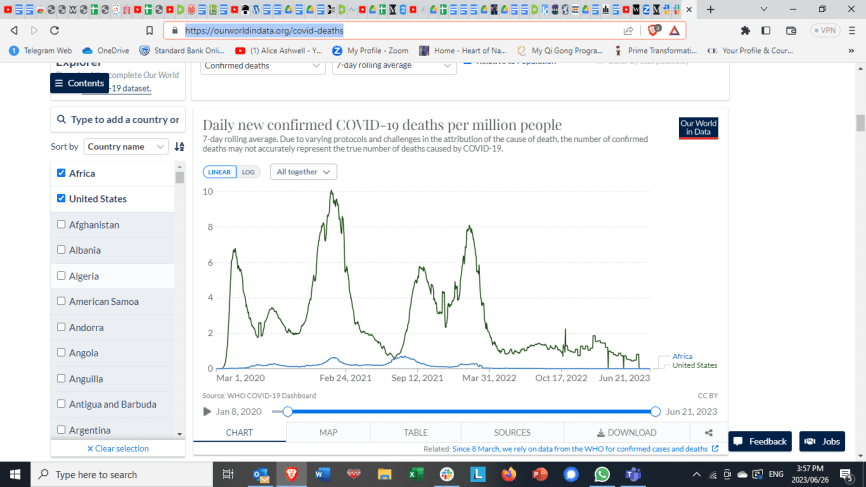
Figure 1: Comparing Covid-19 deaths in Africa and the USA [33]
4. Patronising the petitioners
Regarding the aim of the petition, which was to request that a referendum be held before the Government could agree to signing the pandemic treaty, Mr Fletcher declared:
Referendums are divisive; they polarise positions and leave a lasting legacy of division. Whether a referendum is appropriate is for the Government to decide, and if they think it is, they must make all the facts known. I suggest that petitioners, while playing their part in the education process, must do so in a sensible manner.
The patronising tone of this comment is ironic. While the referendum on Brexit did indeed sharpen the edge between ‘Leavers’ and ‘Remainers’, the UK Government’s Covid-19 response was possibly even more effective at dividing the populace into camps and pitting one side (those who complied with the mandates) against the other (those who chose not to comply). Furthermore, insisting that citizens should be “sensible” ignores the fact that constituents in favour of a referendum contacted their MPs to raise thoughtful, well-researched concerns, while some MPs arguing against the referendum tended to rely on slogans, unfounded generalities, and invective, rather than “sensible”, factual, reasoned arguments.
Mr Spellar not only used disparaging language to deny the request for a referendum, but also predicted that it would be rejected by the House:
We cannot be arguing to have [a referendum] for every bloomin’ issue, every policy and every treaty. … What we are seeing is overreaction and hysteria, and I would argue that we should give the petition a firm rejection, as I am sure we would do if it ever came to the Floor of the House of Commons.
Inasmuch as MPs in the UK are supposed to represent and take seriously the concerns of their constituencies, it is disturbing that an elected Member should respond with such contempt to a petition signed by more than 150,000 people.
5. Party-political point-scoring
Disappointingly, despite the importance of the debate and the number of citizens who had taken the time to express their concerns about the pandemic treaty, Ms McLaughlin and Ms Gill spent much of their time criticising the Conservative Government’s response to the Covid event. Instead of focusing on the debate, they chose to score party-political points by indicating the readiness of the Scottish National Party and Labour Party to implement WHO’s agenda, including enabling vaccine equity; sharing technology, knowledge, and skills; and strengthening global health systems using, ironically, the failing National Health Service as a model.
6. Downplaying or normalising threats to sovereignty
The Covid-19 event has been a classic case of the popular dialectic of ‘Problem-Reaction-Solution’. The engineered over-reaction to the problem of Covid-19 (whether or not there was an engineered virus), and the subsequent societal fall-out, have left traumatised people and their governments desperate to be better prepared for the much-anticipated ‘next one’, and ready to accept a ‘solution’ that few would have countenanced just four years ago.
In her presentation, Ms Gill expressed the need for an international approach to tackle transnational threats and improve global public health:
Negotiating an effective international treaty on pandemic preparedness is an historic task, but, if we can achieve it, it will save hundreds of thousands of lives.
If we can use the WHO to support basic universal healthcare around the world, infectious diseases are less likely to spread and fuel global pandemics.
It is through multilateral efforts, strengthened through international law, that we can ensure that the response to the next pandemic is faster and more effective, and does not leave other countries behind.
… the Opposition absolutely support the principle of a legally binding WHO treaty that sets the standard for all countries to contribute to global health security.
We need a binding, enforceable investment and trade agreement among all participating countries to govern the coordination of supplies and the financing of production, to prevent hoarding of materials and equipment, and to centrally manage the production and distribution process for maximum efficiency and output in the wake of a pandemic being declared.
The last few comments (underlined above) point to one of the most worrying issues for those concerned about sovereignty: if accepted, the pandemic treaty and amendments to the IHR would no longer be non-binding recommendations subject to government oversight but would become legally binding. WHO would be given legislative powers to mandate medical and non-pharmaceutical interventions; to commandeer intellectual property, production capability and resources; and to sanction those who refused to comply.
Some MPs downplayed concerns about these threats to national sovereignty. Mr Madders stated that “creating a global treaty [was] entirely reasonable and responsible” and that it was possible to “both protect our values of freedom and democracy and work more closely with other countries in the face of a global threat.”
Mr Spellar agreed, noting that they were “signatories to hundreds of treaties around the world” and that signing trade treaties was “part of engaging with the world.” He added that during Covid, “international scientific cooperation” had “enabled us to produce a vaccine within something like twelve months instead of the normal ten years … [thus] stabilising the situation.” What was not mentioned is that it was not primarily international collaboration among scientists that allowed the rapid deployment of these Covid-19 countermeasures, but the institution of emergency use authorisations, which allowed inadequately tested products to be dispensed worldwide. Far from “stabilising the situation”, these injectables continue to cause unprecedented numbers of adverse events and deaths, resulting in ongoing destabilisation of society post-Covid.
Steve Brine (MP for Winchester) observed that, “We cede sovereignty through membership of organisations. We cede the sovereignty to go to war by being a member of NATO.” It is true that all manner of treaties exist between countries and that these are essential for international cooperation; but cooperating as sovereign nations is entirely different to taking instructions from an unelected, supra-national body that is unaccountable to populations. Once in place, WHO’s pandemic treaty and the amendments to the IHR threaten to reduce national sovereignty, giving full power to WHO and its director-general to call pandemics and health emergencies and to regulate the responses of member states.
Those in favour of the pandemic treaty provided no evidence that a one-size-fits-all, legally mandated response to future pandemics would actually prove effective. In fact, Covid-19 was an object lesson in the foolishness of imposing the same public health ‘solutions’ on radically different nations and communities. In reality, mandating centralised protocols disrespects human rights, cultural diversity, national sovereignty, the scientific method, and innovation in healthcare. Instead of trusting human ingenuity to create a multitude of locally appropriate responses, it increases the risk of spectacular failure should the single global solution prove ineffective.
In an attempt to counter fears about a loss of sovereignty, Mr Madders stated that “We live in a liberal democracy and … are determined to keep it that way.” He denied people’s:
fears that the treaty will restrict freedom of speech to the extent that dissenters could be imprisoned, that it will impose instruments that impede on our daily life, and that it will institute widespread global surveillance without warning and without the consent of world leaders … [and that] Under this treaty, those things will apparently be done without our Government having a say.
He did, however, acknowledge that the measures mentioned above were “already in the power of the Government under the Public Health (Control of Disease) Act 1984.” Referring, without giving any details, to “fact checkers” and an unnamed “WHO spokesperson”, he reassured citizens that “WHO would have no capacity to force members to comply with public health measures.” The tyrannical actions during Covid of governments worldwide against their own citizens — many of whom assumed that they did, in fact, live in a “liberal democracy” — makes one wonder why these governments would behave any more independently in future, especially if legally required to follow WHO’s dictates. The repressive regulations and laws passed in various countries since 2020 suggest that this is unlikely, as governments seem to have become addicted to the sweeping emergency powers granted them by this convenient global ‘pandemic’.
Mr Madders and Ms Gill also attempted to allay citizens’ fears by pointing out that there was “over a year of negotiations to go” and that the treaty “would still have to be ratified by the United Kingdom”. Ms Gill also commented that:
The draft treaty is primarily about transparency, fostering international cooperation, and strengthening global health systems … the very first statement in the zero draft text reaffirms “the principle of sovereignty of States Parties” [and that] the implementation of the regulations “shall be with full respect for the dignity, human rights and fundamental freedoms of persons.”
Noting the dismissive attitude of the majority of MPs to the petitioners’ concerns, there is little chance that another year of negotiations will convince the UK Government to reject the treaty.
7. Promoting internationalism over sovereignty
The UK, as an erstwhile imperial and colonial power, continues to play a leadership role internationally. This may be why some MPs, such as Ms McLaughlin, could not believe that WHO might threaten UK’s sovereignty:
The treaty would have absolutely no effect whatsoever on the UK’s constitutional function and sovereignty … [Imagine a] terrible situation whereby the UK might be unable to make its own decisions if it is outvoted by other countries … the UK is a leading member of the WHO and a primary architect of the treaty, so that is not what is happening here.
Anne-Marie Trevelyan (Minister of State, Foreign, Commonwealth and Development Office) also stressed that the UK was:
a sovereign state in control of whether we enter into international agreements … with its voice, expertise and wisdom, and our trusted partner status with so many other member states in the UN family, [it] is respected and listened to.
Ms Trevelyan also referred to the UK’s role as “a global leader, working with CEPI, Gavi and the WHO,” stating that she was “proud to lead the fundraising for Gavi and COVAX.”
A deep chasm appears to have formed between the UK Government and its people. The discussions during this debate suggest that a minority of MPs [3] [link to PANDA video] view themselves as representatives whose duty it is to serve their constituents and respond to their concerns. Most, however, appear to have shifted their focus and allegiance to the international sphere, identifying as members of the “UN family”, playing a leading role in developing WHO’s pandemic instruments, and raising funds, which will ultimately benefit vaccine manufacturers and their investors, impoverishing the majority in the process. Under these circumstances, it is clear why Parliament is unwilling to risk a referendum on WHO’s Pandemic Treaty. There are just too many globalist interests at stake.
At home, increasing numbers of UK citizens are growing weary of a government that speaks glibly of ‘no country left behind’, while leaving its own nation in the dust. Where the people are concerned, trust is gone.
As Danny Kruger (MP for Devizes) warned:
At the moment, we do not have a commitment from the Government that they would bring the proposals to Parliament, which is very concerning. They say that in our interconnected world we need less sovereignty and more co-operation, which means more power for people who sit above the nation states. I say that in the modern world we need nation states more than ever, because only nation states can be accountable to the people, as the WHO is not.
Concluding comments
After two-and-a-quarter hours of deliberation, Mr Fletcher concluded the debate by thanking the Minister for assuring Members that UK sovereignty was not at risk, and then delivering the most inconclusive resolution:
That this House has considered e-petition 614335, relating to an international agreement on pandemic prevention, preparedness and response.
For the 156,086 citizens and their representatives who had made the effort to engage Parliament thoughtfully and actively using the relevant democratic process, this ‘resolution’ resolved nothing at all. The exercise amounted to all form and no substance; not only were requests for a referendum dismissed out of hand without adequate discussion, but there were indications that the matter might not even be discussed in the House of Commons.
Illustrating just how little impact was made by those representing the petitioners despite the strength of their arguments, subsequent to the debate and in response to this petition, the government’s official response published on their website [1] commenced with the words:
To protect lives, the economy and future generations from future pandemics, the UK government supports a new legally-binding instrument to strengthen pandemic prevention, preparedness and response.
This ominous response was followed by the now familiar slogan that would sit comfortably in the pages of Orwell’s 1984 but has no place in an official government statement: “Covid-19 has demonstrated that no-one is safe until we are all safe.” Its use further erodes the expectations that such debates will be carried out without bias, undue influence, or ignorance.
MPs have a duty of care to their constituents to ensure that they are as knowledgeable as possible about the issue being debated, and that they consider the facts rationally and honestly; and citizens deserve to have their concerns taken seriously. Yet two critical questions remain unanswered: firstly, having explicitly stated their support for WHO’s pandemic instruments, will the UK Government bring this matter to Parliament to be debated? And secondly, would agreement with these instruments, ‘in effect’ if not legally, mean the relinquishment of sovereignty? After all, if the only way the UK will be able to make a sovereign decision in future is by removing itself from membership of WHO, then why would the country wish to sign this treaty in the first place?
References
- UK Government and Parliament, Petition: ‘Do Not Sign Any WHO Pandemic Treaty Unless It is Approved Via Public Referendum’, (Debated 17 April 2023) <https://petition.parliament.uk/petitions/614335> [accessed 15 June 2023]
- parliamentlive.tv, ‘Video Recording of Westminster Hall Debate: e-petition 614335, Relating to an International Agreement on Pandemic Prevention, Preparedness and Response’, (17 April 2023) <https://parliamentlive.tv/Event/Index/d667d23f-1bd5-4c71-8237-3dd240de0651> [accessed 25 June 2023]
- PANDA Video
- World Health Organization, ‘Bureau’s text of the WHO convention, agreement or other international instrument on pandemic prevention, preparedness and response (WHO CA+)’, (2 June 2023) <https://apps.who.int/gb/inb/pdf_files/inb5/A_INB5_6-en.pdf> [accessed 25 June 2023]
- World Health Organization, ‘Article-by-Article Compilation of Proposed Amendments to the International Health Regulations (2005) submitted in accordance with decision WHA75(9)’, (2022), <https://apps.who.int/gb/wgihr/index.html> [accessed 25 June 2023]
- David Bell, ‘The World Health Organization and COVID-19: Re-establishing Colonialism in Public Health’ Panda, (5 July 2021) <https://pandata.org/who-and-covid-19-re-establishing-colonialism-in-public-health/> [accessed 29 June 2023]
- David Bell, ‘International Health Regulations and Pandemic Treaties – What is the Deal?’ Panda, (19 May 2022), <https://pandata.org/international-health-regulations-and-pandemic-treaties-what-is-the-deal/> [accessed 28 June 2023]
- David Bell, ‘The Myths of Pandemic Preparedness’, Panda, (29 November 2022), <https://pandata.org/the-myths-of-pandemic-preparedness/> [accessed 28 June 2023]
- Richard Thaler and Cass R. Sunstein, Nudge: Improving Decisions about Health, Wealth and Happiness (New Haven: Yale University Press, 2008)
- Psychology Today, ‘Priming’, <https://www.psychologytoday.com/us/basics/priming> [accessed 29 June 2023]
- Pierpaolo Goffredo, Shohreh Haddadan, Vorakit Vorakitphan, Elena Cabrio and Serena Villata, ‘Fallacious Argument Classification in Political Debates’, Proceedings of the Thirty-First International Joint Conference on Artificial Intelligence (IJCAI-22), (2022) 4143-4149 <https://www.ijcai.org/proceedings/2022/0575.pdf>
- Stephanie Sarkis, ‘This is Not Equal to That: How False Equivalence Clouds our Judgment’, Forbes, (19 May 2019) <https://www.forbes.com/sites/stephaniesarkis/2019/05/19/this-is-not-equal-to-that-how-false-equivalence-clouds-our-judgment/?sh=569a0b335c0f> [accessed 29 June 2023]
- World Health Organization, ‘Assessed Contributions’ <https://www.who.int/about/funding/assessed-contributions> [accessed 15 June 2023]
- World Health Organization, ‘Contributors’ <https://open.who.int/2020-21/contributors/contributor> [accessed 15 June 2023]
- World Health Organization, ‘Contributor: Bill & Melinda Gates Foundation’ <https://open.who.int/2020-21/contributors/contributor?name=Bill%20%26%20Melinda%20Gates%20Foundation> [accessed 15 June 2023]
- Reuters, ‘All the Countries That Restricted or Suspended Use of AstraZeneca and J&J Covid-19 Vaccines’, IOL, (24 April 2021), <https://www.iol.co.za/news/world/all-the-countries-that-restricted-or-suspended-use-of-astrazeneca-and-j-and-j-covid-19-vaccines-15e22cb0-3fef-4dab-9176-ebb7862fa6bb> [accessed 25 June 2023]
- Joseph Fraiman, Juan Erviti, Mark Jones, Sander Greenland, Patrick Whelan, Robert M Kaplan and Peter Doshi, ‘Serious Adverse Events of Special Interest Following mRNA COVID-19 Vaccination in Randomized Trials in Adults’, Vaccine 40 (2022), 5798-5805 <https://doi.org/10.1016/j.vaccine.2022.08.036>
- Peter Gøtzsche and Maryanne Demasi, ‘Serious Harms of the COVID-19 Vaccines: A Systematic Review’, Preprint with medRxiv, (2023) <https://doi.org/10.1101/2022.12.06.22283145>
- United States District Court for the Northern District of Texas Fort Worth Division, ‘Case 4:21-cv-01058-P Document 35’, (Filed 6 January 2022), <https://www.scribd.com/document/551589334/FDA-Foia-Request-010722#> [accessed 26 June 2023]
- Worldwide Safety Pfizer, ‘5.3.6 Cumulative Analysis of Post-Authorization Adverse Event Reports of PF-07302048 (BNT162B2)’, (Received 28 February 2021, Approved 30 April 2021), <https://phmpt.org/wp-content/uploads/2021/11/5.3.6-postmarketing-experience.pdf> (Appendix 1) [accessed 26 June 2023]
- Peter Marks (Director, Center for Biologics Evaluation and Research, FDA), Letter sent to Linda Wastila, Coalition Advocating for Adequately Labeled Medicines (CAALM), Re: Citizen Petition, Docket Number: FDA-2023-P-0360, (18 April 2023), <https://www.documentcloud.org/documents/23786932-fda-letter-on-covid-19-vaccine-labeling> [accessed 18 June 2023]
- Yaakov Ophir, Yaffa Shir-Raz, Shay Zakov and Peter A. McCullough, ‘The Efficacy of COVID-19 Vaccine Boosters against Severe Illness and Deaths: Scientific Fact or Wishful Myth?’ Journal of American Physicians and Surgeons, 28(1) (2023), 20-27 <https://jpands.org/vol28no1/ophir.pdf> [accessed 25 June 2023]
- Thomas Fazi and Toby Green, ‘Why Are Excess Deaths Still So High? We Can’t Just Blame a Failing NHS’, Unherd, (30 January 2023) <https://unherd.com/2023/01/why-are-excess-deaths-still-so-high/> [accessed 25 June 2023]
- Martin Neil and Norman Fenton, ‘The Devil’s Advocate: An Exploratory Analysis of 2022 Excess Mortality’, Where are the Numbers? (14 December 2022), <https://wherearethenumbers.substack.com/p/the-devils-advocate-an-exploratory> [accessed 27 June 2023]
- Bill Gates, Bill and Melinda Gates on Preparing for the Next Pandemic, online video recording, YouTube, 10 January 2013, <https://youtu.be/Wn0xzZH1dJA> [accessed 18 June 2023].
- David Bell, ‘The Myths of Pandemic Preparedness’, Panda, (29 November 2022) <https://pandata.org/the-myths-of-pandemic-preparedness/> [accessed 27 June 2023]
- Andrew Mullen, ‘The Propaganda Model after 20 Years: Interview with Edward S. Herman and Noam Chomsky’, Westminster Papers in Communication and Culture, 6(2) (2017), 12-22 <https://doi.org/10.16997/wpcc.121>
- Klaus Schwab, ‘Now is the Time For a “Great Reset”’, World Economic Forum, (3 June 2022) <https://www.weforum.org/agenda/2020/06/now-is-the-time-for-a-great-reset/> [accessed 26 June 2023]
- Simon Torkington, ‘We’re On the Brink of a “Polycrisis” – How Worried Should We Be?’ World Economic Forum, (23 June 2020) <https://www.weforum.org/agenda/2023/01/polycrisis-global-risks-report-cost-of-living/> [accessed 26 June 2023]
- World Health Organization, ‘One Health’, (21 September 2017) <https://www.who.int/news-room/questions-and-answers/item/one-health> [accessed 15 June 2023]
- John T. Cacioppo and Richard E. Petty, ‘Effects of Message Repetition and Negativity on Credibility Judgments and Political Attitudes’, Basic and Applied Social Psychology, 10(1) (1989), 3-12 <https://richardepetty.com/wp-content/uploads/2019/01/1989-basp-cacioppopetty.pdf>
- Christopher J. Anderson and Sara B. Hobolt, ‘Creating Compliance in Crisis: Messages, Messengers, and Masking up in Britain’, West European Politics, 46(2) (2023) 300-323 <https://doi.org/10.1080/01402382.2022.2091863> [accessed 29 June 2023]
- Edouard Mathieu, Hannah Ritchie, Lucas Rodés-Guirao, Cameron Appel, Charlie Giattino, Joe Hasell, Bobbie Macdonald, Saloni Dattani, Diana Beltekian, Esteban Ortiz-Ospina and Max Roser ‘Coronavirus Pandemic (COVID-19)’. Published online at OurWorldInData.org, (2020) <https://ourworldindata.org/covid-deaths> [accessed 25 June 2023]
Featured Video
What’s the Pentagon Preparing For? Alexander Mercouris
or go to
Aletho News Archives – Video-Images
From the Archives
US tested biological weapons in Japan’s Okinawa in the 60s – report
RT | January 12, 2014
The American army conducted experiments with biological weapons aimed at destroying rice crops on the Japanese island of Okinawa in the 60s, Kyodo news agency reports. The alleged target of the tests was the China and Southeast Asia region.
Citing classified US documents, Japanese news agency Kyodo said the US military carried out experiments on their sovereign territory between 1961 and 1962. At this time Japan’s southern island of Okinawa was still under post-WWII, US jurisdiction. The US did similar tests in Taiwan and the American mainland, notes Kyodo.
The American army experimented with rice blast fungus – a plant pathogen – which infects rice crops with disastrous effects. The pathogen latches onto the rice plant as a spore and produces lesions and spots all over the rice plant and then reproduces.
A single lesion can generate a thousand spores in one night alone, while an entire cycle – lasting about a week – can have a devastating effect on rice crops.
Kyodo reports that tests were conducted over a dozen times, and mentions test sites, Nago and Shuri, in Okinawa. The US army reported some success in their experiments and the gathering of “useful data”.
“Field tests for stem rust of wheat and rice blast disease were begun at several sites in the (US) Midwest and south and in Okinawa with partial success in the accumulation of useful data,” wrote Kyodo, citing its documents. … continue
Blog Roll
 Aletho News
- What’s the Pentagon Preparing For? Alexander Mercouris
- USAID Files: The Georgia Model for Getting Accounts Taken Down
- Kiev hits out at YouTube over Russian-language censorship refusal
- Australia Passes Digital Duty of Care Bill, Ignoring Censorship Warnings
- Majority of MAGA ‘deserters’ back banning bombs to Israel: Poll
- Iran wary as South Korea assures it will not join US war of aggression
- ‘Desperate’ Kiev seeking to draw NATO into war with Russia – Andrew Bridgen
- German people oppose war, unhappy with government foreign policy
- How US army’s Iowa lead azide detonation exposed stockpile failure, unleashing environmental crisis
- China Urges Japan to Speed Up Removal of WWII-Era Chemical Weapons From Its Soil
- If Americans Knew
- Iran’s Foreign Minister Slams Israel Over Chemical Weapons Claims
- Israel kills 18 in Gaza, including 3 girls, Deputy Education Minister, & his wife
- DAILY UPDATE: Latest essential news on Palestine, Israel, & region
- Ad That Calls for Cutting Off US Aid to Israel to Air on SNL Thanksgiving Special
- Tortured into confessing: Report exposes abusive Israeli interrogation of Palestinians
- Israeli Military Probing Its Own ‘Widespread’ Use of Palestinian Human Shields
- Palestinians in Gaza Are Lining Their Tents with Sandbags to Stop Israeli Bullets
- Israel’s genocidal actions are preventing births in Gaza –New Amnesty report
- ‘Unlawful de facto exemption’: US sitting on 12-year backlog of alleged Israeli gross human rights violations
- DAILY UPDATE: Latest essential news on Palestine, Israel, & region
- No Tricks Zone
- Alarmist Climatologists In Shock! 2026 Atlantic Hurricane Season Sees Lowest Count In 101 Years
- New Study: Modern Temps Are Among The Coldest Of The Last 10,000 Years In East Central Europe
- Germany’s Renewable Energies Lead to 1.4 Billion Euro Electric Power Trade Deficit
- Argentina’s Perito Moreno Glacier Joins Antarctica and Arctic In Defying Doomsday Melt Claims
- New Study: Barents Sea Temperatures Were Warmer And Sea Ice Less Extensive In The 1700s Than Today
- German Authorities Start Initiative To Evaluate Public Register For Climate “Disinformation” Spreaders!
- Zonal Asymmetry of Temperature Change in the Antarctic Circumpolar Current
- New Study: The Net Fossil Fuel Contribution To Rising Atmospheric CO2 Has Been Zero For 500 Years
- Germany’s Green Energy Transition Becoming Increasingly Expensive…Another 6 Trillion Euros!
- Sudden Stratospheric Warming, Powerful El Niño Combination May Lead To Extreme Europe Cold, Energy Crisis!

