Scotland To Set Up New Police Unit To Tackle “Hate” and “Misgendering,” Ignites Free Speech Concerns
By Christina Maas | Reclaim The Net | September 25, 2023
On the brink of implementing Humza Yousaf’s highly contentious legislation early next year, a specialized hate crime unit has been announced by Police Scotland. With the unit scheduled to be operational by November, a comprehensive training of about 16,400 law enforcement officers will follow in December.
This is all in anticipation of the Hate Crime and Public Order Act, expected to be ratified early in 2024. This Act expands upon the existing law, offering a broader protective net for “vulnerable” groups and introduces the notion of “stirring up hatred”.
However, some critics and free speech advocates have raised concerns that the Act, which holds potential to elevate sentencing if prejudice is based on factors such as age, race, disability, religion, transgender identity or variations in sex characteristics, may invigorate the increasingly toxic culture wars surrounding gender issues. It is posited that the law may sidetrack police resources from tackling violent conduct to address “harmful” words.
The thought of free speech being stifled by the new laws is particularly horrifying for some, with warnings that women’s rights advocates may find themselves entangled in allegations of transphobia.
Critics argue that a significant portion of police time may now be geared towards a subjective concept of hate crime, such as “misgendering,” instead of dealing with tangible violent acts.
Helen Joyce, part of the human rights group Sex Matters, asserted her alarm at the creation of this specific hate crime unit. She voiced concern for those who stand for the rights of women and children, warning of a “chilling effect” on free speech, as reported by The Scottish Express.
Police Scotland remains tight-lipped about the size of the proposed unit plus the financial implications of the new laws – a cause for concern for many.
Values Of Used EVs Plummet, As Dealers Stuck With Unsold Cars
By Paul Homewood | Not A Lot Of People Know That | Septmber 24, 2023
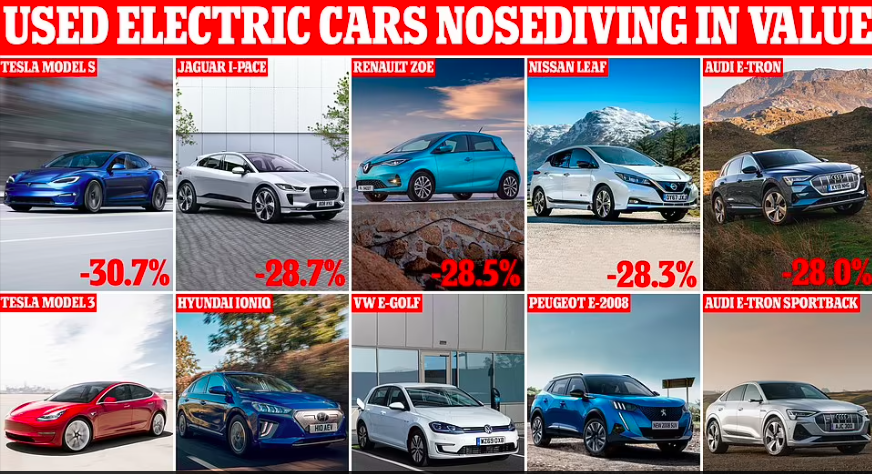
Research by online motor marketplace, AutoTrader, revealed the average price for a used EV has dropped by 21.4 per cent this month, compared to a year ago.
Marc Palmer, the head of strategy and insights at AutoTrader, told MailOnline : “The used market will now be slower to mature. There will be fewer new EVs registered and fewer used cars coming to market.
“There will be sections of the public, especially those who are sceptical, who will want to wait.”
The expert explained that used cars are the “biggest” section of the industry, however motorists are likely to “take longer” in the switch to electric.
According to the Mail :
Mid-month figures for September released by AutoTrader – the largest online marketplace for cars – reveal that the average price of a used EV has fallen by 21.4 per cent to £32,463.
Premium sector EVs, including Tesla, BMW, Mini and Mercedes-Benz, were hit hardest – with values falling by up to 24.1 per cent year-on-year.
The data, reported by The Times, showed that prices of second-hand premium sector EVs peaked at £51,704 last August and have since plummeted by more than £10,000 to £39,268.
The second hand EV is between a rock and a hard place!
Increasing numbers are now coming onto the market, corresponding to the increasing number of new sales in recent years.
Yet at the same time, there seems to be little appetite from buyers. Most new EVs go either to Business/Fleet purchasers, or rich, virtue signallers. Neither sector is interested in buying second hand EVs.
Private buyers of second hand cars cannot afford the inflated price of EVs – if they could, they would buy a new petrol car anyway. And they are less likely to have off street parking, therefore making charging more expensive and problematic. Hence the low turnover of second hand EVs.
EV manufacturers have taken a huge risk in offering cheap PCPs, in the hope attracting buyers. These deals are ultimately based on EVs holding their value well.
With plummeting second hand values, they and the lease companies could be facing massive losses.
What is remarkable about these reports is that the so-called experts seem genuinely surprised about all of this. It was utterly predictable all along.
One “expert”, Marc Palmer, the head of strategy and insights at AutoTrader, told the Mail that the used market will now be slower to mature, and that motorists are likely to “take longer” in the switch to electric.
And the SMMT said “A faster and fairer mass transition [to zero-emission vehicles] is threatened by the absence of support for private buyers, many of whom plan to go electric but are delaying due to concerns over affordability and uncertainty regarding the availability of a charging network.”
They have obviously been believing their own propaganda about EVs for too long.
They still do not seem to have worked out that EVs are utterly useless for most private drivers, who will refuse to make the switch until forced to.
Why are Ukrainian Flags Flying Over British Universities
Ukrainian flags over UK universities
Professor Dame Sally Mapstone
President
Universities UK
Woburn House
20 Tavistock Square
London WC1H 9HQ
11 September 2023
Dear Professor Mapstone
We have noted, with increasing concern, the practice of flying Ukraine flags above many universities across the United Kingdom. We are aware that UUK is a forum and does not direct the work of UK universities. Nevertheless, we wonder if the issue of Ukraine flag flying by UK universities has ever been discussed and, if it has not been discussed, if it should be.
In relation to this, we have several questions the first of which is ‘why?’ The conflict in Ukraine is not one in which our country is directly involved, although we are providing aid along with other western countries. However, we provide military aid to other regions of the world and have, until recently, been directly involved in military action in support of other countries. We do not recall at any time in our university careers having seen the flags of other nations being flown above any UK university. What is so unique about the conflict in Ukraine?
According to figures published by Clarivate in Research Professional News at the end of last year, there were 800 Ukrainian university students in the UK and over 3000 Russian students. Has anyone at UUK evaluated the consequences for the mental health and security of those Russian students? We are aware that not every Russian student will support their country’s military involvement in Ukraine; nevertheless, it could be alienating for them to see the Ukraine flag. How much more so for those Russian students who do support their country? It appears that they may have been judged and found guilty for merely being patriotic.
It is too easy to take sides, as many UK universities clearly have, in the conflict in Ukraine. That the immediate cause of the conflict is Russian’s invasion of a sovereign territory is indisputable. However, it also seems naïve, especially for seats of learning which exist to look beyond immediate facts, to analyse situations and to propose solutions, to make partisan displays of support.
As explained with meticulous supporting information in How The West Brought War to Ukraine by Benjamin Abelow, the roots of the conflict are deep. There are undeniably faults on both sides and some indisputably dangerous elements vying for position on both sides. Moreover, the west is not innocent in its ambitions regarding the region and courting NATO membership of Ukraine contrary to previous agreements with Russia about the status of countries on its borders, while ignoring overtures from Russia about NATO membership now seems very foolish. The presence of the Ukraine flag above UK universities defies these complexities.
We urge UUK to consider this matter and to urge its members to keep UK universities out of the conflict in Ukraine.
Yours sincerely
Professor Roger Watson
Honorary Professor
The University of Hull
Dr Niall McCrae
Workers of England Union
Canada Launches UN Declaration Pledging Restrictions On Online “Disinformation”
By Didi Rankovic | Reclaim The Net | September 22, 2023
A “global” declaration – that only manages to garner the support of 27 out of 193 UN member countries. How dreadfully humiliating – some might say.
But rest assured, Canada’s government will find a way to spin this abysmal result of its effort to use this year’s (likely, as ever, a waste of time and taxpayer money) UN General Assembly gathering in NYC to push some of its own agenda – or the agenda it’s tasked to push.
First, what is this yet another “global declaration” – and why has it failed so spectacularly? (The answer may in fact be the same.)
According to an announcement by the Canadian government, cited by the press, the purpose of the “global” declaration is to combat “disinformation.”
“Global Declaration on Information Integrity Online,” is what it’s called, and besides the “trusty” Canadians, the Dutch were also seemingly randomly thrown (an EU country, one or the other) into drafting it.
And look who was readily on the side, to sign it: the US, the UK, Germany, Australia, Japan, Korea, etc.
There are (not many, though) more countries here, but their alignment on “issues” was never in question; and now, instead of a UN General Assembly as a place of the meeting of the minds and meaningful discussions, we have it as a showdown for a world aligning into different, this time huge and truly global blocs, to showcase their different allegiances.
How dreadful – for world peace, going forward.
Meanwhile – what does the Canadian document that only managed a meager backing at the UN have in mind?
It’s “necessary and appropriate measures, including legislation, to address information integrity and platform governance.”
If any of us tried to make the Canadian proposal more ludicrously broad-worded than this is, I’m sure we’d not succeed. But there is an attempt to narrow the “declaration” down. If suitable, “we” go back to “international human rights law.”
So – those who sign the document will do so in a way that complies “with international human rights law.” (?)
Problem: a number of full-fledged UN members are saying, the very UN founding Charter really any longer means anything – having been broken by the likes of Canada, time and time again.
There’s other usual declarative tosh as you might see from these governments’ daily briefings – the only time they ever try to narrow down or clearly define any of the “definitions” is when they mention the tech they’d like to better control – such as ChatGTP.
Sunak’s Net Zero ‘U-turn’ – or is it?
By Ben Pile – September 20, 2023
Rishi Sunak’s ‘watering down’ of certain Net Zero targets is the first time that the green policy agenda has had ANY scrutiny of any consequence, despite many failures, starting with the ruinously expensive Renewable Obligation, extending into the totally failed CfDs that allowed wind farm developers to lie to achieve planning consent over rival generators and technologies. Not one part of the green policy agenda has lived up to any promise to deliver good to the British public.
It was the mildest possible reversal. It is in fact an attempt to SAVE Net Zero, not roll it back.
Complaints that it has left Britain without an ‘industrial policy’ or has left ‘investors’ without ‘confidence’ are for the birds. It has put the UK in the same policy position as the EU (more on which in a bit), and there is no evidence of green policies having delivered any significant industrial development to these shores. No green jobs. No green growth. No green industrial revolution. Not even a BritishVolt. It is a farce.
Politicians, who know nothing of the subject in fact, have been misled into believing that strong climate targets encourage domestic manufacturing. That is a lie. The main beneficiary of UK & EU climate laws has been China, of course, which benefits from cheaper energy prices (among other things) precisely because China does not have energy policies like ours. Strict targets are not industrial policy. Nobody was looking to develop ‘Gigafactories’ in the UK for the fact of the UK having the earliest ICE car sales ban. It’s a nonsense.
Sunak has taken stock of the simplest elements of green policy failure:
1. No politician has any clue how to realise Net Zero targets. To understand this, you need to drill down into the Climate Change Committee’s (CCC) advice to Parliament, and advice from wonks and academics to the CCC itself. They speak more candidly the deeper you investigate. The promises of upsides are simply lies. There are no drop-in replacements for the things that make our lifestyles today. That is why the CCC told Parliament that up to 62% of emissions reduction is going to come from ‘behaviour change’, which is to say that Net Zero requires government to use the criminal law and price mechanisms to regulate what people can do. That is what Sunak means when he says that previous governments have not been straight with the public. It is fact.
2. The green lobby has LONG promised lower prices and greater energy security but has failed to deliver. There have been many claims that the costs of wind power have fallen based on low ‘strike prices’ offered by wind farm developers since the Contracts for Difference (CfD) scheme was introduced in 2017. None of those miraculous strike prices have been achieved. The wind farm developers simply reneged on them. They were never going to take them up. They calculated that they would never have to. This came to crunch in the latest auction, when the government removed the wind farm operators’ ability to walk away from the contract — they called the wind sector’s bluff. No bids were offered. The major promise of renewable energy has been utterly debunked by the green lobby’s own actions.
3. Behind the scenes, the failure of both global and national climate policy has been known for a long time — since the Paris Agreement (PA) at the latest. The PA is not in fact a ‘global agreement’; it allows countries to determine their own commitment. And all that has done in turn is reignite the talking point that beset global climate policymaking in the 1990s and 2000s: the ‘free rider’ problem. Some emerging one-time ‘developing’ economies, are now booming, whereas much of the West/G7 is stagnant and facing deindustrialisation, precisely as critics of climate policy had argued, decades ago. This is why there has been so much emphasis since the PA on LOCAL government, such as LTNs/ULEZ/CAZs, using ‘air pollution’ as a proxy battle in the climate war. This was encouraged by central government, which accelerated this fake ‘localism’ during lockdowns by making large grants available to local authorities to restrict private car use. Sunak has seen the robust response to this in London, in Wales, and in cities that have adopted them, and has realised that the public has been setting down its own red lines. The green agenda is now visible to all and politically toxic.
4. Despite claims that other countries are steaming ahead with boiler bans, car bans, heat pumps, and championing Net Zero policies, especially in Europe, they are in fact creating deep schisms between and within EU member states. Auto manufacturers in Germany are warning that they cannot compete with Chinese rivals. Germany, struggling to find energy, itself is racing towards deindustrialisation, threatening the economic foundations of the Union. Its boiler ban, advanced by psychopathic Greens threatens to destabilise its own political centre of gravity, with a huge surge of interest in the AfD, now biting on the heels of the CDU in the polls. This risks not only the destabilisation of Europe, but geopolitical schism that could ultimately undermine NATO. Poland is pushing back against EU climate targets. The Netherlands, having overextended its green agenda looks set to oust its political establishment at the November election following the growth of the BBB movement, and the even newer New Social Contract party. There is the obvious polarisation of French politics, which needs no repetition here. And there is the case of Sweden’s new right-of-centre government abandoning its Net Zero targets in favour of a technology-first approach. Sunak can see all this green policy failure *everywhere* that green blobbers point to, while claiming such chaos is success.
5. ESG is failing. Former BoE governor Mark Carney, who just this week ranted against Liz Truss, disgraced his former office. Carney was appointed by Johnson to lead the The Glasgow Financial Alliance for Net Zero (GFANZ), which claimed to have aligned financial institutions with $130 trillion AUM. Vanguard and BlackRock seem to be reversing out of the Alliance. And a number of major insurance firms, including Munich Re and Zurich too, have joined the backlash. And Sunak knows about markets.
6. Ukraine, Russia, and the realignment of geopolitics. Who really believes that Western diplomats now have any chance of bringing Russia, China, and India into the Net Zero suicide pact? The drawbridge is up. And the G20 meeting saw Modi humiliate the entire green movement. Sunak offered the climate fund £1.6 billion — roughly speaking a quid per Indian. And as many Indians said “What?!! We’re going to the Moon, mate!”
Sunak can see all of these problems. And none of them are going to be solved by banning petrol and diesel car sales in 2030, or by banning boilers. The world is a fundamentally different place now, post-Brexit, post-covid, post-Russia-Ukraine, after 15 years of Climate Change Act failures, and the deindustrialisation of the West. All that carrying on with Net Zero as usual is going to do is, far from strengthening Britain’s position on the ‘world stage’, is further undermine our economy and industries, and political stability. Nobody else, except countries facing equivalent problems, perhaps, cares about our degenerate political class’s ideological fantasies. Global climate policy is collapsing as global politics shifts, whereas the basis for the UK’s draconian domestic climate policy agenda was ALWAYS global political institutions: the EU & UN etc, not domestic popular support. It’s not 2008 any more. Neither the ROW nor the UK public are as tolerant of being pushed around. And utopian, technocratic, supranational political ambitions look like so much cynical build-back-better bullshit that simply do not wash.
The histrionics that are now the counterpoint to Sunaks mildest possible Net-Zero flip-flop are the chorus of an extremely small, but extremely noisy and over-indulged part of British society that has got far to used to not being slapped down by reality, and, like spoilt infants, they are determined to find the boundaries of their behaviour. They are utterly deranged by ideology, and incapable of allowing their claims to be tested by simple arithmetic. They speak glibly in the most superficial terms about things they know nothing about: how the world must be organised; how the entire economy will be powered; how ordinary people’s lives will be managed. They lie. They try to tell people that banning things and imposing expensive restrictions will make them better off, make them safer and ‘create jobs’. From bottomless bank accounts, they commission idiot wonks at remote think tanks to produce glossy ideological bunk.
Sunak could not have done less to correct this mess. But what he has done is a good thing. And it includes setting a trap for the eco-catastrophists. The more they howl and wail, the more they will expose their utter contempt for ordinary people. It is not in Sunak’s gift, even if he wanted it, to reverse the entire sorry policy agenda. Too much stands in his way. But every scream and tantrum from the blobbers will bring that possibility closer to him or a successor. Because no person with a functioning brain believes that banning the boiler later, rather than earlier, is a good thing. And so the blobbers are set to out themselves, for the duration of this controversy, as brainless ideological zombies. Long may it continue.
Iran’s top medical association blasts The Lancet for ‘spreading disinformation’
The Cradle | September 21, 2023
The president of the Academy of Medical Sciences of Iran, Dr. Alireza Marandi, on 18 September issued an open letter blasting renowned UK medical journal The Lancet for publishing “completely false information” about Iran’s healthcare system and the circumstances that led to the death of Mahsa Amini one year ago.
“We are very disappointed to see the republishing of completely false information about the Islamic Republic of Iran, especially regarding doctors and the health service delivery system, in a publication that is known as a scientific magazine,” Marandi writes in a letter addressed to The Lancet’s Editor-in-Chief, Professor Richard Horton.
Marandi says the article, published on the one-year anniversary of Amini’s death, “does not have any scientific documentation” and accuses the UK publication of getting involved in “material and political interests [by] writing such false reports.”
The article in question, penned by Horton, claims Amini “died in Kasra Hospital … after being arrested, tortured, and beaten” by the Gasht-e-Ershad, or Guidance Patrol, for the alleged improper wearing of the mandatory hijab.
“She was 22 years old and her murder, for that is what it was, triggered unprecedented nationwide protests,” Horton continues, alleging the mobilizations “continue in more muted forms to this day.”
Horton’s accusations are a word-for-word repetition of claims made by western governments, news agencies, and US-funded “human rights” groups since last year. These have, for the most part, ignored visual evidence that shows Amini calmly speaking with an officer before suddenly collapsing in the waiting room of a police station, as well as an autopsy report that concluded her death was caused by severe cerebral hypoxia aggravated by a pre-existing condition.
Nonetheless, eyewitnesses of her detention alleged she had been mistreated.
“As I wrote to you in the previous letter, if the accusations mentioned in that article were supposed to be based on science, they would at least been quoted from sources that are not so utterly hostile to our people and country,” Dr. Marandi writes in his letter to Horton, taking aim at several anti-government Iranian activists cited by the editor-in-chief of The Lancet.
“I wish you had for once exposed the enormous support of Western countries and the US for Saddam Hussein, who committed unique and historical crimes with chemical weapons against our people, including Iranian and Iraqi Kurds residing relatively close to where Mahsa Amini lived. All carried out amidst the deadly silence of western-dominated scientific and international bodies,” the letter continues.
The article by The Lancet last week came as part of a renewed anti-Iran campaign led by western media outlets and governments, which included new economic sanctions imposed on the Islamic Republic, some of which targeted news organizations.
Recent US efforts to spark unrest that could force regime change in Iran date back to the so-called “Green Revolution” in 2009.
MMR and threats to quarantine perfectly healthy children
A coercive scare story to increase vaccine uptake?
Health Advisory & Recovery Team | September 20, 2023
On 14th September BBC News reported London measles warning ‘Outbreak could hit tens of thousands’
Reading on, you discover this is based on our favourite dislocation from the real world: computer modelling.
‘Mathematical calculations suggest an outbreak could affect between 40,000 and 160,000 people… This is a theoretical risk, rather than saying we are already at the start of a huge measles outbreak. There have been 128 cases so far this year, compared with 54 in the whole of 2022.’
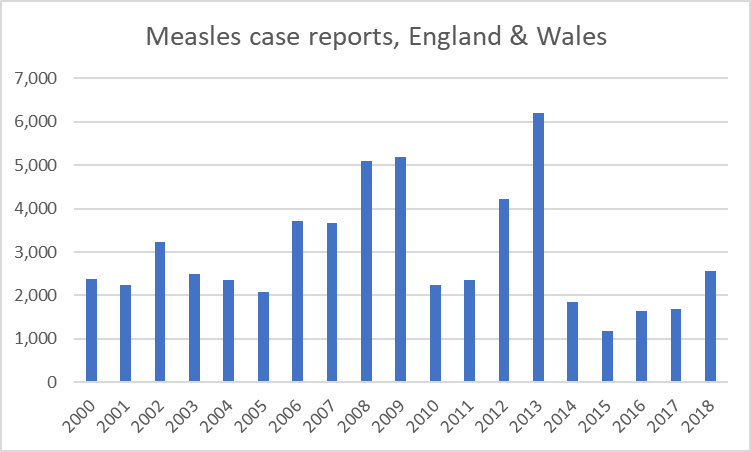
Theoretical is one word for their calculations, scare-mongering is another. Figures for the last 25 years vary widely with the highest being 2000 cases in 2012.
‘The UKHSA also says a large outbreak could put pressure on the NHS, with between 20% and 40% of infected people needing hospital care.’
Ring any PROTECT THE NHS bells?
But worse was to follow. On 15th September, it was reported:
‘Councils in London have written to households to say the capital could be facing a major outbreak unless MMR inoculation rates improve… Measles is highly contagious and severe cases can lead to disability and death… Any child identified as a close contact of a measles case without satisfactory vaccination status may be asked to self-isolate for up to 21 days.’
This threat of sending children home for a disease they don’t have, will resonate with parents whose children were repeatedly sent home for 10 days at a time, for one child with a positive covid test. As also will the inducement of:
‘Parents have been urged to check children’s health records to ensure that their vaccines are up to date.’
A ‘nudge’ technique not a million miles from the threat of vaccine passports for nightclubs, used to increase covid vaccine uptake in 18-25-year-olds but never actually implemented.
MMR vaccine uptake levels have been variable ever since its inception. Herd immunity levels of 95% are quoted as the level required to stop measles completely. But measles has never been a condition listed for total eradication. Cases fluctuate with mini outbreaks every 5-6 years and this was always the case before the availability of the measles and later the MMR vaccine. So how real is the current threat and how could it possibly justify such a discriminatory measure as excluding unvaccinated children from school?
From the headlines, parents may think that measles has a high death rate and whilst that was certainly true in the past and remains true in developing countries, improved nutrition and widespread access to health care in the UK was associated with a huge decline in measles deaths. The death rate declined from over 1,100 per million in the mid nineteenth century to a level of virtually zero by the mid-1960s.
Ninety-nine percent of the reduction in measles deaths in England & Wales occurred before the introduction of the measles vaccine in 1968 and deaths have continued to fall since then.
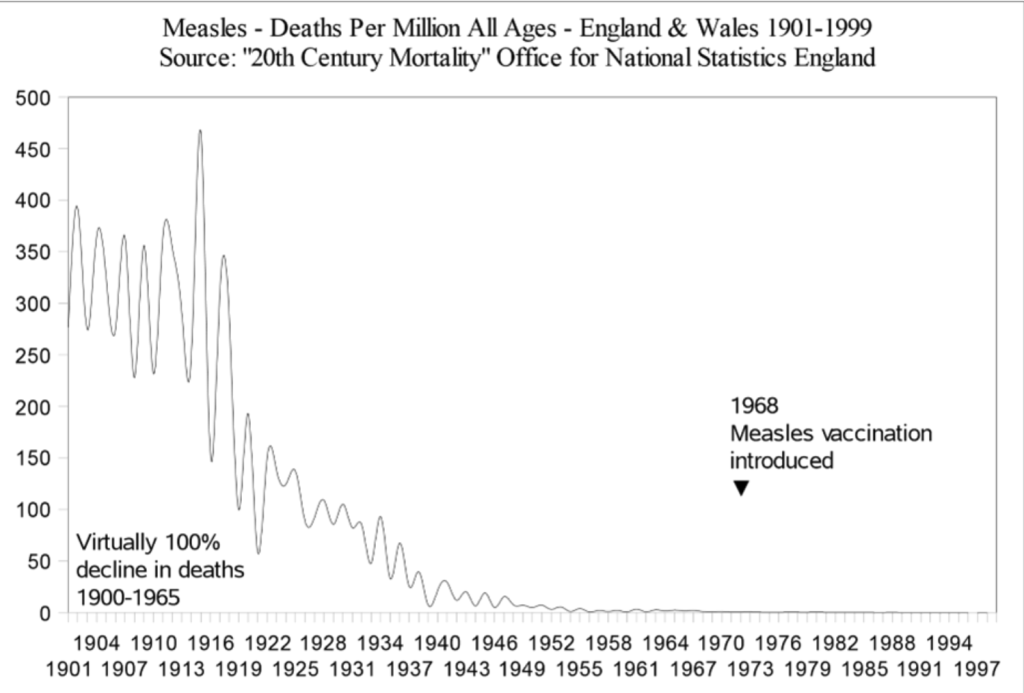
Figure 1 Twentieth Century Mortality CDROM Office for National Statistics. Measles mortality
More recent figures show case reports fluctuating widely and deaths of children from measles varying between 0 and 2 per annum. For example, in 2013 when there were over 6000 reported cases, there was 1 adult and 0 child deaths.
That is not to say that deaths cannot occur and other serious complications such as pneumonia or hearing loss. But for the vast majority of children, measles is what it was always described as, namely a ‘childhood illness’. It is noteworthy that WHO recommends
‘All children or adults with measles should receive two doses of vitamin A supplements, given 24 hours apart. This restores low vitamin A levels that occur even in well-nourished children. It can help prevent eye damage and blindness. Vitamin A supplements may also reduce the number of measles deaths.’
In a systematic review published in 2002, two doses of water based vitamin A were associated with a 81% reduction in risk of mortality (RR=0.19; 95% CI 0.02 to 0.85). Nowhere is this simple measure mentioned in UK guidance.
The parents who have chosen not to get their children vaccinated will accept the possibility of them catching measles, but sending them home for 3 weeks isn’t going to make this go away. A policy which writes in educational discrimination against unvaccinated children is hardly going to improve trust in public bodies. Moreover, the GMC Guidance on Decision making and Consent states in paragraph 48:
‘If you disagree with a patient’s choice of option: You must respect your patient’s right to decide. … you must not assume a patient lacks capacity simply because they make a decision that you consider unwise’
Introducing carrots and sticks is not compatible with NHS Constitution. The seven key principles includes the following:
1. The NHS provides a comprehensive service, available to all
4. The patient will be at the heart of everything the NHS does
Health choices should always be free from coercion and the failure to uptake whatever is on offer should never result in punitive consequences disguised as being ‘for your safety’.
Rumble Rejects UK Government’s Pressure to Demonetize Russell Brand Amidst Allegations
By Dan Frieth | Reclaim The Net | September 20, 2023
Amidst a growing controversy surrounding comedian Russell Brand, video platform Rumble has taken a stand against the UK government’s push to penalize the content creator based on recent allegations.
Last week, The Times and Channel 4’s Dispatches covered serious allegations of assault against Russell Brand. While the comedian has yet to be convicted of any wrongdoing and whether the anonymous accusers are victims is yet to be determined, several major platforms, including YouTube, Netflix, and BBC iPlayer, took swift action, either demonetizing or removing Brand’s content.
“We would be grateful if you could confirm whether Mr Brand is able to monetise his content, including his videos relating to the serious accusations against him. If so, we would like to know whether Rumble intends to join YouTube in suspending Mr Brand’s ability to earn money on the platform,” wrote Dame Caroline Dinenage, in the brazen letter.
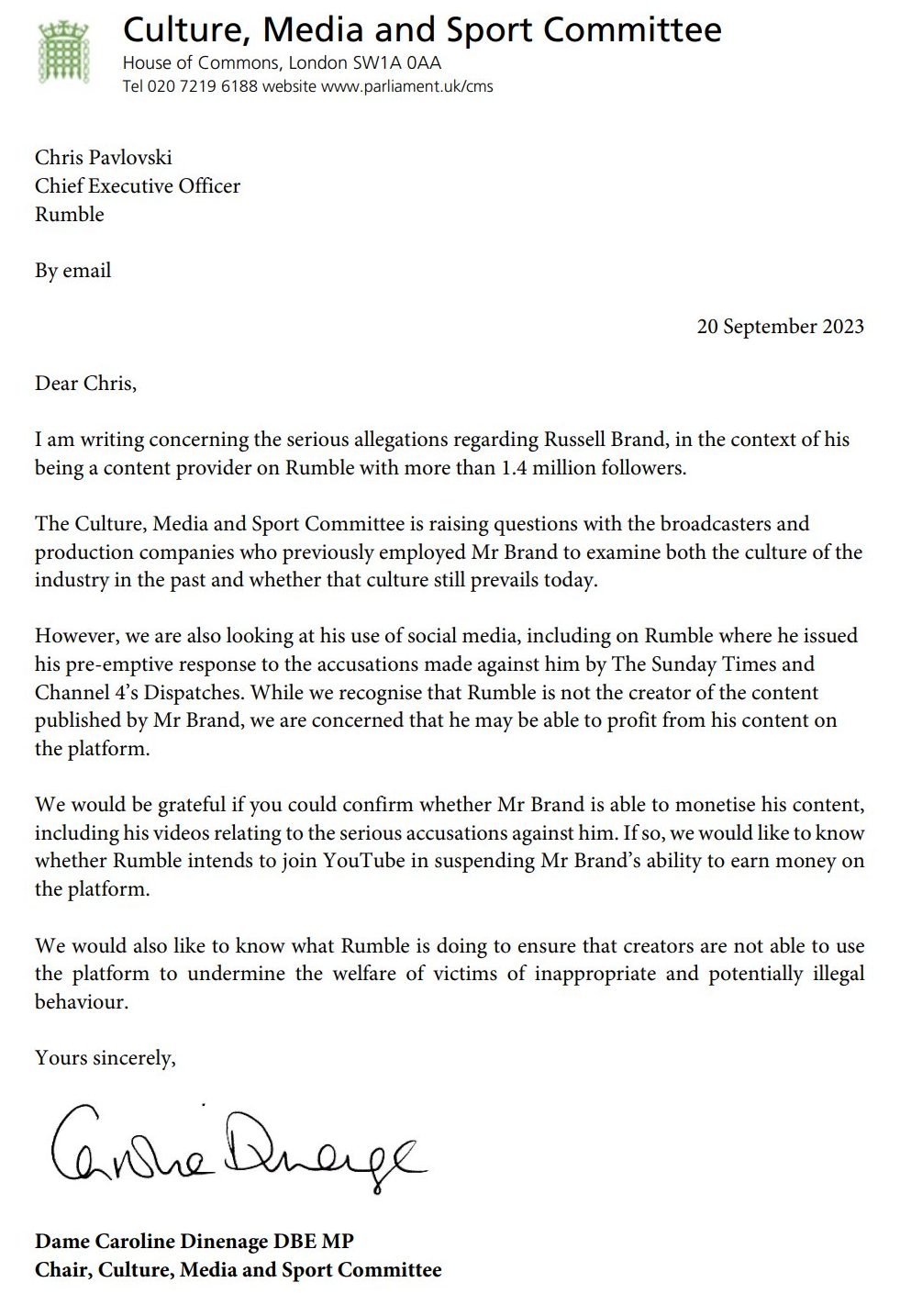
“We would also like to know what Rumble is doing to ensure that creators are not able to use the platform to undermine the welfare of victims of inappropriate and potentially illegal behaviour.”
Rumble, however, has chosen a different route from the other platforms. In response to an inquiry by the UK’s “Culture, Media and Sport Committee” regarding Brand’s monetization on the platform, Rumble CEO Chris Pavlovski issued a statement emphasizing the company’s commitment to a free internet.
In a clear stance against cancel culture and rushes to judgement, Pavlovski responded, stressing that allegations against Brand have no connection with his content on Rumble. He pointed out the importance of a free internet, “where no one arbitrarily dictates which ideas can or cannot be heard.”
From Rumble CEO Chris Pavlovski:
“Today we received an extremely disturbing letter from a committee chair in the UK Parliament. While Rumble obviously deplores sexual assault, rape, and all serious crimes, and believes that both alleged victims and the accused are entitled to a full and serious investigation, it is vital to note that recent allegations against Russell Brand have nothing to do with content on Rumble’s platform. Just yesterday, YouTube announced that, based solely on these media accusations, it was barring Mr. Brand from monetizing his video content. Rumble stands for very different values. We have devoted ourselves to the vital cause of defending a free internet – meaning an internet where no one arbitrarily dictates which ideas can or cannot be heard, or which citizens may or may not be entitled to a platform.
“We regard it as deeply inappropriate and dangerous that the UK Parliament would attempt to control who is allowed to speak on our platform or to earn a living from doing so. Singling out an individual and demanding his ban is even more disturbing given the absence of any connection between the allegations and his content on Rumble. We don’t agree with the behavior of many Rumble creators, but we refuse to penalize them for actions that have nothing to do with our platform.
“Although it may be politically and socially easier for Rumble to join a cancel culture mob, doing so would be a violation of our company’s values and mission. We emphatically reject the UK Parliament’s demands.”
While the letter from Rumble did acknowledge the seriousness of crimes like sexual assault, it underscored the importance of not penalizing creators for allegations unrelated to the platform. Pavlovski also raised concerns over the UK government’s attempt to influence who is allowed to speak or earn on Rumble, especially singling out individuals based on allegations.
The unfolding situation surrounding Russell Brand draws attention to broader discussions on cancel culture, the role of tech platforms, and the overreach in governments in regulating online content.
For now, Rumble remains committed to its principles, rejecting the call to join the growing number of platforms penalizing Brand based on accusations. As the story progresses, the debate over freedom of speech online and the impact of allegations on creators’ livelihoods is likely to intensify.
YouTube Censors Barrister’s Testimony on Vaccine Injuries at Official Covid Inquiry
But it’s for your own safety
The Naked Emperor’s Newsletter | September 20, 2023
YouTube are excelling themselves at the moment.
Yesterday they demonetised all of Russell Brand’s videos after a joint Channel 4, Times and Sunday Times investigation. For those who have not heard anything about this, Russell Brand is a UK comic with a troubled past full of sex, drugs and rock and roll. He managed to conquer Hollywood and marry pop star Katy Perry before settling down, having children and starting a great podcast.
The joint investigation accused Brand of sexual assault and rape which he strongly denies. Nobody knows what the truth is so there is no point in speculating on whether he is guilty or not. The key point is that he is innocent until proven guilty.
Unfortunately, YouTube have set this principle aside. They have dispensed with police gathering evidence and interviewing witnesses and bypassed going to court. Instead, they have decided that Brand is guilty and that his punishment is the inability to earn a living.
Who cares if he has a team to pay and a family to provide for. YouTube have listened to the mob and decided that Brand needs punishing. And of course they are able to do this because Big Tech is more powerful than most countries. Who is Brand going to complain to? The police?…they couldn’t care less. Politicians?…they are more fickle than Big Tech.
So now we are in a position where Big Tech companies have the power to decide whether you can earn a living or not. A police investigation may takes months or years. And then there will be a further wait until it goes to court. Should somebody have their wages withheld for years on end, perhaps being innocent the whole time? That’s not how innocent until proven guilty works.
Of course YouTube haven’t removed Brand’s videos, they still make a lot of money out of them, they have just stopped Russell getting a share of any of that revenue. ‘We think you’re guilty and we are morally superior so you shouldn’t be able to make a living but we are very happy to still earn money from your videos staying on our platform’.
To be honest, I’m surprised that Russell’s videos have been allowed on YouTube for so long, with so many other smaller accounts being censored over the same topics, but that is for another conversation.
Secondly, Stephen Bowie, who was injured after an adverse reaction to the AstraZeneca Covid-19 vaccine, has had one of his videos removed from YouTube. Nothing strange with that you might think, happens all the time.
What is strange and sinister, is that the video he posted was a YouTube live stream of the official UK Government Covid Inquiry. During the inquiry, Anna Morris KC, a Kings Counsel barrister, gave a testimony on vaccine related injuries. But YouTube didn’t like this.
“We reviewed your content carefully, and have confirmed that it violates our medical misinformation policy. We know this is probably disappointing news, but it’s our job to make sure that YouTube is a safe place for all”
Phew, so long as I’m safe.
Even a UK Government Inquiry can’t get past the YouTube censors if it involves a verboten subject.
The UK Passes Sweeping New Surveillance and Censorship Measures in The Online Safety Bill
By Dan Frieth | Reclaim The Net | September 20, 2023
The UK has passed its controversial online censorship act known as the Online Safety Bill. The bill, one of the widest sweeping attacks on privacy and free speech in a Western democracy will become law.
The bill seeks to shield internet users, especially youth, from the slingshots of malicious online content. But the bill goes beyond forcing platforms to remove illegal content. It calls upon social media giants to act as custodians, safeguarding users against ill-intent messages, cyberbullying, and explicit material.
Shrouded in a veil of safetyism and paying only lip service to privacy and free speech rights, we cannot cower from highlighting the bill’s overt undertone of censorship, veering into a territory where freedom of speech and privacy might be sacrificed at the altar of digital safety.
Michelle Donelan, Technology Secretary, voiced her support for the bill, branding it as an “enormous step forward in our mission to make the UK the safest place in the world to be online.” Under the proposed law, social media corporations will be forced into swift action, not just for removing violative content but also for hindering its emergence.
The implementation sword will be wielded by Ofcom, the communications regulator, with the law setting a stringent punishment pathway for non-compliers, inclusive of colossal fines and even incarceration.
The bill further pioneers new criminal offenses to its roster, like cyber-flashing and the distribution of manipulated explicit content, or deepfake pornography.
The bill imbues the government with tremendous power; the capability to demand that online services employ government-approved software to scan through user content, including photos, files, and messages, to identify illegal content. Non-compliance can result in severe penalties such as facing criminal charges.
From a free speech and anti-censorship perspective, this legislation is fundamentally disturbing. Critics argue this bill could enhance potential censorship on the pretext of safety.
The backdoor scanning system poses significant threats. It may be exploited by those with malicious intent, mishandled which could lead to false positives, resulting in unwarranted accusations of child abuse.
These alarming flaws render the online safety bill incompatible with end-to-end encryption – a staple for ensuring user privacy and security – and human rights.
The UK government has subtly conceded that it might not harness some elements of this law to their full potential. During the concluding discussion about the bill, a representative confirmed that the government would only order scans of user files when “technically feasible,” and these orders would be subject to compatibility with UK and European human rights law. This acknowledgment seems a subtle retreat from a previously aggressive stance taken by the same representative.
On the same day of these declarations, it surfaced that the UK government conceded privately that technology capable of examining end-to-end encrypted messages while observing privacy rights does not exist.
But, citizens who value their privacy shouldn’t have to rely on weak assurances from the government. The official safeguarding of privacy rights should be a priority. Rather than relying on murmurs of amendments, the government should offer comprehensive assurance through clear regulations and explicit protection policies for end-to-end encryption.
The bill, as it stands, allows the government to scan messages and photos, posing significant threats to security and privacy to internet users globally. These powers are enshrined in Clause 122 of the bill.
Several end-to-end encrypted service providers like WhatsApp, Signal, and UK-based Element have threatened to pull out their services from the UK if Ofcom demands examination of encrypted messages – an extreme but important move. This reaction is a testament to the perceived invasive nature of the Online Safety Bill.
Net-zero: the annals of absurdity
By Richard North | Turbulent Times | September 17, 2023
Most readers will recall the excited chatter of some commentators, speculating on the result of the summer’s Uxbridge by-election – which was attributed to a backlash over Khan’s ULEZ plans.
After vague noises from No.10 about being “pragmatic”, there was a widespread feeling that Sunak might capitalise on what some took to be an “anti-green” rebellion, and row back on the implementation of net-zero.
Whatever hopes there might have been, though, it must now be crystal clear that, short of any trivial, cosmetic concessions, Sunak has absolutely no intention of slowing down to destroy the British economy in the name of the Great God climate change.
If any further evidence was needed, it comes in an article in The Times yesterday, which tells us that the prime minister has rejected any idea of a reprieve for petrol and diesel cars. The 2030 electric vehicle targets, we are told, will stay.
As if that wasn’t bad enough, we are also warned to expect punitive measures aimed at incentivising the few remaining car manufacturers in the UK to increase their sales of EVs.
The plan is that next year, 22 percent of new cars sold will have to be electric, rising to more than 50 percent in 2028. It is left to the Independent, though, to tell us that manufacturers who fail to meet the targets will face fines of up to £15,000 per car.
A similar stratagem is being used to push the sales of heat pumps, with gas and oil-fired boiler manufacturers being required in the financial year 2024-2025 to ensure that heat pumps make up 4 percent of their sales.
An alternative is to buy “credits” from manufacturers who are over-quota, failing which the manufacturers will have to pay an eye-watering fine of £5,000 for every heat pump short of the quota. As with EVs, the quota will increase each year.
This has led some manufacturers to warn that they will have to increase the unit prices of boilers by £300 – a sum which also might have to increase each year as sales quotas increase.
This way of doing things is particularly devious as it distances the government from the consumer and puts the responsibility on manufacturers to implement net-zero policy, which must then take the blame for the increased prices when people turn their backs on “green” products.
As such, one might expect that manufacturers would be up in arms at this cynical attempt to make them take the fall, except in the case of car-makers, the sales quota system favours those which have committed only to produce EVs – apparently an intended consequence of the plan.
This has emerged after talks between the government an BMW, when it was announced that the car-maker would receive a subsidy of £600 million for its Cowley plant in Oxford – a bribe to dissuade the company from moving its whole operation to China.
But part of the package, it seems, was an “understanding” that the net-zero timescale would not be relaxed, giving the company “certainty” about the rules, and thereby protecting their investment in EVs. In order to protect the developing market, car-makers are said to be keen to see the 2030 ICE new car sales ban go ahead.
This also applies to the emerging charging industry. Ian Johnston, chairman of the industry body ChargeUK, is quoted as saying: “To go further our sector needs certainty in the form of a firm commitment to a strong zero emissions vehicle mandate”. He is said to have cautioned that scaling it down would mean “billions of pounds of investment” being put at risk.
We thus have an interesting, if not disturbing situation where the market in cars is to be heavily distorted, so that consumer preferences will no longer be the primary driver of production plans. A nexus of government, investors and car manufacturers is conspiring to create a producer-led industry.
As for the minor detail of a lack of charging points – which is one of the factors inhibiting sales – officials argue that tough annual targets will give confidence to investors to start building thousands of charge points.
That alone, however, is unlikely to be sufficient to incentivise private buyers, who have proved extremely reluctant to convert to electric. Although the government “fines” may narrow the price differential, EVs will still be substantially more expensive than their ICE counterparts and the lack of chargers continues to put off buyers.
Even then, car-makers are not yet out of the woods as there is the vexed question of battery production to resolve. Faced with subsidies pouring out of the coffers of EU and US governments, Alan Hollis, chief executive of AMTE Power – head of one of Britain’s few surviving homegrown battery manufacturers – is holding out the begging bowl, threatening to build its planned new factory overseas unless the UK closes the subsidy gap. So far, though, the UK’s experiences with building battery plants have not been happy.
Nevertheless, last May, the government offered the owners of Jaguar Land Rover £500 million in subsidies in an effort to persuade the carmaker to build a new electric battery plant in the UK.
The Indian conglomerate Tata, the parent company of JLR, was in the process of deciding whether to build the new electric battery production facility in the UK or Spain and, in July, announced that it was to build a 40GW battery cell gigafactory in the UK – although this may have Chinese backing as well.
BMW has not yet decided on the manufacturing location for its Mini batteries – with mainland Europe or the UK remaining options – but it is germane to note that the company is also producing the Mini marque in China, with exports from that country due to start in 2024.
Therein lies another tale, as Chinese EV and battery production has been heavily subsidised since the inception of the industry. State subsidies for electric and hybrid vehicles were reported at $57 billion from 2016-2022, helping China become the world’s biggest EV producer and to pass Japan as the largest auto exporter in the first quarter of this year.
However, China is not only delivering the volume, but its cars are also typically 20 percent below the prices of European-built models. This has moved the Commission to consider imposing punitive tariffs under anti-dumping laws. It is possible that the UK will follow suit although to do so would present the government with something of a conundrum.
As it stands, the import of cheaper Chinese vehicles is the only sure-fire way of eroding the price differential between ICE and electric cars, and thus the best way of achieving the government’s net-zero targets – notwithstanding that Chinese industry is largely powered by fossil fuels.
Thus, despite its Faustian deal with its own car manufacturers, the government’s best option is to open the doors to Chinese imports, at the risk of wiping out British car manufacturing.
When the BMW deal was done, Sunak was full of himself, declaring that the “investment” was “another shining example” of how the UK was the best place to build cars of the future, claiming that his government was “securing thousands of jobs and growing our economy right across the country”.
But, from current moves, it appears that Sunak is far more interested in the deindustrialisation of Britain through net-zero, in which case he should be looking to ditching the car industry as soon as possible – which is no doubt already in his mind.
After all, except for a few small-scale specialists, most of the industry is already in foreign hands, so handing it over to the coal-fired Chinese shouldn’t make too much difference. In the pursuit of net-zero targets, nothing is too much or too absurd for our government to countenance.
Featured Video
What’s the Pentagon Preparing For? Alexander Mercouris
or go to
Aletho News Archives – Video-Images
From the Archives
US tested biological weapons in Japan’s Okinawa in the 60s – report
RT | January 12, 2014
The American army conducted experiments with biological weapons aimed at destroying rice crops on the Japanese island of Okinawa in the 60s, Kyodo news agency reports. The alleged target of the tests was the China and Southeast Asia region.
Citing classified US documents, Japanese news agency Kyodo said the US military carried out experiments on their sovereign territory between 1961 and 1962. At this time Japan’s southern island of Okinawa was still under post-WWII, US jurisdiction. The US did similar tests in Taiwan and the American mainland, notes Kyodo.
The American army experimented with rice blast fungus – a plant pathogen – which infects rice crops with disastrous effects. The pathogen latches onto the rice plant as a spore and produces lesions and spots all over the rice plant and then reproduces.
A single lesion can generate a thousand spores in one night alone, while an entire cycle – lasting about a week – can have a devastating effect on rice crops.
Kyodo reports that tests were conducted over a dozen times, and mentions test sites, Nago and Shuri, in Okinawa. The US army reported some success in their experiments and the gathering of “useful data”.
“Field tests for stem rust of wheat and rice blast disease were begun at several sites in the (US) Midwest and south and in Okinawa with partial success in the accumulation of useful data,” wrote Kyodo, citing its documents. … continue
Blog Roll
 Aletho News
- What’s the Pentagon Preparing For? Alexander Mercouris
- USAID Files: The Georgia Model for Getting Accounts Taken Down
- Kiev hits out at YouTube over Russian-language censorship refusal
- Australia Passes Digital Duty of Care Bill, Ignoring Censorship Warnings
- Majority of MAGA ‘deserters’ back banning bombs to Israel: Poll
- Iran wary as South Korea assures it will not join US war of aggression
- ‘Desperate’ Kiev seeking to draw NATO into war with Russia – Andrew Bridgen
- German people oppose war, unhappy with government foreign policy
- How US army’s Iowa lead azide detonation exposed stockpile failure, unleashing environmental crisis
- China Urges Japan to Speed Up Removal of WWII-Era Chemical Weapons From Its Soil
- If Americans Knew
- Iran’s Foreign Minister Slams Israel Over Chemical Weapons Claims
- Israel kills 18 in Gaza, including 3 girls, Deputy Education Minister, & his wife
- DAILY UPDATE: Latest essential news on Palestine, Israel, & region
- Ad That Calls for Cutting Off US Aid to Israel to Air on SNL Thanksgiving Special
- Tortured into confessing: Report exposes abusive Israeli interrogation of Palestinians
- Israeli Military Probing Its Own ‘Widespread’ Use of Palestinian Human Shields
- Palestinians in Gaza Are Lining Their Tents with Sandbags to Stop Israeli Bullets
- Israel’s genocidal actions are preventing births in Gaza –New Amnesty report
- ‘Unlawful de facto exemption’: US sitting on 12-year backlog of alleged Israeli gross human rights violations
- DAILY UPDATE: Latest essential news on Palestine, Israel, & region
- No Tricks Zone
- Alarmist Climatologists In Shock! 2026 Atlantic Hurricane Season Sees Lowest Count In 101 Years
- New Study: Modern Temps Are Among The Coldest Of The Last 10,000 Years In East Central Europe
- Germany’s Renewable Energies Lead to 1.4 Billion Euro Electric Power Trade Deficit
- Argentina’s Perito Moreno Glacier Joins Antarctica and Arctic In Defying Doomsday Melt Claims
- New Study: Barents Sea Temperatures Were Warmer And Sea Ice Less Extensive In The 1700s Than Today
- German Authorities Start Initiative To Evaluate Public Register For Climate “Disinformation” Spreaders!
- Zonal Asymmetry of Temperature Change in the Antarctic Circumpolar Current
- New Study: The Net Fossil Fuel Contribution To Rising Atmospheric CO2 Has Been Zero For 500 Years
- Germany’s Green Energy Transition Becoming Increasingly Expensive…Another 6 Trillion Euros!
- Sudden Stratospheric Warming, Powerful El Niño Combination May Lead To Extreme Europe Cold, Energy Crisis!

