Netanyahu demands anti-Zionist posters be removed from London Underground
RT | February 23, 2016
Israeli Prime Minister Benjamin Netanyahu has reportedly asked the UK government to have hundreds of posters protesting Israeli occupation of Palestine removed from the Tube.
The Haaretz newspaper reported Tuesday that the Israeli prime minister himself had asked that the posters, which may have been posted in their hundreds, be removed.
The posters appeared on Sunday as part of a mass fly-posting effort to mark the annual Israeli Apartheid Week.
The posters on the London Underground trains hit out at a number of targets, including controversial UK private military firm G4S, which is involved in the running of Israeli prisons.
Transport for London (TfL) said that the posters would be taken down.
“It is flyposting and therefore an act of vandalism, which we take extremely seriously,” A TfL spokesman told the Evening Standard.
“Our staff and contractors are working to immediately remove any found on our network,” the spokesman added.
Some Jewish community groups said that the posters amounted to “smears” against Israel.
“These posters are awful smears that do nothing to contribute to peace and dialogue, placing significant strains on inter-community relations across London,” a London Jewish Forum spokesman told Haaretz.
“They are an act of vandalism, seeking to undermine the UK’s relationship with Israel and designed to foster discomfort. We welcome Transport for London’s commitment to quickly remove them.”
The posters were reported Monday as the Palestinian envoy to the UK Manuel Hassassian told the Independent newspaper that the decision to invite Israeli parliament speaker Yuli Edelstein to address an event held in the UK Parliament risked legitimizing Israeli expansionism, given Edelstein’s background.
“Mr Edelstein lives on an illegal Israeli settlement built on Palestinian land and he publicly opposes Palestinian statehood,” Hassassian said.
Edelstein is due to address the British Group Inter-Parliamentary Union in March.
Scotland’s Anti-Colonial Struggle
By Craig Murray | February 22, 2016
I have a meeting today in London with the Ambassadors of Venezuela, Bolivia, Cuba, Nicaragua and Ecuador to brief them on Scotland’s continuing struggle for Independence. These nations have been at the forefront of the international movement against colonialism, and know all about the sharp end of neo-Imperialism and the evil-doing of the CIA and other western security agencies.
The test of the Independence of a state is nothing to do with domestic or regional government, or even with bilateral arrangements with the state from which it secedes. The test of Independence is, purely and simply, whether or not you are recognised by other states as independent. That is the very clear cut position in international law. For this reason, it is essential that Scotland reaches out, not just within the EU but to the entire international community. Ultimately we need these people to vote and lobby for us in the United Nations and other international institutions.
Frankly, the SNP is rubbish at this. I am doing this meeting because the hierarchy of the SNP spurned the approach from the Ambassadors, as previously detailed on this blog. This reluctance seems part of the hierarchy’s effort to be NATO friendly and thus CIA friendly. The Ambassadors would far rather be meeting with an official SNP representative than a nobody like me. Unfortunately the SNP won’t do it. That is a disgrace.
I can increasingly foresee, as Westminster governments move ever further to the right and encroach more and more on civil liberties, a situation arising where Scotland wishes to claim its independence without the consent of Westminster. In that situation, we will need all the international support we can get, just as the Palestinians have been making headway in UN institutions. Work needs to be put now into laying the foundations for that support. Personally I would characterise Scottish Independence as an anti-colonial struggle; use of Scots as British cannon fodder and integration of the Scots elite into the Metropolitan elite does not make Scotland any less a colony. Rome had an African Emperor, but still her African possessions were colonies.
But even for those who do not accept that analysis, there is no doubt that Scottish Independence would have a highly beneficial impact on the global balance of power. The weakening of the USA’s most powerful sidekick; the lessening of the UK’s ability to participate in illegal neo-imperial invasions and to host weapons of mass destruction; the re-opening of the question of the undemocratic Security Council structure at the UN.
Then there is also the positive role Scotland can play as a major contributor to UN Peacekeeping Forces, and a voice for sanity, reason, human rights and the pre-eminence of international law. An independent Scotland as a state party will be able to request the International Criminal Court to lay war crime charges against Blair and Straw for the illegal invasion of Iraq, which would be a powerful deterrent to future aggressive war.
I am but one man and a private individual. Everything I can do, I shall.
The deeper truths journalists are blind to
By Jonathon Cook | The Bog From Nazareth | February 21, 2016
As I have found out myself, there is nothing media outlets like less than criticising other media publications or the “profession” of journalism. It’s not really surprising. The credibility of a corporate media depends precisely on their not breaking ranks and not highlighting the structural constraints a “free press” operates under.
So one has to commend the Boston Globe for publishing this piece by Stephen Kinzer, a former foreign correspondent, warning that the media is not telling us the truth about what is going on in Syria.
But those constraints are also why Kinzer glosses over deeper problems with the coverage of Syria.
This [most western reporting of Syria] is convoluted nonsense, but Americans cannot be blamed for believing it. We have almost no real information about the combatants, their goals, or their tactics. Much blame for this lies with our media.
Under intense financial pressure, most American newspapers, magazines, and broadcast networks have drastically reduced their corps of foreign correspondents. Much important news about the world now comes from reporters based in Washington. In that environment, access and credibility depend on acceptance of official paradigms. Reporters who cover Syria check with the Pentagon, the State Department, the White House, and think tank ‘experts.’ After a spin on that soiled carousel, they feel they have covered all sides of the story. This form of stenography produces the pabulum that passes for news about Syria.
This is more of the “cock-up, not conspiracy” justification for skewed reporting. If only there was more money, more space, more time, more reporters, the media would not simply spew the government’s official line. Guardian journalist Nick Davies wrote a whole book, Flat Earth News, making much the same claim – what he called “churnalism”. I reviewed it at length here. Journalists like this kind of argument because it shifts responsibility for their failure to report honestly on to faceless penny-pinchers in the accounting department.
And yet, there are journalists reporting from the ground in Syria – for example, Martin Chulov of the Guardian – who have been just as unreliable as those based in Washington. In fact, many of the points Kinzer raises about the reality in Syria echo recent articles by Seymour Hersh, who is writing from the US, not Damascus. But he, of course, has been shunted to the outer margins of media discourse, publishing in the London Review of Books.
Media coverage of Iraq was just as woefully misleading during the sanctions period in the 1990s, when I worked in the foreign department at the Guardian, and later in the build-up of the US-led attack on Iraq. In those days, when there was no shortage of resources being directed at foreign reporting, the coverage also closely hewed to the official view of the US and UK governments.
The problem is not just that foreign reporting is being stripped of financial resources as the media find it harder to make a profit from their core activities. It is, as Ed Herman and Noam Chomsky pointed out long ago in their book Manufacturing Consent, that the corporate media is designed to reflect the interests of power – and the corporations that control our media are power. They select journalists through a long filtering process (school, university, journalism training, apprenticeships) precisely designed to weed out dissidents and those who think too critically. Only journalists whose worldview aligns closely with those in power reach the top.
None of this is in Kinzer’s piece. It is doubtful that he, a member of the media elite himself, would recognise such an analysis of the journalist’s role. As Chomsky once told British journalist Andrew Marr, when Marr reacted with indignation at what he inferred to be an accusation from Chomsky that he was self-censoring:
I don’t say you’re self-censoring. I’m sure you believe everything you’re saying. But what I’m saying is, if you believed something different you wouldn’t be sitting where you’re sitting.
That understanding of journalism does not depend on conspiracy, but nor does it accept that it is all about cock-up. It posits a much more interesting, and plausible, scenario that journalists get into positions of influence to the extent that they are unlikely to rock the boat for elite interests. The closer they get to power, the more likely they are to reflect its values. Much like politicians, in fact.
NATO and the Bananazation of Western Europe
By Joan Roelofs | CounterPunch | February 19, 2016
The wars of NATO are well-publicized but NATO as an institution remains in the shadows. Does NATO aspire to be a world government? Why did Western European countries join and why have they remained part of the alliance? It is not an egalitarian organization. The United States dominates every aspect of it. Are these supposedly social democratic countries really democracies, or are they banana republics? The traditional banana republic has democratic institutions, but is controlled by military and financial elites which are vassals of the United States.
Why NATO was formed is controversial. The official US justification was fear of an invasion by the Soviet Union to promote communism in Western Europe. There was never any evidence that this might happen, but then anything is possible.
There is evidence that other motives were more important. One was to facilitate the re-arming of Germany by embedding it in a larger military grouping. Western European countries were wary of an independent German military establishment. Another was the desire of pro-capitalist elites to prevent domestic socialist or communist electoral or revolutionary victories. This was much more of a threat than a Soviet invasion.
The founding treaty clearly states:
The Parties undertake, as set forth in the Charter of the United Nations, to settle any international dispute in which they may be involved by peaceful means in such a manner that international peace and security and justice are not endangered, and to refrain in their international relations from the threat or use of force in any manner inconsistent with the purposes of the United Nations.
The operative part is Article 5:
The Parties agree that an armed attack against one or more of them in Europe or North America shall be considered an attack against them all and consequently they agree that, if such an armed attack occurs, each of them, in exercise of the right of individual or collective self-defence recognised by Article 51 of the Charter of the United Nations, will assist the Party or Parties so attacked by taking forthwith, individually and in concert with the other Parties, such action as it deems necessary, including the use of armed force, to restore and maintain the security of the North Atlantic area.
Members are not required to respond with military force; they can decide how far they want to go.
NATO, formed in 1949, now has twenty-eight full members: Albania, Belgium, Bulgaria, Canada, Croatia, the Czech Republic, Denmark, Estonia, France, Germany, Greece, Hungary, Iceland, Italy, Latvia, Lithuania, Luxembourg, the Netherlands, Norway, Poland, Portugal, Romania, Slovakia, Slovenia, Spain, Turkey, the United Kingdom, and the United States.
However, NATO is a vast empire with an expanding group of full members, plus networks, partnerships, associates, and guests. The Partnership for Peace includes: Armenia, Austria, Azerbaijan, Belarus, Bosnia and Herzegovina, Finland, Georgia, Ireland, Kazakhstan, Kyrgyzstan, Macedonia, Montenegro, Malta, Moldova, Russia, Serbia, Sweden, Switzerland, Tajikistan, Turkmenistan, Ukraine, Uzbekistan. These nations choose from a “menu” how far they want to go with NATO. Options include joint missions, combating terrorism, crisis response in the NATO Reaction Force (NRF), controlling mines and small arms, disaster rescue, war games, and scientific cooperation.
PfP members aspiring to full membership must have: weapons interoperability (e.g., Eastern Europe countries had to get rid of Russian and old Warsaw Pact arms in favor of Western ones), increase military spending to 2% of the GDP, purge “politically unreliable” personnel from military, defense and security posts, train abroad in NATO military academies, host military exercises, and instruct the officer corps in English for joint overseas operations.
Other NATO associates are the Mediterranean Dialogue countries: Algeria, Egypt, Israel, Jordan, Mauritania, Morocco, Tunisia; and the Gulf Cooperation Council: Bahrain, Qatar, Kuwait, United Arab Emirates. Also, there are cooperating members: Afghanistan, Australia, Iraq, Japan, Pakistan, Republic of Korea. New Zealand, Mongolia. Informally cooperating are Colombia, Honduras, and El Salvador.
NATO’s aggressive “out of area” operations, have been multilateral, with willing participation of NATO members. The official military operations have been in Bosnia (1992-1994), Serbia and Kosovo (1999-present), Afghanistan (2001-present), counter piracy off Somalia coast (2008-present), Libya (2011), Turkey defense (2012-present).
NATO created a global army; the war in Afghanistan was fought by the largest military coalition in history. Finnish and Swedish troops (not full members) have died there; their countries are considering joining NATO. The defeated countries of World War II, which had constitutional provisions and laws against offensive military activity, including sending troops abroad, were also there. Italy and Germany sent troops and Japan provided support services.
NATO Secretary General Stoltenberg said last December:
NATO is playing a key role in the fight against ISIL (Islamic State of Iraq and the Levant) . . . All NATO allies are part of the coalition, the anti-ISIL coalition, and I think it’s of great importance for the coalition that both NATO allies but also many NATO partners are part of the coalition and they can take advantage of the interoperability that we have developed, our ability to work together which we have developed over many years through NATO military operations but also through NATO exercises. So the backbone of the forces in the coalition is provided by NATO and NATO partners.
NATO downplays its military nature and claims that it is simply the “premier organization of democratic nations.” This claim was part of the inducement for Eastern European countries to join. The new idea of both the US military and NATO is that security is no longer a territorial issue–everything is relevant to it. Any policy of any nation anywhere in the world, concerning economics, human rights, the environment, secession movements, etc., may be a cause of terrorism or create an external threat that needs to be thwarted in advance, by NATO.
NATO is closely connected to military, political, scientific, and corporate elites. Europe now has a huge military-industrial complex. BAE Systems, the largest military firm, is British owned, and has factories in New Hampshire, US, and many other places. The major Italian arms manufacturer, Finmeccanica, and French, Thales, are heavily government supported. EADS is a conglomerate headquartered in the Netherlands, with main subsidiaries in France, Germany and Spain. The Netherlands has recently announced a purchase of 37 F-35 fighter planes; some part of it is made there. Sweden also has a significant very high tech military industry.
The European Union is closely enmeshed with NATO. During its formative period, the original nations sent NATO ambassadors to Paris, its early headquarters. They developed a pro-NATO view which often differed from their governments. Currently, the EU executive and NATO both have headquarters in Brussels.
When information came out about the secret “Gladio” armies, about the thousands of nuclear weapons formerly and some still in Europe, nuclear waste dumps, and testing and use of DU weapons, it became clear that crucial NATO activities are unknown not only to the ordinary citizen, but also to parliamentary representatives and even prime ministers if they are not part of the inner circle. Denmark’s constitution and laws ban nuclear weapons, but they were in Greenland. The complicity of 14 European governments (East and West) in recent renditions of “suspects” was also a surprise to citizens of the greatest democracies. Sweden, not a member (but now a partner), has been secretly aiding NATO since the beginning.
NATO is building a massive new headquarters suitable for a global empire. Among its diverse activities are grants for many types of science research. Ukraine is now a major grantee in its science program, where a multinational capacity for disaster response is being developed. The multinational telemedicine system can be used for both civilian and military applications.
Another project studies images and perceptions of NATO among the five Global Partners in the Asia-Pacific region: Australia, Japan, Mongolia, New Zealand, and the Republic of Korea. “The project will conduct comprehensive comparative research of elite perceptions and media images of NATO as a global security actor to identify, measure, and raise global awareness, as well as extend knowledge of NATO in the region.”
The 2015 Nobel Prize in Chemistry was awarded to a Turkish NATO funded researcher, Aziz Sancar, who studied the mechanism of DNA repair. Now that everything affects security, NATO sponsors research in women’s reproductive choices, sustainable development, leather tanning effluent toxicity, landscape architecture, and stained glass preservation. Many projects are conducted jointly by teams including NATO member and PfP nationals, facilitating the mentoring of initiates.
Economic, political, educational, and social activities give NATO a friendly face. Internships at its Brussels headquarters are offered to students of political science, international relations, security studies, economics, engineering, human resources, information technology, library science, aeronautics, and journalism. It gives grants to environmental and other organizations just like a philanthropic foundation. On the other hand, citizens who protest the “out of area” aggressions are often branded as extremists or simply ignored.
NATO training includes massive war games, in which all members and many partners participate. For example, in 2013, “Steadfast Jazz,” a live-fire exercise, included partners Ukraine, Finland, and Sweden.
A network of training institutions exists in Europe, and NATO members are also trained in US military colleges and our great universities. The Joint Multinational Readiness Center in Germany provides combat training, and links European forces with US National Guard units. The Marshall Center for Security Studies, also in Germany, features university-type military training, and like many of the war colleges, educates civilian leaders and potential leaders as well as military personnel.
Military training throughout the world is an important part of the US empire. The US Department of Defense/State Department joint report to Congress for 2014 states that 52,600 people from 155 nations were trained—but this does not include NATO members, Australia, Japan, or New Zealand, because they are not required for the report. All arms sales are accompanied by training.
The relationships acquired through training, conferences, seminars, and joint exercises are a source of considerable power, as these experiences help younger people to move up the ladder to civilian and military leadership in their countries.
Bases are also a source of influence. At one time there were more than 800 in Europe; now it is estimated that there are about 350. Originally, there were hundreds in Germany. Everywhere bases generate economic activity and also enable surveillance and influence, as explained in the fine study by Catherine Lutz, The Bases of Empire.
Why did Western European nations join and now remain in NATO?
There was the idea promoted that the Soviet Union was poised to invade Western Europe. Its dissemination was aided by close links among the CIA, FBI, and foreign intelligence agencies. The foreign press was complicit, and in addition, the CIA and private foundations created new publications, such as Encounter in London, and others in France, Italy, Germany and elsewhere. Conferences, such as those of the Congress for Cultural Freedom, were held to lure European intellectuals away from socialist and pacifist ideologies.
Christian Democratic parties—bulwarks against communism and prime advocates of the “Atlantic alliance”—suddenly sprang up in many countries. They had been small entities before World War II; now they became governing parties, with an especially strong hold in Italy. The massive CIA funding to defeat the Italian Communist Party is well documented; there is evidence that similar activities were in place elsewhere in Europe. The NATO countries in turn financed Christian Democratic parties throughout Latin America.
Occupied Italy and Germany eventually joined NATO; they were already under the influence. In addition, some in those countries regarded membership as a sign of their conversion and redemption: they were with the “democratic” West. Spain, Portugal, Greece and Turkey were fascist countries, so militarism and anti-communism were natural for them.
But why the social democratic countries?
There was fear that Germany might develop an independent military, so embedding any future German army in a US led coalition was reassuring. Besides, the economic costs of each country creating its own high tech military seemed daunting. The UN Charter, which outlawed war, did not forbid national armies or regional alliances. In addition, the officials in the defense ministries of otherwise progressive countries tended to be conservative and believers in armed preparedness. The NATO alliance appeared especially useful in controlling socialist and communist parties within their countries. Those parties generally opposed NATO so had to be countered on that ground alone.
Ongoing support for NATO had the help of the Bilderberg group. This conspiratorial elite first met in the Netherlands in 1954, and consists of the power elite and potential leaders of North America and Western Europe. The group was especially concerned with the threat of socialism or communism from whatever source and was strongly oriented toward the Atlantic alliance. No formal resolutions are made or policies adopted. It is assumed that the members will apply the sense of the meeting in their exalted positions.
Public opinion in war-torn and impoverished Europe was influenced by Marshall Plan aid, which warmed up attitudes toward the US. A spinoff of the loan program was the repayment in local currency. These funds enabled the US to covertly or sometimes overtly subsidize center and right-wing citizen organizations, political parties, and unions
One example is the Labour Party of Britain, which was a double threat. Clause 4 of its constitution called for nationalization of major industries, and its mainstream supported the post-war Campaign for Nuclear Disarmament and opposed NATO. Secretly, the CIA lavishly funded and promoted a small conservative group in the party, organized around the Socialist Commentary journal. This group believed the Atlantic alliance was needed to forestall a Soviet invasion, and also held that given the “welfare state,” nationalization was no longer required. Those of this persuasion gradually moved into the party leadership.
Sweden, a neutral country and still not a full NATO member, nevertheless covertly collaborated with the US during World War II. It established a resistance army, to combat a possible Nazi invasion. This was a model for the secret “fall-back” armies which NATO later created throughout Western Europe, including in neutral Sweden and Switzerland.
Known as the “Gladio” project, the name of the Italian branch, they were presumably to offer resistance to a Soviet invasion. However, later government investigations, in Belgium, Italy, and Switzerland, found them complicit in domestic terrorism, political manipulations, and neo-Nazi activities. The existence of these armies was not known to the public, journalists, or most European politicians until after 1990.
Sweden cooperated with NATO all along, even though policies enacted during the administration of Prime Minister Olaf Palme forbade any war planning with NATO. The Swedish Security Service, military and intelligence agencies collaborated with the US, and their strong connections in the public broadcasting system gave them great influence over public opinion. Furthermore, the very important Swedish defense industry is intertwined with US military technology, and contrary to public policy, was sending weapons to the US for use in its war against Iraq. In 2009, war games “Loyal Arrow” were conducted by 10 countries in Northern Sweden, as a preliminary move to extend US and NATO military presence into Arctic regions—and confronting Russia in that area.
Norway would have preferred a Scandinavian alliance, but when this didn’t happen, it joined NATO, and this influenced Denmark and Iceland to follow. The (conservative) Icelandic Foreign Minister had been part of secret talks with the US regarding landing rights and hoped that a NATO installation would dampen the strong communist and socialist movements. Pressure was put on the reluctant public by suggesting that the Soviet fishing fleet near Iceland was really a military force that would occupy Iceland along with a “fifth column” of Icelandic socialists.
Denmark was reluctant to join NATO, but was persuaded. However, the public and even most political leaders were unaware of the plans for nuclear installations in Greenland that were part of secret agreements. These were illegal and unconstitutional in Denmark.
The French and Dutch joined, although there was much dissent. Under the leadership of DeGaulle, France opted out of the central command in 1966 and removed foreign occupation of military bases. However, it had its own nuclear armed military, and secret agreements to fight with NATO if trouble came. In 2009, France agreed to resume full membership.
The Dutch have been particularly unhappy about nuclear weapons, which are still present in Italy, Belgium, Germany, Netherlands and Turkey. Belgium was particularly hard hit economically by postwar developments, so the location of NATO headquarters in Brussels helped to cement attachment.
With the transformation and dissolution of the Soviet Union, many thought NATO was obsolete. However, the attacks of 9-11 created more enthusiasm. This was dampened by the invasion of Iraq (not an official NATO action) and Afghanistan, which invoked Article 5 on shaky grounds. Nevertheless, 50 nations participated in the Afghan attack, including, as mentioned previously, neutral Sweden and demilitarized Japan. More recent terrorism has revived support for NATO in Europe; France has drawn much closer.
Some believe that NATO’s activities and its very existence conflict with the spirit of the UN, while others maintain that NATO is an essential operating arm of UN collective security, with knowhow and extensive high-tech weaponry.
In the classical “banana republic,” the United States controls crucial foreign and/or domestic policies of another nation through ties with its military and intelligence institutions. Only now, there is resistance in the lands where bananas grow, while “social democratic,” “neutral,” and reputedly “pacifist” countries of Western Europe are slipping into bananazation. Ordinary citizens have strong anti-war feelings and continue protesting, yet the military, political, and corporate elites of Europe have increasingly become dependents or confederates of the US military-industrial complex.
Joan Roelofs is Professor Emerita of Political Science, Keene State College, New Hampshire. She is the translator of Victor Considerant’s Principles of Socialism (Maisonneuve Press, 2006), and author of Foundations and Public Policy: The Mask of Pluralism (SUNY Press, 2003) and Greening Cities (Rowman and Littlefield, 1996) and translator, with Shawn P. Wilbur, of Charles Fourier’s anti-war fantasy, World War of Small Pastries, Autonomedia, 2015. Web site: www.joanroelofs.wordpress.com Contact: joan.roelofs@myfairpoint.net
Moscow must stop supporting Syrian President Assad: Hollande
Press TV – February 19, 2016
French President François Hollande says Moscow must stop supporting Syrian President Bashar al-Assad as the West rejects a Russian-drafted UN resolution aimed at halting Turkey’s military actions in northern Syria.
“Russia will not succeed by unilaterally backing Bashar al-Assad. It’s not possible, we all see it. Because there will be no results on the ground, there won’t be negotiations and there will always be war,” Hollande told France Inter radio on Friday.
He added that “there must be pressure on Moscow” so that it helps to resume Syria peace talks.
The latest round of talks between the Syrian government and the Saudi-backed opposition — known as the High Negotiations Committee (HNC) — which was being held in the Swiss city of Geneva, was suspended on February 3 after the opposition refused to attend the sessions. The next round was slated for February 25; however, UN Special Envoy for Syria Staffan de Mistura said on Friday that the resumption of the talks on the planned date is not realistic.
On February 12, the International Syria Support Group (ISSG) agreed in the German city of Munich to seek a nationwide ceasefire in Syria beginning in a week’s time. It also decided to accelerate and expand humanitarian aid deliveries to the country. According to the ISSG statement, the truce in Syria does not include areas held by groups designated as terrorist organizations by the UN Security Council, including Daesh and the al-Qaeda-linked al-Nusra Front.
Russia began its air campaign in Syria on September 30, 2015 at the request of the Damascus government. The air raids have expedited the advances of Syrian forces against foreign-backed militants operating in the country.
‘Risk of Turkey-Russia war’
Regarding Ankara’s escalating involvement in the Syrian crisis, the French president said it was creating a risk of war between Turkey and Russia.
Ankara has been targeting the positions of fighters of the Kurdish People’s Protection Units (YPG) and its umbrella group Democratic Union Party (PYD) in northern Syria for nearly a week in an attempt to stop Kurdish forces from reaching the Syrian border with Turkey, while Syrian forces have been making steady gains.
Turkey is also among the few countries insisting that the only way to stop the war in Syria is to deploy ground forces in the Arab country’s northern regions.
“Turkey is involved in Syria… There, there is a risk of war,” Hollande told France Inter radio. “That is why the Security Council is meeting,” Hollande noted.
Soldiers carry ammunition as Turkish artillery fire from the border city of Kilis toward northern Syria, February 15, 2016. (AP)
Russia-drafted resolution
The Security Council held an emergency meeting on Friday afternoon at Moscow’s request to discuss Syrian-related developments, including the Russian-drafted resolution calling on the council to express “its grave alarm at the reports of military buildup and preparatory activities aimed at launching foreign ground intervention into the territory of the Syrian Arab Republic.”
It also called on countries to “refrain from provocative rhetoric and inflammatory statements inciting further violence and interference into internal affairs of the Syrian Arab Republic.”
The draft was, however, rejected by the representatives of France, the US and Britain at the meeting.
“Russia must understand that its unconditional support to Bashar al-Assad is a dead end, and a dead end that could be extremely dangerous,” French Ambassador to the UN François Delattre said ahead of the meeting.
“We are facing a dangerous military escalation that could easily get out of control and lead us to uncharted territory,” he added.
US Ambassador to the UN Samantha Power said Russia is “trying to distract the world” with the draft resolution, calling on Moscow to focus on implementing a UN resolution agreed by the 15-member council in December last year that endorsed an international road map for a Syria peace process.
The resolution, adopted on December 18, called for a nationwide ceasefire in Syria and the formation of a “credible, inclusive and non-sectarian” government within six months and UN-supervised “free and fair elections” within 18 months.
Syria has been gripped by foreign-backed militancy since March 2011. According to a new report by the Syrian Center for Policy Research, the conflict has claimed the lives of over 470,000 people, injured 1.9 million others, and displaced nearly half of the country’s pre-war population of about 23 million within or beyond its borders.
Most Britons ‘proud’ of colonial legacy they know little about

Brits executing Indians in Singapore who refused to fight the Ottomans, 1914
By Danielle Ryan | RT | February 18, 2016
A recent poll conducted in the UK found that 44 percent of British people are “proud” of the British Empire, while only 21 percent of respondents “regretted” that it existed.
The YouGov poll found 43 percent of respondents felt the empire had been a “good” thing while 19 percent said it was “bad”.
At its peak in 1922, the British Empire governed one-fifth of the world’s population and one-quarter of the world’s land area. Slave-trading, famine, concentration camps, massacres; those all sound like a history that would evoke a sense of shame, not pride.
But this isn’t about bashing Britons for being proud of their history and telling them to feel ashamed instead. It’s about the fact that they — too many of them — don’t actually know their history. The history of the empire is not widely taught in UK schools — and what is taught is a watered-down or varnished version of the truth.
As British-Nigerian historian and writer David Olusoga put it: “The empire has become reduced to the abolition of slavery, the building of the Indian railways and some vague talk about the rule of law, British values and the spread of the English language.”
Calls for an overhaul
Last year, Labour leader Jeremy Corbyn called for an overhaul of the country’s national history curriculum to include more teaching about the crimes of the empire. He also called for more teaching on the rise of the trade unions and “socialist tradition” in Britain. On the subject of the British Empire, he said: “You need to get the story from the people where the empire expanded into, rather than those that came there to take control of it.”
But Corbyn is not the only one to take issue with Britain’s history curriculum. Leading historians have called for an unvarnished approach to teaching about the country’s past. Ashley Jackson, Professor of Imperial and Military History at King’s College London, told the Independent that, understandably, “a lot of British people would like to think that the imperial past was generally okay, but unfortunately if you look at the record of empire it’s very difficult to say that overall it was a good thing.”
Andrea Major, an associate professor in British colonial history at the University of Leeds said there was a “collective amnesia about the levels of violence, exploitation and racism involved in many aspects of imperialism” and that “better education” and “more open public debate” was needed.
The results of the YouGov poll were released last month on the same day as a UN report into the violence committed by the Islamic State terror group in Iraq, which led to some uncomfortable comparisons on Twitter.
Look over there!
Countries deal with traumatic histories and legacies in much the same way. Let’s call it the “Look over there!” approach. The bad is downplayed to near irrelevance, while the good is magnified. This is a kind of natural default displayed by great powers. At the same time, the crimes committed by others take on a disproportionate level of importance. A barely audible mumble of ‘yes we made some mistakes’ is quickly followed up with ‘but look at how awful [insert other country] is!’
A present day example can be found in Syria. When bombs dropped by the US or UK kill civilians, it is denied or passed off as a terrible mistake. No one bats much of an eyelid at the BBC or CNN. But when Russian bombs kill civilians, they suddenly change their tunes and it becomes must-read news. Look over there! Look what they did! To save myself from shouts of “hypocrisy” let’s be clear: This happens in Russian media, too.
Cameron and the Empire vs. Putin and Stalin
While former UK Prime Minister Tony Blair apologized in 2006 for Britain’s role in the early slave trade, current PM David Cameron has been somewhat less critical of the country’s colonial past, notably refusing to apologize for the Amritsar massacre of 1919, which saw British troops open fire on crowds of Indian nationalists, killing nearly 400 and wounding many more. Visiting Amritsar in 2013, Cameron argued that it would not be right to “reach back into history” and reasoned that it was enough that the event had already been “rightly criticized” at the time, adding that there was still an “enormous amount” to be proud of in what the empire was responsible for.
In some ways, we could compare the results of the YouGov poll to Russian public opinion on Stalin. There is much criticism in the West for Vladimir Putin’s alleged “rehabilitation” of the dictator. Westerners are astounded to learn that Russians could have any positive feelings at all regarding the Stalin era — and they’re not shy about blaming Putin and labeling him a modern-day reincarnation of the dictator himself. However, Cameron’s comments about pride in the empire don’t get quite the same treatment. That is for many reasons — but the overriding one is simply that we in the West are allowed to be unapologetically proud of our histories. It’s always ‘others’ who should hang their heads in shame, groveling for acceptance.
Looking in the mirror
But is there really any use in comparing and contrasting? Britons are proud of an empire they know little about. Americans still haven’t managed to build a national slavery museum. Russians are still grappling with the legacy of Stalin and even Lenin. Wouldn’t we all just be better off worrying more about our own histories than everyone else’s?
History is delicate. It can rarely be discussed in ‘all good’ or ‘all bad’ terms. Its subtleties and nuances are as important to our understanding of the past as they are to informing our understanding of the present. I recently visited Moscow’s state-run Gulag Museum. On one of the walls in the museum it was written: “We have yet to fully study, understand and accept this history”.
The same can be said for modern-day Britain and its understanding of the Empire.
Danielle Ryan is an Irish freelance journalist and media analyst. She has lived in the US and Germany and is currently based in Moscow. She previously worked as a digital desk reporter for the Sunday Business Post in Dublin. She studied political reporting at the Washington Center for Politics & Journalism in Washington, DC and also has a degree in business and German. She focuses on US foreign policy, US-Russia relations and media bias.
The Business of War: Saudi Defense Sales Help BAE Systems to Big Profit
Sputnik – 18.02.2016
While thousands have been killed and millions more injured and displaced as a result of fighting in the Middle East, British defense company BAE systems has seemingly cashed in on the conflict, posting a sharp rise in revenue due to the sale of products to Saudi Arabia.
BAE’s sales rose by 7.6 percent in the past year to US$25.7 billon (£17.9bn), while the company’s share price eclipsed earlier forecasts.The company, which specializes in selling aerial and naval military products, as well as munitions and warfare systems, recently announced job cuts and a scaling down of production due to a lack of demand.
However, the increase in fighting in Syria and Yemen has seemingly boosted demand and subsequently the company’s sales.
BAE confirmed it had increased aircraft deliveries to Saudi Arabia and struck a deal to supply the Gulf kingdom with 22 more “Hawk Advanced Jet Trainer” aircraft, along with additional ground equipment training aids.
Concerns Over Saudi Sales
The announcement of increased profits comes at a time of high debate about arms sales to Saudi Arabia, with many campaigners concerned about reports of alleged Saudi war crimes and breaches and international law associated with Riyadh’s bombing campaign against Houthi rebels in Yemen.
A number of international organizations have called for the British government to immediately suspend the sale of arms to Saudi Arabia and cancel revoke any licenses until a proper investigation into such claims is carried out.
The UK-based Campaign Against Arms Trade (CAAT) has initiated legal action against the government over the matter, arguing that the country’s continued sale of arms to Riyadh is in breach of international guidelines.A recent UN report found that 21 million people are in need of some sort aid in Yemen, with the country experiencing a “humanitarian catastrophe” as a result of the conflict, which has killed approximately 6,000 people, including 3,000 civilians, since March 2015.
CAAT spokesperson Andrew Smith told Sputnik the UK needed to review its policy in regards to exporting arms to Saudi Arabia if the humanitarian condition was to improve.
“The bombs have to stop and the best thing the UK can do would be to end all arms sales to Saudi Arabia. Since David Cameron took to office [in 2010] the UK has licensed £6.7 billion (US$9.6bn) worth of arms to Saudi Arabia and has given it huge support on the world stage.”
UK Profiting From Conflict
The UK has been accused of cashing in on the conflict, with government statistics revealing British military sales to Saudi Arabia increased dramatically following Riyadh’s March 2015 announcement that it would be undertaking an aerial campaign against Houthi rebels.
After Riyadh announced it would be leading an international military coalition in the country, the value of Britain’s military sales to the Gulf kingdom surged from US$151 million (£107m) in the first quarter of 2015 (January-March) to US$2.4 billion (£1.7bn) in the second quarter (April-June).
This 16-fold increase was followed up by another US$1.6 billion (£1.1bn) worth of military sales to Saudi Arabia from July to the end of September as the coalition continued to attack targets in Yemen.
UK Israeli boycott ban contradicts official govt business guidelines

RT | February 18, 2016
Britain’s ban on the public boycott of goods from Israel’s occupied territories contradicts its own official business guidelines, documents have revealed.
The controversial new law, which would ban local councils, student unions and other public bodies from boycotting goods for political reasons, was announced by the government on Monday and has been implemented without parliamentary debate or vote.
However, documents first seen by the Independent show the Foreign Office’s Overseas Business Risk assessment for Israel states that the government does “not encourage or offer support” to business with the occupied territories, apparently contradicting the new regulation.
“Settlements are illegal under international law, constitute an obstacle to peace and threaten to make a two-state solution to the Israeli-Palestinian conflict impossible,” the document reads.
“There are therefore clear risks related to economic and financial activities in the settlements, and we do not encourage or offer support to such activity.”
The new rules do not apply exclusively to Israel, but would ban institutions that receive the majority of their funding from the government from participating in procurement political campaigns, choosing not to buy products from companies on political grounds. The only exception would be nationwide boycotts mandated by the government.
The Palestinian Liberation Organization (PLO) has attacked the new law, saying it undermines the democratic rights and freedoms of public bodies.
PLO Executive Committee Members Dr Hanan Ashrawi and Dr Saeb Erekat released a joint statement after meeting with Middle East Minister Tobias Ellwood on Wednesday.
“This represents a serious regression in British policy and it would empower the Israeli occupation by sending a message of impunity,” said Ashrawi and Erekat.
“In order to accommodate the Israeli occupation, the British government is undermining British democracy and their own people’s rights.”
The Labour Party has panned the new measures as an “attack on democracy.”
“This government’s ban would have outlawed council action against apartheid South Africa. Ministers talk about devolution, but in practice they’re imposing Conservative Party policies on elected local councils across the board,” Labour Party leader Jeremy Corbyn said.
The government, however, has defended the anti-boycott measures, saying they are necessary for “community cohesion” and national security.
“There are wider national and international consequences from imposing such local level boycotts. They can damage integration and community cohesion within the United Kingdom, hinder Britain’s export trade, and harm foreign relations to the detriment of Britain’s economic and international security,” ministers said in a procurement policy note sent out to public authorities.
Coinciding with the law’s announcement, Cabinet Minister Matthew Hancock, who has recently come under fire for accepting a £4,000 donation from a right wing think tank, weeks before announcing a crackdown on lobbying by charities, is currently in Israel promoting business and trade links with the UK.
Read more:
Like Thatcher with apartheid: UK to ban public bodies from boycotting Israeli West Bank goods
UK to outlaw boycotts of Israeli settlement goods
MEMO | February 15, 2016
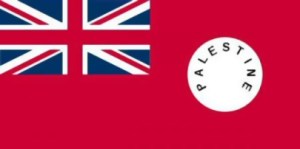 Public bodies in Britain are to be prevented from boycotting “unethical” goods, such as those from illegal Israeli settlements in Palestine, under a plan expected to be announced later Monday, local media reported.
Publicly funded institutions such as local municipalities and universities will face “stiff penalties” if they bar products from companies involved in the arms trade, fossil fuels, tobacco or West Bank settlements, The Independent newspaper reported, citing ministers.
The proposals – due to be announced by Cabinet Office Minister Matthew Hancock – are being put forward on the grounds that bans on products are harming community relations and fuelling anti-Semitism.
“The new guidance on procurement combined with changes we are making to how pension pots can be invested will help prevent damaging and counter-productive local foreign policies undermining our national security,” Hancock told The Independent.
Some public bodies around the U.K. have refused to buy goods from Israeli settlements in recent years and they would have to reverse those decisions under the plans.
In Leicester, a city in the East Midlands, elected officials agreed in 2014 that the municipality would not buy settlement produce. That year the devolved government in Scotland issued a notice discouraging trade and investment with settlements by Scottish councils.
The government’s plan was criticized as an attack on local democracy.
Amnesty International’s Economic Relations Program Director Peter Frankental said the proposal could encourage human rights abuses.
“All public bodies should assess the social and environment impacts of any company with whom they choose to enter into business relationships,” he told The Independent. “Where’s the incentive for companies to ensure there are no human rights violations such as slavery in their supply chains, when public bodies cannot hold them to account by refusing to award them contracts?”
Israeli settlements in the West Bank, East Jerusalem and the Golan Heights — lands occupied by Israel in 1967 — are considered illegal by the international community and a major impediment to peace with Palestinians.
British schoolboy questioned for wearing ‘Free Palestine’ badge
MEMO | February 15, 2016
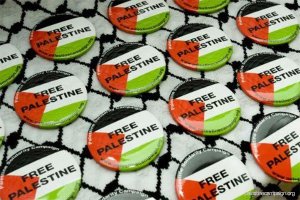 A schoolboy has been questioned by anti-terrorism police because he wore a “Free Palestine” badge to school, The Independent newspaper reported.
Rahmaan Mohammadi’s teachers at Challney High School for Boys in Luton referred him to police under Prevent – the controversial government anti-radicalisation programme.
The pupil was also wearing pro-Palestine badges and wristbands. He had previously requested permission to fundraise for children affected by the Israeli occupation.
Mohammadi said he had previously been warned by police not to talk about Palestine in school, and claimed that staff members approached his 14-year-old brother and pressured him to tell him to “stop being radical”.
Featured Video
The American Retreat from Vietnam
or go to
Aletho News Archives – Video-Images
From the Archives
Secret document reveals plans for civil war in Lebanon, Israeli false flags, and invasion
By Randi Nord | Geopolitics Alert | April 5, 2019
Beirut – During his visit with US Secretary of State, Mike Pompeo, Lebanese President Michael Aoun reportedly received a US-Israeli document detailing plans for creating a civil war in Lebanon with covert false flag operations and possible Israeli invasion.
Although the source of the document is Israeli and created in partnership with Washington, no one knows who presented it to Aoun. The Lebanese TV station, Al-Jadeed, initially reported the document on Lebanese TV and a video on its website. Geopolitics Alert translated the report for this article. … continue
Blog Roll
 Aletho News
- Department of War Awards $20.7 Billion Contract to Raytheon for Air-to-Air Missiles
- ‘Distance yourselves from Israel’: IRGC urges US population to question govt policies
- America’s Greenland deal has a radioactive backstory
- The RAF Fairford ‘terror plot’: Unpacking escalation in the UK echo-chamber
- EU Council Advances Chat Control 2.0 Scanning Proposal
- Ex-Greek MEP files complaint against Israeli spyware firm over alleged Pegasus surveillance
- Troubling ideas throughout the Torah, Talmud, Mishneh Torah and Tanya
- ‘Grave, alarming’: Iran mission on Trump’s UNGA ‘annihilation’ threats
- Najaf airport to reopen to Iranian flights within 24 hours: Ambassador
- From ‘How Will This End For Iran’ to ‘When America Walks Away’: A tale of two Economist covers
- If Americans Knew
- New Report: “Scholasticide and Genocide in Gaza: Assessment, Testimonies and Legal Analysis”
- Ex-Biden officials are desperate for a Gaza scapegoat
- Israeli “settlers” Invade Al-Aqsa; Pour Boiling Water on 75-Year-Old
- Israel Has Kidnapped Another American Teenager
- US arms sales to Israel worth $21.6 billion in 20 months
- Three Palestinians Killed in Israeli Attacks on Gaza
- Revealed: German “Anti-Semitism Expert” Driving Crackdown on Palestine Solidarity is Former Israeli Spy
- Egypt’s Warning to Israel Before Oct 7
- Israel’s siege signals another cruel winter for 1.8 million Gazans – Daily Update
- Netanyahu Asked UAE Leader to Deny Report on Oct. 7 Warning in Secret Visit, Sources Say
- No Tricks Zone
- New Study: Earth And Venus Surface Warmth Largely Explained By Convection And Lapse Rate, Not CO2 Or Radiation
- 2025 Nature Paper Claiming Worsening Global Drought Gets RETRACTED …Heavily Flawed
- New Study: ‘Global Drought Shows No Detectable Recent Acceleration Under Climate Warming’
- Economic Masterminds: German Socialists Suggest Taxing Productivity Gains Stemming From Using AI
- The South China Sea Has Not Been Cooperating With The Climate Change Narrative
- Energy Crisis: Germany Enters Heating Season With Historically Low Gas Reserve Fill Levels
- New Study: The Antarctic Ice Sheet Gained Mass From 2020-2024 Due To Staggering Snow And Ice Accumulation
- Study: Ocean Heating Rates From Thousands Of Years Ago ‘Dwarf’ Modern Ocean Heating Rates
- Climate Extremists Target, Attack Large-Scale Power Grid Infrastructure In Germany!
- New Study: Antarctic Ice Melt Has Contributed Less Than 1 Centimeter To Sea Level Rise In The Last 30 Years

