Ukraine war tolls death knell for NATO
BY M. K. BHADRAKUMAR | INDIAN PUNCHLINE | DECEMBER 25, 2022
The defining moment in US President Joe Biden’s press conference at the White House last Wednesday, during President Zelensky’s visit, was his virtual admission that he is constrained in the proxy war in Ukraine, as European allies don’t want a war with Russia.
To quote Biden, “Now, you say, ‘Why don’t we just give Ukraine everything there is to give?’ Well, for two reasons. One, there’s an entire Alliance that is critical to stay with Ukraine. And the idea that we would give Ukraine material that is fundamentally different than is already going there would have a prospect of breaking up NATO and breaking up the European Union and the rest of the world… I’ve spent several hundred hours face-to-face with our European allies and the heads of state of those countries, and making the case as to why it was overwhelmingly in their interest that they continue to support Ukraine… They understand it fully, but they’re not looking to go to war with Russia. They’re not looking for a third World War.”
Biden realised at that point that “I probably already said too much” and abruptly ended the press conference. He probably forgot that he was dwelling on the fragility of Western unity.
The whole point is that the western commentariat largely forgets that Russia’s core agenda is not about territorial conquest — much as Ukraine is vital to Russian interests — but about NATO expansion. And that has not changed.
Every now and then President Putin revisits the fundamental theme that the US consistently aimed to weaken and dismember Russia. As recently as last Wednesday, Putin invoked the Chechen war in the 1990s — “the use of international terrorists in the Caucasus, to finish off Russia and to split the Russian Federation… They [US] claimed to condemn al-Qaeda and other criminals, yet they considered using them on the territory of Russia as acceptable and provided all kinds of assistance to them, including material, information, political and any other support, notably military support, to encourage them to continue fighting against Russia.”
Putin has a phenomenal memory and would have been alluding to Biden’s careful choice of William Burns as his CIA chief. Burns was Moscow Embassy’s point person for Chechnya in the 1990s! Putin has now ordered a nation-wide campaign to root out the vast tentacles that the US intelligence planted on Russian soil for internal subversion. Carnegie, once headed by Burns, has since shut down its Moscow office, and the Russian staff fled to the West!
The leitmotif of the expanded meeting of the Board of the Defence Ministry in Moscow on Wednesday, which Putin addressed, was the profound reality that Russia’s confrontation with the US is not going to end with Ukraine war. Putin exhorted the Russian top brass to “carefully analyse” the lessons of Ukraine and Syrian conflicts.
Importantly, Putin said, “We will continue maintaining and improving the combat readiness of the nuclear triad. It is the main guarantee that our sovereignty and territorial integrity, strategic parity and the general balance of forces in the world are preserved. This year, the level of modern armaments in the strategic nuclear forces has already exceeded 91 percent. We continue rearming the regiments of our strategic missile forces with modern missile systems with Avangard hypersonic warheads.”
Equally, Defence Minister Sergei Shoigu proposed at Wednesday’s meeting a military build-up “to bolster Russia’s security,” including:
- Creation of a corresponding group of forces in Russia’s northwest to counter Finland and Sweden’s induction as NATO members;
- Creation of two new motorised infantry divisions in the Kherson and Zaporozhya regions, as well as an army corps in Karelia, facing the Finnish border;
- Upgrade of 7 motorised infantry brigades into motorised infantry divisions in the Western, Central and Eastern military districts, and in the Northern Fleet;
- Addition of two more air assault divisions in the Airborne Forces;
- Provision of a composite aviation division and an army aviation brigade with 80-100 combat helicopters within each combined arms (tank) army;
- Creation of 3 additional air division commands, eight bomber aviation regiments, one fighter aviation regiment, and six army aviation brigades;
- Creation of 5 district artillery divisions, as well as super-heavy artillery brigades for building artillery reserves along the so-called strategic axis;
- Creation of 5 naval infantry brigades for the Navy’s coastal troops based on the existing naval infantry brigades;
- Increase in the size of the Armed Forces to 1.5 million service personnel, with 695,000 people serving under contract.
Putin summed up: “We will not repeat the mistakes of the past… We are not going to militarise our country or militarise the economy… and we will not do things we do not really need, to the detriment of our people and the economy, the social sphere. We will improve the Russian Armed Forces and the entire military component. We will do it calmly, routinely and consistently, without haste.”
If the neocons in the driving seat in the Beltway wanted an arms race, they have it now. The paradox, however, is that this is going to be different from the bipolar Cold War era arms race.
If the US intention was to weaken Russia before confronting China, things aren’t working that way. Instead, the US is getting locked into a confrontation with Russia and the ties between the two big powers are at a breaking point. Russia expects the US to roll back NATO’s expansion, as promised to the Soviet leadership in 1989.
The neocons had expected a “win-win” in Ukraine: Russian defeat and a disgraceful end to Putin presidency; a weakened Russia, as in the 1990s, groping for a new start; consolidation of western unity under a triumphant America; a massive boost in the upcoming struggle with China for supremacy in the world order; and a New American Century under the “rules-based world order”.
But instead, this is turning out to be a classic Zugzwang in the endgame — to borrow from German chess literature — where the US is under obligation to make a move on Ukraine but whichever move it makes will only worsen its geopolitical position.
Biden has understood that Russia cannot be defeated in Ukraine; nor are Russian people in any mood for an insurrection. Putin’s popularity is soaring high, as Russian objectives in Ukraine are being steadily realised. Thus, Biden is getting a vague sense, perhaps, that Russia isn’t exactly seeing things in Ukraine as a binary of victory and defeat, but is gearing up for the long haul to sort out NATO once and for all.
The transformation of Belarus as a “nuclear-capable” state carries a profound message from Moscow to Brussels and Washington. Biden cannot miss it. (See my blog NATO nuclear compass rendered unavailing, Indian Punchline, Dec. 21, 2022
Logically, the option open to the US at this point would be to disengage. But that becomes an abject admission of defeat and will mean the death knell for NATO, and Washington’s transatlantic leadership goes kaput. And, worse still, major west European powers — Germany, France and Italy — may start looking for a modus vivendi with Russia. Above all, how can NATO possibly survive without an “enemy”?
Clearly, neither the US nor its allies are in a position to fight a continental war. But even if they are, what about the emerging scenario in the Asia-Pacific, where the “no limits” partnership between China and Russia has added an intriguing layer in the geopolitics?
The neocons in the Beltway have bitten more than what they could chew. Their last card will be to push for a direct US military intervention in the Ukraine war under the banner of a “coalition of the willing.”
Ukraine presidential aide calls for destruction of Iranian weapon factories
The Cradle | December 24, 2022
A presidential aide for Ukrainian leader Volodymyr Zelensky on 24 December called for the “liquidation” of Iranian weapons and drone manufacturing facilities and the arrest of those supplying the Islamic Republic with raw materials.
“Important to abandon nonworking sanctions, invalid UN resolutions concept, [and] move to more destructive tools,” Mykhailo Podolyak tweeted early Saturday.
Since September, Kiev has accused Tehran of supplying the Kremlin with hundreds of kamikaze drones allegedly used to hit Ukrainian infrastructure.
On Friday, the head of Ukraine’s spy agency claimed Russia had already launched around 540 drones at military and energy targets. For its part, Iran denies supplying Russia with drones since the start of the war.
The call for military action against Iran by Zelensky’s aide comes just days after officials in the Islamic Republic warned that its “strategic patience” towards Ukraine was running out.
“Iran’s patience will not be limitless,” Foreign Ministry spokesperson Nasser Kanaani said in a statement published by the state-run IRNA news agency on 22 December, where he also reiterated Tehran’s official position of “never supplying military equipment to any side to be used in the Ukraine war.”
“Mr. Zelenskyy should better learn a lesson from the fate of other world leaders who have invested hope on America’s support,” Kanaani concluded.
This statement was released hours after President Zelensky delivered an address at the US Capitol building, where he rebuked Iran for being an ally in Russia’s “genocidal policy” before describing Tehran as a “terrorist” state.
“Russia found an ally in this genocidal policy — Iran … Iranian deadly drones sent to Russia in the hundreds became a threat to our critical infrastructure. That is how one terrorist has found the other,” the Ukrainian leader told an exuberant gathering of US lawmakers before demanding Washington deliver more financial aid to fuel the war against Russia.
Since the start of the war, the White House has approved approximately $113 billion in economic and military assistance to Kiev. According to government spending data, over the last 12 months, Ukraine has been awarded more US taxpayer dollars than 40 US states.
A German-China-Russia triangle on Ukraine
BY M. K. BHADRAKUMAR | INDIAN PUNCHLINE | DECEMBER 24, 2022
The US Secretary of State Antony Blinken probably thought that in his self-appointed role as the world’s policeman, it was his prerogative to check out what is going on between Germany, China and Russia that he wasn’t privy to. Certainly, Blinken’s call to Chinese State Councilor and Foreign Minister Wang Yi on Friday turned out to be a fiasco.
Most certainly, his intention was to gather details on two high-level exchanges that Chinese President Xi Jinping had on successive days last week — with German President Frank-Walter Steinmeier and the Chairman of the United Russia Party and former Russian President Dmitry Medvedev respectively.
Blinken made an intelligent guess that Steinmeier’s phone call to Xi on Tuesday and Medvedev’s surprise visit to Beijing and his meeting with Xi on Wednesday might not have been coincidental. Medvedev’s mission would have been to transmit some highly sensitive message from Putin to Xi Jinping. Only last week, reports said Moscow and Beijing were working on a meeting between Putin and Xi Jinping later this month.
Steinmeier is an experienced diplomat who held the post of foreign minister from 2005 to 2009 and again from 2013 to 2017, as well as of Vice Chancellor of Germany from 2007 to 2009 — and all of it during the period Angela Merkel was the German chancellor (2005- 2021). Merkel left a legacy of surge in Germany’s relations with both Russia and China.
Steinmeier is a senior politician belonging to the Social Democratic Party — same as present chancellor Olaf Scholz. It is certain that Steinmeier’s call with Xi was in consultation with Scholz. This is one thing.
Most importantly, Steinmeier had played a seminal role in negotiating the two Minsk Agreements (2014 and 2015), which provided for a package of measures to stop the fighting in Donbass in the downstream of the US-sponsored coup in Kiev.
When the Minsk agreements began unravelling by 2016, Steinmeier stepped in with an ingenious idea that later came to be known as the Steinmeier Formula spelling out the sequencing of events spelt out in the agreements.
Specifically, the Steinmeier formula called for elections to be held in the separatist-held territories of Donbass under Ukrainian legislation and the supervision of the OSCE. It proposed that if the OSCE judged the balloting to be free and fair, then a special self-governing status for the territories would be initiated.
Of course, all that is history today. Merkel “confessed” recently in an interview with Zeit newspaper that in reality, the Minsk agreement was a western attempt to buy “invaluable time” for Kiev to rearm itself.
Given this complex backdrop, Blinken would have sensed something was amiss when Steinmeier had a call with Xi Jinping out of the blue, and Medvedev made a sudden appearance in Beijing the next day and was received by the Chinese president. Notably, Beijing’s readouts were rather upbeat on China’s relationship with Germany and Russia.
Xi Jinping put forward a three-point proposal to Steinmeier on the development of China-Germany relations and stated that “China and Germany have always been partners of dialogue, development, and cooperation as well as partners for addressing global challenges.”
Similarly, in the meeting with Medvedev, he underscored that “China is ready to work with Russia to constantly push forward China-Russia relations in the new era and make global governance more just and equitable.”
Both readouts mentioned Ukraine as a topic of discussion, with Xi stressing that “China stays committed to promoting peace talks” (to Steinmeier) and “actively promoted peace talks” (to Medvedev).
But Blinken went about his mission clumsily by bringing to the fore the contentious US-China issues, especially “the current COVID-19 situation” in China and “the importance of transparency for the international community.” It comes as no surprise that Wang Yi gave a stern lecturing to Blinken not to “engage in dialogue and containment at the same time”, or to “talk cooperation, but stab China simultaneously”.
Wang Yi said, “This is not reasonable competition, but irrational suppression. It is not meant to properly manage disputes, but to intensify conflicts. In fact, it is still the old practice of unilateral bullying. This did not work for China in the past, nor will it work in the future.”
Specifically, on Ukraine, Wang Yi said, “China has always stood on the side of peace, of the purposes of the UN Charter, and of the international society to promote peace and talks. China will continue to play a constructive role in resolving the crisis in China’s own way.” From the US state department readout, Blinken failed to engage Wang Yi in a meaningful conversation on Ukraine.
Indeed, Germany’s recent overtures to Beijing in quick succession — Chancellor Olaf Scholz’s high-profile visit to China last month with a delegation of top German CEOs and Steinmeier’s phone call last week — have not gone down well in the Beltway.
The Biden Administration expects Germany to coordinate with Washington first instead of taking own initiatives toward China. (Interestingly, Xi Jinping underscored the importance of Germany preserving its strategic autonomy.)
The current pro-American foreign minister of Germany Annalena Baerbock distanced herself from Chancellor Scholz’s China visit. Evidently, Steinmeier’s phone call to Xi confirms that Scholz is moving according to a plan to pursue a path of constructive engagement with China, as Merkel did, no matter the state of play in the US’ tense relationship with China.
That said, discussing peacemaking in Ukraine with China is a daring move on the part of the German leadership at the present juncture when the Biden Administration is deeply engaged in a proxy war with Russia and has every intention to support Ukraine “for as long as it takes.”
But there is another side to it. Germany has been internalising its anger and humiliation during the past several months. Germany cannot but feel that it has been played in the countdown to the Ukraine conflict — something particularly galling for a country that is genuinely Atlanticist in its foreign-policy orientation.
German ministers have expressed displeasure publicly that American oil companies are brazenly exploiting the ensuing energy crisis to make windfall profits by selling gas at three to four times the domestic price in the US. Germany also fears that Biden Administration’s Inflation Reduction Act building on foundational climate and clean energy investments may lead to the migration of German industry to America.
The unkindest cut of all has been the destruction of the Nord Stream gas pipeline. Germany must be having a fairly good idea as to the forces that were behind that terrorist act, but it cannot even call them out and must suppress its sense of humiliation and indignation. The destruction of the Nord Stream pipelines makes a revival of German-Russian relationship an extremely tortuous affair. For any nation with a proud history, it is a bit too much to accept being pushed around like a pawn.
Scholz and Steinmeier are seasoned politicians and would know when to dig in and hunker down. In any case, China is a crucially important partner for Germany’s economic recovery. Germany can ill afford to let the US destroy its partnership with China also, and reduce it to a vassal state.
When it comes to the Ukraine war, Germany becomes a frontline state but it is Washington that determines the western tactic and strategy. Germany estimates that China is uniquely placed to be a peacemaker in Ukraine. The signs are that Beijing is warming up to that idea too.
All Rights Reserved © 2022 Indian Punchline
IS ZELENSKY GOING TO BE DIEM-ED?
By Helmholtz Smith | Son Of the New American Revolution | December 22, 2022
If you think that Volodomyr Zelensky is the first leader in the throes of a civil war (yes, I know, Russia invaded, but the war in Ukraine at its roots is a civil war) to visit Washington, DC and speak to Congress and be compared with Winston Churchill, think again.
I thank my friend, Helmholtz Smith, for noting this historical precedent and finding the relevant video.
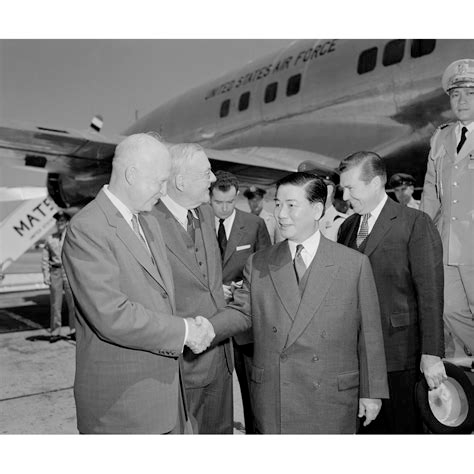
While I am sure Zelensky is flattered to be described as a modern day Churchill, he was not the first accorded that honor. Did you know that Ngo Dinh Diem also was the Vietnamese Winston Churchill?
In May 1961, U.S. Vice President Lyndon B. Johnson visited Saigon and enthusiastically declared Diệm the “Winston Churchill of Asia”. Asked why he had made the comment, Johnson replied, “Diệm’s the only boy we got out there.” Johnson assured Diệm of more aid in molding a fighting force that could resist the communists.
Diem learned the hard way that once your U.S. backers anoint you as the next Churchill, your days are numbered. Diem was murdered as a consequence of a U.S. engineered coup.
Zelensky’s Wednesday appearance in Washington, D.C. and the accompanying accolades equating him with Winston Churchill is prima facie evidence that most pundits and news readers in American are certifiable ignoramuses. For starters, Churchill, notwithstanding his love affair with imperialism, was a towering intellect. He authored scholarly books and established himself as one of the greatest rhetoricians of all times. He had a knack for turning a phrase and creating iconic moments.
Zelensky? I challenge anyone to recite one memorable moment from Zelensky’s snooze fest before the U.S. Congress. Banality thy name is Volodomyr. But Zelensky can do something that Churchill never did — he can play the piano with his penis. Gives new meaning to the phrase, “banging out a tune.”
Now, set aside the levity. Remember this week as another watershed moment in U.S. history. At the very moment that Washington embraced a malevolent dictator masquerading as a Nazified version of Fidel Castro, Russia sent an unmistakable message to the United States and Europe — Russia acknowledged that a state of war exists, pitting Russia against NATO and the United States, and it is building up its conventional and nuclear forces in anticipation of a future clash.
My dear friend Paul, a retired Navy SEAL Commander, asked me the essential, pertinent question this morning:
The question that continues to nag me, Larry, is most basic. What is the Ukraine-Russia War’s endgame? What do we see as a Ukraine win? Russia’s withdrawal? What does Ukraine see as a win – old borders restored, Russia minds its own business, etc.? What does Russia see as a win – total or partial domination of Ukraine? A western border pushback to NATO’s backyard? Then fortify it (build a fucking wall)? I don’t see focused discussion of the endgame. No one seems to be asking or answering the endgame question. It appears we (the US) are dumping $$ billions into Ukraine’s defense without telling the taxpayers what the money is expected to achieve – the endgame.
So what do you think? What is the endgame in Ukraine?
Former NATO commander urges long-range weapons for Ukraine
RT | December 23, 2022
Ukraine should be able to strike deeper into Russian territory, retired US general Philip Breedlove has said. The former supreme NATO commander for Europe made the remarks in an interview with the Russian-language Voice of America outlet published Thursday.
“I think we should review our rules regarding the types of weapons that we supply to Ukraine, and we should give them more opportunities to inflict deep strikes on the aggressor. With our restrictions, we have actually created a safe haven for the Russian military in its territory,” Breedlove stated.
Kiev has repeatedly demanded long-range weaponry from its Western backers amid the ongoing conflict with Russia. So far, however, the US and others have abstained from providing such weapons, citing fears of an escalation and an all-out war between Russia and NATO.
Breedlove has openly admitted that Ukraine is waging a war on behalf of the West against Russia, urging the lifting of any restrictions on arms use by Kiev.
“Ukraine is now fighting Russia on behalf of the entire Western world, and I would say to all our politicians: if you have already limited your actions in order to prevent our armies from fighting Russia, then you must do everything possible to provide help for Ukraine to defeat Russia.”
While Moscow has described the ongoing hostilities as a proxy-war with the West, the US and NATO as a whole maintain they are not a party to the conflict.
Amid the ongoing conflict, Breedlove has repeatedly produced war-like remarks in rallying support for Ukraine. Back in July, for instance, the former general encouraged Kiev to strike the Crimean Bridge, which links the peninsula to Russia’s mainland. The bridge was a “legitimate target” for Ukraine to strike, Breedlove claimed, adding that its destruction would be a “huge blow” to Moscow.
The bridge was heavily damaged in a major explosion early in October. Moscow has described the incident as a “terrorist attack,” blaming it on Kiev and its Western backers. While the incident has been widely celebrated in Ukraine by common citizens and top officials alike, Kiev has denied its involvement.
The Crimean Bridge blast, as well as other saboteur attacks on Russian soil, attributed to Ukrainians, ultimately triggered a massive bombing campaign against Ukraine’s critical infrastructure. Moscow maintains the goal of the campaign is to damage Kiev’s warfighting capabilities.
Will Korea send its shells to Ukraine, and more importantly, which Korea?
By Konstantin Asmolov – New Eastern Outlook – 23.12.2022
Over the past few days, the author has come across several fake news reports on Korean arms supplies to Ukraine. Both from the North and the South.
On the one hand, there is ongoing speculation in the West that the DPRK is allegedly supplying or intends to supply Russia with munitions for use in Ukraine, although such speculation is only true if the DPRK has secretly already built a teleportation machine. Well, or this is a case of “bold assumptions.”
However, Pentagon Press Secretary Pat Ryder reiterated on November 15 that the United States is working with its allies and partners to monitor North Korea’s supply of artillery shells to Russia. The general declined to comment on whether the US had tried to prevent this.
On November 24, during an exclusive interview with the Yonhap News Agency, First Deputy Chairman of the Verkhovna Rada of Ukraine Oleksandr Kornienko said that military cooperation between North Korea and Russia cannot be ruled out.
In a webinar hosted by the Washington-based think tank Foundation for Defense of Democracies on December 2, 2022, Assistant Secretary of State for International Security and Nonproliferation Eliot Kahn not only claimed that Moscow was doing little to enforce Security Council resolutions on North Korea, but specifically noted that Russia allegedly continues to allow numerous North Korean workers to earn income in its jurisdiction in defiance of the UN Security Council resolution and is in the process of acquiring prohibited munitions from the North to support the invasion of Ukraine. As always, no evidence was presented.
In addition to fake news about shells, Western propaganda floods the media with overwhelming amounts of all kinds of disinformation. First, it is “information” about the alleged recruitment of North Korean workers: in the summer and fall, the South Korean Daily NK reported several times that the DPRK was actively recruiting more and more workers to send to eastern Ukraine.
Another fake story was launched by Radio Free Asia, which, citing unnamed sources in North Korea, claimed that three Pyongyang factories were sewing uniforms for the Russian military engaged in the special military operation in Ukraine using Russian fabric. “Journalists” even had the audacity to send a comment to the Russian Embassy, after which, on November 12, the diplomatic mission’s social media page advised the journalist to choose a career as a science fiction writer.
On December 7, Spokesperson for the US Department of State Ned Price again told that Russia continues to seek weapons from North Korea and Iran for use in its war against Ukraine. And again – with no evidence. Against this backdrop, the National Security Council Coordinator for Strategic Communications John Kirby seems a paragon of honesty: “We know that the Russians continue to express interest in obtaining North Korean artillery…. (but) I don’t believe we can say today that we’ve seen definite indications that that transaction has been consummated.”
However, there is much more interest in the information from the other side. It tells the story that South rather than North Korean weapons may appear in the conflict zone.
In September 2022, the Czech publication iDNES claimed that the US was preparing a new scheme to supply Ukraine with weapons: allegedly, a certain Czech arms company would soon receive for transfer to Ukraine South Korean Shingung missile systems (KP-SAM) manufactured by LIG Nex1, designed to counter Russian drones and attack aircraft. The $2.9 billion deal is paid for from the US budget, but has yet to be implemented due to the South Korean government’s official policy of non-interference. On October 2, 2022, the ROK media also wrote about this, although claiming that it is not true: the Czech Republic allegedly has South Korean weapons, but acquired a long time ago, the US started to re-buy them to send them from the Czech Republic to Ukraine already in its own name.
In this context, speaking at a plenary session of the Valdai international discussion club on October 27, Russian President Vladimir Putin said that the decision to supply arms and ammunition to Ukraine “will destroy our relations”. And this can refer to both direct and indirect supplies, when South Korean weapons are sent via third countries or go as replacements for those supplied to Ukraine. Vladimir Putin said that Russia was aware of the Republic of Korea’s plans to supply arms and ammunition to Ukraine, referring to indirect supplies via Poland.
The next day, on October 28, ROK President Yoon Suk-yeol reiterated that the country had never provided lethal weapons to Ukraine; although aid is a matter of “South Korean sovereignty,” Seoul tries to maintain peaceful and good relations with all countries, including Russia.
However, on November 11, the Wall Street Journal, citing unnamed US officials, reported that the US was planning to purchase 100,000 155mm artillery shells from the ROK for subsequent transfer to Ukraine, while previously the US military contingent in South Korea (USFK) had already handed over some of its ammunition in the ROK to Kiev (https://newsis.com/view/?id=NISX20221111_0002082163).
On the same day, the ROK Ministry of Defense confirmed that Seoul and Washington were discussing supplies of shells to make up for shortages in US arsenals, and the issue was discussed during talks between the defense ministers of the two countries in early November. But the talks are based on the assumption that the ammunition will be used by the US Army.
The latest fake story, that the US is planning to buy 100,000 shells for 155mm artillery pieces from the ROK for supply to Ukraine, was reported by CNN in late November, citing an unnamed Pentagon official. The CNN news comes amid reports that the US is running out of weapons to send to Kiev, and one of the problems is the 155mm artillery ammunition currently being used on the battlefields in Ukraine. As the ROK media wrote, compared to the US, South Korea’s weapons stockpile is quite large, given that South and North Korea are technically still at war, which helps South Korean manufacturers to continue producing ammunition. In addition, Yoon Suk-yeol sees arms exports as one way out of the emerging economic crisis. He said the ROK will aim to become the world’s fourth largest arms exporter by 2027, taking at least 5% of the industry market.
Commenting on the announcement, Col. Moon Hong-sik of the ROK Ministry of Defense reiterated on November 28 that the US is the end user of South Korean-made artillery shells. Similar reports are citing unnamed officials, but in this case more precise information is needed.
Thus, South Korea does not deny supplying weapons to the US or other countries, while a number of the author’s local respondents, following the South Korean President, emphasize that there will be no direct supplies to Ukraine, the US is the end user, and the deal with Poland even provides for a ban on transferring these weapons to Ukraine.
Of course, the author does not know whether the contract between Poland and the ROK restricts the supply or transfer of arms to third parties. But the whole situation does not bode well.
Although the ROK has been placed on Russia’s list of unfriendly countries, it remains the friendliest of the unfriendly. Without wishing to zero out economic cooperation, Seoul says it is “together with the international community” on the Ukrainian issue, but is not particularly keen to jump ahead. Moreover, some South Korean companies are not only reluctant to leave the Russian market, but are buying up the property of those firms that have actually left.
Such defiance is certainly not to the liking of Washington, which would like relations between Moscow and Seoul to be as messy as those with other US allies. There is a sense that the US is deliberately pushing the ROK and Russia towards a bigger rift, and the fake about “arms deal” in the US media, citing secret sources and without confirmation, was intended to drive an additional wedge into relations between Seoul and Moscow.
Moreover, knowing Moscow’s concerns about the possibility of South Korean arms supplies to Ukraine, Washington is in a position to stage a provocation, realizing that Moscow might be furious and not particularly concerned about whether Seoul knew where the US weapons were going or whether it was “set up.” After all, such a move would be perceived by Moscow as crossing red lines and would be a reason for retaliation.
The possibility of this, incidentally, is also recognized by South Korean experts. On November 11, Jeh Sung-hoon, head of the Russian Studies Department at the University of Foreign Studies, told RIA Novosti that Washington is seeking artillery supplies from the ROK not for military assistance to Ukraine but to chill relations between Seoul and Moscow and make South Korea even more deeply involved in the anti-Russian front.
Park Byung-hwan, a former Consul Ambassador at the South Korean Embassy in Moscow and now director of the South Korean Institute for Eurasian Strategic Studies, also told RIA Novosti that in the current circumstances there is a possibility of “hidden” supplies of South Korean arms to Ukraine, unless there are direct instructions in the contract from Seoul not to send weapons there.
Shin Jong-woo, a senior researcher at the Korea Defense and Security Forum, believes that “if the US purchases the artillery shells from us based on an agreement that the US will be the end user, but it changes its mind later in order to transfer them to Ukraine, we cannot take issue with the decision after selling them.” It is absurd to be interested in who the end user will be as “… exporting countries have few options even if end users do something illegal with their exports.”
On the contrary, Victor Cha, a well-known hawk, who is in charge of Korean affairs at the Center for Strategic and International Studies in Washington, writes directly that “the Yoon government should consider arming Ukraine in earnest. Russia has already sanctioned South Korea for joining multilateral sanctions against it, and now, it is already accusing Seoul of doing so. Thus, the Yoon government should go ahead and provide such support to the besieged country as requested by President Volodymyr Zelensky of Ukraine in his speech to the South Korean National Assembly in April 2022.”
Thus so far, despite the media fuss, none of the fakes about Korean weapons in Ukraine has been confirmed with regard to either the North or the South. Here’s hoping that such propaganda will never become a reality.
Konstantin Asmolov, PhD in History, leading research fellow at the Center for Korean Studies of the Institute of China and Modern Asia, the Russian Academy of Sciences.
Russian Ammonia Supplies to Needy Nations Blocked Exclusively by Ukraine, Foreign Ministry Says
By Kirill Kurevlev – Samizdat – 23.12.2022
Exports of Russian food and fertilizers are part of the Black Sea grain deal with Ukraine but are not being carried out. At the same time, the UN has assured that the restrictions would be lifted altogether.
Kiev is blocking supplies of Russian ammonia, Moscow’s Foreign Ministry has said, noting that Ukraine is the only obstacle to the supply of fertilizers to countries in need.
“The resumption of ammonia supplies is blocked only and exclusively by Kiev (…) we are talking about seven million tonnes of raw materials per year, sufficient to produce 25 million tonnes of fertilizer to feed 150 million people,” the ministry said.
According to the ministry, similar examples “clearly show” which side in the conflict “not only does not help ensure global food security, but speculates on the needs of the countries of Africa, Asia and Latin America, including in fertilizers, pursuing neo-colonial or narrowly selfish goals.”
Kiev, however, has claimed that Russia sabotaged the grain deal, despite Ukraine being the country which used the humanitarian corridor for military purposes. The diplomatic body said that it increasingly hears criticism about the insufficiently effective implementation of the agreement, with Kiev blaming Russia, “apparently forgetting that it was Kiev’s actions to use the maritime humanitarian corridor for military purposes that led to the temporary suspension of the initiative from October 29 to November 2 and its virtual failure due to the lack of key security guarantees.”
In this regard, the Foreign Ministry recalled that Russia began to fulfill the terms of the deal in good faith immediately after the signing of the agreements in Istanbul on July 22.
The ministry also recalled that after the expiration of the “Black Sea initiative” for the export of Ukrainian food from the ports of Odessa, Yuzhny and Chernomorsk on November 18, Russia did not object to its extension for another 120 days, until March 18, 2023.
“We made this difficult decision based on our commitment to our obligations to ensure global food security and in strict linkage with the achievement of real returns from the implementation of the Russia-UN Memorandum on the promotion of domestic agricultural exports, which is the second part of the Istanbul “package,” the diplomatic department noted.
The Russian diplomatic body emphasized that there has been no real progress in the implementation of the Russia-UN Memorandum on the normalization of domestic agricultural exports so far.
“Despite the exemptions for food and fertilizer declared by the West, including Europeans as part of the adoption of the 9th package of anti-Russian sanctions, Russian producers and suppliers continue to face blocking bank payments, prohibitive insurance rates and denial of access to ports,” the statement said. “Thus, the matter does not go beyond words and casuistry from Washington, Brussels and London, and in the meantime, countries in need continue to suffer not only from the crisis in the affordability of food and fertilizers but also from their physical shortage.”
It was also stressed that there are still serious distortions in the implementation of the Black Sea Initiative both in the geography of food recipients and in the range of exported products.
“Despite its declared humanitarian nature, cargoes are sent mainly to countries with a high level of income, while poor states receive no more than 3%. At the same time, 70% of the cargoes are fodder corn and feed grains that the needy, they say, can buy food at lower prices,” the ministry said.
Earlier, in an interview with Sputnik, Vladimir Olenchenko, a senior research fellow at the Center for European Studies, Institute of World Economy and International Relations of the Russian Academy of Sciences, said that the West purposefully obstructs fertilizer supplies under the Black Sea grain agreement in an effort to harm Russia’s international standing and compel African nations to purchase grain from Europe and the US.
Given the serious shortage of fertilizer supplies to needy African countries suffering from a food crisis, Moscow has promised to supply fertilizer to the continent for free.
The Black Sea grain deal was reached on July 22 between Russia, Ukraine, Turkey, and the United Nations to create a humanitarian maritime corridor for ships exporting food and fertilizer from Ukrainian Black Sea ports. Vladimir Putin has asserted on numerous occasions that the majority of the ships bringing grain from Ukraine did not arrive in the world’s poorest nations but rather ended up in Europe. Putin has also expressed his worries over the failure of Russian goods to reach international markets as promised by the deal.
North Korea rejects ‘absurd’ US claim
RT | December 23, 2022
The Democratic People’s Republic of Korea on Friday dismissed reports that it had supplied Russia with weapons as “the most absurd red herring.” The White House and the US envoy to the UN claimed to have “confirmed” the transfer, which allegedly took place last month.
A spokesman for the North Korean foreign ministry said the “false report that the DPRK offered munitions to Russia is the most absurd red herring, which is not worth any comment or interpretation,” according to the state news agency KCNA. “The DPRK remains unchanged in its principled stand on the issue of ‘arms transaction’ between the DPRK and Russia which has never happened.”
He added that the international community should “focus on the US criminal acts of bringing bloodshed and destruction to Ukraine by providing it with various kinds of lethal weapons and equipment on a large scale,” instead of the “groundless theory” that Pyongyang was selling weapons to Russia, which he said was “cooked up by some dishonest forces for different purposes.”
On Thursday, the White House National Security Council spokesman John Kirby claimed that North Korea had delivered “infantry rockets and missiles to Russia for use by Wagner” in November. Kirby also claimed the private military company has 50,000 troops in Ukraine and is “emerging as a rival power center to the Russian military and Russian ministries.”
Linda Thomas-Greenfield, the US ambassador to the UN, also said Washington had “confirmed” the transaction and that she will bring it up at an upcoming Security Council meeting. Asked about it at a press conference on Thursday, the UN secretary-general’s spokesman Stephane Dujarric said he had “not seen that statement.”
The questions of North Korean arms exports need to be addressed through the UN sanctions regime, Dujarric said, adding, “I have no further information.”
Iran has likewise rejected US and Ukrainian claims that it sold missiles and drones to Russia, warning Ukrainian President Vladimir Zelensky on Thursday that its “strategic patience will not be unlimited towards unfounded accusations.”
Meanwhile, the US Senate has approved another $45 billion in aid for Kiev in 2023, a day after President Joe Biden announced $1.85 billion worth of weapons. The Pentagon has publicly disclosed it had sent over $20 billion in military aid to Ukraine just this year, though Biden insists this does not make the US or its allies a party to the conflict with Russia.
US Entry Into the Ukraine War?
BY MIKE WHITNEY • UNZ REVIEW • DECEMBER 22, 2022
“The war in Ukraine is not a Call of Duty fantasy. It is an enlargement of the human tragedy that NATO’s eastward expansion created. The victims do not live in North America. They live in a region that most Americans can’t find on a map. Washington urged the Ukrainians to fight. Now Washington must urge them to stop.” Colonel Douglas MacGregor, The American Conservative
Volodymyr Zelensky did not fly across the Atlantic so he could deliver a speech to the US Congress. That was not the purpose of his trip. The real objective was to produce a galvanizing event that would create the illusion of broad-based public support for the war. That is why the speech was broadcast on all the mainstream media channels and that is why Congress repeatedly greeted Zelensky with raucous applause. Once again, the cadres of voracious elites who control the political levers of power in America, are determined to drag the country to war, which is why they portray a cross-dressing “thug in a gym suit” as a Churchillian figure of unshakable principles. It’s all public relations. It’s all an attempt to garner support for a conflict which will soon involve young American men and women who will be asked to die so that wealthy elites can maintain their grip on global power.
Zelensky’s trip to Capitol Hill was timed to coincide with Putin’s winter offensive, which is expected to crush the Ukrainian Armed Forces and bring the war to a swift end. The Biden administration understands the situation but does not have weaponry or manpower to impact the outcome. That doesn’t mean, however, that Washington doesn’t have a plan for prolonging the conflict or beefing up its combat forces. It does have a plan, that is evident by the way the administration has rejected negotiations at every turn. What that tells us is that Washington is still committed to defeating Russia whatever the cost. In practical terms, that means that the US must create an incident that will serve as a justification for escalation. The incident could be related to Zelensky’s unexpected trip to Washington or, perhaps, it could be linked to the detonation of a nuclear device somewhere in Ukraine. Check out this excerpt from an article at RT:
The risk of Kiev attempting to build a so-called ‘dirty bomb’ remains, a senior Russian diplomat has said….
“Ukraine has the potential necessary to make a ‘dirty bomb,’ it doesn’t take much effort. Especially since Ukraine has been a nation advanced in nuclear technology since the Soviet times, [and] has many technologies and expertise,” Mikhail Ulyanov told journalists on Wednesday, as quoted by RIA Novosti…
General Igor Kirillov, the commander of the Russian military branch responsible for protecting troops from weapons of mass destruction, claimed in October that Kiev was “at the final stage” of producing a dirty bomb.” (“Radioactive threat from Kiev persists – Moscow“, RT)
The means by which a false flag is carried out, is completely irrelevant. What matters is that — according to political analyst John Mearsheimer– “The United States is in this to win”, that is, the US foreign policy establishment is not prepared to let the Russian army prevail in Ukraine and impose its own settlement. They’re going to find a way to intensify the conflict and bring foreign troops into the theater. That’s the objective, and that’s what they’ll do once they’ve figured out an excuse for escalation. Bottom line: The US is not going to throw in the towel and call it quits. This is a long-term project that could drag on for years if not decades.

Political analyst Kurt Nimmo thinks that NATO might join the fighting. Here’s a short blurb from Nimmo’s latest at Global Research :
If Olga Lebedeva and Pravda.ru can be believed, NATO is on the verge of entering the war in Ukraine.
“Such announcements were heard from officials of the Polish Ministry of Defence, the General Staff of the NATO alliance, officers of the French army and (of course) the Ukrainian Ministry of Defence,” according to Lebedeva.
“The main reason would be the very next Russian general offensive that NATO is planning and which according to it would decimate the Ukrainian army not only in the Donbass but also on the Kiev side (many Russian units are in combat situation in Belarus at the borders with Ukraine),” explains Rusreinfo.ru, a Russian website.
But NATO has always been very clear: Ukraine CANNOT LOSE. For Washington, the only solution would therefore be for NATO forces to enter Ukraine, hoping that this will end the Russian offensive. The calculation is that Vladimir Putin will not want to directly face NATO with the possible (nuclear) consequences, and will therefore then retreat.” (“NATO Decides to Attack Russia in Ukraine– Ukraine is unable to defeat Russia. The next step is for direct NATO involvement“, Kurt Nimmo, Global Research )
Nimmo could be right but, maybe not. It appears to me that NATO is hopelessly divided on the issue. A number of NATO countries will not join in a war against Russia regardless of the circumstances or the amount of pressure from the White House. The more likely scenario was presented by Colonel Douglas MacGregor who laid it out in an article at The American Conservative on Tuesday. Here’s what he said:
The Biden administration’s unconditional support for the Zelensky regime in Kiev is reaching a strategic inflection point not unlike the one LBJ reached in 1965… Like South Vietnam in the 1960s, Ukraine is losing its war with Russia… The real danger now is that Biden will soon appear on television to repeat LBJ’s performance in 1965, substituting the word “Ukraine” for “South Vietnam”:
“Tonight, my fellow Americans I want to speak to you about freedom, democracy, and the struggle of the Ukrainian people for victory. No other question so preoccupies our people. No other dream so absorbs the millions who live in Ukraine and Eastern Europe… However, I am not talking about a NATO attack on Russia. Rather, I propose to send a U.S. led coalition of the willing, consisting of American, Polish, and Romanian armed forces into Ukraine, to establish the ground equivalent of a “no-fly zone.” The mission I propose is a peaceful one, to create a safe zone in the Western most portion of Ukraine for Ukrainian Forces and refugees struggling to survive Russia’s devastating attacks…”
NATO’s governments are divided in their thinking about the war in Ukraine. Except for Poland and, possibly, Romania, none of NATO’s members are in a rush to mobilize their forces for a long, grueling war of attrition with Russia in Ukraine. No one in London, Paris, or, Berlin wants to run the risk of a nuclear war with Moscow. Americans do not support going to war with Russia, and those few who do are ideologues, shallow political opportunists, or greedy defense contractors.” (“Washington is Prolonging Ukraine’s Suffering“, Colonel Douglas MacGregor, The American Conservative )
This, I think, is the much more plausible scenario. The Biden Administration will enlist a handful of countries that agree to troop deployments to west Ukraine ostensibly for humanitarian reasons. At the same time, they will allow disparate Ukrainian forces to continue the random shelling of Russia-controlled areas as well as locations on Russian soil. There will undoubtedly be an effort to control the skies over west Ukraine (no-fly zone) and to conduct attacks on Russian formations in the east. Most important, vital supplylines from Poland will remain open to accommodate the flow of men, munitions and lethal weaponry to the front. MacGregor appears to anticipate these developments given his comments at the beginning of the article. Here’s what he said:
During a speech given on November 29, Polish Vice-Minister of National Defense (MON) Marcin Ociepa said: “The probability of a war in which we will be involved is very high. Too high for us to treat this scenario only hypothetically.” The Polish MON is allegedly planning to call up 200,000 reservists in 2023 for a few weeks’ training, but observers in Warsaw suspect this action could easily lead to a national mobilization.
Meanwhile, inside the Biden administration, there is growing concern that the Ukrainian war effort will collapse under the weight of a Russian offensive. And as the ground in Southern Ukraine finally freezes, the administration’s fears are justified. In an interview published in the Economist, head of Ukraine’s armed forces General Valery Zaluzhny admitted that Russian mobilization and tactics are working. He even hinted that Ukrainian forces might be unable to withstand the coming Russian onslaught.” (“Washington is Prolonging Ukraine’s Suffering“, Colonel Douglas MacGregor, The American Conservative )
The plan to lure Russia into a war in Ukraine goes back at least a decade. And what we know now from comments by former German Chancellor Angela Merkel, is that Washington never sought a peaceful resolution to the conflict but worked tirelessly to install a Russia-hating regime in Kiev that would help it to prosecute its war on Russia. The gathering of nearly 600,000 Russian combat troops in or around Ukraine threatens to derail Washington’s strategy and end the war on Russia’s terms. Washington can’t allow that to happen. It cannot allow the world to see that it was beaten by Russia. Thus, Washington must pursue the only option left to them, the deployment of US troops to Ukraine.
Perhaps, cooler heads will prevail and the administration will pull back from the brink, but we think that is highly unlikely. We think the decision has already been made: We think the United States is going to war with Russia.

Ukraine’s War with Russia Has Nothing to Do With Freedom
By Jacob G. Hornberger | FFF | December 22, 2022
Yesterday, Ukrainian President Volodymyr Zelensky appeared before a joint session of Congress to plead for more billions of dollars of U.S. taxpayer money to help Ukraine in its war with Russia.
One particular sentence in Zelensky’s address caught my attention: “We Ukrainians will also go through our war of independence and freedom with dignity and success.” The sentence prompted an enormous applause from the members of Congress.
There is one big problem with Zelensky’s statement, however. The war between Ukraine and Russia has nothing to do with freedom. Instead, it has everything to do with NATO, the old Cold War dinosaur that ginned up the crisis that led to this highly deadly and destructive war.
Operating through NATO, the Pentagon was insistent on incorporating Ukraine into NATO. Zelensky too wanted Ukraine to join NATO. For at least the last 25 years, Russia has made it clear that Ukraine’s joining NATO was a “red line” for Russia. The last thing Russia wanted was Pentagon bases and nuclear missiles installed on Russia’s border, just as the last thing that the Pentagon would want is Russian bases and nuclear missiles stationed in Cuba. Russia consistently made it clear that if Ukraine crossed that “red line,” Russia would invade Ukraine to prevent Ukraine from joining NATO.
Thus, everyone knew what the stakes were if the Pentagon, NATO, and Ukraine persisted in making Ukraine a member of NATO. They knew that if they persisted, Russia would end up invading Ukraine.
Knowingly, deliberately, and intentionally ignoring and disregarding Russia’s “red line,” the Pentagon, NATO, and Ukraine continued down the road toward making Ukraine a member of NATO, knowing full-well that that would result in a Russian invasion of Ukraine to prevent that from happening.
Thus, prior to Russia’s invasion of Ukraine, Zelensky was faced with a fateful choice. If he decided that Ukraine would not join NATO, there would be no Russian invasion of Ukraine. If he decided that Ukraine would join NATO, there would be a Russian invasion of Ukraine, one that was certain to result in massive death and destruction on both sides.
Zelensky chose the second option. In making that choice, he was saying that the deaths and suffering of tens of thousands of his citizens and the destruction of his country were worth Ukraine’s joining NATO. That’s quite a choice. Another president might have decided the massive death and destruction that would be unleashed in such a war would not be worth joining NATO.
In any event, the war between Russia and Ukraine is not about freedom, as Zelensky said to Congress. It’s about Zelensky’s wish to have Ukraine join NATO.
And let’s keep in mind that NATO was part of the old Cold War racket that was used to justify the conversion of the U.S. government from a limited-government republic to a national-security state, which is a type of governmental structure that wields totalitarian-like powers. When the Cold War racket suddenly came to an end, the old Cold War dinosaur NATO should have gone out of existence, just as the Warsaw Pact did.
During the entire Cold War racket, the fear that the Russians and other communists were coming to get us was used to justify ever-increasing budgets for the national-security establishment and its ever-growing army of voracious “defense” contractors who loved feeding at the public trough. The Pentagon and its “defense” contractors were clearly not ready to let go of their Cold War cash cow.
That’s what NATO’s absorption of former members of the Warsaw Pact was all about. By installing U.S. military forces and missiles ever closer to Russia’s border, the Pentagon’s aim was to incite a Russian reaction, which would then bring back the lucrative Cold War racket. Thus, the Pentagon knew exactly what it was doing when it persisted in absorbing Ukraine into NATO. And it clearly got what it was aiming for — a renewal of its Cold War racket and ever-increasing taxpayer-funded largess.
One of the unanswered questions is how much of the $100 billion in U.S. taxpayer money that U.S. officials have given to the Ukrainian government has been used to line the pockets of Ukrainian officials. After all, Ukraine is one of the most corrupt regimes in the world. There is no reason to believe that the Ukraine-Russia war has suddenly converted Ukrainian officials into honest and honorable government officials.
Finally, there is something else to consider that is of critical importance. The federal government’s debt now exceeds $31 trillion. U.S. officials, led by President Biden, continue spending money like there was no tomorrow. That includes almost a trillion dollars being given to the Pentagon to keep us “safe” from the threats that it itself induces. Ever-increasing federal spending, debt, taxation, and monetary destruction constitutes a grave threat to the freedom and well-being of the American people. In pleading with Congress to give the Ukrainian government even more billions of dollars of U.S. taxpayer money, it’s too bad that President Zelensky gives short shrift to the continued destruction of our own freedom and well-being here at home.
Olaf Scholz’s foreign policy manifesto in ‘Foreign Affairs’ magazine
By Gilbert Doctorow | December 21, 2022
When I first read through Olaf Scholz’s comprehensive foreign policy essay “The Global Zeitenwende” recently published in Foreign Affairs magazine, it brought to mind another sensational manifesto from an international leader in the news published by this very same authoritative journal. That was an essay ‘written’ by then Prime Minister of Ukraine Yulia Tymoshenko for the late spring 2007 issue.
There are several things these two essays have in common aside from centrality of Ukraine and of Russian malevolence in their thinking about the world. Publication of the Tymoshenko article gave rise to accusations of plagiarism against her for lifting some well known phrases from the writings of Henry Kissinger without attribution. In the case of Scholz, there is a more subtle kind of ‘plagiarism,’ in that he, like Tymoshenko, is clearly not the sole author of the text published over his name. I will go into these matters in some detail below.
Another common feature is the extraordinary way in which these essays were crafted so as to slot into the susceptibilities and preferences of the American foreign policy establishment. The authors seem to have checked every possible box whether or not it was directly relevant to their overriding argument or to the nations they represent.
A third commonality is apt timing of the publication. In the case of Tymoshenko, her fierce denunciation of Russia in which she deployed every calumny invented by the American Neo-Conservatives came just a few months after Vladimir Putin delivered his now famous speech on Russian claims against the US-led West at the Munich Security Conference. The sheer temerity of the Russian leader whose speech was witnessed by Senator John McCain and other American political worthies seated in the front rows left the U.S. Administration of George W. Bush infuriated and confounded over how to respond. As soon as they found their footing and their voice, they initiated what has ever since been a vast Information War directed against Russia.
Tymoshenko’s article in Foreign Affairs was the first cannon shot in this war of words. The publishers were most obliging, because such service to the State Department in disseminating a document they had to know was fake was the price they willingly paid to receive privileged access to high government officials on a regular basis and thereby provide value to their subscriber base at home and abroad numbering in the hundreds of thousands that makes FA the most widely read journal of its kind.
By giving pride of place to Scholz’s foreign policy manifesto today, when the will and strength of European solidarity with the USA over the war in Ukraine is top of mind and is being questioned by some in the mainstream media, FA continues this line of service to the powers that be.
******
I dealt with the peculiarities of the Tymoshenko manifesto in an essay dated 10 November 2009 that I published on my blog and then republished as a chapter (29) in my 2010 book Stepping Out of Line. In that piece, I used close textual analysis to show that many turns of speech and lines of thinking were utterly inconsistent with supposed authorship by a native Ukrainian of her generation while they were second nature to American political commentators.
In this same essay, I emphasized that the kind of misrepresentation practiced in the publication of Tymoshenko’s text by FA was not a one-off development in America’s war of words on Russia. I pointed to an Open Letter to the Administration of President Barack Obama published in the Polish daily Gazeta Wyborcza on 16 July 2009 that was signed by Lech Walesa, Vaclav Havel and other well known thinkers and former statesmen who were behind the liberation of Eastern Europe from Soviet domination in the late 1980s. This appeal to the American President to ensure greater U.S. attention be given to the security of their region had a number of explicitly Russophobe points, including the insistence that Russia’s policy towards their countries was revisionist and threatening. Russia was said to be using overt and covert economic warfare in pursuit of its aims.
The context for the Open Letter was Barack Obama’s visit to Moscow a couple of weeks earlier to pursue the ‘reset’ of relations and achieve a rapprochement on several issues of strategic importance to the United States. Mainstream media, including The New York Times, carried the Open Letter.
The American public took it to be a cri de coeur of freedom fighters. In reality it was concocted by a team of ghost writers under the supervision of the German Marshal Fund and its boss Ron Asmus. This later came out in an expose written by Jacob Heilbrunn for the journal The National Interest.
For all of the above reasons, my first thoughts about possible American authorship of the Scholz manifesto had to be tested. However, the verdict of two German-speaking experts who examined the texts at my request was that German, not English was the source language and that the points made here were in line with what Scholz has said in speeches he has delivered around Germany in the past few weeks. And yet, I insist, that in its particulars the manifesto was made to appeal to the American readership of FA.
******
Olaf Scholz is notable for his cunning. In short order, as the days of the Merkel chancellorship faded, he leveraged his prominence as a regional politician (mayor of Hamburg) into national standing. And when the Social Democrats emerged from the last elections as the leading party, though one still without a majority in the Bundestag, he succeeded in putting together a governing coalition relying on The Greens. This fox of a man surely recognized The Greens as politically primitive and so, malleable to his purposes, whereas forging yet another Grand Coalition with the CDU/CSU, who would be peers in terms of experience in federal cabinets, would have limited his power. Indeed, the outcome has been a federal government in which the highly visible posts of Economic Affairs (Robert Habeck) and Foreign Affairs (Annalena Baerbock) were filled with utterly inexperienced and incompetent high-ranking Greens politicians whose missteps and foolish statements in public space have diminished the Greens’ weight in a government that the Chancellor dominates.
However, cunning is not the same thing as intellectuality. The author(s) of the manifesto published in Foreign Affairs magazine show a mastery of the skills required to write effective propaganda that you acquire in a political science milieu not in an administration responsible for governing one city on a day to day basis, as was the milieu of Herr Scholz for decades before he rose to the chancellorship.
Am I being unfair or pedantic in calling Scholz a plagiarist when he put his name to a paper written by a team under his direction possibly with inputs from overseas friends in the USA? Isn’t that what political leaders do regularly when they stand on the dais and read speeches that were written by their professional speech writers?
Yes, but speeches are not the same thing as contributions to a journal that is published by political scientists with academic credentials for political scientists with academic credentials.
This is plagiarism in a form that is all too widespread in German political culture. Over the past couple of decades there were a number of scandals involving high politicians there whose doctoral theses were exposed as ghost written or plagiarized in the formal sense of the word. This directly results from the high respect that Germans as a society give to the Herr Doktor moniker. Political aspirants with burning ambition are all too tempted to go for broke.
Had he wished to be more honest with his own people and with the world, Scholz could have said his manifesto was co-authored with one or more experts so that everyone could better judge where this thinking was coming from and challenges to the thinking would be less politicized. Joe Biden did as much when he published his own manifesto in 2017-2018 on “standing up to the Russians” in FA with Michael Carpenter presented as co-author.
*****
Now let us look at the content of the manifesto which is firstly a very carefully trimmed narrative of what over the past thirty years has brought us to the present turning point in the road, or “Global Zeitenwende,” and secondly, a road map to the future, which the author(s) say, in the subtitle to the manifesto, will enable us “to avoid a New Cold War.”
In their hands, the narrative of European and world history over the past thirty years is the story of Russian revanchism that exists in a vacuum, without context of provocations and escalations from the USA, the EU and other actors, and propelled by the animus of one man, Vladimir Putin.
The key message about Russian culpability for everything comes in a couple of paragraphs. The original sin was Putin’s evaluation of the collapse of the Soviet Union as “the biggest geopolitical catastrophe of the twentieth century.” From that the authors fast forward to Putin’s “aggressive speech” at the February 2007 Munich Security Conference, “deriding the rules-based international order as a mere tool of American dominance.” This was followed in short order by the war Russia launched against Georgia in 2008. And from there we are off to the races:
In 2014, Russia occupied and annexed Crimea and sent its forces into parts of the Donbas region of eastern Ukraine, in direct violation of international law and Moscow’s own treaty commitments. The years that followed saw the Kremlin undercut arms control treaties and expand its military capabilities, poison and murder Russian dissidents, crack down on civil society, and carry out a brutal military intervention in support of the Assad regime in Syria. Step by step, Putin’s Russia chose a path that took it further from Europe and further from a cooperative, peaceful order.
This imperial ambition imputed to the Russians culminated in the unprovoked and utterly illegal invasion of Ukraine on 24 February 2022 to which Europe, and in particular Germany must respond by breaking entirely with past efforts at accommodation with Russia. Instead Germany must rearm and become the leading defender of Europe.
The authors walk a thin line between claiming European leadership for Germany and lauding the Americans for saving Europe presently from the Russian assault. They are giving the Americans exactly what Washington has been demanding for more than a decade: the commitment to raise defense spending to 2% of GDP. The text even finds space to go into specific procurement items coming up, such as the “dual purpose” (meaning nuclear enabled) American F-35 warplane. Such details obviously are calculated to bring holiday cheer to the Washington establishment.
It is interesting that the manifesto speaks about avoiding a New Cold War when it is patently obvious that we are in the midst of exactly that and should count ourselves lucky that it has not yet escalated to a hot war that quickly becomes nuclear war. We may assume from the text that Scholz is holding out division into hostile blocs as the defining moment for a Cold War. And while formal declaration of anti-NATO alliances has not and may never emerge, the present reality is precisely the formation before our eyes of the Global South in confrontation with the Collective West. The Russia-Iran-China axis is there for all to see even if it is not a formally constituted military bloc. Moreover, a key constituent element of the Cold War, namely an ideological dimension, has in the past several years taken definitive shape in the notion of free democratic nations versus authoritarian nations. As for declaring a Cold War, what is there more to wait for?
Scholz’s manifesto completely distorts history to the point where it even overlooks the finding by the EU, following an investigation by then French President Sarkozy, that the Georgian War was caused by the military assault by Tbilisi on Ossetia, not by some unprovoked Russian attack on the Georgians. More importantly, it is totally blind to where his thinking would and may yet lead Germany and the world.
First, within Europe, his claim that Germany will be the leader of European defense and have the strongest military on the Continent goes directly in the face of a similar ambition of the Poles, the front-line state in the confrontation with Russia that will be receiving the greatest assistance of Washington, because the Poles, unlike the Germans, are putting their bodies on the line in the fight with the Russians over Ukraine.
The German leader’s hopes to become Washington’s closest ally by unquestioningly signing on to the American propaganda line also runs up against the ambitions of the French. It is no accident that the manifesto was issued so as to compete for attention with the visit of Emanuel Macron to Washington, in the knowledge that Macron was bringing to the overlords Europe’s complaints over unfair trading practices embedded in the latest Congressional legislation.
The biggest problem with Scholz’s road map at this Zeitenwende is that it is blind, as is Washington, to where the armed conflict on Ukrainian territory is taking us all. Ukrainian military victory is simply unattainable and sooner or later Kiev will fold. Scholz’s manifesto makes it plain that what lies ahead is what all sides are now calling a ‘long war.’
Yes, Germany will greatly expand its military spending and make amends for the pitiful forces of the present day Bundeswehr. However, the Russians will not go back to their bear caves and hibernate when the fighting stops in Ukraine. Indeed, what I now see is that progressively, over the past 300 days of warfare, Russian society has moved from consumerism and consolidated around patriotism. The ‘fifth column’ Liberals have now mostly left the country and moved to where their assets have long been kept in the West. Russian industry, under state direction, has risen to the challenge of supplying the army with equipment and munitions that are being expended at the highest daily rate since WWII. This trend will only accelerate going forward, as the Russian economy reorganizes on a war footing. Moreover, and most importantly, the small professional army that Russia built up from the start of Putin’s tenure in the presidency has been replaced conceptually by plans to develop an army scaled to offset the whole of European conventional forces. This means, as we have heard repeatedly from the host of the Evening with Vladimir Solovyov talk show, a standing army of three million men and women. And, against that coming force, Mr. Scholz’s Bundeswehr will be as pitiful in the future as it is today when facing Russia. Meanwhile, hopes for an even partial return to normality in relations between East and West on this Continent will be in vain, to the great loss of all sides.
© Gilbert Doctorow, 2022
UKRAINE WAR – WHAT NEXT?
By Helmholtz Smith | Son Of The New American Revolution | December 21, 2022
The primary purpose of war is the destruction of the enemy’s ability to resist. That is a long process – weapons and ammunition destroyed, supply routes blocked, war production stopped, political will broken. And it’s a bloody process – the enemy’s soldiers must be killed or maimed. Clausewitz –
Fighting is the central military act… The object of fighting is the destruction or defeat of the enemy… Direct annihilation of the enemy’s forces must always be the dominant consideration.
Why “dominant consideration”? Simple – once you have destroyed the enemy’s power, you can do anything you want. Take territory without destroying power? Not so good. One may wonder whether this is understood at West Point given the number of TV generals who say Russia is losing because it’s given up territory and was “defeated” in Kiev. Don’t they remember that the US took Kabul and Baghdad quite early? That didn’t end either of those wars, did it?
Demilitarization, denazification, securing safety of Donbass are Russia’s stated aims. They can happen only when Ukraine’s power to resist is broken. Moscow may have hoped the job would have been easier (and it nearly was in April) but here we are. A bigger job earns a bigger reward and the territorial (safety) aims have probably expanded to take in all of Novorossiya.
The Economist (interesting choice of venue – Larry speculates on why this and why now) recently interviewed Zelensky and Generals Zaluzhny and Syrsky. Neither general was very upbeat. What struck me was Zaluzhny saying “I need 300 tanks, 600-700 IFVs [infantry fighting vehicles], 500 Howitzers.” To put this in perspective, according to Wikipedia, the German Army has 266 tanks, about 650 IFVs and about 350 artillery systems. The British Army has 227 tanks, about 700 IFVs and about 230 artillery systems. A year ago, Ukraine was estimated to have had 2400 tanks, thousands of IFVs and 2000 artillery systems. What happened to them? And all the other weapons Ukraine has received? One may see Zaluzhny’s request as being in the form of “if… then”. Well, the first condition won’t be met – he is essentially asking for half of what the the UK and Germany have between them (plus all their guns) – and therefore the second can’t be. Is this his way of admitting that Russia has nearly finished “the destruction of his forces”? (Calling for stronger penalties against deserters doesn’t give a confident ring either, does it?)
First destroy the enemy’s power, then make your choice.
Russian commander Surovikin is surely approaching the judgment call. Ukraine has lost a huge amount of its power of resistance and its friends in NATO are running out of what they can send. He has plenty of options. Which, of course, can be combined. To be carried out with caution, because, as Merkel has told those who hadn’t already figured it out, USA/NATO is not “agreement-capable” and therefore not stable.
- Continue attrition and watch Ukraine and NATO demilitarize themselves. With forces in place, trained and equipped, take advantage of any opportunity that presents itself. (Sun Tzu “The supreme art of war is to subdue the enemy without fighting“.) This is the easiest option but, because it is the slowest, it carries the risk of a desperate USA/NATO doing something irretrievably stupid.
- “Big arrows”. All or some of these. Deep penetrations to cut off the remaining Ukrainian forces in the east and move to total victory. Or powerful raids into the Ukrainian rear to destroy and disrupt. (John Helmer explains the purpose here.) Or a drive to Trans Dnestr leaving Rump Ukraine landlocked. Any “big arrow” have the advantage of destroying the Ukraine-is-winning fantasy.
- Block the border with Poland and the supply of NATO weaponry and wait for the the whole thing to collapse.
- If the Ukrainian collapse at Bakhmut is big enough, just move to the desired end-state borders.
I don’t see any point in trying to take Kiev or any other major city in “Ukrainian” Ukraine – there’s nothing to be gained from acquiring a population infused with hatred. (Nazis in Ukraine? Down the Memory Hole – the Guardian wouldn’t show this video today. Nor Vice this. Nor the BBC this).
Timing? Not my decision but I would bet it happens after the collapse of the Ukrainian last-ditch position in the Bakhmut area. (Are the Western media masters preparing us for that event? Berletic suggests they are. “Bakhmut is not an especially strategic location“, “low strategic advantage“, “lack of strategic importance“, only important because “it would enable Putin to show some form of military victory“. They of course don’t ask why the Ukrainians are sacrificing thousands of lives to hold these “unimportant” positions).
Would this be a defeat for NATO? Of course not, victories are easy when you have a managed news media – Afghanistan, what’s that?
Featured Video

AIDS Inc. by Gary Null (2007)
or go to
Aletho News Archives – Video-Images
From the Archives
Clash of Civilization, Iran Part II
By Jamal Kanj – Intifada-Palestine.com – January 14, 2011
Israel’s survival kit is: perpetuate conflict, insecurity to rationalize collective hate and finally playing victim.
Devoid of conflict, Israel implodes internally; without hate, Zionism loses its justification; and playing eternal victim to continue blackmailing the West. Absence of this holy trinity, Israel ceases to exist.
From its inception, the house of Zion has mastered exploiting adversarial powers to advance Israel’s cause. For instance, their influence over the Democratic Party in the US began with President Truman’s bid for 2nd term election in 1948.
Responding to strong opposition from Secretary of State General George Marshall and Department experts urging against recognition of Israel, President Truman replied: “I’m sorry gentlemen but I have to answer to hundreds of thousands [Jewish voters] who are anxious for the success of Zionism. I do not have hundreds of thousands of [voting] Arabs among my constituents”
Zionists influence over liberal American politics was matched with the doctrinal school of Conservative theoreticians aligning the Republican Party’s platform with Israel’s objectives. The Neoconservative Zionists, coined Zioncons, invented the “Clash of Civilization” concept to fight Israel’s wars. … continue
Blog Roll
 Aletho News
- Pro-Palestine protesters arrested outside UK’s ruling Labour Conference in Liverpool
- Mauritius denies landing permit to flight from Israel, forcing cancellation: Tour operator
- Israeli finance minister calls for genocidal war on West Bank, annexation of south Lebanon
- 12 Things Your Psychiatrist Was Trained Not to Tell You
- From Unipolar Universalism to Multipolar Civilizational Distinctiveness
- RSF military group defects, joins Sudanese army: State media
- Ireland goalkeeper refuses to play ‘Israel’ as squad weighs boycott
- China pushes back against US on Cuba, Iran
- Ukrainian Soldiers, Potential Mercenaries: Have Gun, Will Travel!
- Burnham’s UN debut… A masterclass in British disinformation
- If Americans Knew
- Israel forces Gazans to live in constant peril – Daily Update
- Deconstructing Netanyahu’s pants-on-fire UN rant – Daily Update
- Trump betrayed voters with his campaign lies and prioritized a foreign country once he took office
- Netanyahu calls Israel’s war in Gaza ‘opposite of genocide’ in UN speech to near-empty hall
- Settler Kidnappings: Torture, Sexual Abuse and Terrorisation of Palestinian Abductees as Israel Deepens Annexation of West Bank
- Gaza winter nears as 162,000 tents become unusable, raising fears of humanitarian crisis
- Netanyahu says, “It’s the opposite of genocide”; UN says Gaza economy is world’s ‘most severe crisis on record’ – Daily Update
- Israel’s US-Backed Assault on Gaza Has Created the ‘World’s Most Severe Economic Crisis on Record’: UN
- ‘Protecting U.S. Citizens’… From Israel
- ‘This is where I live now, the back of a truck’: a day in the life of a grandmother in Gaza
- No Tricks Zone
- New Study: Earth And Venus Surface Warmth Largely Explained By Convection And Lapse Rate, Not CO2 Or Radiation
- 2025 Nature Paper Claiming Worsening Global Drought Gets RETRACTED …Heavily Flawed
- New Study: ‘Global Drought Shows No Detectable Recent Acceleration Under Climate Warming’
- Economic Masterminds: German Socialists Suggest Taxing Productivity Gains Stemming From Using AI
- The South China Sea Has Not Been Cooperating With The Climate Change Narrative
- Energy Crisis: Germany Enters Heating Season With Historically Low Gas Reserve Fill Levels
- New Study: The Antarctic Ice Sheet Gained Mass From 2020-2024 Due To Staggering Snow And Ice Accumulation
- Study: Ocean Heating Rates From Thousands Of Years Ago ‘Dwarf’ Modern Ocean Heating Rates
- Climate Extremists Target, Attack Large-Scale Power Grid Infrastructure In Germany!
- New Study: Antarctic Ice Melt Has Contributed Less Than 1 Centimeter To Sea Level Rise In The Last 30 Years

