No evidence of Russia using Iranian drones – Tehran
RT | December 12, 2022
Ukrainian officials have failed to present any evidence suggesting Iranian drones have been used by Russia in the ongoing conflict between Kiev and Moscow, Iranian Defense Minister, Brigadier General Mohammad Reza Ashtiani said on Monday. His words came following a meeting between Ukrainian and Iranian specialists.
“The Ukrainian side did not present any evidence of Russia’s use of Iranian drones in the war with this nation at the technical meeting,” the minister told several Iranian news agencies. According to Ashtiani, the Ukrainian officials then vowed to present such evidence at the next meeting.
According to the general, claims about Russian forces supposedly employing Iranian-made unmanned aerial vehicles (UAVs) in their campaign in Ukraine are based on “baseless statements and rumors.” Ashtiani admitted that Moscow and Tehran had a long history of military cooperation but it was in no way linked to the alleged use of Iranian drones in the conflict.
His words came as the EU was considering a fresh sanctions batch against Tehran, both over its response to mass protests inside Iran and over alleged weapons supplies to Russia.
Speculation that Tehran has been supplying UAVs to Moscow surfaced in recent months after Russia started to actively use kamikaze drones during its military offensive in Ukraine. Kiev and the Western media outlets have claimed that Russia’s Geran-2 drones are actually Iranian-made Shahed-136 UAVs.
Both Moscow and Tehran repeatedly denied that Iranian drones are used in the conflict in Ukraine. Iranian Foreign Minister Hossein Amirabdollahian has confirmed, though, that Tehran did supply a “small number of drones” to Moscow months before the conflict in Ukraine broke out.
Kiev Seizes Assets of Russian Orthodox Clerics
By Kyle Anzalone | The Libertarian Institute | December 12, 2022
Ukraine ratcheted up its campaign against a branch of the Eastern Orthodox church with ties to Russia. By the orders of President Volodymyr Zelensky, seven senior clerics from the Russian Orthodox church will have their assets seized and are subject to a ban on economic and legal activities.
During his nightly video address on Sunday, the Ukrainian president said, “by decision of the National Security and Defense Council of Ukraine, sanctions were applied against seven people.” Zelensky added, “we are doing everything to ensure that the aggressor state does not have a single string of Ukrainian society to pull.”
According to Reuters, the sanctions led to seven clerics having “their assets seized and are subject to a ban on a range of economic and legal activities as well as a de facto travel ban.”
The vast majority of Ukrainians belong to Eastern Orthodox churches. Many Ukrainians worship in parishes that take direction from the Moscow Patriarchate. On December 1, Zelensky announced Kiev would attempt to push all religions with ties to Russia out of Ukraine. He said this will make “it impossible for religious organizations affiliated with centers of influence in the Russian Federation to operate in Ukraine.”
He went on the claim that the Russian Orthodox Church was a threat to Ukrainian culture, saying “[w]e will never allow anyone to build an empire inside the Ukrainian soul.” Zelensky additionally denounced Ukrainians continuing to attend the parishes as failing to overcome “the temptation of evil.”
Kiev has conducted a series of raids on Russian Orthodox parishes and claims to have uncovered clerics attempting to subvert the Ukrainian government. Last week, Kiev sanctioned ten top clerics of the church.
Who’s actually running out of missiles in Ukraine?
By Drago Bosnic | December 9, 2022
For nearly 10 months the mainstream propaganda machine has been trying to convince the world that Russia is running out of advanced weapons, particularly precision-guided munitions (PGMs) which are essential in long-range strikes against strategically important targets controlled by Kiev. The Russian military is supposedly so desperate that it is expropriating washing machines, smartphones, laptops or any other devices with microchips in them so it could maintain its arms production. Such nonsensical claims would never be accepted by anyone remotely familiar with how military technologies work. However, they are an important segment of the information war aimed to present Russia as supposedly “backward” or “technologically challenged”.
In the end, the proponents of such claims only embarrass themselves as Russia has not just been quite consistent with using advanced long-range PGMs, but has actually started using even more of them, especially in recent months. This was also recently confirmed by none other than the New York Times, one of the flagships of the political West’s massive mainstream propaganda machine. On December 5, the NYT published a report titled “Russian cruise missiles were made just months ago despite sanctions”, revealing that the so-called “severe PGM shortages” in the Russian military are nothing more than a myth. According to the report, weapons investigators hired by the Kiev regime determined that “at least one Russian Kh-101 cruise missile used in widespread attacks there on November 23 had been made no earlier than October.”
The remnants of Kh-101 cruise missiles found in Kiev had components made months after the supposedly “crippling” Western sanctions were imposed against Russia. The political West promised its favorite puppet regime that the restrictions would halt Moscow’s ability to produce advanced weapons, particularly long-range cruise missiles such as the air-launched Kh-101 or the seaborne “Kalibr”. Yet, since then, hundreds of these missiles have been made and used by the Russian military, resulting in disastrous consequences for the Neo-Nazi junta’s strategically important infrastructure. The damage to the power grid under the Kiev regime’s control has severely degraded the logistics of its forces, further resulting in the erosion of their ability to fight.
The NYT claims the investigators determined that one of the missiles was made sometime during the summer, while another was produced in late September or early October. According to one of the researchers, the findings support the claim that “Russia has continued to make advanced guided missiles like the Kh-101, [suggesting] that it has found ways to acquire semiconductors and other matériel despite the sanctions or that it had significant stockpiles of the components before the war began.” The investigation was conducted by the Conflict Armament Research (CAR), a self-described “independent group based in the UK that identifies and tracks weapons and ammunition used in wars.” Apparently, the Kiev regime security services (presumably the SBU) asked CAR to send a small team of its investigators to study the remnants of missiles used by Russian forces.
The findings were also confirmed by Piotr Butowski, a Polish journalist who specializes in the Russian military. This was further acknowledged by an unnamed US defense intelligence analyst in an interview before the report was released. He stated that “Mr. Butowski’s analysis was consistent with the government’s understanding of how Russian missile producers — including those that make the Kh-101 — mark their weapons.” The US analyst further stated that “reports from Russia indicate that the government has ordered employees at munition plants to work additional hours in an effort to produce more ordnance.” This clearly implies that the US is aware that Russia has all the necessary components to produce advanced weapons such as the Kh-101, once again proving that the reports about the supposed lack of Russian PGMs are nothing more than propaganda.
In contrast, the US Military Industrial Complex, the largest and most powerful arms cartel on the planet, as well as the principal supplier of weapons to the Kiev regime, seems to be having problems with its stocks of advanced weapons. Recent data reveals the extent of production issues the US is faced with while trying to arm the Neo-Nazi junta forces. According to a report by the National Review, dated December 3, Raytheon CEO Greg Hayes warned about the severe depletion of US stockpiles of Javelin ATGMs (anti-tank guided missiles) and Stinger MANPADS (man-portable air defense systems) due to the Biden administration’s insistence that the Kiev regime forces are to be supplied with such weapons.
Speaking during a panel on Ukraine at the Reagan National Defense Forum, Hayes said: “The problem is we have consumed so much supply in the first ten months of the war. We’ve essentially used up 13 years’ worth of Stinger production and five years’ worth of Javelin production.” According to Hayes, Raytheon and Lockheed Martin are jointly producing 400 Javelins per month, but no new Stingers have been made since 2004. However, he stressed that “the ongoing fighting in Ukraine is burning through existing weapons stocks and the question is, how are we going to resupply, restock inventories.”
The National Review asserts that, as of May, the US sent 5,500 Javelins and 1,400 Stingers to the Kiev regime. As for the claims by the CEO of Raytheon, while they could be overblown, as it’s in the interest of the corporation to increase weapons production, there’s certainly some merit in his statements. However, there’s also growing frustration due to the lack of oversight for the massive weapons shipments to the Kiev regime, one of the most corrupt on the planet. The new GOP-dominated Congress is extremely likely to investigate the reports about Western arms being smuggled out of the country.
Drago Bosnic is an independent geopolitical and military analyst.
UNTRUSTWORTHY

By Helmholtz Smith | Son Of The New American Revolution | December 8, 2022
Russian has a rather complicated adjective недоговороспособны (nedogovorosposobny) for which there isn’t any good English equivalent. Literally it means something like “not together in speaking to find a way”; the clumsy English word used is not-agreement-capable. The meaning is “you can’t make an agreement with them and, even if you could, they’d break it”.
The Minsk agreements were negotiated between Kiev and the breakaway regions of Lugansk and Donetsk with two variants in 2014 and 2015. In essence they agreed to a ceasefire and the start of negotiations on some form of autonomy for Lugansk and Donetsk inside the borders of Ukraine. The second version had big involvement by France (President Hollande) and Germany (Chancellor Angela Merkel) – they were its guarantors. Russia’s role was to force Lugansk and Donetsk to the table (they would have preferred independence or joining Russia.) The agreements never took effect.
Kiev never pretended to try and then-President Poroshenko has recently admitted that Kiev only saw it as a mechanism to buy time and Donetsk and Lugansk could “hole up in basements“. Western consumers/dupes of their media would only have heard of it in the context of “In Ukraine, we have maintained an effort under Ambassador Kurt Volker to provide the means by which Russia can live up to its commitments under the Minsk Agreements.” More lies – Russia had no commitments in the agreement, the obligations were entirely on the part of Kiev, Donetsk and Lugansk. Russia delivered the latter two to the signing table and France and Germany were supposed to deliver the first. Had the agreements been lived up to – had France and Germany pressured Ukraine – Kievans would be cooking their meals in lighted rooms after a hot shower and sleeping in their own beds. Thousands of people would be alive and healthy today.
Putin recently told a group of soldiers’ mothers “In hindsight, we are all smart, of course, but we believed that we would manage to come to terms, and Lugansk and Donetsk would be able to reunify with Ukraine somehow under the agreements – the Minsk agreements… We were sincerely moving towards this.”
What did we just learn the other day from former German Chancellor Angela Merkel?
And the 2014 Minsk agreement was an attempt to give Ukraine time. She also used this time to get stronger, as you can see today. The Ukraine of 2014/15 is not the Ukraine of today. As you saw in the battle for Debaltseve (railway town in Donbass, Donetsk Oblast, ed.) in early 2015, Putin could easily have overrun them at the time. And I very much doubt that the NATO countries could have done as much then as they do now to help Ukraine.
[Sie hat diese Zeit hat auch genutzt, um stärker zu werden, wie man heute sieht. Die Ukraine von 2014/15 ist nicht die Ukraine von heute. Wie man am Kampf um Debalzewe (Eisenbahnerstadt im Donbass, Oblast Donezk, d. Red.) Anfang 2015 gesehen hat, hätte Putin sie damals leicht überrennen können. Und ich bezweifle sehr, dass die Nato-Staaten damals so viel hätten tun können wie heute, um der Ukraine zu helfen.]
Compare that with what she said at the time – “We are here to implement the Minsk deal, not to call it into question“.
So, Poroshenko was right – it was just a delaying tactic, NATO and Kiev never had any intention of negotiating an arrangement in which Lugansk and Donetsk, inside Ukraine, would enjoy a degree of autonomy and Germany, at least, never intended to push Kiev.
Putin was lied to and fooled.
I have three questions.
- Why would anybody in Russia ever bother negotiating with these people ever again about anything?
- Why would anybody in the rest of the world – China, India, Iran, the Middle East, Africa, South America – ever bother negotiating with these people ever again about anything?
- What possessed her to admit this now? An upwelling of conscience? Arrogance – we’re Number One and always will be and we don’t give a damn what you think? You’d think after the catastrophe that is hitting Ukraine and Europe because she (and others) ignored diplomacy and negotiation that she’d keep her mouth shut. (Korybko speculates on her motives.)
Недоговороспособны – even when you think you’ve made an agreement, they’re just trying to fool you.
Merkel’s ‘confession’ may be ground for tribunal – Moscow

RT | December 8, 2022
A confession by former German chancellor Angela Merkel regarding the true nature of the Minsk agreements – a roadmap for peace in Ukraine that was brokered by Berlin – could be used as evidence in a tribunal involving Western politicians responsible for provoking the ongoing conflict between Moscow and Kiev, Russian Foreign Ministry spokeswoman Maria Zakharova has said.
The former German leader admitted in an interview with Die Zeit on Wednesday that the actual purpose of the Minsk agreements was to give Ukraine time to prepare for a military confrontation with Russia.
“They talk a lot about legal assessments of what is happening around Ukraine, certain tribunals and so on in all sorts of ways,” Zakharova said during a media briefing on Thursday. “But this is a specific reason for a tribunal.”
She claimed that Merkel’s comments were nothing short of the testimony of a person who had openly admitted that everything done between 2014 and 2015 was meant to “distract the international community from real issues, play for time, pump up the Kiev regime with weapons, and escalate the issue into a large-scale conflict,” Zakharova added.
She said Merkel’s statements “horrifyingly” reveal that the West uses “forgery as a method of action,” and resorts to “machinations, manipulation and all kinds of distortions of truth, law and rights imaginable.”
The spokeswoman claimed that the West had known well in 2015, when it spent hours negotiating the second part of the Minsk accords, that it would never even attempt to fulfill any part of the agreements and would instead pump weapons into Kiev.
“They did not feel sorry for anyone: women, children, the civilian population of Donbass or the whole of Ukraine. They needed a conflict and they were ready for it back then, in 2015,” Zakharova said.
Earlier this month, a number of Western officials called for the creation of a special UN-backed court to investigate alleged war crimes committed by Russia during its ongoing military campaign in Ukraine.
The Kremlin has said the West has no legal or moral right to set up any courts to investigate or prosecute Russia over the conflict, which Moscow claims was ultimately provoked by the US and its allies.
Merkel confirms Ukraine peace deal was a ploy

RT | December 7, 2022
The 2014 ceasefire brokered by Berlin and Paris in Minsk was an attempt to give Kiev time to strengthen its military and was successful in that regard, former German chancellor Angela Merkel argued in an interview published on Wednesday.
In an extensive interview about her 16 years in power, Merkel told Zeit magazine her policy towards Russia and Ukraine was correct, even if not successful.
“I thought the initiation of NATO accession for Ukraine and Georgia discussed in 2008 to be wrong,” Merkel said. “The countries neither had the necessary prerequisites for this, nor had the consequences of such a decision been fully considered, both with regard to Russia’s actions against Georgia and Ukraine and to NATO and its rules of assistance.”
She described the September 2014 Minsk agreement as “an attempt to give Ukraine time.” France and Germany had brokered a ceasefire after the failure of Ukraine’s attempt to subdue the republics of Donetsk and Lugansk by force.
“[Ukraine] used this time to get stronger, as you can see today,” Merkel continued. “The Ukraine of 2014/15 is not the Ukraine of today. As you saw in the battle for Debaltsevo in early 2015, [Russian President Vladimir] Putin could easily have overrun them at the time. And I very much doubt that the NATO countries could have done as much then as they do now to help Ukraine.”
The defeat at Debaltsevo resulted in the second Minsk protocol being signed in February 2015. Merkel said that it was “clear to all of us that the conflict was frozen, that the problem had not been solved, but that gave Ukraine valuable time.”
Meanwhile, she defended the decision to build the Nord Stream 2 pipeline for Russian gas, since refusing to do so would have “have dangerously worsened the climate” with Moscow given the situation in Ukraine. It just so happened that Germany couldn’t get gas elsewhere, she added.
Asked for any self-criticism, Merkel told Zeit that “the Cold War never really ended because Russia was basically not at peace,” and that NATO “should have reacted more quickly to Russia’s aggressiveness” in 2014.
Pyotr Poroshenko, who became president of Ukraine after the 2014 US-backed coup in Kiev, told a domestic audience in August 2015 that Minsk was a ruse to buy time for a military build-up. He admitted as much to the West in July 2022, in an interview with German media.
Russia sent troops into Ukraine on February 24, citing Kiev’s failure to implement the Minsk agreements, designed to give the regions of Donetsk and Lugansk special status within the Ukrainian state. The Kremlin recognized the Donbass republics as independent states, which have since voted to join Russia alongside with most of the regions of Kherson and Zaporozhye, and demanded that Ukraine officially declare itself a neutral country that will never join any Western military bloc. Kiev insists the Russian offensive was completely unprovoked.
US defense bill authorizes more Ukraine and Taiwan aid
RT | December 7, 2022
US lawmakers have reached a compromise on the National Defense Authorization Act, agreeing to approve $45 billion more in overall military spending in 2023 than President Joe Biden had requested, as well as multiple provisions for new “security assistance” to Ukraine and increased cooperation with Taiwan.
The House and Senate Armed Services Committees released their final draft of the NDAA on Tuesday night following lengthy negotiations, seeking to bring it up for a vote in the House by the end of the week. The massive spending bill would devote a total of $858 billion for next year’s defense budget, with lawmakers arguing the increase compared to 2022 is needed due to soaring inflation and costly arms shipments to Kiev.
In addition to setting out basic yearly funding for the Defense Department and the Department of Energy, which manages America’s nuclear arsenal, the latest NDAA would approve another $800 million for the Ukraine Security Assistance Initiative – $500 million more than President Biden’s initial request.
Since February, the Biden administration has approved more than $19 billion in direct military aid for Kiev from the Pentagon’s stockpiles, and the bill seeks additional funding to boost production and replenish the US military’s dwindling stocks.
US officials also agreed to require periodic reports from the Pentagon in the “short and medium term” on US arms sent to Ukraine, after several Republican lawmakers raised concerns that American weapons were not being properly tracked on reaching the country’s chaotic battlefield.
The new spending bill also authorizes the Taiwan Enhanced Resilience Act, which is designed to “increase security cooperation” with the island and would allocate up to $10 billion for that purpose over the next five years. The latter provision is likely to trigger condemnation from Beijing, which considers Taiwan part of its sovereign territory and has repeatedly urged Washington to halt all direct dealings with Taipei.
Another project targeting China, the US Pacific Deterrence Initiative, will receive another $11.5 billion in new investments under the current draft legislation. The Pentagon has noted the initiative aims to confront the supposed “multi-domain threat” posed by Beijing and expand the US military footprint in the Indo-Pacific region.
Considered ‘must-pass’ legislation due to its increasingly wide scope, versions of the NDAA have been approved by US lawmakers every year since 1961. The measure is also frequently described as a “legislative vehicle,” as Republicans and Democrats usually seek to include a range of issues unrelated to defense in each year’s spending bill.
‘We’ll Talk About This Later’: EU’s Borrell Sweeps Aside Security Guarantees for Russia
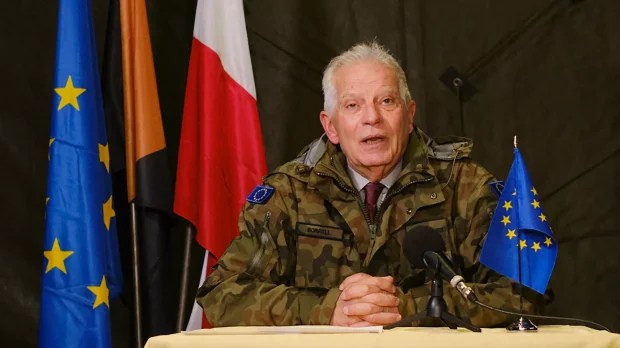
© AFP 2022 / BARTEK SADOWSKI
By Ilya Tsukanov – Samizdat – 06.12.2022
In late 2021, Moscow sent Washington and its allies two draft treaties on security guarantees designed to dramatically reduce tensions between Russia and the Western bloc. Weeks later, Kiev massed troops along the contact line in the Donbass and began to intensively shell the region, prompting Russia to kick off a military operation in Ukraine.
The end of the crisis in Ukraine will be achieved through “security guarantees for Ukraine,” not Russia, European Union foreign affairs chief Josep Borrell has said.
“As for Russia, we’ll talk about that later,” the EEU’s top diplomat told attendees of a symposium in Paris on Monday. “The end of this conflict will have to be done in compliance with international legality,” Borrell added, claiming this would include Moscow being made to pay “reparations” to Kiev, face “war crimes” trials, and withdrawing its forces.
Borrell also said that the crisis in Ukraine has solidified its “place in the EU.”
“It is written. History has decided for us,” he said.
Borrell’s comments appeared to be a direct rebuke to French President Emmanuel Macron, who said Saturday that he and his US counterpart Joe Biden sought to flesh out “the security architecture in which we want to live tomorrow,” and discussed “guarantees of security for Russia” if and when Moscow “returns to the table” for talks.
“One of the essential points is the fear that NATO will be at its door, and the deployment of weapons that can threaten Russia,” Macron said.
The French president received flak from Kiev over his comments, but slapped down Ukrainian officials’ objections. “I think we should not… try to create controversy where there is none,” he said at a summit in Tirana on Tuesday.
Borrell’s latest remarks weren’t the first time the top EU diplomat has called for an aggressive approach in Ukraine. In April, as some Western leaders encouraged Moscow and Kiev to resolve the crisis through negotiations, Borrell instead called for a military solution, saying “this war will be won on the battlefield” and pledging another €500 million in military support to Ukraine. Since then, the EU has sent over €29 billion in aid to Kiev.
Russian officials have repeatedly slammed Borrell for his ‘undiplomatic’ approach. In May, Russian Foreign Minister Sergei Lavrov reminded him that he was the bloc’s “top diplomat, and not the European Union’s military leader.”
Security Guarantees
Next week will mark the one year anniversary of Russia’s delivery of a pair of draft security treaties to the US and NATO designed to dramatically reduce tensions between Moscow and the Western bloc. The documents, released publicly by the Russian Foreign Ministry, proposed legally binding commitments by each side not to deploy troops, equipment, warships, missile systems and aircraft in areas where they may be seen as a threat to the other side, and asked Washington to pledge not to continue NATO’s eastward expansion, including in Ukraine. The document also asked parties to explicitly affirm that they do not consider one another adversaries.
NATO and Washington rejected the proposals in January, and stressed that the bloc’s “open door” policy will not change. Weeks later, the Donbass republics reported an unprecedented escalation in shelling, sabotage and sniper attacks by Ukrainian forces along the line of contact, and began the evacuation of hundreds of thousands of civilians to Russia. The Kremlin expressed concerns that Ukrainian troops were amassing in apparent preparation for an all-out assault on the Donbass, while NATO announced plans for new battle group deployments in the region. On February 24, 2022, citing threats to the Donbass posed by the Kiev regime, Russian President Vladimir Putin announced a special military operation in Ukraine aimed at demilitarizing the country and ‘de-nazifying’ its leadership.
In the nine-and-a-half months since, Moscow has repeatedly expressed readiness to restart talks, with Russia’s core conditions including no NATO membership for Ukraine, security for the Donbass, and recognition of Crimea as Russia. Kiev and its benefactors have rejected these conditions.
Kiev preparing to boycott Russian ammonia transit
By Lucas Leiroz | December 6, 2022
According to recent reports, Ukrainian intelligence, with foreign support, is planning a provocation to prevent the resumption of Russian ammonia transit. The aim would be to further destabilize humanitarian deals to secure fertilizer supplies and, consequently, global food security. Ammonia is an important component in the production of various types of fertilizers, which is why the instability of its supply poses considerable risks to millions of people around the planet, whose food is cultivated with Russian products.
Sources interviewed by a Russian media outlet claim that Ukrainian agents are being instructed by the UK Special Services and the Canadian military company Garda World to destroy the Russian export infrastructure of ammonia. The operation would be very similar to what happened in September with the Nord Stream pipelines. Informers allege that Kiev wants to bomb the ammonia storage facilities at the Odessa Portside Plant. Thus, the flow of ammonia through the Tolyatti-Odessa pipeline could not be resumed, generating an increase in the prices of the product.
“The provocation has been planned and is carried out under the control of the UK special services stationed in Odessa. Members of Canada’s private military company Garda World, who are responsible for security of port infrastructure in the Odessa region under the contract with the administration of Ukrainian sea ports, are also participating in the implementation of this provocation”, the source said.
Although the UN-mediated grain deal in which Russia is involved did not originally include the return of ammonia transit, negotiations in this regard were making significant progress. UN officials have expressed optimism on the matter in several recent pronouncements. According to Martin Griffiths, Under-Secretary-General for humanitarian affairs and emergency relief at the UN’s Office for the Coordination of Humanitarian Affairs (OCHA), the ammonia deal was “quite close”. Indeed, since the beginning of the special military operation Russia has shown diplomatic goodwill in negotiating humanitarian agreements, so it was possible that something was close to being achieved soon.
However, once again Western-backed Ukrainian terrorists seem to plan maneuvers which will increase tensions and instability. The sources also claim that Kiev will try to blame Russia for the attack. With this, the possible plan appears even more similar to what happened on previous occasions, such as Nord Stream, the Crimean Bridge, and the bombing in Poland. Indeed, this has become common practice on the part of Kiev and its Western supporters: using terrorism to serve their anti-Russian interests and trying to blame Moscow. As on previous occasions, if the attack in Odessa actually takes place, it is expected that there will be a huge defamatory media repercussion, with western news agencies spreading lies and distorted narratives about the incident.
In addition to defaming Russia even more, thus “justifying” the sanctions and other coercive measures, the West would also be economically interested in this type of move, since, without the resumption of Russian ammonia exports, many emerging countries would start to buy ammonia from the EU and from the UK – or start importing ammonia-based fertilizers from Canada. Obviously, Western countries would increase prices exponentially, demanding really abusive prices, given the scarcity of ammonia in the global market.
This once again shows how the West-Kiev axis seems only interested in fomenting chaos and international crisis, without any regard for pacifying the current conflict and for lessening its consequences. All forms of boycotting Russia’s international ties seem “legitimate” to Western countries, even if this endangers the food security of millions of people. Considering the importance of ammonia-based fertilizers for the cultivation of grains, if the predictions made by Russian media’s sources are confirmed, in-depth investigations will be necessary in order to punish those responsible for this crime.
It is also important to remember that the grains and fertilizers exported by Russia have been seized in Europe. Tons of food and chemical products are detained in European ports due to the sanctions, without reaching the countries of destination in Africa and Asia, where Moscow prioritizes exports for humanitarian reasons. Despite several Russian denunciations in this regard, no action has been taken by the UN, which remains silent in the face of illegal European practices that are evidently contributing to worsening food shortages around the world.
There is no way to deny the destabilizing and terrorist attitudes that NATO and its Ukrainian proxy are promoting. And international organizations need to recognize this as soon as possible.
Lucas Leiroz is a researcher in Social Sciences at the Rural Federal University of Rio de Janeiro; geopolitical consultant.
US Congressman Gosar Calls Washington’s Support for Kiev ‘Immoral’
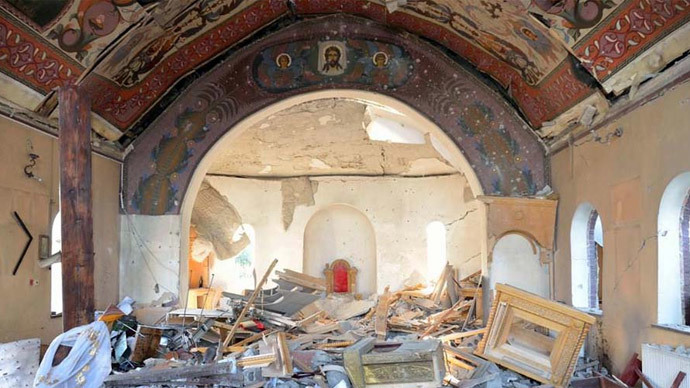
Samizdat – 06.12.2022
Republican Congressman Paul Gosar, in response to the shelling of a church by Ukrainian troops in the city of Donetsk, called Washington’s support for Ukraine “immoral,” adding that the Kiev regime is “authoritarian.”
“Our continued support of this war in Ukraine is immoral. The deaths continue and Ukraine has become an authoritarian regime not worthy of any support. I support peace talks, not death and destruction. Not bombing churches,” Gosar tweeted.
On Monday, a Sputnik correspondent reported that the Church of Nativity of Christ in Donetsk was shelled by Ukrainian troops.
In late October, the US congressman invited Russian President Vladimir Putin and Ukrainian President Volodymyr Zelenskyy for peace talks in the state of Arizona. Two weeks later, Gosar said he would continue opposing additional US aid to Ukraine.
Featured Video

Broke Princes: Saudi Arabia’s Powder Keg
or go to
Aletho News Archives – Video-Images
From the Archives
Registered Israeli foreign agent driving contrived campus antisemitism crisis
By Wyatt Reed | The Grayzone | December 17, 2023
Lawsuits accusing top US universities of harboring antisemitism all originate from one source: a corporate law firm that fielded the pro-settler ex-US ambassador to Israel, and which was registered as a foreign agent of an Israeli principal as recently as 2021.
The firm now represents professional Israel lobby activists posing as victimized “Jewish students” and seeking to crush the free speech rights of Palestine solidarity activists. … continue
Blog Roll
 Aletho News
- Israeli Soldiers Inadvertently Prove Their Own Genocidal Guilt
- Ukraine arrests woman who exposed Azov battalion’s ‘torture chamber’
- Did Israel lose the midterms?
- How Iran defeated Trump’s Israel First GOP
- De-escalating the conflict: What the OSCE, the UN, and Europe are (not) doing to prevent war
- Desperate For A Renewed Iran War, Israel Dusts Off The WMD Deception.
- US Elections Offer Choice Between ‘Bad and Worse’ as Both Parties Serve War Lobby – ex-UN Expert
- Ghalibaf warns US government not to betray voters who rejected war
- Broke Princes: Saudi Arabia’s Powder Keg
- Albania’s Crisis: Rama, Israeli Investments and the Demand for Accountability
- If Americans Knew
- An error has occurred; the feed is probably down. Try again later.
- No Tricks Zone
- New Study: The Net Fossil Fuel Contribution To Rising Atmospheric CO2 Has Been Zero For 500 Years
- Germany’s Green Energy Transition Becoming Increasingly Expensive…Another 6 Trillion Euros!
- Sudden Stratospheric Warming, Powerful El Niño Combination May Lead To Extreme Europe Cold, Energy Crisis!
- Two New Studies Find Thwaites Glacier Melt Cannot Be Driven By Human Activity Or A Warming Ocean
- E-Cars Reduce CO2 Emissions By Only 41% Compared To Internal Combustion Engine Vehicles
- Predictions Made By Renowned Climate Professor Over Past Decades Have Been Proven To Be Poor
- New Study Suggests Large Regions Of The Pacific Ocean Have Been Cooling For The Last 80 Years
- Germany’s Green Energy Debacle: High Energy Costs Force Kahla Porzellan to Close After 182 Years!
- New Study: 50 Years Of The Most Aggressive ‘Net Zero’ Policies Can Only Affect The Global Climate By 0.03°C
- US September “Heat” Was No Record…Many Records Set Decades Ago

