Netanyahu-Pompeo Meeting Solidifies War Plan on Iran
By Finian Cunningham | Strategic Culture Foundation | December 10, 2019
Ratcheting economic sanctions, military force encirclement, inciting seditious violence and relentless war rhetoric. This all by the US and its allies over the past year towards Iran, yet it is Iran which is portrayed as posing “potential threats” to American interests.
The hastily arranged meeting last week between Israeli leader Benjamin Netanyahu and US Secretary of State Mike Pompeo had the hallmarks of a war-plan summit amid a peak in renewed media provocation against Iran.
In the last weeks there has been a flurry of US media reports claiming that Iran is secretly moving ballistic missiles into Iraq and elsewhere across the region. As usual the media credulously cite anonymous intelligence and Pentagon officials on those claims.
Here’s CNN quoting one administration official: “There has been consistent intelligence in the last several weeks,” the official said, referring to “a potential Iranian threat against US forces and interests in the Middle East.”
Last month, the head of US CentCom made a similar dire forecast of Iranian intentions. General Kenneth McKenzie said: “I would expect that if we look at the past three or four months, it’s possible they [Iran] will do something that is irresponsible.”
Notice how General McKenzie tacitly acknowledges the background of the Trump administration’s “maximum pressure” campaign of economic sanctions and US military force buildup against Iran as if that is somehow normal international conduct. Then he turns all that US aggression on its head by accusing Iran of possibly doing “something that is irresponsible”.
There are worrying signs that the US and Israel are redoubling the pressure of war against Iran. This pressure has to be seen in the context of a formidable deployment of US military forces – troops, warplanes and warships in the region since May this year. The earlier buildup was announced on the basis of unfounded claims that Iran was preparing to launch offensive operations against American interests. Then came a series of mysterious attacks on oil tankers in the Persian Gulf over the summer which Washington blamed on Iran without evidence.
Street protests in Iran since mid-November over fuel-price increases appear to be hijacked by subversive elements. President Trump and other US officials have openly called for the protests to destabilize the Iranian government.
Fresh claims that Iran is sending ballistic missiles to neighboring countries appear to be setting the stage for justifying a pre-emptive US attack on Iran.
No doubt the Iranian government is under severe pressure from the economic hardship that the US has re-imposed unlawfully since Trump dumped the international nuclear accord in May 2018. No doubt too Iran is apprehensive about the relentless military threats against it from Washington and its Israeli ally. Almost certainly, Iran will have mobilized forces in the reasonable calculation that it may come under attack at any moment.
But, perversely, US intelligence and military officials are interpreting Iranian defensive moves as “indications of a potential threat” to American “interests”.
The meeting last week between Israeli Prime Minister Benjamin Netanyahu and US Secretary of State Mike Pompeo signals a foreboding development. Recall that this is in the context of US media reports of Iranian ballistic missiles being deployed and of reports that the Trump administration is considering a doubling of troop levels in the Middle East to 28,000, as well as sending more missiles and warplanes.
Netanyahu met Pompeo in Lisbon, Portugal, on Wednesday, December 04. The meeting was called urgently and was unscheduled. Netanyahu – who is fighting for his political survival over corruption charges – tried to arrange discussions with Pompeo on the sidelines of the NATO summit near London, but according to Israeli media reports there was not enough time for security logistics to be put in place by the British. That indicates the Israeli leader was trying to meet Pompeo in a hurry.
When Netanyahu met with Pompeo in Lisbon, he said at the start of their discussions: “The first subject that I will raise is Iran. The second subject is Iran, and so is the third. And many more.
The Israeli premier added: “We have been fortunate as President Trump has led a consistent policy of exerting pressure on Iran. Iran is increasing its aggression in the region as we speak, even today, in the region. They are trying to have staging grounds against us and the region from Iran itself, Iraq, Syria, Lebanon, Gaza and Yemen and we are actively engaged in countering that aggression.”
Netanyahu also gloated that the “Iranian empire [sic] is tottering… let’s make it totter even more.”
For several months Iran has steadfastly refused to take the bait of war laid down by the Trump administration. But with pressures mounting both within the country and externally, it would be imperative for the Iranian authorities to marshall their defenses.
US intelligence and military officials are using contorted logic to accuse Iran of posing a threat, and the American corporate media are ably assisting in the propagation of this oxymoron.
Netanyahu’s hasty meeting with Pompeo last week suggests that the US and Israel are putting the final touches to their malignant masterpiece for provoking a war with Iran.
Just how bad was the FBI’s Russia FISA? 51 violations and 9 false statements
John Solomon Reports | December 9, 2019
To understand just how shoddy the FBI’s work was in securing a Foreign Intelligence Surveillance Act warrant targeting the Trump campaign, you only need to read an obscure attachment to Justice Department Inspector General Michael Horowitz’s report.
Appendix 1 identifies the total violations by the FBI of the so-called Woods Procedures, the process by which the bureau verifies information and assures the FISA court its evidence is true.
The Appendix identifies a total of 51 Woods procedure violations from the FISA application the FBI submitted to the court authorizing surveillance of former Trump campaign aide Carter Page starting in October 2016.
A whopping nine of those violations fell into the category called: “Supporting document shows that the factual assertion is
inaccurate.”
For those who don’t speak IG parlance, it means the FBI made nine false assertions to the FISA court. In short, what the bureau said was contradicted by the evidence in its official file.
To put that in perspective, former Trump aides Mike Flynn and George Papadopoulos were convicted of making single false statements to the bureau. One went to jail already, and the other awaits sentencing.
The FBI made nine false statements to the court.
And the appendix shows the FBI made another nine factual assertions that did not match the supporting evidence in the file. In another words, the bureau was misleading on nine other occasions.
The vast majority of remaining Woods violations — 33 in total — involved failing to provide any evidence in the Woods procedure backing up assertion in the FISA warrant application.
That’s serious too since the sole purpose of the Wood procedures is to ensure all evidence cited in a FISA application is documented as accurate and reliable so it can be trusted by the courts.
Trump’s Creaky Door to Peace in the Koreas
By Patrick Lawrence – Consortium News – December 10, 2019
In June 2018, when Donald Trump and Kim Jong-un summitted in Singapore, the American and North Korean leaders opened the door to peace on the Korean Peninsula wider than at any time since hostilities ceased in 1953. Eighteen months later, we watch as this door creaks closed.
Which side has betrayed the once-promising prospect of denuclearization and an end of seven decades of flashpoint tension in Northeast Asia? This is our question.
A succession of developments over the past week indicates that bilateral efforts to denuclearize the two Koreas will pass into history at year-end. Kim asserted nearly a year ago, that, absent a credible diplomatic framework for a bilateral accord, the North will give up on a settlement with the U.S. and “find a new way to defend the sovereignty of the country.”
A test conducted Sunday at a previously deactivated missile launch site suggests this means Pyongyang intends to recommit to nuclear and long-range missile programs it had suspended so long as talks with the U.S. progressed.
There is a good chance the North has already determined to pursue Kim’s “new way.” Pyongyang’s ambassador to the U.N. indicated as much just prior to the test at the Sohae site Sunday.
“We do not need to have lengthy talks with the U.S. now,” Kim Song said the previous day in New York. “Denuclearization is already gone out of the negotiating table.” By the time Kim Song spoke, the North Korean wire service, KCNA, had already begun to publish shrill warnings that hostilities with the U.S. could be renewed at any time.
John Bolton’s Impact
Kim Jong-un set the Dec. 31 deadline for progress in bilateral talks after the failure last February of his second summit with Trump, held in Hanoi. Subsequent reporting by two Reuters correspondents revealed that Trump, on the advice of John Bolton, his national security adviser at the time, told Kim he must accede to all U.S. demands before Washington would negotiate any concessions of its own. The Reuters report demonstrated that Bolton’s advice to Trump — delivered just as the president sat down with Kim, so leaving him little time to consider it — was intended to precipitate precisely the sudden breach between the two leaders that then took place.
“It occurs to us that there may not be a need to continue,” Choe Son-hui, Kim’s vice-foreign minister, said after the North Korean leader abandoned the Hanoi talks in acrimony. “We’re doing a lot of thinking.” In hindsight, Choe’s remark seems to have signaled the North’s post–Hanoi distrust of U.S. intentions despite Kim’s notably friendly personal relations with Trump.
This wariness and impatience are justified. In a round of talks held in Stockholm in October, North Korean negotiators walked out in a matter of hours, complaining that the U.S. side had nothing to offer but a repackaged version of the fatal proposition presented in Hanoi. If you reject our proposal that 6 and 4 make 10, let us offer you 7 and 3: This is effectively the U.S. position to date.
Nothing that has occurred since the first Trump–Kim summit in Singapore suggests that the president is anything other than entirely sincere in his desire to forge an historic agreement with Pyongyang. One need not assign Trump any transcendent geopolitical vision to recognize this. The Dealmaker wants a deal, preferably one that has eluded all of his predecessors in the White House.
On Saturday Trump conferred with South Korean President Moon Jae-in for half an hour by telephone to discuss how to salvage the negotiation process between the North and the U.S. Moon has assiduously promoted negotiations with the North since he took office in May 2017. Plainly, Trump wants Moon to help him draw Kim back from the brink.
“Kim Jong-un is too smart and has too much to lose, everything actually, if he acts in a hostile way,” Trump said Sunday. “He does not want to void his special relationship with the President of the United States or interfere with the U.S. presidential election in November.”
These remarks appear to signal that, despite Trump’s conversation with Moon, the U.S. does not take Kim’s year-end ultimatum seriously. They also suggest that Trump considers the current escalation of tensions between Washington and Pyongyang nothing more than the posturing he indulges in prior to any significant negotiation.
In both cases, Trump is likely to be proven wrong for two reasons.
The first is that Trump may have just overplayed his hand. There are indications that Kim thinks the Sohae test Sunday — the nature of which remains unclear — significantly improves his diplomatic position. While the North’s tough talk may also be posturing, Washington now risks forfeiting some of Kim’s willingness to negotiate the elimination of the North’s nuclear and ballistic-missile capacities. “The results of the recent important test will have an important effect on changing the strategic position of the DPRK once again in the near future,” KCNA reported Sunday.
The second is that by now Trump almost certainly understands the extent to which policy cliques in Washington have circumscribed his agenda on questions such as Russia, Syria and North Korea. It may be to his credit that he persists in the face of this resistance, but his chances of overcoming it are, if anything, diminished after nearly three years of incessant subterfuge on the foreign policy side. Trump does not have a Kim Jong-un problem; he has a “deep state” problem at home.
When U.S.–North Korean talks have collapsed on previous occasions, official U.S. records tend to blur the chronology of events, erase causality, and then imply that responsibility for failure lies with the North Koreans. While there are already indications that we will see the same this time, there has been enough good reporting, mostly in other-than-corporate media, to make this fallacy plain. No one should be fooled when we read once again about those bellicose, irrational North Koreans.
All indications now suggest that Kim plans another of his blockbuster New Year’s speeches, similar to those delivered in previous years. In 2018 he announced that the North had achieved a weaponized nuclear capability with which to deter threats from the U.S. This year he declared he would be willing to meet Trump “anytime” while announcing his “new way” should diplomacy fail.
The first of these assertions is now patently true. After a year of disappointments, the second awaits the outcome of the current impasse. We will have to see in coming weeks.
After the talks in Stockholm collapsed in October, North Korea termed the debacle “sickening.” So it is, considering the opportunity that the U.S. — not for the first time — is in the process of intently squandering.
Patrick Lawrence, a correspondent abroad for many years, chiefly for The International Herald Tribune, is a columnist, essayist, author and lecturer. His most recent book is “Time No Longer: Americans After the American Century” (Yale). Follow him on Twitter @thefloutist. His web site is Patrick Lawrence.
U.S. Efforts to Force Iran Out of European Energy Markets Have Failed
By Paul Antonopoulos | December 10, 2019
Despite the European Union attempts to save the Joint Comprehensive Plan of Action, which saw Iran reduce its low-enriched uranium by 98% and eliminate its stockpile of medium-enriched uranium in return for economic relief, JCPOA is hanging by a thread because of Washington’s withdrawal from the deal in October 2017.
The European Statistical Office revealed that from January to September trade between the EU and Iran was at €3.86 billion, a massive 74.92% drop compared to the same period in 2018. The report revealed that Germany (€1.23 billion), Italy (€734.78 million) and the Netherlands (€376.73 million) were Iran’s top three trading partners in EU while trade with Greece (€32.08 million), Luxembourg (€506,316), Spain (€207.36 million), France (€296.5 million) and Austria (€102.11 million) had plunged by 97.13%, 91.38%, 91.17%, 86.79% and 82.38% respectively.
Although Iran’s trade with Cyprus at €6.25 million and Bulgaria at €64.97 million increased by 85.12% and 29.24% respectively year-on-year— the highest among EU states — it still does not offset the massive decline in trade with Greece, Luxembourg, Spain, France and Austria. The major decline in trade is attributed due to European companies’ unwillingness to risk losing business with the U.S. for the sake of the much smaller Iranian market. Effectively, U.S. President Donald Trump’s economic war with Iran is to diminish Iranian-EU trade so that the U.S. may reap benefits from boosting its own oil and other commodities. However, this is set to change.
With this dramatic downturn in trade with the EU, Iran is now pushing to diversify its economy even further to overcome a reliance on oil and take a number of measures in an attempt to counter U.S. economic aggression, including increasing taxes, cutting energy subsidies and borrowing money from friendly states. Iranian President Hassan Rouhani explained on Sunday in parliament that oil revenues are expected to drop by at least 70% and that Iran’s budget next year “is designed to resist against sanctions and to announce to the world that we run this country despite sanctions.”
The Iranian president explained that the new budget will reach $115.3 billion because of the reduction of oil exportation from 2.8 million barrels of oil a day before Trump’s May sanctions to 500,000 barrels a day. In addition, Iran will sell more bonds in the domestic market and plans to increase revenues from taxes by 13%, but these changes come as the International Monetary Fund has already forecast that the Islamic Republic will have a reduction of its economy of about 9.5% this year.
This “budget of resistance,” as described by Rouhani, is “contrary to what the Americans thought. With the pressure of sanctions, our country’s economy would encounter problems, thank God we have chosen the correct path… and we are moving forward.”
Iran’s Deputy Foreign Minister Abbas Araqchi announced on Monday that the European signatories to the JCPOA will not activate the “trigger mechanism” for the time being that could see the return of sanctions against the Islamic Republic. It is unlikely that the EU or Iran will withdraw from what remains of JCPOA as they attempt to bypass U.S. sanctions which can see the besieged country improve its economy through increased trade with Europe.
Not only has the EU pledged to maintain its nuclear deal commitments, in a joint statement late last month, Belgium, Denmark, Finland, the Netherlands, Norway and Sweden said they will attain shares in Instrument in Support of Trade Exchanges (INSTEX), that was launched by Britain, France and Germany in January to allow European companies to trade with Iran without using U.S. dollars so they could be protected from U.S. sanctions.
In their joint statement, they said: “In light of the continuous European support for the agreement and the ongoing efforts to implement the economic part of it and to facilitate legitimate trade between Europe and Iran, we are now in the process of becoming shareholders of INSTEX, subject to the completion of national procedures.”
This is also a part of a wider move to counter strong U.S. efforts to muscle in on the European oil market as U.S. sanctions have scared buyers from acquiring Iranian and Venezuelan crude. The so-called hydro-fracking and shale revolution that began a few years ago has seen the U.S. aggressively seek to export its oil to new markets. It is now unsurprising that earlier this year U.S. crude shipments to Europe reached new records, behind Russia but still more than Nigeria and Libya who are important OPEC members.
Therefore, a major reason for the false allegations by Trump that Iran was violating the JCPOA was to force Iran out of the European market to push the U.S. entrance. It appears that Trump’s plan has failed. Not only has Iran formulated its “budget of resistance,” but with Belgium, Denmark, Finland, the Netherlands, Norway and Sweden becoming shareholders INSTEX, they are prepared to continue their economic relations with Iran while being protected from U.S. repercussions. Effectively, although the U.S. has achieved a short-term reduction in European-Iranian trade, it will not only recover, but also be strengthened as new mechanisms are being made to bypass U.S. banks and dollars.
Paul Antonopoulos is a Research Fellow at the Center for Syncretic Studies.
Elizabeth Warren’s “Foreign Policy”
The Automatic Earth | December 8, 2019
Ronald Reagan and Mikhail Gorbachev first met in Geneva in 1985, in a summit specifically designed to allow them to discuss diplomatic relations and the -nuclear- arms race. At the time, the Soviet Union had started to crumble, but it was still very much the Soviet Union. They met again in 1986 in Reykjavik, in a summit set up to continue these talks. There, they came close to an agreement to dismantle both countries’ nuclear arsenals.
They met once again in Washington in 1987. That was the year Reagan made his famous “Mr. Gorbachev, tear down this wall” speech about the Berlin wall. Then they held a next summit in 1988 in Moscow, where they finalized the Intermediate-Range Nuclear Forces Treaty (INF) after the US Senate’s ratification of the treaty in May 1988.
Reagan’s successor George H.W. Bush met with Gorbachev first in December 1989 in Malta, and then the two met three times in 1990, among others in Washington where the Chemical Weapons Accord was signed, and in Paris where they signed the Treaty on Conventional Armed Forces in Europe. They met three more times in 1991, with one of their meetings, in Moscow, resulting in the signing of the Strategic Arms Reduction Treaty (START I).
One of the most interesting things agreed on during the Bush-Gorbachev meetings was that Russia would allow Germany to re-unite after the wall came down, in exchange for the promise that NATO would not try to expand eastward.
I’ve been re-researching this a bit because it feels like it’s high time that people should realize what US foreign policy was like not that long ago. Even as it involved Reagan and Bush sr., not exactly the peace-mongers of their times. The one thing that was clear to all parties involved is that it was crucial to keep meeting and talking. And talk they did. But look at us now. When was the last summit of a US president with Vladimir Putin?
This came to mind again when I read Elizabeth Warren’s piece in the Guardian today, which made me wonder if she’s for real, if she is really as ignorant as she appears to be when it comes to foreign policy, to Russia, to Trump and to NATO. It would seem that she is, and that makes her a hazard. Not that I see her as a serious candidate, mind you, but then again, I do not see any other one either.
In her article, which reads more than anything like some nostalgic longing for the good old times when she was young, just watch her get all warm and fuzzy over the success of NATO:
Donald Trump Has Destroyed American Leadership – I’ll Restore It
For seven decades, America’s strength, security and prosperity have been underpinned by our unmatched network of treaty alliances, cemented in shared democratic values and a recognition of our common security. But after three years of Donald Trump’s insults and antics, our alliances are under enormous strain. The damage done by the president’s hostility toward our closest partners was on full display at this week’s gathering of NATO leaders in London, which should have been an unequivocal celebration of the 70th anniversary of the most successful alliance in history.
The success of NATO was not inevitable, easy or obvious. It is a remarkable and hard-won accomplishment, and one based on a recognition that the United States does not become stronger by weakening our allies. But that is just what Trump has done, repeatedly and deliberately. He treats our partners as burdens while embracing autocrats from Moscow to Pyongyang. He has cast doubt on the US commitment to NATO at a moment when a resurgent Russia threatens our institutions and freedoms. He has blindsided our partners on the ground in Syria by ordering a precipitate and uncoordinated withdrawal.
[..] he has wrecked US credibility by unilaterally tearing up our international agreements on arms control, non-proliferation and climate change. This reckless disregard for the benefits of our alliances comes at a perilous moment, when we face common threats from powerful adversaries probing the weaknesses of our institutions and resolve. Longstanding allies in Asia are doubting our reliability and hedging their bets. Russia’s land grab in Ukraine has upended the post-1989 vision of a Europe “whole, free, and at peace”. The chaotic Brexit process has consumed our closest partners, while sluggish growth and rising xenophobia fuel extremist politics and threaten to fracture the European Union.
To start with that last point, no. That “post-1989 vision of a Europe “whole, free, and at peace” was destroyed by NATO’s eastward expansion, executed in spite of US, EU and NATO promises that it wouldn’t. Moreover, you can talk about a resurgent Russia, but the country has hardly recovered economically from the 1980’s and 90’s today, and it has no designs on countries to its west.
Just look at the military budgets of the respective countries, where Russia has maybe 10% of the expenditure of the US, let alone the rest of NATO, and you get the picture. Is Russia getting more bang for its buck, because it doesn’t have to maintain a long running Pentagon-Boeing/Raytheon link? Yes, it does. But a 10 to 1 difference is still way out there. It’s not as if they spend half of what the US does, they spend just 10%.
This is because Russia not only doesn’t have to satisfy the desires and needs of Pentagon-Boeing/Raytheon, it’s also because they have no desire to conquer any territory that is not at present Russian.
Russia “annexed” Crimea through fair elections, and it knew that “we” knew that it would never let go of its only warm water port, Sevastopol. When “We” tried to take it away regardless, it did the only thing it could do. And it did it very intelligently. As for Eastern Ukraine, everyone there is Russian, whether by blood or by passport. And there are a lot of strong ties between them and Russians in Russia proper.
If Putin would have volunteered to let these Donbass Russians be shot to bits by the Ukraine neo-nazis that helped the US and EU in the Maidan coup, he would have had either a civil war in Russia, or an all-out war in the Donbass, with perhaps millions of casualties. Putin did what he could to prevent both. Back to Warren:
A mounting list of global challenges demand US leadership and collective action. As president, I will recommit to our alliances – diplomatically, militarily and economically. I will take immediate action to rebuild our partnerships and renew American strategic and moral leadership, including by rejoining the Paris climate accord, the United Nations compact on migration, and reaffirming our rock-solid commitment to NATO’s Article 5 provisions.
But we must do more than repair what Trump has broken. Instead we need to update our alliances and our international efforts to tackle the great challenges of our age, from climate change and resurgent authoritarianism to dark money flows, a weakening international arms control regime and the worst human displacement crisis in modern history.
Wait, what exactly has Trump broken in the foreign policy field? There have been dozens at the very least who have called for NATO to be disbanded, Ron Paul et al, because its sole purpose was to counter the Soviet Union, which no longer exists. In fact, when Emmanuel Macron labeled NATO “brain-dead” last week, it was Trump who defended the alliance.
And sorry, Elizabeth, but to hold Trump responsible for “the worst human displacement crisis in modern history” is just not right. That started way before he arrived at the scene. Obama and Hillary carry the burden and blame for that, along with Bush jr. and Dick Cheney. They shot the crap out of Iraq, Lybia etc. Trump only dumped a few bombs in a desert. He didn’t invade any country, he didn’t go “We Came, We Saw, He Died”. That was not Trump.
And before we forget, the military aid for Ukraine Trump allegedly held back for a few weeks had been refused by Obama for years. I’ve been wondering for ages now why the Democrats are so eager to make things up while ignoring simple facts, but I think at least it’s time to start pointing out these issues.
This is not to make Trump look better in any sense, but to try and make people understand that he did not start this thing. Though yeah, I know, it’s like talking to a wall by now. The political divide has turned into such a broad and yawning one, you can’t not wonder how it could ever be breached.
But, you know, it might help if people like Elizabeth Warren don’t ONLY talk about Trump like he’s the antichrist, or a Putin tool, if they engage with him in conversation. But sadly, it feels like we’re past that point. Like if she would even try, and I don’t know if she would want to, her party would spit her out just for trying to build a single bridge. Like Tulsi Gabbard seems to have tried; and look at how the DNC treats her.
This means revitalizing our state department and charging our diplomats to develop creative solutions for ever more urgent challenges. It means working with like-minded partners to promote our shared interest in sustained, inclusive global economic growth and an international trade system that protects workers and the environment, not just corporate profits. And it means reducing wasteful defense spending and refocusing on the areas most critical to our security in years to come.
Well, apart from the fact that we’ve seen some of those diplomats in the Schiff hearings, and they seemed like the least likely people to develop anything “creative” -other than their opinions-, and the boondoggle of “sustained, inclusive global economic growth”, it’s probably best to forget about that entire paragraph. It’s nicer to Warren too.
Alliances are not charities, and it’s fair to ask our partners to do their share. I will build on what President Obama started by insisting on increased contributions to NATO operations and common investments in collective military capabilities. But I will also recognize the varied and significant ways that European states contribute to global security – deploying troops to shared missions, receiving refugees, and providing development assistance at some of the highest per capita rates in the world.
The problem appears to be that the partners don’t increase their contributions. Just this March, Germany refused to do just that. And if Berlin refuses, why would other countries spend more?
The next president must tackle our common problems using the lessons of common defense. Together, we can counter terrorism and proliferation. We can make common cause in constructing new norms and rules to govern cyberspace. We can dismantle the corruption, monopolies and inequality that limit opportunity around the world and take on the increasingly grave threats to our environment. We can and will protect ourselves and each other – our countries, our citizens and our democracies.
Now we’re getting into entirely nonsensical territory, with words and sentences designed only to make people feel good about things that have no substance whatsoever. Anyone can go there, anyone can do that.
In the meantime, the never ending investigations into Trump, Russia, Ukraine, taxes, have had one major effect: he hasn’t had a chance to have a summit with Putin. And that, to go back to how I started out this essay, is the worst idea out there. If Reagan and Bush sr. did those summits all the time, then why do we now think such summits are the work of the devil?
And yeah, we get it, we got it again last week from alleged law expert Pamela Karlan in the House, who let ‘er rip on the dangers Putin poses to all of humanity, and of course she would never trust Trump to hold any such summit because he’s Putin’s puppet.
What Pamela, and all the MSM, and the Dems, and the FBI/CIA, appear to refuse to see, though, is that Trump was democratically elected by the American people to be the only one who can have any such conversation. Karlan again talked about how Russia would attempt to attack American soil unless “we” keep them from doing that.
Now I can say that is absolute bollocks, and it is, but how many -potential- Democratic voters will recognize that at this point? They’ve been trained to believe it. That Russia wants one US presidential candidate over another, or one UK one, or fill in your country, and therefore they want to invade the US, UK, etc. In reality, Russia has plenty problems of its own, and it’s slowly trying to solve them.
The two countries need to start talking to each other again, and the sooner the better. That it will happen under Elizabeth Warren, however, is very unlikely. First because she has her mind made up about Russia, and second because the likelihood of her becoming president is very low. What do you think, is that a good thing?
If for some reason -who can tell- she would end up winning 11 months from now, do you think she’s likely to establish a peace treaty with Russia? You know, given what she wrote here? And if not, why would you vote for her? Don’t you want peace? Do you think antagonizing Putin forever is a good idea? While Russia continues to outperform America in arms development, and in just about any field? While Russia only wants peace?
Good questions, ain’t they, as we move into 2020?!
Who Spied on Julian Assange?
There are many possible suspects
By Philip Giraldi | Unz Review | December 10, 2019
The Julian Assange drama drags on. Though he continues to sit in a top security British prison awaiting developments in his expected extradition to the United States, the Spanish High Court has been given permission to interview him. Assange is claiming that the Spanish company contracted with by the Ecuadoran government to do embassy security in London spied on him using both audio and video devices. The recordings apparently included conversations with Assange’s lawyers outlining his defense strategies, which is an illegal activity under Spanish law. The prosecution has also indicted the company director, former military officer David Morales, on associated criminal charges of bribing a government official and money laundering. Morales has said that he is innocent.
Aware that he might be monitored by the British government as well as by other interested parties, Assange would often meet his legal team using a white noise machine or in women’s bathrooms with the water running, but the firm, UC Global, anticipated that and planted devices capable of defeating the countermeasures. It planted microphones in the embassy fire extinguishing system as well as in numerous other places in the building. The recordings were reportedly streamed, undoubtedly encrypted, to another nearby location, referred to in the trade as a listening post. The streamed material was also reportedly transcribed and copied at the UC Global offices in Andalusia, but hard copies of the material were made as well on CDs and DVDs to be turned over directly to the client.
The Spanish newspaper El Pais, which has seen much of the evidence in the case, also mentioned how UC Global fixed the windows in the rooms actually being used by Assange so they would not vibrate, making it possible to use laser microphones from a nearby line of sight building to record what was being said. Presumably the listening post also served as the line-of-sight surveillance point.
The British government willingness to let the interview take place is apparently due in part to the Spanish judiciary’s claims that it has obtained an overwhelming amount of documentary and other evidence that demonstrates that Assange is basically telling the truth.
And there is inevitably more to the story. David Morales, who managed the project, reportedly returned from a trip to the United States and told colleagues that UC Global would henceforth be doing some work “for the dark side” at “another league” level. According to the New York Times, which has examined the documents obtained by El Pais and accepted that they are authentic, “In the court filing, the prosecution asserts that Mr. Morales returned from a security fair in Las Vegas in 2015… He signed a contract with Las Vegas Sands, the casino and resort company of Sheldon Adelson, and the prosecution contends that Mr. Morales passed information about Mr. Assange to security officials at the company, saying it acted as a go-between with the C.I.A.”
Sheldon Adelson is, of course, the single largest source of funding for the Republican Party and is also widely regarded to be a confidant of the Israeli government and of Benjamin Netanyahu personally. UC Global subsequently worked for Adelson, including managing the security of his yacht whenever it was in the Mediterranean.
According to employees of UC Global, details of the Ecuadoran Embassy operation were tightly held inside the company. Morales would make secret trips to the United States once or twice every month and it was assumed that he was carrying material relating to the recordings, but UC Global staff were advised never to mention his travels to the Ecuadoran staff in the embassy.
The obvious candidate for spying on Assange would be, as both the Spanish government and the New York Times speculate, the Central Intelligence Agency (C.I.A.), as Washington intends to try Assange prior to locking him away for the rest of his life. Secretary of State Mike Pompeo, while director of C.I.A., once referred to Assange and WikiLeaks as a “hostile intelligence service,” so one should have no illusions about what will be done to him if he ever arrives in the U.S.
In one instance cited by El Pais, the U.S. Embassy in London clearly knew what was discussed at a private meeting that had taken place in the Ecuadoran Embassy the day before. And if Washington truly wanted inside information it would have made sense from an espionage point of view to employ the very firm doing security for the embassy as one’s mechanism for doing the spying.
But the rest of the story as elaborated on by the New York Times doesn’t make sense. It is equally or possibly even more likely that the Ecuadoran government would want to know what Assange was up to since it was taking considerable heat from Washington and London to terminate his asylum so he could be arrested and extradited. The fact that Morales did not want the Ecuadorans to know about his travels suggests that they already knew about the surveillance. What they did not know was that Morales was sharing the take with someone else.
And then there are the British themselves as possible initiators of the surveillance through some kind of arrangement with Morales. They would most definitely like to know what was being planned in Assange’s defense and going through UC Global would be the easiest way to obtain the needed information.
One might point out that there is another obstacle to the C.I.A. “dunnit” speculation, which is that as a general rule Washington does not spy on London and London does not spy on Washington. As the two countries have been for decades major intelligence partners, it is a guideline that is, believe it or not, generally observed. The British would have noticed any attempt to set up an American listening post within line-of-sight of the Ecuadoran Embassy and it would have created a major rift between C.I.A. and MI6, which suggests that the British, Americans and Ecuadorans might all have been spying on Assange and possibly even sharing the information.
And then there is the Adelson angle, which brings the Israelis into the mix. It appears to be true that Adelson’s casinos in China were venues used for targeting corrupt Chinese officials by the C.I.A. as far back as 2010, but it is not imaginable that today’s Agency would use the Las Vegas billionaire as a conduit for passing information and arranging payments to Morales. As one former Agency field officer commented, “This is not the way the C.I.A. constructs an operation, too many moving parts.”
If he were indeed a C.I.A. asset, Morales could have used a dead drop or passed his material directly to an Agency officer under cover in Spain before being paid directly for his services. The C.I.A. officer would also be able to monitor and direct the operation through the meetings as is usually the case, which would not be possible if the connection were through Las Vegas Sands security.
One might also add that using a trip to Las Vegas as a cut out to conceal espionage activity makes no sense at all, particularly as Morales would have to be crossing international borders carrying on him highly sensitive information that could come to the attention of security concerned about the frequency of his trips. Morales might indeed have believed that he was working for C.I.A. because that is what he was told by Adelson, but that could easily have been a lie.
It is also unimaginable that C.I.A. would use Adelson as he is recognized by the U.S. intelligence services as an Israeli government asset. His loyalty to the U.S. is questionable. He is famous for having said that he regretted serving in the U.S. Army and wishes he had served in the Israeli army instead. He wants his son to grow up to “be a sniper for the Israel Defense Force (IDF).”
That means that anything going through Adelson will wind up in Israel, which suggests that if Adelson is actually involved the whole exercise just might be an Israeli false flag operation pretending to be the C.I.A. Israel does not hate Assange with the fervor of the U.S. government but it certainly would consider him an enemy as he has had a tendency to expose sensitive material that governments would not like to make public. Israel would be particularly vulnerable to having its war crimes exposed, as was the case when WikiLeaks published the material revealing American crimes in Iraq provided by Chelsea Manning.
So, there is a choice when it comes to considering who might have commissioned the spying on Julian Assange, or it might even have been a combination of players. The sad part of the story is that even if David Morales is convicted in a Spanish court, sources in Britain believe the violation of Assange’s rights will have no impact on the move to extradite him to the United States. That will be decided narrowly based on the charge against him, which is exposing classified information, a violation of the Espionage Act of 1917. As the Espionage Act is infinitely elastic and as the preferred U.S. Court for the Eastern District of Virginia has a very high conviction rate, there is little doubt that Julian Assange will soon be on his way to the United States where he will undoubtedly be sentenced to life in prison.
Philip M. Giraldi, Ph.D., is Executive Director of the Council for the National Interest, a 501(c)3 tax deductible educational foundation (Federal ID Number #52-1739023) that seeks a more interests-based U.S. foreign policy in the Middle East. Website is councilforthenationalinterest.org, address is P.O. Box 2157, Purcellville VA 20134 and its email is inform@cnionline.org.
WADA’s Russia doping ban ‘part of ‘New Cold War’ & robs clean athletes of glory’
RT | December 9, 2019
Russia’s ban from global sports is a punishment rife with politics, analysts told RT. Worse still, political decisions can punish clean athletes, who will be denied the honor of competing for their country.
The World Anti-Doping Agency handed down the ban on Monday, after Russia was alleged to have manipulated data in a Moscow anti-doping laboratory. WADA voted to suspend Russia from all major sporting events for four years in response, meaning the Russian flag will not fly at the next two Olympic Games as well as the FIFA World Cup in Qatar, should Russia qualify.
Clean athletes, however, will be able to compete, albeit under a neutral flag and with no national anthem.
In the run up to the ban, US Anti-Doping Agency (USADA) head Travis Tygart had called for even harsher penalties, including a blanket ban on all athletes, even those found to be clean.
The “political element to this cannot be denied,” global affairs analyst Patrick Henningsen told RT. Henningsen sees WADA, like many other international organizations, as biased in favor of its Western members.
[It’s] “about humiliating Russia, it’s about demoralizing their athletes, [and] It’s also about hurting Vladimir Putin.”
“National pride is connected with national sport for any leader of any country,” he added.
Russia’s image will certainly be tarnished by the news, which broke just hours before Putin was due to sit down with French, German, and Ukrainian leaders in Paris, in a bid to resolve the conflict in eastern Ukraine. With the Paris summit being a long-awaited ‘Normandy Format’ meeting – first since 2016 – the stakes are high for all involved.
“It’s bad news for that event,” political analyst Martin McCauley told RT. “The newspapers will concentrate on this and not on the Normandy event.” Likewise, the emergence of the news so close to the summit will likely give ample fodder to journalists quizzing Putin after the meetings conclude.
Those athletes untainted by doping scandals have been “caught up in a war of politics,” McCauley said. Though such athletes will be allowed to compete, standing on the podium without their national colors and celebrating without their national anthem reverberating through the arena will be “devastating,” he said.
“When they get home with a medal, it’s only 90 percent of a medal, because the other competing athletes had their national anthem played, and they had their moment of glory. The Russians are going to be denied that.”
Competing under a neutral flag is a “very small consolation,” Henningsen added. “Even during the Cold War most countries respected the sporting arena as a neutral arena where politics wasn’t really going to contaminate that.”
Athletes typically spend their entire lives training to reach peak performance for one, maybe two, Olympic Games. However, all is not entirely lost for those who were hoping to represent Russia at next year’s Summer Olympics in Tokyo. “The Russians can appeal,” McCauley noted, “and one would expect they’d appeal very strongly indeed.”
The Russian Anti-Doping Agency (RUSADA) will now decide whether to appeal the ban. Russian parliamentarian and former Olympic speed skater Svetlana Zhurova said she is “100 percent sure” the agency will appeal.
RUSADA has not had its work restricted by the WADA decision. Agency chief Yuri Ganus – a longtime critic of doping in Russia who has acknowledged that the data handed over to WADA was tampered with – said on Monday that “WADA considers our actions to be effective and productive. And we are an example of overcoming the crisis.”
“We will work on finding our way out of the crisis for our sport. We will ensure the compliance of our federations and with the code and the training of our athletes.”
Through appeal and reform, Ganus hopes to make Russian athletics clean again. His mission is one with political payoff too. Henningsen noted the power of international sport to build “person to person diplomacy,” fostering good relations between countries, even when their leaders can’t seem to agree on much else. The positive experiences of fans who traveled to Russia for last year’s World Cup – against the advice of much of the western media – were an example of this, he said.
A thaw on this front of the “New Cold War” would therefore be a welcome development, even if relations elsewhere remain decidedly icy.
Reddit Hiring NATO Shills to Control Narrative
Big Tech’s ties to the Deep State are everywhere, and we should be concerned

By Kit Knightly | OffGuardian | December 9, 2019
I wrote a short piece a few days ago about Reddit banning users for posting the leaked NHS documents. (Spreading anti-Russian propaganda in the process).
Previously, we have also covered Reddit making politically motivated decisions – such as quarantining boards dedicated to Donald Trump and 9/11.
It turns out there’s a very simple explanation for that, Reddit’s “director of policy” was previously in the pay of the US Deep State.
This was brought to our attention by Ian56 on twitter.
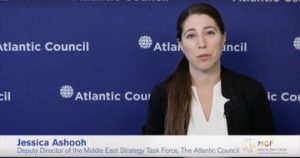
In 2017 Reddit hired Jessica Ashooh as their “Director of Policy”. Her LinkedIn page shows her previous employment was “Deputy Director, Middle East Strategy Task Force” at the Atlantic Council.
The report on which Reddit based their decision to ban users as part of a “Russian campaign” was written by Ben Nimmo, who also works for the Atlantic Council (and the Integrity Initiative).
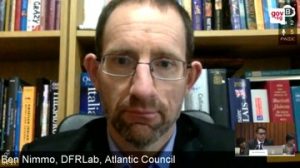
Essentially, Reddit has a high-up employee who was previously in the pay of the US Department of State (and possibly still is).
It’s a prime example of how the US (and UK) infrastructure create an authoritarian, highly-controlled state, whilst maintaining a veneer of “freedom”. There are other examples too.
A high profile, and obvious, one is Nick Clegg being hired by Facebook.
Facebook also hired Ukrainian journalist (and fascist sympathiser) Kateryna Kruk as “public policy manager”, she also has ties to the Atlantic Council. (A short while later Facebook started blocking links to OffGuardian ).
In 2017 Facebook hired Indian journalist Shivnath Thukral as director for public policy for India and South Asia. HIS previous employer was the Carnegie Endowment for International Peace (CEIP), another US NGO, funded by the State Department.
In 2011 Google hired Suzanne Michel as director of policy planning, she previously worked as Deputy Director of the Federal Trade Commission.
Then, in 2018, Google hired Karan Bhatia as their Global Head of Policy, Mr Bhatia had previously worked for the administration of George W. Bush.
It all follows the same pattern of apparent independence concealing an inter-connecting web of control, all dedicated to furthering the same agenda and all being funded by the same central source.
The Atlantic Council is not officially affiliated with the US government, neither is CEIP, they are notionally independent. Likewise, Reddit, Google, Facebook et al. are supposedly independent companies, not in any way controlled by the state.
… and yet you follow the money and it always leads to the same place.
Launch of “A Belgian Perspective on International Affairs”
By Gilbert Doctorow | November 24, 2019
I am pleased to announce the publication of my latest collection of essays. The capsule description of the book carried on the pages of internet booksellers is as follows
“The essays in this book deal with major political, social and cultural events primarily in Europe and Russia during the period 2017 – 2019 in which the author was a participant or eyewitness and has personal impressions to share. Several of the essays are drawn from other genres including travel notes, public lectures and reviews of particularly insightful books on key issues of our times like immigration, Liberalism and war with Russia that have not received the broad public exposure they merit.”
However, there is much more to the story that has relevance to its potential readers set out in the Foreword shown below, starting with the several layers of nuance in the title itself.
Foreword
The title of this book has been chosen with care and a few introductory words of explanation are owed to the reader.
First, the notion of a “Belgian perspective” on international affairs may on its own seem peculiar. In what way, one might ask, can little Belgium, with its population of around 12 million have a perspective that is unique and worthy of consideration? In the same vein, what perspective on foreign affairs in general can a lesser Member State of the European Union have when the most powerful Member State, Germany, denies that it has an independent foreign policy and defers to Brussels, specifically to the EU’s High Representative for Foreign Affairs and Security Policy, who, formally, holds sole responsibility for these matters on behalf of the 500 million plus people from 28 nations? Indeed, in a recent interview relating to the publication of his latest book, the octogenarian former prime minister of Belgium Marc Eyskens pointed out that the rise of the EU Institutions has left national governments with a substantially reduced level of sovereignty and competence comparable to that of a major city rather than of a country.
Meanwhile and in parallel, as the seat of both the NATO headquarters near the Zaventem Airport and of the Supreme Headquarters Allied Powers Europe in Mons, Belgium marches in lock-step with its US-led allies. Belgium’s mainstream media, both television and print media, traditionally support whatever policy line comes from the EU Institutions and NATO.
There have been rare exceptions to this solemn loyalty to the consensus. In particular, in the run-up to the US invasion of Iraq in 2003, Belgium was one of the three “Old Europe” nations, alongside France and Germany, that joined Russia in openly rejecting US policy. For this the nation’s Prime Minister at the time, Guy Verhofstadt, paid dearly, being disqualified from appointment to head the EU Commission, for which he was a leading candidate at the time.
But the aforementioned facts constraining the political elites of Belgium are by no means imperative for Belgian society as a whole. Indeed, as I detail in several essays in this collection, at both ends of society, the high end in their dinner jackets and at the mass, man-in-the-street level, there is very little sympathy for the official foreign and defense policies and a lot of free-thinking going on.
All of which brings us to the question of who is the Belgian whose perspective is set out in this tome. The simple and direct answer is that I am that Belgian.
Readers of my articles posted in various platforms on the internet have seen me described in the past as an American and long-time resident of Brussels. Both statements were and are correct. However, in August 2017 I also became a naturalized Belgian. This ‘second birth’ was more than seven years in gestation. After its successful culmination, I found myself increasingly involved in intra-Belgian, intra-European politics. Consequently, I have written with greater frequency on issues that are specific to the Old Continent. By their nature, these articles have not been picked up and disseminated via the internet platforms based in the United States by which readers know me best. Moreover, in my new guise I have written some of these articles or speeches in French so as to better reach prospective readers around me where I live and practice politics. These materials are also republished in this volume.
Notwithstanding the new elements, as in my preceding three collections of “nonconformist” essays published between 2013 and 2017, the major part of my writings is focused on present-day Russia and its relations with the United States and Europe. Russia is my main field of interest and expertise coming both from book learning and from life experience as a frequent visitor to the country over many decades and also as someone who has both lived and worked there for eight years beginning in 1994. That is something very few of our commentators in the West can say before they launch into ill-informed vitriolic attacks on the “Putin regime” and Russians as a people.
Since all of the essays presented here have been published on the internet in one way or another, it is legitimate to ask what is the added value of republishing them as a book. There are several answers to that question, ranging from the superficial but adequate to an answer that goes to the heart of how I see my social role in writing these pieces.
The superficial but adequate explanation is that everything is transient, nothing more so than the internet, where digital platforms are here today, gone tomorrow, where even one’s own blog site lasts no longer than the latest annual fees payment. And while e-books may be no more durable than the publishing company maintaining and distributing the digital files, physical books deposited in libraries will be accessible to the curious public and to researchers as long as the human race continues on its way, which may or may not be eons depending on your degree of pessimism inspired by this and similar works by my fellow “dissidents” on international affairs.
The deeper explanation is that influencing public opinion towards détente, towards self-preservation and away from confrontation with Russia that can easily end in catastrophe presently does not appear to be actionable. This is so for banal but understandable reasons that have to do firstly with the way the United States is governed internally and secondly how the United States rules over “the free world.”
Over the past twenty years or more, repeated polls taken by Pew and other research institutions have shown that the American public does not support foreign military adventures or a world gendarme role for their country. However, the political establishment pays no heed whatsoever to this clear disposition of the electorate just as the views of the electorate on a great many other issues are ignored by Congress and by the Executive branch. This follows from the financial dimension of getting and staying in power. By campaign funding and lobbying, a tiny number of exceedingly wealthy individuals and corporations effectively make policy at the federal level, and accommodation with the world is not on their agenda.
Meanwhile, whether as a result of awareness of their powerlessness or for other reasons, the broad American public is apathetic as concerns foreign policy. People just don’t want to disturb their peace of mind by contemplating the aggressive, bullying behavior of their government on the international stage. “Our boys” are not being killed abroad in significant numbers. The budgeted military expenses of the USA are being financed by others who buy Washington’s Treasury notes. There is nothing to force a reckoning with what is being done in the name of America abroad. Least of all, with respect to Russia, which has taken with surprising equanimity the sanctions and other punishments meted out to them over their alleged bad conduct in Ukraine and Syria, over their alleged meddling in American and European elections. The notion that the West might be crossing their red lines at some point, that the economic and informational war might spill over into kinetic war that escalates quickly – such thoughts could not be further from the minds of people in the States or in Western Europe, including those who take a real interest in public affairs and think they are au courant.
This is not to say that the essays published here and similar writings by my comrades-in-arms have no readers. On the contrary, our works are republished by portals other than our own. They are referenced on social networks and attract considerable numbers of “hits,” meaning individual readers. Some of the essays in this book have reached an audience numbering in the tens of thousands. But so far the dry residue of this relative success remains inconsequential. No broad-based political movement championing my/our principles of détente has emerged. There are no demonstrations on behalf of peace, while there are American and worldwide demonstrations to fight for renewable energy and for programs to combat climate change, or to fight for gender issues and equality of pay.
So, why write? why publish?
This takes us to the question of self-definition and social role.
We are living through Dark Ages today, notwithstanding all the technical achievements of our science and technology and advanced medicine. At the moral, social and political levels, these are bleak times when “progressive” values trample upon traditional moral and ethical, not to mention religious values, when freedom of expression and other civil liberties have been gutted for the sake of public security and to serve demagogic purposes.
In this context, these writings are intended to be an eyewitness account of the prevailing moral and political decadence for the edification of those in future generations who will have their own battles to fight to safeguard cultural traditions and freedoms. In assuming this role of a chronicler, I seek to continue the work of those who passed this way half a century ago or more and who left behind their own writings of the day, which gave me spiritual encouragement and purpose when I came across them.
At the same time, I do not abandon the hope that my compatriots in America and now also in Europe will come to their senses and explore these writings and the writings of my fellow dissidents to find an antidote to the propaganda about the recent past and present being dispensed by government, by mainstream media and by all too many scholars in the field.
One straw in the wind was a July 2019 editorial in the hawkish, till now fanatically anti-Russian New York Times calling for a rapprochement with Russia before that country aligns definitively with China and recreates a global threat to American interests. Or I refer to the publication of an article co-authored by former Georgia Senator Sam Nunn in the September-October edition of Foreign Affairs magazine, another standard bearer of U.S. hegemony, stating in detail the existential risks we incur by having cut lines of communication with Russia and by entering into a new, uncontrolled arms race with that country. As the Chair of the Senate Committee on Armed Services from 1987 to 1995, he was a leading figure in arms control negotiations. In the new millennium, Nunn has been one of the generally recognized “wise men” in the American political establishment, alongside Henry Kissinger, George Shultz and James Baker.
There is also an impulse for optimism coming from the latest declarations of French President Emanuel Macron, who is striving to assume leadership of the European Union’s policy agenda now that control is slipping from the hands of Germany’s Iron Lady, Angela Merkel in the waning days of her chancellorship. In his speech to French ambassadors following the conclusion of the G7 summit meeting in Biarritz on the weekend of 24-25 August, Macron stated very clearly that Europe must put an end to its policy of marginalizing and ostracizing Russia because the Old Continent needs to work cooperatively with Moscow if it is not to become a powerless bystander to the growing conflict between the United States and China.
Such signs of sobriety and concern for self-preservation suggest that all is not lost in the cause of détente.
For those who have not read my earlier works, I repeat here that my essays are often devoted to major events of the day, but are not systematic or comprehensive. I wrote only when I believed that I had a unique perspective, often from my direct participation in the event as actor or firsthand witness. I have not taken up subjects where all of my peers were piled up on the line or were basing themselves on secondary sources. I consider my own writings to be primary sources in an extended, autobiographical genre.
However, they do not constitute pure autobiography. That is something I am writing in parallel in a book devoted to Russia in the wild 1990s, which I saw at ground level as the country General Manager working from offices in Moscow and St Petersburg for a succession of major international producers of consumer goods and services.
* * * *
On-line bookseller Amazon has been fastest off the mark posting the book for sale in hardbound, paperback and e-book formats through its global network of websites including amazon.com, amazon.fr, amazon.de, amazon.co.uk, amazon.com.au, plus others in Latin America and Asia. Amazon competitor in the U.S. market, http://www.barnesandnoble.com, also offers all three formats. Both websites provide a ‘look inside’ option, facilitating browsing. For e-book purchasers in Europe, an alternative and cheaper vendor is http://www.bol.com. For U.S. purchasers, the least expensive vendors of the e-book at this moment are Barnes & Noble and the publisher’s own online bookstore: https://www.authorhouse.com/en/bookstore/bookdetails/805594-a-belgian-perspective-on-international-affairs
©Gilbert Doctorow, 2019
Newsweek reporter resigns after accusing outlet of SUPPRESSING story about OPCW leak
RT | December 8, 2019
A reporter for Newsweek says he has quit his job after his editor allegedly refused to publish an article about an internal email that raises serious questions about the OPCW’s findings on an alleged gas attack in Douma, Syria.
“Yesterday I resigned from Newsweek after my attempts to publish newsworthy revelations about the leaked OPCW letter were refused for no valid reason,” Tareq Haddad tweeted out on Saturday.
The recently-leaked document contradicts key conclusions in a report by the Organization for the Prohibition of Chemical Weapons (OPCW), about the April 2018 chemical weapons attack in Douma. The incident was blamed on Damascus and was used by the US and its allies to justify airstrikes against Syrian military installations.
The email, sent by an OPCW inspector who participated in the Douma probe, outlines several instances in which facts discovered by his team had been distorted or suppressed in the OPCW’s draft report, resulting in “an unintended bias” in the resulting text.
In a series of follow-up tweets, the former Newsweek journalist said that he had “collected evidence of how they suppressed the story,” adding that he also had evidence that the outlet had cut material, in a separate incident, because the information was “inconvenient to the US government” – even though it was factually correct.
Tareq claims that he was threatened with legal action after he’d asked his editor why his story about the damning leak had been refused.
Since making the announcement, the now-unemployed reporter has received accolades for his journalistic integrity. His story has also caught the attention of several prominent journalists, including Mail on Sunday columnist Peter Hitchens, who has been a fierce critic of western media’s coverage of the Douma attack.
While media outlets rushed last year to blame Damascus for the attack, the leaked email – as well as some troubling revelations from an OPCW whistleblower – have been almost completely ignored by the western press.
Iraq on precipice of deeper chaos as US steps up meddling
Press TV – December 8, 2019
Alarm bells are starting to ring for Iraq where a series of suspicious events, including unknown assailants machine-gunning protesters in Baghdad and a drone targeting an anti-US cleric, have raised fears of the country slipping deeper into violence and chaos.
Armed men emerged from cars overnight Friday, opening fire on protesters and killing at least 25 people who were in a building where many supporters of Moqtada al-Sadr gathered to stage demonstrations.
Sources said nearly 130 others were wounded by gunfire and stabbings which targeted protesters at the Sinak bridge near Tahrir Square. At least three of the dead were policemen.
The demonstrators called on the Iraqi military to intervene, but some soldiers were attacked when they arrived, adding to the confusion and forcing them to retreat.
Witnesses said at least some of the attackers, and maybe all of them, fled the scene in white pickup trucks. Video footage showed at least seven vehicles.
No one has claimed responsibility for the lethal assaults, which have been rare since the protests began more than two months ago, but such assaults bear all the hallmarks of Takfiri terrorist groups.
President Barham Salih on Saturday said the attack on protesters was “a criminal, armed attack carried out by criminal and outlaw gangs,” calling on security forces to “chase the outlaw criminals and arrest them and bring them to the judiciary for punishment.”
According to witnesses, some of the gunmen involved in the Baghdad attack appeared to be wearing the military uniforms of government forces, a tactic which Takfiri groups have frequently used in the past.
Some of the attackers were wearing uniforms of the pro-government Hashd al-Sha’abi, and some were in civilian clothes, they said.
US targets regular bete noire
The US was quick to implicate Hashd al-Sha’abi, a combination of some 40 groups of mostly Shia fighters as well as Sunnis and Christians, which are currently integrated into the regular armed forces.
In a statement released on Friday, US Secretary of State Mike Pompeo announced sanctions on Qais al-Khazali and his brother Laith, two leaders of the Asaib Ahl al-Haq group, as well as Hussein Falil Aziz al-Lami of Kata’ib Hezbollah.
Iraqi groups denounced the measure, with the Hikma bloc of the Iraqi parliament decrying it as an instance of “blatant meddling in Iraq’s affairs.”
“Die of your anger, for we lead the resistance against occupation, Takfiri terrorism, separatism and ambitions,” spokesperson for the al-Sadiqoun parliamentary bloc Mohammad al-Rabiei said, adding that his groups stand “against the hegemonic plans of the US.”
Washington has long pressured Iraqi governments to counter Hashd al-Sha’abi which is staunchly opposed to the presence of American forces and closely watches their steps in Iraq.
Daesh link
On Friday, Hashd al-Sha’abi sources said the US was allowing Daesh to roam freely under its watch in Iraq’s western Anbar province.
“The way in which American aircraft act in regard to Daesh positions in al-Anbar’s northern areas has raised many questions,” Iraq’s al-Maalomah news agency quoted an unnamed source in Hash al-Sha’abi’s Operations Command in Anbar as saying.
“American planes fly over these regions for long durations without striking any Daesh cell positions,” the source said.
The American behavior was “surprising,” specifically because the mission of US forces deployed in Anbar’s Ayn al-Assad military base was to “strike Daesh sleeper cells,” the source added.
Hashd al-Sha’abai was formed shortly after the Daesh terrorist group emerged in Iraq in 2014. In November 2016, the Iraqi parliament voted to integrate the group into the regular armed forces despite US efforts to sideline it.
US forces and Israeli-operated drones have repeatedly targeted Hashd al-Sha’abi forces in the past, Iraqi officials have said.
On Friday, a drone hit the al-Hannanah neighborhood in the holy city of Najaf, where the residence of staunch anti-American cleric al-Sadr is located.
Iraqi officials called for an investigation into the attack apparently targeting Sadr as well as the killing of protesters in Baghdad.
The attack in Baghdad came just after Iraqis took to the streets in the capital to back top Iraqi cleric Grand Ayatollah Ali al-Sistani.
During his weekly Friday sermon, Ayatollah Sistani said violence and chaos will only hinder true reforms as demanded by anti-corruption and economic protesters in Iraq, calling on demonstrators to counter violent rioters.
A representative of Ayatollah Sistani conveying the cleric’s sermon to worshipers during the Friday prayers in Karbala, advised the protesters against allowing rioters to infiltrate the rallies and target “security forces and destroy public and private property.”
Featured Video

Thomas Fazi: NATO’s Hybrid Warfare – Deception & Permanent War
or go to
Aletho News Archives – Video-Images
Book Review
UAE tortured, killed journalist for opposing Israel normalization
The Cradle | October 31, 2026
UAE security officers detained, tortured, and killed Emirati poet and news editor Habib al-Sayegh in August 2019, shortly after he published a column opposing UAE normalization with Israel, according to a newly published book.
“Princes and Thieves,” a book by investigative journalist Matthew Cole published on 25 October, alleges that UAE security officers raided Sayegh’s Abu Dhabi home shortly after the publication of the column, hooded him in front of his wife and took him to a detention facility where he was tortured to death.
His interrogators reportedly pulled out several of his teeth with pliers and beat him repeatedly with a sharp metal object.
On 11 August 2019, Sayegh criticized the UAE’s plan to normalize relations with Israel as part of the Abraham Accords in his weekly column for Khaleej newspaper. The column was titled “Israel Is Our Real Enemy and A Dangerous Project.”
Sayegh described Israel as “a real and natural enemy” while questioning “who authorized the normalizers to speak on behalf of everyone?”
Nine days after the column was published, Emirati state media announced his death, without stating a cause. … continue
Blog Roll
 Aletho News
- ‘The Arab Vote’: How Israeli Racism Has Ruined Their Elections
- Israel forces Palestinians in Gaza to choose between assassination alone or death with their families: Report
- US Approves Sale of 500 Patriot Missiles to Ukraine, Deliveries May Take Years
- German Imperialism: An Urgent Explainer
- Backed by AAP, West Virginia Proposal Would Allow Dental Hygienists to Give HPV Vaccine to 9-Year-Olds
- Poland Is the Symptom and Europe Is the Patient
- UAE security forces tortured, killed journalist for opposing Israel normalization: Report
- They Compared the Spice to the Drug. The Spice Won — Again. (Part 2)
- Thomas Fazi: NATO’s Hybrid Warfare – Deception & Permanent War
- Wrong, AP and NPR: Europe’s 50,000 Heat Deaths Are a Computer-Model Estimate, Not a Real Body Count
- If Americans Knew
- DAILY UPDATE: Latest essential news on Palestine, Israel, & region
- 1,300 will gather in Palo Alto on Nov. 1 for Z3 Conference on Zionism
- DAILY UPDATE: Latest essential news on Palestine, Israel, & region
- The Long Arm of AIPAC
- Genocidal intent behind Hebron assault, rights group says
- This week, Israel killed 8-year-old who survived bombing that wiped out her family
- DAILY UPDATE: Latest essential news on Palestine, Israel, & region
- Israeli soldier poses at damaged Lebanon church, sparking anger
- New Report. Manufacturing the Great Replacement: Is Israel behind one of the largest racist influence campaigns ever documented?
- ‘Arab voice doesn’t count’: Jewish Israeli blocs reject Palestinian support
- No Tricks Zone
- Germany’s Green Energy Transition Becoming Increasingly Expensive…Another 6 Trillion Euros!
- Sudden Stratospheric Warming, Powerful El Niño Combination May Lead To Extreme Europe Cold, Energy Crisis!
- Two New Studies Find Thwaites Glacier Melt Cannot Be Driven By Human Activity Or A Warming Ocean
- E-Cars Reduce CO2 Emissions By Only 41% Compared To Internal Combustion Engine Vehicles
- Predictions Made By Renowned Climate Professor Over Past Decades Have Been Proven To Be Poor
- New Study Suggests Large Regions Of The Pacific Ocean Have Been Cooling For The Last 80 Years
- Germany’s Green Energy Debacle: High Energy Costs Force Kahla Porzellan to Close After 182 Years!
- New Study: 50 Years Of The Most Aggressive ‘Net Zero’ Policies Can Only Affect The Global Climate By 0.03°C
- US September “Heat” Was No Record…Many Records Set Decades Ago
- Latest European Green Energy Debacle; Portugal’s Largest Flagship Solar Park Insolvent!

