Martial Law Masquerading as Law and Order: The Police State’s Language of Force
By John W. Whitehead | The Rutherford Institute | September 16, 2019
Forget everything you’ve ever been taught about free speech in America.
It’s all a lie.
There can be no free speech for the citizenry when the government speaks in a language of force.
What is this language of force?
Militarized police. Riot squads. Camouflage gear. Black uniforms. Armored vehicles. Mass arrests. Pepper spray. Tear gas. Batons. Strip searches. Surveillance cameras. Kevlar vests. Drones. Lethal weapons. Less-than-lethal weapons unleashed with deadly force. Rubber bullets. Water cannons. Stun grenades. Arrests of journalists. Crowd control tactics. Intimidation tactics. Brutality.
This is not the language of freedom.
This is not even the language of law and order.
Unfortunately, this is how the government at all levels—federal, state and local—now responds to those who choose to exercise their First Amendment right to peacefully assemble in public and challenge the status quo.
Recently, this militarized exercise in intimidation—complete with an armored vehicle and an army of police drones—reared its ugly head in the small town of Dahlonega, Ga., where 600 state and local militarized police clad in full riot gear vastly outnumbered the 50 protesters and 150 counterprotesters who had gathered to voice their approval/disapproval of the Trump administration’s policies.
To be clear, this is the treatment being meted out to protesters across the political spectrum.
The police state does not discriminate.
As a USA Today article notes, “People demanding justice, demanding accountability or demanding basic human rights without resorting to violence, should not be greeted with machine guns and tanks. Peaceful protest is democracy in action. It is a forum for those who feel disempowered or disenfranchised. Protesters should not have to face intimidation by weapons of war.”
A militarized police response to protesters poses a danger to all those involved, protesters and police alike. In fact, militarization makes police more likely to turn to violence to solve problems.
You want to turn a peaceful protest into a riot?
Bring in the militarized police with their guns and black uniforms and warzone tactics and “comply or die” mindset. Ratchet up the tension across the board. Take what should be a healthy exercise in constitutional principles (free speech, assembly and protest) and turn it into a lesson in authoritarianism.
Frankly, any police officer who tells you that he needs tanks, SWAT teams, and pepper spray to do his job shouldn’t be a police officer in a constitutional republic.
Indeed, this is martial law masquerading as law and order.
All that stuff in the First Amendment sounds great in theory. However, it amounts to little more than a hill of beans if you have to exercise those freedoms while facing down an army of police equipped with deadly weapons.
It doesn’t have to be this way.
There are other, far better models to follow.
For instance, back in 2011, the St. Louis police opted to employ a passive response to Occupy St. Louis activists. First, police gave the protesters nearly 36 hours’ notice to clear the area, as opposed to the 20 to 60 minutes’ notice other cities gave. Then, as journalist Brad Hicks reports, when the police finally showed up:
They didn’t show up in riot gear and helmets, they showed up in shirt sleeves with their faces showing. They not only didn’t show up with SWAT gear, they showed up with no unusual weapons at all, and what weapons they had all securely holstered. They politely woke everybody up. They politely helped everybody who was willing to remove their property from the park to do so. They then asked, out of the 75 to 100 people down there, how many people were volunteering for being-arrested duty? Given 33 hours to think about it, and 10 hours to sweat it over, only 27 volunteered … and were escorted away by a handful of cops. The rest were advised to please continue to protest, over there on the sidewalk … and what happened next was the most absolutely brilliant piece of crowd control policing I have heard of in my entire lifetime. All of the cops who weren’t busy transporting and processing the voluntary arrestees lined up, blocking the stairs down into the plaza. They stood shoulder to shoulder. They kept calm and silent. They positioned the weapons on their belts out of sight. They crossed their hands low in front of them, in exactly the least provocative posture known to man. And they peacefully, silently, respectfully occupied the plaza, using exactly the same non-violent resistance techniques that the protesters themselves had been trained in.
As Forbes concluded, “This is a more humane, less costly, and ultimately more productive way to handle a protest. This is great proof that police can do it the old fashioned way – using their brains and common sense instead of tanks, SWAT teams, and pepper spray – and have better results.”
It can be done.
Police will not voluntarily give up their gadgets and war toys and combat tactics, however. Their training and inclination towards authoritarianism has become too ingrained.
As I make clear in my book Battlefield America: The War on the American People, if we are to have any hope of dismantling the police state, change must start locally, community by community. Citizens will have to demand that police de-escalate and de-militarize. And if the police don’t listen, contact your city councils and put the pressure on them.
Remember, they work for us. They might not like hearing it—they certainly won’t like being reminded of it—but we pay their salaries with our hard-earned tax dollars.
We must adopt a different mindset and follow a different path if we are to alter the outcome of these interactions with police.
The American dream was built on the idea that no one is above the law, that our rights are inalienable and cannot be taken away, and that our government and its appointed agents exist to serve us.
It may be that things are too far gone to save, but still we must try.
Will pro-Israel rabbi heading top theology center change its direction?

Rabbi Daniel Lehmann, with a history of advocating for Israel despite its many human rights abuses, is about to be inaugurated president of the ‘most comprehensive center for the graduate study of religion in North America’ – a ‘mostly-Christian’ center with a focus on peace and justice. Lehmann has already opposed a prominent Muslim professor and aired misgivings about America’s first Muslim college, located right across the street…
By Alison Weir | If Americans Knew | September 16, 2019
On October 24th, Rabbi Daniel Lehmann will be inaugurated as the President of the Graduate Theology Union (GTU), reportedly “the most comprehensive center for the graduate study of religion in North America.” The Jewish Telegraphic Agency (JTA), reports GTU is a “mostly Christian theology center,” stating that it is “a consortium of more than 20 mostly Christian institutions.”
Located in Berkeley, California, GTU is known for its focus on world peace and social justice.
Its website emphasizes that it is “more than a school of theology” and “more than a graduate school.” It works to educate “innovative leaders for the academy, religious organizations, and the nonprofit sector” in ways that will equip them to build “a more just, peaceful, and sustainable world.”
In the announcement naming Lehmann as the new president, GTU board chair Susan Cook said: “Rabbi Daniel Lehmann is unquestionably the right person to lead the Graduate Theological Union in its interreligious engagement of the critical issues of our time.”
Lehmann supports Israel despite its human rights violations
Regarding one of those critical issues – Israel/Palestine – Rabbi Lehmann’s past history and current statements suggest that he brings a perspective opposed, at least on this issue, to GTU’s avowed goal of justice and peace.
Rabbi Lehmann has a long history of advocating for Israel in spite of its violations of international law and human rights (he calls himself a “Zionist”), and publicly opposes the international nonviolent protest movement to boycott Israel over those violations, known as “BDS” – Boycott, Divestment, Sanctions. According to its website, “BDS is a Palestinian-led movement for freedom, justice and equality. BDS upholds the simple principle that Palestinians are entitled to the same rights as the rest of humanity.” (Lehmann’s statements are quoted extensively below.)
Numerous highly respected humanitarian organizations, including Human Rights Watch, Amnesty International, Christian Aid, the Red Cross, Unicef, the National Lawyers Guild and many others have documented Israel’s long record of human rights violations and systemic discrimination.
Israel was established in 1948 through a war of ethnic cleansing, as Israeli historian Ilan Pappé and many others have documented.
It then instituted a discriminatory system in which most of the previous inhabitants, largely Muslim and Christian, were either forced out of the new state or treated as second-class citizens.
In 1967 Israel launched a war against its neighbors, resulting in the military occupation of the rest of Mandatory Palestine. Ever since, it has oppressed the inhabitants of what are now called the Occupied Palestinian Territory, the West Bank and Gaza Strip. Israeli forces invade Palestinian towns and villages, demolish homes, abduct people, raze farmland, and more on a weekly and often a daily basis.
Israel has also steadily confiscated more and more Palestinian land to create Jewish-only settlements, which are illegal under international law, and perpetrated major military invasions of Gaza that have killed and injured thousands of civilians, including numerous children.
Antipathy toward Muslim college & professor
Furthermore, some of Rabbi Lehmann’s statements seem unbecoming to a leader of interfaith programs.
While Rabbi Lehmann is the past president of a Jewish college, he appears ill-disposed toward a Muslim college across the street from GTU and verbally attacked one of its professors: a respected, decades-long member of Berkeley’s peace and social justice community – a faculty member at UC Berkeley who is also a leader in the Muslim community.
In a 2018 interview with Rabbi Lehmann after he had been named GTU head, Jewish News Syndicate (JNS) asked him: “What do you expect will be the biggest challenges in your new position?”
Lehmann replied:
“UC Berkeley, from a BDS perspective, is a challenging place. GTU is only a block off the Berkeley campus, and I suspect there will be times in which what happens there will impact me and others at GTU.”
Lehmann was referring to the fact that Berkeley’s student senate has twice passed pro-BDS resolutions. (After the first resolution, an AIPAC official said: “ We’re going to make certain that pro-Israel students take over the student government and reverse the vote. This is how AIPAC operates in our nation’s capital. This is how AIPAC must operate on our nation’s campuses.”) GTU has long had a collaborative arrangement with Berkeley.
Muslim college across the street “a challenge”
Lehmann continued:
“Another challenge is that across the street is the first and currently only Muslim undergraduate college, Zaytuna. The relationships so far between them and GTU have been good, but depending on the culture there and what kind of political engagement is taking place on the Israeli-Palestinian situation, there could be challenges.”
In the past year, Israeli forces have killed over 300 unarmed demonstrators and injured about 30,000 (6,000 of them children) in Gaza. In response, Palestinian resistance groups in Gaza killed 8 Israelis and injured around 280. Most of those listed in Israel’s official count of “injuries” were never hospitalized; many of them were described as “suffering from shock.”
By contrast, the UK Guardian reports about Gaza: “Thousands have bullet wounds through their legs. The streets of Gaza are filled with people limping or in wheelchairs. Children, journalists and medics have been killed, even when they were standing far back from the fence. The UN has said Israel’s military may have committed war crimes, deliberately targeting civilians.”
(More information on deaths among both populations is here.)
While the U.S. has long had Christian and Jewish colleges, Zaytuna College is the first accredited Muslim undergraduate college in the United States. It was founded in 2009 by individuals considered to be “among the best-known and most-respected Muslim scholars in America.”
Religious News Service reports that Zaytuna, which means ‘olive tree’ in Arabic, hopes to be a vehicle for interfaith dialogue and help promote cross-cultural understanding.
A college official says:
“These kinds of institutions in the long term are absolutely necessary for bridging the divide that currently exists and the misunderstanding that many have about Islam and Muslims.”
In his interview with JNS, Lehmann went on to say:
“I know they have a prominent member of their community who is a vociferous and vitriolic pro-Palestinian voice from Nablus; he is a concern for me, as I’m interested in making sure the culture is not toxic in any way or has tension as a result of that. I’m pretty out there as a Zionist…”
The individual he is referring to is Dr. Hatem Bazian. Dr. Bazian, a longtime member of the UC Berkeley faculty, has been active in anti-racist, pro-peace activities for decades. He is widely respected in the community, including by members of GTU’s consortium.
In fact, two GTU member institutions, Pacific School of Religion and Pacific Lutheran Theological Seminary, sponsored a talk in which he was a panelist. It is unknown whether these institutions are aware that Rabbi Lehmann called Dr. Bazian “vitriolic” and potentially “toxic.” Both institutions are founding members of GTU.
As a leader in the BDS movement and founder of American Muslims for Palestine, Dr. Bazian has been attacked by Israel partisans for many years. The New Yorker reports that internal documents from a private Israeli intelligence firm called Psy-Group show that it was “targeting Bazian because of his leadership role in promoting the Boycott, Divestment, Sanctions movement, known as B.D.S.”
In former position, Lehmann worked to strengthen Hebrew College’s connections to Israel
Lehmann moved to Berkeley from Massachusetts, where he was president of Hebrew College, a Jewish graduate school in Newton Centre, outside of Boston. While there, Lehmann “emphasized and nurtured Hebrew College’s relationship with Israel, expanding partnerships and collaborations with institutions there, and spearheading the formulation of the College’s Israel Statement,” according to Hebrew’s chairman.
In Lehman’s farewell letter to Hebrew, he wrote that the “the strong connections we have made with Israel” were among the actions that “brought new life to our sacred mission.”
In an article for Jewish Boston, Lehmann wrote:
“Hebrew College from its inception has been and continues to be a Zionist institution with strong bonds to Israel and the Hebrew language. Our rabbinical school shares our commitment to foster a deep attachment to the land, people and state of Israel.”
In the article he discussed how to “foster a love for Israel among our rabbinical students.”
Lehmann stated:
“We need to help [students] understand what is necessary to protect the Jewish people and the State of Israel from nefarious and hateful groups and governments, especially those that David Brooks has recently described as ‘depraved regimes.’ [Editor’s note: Brooks’ son served in the Israeli military.] We must do a better job in bringing this awareness of our precarious condition to those students who bask in the light of the universal, but we ought not to ignore the powerful messages of strength and independence that the State of Israel sends about its place in the world.”
Israel’s “messages of strength” have been excruciating for multitudes of Palestinians and others. Its forces have launched several major invasions of Gaza in which multitudes of children have been killed and injured alongside adults and the elderly, equally ruthless invasions of Lebanon, and also frequent invasions of the West Bank, where they regularly abduct Palestinians, demolish homes, and oppress villagers, as mentioned above.
Lehmann is also a cofounder of the Hevruta gap-year program in Israel. The program’s website states: “After completing the program, Hevruta alumni will be well-positioned to use their influential voices to shape the Jewish people’s most important conversations and communal decisions.”
Chair of world’s largest theological consortium
While he was living in Massachusetts, Rabbi Lehmann was board chair of the Boston Theological Institute, a historically Christian institution that has been called “the largest theological consortium in the world.”
The Complete Pilgrim, a blog that focuses on religious sites around the world, reports:
“The Boston Theological Institute is possibly the largest religious education institution of its kind in the world. Not itself a school, it is a consortium of ten of the most prestigious and historic theology colleges and departments in the United States. Some of the oldest divinity schools in the nation are part of the BTI, including the oldest, Andover Newton Theological School.”
JNS reports that Lehmann had “successfully led Hebrew College to become the first non-Christian institution to join that theological consortium.”
In a 2016 article, New Boston Post described how this came about:
“Five years ago, Lehmann approached the Boston Theological Institute, a consortium of nine Christian theology schools. He thought Hebrew College should join other institutions that train clergy. The organization had been entirely Christian, but they modified their mission statement to welcome their new participant. Lehmann was recently elected board chair of the organization.”
In an article for Jewish Boston, Lehmann wrote:
“Our request for membership was not without some controversy given the explicit Christian orientation of the consortium for more than 40 years, but after some intense conversations within the BTI board, the invitation to join was extended and in January of 2011 we officially became a member of the consortium of nine other schools.”
Lehmann states:
“Subsequent to our joining the BTI, the mission statement of the BTI had to be revised to reflect the new interreligious nature of the consortium. I, together with a number of other board members, drafted a new mission statement that focused on our goals as theological institutions preparing religious leaders and scholars for a pluralistic world.”
In May 2018, the institution changed its name to “Boston Theological Interreligious Consortium.”
Why is all this relevant? To understand, we need to look at BTI’s history on Israel-Palestine.
A few years before Lehmann approached BTI about joining, the institute had co-sponsored a pro-Palestinian conference by a Christian organization, Sabeel, that featured a keynote address by South African anti-apartheid leader, Bishop Desmond Tutu, as well as talks by Noam Chomsky, UN Rapporteur John Dugard, and others. We can’t find any evidence that BTI has supported such events in recent years.
Lehmann will bring ‘different set of perspectives”
While Berkeley’s GTU does not seem to have sponsored similar conferences, in past years it has promoted events that have included speakers such as Sabeel member Rosemary Radford Ruether, a longtime supporter of Justice and peace for Palestinians; Stanford Professor Khalil Barhoum, a Palestinian refugee and eloquent speaker on the issue; Judith Butler, a Jewish journalist who opposes Zionism; Rabbi Lynn Gottlieb, an advocate for Palestinian human rights; and an event against Islamophobia at Zaytuna College.
Now that Rabbi Lehmann is in place, it is uncertain whether GTU will again announce these or similar speakers. While the past events it has endorsed have often featured voices from both sides of the issue, Rabbi Lehmann’s appointment means that one side will now be at the helm – and a side that is a particularly hardcore. An event featuring a prominent Palestinian theologian that took place after Rabbi Lehmann began acting as president does not seem to have been announced on the GTU Website, even though it was co-sponsored by members of the GTU consortium, and the event took place on the GTU campus.
Last year, Jewish News of Northern California interviewed Rabbi Lehman about his appointment to lead GTU.
In the interview Lehmann said:
“I’m coming as an outsider to the dominant Christian culture that has nurtured GTU, and that’s inevitably going to bring a different set of perspectives.”
Rabbi Lehmann told JNS :
“I’m pretty out there as a Zionist and politically centrist, while most GTU leadership has been on the progressive Christian side.”
A diversity of perspectives could be a good thing. But only time will tell what Lehmann’s perspectives on the Middle East will mean for GTU’s actions regarding Israel-Palestine – and for its neighbors who are Palestinian and Muslim.
GTU officials were asked to comment for this article, but a GTU spokesperson (recently hired by Rabbi Lehmann) said they were unable to be reached.
Alison Weir is executive director of If Americans Knew, president of the Council for the National Interest, and author of the best selling book Against Our Better Judgment: The Hidden History of How the U.S. Was Used to Create Israel.
Israel to rule on revoking BDS founder’s residency

Omar Barghouti, the Palestinian co-founder of the BDS movement
MEMO | September 16, 2019
Efforts to revoke the residency of Omar Barghouti, the co-founder of the Boycott, Divestment and Sanctions Movement (BDS), have been escalated to Israel’s deputy Attorney General for a decision over his status in the country.
Barghouti, considered “major threat to the citizens of Israel” by the country’s ultra-right politicians, has already been banned from entering the US; a decision denounced by the Palestinian human rights activists as “McCarthyite repression”. His entry ban in April along with Israel’s decision to block American Congresswomen Rashida Tlaib and Ilhan Omar from entering the country due to their support for BDS, is being used by Barghouti’s opponents in Israel to revoke his residency status.
Keti Shitrit, a member of the Likud Party, which does not recognise the right of Palestinians to a state of their own and campaigns for a Zionist state from the “Jordan River to the Sea”, is reported protesting against the “absurd situation where Israel denied entry to two Congresswomen due to their support of BDS, while allowing the BDS founder and leader to reside in Israel and receive full benefits from the State of Israel”.
The remarks came as the Israeli government faces further pressure to expel Barghouti from the country. The initial call to revoke his residency status came from Betzalmo. In its letter to the Israeli Attorney-General Avichai Mandelblit and Interior Minister Arye Deri, the right-wing NGO noted the US’ denial of entry and asked why the Israeli government has not acted in a similar fashion to strip Barghouti of his residency rights.
According to Arutz Sheva, Mandelblit has referred the decision to Deputy Attorney General, Dina Zilber.
“We are pleased that the AG [Attorney General] has finally decided, after years of appeals from Betzlamo and several MKs, including the Minister of the Interior who addressed him on the matter, to pass this decision to the Deputy AG,” the Israeli group said in a letter. “We have no doubt that the Deputy AG shall decide that anyone who harms the State of Israel will not receive benefits from it. Any other decision would ridicule and curtail Israel’s struggle against the boycott movement and the Israel’s demand from other countries to fight against it,” it added.
Knesset member Shitrit is reported to have written to Deputy Attorney General, in what seems to be an attempt to put further pressure on Zilber. “It has been brought to my attention the decision whether to revoke the BDS leader Omar Barghouti’s residency is at your desk,” the Likud MK said. After denouncing BDS she added: “honorable Deputy AG, I urge you to exercise your authority, to weaken the power of the BDS leader, to maintain our dignity and not to let our major enemy dwell within us.”
Will Trump Take Neocon Bait and Attack Iran Over Saudi Strike?
By Ron Paul | September 16, 2019
The recent attacks on Saudi oil facilities by Yemeni Houthi forces demonstrate once again that an aggressive foreign policy often brings unintended consequences and can result in blowback. In 2015 Saudi Arabia attacked its neighbor, Yemen, because a coup in that country ousted the Saudi-backed dictator. Four years later Yemen is in ruins, with nearly 100,000 Yemenis killed and millions more facing death by starvation. It has been rightly called the worst humanitarian catastrophe on the planet.
But rich and powerful Saudi Arabia did not defeat Yemen. In fact, the Saudis last month asked the Trump Administration to help facilitate talks with the Houthis in hopes that the war, which has cost Saudi Arabia tens of billions of dollars, could finally end without Saudi crown prince Mohammad bin Salman losing too much face. Washington admitted earlier this month that those talks had begun.
The surprise Houthi attack on Saturday disrupted half of Saudi Arabia’s oil and gas production and shocked Washington. Predictably, however, the neocons are using the attack to call for war with Iran!
Sen. Lindsay Graham, one of the few people in Washington who makes John Bolton look like a dove, Tweeted yesterday that, “It is now time for the US to put on the table an attack on Iranian oil refineries…” Graham is the perfect embodiment of the saying, “when all you have is a hammer, everything looks like a nail.” No matter what the problem, for Graham the solution is war.
Likewise, Secretary of State Mike Pompeo – who is supposed to represent US diplomacy – jumped to blame Iran for the attack on Saudi Arabia, Tweeting that, “Iran has now launched an unprecedented attack on the world’s energy supply.” Of course, he provided no evidence even as the Houthis themselves took responsibility for the bombing.
What is remarkable is that all of Washington’s warmongers are ready for war over what is actually a retaliatory strike by a country that is the victim of Saudi aggression, not the aggressor itself. Yemen did not attack Saudi Arabia in 2015. It was the other way around. If you start a war and the other country fights back, you should not be entitled to complain about how unfair the whole thing is.
The establishment reaction to the Yemeni oilfield strike reminds me of a hearing in the House Foreign Affairs Committee just before the US launched the 2003 Iraq war. As I was arguing against the authorization for that war, I pointed out that Iraq had never attacked the United States. One of my colleagues stopped me in mid-sentence, saying, “let me remind the gentleman that the Iraqis have been shooting at our planes for years.” True, but those planes were bombing Iraq!
The neocons want a US war on Iran at any cost. They may feel temporarily at a disadvantage with the departure of their ally in the Trump Administration, John Bolton. However, the sad truth is that there are plenty more John Boltons in the Administration. And they have allies in the Lindsay Grahams in Congress.
Yemen has demonstrated that it can fight back against Saudi aggression. The only sensible way forward is for a rapid end to this four-year travesty, and the Saudis would be wise to wake up to the mess they’ve created for themselves. Whatever the case, US participation in Saudi Arabia’s war on Yemen must end immediately and neocon lies about Iran’s role in the war must be refuted and resisted.
Winners and losers from Saudi Aramco’s travails
By M. K. BHADRAKUMAR | Indian Punchline | September 16, 2019
The US President Donald Trump’s tweet Sunday regarding the attack on two Saudi Aramco plants says as follows:
“Saudi Arabia oil supply was attacked. There is reason to believe that we know the culprit, are locked and loaded depending on verification, but are waiting to hear from the Kingdom as to who they believe was the cause of this attack, and under what terms we would proceed!”
It’s a cleverly-worded tweet with multiple audiences in view. Trump took time to react. And he’s stopped short of blaming Iran. The US lacks hard evidence. Therefore, “verification” is needed and it is Riyadh’s call to estimate “the cause of this attack, and under what terms we would proceed.”
Trump boasted that the US is “locked and loaded” to go to Saudi Arabia’s aid. Yet, only the previous day, when Trump telephoned Saudi Crown Prince Mohammed bin Salman, the latter had “underscored the Kingdom’s willingness and strength to thwart such a terrorist aggression and deal with its consequences.”
In fact, this has become the Saudi refrain — that it is within Saudi capability to handle the crisis. During a phone call from UAE Crown Prince condemning the drone attacks, MbS stressed that “the Kingdom has the ability to confront and deal with this terrorist aggression.” King Salman also told the Emir of Kuwait that “the Kingdom has the ability to confront such terrorist attack and deal with its fallout.”
None of the regional states — Egypt, UAE, Kuwait, Bahrain, Jordan, Turkey, etc. — or any foreign power has blamed Iran for staging the drone attacks on the Saudi Aramco plants. That leaves US states secretary Mike Pompeo as the solitary exception.
Interestingly, MbS received the Russian ambassador Sergei Kozlov for a one-on-one Sunday. No details have been divulged; the Saudi readout merely said, but highlighted that “a number of issues of mutual concern to the two friendly countries were discussed.”
Of course, the Russian interest lies in de-escalating regional tensions and Moscow and Tehran are in close touch. President Vladimir Putin is scheduled to meet Iran’s president Hassan Rouhani later today on the sidelines of the trilateral summit in Turkey of the Astana troika. Putin is also due to visit Saudi Arabia in October.
However, it is improbable that Saudis would want US to get involved. The trust deficit is palpable. (The Trump administration has decided to reveal the identity of the Saudi official who allegedly helped the 9/11 terrorists.)
The Saudi confidence in the US’ grit and commitment to stand by Saudi Arabia’s defence when the crunch time comes is shaky. Riyadh’s clout in the Washington Beltway has significantly diminished, especially after the murder of Jamal Khashoggi. The mood in the US Congress is hostile.
Again, there are highly sensitive aspects, which Riyadh would want to handle by itself. The Houthis claim to have had “intelligence and cooperation” from within Saudi Arabia for staging the drone attacks. If so, Houthis have contacts inside Saudi Arabia’s eastern province where the Shi’ite majority is agitating for empowerment and autonomy.
Riyadh will want to dig deep, but by itself without the CIA holding searchlights — since this ultimately concerns the Kingdom’s internal security and unity and the destiny of the royal family.
Saturday’s attacks have shown that Saudi defence is highly vulnerable. Any escalation by the US may lead to military confrontation with Iran and is fraught with the grave danger of the destruction of the Kingdom.
The UAE (and other GCC states) would also be averse to any further escalation. In the recent weeks, both Saudi Arabia and the UAE have made overtures toward Iran aimed tamping down tensions.
Yet another wrinkle is that differences have appeared between the Saudis and Emiratis over Yemen, with the latter projecting power in southern Yemen through proxy militia groups, undercutting the government headed by Mansur Hadi (whom Riyadh mentors.)
Over and above, Aramco’s IPO now hangs by a thread — and the Saudi Crown Prince’s Vision 300 programme to restructure the country’s economy and initiate much-needed reforms loses traction.
Saturday’s events have shown that the roof will come down on the world economy if any regional conflagration erupts leading to destruction of the petrodollar states. Brent Crude jumped 20% higher Sunday night.
If the Saudi outage could last for months, as seems likely, expect the Brent onslaught to continue until the price hits $80, and keeps moving higher. Suffice to say, Iran’s threat that it won’t be the only loser in a military confrontation with the US must be taken very seriously. The IRGC has reiterated this on Sunday.
In sum, the US has run out of options on Iran. If the intention behind Trump’s tweet is to unnerve Tehran and compel it to agree to a meeting between him and Rouhani in New York, that is sheer naivety. Nonetheless, the chances are there that a Trump-Rouhani meeting is likely.
Tehran never misses an opportunity to highlight that: a) it can be a factor of stability in the Persian Gulf; and, b) regional security is best handled by the regional states exclusively, through dialogue.
Rouhani’s first detailed remarks Sunday on these lines are significant. Some sort of contacts between and amongst Saudi Arabia and the UAE and Iran cannot be ruled out.
The bottom line is that the Saudis and Emiratis egged on Trump to take to the path of ‘maximum pressure’ against Iran, but as they look down the abyss today, they don’t like what they’re seeing.
The Houthis have been behind a number of assaults on Saudi pipelines, vessels and other energy infrastructure. A Houthi spokesperson explained, “We promise the Saudi regime that our future operations will expand and be more painful as long as its aggression and siege continue.” The focus should be on winding down the war in Yemen, where it becomes crucial for Riyadh and Abu Dhabi to engage with Tehran.
Prematurely assigning blame for attack on Saudi oil facilities is irresponsible, says China
RT | September 16, 2019
Beijing has warned that it would be irresponsible to guess who is the culprit behind the attacks on Saudi Arabia’s oil facilities without conducting a proper investigation. The US had immediately blamed Iran for the operation.
“Pondering who is to blame in the absence of a conclusive investigation, I think, is in itself not very responsible. China’s position is that we oppose any moves that expand or intensify conflict,” Hua said on Monday during a press briefing.
She implored all parties concerned to “restrain themselves” in order to “safeguard peace and stability” in the Middle East.
Washington wasted little time in pointing the finger at Iran. In an ominous tweet, President Donald Trump said on Sunday that his country’s military was “locked and loaded” for a potential response to the attack. Tehran has denied any involvement in the incident, accusing the Trump administration of trying to tarnish the Islamic Republic’s image in order to justify “future actions” against the country.
Contradicting the US narrative, Houthi rebels in Yemen have already admitted responsibility for the attack. The group said they used 10 armed drones to hit two Aramco oil refineries on Saturday. The attacks caused massive fires and other damage to the sites, halving Saudi Arabia’s oil output.
In a statement, the Houthis said that Aramco facilities remained a target and could be attacked again at “any moment.”
Saudi says unclear when oil output will return to normal after ‘massive’ damage
Press TV – September 15, 2019
An informed Saudi source says the damages inflicted on the Aramco oil facilities in the recent Yemeni drone attacks are so massive that it is not clear when the country’s oil output can return to normal.
Attacks by 10 Yemeni drones on Saudi Arabia’s key oil facilities in Abqaiq and Khurais have shut down about 50 percent of the kingdom’s crude and gas production, cutting the state oil giant’s crude oil supply by around 5.7 million barrels per day.
An oil industry source briefed on the developments said on Sunday it is unclear how long the oil production shutdown will continue, as it is impossible to fix the “big” damages overnight.
Aramco has given no timeline for output resumption. However, a source close to the matter told Reuters the return to full oil capacity could take “weeks, not days”.
Another source briefed on the developments said the kingdom’s oil exports would continue to run as normal this week thanks to large storage in the country.
High-resolution satellite photos of the damaged facilities “declassified” by the US administration on Sunday show the drone attacks have hit at least 19 points with great precision.
A senior US official, asked not to be named, has claimed that evidence shows the launch area was west-northwest of the targets – the direction of Iran and Iraq – not south from Yemen.
The official has also quoted Saudi officials as saying that there are signs that cruise missiles were used in the attack.
This comes as Yemen has clearly stated it used 10 drones for Saturday’s operation, which was one of their largest retaliatory attacks ever inside the kingdom.
Earlier in the day, Tehran dismissed the US’ claim of Iranian involvement in the drone attacks, saying “futile allegations and blind statements as such are incomprehensible and meaningless within the framework of diplomacy.”
Foreign Ministry spokesman Abbas Mousavi said such remarks “seem more like a plot being hatched by secret and intelligence organizations aimed at tarnishing a country’s image and setting the stage for future actions.”
He also criticized Saudi Arabia for fueling the flames of war in the region by committing various war crimes in Yemen for about five years, and hailed Yemen for putting up resistance in the face of the aggression.
Iraq has also denied reports alleging that the country was the site from where Yemeni drones were launched to attack Saudi oil installations.
The statement came from Iraqi Prime Minister Adil Abdul-Mahdi’s office on Sunday. It said Iraq would act “decisively” if anyone tried to use its territory to attack other countries, AP reported.
Iran Was Ready to Attack US Bases in Case of Retaliation after US Drone Downing, Says IRGC General
By Nader Talebzadeh | American Herald Tribune | September 15, 2019
Brigadier General Amir Ali Hajizadeh, commander of the aerospace unit of the Islamic Revolution Guards Corps (IRGC), says Iran was ready to attack US bases in the region if the country tried to retaliate after Iran downed its intruding spy drone over the Strait of Hormuz.
“As was mentioned in previous interviews, if they wanted to attack, we would have attacked US bases with missiles, and we were ready, and we would have targeted the US base in al-Udeid in Qatar or al-Dhafra in the Emirates or their ships in the Gulf of Oman or Arabian Sea, and if they had hit us, we would have hit them back,” General Hajizadeh said in an interview with the Nader’s Show, hosted by Nader Talebzadeh.
During the interview, General Hajizadeh answered some questions from former CIA officer Phillip Giraldi, journalist and author Pepe Escobar and former Pentagon officer and political analyst Michael Maloof.
“Of course, they knew and had intelligence and were aware of the consequences of that eventuality,” he said. “But if that incident had occurred, the conflict would have continued and intensified.”
US busy spying 12,000 kilometers away from own borders: Hajizadeh
He pointed out that the US presence in the Middle East is not justified.
“If we take a look at the map of the world, if free-thinking people around the world and in America take a look, they will see that the distance between Iran and the United States is around 12,000 kilometers. Twelve thousand kilometers between us and America, and America has covered this distance and has come close to our borders, it builds bases and is busy spying,” he remarked.
In other words, the general continued, the issue of America’s security is not necessarily relevant to this region, and if a nation wants to defend itself it can invest in its neighboring area, but “12,000 kilometers away” cannot be viewed seriously.
“Their numerous spy planes are busy flying around outside of Iran’s borders and everybody knows that their intelligence activities and collection with manned or unmanned planes is of a significant magnitude,” Hajizadeh said, adding, “In this recent incident, we actually defended ourselves. The MQ-4C, an advanced US spy plane, entered into Iranian airspace. Yes, it is correct, it only entered into [Iran] a few kilometers, but in any case, we don’t tolerate even a few meters.”
He emphasized that his forces warned the US drone four times before shooting it down “but they did not pay any attention.”
The top Iranian general noted that the IRGC forces could also shoot down an American P8 spy plane, which had a crew of approximately 35, but decided not to do that.
Hajizadeh said the US has no reason to build military bases in the Middle East and will be driven out of the region inevitably, because “we in the region witnessed nothing but insecurity and enmity so far.”
He stated that the US spends American taxpayers’ money in a “very destructive” way in the region. “We witness civil war in Afghanistan, mass killings occurred in Iraq in these years, insecurity in the region, disease, environmental destruction. With this money that has been spent by the Americans, militant groups like Daesh (ISIS) and al-Qaeda were created. People around the world have now realized that America has spent this money and is now supporting Saudi Arabia whose crown prince murdered [journalist Jamal] Khashoggi.”
‘Would Americans tolerate if we sent our drones to their coasts?’
The IRGC general asked the American people what their reactions would be if Iran sent its drones along the US coasts. “In other words, if we send our drones and began doing these things, would the US tolerate it? Naturally, they wouldn’t tolerate it.”
He also rejected US President Donald Trump’s claim that the US had been “cocked and loaded” to retaliate against Iran but he decided to call off the mission.
“Well, let me say that this is not true,” said General Hajizadeh, adding, “This is contrary to reality. Look, it’s possible that within the US military, among politicians’ discussions might have occurred, but they didn’t reach that decision. Why? Because we defended ourselves and downed the US spy drone. With what excuse did they want to attack?”
General Hajizadeh: Nobody wants war or conflict
The chief of the IRGC aerospace unit also said one of the things that “we and the Americans have in common is that nobody wants war or conflict, but if an unintentional conflict occurs, it is possible that it results in a war.”
“Because of the tensions and the sensitive situation, our region is like a powder keg,” he cautioned. “When these contacts become too close, when forces come in contact with one another, it is possible that a conflict happens because of a misunderstanding.”
“In other words, it’s possible that the leaders in Iran and in the US do not want war, but the forces and troops that are in contact with one another in the region enter into an unintentional war. So, logic dictates that America keeps its distance.”
Asked by Mr. Maloof about the decision-making process of downing the American drone and whether it was ordered at the highest levels, General Hajizadeh said Iranian forces at any level have specific directives on how to act in different circumstances.
“Look, we have directives that we issue to our units,” he explained. “For example, we specify that if a plane in these circumstances, with these conditions, is closing in within a certain distance, you give a warning. But if it goes beyond certain conditions, you confront and shoot it down.”
Defensive units possess higher authority compared to offensive units, says Hajizadeh
“Naturally, we have sets of authorities at various levels of the Guards, some at the command level and some at the unit level at the borders. In other words, they have a set of authorities. For example, it could be that launching a missile requires higher level authority, which is the case everywhere around the world. If for example, an airplane wants to bomb a location, a decision has to be taken. However, on matters of defense and air defense, it could be that a junior officer manning his post, when he identifies a situation and discovers something and sees that it is not a friendly force, has the duty to confront. He has this directive.”
He further explained that offensive units require authority at higher levels compared to defensive units, in which authority is granted to lower levels.
Hajizadi continued, “For instance, I’m the commander of the Aerospace Force, and I was informed only after the drone was targeted and downed. It was not the case that I was informed previously and it wasn’t the case that I stayed up and was ready to give orders. No, those units are at the border and decide themselves and have authority.”
The general noted that a similar incident occurred a few years ago, when Iranian forces shot down an Israeli spy plane which was over Natanz in the central part of the country, emphasizing, “There as well, they had the authority because it had entered their area. Naturally, they confronted it and downed it.”
Asked whether his forces identified the intruding American drone before they shot it down, Hajizadeh said, “Yes. The units in the area identified the aircraft. The difference between the Global Hawk RQ4 and the MQ4 is very slight, and the units there identified it but the units that publicized it didn’t make that distinction, but after it was downed, the precise model was established. And after it was downed and they informed me, they informed me that it was a MQ-4 drone, a very large spy aircraft.”
‘Probability of a US retaliation was very low’
Hajizadeh argued that the probability of a US response was very low after the incident “because we had warned them four times, we didn’t do it over their base, we did it over our space.”
Considering the fact that Iran was capable of targeting the P-8 but refrained from doing so, the Americans understood that it was a warning to the US, the Iranian commander said.
“Yes, it is true that they lost a very large aircraft, but nobody was killed and this was a warning that Mr. Trump also acknowledged and thanked us for choosing to [only] strike the unmanned aircraft,” he added.
He reiterated that the incident could have easily turned into a war should the Americans decided to retaliate.
Asked by Mr. Escobar whether the 3rd Khordad air defense system and its parts were produced domestically, General Hajizadeh said “We have been under an arms embargo for the last 40 years, including the eight years of the war and the last 30 years as well. We haven’t been able to buy anything from the world to bring here.”
He said Iran is even banned from purchasing automotive spare parts, and that France and some other countries with which Iran has contracts, don’t deliver automotive spare parts to the Islamic Republic.
The same goes for aircraft parts and even in very trivial things we are sanctioned, he said.
“So naturally, the import sector for weapons is very limited and we didn’t have many options. Over these years we couldn’t even import simple things like radars which every country needs for its defense. We can’t attack anybody with that radar, but it can detect if an aircraft is passing or not, and even this they wouldn’t sell to us and this had dire consequences.”
Sanctions made Iran self-sufficient: IRGC aerospace unit chief
The general highlighted that Iran became self-sufficient as a result of the sanctions which inflicted heavy losses on Iran, especially during the eight-year war which was imposed by Iraq.
Noting that Iran’s military achievements are incredible, Hajizadeh said, “Our domestic systems are not just one or two examples. Thousands of weapons systems are manufactured domestically and this would be impossible with imports and bringing things from abroad. We are self-sufficient and our dynamism will continue.”
Asked by Mr. Maloof if a conflict between Iran and the US-backed terrorist groups such as ISIS is on the horizon, General Hajizadeh said “Look, we’ve been fighting them in the last seven-eight years now, in Iraq, Syria, Lebanon and even in Iran and now we are continuing to fight with their remnants and the vast majority of them have been destroyed and they scattered around the region.”
“We know that they are being supported by America and at various times during the conflicts they conducted airdrops for them, supplied them, transported their commanders and they supported them. They would smuggle Iraqi oil under US protection and they would sell the crude oil. They are being supported by America and in Afghanistan this is also the case.”
“But the fighting is not going to be larger than the fighting that happened in the past and the majority of them have been eradicated and destroyed,” he added.
‘U.S. leaders, commanders not having the will for a war’
Asked Mr. Giraldi about the possibility of an Iran-US conflict, the IRGC general said, “We do not see the American military or the American political leaders having the will for a war. But all of this comes down to a decision and ultimately, it’s possible that a decision will be taken in the future.”
He went on to say, “We do not see such situation in America, US bases, the state of the US military or the morale of American officers and soldiers being on that level. But we ourselves have a duty, and with the management of the Supreme Leader, we always view the future with skepticism and we say that a big war will occur. That is, in the military we are always preparing ourselves for a war.”
“In other words, if a rational nation wants to avoid war, it has no option but to prepare itself for war,” he argued. “Therefore, it’s on this basis that we are permanently preparing ourselves, developing our capabilities, and fulfilling our intelligence and operational duties.”
General Hajizadeh also stressed that the possibility of an incident or misunderstanding which could lead to a war is higher than a pre-planned war.
Mr. Escobar asked what is the key message that the IRGC wants to American officials and more importantly global public opinion to be aware of, to which Hajizadeh responded, “We don’t have much to say to American officials because American officials are not committed to anything nor do they have any firm beliefs, nor are they concerned about the American people nor do they care about the people of the region.”
Hajizadeh: Zionists determine U.S. policies, actions
“They care about the one percent rich people in America and we believe that the American people are captives of the politicians and rulers who constitute a tiny minority who themselves are captives of the Zionists,” he noted.
“It’s the Zionists that determine who the president of the United States will be and it’s them who determine his policies and actions,” the general added.
He said America’s power is declining because of the pervasive corruption of its rulers, who “support a murderer and because of the Saudi money they are supporting Daesh and al-Qaeda which developed with the support of this same Saudi Arabia. They have really fallen and declined morally.”
According to a new report, US Army soldiers are being exposed to a deck of playing cards depicting Iranian weaponry to get a better sense of Iran’s weapons stockpile. General Hajizadeh was asked to comment on the report. He said the American troops really know and understand and they are making fun of their own officials.
“We monitor their tweets, they curse their own officials, nasty curses,” he said.
“Just imagine a few thousand people have to bear the circumstances of being on the sea for months. For rest and recreation, they take them to a barren and dry place. They are really under pressure and the troops can’t really fight with this morale.”
“I also want to say something so that the whole world hears this,” the general continued. “In addition to the US bases in various regions like Afghanistan, Iraq, Kuwait, Emirates and Qatar, we can target all naval vessels up to a distance of 2,000 km and we are constantly monitoring them.”
Iran of today not comparable to Iran of 30 years ago: Hajizadeh
Hajizadeh noted that the Iran of today is not the Iran of 30 years ago, when an aircraft would fly to the center of the country like in the Tabas incident, and Iran didn’t have the equipment, the radar and the air defense systems to respond.
“They shot down our Airbus passenger plane with 290 people on board and we couldn’t respond, he said, adding, “But today it is very different. Today we are powerful and our response will be very powerful and crushing.”
Asked to comment on the impact of Iran on the defensive power of the region, General Hajizadeh said, “According to Islamic teachings, we must help Muslims around the world. If in Palestine, in Lebanon, in Syria, in Yemen they (Muslims) are being attacked by enemies that are being supported by America and European countries, it is our duty to support them to the best of our abilities and to stand with the Resistance Front.”
The general said Iran will definitely help Palestine, Lebanon, Yemen, etc. in spite of the blockades and restrictions that exist.
While concluding his remarks, the Iranian commander said, “It’s not like in the past when they were alone… We are definitely interrelated and are standing beside each other and the era of hit-and-run is over. We will not allow them to oppress us and we stand united against America.”
Houthis strike at Saudi Arabia’s throbbing heart
By M. K. BHADRAKUMAR | Indian Punchline | September 15, 2019
A terrible beauty is born on the Middle East’s strategic landscape with the massive drone attacks Saturday on two Saudi Aramco refineries. Saudi Arabia, which has a record of sponsoring terrorist groups to destabilise foreign lands — Afghanistan, Chechnya, United States, Iran, Lebanon, Syria, Iraq, etc. — has become a victim of terrorism, finally. There is natural justice here, one may say. Saturday’s attacks trigger geopolitical convulsions.
The Saudi defence ministry could not thwart the attacks despite the advanced weapon systems in its inventory costing hundreds of billions of dollars. According to Stockholm International Peace Research Institute, Saudi Arabia was ranked third in military spending in 2018, below the US and China, with an expenditure of $67.6 billion (alongside India — $66.5 billion).
Evidently, the massive scale of defence expenditure did not ensure national defence, since the Kingdom’s main threat today is not one of external aggression but of blowback ensuing from flawed policies, internal or external. The Patriot missiles deployed in Saudi Arabia could not thwart Saturday’s attacks. Yemen’s Houthi movement who claimed responsibility disclosed that 10 drones were used to target the Aramco refineries at Abqaiq and Khurais.
The Houthi military spokesman said, “This was one of the largest operations which our forces have carried out deep inside Saudi Arabia. It came after careful intelligence and cooperation with honourable and free people inside Saudi Arabia.” The two oil facilities targeted are located in Saudi Arabia’s Shi’ite majority eastern province, which is a restive region.
Without doubt, the Houthis have messaged that Riyadh, having lost the war in Yemen, should cease its continuing interference and leave it to the Yemeni factions to sort out their civil war.
The ball is now in the Saudi-Emirati court. The Houthis claim to have over 200 major Saudi targets in its crosshairs. They have also separately warned the UAE that there’s going to be retribution.
US President Donald Trump spoke to the Saudi Crown Prince Mohammed bin Salman (MbS) on the phone. The Saudi readout said Trump “reasserted” Washington’s “readiness to cooperate” with Riyadh “by all means conducive to maintain its (Saudi) security and stability, reaffirming the negative effects of the attacks (on two Aramco’s facilities) on the US economy as well as the world economy”, while MbS “underscored” on his part the Saudi “willingness and strength to thwart such a terrorist aggression and deal with its consequences.”
Neither Trump nor MbS accused any party for staging the attacks. Similarly, a statement by the Official Spokesman of the Saudi-led coalition in Yemen said that “investigations are ongoing to determine the parties responsible for planning and executing these terrorist attacks.”
The US Secretary of State Mike Pompeo’s tweeted —“Iran has now launched an unprecedented attack on the world’s energy supply. There is no evidence the attacks came from Yemen.” It must be taken as a personal opinion or a knee-jerk reaction. Clearly, utmost care is being taken in Riyadh and Washington not to create alarm in the oil market.
Saudi Arabia has promised to replace any shortfall from its existing stocks. Nonetheless, considering that the attacks have disrupted half of Saudi Arabia’s oil capacity or 5.7 million barrels a day of crude oil and gas production (equivalent to 5% of daily global oil supply), the oil market will remain jittery and the stock markets across the Gulf have plunged.
Saturday’s attack deals a heavy blow to MbS’ plans to go public on the Aramco IPO. Aramco’s debut international bond sale in April has been a big success. In a move to give transparency, Saudis also recently commissioned an independent audit of the country’s oil reserves and have started publishing earnings. Over the past two weeks, MbS took direct control of Aramco by appointing a hand-picked as chairman who is close to him. The energy minister also has been replaced.
In political terms, the war in Yemen and the Saudi Aramco’s ambitious restructuring are directly attributable to MbS and, therefore, any setback in these two arenas becomes a reflection on his decision-making and leadership. This has implications for MbS’s political standing as well as the trajectory of Saudi policies.
The Trump administration gets an opportunity to prevail upon the Saudis to end the war in Yemen, which is also what the US Congress has recommended. Washington has opened direct contacts with the Houthis. Therefore, the likelihood that Saturday’s attacks may prompt a Saudi rethink on the war in Yemen cannot be brushed aside.
Indeed, the tide in regional politics and the regional balance has turned against the Saudis lately, given the unraveling of the US-led maximum pressure approach toward Iran and Trump’s keenness to engage with the leadership in Tehran. The politico-military defeat in Syria and Yemen, the break-up with Qatar and the marginalisation in the US-Taliban talks have exposed that Saudi Arabia’s imperial overstretch is unsustainable and in turn put serious limits to Riyadh’s regional influence.
Over and above, the Kingdom is in historic transition at multiple levels — political, economic and social — and reforms cannot be postponed much longer. On the other hand, the steady US retrenchment in the region creates a backdrop of huge uncertainties for Saudi Arabia’s future. It’s at a tumultuous juncture that the Houthis have struck at Aramco, the throbbing heart of Saudi Arabia with a net income of $111.1 billion in 2018.
Featured Video
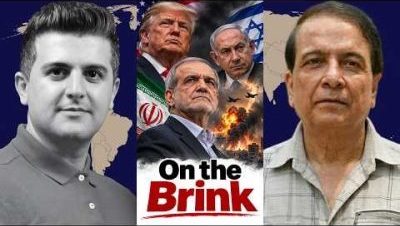
Pravin Sawhney: Massive Escalation Pushes Every Side Toward the Brink
or go to
Aletho News Archives – Video-Images
From the Archives
A sample of vaccine and injectable medication tragedies during my lifetime
This is what happens when you demand speedy production in an era of politicized regulation
By Meryl Nass, MD | February 12, 2022
All these tragedies have been due to failures of testing or failures in manufacturing processes. Most occurred before vaccine manufacturers were given virtually complete protection from liability in 1987.
With the duration of patent exclusivity determining how much new products earn, products are rushed to market as quickly as possible, most using a shortened path for FDA review. Recalls and market removals of approved products are much more common than they used to be. We can only expect more of these disasters in the future, especially if the products are mandated for everyone. … continue
Blog Roll
 Aletho News
- Trump claims funding to Israel ending in 2026 as merger of Israeli–US armies looms
- Iran Weathering The Storm, But Saudi Arabia Is Sinking
- Sunk Ships Don’t Sail Home: Why Peace Won’t Save the Oil Market and War Will Wreck It
- No Cossacks at the gates, fix Italy instead – opposition leader to Meloni
- The Pits: Zelensky’s torture chamber network in the public eye
- Moscow mocks Kiev’s language hypocrisy exposed by ‘torture chamber’ scandal
- Military ‘torture chamber’ triggers new scandal in Kiev
- Algerian army launches second operation to clear French nuclear test sites
- Pravin Sawhney: Massive Escalation Pushes Every Side Toward the Brink
- UK High Court Upholds Speech Regulator Notices To Meta, WhatsApp, X, And TikTok
- If Americans Knew
- An error has occurred; the feed is probably down. Try again later.
- No Tricks Zone
- Germany’s Green Energy Transition Becoming Increasingly Expensive…Another 6 Trillion Euros!
- Sudden Stratospheric Warming, Powerful El Niño Combination May Lead To Extreme Europe Cold, Energy Crisis!
- Two New Studies Find Thwaites Glacier Melt Cannot Be Driven By Human Activity Or A Warming Ocean
- E-Cars Reduce CO2 Emissions By Only 41% Compared To Internal Combustion Engine Vehicles
- Predictions Made By Renowned Climate Professor Over Past Decades Have Been Proven To Be Poor
- New Study Suggests Large Regions Of The Pacific Ocean Have Been Cooling For The Last 80 Years
- Germany’s Green Energy Debacle: High Energy Costs Force Kahla Porzellan to Close After 182 Years!
- New Study: 50 Years Of The Most Aggressive ‘Net Zero’ Policies Can Only Affect The Global Climate By 0.03°C
- US September “Heat” Was No Record…Many Records Set Decades Ago
- Latest European Green Energy Debacle; Portugal’s Largest Flagship Solar Park Insolvent!

