Attacks on Saudi oil make waivers on Iran necessary: Experts
Press TV – September 14, 2019
Experts say critical oil supplies lost due to Yemeni attacks on Saudi Arabia’s production plants can only be compensated if the United States eases its sanctions on sale of crude by Iran.
Sandy Fielden, an analyst at Morningstar, a global financial services firm based in the US, said on Saturday that the current oil stocks in Saudi Arabia, the biggest oil exporter in the world, would not suffice to compensate for a loss of around 5 million barrels per day (bpd) that could be caused by attacks earlier in the day targeting the kingdom’s vital oil facilities located east of the country.
Fielden said the disruptions could cause a real jump in the global oil prices, adding that the US, a main player in the oil market and an ally of the Saudis, would have no option but to allow Iran to resume its crude exports after months of a halt that has been caused by Washington’s unilateral bans.
“By all accounts the Iranians have tankers full of storage ready to go,” he said, adding, “The obvious short-term fix would be waivers on Iran sanctions.”
Yemen’s ruling Houthi Ansarullah movement said on Saturday that its drones had successfully attacked two oil plants in Abqaiq, the heart of Saudi Arabia’s oil industry, in the kingdom’s Eastern Province.
The Houthis said the attacks were a firm response to Saudi Arabia’s relentless bombardment of Yemen, where tens of thousands of civilians have been killed since Riyadh launched its illegal military campaign four years ago.
James Krane, Middle East energy specialist at Rice University’s Baker Institute, suggested that supplies from a country like Iran would be the best option to replace the lost Saudi production as most of the Kingdom’s exports normally go to countries in Asia that are closer to Iran than any other major oil producer.
“For the United States, the main threat is in the price of oil,” said Krane, adding, “Asian countries are more at immediate risk because they are the big importers from Saudi Arabia, with 80% of Saudi exports going to East Asia.”
Analysts said Yemeni attacks on Saudi oil installations showed that Riyadh, which pumps just below 10 million bpd of oil into the global market, is effectively defenseless in the face of strikes from its impoverished neighbor.
Fielden said Washington would also find it impossible to try to solve the crisis on its own by sending tankers full of oil to Saudi customers in East Asia.
“It takes 19-20 days to ship Ras Tanura (Saudi) to Singapore, but 54 days from Houston to Singapore. So US ‘relief’ will take time,” he said.
However, US officials said right after the attack that they would try to ensure a smooth supply of oil to the global markets despite the attacks in Abqaiq.
White House spokesman Judd Deere said in a statement that Washington was committed to well-supplied oil markets while adding that US President Donald Trump had held a phone conversation with Saudi Crown Prince Mohammed bin Salman following the Saturday attacks.
The International Energy Agency (IEA) also said that in the short term was there were no real concerns about supplies to the markets.
“For now, markets are well supplied with ample commercial stocks,” it said, adding, “The IEA is monitoring the situation in Saudi Arabia closely. We are in contact with Saudi authorities as well as major producer and consumer nations.”
The United Arab Emirates, a close ally of Saudi Arabia and a major oil producer, said it would support measures adopted by the kingdom to safeguard its security following Saturday attacks.
Pompeo blames Iran for drone attack on Saudi oil facilities, Senator Graham urges US to strike it
RT | September 14, 2019
A drone attack on Saudi oil facilities claimed by Yemen’s Houthi rebels prompted Washington to blame Tehran, with US warhawk, Senator Lindsey Graham, calling for a strike against Iran.
The smoke from the huge fires at the world’s largest oil processing plant caused by the strike had barely dissipated when officials in Washington jumped at the opportunity to use the occasion to push an anti-Iranian agenda.
US Secretary of State Mike Pompeo blamed Tehran for what he called “an unprecedented attack on the world’s energy supply” but stopped short of suggesting any retaliatory measures.
Meanwhile Graham was quick to turn to Twitter to call for swift retaliation.
The senator linked the need to stop Iran’s alleged “provocations” to the seemingly ultimate goal of Washington’s policy toward Tehran – regime change – as he said that the Islamic Republic would not stop until the consequences of its “misbehavior” would be “more real, like attacking their refineries, which will break the regime’s back.”
Riyadh denounced the drone strike as a “terrorist attack” but did not immediately name a perpetrator. Houthis claimed responsibility for the Saturday morning assault, which resulted in massive blazes at the refinery in the city of Abqaiq in the kingdom’s oil-rich Eastern Province and another facility at the vast Khurais oil field, around 150km (93 miles) from Riyadh.
US President Donald Trump has already phoned Saudi Crown Prince Mohammed bin Salman and offered help to the Kingdom in ensuring its security. He also said that the attack on the Saudi oil facilities could be detrimental to the American and the global economy.
The International Energy Agency (IEA) said, though, that the attack is unlikely to affect the global oil markets as they are “well supplied with ample commercial stocks.” Yet, it also said it is closely monitoring the situation and is in contact with the Saudis and “major producer and consumer nations.”
The IEA statement came amid media reports that the attack forced Riyadh to cut oil production by as much as 5 million barrels a day, which is equivalent to roughly half of its total oil output and about five percent of the global oil supply.
The Saturday attack has become the most successful strike the Houthis have launched against the Saudis, who have been leading a bombing campaign in Yemen since it intervened in the nation’s civil war in 2015. In May, armed drones caused minor damage to two Saudi Aramco state oil companies’ pumping stations in the Eastern Province.At that time, Riyadh blamed Iran for the attack, which was claimed by the Yemeni rebels as well. Tehran denied the allegations.
The Saudi-led coalition’s military campaign in Yemen has itself been repeatedly criticized by the UN and various international human rights groups, which repeatedly pointed to the mass civilian casualties resulting from the coalition’s airstrikes
EU’s $15bn Credit Line Has Nothing to Do with Sanctions Relief: Oil Minister
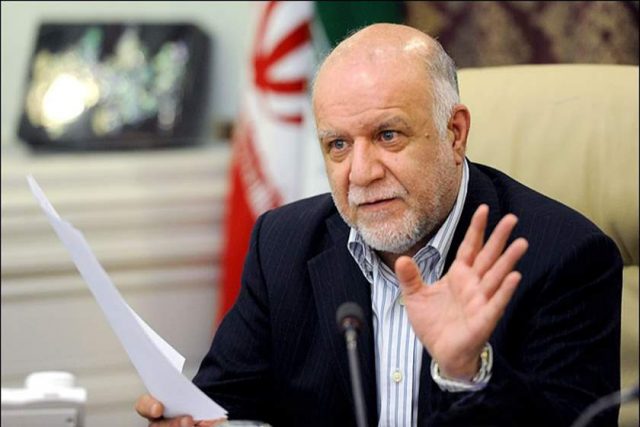
Iran’s oil minister, Bijan Namdar Zanganeh
Al-Manar | September 14, 2019
Iranian oil minister Bijan Zanganeh said Saturday that the France-proposed $15 billion credit line for Iran has nothing to do with easing of US sanctions on the country.
“In the eye of the country’s oil industry, sanctions relief means selling oil,” Oil Minister Bijan Zanganeh told reporters on Saturday.
He was speaking on the sidelines of a signing ceremony for a deal between Pars Oil and Gas Company (POGC) and Petropars Company for developing Belal Gas Field in the Persian Gulf.
“The point was for the oil sanctions to be lifted so that we could freely sell our oil. This credit line will put Iran in debt in the future,” he added, according to Mehr news agency.
The $15 billion credit line has been proposed by the French side in a bid to salvage the 2015 Iran nuclear deal in the wake of US’ unilateral withdrawal and Iran’s countermeasures in reducing commitments to the agreement.
The package is meant as an incentive to keep Iran in the nuclear agreement in the face of US’ efforts to drive the country’s oil exports to zero.
The sum is said to account for about half the revenue Iran normally would expect to earn from oil exports in a year.
Elsewhere, Zanganeh maintained that the development of the phase 11 of South Pars has not yet been exempted from US sanctions.
He then refused to confirm data of Iran’s oil reserves or answer any questions regarding Iran’s measures to bypass US sanctions.
He noted, however, that Iran is in talks with China to peacefully resolve the issue of the East Asian country’s decision to leave the SP11 development project.
Iraq will respond to Israeli attacks, sees itself in war against Zionist entity: Iraqi MP
Press TV – September 14, 2019
All options are on the table in response to Israel’s recent drone strikes targeting Iraq’s Popular Mobilization Units (PMU), also known as the Hashd al-Sha’abi, according to a leading Iraqi parliamentarian.
Speaking to the Lebanese al-Mayadeen television channel on Saturday, Ahmed al-Asadi, Iraqi Lawmaker and spokesman of the Iraqi Fatah alliance said that Israel’s attacks were certainly “a declaration of war”.
The lawmaker said that Iraq viewed Israel as an occupying entity and as its enemy, adding that no treaty could halt what Iraq saw as its war against the illegitimate state.
Al-Asadi added that the pro-government PMU was part of Iraq’s security establishment and that it would surely have a role in any response to Israel.
He added that the PMU forces were on high alert against drone strikes, adding that the organization is currently negotiating with Russia, China and Iran on obtaining air defense systems in order to defend Iraq’s airspace.
The comments come as the PMU has been the target of a number of aerial strikes attributed to Israel.
Israeli authorities have openly suggested that the Tel Aviv regime may be conducting operations in Iraq, an issue which has been confirmed by American and European officials.
Speaking on Saturday, al-Asadi stressed that investigations into certain recent attacks have revealed the drones’ flight path and where they have been launched from, adding that the attacks had been clearly done with Washington’s oversight.
Referring to American military presence, the Iraqi lawmaker added that the Iraqi parliament is due to discuss foreign troop presence in the country later today.
Al-Asadi suggested that American advisory troop presence could be replaced by forces from other countries, such as Russia, China or European and Latin American countries.
‘Iran is center of regional stability’
Speaking about Iran’s role in Iraq, Al-Asadi said that Iran has a pivotal role in guaranteeing regional stability.
Referring to prominent Iraqi Shia cleric Muqtada al-Sadr’s recent visit to Tehran, al-Asadi said, that as “part of the Resistance, we are pleased to see Sadr alongside Leader of the Islamic Revolution Ayatollah Seyyed Ali Khamenei and Major General Qassem Soleimani”, who commands the Quds Force of Iran’s Islamic Revolution Guards Corps (IRGC).
The Iraqi parliamentarian also lauded the Lebanese resistance movement Hezbollah for its resistance against Israel, saying that it was a “source of inspiration” for all resistance movements in the region.
Both Washington and Tel Aviv have for long been seeking to counter the emergence of a united front of forces, usually known as the “Resistance Axis”, in the region.
The resistance movement was formed gradually countering foreign-backed terrorism and the US and its allies’ interventions in the region.
Green-smearing – from Nicaragua to Bolivia
By Stephen Sefton | September 11, 2019
A fundamental dimension of contemporary psychological warfare has been dual-purpose corporate co-option of non-governmental organizations. In that psy-warfare dimension, NGOs serve both as disinformation partners with Western news media and too as false interlocutors in international forums and institutions, where they attack governments challenging the US elites and their allies. They actively subvert governments inside countries challenging the West, for example, in Latin America, Cuba, Venezuela, Nicaragua and Bolivia. But they also pervert due process in institutions like the UN, posing as civil society but in fact serving Western elite corporate imperatives, for example in international human rights and environmental mechanisms and forums.
Among these NGOs figure high profile human rights organizations like Amnesty International, Human Rights Watch, the International Federation for Human Rights and Avaaz along with environmental organizations from 350.org and the World Resource Institute to Global Witness and Greenpeace. An increasing interrelationship has developed between corporate NGO funding and the exploitation of people’s general willingness to volunteer for and support apparently good causes. Symbolic of this is the way World Economic Forum attendees like Kumi Naidoo move readily between top management from one NGO to another, in Naidoo’s case from Greenpeace to Amnesty International. From Libya and Syria to Venezuela and Nicaragua, Amnesty International has played a key role using false reports to demonize governments resisting the US and its allies.
As Cory Morningstar has pointed out, Greenpeace is a key player in promoting the corporate driven New Deal for Nature aimed at financializing what remains of the natural world, especially its biodiversity, as a way of engineering a “Fourth Industrial Revolution”. Western corporate greed underlies the identical patterns of news media and NGO misrepresentation and outright deceit supporting regime change offensives against Libya and Syria, or Venezuela and Nicaragua. Right now, that very same pattern of media and NGO manipulation is clearly at work preparing for an intervention to prevent Evo Morales being re-elected as President of Bolivia.
Bruno Sgarzini and Wyatt Reed have noted how Western media and NGOs have falsely attacked Evo Morales blaming him for not controlling the fires in Bolivia’s Amazon. This is exactly what happened in Nicaragua immediately prior to the coup attempt in 2018 when the Nicaraguan authorities were fighting a fire in the Indio Maíz Biological Reserve. That episode softened up Nicaraguan public opinion and set in motion social media networks involving thousands of youth activists trained for that purpose beforehand over several years with US and also European government funding. In mid-April 2018, barely a week after the Indio Maiz fire was extinguished, those networks launched a social media blitzkrieg of lies and inventions marking the start of the actual coup attempt. A practically identical process is well under way now in Bolivia, which holds presidential elections next October 20th.
The timing of the fires in Bolivia’s Amazon is extremely propitious from the perspective of the US authorities and their allies. It takes almost two months for the effects to wear off of the initial psy-warfare bitzkrieg of the kind waged against Nicaragua in 2018 and against Brazil’s Worker’s Party as part of Jair Bolsonaro’s successful 2018 election campaign that same year. Bolivia will almost certainly experience the same kind of psy-warfare assault via social media prior to the October elections. The campaign will be timed to optimize the effect of mass false accusations of government wrongdoing and corruption along with false media and NGO claims of security force repression. Opposition activists are likely to exploit peaceful demonstrations on indigenous peoples and environmental issues so as to commit murderous provocations, just as they did in Nicaragua and Venezuela.
All of these tactics are likely be deployed against Bolivia so as to destroy the current prestige and high levels of support for President Evo Morales. In Bolivia, as in Nicaragua and Venezuela, the governing progressive political movement enjoys around 35-40% core electoral support, the right wing opposition have around 25-30% with 30-40% of voters uncommitted. The Western elites know they need to motivate something over half of those uncommitted voters against Evo Morales so as to get the right wing government they so desperately need in Bolivia to try and make good the unmitigated debacle of Mauricio Macri’s right wing government in Argentina.
The intensity of any Western media and NGO campaign against Morales is likely to reach similar levels as their cynical campaigns of lies and defamation against Venezuela and Nicaragua. Should that offensive go ahead, as seems probable, the difference will be that this time Evo Morales and his team are alert and unlikely to be taken by surprise as the Nicaraguan authorities were by the vicious, sudden attack against them in April 2018. A likely variation in Bolivia’s case will be a higher profile of environmentalist NGOs working in tandem with their human rights counterparts feeding misrepresentations and downright lies into Western news media. For the US and European Union elites the regional geopolitical stakes are high enough to make an attack on Bolivia imperative.
(A longer version of this piece was published at Tortilla con Sal on September 4, 2019.)
War is imposed on us by US, we can fight it for 100 years, Taliban tells RT after talks cut off
RT | September 13, 2019
Talks with the Taliban to put an end to the longest of America’s forever wars were killed off by the US last week. The Afghan militant movement is prepared to fight a hundred more years, its chief negotiator told RT.
The peace negotiations between the US and the Taliban were called off by President Donald Trump days ahead of a planned signing of a formal agreement. The draft has even been initialed by both parties and Qatar, which mediated in the talks, Sher Mohammad Abbas Stanikzai, who headed the Taliban’s delegation, told RT. As far as the Taliban is concerned, the US decision can be easily reversed and the agreement put into force as agreed, he said.
“We are still committed to the negotiations. Our stance is that there is no solution to the conflict except negotiations and except peace on the table. We hope that Mr. Trump rethinks his announcement and comes back to where we were,” the official said.
Trump cited an attack by the Taliban, which killed a US soldier stationed in Afghanistan, as the reason for the surprise cancellation of the talks. The militants say their attacks were well justified by attacks against them by the US and the Afghan security forces. They see the Americans as a foreign occupying force and themselves as freedom fighters and protectors of the Afghan civilians, who are injured and killed when the US attacks the Taliban, which regularly conducts terrorist attacks.
“The war was imposed on us. It is American soldiers who are in Afghanistan. It’s not our mujahedeen in Washington,” he said. He added that Trump’s justification for stopping talks clashed with statements by Secretary of State Mike Pompeo, who appeared on TV the following day and said the US killed “over 1,000 Taliban” over ten prior days, as negotiations were under way.
“Mr. Pompeo admitted that they have killed a thousand Taliban,” Stanikzai pointed out. “If they can kill a thousand of us, why can we not kill one or two of them? This is our right. We have to defend ourselves and defend our people.”
The Taliban representative said the Trump administration proved to be no different to that of Barack Obama, which also held peace talks with the Afghan militants before ending them at the last moment. He questioned Washington’s commitment to resolving the situation and ending what is now a 19-year-long anti-insurgency war that the US apparently cannot win through military force.
“If the American side is not willing to negotiate and they do not want peace on the table, we will be compelled to defend ourselves,” he said.
“We can do it for a hundred years.”
Stanikzai reiterated that only after a formal agreement is signed and US troops are pulled out of Afghanistan would the Taliban be able to settle its differences with other political forces in Afghanistan, including the US-backed government in Kabul.
“We need a practical thing. When it is signed, there will be [a] ceasefire between us and the American forces. We will give safe passage to the American forces,” he said. “When they go out, inter-Afghan talks can start and a comprehensive ceasefire and other domestic issues can be discussed.”
Bolton Gone: Improved Peace Prospects?
Strategic Culture Foundation | September 13, 2019
The departure of John Bolton as US National Security Adviser is a good step towards decreasing international tensions by the Trump administration. But a lot more is needed from President Donald Trump to indicate a serious pivot to normalizing relations with Russia, Iran and others.
When Trump gave Bolton his marching orders earlier this week, the president said he “strongly disagreed” with his erstwhile security adviser over a range of foreign policy issues. Trump had also expressed frustration with Bolton’s incorrigible militarist tendencies.
There is no doubt Bolton was an odious figure in the White House cabinet. One of our Strategic Culture Foundation authors, Martin Sieff, wrote this excoriating commentary on Bolton’s nefarious record of warmongering dating as far back as the launching of US wars in Afghanistan in 2001 and Iraq in 2003, when the mustachioed maverick served then as a chief neocon ideologue in the GW Bush administration.
One wonders why Trump brought such a war hawk into his administration when he appointed Bolton as NSA in April 2018. Perhaps, as another of our writers, Robert Bridge, surmised in a separate commentary this week, Trump was using hardliner Bolton as a foil to deflect opponents from within the Washington establishment who have been trying to undermine the president as “soft on foreign enemies”. A ruse by Trump of keeping “your enemies close”, it is averred.
Bolton certainly did his best to hamper Trump’s seeming attempts at scaling back US foreign military interventions. He opposed the plan to withdraw American troops from Syria. The reckless Bolton also wound up a policy of aggression and regime change against Venezuela, which Trump has latterly seemed to grow wary of as a futile debacle.
In regard to Russia, Bolton carried heaps of Cold War baggage which made Trump’s declared intentions of normalizing relations with Moscow more difficult.
The shameless warmonger Bolton openly advocated for regime change in Iran, which seemed to contradict Trump’s oft-stated position of not seeking regime change in Tehran, despite the president’s own animosity towards Iran.
The former NSA also opposed any attempt by Trump to engage in detente with North Korean leader Kim Jong-un. Reportedly, it was Bolton who derailed the incipient efforts at opening up dialogue with Pyongyang.
It is also thought that Bolton used his influence to impede Trump’s recent bid to host Taliban leaders at Camp David earlier this month which was aimed at trust-building for a proposed peace deal to withdraw US troops from that country after nearly 18 years of disastrous war.
That said, however, President Trump has not shown himself to be exactly a dovish figure. He has overseen countless sanctions being imposed on Russia, the abandoning of the Intermediate-range Nuclear Forces treaty, and ongoing military support for the anti-Russia regime in Kiev.
Too, it was Trump who ordered the US collapse of the 2015 international nuclear accord with Iran in May 2018 and the re-imposition of harsh sanctions on Tehran. So, it would be misplaced to paint Bolton as the sole malign actor in the White House. Trump is personally responsible for aggravating tensions with Iran, as well as with Russia, Venezuela and others.
Nevertheless, it is to be welcomed that an inveterate war hawk like Bolton no longer has the president’s ear. Perhaps Trump can be freer to act on his instincts as a pragmatic deal-maker. One thing that the president deserves credit for is his unconventional style of engaging with nations and leaders who are designated as foes of America.
Russia this week gave a reserved response to the sacking of Bolton. The Kremlin said it would make assessments of a positive change in US policy based on actions, not mere announcements, such as the firing of Bolton. Time will tell.
It seems significant that immediately after Bolton was relieved of his post, Trump hinted to reporters that he was considering lifting sanctions off Iran if such a move persuaded Iranian President Hassan Rouhani to hold a face-to-face meeting with Trump at the United Nations general assembly in New York later this month.
Iran has repeatedly stated categorically that there will be no talks with Trump unless his administration revokes sanctions and returns to abiding by the nuclear accord. If there is a serious pivot to normal diplomacy by the White House, then what Trump does about sanctions on Iran will be a litmus test.
The same can be said about US sanctions on Russia. If Trump is earnest about a genuine reset in bilateral relations, then he must get rid of the raft of sanctions that Washington has piled on Moscow since the 2014 Ukraine crisis amid the many spurious allegations leveled against Russia.
Bolton banished is but a small step towards a more diplomatically engaged US administration. But it would be unwise to expect the departure of this one figure as being a portent for progress and a more peaceful policy emerging in Washington.
The Washington establishment, the deep state and the bipartisan War Party, with its entrenched Cold War ideology, seems to have an endemic sway over policy which may thwart Trump’s efforts to direct a less belligerent US.
To illustrate the twisted nature of the US establishment, one only had to read the way sections of the American corporate-controlled media lamented the departure of Bolton. The New York Times, which is a dutiful conduit for deep state intelligence and the foreign policy establishment, actually bemoaned the ouster of Bolton, calling him a “voice of restraint”.
The NY Times commented, with approval, on how Bolton “objected to attempts to pursue diplomatic avenues with players considered American enemies. And he angered Trump with a last-minute battle against a peace agreement with the Taliban… whether it was inviting the Taliban to Camp David or cooperating with Russia, he [Bolton] was the national security adviser who said no.”
In another piece this week, the NY Times commented, again approvingly of Bolton: “Mr Bolton strongly opposed detente with Iran, and his unceremonious ouster has reignited concerns among some Republicans [and Democrats] in Congress about the White House’s declining projection of American military power around the world.”
Can you believe it? The so-called US “newspaper of record” is somehow valorizing an out-and-out warmonger in the form of Bolton, and appears to be advocating “projection of American military power around the world”. The latter phrase being but an Orwellian euphemism for imperialism and war.
The sobering conclusion is that Bolton’s departure hardly heralds a new beginning of diplomacy and engagement by Trump, if we assume to give this president the benefit of doubt for good intentions. Bolton may be gone, but there are formidable political forces in the US establishment which will work to ensure Trump’s room for maneuver remains heavily compressed. The Cold War ideology is so ingrained in Washington, it is much bigger than just one man, whether that is the vile personage of Bolton or the more flexible Trump.
Saudi crown prince meets with Zionist Christian delegation in Jeddah
Press TV – September 13, 2019
Saudi Crown Prince Mohammed bin Salman, otherwise known as MbS, has met with an influential pro-Israel delegation of American evangelical Christians in Jeddah.
Photos of the meeting, which was attended by leading American Christian Zionist leaders, including dual US-Israeli national Joel Rosenberg, were published by the Saudi government.
The nine-person delegation of the evangelical Christians also included the Rev. Johnnie Moore, a co-chairman of President Donald Trump’s Evangelical Advisory Council; Larry Ross, a former longtime spokesman for one of America’s most well-known evangelicals Billy Graham; and Pastor Skip Heitzig, whose Calvary Albuquerque church in New Mexico has more than 15,000 congregants.
A statement later released by the delegation said its members were grateful to have deepening relationships in Saudi Arabia “to talk openly, if sometimes privately, about what we believe must change in the kingdom even as we celebrate the kingdom’s progress in so many other areas.”
The talks are particularly significant since Riyadh is trying to forge closer ties with an influential electoral base in the US that could be crucial to the 2020 US presidential elections.
The meeting marked the second such visit by American evangelicals, known for their deep-rooted Islamophobia, to the kingdom. The same delegation had met with bin Salman in Riyadh back in November 2018 in line with Saudi Arabia’s growing ties with Tel Aviv.
Many evangelicals in the US support Israel as a core part of their faith.
Bin Salman’s Tuesday meeting with the Zionist delegation was held on the eve of the anniversary of the 2011 attacks which killed nearly 3,000 people and caused about $10 billion worth of property and infrastructure damage.
US officials assert that the attacks were carried out by 19 al-Qaeda terrorists from Saudi Arabia, the UAE, Egypt, and Lebanon, but many experts have raised questions about the official account.
They believe that rogue elements within the US government, such as former Vice President Dick Cheney, orchestrated or at least encouraged the 9/11 attacks in order to accelerate the US war machine and advance the Zionist agenda.
On Thursday, US prosecutors announced that the US Justice Department will reveal the name of an individual believed to be connected to the Saudi government and accused of aiding two of the 9/11 hijackers, in response to a long-running lawsuit which seeks to link the Saudi Arabian government with the 9/11 terrorist attacks.
The person’s identity will remain a closely guarded secret for now, though it will be shared with attorneys representing the families of victims of the attacks who have alleged the government of Saudi Arabia helped to coordinate the terrorists in a lawsuit, CNN reported.
The long-standing lawsuit also revealed sensational details, accusing special Counsel Robert Mueller of helping the Saudis cover up their role in the 9/11 attacks.
Mueller, who was appointed FBI director by former President George W. Bush two months prior to the attack, is accused of obstructing and putting road-blocks in front of his own officers investigating the Saudi connection during the critical few months following the attack.
Israel Directing Policy Through US Treasury: Sanctioning Hezbollah’s Political Allies in Lebanon
By Patrick Henningsen | 21st Century Wire | September 12, 2019
Nearly three years into the Trump administration, one thing is clear: as it struggles to wage any new direct shooting or proxy wars, Washington has instead relied on economic warfare against its perceived enemies, and largely on behalf of the state of Israel.
Through the U.S. Treasury Department and its own openly pro-Israel agents of influence, namely Secretary Steve Mnuchin, along with his Under Secretary for Terrorism and Financial Intelligence Sigal P. Mandelker, Israel has been able to attack and undermine all of its own geopolitical enemies and region rivals. The chief mechanism for achieving this is by directing the US government to label any person, politician or state agency – as a “terrorist,” or as a terrorist entity, thus allowing the US government to apply sanctions against any person or entity which Israel designates as its enemy, or even potential enemy. As a result of this runaway policy, the list of sanctioned persons and organisations by the Trump administration is the most in history.
Firmly in its crosshairs is Lebanon’s well-established political and military wings of the Hezbollah organisation. There is a fundamental flaw in the West’s framing of Hezbollah though, starting with its origins. It is a fact of history that Hezbollah was born out of Israel’s illegal occupation of southern Lebanon. Had Israel not invaded and occupied this region, or prosecuted its long and violent military campaign during and after the Lebanese Civil War, then it’s possible the Hezbollah movement may never had formed. It was born out of Israel’s occupation. Indeed, Iran has been traditional supporter of the group – which has drawn the ire of Washington and Tel Aviv who view both Iran and Hezbollah as a joint obstacle to US-Israeli strategic security objectives in the Middle East. In order to elevate Hezbollah to ‘most targeted status,’ US officials have had to repeatedly fabricate claims that Hezbollah is acting as major global terrorist organisation. In the same breath, US officials, like Secretary of State Mike Pompeo will enthusiastically drift out the well-worn fable that ‘Iran is the world’s number state-sponsor of terror’.
Earlier this year, the US also announced that henceforth, Iran’s leading military divisions, the Iran Revolutionary Guard Corps (IRGC) and Quds Force – would now be designated as a “terrorist organisation.” The cold irony of course, is that Hezbollah militias are presently fighting (and defeating) actual terrorist organisations like al-Qaeda and ISIS (both of who have been created, as well as armed and financed by numerous western and gulf states, including the United States) in Syria, Iraq and Lebanon. Since 2013, Hezbollah militia have played a pivotal role in ejecting al Qaeda and ISIS terrorists from their enclaves in Syria, thus thwarting the regime change objectives of US, UK, France, NATO member states, Turkey, Qatar, Saudi Arabia, and also Israel too. Likewise for IRGC and Quds special military advisors deployed in Iraq and Syria to help subdue the invading terrorist brigades. The same is true for Iranian-backed militias in Iraq like the Hash’d Shaabi (People’s Mobilization Units), predominantly Shia, who were pivotal in Iraq’s ultimate victory over ISIS in 2017. Veteran journalist Patrick Cockburn summed it up when he concluded that the greatest threat to building peace in Iraq was not ISIS, but rather, Donald Trump determined to pick a fight with Iran. Documentation on the number of casualties is still difficult to determine, but on the aggregate, between Hezbollah, Hash’d, Iranian forces, the losses sustained in the fight against ISIS and al Qaeda number in the tens of thousands – and likely far more than the combined US soldier death tolls in 18 year-long War on Terror in Iraq, Afghanistan and beyond. Regardless of general western ignorance of what has actually transpired in Syria since 2011, and in Iraq since 2014, the people who actually live in the Middle East know the severity of this largely foreign-backed terrorist usurpation.
Regardless of the facts on the ground, neconservatives and war hawks in the Beltway are still happily pressing ahead with their policies. With Tel Aviv carefully leading from behind, Washington has successfully pressured many of its allies to obey its geopolitical dictates, with the UK, Argentina and Paraguay all falling into line this year by designating Hezbollah – both its political and military wings – as a terrorist organisation, as well as pressuring Brazil to follow suit.
Of deeper concern for Washington though, is that Hezbollah is defending Lebanon’s borders from what is undoubtedly the region’s most prolific aggressor – Israel. In just the last few weeks, Israel has attacked no less than 4 of its neighbours, including unprovoked military strikes against Syria, Lebanon, Iraq and of against Palestinians living under illegal Israeli occupation in Gaza. Hezbollah also poses another threat to Israeli hegemony in the region because of its unflagging support for Palestinian resistance against Israel’s violent occupation and ethnic cleansing of the native Palestinian people. Similarly, the Islamic Republic of Iran also supports the Palestinian resistance cause, which is also a predicate for Israel’s various and sundry fabricated claims about a ‘secret Iranian nuclear arsenal,’ and imagined conspiracy that ‘Iran is occupying Syria’ – all of which are designed to garner leverage in Washington whereby US officials can view Hezbollah an accomplice to “Iran’s threat world peace.” This is the sort of geopolitical gymnastics which Israel is attempting to perform on a daily basis in order to justify the longest-running, most brutal and inhumane apartheid regimes in modern history – being waged against Palestinians and Arabs in the Middle East.
Targeting Hezbollah’s Political Allies
Still, Washington insists on basing its international relations on these numerous fabricated claims about Iran and Hezbollah drafted by Israel’s J Street lobbyists and the Prime Minister’s office in Tel Aviv. Now the Trump administration is taking this method a step further by threatening to sanction any political allies of Hezbollah in Lebanon. With military options practically off the table, this is the only remaining option for Washington and Tel Aviv to try and undermine Hezbollah which is now a political force in Lebanese politics, forming a working majority in the Lebanese Parliament along with its allies, as well as holding key ministerial and cabinet positions. But will it work?
Future Sanctions Will ‘Absolutely’ Target Hezbollah Allies in Lebanon: US Envoy
Al-Manar – September 13, 2019
US envoy said on Thursday that future sanctions could target allies of Hezbollah in Lebanon.
“In the future we will designate, because we have to, individuals in Lebanon who are aiding and assisting Hezbollah, regardless of their sect or religion,” the new US assistant secretary of state for Near Eastern affairs, David Schenker, said in an interview with local LBCI television.
When asked by the interviewer if this means sanctions will target allies of Hezbollah, Schenker said “absolutely,” adding that the US is constantly reviewing its sanctions lists.
Earlier on Tuesday, US State Department announced it has issued sanctions against four alleged Hezbollah members, Ali Karakeh, Mohammad Haydar, Ibrahim Aqil and Fouad Shukr.
The administration of Presdient Donald Trump has ramped up sanctions on Hezbollah and other resistance groups since the US withdrew from the Iran nuclear deal in May 2018.
Last month, the US Treasury slapped sanctions on the Lebanese Jammal Trust Bank, claiming the bank “brazenly enabling” Hezbollah’s financial activities. And in June, the Treasury took the unprecedented step of sanctioning two sitting Hezbollah MPs, Amin Sharri and Mohammad Raad, alongside security head Wafiq Safa.
UN slams US and allied forces for war crimes & civilian targeting in Syria
RT | September 13, 2019
The UN Commission of Inquiry slammed war crimes committed against civilians in Syria by US and allied forces, in a new report that describes how nine years of war has left some parts of the nation “near complete destruction.”
Civilians continue to “bear the brunt of hostilities” at the hands of all parties in the conflict, declares the report by the UN Independent International Commission of Inquiry on the Syrian Arab Republic, published on Wednesday. However, it singles out the US-led international coalition for repeated and indiscriminate targeting of non-combatants.
“International coalition forces failed to employ the necessary precautions to discriminate adequately between military objectives and civilians,” the report states, warning that “launching indiscriminate attacks that result in death or injury to civilians amounts to a war crime in cases where such attacks are conducted recklessly.”
US and allied forces are blamed for “widespread destruction of towns and villages in [Deir ez-Zor] Governorate” and the resulting displacement of thousands, many of whom ended up in the notorious Al-Hol camp, where disease and abysmal conditions reign.
In addition to failing to take precautions to minimize harm to civilians, the report cites the “dire humanitarian conditions” suffered by populations caught between the “widespread corruption, extortion, lack of services and security, and abuse of power” by the US-backed Syrian Democratic Forces (SDF) and the remnants of the Islamic State (IS, formerly ISIS) terrorist group, as well as other groups like the Levant Liberation Organization (also known as Hayat Tahrir al-Sham, an Al-Qaeda affiliate), which it accuses of deliberately terrorizing populations living under Syrian government control.
While Syrian government forces are also criticized for their choice of targets, accused of attacking medical facilities and other protected civilian infrastructure in Idlib, and failing to respect a demilitarized zone drawn up with Russia and Turkey, the US remains an uninvited guest in Syria, adding insult to the injuries inflicted by its military.
Another UN body, the Human Rights Commission, released a report last week eviscerating the US, UK, and France for their part in the humanitarian crisis in Yemen, where a Saudi Arabia-led coalition has been fighting local forces since 2015. The UN HRC declared that aiding and abetting a war crime – by selling weapons a nation knows will be used in the commission of atrocities – is also a war crime.
Featured Video
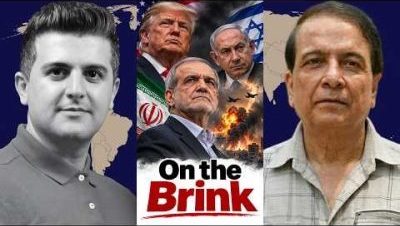
Pravin Sawhney: Massive Escalation Pushes Every Side Toward the Brink
or go to
Aletho News Archives – Video-Images
From the Archives
A sample of vaccine and injectable medication tragedies during my lifetime
This is what happens when you demand speedy production in an era of politicized regulation
By Meryl Nass, MD | February 12, 2022
All these tragedies have been due to failures of testing or failures in manufacturing processes. Most occurred before vaccine manufacturers were given virtually complete protection from liability in 1987.
With the duration of patent exclusivity determining how much new products earn, products are rushed to market as quickly as possible, most using a shortened path for FDA review. Recalls and market removals of approved products are much more common than they used to be. We can only expect more of these disasters in the future, especially if the products are mandated for everyone. … continue
Blog Roll
 Aletho News
- Trump claims funding to Israel ending in 2026 as merger of Israeli–US armies looms
- Iran Weathering The Storm, But Saudi Arabia Is Sinking
- Sunk Ships Don’t Sail Home: Why Peace Won’t Save the Oil Market and War Will Wreck It
- No Cossacks at the gates, fix Italy instead – opposition leader to Meloni
- The Pits: Zelensky’s torture chamber network in the public eye
- Moscow mocks Kiev’s language hypocrisy exposed by ‘torture chamber’ scandal
- Military ‘torture chamber’ triggers new scandal in Kiev
- Algerian army launches second operation to clear French nuclear test sites
- Pravin Sawhney: Massive Escalation Pushes Every Side Toward the Brink
- UK High Court Upholds Speech Regulator Notices To Meta, WhatsApp, X, And TikTok
- If Americans Knew
- An error has occurred; the feed is probably down. Try again later.
- No Tricks Zone
- Germany’s Green Energy Transition Becoming Increasingly Expensive…Another 6 Trillion Euros!
- Sudden Stratospheric Warming, Powerful El Niño Combination May Lead To Extreme Europe Cold, Energy Crisis!
- Two New Studies Find Thwaites Glacier Melt Cannot Be Driven By Human Activity Or A Warming Ocean
- E-Cars Reduce CO2 Emissions By Only 41% Compared To Internal Combustion Engine Vehicles
- Predictions Made By Renowned Climate Professor Over Past Decades Have Been Proven To Be Poor
- New Study Suggests Large Regions Of The Pacific Ocean Have Been Cooling For The Last 80 Years
- Germany’s Green Energy Debacle: High Energy Costs Force Kahla Porzellan to Close After 182 Years!
- New Study: 50 Years Of The Most Aggressive ‘Net Zero’ Policies Can Only Affect The Global Climate By 0.03°C
- US September “Heat” Was No Record…Many Records Set Decades Ago
- Latest European Green Energy Debacle; Portugal’s Largest Flagship Solar Park Insolvent!

