US NED-Funded Meddling Exposed in The Philippines

By Joseph Thomas – New Eastern Outlook – 21.06.2019
With little else to offer the nations of Southeast Asia, the US has opted instead to wield the familiar and well-honed weapon of political subversion to peel potential partners away from Beijing in Washington’s continued bid to rescue its waning primacy in Asia-Pacific.
The most recent manifestation of this can be seen in the Philippines where Manila has accused media front Rappler, founded by long-time CNN bureau chief Maria Ressa, and others of representing foreign interests and conspiring with foreign intelligence agencies in direct violation of the nation’s constitution.
The Committee to Protect Journalists (CPJ) in its defense of Rappler would claim:
First were the politically motivated state charges that funding provided to the news website Rappler by a U.S. philanthropic foundation represented a violation of constitutional provisions barring foreign control or ownership of Philippine media.
Then came government allegations in April that journalists from independent media groups, including Rappler, the independent media organization VERA Files, and the non-profit Philippine Center for Investigative Journalism, were involved in a conspiracy to discredit and oust President Rodrigo Duterte’s elected government. All four outlets issued statements denying the allegation.
Now, a pro-government media campaign claims that the same independent news outlets and the Philippine press freedom group Center for Media Freedom and Responsibility are in the pay of the U.S. Central Intelligence Agency (CIA), a potential criminal offense under local law.
The CPJ notes that all of the accused groups are openly and admittedly funded by the US government via the National Endowment for Democracy (NED). The CPJ admits (my emphasis):
All four outlets receive substantial grants from the NED.
Funded largely by Congress, NED was founded in the early 1980s as a way for the U.S. to openly promote democracy worldwide by providing annual grants to non-governmental groups, according to its website.
The CPJ categorically fails to challenge what are the NED’s own assertions that it is merely “promoting democracy worldwide.”
NED: The Public Face of (Often Violent) US Regime Change
The NED’s board of directors includes individuals openly involved in US-backed regime change including in Iraq, Ukraine and ongoing US regime change efforts in Venezuela.
Board members including Francis Fukuyama and Elliott Abrams openly advocated the US invasion of Iraq in 2003 in which the government in Baghdad was toppled and its senior leadership murdered based entirely on now verified lies regarding supposed “weapons of mass destruction.”
Elliott Abrams is listed on the NED’s website as “On Leave,” having been appointed as a US special envoy for Venezuela amid ongoing efforts to overthrow the government there.
The Guardian in an article titled, “US diplomat convicted over Iran-Contra appointed special envoy for Venezuela: Elliott Abrams, who was linked to failed coup against Chávez, to join Pompeo to urge security council to recognize Guaidó as head,” would report:
Elliott Abrams was appointed US special envoy for Venezuela on Friday, as Donald Trump’s administration and European leaders on Saturday further increase the pressure on the socialist president, Nicolás Maduro, to step aside from leading the country he has taken into a deepening crisis.
Abrams will accompany the US secretary of state, Mike Pompeo, to a meeting of the UN security council in New York on Saturday, during which Pompeo will urge members to join the US in declaring Venezuela’s opposition leader Juan Guaidó as the legitimate head of state.
The Guardian also notes:
Abrams is widely remembered in Central America, but particularly from his time in the Reagan administration, when he tried to whitewash a massacre of a thousand men, women and children by US-funded death squads in El Salvador, when he was assistant secretary of state for human rights.
Other NED directors include Victoria Nuland who played a key role in leading US regime change efforts in Ukraine in 2014.
Reuters in its article, “Leaked audio reveals embarrassing U.S. exchange on Ukraine, EU,” would admit:
A conversation between a State Department official and the U.S. ambassador to Ukraine that was posted on YouTube revealed an embarrassing exchange on U.S. strategy for a political transition in that country, including a crude American swipe at the European Union.
The article also admitted:
The audio clip, which was posted on Tuesday but gained wide circulation on Thursday, appears to show the official, Assistant Secretary of State Victoria Nuland, weighing in on the make-up of the next Ukrainian government.
The convergence of senior US representatives openly and repeatedly involved in (often violent) regime change most certainly involving the CIA among myriad other US organisations within the halls of the NED is no coincidence.
The NED exists to promote regime change worldwide, merely under the guise of “promoting democracy worldwide.”
The CPJ Defends US-funded Subversion Under Guise of “Press Freedom”
The CPJ failed categorically to inform readers of facts surrounding the true nature of NED and its activities in its defence of Rappler.
This however should come as no surprise. The CPJ itself is yet another shell organisation likewise funded by US corporate foundations for the purpose of promoting US interests. The CPJ does this by protecting fronts like Rappler under the guise of “press freedom” from the repercussions of engaging in US government-funded subversion.
Fronts like Rappler serve as a propaganda “sword” while the CPJ exists as a “shield” to block efforts by targeted nations to defend themselves.
The CPJ in its 2018 annual report (.pdf) is admittedly funded by corporate foundations like convicted financial criminal George Soros’ Open Society Foundation, US corporations like pharmaceutical giant Pfizer and tech giants Twitter, Microsoft and Yahoo, financial institutions like Mastercard and Morgan Stanley and mainstays of Western media including Reuters, Vice, NPR, PBS, Time, the Washington Post, the New York Times, the Wall Street Journal and NBC.
Many of these interests funding the CPJ are involved in activities at the NED. Anne Applebaum, for example, is a senior columnist at the above mentioned Washington Post and serves as an NED director.
The CPJ’s defence of Rappler continues, claiming:
Manila Times columnist Yen Makabenta, in an April 30 op-ed, called for the enactment of a foreign agents registration law to “tame in a hurry the intrusive criticism and interference in national affairs by these foreign-funded [media] organizations, whose activities are subversive by design.” Makabenta continued, “Indeed, if they are working for a group like the CIA, they could be working to change the government.”
CPJ has chronicled how governments, including in Russia and China, have passed laws that require bloggers, journalists and civil society members to register as foreign agents in moves that threaten to obstruct the free flow of information, including over social media. Makabenta’s op-ed suggested the Philippines should implement similar legislation.
The U.S. government has denied the CIA is involved in any destabilization plot against Duterte. The U.S. ambassador responded to the claims by saying, “There is absolutely no effort by the CIA to undermine the Philippines leadership,” according to reports.
Makabenta’s fears are well-founded.
Even at a glance the NED’s board of directors reflects the organisation’s role in fueling regime change worldwide. NED-funded media fronts are demonstrably biased and transparent in their efforts to undermine targeted governments and to promote US-favoured politicians, political parties and opposition groups.
The Philippines’ Punishment for Building Bridges with Beijing
Philippine President Rodrigo Duterte has demonstrated a pattern of disobedience toward Washington, having previously threatened to expel US forces from Philippine territory, building closer ties with Beijing and even excluding Washington from bilateral talks held with Beijing seeking solutions to disputes over the South China Sea.
For all of these reasons and more, President Duterte and others throughout the Philippines’ establishment have become targets of US-backed subversion, the public face of which being NED-funded media fronts like Rappler.
A similar pattern can be seen throughout Southeast Asia with NED-funded fronts like Prachatai, iLaw, Isaan Record and Benar News targeting the current Thai government headed by a Beijing-friendly military-led faction that twice ousted US proxy Thaksin Shinawatra and his political allies from power.
It is difficult to say how long organisations like the CPJ can continue successfully defending fronts like Rappler under the guise of defending “press freedom.” Only the CPJ’s intentional omission of facts like the nature of the NED’s board of directors and its extensive history of regime change allows the CPJ to portray its defense of Rappler and others taking NED funds as credible.
Were the CPJ truly dedicated to defending press freedom it would note the danger of foreign-funded sedition dressed up as journalism and alert the public to how this above all else threatens to undermine a free press. Instead, the CPJ defends this abuse, thus ironically undermining genuine press freedom in the process.
Should the Philippines enact an effective foreign agents registration law, other nations in the region might follow, delivering a severe blow to US meddling and pose as a further setback to US ambitions to reassert itself vis-à-vis China.
With the US unable to compete with China’s infrastructure-centred regional partnerships, and even lagging behind in the sale of military hardware, security partnerships and investments, political subversion is the last tool on offer. But maybe taking this last tool away from Washington could be a blessing in disguise. Without it, perhaps Washington will reevaluate other, more constructive methods of engaging with Asia-Pacific (and the rest of the world) based on mutual respect and benefits and above all, upon the primacy of national sovereignty.
Joseph Thomas is chief editor of Thailand-based geopolitical journal, The New Atlas.
FANB Warns that US Military Planes are Flying over Venezuelan Territory
Orinoco Tribune | June 21, 2019
The Comprehensive Aerospace Defense Command ( Codai ) of the Bolivarian National Armed Force (FANB) denounced that EP-3E and RC-135 aircrafts belonging to the United States Air Force have flown over Venezuelan coasts several times to carry out espionage actions and exploitative missions.
The information was disseminated by the military institution through its Twitter account on June 12, which also highlights that these overflights have intensified in 2019.
#Sabiasque El EP-3E Aries II es una aeronave de los EEUU para realizar misiones de exploración radioelectrónica? En el 2019 ha sido detectada en muchas ocasiones cerca de las costas de la RBV, siendo una amenaza a nuestra Soberanía #ElImperialismoExiste #TrumpHandsOffVenezuela pic.twitter.com/bx17KSlnMC
— CODAI (@CODAI_FANB) June 12, 2019
In March, the Minister of Popular Power for Defense, Vladimir Padrino López, denounced the incursion of a Boeing C17 ship of the same American military component that took off from the Hato base, located in Curaçao.
On that occasion, the crew of the aircraft made radio contact after their incursion. It was the second time that an American Air Force plane violated the space of the territorial sea that generates the Los Monjes archipelago in the Caribbean Sea.
The first time was in 2015 when a military aircraft of the DACH-8 type, equipped with an electro-optical system that allows the detection of thermal energy for the creation of images, flew over that same area.
Approximately since 2010, the FANB has detected the incursion of US aircraft without them having previously requested permission for their overflight.
Translated by JRE/EF
Source URL:
RELATED CONTENT:
Russia Says it Intercepted US/Swedish Spy Jets Over Baltic Sea
Here are the Exact Coordinates of the US Ship that Just Violated Venezuela’s Territory (Images)
Trump Has Lost All Leverage With Iran
By Marko Marjanović | Checkpoint Asia | June 20, 2019
I’m not buying Moon of Alabama’s theory that Iran is attacking the tankers — I think it’s plausible and I stand ready to change my mind if we get some evidence, but so far I have not seen more than conjecture so for me Iran is not the first suspect.
That said I agree that by going all in on the “maximum pressure” campaign Trump has in fact backed himself into a very unenviable position where he now has no leverage against Iran left.
Since it is obvious he doesn’t want war, but has already played all his cards short of war, Iran has now actually gained considerable freedom of action. It can shoot down US drones whether above Iran, or just over the Strait of Hormuz and what is Trump going to do about it?* Apply “maximum pressure”??
At most Trump could organize some kind of Syria-style limited strike but such a strike carries much more potential downside for him than for Tehran.
Limited missile and air strikes aren’t going to threaten the ayatollah and the Revolutionary Guards any more than they threatened Assad’s rule in Syria. They may actually boost the Revolutionary Guards who would get to pose as standing up to and defending the country against a super power.
While for Trump they would carry the danger of being seen as weak and inconclusive if Iran managed to mount a partially successful defense or retaliation, and cause him harm for 2020 as he satisfied neither the Iran war crazies nor the America firsters.
Trump should have kept some sanctions gunpowder in the magazine. Instead by firing off all of it he has disarmed himself.
* Albeit the drone that was shot down today may have been in Iranian airspace the US also claimed days earlier that Iranian forces had targeted a drone merely near its airspace.
June Madness Strikes Washington. Iranians, Russians and Britons Beware!
By Philip Giraldi | Strategic Culture Foundation | June 20, 2019
It has been a lively June so far in light of Washington’s apparent zeal to remake the world in its own image. There is considerable buzz among those networking in ex- or current government circles that the White House is preparing to “do something” about Iran. The recent incidents involving alleged attacks on Norwegian and Japanese tankers in the Gulf of Oman were immediately attributed to Iran by Secretary of State Mike Pompeo with so little regard for evidence that even the compliant American media was left gasping. In its initial coverage of the story The New York Times inevitably echoed the administration’s claims, but if one went to the readers’ comments on the story fully 90% of those bothering to express an opinion decided that the tale was not credible for any number of reasons.
Several commenters brought up the completely phony Gulf of Tonkin incident of 1964 that led to the escalation of American involvement in Vietnam, a view that was expressed frequently in readers’ comments both in the mainstream and alternative media. Others recalled instead the fake intelligence linking Iraq’s Saddam Hussein with the 9/11 conspirators as well as the bogus reports of an Iraqi secret nuclear program and huge gliders capable to delivering biological weapons across the Atlantic Ocean.
There were a number of questionable aspects to the Pompeo story, most notably the unlikelihood that Iran would attack a Japanese ship while the Japanese Prime Minister was in Tehran paying a visit. The attack itself, attributed to Iranian mines, also did not match the damage to the vessels, which was well above the water line, a detail that was noted by the Japanese ship captain among others. Crewmen on the ship also reportedly saw flying objects, which suggests missiles or other projectiles were to blame, fired by almost anyone in the area. And then there is the question of motive: the United States, Israel, Saudi Arabia and the Emirates all want a war with Iran while the Iranians are trying to avoid a B-52 attack, so why would they do something that would virtually guarantee a devastating response from Washington?
What is going on with Iran is certainly front-page material but there are two other stories confirming that brain-dead flesh-eating zombies have somehow gained control of the White House. The first comes from David Sanger of The New York Times, who reported last week that the United States had inserted malware into the Russian electrical grid to serve as both a warning and a possible response mechanism should the Kremlin continue with its cyberwarfare ways.
The astonishing thing about the story is the casual way it is presented because, after all, inserting malware into someone’s electrical grid might well be considered an act of war. The White House responded to the story with a tweet from the president claiming that “This is a virtual act of Treason by a once great paper so desperate for a story, any story, even if bad for our Country…” though he did not state that the account was untrue. In fact, if it was actually treason, that would suggest that the news article was accurate in its description of what must be a Top Secret program. But then Trump or one of his advisors realized the omission and a second tweet soon followed: “….. ALSO, NOT TRUE!”
Assuming that Sanger did his job right and the story is actually correct, a number of aspects of it might be considered. First, interfering with a country’s electrical grid, upon which so many elements of infrastructure depend, is extremely reckless behavior, particularly when the activity has been leaked and exposed in a newspaper. Sanger explained the genesis of his story, revealing that he had been working at it for several months. He wrote: “The United States is stepping up digital incursions into Russia’s electric power grid in a warning to President Vladimir V. Putin and a demonstration of how the Trump administration is using new authorities to deploy cybertools more aggressively, current and former government officials said. In interviews over the past three months, the officials described the previously unreported deployment of American computer code inside Russia’s grid and other targets as a classified companion to more publicly discussed action directed at Moscow’s disinformation and hacking units around the 2018 midterm elections. Advocates of the more aggressive strategy said it was long overdue, after years of public warnings from the Department of Homeland Security and the F.B.I. that Russia has inserted malware that could sabotage American power plants, oil and gas pipelines, or water supplies in any future conflict with the United States.”
The Sanger story elaborates: “Since at least 2012, current and former officials say, the United States has put reconnaissance probes into the control systems of the Russian electric grid. But now the American strategy has shifted more toward offense, officials say, with the placement of potentially crippling malware inside the Russian system at a depth and with an aggressiveness that had never been tried before. It is intended partly as a warning, and partly to be poised to conduct cyberstrikes if a major conflict broke out between Washington and Moscow. The commander of United States Cyber Command, Gen. Paul M. Nakasone, has been outspoken about the need to ‘defend forward’ deep in an adversary’s networks to demonstrate that the United States will respond to the barrage of online attacks aimed at it. President Trump’s national security adviser, John R. Bolton, said the United States was taking a broader view of potential digital targets as part of an effort to warn anybody ‘engaged in cyberoperations against us.’ ‘They don’t fear us,’ he told the Senate a year ago during his confirmation hearings.”
If the Sanger tale is true, and it certainly does include a great deal of corroborative information, then the United States has already entered into a tit-for-tat situation with Russia targeting power grids, largely initiated to “make them fear us.” One might suggest that the two countries are already at war. That is in no one’s interest and the signals it sends could lead to a major escalation very rapidly. Interestingly, the article states that President Donald Trump does not know about the program even though it could potentially lead to World War 3. That the piece appeared at all also inevitably makes some readers wonder why Sanger has not been arrested for exposing national security information a la Julian Assange.
The final story dates from early June when Secretary of State Mike Pompeo was privately meeting with American Jewish leaders who expressed concern about the possibility that British Labour Leader Jeremy Corbyn might become prime minister. Corbyn has been targeted by British Jews because he is the first U.K. senior politician to speak sympathetically about the plight of the Palestinians.
Pompeo was asked if Corbyn “is elected, would you be willing to work with us to take on action if life becomes very difficult for Jews in the U.K.?” He replied: “It could be that Mr. Corbyn manages to run the gauntlet and get elected. It’s possible. You should know, we won’t wait for him to do those things to begin to push back. We will do our level best. It’s too risky and too important and too hard once it’s already happened.”
There are certain ambiguities in both the question and the response, but it would appear that American Jews want to join with their British counterparts to either bring down or contain a top-level elected politician because he is not sufficiently pro-Israel. The American Secretary of State agrees with them that something must be done, to include quite possibly taking some presumably covert steps to make sure that Corbyn does not become prime minister in the first place. As Pompeo might just be thinking of subverting the institutions of America’s closest ally, it is a huge story that is being largely ignored in the media.
And June is not over yet! The good news is that the United States has not yet invaded Venezuela despite calls by America’s boy-Senator Marco Rubio and the demented Senator Lindsey Graham to do so.
Journalists, activists disturbed by State Department’s anti-Iran troll campaign
RT | June 20, 2019
Victims of anti-Iran trolling campaign were shocked to learn it was taxpayer- funded by the State Department, but not so shocked to see the government attempting to cover it up or mainstream media giving it little coverage.
Journalists, human rights activists, academics, and even outspoken critics of the Iranian government were all targeted by @IranDisinfo, which smeared any and all critics of President Donald Trump’s hawkish Iran policy as paid operatives of the regime in social media assaults that some say veered into personal attacks. Now, they want answers as to how this $1.5 million operation – bristling with the hallmarks of a totalitarian propaganda campaign – was allowed to see daylight.
“How can individuals who are not willing to adhere to the norms of American civil society be entrusted with resources to promote civil society in other countries?” asked Jason Rezaian, a Washington Post columnist who was on the troll’s hit list – despite spending time in an Iranian jail.
In a Twilight Zone-level twist, the troll even went after the NATO-backed think tank Atlantic Council’s Iran expert and a former Voice of America host.
The State Department quietly “suspended” @IranDisinfo last month, admitting the operation had gone rogue in a closed-door congressional hearing, but an apology to those targeted, and answers on who was responsible, has not been forthcoming.
Former State Department employee Joel Rubin has pointed out @IranDisinfo was run under a “cooperative agreement” which means the government had “hands-on engagement” with the months-long smear campaign, contrary to its protestations that the project went off the rails only recently.
“What other @StateDept funded organizations claiming to promote democracy in #Iran are using taxpayer money to harass, intimidate, threaten and slander American journalists & academics? Follow the money folks,” tweeted Farnaz Fassihi, a Wall Street Journal columnist and @IranDisinfo target.
Money funding @IranDisinfo had been earmarked to counteract ISIS propaganda, as well as Russian and Chinese information ops, through the State Department’s Global Engagement Center, former White House official Brett Bruen told Independent journalist Negar Mortazevi, a former VOA host and another victim of the troll.
E-Collaborative for Civic Education, which was contracted to run @IranDisinfo, appears to be connected with pro-war think tank Foundation for Defense of Democracies (FDD), whose website boasted a page titled “Iran Disinfo” that was a carbon copy of the troll account, as well as other pro-regime-change organizations through its founder, Mariam Memarsadeghi.
“Never did I think that nine years [after imprisonment in Iran], an American administration that has claimed to stand in solidarity with the people of Iran would fund attacks against me,” Tara Sepehri Far of Human Rights Watch wrote in the Nation, demanding greater transparency and speculating about a “broader pattern of harassment funded in whole or in part by the US government against journalists and analysts.”
Mainstream media has been mostly silent on the issue, aside from those – like WaPo’s Rezaian – directly affected by the trolling. Even though BBC Persia journalists were among @IranDisinfo’s victims, the outlet hosted anti-regime activist Alireza Kiani, who dutifully defended the abusive propaganda as “quite beneficial with respect to the circumstances of the Iranian people,” insisting “Iran Disinfo attacked people’s political positions, not their person.”
CNN did limply condemn the operation a few weeks after it was exposed.
“There’s no moral equivalence between Iran and the US,” CNN assured its viewers, “but that clear line threatens to become a bit blurry when the US funds disinformation campaigns that attack people who don’t parrot the party line. That’s a tactic of authoritarian regimes, not democracies.”
We may not have heard the last of @IranDisinfo, either – its funding was only suspended “until [ECCE] takes necessary steps to ensure that any future activity remains within the agreed scope of work.”
Iran’s IRGC force shoots down intruding US spy drone
Press TV – June 20, 2019
Iran’s Islamic Revolution Guards Corps (IRGC) has shot down an intruding American spy drone in the country’s southern coastal province of Hormozgan.
In a statement issued early Thursday, the IRGC said the US-made Global Hawk surveillance drone was brought down by its Air Force near the Kouh-e Mobarak region — which sits in the central district of Jask County — after the aircraft violated Iranian airspace.
According to the statement, the Global Hawk had flown from one of the American bases in the southern parts of the Persian Gulf region at 00:14 a.m. local time, with its identification transponders off in breach of all international aviation rules.
It also went on to say that the drone had stealthily continued on the route from the Strait of Hormuz towards Iran’s port city of Chabahar.
While returning towards west of the Strait of Hormuz, the drone violated Iran’s territorial airspace and began gathering intelligence and spying, the statement said.
The drone had been targeted and shot down by the IRGC at 04: 05 a.m. local time, it added.
An informed IRGC source in Hormozgan province said the drone had been targeted near the Kouh-e Mobarak region and fell down in the area of Ras al-Shir in Iran’s territorial waters.
He told the IRNA news agency that the downing came after repeated violations of Iran’s airspace by US reconnaissance drones in the Persian Gulf region.
Reacting to the news, the US military claimed it did not fly over Iranian airspace on Wednesday.
“No US aircraft were operating in Iranian airspace today,” said Navy Captain Bill Urban, a spokesman for the American military’s Central Command.
However, a US official, speaking on the condition of anonymity to the Associated Press, confirmed on Thursday that an American military drone had been shot down in “international airspace” over the Strait of Hormuz by an Iranian surface-to-air missile.
He identified the drone as a US Navy MQ-4C Triton, which builds on elements of the RQ-4 Global Hawk with minor changes.
The RQ-4 Global Hawk unmanned aircraft system (UAS) can fly at high altitudes for more than 30 hours, gathering near-real-time, high-resolution imagery of large areas of land in all types of weather, maker Northrop Grumman says on its website.
The Northrop Grumman MQ-4C Triton is a maritime derivative of the RQ-4B Global Hawk and the airborne element of the US Navy’s Broad Area Maritime Surveillance Unmanned Aircraft System (BAMS UAS).
Tensions have been running between Iran and the US in recent weeks, with Washington stepping up its provocative military moves in the Middle East.
Last month, Washington dispatched an aircraft carrier strike group, a bomber task force, and an amphibious assault ship to the Persian Gulf, citing an alleged Iranian threat.
On Monday, the Pentagon announced that the US will send 1,000 additional US forces and more military resources to the Middle East.
Tehran believes the US has a hand in a set of suspicious regional incidents in recent weeks, such as the June 13 attacks against oil tankers in the Sea of Oman, in a bid to pin the blame on Iran and put more pressure on the country.
Last week, [unnamed] UN sources revealed that the United States was planning to carry out a “tactical assault” on an Iranian nuclear facility in response to the alleged Iranian role in the tanker attacks.
Biggest American Scandal: Obama’s Role in ‘Spygate’ & ‘Emailgate’
By Ekaterina Blinova | Sputnik | June 19, 2019
While Donald Trump has kicked off his 2020 presidential campaign in Florida reiterating a vow to bring “deep state” figures out into the open, AG William Barr’s “investigation of investigators” is gaining steam. Wall Street analyst Charles Ortel has shared his views on the role of Barack Obama and his team in the so-called “spygate” case.
Attorney General William Barr’s investigation into the origins of the FBI’s 2016 Trump-Russia “collusion” probe has prompted deep concerns among US intelligence officials, especially given the US president’s decision to grant AG Barr sweeping powers.
Some former US spooks argue that the probe may thwart US counterintelligence efforts aimed against Russia, citing Moscow’s alleged interference in the US 2016 elections, something that the Russian leadership resolutely denies.
“If Barr discloses the identities of CIA and CI sources providing information on Russia he is disabling our intelligence capacities to Russia’s advantage”, claimed former FBI special agent Asha Rangappa on 24 May via Twitter.
However, according to Charles Ortel, a Wall Street analyst who has been conducting a private inquiry into the Clinton Foundation’s alleged fraud for the last three years, what is really concerning former and current intelligence officials and their backers in the previous administration are their possibly illegal actions which may soon come to light.
Sputnik: On 17 June, Fox News host Sean Hannity said that AG William Barr’s “spygate” investigation caused panic among “deep state” actors. Hannity highlighted that at least three Trump campaign aides had actively been spied upon abroad by allied countries allegedly “subcontracted” by US top intelligence officials to circumvent US laws. Have there ever been any precedents of engaging US allies in an effort to undermine an American presidential candidate? What countries were supposedly involved in the “spygate”? Why did they agree to participate in those potentially illegal activities?
Charles Ortel: I am not aware of incidents in the past where elements loyal to an existing presidential administration have encouraged foreign powers to train their security forces to spy on a presidential campaign and/or upon the victor in a hotly contested election after the results became known, through the inauguration and then during the newly-elected president’s first term.
So far, one prime culprit seems to be elements within the government of the United Kingdom. Other culprits seemingly include the government of Australia, while there is also speculation that the government of Canada may have been involved. In time, perhaps we may learn that governments of other, supposed allies of the United States may also have been involved, perhaps Italy, France, and Germany, to name three.
What makes this story particularly galling is that nations named are among the staunchest long-term allies of America. Did no one in these nations, in positions of authority, question the wisdom of potentially interfering, especially given the ham-handed ways in which it seems the interference ultimately took place?
Sputnik: Hannity suggested that US State Department officials including Barack Obama knew about the dirty dossier and spying activities against the Trump campaign. Judicial Watch President Tom Fitton echoed Hannity’s assumption citing newly obtained State Department emails at Fox News’ “Deep Dive” on 17 June. If it is proved that Obama and his associates were aware of the “spygate” effort how could this affect the ex-president and his team?
Charles Ortel: As a guess, Obama administration insiders likely did what they could do to insulate the former president from potential culpability in any scheme that might implicate actors in actual crimes. A review of public records suggests that Presidential counselor Valerie Jarrett was one person who may have been the ultimate shield. But, other reports suggest that Barack Obama himself was keenly interested in political campaigns of all types, particularly key races of which the 2016 presidential contest was clearly most important.
Obama loyalists, even now try to argue that the eight years from 20 January 2009 through 20 January 2017 were “scandal free”. I beg to differ – someone high up in the Obama administration had to bless the use by Hillary Clinton and her team of secret servers, unprotected electronic devices, alias emails, and the fact that Team Hillary was allowed to hold onto all of her government records through early December 2014, some 22 months after she departed her role as Secretary of State. One suspects that President Obama himself had to learn, early on, of the Clinton approach and had to know that it fell well afoul of applicable laws and regulations.
Moreover, Barack Obama likely communicated with Hillary Clinton using email and he was sold to the public as someone who was in tune with technology, even “wedded to his Blackberry” – how could Obama have failed to notice he was sending emails to Hillary Clinton on a non-government email address?
All of which raises larger questions. Did Barack Obama use non-government email addresses to send or receive classified information? Did members of his close circle do so? Did any of these people use aliases in their communications? Do we really know whether all of the “presidential records” of the Obama administration were archived securely for posterity? With these latest revelations, and with each passing day, storm clouds darken over what remains of the Obama “legacy”.
Sputnik: Meanwhile, the US State Department has revealed that at least 15 State Department employees were responsible for 23 violations and seven security infractions related to Clinton’s server under the Obama administration. According to Hannity, Clinton’s activities presumably amount to violating the Espionage Act (18 USC 793 (F) and 18 USC 793 (D) and (E)). Conservative pundits presume that the effort against Trump was prompted by Obama administration officials who sought to conceal their crimes. Do you agree with this assumption? Will all the employees involved in the emailgate case be interrogated and probed given the latest revelations? Will it result in criminal proceedings against them and how will this affect Hillary Clinton?
Charles Ortel: As we consider these questions and issues, the timeline from June 2008 to present comes under much closer scrutiny. In early June 2008, when it became evident that Barack Obama would be the Democrat nominee, and that he would likely defeat John McCain, I suspect the Clintons (and the Obamas) hatched a plan to employ Hillary’s considerable resources to cement victory in the November 2008 presidential election.
What candidate Obama likely did not know back then was how dire the position of the Clinton Foundation had become – it was out of compliance with key laws and regulations around the world and millions of dollars in funding had “gone missing”.
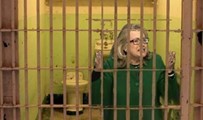 Real investigations of mishandling classified information by many persons including Hillary Clinton will likely extend and intertwine with long overdue deep dives into the network of Clinton “charities” that seem, to me, to have been used as conduits to trade cash for contracts and favours, and certainly not for their intended and authorised tax-exempt purposes.
Hannity and others are correct to call this unfolding scandal, the biggest in American history. When it grows to consider all contours of charity frauds and corruption during the period from 1988 forward, as unregulated globalism became the norm, we will be shocked to discover just how badly so many US presidents and other leaders behaved.
We cannot move forward productively until the public is shown what actually happened. Only with real investigations, indictments, prosecutions, convictions, and incarcerations can we prove that no American stands above our laws. With reason, many once powerful persons should be afraid – they are finally being called to account for lives in crime, pretending falsely to serve the people, even as they served themselves.
Special envoy calls for armed guards at synagogues & Jewish schools
RT | June 19, 2019
US President Donald Trump’s special envoy for combating anti-Semitism has called for an armed presence at Jewish institutions across the US, insisting synagogues, schools and community centers beef up on security.
The appointee, Elan Carr, said American Jews face a “time of danger” and must take steps to protect themselves from attacks and persecution, according to the Jerusalem Post.
“Any synagogue, every JCC [Jewish community center], should have guards,” Carr told an interviewer on Wednesday at a conference in Israel. “God willing, may they never be needed, but they should be there.”
President Trump tapped Carr to be the State Department’s pointman on anti-Semitism issues in February, after complaints from Democrats and Jewish advocacy groups pressured him to fill the position, which sat vacant for the first two years of his term.
Carr also spoke at the conference of the president’s commitment to protecting Jewish minorities in the US and around the world.
“The rhetoric of the president couldn’t be clearer,” he said. “Every time the president speaks on this issue, he calls it [anti-Semitism] a vile poison that must be rooted out.”
Some Jews reject Carr’s description of the president, however, and argue his policies and rhetoric actually put Jewish communities in more danger. In a recent survey of 1,000 American Jewish voters, nearly 60 percent of respondents said Trump “bears at least some responsibility” for recent synagogue shootings in Pennsylvania and California. Seventy-three percent said they thought Jews were less safe in the US than they were two years ago.
In his proposal for armed guards at Jewish institutions, Carr may have taken pointers from German Chancellor Angela Merkel, who made a similar suggestion in May as one way to address rising anti-Semitism in Germany.
Russia warns US against attempts to provoke war with Iran
Press TV – June 18, 2019
Russia has urged the United States to drop its “provocative” plans to deploy more troops to the Middle East, warning Washington against its “conscious” course of attempts to “provoke war” with Iran.
Speaking to reporters on Tuesday, Russian Deputy Foreign Minister Sergei Ryabkov said that Moscow had repeatedly warned Washington and its regional allies about the “unthinking and reckless pumping up of tensions in an explosive region.”
“Now what we see are unending and sustained US attempts to crank up political, psychological, economic and yes military pressure on Iran in quite a provocative way. They (such actions) cannot be assessed as anything but a conscious course to provoke war,” he added.
“If that’s the case, the US should refrain from further reinforcement of its presence and from other steps, including dragging and pushing its allies in various parts of the world into stepping up pressure on Iran,” Ryabkov said.
The United States has recently taken a quasi-warlike posture against Iran. The Pentagon announced on Monday that the US will send 1,000 additional US forces and more military resources to the Middle East.
Acting US Defense Secretary Patrick Shanahan made the announcement, asserting that the deployment had “defensive purposes.”
His comments came a day after US Secretary of State Mike Pompeo said that Washington does not want to go to war with Tehran, while falsely accusing Iran again for the attacks on two oil tankers in the Sea of Oman last week.
Acting US Defense Secretary Patrick Shanahan made the announcement, claiming that the deployment had “defensive purposes.”
His comments came a day after US Secretary of State Mike Pompeo said that Washington does not want to go to war with Tehran, while falsely accusing Iran again for last weeks’ attacks on two oil tankers in the Sea of Oman last week.
In response to such US claims, Ryabkov said if Washington did not want war, it had to show it.
“If that’s really how it is then the US should step back from reinforcing its military presence,” the senior Russian diplomat added.
Tehran has time and again said that it does not seek military confrontations with the United States, yet it stands ready to defend its interests in the region.
Iran’s President Hassan Rouhani on Tuesday reaffirmed that Tehran does not seek war with any state, but stressed that the Iranian nation will be the ultimate winner of any warfare against the Islamic Republic.
Meanwhile, Russian President Vladimir Putin’s spokesman Dmitry Peskov on Tuesday called for restraint to avoid the escalation of tensions in the Middle East.
“We are urging all the sides to show restraint,” Peskov told journalists. “We would prefer not to see any steps that could introduce additional tensions in the already unstable region.”
The United States remarkably stoked tensions with Iran in May 2018 when the US president pulled his country out of a 2015 multinational nuclear deal with Tehran, and re-imposed harsh sanctions against the Islamic Republic in defiance of global criticisms.
The tensions saw a sharp rise on the first anniversary of Washington’s exit from the deal as the US moved to ratchet up the pressure on Iran by tightening its oil sanctions and deploying reinforcements to the Middle East, including an aircraft carrier strike group, B-52 bombers and Patriot missiles.
The US’s recent military moves have sparked global concerns that the Trump administration was contemplating military aggression against Iran.
Featured Video

or go to
Aletho News Archives – Video-Images
Book Excerpt
Clinical Trials Relied Upon to License the MMR Vaccine
They insist we must rely on the data, well here it is…
Informed with Aaron Siri | November 24, 2026
Adding to my last post about the MMR vaccine, this one reviews the clinical trials relied upon for its licensure.
Here is an excerpt from my book, Vaccines, Amen, summarizing the clinical trials relied upon to license this vaccine… continue
Blog Roll
 Aletho News
- Kremlin Aide Slams Top German Diplomat for ‘Confrontation Against Russia’ Remark
- Canada stripped of World Cup events over Russian athletes ban
- Guatemala arrests ex-colonel over 1982 killings of Maya Ixil civilians
- Clinical Trials Relied Upon to License the MMR Vaccine
- FDA Ordered to Pay Over $570,000 in Fight Over Pfizer COVID Vaccine Records
- USAID turned to Facebook to drive demand for Covid vaccines in Global South – files
- Britain’s shadow security network expands into south Lebanon
- The ADL Has a Foreign Policy, and You Are Not Supposed to See It
- Former Qatari PM says ‘Israel’ has security ties with all Gulf states
- The Sound of Silence in the Strait of Hormuz
- If Americans Knew
- DAILY UPDATE: Latest essential news on Palestine, Israel, & region
- Congenital birth defects are on the rise in Gaza. Doctors say Israel’s genocide is to blame.
- DAILY UPDATE: Latest essential news on Palestine, Israel, & region
- Today would be Tom Hurndall’s birthday, killed by Israel
- New California law cracks down on ‘antisemitic’ flyers
- Costa Rica Detains Francesca Albanese On “Links to Terrorist Acts”
- New from MSF: No one is spared: The impact of Israeli attacks in southern Lebanon
- DAILY UPDATE: Latest essential news on Palestine, Israel, & region
- Iran’s Foreign Minister Slams Israel Over Chemical Weapons Claims
- Israel kills 18 in Gaza, including 3 girls, Deputy Education Minister, & his wife
- No Tricks Zone
- Physicists: Doubling CO2 Has A Smaller Impact On Ocean ‘Acidification’ Than Existing Internal Variability
- Alarmist Climatologists In Shock! 2026 Atlantic Hurricane Season Sees Lowest Count In 101 Years
- New Study: Modern Temps Are Among The Coldest Of The Last 10,000 Years In East Central Europe
- Germany’s Renewable Energies Lead to 1.4 Billion Euro Electric Power Trade Deficit
- Argentina’s Perito Moreno Glacier Joins Antarctica and Arctic In Defying Doomsday Melt Claims
- New Study: Barents Sea Temperatures Were Warmer And Sea Ice Less Extensive In The 1700s Than Today
- German Authorities Start Initiative To Evaluate Public Register For Climate “Disinformation” Spreaders!
- Zonal Asymmetry of Temperature Change in the Antarctic Circumpolar Current
- New Study: The Net Fossil Fuel Contribution To Rising Atmospheric CO2 Has Been Zero For 500 Years
- Germany’s Green Energy Transition Becoming Increasingly Expensive…Another 6 Trillion Euros!

