NPR reporter defends one-sided report on Ilhan Omar
By Alison Weir | If Americans Knew | February 22, 2019
In response to an email I sent complaining that NPR had aired a one-sided, slanted report on the Ilhan Omar controversy, reporter Susan Davis replied that their coverage was “fair.” She emailed that the controversy was Omar’s fault, calling it “a self-inflicted PR mess by a sitting member of Congress.”
The report had been aired on NPR’s All Things Considered program, reportedly “the most listened-to, afternoon drive-time, news radio program in the country.”
Let’s look at what constituted Omar’s alleged “self-inflicted PR mess”: she mentioned the influence of a special interest lobby on politicians’ stances.
This is a widely understood reality. Politicians and others frequently discuss the influence of the NRA, the pharmaceutical lobby, and other special interest groups. Democrats periodically call out conservative lobbies; Republicans do the same for liberal ones. This is considered politics as usual.
That’s what Omar did.
Sequence of events
Let’s look at the sequence of events that led to the controversy over Omar:
1. Journalist Glenn Greenwald (who is Jewish but has also been accused of being “antisemitic”) tweeted: “GOP Leader Kevin McCarthy threatens punishment for @IlhanMN and @RashidaTlaib over their criticisms of Israel. It’s stunning how much time US political leaders spend defending a foreign nation even if it means attacking free speech rights of Americans.”
(The phrase “attacking free speech rights of Americans” refers to legislation to impede the right to boycott Israel; 75 percent of Americans oppose such legislation.”)
2. Omar retweeted Greenwald’s post with the comment: “It’s All About the Benjamins.” (Benjamins is a colloquial term for money – Benjamin Franklin is on the $100 bill.)
3. Pro-Israel journalist Batya Ungar-Sargon posted a sarcastic tweet saying she’d “like to know” who Omar “thinks is paying [sic] American politicians to be pro-Israel….”
4. Omar responded “AIPAC.”
AIPAC is the American Israel Public Affairs Committee – a lobbying organization that claims to be, and is widely regarded as, extremely influential in Congress.
In other words, the controversy began over Omar’s two tweets, a total of six words.
For this exchange, Israel partisans, and those who desire their campaign donations, called Omar “antisemitic.” (This epithet is frequently deployed against proponents of Palestinian rights. An Israeli Knesset member has explained that this is a frequently used “trick.”)
But Omar had not said anything about “Jews” or “Jewish.”
AIPAC and the Israel lobby
Omar had simply referred to a special interest lobbying group – an organization with an income of $230 million that refers openly to the “key role” it plays in advancing legislation.
Fortune magazine once ranked AIPAC “the second most powerful interest group in Washington.”
In 2016 Fortune described AIPAC as “the biggest, most powerful group in the Israel Lobby.”
Former AIPAC official, M.J. Rosenberg wrote of Omar’s tweet: “AIPAC’s political operation is used precisely as Representative Omar suggested.” Rosenberg pointed out: “The power of AIPAC over members of Congress is literally awesome, although not in a good way.”
Pro-Israel New York Times columnist Thomas Friedman wrote in 2011 that Congress’s many standing ovations for Israeli Prime Minister Benjamin Netanyahu had been “bought and paid for by the Israel lobby.”
In November’s mid-term elections, pro-Israel campaign donors gave millions of dollars to both parties. Israel advocate Sheldon Adelson, alone, who says he wishes he had served in the Israeli army rather than the U.S. military, gave $123 million.
Although ambitious politicians from both parties attacked Omar for publicly stating the obvious, numerous people defended her; there were articles in The Nation, the UK Guardian, The Intercept, and many other places. An Israeli journalist based in the U.S. tweeted Omar was “exactly right.”
One-sided report
In her email to me, reporter Susan Davis claimed that the All Things Considered report was “fair.” But a fair report would have reported both the criticisms of her and the defenses.
Instead, NPR only told listeners about the accusations against Omar. There was no mention of the many people who supported her, said her point was valid, and provided evidence for their statements.
In her report, Davis had told listeners: “She’s facing scrutiny for comments that both her allies and her critics consider anti-Semitic.” This suggested that the condemnation was universal, when in reality many allies and others disagree.
A full, fair, accurate report would have followed the sentence about the claims against her with another: ‘But many people disagree and say her remarks are valid.’
That’s not what NPR did.
Davis’s inaccurate assertions
Following are the other assertions in Davis’s email. These indicate a profoundly skewed perspective on the controversy, albeit one that conforms to a pervasive blindspot within much of the media. This is unfortunate in an otherwise thorough and professional journalist like Davis, who can and hopefully will do better.
She was universally condemned by her own party, Democratic leaders, and every major chairman in the Congress.
Davis’s claim that Omar “was universally condemned by her own party” is untrue.
There are thousands of people in the Democratic party; most didn’t say anything. In fact, a 2018 Pew poll showed that “nearly twice as many liberal Democrats say they sympathize more with the Palestinians than with Israel.”
Bernie Sanders, perhaps the most popular leader in Congress, met with Omar and offered his support.
A former member of the Democratic National Committee’s executive committee said the attacks were “outrageous.” He wrote that Omar was being condemned because “she dared to point out, as a leading New York Times columnist and so many others have in the past, the intimidating role that AIPAC plays in shaping US policy toward Israel. The response was nearly hysterical.”
He wrote that Israel supporters “have weaponized anti-Semitism, turning it into a blunt instrument in a crude effort to pummel opponents and silence legitimate debate on the Israeli-Palestinian conflict.”
While Davis notes that major Congressional chairmen are against Omar, she fails to mention that Nancy Pelosi intentionally stacked the deck. Speaking a while ago before a pro-Israel convention backed by Sheldon Adelson, Pelosi announced: “We have people very well paced to share our values.”
She apologized for using what she acknowledged were anti-Semitic tropes, if inadvertently.
This statement is also untrue.
Nowhere did Omar “acknowledge” that she had used “anti-Semitic tropes.”
In reality, Omar had apologized for “any actual hurt” her words may have caused, but said she would not change her views of the “problematic role of lobbyists in our politics.” She said: “It’s gone on too long and we must be willing to address it.”
Many people felt there was no need for Omar to apologize for making a factual statement; if anyone was allegedly “hurt” by her statement about a special interest group, this was their problem, not hers.
Our coverage was fair and accurately reflected those facts.
The coverage was not fair.
It reported one-side of a controversy that has two sides. It reported some facts and left out other facts.
All Things Considered is a highly influential program. It is important that it air unbiased, accurate reports, not one-sided, prejudicial dispatches.
Anyone who wishes All Things Considered to do better in future reports, can contact them here.
Alison Weir is executive director of If Americans Knew, president of the Council for the National Interest, and author of “Against Our Better Judgment: The Hidden History of How the U.S. Was Used to Create Israel.”
Microsoft workers demand company cancel $480 million US military contract
Press TV – February 23, 2019
Nearly 100 employees at Microsoft have demanded that the US technology company cancel a $480 million hardware contract to supply the US military, the latest example in the last year of tech employees protesting cooperation with the Pentagon on emerging technologies.
Some 94 workers signed a petition on Friday calling on the company to stop developing “any and all weapons technologies” for the US Defense Department.
Microsoft won a contract in November to supply the US Army with at least 2,500 prototypes of augmented reality headsets, which digitally display contextual information in front of a user’s eyes.
The US Defense Department has said the devices would be used on the battlefield and in training to improve soldiers “lethality, mobility and situational awareness.”
In the petition to Microsoft executives, posted on Twitter, the workers said they “did not sign up to develop weapons, and we demand a say in how our work is used.” They called on the company to develop “a public-facing acceptable use policy” for its technology and an external review board to publicly enforce it.
Microsoft president Brad Smith said in an October blog post that the company remained committed to assisting the military and would advocate for laws to ensure responsible use of new technologies.
Though many US government agencies want to draw upon the expertise of the biggest American tech companies, employee resistance has added a new challenge to already complicated relationships.
Worker opposition led Google’s parent company Alphabet Inc last year to announce it would cancel a Pentagon contract in which its artificial intelligence technology is used to analyze drone imagery.
In other cases, employee criticism has invited greater public scrutiny to deals, such as $10 billion cloud computing contract yet to be awarded and various contracts with US Immigration and Customs Enforcement.
Japanese PM Abe set to ignore local referendum on US Okinawa military base relocation
RT | February 23, 2019
Japanese Prime Minister Shinzo Abe has said his government will press ahead with the controversial relocation of a US military base on the island of Okinawa, despite local objection.
Okinawa is home to two-thirds of the US’ Japanese bases. Tokyo wants to relocate one of these – US Marine Corps Air Station Futenma, located in a densely populated area – to the more remote coastal area of Henoko. While residents near the base have been angered by a series of aircraft accidents, they also oppose the relocation to Henoko, claiming that planned land-reclamation works there will devastate the coral-rich coastal environment.
Okinawans will vote on the relocation on Sunday in a non-binding referendum, with nearly 70 percent expected to vote ‘No,’ according to a poll by Kyodo News. Okinawa’s Governor Denny Tamaki, who campaigned on an anti-base platform last year, has also traveled to Washington DC to lobby against the move.
The Japanese government intends to go ahead with the relocation “without being swayed by referendum results,” Abe told parliament on Wednesday.
Many Okinawans are unhappy with the base’s current location, as well as the planned relocation. They hope a ‘No’ vote will force the government to move the base off the island altogether.
The behavior of US troops stationed on Okinawa has also incensed locals, with the 1995 kidnap and gang-rape of a 12-year-old girl by three US soldiers triggering mass protests on the island. Two cases of rape and murder by US troops again caused protests in 2016. One year later, Okinawa was back in the news after a drunk Marine plowed his truck into another vehicle while running a red light, killing an elderly Japanese man.
Meet Pierre Omidyar, billionaire patron of US regime change operations, neocons & activist media
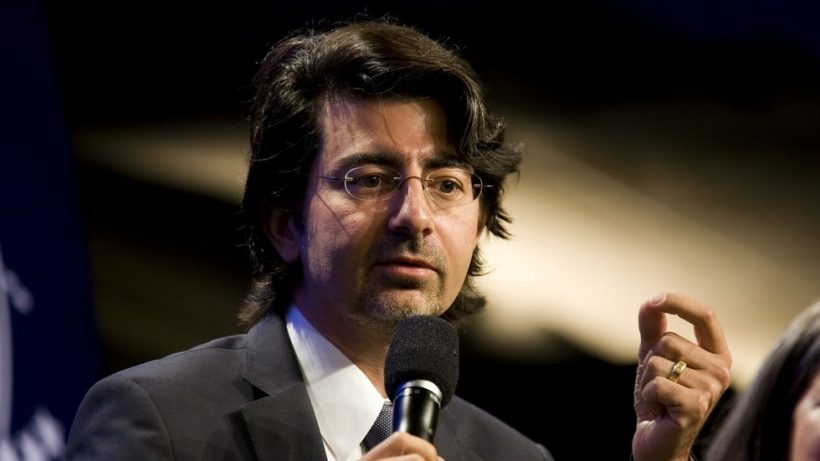
Pierre Omidyar speaks at a ‘Technology For Citizen Empowerment and Human Rights’ panel at the Clinton Global Initiative in New York, September 23, 2010 © AFP / Brian Harkin
RT | February 22, 2019
Amid the US push for regime change in Venezuela, RT speaks with investigative journalists who looked into the eBay founder and self-described “progressive” billionaire Pierre Omidyar, a major patron of regime-change operations.
An ongoing series in MintPress News, written by Alexander Rubinstein and Max Blumenthal, is a rare look into the projects undertaken by the “progressive philanthropreneur,” who has been praised by the liberal interventionist establishment for following in the footsteps of George Soros but attracts far less media attention.
“Part of the reason for doing this investigation was to inspire more scrutiny of Pierre Omidyar,” Rubinstein told RT. “There are mountains of newsworthy bits of information about many of the organizations he funds, but the sad reality is that it would require a team of at least half a dozen journalists working overtime to fully make sense of it all.”

Detail of a chart showing the connections between Pierre Omidyar and various media outlets, foundations, activists and outfits. © MintPress News
The second part in Blumenthal and Rubinstein’s series, published Wednesday, took a particular interest in Omidyar’s ties to organizations promoting “regime change.” In Ukraine, it was a TV station (Hromadske) that backed what turned into a violent 2014 coup against the government in Kiev. In Zimbabwe, Omidyar money funded a “cultural activist network” that campaigned for the ouster of President Robert Mugabe in 2017. And in the Philippines Omidyar is backing The Rappler, a news site opposed to President Rodrigo Duterte that is developing surveillance technologies like a “mood meter” of the audience to capture – and channel? – “non-rational reactions.”
Not progressivism but power
Omidyar is not doing this on his own, either, working hand in hand with US Agency for International Aid and Development (USAID) and the National Endowment for Democracy (NED).
“He has the money and – for one reason or another– the desire to participate in such destabilizing policies,” Rubinstein told RT, noting that the billionaire’s embrace of such projects makes him “the perfect private partner for the US government” in seeking regime change abroad.
How does a self-described progressive find himself riding the horse of regime change? This is one of the questions Rubinstein and Blumenthal hope further research will answer. Their digging has found Omidyar’s money behind the Alliance for Securing Democracy and The Bulwark – projects led by NeverTrump neoconservative Bill Kristol that push “Russiagate” and carry the torch of interventionism.
“If partnering with the neocon think tank guru who was a main conduit for US government messaging in the lead-up to the Iraq War is ‘progressive’ then I think it’s time we retire the term,” Rubinstein told RT.
He believes that Omidyar is not driving the regime-change agenda, but going along with it in “the perfect alliance of convenience.”
“If you’re looking for a coherent ideology that permeates through each of Omidyar’s investments, it’s not progressivism: it’s power… and power lies with empire,” Rubinstein said.
More specifically, Omidyar is looking to manage all areas of modern life, from journalism and transportation to banking and finance and government administration, journalist Yasha Levine, author of ‘Surveillance Valley: The Secret Military History of the Internet,’ told MintPress.
To him it’s not just about running a single service, but integrating things together to give technocrats, business executives and government officials a God’s-eye view of the world – to manage and control society more efficiently.
The role of Omidyar and other billionaires – who would be called ‘oligarchs’ if they were Russian but keep being presented as ‘philanthropists’ in the West – in influencing media and politics around the world is woefully under-examined, Rubinstein and Blumenthal argue.
Controlled or ‘responsible’ opposition?
Part of the problem is that Omidyar funds a wide range of media outlets through foundations, nonprofits and other cutouts, and many journalists who consider themselves independent or progressive aspire to work at Omidyar-backed Intercept, famous for publishing (some of) the documents leaked by NSA whistleblower Edward Snowden in 2013.
“All of the media ventures funded by Omidyar have one thing in common: their slickness,” Rubinstein said, noting that the “cutting edge design, high production values, and the esoteric portrayal of the process of reporting” all contribute to creating the image of Omidyar-backed outlets as the “responsible opposition” in contrast to outlets with a more shoestring budget.
While Intercept editor Glenn Greenwald has been sharply critical of US foreign policy and the ‘Russiagate’ conspiracy theory, other writers at the outlet have “carried water for al-Qaeda in Syria” and pushed Russiagate, said Rubinstein.
He described as “incredibly troubling” the fact that The Intercept has rolled out only a portion of the Snowden documents, de facto making them serve the agenda of Omidyar and his First Look Media rather than be responsibly released to the public, as Snowden intended.
Putin’s Self-Defense Warning Twisted as ‘Unacceptable Threat’ to US
By Finian CUNNINGHAM | Strategic Culture Foundation | 22.02.2019
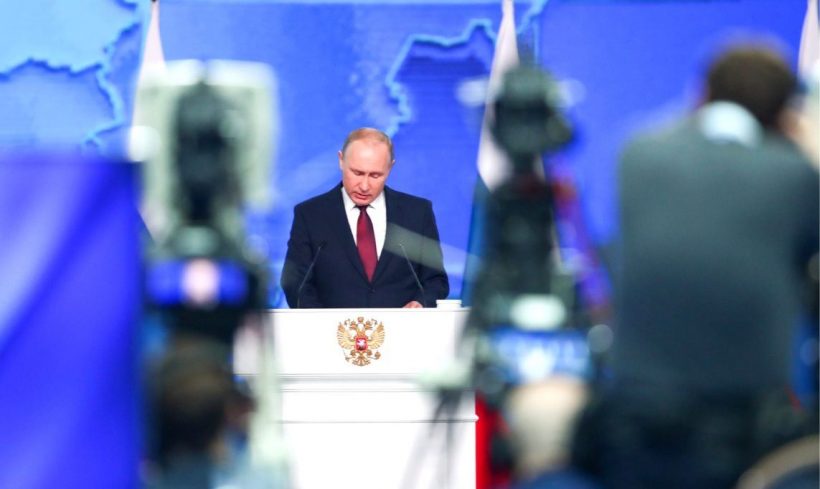
With stupendous double-think, Western news media claimed this week that Russian President Vladimir Putin was “threatening” the United States and its NATO allies with nuclear missiles.
The New York Times accused the Russian leader of “nuclear saber-rattling” while Radio Free Europe headlined: ‘Putin threatens to target the US with missiles’. Many other news outlets conveyed the same depiction of Russia somehow escalating bellicose tensions, based on Putin’s annual state-of-the-nation address this week.
Buried beneath the sensational headlines was a little more context that hints at the gross distortion being propagated by the Western media.
The New York Times disdained Putin was speaking with an “aggressive tone” and “doubling down on threats against the United States”.
The Times then went on to report: “President Vladimir Putin used his state-of-the-nation address to make some of his most explicit threats yet to start a nuclear arms race with the US after [sic] the Trump administration said this month that America was withdrawing from a landmark arms control treaty.”
Obliquely, but crucially, what the Western media coyly admit is that Putin’s remarks this week on deploying new missiles systems are in response to Washington’s decision to unilaterally abandon the Intermediate-range Nuclear Forces (INF) Treaty.
In other words, decisions have consequences. But for the Western media, they seem to be only preoccupied by consequences.
Furthermore, the Washington Post added somewhere lurking in the bowels of its coverage: “Putin emphasized that Russia will only respond if the United States makes the first move.”
That is, if the US installs short- and medium-range missiles in Europe then Russia will take symmetrical measures to target America territory and that of its NATO allies.
Radio Free Europe even breezily reported Putin as saying, “we don’t want confrontation” and added: “Putin said Russia wanted friendly relations with the United States and remained open for arms control talks with Washington.”
So, Western media are correctly – albeit coyly – noting that the Russian leader is acting in response to actions taken by Washington, and that he is explicitly appealing for friendly relations instead of confrontation. And yet the headlines were all screaming that Putin was “threatening the US”.
This willful distortion is reprehensibly adding to already dangerous international tensions. It is also a baleful failure to accurately determine which party is actually responsible for the brooding confrontational climate. Russia is being blamed for “threatening” the US and its allies when the reality is the reverse: it is the US that is unleashing the dangers of nuclear conflict, as even the Western media obliquely admit.
The Trump administration’s decision to walk away – unilaterally – from the 1987 INF Treaty is the key here. The US side claims that Russia has violated the treaty with its development of a land-launched cruise missile within the banned range of 500-5,500 kilometers. Moscow counters that the 9M729 (also known as SSC-8) missile has an operating range below the lower limit banned by the INF. Last month, in an unprecedented move, the Russian ministry of defense publicly disclosed the missile’s flight specifications at a press conference. Moscow points out that the US has not provided substantiating details to back up its claims that Russia is in breach of the treaty.
For its part, Russia accuses the US side of violating the INF treaty by already installing missile systems in Romania and Poland which can deploy offensive cruise warheads as well as performing as anti-missile systems. The US says its Aegis Ashore system is solely defensive.
However, rather than negotiating through the claims and counter-claims, it is the US side which decided to terminate its participation in the INF Treaty – just like it did with the Anti-Ballistic Missile (ABM) Treaty back in 2002 under President GW Bush.
The abandonment of a second major arms control accord is solely the responsibility of the US. The third remaining treaty, New START, is also at risk from redundancy by Washington.
With the INF now being trashed, the US has freed itself to potentially deploy additional missile systems in Europe right on Russia’s borders. The eastward expansion of NATO over the past three decades means that US nuclear weapons could be deployed with a strike capability on Moscow within 10-12 minutes, not hours as with strategic warheads.
President Putin this week noted that Washington has not indicated if it will refrain from installing medium-range nuclear missiles in Europe.
But the Russian leader emphatically specified the condition that “if” the US does embark on such a threatening deployment then Russia will take “symmetrical measures”. He warned that new hypersonic and submarine-launched missiles will be deployed to match the 10-12 minute flight time that the US could poise against Moscow. The Russian weapons will target European launch sites for the US missiles as well as “decision-making centers” in American territory.
Of course, such a dramatic proximity of nuclear capability is extremely alarming and deplorable. The risk of error is manifold greater in such a scenario in a way that far exceeds the Cold War decades. Putin noted that the scenario recalls the Cuban missile crisis in 1962 when the world almost witnessed a nuclear war. The reference point is apt for today’s predicament. The Soviet Union deployed nuclear missiles in Cuba in 1962 after the US installed ballistic missiles in Turkey the year before in 1961. Again, as now, it is the US side that is initiating the dynamics of provocation.
Any objective observer can see that it is the US that is continually upping the ante for nuclear war. The jettisoning of the ABM is now followed by the US discarding the INF based on dubious, unverified claims. Russia in fact views the ulterior rationale of the US as covertly wanting to free itself from the arms controls restriction in order to exert threatening pressure on Moscow for geopolitical goals: those goals may include forcing Russia to be compliant with American foreign policy interests, or opening up Russia’s natural resources to American capital exploitation, and so on.
Putin’s remarks this week are clearly consistent with Russia’s defensive doctrine for using nuclear forces. Moscow is patently stating that it will take “reciprocal steps” if Washington follows through on its offensive trajectory. Yet Western media invert the situation to portray Russia as “threatening” the US.
This is analogous to a gang marauding outside a home. Then the mob ringleader announces that projectiles are to be readied to lob over the garden wall. The homeowner shouts out: just try it and we’ll shoot your henchmen. Nobody in their right mind could fault the homeowner. It’s called self-defense.
But in Russia’s case, self-defense is twisted by dutiful, brainwashed Western news media as “unacceptable threat”.
Telling Only Part of the Story of Jihad
By Daniel LAZARE | Consortium News | February 21, 2019
A recent CNN report about U.S. military materiel finding its way into Al Qaeda hands in Yemen might have been a valuable addition to Americans’ knowledge of terrorism.
Entitled “Sold to an ally, lost to an enemy,” the 10-minute segment, broadcast on Feb. 4, featured rising CNN star Nima Elbagir cruising past sand-colored “Mine-Resistant Ambush Protected” armored vehicles, or MRAPs, lining a Yemeni highway.
“It’s absolutely incredible,” she says. “And this is not under the control of [Saudi-led] coalition forces. This is in the command of militias, which is expressly forbidden by the arms sales agreements with the U.S.”
“That’s just the tip of the iceberg,” she adds. “CNN was told by coalition sources that a deadlier U.S. weapons system, the TOW missile, was airdropped in 2015 by Saudi Arabia to Yemeni fighters, an air drop that was proudly proclaimed across Saudi backed media channels.” The TOWs were dropped into Al Qaeda-controlled territory, according to CNN. But when Elbagir tries to find out more, the local coalition-backed government chases her and her crew out of town.
U.S.-made TOWs in the hands of Al Qaeda? Elbagir is an effective on-screen presence. But this is an old story, which the cable network has long soft-pedaled.
In the early days of the Syrian War, Western media was reluctant to acknowledge that the forces arrayed against the Assad regime included Al Qaeda. In those days, the opposition was widely portrayed as a belated ripple effect of the Arab Spring pro-democracy uprisings elsewhere in the region.
However, in April-May 2015, right around the time that the Saudis were air-dropping TOWs into Yemen, they were also supplying the same optically-guided, high-tech missiles to pro-Al Qaeda forces in Syria’s northern Idlib province. Rebel leaders were exultant as they drove back Syrian government troops. TOWs “flipped the balance,” one said, while another declared: “I would put the advances down to one word – TOW.”
CNN reported that story very differently. From rebel-held territory, CNN’s Nick Paton Walsh described the missiles as a “possible game-changer … that may finally be wearing down the less popular side of the Shia-Sunni divide.” He conceded it wasn’t all good news: “A major downside for Washington at least, is that the often-victorious rebels, the Nusra Front, are Al Qaeda. But while the winners for now are America’s enemies, the fast-changing ground in Syria may cause to happen what the Obama administration has long sought and preached, and that’s changing the calculus of the Assad regime.”
Foreign Policy, The Washington Post, The Guardian, and The New York Times all reacted the same way, furrowing their brows at the news that Al Qaeda was gaining, but expressing measured relief that Syrian President Bashar al-Assad was at last on the ropes.
But now that Elbagir is sounding the alarm about TOWs in Yemen, CNN would do well to acknowledge that it has been distinctly more blasé in the past about TOWs in the hands of al Qaeda.
The network appears unwilling to go where Washington’s pro-war foreign-policy establishment doesn’t want it to go. Elbagir shouldn’t be shocked to learn that U.S. allies are consorting with Yemeni terrorists.
U.S. History with Holy Warriors
What CNN producers and correspondents either don’t know or fail to mention is that Washington has a long history of supporting jihad. As Ian Johnson notes in “A Mosque in Munich” (2010), the policy was mentioned by President Dwight Eisenhower, who was eager, according to White House memos, “to stress the ‘holy war’ aspect” in his talks with Muslim leaders about the Cold War Communist menace.” [See “How U.S. Allies Aid Al Qaeda in Syria,” Consortium News, Aug. 4, 2015.]
Britain had been involved with Islamists at least as far back as 1925 when it helped establish the Muslim Brotherhood in Egypt, and both the U.S. and Britain worked with Islamists in the 1953 coup in Iran, according to Robert Dreyfus in “Devil’s Game” (2006).
By the 1980s a growing Islamist revolt against a left-leaning, pro-Soviet government in Afghanistan brought U.S. support. In mid-1979, President Jimmy Carter and his national security adviser, Zbigniew Brzezinski, armed the Afghan mujahideen — not at first to drive the Soviets out, but to lure them in. Brzezinski intended to deal Moscow a Vietnam-sized blow, as he put it in a 1998 interview.
Meanwhile, a few months after the U.S. armed the mujahideen, the Saudis were deeply shaken when Islamist extremists seized the Grand Mosque in Mecca and called for the overthrow of the royal family. While Saudi Arabia has been keen to repress jihadism at home, it has been a major supporter of Sunni extremists in the region, particularly to battle the Shi‘ite regime that came to power in Tehran, also in 1979.
Since then, the U.S. has made use of jihad, either directly or indirectly, with the Gulf oil monarchies or Pakistan’s notoriously pro-Islamist Inter-Services Intelligence agency. U.S. backing for the Afghan mujahideen helped turn Osama bin Laden into a hero for some young Saudis and other Sunnis, while the training camp he established in the Afghan countryside drew jihadists from across the region.
U.S. backing for Alija Izetbegovic’s Islamist government in Bosnia-Herzegovina brought al-Qaeda to the Balkans, while U.S.-Saudi support for Islamist militants in the Second Chechen War of 1999-2000 enabled it to establish a base of operations there.
Downplaying Al Qaeda
Just six years after 9/11, according to investigative reporter Seymour Hersh, the U.S. downplayed the fight against Al Qaeda to rein in Iran – a policy, Hersh wrote, that had the effect of “bolstering … Sunni extremist groups that espouse a militant vision of Islam and are hostile to America and sympathetic to Al Qaeda.”
Under Secretary of State Hillary Clinton, policy toward Al-Qaeda turned even more curious. In March 2011, she devoted nearly two weeks to persuading Qatar, the UAE and Jordan to join the air war against Libya’s Muammar Gaddafi, only to stand by and watch as Qatar then poured hundreds of millions of dollars of aid into the hands of Islamist militias that were spreading anarchy from one end of the country to the other. The Obama administration thought of remonstrating with Qatar, but didn’t in the end.
Much the same happened in Syria where, by early 2012, Clinton was organizing a “Friends of Syria” group that soon began channeling military aid to Islamist forces waging war against Christians, Alawites, secularists and others backing Assad. By August 2012, the Defense Intelligence Agency reported that “the Salafist, the Muslim Brotherhood, and AQI [Al Qaeda in Iraq] are the major forces driving the [anti-Assad] insurgency”; that the West, Turkey, and the Gulf states supported it regardless; that the rebels’ goal was to establish “a declared or undeclared Salafist principality in eastern Syria,” and that “this is exactly what the supporting powers want in order to isolate the Syrian regime….”
Biden Speaks Out
Two years after that, Vice President Joe Biden declared at Harvard’s Kennedy School:
“Our allies in the region were our largest problem in Syria… The Saudis, the Emiratis, etc. what were they doing? They were so determined to take down Assad and essentially have a proxy Sunni-Shia war, what did they do? They poured hundreds of millions of dollars and tens of thousands of tons of military weapons into anyone who would fight against Assad, except the people who were being supplied were al Nusra and al Qaeda and the extremist elements of jihadis coming from other parts of the world.” (Quote starts at 53:25.)
The fact that Obama ordered the vice president to apologize to the Saudis, the UAE and Turkey for his comments provided back-handed confirmation that they were true. When TOWs turned up in the hands of pro-Qaeda rebels in Syria the following spring, all a senior administration official would say was: “It’s not something we would refrain from raising with our partners.”
It was obvious that Al Qaeda would be a prime beneficiary of Saudi intervention in Yemen from the start. Tying down the Houthis — “Al Qaeda’s most determined foe,” according to the Times — gave it space to blossom and grow. Where the State Department said it had up to 4,000 members as of 2015, a UN report put its membership at between 6,000 and 7,000 three years later, an increase of 50 to 75 percent or more.
In early 2017, the International Crisis Group found that Al Qaeda was “thriving in an environment of state collapse, growing sectarianism, shifting alliances, security vacuums and a burgeoning war economy.”
In Yemen, Al Qaeda “has regularly fought alongside Saudi-led coalition forces in … Aden and other parts of the south, including Taiz, indirectly obtaining weapons from them,” the ICG added. “… In northern Yemen … the [Saudi-led] coalition has engaged in tacit alliances with AQAP fighters, or at least turned a blind eye to them, as long as they have assisted in attacking the common enemy.”
In May 2016, a PBS documentary showed Al Qaeda members fighting side by side with UAE forces near Taiz. (See “The Secret Behind the Yemen War,” Consortium News, May 7, 2016.)
Last August, an Associated Press investigative team found that the Saudi-led coalition had cut secret deals with Al Qaeda fighters, “paying some to leave key cities and towns and letting others retreat with weapons, equipment, and wads of looted cash.” Saudi-backed militias “actively recruit Al Qaeda militants,” the AP team added, “… because they’re considered exceptional fighters” and also supply them with armored trucks.
If it’s not news that U.S. allies are providing pro-Al Qaeda forces with U.S.-made equipment, why is CNN pretending that it is? One reason is that it feels free to criticize the war and all that goes with it now that the growing human catastrophe in Yemen is turning into a major embarrassment for the U.S. Another is that criticizing the U.S. for failing to rein in its allies earns it points with viewers by making it seem tough and independent, even though the opposite is the case.
Then there’s Trump, with whom CNN has been at war since the moment he was elected. Trump’s Dec. 19 decision to withdraw U.S. troops from Syria thus presented the network with a double win because it allowed it to rail against the pullout as “bizarre” and a “win for Moscow” while complaining at the same time about administration policy in Yemen. Trump is at fault, it seems, when he pulls out and when he stays in.
In either instance, CNN gets to ride the high horse as it blasts away at the chief executive that corporate outlets most love to hate. Maybe Elbagir should have given her exposé a different title: “Why arming homicidal maniacs is bad news in one country but OK in another.”
The End of Truth as We Know It – Or Knew It
By Jeremy Salt | American Herald Tribune | February 21, 2019
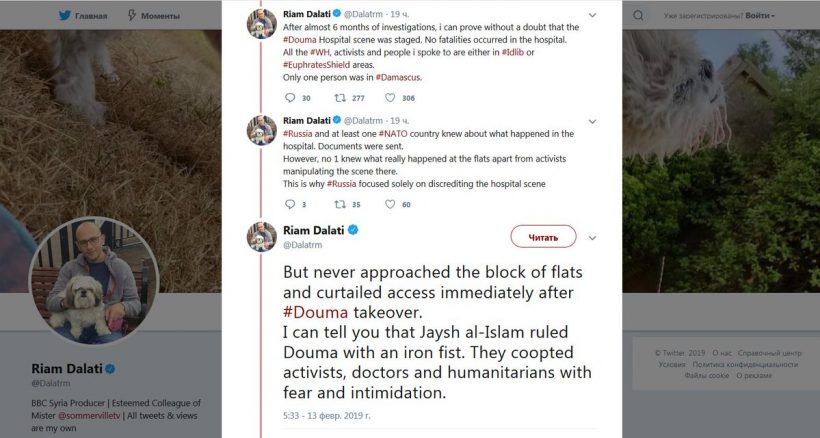
The claim (or admission) by the BBC journalist Riam Dalati that the alleged sarin attack on Douma in April 2018, was staged was received by the Russian embassy in London with glee. “Remarkable that the British MSM chose to ignore it’, whoever it was at the embassy wrote. ‘No breaking news, no articles, nothing.’
Remarkable? Not at all, given the endless track record of the media in ignoring news that does not suit its agenda. The real interest lies in the fact that an insider has owned up. His personal opinion only, according to the BBC, which along with the rest of the media, had taken the initial version of the alleged attack for granted, thus setting Syria up for the cruise missile strike by the US, Britain, and France which soon followed.
‘I can prove without a doubt that the Douma hospital scene was staged,’ Dalati wrote. Well, enough of the evidence has already been produced to prove that. As for the sarin, in July 2018, the OPCW (Organization for the Prevention of Chemical Weapons) put out an interim report indicating that whatever was used at Douma was not sarin, but most probably chlorine.
The next question is ‘used by whom?’ Again the evidence suggests that the yellow gas cylinders shown in the media propaganda blitz were not dropped from an aircraft but planted at the scene by the ‘activists’ who faked the whole episode.
The OPCW now seems to be reaching the point where it will release its full report. What it might contain opens the doors to endless speculation. It has already indicated that it found traces of chlorine and it may point an accusing finger at ‘the regime’ but without having the proof that it did it.
So expect something ultimately inconclusive, i.e. there is evidence of chlorine having been used, the Syrian regime might have used it but we really can’t say, leaving enough room for western governments to argue that they were right to bomb on the basis of the facts that were known at the time and for E. Higgins and company to argue that their version has not been disproved.
With Idlib, the last redoubt of the takfiris in Syria, now the focal point of political maneuvers and possibly military action, any credibility given by the OPCW to the accusations against the Syrian military might encourage the takfiris to try again, most likely in Idlib province, the location of the alleged chemical weapons attack in Khan Shaikhun in April, 2017. Without having the proof, the US launched a missile strike against a Syrian air base by way of retaliation.
Another faked attack would give the US and its law-breaking friends the pretext needed to disrupt or forestall any Syrian military campaign to drive the takfiris out of Idlib, which, far from having quietened down following the ‘de-escalation’ agreement reached by Turkey, Iran and Russia, is now an even hotter hothouse of takfiri activity.
The main group, Hayat Tahrir al Sham (HTS) basically still Jabhat al Nusra/Al Qaida in Syria despite the name change, and its allies have routed their ‘moderate’ enemies and taken control of between 70 to 90 per cent of the province, including Idlib city, which lives under a harsh form of sharia law.
The HTS collective has tens of thousands of armed fighters on call. So does the rival Turkish-supported National Liberation Front. The entire province is awash with arms and armed groups refusing to adhere to any agreements drawn up in Astana or Sochi and saying they will fight to the last.
Along with the fighting men are the civilians, the families of the takfiris and the normal civilian population of the province who are helpless in the face of the violence and intimidation all around them and the scheming of powerful actors far from the scene.
At present nothing is clear. The US is apparently planning to withdraw troops from northern Syria but has not withdrawn them. Erdogan and Putin have met to discuss what the US is up to, as well as the situation in Idlib and Turkey’s desire to set up a buffer zone running 460 kms and 32 kms deep along the Syrian border (on the Syrian side). Russia and Iran have so far refused to support the idea.
The buffer zone would be set up against the Kurdish People’s Protection Units (YPG), aligned with Turkey’s Kurdistan Workers’ Party (PKK) and ‘terrorists’ in the view of the Turkish government but not in the eyes of the US, which, of course, has been using the Kurds in pursuit of its own strategic interests
Turkey has recently been committing itself to the territorial and political integrity of Syria, raising an obvious question: if this is the case, why did you make such strenuous attempts to destroy both over the past eight years?
The US is on the brink of defeat in Syria. Not just defeat but defeat by Russia, which is why Trump’s plan to withdraw is facing furious criticism at home by neocons who want more war, somewhere, anywhere, and ‘liberals’ who hate Trump and will buy into almost anything that brings him down. In their views on Syria, Iran, Hizbullah, Hamas and now Venezuela the two groups are indistinguishable, even if they also affect to hate each other.
Idlib will be liberated sooner or later. If the takfiris are insisting that they will fight to the last drop of their blood that is because they have nowhere else to go. The foreigners among them can’t go back to their own countries. Turkey does not want them on its side of the border although, as the Syrian Kurds claim, it might allow them to move into Afrin, occupied by the Turkish army in March 2018. As fighters or police, they would have their uses. What happens to them when Afrin is finally returned to the hands of the Syrian state is an issue for the future.
But back to Douma. Was the district being bombed at the time a chemical weapons attack was alleged? Of course, it was. It had been taken over by one of the most murderous takfiri groups in Syria, Jaysh al Islam, and the army was shelling Douma to drive them out. What government and what army would not be constitutionally bound to do the same?
Douma was not under siege by the Syrian army, as the corporate media kept telling the world. It was being held hostage by a murderous armed group, for which the presence of civilians, deterring the army from a full-on ground military assault, was a prized asset. Civilians died in the shelling but the most likely cause of the breathing difficulties suffered by those given genuine medical treatment was smoke and dust inhalation. Jaysh al Islam and the White Helmets converted their distress into a chemical weapons attack and then ran around a clinic spraying water over everyone to prove the point.
The arguments will continue over the provenance of the yellow cylinders that gave Eliot Higgins something else to do. These were normal industrial gas cylinders that had been filled with chlorine which could only be released if someone opened the valve with a monkey wrench or if the valve had opened on impact. That a Syrian military helicopter would drop these cylinders in the hope that somehow the valve would open or break on landing is surely nonsensical.

The valves were intact so how the chlorine could have got out of the cylinders without someone manually opening them remains unexplained by those making the claim that the cylinders were dropped from a helicopter. There was no evidence of anyone in the house where the cylinders were found having been affected and as someone has observed, even the chickens running around nearby were unharmed. In short, the whole scenario screams one word: fake.
One thing not to be forgotten is that when the takfiris finally were pushed out of Douma, a makeshift chemical weapons factory, complete with how-to-make instructions and receipts for the machinery and chemical compounds received, was found underground in an elaborate network of tunnels.
Neither the factory nor the tunnels, nor the brutal nature of the takfiris holding Douma, or their previous crimes, including their previous alleged use of chemical weapons were items for show or discussion in the media.
Neither was the story one of armed fanatics taking over a district close to a national capital and holding its citizens hostage. Neither was the story one of foreign governments and the armed groups they were supporting besieging an entire country. The facts were reversed so that it was the Syrian government and army laying siege to its own people and killing them with chemical weapons.
Over the past eight years, the propaganda onslaught by these governments and the corporate media has been total. No authoritarian state or dictatorship could have done a better hatchet job on public opinion but these arch manipulators of public opinion are self-described liberals.
Therein lies their advantage. The citizens of an authoritarian state don’t believe their government or their media in the first place but western media consumers still cling to the illusion of a free press guarding their interests and are thus sucked in all the time. ‘Free for whom?’ and ‘Whose interests is the media really guarding?’ are questions that are rarely asked except by seekers after truth pushed to the margins of public debate.
The worst excesses of the takfiris – Islamic State beheadings, the throwing of people off the roofs of high buildings, the drowning of caged captives in a swimming pool and the burning of a Syrian soldier – had to be reported because they were indescribably inhuman and could not be ignored but the mundane terrorism of groups just a cut below the Islamic State in barbarity was either underplayed, ignored or blamed where possible on the Syrian military.
In the eyes of the media these groups were not terrorists but rather the ‘opposition’ or ‘rebels’ standing up to the ‘regime,’ its barrel bombs and its chemical weapons attacks, all of them, the best evidence suggests, launched by the takfiris with the intent of incriminating the Syrian government and bringing on a US-led air war.
Roughly about the same time as Riam Dalati was uttering his truth on his tweet, a Berlin-based outfit calling itself the ‘Global Public Policy Institute’ was putting out a report on chemical weapon use in Syria entitled ‘Nowhere to Hide: The Logic of Chemical Weapons Use in Syria.’
This ‘institute’ counted the number of such attacks in Syria, 336, of which number it attributed 98 percent to the ‘Assad regime’ and the rest to the Islamic State. The fact that it uses the word ‘regime’ to describe the legitimate government of Syria is the first tell-tale sign of where this report is going to lead.
The next is the sources of information, ‘our friends and partners,’ as the GPPI calls them: the Syrian Archive, the Syrian American Medical Society (SAMS) Mayday Rescue, the White Helmets, the Syrian Network of Human Rights, the VDC (Violations Documentation Centre) and Human Rights Watch, every single one of them fully engaged in propaganda attacks on the Syrian government if not actually embedded (like the White Helmets) with the takfiri groups.
The 47 pages of this report are beautifully laid out. The graphics and maps are meticulously done. As a school project, the GPPI would get 10 marks for presentation but nothing for content. On the basis of ‘evidence’ coming from such tainted sources, what makes the authors think that any reasonably well-informed person could believe their claims, and how is it that well-established German charitable foundations can hand over money for the production of such garbage?
The Syrian crisis has spawned an industry of parasites, feeding off its agony. There is no shortage of money for anyone smart enough to harvest it by giving the media what it wants and setting themselves up as a conduit for government propaganda. There is a market for lies and deceit and the laws of supply and demand being what they are, the demand is being met.
There is a truth here about the media that needs to be said. It was never truly independent, never the watchdog of the people’s interests in all seasons but it was arguably a lot better than what it has become. The explanation for this state of affairs lies partly in the death of the independent proprietor and the monopoly corporatization of the media. The proprietor’s or the board’s interest is now immeasurably greater than those of the independent owner who used to wander around the editorial floor once a week to make sure everything was ok and the staff was happy.
The corporation is global, not local, with interests that the small independent owner would hardly be able to comprehend because the leading newspaper or the television station is usually just one small part, and mostly a lesser part, of an empire that spans communications in all its branches. Conflict of interest, affecting news presentation, is inbuilt.
If the newspaper has value, it lies in its use as a weapon against or for a government depending on what the government is willing to give in return. Rupert Murdoch is the past master in using the media this way. Even if they lose money, he will keep his flagship papers going.
In the past 20 years, we have seen an abrogation of journalistic integrity for which it is hard to find a parallel in modern history. The Vietnam war was launched and maintained on the basis of lies but it did not take long for journalists to emerge who challenged the official narrative and exposed it for what it was. Compare this with Iraq and the way the media ran with the official narrative on ‘weapons of mass destruction’ from the beginning until the very one, when not one could be found.
Seymour Hersh was the leading example of journalistic integrity in Vietnam (which is not to minimize the reporting of others in the small group exposing the official lies) and, amazingly enough, is still the leading example half a century later.
For his audacity in challenging the accusation that the Syrian government was responsible for the apparent chemical weapons on the outskirts of Damascus in August 2013, and showing that it was the so-called rebels, supported by outside governments, who were most probably responsible for this atrocity, Hersh was pushed to the margins of mainstream journalism in his own country and eventually out of it altogether.
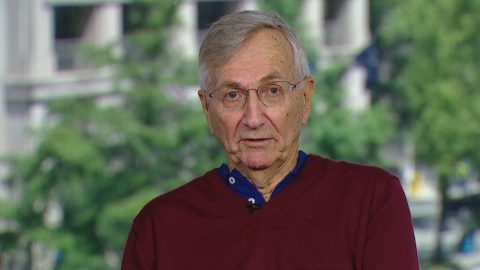
*(Seymour Hersh)
Syria is only part of a broad mosaic of ill intent, however. It was attacked in the first place because it was a strategic ally of Iran. Russia’s twin successes, in deflecting US penetration of Ukraine and making the Americans look stupid in Syria, was followed by allegations of Russian interference in the 2016 US elections. There was no proof then and there is no proof now but the same empty accusations are being repeated by the same columnists, anchors and talk show hosts all the time.
We are now facing a multi-pronged assault on truth in which governments and the corporate media are partners. On both sides of the Atlantic, they have lined up against the renewed primary enemy, Russia, wherever it is and whatever it does.
Russia lost the Democrats the US elections. Russia stole Crimea from Ukraine.
Russia saved the Syrian dictator from defeat. Russia is supporting the dictator Maduro. Russia trades with Iran. Russia does not regard Hizbullah and Hamas as terrorists as we do. Russia does not give open-ended support to Israel but rather regards it as a primary fomenter of disorder in the Middle East.
Russia poisoned the Skripals, of course. Skripal senior was a former double agent, double-crossing Russia while working for British intelligence. There is no obvious reason why Russia would want a washed-out former spy dead but of course, it had to be Russia that daubed the door handle of his house with Novichok. There was no proof, but who else could it be but Russia, and if you say ‘British intelligence,’ setting up a new round of Russia-bashing, then wash your mouth out with soap.
Mysterious Russian figures turn up in Salisbury. The British government says they are agents, stopping off at the Skripals’ house to put a few drops of Novichok on the door handle before sauntering off down the main street to look into the window of a shop selling collectibles and rare stamps.
They seemed to be enjoying themselves. They seemed in no hurry at all to get away from the scene of the crime and take the first plane back to Moscow, but isn’t that exactly the way well-trained Russian agents would behave?
Somewhere along the way they dropped what was left of their Novichok into a rubbish bin, cunningly concealed in a hi-tech perfume bottle, Nina Ricci, ‘Premier Jour.’ Enough still left to kill 4000 people, said the newspapers, but failing to kill the Skripals and killing only poor Dawn Burgess, who pulled it out of the bin and apparently sprayed or dabbed herself with some.
We don’t really know who these Russians were and what they were doing in Salisbury but we need proof, not accusations and suppositions, and the British government does not have it. We can reach conclusions on the basis of what we know or think we know but the lies told by the British government over the attack on Iraq in 2003, plus the death/murder of the UN weapons inspector David Kelly five months after the war was launched, are sufficient reasons not to believe or trust anything this government says.
This new cold war is drifting steadily towards the brink of a hot one. The US is confronting Russia through missile bases, economic sanctions and interference in the politics of states around Russia’s borders.
Trump has just announced the withdrawal of the US from the Intermediate-range Nuclear Forces (INF) treaty, accusing Russia of breaching it and saying ‘we will move forward with developing our own military response options.’
In fact, Russia had already accused the US of violating the treaty. In May, 2018, the US/NATO opened a missile base in Romania where, Russia claimed, the US had simply transferred the launchpad for the Aegis integrated naval weapons system, which utilizes Tomahawk cruise and intermediate range missile banned by the INF treaty, from sea to land.
These missiles have a range of 300-3400 miles and their apparent positioning in Romania was naturally regarded as a direct threat by Russia.
The withdrawal of the US from the INF and Trump’s threat that the US will ‘move forward’ by developing its own options raises the apprehension in Russia that the US will station other cruise and intermediate range missiles in Europe once it finds willing partners.
In his state of the union address, Putin said that such missiles could reach Russia in 10 to 12 minutes and warned of a symmetrical response, if the US deployed them in Europe, directed not just at the US but at the states hosting its missiles.
To those contemplating such measures, he said: ‘Let them count the speed and range of our missiles. That is all I ask.’
It is not just Russia that the US is threatening, however, but China. If China held naval exercises off the US or British coasts the world would quickly be facing another 1962 Cuba crisis, only much more dangerous, but the US and Britain give themselves the right to hold such exercises off the Chinese coast in the South China Sea.
As for Venezuela, the US has reverted to the crude gunboat imperialism of the late 19th century (not that gunboat imperialism ever went away). ‘Do what we want or else’ is the message sent to Maduro and the Venezuelan people. What the US wants is the resurrection of the 1823 Monroe Doctrine, and the complete domination of Latin America, including open access to its resources.
In essence, the imperialism of the 21st century is the same as the imperialism of the 20th or the 19th centuries. In the 1940s and 1950s the people of Asia, the Middle East and Africa struggled to lift the yoke of occupation, economic domination and the plundering of their natural resources off their necks. In the third millennium, they are still struggling, especially in the Middle East and Latin America.
The members of the ‘western’ collective fight among themselves but always fall into line when the alpha dog barks at them. Considerations of right and wrong, law, ethics, morality and justice are irrelevant. The alpha dog has barked and the pack must obey. Riam Dalati’s exposure of media deceit is interesting but still a mere detail on a very large and dirty canvas as the ‘west’, its governments and its media, tries to maintain control of a world fast slipping from its hands.
Jeremy Salt has taught at the University of Melbourne, Bosporus University (Istanbul) and Bilkent University (Ankara), specialising in the modern history of the Middle East. His most recent book is “The Unmaking of the Middle East. A History of Western Disorder in Arab Lands” (Berkeley: University of California Press, 2008.)
Caving under MSM pressure? Tulsi Gabbard interview on The View has some supporters fuming

© Reuters / Brian Snyder
RT | February 21, 2019
US Presidential candidate Tulsi Gabbard is being accused of “flip-flopping” on her Syria stance and “caving” to mainstream media pressure after a combative interview on The View.
Questioned aggressively by panelist Meghan McCain, the daughter of the late Senator John McCain, Gabbard said there was “no disputing the fact” that Syrian President Bashar Assad is a “brutal dictator” who “used chemical weapons against his people.”
The comments stand in stark contrast to previous statements made by the Hawaii congresswoman, who in the past said she was “skeptical” about allegations that the Syrian government used chemical weapons on citizens and called US efforts to overthrow Assad an “illegal war.”
She faced a major backlash from both the media and her colleagues in congress for taking a trip to Syria and meeting Assad himself in 2017.
While Gabbard tried to offer a balanced view of the situation in Syria, it was the antagonistic questioning from McCain that immediately grabbed headlines, with many framing the interviewer in a heroic light for “confronting” Gabbard, the “Assad apologist.”
During the interview, Gabbard also said that US military interventions are often “begun and waged from a place of humanitarianism” despite having previously taken a tougher stance on “military adventurism” and the reasons behind it.
Gabbard did push back many times against the panel of hostile hosts, saying repeatedly that US interventions have historically made bad situations worse and increased suffering, some of her supporters accused her of folding in the face of “bullying” from McCain.
Others acknowledged that Gabbard might have been trying to appease the panelists to get her wider point about the human costs of US interventions across, but argued that she risked alienating the people who already supported her in the process — and said that if she starts making concessions now, she will be forced to make more.
When the conversation turned to Venezuela, Gabbard angered the panel again, saying that the US trying to choose the leader of that country was “not something that serves the interests of the Venezuelan people,” despite co-host Ana Navarro’s hailing Donald Trump for “leading the solidarity and support of freedom-loving Venezuelans.”
From Madero to Maduro: Lessons of the Mexican Revolution for 21st Century Venezuela

By Martin SIEFF | Strategic Culture Foundation | 21.02.2019
Just over 100 years ago, Mexico had a popular, much beloved democratically elected President determined to reduce foreign influence and obscene profits flowing out of the country and raise the standard of living for his people. The US financial interests on Wall Street orchestrated a military coup and made sure he was brutally murdered.
The president obviously was not Nicolas Maduro of Venezuela, who has been set up to receive the same treatment this year, but his name was remarkably close – Madero not Maduro. The parallels and contrasts between the two men are thought-provoking.
Unfortunately poor Francisco Madero, an idealistic reformer who ruled as President of Mexico from 1911 to 1913 did not have the tough political street smarts and plain common sense that Venezuela’s Maduro has exhibited throughout his long, controversial but undeniably successful career.
Madero naively trusted in the army commander-in-chief he had inherited from his predecessor President Porfirio Diaz, General Victoriano Huerta. Huerta had prospered throughout the long 35-year rule of Diaz from 1876 to 1911 by carrying out genocidal campaigns for him against the Yaqui Indians and the Mayans.
In 1913, Wall Street interests enthusiastically supported Huerta when he carried out a coup against the innocent Madero. Woodrow Wilson, the US president of the day was an exceptionally ugly racist who despised the Mexican people and at first went along with Huerta’s coup.
The huge financial and mining interests in New York were eager to continue plundering Mexico’s resources while more than 90 percent of its people lived virtually as slaves in appalling poverty under Diaz.
In the last decade of Diaz’s rule – securely supported by the Wall Street financial robber barons, as historian Matthew Josephson called them and by the complacent administrations of Theodore Roosevelt and William Howard Taft – at least 600,000 people were worked to death as real slaves on the estates of Diaz’s supporters. Not a whisper of disapproval was heard from Washington.
Huerta ruled with his usual mindless thuggish brutality for less than a year and a half before provoking such national revulsion that he was ousted in a brief and bloody civil war. He fled of course to the United States but then made the mistake of alienating US business and military leaders alike by openly embracing Imperial Germany to plot his militaristic comeback.
Huerta died in loose US military custody in 1916 after a night of dining out and carousing. Poisoning by the Americans was widely suspected but the cause may well just have been heavy drinking. His autopsy revealed extreme cirrhosis of the liver.
To this day Huerta is reviled as the murderous mass killer and cowardly murderer and tool of cynical foreign interests he was while the well-meaning, but tragically ineffectual Madero is genuinely loved by the people of Mexico. The days from the start of Huerta’s coup to the president’s murder – gunned down by an impromptu firing squad of assassins by night along with his own brother and vice president are remembered as La Decena Tragica, The Ten Tragic Days.
In the years that followed, Mexico endured all the horrors of a collapsed state with rival feuding bands slaughtering each other and everyone else they came across. The population of the country plummeted from 15 million in 1910 to 11.6 million a decade later. Factoring in how many deaths were masked by the high birth rate, well over four million people, or more than 25 percent of the total population died in the years of anarchic violence that Huerta’s murder of President Madero set in motion.
La Decena Tragica continues to reverberate in Mexico to this day. When current President Andres Manuel Lopez Obrador continues to withstand massive pressures from the Trump administration to recognize their preferred puppet, Juan Guaido as Washington’s preferred figurehead president of Venezuela, he is heeding his people’s reverence for martyred President Madero and remembering the bloodbaths and chaos that the hated Huerta unleashed in his place.
Madero naively trusted in the honor of his army commander, the murderous Huerta. By contrast, President Maduro in Venezuela, like his political mentor and predecessor Hugo Chavez, has taken care to always have an army high command loyal to the democratically elected national civilian leadership. Nevertheless, today, US leaders have openly called on Venezuela’s military leaders to scrap their own cherished constitution and political processes and violently topple President Maduro – All of course in the name of their usual mythical and never-defined “freedom.”
However, Bloomberg News pointedly noted in a recent report that in a Venezuelan military establishment of more than 2,000 generals and admirals, only a single officer who did not even command any troops has sworn allegiance to National Assembly Speaker Juan Guaido, the farcical boy toy whom the Trump administration is trying to set up as “president” of Venezuela in Maduro’s place.
It is just as well. The precedent of Mexico more than a century ago teaches us that if the US plot to topple President Maduro were to succeed, as the one to remove and murder President Madero did so tragically 106 years ago, then civil war, chaos and the violent death of multiple millions of innocent people would rapidly follow.
In the seven years following the murder of Francisco Madero, more than a quarter of the population of Mexico were slaughtered or starved to death. The history of states where 21st century US administrations have successfully orchestrated “regime change” makes clear that Venezuela would suffer a similar fate.
Afghanistan, Iraq, Libya, Yemen, South Sudan and Ukraine remain appalling object-lessons to the world in US criminal incompetence – at the very least – in “nation-building.” The consequences of the endless failed attempts to topple the government of Syria tell the same terrible story.
The bullets that slammed into gentle, naïve little President Madero more than a century ago continue to ricochet in our own bloodstained age.
Featured Video

or go to
Aletho News Archives – Video-Images
From the Archives
How the CIA Spawned Google
By Svetlana Ekimenko – Sputnik – 05.02.2025
American tech giant Google has faced regulatory scrutiny on numerous occasions amid accusations of antitrust violations. Google’s relationship with the CIA, ranging from early financial support to collaborative efforts have been decried as undermining privacy rights and free speech in the digital landscape.
Google’s creation played a crucial role in the US intelligence community’s scheme to attain global dominance by controlling information. … continue
Blog Roll
 Aletho News
- Kafr Qasim at 70: The massacre Israel still hasn’t owned up to
- Would President Vance really ditch Israel?
- LAPD Pilot Will Track Vehicles In San Fernando Valley
- Britain’s Online Censorship Law Now Comes With a Crisis Plan for Your Posts
- NATO’s “Nordic model” brings Arctic confrontation closer to Russia’s nuclear bases
- Using nuclear weapons, the US-Israeli alliance still can’t beat Iran
- Sunset on the Quality of Western Propaganda: Arrival of the Dr Strangelove Moment
- Ukrainian general accused of protecting crime bosses
- US-‘Israel’ alliance faces growing rupture after midterms
- GOP’s Crushing Midterm Loss Could Reshape US Political Landscape – Analyst
- If Americans Knew
- An error has occurred; the feed is probably down. Try again later.
- No Tricks Zone
- New Study: The Net Fossil Fuel Contribution To Rising Atmospheric CO2 Has Been Zero For 500 Years
- Germany’s Green Energy Transition Becoming Increasingly Expensive…Another 6 Trillion Euros!
- Sudden Stratospheric Warming, Powerful El Niño Combination May Lead To Extreme Europe Cold, Energy Crisis!
- Two New Studies Find Thwaites Glacier Melt Cannot Be Driven By Human Activity Or A Warming Ocean
- E-Cars Reduce CO2 Emissions By Only 41% Compared To Internal Combustion Engine Vehicles
- Predictions Made By Renowned Climate Professor Over Past Decades Have Been Proven To Be Poor
- New Study Suggests Large Regions Of The Pacific Ocean Have Been Cooling For The Last 80 Years
- Germany’s Green Energy Debacle: High Energy Costs Force Kahla Porzellan to Close After 182 Years!
- New Study: 50 Years Of The Most Aggressive ‘Net Zero’ Policies Can Only Affect The Global Climate By 0.03°C
- US September “Heat” Was No Record…Many Records Set Decades Ago

