The Export–Import Bank: The Government Subsidy “Free Traders” Love
By Dean Baker | Beat The Press | February 5, 2019
I have long had fun with the folks who call themselves “free traders.” Essentially, these are people who argue it is a high moral principle to eliminate any barrier to trade that might support the income of working class people, but suddenly get really stupid and defensive when we talk about barriers that support the income of professionals and the wealthy.
This means that a 10 percent tariff on imported steel is an outrage against all that is good and decent in the world. But when it comes to protectionist restrictions that prevent highly qualified foreign doctors from practicing in the United States and bringing the pay of our doctors more in line with other rich countries, they suddenly have no idea what you’re talking about. (FWIW, we spend far more money on doctors than steel.)
The same story applies to patent and copyright protection. (Yes, that is “protection” as in protectionism.) These government-granted monopolies are treated as part of the world’s natural order. Instead of recognizing them as forms of protectionism, countries that don’t have patent and copyright rules as strong as in the U.S. are treated as being violators of free-trade.
In other words, “free trade” is a make it up as you go along rationale for ways to redistribute income upward. This is why I got a big kick out of seeing Charles Lane’s column today on the Export–Import Bank.
The Export–Import Bank is a mechanism for the United States to subsidize its exports by providing below-market interest rate loans and loan guarantees for exporters. There actually can be some argument for this sort of support in cases where small- and medium-sized firms are just getting into the export market. (It’s still a government subsidy.)
However, that was not the story with the Ex–Im Bank. The overwhelming majority of its loan money (in the neighborhood of 90 percent) went to a tiny number of multi-nationals like Boeing, Caterpillar, and GE. This is not a help-the-upstart story, this was a subsidy-to-politically-connected-corporate-giants story.
Incredibly, the vast majority of the self-proclaimed free traders were big advocates of the Ex–Im Bank. They would go along with the absurd games pushed by the hacks.
For example, they would tell people that some very high percentage of the loans went to small businesses. (Yes, this is in Econ Stupid Tricks 101 — a high percentage of the loans go to small businesses, a tiny percentage of the dollars go to small businesses.)
And, we got the story that some huge number of US jobs depend on the Ex–Im Bank. In this story, we assume that the US would lose all the exports supported by Ex–Im loans or guarantees, as opposed to some realistic number like 2–3 percent.
Anyhow, with pushing from the free traders, the Export–Import Bank was reauthorized by Congress. I had thought the free traders had won and got their government subsidies.
But as Lane points out, Republicans in Congress refused to approve new members for the bank’s board. This meant that the board lacked a quorum. And, without a quorum, the board could not approve loans of more than $10 million. This meant the bank was actually in the business of making loans to small- and medium-sized businesses, rather than subsidizing Boeing and Caterpillar.
It turns out the big companies were still able to export without the subsidy, although I’m sure they made somewhat less money. Anyhow, it’s a nice story. It shows how free trade can be better than “free trade.”
Does Washington Rule the World?
By Philip M. GIRALDI | Strategic Culture Foundation | 07.02.2019
One of the most disturbing aspects of the past two years of Donald Trump foreign policy has been the assumption that decisions made by the United States are binding on the rest of the world. Apart from time of war, no other nation has ever sought to prevent other nations from trading with each other. And the United States has also uniquely sought to penalize other countries for alleged crimes that did not occur in the US and that did not involve American citizens, while also insisting that all nations must comply with whatever penalties are meted out by Washington.
The United States now sees itself as judge, jury and executioner in policing the international community, a conceit that began post World War 2 when American presidents began referring to themselves as “leader of the free world.” This pretense received legislative backing with passage of the Anti-Terrorism Act of 1987 (ATA) as amended in 1992 plus subsequent related legislation, to include the Justice Against Sponsors of Terrorism Act of 2016 (JASTA). The body of legislation can be used by US citizens or residents to obtain civil judgments against alleged terrorists anywhere in the world and can be employed to punish governments, international organizations and even corporations that are perceived to be supportive of terrorists, even indirectly or unknowingly. Plaintiffs are able to sue for injuries to their “person, property, or business” and have ten years to bring a claim.
Sometimes the connections and level of proof required by a US court to take action are tenuous, and that is being polite. Suits currently can claim secondary liability for third parties, including banks and large corporations, under “material support” of terrorism statutes. This includes “aiding and abetting” liability as well as providing “services” to any group that the United States considers to be terrorist, even if the terrorist label is dubious and/or if that support is inadvertent.
There have been two recent lawsuits seeking civil damages under ATA and JASTA involving Iran and Syria. Regarding Iran, in June 2017 a jury deliberated for one day before delivering a guilty verdict against two Iranian foundations for violation of US sanctions, allowing a federal court to authorize the US government seizure of a skyscraper in Midtown Manhattan. It was the largest terrorism-related civil forfeiture in United States history. The presiding judge decided to distribute proceeds from the building’s sale, which could amount to as much as $1 billion, to the families of victims of terrorism, including the September 11th attacks. The court ruled that Iran had some culpability for the 9/11 attacks as a state sponsor of terrorism, though it could not determine that Iran was directly involved in the attacks.
The ruling against Iran has to be considered somewhat bizarre as it is clear that Iran had nothing to do with 9/11 but was considered guilty anyway because the State Department in Washington has declared it to be a state sponsor of terror. Being able to determine guilt based on an interpretation of a foreign government’s behavior puts incredible power in the hands of unelected bureaucrats who are making political decisions regarding who is “good” and who is “bad.”
A second, more recent, court case has involved Syria. Last week a federal court in the District of Columbia ruled that Syria was liable for the targeting and killing of an American journalist who was covering the shelling of a rebel held area of Homs in 2012.
The court awarded $302.5 million to the family of the journalist, Marie Colvin. In her ruling, Judge Amy Berman Jackson cited “Syria’s longstanding policy of violence” seeking “to intimidate journalists” and “suppress dissent.” As it is normally not possible even in American courts to sue a foreign government, a so-called human rights group funded by the US and other governments called the Center for Justice and Accountability made its case relying on the designation of Damascus as a state sponsor of terrorism. The judge believed that the evidence presented was “credible and convincing.”
The complexities of what is going on in Syria are such that it is difficult to imagine that a Washington based judge could possibly render judgment in any credible fashion. Colvin was in a war zone and the plaintiffs, whose agenda was to compile a dossier of war crimes against Syria, made their case using documents that they provided, which certainly presented a partisan viewpoint and might themselves have been fabricated. Based on her own comments, Judge Amy Berman Jackson certainly came into the game with her own particular view on Syria and what the conflict there was all about.
Another American gift to international jurisprudence has been the Magnitsky Act of 2012, a product of the feel-good enthusiasm of the Barack Obama Administration. It was based on a narrative regarding what went on in Russia under the clueless Boris Yeltsin and his nationalist successor Vladimir Putin that was peddled by one Bill Browder, who many believe to have been a major player in the looting of the former Soviet Union. It was claimed by Browder and his accomplices in the media that the Russian government had been complicit in the arrest, torture and killing of one Sergei Magnitsky, an accountant turned whistleblower working for Browder. Almost every aspect of the story has been challenged, but it was completely bought into by the Congress and White House and led to sanctions on the Russians who were allegedly involved despite Moscow’s complaints that the US had no legal right to interfere in its internal affairs relating to a Russian citizen.
Worse still, the Magnitsky Act has been broadened and is now the Global Magnitsky Human Rights Accountability Act of 2017. It is being used to sanction and otherwise punish alleged “human rights abusers” in other countries. It was most recently used in the Jamal Khashoggi case, in which the US sanctioned the alleged killers of the Saudi dissident journalist even though no one had actually been convicted of any crime.
Independent of Magnitsky and the various ATA acts is the ability of the US Treasury Department and its Office of Foreign Assets Control (OFAC) to sanction a country’s ability to move money through the US controlled dollar financial system. That is what is taking place currently regarding payments for Venezuela’s oil exports, which have been sanctioned and will not be able to use the dollar denominated system after April 28th. A similar US imposed sanctioning is currently in effect against Iran, with all potential purchasers of Iranian oil themselves being subject to secondary sanctions if they continue to make purchases after May 5th.
Most of the world oil business is transacted in dollars, so the Treasury Department has an effective weapon in hand to interfere in foreign countries without having to send in the Marines, but there is, of course, a danger that the rest of the world will eventually read the tea leaves and abandon the use of petrodollars altogether. If that occurs it will make it more difficult for the American government to continue to print dollars without regard for deficits as there will be little demand for the extra US currency in circulation [In fact there are numerous reasons for the international demand of US currency, oil transaction payments being just one and not even among the most imperative – Aletho News ].
The principle that Washington should respect the sovereignty of other states even when it disagrees with their internal policies has effectively been abandoned. And, as if things were not bad enough, some new legislation virtually guarantees that in the near future the United States will be doing still more to interfere in and destabilize much of the world. Congress has passed and President Trump has signed the Elie Wiesel Genocide and Atrocities Prevention Act, which seeks to improve Washington’s response to mass killings. The prevention of genocide and mass murder is now a part of American national security agenda. There will be a Mass Atrocity Task Force and State Department officers will receive training to sensitize them to impending genocide, though presumably the new program will not apply to the Palestinians as the law’s namesake never was troubled by their suppression and killing by the state of Israel.
Why are Democrats Driving Regime Change in Venezuela?
By William Walter Kay | Ron Paul Institute | February 6, 2019
Many see President Trump conspiring with oilmen to capture Venezuelan petroleum reserves. Trump’s earlier blunt talk about seizing oilfields buttresses this thesis. As well, ExxonMobil, ConocoPhillips and Chevron appreciate better than anyone the astronomic value of Venezuela’s heavy oil. There are, however, flaws in the petro-conquistador thesis. Foremost, it does not explain why oil-resistant Democrats and Europeans play lead roles in this regime change travesty.
On December 18, 2014 a Democrat-led Senate passed the Venezuela Defense of Human Rights and Civil Society Act. This legislation, sponsored by Democratic Senator Robert Menendez, imposed sanctions on Venezuela while promising support for Venezuelan “civil society.” The Act also sought to meet “the information needs of the Venezuelan people” through publications and broadcasts; and through “distribution of circumvention technology.” Obama signed immediately.
On March 9, 2015 Obama declared:
… a national emergency with respect to the unusual and extraordinary threat to the national security and foreign policy of the United States presented by the situation in Venezuela.
His accompanying Executive Order 13692 extended sanctions while undertaking to: “support greater political expression in Venezuela.”
At this time the US deep state conducted an orchestra of American and European agencies and foundations disbursing $50 million a year to Venezuelan “civil society” (opposition politicians, student activists and journalists). Key agencies were USAID and National Endowment for Democracy. Participating foundations included: (Jimmy) Carter Centre; (Soros’s) Open Society; (Democratic Party-affiliated) National Democratic Institute for International Affairs; plus several Spanish and German concerns.
On January 16, 2017, four days before Trump’s inauguration, Obama renewed his declaration designating Venezuela a national security threat. Venezuela’s Foreign Minister called the move “new aggression by Barack Obama” extending Obama’s “legacy of hate and serious violation of international law.”
On January 4, 2019 a Democrat-led House of Representatives swore in.
On January 10 House Foreign Affairs Committee Chair, Eliot Engel (Democrat-NY) said he would waste no time holding “Mr. Maduro” accountable. Simultaneously, former DNC Chair and Hillary Clinton fixer, Democratic Congresswoman Debbie Wasserman-Schultz unveiled her Venezuelan-Russian Threat Mitigation Act. She was flanked by former Clinton cabinet member and Clinton Foundation boss, Democratic Congresswoman Donna Shalala who announced her Venezuelan Arms Restriction Act to prevent weapons sales, including non-lethal police gear, to Venezuela. Next up was Democratic Congresswoman Debbie Mucarsel-Powell, sponsor of the Venezuelan Humanitarian Assistance Act aimed at allowing US operatives to bypass Venezuelan authorities and distribute “aid” directly to Venezuelans.
On January 24, less than 24 hours after Juan Guaido declared himself Venezuelan President, Democratic Congressman Adam Schiff (House Intelligence Committee Chair) blamed Maduro’s “dictatorial” rule for devastating Venezuela’s economy, then recognised Guaido as Venezuela’s “rightful leader.” Senate Minority Whip Dick Durbin (Democrat-IL) piped in calling Venezuela’s 2018 election a sham before endorsing Guaido’s presidency.
Of 280 Democratic Senators and Representatives 3 dissented. This troika did not include Bernie Sanders. On January 24 Bernie boarded the war-train with a battle-whoop beginning:
The Maduro government in Venezuela has been waging a violent crackdown on Venezuelan civil society, violated the constitution by dissolving the National Assembly and was re-elected last year in an election that many observers said was fraudulent. Further the economy is a disaster and millions are migrating.
Bernie goes on to warn of the perils of regime change while leaving wide open the door to punitive sanctions. His statement is silent on America’s economic war on Venezuela. His support for “civil society” is willfully naïve about such groups’ involvement in political meddling up to and including regime change. (Bernie supported starvation sanctions against Iraq, and the bombing of Serbia. He calls Hugo Chavez a “dead communist dictator.”)
Regarding Venezuela the Democrats march in lockstep with: the Liberal Party of Canada under PM Trudeau; Merkel’s ruling coalition in Germany; French President Macron; and the governments of Sweden, Denmark, Austria and Spain.
These governments are committed to phasing petroleum out of their economies. All champion the Paris Climate Accord. None can be quickly dismissed as Exxon’s goons. None take orders from Trump. Thus, the petro-conquistador thesis appears ill-equipped to explain their behaviour.
No doubt Washington DC hosts cabals of oilmen and politicos coveting unfettered access to the Orinoco Belt. Here, however, it seems fantastical that President Maduro might be removed by anything short of civil war; or that the Orinoco Belt might be exploitable amidst the Vietnam-style conflagration surely to ensue. Then, arises the enigmatic spectacle of a dozen “liberal-leftist-environmentalist” Western parties and governments frantically tilting at the same windmill. Pourquoi?
‘America First’ means nuclear superiority
By M. K. BHADRAKUMAR | Indian Punchline | February 6, 2019
The US president’s annual State of the Union address traditionally focuses on domestic issues but it also throws some light on the foreign policy priorities. President Trump’s speech on Tuesday adhered to the pattern and if anything, the portions on foreign policy received scant attention, restricted to his “agenda to protect America’s National Security.” Trump’s re-election bid for a second term in 2020 provided the backdrop.
Trump boasted about the US’ military build-up and flagged the mammoth budget allocation of $716 billion to “fully rebuild” the US military. As part of it, he said, the US is “developing a state-of-the-art Missile Defence System.” He saw no reason to be apologetic about “advancing America’s interests” and cast his decision to withdraw the US from the Intermediate-Range Nuclear Forces (INF) Treaty in that light.
Trump made a pro forma offer to consider negotiating a “different (INF) agreement, adding China and others (read India and Iran)” but himself sounded sceptical, and went on to assert that the US “will outspend and out-innovate all others by far” in an arms race. He all but sought the US’ nuclear superiority.
Clearly, the global strategic balance is going to come under enormous stress in the period ahead. It is inconceivable that Russia will allow the global strategic balance to be shifted. In conventional forces, Russia is at a disadvantage vis-a-vis the West and that gives added impetus to maintain the overall strategic parity with the US.
Notably, Russia test-fired an RS-24 Yars intercontinental ballistic missile today following Trump’s speech and within hours of an earlier similar American test-firing of a Minuteman ICBM in California. The RS-24 Yars is a vastly improved version of the famous SS-29 ICBM that the Soviet Union deployed. It is presently the mainstay of the ground-based component of Russian nuclear triad.
This thermonuclear intercontinental ballistic missile has a range of 12 000 km, which brings the entire territory of the United States within its reach. Yars is equipped with multiple independent re-entry vehicle (MIRV) and is designed to evade missile defense systems (which Trump boasted about.) It maneuvers during the flight and carries both active and passive decoys and has at least 60-65% chance to penetrate defenses.
Significantly, during Tuesday’s address before the Congress, Trump made no references to arms control negotiations with Russia, leave alone to comment on the fate of the New START nuclear arms reduction agreement (2010), which is due to expire in 2021.
Indeed, the ‘breaking news’ in Trump’s speech was the announcement of his second summit meeting with the North Korean leader Kim Jong-un on February 27-28 in Vietnam. Trump sounded upbeat about his “bold new diplomacy” with North Korea and claimed credit (justifiably so) for avoiding a catastrophic war on the Korean Peninsula. He acknowledged that there is much unfinished business, but placed trust in his “relationship” with Kim.
The only other foreign-policy topics that Trump touched in the speech were the US’ standoff Venezuela, the Middle Eastern conflicts (Syria and Afghanistan) and of course Iran. While he was rhetorical about the “brutality” and the “socialist policies” of the Venezuelan government of President Nicolas Maduro, Trump steered clear of any threats to intervene in that country. Trump merely said that the US stands with the Venezuelan people “in their noble quest for freedom.” On the other hand, Trump gently moved away from Venezuela to attack the “new calls to adopt socialism” in the US too and stated his resolve that “America will never be a socialist country.”
As regards the Middle East, Trump said his approach is based on “principled realism”. He recalled that his approach has been consistent: “Great nations do not fight endless wars.” Trump said it is time the troops came home from Syria, having defeated the Islamic State.
Curiously, in comparison with Syria, Trump made a somewhat nuanced reference to the Afghan war. Without elaborating, Trump hinted that the Taliban is not the US’ sole interlocutor for holding negotiations to reach a political settlement in Afghanistan. But the surprising part was when he said,
“As we make progress in the negotiations, we will be able to reduce our troop presence and focus on counter-terrorism. We do not know whether we will achieve an agreement.”
The carefully-worded formulation steered clear of making a commitment of a total US withdrawal from Afghanistan. In fact, Trump pointedly spoke of a reduced troop presence in Afghanistan while also underscoring the need to continue with counter-terrorist operations.
From Trump’s remarks, it appears that the US has somewhat pulled back from the reported progress at the recent 6-day talks in Qatar with the Taliban representatives. Whether this ambivalence is due to pressure from the US military and the Ashraf Ghani government against a withdrawal of American troops from Afghanistan or is merely a tactical posturing to pressure the Taliban to make concessions remains to be seen.
Ghani’s preferred strategy (which US military commanders also advocate) is to reconcile the Taliban on the terms in which he had earlier reconciled Gulbuddin Hekmatyar two years ago — which is to say, by offering the insurgents an opportunity to join his government. The Pentagon has been doggedly opposed also to giving up the American bases in Afghanistan, which it considers to be of vital importance for the US’ long term global strategies.
Ghani had telephoned the US Vice-President Mike Pence in the weekend before Trump’s speech on Tuesday. Yet, Trump plainly ignored the Ghani government.
Trump made harsh references to Iran as “sponsor of terror” and the government in Tehran as a “radical regime” and “corrupt dictatorship”, but, strangely, he stopped well short of adopting any confrontational overtone, leave alone threaten Iran. Trump merely said, “We will not avert our eyes from a regime that chants death to American and threatens genocide against the Jewish people.”
In overall terms, the impression will be that Trump projected a foreign-policy outlook where the US will eschew military interventions in foreign countries that are in the nature of protracted entanglements through the remaining period of his term in office and concentrate instead on his domestic agenda, which he intends to make the centre piece of his campaign for re-election. A mood of retrenchment is evident all through and left to himself, Trump would like to avoid foreign-policy entanglements that do not directly impact American interests or his own campaign to win a second term as president.
Having said that, make no mistake, fundamentally and in a longer term perspective, Trump is actually pitching for “America First”. He believes in a strong America, whose military superiority will be unchallenged and whose capacity to force its will on the world community is never in doubt. Implicit in the strategy is a resumption of the US’ elusive chase for nuclear superiority — through an extremely expensive arms race in which Trump thinks Russia lacks the financial resources to compete with the US and China can be overwhelmed in military technology.
“How I Lost by Hillary Clinton,” a Book Review
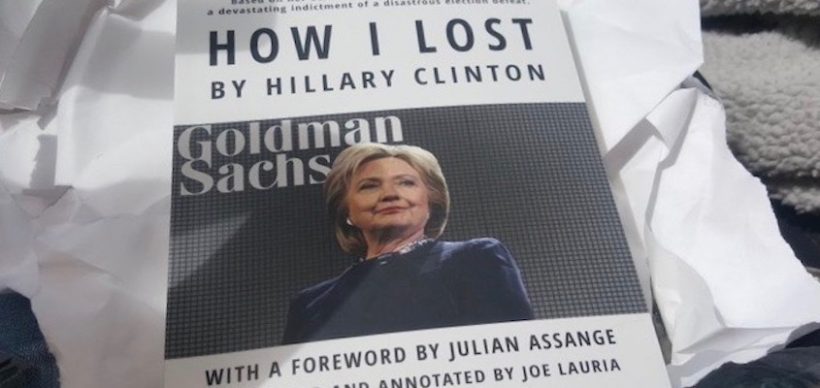
By Ann Garrison | Black Agenda Report | February 6, 2019
Rich and manipulative people like Hillary Clinton and her DNC cohorts were defeated by their own emails.
“How I Lost By Hillary Clinton” is a collection of the DNC and Podesta emails published by Wikileaks in 2016, introduced and annotated by Consortium News Editor Joe Lauria, with a foreword by political prisoner Julian Assange. Believe it or not, you don’t have to buy it from Amazon unless you want to toss a few more dollars into the bursting coffers of Jeff Bezos, the world’s richest man, who says his only business option now is to search for new markets in outer space.
Instead you can order a paperback, e-book, or both from OR Books and dive back into the election year that just won’t die. On January 28, CNN reported that “Hillary Clinton tells friends she’s leaving 2020 door open.” A day earlier the New York Daily News had reported less charitably that “Hillary Clinton hasn’t learned her lesson yet.”
Back in November, upper-tier Clinton operatives Mark Penn and Andrew Stein penned “Hillary Will Run Again,” a bullish Wall Street Journal op-ed opening thus:
“Get ready for Hillary Clinton 4.0. More than 30 years in the making, this new version of Mrs. Clinton, when she runs for president in 2020, will come full circle—back to the universal-health-care-promoting progressive firebrand of 1994. True to her name, Mrs. Clinton will fight this out until the last dog dies. She won’t let a little thing like two stunning defeats stand in the way of her claim to the White House.”
I read “Hillary Will Run Again” three times to make sure it wasn’t just a little joke, or maybe even a more sophisticated attempt at satire. Then I read it again, and I still don’t think so, much as I wish it were. I’ll be gladly embarrassed if anyone can convince me I’m wrong.
But what about Bernie Sanders, Elizabeth Warren, Cory Booker, Tulsi Gabbard, Kamala Harris, Kirsten Gillebrand, and whoever announces next? No worries, write Penn and Stein: “You can expect her to run for president once again. Maybe not at first, when the legions of Senate Democrats make their announcements, but definitely by the time the primaries are in full swing.”
Anyone remember “Night of the Living Dead” (1968), “Dawn of the Dead” (1978), “Day of the Dead” (1985), and “Land of the Dead” (2005)? Still watching “The Walking Dead” (2010-) or its spinoff “Fear the Walking Dead” (2015-)? Another grisly sequel or series could be coming soon. “How I Lost by Hillary Clinton” might fortify your psychic battlements before it begins.
We’ve all heard of the Wall Street speeches, finally published as a subset of the Podesta emails, but on the first page of this book, Lauria explains that they were just some of Hillary’s more high-profile influence peddling:
“Clinton spoke to just about anyone who would pay, including a scrap metal and recycling conference in Las Vegas, the automobile dealers association in New Orleans, and the National Association of Convenience Stores in Atlanta. Clinton said that fees from speeches at universities went to the Clinton Foundation and not directly into her pocket.”
Sounds like a tax dodge to me, and it “didn’t stop students at the University of Nevada-Las Vegas protesting her $225,000 haul as the university was hiking tuition.” Between April 2013 and March 2015, Hillary Clinton gave 91 paid speeches averaging $235,304.35 apiece, for a total of $21,648,000.
But she’d rather we didn’t dwell on it
When Joe Lauria was last in the Bay Area, I asked him how he got away with the title “How I Lost by Hillary Clinton.” He said that he, OR Books, and Julian Assange were all of the opinion that the Clinton camp wouldn’t want to attract attention to the book by pestering or suing them, and they haven’t yet. It’s an apt title anyway because so much of the book’s contents are DNC and Podesta emails, mostly penned by Hillary staff if not by Hillary herself.
Clinton the Elitist
The body of the book comes in two sections, the first being “Clinton the Elitist.” Here we read about how Hillary climbed from the upper middle class to the uber-rich via elite schools, specifically Wellesley and Yale Law School, then on to her and her husband’s political careers and all the wealth generated by post-presidential, post-cabinet speeches, book contracts, corporate board appointments, the Clinton Foundation, and other forms of bribery and influence peddling.
Despite the Wellesley and Yale Law School degrees, she sounds incoherent because of her mutually exclusive promises to protect both the financial elite and the rest of us. At Goldman Sachs’s 10/24/2013 AIMS Alternative Investments Symposium in New York City, she said that she had bravely faced Americans still bitter about the 2008 financial crisis that cost millions their homes followed by the bank bailout that transferred enormous wealth to the very Wall Street elites who engineered the crisis. “Too Big to Fail” hadn’t gone down well in the hinterland, but she had taken the flak:
“That was one of the reasons that I started traveling in February of ’09, so people could, you know, literally yell at me for the United States and our banking system causing this everywhere. Now, that’s an oversimplification we know, but it was the conventional wisdom. And I think that there’s a lot that could have been avoided in terms of both misunderstanding and really politicizing what happened with greater transparency, with greater openness on all sides, you know, what happened, how did it happen, how do we prevent it from happening? You guys help us figure it out and let’s make sure that we do it right this time. And I think that everybody was desperately trying to fend off the worst effects institutionally, governmentally, and there just wasn’t that opportunity to try to sort this out, and that came later.”
In other words, “You owe me. I’m one of you. That’s why I say ‘we.’” And Wall Street agreed. The financial services industry and associated PACs contributed $115.5 million to Clinton’s second presidential run, close to 10% of the $1.2 billion raised. They contributed to both the Democratic and Republican Parties, and their presidential candidates, as major corporations and business sectors always do to make sure they own a piece of whoever wins. However, Wall Street gave Trump a measly $7.9 million, most likely because of the widespread certainty that Clinton would win.
Hillary the Hawk
Most of those likely to read “How I Lost by Hillary Clinton” will know Hillary the Hawk, but the book is full of grim elaboration, much of it in her own words. Here’s one choice quote:
“And there is still an argument that goes on inside the administration and inside our friends at NATO and the Europeans. How do you intervene—my view was you intervene as covertly as is possible for Americans to intervene. We used to be much better at this than we are now.”
Here’s another:
“To have a no-fly zone you have to take out all of the air defense, many of which are located in populated areas. So our missiles, even if they are standoff missiles so we’re not putting our pilots at risk—you’re going to kill a lot of Syrians. So all of a sudden this intervention that people talk about so glibly becomes an American and NATO involvement where you take a lot of civilians.“
Civilians aside, Clinton pushed for a no-fly zone in Syria right up and into her final debate with Donald Trump, despite his “America First” crusade against foreign military quagmires. Simultaneously, Obama’s UN Ambassador Samantha Power shrieked at Russia and China for vetoing her demand for a no-fly zone at the UN Security Council. Clinton brushed off fears that bombing Syria risked conflict with nuclear-armed Russia, even after it entered the Syrian theater of war at Syria’s request in October 2015.
I had a hard time putting “How I Lost By Hillary Clinton” down until I was done. Like most Wikileaks releases, it drew me into the minds of those who decide who will live, who will die, who will be impoverished, and who enriched. Not only Hillary Clinton’s mind, but also those of the macabre power elites surrounding her. Who matters and who is collateral damage? Most of us, here and abroad, are in the latter category, and she lost because too many of us knew that.
Democrats are the McCarthyites
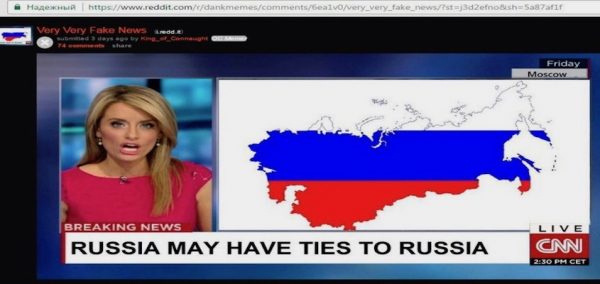
By Margaret Kimberley | Black Agenda Report | February 6, 2019
The unceasing torrent of Russiagate lies turns Democrats into war hawks and causes liberals to spout nonsense that was once consigned to the fringe right wing. It’s worse than the old McCarthyism.
A recent poll indicated that Democrats are more likely than Republicans to hold pro-war views. That revelation is hardly surprising considering the degree to which their party has promoted the trope of Donald Trump as a Russian government asset. This strategy is a focal point for them and a weapon to be used against the Republicans instead of the political opposition their voters need.
The ongoing investigation popularly known as Russiagate is a cynical hoax perpetrated by the Democratic Party leadership and their friends in corporate media. Russiagate distracts the public from taking a hard look at the Democratic Party corruption and resulting missteps that put Donald Trump in the White House. It also serves the interests of the bi-partisan surveillance state, which feared that Trump pronouncements indicated fundamental changes in foreign policy which they could not abide.
These allegations have Trump on the ropes, but mostly because of the relentless repetition of lies about the investigation. The litany of indictments paraded by the media involve crimes like tax fraud and payments to porn stars. None of the indictments point to collusion between the Russian government and the Trump campaign. Because no such connections have been made the media continue whipping up hysteria in an effort to keep the tale alive. The campaign is more shrill than ever because the hollowness of the case is clear to anyone who is really paying attention.
Comparisons have been made with McCarthyite “Red Scare” of the 1950s. But it can be argued that Russiagate is even worse. Bizarre assertions that were once consigned to the fringe right wing are now repeated on a daily basis by influential corporate media personalities and nearly all Democratic Party politicians.
The most prolific Russiagate practitioner is Rachel Maddow of MSNBC. She has ridden that horse so successfully that she now has the highest rated program on cable news. But she may have reached a moment which prompted the famous question asked at the army/McCarthy hearings. “At long last have you no sense of decency?”
Her assertion that Russia might be able to hack into the power grid and freeze Americans to death is quite dangerous . “What would you do if you lost heat indefinitely as the act of a foreign power on the same day that the temperature in your front yard matched the temperature in Antarctica? I mean, what would you and your family do?” It doesn’t matter that experts declared that the claim was highly improbable if not impossible. There is now no depth that cannot be reached in the effort to bamboozle Democrats and keep them stupid and needlessly fearful.
Prestigious newspapers like the New York Times are equally guilty of passing off lies as the truth. The Times reported that Trump and his associates had more than 100 interactions with Russians before inauguration day in 2017. But the story falls apart on even cursory inspection. The Times includes unproven claims of contacts with Wikileaks when it isn’t even a Russian organization. Roger Stone is the latest to be indicted because of his own stupidity, having claimed contacts with Wikileaks that never even took place.
But even as the case for collusion falls apart, the McCarthyite media find new ways to keep the narrative running. Russian press coverage of Congresswoman Tulsi Gabbard’s presidential campaign is called a “campaign of support” for her candidacy. NBC called Russian reporting the “propaganda machine.” The real issue is that Gabbard dares to question U.S. foreign policy dictates. She met with Syrian president Assad and opposes the coup attempt against Venezuela. But stopping such heretical acts from taking place is a central feature of the Russiagate scare.
So insane is the conspiracy mongering that clear damage to Russian government aspirations are called “wins for Putin.” The Trump administration’s unilateral withdrawal from the 30-year old INF missile treaty is not something that Vladimir Putin would ever want. The decades long effort to limit nuclear proliferation gives both countries security knowing that the other is restricted in the number and placements of nuclear weapons. Yet this very obvious reality is now turned on its head, and truth is twisted and disappeared.
The worst possible outcome of Russiagate is that it increases the likelihood of armed conflict between the United States and Russia. The same people who see MSNBC, CNN and national newspapers as divine oracles can be led to support any government act, no matter how dangerous it may be. Liberals who might once have opposed a hot war would now be the first to support it.
The Russiagate pimps are stoking fear and hatred. They spread outright lies and ignorance and they are doing so because of base motives. The Democratic Party rank and file ought to be demanding answers about the 2016 defeat and the previous loss of 900 legislative seats around the country. But they have been so badly misled that they don’t know that they should be asking anything at all. Even people who call themselves progressives are worshipping prosecutorial excess from the Robert Mueller investigation team and applauding surveillance state killers bloviating on cable news programs.
McCarthyism is back and it is being led by liberals. The entire world is endangered because of their leaders’ lies and cover ups and their determination to follow blindly. The outcome will be continued political defeat at home and an increased likelihood of what was once unimaginable, war between two nuclear powers.
Margaret Kimberley lives in New York City, and can be reached via e-Mail at Margaret.Kimberley(at)BlackAgendaReport.com.
Trump announces 2nd meeting with Kim, takes credit for avoiding ‘major war’ with North Korea
RT | February 6, 2019
Donald Trump plans to hold a second meeting with North Korea’s leader Kim Jong-un in Vietnam on February 27-28, the US president announced during his State of the Union address, claiming full credit for avoiding a devastating war.
“My relationship with Kim Jong-un is a good one…. Our hostages have come home. Nuclear testing has stopped. And there has not been a missile launch in more than 15 months,” Trump stated in his speech, claiming full credit for the progress of the peace process on the Korean peninsula.
If I had not been elected the president of the United States, we would right now, in my opinion, be in a major war with North Korea
Trump and Kim held a historic meeting in Singapore last June, at which North Korea agreed to dismantle its nuclear program in exchange for the lifting of sanctions that have crippled its economy. Despite the breakthrough, the process has somewhat stalled since, after Washington refused to lift any restrictions before Pyongyang fulfills its part of the deal.
In the meantime, the North stayed true to its pledge and hasn’t tested a missile since 2017. Pyongyang also dismantled one of its test sites and made a significant effort to improve its relations with South Korea, despite the continued presence of 30,000 US troops there.
Ahead of the much-anticipated US-North Korean rendezvous, Kim traveled to China to discuss denuclearization of the Peninsula with President Xi Jinping. Following the meeting, Beijing expressed hope that Pyongyang and Washington can meet each other “halfway” to reach an agreement that will bring a long-lasting peace and stability to the region.
Venezuelan Oil Exports Plunge On ‘Harsher’ Sanctions
By Nick Cunningham | Oilprice.com | February 4, 2019
Venezuela’s oil production could be disrupted to a greater degree than most analysts first thought, as the U.S. government seeks essentially shut in the country’s oil sector.
When the Trump administration first announced sanctions on Venezuela’s oil sector a little over a week ago, it sounded as if they would simply bar U.S. companies from buying oil. That would still mean that Venezuela could ship the oil elsewhere, albeit at a painful discount.
However, the U.S. Treasury issued some more details on February 1, sketching out a harsher sanctions regime. The sanctions on Venezuela will actually resemble the measures targeting Iran in that it will bar companies from using the U.S. financial system to do business with PDVSA. As such, the reach of the sanctions will extend well beyond the shores of the United States.
Reuters reported that even prior to last Friday’s clarification from the U.S. Treasury, European buyers were already slashing purchases because of concerns over payments. Reuters reported that two of the world’s largest oil traders, Vitol and Trafigura, said that they would comply with all U.S. sanctions.
As a result, PDVSA and Maduro’s government could have a much harder time finding destinations for Venezuelan oil than first thought. The Wall Street Journal reported oil storage is “filling up” in Venezuela because of a lack of buyers.
Moreover, not only are the effects of the sanctions more far-reaching, but also more immediate than first thought. At first, the U.S. seemed to exempt shipments that were underway, outlining a sort of phased approach that would allow a handful of American refiners to gradually unwind their oil purchase from Venezuela. The phased approach, which was supposed to be extended into April, would help “to minimize any immediate disruptions,” U.S. Secretary of Treasury Steven Mnuchin said in late January.
But that now does not appear to be what is unfolding. PDVSA has demanded upfront payment, likely because it fears not being paid at all or having the revenues steered to the opposition. Indeed, the U.S. effort to steer PDVSA and its revenues into the hands of the U.S.-backed opposition leader Juan Gauidó appears to be a decisive turning point.
Oil tankers linked to Chevron, Lukoil and Respsol are delayed, redirected or sitting offshore because of lack of payment. The WSJ says that several of those tankers had recently sent oil to Corpus Christi, Texas, but are now anchored off the coast of Maracaibo sitting idle. “This is an absolute disaster,” Luis Hernández, a Venezuelan oil union leader, told the WSJ. “There’s almost no way to move the oil.”
Unable to sell any oil, Maduro’s regime could quickly run out of cash. The result could be a humanitarian catastrophe, a merciless and destructive objective that the Trump administration seems to have in mind. The U.S. government is essentially betting that by driving the country into the ground, the military and the people will turn on Maduro. It could yet turn out that way, but it could also deepen the misery and exact an unspeakable toll on the Venezuelan population, the very people the Trump administration says it is trying to help.
In the meantime, oil exports are likely heading into a freefall. The WSJ says that labor problems, including “mass defections of workers” are accelerating declines. PDVSA could soon run out of refined fuel.
Officials with knowledge of the situation told the WSJ that Venezuela’s oil production has likely already fallen well below 1 million barrels per day (mb/d), down more than 10 percent – at least – from December levels.
Wood Mackenzie estimates that production probably stands a little bit higher at about 1.1 mb/d, but that it could soon fall to 900,000 bpd.
It’s hard to imagine how Maduro can hang on if oil exports fall precipitously from here. But even if he does manage to stay in power, the U.S. may escalate the situation. Last month, U.S. national security adviser John Bolton had “5,000 troops to Colombia” written on his legal pad. President Trump himself said that a military intervention is an option.
For the oil market, the crisis presents a series of problems. If Maduro hangs on and the U.S. continues to heap more pressure on his government, Venezuelan oil production and exports will continue to fall. Alternatively, the U.S. is hoping for a quick regime change, after which it would lift sanctions, which it believes will lead to a reversal in output losses.
The next round of Iran sanctions is nearing, with U.S. sanctions waivers expiring in May. As such, the window of opportunity for the Trump administration “is open only a crack, necessitating a quick political change,” Barclays wrote in a note. By the third quarter, the loss of Venezuelan output, Iran sanctions, and the looming regulations from the International Maritime Organization will put an increasing premium on medium and heavy oils.
That would push up oil prices significantly. But the U.S. government has blown past the point of no return, leaving it with no other options except to escalate. That means that Venezuela is set to lose a lot more oil than analysts thought only two weeks ago.
Weapons ending up with terrorists is OK, as long as Obama did it: The world according to CNN
RT | February 5, 2019
A “bombshell” CNN report has revealed that US-made weapons found their way to Al-Qaeda-linked fighters in Yemen. But is anyone surprised? And where was CNN when the Obama administration armed hardcore jihadists in Syria?
The CNN investigation revealed how American-made weapons ended up in the hands of “al Qaeda-linked fighters, hardline Salafi militias, and other factions waging war in Yemen,” vis-a-vis the US’ coalition partners Saudi Arabia and the UAE. Some of these weapons have also been seized by Iranian-backed militias, CNN claims.
The hardware, referred to as “Beautiful military equipment” by President Trump, was supplied to Saudi Arabia and the UAE, who have backed the embattled Yemeni government in its three-year civil war against Houthi rebels. However, CNN claims that Saudi Arabia and the UAE have funnelled the arms to pro-government factions, including the islamist Giants Brigade and the Al-Qaeda-linked Abu Abbas brigade.
The shifting frontlines in Yemen ensured that many of these weapons – including wire-guided TOW missiles and mine-resistant armored vehicles (MRAPs) – ended up seized by Houthi militants and Iranian proxy forces. More American weapons still ended up for sale in Yemen’s teeming arms bazaars, where they fetch a higher price than the rusted AK-47s more common to the region.
CNN lays responsibility squarely at the feet of Saudi Arabia, the UAE, and the Trump administration, which refused to cancel its multibillion dollar arms deals with the Saudis last year, for fear of losing “all of that investment being made into our country.”
The report paints a depressing, but familiar picture. Picking sides in foreign wars has historically proven disastrous for the United States, yet successive administrations have made the same mistakes again and again. The Reagan administration armed Saddam Hussein in his war with Iran, going as far as arranging the sale of anthrax to the Iraqi leader. Both Jimmy Сarter and Ronald Reagan propped up the Afghan mujahideen in their fight against the Soviets in the 1980s. In both cases, US forces would be shot at with the same weapons just two decades later.
Covering for Obama
More recently, in 2014 Barack Obama announced that the US would hand-select and arm ‘moderate rebels’ in Syria, stepping into the country’s bloody civil war. That too would prove disastrous, with troves of US arms ending up in the hands of Al-Nusra and ISIS.
But where was CNN when Obama asked Congress for $500 million to train, arm, and “empower the moderate Syrian opposition?”
CNN was reporting the news verbatim from Obama’s mouth, repeating the phrase “moderate rebels” without the ironic quotation marks that have become necessary since. Obama’s assertion that the rebels offered the “best alternative to terrorists and a brutal dictator” was not questioned, unlike Trump’s continuation of the longstanding US policy of arming the Saudis.
Obama called for funding in June 2014, but Syrian militias had already received support from the CIA for two years at that stage. CNN’s reporting on the covert arms pipeline was scant, didn’t question the credentials of the recipients, and mostly repeated the line of US intelligence officials: “That is something we are not going to dispute, but we are not going to publicly speak to it.”
Few questions were asked as Congress authorized the military support that September, and none were asked a year later as Obama resupplied his chosen rebels in Syria. Instead, Obama’s declaration of support for “the moderate Syrian opposition” was taken at face value and left unquestioned.
The reality in Syria
As CNN repeated the White House line on Syria, the network published just one report hinting that things might be amiss: an investigation by Amnesty International that found Islamic State (IS, formerly ISIS) militants were armed to the teeth with US-made weapons. The weapons were acquired by IS from local forces armed by the Obama administration, and then used to “relentlessly” target civilians with “small arms, artillery fire and huge quantities of improvised explosive devices.”
While CNN was assuaging the public, the situation on the ground in Syria was anything but moderate. US arms were quickly sold on the black market by ‘moderate rebels’ who either retired from the fight or wanted to turn a quick buck. With morale low, some of these fighters literally handed their weapons to Al-Nusra jihadists in exchange for safe passage away from the frontlines, while more were stolen by the Islamists.
Moreover, one Al-Nusra commander codenamed Abu Al Ezz told the German Koelner Stadt-Anzeiger newspaper that his group, and not so-called ‘moderate rebels’, received TOW missiles directly from the US. “The missiles were given to us directly,” he said, adding: “The Americans are on our side.” The commander went on to detail how his fighters had received training from US instructors, and financial support from Saudi Arabia and Israel for capturing specific objectives in Syria.
The Trump administration ended the arms supply program to the Syrian rebels in 2017, a decision that CNN called“a big win for Russia.” The idea that ending material support for terrorists might just be a good thing was not raised, and CNN described the program as “a lifeline” to anti-government forces.
CNN even stuck by its straight-faced use of the term ‘moderate rebels’, despite multiple other news outlets publishing reports of US weapons falling into terrorist hands.
Two months before the 2016 election, CNN absolved Obama of all his sins in Syria by publishing an interview in which the then-president said the situation there “haunts” him constantly. The network blamed external factors for the deteriorating situation in Syria, and ended with a quote from Obama’s press secretary, who said that every one of the former president’s decisions “was squarely within the national security interest of the United States and even advanced our national security interests.”
CNN’s latest exclusive report is a well-researched piece of journalism, fleshed out with on-the-ground reporting from war-torn Yemen. However, given the network’s history in reporting US arms programs, it was much more likely motivated by a desire to score points against Trump than the pursuit of cold truth, no matter who is in charge.
A Passionate Attachment
Deferring to Israel is “what we are”

“I believe that the establishment of the state of Israel was the greatest accomplishment of the twentieth century”
By Philip Giraldi • Unz Review • February 5, 2019
I predicted three weeks ago that the Senate bill on the Middle East, which was rejected three times while the government was shutdown, would quickly receive cloture by a comfortable margin to end debate and proceed to a full vote in the Senate after the federal bureaucracy reopened. That has proven to be the case. Senate Bill S.1 was approved on January 29th 76 for votes to 22 against. Every Republican voted for it, minus only Rand Paul and Jerry Moran, who did not vote. The Republicans were joined by 25 Democrats, all of whom had previous voted “no” to embarrass the White House over the shutdown. Minority Leader Senator Chuck Schumer, who has described himself as Israel’s protector in the Senate, switched his vote as did notoriously pro-Israel Senators Ben Cardin and Bob Menendez. The bill must now be passed by the Senate, which is certain to take place, before being sent on to the House of Representatives for its approval, where there will certainly be some limited debate. It then will go to President Donald Trump for his signature.
Readers will recall that S.1 the Strengthening America’s Security in the Middle East Act of 2019, sponsored by the singularly ambitious though demonstrably brain dead Senator Marco Rubio from Florida, included $33 billion in guaranteed aid to Israel for the next ten years, an unprecedented gesture to America’s closest ally and best friend in the whole world, as Congress might describe it.
But the legislation also incorporated measures to criminalize criticism of Israel, referred to as the Combating BDS Act of 2019. It has been correctly observed that that portion of the bill is clearly unconstitutional as it limits free speech, which is guaranteed by the First Amendment to the Constitution of the United States and is considered to be the bedrock of American civil liberties, but there is no guarantee that the Supreme Court will agree if and when the law is contested. Once free expression is abridged for Israel there will be no end to other grievance groups exploiting the precedent to silence criticism and effectively negate the First Amendment.
The potential destruction of the Bill of Rights is only one aspect of the power that Israel has over American policymakers. The widely ballyhooed election of several Congresswomen who appear willing to challenge the Israeli orthodoxy on Capitol Hill is already being countered by the establishment within the Democratic Party, demonstrating once again how deep the corruption of America’s political class by Israel has gone.
In an early December speech before a largely Jewish audience at the Israeli-American Council gathering in South Florida, House Speaker Nancy Pelosi demonstrated in no uncertain terms just how she and other Congressmen are more responsive to Israel and its supporters than they are to their own constituents. She said in response to a staged question during a “conversation” with Democratic Party top donor Israeli Haim Saban, “I have said to people when they ask me, if this Capitol crumbled to the ground, the one thing that would remain would be our commitment to our aid, I don’t even call it our aid, our cooperation with Israel. That’s fundamental to who we are.”
Now “who we are” is a favorite expression used by a certain type of progressive that was made popular by the smooth talking but devious Barack Obama, meaning “I am taking the moral high ground so don’t ask me any questions or challenge what I have just said.” In Pelosi’s case she is saying precisely that, that American patronage of Israel is a moral imperative, a commitment forever that must be sustained no matter what Israel does and even if the United States itself should fall into ruin.
It is an absurd comment for someone who represents the people of her state and has taken an oath to uphold the U.S. Constitution, the ultimate pander to a right-wing Jewish audience that is socially progressive and consistently votes Democratic, which Pelosi celebrated, while at the same time cheering the bloody repression of the Palestinian people. And while Israel’s cheering section is doing all that, it is also dragging the American people into wars that need not be fought and stealing the taxpayers’ dollars to give to the racist Kleptocrats in charge in Tel Aviv and Jerusalem.
Pelosi, like her partner in crime Senator Chuck Schumer, who also spoke at the conference, has a problem in paying for security along America’s southern border but she does not hesitate to send billions of dollars to Israel every year. One has to wonder at her priorities, but she knows that American Jews are more powerful and relevant to her party’s finances than doing the right thing would be, so there is no evidence of any hesitation on her part to throwing some Arabs and the outliers within her own party under the bus.
And Nancy also spoke of the dissidents in the Democratic Party, all five or so of them, saying “Remove all doubt in your mind. It’s just a question of not paying attention to a few people who may want to go their own way…” Apparently there is plenty of room under that bus for non-believers. And she also threw out a standard line of how “I believe that the establishment of the state of Israel was the greatest accomplishment of the twentieth century” while also unloading on the Arabs saying “We have to I think in Congress make it really clear to Palestinians that we expect them to be responsible negotiators and we haven’t seen a lot of that thus far.”
Apparently, Nancy is unaware that the “establishment” of Israel forced 700,000 people who had lived in Palestine for centuries out of their homes. And she apparently also has missed all those stories of Palestinian “terrorist” children and emergency workers being shot dead by Israeli snipers while they were “negotiating” such things as access to food, water, and medicines from the inside of the Gaza containment fence. Or maybe she’s forgotten about the towns in Israel that can legally ban Christian or Muslim residents as Israel is now officially a Jewish only state. Nancy Pelosi’s extreme efforts to demonstrate loyalty and devotion to a nation that the rest of the world views as a pariah is commendable, but only if one is a sociopath.
There is something completely dead at the heart of American politics which makes basic humanity unacceptable when confronted by a force for evil that has penetrated and manipulated both the national media and the governing political consensus. That is what Israel and its rabid band of supporters have done to the United States. First Amendment? Goodbye. If the U.S. government should crumble under the strain, don’t worry because our support for you is eternal. Kill a couple of hundred Arabs, shoot a few thousand more? No problem. It’s God’s will. And if Israel leads America into a nuclear war? Then we will do what we have to do to protect our ally.
Ask Pelosi and Schumer, “Have you been corrupted?” They will answer “No. Of course not. It is what we are.”
Philip M. Giraldi, Ph.D., is Executive Director of the Council for the National Interest, a 501(c)3 tax deductible educational foundation that seeks a more interests-based U.S. foreign policy in the Middle East. Website is www.councilforthenationalinterest.org, address is P.O. Box 2157, Purcellville VA 20134 and its email is inform@cnionline.org.
Europe shuns Iranian oil despite US sanctions waivers
RT | February 5, 2019
Despite being granted exemptions from US sanctions against Iran to enable them to buy Tehran’s oil, some European countries fully cut off crude imports from the Islamic Republic, according to Iran’s oil minister.
Washington agreed to give temporary waivers to several Iranian oil buyers when it imposed an embargo on oil shipments from the country in November after it pulled out from the landmark nuclear agreement. Those granted waivers included China, India, South Korea, Japan, Italy, Greece, and Turkey, allowing them to continue purchases without penalties.
However, not all countries opted to use the waivers, as the US attempts to push Tehran’s oil export revenues “to zero” and tries to “block any money transfer,” the Iranian Minister of Petroleum Bijan Namdar Zangeneh stated.
“Among the Europeans, except for Turkey, no other nation has purchased oil from Iran. Greece and Italy refuse to buy Iran’s oil despite winning waivers. Nor do they respond to our correspondence,” the minister said on Tuesday.
Iran’s crude exports, which contribute to a significant part of the country’s revenues, have been dropping since the US embargo took effect. In April, the crude and oil condensates exports were estimated to be about 2.8 million barrels per day. Zangeneh declined to announce the current export figures, but earlier reports suggest that the shipments fell by more than half.
Iranian officials have previously said that countries have to be extremely cautious in dealing with Tehran, as they face “financial pressure” from Washington. In January, Iran’s Deputy Minister of Petroleum Amir Hossein Zamaninia said that even those who dare to buy its crude, “would not even buy an additional one barrel.”
The 180-day US waivers expire in May and it is believed that their number will be reduced. However, Iran stressed that it had already found new potential buyers for its oil without revealing who exactly they were.
The last country who decided finally to resume purchases of Iranian oil was Japan. On January 21, a large tanker with two million barrels of crude, destined for Japanese companies, left Iran and is expected to reach buyers on February 9.
Featured Video

or go to
Aletho News Archives – Video-Images
From the Archives
How the CIA Spawned Google
By Svetlana Ekimenko – Sputnik – 05.02.2025
American tech giant Google has faced regulatory scrutiny on numerous occasions amid accusations of antitrust violations. Google’s relationship with the CIA, ranging from early financial support to collaborative efforts have been decried as undermining privacy rights and free speech in the digital landscape.
Google’s creation played a crucial role in the US intelligence community’s scheme to attain global dominance by controlling information. … continue
Blog Roll
 Aletho News
- Kafr Qasim at 70: The massacre Israel still hasn’t owned up to
- Would President Vance really ditch Israel?
- LAPD Pilot Will Track Vehicles In San Fernando Valley
- Britain’s Online Censorship Law Now Comes With a Crisis Plan for Your Posts
- NATO’s “Nordic model” brings Arctic confrontation closer to Russia’s nuclear bases
- Using nuclear weapons, the US-Israeli alliance still can’t beat Iran
- Sunset on the Quality of Western Propaganda: Arrival of the Dr Strangelove Moment
- Ukrainian general accused of protecting crime bosses
- US-‘Israel’ alliance faces growing rupture after midterms
- GOP’s Crushing Midterm Loss Could Reshape US Political Landscape – Analyst
- If Americans Knew
- An error has occurred; the feed is probably down. Try again later.
- No Tricks Zone
- New Study: The Net Fossil Fuel Contribution To Rising Atmospheric CO2 Has Been Zero For 500 Years
- Germany’s Green Energy Transition Becoming Increasingly Expensive…Another 6 Trillion Euros!
- Sudden Stratospheric Warming, Powerful El Niño Combination May Lead To Extreme Europe Cold, Energy Crisis!
- Two New Studies Find Thwaites Glacier Melt Cannot Be Driven By Human Activity Or A Warming Ocean
- E-Cars Reduce CO2 Emissions By Only 41% Compared To Internal Combustion Engine Vehicles
- Predictions Made By Renowned Climate Professor Over Past Decades Have Been Proven To Be Poor
- New Study Suggests Large Regions Of The Pacific Ocean Have Been Cooling For The Last 80 Years
- Germany’s Green Energy Debacle: High Energy Costs Force Kahla Porzellan to Close After 182 Years!
- New Study: 50 Years Of The Most Aggressive ‘Net Zero’ Policies Can Only Affect The Global Climate By 0.03°C
- US September “Heat” Was No Record…Many Records Set Decades Ago

