CNN Goes ‘Undercover’ To Manufacture Consent For Coup Attempt In Venezuela
By Kevin Gosztola | ShadowProof | January 29, 2019
A CNN “exclusive” report from inside Venezuela aired multiple times on the network on January 28. It is a prime example of how influential media outlets in the U.S. effectively create propaganda for the opposition, which now is receiving funds from President Donald Trump’s administration.
For the four-minute report, CNN correspondent Nick Paton Walsh went “undercover” amidst what the network described as the “deepening crisis in Venezuela” in order “to capture the desperation gripping the nation.”
The segment highlighted hyperinflation at grocery chains, Venezuelans lined up in queues for fuel and food, particularly in Caracas, and opposition demonstrations on January 23, when opposition leader Juan Guaido declared himself president of the country.
“This was the day when change was meant to come,” Walsh stated.
It suggested President Nicolas Maduro’s government has given “handouts” to Venezuelans for years to buy their loyalty, but now “handouts” are no longer enough. Opponents like to equate social programs to “handouts” because corporate elites favor de-nationalization and privatization of services.
Walsh interviewed a rank-and-file officer in the Venezuela military and granted him anonymity. The officer stated, “I would say 80 percent of soldiers are against the government. Some even go to demonstrations. But the big fishes, the senior officers, are the ones eating, getting rich while the bottom we have it hard.”
Video showed the opposition throwing stones at a military airfield in a standoff that apparently has lasted “for months.” One part of the barricade was on fire.
Sitting with his back against what appeared to be a concrete barricade, like he was part of the opposition hurling objects, Walsh declared, “They may be throwing stones here, but what they really need is the army to switch sides.”
Walsh offered no comment on what it would mean for democracy in Venezuela if the military played an instrumental role in helping Guaido and a U.S.-led group of countries oust Maduro.
Another part of the report featured street children in Caracas. A 14 year-old boy recounted how his brother was killed in July by a member of a gang. He said he has to go through the garbage for food and beg so he does not go hungry.
Walsh did not show a cause-and-effect relationship, yet the boy’s poverty was wryly attributed to a “socialist utopia that now leaves nearly every stomach empty.”
On the surface, the report may have seemed balanced and neutral because CNN spoke to citizens caught in the middle of the political crisis. Yet, there was no clips of the tens of thousands of Maduro supporters who marched through Caracas the same day that Guaido claimed he was the country’s interim president.
CNN also omitted the role of U.S. sanctions and other measures in making Venezuela’s economic recovery nearly impossible.
According to Mark Weisbrot, co-director of the Center for Economic and Policy Research (CEPR), sanctions did not create hyperinflation in the country. However, they have made it incredibly difficult for the government to restructure their debt for a recovery.
In 2017, weeks before the Trump administration imposed new sanctions, a former top State Department official predicted they would cause the government to “default on their bonds and a collapse of internal investment and oil production.” They would spur “civil unrest, refugee flows across their borders, and a cutoff of Venezuelan financial support to Cuba and Haiti that could lead to migration flows to the United States.” (Note: It was estimated in June 2018 that about 35,000 refugees were crossing from Venezuela to Colombia each day.)
The same day that CNN aired their report the U.S. Treasury Department sanctioned the country’s state-owned oil company, Petroleos de Venezuela, S.A. (PdVSA). The company is a “primary source of Venezuela’s income and foreign currency,” including U.S. dollars and Euros, according to the Department.
National security adviser John Bolton said the sanctions would block $7 billion in assets and result in the loss of $11 billion in proceeds from exports over the next year.
Even after the Trump administration announced oil sanctions, CNN still largely ignored the potential effect of sanctions when it aired this “undercover” report another time.
Oil sanctions are likely to intensify the suffering for Venezuelans, not make their lives better. In the 1990s, Iraq faced sanctions from the United Nations on their oil exports as well as restrictions on other foreign trade. To many, it was “one of the decade’s great crimes” because the sanctions contributed to the deaths of 500,000 Iraqi children.
In Iran, the poor bear the brunt of sanctions on oil that were re-imposed by the Trump administration. Financial Times reported in October on millions of Iranians, who were already stretched as “the value of the rial” had “plunged more than 70 per cent against the US dollar over the past year.”
“The sharp drop has pushed up import costs and stoked inflation, eroding purchasing power and leaving the most impoverished struggling to pay for basic goods such as meat, dairy products, and fruit,” FT noted.
As journalist Gregory Shupak previously highlighted for Fairness and Accuracy In Reporting (FAIR), “When Venezuelan President Nicolas Maduro in November 2017 proposed a meeting with creditors to discuss a restructuring of the country’s public debt, the Trump administration warned U.S. bondholders that attending this meeting could put them in violation of U.S. economic sanctions against Venezuela, which can be punished with 30 years in jail and as much as $10 million dollars in fines for businesses.”
“That same month, the U.S. government added further sanctions that prevent Venezuela from doing what governments routinely do with much of their debt, which is ‘roll it over’ by borrowing again when a bond matures. The sanctions also made it difficult if not impossible for Venezuela to undertake debt restructuring, a process wherein interest and principal payments are postponed and creditors receive new bonds, which the sanctions explicitly prohibit.”
Additionally, Francisco Rodriguez noted for Foreign Policy in 2018, “Ninety-five percent of Venezuela’s export revenue comes from oil sold by the state-owned oil company. Cutting off the government’s access to dollars will leave the economy without the hard currency needed to pay for imports of food and medicine. Starving the Venezuelan economy of its foreign currency earnings risks turning the country’s current humanitarian crisis into a full-blown humanitarian catastrophe.”
This is not the first time that the opposition in Venezuela has destroyed the economy to help it win power. Back in 2002, the same year that President Hugo Chavez faced a coup backed by the U.S. government, his opponents “called for a massive strike in the country’s oil sector.”
“The strike brought oil production to a standstill and caused a double-digit recession in an attempt to get Chavez to resign,” Rodriguez recalled. “This event single-handedly convinced Venezuelans that they could not trust a political movement that was willing to destroy the economy in order to attain power. In a recall referendum held two years later, voters resoundingly backed Chavez.”
None of this history seems to matter to CNN anchors, who subscribe to the Washington bipartisan foreign policy consensus on Venezuela. Nor do they mention that it is not only Maduro’s security forces that commit violence. The opposition was involved in lynchings, burning people alive, and erecting barricades that cause deadly accidents in 2017. Some opposition leaders, including exiles like Lorent Saleh, have ties to neo-fascists.
When CNN anchor Jim Sciutto introduced the report, he mentioned Guaido had again urged the people of Venezuela to “hit the streets to demand new elections” in an effort to oust Maduro. It is easy to see how playing the report after this statement might help gin up sympathy for Guaido’s calls to action.
But apparently there is reason to believe the opposition may have the support of leaders from several Latin American and Western countries but still be struggling to win over the people.
Walsh noted the country is not seeing daily mass street protests. Guaido’s message may be resonating with some of the middle class, but it is not a message that inspires those in the slums, who have their own “poverty-based fight.”
In other words, it is likely that lower classes in Venezuela remain skeptical of the opposition because they fear it will mean inviting outside corporate interests to raid government assets and natural resources so they may enrich themselves. This would potentially lead to cuts or an end to social welfare programs that they utilize to help them survive.
This skepticism toward the opposition among Venezuelans is not something CNN wants to feature in its limited coverage of the attempted coup. But it should be viewed as a key reason to doubt the consensus around support for the opposition, which news networks are working to manufacture.
Senate Approves Bill Opposing ‘Precipitous’ US Pullout From Afghanistan, Syria
Sputnik – 01.02.2019
WASHINGTON – The Senate has voted to advance legislation opposing any “precipitous withdrawal” of US forces from Syria and Afghanistan, following President Donald Trump’s announcement that he would be pulling all US troops out of the country.
The Senate voted 68-23 to limit debate on an amendment introduced by Senate Majority Leader Mitch McConnell that calls on the United States to remain in Syria and Afghanistan until all terrorist groups such as al-Qaeda and the Daesh are defeated there.
McConnell’s move was backed by almost all Republicans in the Senate, with only three of them — John Kennedy, Mike Lee and Ted Cruz — voting against the motion to advance the amendment.
Trump is reportedly considering plans to withdraw around 7,000 of the 14,000 US troops deployed to Afghanistan after ordering the Defense Department to pull out all 2,000 US soldiers stationed in Syria.
However, Senator Bernie Sanders criticized Trump’s move and supported congressional intervention to help create a more gradual troop withdrawal plan in a statement on Thursday.
“Congress must play a role, consistent with its Constitutional authority over war, in developing a troop withdrawal plan that is coordinated with our allies, that continues to provide humanitarian aid and that supports political settlements in these countries”, Sanders said.
The amendment will be introduced to a wide-ranging Senate bill on the Middle East, the “Strengthening America’s Security in the Middle East Act”. The sweeping legislation must still go up for a vote in the Senate, along with the US House.
If passed, the legislation would impose new sanctions against Syria, boost defense spending in the region and punish activists who call for economic boycotts of Israel to protest its policies in Palestine, among other measures.
The move marks a rare break between Senate majority Republicans and President Donald Trump who has said he plans to pull US troops out of both countries. The 68 votes in favor of the motion mean it could be re-passed with two-thirds of the 100 senators overriding any presidential veto by Trump.
On December 19, President Trump announced that the US would be withdrawing its troops from Syria over a period of several months. According to Trump, the US coalition’s mission, the defeat of Daesh (ISIS), had been secured.
The US and NATO initially launched military operations in Afghanistan in 2001 after the 9/11 terror attack. While most of the US troops had left the country by the end of 2014, NATO launched a new mission in 2015, called Resolute Support, to provide training and assistance to Afghan security forces.
Hamas won’t be part of any new puppet Palestinian government: Official
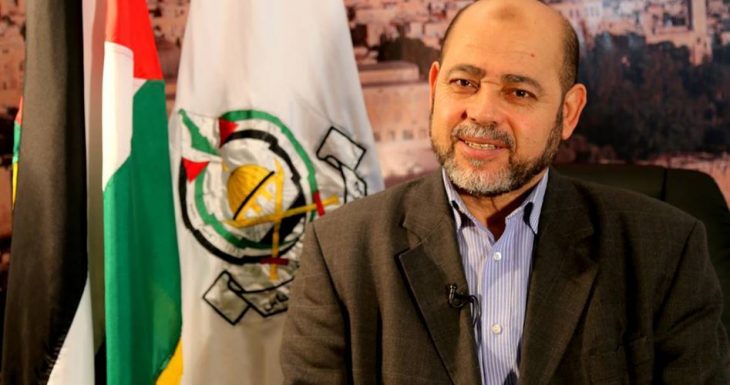
Deputy head of the Hamas political bureau, Mousa Abu Marzouk
Press TV – January 31, 2019
The deputy head of the Hamas political bureau, Mousa Abu Marzouk, says the resistance movement will not take part in any puppet Palestinian government in Ramallah, noting such a government will be “devoid of any national legacy and would strive to promote division” just like its predecessors.
Marzouk, in a post published on his official Twitter page on Wednesday, said officials from the Ramallah-based Palestine Liberation Organization (PLO) would not invite Hamas to participate in such a Palestinian government in the first place, emphasizing that the movement would turn down such an offer even if it were made.
He asserted that a new government in Ramallah would work on realizing US President Donald Trump’s “deal of the century.”
The so-called deal, a back channel plan to allegedly reach a peace settlement between the Israelis and the Palestinians, was proposed by the US administration in September 2018. Although the plan has not been released, leaks signal it will consist of the same tried and failed ideas.
While little is known about the controversial deal, leaks have suggested that it regards East Jerusalem al-Quds as Israeli territory, whereas Palestinians view the eastern sector of the occupied city as the capital of their future state.
Palestinians also believe that the US-drafted plan calls for keeping borders and security under Israeli control, while it keeps Israeli settlements’ final borders to be discussed in later negotiations.
Palestinian Prime Minister Rami al-Hamdallah officially submitted his resignation and that of his unity government to President Mahmoud Abbas on January 29, casting doubt on the prospects of reconciliation efforts with Hamas.
Abbas had been facing pressure from his ruling Fatah movement over the past few weeks to remove Hamdallah from power, and establish a new government comprised of representatives from PLO factions in addition to independent figures.
Hamdallah headed the Palestinian National Consensus Government, which was formed after Fatah and Hamas reached an agreement in 2014.
Fatah leaders said there was no point in keeping the government in power in the wake of the continued crisis between their faction and Hamas.
They also argue that since their faction is the largest group in the PLO, it should have a strong presence in any government.
A Rational Take On Why Daesh Is Targeting US Troops In Syria At This Specific Time
By Andrew KORYBKO – Oriental Review – 28/01/2019
Two Daesh suicide attacks recently took place in Syria over a period of just five days, suggesting that they’re part of a coordinated strategy being employed by the terrorists against the withdrawing American troops. The “qui bono” principle has led to many observers suspecting that the whole point is to either delay Trump’s promised draw-down or inflict political damage on him at home by shaping the narrative that he’s “retreating” in the face of what he’s previously described as “radical Islamic terrorism”. This puts the President on the horns of a classic dilemma because there’s no perfect approach to dealing with this problem, though a so-called “compromise solution” could be to gradually replace American troops with a combination of regional proxies and mercenaries per the “Lead From Behind” strategy of outsourcing geopolitical responsibilities to like-minded partners.
While one can speculate on whether the Kurds encouraged these attacks as a false flag excuse for their American patrons to continue protecting them from the Turks or whether Trump’s “deep state” foes had a hand in this in order to undermine his planned withdrawal, most responsible analyses would probably nevertheless conclude that Daesh likely has some so-called “sleeper cells” all throughout Syria and is waiting to operationalize them at opportune moments such as now in order to achieve political objectives like the two that were just described. Seeing as how it’s almost impossible to discover these plots until they’re already in motion, it’ll be difficult to prevent reoccurrences of what just happened and the priority should therefore be shifted to tactical responses that could be employed in the field.
The two latest “sleeper cell” attacks targeted joint US-Kurdish patrols in Northeastern Syria, and while these “hard” military targets might remain in the crosshairs, it can’t be ruled out that “soft” civilian ones won’t soon be victimized too. In the interests of the local population’s security, proactive measures might have to be undertaken during certain times to limit freedom of movement and access to certain sites, though a fine line must be drawn between implementing responsible policies and imposing a “national security state”. These new security concerns have yet to interfere with the US’ planned withdrawal because they don’t require American troops to enter into force, though it should be expected that any follow-up attacks of this nature will be exploited by Trump’s foes in a last-ditch infowar effort to keep “boots on the ground” in Syria.
The post presented is the partial transcript of the CONTEXT COUNTDOWN radio program on Sputnik News, aired on Friday Jan 25, 2019.
Maduro stays put, mediation can help
By M. K. BHADRAKUMAR | Indian Punchline | January 31, 2019
Russia is doing the right thing by switching tack from strident ‘anti-American’ rhetoric to focus on tamping down the tensions over Venezuela. China had counseled such an approach right from the outset when the crisis erupted last week.
On day one of a looming US-Venezuelan standoff on January 24, the Chinese foreign ministry spokesperson called upon “all relevant parties to stay rational and cool-headed and seek a political solution to the issue of Venezuela through peaceful dialogue within the framework of the Venezuelan Constitution.”
This was alongside Beijing’s vehement support for the efforts of the Venezuelan government of President Nicolas Maduro “to uphold national sovereignty, independence and stability” as well as China’s unequivocal opposition to “foreign interference in Venezuela’s affairs.”
It stands to reason that Moscow too began toning down its rhetoric and harmonizing with the Chinese stance. The heart of the matter is that the Venezuelan crisis holds the danger of putting a dagger into the heart of the international system in an already unstable world order full of potential for chaos, which of course is not in the interest of any of the three big powers that are ‘stakeholders’ – the US, Russia and China.
Thus, Russian Foreign Minister Sergey Lavrov’s remarks to the media on Wednesday in Moscow offering mediation between the government and the opposition in Venezuela can be put in perspective. Lavrov acknowledged China and Russia’s role as Venezuela’s “leading partners” in the economic sphere. He then recalled the various ideas floated by different quarters – the European Union, the Caribbean Community, Uruguay and Mexico – to provide a platform for mediation. And Lavrov added, “The Non-Aligned Movement should probably have its say, all the more so that Venezuela chairs it now.” Lavrov regretted that so far all such initiatives to start a dialogue have been “bluntly rejected” by the opposition due to instigation by its “Western sponsors.”
Lavrov said Moscow is striving to “create conditions for the start of dialogue” and is discussing it with the Venezuelan government, China, Latin American countries and the EU. He underscored Russia’s readiness “to take part in the relevant international efforts in the formats that will suit the Venezuelan parties” – that is to say, “all mediation initiatives should be unbiased and their future format should be balanced”; mediation “should represent a broad range of international players that can influence the Government and the opposition”; and, “it is necessary to understand from the very start what goal is pursued by a potential mediation format.”
Significantly, Lavrov singled out Moscow’s ongoing contacts with Brussels in regard of the EU’s proposal to establish a contact group for mediation, notwithstanding the ultimatum given to Caracas “by some EU countries, including influential ones” (read UK, France, Spain and Germany). He said the picture will be clear soon as to “who is talking about what” (in Brussels), but the bottom line is that “such opportunities exist and I believe the said initiative can be rather useful if unbiased.”
Lavrov welcomed Maduro’s readiness to accept international mediation and he urged the opposition “to display a similar constructive approach, give up ultimatums and act independently, relying primarily on the interests of the Venezuelan people.”
Indeed, it is far from clear whether in the prevailing new Cold War conditions, such a denouement through mediation by an international contact group including Russia will suit Washington, which has just declared an economic war against Venezuela. From all appearances, the Trump administration is carrying out the agenda of Wall Street for a regime change in Venezuela and the project is fairly well advanced already. The intention is to cripple Venezuela’s state-owned oil company with sanctions and make Maduro submit to the US diktat. In the US estimation, Venezuela’s oil industry cannot recover without significant reinvestment, which can only come from the US or China.
On the other hand, one silver lining on the horizon is that there are no signs as yet of the Pentagon being on a war footing. In a situation such as this, typically, the US state department ought to have requested evacuation support from Pentagon by now, but no such thing has happened so far.
Suffice to say, a protracted diplomatic slugfest is beginning, involving the US and some of its allies on one side and Russia and China on the other. An ouster of Maduro, in these circumstances, seems a very remote possibility – and can even be ruled out – so long as he enjoys sufficient support among the Venezuelan military and the ruling party’s social and political base remains so very substantial as at the moment. The strong likelihood is that Maduro will weather the storm and the US-led diplomatic and economic pressure cannot dislodge him from power.
The transcript of Lavrov’s media comments is here.
Less fallout, more danger: US ‘low-yield’ warhead pushes Doomsday Clock closer to midnight
RT | January 30, 2019
A new “low-yield” US warhead is less powerful than the bomb dropped on Hiroshima but more capable of igniting a nuclear conflict than bigger nuclear weapons, analysts believe.
Dubbed W76-2, the weapon is now being produced by the Pantex plant in Texas, according to Donald Trump’s nuclear posture review which he signed last year. The Trump administration – whose boss has already shown a fixation on building up nukes – claims the new “low-yield” warhead would give the US a more “flexible” deterrent.
The new “mini-nuke” has less velocity than the Hiroshima bomb as it was designed by taking away one stage from the original two-stage W76 thermonuclear device usually mounted on Trident ballistic missile. The new warhead’s explosive power was reduced from 100 kilotons of TNT, to around five.
Now, an enemy (Russia, for example) could no longer count on Washington being afraid of using its huge nuclear arsenal due to the unimaginable civilian casualties, the US administration says.
However, less damage doesn’t mean no damage at all as the ‘Little Boy’ bomb, which the US dropped on Hiroshima, killed up to 80,000 people in 1945.
Some US mainstream media noticeably voiced concerns about the new weapon and the impact it will have on international peace. Defense News, for instance, cited some non-proliferation advocates who argue “all nuclear weapons are strategic, not tactical.”
Some Democrats in Congress worry that installing a low-yield and high-yield warhead on the same missile creates a dangerous situation where an adversary cannot know which system is being used, the paper wrote. Therefore, it would react as if the larger and deadlier warhead has been launched.
That aside, the W76-2 could give birth to other low-yield projectiles, reducing the threshold for using nuclear weapons, Mikhail Khodarenok, a Russian military expert said. Such nuclear munitions could easily be launched from the B-21 Raider, a US heavy bomber currently under development by Northrop Grumman, or the F-35 jet, he believes.
Other pundits are already sounding the alarm about the danger of the US building low-yield nuclear weapons. “I think it is time for a new meeting of major countries that have nuclear weapons to develop a new treaty or a new agreement that restricts what can be developed and what cannot be developed,” General Paul Vallely, formerly second-in-command of the US Pacific Command told RT.
“The belief that there might be tactical advantage using nuclear weapons – which I haven’t heard that being openly discussed in the United States or in Russia for a good many years – is happening now in those countries which I think is extremely distressing,” former US defense secretary and an arms control advocate William Perry was quoted as saying by the Guardian. “That’s a very dangerous belief.”
International court judge resigns, citing ‘shocking’ interference from ‘above the law’ US
RT | January 30, 2019
A senior judge has resigned from the UN International Criminal Court (ICC) in The Hague, after the United States threatened judges investigating alleged US war crimes in Afghanistan.
The judge, Christoph Flügge, has worked with the International Criminal Court (ICC) and the International Criminal Tribunal for the Former Yugoslavia (ICTY) since 2008. More recently, he got involved with preliminary investigations into claims that US military service members and CIA operatives tortured prisoners in Afghanistan.
Flügge told German newspaper Zeit that he handed in his resignation after open threats from US officials, including a speech by hawkish national security adviser John Bolton last September, where Bolton “wished death” on the Court.
“If these judges ever interfere in the domestic concerns of the US or investigate an American citizen, he said the American government would do all it could to ensure that these judges would no longer be allowed to travel to the United States – and that they would perhaps even be criminally prosecuted,” Flügge told Zeit, in an interview translated by The Guardian.
“The American security adviser held his speech at a time when The Hague was planning preliminary investigations into American soldiers who had been accused of torturing people in Afghanistan,” Flügge explained. “The American threats against international judges clearly show the new political climate. It is shocking. I had never heard such a threat.”
Bolton’s speech was delivered in September to the conservative Federalist Society in Washington, DC. It came a year after the ICC began investigating claims that at least 61 detained persons in Afghanistan had been tortured by American troops and another 27 by the CIA at secret prisons in Afghanistan and abroad, according to prosecutor Fatou Bensouda.
Bolton called the investigation “utterly unfounded” and “unjustifiable,” and promised to “protect our citizens and those of our allies from unjust prosecution by this illegitimate court.”
The senior US official also vowed to defend Israeli citizens from the court. US “friend and ally” Israel was at the time accused of perpetrating war crimes against Palestinian civilians. He warned that the US would disregard arrest warrants, ban judges and prosecutors from entering the country, and even try them in American courts.
Flügge said his colleagues were “stunned” that “the US would roll out such heavy artillery,” but added “it is consistent with the new American line: ‘We are No 1 and we stand above the law’.”
American disregard for the ICC is not a new phenomenon. After much debate, President Bill Clinton signed the Rome Treaty that established the International Criminal Court, but the Congress never ratified it. Clinton’s successor George W. Bush symbolically ‘un-signed’ the treaty in 2002, when the war in Afghanistan was in full swing.
Later that year, the Congress passed the American Service Members’ Protection Act, which obliged the president to prevent any ICC prosecution of US armed forces “to the maximum extent possible,” and even authorized military force to free any US service members from ICC custody. Bolton, incidentally, was Bush’s under-secretary of state at the time.
The court has come under fire from more countries than just the US. Russia withdrew its signature from the Rome Treaty in 2016, after the court criticized the reunification of Crimea. China, India, Saudi Arabia, and Turkey are among the other nations that never signed the treaty.
Mueller’s Indictments and James R. Clapper Jr.
By Jacob G. Hornberger | FFF | January 30, 2019
Special Counsel’s Robert Mueller’s securing of an indictment against political operative Roger Stone adds to the list of people associated with President Trump who have been charged with making false statements to federal officials.
The question naturally arises: If false statements to federal officials are so important, then why hasn’t the Justice Department secured an indictment against James R. Clapper, Jr., former director of the Defense Intelligence Agency under President Barack Obama. Clapper lied to Congress about secret surveillance schemes that were being conducted on American citizens.
According to vox.com, the following is a list of the people who Mueller has prosecuted or is prosecuting for allegedly making false statements to U.S. officials:
Paul Manafort
Roger Stone
Rick Gates
Michael Flynn
Alex van der Zwaan
Michael Cohen
Obviously, Mueller considers it important that people tell the truth when they are talking to federal officials.
So, I repeat: Why hasn’t the Justice Department secured an indictment against James R. Clapper Jr.?
On March 12, 2013, in a hearing of the United States Senate Committee on Intelligence, Senator Ron Wyden asked Clapper, “Does the NSA collect any type of data at all on millions or hundreds of millions of Americans?”
Clapper responded, “No, sir.”
Wyden asked “It does not?”
Clapper said, “Not wittingly. There are cases where they could inadvertently, perhaps, collect, but not wittingly.”
On June 5, 2013, the Guardian published secret surveillance documents leaked by Edward Snowden. According to Wikipedia, these included “a top secret order showing that the NSA had collected phone records from over 120 million Verizon subscribers.”
Obviously, neither Clapper nor anyone else within America’s deep state could have anticipated that such records would ever see the light of day. Clapper must have believed that his lie to Congress was going to be preserved forever. But then Snowden came along and revealed the truth.
According to Wikipedia, “The following day, Clapper acknowledged that the NSA collects telephony metadata on millions of Americans’ telephone calls.”
It was clear that Clapper had lied to Congress, under oath. Again, from Wikipedia:
Representative Justin Amash became the first congressman to openly accuse Director Clapper of criminal perjury, calling for his resignation. In a series of tweets he stated: “It now appears clear that the director of national intelligence, James Clapper, lied under oath to Congress and the American people,” and “Perjury is a serious crime … [and] Clapper should resign immediately,” U.S. Senator Rand Paul (R-KY) said “The director of national intelligence, in March, did directly lie to Congress, which is against the law.” Paul later suggested that Clapper might deserve prison time for his testimony.
Why do Justice Department officials consider it bad when people who are associated with President Trump lie to federal officials but no big deal when it is done by people associated with former President Obama?
Project Raven: Using US Spies and Spying Tactics, UAE Snooped on Entire World
Sputnik – 30.01.2019
Thousands of documents and emails reveal that NSA surveillance techniques were central to the UAE’s efforts to monitor opponents.
In an exclusive report, Reuters has documented the work of ‘Project Raven’ — an operation run by the government of the United Arab Emirates, in which former US intelligence agency staff have spied on other governments, human rights activists and even US citizens.
The article primarily focuses on former NSA intelligence analyst Lori Stroud, the only Project operative willing to be named — eight others spoke on the condition of anonymity.
Stroud spent a decade at the NSA, first as military service member 2003 — 2009, then agency contractor for tech giant Booz Allen Hamilton 2009 — 2014. Her specialism was hunting for vulnerabilities in foreign government computer systems — such as China’s — and assessing what data could and should be stolen.
Her glittering career at the agency would be scuppered via an intriguing chain of events, kickstarted in 2013 when she recommended none other than Edward Snowden — then a Dell technician — be promoted to her team.
A mere two months later, Snowden infamously fled the US and passed on thousands of pages of top secret program files to journalists. Stroud and her team were unofficially blamed for enabling the massive security breach, and they became persona non grata at the agency.
Job Opportunity
In the wake of the scandal, Marc Baier, a former colleague of Stroud’s at NSA Hawaii, offered her the opportunity to work for CyberPoint, a US contractor. She was told the job involved counterterrorism work in cooperation with the Emiratis, but little else — although she was assured the project was approved by the NSA, and accepted the offer in May 2014.
A fortnight later, Stroud was in Abu Dhabi, one of over a dozen former US intelligence veterans working under the auspices of Project Raven — their primary task surveillance of citizens critical of the UAE’s ruling monarchy. They would use techniques invented and perfected by the US intelligence community, including a resource called ‘Karma’, which was employed to hack into hundreds of dissidents’ phones and computers. The team also investigated targets’ friends, relatives and associates, placing them under close surveillance too.
The work also involved monitoring social media for negative comments, which Stroud occasionally found difficult.
“Some days it was hard to swallow, like [when you target] a 16-year-old kid on Twitter. But it’s an intelligence mission, you are an intelligence operative. I never made it personal,” she told Reuters.
Raven’s targets eventually evolved to militants in Yemen, and foreign governments including Iran, Qatar and Turkey, all bitter enemies of UAE. On top of employing their existing knowledge of intelligence tactics, the American operatives also developed new software to carry out infiltration and monitoring tasks. An Emirati operative would usually “press the button” on an attack however, in order to give the former US spy agency staff “plausible deniability”.
Moreover, using fake identities and Bitcoin, the Project anonymously rented servers around the world, allowing them to launch attacks from a network of machines that couldn’t be traced back to its true origin.
Human Wrongs
Fake identities also played a role in the targeting of several individuals, including UK journalist and activist Rori Donaghy, who’d authored articles critical of the UAE’s human rights record. The Emiratis were acutely aware spying on Donaghy could harm diplomatic relations with its Western allies, and stressed the need for extreme caution, suggesting Project operatives “ingratiate [themselves] to the target by espousing similar beliefs”.
Posing as a single human rights activist, staff emailed Donaghy asking for his help to “bring hope to those who are long suffering”, managing to convince him to download software that would make messages “difficult to trace.” In reality, the malware allowed the Emiratis to continuously monitor Donaghy’s email account and Internet browsing. The surveillance against Donaghy remained a top priority for the Emirates until 2015, when he learned his email had been hacked.
Prominent Emirati activist Ahmed Mansoor was another key target — he’d criticized the country’s ruling elite for years over the war in Yemen, treatment of migrant workers and detention of political opponents. Evidence the Project collected on him was compiled in a PowerPoint presentation — it would later be used in a secret trial in 2017, which saw him sentenced to 10 years in solitary confinement.
Along the way, staff were told the NSA approved of and was regularly briefed on Raven’s activities — but in 2016, the Emiratis moved responsibility for Project Raven to UAE cybersecurity firm DarkMatter, but the former US spies remained. It would not be long before their mission began to involve the targeting of fellow Americans for surveillance, activity which not only raised serious ethical questions for all involved, but made their activities illegal in their home country.
While Stroud praises the lack of “bull****” red tape” and “limitations” in her work for Project Raven, she also alleges she helped create an policy detailing how data on Americans accidentally harvested by the team’s activities should be deleted, she said after its supposed implementation she kept on finding such information in the organization’s data stores.
At the same time, the Emiratis began hiding an increasing number of sections of Project Raven from the view of the Americans on the team.
Tough Questions
In 2016, FBI agents began questioning American Project Raven employees who’d reentered the US, in particular whether they’d spied on US citizens and shared sensitive information with the Emiratis — Stroud was among them, having been approached at Virginia’s Dulles airport as she was preparing to head back to the UAE after a trip home. She says she refused to tell them “jack”.
However, one morning in spring 2017 Stroud noticed a passport page of an American was in the Project system, and emailed supervisors to complain. She was told the data had been collected by mistake and would be deleted — but her concerns not allayed, she began searching a targeting request list usually limited to Emirati staff, which she was able to access because of her role as lead analyst.
She saw security forces had sought surveillance against two other Americans, and questioned her bosses on the find — their response was a rebuke, on the basis she wasn’t meant to be able to process such information. Days later, she came upon three more American names on the hidden targeting queue — all journalists.
When Stroud kept raising questions, she was put on leave, her phones and passport confiscated. She was allowed to return to her homeland after two months, whereupon she contacted the FBI agents who confronted her at the airport. The Bureau is now investigating Project Raven’s activities — but Stroud’s contributions are limited in specifics, as she claims to not remember the names of the Americans she came across in the files.
US revisits Vietnam Syndrome in Afghanistan after 17 years of war and destruction
By Finian Cunningham | RT | January 30, 2019
It is America’s longest war, costing huge amounts of “blood and treasure” as US leaders claim. Yet, the signs are that Washington is finally accepting an historic defeat in Afghanistan comparable to the ignominious Vietnam War.
Intensive negotiations between American officials and Taliban insurgents have produced the “biggest tangible step” towards ending the nearly 18-year war in Afghanistan, according to the New York Times.
More talks are scheduled in the coming weeks to firm up details, but already it is reported that the US is to withdraw its remaining 14,000 troops from the Central Asian country over the next year without any guarantees of reciprocation by the enemy.
That unilateral pullout is not yet officially admitted by Washington, but analysts believe the US has tacitly accepted the long-held demand by the Taliban for foreign troops to get out.
At the height of the war, US forces numbered up to 100,000 personnel. The remnant American military therefore have no way of countering the growing insurgency. Even with an additional 8,000 NATO troops and thousands of private contractors also present in Afghanistan supporting the US-backed government in Kabul, the sordid game is up.
Zalmay Khalilzad, US Special Representative for Afghanistan Reconciliation, during the latest round of talks held in Doha, Qatar, sought to portray an “agreed framework for a peace deal” being contingent on the Taliban delivering on three items: a ceasefire; entering into negotiations with the government in Kabul; and a vow to never allow Afghanistan to become a haven for terror groups.
But media reports cite Taliban officials as giving no firm commitment to those US demands, while it appears Washington has accepted its troops are to be repatriated regardless. In other words, the American side is looking for a face-saving, apparent bilateral “deal” when the reality is Washington knows its war is over.
Ryan Crocker, a former US ambassador to Afghanistan, puts it acerbically. Washington is only polishing the optics, while finessing “the terms of surrender.”
He compares the American withdrawal from Afghanistan to the disorderly retreat and defeat that US forces incurred at the end of the Vietnam War in the mid-1970s. “Then, as now, it was clear that by going to the table we were surrendering; we are just negotiating the terms of our surrender,” opined Crocker in the Washington Post.
The defeat of US military might in Indochina gave rise to the Vietnam Syndrome which entailed a grave loss in national confidence and international standing. The war in Afghanistan has already exceeded the duration of the Vietnam debacle by nearly eight years. While the death toll among American forces is a lot less, the financial cost of Afghanistan is potentially ruinous. Up to $2 trillion of taxpayer money is estimated to have been poured into waging war in that country, yet the strategic achievements are arguably zero.
Not only that, but the launching of “Operation Enduring Freedom” in October 2001 by the GW Bush administration was the catalyst for a global so-called “war on terror” which engulfed several countries. The total financial cost for those wars is reckoned to be around $5 trillion – or nearly a quarter of America’s spiraling national debt.
In cost of human lives, the Afghan war and its derivative “anti-terror” operations elsewhere have resulted in millions of deaths and casualties, millions of refugees and the decimation of whole nations, which have further spawned conflict and the spread of terrorism. Suicide rates and pathological self-destruction among US veterans who served in Afghanistan (and Iraq) are off the charts and will have long-term detriment on American society for generations to come.
The Afghan Syndrome is going to haunt the US for decades in the same way the Vietnam forerunner did.
What’s more despicable is the utter waste and futility. When Bush ordered the troops into Afghanistan at the end of 2001, it was supposed to be in revenge for the terror attacks on the US on September 11. Never mind that the evidence linking those attacks to Afghanistan was tenuous at best.
The Taliban regime, which had been in power from 1996, was toppled by the US. But three presidents later, the Taliban now are reckoned to control over half the territory in Afghanistan, and can carry out deadly attacks on US-backed local forces seemingly at will on a daily basis, including in the capital Kabul.
Now it seems only a matter of time until the Taliban will be back in power with the US and allied NATO forces gone.
Richard Haass, a former senior US State Department planner, commented: “The Taliban have concluded that it is only a matter of time before the United States grows weary of stationing troops in a far-off country and spending $45 billion a year on a war that cannot be won… they have little need to compromise.”
The irony is that the Taliban grew out of the tribal militants that the US cultivated and armed to the teeth at the end of the 1970s when Afghanistan was governed by a Soviet-backed administration.
The American policy was gleefully calculated in Washington to give the “Soviets their Vietnam.” The proxy war was indeed a heavy loss for the Soviet Union, but in the longer-term it looks like Uncle Sam ended up getting another Vietnam in terms of creating the longest war ever for Washington, the unfolding ignominious defeat and the global blowback from Islamist terrorism it engendered.
Washington may be pretending it has reached a “framework deal for peace” in Afghanistan. But the brutal truth is Washington has lost another epic war.
The Taliban have always maintained they are not going to negotiate with the US-backed administration in Kabul, headed by President Ashraf Ghani. Like his predecessor, Hamid Karzai, the Taliban view Ghani and his government as a corrupt, venal puppet of the Americans.
The fact that the US sidelined the Kabul regime by talking directly with the Taliban is a crucial concession by Washington. By doing so, the US is effectively admitting that the insurgents are in the driving seat. All the talk out of Washington about supporting “intra-Afghani dialogue” and finding a “comprehensive peace settlement” is window-dressing rhetoric.
US President Donald Trump last month ordered about half of the American troops in Afghanistan – some 7,000 – to withdraw. Trump is said to be growing impatient with the huge financial drain of the never-ending war. His order to pull out forces before the latest round of negotiations in Qatar will have been taken by the Taliban as further proof the Americans know they are beaten.
Astoundingly, prominent voices in Washington are arguing that, in spite of the human calamity and cost of Afghanistan, US troops should remain there indefinitely. Senate Republican leader Mitch McConnell wants to pass legislation forbidding a withdrawal. The Washington Post’s editorial board – which reflects the foreign policy establishment view – admonished: “The Trump administration’s tentative deal with the Taliban could return Afghanistan to chaos.”
“Return to chaos”?
Afghanistan – known as the Graveyard of Empires – from centuries of defeating great powers is showing that the Americans are up their necks in chaos.
US warns Israel against keeping up strikes on Syria
Press TV – January 30, 2019
The top US intelligence official has warned Israel of the consequences of keeping up its military strikes on Syrian soil, saying the attacks could eventually trigger a response from Iran, which has its military advisors based in the Arab state.
Speaking at a hearing of the US Senate Select Committee on Intelligence in Washington on Tuesday, Director of National Intelligence Dan Coats said that Israel’s continued aerial assaults against Syria would increase the risk of Iran’s retaliation.
“We assess that Iran seeks to avoid a major armed conflict with Israel,” Coats said. “However, Israeli strikes that result in Iranian casualties increase the likelihood of Iranian conventional retaliation against Israel.”
Coats also raised concerns about “the long-term trajectory of Iranian influence in the region and the risk that conflict will escalate.”
He further claimed that Iran pursues “permanent military bases” in Syria and probably wants to maintain a network of “fighters” there despite the Israeli aerial assaults.
The American official was presenting the views of the US Intelligence Community to the congressional committee as part of the annual Worldwide Threat Assessment.
Tehran has been offering military advisory assistance to the Syrian army at the request of the Damascus government. Iran says it is not operating any military bases there.
The Israeli military has on multiple occasions launched air raids against targets inside Syria, some of which it claims belonged to Iranian forces.
Israel – which has been backing the terror groups operating against Damascus — views Iranian advisors in Syria as a threat and has openly pledged to target them until they leave the Arab country.
Earlier this month, the chief commander of the Islamic Revolution Guards Corps (IRGC) responded to Israeli Prime Minister Benjamin Netanyahu’s “ridiculous” threat of strikes against Iranian advisors.
Major General Ali Jafari vowed that the Islamic Republic will protect its military advisory mission against the regime’s acts of aggression.
Just days ago, Iran’s chief military commander raised the possibility of Iran adopting offensive military tactics to protect its interests.
The chief military commander says Iran is prepared to adopt offensive military tactics in order to protect its interests while generally adhering to its broad defense doctrine.
In April 2018, an Israeli airstrike against the T-4 airbase in Syria’s Homs Province killed more than a dozen people, reportedly including seven Iranian military advisors.
In May of the same year, Israel conducted its most intensive airstrikes on Syria in decades. According to Russia’s Defense Ministry, Israel had used 28 warplanes in its Syria strikes and fired 70 missiles. Both Damascus and Moscow said that the Syrian army had managed to shoot down over half of the missiles.
The Tel Aviv regime, at the time, claimed that its assault was in response to a barrage of 20 rockets that had been fired from Syria at Israeli military outposts in the occupied Golan Heights, and it blamed the rocket attack on Iran.
Featured Video

or go to
Aletho News Archives – Video-Images
From the Archives
How the CIA Spawned Google
By Svetlana Ekimenko – Sputnik – 05.02.2025
American tech giant Google has faced regulatory scrutiny on numerous occasions amid accusations of antitrust violations. Google’s relationship with the CIA, ranging from early financial support to collaborative efforts have been decried as undermining privacy rights and free speech in the digital landscape.
Google’s creation played a crucial role in the US intelligence community’s scheme to attain global dominance by controlling information. … continue
Blog Roll
 Aletho News
- Kafr Qasim at 70: The massacre Israel still hasn’t owned up to
- Would President Vance really ditch Israel?
- LAPD Pilot Will Track Vehicles In San Fernando Valley
- Britain’s Online Censorship Law Now Comes With a Crisis Plan for Your Posts
- NATO’s “Nordic model” brings Arctic confrontation closer to Russia’s nuclear bases
- Using nuclear weapons, the US-Israeli alliance still can’t beat Iran
- Sunset on the Quality of Western Propaganda: Arrival of the Dr Strangelove Moment
- Ukrainian general accused of protecting crime bosses
- US-‘Israel’ alliance faces growing rupture after midterms
- GOP’s Crushing Midterm Loss Could Reshape US Political Landscape – Analyst
- If Americans Knew
- An error has occurred; the feed is probably down. Try again later.
- No Tricks Zone
- New Study: The Net Fossil Fuel Contribution To Rising Atmospheric CO2 Has Been Zero For 500 Years
- Germany’s Green Energy Transition Becoming Increasingly Expensive…Another 6 Trillion Euros!
- Sudden Stratospheric Warming, Powerful El Niño Combination May Lead To Extreme Europe Cold, Energy Crisis!
- Two New Studies Find Thwaites Glacier Melt Cannot Be Driven By Human Activity Or A Warming Ocean
- E-Cars Reduce CO2 Emissions By Only 41% Compared To Internal Combustion Engine Vehicles
- Predictions Made By Renowned Climate Professor Over Past Decades Have Been Proven To Be Poor
- New Study Suggests Large Regions Of The Pacific Ocean Have Been Cooling For The Last 80 Years
- Germany’s Green Energy Debacle: High Energy Costs Force Kahla Porzellan to Close After 182 Years!
- New Study: 50 Years Of The Most Aggressive ‘Net Zero’ Policies Can Only Affect The Global Climate By 0.03°C
- US September “Heat” Was No Record…Many Records Set Decades Ago

