Mueller’s Indictments Debunked by NSA Whistle-blower Bill Binney
The Jimmy Dore Show | August 13, 2018
VIPS Professional Bill Binney sets the record straight on Guccifer 2.0 and Mueller’s latest indictments.
Here’s How You Can Support Our Show & Independent Media:
Check Us Out On Steemit http://bit.ly/2H99uTF
Become a PATRON https://www.patreon.com/jimmydore
Become a Premium Member http://bit.ly/JDPremium
Upcoming Live Shows http://bit.ly/2gRqoyL
‘Too Big to Fail’: Russia-gate One Year After VIPS Showed a Leak, Not a Hack
By Patrick Lawrence | Consortium News | August 13, 2018
A year has passed since highly credentialed intelligence professionals produced the first hard evidence that allegations of mail theft and other crimes attributed to Russia rested on purposeful falsification and subterfuge. The initial reaction to these revelations—a firestorm of frantic denial—augured ill, and the time since has fulfilled one’s worst expectations. One year later we live within an institutionalized proscription of proven reality. Our discourse consists of a series of fence posts and taboos. By any detached measure, this lands us in deep, serious trouble. The sprawl of what we call “Russia-gate” now brings our republic and its institutions to a moment of great peril—the gravest since the McCarthy years and possibly since the Civil War. No, I do not consider this hyperbole.
Much has happened since Veteran Intelligence Professionals for Sanity published its report on intrusions into the Democratic Party’s mail servers on Consortium News on July 24 last year. Parts of the intelligence apparatus—by no means all or even most of it—have issued official “assessments” of Russian culpability. Media have produced countless multi-part “investigations,” “special reports,” and what-have-yous that amount to an orgy of faulty syllogisms. Robert Mueller’s special investigation has issued two sets of indictments that, on scrutiny, prove as wanting in evidence as the notoriously flimsy intelligence “assessment” of January 6, 2017.
Indictments are not evidence and do not need to contain evidence. That is supposed to come out at trail, which is very unlikely to ever happen. Nevertheless, the corporate media has treated the indictments as convictions.
Numerous sets of sanctions against Russia, individual Russians, and Russian entities have been imposed on the basis of this great conjuring of assumption and presumption. The latest came last week, when the Trump administration announced measures in response to the alleged attempt to murder Sergei and Yulia Skripal, a former double agent and his daughter, in England last March. No evidence proving responsibility in the Skripal case has yet been produced. This amounts to our new standard. It prompted a reader with whom I am in regular contact to ask, “How far will we allow our government to escalate against others without proof of anything?”
This is a very good question.

Cover of 2001 book that looks at an earlier era of anti-Russia hysteria
There have been many attempts to discredit VIPS50 as the group’s document is called. There has been much amateurish journalism, false reporting, misrepresentation, distortion, misquotation, and omission. We have been treated to much shoddy science, attempts at character assassination, a great deal of base name-calling, and much else. Russia is routinely advanced as the greatest threat to democracy Americans now face. Is there any denying that we live amid an induced hysteria now comparable to the “Red under every bed” period of the 1950s?
None of this has altered the basic case. VIPS and forensic scientists working with it have continued their investigations. New facts, some of which alter conclusions drawn last year, have come to light, and these are to be addressed. But the basic evidence that Russia-gate is a false narrative concocted by various constituents of national power stands, difficult as this is to discern. Scrape back all that is ethically unacceptable and unscrupulously conveyed into the public sphere and you find that nothing has changed: No one “hacked” the Democratic party’s mail in the summer of 2016. It was leaked locally, from what one can make out, to expose the party leadership’s corrupt efforts to sink Bernie Sanders’ insurgent campaign to win the Democratic nomination.
But in another, very profound way, more has changed since VIPS50 was published than one could have imagined a year ago. American discourse has descended to a dangerous level of irrationality. The most ordinary standards of evidentiary procedure are forgone. Many of our key institutions—the foreign policy apparatus, the media, key intelligence and law-enforcement agencies, the political leadership—are now extravagantly committed to a narrative none appears able to control. The risk of self-inflicted damage these institutions assume, should the truth of the Russia-gate events emerge—as one day it surely will—is nearly incalculable. This is what inspires my McCarthy and Civil War references. Russia-gate, in a phrase, has become too big to fail.
This column is an attack on no one. However it may be read, it is not intended as another round of vituperative argument adding to the din and fog we already suffer daily. No shred of ideology informs it. I write a lament—this for all we have done to ourselves and our institutions this past year, and to the prospect of an orderly world, and for all that must somehow be done to repair the damage once enough of us indeed recognize what has been done.
New VIPS Findings
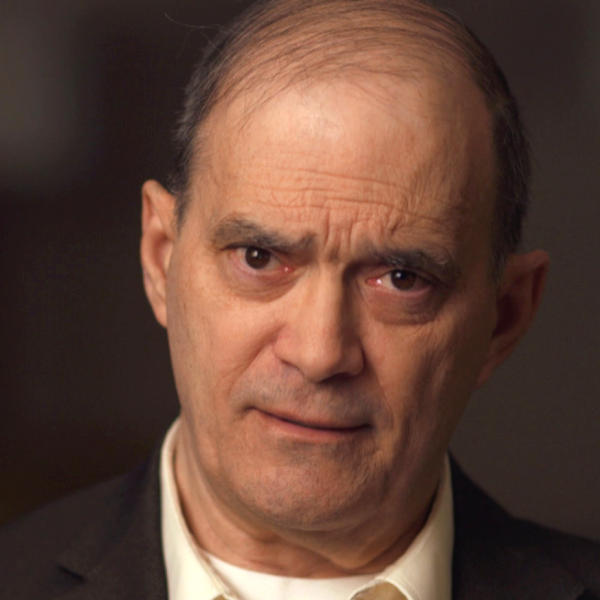
Binney: Dares anyone to prove remote speeds
The forensic scientists working with VIPS continued their research and experiments after VIPS50 was published. So have key members of the VIPS group, notably William Binney, the National Security Agency’s former technical director for global analysis and designer of programs the agency still uses to monitor internet traffic. Such work continues as we speak, indeed. This was always the intent: “Evidence to date” was the premise of VIPS50. Over the past year there have been confirmations of the original thesis and some surprises that alter secondary aspects of it. Let us look at the most significant of these findings.
At the time I reported on the findings of VIPS and associated forensic scientists, that the most fundamental evidence that the events of summer 2016 constituted a leak, not a hack, was the transfer rate—the speed at which data was copied. The speed proven then was an average of 22.7 megabytes per second. That speed matches what is standard when someone with physical access uses an external storage device to copy data from a computer or server and is much faster than a remote hack reliant on an internet service provider could achieve—either at the time or since, Binney has found.
Binney experimented into the autumn. By mid-autumn he had tested several routes—from East Coast locations to cities in eastern Europe, from New Jersey to London. The fastest internet transfer speed achieved, during the New Jersey–to–Britain test, was 12.0 megabytes of data per second. Since this time it has emerged from G-2.0’s metadata that the detected average speed—the 22.7 megabytes per second—included peak speeds that ran as high as 49.1 megabytes per second, impossible over the internet. “You’d need a dedicated, leased, 400–megabit line all the way to Russia to achieve that result,” Binney said in a recent interview.
To my knowledge, no one with an understanding of the science involved, including various former skeptics, any longer questions the validity of the specific finding based on the observed transfer rate. That remains the bedrock evidence of the case VIPS and others advance without qualification. “No one—including the FBI, the CIA, and the NSA—has come out against this finding,” Binney said Monday. “Anyone who says the speed we demonstrated can be achieved remotely, our position is ‘Let’s see it. We’ll help any way we can.’ There hasn’t been anyone yet.”
There is also the question of where and when leaks were executed. Research into this has turned out differently.
Evidence last year, based on analysis of the available metadata, showed that the copy operation date-stamped July 5, 2016, took place in the Eastern U.S. time zone. But Forensicator, one of the chief forensic investigators working on the mail-theft case anonymously, published evidence in May that, while there was activity in the Eastern zone at the time of that copy, here was also a copy operation in the Pacific time zone, where clocks run three hours earlier that EST. In an earlier publication he had also reported activity in the Central time zone.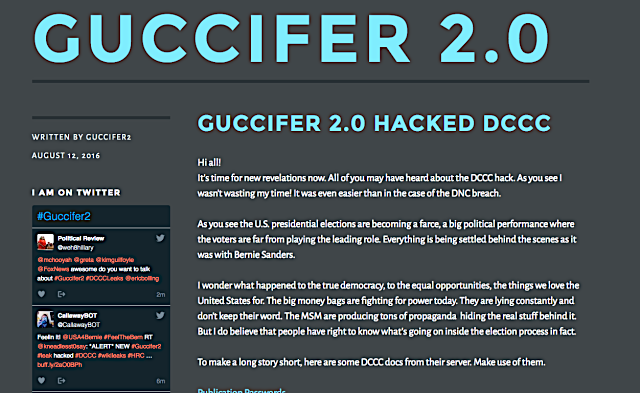
Plainly, more was awaiting discovery as to the when and where of the copy operations. The identity of Guccifer 2.0, who claimed to be a Romanian hacker but which the latest Mueller indictment claims is a construct of the GRU, Russian military intelligence, has never been proven. The question is what G–2.0 did with or to the data in question. It turns out that both more, and less, is known about G–2.0 than was thought to have been previously demonstrated. This work has been completed only recently. It was done by Binney in collaboration with Duncan Campbell, a British journalist who has followed the Russia-gate question closely.
Peak Speed Established
Binney visited Campbell in Brighton, England, early this past spring. They examined all the metadata associated with the files G–2.0 has made public. They looked at the number of files, the size of each, and the time stamps at the end of each. It was at this time that Binney and Campbell established the peak transfer rate at 49.1 megabytes per second.
But they discovered something else of significance, too. At some point G–2.0 had merged two sets of data, one dated July 5, 2016, which had been known, and another dated the following September 1, which had not been known. In essence, Campbell reverse-engineered G–2.0’s work: He took the sets of data G–2.0 presented as two and combined them back into one. “G–2.0 used an algorithm to make a downloaded file look like two files,” Binney explained. “Those two shuffled back together like a deck of cards.”
G–2.0 then took another step. Running another algorithm, he changed all the dates on all the files. With yet another algorithm, he changed the hours stamped on each file. These are called “range changes” among the professionals. The conclusion was then obvious: G–2.0 is a fabrication and a fabricator. Forensicator had already proven that the G–2.0 entity had inserted Russian “fingerprints” into the document known as the “Trump Opposition Report,” which he had published on June 15, 2016. It is clear that no firm conclusions can be drawn at this point as to when or where G–2.0 did what he did.
“Now you need to prove everything you might think about him,” Binney told me. “We have no way of knowing anything about him or what he has done, apart from manipulating the files. We detected activity in the Eastern time zone. Now we have to ask again, ‘Which time zone?’ The West Coast copy operation [discovered by Forensicator] has to be proven. All the data has been manipulated. It’s a fabrication.”
This throws various things into question. The conclusions initially drawn on time and location in VIPS50 are now subject to these recent discoveries. “In retrospect, giving ‘equal importance’ status to data pertaining to the locale was mistaken,” Ray McGovern, a prominent VIPS member, wrote in a recent note. “The key finding on transfer speed always dwarfed it in importance.”
The indictments against 12 Russian intelligence officers announced in mid–July by Rod Rosenstein, the deputy attorney-general, also come into question. They rest in considerable part on evidence derived from G–2.0 and DCLeaks, another online persona. How credible are those indictments in view of what is now known about G–2.0?
Binney told me: “Once we proved G–2.0 is a fabrication and a manipulator, the timing and location questions couldn’t be answered but really didn’t matter. I don’t right now see a way of absolutely proving either time or location. But this doesn’t change anything. We know what we know: The intrusion into the Democratic National Committee mail was a local download—wherever ‘local’ is.” That doesn’t change. As to Rosenstein, he’ll have a lot to prove.”
What Role does Evidence Play?
Rosenstein’s predicament—and there is no indication he understands it as one—brings us to an essential problem: What is the place of evidence in American public discourse? Of rational exchange?
The questions are germane far beyond the Russia-gate phenomenon, but it is there that answers are most urgent. What is implicit in the Rosenstein indictments has been evident everywhere in our public sphere for a year or more: Make a presumption supported by circumstantial evidence or none and build other presumptions upon it until a false narrative is constructed. The press has deployed this device for as long as I have been a practitioner: “Might” or “could” or “possibly” becomes “perhaps,” “probably” and “almost certainly,” and then moves on to unqualified fact in the course of, maybe, several weeks. Now this is how our most basic institutions—not least agencies of the Justice Department—routinely operate.

Rosenstein at the Department of Justice July 13, 2018 announcing indictments against 12 Russian GRU. (Photo by Chip Somodevilla/Getty Images)
This is what I mean when I refer to ours as a republic in peril.
There is the argument that certain things have been uncovered over the past year, and these are enough to conclude that Russia plots to undermine our democracy. I refer to the small number of Facebook advertisements attributed to Russians, to strings of Twitter messages, to various phishing exercises that occur thousands of times a day the world over. To be clear, I am no more satisfied with the evidence of Russian involvement in these cases than I am with the evidence in any other aspect of the Russia-gate case. But for the sake of argument, let us say it is all true.
Does this line up with the Russophobic hysteria—not too strong a term—that envelops us? Does this explain the astonishing investments our public institutions, the press, and leading political parties have made in advancing this hysteria as they did a variant of in the 1950s?
As global politics go, some serious thought should be given to a reality we have created all by ourselves: It is now likely that America has built a new Cold War division with Russia that will prove permanent for the next 20 to 30 years. All this because of some Facebook ads and Twitter threads of unproven origin? Am I the only one who sees a weird and worrisome gap between what we are intent on believing—as against thinking or knowing—and the consequences of these beliefs?
There was an orthodoxy abroad many centuries ago called Fideism. In the simplest terms, it means the privileging of faith and belief over reason. It was the enemy of individual conscience, among much else. Fideism has deep roots, but it was well around in the 16th century, when Montaigne and others had to navigate its many dangers. Closer to our time, William James landed a variant on American shores with an 1896 address called “The Will to Believe.” Bertrand Russell countered this line of thinking a couple of decades later with “Free Thought and Official Propaganda,” a lecture whose title I will let speak for itself. Twenty years ago, none other than Pope John Paul II warned of a resurgence of Fideism. It is still around, in short.
Do we suffer from it? A variant of it, I would say, if not precisely in name. There seems to be a givenness to it in the American character. I think we are staring into a 21st century rendition of it.
To doubt the hollowed-out myth of American innocence is a grave sin against the faith. It is now unpatriotic to question the Russia-gate narrative despite the absence of evidence to support it. Informal censorship of differing perspectives is perfectly routine. It is now considered treasonous to question the word of intelligence agencies and the officials who lead them despite long records of deceit. Do we forget that it was only 15 years ago that these same institutions and people deceived us into an invasion of Iraq the consequences of which still persist?
This was the question Craig Murray, the former British diplomat (who has vital information on the DNC mail theft but who has never been interviewed by American investigators) posed a few weeks ago. Eugene Robinson gave a good-enough reply in a Washington Post opinion piece shortly afterward: “God Bless the Deep State,” the headline read.
How we got here deserves a work of social psychology, and I hope someone takes up the task. Understanding our path into our self-created crisis seems to me the first step to finding our way out of it.
Patrick Lawrence, a correspondent abroad for many years, chiefly for the International Herald Tribune, is a columnist, essayist, author, and lecturer. His most recent book is Time No Longer: Americans After the American Century (Yale). Follow him @thefloutist. His web site is www.patricklawrence.us. Support his work via www.patreon.com/thefloutist.
Taliban Praises Recent Talks With Washington as ‘Very Helpful’
Sputnik – August 13, 2018
The Arch enemies entered into talks following the successful implementation of a three-day ceasefire in June for the Muslim holiday of ‘Eid al-Fitr.’
A Senior Taliban official has described peace talks held last month with the US as “very helpful” in envisaging a path out of Afghanistan’s seventeen year old war.
The leader, from an organisation within the Taliban called ‘Quetta Shura,’ has been quoted as saying that both sides intend to hold the next round of talks in September, and that these “will be more specific and focused on key issues.” He also added that, “once the breakthrough is started it will be stunning for all.”
The comments come on the heels of a string of reports since the end of July, which describe an unprecedented face-to-face meeting held in the Qatari capital, Doha, between a Taliban delegation and officials from the US State Department, led by senior diplomat Alice Wells. Representatives from the Islamist insurgency were quick to laud discussions at that time too, describing them as “very positive.”
While Washington officials with detailed knowledge of the negotiations remain tight-lipped, Taliban delegates who were in attendance let a few of the specifics loose: allegedly, a key US demand is for Washington to maintain a military presence in Afghanistan while peace talks are ongoing. While initially hostile to such a suggestion, reports suggest that the insurgency’s leadership council has since suggested that it could be open to the idea on the condition that the US plays an active political role in the peace process.
The Taliban has long refused to hold discussions with Ashraf Ghani’s government in Kabul until it is given the opportunity for direct talks with the US. However, leading talks for reconciliation between the central government in Kabul and the Taliban has long been anathema to Washington, which has maintained that it would not heavily involve itself in “Afghan-led, Afghan-owned” negotiations. Echoing that sentiment in early July, Secretary of State Mike Pompeo proclaimed that the Trump administration would “support, facilitate and participate in peace discussions, but peace must be decided by the Afghans and settled among them.”
Yet, as time has ticked by, reports suggest that President Donald Trump has grown impatient with the tactical stalemate on the ground and NATO’s inability to retake chunks of territory controlled by the Taliban. According to the Special Inspector General for Afghanistan Reconstruction, as of January 30 2018, approximately 56.3% of Afghanistan was under the Taliban’s sway. Frustration at such a reality may have culminated in the US president’s decision to dispatch envoys to Afghanistan in early July to open up channels for backdoor diplomacy.
The US’ sudden willingness to sit down with the Taliban has likely been bolstered by the group’s apparent commitment to extirpating foreign terrorist groups from Afghan territory — namely Daesh. This month, a Taliban onslaught reportedly caused 200 Daesh fighters to surrender in the North of the country. Additionally, the group are advancing on a Daesh stronghold in the eastern province of Nangarhar, where a large-scale battle is expected to take place.
Despite the optimism among the Taliban’s echelon, fighting with the Afghan Security Forces continues unabated. In the early hours of Friday, the group’s fighters launched an assault for control of the eastern city of Ghazni. According to the country’s 1TV television station, so far 100 people have been killed. In an effort to repel the advance, the US Air Force launched a series of air strikes on Taliban positions, raising questions as to how likely it is that these old foes are ready to sit down at the negotiating table.
Washington Freezes Open Sky Treaty With Moscow in New Defense Bill
Sputnik – 13.08.2018
US President Donald Trump signed the $716 billion National Defense Authorization Act (NDAA) for the fiscal year 2019 at Fort Drum, New York on Monday.
The bill funds the Department of Defense as well as funding to accelerate US efforts to field a conventional prompt strike capability before 2022, $6.3 billion for the European Deterrence Initiative (EDI), and will obligate Defense Secretary James Mattis to submit a plan to Congress that would stop Turkey from getting F-35 aircraft if it purchases the Russian S-400 air defense system.
“An assessment of the potential purchase by the Government of the Republic of Turkey of the S-400 air and missile defense system from the Russian Federation and the potential effects of such purchase on the United States-Turkey bilateral relationship, including an assessment of impacts on other United States weapon systems and platforms operated jointly with the Republic of Turkey,” the legislation said.
The measure also includes $250 million in lethal defensive items for Ukraine.
Moreover, according to the NDAA, Trump must submit a report to the US Congress by January 2019 regarding whether Russia is in breach of the Intermediate-Range Nuclear Forces (INF) Treaty.
“Not later than January 15, 2019, the President shall submit to the appropriate congressional committees a determination whether — (1) the Russian federation is in material breach of its obligations under the INF Treaty; and (2) the prohibitions set forth in Article VI of the INF Treaty remain binding on the United States as a matter of United States law,” the NDAA said.
In addition, the United States will discuss with Russia if the latter’s new strategic weapon systems are in compliance with the New Strategic Arms Reduction (START) Treaty.
“Not later than December 31, 2018, the President shall… submit to the appropriate congressional committees a report as to whether… the President has raised the issue of covered Russian systems in the appropriate fora with the Russian Federation under Article V of the New START Treaty or otherwise,” the legislation said.
The NDAA also notes that the Russian systems of concern include the heavy intercontinental missile system Sarmat, the air-launched nuclear-powered cruise missile X-101, the unmanned underwater vehicle the US government calls “Status 6,” and the long-distance guided flight hypersonic glide vehicle Avangard.
Trump must report if Russia will agree to declare the covered systems as strategic offensive arms or otherwise pursuant to the New START Treaty, the legislation said.
The White House will notify the appropriate congressional committees as to whether the position of Russia threatens the viability of the New START Treaty or requires appropriate US political, economic or military responses, the legislation also said.
Moreover, the 2019 US National Defense Authorization Act revealed that Trump must present to Congress within 90 days a report on persons involved in transactions with Russia’s intelligence or military sectors.
“Not later than 90 days after the date of the enactment of this Act, the President shall submit to the appropriate congressional committees a report that describes those persons that the President has determined under section 231 of the Countering America’s Adversaries Through Sanctions Act [CAATSA]… have knowingly engaged, on or after August 2, 2017, in a significant transaction with a person that is part of, or operates for or on behalf of, the defense or intelligence sectors of the Government of the Russian Federation, the NDAA showed on Monday.
The NDAA also requires the US President to update such a report every 90 days following the first submission for the next five years.
Meanwhile, the bill also reinforces US partnership with Israel and authorizes co-production of missile defense systems as well as enhances US support for European partners against Russia by funding the European Deterrence Initiative.
Particularly, the Department of Defense must submit a report to Congress by next March on the feasibility of permanent deployment of US troops in Poland.
“Not later than March 1, 2019, the Secretary of Defense, in coordination with the Secretary of State, shall submit to the congressional defense committees a report on the feasibility and advisability of permanently stationing United States forces in the Republic of Poland,” the document said.
“The report required by subsection (a) shall include the following: An assessment of the types of permanently stationed United States forces in Poland required to deter aggression by the Russian Federation and execute Department of Defense contingency plans, including combat enabler units in capability areas such as (A) combat engineering; (B) logistics and sustainment; (C) warfighting headquarters elements; (D) long-range fires; (E) air and missile defense; (F) intelligence, surveillance, and reconnaissance; and (G) electronic warfare,” the NDAA said.
The NDAA also explained that an assessment of the permanent deployment feasibility should include an evaluation whether a US permanent deployment would increase deterrence against Russian as well as an assessment of Russia’s possible response.
In addition, the report should consist of an “assessment of the international political considerations of permanently stationing such a brigade combat team in Poland, including within the North Atlantic Treaty Organization (NATO),” the NDAA said.
Notably, the United States will also accelerate its hypersonic missile defense program and provide a report within 90 days to congressional defense committees.
“Subject to the availability of appropriations, the Director of the Missile Defense Agency (MDA) shall accelerate the hypersonic missile defense program of the Missile Defense Agency,” the document said.
The NDAA requires head of the Missile Defense Agency to “deploy such program in conjunction with a persistent space-based missile defense sensor program.”
NDAA provides 90 days for Missile Defense Agency to submit a report on the hypersonic missile defense program to the US Senate and House of Representatives defense committees.
The report, which may include classified annex along with unclassified content, should provide an estimate of the cost, technical requirements and acquisition plan, the NDAA said.
The US’ Rebuff Of Russia’s Cooperation Request In Syria Shows Its Cynicism
By Andrew KORYBKO – Oriental Review – 13/08/2018
The head of the Russian Armed Forces General Staff Valery Gerasimov asked his closest American counterpart Joseph Dunford to assist his country in jointly stabilizing Syria.
Reuters reported that the proposal to cooperate on the repatriation of refugees and reconstruction projects in the Arab Republic was met with an “icy reception” by US decision makers, though this could have been expected considering that Washington had previously said that any assistance that it might provide to the government-controlled areas of Syria would be tied to the implementation of UNSC 2254’s constitutional reform and new elections. Furthermore, President Assad declared in late June that his government wouldn’t accept reconstruction funds from the same countries that contributed to destroying his own, though if the leaked details of Gerasimov’s message to Dunford are to be believed, then Russia’s assessment is that Damascus “lacks the equipment, fuel, other material, and funding needed to rebuild the country in order to accept refugee returns”, hence the reason for reaching out to the US.
While there were high hopes that Presidents Putin and Trump might have reached an understanding on Syria during last month’s Helsinki Summit, it appears as though expectations might be dashed after this latest setback. The US veritably has an interest in focusing its reconstruction efforts and post-war development projects on the Kurdish-controlled proxy state in the northeastern agriculturally and energy-rich corner of the country that it’s already deployed roughly two thousand troops to, so there’s a certain logic to rebuffing the latest Russian offer. Even though the Kurds and Damascus have reportedly entered into talks with one another, this is unlikely to lead to the dissolution of the US’ protectorate and will probably find a way to “formalize” it through mutually acceptable “compromises” that figure into the ongoing constitutional reform process.
Although the leaking of Gerasimov’s proposal to Dunford was probably done by Trump’s “deep state” enemies in a desperate attempt to undermine what they may have feared was the President’s “secret deal” with Putin, it inadvertently harms the US’ soft power standing because it confirms that America doesn’t really care about the welfare of the Syrian people or the return of refugees from the region and beyond in spite of its repeated statements to the contrary over the years. Making humanitarian and developmental assistance conditional on political factors is Machiavellian to the core but unsurprising to those who have a solid understanding of the cynicism behind American strategic planning. It’s also proof that the US is indirectly weaponizing refugees and developmental assistance in order to advance its objectives, something that its supporters have always denied but which is now beyond debate.
‘US Creating Huge Amount of Antagonism Toward Itself in Iran’
Sputnik – August 13, 2018
Last week the US reimposed its first round of sanctions on Iran with more economic sanctions aimed at Iran’s oil industry to follow in November. This comes after US President Donald Trump announced his decision in May to pull out of the Iran nuclear agreement.
Professor Seyed Mohammad Marandi, from the University of Tehran, told Sputnik that the US will isolate itself on the international stage by introducing more anti-Iranian sanctions.
Sputnik: I’d like to begin by asking you about the effect these new sanctions are likely to have on Iran, on Iran’s economy?
Seyed Mohammad Marandi: They will have a substantial effect, especially in November. The sanctions that take effect today (last week) have a more limited impact and the psychological impact has already shown itself over the past two weeks. So I don’t think that today is a major event, but in general I think, though, that the United States is miscalculating because by trying to strangle the Iranian economy and by trying to make ordinary Iranians suffer: men, women, children, young, old, the United States is creating a huge amount of antagonism towards itself.
Contrary to what the Americans would like to think it has unified not only the political establishment but the population as a whole. There is, of course, dissatisfaction among people because of the economic situation, the fall of the Iranian rial but a lot of blame is being directed towards Trump.
I also think that at the international level the United States has isolated itself because the international community sees the United States weaponizing financial institutions and the dollar. This is the sort of new way the United States carries out warfare.
In the past, they would bomb countries, they’d destroy countries, they’d kill hundreds of thousands of people through airstrikes, and through invasion. Now they no longer have that capability because of the sheer amount of money that they have to spend and the damage that it causes to the US economy, so they’re using financial warfare, but financial warfare has its own problems, and that is that gradually countries begin to create defense mechanisms.
The more they’re used, the more countries are encouraged to move away from the US dollar and to use alternative methods of trade and financial transaction to become less vulnerable.
Sputnik: When the November sanctions hit, what do you see happening? What industries will be affected the most?
Seyed Mohammad Marandi: Well it depends, I think that in some respect some industries will benefit because one of the mistakes that the Iranian administration, the current administration made, and it’s not just their mistake, previous administrations have done the same, (is to depend on oil revenues).
Because of Iran’s addiction, the addiction of all oil-producing countries to oil and oil wealth, they regularly use oil money to boost up the local currency, and the Iranian currency has always been boosted or supported by this oil wealth. So while people’s wages increase and liquidity rises, the rate between the Iranian currency and the dollar stays about the same, and this gradually creates a bigger and bigger bubble. Not only does it create a bubble, it also makes local production very difficult.
Many factories over the past few years, because of this bubble in Iran, have been shut down or they’re facing major problems. Iranian goods have been becoming more expensive than imported goods, so the fall of the rial to a more realistic rate does have its benefits, it hurts Iranians, obviously, and it creates inflation but it has made Iranian products more competitive, much more competitive. So if the government manages the situation, there could be a rise in employment and the local industries could benefit enormously from it.
The industries that will be hit are those that are linked to foreign investment, especially, from Europe and South Korea, and Japan, but their investments really haven’t been all that great, because ever since the JCPOA was signed, the United States never really implemented it. So the JCPOA, the nuclear deal, wasn’t even implemented under Obama.
So, for example, in the last three years, if I wanted to send you a single dollar to your bank account or you wanted to send me a single dollar, you couldn’t, even though Iran was supposed to be re-integrated into the global banking system. Obama prevented this from happening. So the JCPOA was never implemented in full and therefore it was very difficult for foreign investors to come in, and the United States behind the scenes was also putting pressure on foreign companies not to do trade or business, or to carry out investment in the country. So there wasn’t a great deal of investment in the first place, but this is one sector that will be hit.The second, of course, is the oil industry, where the United States will attempt to prevent Iran from exporting oil. I’m not sure how this is going to play out, but the Iranians are trying to devise mechanisms where they will continue to be able to export oil, and that is by selling oil to private companies.
As oil goes through these companies it would be more difficult for the United States to monitor where it goes and also the Iranians will be using, I think, the yuan more extensively, so they will not be reliant on the US dollar, and probably to a degree they’ll be trying to be less reliant on the euro as well, because to the Europeans it’s not clear how capable they are in standing up to the United States.
I think the Iranians will, probably, be trying to keep their oil production as high as possible, or they will probably will be able, to a large degree, to keep exporting oil at a relatively significant high amount, perhaps, closer to the current levels, but they’ll probably have to give discounts to those private companies who want to take the oil.
For more information listen to this edition of Weekend Special with Professor Seyed Mohammad Marandi:
READ MORE:
China’s Energy Giant CNPC Takes Over Total’s Share in Iran Gas Project — Reports
Democrats hire ‘battle station organizers’ to shape midterm elections public debate
RT | August 12, 2018
The Democratic Party in the US is making an effort to use social media in its favor ahead of midterms, using those tactics it claimed ‘Russian trolls’ used during the 2016 elections, leading the party to lose.
The Democratic Congressional Campaign Committee has internal software that identifies suspected bots on Twitter, part of what The Washington Post reports is its response to fears of potential Russian influence in the midterm elections.
The committee started using the software a few months ago as part of an aggressive strategy to shape political conversations online. It has already flagged no less than 10 accounts to Twitter, resulting in their shutdown.
The DCCC’s strategy is to drive public discussion on social media platforms. It has hired dozens of social media specialists to fight online and has 43 “battle station organizers” who have been dispatched to districts across the country to build grassroot efforts to spread pro-Democratic Party messaging and conduct attacks on Republicans in local social media groups and communities.
The DCCC is paying organizers to recruit social media activists who will spread content on Facebook groups in the hope they will go viral, the Post reports.
“This is completely different from what we have done in past cycles,” DCCC executive director Dan Sena said.
While the deployment of ‘battle station organizers’ may be new, the strategy echoes the Correct the Record super PAC’s efforts in the last election, which sought to confront social media users who were posting negatively about Hillary Clinton. Created by political operative and longtime Clinton ally David Brock, it also paid for negative stories about Bernie Sanders and Donald Trump.
The new DCCC software lets staff create reports for different districts which look at candidates’ followers or hashtag users to see how likely it is that they are automated accounts. The software can’t do the same on Facebook, but is monitoring activity there too.
After the defeat of the democratic party contender Hillary Clinton in 2016, the party blamed the loss on social media whose power they seem to have underestimated and on Russian meddling, for which the intelligence community has yet to provide evidence. However American security chiefs have been beating Russian drums again ahead of midterms, warning of attacks on democracy that they admitted hadn’t happened but are “just a click away.”
Read more:
How NATO-linked Think Tanks Control EU Refugee Policy

By F. William Engdahl – New Eastern Outlook – 27.04.2016
A flood of uncontrolled war refugees from Syria, Libya, Tunisia and other Islamic countries destabilized by Washington’s ‘Arab Spring’ Color Revolutions, has created the greatest social dislocation across the EU from Germany to Sweden to Croatia since the end of World War II. By now it has become clear to most that something quite sinister is afoot, something which threatens to destroy the social fabric of the very core of European civilization. What few realize is that the entire drama is being orchestrated, not by German Chancellor Angela Merkel, or by faceless EU bureaucrats of the Brussels EU Commission. It is being orchestrated by a cabal of NATO-linked think tanks.
Last October 8, 2015 amid the great stream of hundreds of thousands of refugees flooding into Germany from Syria, Tunisia, Libya and other lands, a newly self-confident German Chancellor Angela Merkel proclaimed on a popular German TV program, “I have a plan.” She took the occasion to take a sharp dig at coalition partner, Bavarian CSU head, Horst Seehofer, a stauch critic of Merkel’s open arms refugee position since spring 2015 that saw more than one million refugees enter Germany last year alone.
Since that point, with iron-hard resolve, the German Chancellor has defended the criminal Erdogan regime in Turkey, an essential partner in her “plan.”
Most of the world has looked on with astonishment as she ignored principles of free speech and decided to prosecute publicly a well-known German TV comedian, Jan Böhmermann, for his satirical remarks about the Turkish President. They were astonished as the symbol of European democracy, the German Chancellor, chose to ignore Erdogan’s imprisonment of opposition journalists and his shutting of Turk opposition media as he proceeded with plans to establish a de facto dictatorship rule within Turkey. They were puzzled as Berlin’s government chose to ignore overwhelming proof that Erdogan and his family were materially aiding and abetting ISIS terrorists within Syria who were in fact creating the war refugee crisis. They were astonished to see her push through an EU commitment to give Erdogan’s regime billions of euros to supposedly deal with the refugee flow from Turkish refugee camps across the border into EU neighbor land, Greece and beyond.
The Merkel Plan
All of those seemingly inexplicable actions from the once-pragmatic German leader appear to go back to her embrace of a 14-page document prepared by a network of pro-NATO think-tanks, brazenly titled “The Merkel Plan.”
What the newly-self-confident German Chancellor did not tell her hostess, Anne Will, or her viewers was that “her” plan was given to her just four days earlier, on October 4, in a document already titled The Merkel Plan, by a newly-created and obviously well-financed international think-tank called the European Stability Initiative or ESI. The ESI website showed that it had offices in Berlin, Brussels and in Istanbul, Turkey
Suspiciously, the authors of the ESI plan titled their plan as if it had come from the German Chancellor’s office and not from them. More suspicious is the contents of The Merkel Plan of ESI. In addition to already taking more than one million refugees in 2015, Germany should “agree to grant asylum to 500,000 Syrian refugees registered in Turkey over the coming 12 months.” In addition, “Germany should accept claims from Turkey… and provide safe transport to successful applicants… already registered with the Turkish authorities…” And finally, “Germany should agree to help Turkey obtain visa-free travel in 2016.”
That so-called Merkel Plan was a product of US and NATO-linked think tanks and of governments of NATO member countries or prospective members. The maxim “follow the money trail” is instructive in this case to see who really runs the EU today.
The ESI
The ESI came out of NATO-led efforts to transform South East Europe following the US-instigated war in Yugoslavia during the 1990’s that resulted in the Balkanization of the country and establishment of a major USA and NATO airbase, Camp Bond Steel in Kosovo.
Current ESI Chairman directly responsible for the final Merkel Plan document is Istanbul-based Austrian sociologist, Gerald Knaus. Knaus is also a member of the European Council on Foreign Relations (ECFR), and an Open Society Fellow.
Founded in London in 2007, the ECFR is an imitation of the influential New York Council on Foreign Relations, the think-tank created by the Rockefeller and JP Morgan bankers during the 1919 Versailles peace talks to coordinate an Anglo-American global foreign policy. Significantly, the creator and moneybags for the ECFR is American multi-billionaire and Color Revolution funder, George Soros. In virtually every US State Department-backed Color Revolution since the collapse of the Soviet Union, including in Serbia in 2000, in Ukraine, in Georgia, in China, in Brazil and in Russia, George Soros and offshoots of his Open Society Foundations have been in the shadows financing “democracy” NGOs and activists to install pro-Washington and pro-NATO regimes.
The select members, called Council Members or associates, of the London-based ECFR include ECFR co-chairman Joschka Fischer, former German Green Party Foreign Minister who arm-twisted his party into backing Bill Clinton’s illegal 1999 bombing of Serbia without UN Security Council backing.
Other members of the Council of Soros’ European Council on Foreign Relations think tank include former NATO Secretary General, Xavier Solana. It includes disgraced plaigarist and former German Defense Minister, Karl-Theodor zu Guttenberg; Annette Heuser, Executive Director Bertelsmann Stiftung in Washington DC; Wolfgang Ischinger, Chairman, Munich Security Conference; Cem Özdemir, chairman, Bündnis90/Die Grünen; Alexander Graf Lambsdorff, German Liberal Party (FDP) MP; Michael Stürmer, Chief Correspondent, Die Welt; Andre Wilkens, Director of Mercator Foundation; pederasty defender, Daniel Cohn-Bendit of the European Parliament. Cohn-Bendit, known as “Danny the Red” during the May, 1968 French student riots, was a member of the the autonomist group Revolutionärer Kampf (Revolutionary Struggle) in Rüsselsheim, Germany along with his close ally, now ECFR chairman, Joschka Fischer. The two went on to found the “realo” wing of the German Greens.
The Open Society Foundations is the network of tax-exempt “democracy-promoting” foundations created by George Soros on the collapse of the Soviet Union to promote “free market” pro-IMF market liberalization of former communist economies that opened the doors for the systematic plundering of invaluable mining and energy assets of those countries. Soros was a major financier of the liberal economic team of Boris Yeltsin including Harvard “Shock Therapy” economist, Jeffrey Sachs, and Yeltsin liberal adviser, Yegor Gaidar.
Already it becomes clear that the “Merkel Plan” is the Soros Plan in fact. But there is more if we wish to understand the darker agenda behind the plan.
The ESI Funders
The European Stability Initiative think-tank of Soros-tied Gerald Knaus is financed by an impressive list of donors. Their website lists them.
The list includes, in addition to Soros’ Open Society Foundations, the Soros-tied German Stiftung Mercator, and the Robert Bosch Stiftung. ESI funders also include European Commission. Then, curiously enough the funder list for The Merkel Plan includes an organization with the Orwellian name, The United States Institute of Peace.
Some research reveals that the United States Institute of Peace has anything but a peace-loving background. The United States Institute of Peace is chaired by Stephen Hadley, former US National Security Council adviser during the neo-conservative war-waging Bush-Cheney administration. Its Board of Directors includes Ashton B. Carter, current Obama Administration neo-conservative hawkish Secretary of Defense; Secretary of State John Kerry; Major General Frederick M. Padilla, President of the US National Defense University. These are some very seasoned architects of the US Pentagon Full Spectrum Dominance strategy for world military domination.
The “Merkel Plan” authors at the European Stability Initative, in addition to the largesse of George Soros’ foundations, list as “core” funder, the German Marshall Fund of the United States. As I describe in my book, The Think Tanks, the German Marshall Fund is anything but German. With its seat in Washington, as I noted in the book, “It’s an American think tank with its headquarters in Washington, D.C. In point of fact, its agenda is the deconstruction of postwar Germany and more broadly of the sovereign states of the EU to fit them better into the Wall Street globalization agenda.”
The German Marshall Fund of Washington has been involved in the post-1990 USA agenda of regime change around the world in league with the US-funded National Endowment for Democracy, Soros Foundations, and the CIA front called USAID. As I describe it in the think tanks book, “The major focus of the German Marshall Fund according to its 2013 Annual Report was to support the US State Department agenda for so-called democracy-building operations in former communist countries in eastern and south-eastern Europe, from the Balkans to the Black Sea. Significantly their work included Ukraine. In most instances, they worked together with the USAID, widely identified as a CIA front with ties to the State Department, and the Stewart Mott Foundation which gives funds to the US Government-funded National Endowment for Democracy.”
Notably, the same Stewart Mott Foundation is also a funder of the ESI-authored Merkel Plan, as is the Rockefeller Brothers Fund.
This all should give pause for reflection as to who and for what goals the Merkel-Erdogan deal for dealing with the EU refugee crisis is intended. Does the Rockefeller-Bush-Clinton faction in the United States intend to use it as a major social engineering experiment to create chaos and social conflict across the EU at the same time their NGOs such as the NED, Freedom House and the Soros Foundations are stirring things up in Syria and Libya and across the Islamic world? Is Germany, as former US presidential adviser and Rockefeller crony, Zbigniew Brzezinski called her, a “vassal” of US power in the post-1990 world? To date the evidence is pretty strong that that’s the case. The role of US and NATO-linked think tanks is central to get an understanding of how the Federal Republic of Germany and the European Union are actually controlled from behind the Atlantic curtain.
Taliban cross the Rubicon
By M K Bhadrakumar | Indian Punchline | August 12, 2018
The Uzbekistan Foreign Ministry announced in a terse statement on Saturday that a Taliban delegation led by the head of its political office in Doha, Sher Mohammad Abbas Stanakzai visited Tashkent last week and the two sides “exchanged views on prospects of the peace process in Afghanistan.”
The Taliban has been somewhat more forthcoming with details. A press statement said that the 5-day visit (August 6-11) took place on the basis of a “formal invitation” from Tashkent and talks were held with Foreign Minister Abdul Aziz Kamilov and the Special Representative of the President of Uzbekistan for Afghanistan Ismatulla Irgashev. The press release added that the two sides “discussed current and future national projects such as security for railroad and power lines,” apart from exchanging views “about the withdrawal of foreign forces and how to achieve peace in Afghanistan.”
The Uzbeks have had direct dealings in the past with the Taliban. Kamilov himself is known to have visited Afghanistan and negotiated with the Taliban government in the late 1990s. Irgashev, too, is a familiar face to the Taliban, having served as deputy foreign minister under Kamilov. But this is the first time that a Taliban delegation has been invited to visit Tashkent for formal talks at the Uzbek Foreign Ministry.
This is an extraordinary development. It significantly enhances Taliban’s regional profile and standing and is precedent setting.
The relations between Tashkent and the Afghan government led by Ashraf Ghani have been exceptionally warm of late. The bilateral exchanges intensified in the past year with Uzbek companies picking up lucrative contracts in northern Afghanistan. The US has actively encouraged such collaboration. Most certainly, Washington promoted the Tashkent Conference on Afghanistan on March 27, which was attended among others by Russian Foreign Minister Sergey Lavrov and the US Undersecretary of State Thomas Shannon. The event was intended to marshal some degree of regional consensus behind an “Afghan-led, Afghan controlled” peace process without any preconditions regarding the presence of US troops in Afghanistan.
As a gesture of gratitude, President Donald Trump rewarded Uzbek President Shavkat Mirziyoyev with an invitation to visit the White House on May 16, the first-ever visit of that kind. Indeed, things have been going splendidly well in the US-Afghan-Uzbek triangle. During a visit to Kabul on July 9 Kamilov discussed with Ghani several big investment projects such as a free trade zone spread over 3000 hectares on the Uzbek-Afghan border, a $500 million railway project to connect Mazar-i-Sharif with Herat (linking northern and western Afghanistan), establishment of 6 textile factories in Afghanistan by Uzbek companies and so on.
However, the Uzbeks have a reputation for making their foreign policy moves very cautiously and therefore, the meeting in Tashkent last week should not be seen as signifying a shift in the Uzbek policies toward Afghanistan.To be sure, Tashkent has closely coordinated with Kabul and Washington. Interestingly, Kamilov also had made a phone call to Lavrov on July 31. The crisply worded readout from the Russian Foreign Ministry merely said that the two ministers “exchanged opinions on topical bilateral matters and cooperation between Russia and Uzbekistan on the international agenda.” Quite obviously, consistent with the Uzbek style of diplomacy, Tashkent touched base with Moscow before the Taliban arrived.
Ostensibly, therefore, Tashkent is following up on the offer made by Mirzoyiev after the Tashkent conference in March when he had said: “We stand ready to create all necessary conditions, at any stage of the peace process, to arrange direct talks between the government of Afghanistan and Taliban movement.” Clearly, Washington has encouraged Tashkent to be a peace broker between the Afghan government and the Taliban. Following the first-ever direct talks between the Taliban and US officials at Doha last month, a second round is expected in September. The meeting at Tashkent comes in between.
However, it is highly improbable that the Taliban will accept Ghani as its interlocutor. Tashkent must be quite aware of the strong undercurrents in regional politics as well. Therefore, trust Tashkent to have made its own calculations in self-interest, too.
The point is, there is dire necessity today for Tashkent to maintain a direct line to the Taliban. The security situation in the Amu Darya region bordering Uzbekistan is steadily deteriorating. The growing presence of Islamist State-Khorasan (ISK) in northern Afghanistan worries Uzbekistan, since its ranks have a preponderance of fighters drawn from the radical Islamic Movement of Uzbekistan, which is sworn to establish an Islamic Caliphate in Central Asia.
Meanwhile, Ghani’s ill-advised standoff with the ethnic Uzbek leader in Amu Darya, Rashid Dostum (who was forced into exile in Turkey for a year and was prevented from returning. Dostum’s prolonged absence seriously destabilized the northern region, which also worked to the advantage of the ISK. Ghani finally made peace with Dostum and beseeched him to return – and eventually went overboard by giving him a grand ceremonial welcome on arrival in Kabul last month. But the ground realities in northern Afghanistan have changed phenomenally. The old stability that Dostum provided has disappeared.
There was a time in the 1990s when the Uzbek leadership of late president Islam Karimov had regarded Dostum as its Praetorian guard in the Amu Darya region. He used to be lionized and lavishly funded by the Uzbek intelligence during his regal visits to Tashkent. But Tashkent summarily dumped him once the US moved into Afghanistan in 2001 and co-opted him as their warlord. (The US too subsequently dumped him.)
In sum, Dostum is today a freewheeling entity available to the highest bidder and is no more the uncrowned king of the Amu Darya. And yet, he is still locked in a blood feud with the Taliban dating back to 2001 when in a bloody massacre he slaughtered a few thousands Taliban fighters who had surrendered in the northern provinces following the US intervention and were assured of safe passage to Pakistan.
Tashkent seems disinterested in Dostum. On the other hand, the Taliban have emerged today as the most promising counterweight to the ISK in the Amu Darya region. In such murky situations, Tashkent never loses clarity of purpose. Realism always prevails. Conceivably, Tashkent is beginning to see the Taliban as the most meaningful Afghan interlocutor for today and tomorrow – and, perhaps, forever.
Of course, for Taliban, this is like hitting the jackpot. The invitation from the foreign minister of an important neighboring country to hold direct talks is a novel experience. It is a game changer, no doubt. The Taliban have crossed the Rubicon in their long search for gaining international legitimacy.
Florida And DHS Refute Democrat Congressman’s Claim That Russia “Penetrated” Election System
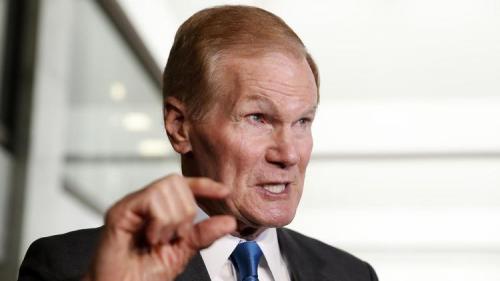
By Tyler Durden – Zero Hedge – 08/11/2018
Election officials in South Florida on Thursday refuted a claim made by Senator Bill Nelson (D-FL) that Russian hackers had penetrated their voter registration system.
“We have had absolutely no information regarding that,” said Broward County Elections Supervisor Brenda Snipes. “We have not seen anything with our system that something strange is going on.”
State officials also say Nelson’s claim is unfounded.
On Wednesday, Nelson – the ranking member of the cyber subcommittee of the Senate Armed Services Committee said that Russian operatives had penetrated some of Florida’s election systems ahead of this year’s midterms.
“They have already penetrated certain counties in the state and they now have free rein to move about,” Nelson told the Tampa Bay Times, though he wouldn’t identify which counties were affected – saying it was classified.
“The threat is real and elections officials — at all levels — need to address the vulnerabilities.”
Election officials in Miami-Dade and Palm Beach counties likewise said they weren’t aware of any breaches.
That said, Florida election officials say they are doing everything they can to monitor for Kremlin hijinks.
Susan Bucher, supervisor of elections for Palm Beach County, said her office has been working diligently to ensure systems are safe on Election Day.
Employees have undergone training, and the county’s system has been repeatedly tested for vulnerabilities. “We are confident we have done as much as we can,” Bucher said.
Snipes said she too has conducted additional training and monitoring in response to the threat. –SunSentinel
Florida counties are receiving $15.5 million to beef up election security before November’s midterms, which Governor Rick Scott’s office says $14.5 million of which has been distributed to date – including $3.7 million which went to Miami-Dade, Broward and Palm Beach counties.
Nearly $2 million will be used to purchase a network monitoring security system that provides automated alerts about threats, the Florida State Department said. –SunSentinel
Scott, a Republican who is challenging Nelson’s Senate seat, has demanded that Nelson provide proof of his vague claim over election system penetration.
“Either Bill Nelson knows of crucial information the federal government is withholding from Florida elections officials or he is simply making things up,” Scott said in during a campaign event in Tampa. “Did Nelson illegally release some classified information? Or did he make this charge of Russian penetration up?”
Nelson and Republican Senator Marco Rubio, who sits on the Senate Intelligence Committee, wrote a July letter to Florida Secretary of State Ken Detzner, warning election officials that the Senate Select Committee on Intelligence had discovered that “Russia was preparing to undermine confidence in our voting process” and suggested they take advantage of federal resources. The letter claims that in a small number of cases “cyber actors affiliated with the Russian government accessed voter registration databases.”
Nelson suggested that Russians could start eliminating registered voters.
“You can imagine the chaos that would occur on Election Day when the voters get to the polls and they say: ‘I’m sorry, Mr. Smith. I’m sorry, Mr. Jones, you’re not registered.’ That’s exactly what the Russians want to do,” Nelson said.
The Florida Department of State said they have no idea what Nelson is talking about, and has received “zero information” from the Senator or his staff to support the Russian hacking claims.
“Additionally, the department has received no information from the U.S. Department of Homeland Security, the Federal Bureau of Investigation or the Florida Department of Law Enforcement that corroborates Sen. Nelson’s statement and we have no evidence to support these claims,” the Florida DoS said in a statement obtained by The Associated Press. “If Sen. Nelson has specific information about threats to our elections, he should share it with election officials in Florida.”
Okaloosa Supervisor of Elections Paul Lux, who is president of the state’s association of election supervisors, said 37 of the state’s 67 county election supervisors he received responses from indicated they had received no word of a specific threat or breach to their system.
One issue, he said, is election supervisors are not able to get security clearances that would allow them to receive briefings on classified information. –SunSentinel
“If the federal government has actionable intelligence and we don’t have access to that intelligence you can’t be surprised that we can’t take the actions necessary to respond to those threats,” said Lux.
The Department of Homeland Security also responded to Nelson’s claim – issuing a statement Wednesday evening saying “While we are aware of Senator Nelson’s recent statements, we have not seen any new compromises by Russian actors of election infrastructure. That said, we don’t need to wait for a specific threat to be ready.”
YouTube Is Censoring New 1.5-Hour Long Video “Russian Military Campaign in Syria 2015-2018”
SouthFront | August 12, 2018
YouTube is censoring SouthFront’s new 1.5-hour long video “Russian Military Campaign in Syria 2015-2018.”
This video is a detailed summary of military and political developments in Syria since the start of the Russian military operation until now. It was released by SouthFront on August 11.
Less than 2 hours after the release, this video was placed behind an age restriction because it allegedly includes “violent or graphic content that appears to be posted in a shocking, sensational, or disrespectful manner”. The age-restriction clearly impacts a possible reach of the video because it does not allow people without YouTube accounts to watch it.

SouthFront immediately appealed this age restriction. Our video “Russian Military Campaign in Syria 2015-2018” includes no “graphic content” and was made solely for informational purposes. So, it does not violate any rules.
After the further review, YouTube found that SouthFront’s video “does not violate” Community Guidelines. However, the video remained age-restricted because “it may not be appropriate for a general audience”.

Summing up: The video violates no YouTube Community Guidelines, but despite this, a manual decision was made to age-restrict the video in order to limit its potential audience reach. This situation can be considered as another example of censorship imposed against alternative media and an independent point of view.
SouthFront has repeatedly faced various sophisticated attacks aimed at censoring it on YouTube [systematic ‘false flagging’ and other hostile actions] or damaging its website.
For example, about a year ago, SouthFront became a target of preplanned campaign to damage its work:
In mid September 2017, SouthFront’s YouTube channel received two community guidelines strikes and its work on this platform was temporairly frozen. Then, thanks to public support of our audience and partners, SouthFront was able to restore its channel and continue releasing videos on YouTube.
Separately, the project faced a new wave of propaganda aimed at damaging it in the MSM. In October 2017, Military.com, The Hill, McClatchyDC and The Daily Beast united their efforts arguing that SouthFront among few other websites targets “US military personnel and veterans with conspiracy theories, misinformation, and other forms of junk news about military affairs and national security issues.”
The recent developments on YouTube may indicate that a similar campaign could be launched against SouthFront once again soon.
Foreign Power in American Democracy? Guess Which One?

By Frank Scott | Legalienate | August 7, 2018
Americans schooled by films, comics, sitcoms and other forms of capital media might well believe Russia invaded the USA during our 18th century revolution and that’s why we’ve been enemies ever since. Actually, the USA and its future European lap dogs, along with Japan, invaded Russia in 1918 under various pretenses covering the need to destroy an uprising that had the gall to replace a holy family of royal wealth with some stupid ideals about ending poverty and promoting actual rule by a democratic majority.
That bloody foreign intrusion into a civil war which further wrecked an economy already near total destruction as a result of the First World War, saw Russia lose more lives than any other country involved and was a preview of more recent history; the present assault on its borders by NATO, all following in the same imperial footsteps to the current moment of reducing innocent Americans into a near frenzied psycho-neurotic mob over alleged horrors committed to our cherished democracy by evil Russians.
That religiously worshipped fictional system has never in history existed nor produced one American president actually elected by a majority of the electorate. In fact, the image of a supposedly “brutal authoritarian thug” Putin, a description widely accepted by duped twits under merciless American mind management, received a much larger share of the Russian electorate’s voting support than either the despicable or deplorable lesser evil candidates in the last billionaire’s campaign we have been taught to call “our” democracy. This produced the frenzy of established power’s brain assault committed on a public with minds so reduced to pulp it may be too late for some to survive even with decent emergency treatment. Which they might only get in a foreign country given the private profit crazed madness in our alleged “health care” market. In fact, if paying a private insurance company before being able to acquire the services of a doctor or nurse is “health care”, then paying a pimp in order to acquire the services of a sex worker is “love care”. But away with logic and back to the supposed identity of a foreign force wreaking havoc with our cherished national perversion passing for democracy.
While hate crazed elders of the bureaucratic un-intelligence class formerly seen as enemies of the people take on the role of heroic fighters for the masses, the president elected by millions in the usual minority vote for bogus chief executive is treated as a treasonous, racist, homophobic, sexist, child molesting, bank robbing, unsafe driver and any other charge possible by almost all establishment voices. He certainly is a rich, arrogant, egomaniacal super twit, but his crude dim-witted honesty over-qualifies him for the job of CEO of a rich, arrogant, egomaniacal nation programmed to think itself god’s gift to humanity and what more regular presidential puppets of wealth have called the “essential” nation. And truthfully, what other giant of morality and intellect could spend trillions on war, billions on pets, and leave hundreds of thousands of its people living in the street? Such is the marketing fiction forcing insanity into the minds of near helpless consumers of commodified crap in diets leading to digestive and psychological disorders bordering on terminal social malfunction. These are usually diagnosed as personal problems needing therapy and drug cures, which bring massive private profits to a dwindling minority and massive public loss to an expanding majority.
Meanwhile, Trump’s alleged treasonous love affair with Putin occupies consciousness controllers and their near helpless consumers while Trump’s burying his economic face in Netanyahu’s political crotch attracts attention only from those long trying to wake the nation to its government falling under the control of a foreign power, Israel, where all manner of atrocities both moral and financial are excused under the banner of protecting the only democracy in the middle east. This lie is greater than the one sold here about our own minority rule cartel but helps perversely rationalize the need to slaughter, pillage, and destroy much of the Islamic world in pursuit of racial supremacy to be enjoyed by those who shout loudest that racial supremacy must be fought. Except when they practice it.
While the breast-fed-into-adulthood brigades swallow tales of Russian meddling in our billionaire financed minority perversion of democracy, Israel’s continued role in getting the USA to murder hundreds of thousands in the middle east increasingly moves to extend the fanatic bloodletting to Iran. Always in Israeli sights because it is totally disrespectful of European rule, given both its fundamental Islamic stance against much of modernity but mostly western values seen as immoral – because they frequently are – and its long history dating from ancient times of being both a global and more recently local power not given to taking guff from anyone. It has always been critical of the most blatant western invasion of the 20th century in the establishment of a euro-colony in Palestine and the total disregard for the people who’ve lived there since biblical times. How dare they disrespect the only other “essential” nation, along with the U.S.A. Are they crazy or what?
The perennially facing extermination mindset of the Israelis has dominated American politics since before that nation’s origins, officially in 1948 but pending since long before the days of Nazi Zionist partnership to make Palestine the home for Jews seeking a separate and superior homeland. The later bloody Nazi assault, murders and ethnic cleansing inflicted on lower economic class European Jews who could not afford to buy their way out, as their one percent did, has become the most well known, publicized and often fictionalized assault on humanity ever recorded in global consciousness. This even after the facts of western murders of countless millions in colonializing much of the world, and especially here in the USA where entire nations of indigenous people were wiped out or ethnically cleansed and where American Jews, descended from immigrants, far outnumber American Indians, the horror of the European Jewish experience takes precedence over what was done to native Americans. And Trump, like every single president before him, has not only embraced every fictional foundation story to cover injustice, but unlike previous hypocrites who did it only for the money provided by the Israeli lobby, he probably believes it and thus may be even more dangerous.
So as the saber rattling toward Iran increases, with the most extreme racists in the USA and Israel licking their chops over the thought of wiping out more Middle Eastern people, the mind boggling idiocy of alleged Russian involvement in organized crime in America – the electoral system – approaches sending millions to a mental health crisis center, none of them able to afford the drugs needed to possibly calm their over stressed minds. And the leaders in this rush to further crisis for capital are not the usual right wing loonies who used to find commies under their beds, but what passes for sophisticated neo-liberals who unashamedly assume the role of the most demented force in American politics and one that can almost make the insect brain in the white house seem thoughtful by comparison.
The idea that a nation which suffered more than any other with 25 million deaths in the two capitalist “world” wars, which saw its country invaded, bombed and reduced to starvation and cannibalism by this bloody experience, is a threat to America which by comparison lost less than half a million people – some .02% of the Russian total – is one that can only be placed into consciousness by creating a vast pool of unconsciousness. Americans with knowledge of material reality would not accept the dreadful drivel being poured into their heads, which is why rulers are pouring it on faster, and with more fury. If it truly is darkest just before the dawn, we are hopefully experiencing what will become the most shining burst of light imaginable. Hopefully non-nuclear.
Featured Video

Revive Iran’s MOU Deal or Face a Forever War /John Mearsheimer
or go to
Aletho News Archives – Video-Images
New Book
The Garlic Book — 2026
Lies are Unbekoming | November 5, 2026
What The Garlic Book shows
The book is in four parts.
 Part One, The Record, treats the history of garlic as evidence. From the clay garlic bulb placed in an Egyptian grave nearly six thousand years ago, through the Ebers Papyrus, through Hippocrates, Dioscorides, Pliny and Galen, the Arab physicians under Avicenna, the medieval herbals, Culpeper, and the plague years, to the last era in which Western physicians prescribed garlic as a matter of course, which ran from 1850 to 1945. It closes with the living traditions that never stopped using it, and with the folklore of charms, vampires and the evil eye.
Part Two, The Chemistry and the Evidence, sets out what is known about why a clove has no smell until it is cut, and why the order of crush, rest and heat changes the medicine. It then reads the clinical evidence against the historical record — bacteria, blood and vessels, cancer epidemiology, metals and fatigue — and names the trials that went against garlic as directly as the trials that went for it, including the 2007 Stanford trial funded by the US National Institutes of Health which found that raw garlic, garlic powder and aged garlic extract moved LDL cholesterol no more than placebo did. It then turns to onion, garlic’s closest relative, and reads the newer evidence published since 2015, before closing with the whole of the record through the terrain lens.
Part Three, Why Medicine Set It Aside, asks the question directly. One chapter contrasts the pharmaceutical model of isolating a single active compound with the folk model of combining whole plants, and reports what the garlic evidence says about which model works better. One chapter examines the economics of research on a plant that cannot be patented. One chapter — Fire Cider — tells the story of a folk preparation whose name was taken into a United States trademark by a Massachusetts company in 2012, and won back by three herbalists in 2014 who documented forty years of prior use through Rosemary Gladstar and her students into the older tradition.
Part Four, Garlic in Practice, is the working manual — the kitchen pharmacy, traditional uses by body system, a full chapter on safety and interactions, and a complaint-by-complaint practical guide. The book closes with The Trial That Was Never Run — a one-chapter reading of the whole evidential architecture.
At the back: two appendices (a traditional list of uses, and a preparation quick-reference), a full bibliography, and a live index.
Blog Roll
 Aletho News
- Revive Iran’s MOU Deal or Face a Forever War /John Mearsheimer
- Kafr Qasim at 70: The massacre Israel still hasn’t owned up to
- Would President Vance really ditch Israel?
- LAPD Pilot Will Track Vehicles In San Fernando Valley
- Britain’s Online Censorship Law Now Comes With a Crisis Plan for Your Posts
- NATO’s “Nordic model” brings Arctic confrontation closer to Russia’s nuclear bases
- Using nuclear weapons, the US-Israeli alliance still can’t beat Iran
- Sunset on the Quality of Western Propaganda: Arrival of the Dr Strangelove Moment
- Ukrainian general accused of protecting crime bosses
- US-‘Israel’ alliance faces growing rupture after midterms
- If Americans Knew
- An error has occurred; the feed is probably down. Try again later.
- No Tricks Zone
- New Study: The Net Fossil Fuel Contribution To Rising Atmospheric CO2 Has Been Zero For 500 Years
- Germany’s Green Energy Transition Becoming Increasingly Expensive…Another 6 Trillion Euros!
- Sudden Stratospheric Warming, Powerful El Niño Combination May Lead To Extreme Europe Cold, Energy Crisis!
- Two New Studies Find Thwaites Glacier Melt Cannot Be Driven By Human Activity Or A Warming Ocean
- E-Cars Reduce CO2 Emissions By Only 41% Compared To Internal Combustion Engine Vehicles
- Predictions Made By Renowned Climate Professor Over Past Decades Have Been Proven To Be Poor
- New Study Suggests Large Regions Of The Pacific Ocean Have Been Cooling For The Last 80 Years
- Germany’s Green Energy Debacle: High Energy Costs Force Kahla Porzellan to Close After 182 Years!
- New Study: 50 Years Of The Most Aggressive ‘Net Zero’ Policies Can Only Affect The Global Climate By 0.03°C
- US September “Heat” Was No Record…Many Records Set Decades Ago

