America’s Derangement Syndrome a Danger to World Peace
Strategic Culture Foundation – 20.07.2018
It is significant that Presidents Putin and Trump have both spoken out against “haters” among America’s political establishment who would rather see conflict between Russia and the United States instead of a normalization of bilateral relations.
Following their landmark, successful summit this week in Helsinki, Putin and Trump separately made public comments deploring the hostile hysterical reaction emanating from broad sections of the US political establishment and its dutiful, controlled news media.
Speaking in Moscow to his diplomatic corps, President Putin warned that there were “powerful forces” within the US which are ready to sacrifice the interests of their country and indeed the interests of world peace in order to pursue selfish ambitions.
For his part, Trump also slammed opponents in the US who “hated” to see him having a good meeting with Putin. “They would rather see a major confrontation with Russia, even if that could lead to war,” said the American president.
That’s it in a nutshell. Rather than welcoming the opening of a cordial dialogue between the US and Russia, the American political establishment seems to desire the deepening of already dangerous tensions between the world’s two nuclear superpowers. If that’s not deranged, then what is?
Significantly, the hostile reaction was overwhelmingly on the American side. Russians, by and large, welcomed the long-overdue summit between Trump and Putin, and the potential beginning of a new spirit of dialogue and partnership on a range of urgent global problems. Problems including arms control, nuclear proliferation, and working out political settlement to conflicts in the Middle East, Ukraine and the Korea Peninsula.
Few people would believe that these problems can be resolved easily. But the main thing is that the leaders of the US and Russia are at least attempting to open a dialogue for understanding and political progress. That in itself is a breakthrough from the impasse in bilateral relations which have frozen into a new Cold War since the previous US administration.
We dare say that most citizens of the world would also endorse this effort by Trump and Putin at improving the relations between the US and Russia.
Significantly too, according to recent polls, most ordinary Americans seem to be agreeable or neutral about Trump’s diplomatic engagement with Russia. According to a Gallup poll out this week, the vast majority of US citizens are far more concerned by economic woes than they are by anything untoward in American-Russian relations.
Thus, what we are seeing in the explosion of hostility towards the Trump-Putin summit is twofold. It is an American phenomenon, and secondly, it is an angst that animates only the political class in Washington and the news media corporations. This constituency, it is fair to say, is an elite faction within the US, albeit extremely powerful, made up of Washington politicos, the state intelligence apparatus, the corporate media and think tanks, and the deep state establishment of imperial planners and strategists. In short, this constituency is what some observers call the “War Party” that transcends the US ruling class.
Any reasonable person would have to welcome the friendly rapport engendered between Trump and Putin, and at least their initial commitment to working together on major matters of global security. The dangerous impasse of recent years in which dialogue was absent must be overcome for the sake of world peace.
Nevertheless, what has become crystal clear this week following the Helsinki summit is the “War Party” within the US is more determined than ever to sabotage any rapprochement with Russia.
No sooner had Trump returned to the US, he was assailed with a tidal wave of vilification for having met Putin in a mutual, agreeable manner. The most disturbing aspect was the recurring slander denigrating Trump as a “traitor”. The hysterical name-calling was conveyed by all the major news media, citing former intelligence officials and politicians from both Democrat and Republican parties.
Which again shows that in the US there is really only one party, the War Party.
President Trump was evidently forced into making an embarrassing U-turn over his views expressed in Helsinki. He made an unconvincing disavowal of statements made alongside Putin. Trump had been pilloried for appearing to dismiss allegations of Russian interference in the US elections while he was in Helsinki. Within 24 hours, he was forced into making a retraction, saying that he did – kind of – believe that Russia had meddled in US democracy.
What Trump was subjected to by the US establishment was akin to the worst years of McCarthyite Red-Baiting as seen during the Cold War in the 1950s and 60s, when Americans were mercilessly humiliated and ostracized for being “Communist sympathizers”. Today, official American paranoia is back with a vengeance. In truth, it never went away.
To be fair to Trump he has not completely capitulated to the American derangement syndrome. He has since said that he is looking forward to holding a second meeting with his Russian counterpart and continuing their promises of partnership as announced in Helsinki.
However, it is instructive that the American president is, in effect, being held hostage by powerful elements in the US ruling class who view any kind of detente with Moscow as an unforgivable betrayal.
Trump’s instincts are correct that the whole so-called Russia-gate mania is a phony contrivance. That has been orchestrated by the US establishment based on its refusal to accept Trump’s democratic mandate, as well as being based on an abiding hostility towards Russia as an independent world power.
The object lesson here is that the scope for improving US-Russia relations is limited, in spite of Trump’s favorable personal inclinations.
An entrenched animosity towards Russia remains among the American War Party, and the current president has evidently little room for implementing his avowed policy of normalizing relations.
Russia therefore cannot place too much faith in making progress towards peaceful relations, because all-too apparently President Trump has actually very little freedom to exercise his democratic mandate. That is a damning indictment on the charade of American formal democracy. A president is elected partly on the basis of peaceful engagement, but the unelected powers-that-be have another agenda of conflict which they are pursuing come hell or high water.
What’s more, the American derangement syndrome is becoming even more virulent, as can be adjudged from this week’s hysterical backlash over the successful Helsinki summit.
Trump’s willingness for dialogue with Russia is a welcome development. But the far more disturbing development is the full-tilt belligerence and derangement on display among the American political class. This American political schizophrenia is a clear and present danger to world peace. American citizens are as much a victim of the madness as are Russians and the rest of the world.
One positive aspect of the new phase of Cold War is that before it was largely concealed, and deceived, as a simplistic bifurcated confrontation of Americans versus Russians. Today it is evidently a situation of an American deranged elite versus the rest of the world, with the latter including ordinary American citizens who have much more to gain from standing in solidarity with Russian citizens.
Does an Elected President or an Unelected Intelligence Community Govern the US?
By John Wight – Sputnik – 19.07.2018
The madness that gripped liberals and neocons within the Western political, media, and security establishments, over the sight of a US president having the temerity to treat his Russian counterpart – Vladimir Putin – as an equal rather than colonial vassal who knows his place, was and is more pronounced than anyone could have expected.
Indeed in the wake of the Helsinki Summit between US President Donald Trump and his Russian counterpart, Vladimir Putin, the tsunami of madness that ensued can only be described as unhinged. Treason, they cried — a surrender summit, they declaimed — to thus reveal that for such people peace and stability is tantamount to disaster while conflict and chaos is nirvana.
In light of this collective madness, spewed out from every mainstream US media platform in response to Helsinki, the backlash from within the Beltway reached such heights of intensity that we were witness to the astonishing sight of a sitting president going public with a mea culpa as he rolled back on his original denial — Trump claiming he had ‘misspoke’ during his joint press conference with the Russian president when the question of Russian state interference came up.
It confirms that whoever runs America it sure ain’t guy the people elect to run it.
The sad reality is that the most important and universally anticipated summit between a US president and Russian leader at any time in history, including the Cold War when the Soviet Union was still extant, ended up being dominated by the ongoing Mueller investigation into alleged Russian interference in the 2016 US presidential election.
This, by way of a reminder, is an investigation which is yet to produce or throw up one scintilla of concrete evidence in support of these allegations of Russian state interference.
In fact the Mueller investigation into what many credible voices have put down to a leak from within the DNC rather than a hack from without — a leak undertaken with the goal of shedding light on the corrupt shenanigans responsible for ensuring Hillary Clinton’s nomination over her Democratic Party opponent, Bernie Sanders, as candidate for the White House — has exposed a brutal truth: namely that the American people are passive spectators of the banquet of democracy in Washington rather than active participants.
And if you’ll permit me, while we’re on the subject, in response to Trump’s original assertion that he did not accept the conclusion of the US intelligence community that Russian interference did in fact occur, the tweet posted by popular Scottish comedian Frankie Boyle indubitably spoke for millions in America and beyond:
“Trump, in his madness, being able to point out the truth that the US can’t trust its own intelligence agencies, seems to me positively Shakespearean.”
So, yes, Trump’s opponents — led by Clintonite liberals whose sense of entitlement is consistent with ownership rather than service to a democratic process — are obsessed with the objective of ejecting him from office as soon as is humanly possible. And given the tenor of some of the rhetoric that has ensued in response to Helsinki, it would seem some are intent on doing so by any means necessary.
Worse, not only does the artillery barrage of rage unleashed in response to Helsinki leave no doubt that liberal/neocon America is bent on ejecting Trump from the White House before he serves out a full term, it suggests that it is set on conflict with Russia come what may. Because what we are dealing with here, ultimately, is a pathological attachment to the supposed verities of US and Western hegemony — with any state, country or government that dare resist it, even if on the basis of international law and the UN Charter, deemed beyond the pale.
References to Munich in 1938, to Neville Chamberlain’s ‘peace in our time’ moment, have been bandied around like confetti in response to Helsinki, reminding us of Talleyrand’s observation of the Bourbons: ‘They have learned nothing and forgotten nothing’.
The Helsinki Summit was not a re-run of Munich in 1938. However US liberal and fanatical neocon reaction to it certainly evinces the character of 1914, when war fever had Europe in its grasp, leading inexorably to an abyss into which millions of young predominately working-class men were pushed not in the cause of freedom, liberty or democracy, but in service to national exceptionalism and imperial domination.
This is precisely the animal we are dealing with today, a beast of insatiable and unquenchable appetite that will brook nothing less than full spectrum dominance. It is why the takeaway from the Helsinki Summit is not peace in our time it is Russia delenda est — i.e. Russia must be destroyed.
As George Orwell writes in his classic novel 1984: “The enemy of the moment always represented absolute evil, and it followed that no past or future agreement with him was possible.”
In the last analysis, for the likes of Republican Senator John McCain, a US president exchanging missiles with his Russian counterpart is considered more in keeping with strong and proper leadership than one who would rather exchange a handshake.
It is madness, insanity and moral sickness combined, evidence of an empire that has entered its mad dog days as it struggles to cope with states that are no longer prepared to accept US economic, military, geopolitical and cultural hegemony as the settled will of God.
“Democratic Institutions?” – 10 Lessons from history that will destroy your trust in the CIA
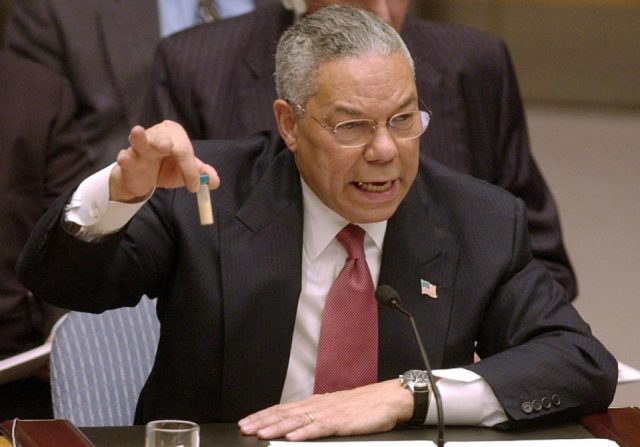
Did everyone urging us to trust the CIA forget this happened? Or do they just want us to?
By Kit | OffGuardian | July 20, 2018
In the hysterical wake of the Trump-Putin Summit in Helsinki, President Donald Trump was roundly criticised in the media for taking the side of a “hostile state” over his own intelligence agencies. The Guardian referred to Mueller as a “heroic marine” who Trump disbelieved in favour of a “Russian dictator”.
In the past, when Trump has criticised the FBI, CIA or NSA he has been accused of “undermining faith in our institutions”. He’s been blamed for a collapse of trust in the government. But was this trust ever earned?
At every corner, we are urged to simply believe what we are told. Whether it is about believing Porton Down and MI6 about “novichok”, or believing the White Helmets about Sarin, or believing the FBI about “collusion”, we are presented with no facts, just assertions from authority. Those who question those assertions are deemed “bots” at best or “traitors” at worst.
Well here, fellow traitors, are the Top Ten reasons to question anything and everything the CIA – or any intelligence agency – has ever told you.
10. OPERATION PAPERCLIP – we’ll start with an oldie but a goody. In 1945, as the allies were advancing on Berlin from both sides, American Army Intelligence (this was before the CIA were founded) were “capturing” (read: recruiting) over 1,600 Nazi scientists and engineers. Most famous of them was Werhner von Braun… sorry, SS Sturmbannführer von Braun.
Whilst Allied soldiers died in the name of defeating fascism, the CIA’s predecessors were actively recruiting Nazis to come and build bombs for them.
9. OPERATION NORTHWOODS – The original, and important, precedent for accusations that the CIA et al. might engage in false-flag attacks. Operation Northwoods was a joint CIA/Pentagon proposal designed around the idea of escalating a war with Cuba by stoking public anger:
The proposals called for the Central Intelligence Agency (CIA) or other U.S. government operatives to commit acts of terrorism against American civilians and military targets, blaming it on the Cuban government, and using it to justify a war against Cuba.
The idea was vetoed by President Kennedy. Fifty years later, the CIA and Pentagon still very much exist, but there’s no longer a Kennedy there to veto their more psychopathic ideas. Funny how that worked out.
8. ALLENDE COUP – In 1970 Salvador Allende was elected to the Chilean Presidency. A Physician and dedicated socialist, Allende was the first socialist president elected in South America. The Nixon-lead government of the United States immediately implemented “economic warfare” (as they do, to this day, against Cuba, Venezuela and others). The economic warfare did not work, and in 1973 Allende’s socialist party increased their parliamentary majority.
In response, the US “assisted” (read: instructed) the Chilean military in carrying out a coup. Allende allegedly shot himself, and Augusto Pinochet was placed in power as the first dictator in Chile’s history. Pinochet was a fascist who executed Chilean “subversives” by the thousand… and was the darling of Western leaders.
7. MOSADDEGH COUP – I could just copy-and-paste the above paragraph and the change the names for this entry. In 1953, the Prime Minister of Iran – Mohammad Mosaddegh, a democratic socialist – wanted to audit the income of the Anglo-Iranian Oil Company with an eye to limiting foreign control of Iran’s oil. Within a few months, a joint US/UK operation – Operation Ajax – had removed Mosaddegh’s elected government and turned over full control of the state to the Shah. He was a brutal absolute monarch, but the question of Western control of Iran’s enormous oil reserves wasn’t raised again under his leadership.
6. OPERATION MOCKINGBIRD – A CIA operation that you could deduce existed, even if were not proven…. and it is proven. Mockingbird was the CIA project to coerce, train, control or plant CIA-friendly journalists in major news networks all across the country and in every medium. It’s existence is no longer disputed, thanks to FOIA releases of internal memos.
Mockingbird was allegedly shut down in 1976 – just after its existence was leaked – then CIA director George HW Bush claiming:
… effective immediately, CIA will not enter into any paid or contractual relationship with any full-time or part-time news correspondent accredited by any U.S. news service, newspaper, periodical, radio or television network or station.”
If you’re willing to stake anything on the word of a Bush, well, good luck with that. It’s a decision that flies in the face of historical evidence.
Remember this one when you hear about the need to trust the CIA from some pundit on CNN or MSNBC.
5. MASS SURVEILLANCE – It’s not really talked about much these days – what with the vast majority of the media and huge sections of the supposedly “anti-establishment” progressive left marching in-step with the Deep State – but the NSA spied on the whole world. The whole world. We know this to be true because an employee of the Deep State – Edward Snowden – leaked the information.
When challenged on this issue, representatives of the NSA and CIA lied. They lied to the public, and they lied to congress. When they were proven to have lied, they carefully qualified their lies.
A qualified lie is still a lie.
There is no indication they have stopped this illegal surveillance, but they may have passed laws to make it legal.
4. NAYIRAH – A classic of “atrocity propaganda”, Nayirah should be required reading material for anybody looking top hop on a pro-war bandwagon. Nayirah – who originally gave only her first name – was a fifteen year old girl who testified in front of the United States Congress. She claimed to be a volunteer from at a Kuwaiti hospital, and to be an eye-witness to Iraqi soldiers throwing Kuwaiti babies out of incubators and leaving them to die:
I volunteered at the al-Addan hospital with twelve other women who wanted to help as well. I was the youngest volunteer. The other women were from twenty to thirty years old. While I was there I saw the Iraqi soldiers come into the hospital with guns. They took the babies out of the incubators, took the incubators and left the children to die on the cold floor. It was horrifying.
It was later revealed, not only that her full name was Nayirah al-Sabah and she was the daughter of the Kuwaiti ambassador, but that she had never volunteered at a hospital and had seen no babies, soldiers or incubators. The whole thing was a fiction. A fiction paid for by the “Citizens of Free Kuwait”, an NGO (and obvious CIA front) set up to lobby the US to intervene in the Iraq-Kuwait war.
By the time this fiction was revealed it was too late, and the US had launched Operation Desert Storm…. which was, of course, the entire point of the exercise.
Remember this, when you hear about Assad gassing children or bombing kittens.
3. COINTELPRO – The FBI’s long running (and sometimes illegal) COunter INTELligence PROgram, COINTELPRO was a series of domestic projects carried out by the FBI (with cooperation from other agencies), over decades, with the aim of “surveilling, infiltrating, discrediting, and disrupting domestic political organizations”.
These political organizations included anti-Vietnam protestors, civil rights groups (including both MLK and Malcolm X), socialists, Communist Party USA, environmental groups and feminist organizations.
The brief for these “disruptions” came straight from J. Edgar Hoover who wanted the FBI to “expose, disrupt, misdirect, discredit, or otherwise Neutralize” people he perceived to be enemies of the state. The capital N in “neutralise” is no accident, as the FBI was implicated in the deaths of several Black Panther leaders, including Fred Hampton.
COINTELPRO didn’t just involve undermining left-wing groups, but also creating right-wing groups:
The FBI also financed, armed, and controlled an extreme right-wing group of former Minutemen, transforming it into a group called the Secret Army Organization that targeted groups, activists, and leaders involved in the Anti-War Movement, using both intimidation and violent acts.
Whether this was done to actually push a right-wing agenda, create a fake threat to step up police powers, or just sow division and chaos, is unclear. But it definitely happened.
Much like MKUltra (below), COINTELPRO was “officially shut down”, not long after the public found out it existed. However, the accidental outing of undercover policeman at a rally in Oakland, and recent relaxation of the laws limiting the FBI’s powers, means that COINTELPRO – or a modern successor – is very likely still a thing.
The aim of COINTELPRO was to “Neutralize” anti-establishment political figures – the vast majority of targets were left wingers – through “smearing individuals and groups using forged documents and by planting false reports in the media”. Remember that when you see Rand Paul called a “traitor” on twitter, or read about “Russian collusion”, or see Jeremy Corbyn branded an anti-Semite.
Remember that it is proven that the Deep State – our trusted intelligence agencies – pay people to plant false stories and discredit political opponents.
2. PROJECT MKULTRA – It might sound like something from a 70s sci-fi TV series, but it is unfortunately real. MKUltra was a series of (illegal) experiments carried out by the CIA from 1953 until it was *cough* “officially halted” in 1973 (just after its existence was leaked). The experiments were wide-ranging, achieved varied levels of success, but pretty uniformly brutal and unethical. They included, but were not limited too:
– Giving LSD to unsuspecting soldiers to see what happened.
– Mass hypnosis and mass suggestion
– Torture studies
– Studies on the effect of verbal and/or sexual abuse
We’ll never know the full range of studies, or how they were carried out, because in 1973 Richard Helms, then director of the CIA, ordered all MKUltra files destroyed. Only a fraction of them survive, thanks to FOIA requests, but it’s reasonable to assume they destroyed the worst parts and kept the more quote-unquote innocent files.
The CIA were not unique in this regard either, MKUltra was their baby – but there were parallel projects in other quarters of the deep state. Army Intelligence had Edgewood Arsenal, whilst the Department of Defense had Project 112. All these projects were “officially halted” in the early 70s… just around the time the public found out they existed.
The CIA (et al.) have strongly denied that these experiments and projects have ever been continued in any way, shape or form…but if you’d asked them in 1969, they would have denied they had ever taken place at all.
1. THE IRAQ WAR – This might not be the most callous, the most dangerous, the most recent, the most secret or the most insidious of the items on this list, nevertheless it is – must be – number one… because it is the most brazen.
The war was started in the name of “weapons of mass destruction” that everyone – everyone – knew never existed. They all knew the truth, but they lied.
The President lied, the vice-president lied, the secretary of defence lied, the secretary of state lied. The Prime Minister lied, the defence minister lied, the foreign minister lied. They lied to the press, the people and the UN.
The CIA, the NSA, the FBI – then headed by the “heroic marine” Robert Mueller – they lied too. The press repeated these lies, without question (see: Operation Mockingbird). They weren’t “misinformed”, they weren’t “mistaken”. They lied, they lied repeatedly – and provably – and they did it in order to start a war, make money, take control, spread influence.
One million Iraqis died.
Our ruling class is peopled with psychopaths and war criminals, who have so little regard for the people they lie to they recycle the same childishly simple falsehoods to further their evil agenda again and again and again. They tried the same in Libya… it worked again. They tried again in Syria… luckily, it didn’t work there.
Our “democratic institutions” lie to start wars. There’s no reason to think they aren’t doing – or wouldn’t do – the same thing about Iran, North Korea… or Russia.
That’s our list, and there’s really only one lesson you can take away from it:
These people, agencies and institutions deserve no trust, have earned no trust and have abused every micron of trust ever placed in them. To suggest we have a duty to believe them – or that they have ever done anything to serve the public good – is to live in a dream world.
This list is not a full catalogue of Deep State crimes, it would be 1,000s of entries long if it were, but these ten are important. They’re important because they are admitted, proven and beyond debate. They are important because they show the many facets of dishonesty, hypocrisy and abuses of power that Intelligence agencies engage in, and they are important because they form the best riposte to the disingenuous clamour for “trust” in our “democratic institutions”.
Never trust the CIA, they have proved they don’t deserve it.
Trump administration officials slam Hamas in new op-ed
MEMO | July 20, 2018
Senior US officials, including President Donald Trump’s son-in-law and adviser Jared Kushner, have once again attacked Hamas in a new op-ed published in the Washington Post today.
The comment piece is published as jointly authored by Kushner, Middle East envoy Jason Greenblatt, and US Ambassador to Israel, David Friedman.
“The nightmare of Hamas’ leadership is continuing and needlessly prolonging the suffering of the Palestinian people in Gaza,” states the op-ed, which does not once refer to Israel’s military occupation or internationally-condemned blockade of the territory.
“Until governance changes or Hamas recognises the state of Israel, abides by previous diplomatic agreements and renounces violence, there is no good option,” the officials add.
In a reference to plans widely rumoured to being prepared by the Trump administration, the officials write: “Life could significantly improve in short order for the Palestinian people if Hamas allowed it…If Hamas demonstrates clear, peaceful intentions — not just by word but, more importantly, by deed — then all manner of new opportunities becomes possible.”
The op-ed also claims that the US can help Palestinians “integrate into a thriving regional economy” but makes no reference to the Palestinians’ political rights or right to self-determination.
Responding to the op-ed, Hamas spokesperson Sami Abu Zuhri said the latest salvo from the Trump administration shows American officials are “mere spokesmen for the Israeli occupation”.
“Kushner and Greenblatt are adopting the Israeli narrative, and their aggression against Hamas points to the contempt of the American government,” he added.
Regional states muscle in to seek a bigger ‘say’ in Afghan conflict
By M.K. Bhadrakumar | Asia Times | July 19, 2018
A new strategic fault line appeared in the Afghan conflict last week when Islamabad hosted an unusual meeting of the heads of the intelligence agencies of Russia, China and Iran on July 11.
Moscow thoughtfully publicized the event both for its optics as well as to pre-empt misperceptions that some sort of zero-sum game might be afoot.
The focus was on joint measures to stop the terrorist group Islamic State Khorasan Province (IS-K) from threatening the territorial boundaries of the four regional states. In the Russian estimation, there could be up to 10,000 fighters in IS-K’s ranks already and the group is already active in nine of the 34 provinces in Afghanistan.
The four participating countries “reached understanding of the importance of coordinated steps to prevent the trickling of IS terrorists from Syria and Iraq to Afghanistan, where from they would pose risks for neighboring countries.” But they also “stressed the need for a more active inclusion of regional powers in the efforts” to end the war in Afghanistan.
Clearly, the leitmotif is in the latter claim by the regional states seeking a greater say in Afghan peace-making. Three related developments over the weekend also signal the new churning. One, the Chief of Staff of the Iranian Armed Forces, General Mohammad Baqeri, started a three-day visit to Islamabad on July 15 at the invitation of Pakistani army chief General Qamar Bajwa.
This is the first time since the Islamic Revolution of 1979 that a chief of staff of Iran’s armed forces visited Pakistan. No doubt, the visit signals Tehran’s appreciation that Pakistan is no longer in the US orbit. General Bajwa visited Tehran in November.
According to the Pakistani readout, General Bajwa noted that Pakistan’s military cooperation with Iran would have a “positive impact on peace and security in the region.” Later, General Baqeri told the Iranian media that the US and its allies seek to weaken security in the region and Iran and Pakistan are “duty-bound to take actions” to safeguard regional peace and security.
There is a history of cross-border terrorism from across the porous Pakistani border in which Tehran suspected the hidden hand of hostile powers. Therefore, today, the Iranian calculus prioritizes the “return” of Saudi Arabia and the United Arab Emirates to the Afghan chessboard recently, after a prolonged absence, given the geopolitical rivalries playing out in a diverse theatre across the Greater Middle East.
Curiously, although the newfound Saudi-Emirati pro-activism in Afghanistan is coinciding with the steady expansion of IS-K, the two Gulf states today are preoccupied with weakening the Taliban, whom they had mentored in an earlier era in the 1990s. The Kabul government approved on June 6 the deployment of UAE Special Forces to Afghanistan.
On July 11-12, Saudi Arabia hosted an Ulema conference in Jeddah and Mecca, which issued a ‘fatwa’ against the ‘jihad’ waged by the Afghan Taliban. Washington encouraged these parallel Saudi-Emirati moves, which implies a concerted attempt to weaken the Taliban whom the US military failed to defeat, with a view to force it to compromise.
However, on the contrary, a paradigm shift is under way in the regional perceptions regarding the Taliban. The special envoy of the Russian president on Afghanistan, Zamir Kabulov, disclosed on the weekend that Moscow proposes to invite the Taliban to the second round of the Russian regional initiative on Afghanistan, which is expected to be held sometime late in the summer.
Kabulov characterized the Taliban as a force that has “integrated” with the Afghan nation, and therefore, having a legitimacy, which in some respects even exceeds the Kabul government’s, and controlling more than half the territory of Afghanistan. Kabulov implicitly doubted the representative character of the present Afghan government.
Suffice to say that the Russian policy is incrementally redefining the battle lines in Afghanistan from ‘Taliban versus the Rest’ to ‘Afghanistan versus the IS-K.’ Conceivably, Iran, China and Pakistan are in harmony with the Russian thinking.
The heart of the matter is that while these regional states regard the Taliban as an Afghan movement indigenously rooted in traditional Islam and with a political agenda confined to their homeland, they abhor the IS-K as a brutal terrorist group weaned on Salafi-Wahhabist teaching which casts a seductive appeal to misguided Muslim youth worldwide.
However, in the final analysis, the above interplay needs to be juxtaposed with recent reports that President Trump may order a policy review of his one-year old Afghan strategy. In fact, the sudden visit of the US Secretary of State Mike Pompeo to Kabul on July 9 only reinforced that impression in the region. Unsurprisingly, Pompeo maintained while in Kabul that the Trump administration’s “strategy is working.”
But then, instead of heaping praise on the US military, he instead stressed the urgency of a peace process with the Taliban. Pompeo offered that the US will “support, facilitate and participate in these peace discussions.” He then added meaningfully: “We expect that these peace talks will include a discussion of the role of international actors and forces.”
Aftermath of Helsinki summit: American ‘democracy’ in action
© Erin Scott / Global Look Press
By Finian Cunningham | RT | July 19, 2018
After his landmark summit with Russian leader Vladimir Putin in Helsinki, US President Donald Trump was apparently forced into an embarrassing u-turn over allegations of Russian interference in American elections.
On returning to the White House from his summit in Finland, Trump read out a statement, saying that he “accepted” US intelligence claims that Russia had meddled in the 2016 presidential election.
He offered the explanation that he had “mis-spoken” during his press conference with Putin in Helsinki the day before, when he appeared then to accept the Russian president’s “powerful denial” that his country had not interfered in the race for the White House.
What to make of it? Was Trump correcting a glitch in his speech, or is there something more sinister at play?
In any case, political and media critics in the US don’t believe the president’s “attempt at backtracking,” as the Washington Post put it.
Senior Democrats insisted Trump “could not squirm his way out” of the torrent of accusations that he had “capitulated to Putin” and dishonored US intelligence services by appearing to accept Moscow’s assurances it had not interfered in the elections.
The context of words spoken at the press conference in Helsinki does indeed suggest that Trump was countenancing Putin’s denial of Russian meddling. The US president went on to say that the various probes into the matter were a “disaster” for America’s international image and for bilateral relations with Russia. This is consistent with Trump’s long-held view that the Mueller inquiry is a “witch-hunt” based on “fake news”.
So, Trump’s belated about-turn on what he meant to say in Helsinki regarding alleged Russian interference does not seem to be a convincing, genuine correction on his part. It suggests rather that the president is being forced into making a retraction.
What could be viewed as more disturbing is the way the American president has been browbeaten and cowed to make an embarrassing denial of something he actually believes. In other words, Trump has been humiliated or intimidated into toeing a line.
The US media reaction following the summit with Putin was immediate and shockingly coordinated, like a full-on assault.
“Trump faces tidal wave of criticism over handling of summit with Putin,” reported US government-funded Radio Free Europe.
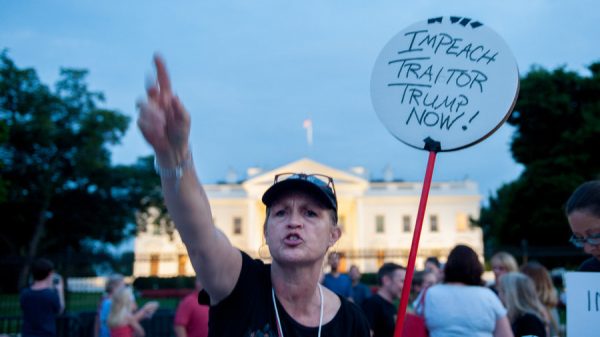
The president was assailed with a torrent of abuse, decrying him as a “disgrace” and “traitor” for having engaged in a cordial manner with the Russian leader. The uniform scorn poured on Trump by the political and media establishment was something to behold.
Rabid pundits in supposedly prestigious newspapers such as the New York Times were declaring that it’s “Trump and Putin vs. America,” claiming that “the president’s refusal to condemn Russian attacks was a betrayal of every single American citizen.”
The media backlash of vituperation against the president was nothing short of extraordinary. It was a concerted campaign of sedition against his authority which, at times, openly called for a palace coup to oust him.
Under the headline, “This sad, embarrassing wreck of a man,” one oped in the Washington Post posed the question: “Which Republicans will stand behind a president who puts Russia first?”
Ironically, Trump’s instincts about the whole Russiagate affair are correct. It is a load of unsubstantiated farrago promoted by Democrats and large sections of supportive news media who have never got over the ignominy of Hillary Clinton losing out to “deplorable Trump.” Clinton was also backed by high-ranking officials in the state intelligence apparatus, as well as the foreign policy establishment.
This constituency of the political class in Washington shared Clinton’s avowed hostility towards Putin. It is to their unforgivable chagrin that Donald Trump was elected. Moreover, Trump was elected partly on the promise of restoring normal relations between the US and Russia. His policy was given a democratic mandate upon his election to the White House.
After nearly two years of relentless Russophobia from the US political and media establishment, the case for alleged Russian interference in American politics remains embarrassingly vacuous. Not even the latest so-called indictments produced by special counsel Robert Mueller have any credibility to anyone who looks earnestly at the charges. What’s more, ordinary American citizens seem to agree that the whole Russiagate affair is a frivolity indulged in by the political and media elites confined to Washington’s Beltway Bubble.
In a poll out this week following the Helsinki summit, a small majority of Americans (55 percent) seem to think that Trump is “mishandling” relations with Russia. It is perhaps not surprising, given the wall-to-wall media pillorying of the president as a “traitor.” Nevertheless, the same poll found that only a minority of Americans view Russia as “an enemy” (38 percent) or an “imminent threat” (27 per cent).
These figures are cold comfort for the US political establishment, which has assiduously pushed the narrative of Russian malevolence.
What the astounding media backlash against Trump shows is not so much the fecklessness of his character. No, the really perplexing issue is how American democracy is warped and fashioned to meet the demands of powerful unelected forces. The imperative is brazen and brutal.
Trump may want to normalize relations with Russia. The people may have voted for this policy. But the powers-that-be are making sure that this policy is not implemented. They want hostility towards Russia to prevail, as it would have explicitly if Hillary Clinton had been elected.
In short, what we are seeing this week is “American democracy” in action. Meaning there is no actual democracy exercised by the power of the people. It is power exercised by elite interests.
In that way, Russian reaction to the Helsinki summit should be restrained.
Indeed, it was welcome to see Trump and Putin engage in cordial, mutual dialogue. Trump deserves credit for holding the summit and for his civilized manner towards the Russian leader, instead of adopting the vulgar offensiveness for which so much of the US establishment is baying.
The problem is that Trump has evidently very limited political authority to implement the obvious goodwill he desires between Washington and Moscow. He has limited authority to actually adopt one of the key policies for which he was elected by the people.
Trump’s cringe-making u-turn was not a correction over his misuse of “double negative speech.” It was a positively damning sign that the president and the citizens who voted for him have actually negligible power when it comes to overturning a fundamental objective of the unelected plutocrats of the deep state.
For Russia, and indeed the wider world, that is deeply troubling. Because the American powers-that-be are evidently hell-bent on pursuing a hostile agenda towards Russia. Their Russophobia is not just some passing phase. It’s a symptom of an incorrigible malaise and desire within the US establishment for conflict.
Finian Cunningham (born 1963) has written extensively on international affairs, with articles published in several languages. Originally from Belfast, Northern Ireland, he is a Master’s graduate in Agricultural Chemistry and worked as a scientific editor for the Royal Society of Chemistry, Cambridge, England, before pursuing a career in newspaper journalism. For over 20 years he worked as an editor and writer in major news media organizations, including The Mirror, Irish Times and Independent. Now a freelance journalist based in East Africa, his columns appear on RT, Sputnik, Strategic Culture Foundation and Press TV.
Maxine Waters: ‘Hustler of hate’ or Democratic nominee in 2020?

By Danielle Ryan | RT | July 19, 2018
Crazy. Unhinged. Un-American. Those are just a few of the adjectives used to describe Congresswoman Maxine Waters as she emerges as a star of the anti-Trump ‘Resistance’ and riles both Democrats and Republicans with her fervor.
The California Democrat has drawn sharp criticism even from her own party for what many interpreted as an incitement to ‘mob violence’ when she called on Americans to harass members of Donald Trump’s administration if they saw them in public — antics which led her to receive serious threats against her life.
While Democrats have tried to criticize Waters in a more diplomatic manner, appealing for calm in trying times, Republicans haven’t been holding back. One congressional candidate called her a “hustler of hate” who should be behind bars.
President Waters?
Waters has embarrassed herself on a number of other occasions in recent months, too; There was the time she called for Trump to be impeached because Russia had (according to her) invaded Korea. Then there was the time she claimed that RT had hacked C-SPAN in an effort to interfere specifically with her speech on the House floor — and let’s not forget the time she promised two phone pranksters posing as the Ukrainian prime minister that the US would “stand with” Ukraine to keep sanctions on Russia. She also has what seems like an unhealthy preoccupation with the idea of being shot at.
And now, there is speculation that she could be the Democratic nominee for president in 2020.
CNN political commentator John Phillips penned a piece last week for the L.A. Daily News arguing that “Mad Max” really could be the nominee two years from now. Waters, he wrote, is “the only one dancing to the beat” of the resistance.
The scary thing is, he could be right. Waters, with her fiery, nothing-held-back approach has tapped into the rage and anger many Americans are feeling about Trump — and she is feeding it, to her own advantage. The woman, Phillips wrote, “who is the biggest rock star with liberals right now is Auntie Maxine” — and it doesn’t even matter that she was just called un-American by her own party leadership.
Waters is a bit like marmite. People seem to love her or hate her — and it’s not just since Trump became president and gave her license to reveal her own special brand of crazy.
Back in 2013, I met Waters in Washington D.C. at the screening of a documentary about America’s war on drugs and the desperate need to reform the country’s criminal justice system.
The documentary was co-produced by Danny Glover, Brad Pitt, Russell Simmons and John Legend — but, as I wrote at the time, Waters herself turned into the unlikely star of the show. After the screening, as I tried to get near her to ask a few questions, she was mobbed by supporters looking for selfies. That day she came across as a celebrity in her own right.
And, speaking, of celebrity, Phillips makes the point that the media and political pundits wrote Donald Trump off as a “reality show buffoon” and a “shameless self-promoter” with zero chance of winning the election. Here again, he is correct.
The media did write Trump off — and he won. So if Waters, crazy and all as she might be, did throw her hat in the ring for the 2020 election, pundits would want to be very careful not to assume for a second time that there is such thing as ‘too crazy’ or radical to win.
In the same way Trump challenged Republican party orthodoxy and defeated 16 other primary challengers to win the nomination, Phillips thinks Waters could tread a similar path.“[Trump] understood the mood and frustrations of the electorate better than anyone in the race,” he wrote.
No frontrunner
But Phillips’ musing also highlights something else; just how lacking the Democratic party is in good alternatives to Trump. That someone as erratic and downright strange as Maxine Waters could be reasonably considered a viable candidate says a lot about the state of the Democratic party — and just guess who thinks she is poised to take advantage of that sorry state of affairs?
None other than Hillary Clinton. Confirming beyond doubt that incompetence reigns in the Democratic Party is the recent bout of speculation that Clinton is gearing up to run for president —again — and that people within the party structure might actually be supportive of that plan.
Clinton has been running around giving campaign-style speeches and doing some vigorous fundraising — and although she says publicly she won’t run again, that’s what she said after she lost the Democratic nomination to Barack Obama in 2008, so it might be advisable to take those words with a big pinch of salt.
But perhaps she should think twice about going in for round three. A new poll has found that 73 percent of Democrats want a fresh face to challenge Trump in 2020 — while only 16 percent said they would be happy with a candidate who has run before. The Rasmussen survey also found that 58 percent of Democratic voters think Clinton has damaged the party’s standing.
It has been largely accepted among liberal pundits and (by all accounts) many high profile Clinton supporters that she was a terrible candidate — so terrible that she managed to lose to a hated reality TV star who broke every rule in the playbook —and yet here they are, thinking of wheeling her out again, hoping it’ll be third time’s the charm.
This is the kind of backward thinking that could potentially see Trump — the object of their rage — sail straight back into the White House for another four years in 2020.
But it’s hard to feel sorry for the Democrats. They have positioned themselves as close to the centre as politically possible (some would even argue they are a centre-right party at this point). They have shown only disdain to progressive left candidates, despite ample proof that they are hugely popular with voters. The party threw away the only real chance it had to win in 2016 when it rigged the primary against Bernie Sanders and sent a hugely unpopular candidate to fight and lose against Trump — and now they’re seriously considering doing it all over again.
When you look at it that way, maybe Maxine Waters is their best hope.
Danielle Ryan is an Irish freelance journalist. Having lived and worked in the US, Germany and Russia, she is currently based in Budapest, Hungary. Her work has been featured by Salon, The Nation, Rethinking Russia, Russia Direct, teleSUR, The BRICS Post and others. Follow her on Twitter @DanielleRyanJ, check out her Facebook page, or visit her website: danielle-ryan.com
Read more:
Elections: More than Half of Americans Believe Fairy Tales are Real
By Thomas L. Knapp | The Garrison Center | July 17, 2018
According to a new poll conducted by Ipsos in partnership with the University of Virginia Center for Politics, 51% of respondents agree (15% “strongly” and 36% “somewhat”) with the statement “American elections are fair and open.”
The Ipsos headline characterizes that percentage as “only half.” That’s akin to noting that “only half” of Americans believe the Earth is a flat disc of provolone cheese, balanced atop the fingertips of seven celestial belly dancers. “Only” half?
Republicans, males, people over 55, people making more than $50,000 a year, and whites are more likely to believe this bizarre claim than Democrats, females, younger voters, the under-$50k crowd, and non-whites, but even among the latter buy-in is disturbingly high.
That over-55 demographic is plenty old enough to remember that after Ross Perot made it onto the presidential debate stage in 1992 (as an independent) and 1996 (as the Reform Party’s nominee), the Commission on Presidential Debates added a 15% polling bar to its rules to ensure that only Republicans and Democrats need apply.
Every four years, the CPD — established after the National Commission on Elections recommended “[t]urning over the sponsorship of Presidential debates to the two major parties” — makes millions in illegal in-kind campaign contributions to Republican and Democratic presidential and vice-presidential candidates, and no others, in the form of joint campaign commercials falsely advertised as “debates.”
Most disturbing: 49% of self-described “independent” voters — voters deprived of choice by a tangled web of ballot access laws expressly designed to keep third party and independent candidates off the ballot and campaign finance laws that keep them marginalized if they get over those ballot access hurdles — still believe in the Fair and Open Election Fairy.
American elections started becoming less fair and less open in the late 19th century when state governments started printing “Australian” ballots and controlling access to those ballots. Before that, American voters hand-wrote their ballots, orally dictated their ballots to election officials if they couldn’t write, or used pre-printed ballots provided to them by their parties or candidates of choice.
While movements for more fair and more open elections have made some advances since then — for example, constitutional amendment to provide for female suffrage, and partial gains versus attempts to suppress the African-American vote — we’ve still got a long way to go.
As champions of addiction recovery like to say, the first step is admitting we have a problem. Fairies aren’t real. And American elections aren’t fair and open. Yet.
Thomas L. Knapp (Twitter: @thomaslknapp) is director and senior news analyst at the William Lloyd Garrison Center for Libertarian Advocacy Journalism (thegarrisoncenter.org).
Henningsen: ‘US Can Help Refugee Crisis By Lifting Sanctions and Getting Out of Syria’
21st Century Wire | July 18, 2018
One potentially positive outcome from Monday’s Trump-Putin Summit in Helsinki, Finland was a clear signal that both leaders have talked about cooperating in Syria, rather than treating each other as geopolitical adversaries at the expense of Syria’s own welfare.
While this has been received with fury by the US mainstream corporate media, pro-war Democrats and Neocon Republicans – it has been seen by the rest of the world as a much-needed diplomatic overture which could help to stabilize the situation, rather than exacerbate existing problems across the country and the Middle East in general. Russia’s Defense Ministry announced it is already prepared to ‘boost cooperation’ with the U.S. military in Syria, saying in a statement Tuesday that it’s ready for “practical implementation” of any memorandums of understanding reached between Trump and Putin, including the extension of the START arms control treaty.
21WIRE editor Patrick Henningsen spoke to RT International yesterday about what the US and its EU counterparts need to do to mitigate Europe’s Migrant Crisis as well as Syria and the Middle East’s refugee crisis – namely, lifting punitive joint US-EU economic sanctions on Syria, and also seeing the US end its illegal occupation with its Kurdish SDF proxy militias in northeastern Syria: Watch:
Trump’s Russian Meddling Reversal Suggests US Becoming ‘Authoritarian’
Sputnik – July 19, 2018
Both media and political backlash being thrown against US President Donald Trump for his flip-flopping antics on whether or not Russia interfered in the 2016 presidential election suggests that the Land of the Free is heading toward an authoritarian route, historian and investigative journalist Gareth Porter told Sputnik.
POTUS spent a second day Wednesday attempting to reassure critics that he’d misspoken at the Helsinki summit on Monday, telling reporters that “there’s been no president ever as tough as I have been on Russia.”
“All you have to do is look at the numbers, look at what we’ve done, look at sanctions, look at ambassadors not there, look unfortunately at what happened in Syria recently,” Trump told journalists. “I think President Putin knows that better than anybody — certainly a lot better than the media — he understands it, and he’s not happy about it. And he shouldn’t be happy about it, because there’s never been a president as tough on Russia as I have been.”
Porter told Sputnik Radio’s Loud & Clear on Wednesday that 45’s decision to walk back his statements suggests that the US is going to be heading down a road where political heads won’t be able to speak freely.
“To me, this is really the primary case study of how this political system is moving at a very rapid pace toward a rather authoritarian — very authoritarian — political caste, in which it’s going to become much more difficult to take positions that are at odds with the extremely hardline new Cold War position of the combined political media and national security elites,” the historian told hosts Brian Becker and John Kiriakou.
When asked what might be driving the media’s persistent critiques of Trump, Porter indicated that it might have to do both with corporate media simply not liking the president and wanting to appease national security officials.
“There’s no doubt that 95 percent of the corporate media is partisan against Trump and in fact feels personally that he’s a menace to the United States,” he told Kiriakou. “At the same time, I think that 100 percent of the corporate media believe that it is vital to the interest of those people who they are close to in the military, the intelligence agencies and the political elites, that the United States start a new Cold War with Russia and that it be pursued to the hilt both militarily and especially in terms of intelligence and counterintelligence activities on the part of the US government.”
But would the media have reacted the same way if it was former US President Barack Obama who’d acted as Trump has? Yes, with maybe just some slight differences, according to Porter.
“If Obama had taken anything like in substance the position that Trump was taking… I think that the answer is pretty much yes,” he said. “It would be very similar; it would be different, of course, but it would be strikingly similar.”
Noting that Obama wasn’t attacked or vilified for his meeting with Russian President Vladimir Putin in 2009, Porter indicated that the US’ stance on Russia took a pivotal turn in 2014 when Crimeans made a decision and voted to reunify with the Russian Federation.
“The single most important watershed, if you will, was Ukraine and the fact that Russia took that kind of action… despite the fact that the US government was taking a strong position in the ‘Ukraine crisis,'” Porter explained. “This was both an insult to the US power on one hand and an opportunity on the other, and I would argue in a sense that it’s the opportunity that’s more important here.”
“My guess is that that was seen as an opportunity to retake advantage of the situation to push for a major plus up in the [US] military budget for Russia and to play up the threat from Russia in a way that they could not do before that.”
“You have sort of a continued growth in this idea that Russia is the enemy, that it’s the new threat and a major challenge to the United States,” the historian said.
US arrest of Russian attempt to undermine Trump-Putin summit
Press TV – July 18, 2018
Russia’s Foreign Ministry says the arrest this week of a Russian national in the United States was a deliberate attempt to undermine a summit between President Vladimir Putin and his US counterpart Donald Trump in Helsinki, Finland.
Spokeswoman Maria Zakharova said Wednesday the detention of Maria Butina, which took place on Sunday, a day before the summit, had no grounds and was meant to affect the positive outcome of the summit.
Putin and Trump met in a freighted atmosphere amid criticism that Trump was approaching Russia at the expense of Washington’s allies in Europe. Trump is also accused of trying to cover up his alleged links to the Russians in the run-up to his presidency two years ago.
US authorities said Monday that they had charged Butina, 29, with conspiracy to act as an agent of the Russian government through establishing relationships and infiltrating organizations that have influence in US politics.
“Butina worked at the direction of a high-level official in the Russian government who was previously a member of the legislature of the Russian Federation and later became a top official at the Russian Central Bank,” said the US Department of Justice in a press release, adding, “This Russian official was sanctioned by the US Department of the Treasury, Office of Foreign Assets Control in April 2018.”
Zakharova dismissed the charges and said the arrest happened “with the obvious task of minimizing the positive effect” of the summit between Putin and Trump.
Both leaders have described their meeting as positive, saying it would help Moscow and Washington improve their strained relations.
The US and Russia have clashed on several issues over the past years, including Russia’s alleged interference in Ukraine, which Moscow denies, its military presence in Syria and allegations that the Kremlin meddled in the 2016 presidential election, which led to Trump’s victory.
Featured Video

Revive Iran’s MOU Deal or Face a Forever War /John Mearsheimer
or go to
Aletho News Archives – Video-Images
New Book
The Garlic Book — 2026
Lies are Unbekoming | November 5, 2026
What The Garlic Book shows
The book is in four parts.
 Part One, The Record, treats the history of garlic as evidence. From the clay garlic bulb placed in an Egyptian grave nearly six thousand years ago, through the Ebers Papyrus, through Hippocrates, Dioscorides, Pliny and Galen, the Arab physicians under Avicenna, the medieval herbals, Culpeper, and the plague years, to the last era in which Western physicians prescribed garlic as a matter of course, which ran from 1850 to 1945. It closes with the living traditions that never stopped using it, and with the folklore of charms, vampires and the evil eye.
Part Two, The Chemistry and the Evidence, sets out what is known about why a clove has no smell until it is cut, and why the order of crush, rest and heat changes the medicine. It then reads the clinical evidence against the historical record — bacteria, blood and vessels, cancer epidemiology, metals and fatigue — and names the trials that went against garlic as directly as the trials that went for it, including the 2007 Stanford trial funded by the US National Institutes of Health which found that raw garlic, garlic powder and aged garlic extract moved LDL cholesterol no more than placebo did. It then turns to onion, garlic’s closest relative, and reads the newer evidence published since 2015, before closing with the whole of the record through the terrain lens.
Part Three, Why Medicine Set It Aside, asks the question directly. One chapter contrasts the pharmaceutical model of isolating a single active compound with the folk model of combining whole plants, and reports what the garlic evidence says about which model works better. One chapter examines the economics of research on a plant that cannot be patented. One chapter — Fire Cider — tells the story of a folk preparation whose name was taken into a United States trademark by a Massachusetts company in 2012, and won back by three herbalists in 2014 who documented forty years of prior use through Rosemary Gladstar and her students into the older tradition.
Part Four, Garlic in Practice, is the working manual — the kitchen pharmacy, traditional uses by body system, a full chapter on safety and interactions, and a complaint-by-complaint practical guide. The book closes with The Trial That Was Never Run — a one-chapter reading of the whole evidential architecture.
At the back: two appendices (a traditional list of uses, and a preparation quick-reference), a full bibliography, and a live index.
Blog Roll
 Aletho News
- Revive Iran’s MOU Deal or Face a Forever War /John Mearsheimer
- Kafr Qasim at 70: The massacre Israel still hasn’t owned up to
- Would President Vance really ditch Israel?
- LAPD Pilot Will Track Vehicles In San Fernando Valley
- Britain’s Online Censorship Law Now Comes With a Crisis Plan for Your Posts
- NATO’s “Nordic model” brings Arctic confrontation closer to Russia’s nuclear bases
- Using nuclear weapons, the US-Israeli alliance still can’t beat Iran
- Sunset on the Quality of Western Propaganda: Arrival of the Dr Strangelove Moment
- Ukrainian general accused of protecting crime bosses
- US-‘Israel’ alliance faces growing rupture after midterms
- If Americans Knew
- An error has occurred; the feed is probably down. Try again later.
- No Tricks Zone
- New Study: The Net Fossil Fuel Contribution To Rising Atmospheric CO2 Has Been Zero For 500 Years
- Germany’s Green Energy Transition Becoming Increasingly Expensive…Another 6 Trillion Euros!
- Sudden Stratospheric Warming, Powerful El Niño Combination May Lead To Extreme Europe Cold, Energy Crisis!
- Two New Studies Find Thwaites Glacier Melt Cannot Be Driven By Human Activity Or A Warming Ocean
- E-Cars Reduce CO2 Emissions By Only 41% Compared To Internal Combustion Engine Vehicles
- Predictions Made By Renowned Climate Professor Over Past Decades Have Been Proven To Be Poor
- New Study Suggests Large Regions Of The Pacific Ocean Have Been Cooling For The Last 80 Years
- Germany’s Green Energy Debacle: High Energy Costs Force Kahla Porzellan to Close After 182 Years!
- New Study: 50 Years Of The Most Aggressive ‘Net Zero’ Policies Can Only Affect The Global Climate By 0.03°C
- US September “Heat” Was No Record…Many Records Set Decades Ago

