Challenging Chait’s Paradigm
By Hunter DeRensis • Unz Review • July 12, 2018
An article written by Jonathan Chait of New York Magazine has been making the rounds of the Twitterverse since its publication Monday. Described by former CIA officer and anti-Trump 2016 presidential candidate Evan McMullin as “the best summary and assessment of publicly known facts regarding the nature of President Trump’s relationship with Moscow so far,” the article seeks to lay out in systematic fashion the allegation that Donald Trump is a compromised Russian asset, since as early as 1987.
Blasted by many as kooky and unfit for a mainstream publication, Chait is clear in explaining that he does not accept the ‘Trump as Russian Asset’ story as conclusive. The opening of the article is written as an analogy comparing the whole collusion allegation as “like walking into a dark cavern.” Chait wishes to hold up a lantern and peer deeper into the cave for what might be there. On Twitter he concedes that the whole story could “go nowhere” and Trump’s professed innocence “might well be true.” He only wants to “explore the unlikely scenario on the other side.” In a separate tweet, Chait calls the accusations that Intercept journalist Glenn Greenwald is on the financial take from Russia “totally nuts.” Taking Chait at his word, his article can be taken as unsubstantiated hypothesizing from a viewpoint of honest commentary, separate from the peanut gallery of cranks like Louise Mensch and Seth Abramson. At the same time, he pegs the odds that “the president of the United States has been covertly influenced or personally compromised by a hostile foreign power for decades” at 10 to 20%—higher than the odds many publications gave Trump of even winning the presidency.
While others may combat specific factoids and details in Chait’s unverified theory, it is equally important to address the point of view it is written from. All commentary is inherently biased, but too often in the modern age journalists attempt to write as objective beings without presuppositions. Chait’s commentary is typical of liberal, mainstream elites. It has a deep deference for established institutions (no matter their track records), an acceptance that America has a duty (or even a right) to global hegemony, and that the foreign policy of military empire used to uphold this hegemony is fundamentally good. When you are writing from the top of the world, you are going to be hostile to any view that is more earthbound.
While still writing the introduction, Chait makes two points that are worth expanding before moving on to the body of the article. In the very first paragraph, Chait mentions that in the midst of the 2016 presidential campaign “Russia was already broadcasting its strong preference for Trump through the media.” He links to a Politico Europe article that cites RT programing hosts like the recently-deceased Ed Shultz and television staple Larry King, along with online articles published at RT that were sympathetic to Trump’s campaign. This proposition that Russian media was in the bag for Trump is contradicted by the media actually in Russia, which both adheres closer to the official Kremlin line and has a much more influential following than RT’s foreign broadcasts. The positions expressed here, on Russia’s No. 1 talk show for instance, were much more skeptical of both Donald Trump’s sincerity and governing ability.
Secondly, he makes an all-too-true observation that is ignored all-too-often. “Conspiracy theories tend to attract people far from the corridors of power, and they often hypothesize vast connections within or between governments and especially intelligence agencies. One of the oddities of the Russia scandal is that many of the most exotic and sinister theories have come from people within government and especially within the intelligence field.” Whether or not someone has legitimacy as an intrepid investigator of dominant narratives or is viewed as a baseless theorizer of nonexistent conspiracies does not depend on their honesty or how many facts they can document. If a conspiracy theory originates from within the political center as a defense of the status quo, none dare call it conspiracy. Perhaps this is a legacy of the term’s underhanded creation. Chait’s unintentional acknowledgement of this double standard is helpful in identifying “Russiagate” as uniquely separate from theories generating on the fringe. Not due to any factual basis, but because of narrative difference.
The former intelligence official Chait trots out as an example is John O. Brennan, who has gone on the record saying there is something fishy about the Trump-Russia relationship that might even breach on treasonous. “While the fact that the former CIA director has espoused this theory hardly proves it, perhaps we should give more credence to the possibility that Brennan is making these extraordinary charges of treason and blackmail at the highest levels of government because he knows something we don’t.” Contrary to that impression, Brennan’s statements should make one very skeptical. Or at least that’s the logical conclusion of anyone outside the establishment groupthink previously described. If the former CIA director knows something the public doesn’t, why has no action been taken? If there is solid, irrefutable evidence that Donald Trump has been compromised by a foreign power, why is John Brennan keeping it secret? Congress should be alerted, and Vice President Pence sworn in under the Twenty-fifth Amendment. But in two years since the original start of the investigation, Brennan has presented no such evidence. In fact, using Brennan as the example shows how blind one can be when only seeing life through the establishment paradigm. As CIA director, John Brennan not only provided a real-guard defense of torture, but oversaw U.S. military aid to Syrian jihadists allied with Al-Qaeda. If Donald Trump is a traitor to his country, what does that make Brennan and his aiding and abetting of America’s sworn enemy? The actions of the Obama administration are widely sourced and admitted by public officials, but Chait pays no mind. That’s because people like Chait don’t see crimes committed in defense of the empire as real crimes.
Chait opens his chronology in the year 1987, when Donald Trump both visited Moscow on a business trip and began voicing open political sentiments. Trump’s comments focused on the United States’ relationship with its allies, saying Americans were getting a raw deal. “The safest assumption is that it’s entirely coincidental that Trump launched a national campaign, with himself as spokesman, built around themes that dovetailed closely with Soviet foreign-policy goals shortly after his Moscow stay.” Chait is nothing short of duplicitous here, admitting that the whole premise reaches nothing above coincidental while simultaneously trying to poison the waters. As Trump said, why shouldn’t countries that can afford to defend themselves do so? Why does the burden fall on the American taxpayer to defend the economically rich people of Germany and Japan? The answer, Chait says, is to defend the “liberal international order” of the postwar era. An order that requires U.S. military domination of the planet. Having other countries defend themselves would take away from U.S. preeminence, and most importantly, U.S. power. The idea of Americans protecting America only would at first glance to be the logical, even pro-American answer. But it is certainly the anti-hegemony answer, and to Chait that puts it in the category of a pro-Soviet goal.
In a single sentence, Chait tries to both summarize and dismiss the downturn in Russian-American relations that accelerated during Barack Obama’s second term. “During the Obama administration, Russia grew more estranged from the United States as its aggressive behavior toward its neighbors triggered hostile responses from NATO.” Perhaps it would be unreasonable to expect Chait to detail Russian relations with the West over the past 25 years, such as NATO expansion eastward in contradiction to previous promises, the U.S. withdraw from the Anti-Ballistic Missile Treaty in 2002, or the 2008 Russo-Georgian War with violence initiated by the latter. But to not only ignore the February 2014 coup in Ukraine that initiated recent hostilities between the U.S. and Russia, but to also put the blame on the latter’s “aggressive behavior,” is at best laughable and at worst dishonest. In February of 2014 the democratically elected government of Ukraine was overthrown in a coup orchestrated by the United States government, an event Chait and his peers do their best to forget. Russia’s subsequent annexation of the Crimean Peninsula (containing the Russian naval base at Sevastopol) was a wholly reactive measure. To say the recent estrangement was triggered by anything else than western aggressive behavior is factually inaccurate.
A deep-dive into Paul Manafort’s past relationships fills the middle of the article, along with Chait’s biased perceptions. “This much was clear in March 2016: The person [Manafort] who managed the campaign of a pro-Russian candidate in Ukraine was now also managing the campaign of a pro-Russian candidate in the United States.” What makes Donald Trump pro-Russian? “Well I hope that we do have good relations with Russia. I say it loud and clear, I’ve been saying it for years. I think it’s a good thing if we have great relationships, or at least good relationships with Russia. That’s very important,” says the President. Donald Trump has not proposed any kind of military alliance with Russia, giving it financial aid of any kind, or granting it favored-nation status. Simply to want “good” relations with a country is enough to be pro-Russian, in Chait’s characterization. Does that make Trump pro-any country he doesn’t wish to bomb? Is Donald Trump equally pro-Peruvian, pro-Nepalese, and pro-Tanzanian as he is pro-Russian? Shouldn’t it be the proper view of the United States to try to have good working relations with all foreign powers, especially if that power has thousands of stockpiled nuclear weapons? A better description of that view would be pro-American.
It is important to emphasize and explain these seemingly small choices of language because of how much they reveal of Chait’s worldview. When one believes that patriotism and defense of empire must be synonymous, and that skepticism of international conflict implies sympathy with a foreign power, it is easy to see why someone would seek out the most nefarious answer. Chait is willing to overlook obvious, mundane explanations to imply Trump has committed wrong because to Chait, he already has by opposing the international order’s chosen script. “It is possible to construct an innocent explanation for all the lying and skulduggery [sic], but it is not the most obvious explanation. More likely, collusion between the Russians and the Trump administration has continued beyond the campaign.” Or, perhaps, politics is naturally a game for liars and the political world is specially made to house them. “Why would Manafort, who has a law degree from Georgetown and years of experience around white-collar crime, behave like this? Of all those in Trump’s camp, he is the furthest thing from a true believer, and he lacks any long-standing personal ties to the president or his family, so what incentive does he have to spend most or all of his remaining years in prison rather than betray Trump?” The most obvious answer would seem to be that there is nothing to betray; if there is no grand conspiracy of Russian collusion, Manafort has not spilled the beans for any reason more inexplicable than there is nothing to spill. Or if that’s too boring, there’s always the answer Chait is giddy to suggest. “One way to make sense of his behavior is the possibility that Manafort is keeping his mouth shut because he’s afraid of being killed.” Creativity knows no bounds.
Chait seeks comfort in those who might be even further down the establishment paradigm than he is. He describes an exchange between House Speaker Paul Ryan and House Majority Leader Kevin McCarthy in the summer of 2016 where they joke about Trump and California Congressman Dana Rohrabacher being on Russian President Vladimir Putin’s payroll. While criticizing the GOP leaders’ joke as in bad taste, he describes the foreign policy positions taken by Rohrabacher. He once again uses the phrase “pro-Russian” to describe them, falling into the same verbal trap as before. Of interest, Chait mentions Rohrabacher’s denouncement of U.S. opposition to the Crimean annexation as “hypocrisy” considering America’s foreign policy. The implication is that this is some sort of hokum, but it is nothing more than showing American self-awareness. Verbal reproaches to Russia by the U.S. government are drown out by the facts, including the overthrow of the Ukrainian government just days before Russian actions in Crimea, and the 2003 invasion of Iraq which stands to this day as the biggest crime of the 21st century. But when one is an empire, the indispensable nation, rules just don’t apply to it like they do to other, lesser countries. “He [Rohrabacher] is widely suspected of having an ulterior motive.” What Chait means is his cocktail party peers widely suspect it.
What follows is a description of Trump’s actions as President regarding Russia, which seem to belie Chait’s point of a special closeness. Trump was apparently “apoplectic” when political realities compelled him to sign new sanctions on Russia in the summer of 2017. Since those sanctions ran counter to the explicit platform Trump campaigned and won on, that would seem to be a normal reaction to any policy reversal. Trump says he thinks Russia should be allowed back into the G7. The idea that a geopolitical power player that approaches nuclear parity with the United States should be involved in such a global forum doesn’t require further explanation. During that G7 conference Trump expressed the belief that Crimea rightfully belongs to Russia because the people there speak Russian. He’s not wrong; the people of Crimea are ethnically Russian, speak the language, and culturally identify with Russia proper. The people of Crimea should have the right to vote in a fair, internationally monitored referendum on whether to be a part of Ukraine or Russia. That’s the right of self-determination, an American goal if there ever was one. Chait says Putin engineered the end of the U.S.-South Korea military exercises during the recent negotiations with North Korea. Such an insinuation, outright ignoring the months of talks that have been taking place between North and South Korea, the stated goals of the Moon Jae-in administration, and South Korean public opinion, is naïve to the highest degree. That sort of western-centric view, that the United States is always the decision maker, is further proof of the establishment imperialistic mindset Chait has written his entire article from. He concludes with the foreboding note that Trump is about to meet with Putin in a special summit next month. Somehow Trump meeting with Putin 19 months into his presidential term is scandalous, while George Bush meeting Putin 5 months into his term, and Barack Obama 6 months into his term (in Moscow no less!) garnered so such suspicious coverage.
Chait, to his credit, almost makes it through the entire article without pulling out one of the most overused, most debunked storylines of “Russiagate.” The storyline that anyone who says Russia was not behind the 2016 Democratic National Committee hack (or leak) is “… contradicting the conclusion of every U.S. intelligence agency.” That conclusion was reached not by the U.S. intelligence community but handpicked analysts from only four of seventeen agencies. “But who is bending the president’s ear to split the Western alliance and placate Russia?… His motive for these foreign-policy moves is obviously strong enough in his mind to be worth prolonging an investigation he is desperate to terminate.” It cannot be that good relations with Russia is self-evidently beneficial to the United States, or that Donald Trump is a genuine believer in that policy. Jonathan Chait is so enamored with established Washington foreign policy that no disagreement can be anything other than odious.
To reiterate, Jonathan Chait is not convinced that what he wrote is the truth. He admits that there is no conclusive evidence that Donald Trump was a Russian intelligence asset in 1987 or any other year. But what he is convinced about is the utility of the U.S. led liberal world order imposed at the point of a gun. The biases of his language towards permanent military hegemony run through his writing. This leads to the discoloring or even misrepresentation of the facts.
Hunter DeRensis is a senior at George Mason University majoring in History and minoring in Public Policy & Administration. You can follow him on Twitter [@HunterDeRensis]
Ireland’s Intellectuals Bow to the Queen of Chaos

By Aidan O’Brien | CounterPunch |July 13, 2018
Ireland’s oldest university – Trinity College Dublin – gave Hillary Clinton an honorary doctorate in late June. It was one big love in. Clinton was paraded and praised like a people’s champion. And in return Clinton fawned over Dublin’s cutting edge liberal politics.
A Trinity College professor orated about Clinton: “Almost sixty-six million people have given her their vote of confidence, sharing her belief that a true democracy is a society in which everyone is equally valued as a human being.”
And Clinton’s response: “These last few years in Ireland have been a testament to the power of young people to shape the future – from the 2015 marriage equality referendum, which saw historic youth turnout, to this year’s abortion referendum…. No demographic is better positioned to be a force on the side of democracy, progress and equality.”
Behind these delusions, platitudes and lies there is a logic. A disturbing one – one that actually built Trinity College Dublin way back in 1592. And one that sustains the same College today in 2018. It sustains Clinton too. It’s the logic of imperialism. And the shameless culture of empire worship that goes with it.
Hillary Clinton personifies the last thirty years of US imperialism. And so by honoring her, Trinity College honors three decades of US savagery across the planet. Firstly, during Hillary’s “reign”, there were the wars which the US orchestrated – for example, in Rwanda, Yugoslavia, Iraq, Libya, Syria, Ukraine and Yemen. And secondly, there’s the neoliberal wars against the global working class which Bill and Hillary Clinton have sold nonstop – from NAFTA (1994) to the repeal of Glass-Steagall (1999) and onto the bailout of the banks (2008 – to the present). The resulting social chaos across the world is a testament to Hillary Clinton’s politics. She more than Donald Trump is the face of the corrupt American Empire.
Her contempt for America, democracy and the world is no secret. The Podesta emails (released by WikiLeaks in 2016) – for example – reveal a two faced politician: a Wall Street Clinton and a Main Street Clinton. For $225,000 a speech Clinton tells the banksters the truth. And for votes she tells the American people fairytales. In her own words: “But if everybody’s watching, you know, all of the back room discussions and the deals, you know, then people get a little nervous, to say the least. So, you need both a public and a private position.”
Referring to the Podesta emails in October 2016, the New York Times noted that: “Mrs. Clinton describes herself as “far removed” from average Americans and their finances.” The reason? “The Clintons have made more than $120 million in speeches to Wall Street and special interests since Bill Clinton left the White House in 2001.” These facts sum up the deep politics of Clinton. To say the least, she represents America’s 1%.
And so she had no problem dismissing half of America’s 99% as “a basket of deplorables”. And no problem either conspiring against the other half of America’s 99% – those who vote Democrat. In November, 2017 CNN reported: “Sen. Elizabeth Warren [Massachusetts] said she believes that the Democratic National Committee [DNC] was “rigged” in favor of former Democratic presidential nominee Hillary Clinton during the 2016 primary. Asked…… by CNN’s Jake Tapper whether she believes that the Democratic campaign organization was tipped in favor of Clinton over her primary opponent, independent Vermont Sen. Bernie Sanders, Warren responded without hesitation: “Yes.””
Because Clinton’s political machine had all the corporate money – she or her handlers got to pick the members of the DNC. Therefore in key Democratic primaries the superdelegates, which decided the vote, were her puppets. Such are Clinton’s democratic credentials.
Clinton’s real heart of darkness, however, is found in the bowels of US foreign policy. The key to understanding Hillary Clinton’s view of the world and humanity is Madeleine Albright (Bill Clinton’s Secretary of State). And the key to understanding Albright’s dark heart is her infamous words on CBS television in 1996. Asked about the death of 500,000 children – caused by the US / UK sanctions against Iraq – Madeleine Albright said that “we think the price is worth it”.
This barbaric sentiment reflects the soul of Hillary Clinton’s Weltanschauung because it was Hillary who prompted Bill Clinton to appoint Madeleine Albright as Secretary of State. Hillary clearly identified herself with Albright’s take on the world. Writing in popsugar.com in 2016, Lisette Mejia quotes Albright as saying: “I would not have been secretary of state if it had not been for Hillary Clinton….. She would go to [Bill] and say,…. ’Why wouldn’t you name Madeleine? She is more in tune with your views than anyone else and she expresses them better than anyone else.”
The fact that Hillary Clinton tried to quickly follow in the footsteps of Bill Clinton (she twice attempted to be the US President – in 2008 and 2016), indeed suggests that Madeleine Albright was “more in tune with [her own] views than anyone else”. And expressed “them better than anyone else”. And the fact that Hillary actually ended up following in the footsteps of Albright in the US Department of State (she was Obama’s first Secretary of State, 2009-13), points to a startling parallel between these two female imperialists. One that eerily manifested itself in another blunt barbaric remark caught on camera. When asked in a 2011 television interview to comment on the murder of Muammar al-Gaddafi (and indirectly on the murder of Libya – a clear case of genocide), Hillary casually said “we came, we saw, he [and Libya] died”. And then she laughed.
No one has expressed the horrors of US imperialism in the last three decades better than Hillary Clinton (in one guise or the other). And no one has supported them more than Hillary Clinton.
So why did Trinity College Dublin celebrate her? Firstly: as Edward Said wrote in a 2003 preface to his book Orientalism (1978), “there always is a chorus of willing intellectuals to say calming words about benign or altruistic empires, as if one shouldn’t trust the evidence of one’s eyes watching the destruction and misery and death brought by the latest mission civilizatrice.” Trinity College Dublin is the embodiment of this chorus.
And secondly: Trinity College Dublin was built in 1592 by the first queen of chaos (Britain’s Queen Elizabeth I), so it only makes sense that it celebrates the latest queen of chaos – Hillary Clinton (the image is Diana Johnstone’s). The chaos theory of Empire is in the DNA of Ireland’s model university. Trinity College might reject the chaos of revolution (a statue of Edmund Burke – the critic of the French Revolution – guards the entrance of the university), but it has always defended the chaos of imperialism.
When Britain’s Tudor Queen built Trinity College in Dublin – the Irish were like the Iraqis and Libyans of today. They were fair game, thrash, expendable, a price worth paying and a laugh. And Trinity College rationalized it for the imperialists. That was it’s raison d’être.
Edward Said explains, in his book Culture And Imperialism (1993), the Irish situation back then as follows: “In Ireland, [Angus] Calder says, the idea of murdering Gaels was from the start ‘as part of a royal army or with royal approval, [considered] patriotic, heroic and just.’ The idea of English racial superiority became ingrained; so humane a poet and gentleman as Edmund Spenser in his View of the Present State of Ireland (1596) was boldly proposing that since the Irish were barbarian Scythians, most of them should be exterminated.”
The idea of Irish inferiority and the inferiority of colonized people’s everywhere ‘became ingrained’ in places like Trinity College Dublin. How else could the Empire have survived?
Today the American establishment continues what the British establishment started way back in the 16th century. And so places like Trinity College Dublin continue to dress up barbarism in the clothes of civilization – yesterday they did it for Britain, today for America. As Noam Chomsky has insinuated so often – the general rule is that intellectuals lie for a living. Ireland’s intellectual-class have just proved the point.
Aidan O’Brien lives in Dublin, Ireland.
The Globalist Elite Fears Peace, Wants War
By Federico PIERACCINI | Strategic Culture Foundation | 13.07.2018
The announced meeting between Trump and Putin has already produced a good result by revealing the hypocrisy of the media and politicians. The meeting has been branded as the greatest danger to humanity, according to the Western globalist elite, because of the danger that “peace could break out between Russia and the United States”.
Sometimes reality is stranger than fiction. The following so stretches credulity that sources will have to be cited and exact quotations given to be believed.
A case in point is the following title: “Fears growing over the prospect of Trump ‘peace deal’ with Putin.” The Times does not here fear a military escalation in Ukraine, an armed clash in Syria, a false-flag poisoning in England, or a new Cold War. The Times does not fear a nuclear apocalypse, the end of humanity, the suffering of hundreds of millions of people. No, one of the most authoritative and respected broadsheets in the world is fearful of the prospect of peace! The Times is afraid that the heads of two nuclear-armed superpowers are able to talk to each other. The Times fears that Putin and Trump will be able to come to some kind of agreement that can help avert the danger of a global catastrophe. These are the times in which we live. And this is the type of media we deal with. The problem with The Times is that it forms public opinion in the worst possible way, confusing, deceiving, and disorienting its readers. It is not by accident the world in which we live is increasingly divorced from logic and rationality.
Even if the outcome of this meeting does not see any substantial progress, the most important thing to be achieved will be the dialogue between the two leaders and the opening of negotiation channels for both sides.
In The Times article, it is assumed that Trump and Putin want to reach an agreement regarding Europe. The insinuation is that Putin is manipulating Trump in order to destabilize Europe. For years now we have been inundated with such fabrications by the media on behalf of their editors and shareholders, all part of the deep state conglomerate. Facts have in fact proven that Putin has always desired a strong and united Europe, looking to integrate Europe into the Eurasian dream. Putin and Xi Jinping would like to see a European Union more resistant to American pressure and able to gain greater independence. The combination of mass migration and sanctions against Russia and Iran, which end up hurting Europeans, opens the way for alternative parties that are not necessarily willing to [obey] Washington’s marching orders.
Trump’s focus for the meeting will be to convince Putin to put even more pressure on Europe and Iran, perhaps in exchange for the recognition of Crimea and the ending of sanctions. For Putin and for Russia it is a strategic issue. While sanctions are bad, the top priority for Moscow remains the alliance with Iran, the need to further strengthen relations with European countries, and to defeat terrorism in Syria. Perhaps only a revision of the ABM treaty and the withdrawal of these weapons from Europe would be an interesting offer for Putin. However, reality shows us that the ABM treaty is a pillar of Washington’s military-industrial complex, and that it is also Eastern European countries that want such offensive and defensive systems in their own countries, seeing them as a deterrents against Russia. Are they victims of their own propaganda, or are billions of dollars pouring into their pockets? Either way, it does not really matter. The most important point for Moscow will be the withdrawal of the Aegis Ashore ABM systems as well as military ships with the same Aegis system. But this is not something that Trump will be able to negotiate with his military leaders. For the military-industrial complex, the ABM system, thanks to maintenance, innovation and direct or indirect commissions, is a gravy train that too many interests intend to keep riding.
From the Kremlin’s point of view, the removal of sanctions remains necessary for the restoration of normal relations with the West. But this would be difficult to achieve, given that Moscow would have little to offer Washington in exchange. The strategists at the Pentagon demand a withdrawal from Syria, an end to support for Donbass, and a cessation of relations with Iran. There is simply too much divergence to reach a common position. Moreover, Europe’s sanctions against Russia benefit Washington, as they hurt the Europeans and thereby undermine what is a major trading competitor to the US. The US withdrawal from the Joint Comprehensive Plan of Action (JCPOA) can be looked at in the same light, blocking US allies from doing business with Iran.
Putin will keep faith with his commitments to Syria and with his allies, unwilling to betray his word even for the recognition of Crimea. On the other hand, as already mentioned, the priority remains the removal of the ABM; and while Crimea is already under the control of the Russian Federation, Syria remains an unstable territory that risks propelling Islamist terrorism to Russia’s soft underbelly in the Caucasus. For Moscow, involvement in Syria has always been a matter of national security, and this certainly remains the same now, even with Donald Trump’s unrealistic offers.
It should be kept in mind that Putin is aiming for a medium- to long-term strategy in the Middle East, where Iran, Syria and the entire Shiite arc serves to counter Saudi and Israeli aggression and hegemony. This strange alliance has emerged as the only way to deter war and dial down the heat in the region, because the crazy actions from Netanyahu or Mohammad bin Salman are deterred by a strong Iranian military. Preventing a confrontation between Iran and Saudis/Israelis also means not making Tehran appear weak or isolated. Such considerations seem beyond the strategists in Washington, let alone in Tel Aviv or Riyadh.
While it is difficult to achieve a positive outcome from the meeting between Trump and Putin, it is important that there is a meeting in the first place, contrary to what The Times thinks. The media and the conglomerate of power that revolves around the US deep state fear diplomacy in particular. The same narrative that was proclaimed weeks before and after the meeting between Trump and Kim Jong-un is being repeated with regard to Trump’s meeting with Putin.
Washington bases its power on force, both economic and military. But this power also rests on the posture assumed and image projected. The United States and its deep state considers negotiating with opponents to be wrong and counterproductive. They consider dialogue to be synonymous with weakness, and any concession is interpreted as surrender. This result of 70 years of American exceptionalism and 30 years of Unipolarity, has allowed the US the ability to decide unilaterally the fate of others.
Today, in a multipolar world, the dynamics are different and therefore more complex. You cannot always employ a zero-sum mentality, as The Times does. The rest of the world recognizes that a dialogue between Putin and Trump is something positive, but we must not forget that, as in Korea, if diplomacy does not bring significant progress, then the hawks surrounding Trump will again be in the ascendant. The tasks for Rouhani, Putin and Kim Jong-un are complex and quite different from each other, but they share in common the belief that dialogue is the only way to avoid a catastrophic war. But apparently, peace is not the best possible result for everyone.
The View of Russia in the West
By Paul Craig Roberts | OffGuardian | July 12, 2018
The upcoming Trump/Putin summit is hampered by the crazed portrait of Russia painted by presstitutes. Jonathan Chait, Amy Knight, Max Bergmann, Yaroslav Trofimov, Roger Cohen, and the rest of the conscious or de facto CIA assets that comprise the Western presstitute media have turned Putin into a superhuman who controls election outcomes throughout the West, murders people without rhyme or reason, and has President Trump under his thumb doing Putin’s bidding. Who could imagine a more extreme conspiracy theory?
Jonathan Chait in New York magazine writes that “the dark crevices of the Russia scandal run deep,” so deep that “it would be dangerous not to consider the possibility that the summit is less a negotiation between two heads of state than a meeting between a Russian-intelligence asset and his handler.”
So here is Chait, who brands truth-tellers “conspiracy theorists” coming up with the greatest conspiracy theory of our time that President Trump has been a Kremlim asset since 1987. Chait provides a ”crazy quilt of connections” to illustrate his absurd conspiracy theory that “it’s not necessary to believe that Putin always knew he might install Trump in the Oval Office to find the following situation highly plausible: Sometime in 2015, the Russian president recognized that he had, in one of his unknown number of intelligence files, an inroad into American presidential politics.”
Chait believes that Russia is also behind the UK’s exit from the European Union. “Driving Britain out of the European Union advanced the decades-long Russian goal of splitting Western nations apart, and Russia found willing allies on the British far right.”
Chait gets even more conspiratorial. He admits that Paul Manafort’s indictments for alleged white collar crimes are not related to Trump’s election, having occurred years previously in Ukraine. Nevertheless, Chait is certain that Manafort is shielding Trump even though according to Chait Manafort is facing many years in prison. Why would Manafort shield Trump? Chait’s answer:
One way to make sense of his behavior is the possibility that Manafort is keeping his mouth shut because he’s afraid of being killed. That speculation might sound hyperbolic, but there is plenty of evidence to support it. In February, a video appeared on YouTube showing Manafort’s patron Deripaska on his yacht with a Belarusian escort named Anastasia Vashukevich.”
Chait’s article is long and heavily weighted with innuendo. Chait, or whoever wrote the article, possibly the person who wrote the Steele Dossier, collects every disparaging fact and fantasy about Trump and assembles them in a way to paint a portrait of a person who must also, without much doubt, be a Russian agent. If the public can be convinced of this, the military/security complex can assassinate Trump and blame Putin for getting rid of an asset who was exposed by the Russiagate investigation, no longer useful, and perhaps prepared to spill the beans.
Another conspiracy theorist, Amy Knight, writes that “The real question is where does the Russian criminal state end and the criminal underworld begin, and how do they work together in what amounts to a new murder incorporated?”
Yaroslav Trofimov tells us in the Wall Street Journal (July 7) that “Putin maps out his own empire” to replace the lost Soviet one.
In the Washington Post Max Bergmann tells us that Trump is going to sell out NATO in Helsinki. This line leads to the supposition that Putin is using Trump to unleash the Russian military on Europe. Many conspiracy theorists have come together on the view that first the Baltic States will be invaded and then Putin will move on to Germany and the rest of Europe. The New York Times’ Roger Cohen even pulls Marine Le Pen into the plot which widens to include ethnically cleansing the West of the refugees from Washington’s wars.
This is the level of absurdity that the American media delivers to the public’s understanding of foreign affairs.
Dr. Paul Craig Roberts was Assistant Secretary of the Treasury for Economic Policy and associate editor of the Wall Street Journal. He was columnist for Business Week, Scripps Howard News Service, and Creators Syndicate. He has had many university appointments. His internet columns have attracted a worldwide following. Roberts’ latest books are The Failure of Laissez Faire Capitalism and Economic Dissolution of the West, How America Was Lost, and The Neoconservative Threat to World Order.
NATO is a Con Game
By Raúl Ilargi Meijer | The Automatic Earth | July 11, 2018
Okay, well, Trump did it again. Antagonizing allies. This time it was Germany that took the main hit, over the fact that it pays Russia billions of dollars for oil and gas while relying on the US for its defense … against Russia. And yes, that is a strange situation. But it’s by no means the only angle to the story. There are many more.
For one thing, The US has by far the largest military industry. So it makes a lot of money off the billions already spent by NATO partners on weaponry. Of course Raytheon, Boeing et al would like to see them spend more. But once they would have done that, they would clamor for even more after.
At some point one must ask how much should really be spent. How much is enough, how much is necessary. The military-industrial complex (MIC) has every reason to make the threat posed by ‘enemies’ as big as they possibly can. So knowing that, we must take media reports on this threat with tons of salt.
And that is not easy. Because the MIC has great influence in politics and the media. But we can turn to some numbers. According to GlobalFirePower, the US in 2018 will spend $647 billion on its military, while Russia is to spend a full $600 billion less, at $47 billion. And the US Senate has already voted in a $82 billion boost recently.
There are other numbers out there that suggest Russia spends $60 billion, but even then. If Moscow spends just 10% of the US, and much less than that once all NATO members’ expenditure is included, how much of a threat can Russia realistically be to NATO?
Sure, I’ve said it before, Russia makes weapons to defend itself, while America makes them to make money, which makes the latter much less efficient, but it should be glaringly obvious that the Russia threat is being blown out of all proportions.
Problem with that is that European nations for some reason love playing the threat card as much as America does. After all, Britain, France and Germany have major weapons manufacturers, too. So they’re all stuck. The Baltic nations clamor for more US protection, so does Sweden, Merkel re-focused on Putin just days ago, the game must go on.
Another way to look at this is to note that UD GDP in 2017 according to the IMF was $19.3 trillion, while Russia’s was $1.5 trillion. NATO members Germany France, Britain, Italy and France all have substantially higher GDP than Russia as well. European Union GDP was $17.3 trillion in 2017.
If this economically weak Russia were really such a threat to NATO, they would be using their funds so much better and smarter than anyone else, we’d all better start waving white flags right now. And seek their help, because that sort of efficiency, in both economics and defense, would seem to be exactly what we need in our debt-ridden nations.
The solution to the problems Trump indicated this morning is not for Germany et al to spend more on NATO and their military in general, but for the US to spend less. Much less. Because the Russian threat is a hoax that serves the interests of the MIC, the politicians and the media.
And because America has much better purposes to spend its money on. And because we would all be a lot safer if this absurd theater were closed. To reiterate: developments in weapons technology, for instance hypersonic rocket systems make most other weapons systems obsolete. Which is obviously a big threat to the MIC.
Russia attacking NATO makes as much sense as NATO attacking Russia: none whatsoever. Unwinnable. Russia attacking Germany and other European countries, which buy its oil and gas, makes no sense because it would then lose those revenues. From that point of view, European dependence on Russian energy is even a peacemaker, because it benefits both sides.
Can any of the Russiagate things be true? Of course, Russia has ‘bad’ elements seeking to influence matters abroad. Just like the US does, and France, Britain, Germany, finish the list and color the pictures. How about the UK poisoning stories? That’s a really wild one. Russia had no reason to poison a long-lost double spy they themselves let go free years ago, not at a time when a successful World Cup beckoned.
342 diplomats expelled and risking the honored tradition of exchanging spies and double agents from time to time. Not in Moscow’s interest at all. Britain, though, had, and has, much to gain from the case. As long as its people, and its allies, remain gullible enough to swallow the poisoned narrative. Clue: both poisonings, if they are real, occurred mere miles from Porton Down, Britain’s main chemical weapons lab.
And c’mon, if Putin wants his country strong and independent, the last thing he would do is to risk his oil and gas contracts with Europe. They’re simply too important, economically and politically. Trump may want some of that action for the US, understandably, but for now US LNG can’t compete with Russian pipelines. Simple as that.
Let’s hope Trump and Putin can talk sense in 5 days. There’s a lot hanging on it. Let’s hope Trump gets his head out of NATO’s and the US and EU Deep State’s asses in time. There’s no America First or Make America Great Again to be found in those dark places. It’s time to clear the air and talk. America should always talk to Russia.
Funny thing is, the more sanctions are declared on Russia, the stronger it becomes, because it has to learn and adapt to self-sufficiency. Want to weaken Russia? Make it depend on your trade with it, as opposed to cut off that trade. Well, too late now, they won’t trust another western voice anymore for many years. And we’re too weak to fight them. Not that we should want to anyway.
We’re all captive to people who want us to believe we’re still stuck in the last century, because that is their over-luxurious meal ticket. But it’s all imaginary, it’s an entirely made-up narrative. NATO is a con game.
More Mumbo Jumbo on Russia
By Michael AVERKO | Strategic Culture Foundation | 12.07.2018
The modern political lexicon includes a host of terms that are ironically applied, given how they can be applied to those who use them against others. For numerous reasons, Michael McFaul’s continued standing as a leading Kremlinologist, highlights the ongoing flaws in US policy towards Russia.
The group of American mass media promoted Russia watchers includes an overrated lot, whose shortcomings are downplayed, as they regularly reemerge in high profile settings – typically with little if any substantive opposition. These truly bad actors prop each other, while downplaying their inconvenient (for them) detractors.
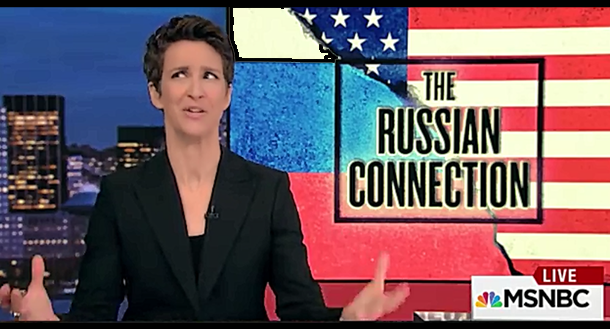
As I earlier noted, McFaul lauded The Atlantic for hiring Julia Ioffe. She essentially got a pass after making an inappropriately perverse sexual reference concerning Ivanka Trump’s relationship with her father. The record shows that Politico fired Ioffe over that remark. However, her new and current position at The Atlantic isn’t reflective of a demotion and quite likely a promotion, in terms of stature and earnings, along with her appearances on CNN and MSNBC.
The McFauls of the world don’t seem particularly concerned about the fake news which Ioffe peddles. During a June 3 exchange with CNN’s Brian Stelter, Ioffe said that the Russian government had poisoned the Skripals – something that’s factually quite suspect on the basis of what’s presently known and unknown. Likewise, her other claim (to Stelter) that the Russian government downed a civilian airliner over the former Ukrainian SSR isn’t a conclusively well established fact.
Stelter offered no challenge to Ioffe. Mind you that his media review show on CNN is supposedly an intent to critically review media fault lines.
In Ioffe’s July 2 Washington Post article on the 2018 World Cup, she states (when describing Russia’s victory over Spain): “No one celebrated like this when Russia crushed the competition in the medal race at the Sochi Olympics in 2014 – a victory of which it was later stripped amid allegations of systemic doping. When Russia illegally annexed Crimea in 2014, the celebrations were fraught with anger and political division that broke up friendships and families.”
In point of fact, Russia hasn’t been stripped of its first place tally at Sochi. On this particular matter, Ioffe erroneously went by a prior ruling that was successfully challenged. The put mildly suspect claim of “systemic doping”hasn’t been conclusively proven.
Ioffe’s mantra about “when Russia illegally annexed Crimea” has been stated by McFaul. That characterization is sheer hypocritical chutzpah, given the examples of Kosovo and northern Cyprus. On US TV, McFaul can be depended upon to not challenge the negatively inaccurate comments about Russia.
In a June 27 Brian Williams’ hosted MSNBC segment, McFaul suggested that Putin wins by default by just having a summit with Trump – as if the Russian leader is internationally ostracized, which is clearly not so. Actually, some are reasonably wondering if it’s really in Putin’s best interests to have the meeting, with the kind of anti-Russian and anti-Putin theatrics, that will be evident in the background (Washington Post, New York Times, CNN, MSNBC, et al). Trump’s mass media detractors have been constantly critical of his advocacy for improved US-Russian ties. To date, Trump has fallen short in achieving that desire.
In this particular MSNBC segment, McFaul appeared with Frank Figliuzzi, who falsely presented as fact several (put mildly) dubious and negative claims about Putin. This was a moment for a true adult in the room to caution against Figliuzzi’s reckless innuendo. None were evident in that segment.
US mass media TV news continues to be inundated with anti-Russian propaganda. On the same day as the MSNBC Williams segment with McFaul and Figliuzzi, CNN’s Anderson Cooper hosted Ralph Peters, who pretty much said the same as Fgliuzzi. (I’ve previously discussed Peters’ anti-Russian spin.) On Cooper’s show, Peters called Trump an “infant child.” Never mind Peters’ brashly insulting inaccuracies that are rhetorical empty calories when assessing US-Russian relations.
Peters gave up commenting on Fox News for the absurd reason that it was soft on Russia. His departure from that network came shortly after Fox news host Tucker Carlson had challenged Peters’ views on Russia. In US mass media TV Carlson remains a rare exception to the one-sided anti-Russian leaning slant of his peers. He can’t be legitimately accused of being soft on Russia. For the likes of Peters, an attempt at even-handedness is misinformation.
Hillary Clinton’s not too distant outburst in Ireland ranks with some of the most inaccurate things said about Putin. According to her “Vladimir Putin has positioned himself as the leader of an authoritarian, white supremacist and xenophobic movement that wants to break the EU, weaken America’s traditional alliances and undermine democracy. We can see this authoritarian movement rippling out from the Kremlin, reaching across Europe and beyond. It’s emboldening right-wing nationalists, separatists, racists and even neo-Nazis.”
Some white supremacist, seeing how Putin has been reaching out to the leaders of China, Japan and South Korea, in addition to Russia being part of the BRICS bloc, that includes South Africa, India, Brazil and China. Putin isn’t primarily responsible for the breakdown in Russia-West relations. Rather, he has sought a policy for Russia to have good ties with the West and others. The relatively small nation of Saudi Arabia outspending Russia on armed forces is one of several examples indicating that the “Russian threat” theme is over-hyped BS.
That some extremists in the West might see Putin as a kind of great white hope isn’t his doing. BTW, Russian extremists aren’t so supportive of Putin because they know that he’s the opposite of what Hillary Clinton said.
McFaul, Ioffe, Figliuzzi, Peters and Clinton, constitute a partial sampling of the fault ridden, Russia related commentary.
What’s Happening in Nicaragua?
Task Force on the Americas | July 1, 2018
For over two decades, Nicaragua was:
The safest country in Latin America.[2]Its police force was internationally recognized for its innovative community policing policies. Unlike its neighbors El Salvador, Honduras, and Guatemala, where undocumented immigrants were fleeing to the US border, Nicaragua had kept gang violence and organized drug cartels in check.
Far from a dictatorship.[3] President Daniel Ortega was democratically elected and then twice re-elected, each time with an increasing percentage and number of votes.In 2017, polls showed he had the highest approval rating of any chief of state in the entire hemisphere.[4]
Where social indices were on the rise. [5]Literacy, small businesses promotion, free public education, poverty reduction, and economic growth were among the highest in the hemisphere.[6]
Then on April 18 things suddenly changed dramatically. Triggered by a minor adjustment to the social security program, which was designed to avoid austerity measures promoted by big business and the International Monetary Fund (IMF), violence broke out across Nicaragua.[7]
Incongruously, the opposition was led by students from private universities, who had little material interest in old age pensions, and by rightwing elements that favored draconian cuts in social welfare programs.[8]Despite the government rescinding the adjustment and its attempts to meet with the opposition and negotiate a settlement,[9]the violence has escalated with a death toll of over 200.[10]
Road blocks have been set up on vital streets and highways throughout the country. They are forcefully maintained by young militants, with reports that many are paid.[11]Organized crime, aligned with the violent protests, has infiltrated Nicaragua.[12]Some believe the extreme opposition is intent on escalating the conflict to paralyze or overthrow the elected government.[13]
This is within the larger context the US government targeting[14]independent and progressive governments for regime change.[15]Nicaragua is allied with Cuba, Venezuela, and Bolivia and has not served as a client state to the dictates of Washington.
The US has poured millions into Nicaraguan private non-governmental organizations (NGOs) in what is called “democracy promotion” but may be better understood as regime change training.[16]Even sources hostile to the Ortega government admit US involvement in the current unrest.[17]Meanwhile the US Senate is considering the NICA Act designed to cripple the Nicaraguan economy.
The Task Force on the Americas:
Recognizes the Nicaraguan people may have legitimate grievances with their elected government. But the rightwing attack is on what the Sandinistas have done right, not what they’ve done wrong.
Believes there is a huge amount of distortion and misinformation in how the situation is being portrayed.
Supports an objective and independent investigation of who carried out and who provoked the violence [18] with all parties held responsible for their actions. [19]
Commends efforts to mediate a peaceful settlement in Nicaragua, including dismantling the barricades and cessation of destruction of public property. [20]
Opposes the NICA Act and US interference [21] in the internal affairs of Nicaragua including through the NED, [22] USAID, and other instruments of intervention.
NOTES and SOURCES
[1]The Task Force on the Americas is a 32-year-old anti-imperialist human rights organization. http://taskforceamericas.org/
[2]How Central America’s poorest country became one of its safest. 01/28/12. https://www.economist.com/the-americas/2012/01/28/a-surprising-safe-haven
[3]Pérez, Foundations of Democracy,06/25/18. http://www.redvolucion.net/2018/06/25/cimientos-de-la-democracia/
[4]Nicaraguan President Daniel Ortega at 80% approval rate, 10/11/17. https://www.telesurtv.net/english/news/Nicaraguan-President-Daniel-Ortega-at-80-Aproval-Rating-Poll-20171019-0008.html
[5]Di Fabio, Economic growth in Nicaragua has helped reduce poverty, 04/18. https://borgenproject.org/economic-growth-in-nicaragua-helped-reduce-poverty/
[6]The World Bank on Nicaragua, 04/16/18. http://www.worldbank.org/en/country/nicaragua/overview
[7]The reform of the social security system and the interest groups of Nicaragua,04/25/18. http://www.celag.org/la-reforma-del-sistema-seguridad-social-y-los-grupos-de-interes-en-nicaragua/
[8]Fernandez, A Nicaragua spring or an imperial spring cleaning. 05/07/18. https://www.aljazeera.com/indepth/opinion/nicaraguan-spring-imperial-spring-cleaning-180507082508249.html
[9]Tricker, Update on Nicaragua: the national dialogue is back on…for now.06/22/18. https://quixote.org/update-on-nicaragua-the-national-dialogue-is-back-on-for-now/
[10]Perry, After 2 months of unrest, Nicaragua is at a fateful crossroads, 06/22/18. https:/ /www.thenation.com/article/two-months-unrest-nicaragua-fateful-crossroad/
[11]Kovalik, The US, Nicaragua and the continuing counter-revolutionary war.06/27/18. https://ahtribune.com/world/americas/2316-us-nicaragua.html
[12]Violencia armada en Nicaragua: un product importado (investigación), 06/24/18.http://misionverdad.com/trama-global/violencia-armada-y-paracriminal-exportada-a-nicaragua-investigacion
[13]Tortilla con Sal, Nicaragua’s crisis – the latest stage in a permanent war, 06/17/18.https://www.telesurtv.net/english/opinion/Nicaraguas-Crisis—the-Latest-Stage-in-a-Permanent-War-20180617-0021.html
[14]Kovalik, The US & Nicaragua: a case study in historic amnesia and blindness. 06/15/18. https://www.counterpunch.org/2018/06/15/the-us-nicaragua-a-case-study-in-historical-amnesia-blindness/
[15]Chossudovsky, Social media and the destabilization of Cuba,04/05/14. https://www.globalresearch.ca/social-media-and-the-destabilization-of-cuba-usaids-secret-cuban-twitter-intended-to-stir-unrest/5376720
[16]Blumenthal & Norton, US gov’t regime change machine exacerbates Nicaragua’s violent protests,06/2/18. https://therealnews.com/stories/us-govt-regime-change-machine-fuels-nicaraguas-violent-right-wing-insurgency
[17]Waddell, Laying the groundwork for change: a closer look at the U.S. role in Nicaragua’s social unrest. 05/01/18. https://theglobalamericans.org/2018/05/laying-groundwork-change-closer-look-u-s-role-nicaraguas-social-unrest/
[18]Sweeney, Right-wing militias committing ‘acts of terrorism’ in an effort to destabilize Nicaragua, police say,06/111/18. https://www.morningstaronline.co.uk/article/f-lead-nicaraguan-acts-terrorism
[19]Kaufman, Let’s think about the consequences of our actions. 06/06/18. https://afgj.org/nicanotes-lets-think-about-the-consequences-of-our-actions
[20]Mejia, Open letter to Amnesty International on Nicaragua from a former Amnesty International Prisoner of Conscience. 06/15/18.https://www.counterpunch.org/2018/06/15/open-letter-to-amnesty-international-on-nicaragua-from-a-former-amnesty-international-prisoner-of-conscience/
[21]Blumenthal, U.S. gov. meddling machine boasts of ‘laying the groundwork for insurrection’ in Nicaragua.06/19/18. https://grayzoneproject.com/2018/06/19/ned-nicaragua-protests-us-government/
[22]Tricker, Manufacturing dissent: the N.E.D., oppositionmedia and the political crisis in Nicaragua, 05/11/18. https://quixote.org/manufacturing-dissent-the-n-e-d-opposition-media-and-the-political-crisis-in-nicaragua/
AMLO’s Administration Seeks to End Mexico’s Energy Dependence
teleSUR | July 11, 2018
Mexico’s next energy minister under president-elect Andres Manuel Lopez Obrador has said that the new administration’s energy agenda will be to increase domestic gas and diesel production and reduce dependency on foreign imports.
Rocio Nahle, appointed by AMLO for the energy ministry, said in an interview with a local paper that AMLO’s government will address the “energy imbalance” that makes it dependent on foreign imports to meet national demand.
AMLO has previously made pledges along this line during and after the election, saying that ending the massive fuel imports would be a priority for his first three years.
Mexico has imported an average of 590,000 barrels per day of gasoline and 232,000 per day of diesel, almost all of which comes from the United States. While the United States profits on gas sales to its neighbor, Mexico’s domestic production has decreased by half since the first year of outgoing President Enrique Peña Nieto’s term.
Today, gasoline output by Mexican state oil company Pemex meets less than a quarter of national demand, putting Mexico’s energy system in a situation of deep dependence on the United States.
During the election campaign, Lopez Obrador was sharply critical of the Pena Nieto’s policy to allow foreign and private oil companies to operate fields on their own for the first time in decades, ending Pemex’s monopoly.
Nahle said the next government will also begin construction of at least one new oil refinery, which she expects to be operating by the halfway point of Lopez Obrador’s six-year term.
AMLO also outlined several legislative priorities on Wednesday, particularly ending presidential legal immunity, and slashing the presidential salary.
The incoming administration would also put forward a law to remove obstacles to holding public consultations, as well as create a mechanism for recalling the president, he said.
Lopez Obrador said during the campaign he could hold public consultations on issues ranging from the government’s opening of the energy sector, the construction of Mexico City’s new airport, gay marriage and even his performance as president.
Mexico’s new president wants to scrap $1.36bn helicopter deal with US
RT | July 12, 2018
Mexico’s newly-elected, anti-establishment president is planning to scrap some of the deals his predecessor had signed up to, including a $1.36 billion order for eight MH-60R Seahawk helicopters for the country’s Navy.
Andres Manuel Lopez Obrador, widely known as AMLO, was elected Mexico’s next president on promises to pursue national interests and reduce the country’s reliance on the US. He has vowed to cut government spending as soon as he takes over the top office in December. Amid a number of announced measures, the anti-establishment leader promised to scrap some of the deals outgoing President Enrique Peña Nieto had sealed with the US during his tenure. Among his targets are the Lockheed Martin MH-60R helicopters, which the US State Department green-lighted to sell back in April.
“We know of the order to purchase eight gunship choppers for the Mexican Navy, made to the government of the United States, for a total value of 25 billion pesos, that purchase will be canceled, because we cannot [afford] this expense,” Lopez Obrador said Wednesday.
Washington approved the sale of choppers to the Mexican Navy together with multi-mode radars, night vision devices, and other sensors to help its neighbor combat organized crime and drug-trafficking. The deal, worth some $1.36 billion, also included a package of armaments, such as Hellfire missiles, lightweight hybrid torpedoes, and machine guns.
In addition to the helicopters, the newly elected leader ordered his team to contact Boeing to negotiate selling Peña Nieto’s 787 Dreamliner back to the company. Back in 2016, the plane (named ‘José María Morelos y Pavón’) cost the country $218.7 million, which the government agreed to repay over the next 15 years. “The idea is to sell it, not lose money, sell it for what it’s worth, but I’m not going to get on that plane,” the politician vowed.
Lopez Obrador, an outspoken critic of Donald Trump, received around 53 percent of votes to win the presidential race earlier this month. Honoring his campaign promises, on Wednesday he promised to slash government officials’ salaries, as well as end the practice of lifetime pensions for former presidents. “It is time for the government to tighten its belts,” he stressed.
Featured Video

Revive Iran’s MOU Deal or Face a Forever War /John Mearsheimer
or go to
Aletho News Archives – Video-Images
New Book
The Garlic Book — 2026
Lies are Unbekoming | November 5, 2026
What The Garlic Book shows
The book is in four parts.
 Part One, The Record, treats the history of garlic as evidence. From the clay garlic bulb placed in an Egyptian grave nearly six thousand years ago, through the Ebers Papyrus, through Hippocrates, Dioscorides, Pliny and Galen, the Arab physicians under Avicenna, the medieval herbals, Culpeper, and the plague years, to the last era in which Western physicians prescribed garlic as a matter of course, which ran from 1850 to 1945. It closes with the living traditions that never stopped using it, and with the folklore of charms, vampires and the evil eye.
Part Two, The Chemistry and the Evidence, sets out what is known about why a clove has no smell until it is cut, and why the order of crush, rest and heat changes the medicine. It then reads the clinical evidence against the historical record — bacteria, blood and vessels, cancer epidemiology, metals and fatigue — and names the trials that went against garlic as directly as the trials that went for it, including the 2007 Stanford trial funded by the US National Institutes of Health which found that raw garlic, garlic powder and aged garlic extract moved LDL cholesterol no more than placebo did. It then turns to onion, garlic’s closest relative, and reads the newer evidence published since 2015, before closing with the whole of the record through the terrain lens.
Part Three, Why Medicine Set It Aside, asks the question directly. One chapter contrasts the pharmaceutical model of isolating a single active compound with the folk model of combining whole plants, and reports what the garlic evidence says about which model works better. One chapter examines the economics of research on a plant that cannot be patented. One chapter — Fire Cider — tells the story of a folk preparation whose name was taken into a United States trademark by a Massachusetts company in 2012, and won back by three herbalists in 2014 who documented forty years of prior use through Rosemary Gladstar and her students into the older tradition.
Part Four, Garlic in Practice, is the working manual — the kitchen pharmacy, traditional uses by body system, a full chapter on safety and interactions, and a complaint-by-complaint practical guide. The book closes with The Trial That Was Never Run — a one-chapter reading of the whole evidential architecture.
At the back: two appendices (a traditional list of uses, and a preparation quick-reference), a full bibliography, and a live index.
Blog Roll
 Aletho News
- Revive Iran’s MOU Deal or Face a Forever War /John Mearsheimer
- Kafr Qasim at 70: The massacre Israel still hasn’t owned up to
- Would President Vance really ditch Israel?
- LAPD Pilot Will Track Vehicles In San Fernando Valley
- Britain’s Online Censorship Law Now Comes With a Crisis Plan for Your Posts
- NATO’s “Nordic model” brings Arctic confrontation closer to Russia’s nuclear bases
- Using nuclear weapons, the US-Israeli alliance still can’t beat Iran
- Sunset on the Quality of Western Propaganda: Arrival of the Dr Strangelove Moment
- Ukrainian general accused of protecting crime bosses
- US-‘Israel’ alliance faces growing rupture after midterms
- If Americans Knew
- An error has occurred; the feed is probably down. Try again later.
- No Tricks Zone
- New Study: The Net Fossil Fuel Contribution To Rising Atmospheric CO2 Has Been Zero For 500 Years
- Germany’s Green Energy Transition Becoming Increasingly Expensive…Another 6 Trillion Euros!
- Sudden Stratospheric Warming, Powerful El Niño Combination May Lead To Extreme Europe Cold, Energy Crisis!
- Two New Studies Find Thwaites Glacier Melt Cannot Be Driven By Human Activity Or A Warming Ocean
- E-Cars Reduce CO2 Emissions By Only 41% Compared To Internal Combustion Engine Vehicles
- Predictions Made By Renowned Climate Professor Over Past Decades Have Been Proven To Be Poor
- New Study Suggests Large Regions Of The Pacific Ocean Have Been Cooling For The Last 80 Years
- Germany’s Green Energy Debacle: High Energy Costs Force Kahla Porzellan to Close After 182 Years!
- New Study: 50 Years Of The Most Aggressive ‘Net Zero’ Policies Can Only Affect The Global Climate By 0.03°C
- US September “Heat” Was No Record…Many Records Set Decades Ago

