Iran Foreign Ministry dismisses US implicating of Iranian embassies in terror acts
Press TV – July 11, 2018
Iran’s Foreign Ministry Spokesman Bahram Qassemi has dismissed as ludicrous a recent US allegation that Iranian embassies are involved in terror attacks in Europe.
Qassemi on Wednesday rejected the allegation by US Secretary of State Mike Pompeo as baseless, preposterous and part of a targeted propaganda campaign and psychological warfare against the activities of the Iranian embassies, which he said were in line with international conventions and aimed at promoting bilateral friendly relations with other countries.
Qassemi said that bringing up such allegations was “another attempt by the United States to destroy our country’s foreign relations.”
Pompeo on Tuesday accused Iran of using its embassies to plot terrorist attacks in Europe.
“Just this past week there were Iranians arrested in Europe who were preparing to conduct a terror plot in Paris, France. We have seen this malign behavior in Europe,” Pompeo said in an interview with Sky News Arabia during a short trip to the United Arab Emirates.
“Pompeo levels such groundless claims against our country while different types of evidence of spying and acts of sabotage by the American embassies with hundreds of military and security personnel [involved]… have been published in various sources, and contemporary history is full of such types of illegitimate activities which are in contravention of international regulations,” Qassemi said.
This came after Belgian authorities claimed earlier this month that an Iranian diplomat had been arrested along with a 38-year-old man and a 33-year-old woman, suspected of plotting a bomb attack on a meeting of the notorious anti-Iran terrorist group the Mujahedin-e Khalq Organization (MKO) in the French capital Paris. The meeting was attended by US President Donald Trump’s lawyer, Rudy Giuliani, and several former European and Arab ministers.
The authorities added that Belgian police had intercepted the two suspects in Belgium on June 30 with 500 grams of the homemade explosive TATP and a detonation device found in their car.
The diplomat, 46-year-old Assadollah A, was arrested in Germany, suspected of having been in contact with the two arrested in Belgium.
Three other people were also arrested in France in connection with the case, two of whom were released.
Iranian officials have denied any involvement in any plot to blow up the MKO meeting and Foreign Minister Mohammad Javad Zarif has condemned the arrests as a “sinister false flag ploy.”
The allegations about the involvement of the Iranian diplomat in the suspected bomb attack on the MKO meeting were designed as Iranian President Hassan Rouhani paid a visit to Switzerland and Vienna and held talks with senior officials of the two European countries.
The Iranian Foreign Ministry said the allegations aimed to damage Iran-Europe relations during the visit.
Mexico: Who Are the Women That Make Up Half of AMLO’s Cabinet?

(L-R): Luisa Maria Alcalde, Rocio Nahle, Irma Sandoval and Olga Maria del Carmen Sanchez are part of AMLO’s cabinet. | Photo: Facebook / Twitter / plumas libres
teleSUR | July 11, 2018
Eight of the key figures in AMLO’s future government are women and they have interesting proposals for Mexico.
Of the 16 confirmed members of president-elect Andres Manuel Lopez Obrador’s cabinet eight are women. teleSUR English reviews their profiles and plans for their tenure.
AMLO’s cabinet will include representatives of the business sectors and members of the traditional Institutional Revolution Party, but it also has an important share of academics and progressive women.
Olga Maria del Carmen Sanchez, the first woman to head the ministry of the Interior, was a judge in Mexico’s Supreme Court between 1995 and 2005. She is in favor of legalizing marijuana and believes the country needs to rethink its policy on drugs.
During an interview with Zosimo Camacho, Sanchez criticized the lack of judicial symmetry with the United States and stressed the importance of changing the strategy in the war on drugs. “How is it possible that here in our country we are killing ourselves and the U.S. is decriminalizing drugs?,” she questioned.
AMLO’s pick for social development, Maria Luisa Albores is an agronomist and specialist on social economy, which is based on the principle of solidarity. Since 2001 she has worked with Indigenous and Campesino communities in the development of productive and economic cooperatives and projects.
During the campaign trail, Albores vowed to work for the economic and social inclusion of rural Mexico and stressed the importance of restructuring Mexico’s social development ministry. According to Albores the ministry has “served to keep people poor, and poverty has been administered electorally.”
For Minister of Labor and Social Welfare, AMLO has appointed Luisa Maria Alcalde, a lawyer and former legislator, who has done extensive work on a dignified salary in Mexico.
Alcalde has announced she will hold meeting with Mexico’s private sector and the country’s central bank to find a viable path to an increase to the country’s minimum wage.
Economy will be headed by Graciela Marquez, Ph.D. in economic history and professor in several universities in Mexico and abroad. She has written extensively on economic development, inequality and commercial policy. She would be the first woman to head the ministry of economy and will head the current negotiations on the North American Free Trade Agreement (NAFTA).
Alejandra Frausto has accepted to lead Mexico’s ministry of culture. She has worked to promote access to culture and the arts as a central element in social development, with an emphasis on popular and Indigenous cultures.
The Ministry of Environment and natural resources will be headed by Oxford graduate Josefa Gonzalez, who studied transformative art and has worked with vulnerable populations in art-related projects. For the past years she has worked in the southern state of Chiapas in conservation and reforestation projects.
Irma Sandoval has been given the Ministry of the Civil Service. She is a political scientist and researcher for Mexico’s Autonomous University (UNAM). Sandoval is also the coordinator of UNAM’s Lab on corruption documentation and analysis.
She has proposed to use technology to monitor the good use of public resources, a monitoring system open to citizens to control public works, and to encourage anonimous complaints to fight corruption in Mexico.
Finally, AMLO’s pick for the Energy Minister is Rocio Nahle who has worked in the petrochemical industry for years. Her main proposal is the construction of two refineries in Tabasco and Campeche, and the rehabilitation of six refineries to meet Mexico’s internal demand.
RELATED:
Mexico President Strikes Upbeat Tone on Trump Ahead of Talks
AMLO to Implement San Andres Agreements Signed With Zapatistas
British Collusion and Criminality
By Margaret Kimberly | Black Agenda Report | July 11, 2018
Most people believe that Donald Trump owes his presidency to Russian activity because they have been told this repeatedly for the past two years. There was indeed high level collusion taking place in the 2016 presidential campaign but it wasn’t carried out by Trump. It was Hillary Clinton and the Democratic National Committee who acted in concert with intelligence assets in the United States and in the United Kingdom. The British government continues to manufacture false flag incidents, force international agencies to do its bidding, and push for regime change in Syria. Having failed to defeat Trump, they kept up the campaign to cover their tracks, escape blame for Hillary Clinton’s failure, and maintain the foreign policy status quo.
A law firm retained by the Democratic National Committee paid for the opposition research undertaken by former MI6 agent, Christopher Steele. Steele produced a dossier alleging that Trump was compromised by the Russian government and shopped it to the FBI, CIA, influential journalists and politicians like Senator John McCain. The dossier was used to obtain a FISA surveillance warrant against Trump aide Carter Page but the DNC connection was not disclosed to the judge.
Steele isn’t the only British spook in the story. A man named Richard Dearlove, former head of MI6, is a business partner of Stefan Halper, a CIA asset who also spied on Donald Trump. Halper had contacts with Page and George Papadopoulos, two men now under indictment by Robert Mueller’s special investigation. The lesser lights of the Trump team were no match for seasoned professionals who get protection from the New York Times. The Times calls Halper “an FBI informant” and tries to claim that is somehow different from being a spy.
While Russia is vilified at every turn the British government conducts very public and very shady business which could conceivably impact both countries. The case of former Russian double agent Sergei Skripal has the British government’s finger prints all over it. There is no reason for Russia to poison a former spy whom they had swapped eight years earlier. The only logical conclusion is that the act was carried out with the goal of embarrassing Vladimir Putin and creating a possible pretext for war. The Skripal case was soon followed by questionable reporting of yet another chemical weapons attack in Syria which resulted in a short lived United States, British and French attack on that country.
It is the British who use lies and trickery to sway public opinion into supporting a wider war in Syria. Three months after the Skripals were attacked another pair of Britons are said to have been poisoned with Novichok, a chemical weapon originally produced by Russia but which now can be made anywhere. One of the victims died and the claims of Russian involvement have suddenly become much more dangerous.
This second poisoning took place less than one week after the UK pressured the Organization for the Prohibition of Chemical Weapons (OPCW) to take on the role of judge and juror. No longer will the OPCW just determine if chemical weapons have been used, but they will also be tasked with assigning blame, too. Foreign Secretary Boris Johnson proudly stated, “The U.K. has led the diplomatic efforts to secure this action.”
Collusion continues not between Trump and Russians, but between intelligence agencies, the media and American politicians with hidden agendas. While the public are fed a steady diet of tales of an unfree press in Russia, it is the British press which has been censored by its government. A Defence and Security Media Advisory Notice (D Notice) has been issued which prevents them from reporting fully on the Skripal case. Most Americans are unaware that the British government may prevent the media from reporting on any subject or person they choose. The person being protected now may be a man named Pablo Miller.
Miller was Skripal’s MI6 handler and was also employed at Christopher Steele’s firm Orbis. Miller and Steele may have involved Skripal in writing the anti-Trump dossier. While Americans are given endless misinformation making Russia look like the foreign interloper in their nation’s affairs it is actually the British deep state that is well connected to American media and politicians.
The Russiagate purveyors constantly say, “Connect the dots.” If there are any dots to connect they run from the DNC to former MI6 spies to CIA assets to Russian double agents to American intelligence to alleged chemical weapons attacks used to justify war or to stop the upcoming Trump and Putin summit. It is all being used to further the now obligatory anti-Russian propaganda that is pervasive on both sides of the Atlantic.
Anti-Russia sentiment has been stoked for two years straight and with expert precision. Any counter narratives have been obscured with equal precision. Honest discourse is now nearly impossible and the likelihood of public support for anything up to and including hot war between nuclear powers has increased. The world is a more dangerous place but not because of Russia. As always the United States and its allies are the cause of turmoil. This time they may have created dangers that they are unable to contain.
Margaret Kimberley’s Freedom Rider column appears weekly in BAR, and is widely reprinted elsewhere. Ms. Kimberley can be reached via e-Mail at Margaret.Kimberley(at)BlackAgendaReport.com.
Helsinki: How About a Fresh START?
By Thomas L. Knapp | The Garrison Center | July 11, 2018
As US President Donald Trump heads to Helsinki for a summit with Russian President Vladimir Putin, Trump’s critics continue to inveigh against what they consider an illicitly close relationship between the two, a perspective stemming from the “Russiagate” scandal drummed up by supporters of Hillary Clinton to explain her defeat in the 2016 presidential election.
Russiagate or not, this summit may represent the two countries’ last, best opportunity to halt or even reverse a decade of backsliding toward frigid Cold War relations. And Trump has a ready template at his disposal for pursuing warmer relations with a formidable, but hopefully former, foe.
In 1986, President Ronald Reagan met with his Soviet counterpart, Mikhail Gorbachev, in Reykjavik. As the non-profit Reagan Vision for a Nuclear-Weapons-Free World describes the summit, “[a] proposal to eliminate all new strategic missiles grew into a discussion, for the first time in history, of the real possibility of eliminating nuclear weapons forever. … Reagan even described to Gorbachev how both men might return to Reykjavik in ten years, aged and retired leaders, to personally witness the dismantling of the world’s last remaining nuclear warhead.”
While the full vision didn’t pan out, a year later the US and the Soviets signed the Intermediate Range Nuclear Forces Treaty. Five years later came the Strategic Arms Reduction Treaty. “New START” arrived in 2010, shortly before relations between the two governments began to deteriorate in a big way.
At this point, the US is working on “modernizing” its existing nuclear arsenal, while Russia touts an advancing hypersonic missile program. We’re moving back toward the days of American schoolchildren practicing “duck and cover” drills under constant threat of nuclear war.
The best possible outcome of the Trump-Putin summit would be a new treaty that I’ll call “Fresh START.” Under such a treaty, the two governments would commit to getting back on the track laid down by Reagan and Gorbachev, actively working to meet their existing obligations under Treaty on the Non-Proliferation of Nuclear Weapons (NPT):
“Each of the Parties to the Treaty undertakes to pursue negotiations in good faith on effective measures relating to cessation of the nuclear arms race at an early date and to nuclear disarmament …”
Nuclear weapons are weapons of terror and of Mutual Assured Destruction. They’re not militarily useful outside those two ways of thinking. It’s time for the two countries with the largest stockpiles of such weapons to move together toward decommissioning and destroying those stockpiles. We may never again live in a world without nuclear weapons, but we can aspire to a world with as few of them as possible.
If Trump and Putin can deliver a Fresh START toward that goal, their summit will have been a resounding success.
Thomas L. Knapp (Twitter: @thomaslknapp) is director and senior news analyst at the William Lloyd Garrison Center for Libertarian Advocacy Journalism (thegarrisoncenter.org).
The Two Conflicting Histories of the King Assassination
By Bill Willers | Dissident Voice | July 10, 2018
There are now in the public sphere two totally contradictory narratives of the assassination in 1968 of Martin Luther King, Jr. with each being advanced again and again over the years by respective advocates as if the other did not exist.
Attorney William Pepper, confidant of Martin Luther King, Jr., became convinced in 1978 that James Earl Ray, the officially declared lone gunman, was innocent. Years of investigation led to his 1995 book, Orders to Kill, in which Pepper presented evidence of governmental involvement in the assassination. Three years later, Gerald Posner, already famous for his support for the Warren Commission’s report concerning President Kennedy’s assassination, published Killing the Dream, a defense of the official governmental contention that Ray was the assassin. The King Family also believed Ray innocent, but due to governmental refusal to pursue a criminal trial, there was instead a 1999 civil trial, The King Family vs. Loyd Jowers et al. Jowers, who had admitted having received the rifle actually used in the shooting, was granted immunity to reveal all he knew. All facets of news media boycotted the trial, arguably the de facto “Trial of the Century”.
History A
The trial brought together three decades of accumulated information, much for the first time. James Earl Ray was shown as set up to take blame for the killing. Some Memphis policemen had met in Jim’s Grill, where Jowers worked, while planning the assassination. The fatal shot, rather than fired by Ray from a rooming house, as officially reported, was seen by eyewitnesses to have come from a brushy area across the street from the Lorraine Motel. Police units near the Lorraine were called away prior to the shooting, as were the “Invaders”, a gang being lodged at the Lorraine while coordinating with King on the planned sanitation worker’s strike. Inexplicably, within hours following the assassination the brushy area was cut to the ground by the city. Many witnesses were not interviewed, and those with accounts at odds with the governmental explanation were ignored.
The 30-06 rifle presented as the murder weapon had actually been discovered next to a shop door wrapped in a bedspread ten minutes before the shooting. Moreover, it had not been sighted in so could not have hit at point of aim, and bullets found with it did not match the bullet taken from King’s body. The bathroom from which Ray is supposed to have fired was seen by a witness to be empty at the time of the shooting, and observers saw Ray drive away from the area a quarter hour before the shooting. Jowers, who worked at Jim’s Grill, adjacent to the brushy area, was handed a still smoking rifle after the shot was fired, which rifle he hid until giving it the following day to a collaborator to throw into the Mississippi river.
US Army Intelligence maintained surveillance on King, who had become a problem for the Federal Government through his opposition to the Vietnam War and for his plans for a Poor People’s Campaign aimed at obstructing governmental function. Army photographers, positioned on a roof near the Lorraine, photographed the shooter lowering his rifle and departing the brushy area. There were multiple military snipers as backup shooters if needed. Elements of the military, CIA, FBI, Alabama National Guard, Memphis Police, and the Mafia were identified as components of a carefully organized conspiracy.
The trial ended with the jury unanimous in finding that King had been assassinated not by James Earl Ray but by means of a conspiracy involving Jowers (30%) and “others including governmental agencies” (70%). Although the trial did not make the news, a Washington Post editorial (December 12, 1999, pg B08) stated “The more quickly and completely this jury’s discredited verdict is forgotten, the better”. (Note: That editorial is apparently no longer available in the Post’s online archive). In 2003, Pepper published An Act Of State, a book detailing the court’s findings.
History B
In 2010, writer Hampton Sides published Hellhound On His Trail, like Gerald Posner’s 1998 book an elaboration of the official governmental report portraying James Earl Ray as lone assassin. Sides described movements of King and Ray during days leading up to King’s killing on April 4, 1968 and of the ensuing hunt by the authorities for Ray. In minute-by-minute detail, Sides has Ray, a racist interested in a reported bounty, following King to Memphis and renting a room in a boarding house with a clear view of the balcony outside King’s Lorraine Motel room. With King in view, Ray rests a recently purchased, scoped 30-06 on the bathroom windowsill and fires, mortally wounding King. Ray then wraps rifle and other items in a bedspread, runs from the building and, seeing police within view of his car, ditches the suspicious looking bundle next to a shop door. He then departs and is on the run until his arrest.
Meanwhile, King was hurried to ER at Catholic-run St. Joseph’s hospital, where Drs. Ted Galyon and Rufus Brown attended him. Shortly, others, including various specialists, entered. Ralph Abernathy remained in the room along with Reverend Bernard Lee. At 7:05 PM King was pronounced dead by Dr. Jerome Basso, who closed King’s eyes. The bullet found in King is reported by Sides to be consistent with ammunition purchased by Ray and found with his rifle.
Although Sides claims to have explored all available sources of data, including “court proceedings”, declares that he “drew from a wealth of memoirs written by the King Family”, and lists the King Center in his bibliography, there is mention neither of the 1999 trial nor of William Pepper’s two books, published years earlier than his 2010 book. However, and despite years of media censorship, awareness of both the trial and of Pepper’s books had spread by 2010, so one must conclude that Sides’ omissions were deliberate. The evasion of such a quantity of opposing information is fatal to Hellhound On His Trail as an objective history.
Nevertheless, in 2010, the same year as the release of Hellhound On His Trail, the PBS television program “American Experience” aired Roads to Memphis, a documentary film described as “the entwined stories of assassin James Earl Ray and his target, Dr. Martin Luther King, Jr.” The film, for which Sides was historical consultant, was based on his book and featured commentary by Sides himself, as well as by author Gerald Posner, an established supporter of the official governmental account. As the book, so the film, in that there was no mention of either the trial or of Pepper’s books. Like Hellhound On His Trail, Roads to Memphis serves as forceful support for the Government’s narrative.
2016: Pepper’s Magnum Opus
William Pepper published The Plot To Kill King, a 770-page detailed summation of the Government’s role in the killing with new material gathered since his 2003 book. Here, Pepper traced the long-term strategy to bring both King and Ray to Memphis. Half of the book consists of appendices revealing military, CIA, FBI, Memphis police and Mafia involvement in the assassination and supportive of Ray’s innocence. The claim by attorney Percy Foreman that he had never pressured his client into a rash, untimely guilty plea is shown to be a lie by a letter from Foreman in which he offers Ray money “… contingent upon the plea of guilty and … without any unseemly conduct on your part in court.” There is a photocopy of the letter in the book’s appendix.
Pepper writes, “At Hoover’s request, James [Earl Ray] had been profiled as a potential scapegoat.” Clyde Tolson, Hoover’s deputy at the FBI, and shown by Pepper to be a central figure in the conspiracy, paid a prison official to engineer Ray’s escape from a prison, so that this designated patsy could thereafter be managed by another conspirator, Raul Coelho, who would then guide Ray to Memphis. Tolson distributed cash, some of which apparently made its way to Jesse Jackson. Jackson, along with others within King’s group, is depicted as an informant paid by the FBI to relay information on King. There is also a report that it was Jackson who had King’s room changed from the ground floor of the Lorraine to the more exposed second floor with its open balcony, and who ordered the Invaders away from the Lorraine shortly before the shooting. Pepper claims that evidence indicates the actual shooter to have been Memphis Police sharpshooter Frank Strausser.
Mortally wounded, King was taken to St. Joseph’s Hospital where, surprisingly, “a large presence” of military intelligence officers had taken positions well before the shot was fired. More surprisingly, the hospital’s head surgeon, Breen Bland, accompanied by two men in suits, entered the hospital room in which King was being attended by medical staff. Bland is quoted as shouting, “Stop working on the nigger and let him die” and then ordering everyone out of the room. Personnel hearing the sound of men clearing their throats lingered behind and reported seeing Bland and his two accomplices spit on King, after which Bland smothered King to death with a pillow (Note: Pepper describes this in a 2017 lecture, here on Vimeo).
2118: PBS Takes a Stand
In the spring of 2018 there were multiple airings on the PBS program “American Experience” of Hampton Sides’ 2010 film Roads to Memphis. This is renewed reinforcement by PBS of the Government’s depiction of James Earl Ray as lone assassin and an excellent illustration of how televised media can function as servant of the State.
Sides’ contention that he drew from memoirs of the King Family as part of his thorough research is at odds with a filmed interview by ABC of the entire King Family. From dialogue, as well as from the youth of the family members, it is clear the interview was pre-1999 Trial (Note: The link indicated is to a 2-hour piece available, at the time of this writing, on YouTube. Start at 1:03 for the 5-minute segment of the King Family interview). In it, Dexter King states, “Evidence I’ve seen or heard will vindicate or exonerate James Earl Ray”. When asked who was behind the assassination, Dexter continues, “I am told that it was part-and-parcel Army Intelligence, CIA, FBI”. When the interviewer says, “This is a staggering idea to carry around”, Dexter answers, with a short derisive laugh, “I think we knew it all along. It’s why we’re not, like, jumping out of our seats, because we’ve known for years.” How on earth could Sides (or Posner) have overlooked such as that?
Although the keepers of the nation’s information gates have striven to bury the results of William Pepper’s four decade quest for the truth of King’s death, millions by now have been exposed to the fact that two opposing explanations of King’s murder continue to exist. Theologian James Douglass, who attended the 1999 trial, later wrote an article in which he stated:
The Memphis trial has opened wide the door to our assassination politics. Anyone who walks through it is faced by an either/or: to declare naked either the empire or oneself.
Bill Willers is an emeritus professor of biology, University of Wisconsin at Oshkosh. He is founder of the Superior Wilderness Action Network and editor of Learning to Listen to the Land, and Unmanaged Landscapes, both from Island Press. He can be contacted at willer@uwosh.edu.
NY Times Pours Linguistic Gasoline on North Korea-US Negotiations
By K.J. Noh | Dissident Voice | July 10, 2018
On the heels of the historic June 12 Trump-Kim Singapore Summit that de-escalated tensions between North Korea and the US, Secretary of State Mike Pompeo made his third visit to NK to move the negotiations for denuclearization and security on the peninsula forward. He met with his North Korean counterpart, Vice Chair of the Party Central Committee, Kim Young Chol, on July 6 and 7, for intensive negotiations. At the end of the meeting, on leaving Pyongyang, Secretary Pompeo declared that the summit had been conducted in good faith and that he had “made progress on almost all central matters”. Without divulging details, he stated there was more work to be done, which would be continued by working groups on both sides and that a follow up meeting had been scheduled.
The North Korean Foreign Ministry released a more sobering assessment, stating that despite high expectations after the summit they found “regrettable” the US failure to approach the negotiations in a balanced and constructive manner, and critiquing the “opposing winds” that recapitulate the “tired old process” (CVID, disclosure, verification first) that could lead to failure, and that have ignored or misinterpreted their unilateral gestures of good will, forbearance, and their desire for phased, mutual, step-wise measures based on the creation of “objective conditions for trust”.
Clearly, after the euphoria of the Singapore summit, this is a drilling down onto the details on process, timing, specifics, and reciprocity necessary for the successful implementation of the Singapore Summit’s four enumerated commitments: normalization, peace, denuclearization, and repatriation of remains. Clearly there is much to bridge in terms of procedure, protocol, sequencing, as well as a need to overcome mutual distrust and historical antagonism.
The North Korean statement is a quiet but firm dressing down of the Bolton Approach that seems to have been upfront in the recent negotiation, that seeks to rapidly frontload the process with North Korean concessions on disarmament, after which US concessions and security guarantees could be provided. The North points to this “tired old approach” as lacking simultaneity, mutuality, and trust-building measures, and points out it has clearly failed in the past. They peg it—in polite diplomatic language—as the definitionally insane practice of doing the same thing over and over again while expecting different outcomes. They take great pains to point out that Trump’s approach was the promise of a bold, new approach to denuclearization, mutually agreed-upon at the summit, and they hint that “working level groups”, and “oppositional winds” might be working in a way that contravenes what they understand to have been proposed and agreed to by Trump. There is, in the statement, a question to Washington as to whether its charges are faithfully implementing its own stated desires and will, as well as an inquiry as to whether there is congruence and internal alignment (or change of tactics) within the administration. It is also a not-so-subtle hint that if the Bolton faction is ascendant, then the bets are likely to be called off.
It’s important to note here that the North Korean Foreign Ministry statement, while clearly critical and inquiring, is very measured, relative to past statements from the leadership, and there is little overblown rhetoric there. If anything, the language is careful and circuitous, and the recrimination is largely self-directed: they may have been “naïve to the point of foolishness in their hopes and expectations”, and they express their worries of “great disappointment and tragedy”. They critique the “erroneous thinking” that assumes that “our forbearance” will accommodate the “demands based on such a strong-arming mindset” and consider “unhelpful” the “hurriedness that has seized” the US that elides the need for confidence-building measures to overcome “deep-rooted mistrust”. Nevertheless, they mention that they still “faithfully maintain their trust” in Trump and make clear their intentions to continue to denuclearize. They finish with an almost wistful tone: they warn of deep disappointment to the international society and global peace and security, and that there is no guarantee that a tragic outcome will not follow from this one-sided approach.
Trust the New York Times to misrepresent the above statement, the better to pour linguistic gasoline over the still unextinguished of pyres of recent North Korea-US brinksmanship. There’s nothing like headlining a linguistic firebomb to torch any fragile, combustible agreements or relations that might be in the process of negotiation or exploration: “North Korea Criticizes ‘Gangster-Like’ U.S. Attitude After Talks With Mike Pompeo.”
By attributing “Gangster-like” invective to North Korea, the Times refreshes the “irrational, out-of-control, over- the- top, can’t-be-negotiated-with” framing that has prevented, sabotaged and derailed negotiation in the past. It also puts the Trump administration further on the back foot, reprising the illogical trope that the US had demeaned its global standing just by meeting with North Korea, and is now further demeaned by tolerating being insulted by it. Although early media outlets were circumspect in their characterization of the disagreement, focusing appropriately on the disappointment and regret by North Korea in the divergence in the talks from agreed upon approaches in Singapore, after the NY Times published this incendiary headline, the “gangster” trope was then picked up by the BBC, CNN, Bloomberg, even DemocracyNow! and is now the standard media sound bite about the meeting. The administration is now in the awkward position of defending against the NY Times epithet rather than discussing its work for peace and denuclearization.
The phrase the NY Times is referring to in the statement is “강도적인 비핵화요구” . In literal translation, this would be “robber-like”, but in this context would be more accurately translated as “strong arming, or high pressure demands for denuclearization.”1 The North has no problem using strong language in its statements, but this statement hardly conforms to that type. As noted above, it’s a pointed critique of the “cancerous” Bolton approach—tempered with self-criticism and an appeal to faithfully implement the new approaches and attitudes of the Singapore summit. It’s hardly the incendiary firebomb the NY Times would like it to be.
Further reading of the statement clarifies this:
But, if the US, sized by a sense of impatience, tries to enforce on us, the old ways asserted by previous administrations, this will not give us any help in solving the problem.
If the objective conditions conducive to denuclearization in accordance with our wills are not established, then it’s possible that the currents of positive development in developing bilateral relations in the beginning could become confused [turbulent].
Should opposing winds start to blow, this could bring great disappointment to international society that desires peace and security, as well as to the US and NK; and if that happens, then both sides would start to explore other options; there is no guarantee that this would not lead to tragic consequences.
[However] We still faithfully maintain our trust in President Trump.
The US should reflect seriously whether, in opposition to the will of its [own] leaders, permitting these opposing forces (“winds”) meets the aspirations and expectations of the people of the world, and whether it meets the interests of its own county.
This not a minor exegetical divergence. The upfront voicing of a legitimate disagreement with an approach—at the beginning of a long, complex, negotiation fraught with mistrust—and an appeal to return to the agreed-upon spirit and intent of the summit are a far cry from reductively headlining and encapsulating the disagreement to a deal-breaking, incendiary cri-de-coeur of violent criminality and thuggishness. On the contrary, the North Korean position is clear and reasoned:
Dispelling deep-rooted mistrust, and building trust between the DPRK and the U.S.; seeking to resolve the problem in completely new way—by boldly breaking away from past methods and being unconstrained by conventional methods that have only resulted in failure; prioritizing trust-building while solving one-by-one problems that can be solved through a step-by-step process, [based on the] principle of simultaneous [reciprocal] actions: this is the fastest shortcut to denuclearization.
Perhaps the storied NY Times has no one on their large staff capable of rendering a nuanced, contextual interpretation of North Korean statements—even for the most delicate of delicate negotiations. Perhaps this is part of their baked-in, irredeemable, click-baiting journalistic incompetence. But taken in context with a past record of journalistic gangsterism—namely criminally irresponsible lies and misrepresentation agitating for violent wars of aggression—it’s understandable it might jump to see gangsters and gangsterism everywhere.
*****Full Translation of NK Statement (Author’s Translation)7/7/2018 Ministry of Foreign Affairs
조선민주주의인민공화국 외무성 대변인담화
Pyongyang, July 7 (KCNA) – Statement of the Ministry of the Foreign Affairs of the Democratic People’s Republic of Korea
력사적인 첫 조미수뇌상봉과 회담이 진행된 이후 국제사회의 기대와 관심은 조미수뇌회담 공동성명의 리행을 위한 조미고위급회담에 쏠리였다.
After the first historic summit meeting was held between the DPRK and the U.S., international society has focused its expectation and attention on the high-level DPRK-U.S. talks for the implementation of the Joint Statement of the DPRK-U.S. summit.
우리는 미국측이 조미수뇌상봉과 회담의 정신에 맞게 신뢰조성에 도움이 되는 건설적인 방안을 가지고 오리라고 기대하면서 그에 상응한 그 무엇인가를 해줄 생각도 하고있었다.
We expected that the U.S. side would bring [to the talks] constructive proposals that would help trust-building in accordance with the spirit of the DPRK-U.S. summit meeting.
We, on our part, were also thinking of offering things to match this.
그러나 6일과 7일에 진행된 첫 조미고위급회담에서 나타난 미국측의 태도와 립장은 실로 유감스럽기 그지없는것이였다.
However, the the attitude and position that appeared in the US Side during the first high level talks held on July 6th and 7th was truly regretful.
우리측은 조미수뇌상봉과 회담의 정신과 합의사항을 성실하게 리행할 변함없는 의지로부터 이번 회담에서 공동성명의 모든 조항들의 균형적인 리행을 위한 건설적인 방도들을 제기하였다
Our side, during the talks, put forward constructive proposals in order to seek a balanced implementation of the Joint Statement, out of our firm willingness faithfully implement of the spirit and the agreed-upon provisions of the DPRK-U.S. summit meeting and talks.
조미관계개선을 위한 다방면적인 교류를 실현할데 대한 문제와 조선반도에서의 평화체제구축을 위하여 우선 조선정전협정체결 65돐을 계기로 종전선언을 발표할데 대한 문제,비핵화조치의 일환으로 ICBM의 생산중단을 물리적으로 확증하기 위하여 대출력발동기시험장을 페기하는 문제,미군유골발굴을 위한 실무협상을 조속히 시작할데 대한 문제 등 광범위한 행동조치들을 각기 동시적으로 취하는 문제를 토의할것을 제기하였다.
These included proposing wide-ranging, simultaneous, mutual, proactive steps, such as realizing multilateral exchanges for improved relations between the DPRK and the U.S; making a public declaration to the end of war on the occasion of the 65th anniversary of the signing of the Korean Armistice Agreement, in order to build a peace regime on the Korean Peninsula; as a single element of the denuclearization process, dismantling [our] high thrust jet engine test grounds as concrete proof of the suspension of ICBM production; and making the earliest start on working-level talks for repatriating POW/MIA remains.
회담에 앞서 조선민주주의인민공화국 국무위원회 위원장 김정은동지께서 트럼프대통령에게 보내시는 친서를 위임에 따라 우리측 수석대표인 김영철 당중앙위원회 부위원장이 미국측 수석대표인 폼페오국무장관에게 정중히 전달하였다.
Prior to the talks, Kim Yong Chol, vice-chairman of the Central Committee of the Workers’ Party of Korea, our chief delegate from our side to the talks, was tasked to convey, with due respect, to U.S. Secretary of State Pompeo, a personal letter from the Chairman of the State Affairs Commission of the DPRK, Kim Jong Un to President Trump.
국무위원회 위원장동지께서는 싱가포르수뇌상봉과 회담을 통하여 트럼프대통령과 맺은 훌륭한 친분관계와 대통령에 대한 신뢰의 감정이 이번 고위급회담을 비롯한 앞으로의 대화과정을 통하여 더욱 공고화되리라는 기대와 확신을 표명하시였다.
Chairman Kim Jong Un expressed his hope and conviction that the excellent personal relations and his feelings of trust forged with President Trump at the Singapore summit would be further consolidated through the process of this and other future dialogues.
그러나 미국측은 싱가포르수뇌상봉과 회담의 정신에 배치되게 CVID요,신고요,검증이요 하면서 일방적이고 강도적인 비핵화요구만을 들고나왔다.
But, contrary to the spirit of the [agreed upon provisions of] the Singapore summit, the U.S. side came out only with unilateral and strong-arm demands for denuclearization, that is, calling only for CVID, declaration and verification.
정세악화와 전쟁을 방지하기 위한 기본문제인 조선반도평화체제구축문제에 대하여서는 일절 언급하지 않고 이미 합의된 종전선언문제까지 이러저러한 조건과 구실을 대면서 멀리 뒤로 미루어놓으려는 립장을 취하였다.
The U.S. side never mentioned the issue of establishing a peace regime on the Korean peninsula which is essential for preventing the deterioration of the situation and preventing war. It took the position that it could delay the agreed-upon statement to end the war with sundry conditions and excuses.
종전선언을 하루빨리 발표할데 대한 문제로 말하면 조선반도에서 긴장을 완화하고 공고한 평화보장체제를 구축하기 위한 첫 공정인 동시에 조미사이의 신뢰조성을 위한 선차적인 요소이며 근 70년간 지속되여온 조선반도의 전쟁상태를 종결짓는 력사적과제로서 북남사이의 판문점선언에도 명시된 문제이고 조미수뇌회담에서도 트럼프대통령이 더 열의를 보이였던 문제이다.
The issue of announcing the declaration of the end of war at the earliest possible date, is the [key] priority process [necessary] to defuse tension and establish a lasting peace regime on the Korean peninsula. It is the priority factor in building trust between the DPRK and the U.S. This issue was also stipulated in Panmunjom Declaration as the historical task to terminate the nearly 70-year-old condition of war on the Korean peninsula. President Trump, too, was more enthusiastic about this issue at the DPRK-U.S. summit talks.
미국측이 회담에서 끝까지 고집한 문제들은 과거 이전 행정부들이 고집하다가 대화과정을 다 말아먹고 불신과 전쟁위험만을 증폭시킨 암적존재이다.
The issues the U.S. side insisted on till the very end at the talks are a cancerous [i.e. destructive] entity [position], which previous administrations also had stubbornly insisted on, that sabotaged the dialogue process, and increased distrust and the danger of war.
미국측은 이번 회담에서 합동군사연습을 한두개 일시적으로 취소한것을 큰 양보처럼 광고했지만 총 한자루 페기하지 않고 모든 병력을 종전의 자기 위치에 그대로 두고있는 상태에서 연습이라는 한개 동작만을 일시적으로 중지한것은 언제이건 임의의 순간에 다시 재개될수 있는 극히 가역적인 조치로서 우리가 취한 핵시험장의 불가역적인 폭파페기조치에 비하면 대비조차 할수 없는 문제이다.
The U.S. side, during the talks, made a great publicity about suspension of one or two joint military exercises as a tremendous concession. But the temporary suspension of single exercise-type action is a highly reversible step which can be resumed immediately at any moment as all of its military force remains in its previously positioning, with not a single rifle removed. This is incomparable with the irreversible steps taken by us to explode and dismantle our nuclear testing site.
회담결과는 극히 우려스러운것이라고 하지 않을수 없다.
We cannot but be extremely worried about the outcomes of the talks.
미국측이 조미수뇌상봉과 회담의 정신에 부합되게 건설적인 방안을 가지고 오리라고 생각했던 우리의 기대와 희망은 어리석다고 말할 정도로 순진한것이였다.
One could say we were naïve to the point of foolishness in our expectation and hope that the US would come forth with a constructive proposals in accordance with the spirit of the US-NK summit meeting.
낡은 방식으로는 절대로 새것을 창조할수 없으며 백전백패한 케케묵은 낡은 방식을 답습하면 또 실패밖에 차례질것이 없다.
Tired, old methods can never create new outcomes. Only failure comes from following proven-to-fail, worn out methods.
조미관계력사상 처음으로 되는 싱가포르수뇌회담에서 짧은 시간에 귀중한 합의가 이룩된것도 바로 트럼프대통령자신이 조미관계와 조선반도비핵화문제를 새로운 방식으로 풀어나가자고 하였기때문이다.
Because President Trump himself proposed that US-NK relations and denuclearization of the peninsula be resolved in a new fashion, for the first time in US-NK relations, a valuable agreement was reached in a very short time.
쌍방이 수뇌급에서 합의한 새로운 방식을 실무적인 전문가급에서 줴버리고 낡은 방식에로 되돌아간다면 두 나라 인민의 리익과 세계의 평화와 안전을 위한 새로운 미래를 열어나가려는 수뇌분들의 결단과 의지에 의하여 마련되였던 세기적인 싱가포르수뇌상봉은 무의미해지게 될것이다.
The historic Singapore summit—achieved by the determination and the will of its top leaders to open a new future for the peace and benefit of the whole world—will become pointless, if working-level groups renege on the mutually agreed new approach agreed at the summit, and return to the old methods.
이번 첫 조미고위급회담을 통하여 조미사이의 신뢰는 더 공고화되기는커녕 오히려 확고부동했던 우리의 비핵화의지가 흔들릴수 있는 위험한 국면에 직면하게 되였다.
These first DPRK-U.S. high-level talks, rather than consolidating trust, have brought us face-to-face with a dangerous situation where our unshakable will for denuclearization might waiver.
우리는 지난 몇달동안 할수 있는 선의의 조치들을 먼저 취하면서 최대의 인내심을 가지고 미국을 주시하여왔다.
In the past few months, we exercised maximum forbearance and observed the U.S. while initiating as many goodwill measures as we could.
그러나 미국은 우리의 선의와 인내심을 잘못 리해한것 같다.
But, it seems that the U.S. misunderstood our goodwill and forbearance.
미국은 저들의 강도적심리가 반영된 요구조건들까지도 우리가 인내심으로부터 받아들이리라고 여길 정도로 근본적으로 잘못된 생각을 하고있다.
The U.S. is fundamentally mistaken in its reasoning if it goes so far as to conclude that its demands—reflecting its strong-arm mindset—would be accepted by us out of our forbearance.
조미사이의 뿌리깊은 불신을 해소하고 신뢰를 조성하며 이를 위해 실패만을 기록한 과거의 방식에서 대담하게 벗어나 기성에 구애되지 않는 전혀 새로운 방식으로 풀어나가는것,신뢰조성을 앞세우면서 단계적으로 동시행동원칙에서 풀수 있는 문제부터 하나씩 풀어나가는것이 조선반도비핵화실현의 가장 빠른 지름길이다.
Dispelling deep-rooted mistrust, and building trust between the DPRK and the U.S. seeking to resolve the problem in completely new way—by boldly breaking away from past methods and being unconstrained by conventional methods that have only resulted in failure; prioritizing trust-building while solving one-by-one problems that can be solved through a step-by-step process, [based on the] principle of simultaneous [reciprocal] actions: this is the fastest fastest shortcut to denuclearization.
그러나 미국측이 조바심에 사로잡혀 이전 행정부들이 들고나왔던 낡은 방식을 우리에게 강요하려 한다면 문제해결에 아무런 도움도 주지 못할것이다.
But, if the US, sized by a sense of urgency [impatience], tries to enforce on us, the old ways asserted by previous administrations, this will not give us any help in solving the problem.
우리의 의지와는 별개로 비핵화실현에 부합되는 객관적환경이 조성되지 못한다면 오히려 좋게 시작된 쌍무관계발전의 기류가 혼탕될수 있다.
If the objective conditions conducive to denuclearization in accordance with our wills are not established, then it’s possible that the currents of positive development in developing bilateral relations in the beginning could become confused [turbulent].
역풍이 불기 시작하면 조미량국에는 물론 세계평화와 안전을 바라는 국제사회에도 커다란 실망을 안겨줄수 있으며 그렇게 되면 서로가 필경 다른 선택을 모색하게 되고 그것이 비극적인 결과에로 이어지지 않으리라는 담보는 어디에도 없다.
Should opposing winds start to blow, this could bring great disappointment to an international society that desires peace and security, as well as to the US and NK; and if that happens, then both sides would start to explore other options; there is no guarantee that this would not lead to tragic consequences.
우리는 트럼프대통령에 대한 신뢰심을 아직 그대로 간직하고있다.
We still faithfully maintain our trust in President Trump.
미국은 수뇌분들의 의지와는 달리 역풍을 허용하는것이 과연 세계인민들의 지향과 기대에 부합되고 자국의 리익에도 부합되는것인가를 심중히 따져보아야 할것이다.
The U.S. should reflect seriously whether, in opposition to the will of its [own] leaders, permitting these opposing forces (“winds”) meets the aspirations and expectations of the people of the world, and whether it meets the interests of its own country.
주체107(2018)년 7월 7일
평 양(끝)
Juche Year 107 (2018), July 7th
PyongYang (end)
- KCNA seems to have used this word, but its translations often contain context-free and connotation-blind malapropisms, that should be taken with a grain of salt; for example, it states, “captivated in a fidget” when it means “seized by impatience.”
K.J. Noh is a long time activist, writer, and teacher. He is a member of Veterans for Peace and works on global justice issues. He can be reached at: k.j.noh48@gmail.com.
US targets Iran’s tourism; airlines halt service
Press TV – July 10, 2018
The US government says it has sanctioned a Malaysia-based tourism agent for Iranian private airline Mahan Air which is already under American sanctions.
The blockade comes as the US prepares to unleash “the strongest sanctions in history” on Iran after President Donald Trump decided to withdraw Washington from a landmark nuclear deal with the Islamic Republic.
“As a result of today’s action, all property and interests in property of Mahan Travel and Tourism Sdn Bhd that are or come within US jurisdiction are blocked,” the US Treasury Department said in a statement on Monday.
The first group of unilateral US sanctions on Iran’s automotive sector, gold trade, and other industries will “snap back” on August 4. Further sanctions on oil and transactions with the Central Bank of Iran will come into effect November 6.
Trump has given companies 180 days to wind down their businesses in Iran or have their trade severed with the US.
Dutch airline KLM said on Saturday it had decided to suspend its direct flights to Tehran “for commercial reasons.”
“As a result of the negative results and financial outlook for the Tehran operation, the last flight will take off from Amsterdam on 22 September 2018 and land at Schiphol on 23 September,” it said in a short statement on its website.
KLM resumed flights to Tehran in 2016 when the nuclear agreement signed between Iran and world countries came into effect. The Dutch airline had ceased its Iran operations in 2013 after the West intensified sanctions on the Islamic Republic.
Austrian Airlines also announced on Friday that it will stop service to the Iranian cities of Isfahan and Shiraz, starting in September, but will continue its flights to Tehran.
“The underlying reason for these changes in the route network is a realignment of the airline’s portfolio,” a statement said on the official website of Austrian Airlines which is owned by the German airline company Lufthansa.
Austrian Airlines announced its expansion of flights to Shiraz and Isfahan in 2015, 2016 and 2017.
The exodus of European companies is a blow to their governments’ efforts to keep Iran in the nuclear agreement.
Europe has pledged to put together an economic package for Iran so that the country benefits from staying in the deal but France said on Friday the offer was unlikely to come by before November.
Germany’s Foreign Minister Heiko Maas also said the Europeans would not be able to fully compensate for companies leaving Iran due to new US sanctions.
Saudi Arabia and UAE Return to Afghanistan
By Melkulangara BHADRAKUMAR | Strategic Culture Foundation | 10.07.2018
The 17-year old Afghan war is entering a new phase, as the Pentagon co-opts as allies the two Gulf Arab states that used to be the Taliban regime’s friend, guide and philosopher in the 1990s – Saudi Arabia and the United Arab Emirates. It’s a double whammy for Pentagon – sheikhs usually carry moneybags, and secondly, the exasperating war is getting outsourced.
A conference of the ulema (religious scholars) drawn from 30 Muslim countries is taking place in the holy cities of Mecca and Medina on July 9-10. The host is notionally the secretary-general of the Organization of Islamic Conference (OIC), who is not known to act except at the bidding of Saudi Arabia.
The agenda is to issue a fatwa effectively de-legitimizing the Taliban’s ‘jihad’, sowing seeds of ideological disarray amongst the insurgents and encouraging defection from their ranks. The tantalizing idea to hold such conferences in various Muslim countries was an American brainwave, which took shape during the visit by US Defence Secretary James Mattis to Riyadh in February when he sought a proactive Saudi role in Afghanistan after a prolonged period of absence since 2001.
Mattis reached an understanding with Saudi Crown Prince Mohammed bin Salman during the latter’s visit to the US in end-March. Alongside, Washington hosted a meeting in March of top security officials of the US, Saudi Arabia, the UAE and Afghanistan to draw up a coordinated strategy whereby NATO will also be inducting Emirati military contingents to join the operations against the Taliban. Kabul has duly given formal approval.
Prima facie, all this is packaged as a new resolve on the part of the two Gulf Arab regimes to fight international terrorism. This is the first time that the Emiratis will be wading into the killing fields of the Hindu Kush. It is a poignant moment since Saudi Arabia and the UAE were the only two countries (other than Pakistan) to recognize the Taliban regime in the 1990s.
Curiously, this time around, their compass is reset to counter the Taliban’s expansion in Afghanistan. But appearances can be deceptive in the Hindu Kush. A deep American game plan could be unfolding with multiple objectives in view.
The US commanders cannot be unaware that if the stalemate in the war cannot be broken and sooner rather than later, a clamor will begin in Washington to disengage from the futile war and withdraw troops.
But then, they visualize open-ended military presence and preservation of the bases in Afghanistan as imperative for the US’ global strategies.
Hence the innovative approach to try to fragment the Taliban and buy off the reconcilable elements through the Saudis and Emiratis. The Saudi imprimatur is useful, given the prestige of the office of the Custodian of Holy Places. The UAE is already a battle-scarred veteran of hybrid wars.
Of course, there are sub-plots. It is a masterstroke that the OIC stamp is put to de-legitimize the Taliban’s ‘jihad’. This will put Pakistan in some quandary, but that is also the US intention. The Taliban has reacted strongly to the conference in Mecca and Medina, branding it as another “absolute anti-Islamic” plot by Washington, which has not only mooted this idea but also handled “logistical support and implementation”.
A Taliban statement on July 7 said, “The US wants through these conferences to find justification for their military occupation, legitimize their stooge Kabul Administration and thus weaken the Jihadic resistance of Afghan Muslim nation being put up against them. But, Americans and their allies should understand that as they have failed in fighting, political sphere and in the field of propaganda, likewise, Allah, the Almighty will stymie this scheme of invaders as well.”
It will be interesting to see how the Emirati special forces hunt down Taliban fighters under NATO supervision. On a broader plane, though, the Gulf regimes’ formal partnership with the NATO’s war carries much symbolism.
The disconcerting part of this new American enterprise is that the very same Gulf states, which have been responsible for fuelling the Syrian conflict, are being cast in a revamped role in a new theatre where the Islamic State of Khorasan is steadily expanding its presence. Ironically, Afghanistan is beckoning both the fighters who were defeated in Syria and their mentors for new adventures.
No doubt, Washington hopes to pit the two Gulf Arab regimes against Pakistan with a view to pressure the latter to cave in to the American demand to bring the Taliban to the negotiating table. Although the kinship between the Saudi regime and Pakistani ulema is deep-rooted, there is only scant representation from Pakistan at the conference in Saudi Arabia. On July 5, Pakistani foreign ministry spokesman rejected the US call that Pakistan should take “sustained and decisive action” to bring the Taliban to peace talks.
Equally, it is in US interest to trigger a vicious proxy war on Afghan soil between these two Sunni Arab states and Iran, which fits in perfectly with Washington’s containment strategy against Tehran. The Islamic State’s Afghan wilayat, known as the Islamic State in Khorasan, is an enigma wrapped in mystery. But that may not remain so for long if Iran enters the fray.
NATO has been notably passive toward the vanquished IS fighters from Syria regrouping in Afghanistan. There have been accusations that NATO’s remarkable passivity reflected a deliberate policy to justify its long-term occupation of Afghanistan. All in all, therefore, the return of Saudi Arabia and the UAE in a newfound role to weaken the Taliban looks an ominous development for regional security and stability.
The USA Is Now a 3rd World Nation
By Charles Hugh Smith | of two minds | July 8, 2018
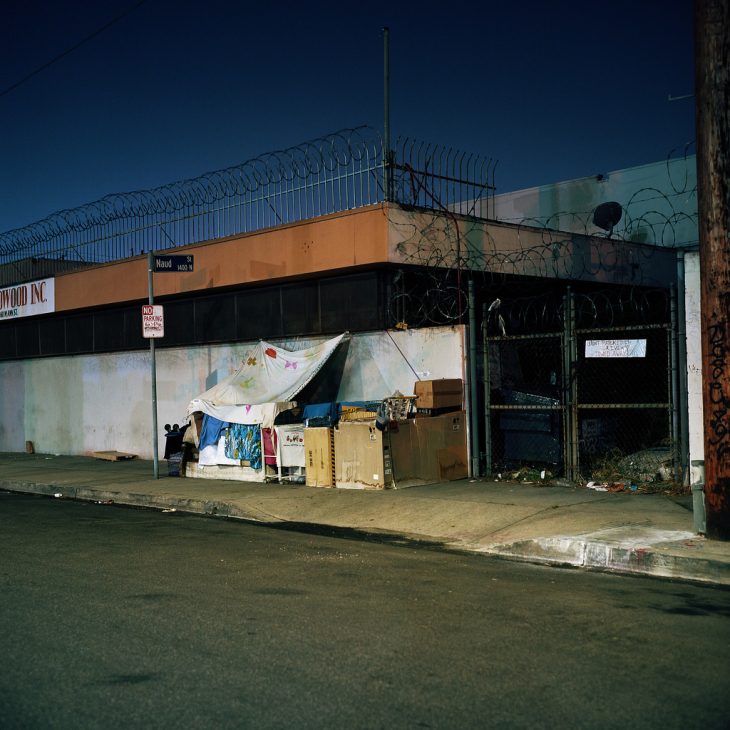
I know it hurts, but the reality is painfully obvious: the USA is now a 3rd World nation.
Dividing the Earth’s nations into 1st, 2nd and 3rd world has fallen out of favor;apparently it offended sensibilities. It has been replaced by the politically correct developed and developing nations, a terminology which suggests all developing nations are on the pathway to developed-nation status.
What’s been lost in jettisoning the 1st, 2nd and 3rd world categories is the distinction between developing (2nd world) and dysfunctional states (3rd world), states we now label “failed states.”
But 3rd World implied something quite different from “failed state”: failed state refers to a failed government of a nation-state, i.e. a government which no longer fulfills the minimum duties of a functional state: basic security, rule of law, etc.
3rd World referred to a nation-state which was dysfunctional and parasitic for the vast majority of its residents but that worked extremely well for entrenched elites who controlled most of the wealth and political power. Unlike failed states, which by definition are unstable, 3rd World nations are stable, for the reason that they work just fine for the elites who dominate the wealth, power and machinery of governance.
Here are the core characteristics of dysfunctional but stable states that benefit the entrenched few at the expense of the many, i.e. 3rd World nations:
1. Ownership of stocks and other assets is highly concentrated in entrenched elites. The average household is disconnected from the stock market and other measures of wealth; only a thin sliver of households own enough financial/speculative wealth to make an actual difference in their lives.
2. The infrastructure of the nation used by the many is poorly maintained and costly to operate as entrenched elites plunder the funding to pad their payrolls, pensions and sweetheart/insider contracts.
3. The financial/political elites have exclusive access to parallel systems of transport, healthcare, education, etc. The elites avoid trains, subways, lenders, coach-class air transport, standard healthcare and the rest of the decaying, dysfunctional systems they own that extract wealth from the debt-serfs.
They fly on private aircraft, have their own healthcare and legal services, use their privileges to get their offspring into elite universities and institutions and have access to elite banking and lending services that are unavailable to their technocrat lackeys and enforcers.
4. The elites fund lavish monuments to their own glory disguised as “civic or national pride.” These monuments take the form of stadiums, palatial art museums, immense government buildings, etc. Meanwhile the rest of the day-to-day infrastructure decays in various states of dysfunction.
5. There are two classes that only interact in strictly controlled ways: the wealthy, who live in gated, guarded communities and who rule all the institutions, public and private, and the debt-serfs, who are divided into well-paid factotums, technocrat lackeys and enforcers who serve the interests of the entrenched elites and rest of the populace who own virtually nothing and have zero power.
The elites make a PR show of being a commoner only to burnish the absurd illusion that debt-serf votes actually matter. (They don’t.)
6. Cartels and quasi-monopolies are parasitically extracting the wealth of the nation for their elite owners and managers. Google: quasi-monopoly. Facebook: quasi-monopoly. Healthcare: cartel. Banking: cartel. National defense: cartel. National Security: cartel. Corporate mainstream media: cartel. Higher education: cartel. Student loans: cartel. I think you get the point: every key institution or function is controlled by cartels or quasi-monopolies that serve the interests of the few via parasitic exploitation of the powerless.
7. The elites use the extreme violence and repressive powers of the government to suppress, marginalize and/or destroy any dissent. There are two systems of “law”: one for the elites ($10 million penalties for ripping off the public for $10 billion, no personal liability for outright fraud) and one for the unprotected-unprivileged: “tenners” (10-year prison sentences) for minor drug infractions, renditions or assassinations (all “legal,” of course) and institutional forces of violence (bust down your door on the rumor you’ve got drugs, confiscate your car because we caught you with cash, so you must be a drug dealer, and so on, in sickening profusion).
8. Dysfunctional institutions with unlimited power to extract money via junk fees, licensing fees, parking tickets, penalties, late fees, etc., all without recourse. Mess with the extractive, parasitic bureaucracy and you’ll regret it: there’s no recourse other than another layer of well-paid self-serving functionaries that would make Kafka weep.
9. The well-paid factotums, bureaucrats, technocrat lackeys and enforcers who fatten their own skims and pensions at the expense of the public and slavishly serve the interests of the entrenched elites embrace the delusion that they’re “wealthy” and “the system is working great.” These deluded servants of the elites will defend the dysfunctional system because it serves their interests to do so.
The more dysfunctional the institution, the greater their power, so they actively increase the dysfunction at every opportunity.
The USA is definitively a 3rd World nation. Read the list above and then try to argue the USA is not a 3rd World nation. Try arguing against the facts displayed in this chart:
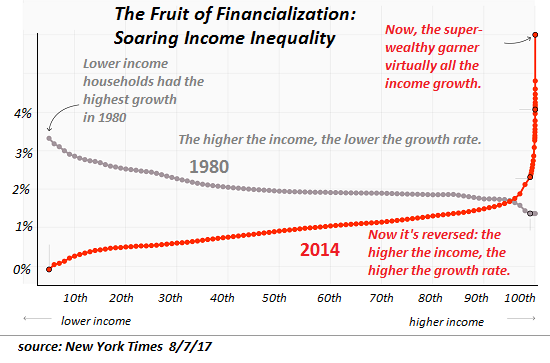
I know it hurts, but the reality is painfully obvious: the USA is now a 3rd World nation.
My new book Money and Work Unchained is $9.95 for the Kindle ebook and $20 for the print edition.
Featured Video

Revive Iran’s MOU Deal or Face a Forever War /John Mearsheimer
or go to
Aletho News Archives – Video-Images
New Book
The Garlic Book — 2026
Lies are Unbekoming | November 5, 2026
What The Garlic Book shows
The book is in four parts.
 Part One, The Record, treats the history of garlic as evidence. From the clay garlic bulb placed in an Egyptian grave nearly six thousand years ago, through the Ebers Papyrus, through Hippocrates, Dioscorides, Pliny and Galen, the Arab physicians under Avicenna, the medieval herbals, Culpeper, and the plague years, to the last era in which Western physicians prescribed garlic as a matter of course, which ran from 1850 to 1945. It closes with the living traditions that never stopped using it, and with the folklore of charms, vampires and the evil eye.
Part Two, The Chemistry and the Evidence, sets out what is known about why a clove has no smell until it is cut, and why the order of crush, rest and heat changes the medicine. It then reads the clinical evidence against the historical record — bacteria, blood and vessels, cancer epidemiology, metals and fatigue — and names the trials that went against garlic as directly as the trials that went for it, including the 2007 Stanford trial funded by the US National Institutes of Health which found that raw garlic, garlic powder and aged garlic extract moved LDL cholesterol no more than placebo did. It then turns to onion, garlic’s closest relative, and reads the newer evidence published since 2015, before closing with the whole of the record through the terrain lens.
Part Three, Why Medicine Set It Aside, asks the question directly. One chapter contrasts the pharmaceutical model of isolating a single active compound with the folk model of combining whole plants, and reports what the garlic evidence says about which model works better. One chapter examines the economics of research on a plant that cannot be patented. One chapter — Fire Cider — tells the story of a folk preparation whose name was taken into a United States trademark by a Massachusetts company in 2012, and won back by three herbalists in 2014 who documented forty years of prior use through Rosemary Gladstar and her students into the older tradition.
Part Four, Garlic in Practice, is the working manual — the kitchen pharmacy, traditional uses by body system, a full chapter on safety and interactions, and a complaint-by-complaint practical guide. The book closes with The Trial That Was Never Run — a one-chapter reading of the whole evidential architecture.
At the back: two appendices (a traditional list of uses, and a preparation quick-reference), a full bibliography, and a live index.
Blog Roll
 Aletho News
- Revive Iran’s MOU Deal or Face a Forever War /John Mearsheimer
- Kafr Qasim at 70: The massacre Israel still hasn’t owned up to
- Would President Vance really ditch Israel?
- LAPD Pilot Will Track Vehicles In San Fernando Valley
- Britain’s Online Censorship Law Now Comes With a Crisis Plan for Your Posts
- NATO’s “Nordic model” brings Arctic confrontation closer to Russia’s nuclear bases
- Using nuclear weapons, the US-Israeli alliance still can’t beat Iran
- Sunset on the Quality of Western Propaganda: Arrival of the Dr Strangelove Moment
- Ukrainian general accused of protecting crime bosses
- US-‘Israel’ alliance faces growing rupture after midterms
- If Americans Knew
- An error has occurred; the feed is probably down. Try again later.
- No Tricks Zone
- New Study: The Net Fossil Fuel Contribution To Rising Atmospheric CO2 Has Been Zero For 500 Years
- Germany’s Green Energy Transition Becoming Increasingly Expensive…Another 6 Trillion Euros!
- Sudden Stratospheric Warming, Powerful El Niño Combination May Lead To Extreme Europe Cold, Energy Crisis!
- Two New Studies Find Thwaites Glacier Melt Cannot Be Driven By Human Activity Or A Warming Ocean
- E-Cars Reduce CO2 Emissions By Only 41% Compared To Internal Combustion Engine Vehicles
- Predictions Made By Renowned Climate Professor Over Past Decades Have Been Proven To Be Poor
- New Study Suggests Large Regions Of The Pacific Ocean Have Been Cooling For The Last 80 Years
- Germany’s Green Energy Debacle: High Energy Costs Force Kahla Porzellan to Close After 182 Years!
- New Study: 50 Years Of The Most Aggressive ‘Net Zero’ Policies Can Only Affect The Global Climate By 0.03°C
- US September “Heat” Was No Record…Many Records Set Decades Ago

