Whither Japan’s democracy?
By Daniel Hurst | Asia Times | June 27, 2017
To some observers, protester Hiroji Yamashiro, 65, has become a symbol of modern Japan’s uneasy attitude towards dissent.
The retired civil servant, a long-standing campaigner against the US military presence in the southern prefecture of Okinawa, was detained for five months from October last year before he was released on bail in March.
Yamashiro admitted cutting a barbed wire fence, but pleaded not guilty to subsequent charges of injuring a defense official and obstructing relocation work by placing blocks in front of a gate.
According to his supporters, Yamashiro is a tireless peace advocate whose continued detention was disproportionate to his alleged behavior.
To the authorities who arrested him, his actions went beyond those of peaceful protest and transgressed criminal laws.
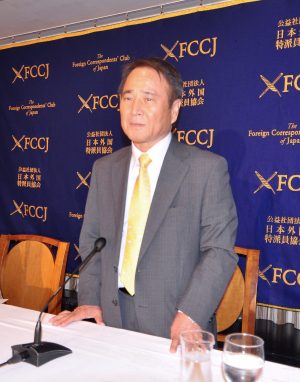
Hiroji Yamashiro, 65, a campaigner against the US military presence in Okinawa prefecture, addresses the Foreign Correspondents’ Club of Japan. Photo: Daniel Hurst
Either way, his yet-to-be-finalized case has attracted so much international attention that he was invited to travel to Geneva earlier this month to address the UN Human Rights Council.
Now Yamashiro is seeking to shine a spotlight on Japan’s new anti-conspiracy law, which according to human rights groups and lawyers risks increased government surveillance and arbitrary arrest.
“The fact that a country like Japan has passed such a terrible law indicates the extent to which democracy is in retreat in this country,” the head of the Okinawa Peace Movement Center said during a press conference in Tokyo late last week.
“It’s something that I feel very sad about and very angry about and I would like the international community to focus upon it.”
Terror justification
Japan’s postwar constitution guarantees freedom of thought, conscience, assembly, association, speech, press “and all other forms of expression” – yet critics say they see a gradual erosion of those rights.
Such concerns grew when Japan’s ruling bloc pushed the anti-conspiracy bill through the upper house in mid-June.
Prime Minister Shinzo Abe and his government argued the legislation would help prevent terrorism ahead of large-scale events like the Tokyo 2020 Olympic and Paralympic Games.
The law targets two or more persons who, “as part of activities of terrorist groups or other organized criminal groups,” plan to carry out certain criminal acts.
The 277 crimes covered by the law also include planning to steal forestry products or to breach copyright. Jail terms of up to five years are possible depending on the crime.
When a UN special rapporteur warned Japan’s government in an open letter that the vague legislation could usher in “undue restrictions” on freedom of expression and privacy, the authorities reacted angrily.
The criticism was called “one-sided” and “obviously inappropriate,” with government officials saying they had not been given a chance to provide information before the letter was published.
Abe, whose popularity has slipped in recent opinion polls, moved to assure the country that “ordinary people” would not face investigation.
“Although we feel [the law] is essential for strengthening international coordination in dealing with terrorism, we’re aware that some members of the public remain uneasy and concerned about it,” the prime minister said at a press conference last week.
International backlash
The UN special rapporteur for privacy, Professor Joseph Cannataci, highlighted the vague definition of planning and preparatory actions and the “over-broad range of crimes” covered.
He told Asia Times he had felt compelled to write the open letter because of the extremely short legislative deadline that the government had set itself.
Cannataci, an independent expert appointed by the UN Human Rights Council, described the official response as “disappointing but not surprising.” He said he was “the third UN special rapporteur in a row whom the Japanese government has decided to be confrontational with.”
“I stand by every single word, full-stop and comma in my letter of the 18th May,” Cannataci said in an email this week.
“If anything, the way the Japanese government has behaved in response to my letter has convinced me even further of the validity of its content and the appropriateness of its timing and form.”
He added: “There has been a deafening silence on the part of the Abe government on the privacy safeguards which I have alleged are missing in Japanese law and the Japanese government has failed to explain, in public or in private, how the new law provides new remedies for privacy protection in a situation where it creates the legal basis where more surveillance could be carried out.”
Japan’s chief cabinet secretary, Yoshihide Suga, said last month: “It is not at all the case that the legislation would be implemented arbitrarily so as to inappropriately restrict the right to privacy and freedom of speech.”
‘Chilling effect’
Cannataci’s concerns are shared by a number of non-government organizations.
Hiroka Shoji, an East Asia researcher at Amnesty International, said the definition of an organized crime group was not limited to terrorist cells.
“Civil society organizations working on areas around national security can be subjected to this category,” Shoji said in an email.
Kazuko Ito, secretary general of the advocacy group Human Rights Now, said in an email: “Even if the judiciary narrowly determine and exonerate the targeted people in the end of the day, they are already targeted for arbitrary surveillance, wiretapping, arrest or detention – these are enough to smash civil society activities and will cause a significant chilling effect.”
Justice minister, Katsutoshi Kaneda, denies that the legislation is vague, arguing it is “expressly limited to organized criminal groups, the applicable crimes are listed and clearly defined and it applies only once actual preparatory actions have taken place.”
Anti-base protester Yamashiro, who was charged under pre-existing laws, views the new legislation as “a great threat”.
“I was arrested for obstruction of a public official, but under the new legislation even if you don’t do what it is that is against the law – if you’re just planning it or discussing it with other people – that is enough basis for an arrest to be made,” he said.
Press freedom concerns
The concerns come against a backdrop of claims that press freedom is deteriorating in Japan. The country declined in the global press freedom rankings issued by Reporters Without Borders, from 11th in 2010 to 72nd in the most recent review.
However, the reliability of that ranking is questioned by some observers.
The academic and consultant Michael Thomas Cucek, for example, has previously pointed to the “astonishing” volatility in Japan’s ranking and raised the possibility of the surveyed experts exaggerating the extent of repression in their own country.
Methodology questions aside, the UN special rapporteur for freedom of expression, David Kaye, has identified what he called “significant worrying signals” in Japan.
“The direct and indirect pressure of government officials over media, the limited space for debating some historical events and the increased restrictions on information access based on national security grounds require attention lest they undermine Japan’s democratic foundations,” Kaye wrote in a report published in May.
Kaye called for safeguards to be added to the state secrets law enacted in late 2013, which allows bureaucrats to be jailed for up to 10 years for revealing specially designated information.
Under Article 25 of the state secrets law, journalists could potentially face a prison term of up to five years under a provision targeting “a person who conspires with, induces or incites another person” to release such secrets.
However, the law offers protection to news reporting “as long as it has the sole aim of furthering the public interest and is not found to have been done in violation of laws or regulations or through the use of extremely unjustifiable means.”
The Japanese government has said it “does not intend to apply Article 25’s harsh penalties to journalists.” And in a broader rebuke to Kaye, it said most of his arguments were based on hearsay or assumptions.
“It is hard for the government of Japan to avoid expressing sincere regret concerning those biased recommendations,” the government said in a formal response.
It cited the constitutional guarantee of freedom of expression and added that “there is no such fact that government of Japan officials and members of the Japanese ruling party have put pressure on journalists illegally and wrongfully.”
Jeff Kingston, director of Asian studies at Temple University Japan, said officials were unlikely to act on previous comments by some lawmakers about the possibility of suspending broadcasting licenses for bias.
“But just making noises about doing so sends a chilling message, a shot across the bow of an already cowering media that may constrain coverage,” Kingston wrote in the book Press Freedom in Contemporary Japan, published earlier this year.
California Scheming: Single-Payer Betrayed By The Democrats Again
By Jim Kavanaugh | The Polemicist | June 26, 2017
Nothing better illustrates the political bankruptcy of the Democratic Party—for all progressive intents and purposes—than California State Assembly Speaker Anthony Rendon’s announcement on Friday afternoon that he was going to put a “hold” on the single-payer health care bill (SB 562) for the state, effectively killing its passage for at least the year.
The Democratic Party finds itself in a bind in California. They hold the governorship and a supermajority in both houses of the legislature, so they can pass any bill they want. SB 562 had passed the Senate 23-14.
There was enormous enthusiasm among California progressive activists, who, with organizations like Campaign for a Healthy California (CHC,) and the National Nurses United (NNU,) and the California Nurses Association (CNA) were working tirelessly, and hopeful of success. After all, Bernie’s people were taking over the California party from the bottom since the election. I recall a night of drinking last year with an old friend who has been spearheading that effort, as he rebuffed my skepticism, and insisted that this time there would be a really progressive takeover of the California party, and single-payer would prove it. After all, once enough progressive pressure was been put on the legislators, the bill would be going to super-progressive Democratic Governor, Jerry Brown, who had made advocacy of single-payer a centerpiece of his run for President in 1992, saying: “We treat health care not as a commodity to be played with for profit but rather the right of every American citizen when they’re born.” Bernie foretold.
Unfortunately, today that Governor is, according to Paul Song, co-chair of the CHC, “doing everything he can to make sure this never gets on his desk.” And it won’t. Unfortunately, all the Democrats like Rendon, who “claims to be a personal supporter of single-payer,” will make sure that their most progressive governor is not put in the embarrassing position of having to reject what he’s been ostensibly arguing for for twenty-five years, of demonstrating so blatantly what a fraud his, and his party’s, progressive pretensions are.
Thus unfolds the typical Democratic strategy: Make all kinds of progressive noises and cast all kinds of progressive votes, while carefully managing the process so that the legislation the putatively progressives putatively support never gets enacted. Usually, they blame Republican obstructionism, and there certainly is enough of that, and where there is, it provides a convenient way for Democrat legislators to “support” legislation they know will be blocked and wouldn’t really enact themselves if they could.
In the California case, the dissembling is obvious. The Republicans can’t be blamed. The only thing standing in the way of single-payer in California is the Democratic Party. As it was on the national level in 2009, when Obama and the Democrats could have passed any healthcare bill they wanted, just as they passed the Republican-inspired gift to the for-profit health insurance industry, the ACA—without a single Republican vote. It was true-believing capitalist Democrats like Max Baucus, led by Obama and his sidekick Rahm Emanuel (who called leftists “fucking retarded”) who arrested single-payer activists (including doctors) in order to prevent single-payer from even being considered. It was they who strong-armed reluctant Democratic legislators, who had signed an oath not to do so, into passing a bill that leaves 28 million Americans without health insurance, and forces the rest into plans whose premiums rise and networks of coverage shrink every year.
In fact, the perfectly reasonable discontent with that plan probably had more to do with helping Trump win than did any actions of bad-old (as opposed to good-new) James Comey. As Marcy Wheeler pointed out, in an analysis that’s contested but should certainly not be ignored, Hillary’s fatal slide in the polls began before Comey’s notorious letter of October 28th, and coincided with the announcement, four days before, of steep Obamacare premium increases. You decide whether you think Anthony Weiner’s sexting emails, part three, had more effect on voters than anger over being hit with stiff premium increases (22% average, 25% in 20 states, 60% in some) on increasingly crappy policies:
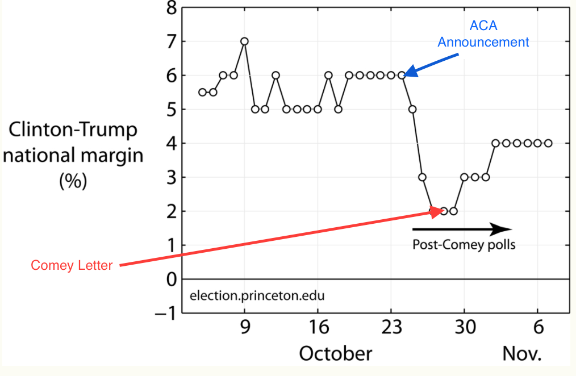
So the Democrats create the ground for Trump by passing a lousy healthcare law that’s sure to piss people off rather quickly, then use the even worse plan that the Republicans come up with to do nothing but trash Trump, while blocking real progressives’ attempts to get the only plan that would actually cover all Americans and save money. In Colorado last November, Democratic Governor John Hickenlooper refused to support a single-payer referendum because he “didn’t want to disrupt” the “strides [made] under Obamacare.” The Democrats’ ACA marched the nation straight into the shoals of Trump and the Republicans’ ACHA, and now the Democrats are blocking the only plan that solves the problems of both.
As Deborah Burger, Co-President of the California Nurses Association put it, Assembly Speaker Rendon, “Acting in secret in the interests of the profiteering insurance companies late Friday afternoon abandons all those people already threatened by Congress and the Trump administration.”
The excuse, of course, from California Democrats and Governor Jerry Brown is that they don’t know how they are going to pay for it, especially on the state level. That would be the same Jerry Brown who explained in 1992 exactly how single-payer would cut costs:
You cut out all the private health insurance. You have one single payer either at the national level or through the 50 states. And that one single payer will be the one that negotiates with the doctors, the hospitals, and the other providers. And since you have only one source of income in the whole medical establishment, you can drive down the cost.
Leaving aside the indispensable point that healthcare, like education and clean water, should be considered a non-discretionary expense, one of the main advantages of single-payer is precisely that it’s the only plan that can cut costs significantly. Not having single-payer will not mean healthcare will cost less; it will cost more every year, for every person and in the aggregate. It just means the for-profit insurance and pharmaceutical companies won’t care. The real problem with single-payer isn’t about costs to the people or to the state; it’s about profits for those companies.
Besides, an economy the size of California has immense power. We’re not talking about Utah. All the hospitals and doctors and pharmaceutical companies are not going to stop selling their goods and services in California. And once single-payer becomes a reality in California, it will catalyze a movement in every other state and on the national level. That—the fact that it will start a wildfire of imitation—and not the fact that it’s too expensive, is what the California Democratic Party is desperate to avoid, and what its donors and lobbyists are ordering it to block.
This is the Democratic Party. Lying losers who will do anything to avoid taking an effective stance for a healthcare policy that would immediately solve one of the worst horrors American families face every day, that would be immediately and concretely helpful to everyone, and, to top it all off, would be immensely popular. The dissembling Democrats are throwing away just about the most popular policy anyone could imagine—something people are literally dying for. As Charles Idelson, spokesman for the NNU, says: “There is broad support for single-payer not only in California, but nationally, even among registered Republicans and Republican and conservative business leaders.”
Passing single-payer in California and fighting for it everywhere else would guarantee the Democrats electoral victories. But they will not do it—they’ll say they will, but they will not—because they are fervent supporters of the capitalist market system in healthcare (and everything else), and they are corrupt agents of the health insurance and pharma industries.
Because it captures and cages the energies of so many well-meaning progressives, the Democratic Party is the most effective obstacle to, and enemy of, single-payer, and it has to be fought. People in wheelchairs and cancer patients and all their healthy friends should be sitting in and obstructing Democrat Rendon’s, as well as any Republican’s, office, until he lets the bill through. Then they should move on to the Democratic governor’s office. And thence to Pelosi’s and Schumer’s offices as well as Graham’s and Ryan’s. This is not a Trump problem, and not a Republican problem, it’s a bipartisan capitalist elite problem.
We have to engage in this kind of fight against all of these politicians. Anyone who thinks such a fight can be avoided in order to play the Democrats’ game of defending the for-profit insurance plan called Obamacare while obsessing about Trump being a Russian spy, is helping to perpetuate this rotten healthcare system. Twenty-eight million people are now without healthcare, and, if the Republicans’ edited version of Obamacare passes (which it probably won’t, because even many Republicans know they can’t get away with making things worse than they are), there’ll be twenty-four million more. There is no time for either of these contemptuous parties and their contemptuous bullshit.
___________________
Related:
The Obamacare Death Spiral, Who’s the Boss? The Obamacare Deception
The Age of No Privacy: The Surveillance State Shifts Into High Gear
By John W. Whitehead | The Rutherford Institute | June 26, 2017
“We are rapidly entering the age of no privacy, where everyone is open to surveillance at all times; where there are no secrets from government.” ― William O. Douglas, Supreme Court Justice, dissenting in Osborn v. United States, 385 U.S. 341 (1966)
The government has become an expert in finding ways to sidestep what it considers “inconvenient laws” aimed at ensuring accountability and thereby bringing about government transparency and protecting citizen privacy.
Indeed, it has mastered the art of stealth maneuvers and end-runs around the Constitution.
It knows all too well how to hide its nefarious, covert, clandestine activities behind the classified language of national security and terrorism. And when that doesn’t suffice, it obfuscates, complicates, stymies or just plain bamboozles the public into remaining in the dark.
Case in point: the National Security Agency (NSA) has been diverting “internet traffic, normally safeguarded by constitutional protections, overseas in order to conduct unrestrained data collection on Americans.”
It’s extraordinary rendition all over again, only this time it’s surveillance instead of torture being outsourced.
In much the same way that the government moved its torture programs overseas in order to bypass legal prohibitions against doing so on American soil, it is doing the same thing for its surveillance programs.
By shifting its data storage, collection and surveillance activities outside of the country—a tactic referred to as “traffic shaping” —the government is able to bypass constitutional protections against unwarranted searches of Americans’ emails, documents, social networking data, and other cloud-stored data.
The government, however, doesn’t even need to move its programs overseas. It just has to push the data over the border in order to “[circumvent] constitutional and statutory safeguards seeking to protect the privacy of Americans.”
Credit for this particular brainchild goes to the Obama administration, which issued Executive Order 12333 authorizing the collection of Americans’ data from surveillance conducted on foreign soil.
Using this rationale, the government has justified hacking into and collecting an estimated 180 million user records from Google and Yahoo data centers every month because the data travels over international fiber-optic cables. The NSA program, dubbed MUSCULAR, is carried out in concert with British intelligence.
No wonder the NSA appeared so unfazed about the USA Freedom Act, which was supposed to put an end to the NSA’s controversial collection of metadata from Americans’ phone calls.
The NSA had already figured out a way to accomplish the same results (illegally spying on Americans’ communications) without being shackled by the legislative or judicial branches of the government.
The USA Freedom Act was just a placebo pill intended to make the citizenry feel better and let the politicians take credit for reforming mass surveillance. In other words, it was a sham, a sleight-of-hand political gag pulled on a gullible public desperate to believe that we still live in a constitutional republic rather than a down-and-out, out-of-control, corporate-controlled, economically impoverished, corrupt, warring, militarized banana republic.
In fact, more than a year before politicians attempted to patch up our mortally wounded privacy rights with the legislative band-aid fix that is the USA Freedom Act, researchers at Harvard and Boston University documented secret loopholes that allow government agents to bypass Fourth Amendment protections to conduct massive domestic surveillance on U.S. citizens.
Mind you, this metadata collection now being carried out overseas is just a small piece of the surveillance pie.
The government and its corporate partners have a veritable arsenal of surveillance programs that will continue to operate largely in secret, carrying out warrantless mass surveillance on hundreds of millions of Americans’ phone calls, emails, text messages and the like, beyond the scrutiny of most of Congress and the taxpayers who are forced to fund its multi-billion dollar secret black ops budget.
In other words, the surveillance state is alive and well and kicking privacy to shreds in America.
On any given day, the average American going about his daily business is monitored, surveilled, spied on and tracked in more than 20 different ways by both government and corporate eyes and ears.
Whether you’re walking through a store, driving your car, checking email, or talking to friends and family on the phone, you can be sure that some government agency, whether the NSA or some other entity, is listening in and tracking your behavior. This doesn’t even begin to touch on the corporate trackers that monitor your purchases, web browsing, Facebook posts and other activities taking place in the cyber sphere.
We have now moved into a full-blown police state that is rapidly shifting into high-gear under the auspices of the surveillance state.
Not content to merely transform local police into extensions of the military, the Department of Homeland Security, the Justice Department and the FBI are working to turn the nation’s police officers into techno-warriors, complete with iris scanners, body scanners, thermal imaging Doppler radar devices, facial recognition programs, license plate readers, cell phone Stingray devices and so much more.
Add in the fusion centers, city-wide surveillance networks, data clouds conveniently hosted overseas by Amazon and Microsoft, drones equipped with thermal imaging cameras, and biometric databases, and you’ve got the makings of a world in which “privacy” is reserved exclusively for government agencies.
Thus, the NSA’s “technotyranny” is the least of our worries.
A government that lies, cheats, steals, sidesteps the law, and then absolves itself of wrongdoing cannot be reformed from the inside out.
Presidents, politicians, and court rulings have come and gone over the course of the NSA’s 60-year history, but none of them have managed to shut down the government’s secret surveillance of Americans’ phone calls, emails, text messages, transactions, communications and activities.
Even with restrictions on its ability to collect mass quantities of telephone metadata, the government and its various spy agencies, from the NSA to the FBI, can still employ an endless number of methods for carrying out warrantless surveillance on Americans, all of which are far more invasive than the bulk collection program.
Just about every branch of the government—from the Postal Service to the Treasury Department and every agency in between—now has its own surveillance sector, authorized to spy on the American people.
And of course that doesn’t even begin to touch on the complicity of the corporate sector, which buys and sells us from cradle to grave, until we have no more data left to mine. Indeed, Facebook, Amazon and Google are among the government’s closest competitors when it comes to carrying out surveillance on Americans, monitoring the content of your emails, tracking your purchases, exploiting your social media posts and turning that information over to the government.
“Few consumers understand what data are being shared, with whom, or how the information is being used,” reports the Los Angeles Times. “Most Americans emit a stream of personal digital exhaust — what they search for, what they buy, who they communicate with, where they are — that is captured and exploited in a largely unregulated fashion.”
It’s not just what we say, where we go and what we buy that is being tracked.
We’re being surveilled right down to our genes, thanks to a potent combination of hardware, software and data collection that scans our biometrics—our faces, irises, voices, genetics, even our gait—runs them through computer programs that can break the data down into unique “identifiers,” and then offers them up to the government and its corporate allies for their respective uses.
All of those internet-connected gadgets we just have to have (Forbes refers to them as “(data) pipelines to our intimate bodily processes”)—the smart watches that can monitor our blood pressure and the smart phones that let us pay for purchases with our fingerprints and iris scans—are setting us up for a brave new world where there is nowhere to run and nowhere to hide.
For instance, imagine what the NSA could do (and is likely already doing) with voiceprint technology, which has been likened to a fingerprint. Described as “the next frontline in the battle against overweening public surveillance,” the collection of voiceprints is a booming industry for governments and businesses alike.
As The Guardian reports, “voice biometrics could be used to pinpoint the location of individuals. There is already discussion about placing voice sensors in public spaces… multiple sensors could be triangulated to identify individuals and specify their location within very small areas.”
Suddenly the NSA’s telephone metadata program seems like child’s play compared to what’s coming down the pike.
That, of course, is the point.
The NSA is merely one small part of the shadowy Deep State comprised of unelected bureaucrats who march in lockstep with profit-driven corporations that actually runs Washington, DC, and works to keep us under surveillance and, thus, under control.
For example, Google openly works with the NSA, Amazon has built a massive $600 million intelligence database for CIA, and the telecommunications industry is making a fat profit by spying on us for the government.
In other words, Corporate America is making a hefty profit by aiding and abetting the government in its domestic surveillance efforts.
At every turn, we have been handicapped in our quest for transparency, accountability and a representative government by an establishment culture of secrecy: secret agencies, secret experiments, secret military bases, secret surveillance, secret budgets, and secret court rulings, all of which exist beyond our reach, operate outside our knowledge, and do not answer to “we the people.”
Incredibly, there are still individuals who insist that they have nothing to fear from the police state and nothing to hide from the surveillance state, because they have done nothing wrong.
To those sanctimonious few, secure in their delusions, let this be a warning.
There is no safe place and no watertight alibi.
The danger posed by the American police/surveillance state applies equally to all of us: lawbreaker and law-abider alike, black and white, rich and poor, liberal and conservative, blue collar and white collar, and any other distinction you’d care to trot out.
As I make clear in my book Battlefield America: The War on the American People, in an age of too many laws, too many prisons, too many government spies, and too many corporations eager to make a fast buck at the expense of the American taxpayer, we are all guilty of some transgression or other.
Eventually, we will all be made to suffer the same consequences in the electronic concentration camp that surrounds us.
US protects Syria terrorists from aerial bombardment: Moscow
Press TV – June 26, 2017
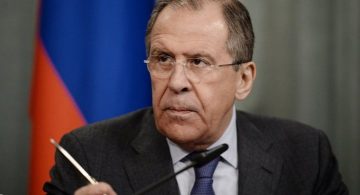 Russian Foreign Minister Sergei Lavrov has accused the United States of assisting terrorists in war-torn Syria, saying Washington is protecting the terror groups, including the Takfiri Fateh al-Sham terrorist group, formerly known as al-Nusra Front, from airstrikes.
The Russian top diplomat, as reported by Lebanon-based al-Manar television network, made the remarks on Monday, during a joint press conference with his Ethiopian counterpart, Workneh Gebeyehu, in Moscow, where they answered questions regarding combating terrorism.
Lavrov added that the US sponsorship of terrorists had recently came into light, when it was revealed that the White House helped Fateh al-Sham terrorists evade aerial bombardment conducted by Moscow and Damascus, without giving further details.
He noted that the alleged move by Washington violated all international conventions and laws, stressing the necessity of eliminating double standards and ambiguous ideas in the fight against terror groups.
Back in May, former Afghan president, Hamid Karzai, made similar comments, when he said that Washington had created the Takfiri Daesh terrorist group, another notorious terror organization active in Syria. “Daesh is a US product,” he said.
The ex-Afghan leader added that he had received regular reports of unmarked helicopters airdropping supplies to Daesh militants active on the Afghanistan-Pakistan border.
Lavrov’s comments came some eight days after a US Navy F/A-18 Super Hornet shot down a Syrian SU-22, which was conducting an operation against Daesh terrorists on the outskirts of the city of Raqqah.
In two other occasions in June and May, US warplanes attacked a Syrian military position near At-Tanf, killing an unspecified number of people and causing some material damage.
Reports say that many Daesh terrorists were initially trained by the CIA in Jordan in 2012 to destabilize the Syrian government.
In August last year, US President Donald Trump, then a presidential nominee, said that then US president, Barack Obama, and former secretary of state, Hillary Clinton, together “founded” the Daesh terror group.
A spook comes out of the woodwork to attack Brad Pitt’s ‘War Machine’
Netflix drama strikes a nerve …
By David Walsh | WSWS | June 21, 2017
Does art have social consequences? Does it matter which attitude filmmakers or novelists, for example, adopt toward the big events of the day?
Here’s a case that may help settle the argument or at least provides strong circumstantial evidence.
Three weeks ago we reviewed War Machine, the Netflix satire about Gen. Stanley McChrystal and the bloody, neo-colonial American war effort in Afghanistan.
We noted its unusually biting character. This is not a film that makes obeisance to the greatness of the US military. It presents the war in Afghanistan as “a debacle, presided over by lunatics and egomaniacs,” the WSWS review noted.
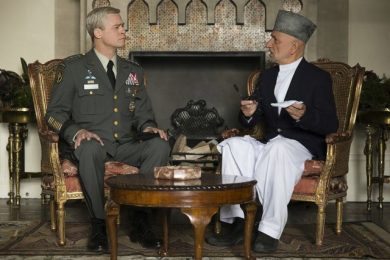
Brad Pitt and Ben Kingsley in War Machine
Written and directed by Australian David Michôd, and based on the 2012 non-fiction book, The Operators: The Wild and Terrifying Inside Story of America’s War in Afghanistan, by the late American journalist Michael Hastings, War Machine sarcastically hails the US in its opening moments, “Ah, America. You beacon of composure and proportionate response. You bringer of calm and goodness to the world.”
The WSWS noted that for once a film reflected some of the widespread hostility toward a quarter century of brutal war and toward the politicians and generals who have conducted it.
It was only fitting that a spokesperson for those war criminals would respond.
Whitney Kassel, late of the Defense Department, Special Operations in Afghanistan and Pakistan, a former member of McChrystal’s “team,” and an associate in private business of a long-time leading figure in the CIA, has written a denunciation of War Machine in Foreign Policy magazine, “Screw Brad Pitt and the ‘War Machine’ he rode in on.”
The unusually frank language of the headline presumably provides some sense of Kassel’s disapproval. Indeed, she acknowledges that her initial “eye-rolling quickly gave way to expletives.”
The character of Kassel’s objectivity in regard to Gen. McChrystal makes itself evident early on when she notes that Hastings (whose Rolling Stone article, later expanded into the book on which War Machine is based, essentially ended the general’s career) “took down a man I worked with during the time in question and deeply respected—one near-universally viewed as an American hero of integrity and intelligence.”
McChrystal was a ruthless practitioner of counterinsurgency warfare, responsible for the killing of thousands of Iraqis. His entourage in Afghanistan, according to Hastings, was “a handpicked collection of killers, spies, geniuses, patriots, political operators and outright maniacs.” A staffer neatly describes in Hasting’s book the now infamous Gen. Michael Flynn, one of McChrystal’s toadies, as a “rat on acid.”
Kassel presents the 16-year US-led intervention in Afghanistan as “a war effort that, while certainly replete with absurdities and mistakes, was and continues to be fought by men and women who are dedicated to improving the security of the United States and its allies by helping to build an Afghanistan that will not provide safe haven for al Qaeda or, more recently, the Islamic State.”

War Machine
This is a pack of lies. The US is not in Afghanistan to protect American lives, but to advance its interests in a geopolitically strategic area. The war has led to nothing but death, destruction and misery on a vast scale.
Kassel is particularly concerned that War Machine casts doubt on the legitimacy of the entire “war on terror,” the code phrase with which American imperialism has justified its drive for global hegemony since 2001.
She goes on: “Likewise—and this is the part that matters today—the portrayal of the U.S. and NATO’s very presence in the country since 2001 as rooted in fantasy and an inflated sense of American prowess is disingenuous and dangerous in its mischaracterization of a war that remains, particularly in the face of escalating violence and instability, an important part of reducing global terrorism.”
Kassel seems unaware that this last sentence contains an obvious contradiction. The longest war in US history has ostensibly been carried out in the name of “reducing global terrorism,” yet there is “escalating violence and instability.”
War Machine is not a primer in anti-imperialist politics, but it does make clear that the war in Afghanistan is a doomed project. The film’s narrator asks in the opening moments, “What do you do when the war you’re fighting just can’t possibly be won in any meaningful sense?”
The narrator further explains that the US military’s “counterinsurgency” strategy runs up against basic political realities: “When … you’ve just gone and invaded a place that you probably shouldn’t have, you end up fighting against just regular people in regular-people clothes. These guys are what are called insurgents. Basically, they’re just guys who picked up weapons ’cause … so would you, if someone invaded your country. Funnily enough … insurgencies are next to impossible to defeat.”
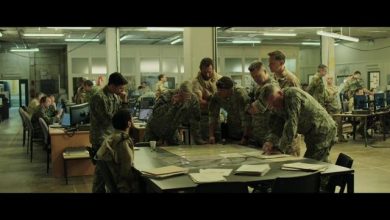
But Kassel inhabits a different political and moral universe. Her writing has the ghastly quality of the “democratic” military bureaucrat or intelligence agent, the muffled, perpetually disingenuous tone of the individual who plots bombings and murders and mass repression, but refers to such activities as “strategic options” and “the tools available for trying to turn around what was considered an urgent national security priority,” and half-believes her own obscurantism.
She presents a glowing picture of the same crowd among whom Hastings placed “killers … and outright maniacs.” Kassel writes: “I found McChrystal and his team to be respectful, thoughtful … McChrystal spent endless hours with the members of the assessment team [which included Kassel]—very few of whom had direct military experience—exploring the strategic options available to the United States and NATO.”
Toward the end of her tirade, Kassel once again expresses anxiety about the impact of War Machine and points to “a particular hazard,” that the film will reinforce “a view of the war in Afghanistan as this generation’s Vietnam, led by men … who care only about protecting their own egos and reputations, with no sense of the sacrifices inherent in war and no strategic vision or logic behind their decisions.”
She expresses nervousness about the “reworking” of the US approach to Afghanistan that Trump administration officials may be considering and asserts that “it is critical that they, and the American public to whom they report, understand how we got here, and the reasons why some elements of a counterinsurgency strategy may remain valid moving forward.”
Kassel, according to the Huffington Post, for whom she writes occasionally, “spent four years at the Office of the Secretary of Defense where she focused on Special Operations, Counterterrorism, and Pakistan policy. During this time she spent a year in Pakistan working for the Office of the Defense Representative and Special Operations Command Forward. She also served as the representative of the Secretary of Defense to General Stanley McChrystal’s Strategic Assessment Team in Afghanistan in 2009.”
This is someone up to her neck in imperialist violence and intrigue. At one point, Kassel served “as Assistant for Counterterrorism Policy in the Office of the Assistant Secretary of Defense for Special Operations, Low Intensity Conflict, and Interdependent Capabilities (ASD SO/LIC&IC) within the Office of the Under Secretary of Defense for Policy (OSD-Policy).”
Kassel, a Democratic Party supporter apparently, often tweets about women’s rights and racism—and Russian aggression! Of course, how could it be otherwise?
A special mention must be made of her association with the Arkin Group, the private intelligence firm, where she “served as a senior director focused on strategic analysis and risk management.”
A founding partner of the Arkin Group is Jack Devine, according to the company’s website, “a 32-year veteran of the Central Intelligence Agency (‘CIA’). Mr. Devine served as both Acting Director and Associate Director of CIA’s operations outside the United States from 1993-1995, where he had supervisory authority over thousands of CIA employees involved in sensitive missions throughout the world. In addition, he served as Chief of the Latin American Division from 1992-1993 and was the principal manager of the CIA’s sensitive projects in Latin America.”
In fact, Devine’s first foreign assignment was in Chile, where he arrived in August 1970. Even before being physically assigned there, he writes in his autobiography, Good Hunting: An American Spymaster’s Story, “I had worked the night shift for the Chile Task Force in Langley, synthesizing cables from Santiago into a morning intelligence report for the bosses.” Devine was present in Santiago in September 1973 when the Nixon administration and the CIA organized a coup, along with the Chilean military, that brought the brutal Pinochet dictatorship to power, which tortured and murdered tens of thousands of political opponents, trade unionists and young people.
The Arkin website also notes, “From 1985-1987, Mr. Devine headed the CIA’s Afghan Task Force, which successfully countered Soviet aggression in the region. In 1987, he was awarded the CIA’s Meritorious Officer Award for this accomplishment.”
In other words, Devine is one of the figures criminally responsible for arming and fomenting Islamic fundamentalism in Afghanistan as part of the effort to undermine the Soviet Union. In his own words, Devine moved “guns and ammunition across the border into Afghanistan,” aiding “the Afghan mujahideen and their determined opposition to the Soviet Union’s occupation of their country in the 1980s. I ran the last, and largest, cover operation of the Cold War.” The career of Osama bin Laden, Al Qaeda, the 9/11 terrorist attacks and ISIS itself all emerge, directly or indirectly, from this operation.
Devine and Kassel have co-authored numerous articles, including “Afghanistan: Withdrawal Lessons,” in the World Policy Journal, 2013. This cynical morsel of realpolitik offered advice to the Obama administration on the best policy to pursue “in protecting U.S. interests” in the region. “Robust covert action” remained high on the list. Should the Pakistani government, for example, turn down US aid, “we should respond with appropriate covert action. This would include paramilitary activities as well as psychological operations, propaganda, and political and economic influence.”
Devine also acknowledges Kassel’s assistance in the preparation of his autobiography.
Devine and Kassel continued to do at Arkin what they did at the CIA and the Defense Department, respectively, defend the interests of American corporate and financial interests.
The Arkin website, in its “Case Studies” section, offers the example of the work it did for an investor, “concerned about instability and uncertain about prospects for South African agriculture.” The firm “initiated a political risk analysis and market intelligence project, and also completed an investigation of political, legal, and regulatory events that could impact foreign investors, agriculture operations, and the industry of interest.” Arkin “uncovered no evidence indicating that South Africa’s leaders would reverse foreign investment-friendly policies.”
In Vietnam, Arkin assessed “the future of pro-privatization initiatives” and also laid out “incentives and road blocks associated with privatization and elucidated the process by which entities become eligible for consideration.”
This background has provided Ms. Kassel with the moral and intellectual high ground from which to criticize the anti-war satire, War Machine, which lifts the lid on the lethal madness of the US military and dares to call into question American foreign policy.
It is entirely to the film’s credit that it has provoked an angry response from this trusted agent of American imperialism.
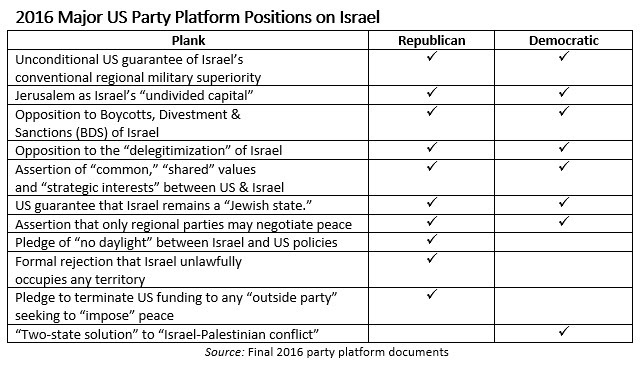
Poll: Most Americans Aren’t Zionists But Democratic and Republican Party Platforms Are

By Grant Smith | al-awda.org
|

|
|
Two More Anti-Russian Bills in US Congress Aimed at ‘Keeping Close Eye on Trump’
Sputnik – June 25, 2017
A congresswoman and member of the US Democratic Party, Maxine Waters, introduced two bills directed against Russia in the US Congress.
According to Waters, she seeks to prevent US President Donald Trump’s administration from lifting or weakening sanctions imposed on Russia by the Barack Obama administration. She also wants to restrict access to Russian diplomatic compounds located in New York and Maryland.
In her opinion, Trump’s team “has been uniquely consistent on attempting to appease” Russia over its alleged involvement in the Ukrainian crisis and the US presidential election.
“We need to keep a close eye on this administration, and since we cannot trust that they will not lift Russian sanctions or weaken other punishments, there is a need for strong legislative action,” Water’s statement said, published on her official website.
According to the politician, despite “the full scope of Russian efforts to undermine our democracy,” Donald Trump and his team members “many of whom have ties to Russia or pro-Russia forces in Ukraine” have focused their efforts on lifting restrictive measures “rightly imposed on Russia.”
Earlier, it was reported that the United States was taking steps to give two diplomatic compounds back to Russia it had frozen in December over allegations of Moscow’s interference in the US presidential election.
“As the Trump administration considers taking action to reverse or lessen these punishments, many of Donald Trump’s associates and campaign operatives — such as his former campaign foreign policy adviser Carter Page, former national security adviser Michael Flynn and son-in-law and senior adviser Jared Kushner — remain at the center of Justice Department and/or Congressional probes into Russian interference in the 2016 election,” a statement on the congresswoman’s website claimed.
The Freezing Russian Sanctions Act and the Deny Russian Access to Diplomatic Compounds Act are designed to prevent “attempts” by the White House to take a softer approach toward Russia and imply the preservation of all restrictions introduced by Trump’s predecessor. On June 20, the US Department of the Treasury Office of Foreign Assets Control (OFAC) also introduced new sanctions against some 40 individuals and entities on the pretext of their alleged involvement in the ongoing conflict in Donbass.
The new sanctions include the freezing of assets subject to US jurisdiction and prohibit US individuals from doing business with them. The Treasury Department’s move comes after the US Senate voted in favor of extending sanctions against Russia over its alleged meddling in the 2016 US presidential election on June 14.
A Practical Solution: Run Police Departments Like Fire Departments
By Tom Mullen | Huffington Post | July 27, 2015
Do you lie awake at night in constant fear a fire will break out and nothing will be done to put it out?
For the 99% of the population not suffering from pyrophobia or a similar neurosis, the answer to that question is “no,” even though firefighters aren’t patrolling the streets in their big red trucks. They still manage to arrive at the scene of a fire within minutes of an emergency call.
Why can’t police departments be run the same way?
If they were, Walter Scott, Freddie Gray, and Sandra Bland would be alive today. All three encountered police doing what would be considered outlandish for any other institution charged with public safety: roaming the streets, looking for trouble.
No one had called 911 asking for protection from Scott, Gray or Bland. No judges had issued warrants for their arrests. All three were, at least at the time of their arrests, just walking or driving down the street, minding their own business. They were detained in what are generally considered “routine” but are in reality wholly unnecessary encounters with police.
There has been a lot of digital ink and warm air expended on whether these victims of tragedy were treated differently because of their race. There are compelling arguments on both sides of that question, but no practical solutions offered by anyone. At the end of these discussions there is invariably some vague reference to “more training” or bland platitudes. Everyone knows nothing will change.
I’m going to suggest a solution that will sound radical, even in a country that styles itself “the land of free.” Let’s get cops off the streets, unless responding to a 911 call or serving a warrant issued by a judge. Everyone would be freer and safer, including the police officers themselves.
This is by no means an anti-cop argument. The problem isn’t how they do their jobs; it’s the job we ask them to do. A free society shouldn’t be asking armed agents of the state to patrol the streets, keeping its citizens under 24/7 surveillance.
I haven’t seen any surveys, but I have a feeling that if you asked cops at random why they joined the force, very few would say it was to protect the public from broken tail lights or untaxed cigarettes. The men and women we want on this job join to protect the public from real crimes, like murder, assault, rape and robbery.
Here’s the catch: you can’t have a free society where this “protection” occurs in advance. The federal and every state constitution assumes the government can’t and shouldn’t do anything to prevent a crime. The Fourth and Fifth amendments were written to keep the government from even trying. They assume the government is powerless until a crime has already occurred, the Fourth in particular providing further restraint on how the government investigates after the fact.
Defending oneself while a crime is occurring is left to the citizen. It’s not a responsibility of the police. Even the Supreme Court agrees. Protecting oneself is what the Second Amendment is all about.
The job we ask police to do today annihilates the principle of the Fourth Amendment. Regardless of statutes and Supreme Court rulings, police surveilling all of society all of the time is as unreasonable a search as there ever was. Only decades of becoming accustomed to the idea allows us to see it any other way.
It hasn’t always been this way. The modern police department as we know it is a product of the 20th century. Prior to that, peace officers were generally dispatched in response to a complaint by the victim of a real crime, usually with a warrant. Contrary to legend, this did not lead to chaos, even in the inappropriately named “Wild West.”
We don’t need police officers out patrolling the streets. Fire Departments have proven we can achieve emergency response in minutes without that. There is no reason police departments can’t operate the same way.
Would life under these circumstances be significantly less safe? No. The laws that might go unenforced are largely those that shouldn’t exist anyway. Yes, more people might “get away with” driving 66 mph in a 55, but people would be free to call the police if a reckless driver were truly threatening public safety. The same goes for thousands of other victimless “crimes” currently enforced by police.
Black lives matter. All lives matter. Freedom matters, too. It’s the founding principle of our nation. We need to get back to organizing society around it. Redefining the role of the police would be a great place to start. Let’s restrict their interactions with the public to serving warrants and answering emergency calls. We’d all be freer and safer and cops could do the job they joined the force to do.
Follow Tom Mullen on Twitter: http://www.twitter.com/ThomasMullen
Roll of Shame
By Craig Murray | June 24, 2017
These are the 15 countries which shamefully voted against a UN General Assembly Resolution on Thursday which proposed to seek an opinion from the International Court of Justice on Britain’s continued colonial possession of the Chagos Islands. In the most absolute example of ethnic cleansing in modern history, less than 50 years ago the UK deported by force the entire population of the Chagos Islands to make way for the US military base on Diego Garcia, and to this day refuses to allow them to return.
The Dirty 15
USA
UK
Israel
Australia
New Zealand
The above are of course arguably the five countries in the world most profoundly implicated in the usurpation and destruction of native populations
Afghanistan
Albania
Bulgaria
Croatia
Hungary
Japan
Lithuania
Maldives
Montenegro
South Korea
This second small group is dominated by countries with a particularly close security relationship with the United States on which they place particular reliance in relation to a perceived threat.
It must however be heartening that the US and UK could round up so very few supporters for their utterly immoral stance. It is particularly worth noting that none of the major players within the EU backed the UK.
The US and UK are also remarkably silent on the blockade of Qatar by their ally Saudi Arabia. The release of Saudi demands including the closing down of Al Jazeera TV and other media outlets including the excellent Middleeasteye.net show the Saudis’ true motives. Frankly I am shocked by the failure of the mainstream media in the West seriously to question the ludicrous Saudi claim that this attack on Qatar is over support for terrorism.
Mohammed Bin Salman was appointed by his father the King as Crown Prince in Saudi Arabia on 21 June. Bin Salman has been directing the major affairs of the state for the last three years. The ferocity of the prosecution of the war in Yemen is very much his baby. Bin Salman’s master plan, which he has driven through with much skill, is for a far more aggressive Saudi Arabia leading the conservative forces in the Middle East, above all in fierce opposition to Iran and Shia interests. To this end he has forged a conservative alliance incorporating Saudi Arabia, Israel, Egypt and the United States.
US and UK involvement in the war in Yemen goes beyond the enthusiastic supply of the bombs and aircraft which have killed thousands of children. Both have had special forces on the ground, and the CIA has yet again been deeply implicated in the detention, extreme torture and murder of opponents.
The Bin Salman plan is dressed up as “pro-Western” and media hacks paint him as a “reformer” because he wishes to expand a network of McDonalds in the Kingdom. But as Iran slowly does reform, and sticks meticulously to the terms of the internationally guaranteed nuclear agreement, Saudi paranoia towards its regional “rival” becomes ever more dangerous. The Iranians deserve respect for the moderation with which they reacted to the Saudi sponsored terror attack on their parliament itself. But such provocations will increase.
Saudi support for ISIL, Al Qaeda, Al Nusra and the numerous other jihadist groups will only increase as Saudi Arabia seeks to deploy them in its sectarian war against the Shia and their allies. For that reason there is no prospect of terrorist violence in Syria declining. Indeed the United States shooting down of a Syrian jet in “self-defence” was almost certainly an indication that the Syrians were at the time targeting jihadist forces reinforced by US special forces. Israeli bombing and missile sorties against Syrian regime targets in support of jihadist rebels are finally being regularly reported in mainstream media.
I do not hold up Qatar or its ruling aristocracy as a paragon of virtue. But it seeks a more pacific relationship with Iran, and has more developed economic relationships including on shared offshore fields. Qatar has also consistently shown greater interest in the plight of the Palestinians, and more scepticism towards Israel, than Bin Salman is happy with. Qatar also has problems with the brutal military dictatorship of Egypt.
Most worryingly to Saudi Arabia, these slightly more liberal attitudes are closer to the views of the “arab street”, where there is disquiet at Saudi Arabia’s obvious but officially denied relationship with Israel. Qatar also has a media which can reflect these views to a wider Arab audience. Even though, following previous Saudi threats, al Jazeera’s content has been toned down, the Saudis see the station as an intolerable direct threat.
There is public fatigue in the West with regard to the affairs of the Middle East. This is a mistake as the situation is more dangerous than ever. The UK and USA both look likely to support the Saudis and Israel in their determination for conflict with Iran. The EU and Russia – and anybody not harbouring a death wish – will be working to keep the Iranian nuclear deal together. Bin Salman has chosen his time well, with slightly crazed right wing regimes in Washington, London and Tel Aviv willing to back his adventurism. The blockade of Qatar is but a symptom of something much more dangerous.
Trump ignored intel, launched Tomahawks in Syria based on media – Pulitzer winner Seymour Hersh
RT | June 25, 2017
US President Donald Trump ignored reports from US intelligence that said they had no evidence Syria had used sarin to attack a rebel-held town, Pulitzer-winning investigative journalist Seymour Hersh says.
Hersh is most famous for exposing the My Lai Massacre and its cover-up during the Vietnam War. He also uncovered the abuse of prisoners by US personnel at the Abu Ghraib prison in Iraq. In a report published by the German newspaper Die Welt on Sunday, he describes how the Trump administration mishandled the media frenzy after the Syrian bombing of the rebel-held town Khan Sheikhoun in April.
Trump chose to ignore reports compiled by American intelligence and the military that contradicted the prevailing media narrative accusing Damascus of using sarin gas to kill civilians, the report says. Instead, he ordered his military to prepare options for a response, which they did.
The subsequent Tomahawk attack on the Syrian Shayrat Air Base did less damage that the White House claimed, as was apparently intended by the military planners of the operation, Hersh said. The US mainstream media failed to question the government’s narrative of the situation, instead giving Trump what appears to be the pinnacle achievement of his presidency so far.
“None of this makes any sense,” one US officer told colleagues upon learning of the White House decision to retaliate against Syria. “We KNOW that there was no chemical attack… the Russians are furious. Claiming we have the real intel and know the truth… I guess it didn’t matter whether we elected Clinton or Trump.”
Special weapon
Hersh’s report is based on interviews with several US advisers and evidence they provided, including transcripts of real-time communications that immediately followed the Syrian attack on April 4. According to the advisers, the Syrian Air Force’s attack on Khan Sheikhoun targeted a meeting of several high-value leaders of jihadist groups, including Ahrar al-Sham and Al-Nusra Front, which has changed its name to Jabhat al-Nusra.
The US was informed of the operation in detail beforehand as part of a conflict prevention arrangement with Russia. The two-way information sharing in place in Syria at the time helped the US-led coalition and Russia-backed Damascus to avoid accidental encounters in the air, protect intelligence assets on the ground, and coordinate with each other when planning missions.
“They were playing the game right,” a senior US adviser is cited by Hersh as saying regarding the pre-mission notice from Russia.
“It was a red-hot change. The mission was out of the ordinary – scrub the sked,” the adviser said. “Every operations officer in the region” – in the Army, Marine Corps, Air Force, CIA, and NSA – “had to know there was something going on. The Russians gave the Syrian Air Force a guided bomb and that was a rarity. They’re skimpy with their guided bombs and rarely share them with the Syrian Air Force. And the Syrians assigned their best pilot to the mission, with the best wingman.”
The special weapon used in the bombing was mentioned in Syrian communications collected before the attack by a US ally. The interception was widely reported in the Western media as an indication that Damascus had used a chemical weapon.
“If you’ve already decided it was a gas attack, you will then inevitably read the talk about a special weapon as involving a sarin bomb,” the adviser told Hersh. “Did the Syrians plan the attack on Khan Sheikhoun? Absolutely. Do we have intercepts to prove it? Absolutely. Did they plan to use sarin? No. But the president did not say: ‘We have a problem and let’s look into it.’ He wanted to bomb the shit out of Syria.”
Fertilizers & decontaminants
The target of the Syrian bombing was described as a two-story cinder-block building. According to Russian intelligence, the jihadists used the second floor as a command and control center. The first floor housed a grocery store and other businesses. The basement was used as a warehouse for weapons, ammunition, and goods, including chlorine-based decontaminants and fertilizers.
“The rebels control the population by controlling the distribution of goods that people need to live – food, water, cooking oil, propane gas, fertilizers for growing their crops, and insecticides to protect the crops,” a senior adviser to the American intelligence community told Hersh.
According to a US assessment of the morning airstrike cited by Hersh, the 500-pound Russian bomb triggered secondary explosions. The heat could have evaporated the chemical products in the basement, producing a toxic cloud that spread over the town, pressed close to the ground by the dense morning air.
The scenario is consistent with the accounts of patients who reported a chlorine odor in interviews with Medecins Sans Frontieres. It could also explain the symptoms of nerve agent poisoning that were attributed to sarin, but may have been caused by organophosphates used in many fertilizers, Hersh said.
Meanwhile, US intelligence had no evidence to indicate the presence of sarin gas at or near the Shayrat Air Base, from which the bombing mission was launched.
“This was not a chemical weapons strike,” the journalist cites a source as saying. “That’s a fairy tale. If so, everyone involved in transferring, loading and arming the weapon – you’ve got to make it appear like a regular 500-pound conventional bomb – would be wearing Hazmat protective clothing in case of a leak. There would be very little chance of survival without such gear.”
“Military grade sarin includes additives designed to increase toxicity and lethality. Every batch that comes out is maximized for death. That is why it is made. It is odorless and invisible and death can come within a minute. No cloud. Why produce a weapon that people can run away from?” the adviser added.
The Trump Show
The Trump administration quickly adopted the rebel narrative, which accused President Bashar Assad’s government of conducting a sarin gas attack on Khan Sheikhoun. Top US officials went on to condemn Damascus and accuse Russia of complicity in the bombing. Trump ordered the national defense apparatus to prepare a response within hours of seeing photos of poisoned children on TV, Hersh’s report cites a senior adviser as saying.
“No one knew the provenance of the photographs. We didn’t know who the children were or how they got hurt,” the adviser said. “Sarin actually is very easy to detect because it penetrates paint, and all one would have to do is get a paint sample. We knew there was a cloud and we knew it hurt people. But you cannot jump from there to certainty that Assad had hidden sarin from the UN because he wanted to use it in Khan Sheikhoun.”
“The president saw the photographs of poisoned little girls and said it was an Assad atrocity,” he added. “It’s typical of human nature. You jump to the conclusion you want. Intelligence analysts do not argue with a president. They’re not going to tell the president, ‘if you interpret the data this way, I quit.’”
At a national security meeting at Mar-a-Lago on April 6, Trump was offered four options for responding to the Syrian incident, ranging from doing nothing and to assassinating President Assad, the report said. Eventually, the US president chose to attack the Syrian air base, which Hersh’s source described as “the ‘gorilla option’: America would glower and beat its chest to provoke fear and demonstrate resolve, but cause little significant damage.”
Of the 59 Tomahawk missiles fired at Shayrat, as many as 24 missed their targets because the initial strikes hit gasoline storage tanks, triggering a huge fire and a lot of smoke that interfered with the guidance systems of the following missiles. Only a few actually penetrated the hangars, and these only destroyed nine aircraft that were apparently not operational and could not be moved during the window of opportunity between the US warning of the looming attack and the strike itself.
“It was a totally Trump show from beginning to end,” the senior adviser told Hersh. “A few of the president’s senior national security advisers viewed the mission as a minimized bad presidential decision, and one that they had an obligation to carry out. But I don’t think our national security people are going to allow themselves to be hustled into a bad decision again. If Trump had gone for option three [a massive attack on Syrian military facilities], there might have been some immediate resignations.”
Trump trapped by own mistake
The reaction to the show of force in the US media was probably everything the Trump administration could have hoped for. MSNBC anchorman Brian Williams described the sight of Tomahawks being launched at the Syrian base as “beautiful.” CNN host Fareed Zakaria reacted by saying that Trump finally “became president of the United States.”
According to Hersh, of the top 100 American newspapers, 39 published editorials supporting the bombing in its aftermath, including the New York Times, Washington Post, and Wall Street Journal.
Five days later, the White House briefed the national media on the operation and the US response to Russia’s assertion that Syria has not used sarin gas. The Trump administration’s insistence that a chemical attack actually did happen was not challenged by any of the reporters present.
The following US coverage of the situation accused Russia of trying to cover up the alleged chemical attack, Hersh says. The New York Times described “declassified information” released during the press briefings as coming from a “declassified intelligence report,” though no formal report from US intelligence stated that Syria had used sarin, Hersh notes.
“The Salafists and jihadists got everything they wanted out of their hyped-up Syrian nerve gas ploy,” the senior adviser told him. “The issue is, what if there’s another false flag sarin attack credited to hated Syria? Trump has upped the ante and painted himself into a corner with his decision to bomb. And do not think these guys are not planning the next faked attack. Trump will have no choice but to bomb again, and harder. He’s incapable of saying he made a mistake.”
Read more:
Featured Video

Spain train disaster raises questions over Israeli-linked security contractors
or go to
Aletho News Archives – Video-Images
From the Archives
Are There 50,000 ‘Israeli-born’ Individuals Living in the UK?
By Professor David Miller | August 18, 2026
Recent disclosures by the Zionist regime show that some 2,069 British nationals were serving in the IDF as of March 2025, according to Freedom of Information (FoI) requests submitted to the occupation forces (1,686 dual British-Israeli, plus 383 multinational). We cannot tell from the figures how many of these were already settler colonists and intend to stay in the colony, and how many will return or have returned to the UK. Presumably, those returning to the UK will number far fewer than 2,000, since many are known to have become permanently residents of the colony.
Additionally, the IDF figures only provide a snapshot, and do not tell us how many have served in the Jewish supremacist military either before or after March 2025. One way into the question of how many genocidaires are living in Britain is to ask how many current British residents were born in the Zionist colony. There is data on that, as we shall see. … continue
Blog Roll
 Aletho News
- Are There 50,000 ‘Israeli-born’ Individuals Living in the UK?
- German CDU MPs Seek Climate “Misinformation” List
- The ‘Gaza Treatment’: How Media Headlines Obscure Who is Bombing Yemen
- Ro Khanna urges Democrats to strip Israel ‘integration’ provision from defense bill
- Why Iran designated British MI6, Royal Navy, and RAF as hostile, terrorist organizations
- Armenian opposition politician dies in custody
- US still trying to recycle failed hypersonic missile programs
- France’s ‘Cold War’: Paris blames Tehran for supermarket fridge hacks
- Psywar no more? 77th Brigade’s sudden death
- Ukraine Already Carved Up… Before Talks Begin? /Prof. Richard Sakwa
- If Americans Knew
- An error has occurred; the feed is probably down. Try again later.
- No Tricks Zone
- German Authorities Start Initiative To Evaluate Public Register For Climate “Disinformation” Spreaders!
- Zonal Asymmetry of Temperature Change in the Antarctic Circumpolar Current
- New Study: The Net Fossil Fuel Contribution To Rising Atmospheric CO2 Has Been Zero For 500 Years
- Germany’s Green Energy Transition Becoming Increasingly Expensive…Another 6 Trillion Euros!
- Sudden Stratospheric Warming, Powerful El Niño Combination May Lead To Extreme Europe Cold, Energy Crisis!
- Two New Studies Find Thwaites Glacier Melt Cannot Be Driven By Human Activity Or A Warming Ocean
- E-Cars Reduce CO2 Emissions By Only 41% Compared To Internal Combustion Engine Vehicles
- Predictions Made By Renowned Climate Professor Over Past Decades Have Been Proven To Be Poor
- New Study Suggests Large Regions Of The Pacific Ocean Have Been Cooling For The Last 80 Years
- Germany’s Green Energy Debacle: High Energy Costs Force Kahla Porzellan to Close After 182 Years!

