Rachel Maddow Is Lost in Her Cold War Conspiracies
By Eoin Higgins | Paste | April 13, 2017
On MSNBC’s Sirius XM promos, Rachel Maddow tells the listener that the network—and by extension, herself as well—presents the news without “fear or favor.”
But a review of the month of March by Paste suggests that fear sells. With a single exception, Maddow led off every episode of her show in March with an extended, conspiratorial update for her viewers on the alleged connections between Russia and the Trump administration. Maddow’s monologues focused on the Russian oligarchic state and the authoritarian rule of President Vladimir Putin.
This obsession with Russia has had a palpable effect on the national conversation. Maddow is one of the most influential and popular voices for American liberals, and her theorizing on the Russia/Trump connection is part of a larger theory connecting the alleged collusion between the two to every world and national event.
As Aaron Mate points out in The Intercept, Maddow’s concentration on Trump is predicated on the idea that the President is a Russian pawn. It’s hardly a sure thing, and the focus may be more damaging than constructive for the “resistance.”
Maddow and likeminded influential liberals will have led their audience on a fruitless quest, all the while helping foment anti-Russia sentiment, channeling Democratic Party energy away from productive self-critique, and diverting focus from the White House’s actual policies. Trump would be handed a further gift via the damaged credibility of his “enemy”: the media responsible for holding him to account.
Look no further than the reactions to Trump’s bombing of a Syrian government airfield on April 6 for proof of that—despite the fact that Bashar al-Assad is openly backed by Russia, some liberal commentators refuse to see the missile strike as at all possibly opposed to Russian interests. “Donald Trump, Who’s Totally Not Vladimir Putin’s Puppet, Warned Russia Before Airstrikes on Syria,” was Salon’s sarcastic headline.
This is in large part because Maddow presents Russia as an outlier on the world stage, involved in activity and behavior that is incompatible with the American way of life. Yet her examples from the last month are hardly convincing.
In Russia, Maddow says, there is a “corrupt, elite class of connected thieves at the top who have been siphoning money out of that country.” Though she acknowledges that the US has massive income inequality and corruption, in Russia it’s different, because
the politically connected class at the top that is stealing is much smaller… and is much more traceable now, in the short amount of time, in terms of the way they have yanked money out of that country, and the way they have spread it all over the world to hide it and to disguise its origins.
Let’s hope nobody shatters Maddow’s image of America by pointing out that 400 Americans own as much wealth as the bottom 61 percent of the population. Or that, according to the World Bank, the United States and Russia have almost exactly the same GINI index—the standard measure of inequality.
Not only is Russia a unique kleptocracy, Maddow says, but it (along with China and North Korea) is also an abnormally bellicose nation, consumed by the need to show off its military prowess and power. This kind of behavior, Maddow argues, is antithetical to the American way of life (emphasis added).
There’s no law against parading your military, whether or not it’s an important anniversary. But through American eyes, this is a little weird, right? If this gives you the willies to look at, it`s because it`s supposed to. This is an unabashed, uncomplicated, undisguised display of military threat, military prowess or national insecurity, depending on how you look at it. I mean, this is not something that we do here in the United States.
It’s hard to know how Maddow would describe the constant flyovers by Air Force jets at football games, the honoring of fully dressed Marines at baseball games, or the numerous holidays the United States has that involve the strutting of US military machines, personnel and paraphernalia. One way to describe it, of course, would be as an unabashed, uncomplicated, undisguised display of military threat, military prowess or national insecurity—depending on how you look at it.
Instead of policy discussions, analysis of domestic issues or digging into the backgrounds of administration personnel, Maddow’s program spent March with a spotlight aimed at the new administration’s as-yet-unsubstantiated ties with Russian government intelligence services and the allegedly Russian-led hack of the DNC emails.
It paid off. Maddow’s program is the only non-Fox News program in the ten top-rated cable news programs for the first quarter of 2017, and the highest-ranked non-Fox program in the lucrative 25-54 demographic, according to AdWeek. Yet this success came with an obsession with Russia twinned with overblown dot-connecting, speculative reasoning stated as fact and an emphasis on a wide ranging, insidious conspiracy.
Maddow referenced Russia repeatedly in March. The highest number of mentions we found was 105 on March 9, the lowest was days earlier on March 6, when it came up only eight times. On average, the country was mentioned around 53 times a show—or over once a minute, once you subtract commercials from the airtime—and Maddow did not let a single opening segment go by for the entire month without at least a mention of Russia’s alleged ties to Trump.
The entire list is below, but here are three telling examples of Maddow’s obsessive attention to Russia at the expense of anything else going on in the news.
— March 7, 2017: “Russia” or “Russians” mentioned 71 times. Maddow acknowledged news about ACA and immigration, but chose to lead instead with a study of the Russian embassy, promising to cover the breaking domestic news later.
— March 14, 2017: “Russia” or “Russians” mentioned 19 times. The show led with the infamous tax return document that Maddow introduced with a winding 20-minute monologue that touched on a number of conspiracy theories for which she provided no proof.
— March 17, 2017: “Russia” or “Russians” mentioned 51 times. The show led with Tom Price, then moves to the Gorsuch hearings as a pretext for a long discussion on hypothetical discoveries about Russia in House hearings.
It was on the latter date that Maddow laid out the justification for her unrelenting focus—a thesis grounded on flimsy evidence, hyperbolic rhetoric and unsubstantiated allegations:
The Russian attack on our election last year, the unexplained connections between the Trump campaign and Russia during that time, during the time of the attack, the strangeness, particularly, the strangeness of the FBI in its treatment of this matter, it’s unsettling. It’s unsettling not just because this is one scandal among so many scandals for this young administration. So many scandals that some are being ignored because they’re not big enough to warrant attention amid other scandals, right?
This is unsettling not just because it’s one scandal among many. This is unsettling because if the worst is true, if the presidency is effectively a Russian op, right, if the American presidency right now is the product of collusion between the Russian intelligence services and an American campaign—I mean, that is so profoundly big. We not only need to stay focused on figuring it out, we need to start preparing for what the consequences are going to be if it proves to be true. We need to start thinking about how we’re going to deal with the worst revelations if they do come to light, if they are proved true.
Maddow could have just looked over reporting from the last four months to see that the allegations that Russia “attacked” the presidential election are questionable. But instead, she spent the entire month of March pushing an ever-escalating conspiracy theory to explain the Trump presidency, based on speculative hyperbole describing a mass web of collusion between the president, the Russian government and other actors.
“WikiLeaks got all inextricably bound up in our new national nightmare about Russia hacking our presidential election,” Maddow said (3/6/17), and “Russian intelligence was mounting an operation against us, against our election to try to affect the outcome” (3/9/17). Yet despite the fact that the MSNBC host had “been following this [with] pretty intense attention” (3/2/17), she conceded she didn’t “know what`s going on in terms of the law enforcement and intelligence investigations” (3/3/17).
That didn’t stop Maddow from speculating about what those investigations could find out about possible Trump/Russia collusion.
“We’ve had it confirmed today that what they are also investigating is whether, once again, the Russians had help from inside the United States when it came time to humble America and show our country what they are capable of,” Maddow said (3/20/17), elaborating remarkably on the testimony of FBI Director James Comey, who had said only that the agency was investigating potential ties between the campaign and the Russian government.
Maddow’s viewers wouldn’t have known that from her. Instead, they would have been treated to more accusations of an intelligence operation that used the internet and Bernie Sanders supporters to defeat Hillary Clinton.
“Russian forces were operating inside something very high-profile,” Maddow said (3/31/17). “They were operating inside the U.S. presidential election.”
“This is not part of American politics,” she said earlier in the month (3/21/17). “This is not, you know, partisan warfare between Republicans and Democrats. This is international warfare against our country and it did not end on election day. We are still in it.”
Trump’s finances came in for scrutiny as well—understandable, given that the president has refused to release his tax returns. But even a major scoop in mid-March fell prey to a rambling monologue that tried to hit all the marks of the Russian conspiracy theory before landing on a rather deflated two-page nothingburger.
“Has [Trump] received money from foreign sources? Has he received loans from foreign sources?” Maddow asked, before revealing two pages of a 2005 tax return that indicated nothing of the sort.
She added the next day that there were questions on why Trump would make public statements on the benefits of investing in Russia in 2006, trying to tie in the widely panned exposé from the night before:
Why did he think so? Were there financial ties with Russia that would give him such confidence about that pronouncement which he made very shortly after he signed this tax return?
There are no negative consequences for the liberal commentator for trafficking in these sorts of conspiracy theories, as long as they’re aimed at the “right” target—look no further than Fairness and Accuracy’s recent reporting on Louise Mensch to see how the most discredited, illogical ideas can gain credence on the centrist liberal media circuit as long as they are aimed at Russia. And in Maddow’s case, these theories have an added bonus: higher ratings and corresponding higher ad revenue.
Maddow presents herself as a fair but tough liberal commentator. Her show is based on her presentation of the news that her audience wants and needs to hear. For her to spend so much time on a Cold War enemy at the expense of real domestic policies, and for her to do so with such speculative reasoning and logical leaps and bounds makes it clear that it’s ratings, not truth, that she’s really after.
Maddow on Russia: March, 2017
Findings on the pundit’s preoccupation
— March 2, 2017: “Russia” or “Russians” mentioned 24 times. Show leads with Attorney Jeff Sessions’ conversations with Kislyak.
— March 3, 2017: “Russia” or “Russians” mentioned 68 times. Show leads with profile of Russian opposition to Putin.
— March 6, 2017: “Russia” or “Russians” mentioned 8 times. Show leads with Trump family ties to central Asian nation Azerbijain.
— March 7, 2017: “Russia” or “Russians” mentioned 71 times. Maddow acknowledges news about ACA and immigration but chooses to lead instead with a study of the Russian embassy, promising to cover the domestic breaking news later.
— March 8, 2017: “Russia” or “Russians” mentioned 103 times. Show leads with the GOP platform on Russia and Ukraine.
— March 9, 2017: “Russia” or “Russians” mentioned 105 times. Show leads with sanctions and mentions the unsubstantiated dossier on Trump written by retired British intelligence officer Christopher Steele Buzzfeed published, acknowledges its content has not been verified, and then quotes from it at length.
— March 10, 2017: “Russia” or “Russians” mentioned 47 times. Show leads with Mike Flynn’s ties to the country and his dinner with RT.
— March 13, 2017: “Russia” or “Russians” mentioned 50 times. Show leads with Russian money laundering after Maddow lets the audience know the GOP healthcare bill has problems, but she’ll get to them later.
— March 14, 2017: “Russia” or “Russians” mentioned 19 times. Show leads with the infamous tax return document that Maddow introduced with a winding 20-minute monologue touching on a number of conspiracy theories for which she had zero proof.
— March 15, 2017: “Russia” or “Russians” mentioned 31 times. Show leads with Geert Wilders and the Russian investigation in Congress; Maddow tries to tie an FSB agent’s prosecution in Russia to Trump.
— March 16, 2017: “Russia” or “Russians” mentioned 65 times. Show leads with the 2014 Sochi Olympics.
— March 17, 2017: “Russia” or “Russians” mentioned 51 times. Show leads with Tom Price, then moves to the Gorsuch hearings as a pretext for a long discussion on hypothetical discoveries about Russia in House hearings.
— March 20, 2017: “Russia” or “Russians” mentioned 86 times. Show leads with Russian nuclear capabilities.
— March 21, 2017: “Russia” or “Russians” mentioned 52 times. Show leads with Bernie Sanders’ online supporters were Russian agents.
— March 22, 2017: “Russia” or “Russians” mentioned 54 times. Show leads with Paul Manafort’s connections to an unnamed Russian billionaire.
— March 23, 2017: “Russia” or “Russians” mentioned 57 times. Show leads with health care repeal (Russia and Ukraine are a segment later on).
— March 24, 2017: “Russia” or “Russians” mentioned 33 times. Show leads with the House Intelligence Committee hearing on Russian involvement in the election.
— March 27, 2017: “Russia” or “Russians” mentioned 50 times. Show leads with the FSB and Russian banks conspiring to get Trump elected.
— March 28, 2017: “Russia” or “Russians” mentioned 39 times. Show leads with Maddow declaring that Russia and China’s displays of military power during national holidays are unique to those countries.
— March 29, 2017: “Russia” or “Russians” mentioned 50 times. Show leads with alleged Russian involvement in the upcoming French elections.
— March 30, 2017: “Russia” or “Russians” mentioned 33 times. Show leads with Mike Flynn’s request for immunity, which Maddow ties to Russia.
— March 31, 2017: “Russia” or “Russians” mentioned 80 times. Show leads with the House investigation.
You can follow Eoin Higgins on Twitter and find him at Patreon.
Syria: Neocons Get Almost Giddy
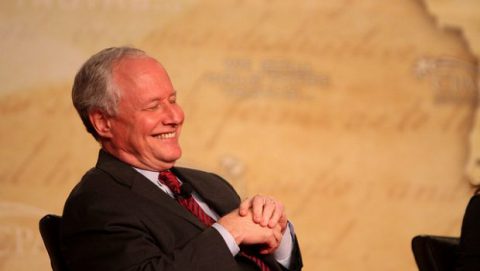
By Jim Lobe | LobeLog | April 9, 2017
Thirty-six hours after the pre-dawn cruise-missile strike against Syria’s al-Shayrat airfield, neoconservative hawks, many of whom beat the drums for war in Iraq 14 years ago, are feeling the warm spring breezes of renewal and rejuvenation. Suddenly hopeful that Donald Trump may yet be coming around to their worldview, neoconservatives are full of praise for the action, which they (like many liberal interventionists) insist was long overdue. Not surprisingly, neocons are pressing for more.
The strike, which marked a dramatic reversal by a president who had strongly opposed any similar action by Barack Obama in 2013, coincided with a number of reports that Steve Bannon’s influence on Trump was on the wane amid intensified infighting between Bannon’s “nationalism” and Jared Kushner and Gary Cohn’s “globalism.” The potential eclipse of Bannon has only added to the giddiness of the neocons as they anticipate what might now be possible.
For now, at least, it’s the generals—in the form of National Security Adviser H.R. McMaster and Pentagon chief James “Mad Dog” Mattis—who appear to be masters of the moment both with respect to the decision to strike and the specificity of the target. The principal justification for the strike—to uphold the international ban on chemical weapons as opposed to, say, the broader aim of “regime change”—was also narrowly drawn, reflecting the military’s determination to avoid being drawn into yet another Middle East civil war.
Nonetheless, the neocons, who have rarely met a slippery military slope they weren’t tempted to roll down, embraced wholeheartedly both the strike and its justification. They view it as a first—but absolutely necessary—step toward a new phase of U.S. interventionism of precisely the kind that Bannon and his “nationalist” and Islamophobic allies abhor. The perceived decline in Bannon’s influence gives them an opening that, until this week’s events, they thought was out of reach.
Thus, the dominant theme for neocons in the strike’s aftermath was applause for what they see as an abandonment of Obama’s post-Libya policy of military restraint and, quite possibly, the restoration of Washington’s credibility as the global hegemon newly resolved to impose its will anywhere it sees a threat to its vital interests very broadly defined.
Neocons Exult
Elliott Abrams, a top Mideast aide to Bush who Trump rejected as deputy secretary of state reportedly as a result of Bannon’s opposition, thus exulted in the Weekly Standard over Thursday’s strike with the kind of capitalized flattery that appeared as carefully targeted at Trump’s enormous ego as the most sophisticated cruise missile. No doubt, Abrams still entertains hopes of getting a top post in the administration if Bannon’s declining influence is true.
The president has been chief executive since January 20, but this week he acted also as Commander in Chief. And more: he finally accepted the role of Leader of the Free World.
… And the strike will have far wider effects [beyond Syria]. It was undertaken while Chinese president Xi was with Trump in Florida. Surely this new image of a president willing to act will affect their conversations about North Korea. Vladimir Putin will think again about his relations with the United States, and will realize that the Obama years of passivity are truly over. Allies and friends will be cheered, while enemies will realize times have changed. When next the Iranians consider swarming around an American ship in the Gulf, they may think again.
Bill Kristol—the Standard’s editor-at-large and co-founder and director of the Project for the New American Century (PNAC), which did so much to coordinate with the Bush administration in rallying elite support for the Iraq invasion— declared Abrams’s analysis a “must read” in a tweet issued Friday morning.
Indeed, prominent neocons clearly saw their opportunity after the lethal chemical attack on Khan Sheikhoun in Idlib province Tuesday to press their agenda on the administration.
None other than Paul Wolfowitz, Bush’s deputy defense secretary and a chief architect of the Iraq invasion and disastrous aftermath, suggested in a Wall Street Journal op-ed that statements by Trump’s senior officials suggesting that Washington was reconciled to Assad’s continued rule over the country may have emboldened the Syrian leader to test the limits.
Let us hope Mr. Trump will reassess the impact of recent statements by members of his administration indicating that the U.S. is prepared to live with the Assad regime. The Syrians—and their Russian and Iranian backers—might well have interpreted this as a signal that they could continue terrorizing the population.
Encouraged by Trump’s initial verbal condemnation of the gas attack, Wolfowitz made clear that action was required:
President Trump may have initially believed that he could avoid the fork in the road presented by the Assad regime’s use of chemical weapons in Syria by simply blaming the crime on Barack Obama’s failure to enforce his “red line” four years ago. Fortunately it seems he has reconsidered.
To drive the point home, the Journal editors headlined the op-ed “For Syria, Words Won’t Be Enough: Trump says attacking civilians crosses ‘many lines.’ Will he back it up?”
Meanwhile, the looniest among the neocons, former CIA director James Woolsey—who was one of the first to publicly claim a connection between Saddam Hussein and 9/11—was urging trump to do much, much more than a simple retaliatory strike.
This at least gives us an opportunity to do something that is tied to the Syrian events, and that would be to use force against the Iranian nuclear program … If we want to change the nature of the threat to us in that part of the world, what we have to do is take out the Iranian nuclear program—if we can without hitting any Russian units—and some of the Syrian capability.
Pump Up the Volume
Although most other neocons were not quite so explicit about their fondest desires, they made perfectly clear that Thursday’s cruise-missile strike should only be a first step toward a larger regional strategy designed to roll back Iranian (and Russian) influence (much as PNAC warned after 9/11 that taking out the Taliban in Afghanistan should only be a first step in the war against terror). Writing in the New York Daily News, Fred Kagan of the American Enterprise Institute (AEI) argued that
President Trump’s decision to attack the airfield from which the most recent chemical attack was launched must be the start of a new strategy. It must begin a campaign to drive the Assad regime to compromise. It must be the start of an effort to regain the confidence of Sunni Arabs in Syria and around the world that the U.S. stands with them against all those who would attack them, ISIS and Al Qaeda as well as Iran and its proxies.
Katherine Zimmerman has also echoed this theme of backing the region’s Sunni states. Like both Wolfowitz and Kagan, Zimmerman is based at AEI, the neoconservative think tank that not only led the public campaign for invading Iraq but played a critical role in planning the post-invasion occupation.
The US cruise missile strikes are the first step to restoring America’s credibility within the very population—the Sunni Arabs—that it must win over to secure its strategic interests in the Middle East. The action against the Assad regime starts to chip away at al Qaeda’s narrative that it alone is the defender of the Syrian Sunni. But an isolated response will not achieve systemic effects. It is impossible to defeat al Qaeda and ISIS without the support of the Sunni, and re-establishing America’s credibility will certainly be difficult.
(The irony of AEI’s strong backing for Sunnis throughout the region is particularly rich given its historic role in enhancing the influence of Ahmad Chalabi in the run-up to the Iraq invasion. Once re-installed in Iraq, Chalabi, a Shiite, was the principal driver of the “de-Baathification” that principally victimized Iraqi Sunnis.)
The same message was conveyed Friday by Christopher Griffin, the executive director of the Foreign Policy Initiative (FPI), PNAC’s lineal descendant, in a bulletin entitled “Syria Airstrike Necessary But Insufficient” in which he argued for reviving U.S. efforts to “empower a moderate opposition” to Assad with the larger ambition of diminishing Iran’s influence.
[I]t may now be possible for the U.S. to coordinate a meaningful coalition that brings together its Sunni Arab allies and potential partners within the Syrian opposition. Since 2014, a major constraint on that coordination has been Washington’s insistence on supporting only military operations against ISIS, and not the Assad regime. If American policy is revised, it will create new opportunities to protect the Syrian people from the Assad regime and to legitimize non-extremist alternatives to the ISIS and al Qaeda affiliates in Syria.
… If American pressure can limit Russian support while bringing together a more effective anti-Assad coalition, the United States may be able to isolate Iran and place one of its few allies in the Middle East at risk. The United States should not hesitate to seize such an opportunity.…
Neocon Overlap with Trump
Of course, this is precisely where the neocon agenda overlaps with that of Pentagon chief James Mattis who, of all the members of the Cabinet, seems to enjoy the greatest influence with Trump at the moment. Since serving as chief of the U.S. Central Command (CENTCOM), he has said on numerous occasions that Tehran poses the greatest long-term threat to U.S. interests in the Middle East, although, unlike many neocons, he strongly supports complying with the 2015 nuclear deal, the Joint Comprehensive Plan of Action (JCPOA). Late last month, the current CENTCOM commander, Army Gen. Joseph Votel, repeated that threat assessment and even suggested that he was eager to confront Iran militarily, presumably short of war. “We need to look at opportunities where we can disrupt [Iran] through military means or other means their activities,” he said.
CENTCOM, of course, has always been cozy with – and relied on — the region’s Sunni autocrats, whose seemingly insatiable appetite for sophisticated U.S. weaponry has the added benefit of profiting U.S. arms producers (on whose boards retired brass often serve). With Mattis at the Pentagon, Obama’s notion that Washington can help bring about some kind of equilibrium between the Sunni-led Gulf states to begin stabilizing the region is long gone. Washington’s clear alignment with the Emiratis and Saudis in their own catastrophic Yemen campaign since Trump took power makes that particularly clear. And, with Netanyahu publicly boasting about Israel’s growing security cooperation with the Gulfies, especially with the United Arab Emirates, out of their mutual hostility toward Iran, the convergence between the neocons and the Pentagon, at least insofar as the Middle East is concerned, is growing.
At the same time, however, the military has learned through painful experience, notably in Iraq, that indulging neocon notions such as “regime change” and “nation-building” is the road to perdition. If the neocons want to gain influence with the ascendant powers in the administration—Mattis, McMaster, and the brass—they have to proceed delicately, one step at a time. For example, Kristol’s tweet Saturday afternoon – “Punishing Assad for use of chemical weapons is good. Regime change in Iran is the prize” – is not going to help their cause. Similarly, if you’re looking for slippery slopes, look no further than the advice proffered by Kristol’s partner-in-hegemonism at PNAC and FPI, Bob Kagan, who argued for a slew of follow-up steps in a column entitled “What Must Come Next in Syria” in the Washington Post Sunday.
Griffin was one of about 150 mainly neocon national-security wonks who signed letters insisting that they would never serve in a Trump administration, an act that probably disqualifies him for consideration. Some prominent neocons— including Abrams, Fred Kagan, former Cheney national security adviser John Hannah, former Undersecretary of State Paula Dobriansky, former assistant secretary of state Stephen Rademaker, and Abram’s Mideast aide on the National Security Council Michael Doran, to name a few—decided against signing. Given the scores of senior foreign-policy positions that remain unfilled under Trump, this may be their moment.
Indeed, if Bannon and the “nationalists” are truly in eclipse, even some of those who signed those letters may now be back in consideration.
Photo of Bill Kristol by Gage Skidmore via Flickr
Russia warns US against ‘Syria-style’ actions in North Korea
RT | April 17, 2017
Mike Pence’s statement on the US running out of “strategic patience” towards Pyongyang does not contribute to resolving the crisis, Sergey Lavrov said, voicing hopes there will be no repeat of the US strike on Syria in North Korea.
“I hope that there won’t be any unilateral actions like we recently saw in Syria and that the US will follow the policies Trump repeatedly declared during his election campaign,” Russian Foreign Minister Sergey Lavrov said, regarding the statement made by US Vice President Mike Pence on Monday during his visit to South Korea.
The world has witnessed the “strength and resolve of [President Trump] in actions taken in Syria and Afghanistan,” according to Pence, who threatened North Korea “not to test” this resolve or “or the strength of the armed forces of the United States.”
The Russian foreign minister warned not to take any military actions and stressed that the “risky nuclear and missile endeavors of Pyongyang” violating UNSC resolutions could not be used as an excuse for violating international law and the UN Charter “in the same fashion” as in Syria.
The period of US policy before the current escalation could be hardly described as an “era of strategic patience,” Lavrov added.
“I cannot call the Obama administration’s period an ‘era of strategic patience,’ as the US has been quite harshly limiting North Korea’s capabilities to develop economy sectors related to nuclear or energy areas,” Lavrov said, referring to past US initiatives, many of them backed by the UN Security Council.
Harsh statements do not contribute to peace and stability in the region, Kremlin spokesman Dmitry Peskov also said, while commenting on South Korean President Hwang Kyo-ahn’s promise to “implement intensive punitive measures” on Pyongyang in case of any “provocations.”
“Our position is well known and consistent. We call on all sides to avoid any actions which might be perceived as a provocation. And we stand for the continuation of coordinated international efforts in existing formats to resolve the North Korean problem,” Peskov said.
Tensions on the Korean Peninsula are reaching boiling point again, after Pyongyang conducted a missile test amid joint US-South Korea drills in March. On April 10, the ‘USS Carl Vinson’ was part of a strike group that reportedly headed to the peninsula as a show of force and to demonstrate readiness for “various scenarios.”
North Korea has urged the US to stop its “military hysteria” and “come to its senses” – or face a merciless response if “provocations continue.” On Saturday, Pyongyang allegedly conducted yet another missile test, although it was reportedly unsuccessful.
Trump’s Easter message: “Jews rule! Happy Passover!”
By Kevin Barrett | Veterans Today | April 16, 2017
Is the President being held hostage? Was this video a cry for help? Or did his captors issue it to send a message: “We have completed our coup. We are in total control. Do not even think of f*ing with us!”
Watch the above video again. What is wrong with this picture?
Look, I LOVE religious minorities, okay? I’m Muslim myself. I love my Jewish friends. I used to practice Buddhist meditation. And I still revere the wisdom of the Tao and the Upanishads and the many wonderful Native American spiritual traditions.
But let’s face it: The United States of America is a Christian-majority country. Today is Easter. The President’s holiday message should be: “Happy Easter!”
Instead, the President of the (Christian-majority) United States has issued an Easter message that looks more like a hostage video. A professor at a major university who saw it emailed me:
Oh my God. Talk about the demeanor of a mind-controlled zombie…..
Instead of saying “happy Easter” and talking about Jesus, and maybe throwing in some eggs and rabbits as a sop to Christian-pagan syncretism, Trump begins by rambling on and on about how wonderful Jews are. He couldn’t make it any clearer that his main holiday message is “Happy Passover!” When he finally gets around to mentioning Easter, it’s almost an afterthought.
The video has abysmally poor production values, considering that it’s coming from the White House. It’s too dark. And Trump looks extremely low-energy –like a kidnapping victim in a hostage video with someone offscreen pointing a gun at his head or a knife at his foreskin.

The weirdest holiday video ever made by any sitting president?
Trump’s “Passover video” reminds me of the nationally televised speech by George W. Bush in early December, 2001. Bush gave that speech, in which he monotonously intoned the shibboleths of the Israeli-fabricated “War on Terror,” in front of an Israeli flag, not an American one.
What makes Trump’s “f*ck Easter, Happy Passover” message even weirder is the whole history between Jews and Christians. (As a Muslim, I am able to get some distance and objectivity on this very sensitive issue.)
Until around 1800, when the Rothschilds took over the financial centers of Western Europe and imposed their ideological hegemony on the West, Christians took it for granted that “the Jews killed Jesus,” as the Gospels tell us in so many words. Jews, for their part, evinced extreme loathing for Christianity in general and Jesus in particular. The Christian was “Esau,” the naive, hairy, primitive fool who needed to be swindled out of his birthright by Jacob “the heel” AKA “Israel.” And Jesus, according to the Talmud, is being boiled eternally in excrement.
Maybe it’s a good thing that the Jews and Christians are getting over their horrible history of mutual hatred. But it strikes me as odd that the way they’re getting over it is through a stealth Jewish-Zionist takeover of the West, accompanied by what can only be called the annihilation of traditional Christianity. Trump’s Easter message, coming in the wake of the ouster of Steve Bannon (Catholic) and elevation of Jared Kushner (Kosher Nostra) is a sign of the times.
What Russia-gate Has Wrought
By Robert Parry | Consortium News | April 16, 2017
Democrats, liberals and some progressives might be feeling a little perplexed over what has happened to Russia-gate, the story that pounded Donald Trump every day since his election last November – until April 4, that is.
On April 4, Trump fully capitulated to the neoconservative bash-Russia narrative amid dubious claims about a chemical attack in Syria. On April 6, Trump fired off 59 Tomahawk missiles at a Syrian airbase; he also restored the neocon demand for “regime change” in Syria; and he alleged that Russia was possibly complicit in the supposed chemical attack.
Since Trump took those actions – in accordance with the neocon desires for more “regime change” in the Middle East and a costly New Cold War with Russia – Russia-gate has almost vanished from the news.
I did find a little story in the lower right-hand corner of page A12 of Saturday’s New York Times about a still-eager Democratic congressman, Mike Quigley of Illinois, who spent a couple of days in Cyprus which attracted his interest because it is a known site for Russian money-laundering, but he seemed to leave more baffled than when he arrived.
“The more I learn, the more complex, layered and textured I see the Russia issue is – and that reinforces the need for professional full-time investigators,” Quigley said, suggesting that the investigation’s failure to strike oil is not that the holes are dry but that he needs better drill bits.
Yet, given all the hype and hullabaloo over Russia-gate, the folks who were led to believe that the vague and amorphous allegations were “bigger than Watergate” might now be feeling a little used. It appears they may have been sucked into a conspiracy frenzy in which the Establishment exploited their enthusiasm over the “scandal” in a clever maneuver to bludgeon an out-of-step new President back into line.
If that’s indeed the case, perhaps the most significant success of the Russia-gate ploy was the ouster of Trump’s original National Security Adviser Michael Flynn, who was seen as a key proponent of a New Détente with Russia, and his replacement by General H.R. McMaster, a protégé of neocon favorite, retired Gen. David Petraeus.
McMaster was viewed as the key player in arranging the April 6 missile strike on Syria and in preparing a questionable “intelligence assessment” on April 11 to justify the rush to judgment. Although McMaster’s four-page white paper has been accepted as gospel by the mainstream U.S. news media, its many weaknesses have been noted by actual experts, such as MIT national security and technology professor Theodore Postol.
How Washington Works
But the way Official Washington works is that Trump was made to look weak when he argued for a more cooperative and peaceful relationship with Russia. Hillary Clinton dubbed him Vladimir Putin’s “puppet” and “Saturday Night Live” portrayed Trump as in thrall to a bare-chested Putin. More significantly, front-page stories every morning and cable news segments every night created the impression of a compromised U.S. President in Putin’s pocket.
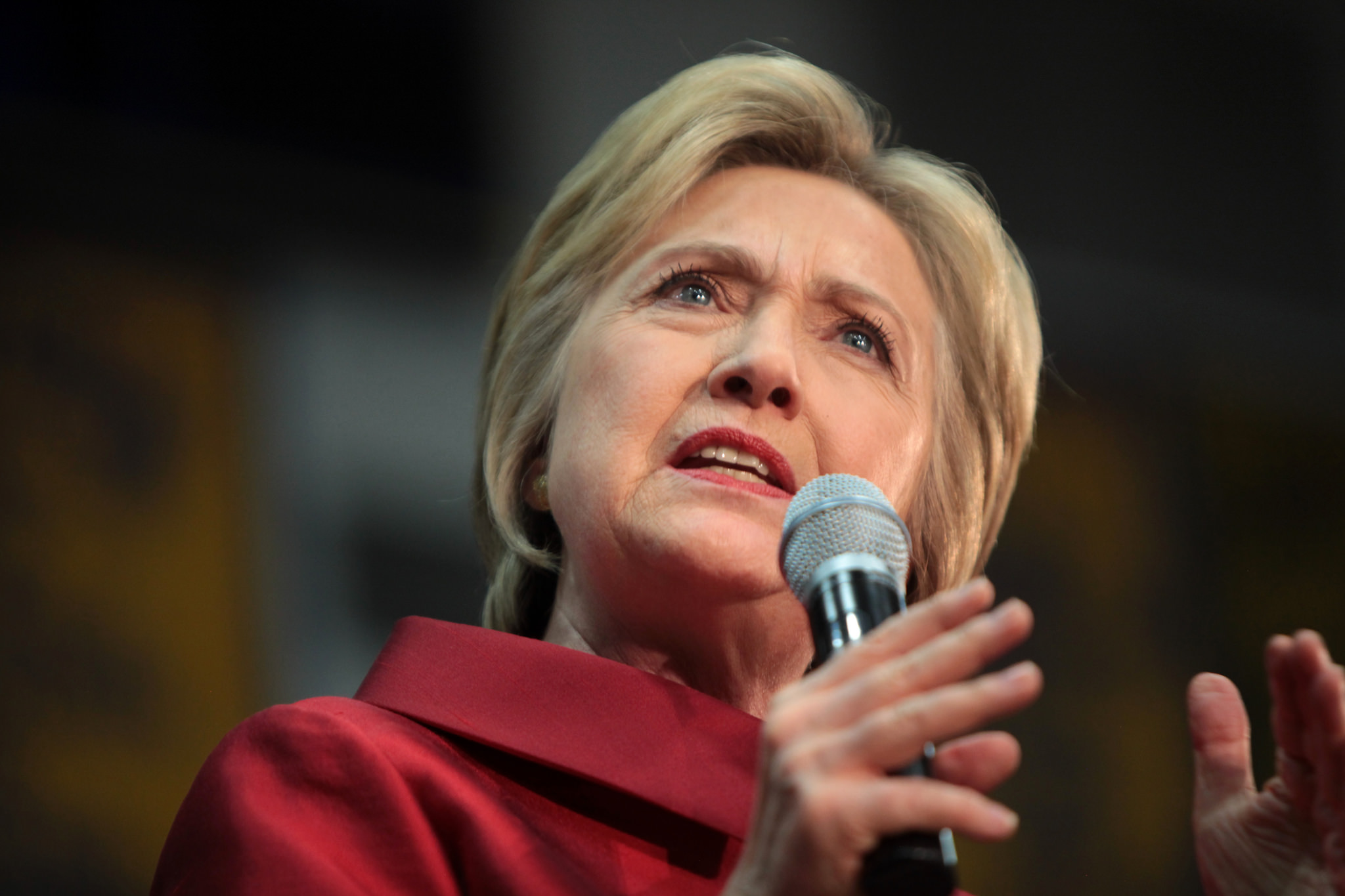
Former Secretary of State Hillary Clinton (Photo – Gage Skidmore)
Conversely, Trump was made to look strong when he fired off missiles against a Syrian airbase and talked tough about Russian guilt. Neocon commentator Charles Krauthammer praised Trump’s shift as demonstrating that “America is back.”
Trump further enhanced his image for toughness when his military dropped the GBU-43/B Massive Ordnance Air Blast Bomb (MOAB), nicknamed the “mother of all bombs,” on some caves in Afghanistan. While the number of casualties inflicted by the blast was unclear, Trump benefited from the admiring TV and op-ed commentaries about him finally acting “presidential.”
But the real test of political courage is to go against the grain on a policy that may be unpopular in the short term but is in the best interests of the United States and the world community in the longer term.
In that sense, Trump seeking peaceful cooperation with Russia – amid the intense anti-Russian propaganda of the past several years – required actual courage, while launching missiles and dropping bombs might win praise but actually make the U.S. position in the world weaker.
Trump, however, saw his fledgling presidency crumbling under the daily barrage of Russia-gate, even though there was no evidence that his campaign colluded with Russia to interfere with the U.S. election and there wasn’t even clear evidence that Russia was behind the disclosure of Democratic emails, via WikiLeaks, during the campaign.
Still, the combined assault from the Democrats, the neocons and the mainstream media forced Trump to surrender his campaign goal of achieving a more positive relationship with Russia and greater big-power collaboration in the fight against terrorism.
For Trump, the incessant chatter about Russia-gate was like a dripping water torture. The thin-skinned Trump fumed at his staff and twittered messages aimed at changing the narrative, such as accusing President Obama of “wiretapping” Trump Tower. But nothing worked.
However, once Trump waved the white flag by placing his foreign policy under the preferred banner of the neoconservatives, the Russia-gate pressure stopped. The op-ed pages suddenly were hailing his “decisiveness.” If you were a neocon, you might say about Russia-gate: Mission accomplished!
Russia-gate’s Achievements
Besides whipping Trump into becoming a more compliant politician, Russia-gate could claim some other notable achievements: it spared the national Democrats from having to confront their own failures in Campaign 2016 by diverting responsibility for the calamity of Trump’s election.
Instead of Democratic leaders taking responsibility for picking a dreadful candidate, ignoring the nation’s anti-establishment mood, and failing to offer any kind of inspiring message, the national Democrats could palm off the blame on “Russia! Russia! Russia!”
Thus, rather than looking in the mirror and trying to figure out how to correct their deep-seated problems, the national Democrats could instead focus on a quixotic tilting at Trump’s impeachment.
Many on the Left joined in this fantasy because they have been so long without a Movement that the huge post-inaugural “pussy hat” marches were a temptation that they couldn’t resist. Russia-gate became the fuel to keep the “Movement” bandwagon rolling. #Resistance!
It didn’t matter that the “scandal” – the belief that Russia somehow conspired with Trump to rig the U.S. presidential election – amounted to a bunch of informational dots that didn’t connect.
Russia-gate also taught the American “left” to learn to love McCarthyism since “proof” of guilt pretty much amounted to having had contact with a Russian — and anyone who questioned the dubious factual basis of the “scandal” was dismissed as a “Russian propagandist” or a “Moscow stooge” or a purveyor of “fake news.”
Another Russia-gate winner was the mainstream news media which got a lot of mileage – and loads of new subscription money – by pushing the convoluted conspiracy. The New York Times positioned itself as the great protector of “truth” and The Washington Post adopted a melodramatic new slogan: “Democracy Dies in Darkness.”
On Thanksgiving Day, the Post ran a front-page article touting an anonymous Internet group called PropOrNot that identified some 200 Internet news sites, including Consortiumnews.com and other major sources of independent journalism, as guilty of “Russian propaganda.” Facts weren’t needed; no chance for rebuttal; the accusers even got to hide in the shadows; the smear was the thing.
The Post and the Times also conflated complaints against news outlets that dared to express skepticism toward claims from the U.S. State Department and some entrepreneurial sites that trafficked in intentionally made-up stories or “fake news” to make money.
To the Post and Times, there appeared to be no difference between questioning the official U.S. narrative on, say, the Ukraine crisis and knowingly fabricating pretend news articles to get lots of clicks. Behind the smokescreen of Russia-gate, the mainstream U.S. news media took the position that there was only one side to a story, what Official Washington chose to believe.
While it’s likely that there will be some revival of Russia-gate to avoid the appearance of a completely manufactured scandal, the conspiracy theory’s more significant near-term consequence could be that it has taught Donald Trump a dangerous lesson.
If he finds himself in a tight spot, the way out is to start bombing some “enemy” halfway around the world. The next time, however, the target might not be so willing to turn the other cheek. If, say, Trump launches a preemptive strike against North Korea, the result could be a retaliatory nuclear attack against South Korea or Japan.
Or, if the neocons push ahead with their ultimate “regime change” strategy of staging a “color revolution” in Moscow to overthrow Putin, the outcome might be – not the pliable new leader that the neocons would want – but an unstable Russian nationalist who might see a nuclear attack on the U.S. as the only way to protect the honor of Mother Russia.
For all his faults, Trump did offer a more temperate approach toward U.S.-Russian relations, which also could have tamped down spending for nuclear and other strategic weapons and freed up some of that money for infrastructure and other needs at home. But that was before Russia-gate.
Investigative reporter Robert Parry broke many of the Iran-Contra stories for The Associated Press and Newsweek in the 1980s.
US ‘politicians, bureaucrats & academics’ caught in Turkey’s failed coup attempt probe
RT | April 16, 2017
Turkey has launched an investigation to examine whether 17 prominent Americans could have links to the FETO movement of an exiled US-based cleric, Fethullah Gulen, which Ankara blames for last summer’s failed coup attempt.
The Chief Public Prosecutor’s Office launched the probe into 17 individuals including US politicians, bureaucrats, and academics after a number of Turkish attorneys filed a criminal complaint against these persons, local media report.
Former CIA Director John O. Brennan, New York Senator Chuck Schumer, US attorney for the Southern District of New York Preet Bharara, and Office of Foreign Assets Control (OFAC) President David Cohen are among the suspects, Anadolu reports.
Other American residents caught in the probe include Henri Barkey, Director of the Middle East Program at Wilson Center former CIA figure Graham E. Fuller, and President of the Turkic American Alliance (TAA) Faruk Taban.
Schumer, for instance, is being suspected of receiving millions of dollars from Gulen’s movement and representing his organizational interests in the US.
Fuller, a former vice chairman of the National Intelligence Council at the CIA, allegedly was a sponsor for Gulen when he applied for a US residence permit.
The individuals are being accused of conspiracy to overthrow the Turkish government and are suspected to have links with FETO. Alleged evidence of their involvement with the Gulen movement has been submitted to the prosecutors, Turkish media report.
Gulen leads the popular Islamic transnational religious and social movement called Hizmet, believed to be funding numerous businesses, think tanks, private schools, and publishing houses around the world. Turkish President Recep Tayyip Erdogan has accused the prominent cleric and his group of masterminding the failed coup in Turkey on July 15, 2015.
Gulen, once an Erdogan ally, is now living in self-imposed exile in Pennsylvania. Ankara has repeatedly demanded his extradition to investigate his alleged participation in the coup attempt, as well as that of Hizmet, known as FETO in Turkey, and considered a terrorist organization by Ankara. The 74-year-old has denied any involvement in the failed coup plot.
Suspected Gulen followers, known as Gulenists, allegedly infiltrated all layers of Turkish society and have been persecuted and hunted down in Turkey in a massive crackdown on Erdogan’s opposition which followed the events in July 2016.
More than 100,000 people were fired from their jobs and around 30,000 detained, including teachers, journalists, security personnel and army officers.
Jeff Bezos, Amazon endorse holocaust denial!
By Kevin Barrett | Veterans Today | March 8, 2017 (UPDATED)
In what amounts to a ringing endorsement of the claims of Holocaust revisionists, Amazon.com has apparently concluded that their books cannot be effectively refuted – and therefore must be banned.
M.S. King, author of The Bad War, has been notified that his book has been banned from Amazon. The explanation:
We’re contacting you regarding the following book: The Bad War: The Truth NEVER Taught About World War II. During our review process, we found that this content is in violation of our content guidelines. As a result, we cannot offer this book for sale.
Amazon did not explain precisely which guidelines had been violated, nor did it cite specific passages. Therefore the “violations” claim is an obvious lie. The real reason King’s book and others were banned is that Jewish-Zionist pressure groups have mounted a campaign (timed to accompany the “cemetery desecration” PR stunt?) aimed at making Holocaust revisionism books unavailable. Obviously they believe the revisionists’ claims are irrefutable — and have convinced Amazon that such is the case.
Are the same people who are knocking over headstones in cemeteries also pressuring Amazon to remove holocaust revisionism books? That would certainly fit their standard “problem-reaction-solution” methodology.
After MS King emailed me about the suppression of his book, I searched Amazon to see if the handful of holocaust revisionism titles I’m familiar with were still there. (Disclaimer: I have only read a few books on this subject and am not a revisionist, just an open-minded truth-seeker and defender of freedom of inquiry.)
So which books have been taken down?
Thomas Dalton’s Debating the Holocaust: A New Look at Both Sides is by far the best book I have read on the Holocaust controversy. It is thorough, precise, well-documented, and lays out a convincing prima facia case that holocaust revisionism needs to be taken seriously. Scholarly, dispassionate, and utterly lacking in anything that could remotely be called “hate” or bigotry, Debating the Holocaust is no longer available on Amazon. And that is an outrage.
Nick Kollerstrom’s Breaking the Spell is also missing in action from Amazon.com. A History of Science Ph.D. with a specialty in chemistry, Dr. Kollerstrom was summarily fired, with no reason given, from University College of London after he published a scholarly article critiquing the evidence for mass execution cyanide gas chambers in the Nazi camps. His book Breaking the Spell lays out his conclusions — including his explanation of how the rumor of mass gassings was initiated by British war propagandists in 1942, then snowballed as the Nazis applied copious amounts of Zyklon-B in minature “gas chambers” to the clothing and bedding of inmates to kill lice and stem that summer’s typhus outbreak.
So now Kollerstrom has not only been fired for voicing heretical views, but he can’t even offer them in book form to the mass reading public.
 Another revisionist I’ve read, though not extensively, is Dr. Robert Faurisson. A convert to Islam, Faurisson is wildly popular in Morocco, where his books were recommended to me by academic colleagues there during my year of Fulbright-sponsored Ph.D. research in 1999-2000.
Has Faurisson’s Amazon catalogue been tampered with? I can’t tell; but there certainly is a shocking paucity of affordable Faurisson offerings there. The only volume of his available for less than $40 is the 1981 Journal of Historical Review v.2 n.4 he co-edited with Phillip Beck. The bulk of his work is “currently unavailable.”
How about Germar Rudolf, who (like Faurisson) has actually been imprisoned for his scholarly efforts on this controversial subject? I’m not really familiar with his work, but I understand that he is considered one of the most serious scholars in the revisionism field. Are his books still on Amazon? Apparently they are. But for how long?
Update: Rudolf’s books are in fact being removed – see below
Another very strong pro-holocaust-revisionism voice still up on Amazon is Gerard Menuhin, whose Tell the Truth and Shame the Devil is now selling for $90. It’s a passionate, eye-opening book, capable of upsetting mainstream readers’ preconceptions about a whole range of issues.
Listen to my radio interview with Gerard Menuhin.
And how about David Irving, who is considered a revisionist by Hollywood but not by most actual revisionists? Irving’s supposed masterpiece, Hitler’s War, is still available — for $80. (Apparently there is a market for these disreputable and dangerous books.)
The above list covers the “revisionists” I know anything about.
How about those who argue against them?
Michael Shermer and Alex Grobman’s Denying History: Who Says the Holocaust Never Happened and Why Do They Say It? is available for less than five dollars. Unfortunately for anyone who cares about rational arguments and empirical evidence, Denying History is clearly inferior to Thomas Dalton’s Debating the Holocaust, which is no longer available on Amazon at any price.
Deborah Lipstadt’s Denying the Holocaust: The Growing Assault on Truth and Memory, possibly the best-known anti-revisionism book, is also the most shockingly vapid. Lipstadt makes little effort to argue her case on its merits, but instead spends virtually the entire 304 pages lobbing hysterical ad-hominem arguments. The only sane reaction to Lipstadt’s unbelievably lame volume is: “If this is the best the anti-revisionists can do, no wonder they have to try to get revisionists’ books banned!” You can get a used copy for less than two dollars and fifty cents.
So here is the takeaway:
Attention, Amazon shoppers! You can still buy bad and mediocre books arguing that holocaust revisionists are wrong — but you are not permitted to buy better books (including at least one very good book, Dalton’s Debating the Holocaust) that might lead you to the opposite conclusion.
Update: This just in from Germar Rudolph (who also published his own blog post “Amazon Mass-Bans Dissident Materials: Hundreds of Titles Erased within a Day”)
Dear Dr. Barrett:
In your latest article, which I read with interest and gratitude, you write about a handful of revisionist books. Well, what an understatement. While Castle Hill Publishers might be the biggest fish in the revisionist teapot, we’re by far not the only ones publishing books in that field. But from our program alone, the following 68 titles were banned on March 6. Use the links provided to see for yourself.
| Title | ISBN | Amazon USA | Amazon UK |
|---|---|---|---|
| Auswanderung der Juden… | 1591480841 | Amazon USA | Amazon UK |
| Jewish Emigration from the Third… | 1591481252 | Amazon USA | Amazon UK |
| The First Holocaust | 1591481163 | Amazon USA | Amazon UK |
| The Central Construction Office… | 1591481120 | Amazon USA | Amazon UK |
| Die Zentralbauleitung… | 1591480507 | Amazon USA | Amazon UK |
The first two deal with Jewish emigration from the Third Reich prior to the war. It is based on mainstream sources and does not touch upon the extermination issue. The third deals with Jewish fundraising campaigns during and after the FIRST World War, and does therefore already for chronological reason not deal with the Jewish Holocaust of the SECOND World War. The last two books are highly esoteric studies of the organization, responsibilities and activities of the Central Construction Office at Auschwitz, which was in charge of building and maintaining the camp’s infrastructure. It is based on original wartime archival material and is not dealing with extermination claims of Auschwitz at all. The book has even been cited as a source by mainstream historians.
The sweeping mass ban enforced within hours, and the senseless aimlessness and random nature with which it was implemented, clearly show that these books were not pulled because their content was checked and found impermissible, but because someone (probably Yad Vashem) had sent them a list of items to ban, and Amazon simply complied by checking off all the items on that list.
Best regards
Germar Rudolf
Production Manager
=========
Castle Hill Publishers & CODOH
Book Shop, Customer Service
PO Box 243
Uckfield, TN22 9AW, UK
Begging for Our Lives
By Margaret Flowers | Health Over Profit | April 10, 2017
There seems to be a lack of awareness in the United States about how much our healthcare system is an aberration. We tolerate levels of injustice that would be unthinkable in other advanced nations. Perhaps it is because many of us have never experienced health security – being able to seek medical care without concern about the cost or worry over potential financial ruin. We’ve spent too many years in a system in which families hold bake sales or sell their homes in order to afford lifesaving treatment.
A case in point is a recent article in the Los Angeles Times titled “Patients swamped with medical bills find a solution in crowd-funding”. The article states:
“Indiegogo, which launched in 2008 to help filmmakers raise money online, has seen such a marked uptick in personal fundraising to pay for medical costs that it recently started Indiegogo Life — for personal causes, including healthcare. There are a host of other medical crowd-funding sites such as GoFundMe and YouCaring — both of which also report huge increases in medical fundraising in the last two years.”
“Here’s a way to give to an individual — it might be someone you know or someone you’ve never met. You know what their need is and that your donation will go to meeting their exact need,” says Leonard Lee, head of communications for YouCaring based in San Francisco.” “A lot of people who thought they had adequate insurance coverage find themselves in situations where insurance is not enough,” he says.
The article goes on to describe stories of people who have health insurance but still need to raise tens or hundreds of thousands of dollars for cancer treatment or ongoing costs for neurological diseases.
At this point, one might think that the author would make the point that it is our healthcare system that is the problem and how ridiculous it is that this happens in the wealthiest nation in the world, but instead she provides tips on how to create an effective fundraiser and how donors can trust people asking for money.
“We recognize it’s difficult for people to ask for help and talk about a very personal situation,” Lee says. “But those able to talk about what their journey has been through their illness tend to be most effective,” Lee says.
Profiles with pictures — even better, videos — tend to have greater success.
“People want to see the person behind the story and get a sense of who the person is, what their journey has been and who they are donating to,” Lee says.

Earlier this year, Dana Sitar of Taylor Media Corp wrote that 41% of campaigns on crowdfunding sites are for medical bills but that only 11% of them met their goals in 2015. In the truly American way, families have to market themselves so that potential donors will find them worthy of living. And those who don’t have access to the tools to crowdfund suffer and die in silence.

RoseAnn DeMoro, the president of National Nurses United recently tweeted that more than 1.3 million people in the United States are crowdfunding for medical care.
Let’s be clear. This is NOT normal. In no other industrialized nation in the world do people have to beg strangers for money so they or a loved one can live. We are already spending twice as much per person per year on health care as other nations do and they cover everyone, have better health outcomes and have longer life expectancies. In no other industrialized nation do people go bankrupt because of medical illness, but this causes the most personal bankruptcies in the US.
We have the solution to this healthcare crisis that would end this outrage. It’s National Improved Medicare for All as embodied in HR 676: “The Expanded and Improved Medicare for All Act.” So far the bill has 94 co-sponsors, the most it has ever had. And we expect a companion bill in the senate by Bernie Sanders in May.
Take action now. Call your member of Congress and tell them to co-sponsor Medicare for All. If they already do, then thank them and ask them to do more. They should be speaking about it publicly, writing about it and holding town halls. Stop this suffering. The time is now for Medicare for all.
Featured Video

Spain train disaster raises questions over Israeli-linked security contractors
or go to
Aletho News Archives – Video-Images
From the Archives
Are There 50,000 ‘Israeli-born’ Individuals Living in the UK?
By Professor David Miller | August 18, 2026
Recent disclosures by the Zionist regime show that some 2,069 British nationals were serving in the IDF as of March 2025, according to Freedom of Information (FoI) requests submitted to the occupation forces (1,686 dual British-Israeli, plus 383 multinational). We cannot tell from the figures how many of these were already settler colonists and intend to stay in the colony, and how many will return or have returned to the UK. Presumably, those returning to the UK will number far fewer than 2,000, since many are known to have become permanently residents of the colony.
Additionally, the IDF figures only provide a snapshot, and do not tell us how many have served in the Jewish supremacist military either before or after March 2025. One way into the question of how many genocidaires are living in Britain is to ask how many current British residents were born in the Zionist colony. There is data on that, as we shall see. … continue
Blog Roll
 Aletho News
- Indian captain of Russian ‘shadow fleet’ tanker faces 10-year jail term in UK
- Europe, US face higher heating bills amid Iran war fallout
- The Leak That Arrived Right on Cue
- No, New York Times, California’s Climate Has Always Been a Land of Flood, Drought, and Fire
- Are There 50,000 ‘Israeli-born’ Individuals Living in the UK?
- German CDU MPs Seek Climate “Misinformation” List
- The ‘Gaza Treatment’: How Media Headlines Obscure Who is Bombing Yemen
- Ro Khanna urges Democrats to strip Israel ‘integration’ provision from defense bill
- Why Iran designated British MI6, Royal Navy, and RAF as hostile, terrorist organizations
- Armenian opposition politician dies in custody
- If Americans Knew
- An error has occurred; the feed is probably down. Try again later.
- No Tricks Zone
- German Authorities Start Initiative To Evaluate Public Register For Climate “Disinformation” Spreaders!
- Zonal Asymmetry of Temperature Change in the Antarctic Circumpolar Current
- New Study: The Net Fossil Fuel Contribution To Rising Atmospheric CO2 Has Been Zero For 500 Years
- Germany’s Green Energy Transition Becoming Increasingly Expensive…Another 6 Trillion Euros!
- Sudden Stratospheric Warming, Powerful El Niño Combination May Lead To Extreme Europe Cold, Energy Crisis!
- Two New Studies Find Thwaites Glacier Melt Cannot Be Driven By Human Activity Or A Warming Ocean
- E-Cars Reduce CO2 Emissions By Only 41% Compared To Internal Combustion Engine Vehicles
- Predictions Made By Renowned Climate Professor Over Past Decades Have Been Proven To Be Poor
- New Study Suggests Large Regions Of The Pacific Ocean Have Been Cooling For The Last 80 Years
- Germany’s Green Energy Debacle: High Energy Costs Force Kahla Porzellan to Close After 182 Years!

