Russia says US inviting terrorists to attack its cities
Press TV – September 29, 2016
Russia has denounced US projection of possible attacks on Russian cities by terrorists fighting in Syria, saying the statement amounts to an invitation to terrorism.
Russian Deputy Foreign Minister Sergei Ryabkov was outraged on Thursday after US State Department spokesman John Kirby said terrorists in Syria could launch attacks “against Russian interests, perhaps even Russian cities.”
“We cannot interpret this as anything else apart from the current US administration’s de facto support for terrorism,” Ryabkov was quoted as saying.
“These thinly disguised invitations to use terrorism as a weapon against Russia show the political depths the current US administration has stooped to in its approach to the Middle East and specifically to Syria.”
Russia has been supporting the Syrian government in its push to take back Aleppo from Takfiri terrorists. The US also carries out airstrikes as well as operations on the ground through its special forces against what it calls Daesh targets.
However, with Syrian advances on Aleppo gaining momentum, US officials said on Wednesday that Washington had begun considering tougher responses to the assault on Aleppo, including military options.
Syrian army advances were interrupted first when the US brokered a ceasefire agreement with the Russians. The truce collapsed after US aircraft bombed Syrian army positions in Dayr al-Zawr, killing 82 soldiers.
The airstrike, which helped Daesh briefly overrun government positions in the area, was characterized by Washington as unintentional but Syria rejected the allegation.
“How could they (Daesh) know that the Americans are going to attack that position in order to gather their militants to attack right away and to capture it one hour after the strike?” Assad asked during an interview with the Associated Press last week.
Supply of new weapons
On Wednesday, a militant commander said foreign states have given extremists surface-to-surface Grad rockets of a type not previously supplied to them in response to the Aleppo offensive.
The Grad rockets with a range of 22 km and 40 km have been supplied in “excellent quantities” and will be used on battlefronts in Aleppo, Hama and the coastal region, militant commander Colonel Fares al-Bayoush told Reuters.
While Grad missiles have previously been supplied to militants, Bayoush said it was the first time this particular type had been delivered. Militants had previous stocks of the rocket captured from army stores, he added.
The Reuters news agency this week reported anonymous US officials as saying that the Obama administration was considering allowing Qatar and Saudi Arabia to arm militants with man-portable missiles.
The Middle East Eye news portal cited a source close to militants as saying that the US was resolved to prevent the fall of Aleppo and was preparing to allow its Persian Gulf allies to flood the city with shoulder-fired, anti-aircraft missiles.
“The US confirmed the green light to begin sending them to rebels through supply routes still open through Jordan and Turkey,” the source said.
“The US won’t let Aleppo fall. We can expect to see Syrian helicopters falling from the sky within weeks.”
On Wednesday, the US State Department warned it was considering the suspension of “bilateral engagement” in Syria “unless Russia takes immediate steps to end the assault on Aleppo and restore the cessation of hostilities.”
Ryabkov said Moscow saw no alternative to the original US-Russia plan to try to get a ceasefire in Syria and that Washington should focus on implementing it.
He said a seven-day ceasefire plan proposed by the United States was unacceptable however and that Moscow was proposing a 48-hour “humanitarian pause” in Aleppo instead.
Support for Fateh al-Sham Front
Meanwhile, Russia’s Foreign Ministry spokeswoman Maria Zakharova said Thursday US failure to separate “moderate” militants from terrorists is blocking the entire package of agreements.
Under the agreement, the US had undertaken to segregate the militants under its support from Takfiri groups such as the al-Qaeda-linked Fatah al-Sham Front but it has dragged its foot on the plan.
On Wednesday, Russian Foreign Minister Sergei Lavrov told US Secretary of State John Kerry during a phone conversation that Fateh al-Sham Front had been receiving foreign support and American weapons.
In an earlier interview with German-language daily Kölner Stadt-Anzeiger, a Fateh al-Sham commander identified only as Abu al-Ezz confirmed that the US is supporting the terror group, saying, “The Americans are on our side.”
In his conversation with Kerry, “Lavrov drew attention to the fact that a number of anti-government units which Washington calls moderate… were instead merging with Jabhat Fateh al-Sham,” the Russian Foreign Ministry said.
Earlier this year, the US blocked a Russian move in the United Nations to blacklist Ahrar al-Sham militants as a terrorist group.
Is “the Holocaust” Eurocentric?
And will the University of Lethbridge ban non-Westerners from its campus?
By Kevin Barrett | Veterans Today | September 28, 2016

The holocaust cartoon contest in Iran was attacked in the West, but immensely popular throughout the non-Western world
“East is East
and West is West
and never the twain shall meet.”– Kipling’s famous lines certainly apply to “the Holocaust.”
In the West – Europe and the temperate lands it genocidally colonized and settled – most people believe that six million Jews, and uncounted others, were systematically exterminated, mostly in hydrogen cyanide gas chambers, by the government of Nazi Germany between 1942 and 1945.
In the East and South – those lands victimized by European imperialism and colonialism where the victims survived in considerable numbers – the great majority does not believe in “the Holocaust.”

The above figures from the ADL’s Global 100 survey show that only about one in five Asians – and one in ten Middle Easterners and Africans – knows of and believes in “the Holocaust.”
(For the story of how I was forced to confront this issue, see my article: Holocaust History Denial: A Clear and Present Danger)
I first became aware of this “Holocaust gap” when I lived in Morocco doing Ph.D. research on a Fulbright scholarship in 1999-2000. My Moroccan colleagues, whether professors or graduate students, sometimes brought up questions like: “What do you think of Robert Faurisson?” I soon learned that Faurisson, who is reviled as a “Holocaust denier” by mainstream Western institutions of power, is an intellectual hero in Morocco – and, as I later learned, the rest of the Islamic world.
No matter how strongly you may disagree with Faurisson and his vast following of North African and Middle Eastern admirers, you must admit that we live in a wildly diverse world in which conflicting beliefs and historical interpretations must coexist, at least until free and open debate leads to consensus.
If Moroccan universities made agreement with Faurisson a litmus test for admission and employment, we North Americans would rightly complain. Yet we are blind to the disgust we evoke in the vast majority of MENA intellectuals by our own refusal to allow Faurisson and those who agree with him to state their actual beliefs, and present their cases, in the North American and European academies.
As I write this, Professor Tony Hall of the University of Lethbridge is under attack by a criminal conspiracy of slanderers and false-evidence-planters who have absurdly framed him as a “holocaust denier.” These individuals appear to have manufactured a hideous “kill all Jews” image, then arranged to have it planted, unbeknownst to Professor Hall, as an obscure comment on his Facebook page. After manufacturing and planting the offensive image, they appear to have conspired with Facebook to have FB blatantly violate its own guidelines by initially refusing to take down the image – a refusal that allowed B’nai Brith to manufacture a scandal.
(For details about this outrageous attempt to smear Professor Tony Hall, read Rafiq’s article Canadian professor libelously targeted as “anti-semite” in coordinated attack)
Since it has emerged that Professor Hall’s detractors, rather than Professor Hall, appear to have manufactured and disseminated the offensive image, they have had to resort to a fallback attack. B’nai Brith Canada, the leaders of the anti-Hall lynch mob, just published an article headlined “Academic Freedom Does Not Include Holocaust Denial.” They label/libel Hall as a “holocaust denier” because, they say, he is “a staunch advocate of launching an ‘open debate on the Holocaust’.”
How is being an advocate of “debating” an issue equivalent to “denying” it?! The claim is self-evidently absurd. The obvious implication is that it is B’nai Brith, not Tony Hall, that doesn’t believe in the holocaust, since they apparently believe the official Western version of the story will implode if debate on it is ever allowed.
B’nai Brith mouthpiece Bernie Farber, in an outrageously libelous article smearing Hall, charges:
In commenting on Menuhin’s Holocaust-denial book Tell The Truth And Shame The Devil, Hall explained, “So, I’m reading that text and having to reassess a lot of ideas.” He went on to say that the book is a “very dramatic re-looking at what happened in Europe in World War Two.”
How is “reassessing ideas” equivalent to “denial” of anything?! Farber, like B’nai Brith, seems to believe that anyone who reads Menuhin’s arguments, and is open to “re-assessing ideas” when exposed to new evidence, will automatically become a “holocaust denier.” So ironically, it seems that the defenders of holocaust orthodoxy are actually closet holocaust deniers! They appear to be terrified that the official Western narrative is so flimsy that it cannot stand even the merest hint of critical scrutiny. What else could possibly explain their behavior?
These Zionist lobbyists are apparently so convinced that the holocaust narrative is fraudulent that they not only feel the need to destroy the reputations and careers of anyone who questions it, but actually make such questioning illegal – and send revisionist historians to prison!
According to Nick Kollerstrom, thousands of people have been prosecuted for “holocaust thoughtcrimes” in Germany alone. The first people who should be imprisoned, I submit, are the Zionists who pushed through these laws – because the fact that they feel the need for these laws proves they do not actually believe in the historicity of the holocaust, and are therefore “holocaust deniers” themselves. If they actually believed what they say they believe, they would obviously be eager to clobber their opponents in a free and fair debate… not with criminal charges and imprisonment.
In fact, I would go one step farther, and assert that anyone who charges anyone else with “holocaust denial” must themselves be a “holocaust denier.” If they actually believed in their version of the holocaust, they would not feel the need to resort to name-calling. Instead, they would muster empirical arguments and evidence.
The rest of the world thinks the West, with its “holocaust denial” obsession, is completely insane. After all, the rest of the world knows that the biggest holocaust of all time has been the Western holocaust of non-Western peoples. For an introduction to that subject, one could do worse than read Professor Tony Hall’s books Earth into Property and The American Empire and the Fourth World. Other key sources include Vltchek and Chomsky’s On Western Terrorism, which documents the 50 to 60 million people murdered by the USA’s CIA and military interventions since World War II; Alfred Crosby’s Ecological Imperialism, which covers the past millennium of Western planetary genocide and ecocide; and Sven Lindqvist’s “Exterminate All the Brutes”: One Man’s Odyssey into the Heart of Darkness and the Origins of European Genocide.
Read these five books, and you will understand how “the holocaust” looks to a non-Westerner.
No wonder they don’t believe Western mainstream “victors’ history.” The West cranks out outrageous lies to disguise its own crimes. Why should World War II historiography be different?
Because they start out as natural skeptics, approaching the holocaust debates with a jaundiced eye, non-Westerners are likely to avoid being swept away by mass-media-orchestrated Hollywood-style emotions and the Western mainstream narrative. Because they have so much emotional distance from the Western history of persecutions between Christians and Jews, non-Westerners can think dispassionately about such things. And because they have seen the outrageous lies the Zionists have used to construct “Israel” (a euphemism for “genocide in Palestine”) they are naturally skeptical about any and all self-serving Zionist assertions.
If the University of Lethbridge expels Professor Tony Hall, it will either have to (1) ban all students and professors from non-Western nations and/or backgrounds, especially the MENA region and the rest of Africa, or (2) force all people from non-Western backgrounds to sign a statement that they will never express their true beliefs about “the holocaust” while they are working or studying at the University.
Troubling Gaps in the New MH-17 Report
By Robert Parry | Consortium News | September 28, 2016
The key conclusion of the Dutch-led criminal inquiry implicating Russia in the 2014 shootdown of Malaysia Airlines Flight 17 relied heavily on cryptic telephone intercepts that were supplied by the Ukrainian intelligence service and were given incriminating meaning not clearly supported by the words.
The investigators also seemed to ignore other intercepts that conflicted with their conclusions, including one conversation that appeared to be referring to a Ukrainian convoy, not one commanded by ethnic Russian rebels, that was closing in on the Luhansk airport, placing Ukrainian troops deep inside rebel territory.
That conversation was among five that the Joint Investigation Team (JIT) released in seeking the public’s help in identifying persons of interest in the MH-17 shootdown. The callers seemed to discussing information from Moscow regarding the movement of a convoy, but they describe it as a “Ukrops” or Ukrainian troop convoy.
“B: I am saying about the confirmation of the convoy that is going in the direction of the airport… Moscow/Moskva has confirmed… they see it. Is it err… whatsit… Ukrops convoy?
“A: The convoy that is going in the direction of the airport? Yes.
“B: And how did it go through?
“A: Most likely through Sabovka,” which the JIT interprets to be the town of Sabivka, about five miles west of Luhansk and about 92 miles northeast of Donetsk, the two rebel capitals. The Luhansk airport is about 20 miles south of the city center.
In other words, if this intercept from JIT is correct, the Ukrainian military was operating near the highway routes that the alleged Russian Buk missile battery would have been using. The conversation then picks up, referring to a possible battle for the airport:
“B: So, the convoy was confirmed. Where the convoy can be from?
“C: I don’t know where it is going from. It’s from west, isn’t it?
“B: It’s somehow going from west. From west. Fucking one and a half kilometres from the airdrome.
“C: From the airdrome?
“B: Yes.
“C: It can’t be one and a half kilometres from the airdrome because there is a populated locality there, there are positions there. Probably… I don’t know. Will now try to do something. … I think we will be receiving information soon… our groups have left.
“B: Uh-huh.
“C: Ok. Well, if they come in the airport, will fight at the airport. What else can we do?
“B: Ok. I got you.”
Although it’s difficult to know precisely what these callers are discussing, the conversation seems to refer to a potential battle for an airport, not the deployment of a Buk missile system.
Also, if Ukrainian forces had penetrated that deep into rebel territory, it is difficult to exclude that a Ukrainian Buk battery might have traveled along the southerly route H-21, which skirts Donetsk and then heads east toward the JIT’s claimed firing site in a field near the town of Pervomaiskyi. H-21 then bends north toward Luhansk airport and the city of Luhansk.
The Ukrainian Buks
The JIT video report on the MH-17 case, which was released on Wednesday, also didn’t address questions about the location of several Ukrainian Buk missile batteries that Dutch (i.e. NATO) intelligence placed in eastern Ukraine on July 17, 2014, the day that MH-17 was shot down. A finding from the Dutch intelligence service, MIVD, released last October, said the only high-powered anti-aircraft missile systems in eastern Ukraine at that time, capable of bringing down MH-17 at 33,000 feet and killing all 298 people onboard, belonged to the Ukrainian military, not the rebels.
Although the location of the Ukrainian Buk systems would seem to be crucial to the investigation — at least in eliminating other suspects — JIT operates under an agreement with the Ukrainian government that lets it veto the release of information. Ukraine’s SBU intelligence service, which represented the Kiev government in the JIT, also has among its official responsibilities the protection of secret information that could be damaging to Ukraine.
Regarding JIT’s claim that the Buk missile system crossed over from Russian territory, the video report states: “All telecom data and intercepted telephone calls that have been examined by the investigation team demonstrates that the Buk/TELAR (the self-contained operating system) was brought into Ukraine from the Russian Federation.”
But as evidence the JIT cites one phone intercept, which – according to the JIT’s translation – does not use the word Buk though referencing a piece of equipment that can move on its own or be transported by truck. That could be a Buk system but could apply to many other weapons systems as well.
In the intercepted call, one speaker said, “it crossed, crossed the line.” The narrator of the JIT video report then adds, “The Buk/TELAR crossed the line, in other words, it passed the border.” But there are two assumptions here: that the unidentified weapon is a Buk and that the “line” means border. That could be the case but other interpretations are possible.
Another key point, the disputed location of the so-called “getaway” video of a Buk missile system missing one missile, is simply asserted as fact without an explanation as to how the JIT reached its conclusion placing the location near Luhansk.
While the Western mainstream media has given the JIT great credibility, the JIT itself has acknowledged a dependency on Ukraine’s SBU, which shaped the inquiry by supplying its selection of phone intercepts.
Yet, the SBU is far from a neutral party in the investigation, nor does it have clean hands regarding the Ukrainian civil war that followed a U.S.-backed putsch ousting elected President Viktor Yanukovych on Feb. 22, 2014, and sparking an uprising among ethnic Russian Ukrainians who represented Yanukovych’s political base in the east and south.
Since then, the SBU has been on the front lines of crushing the rebellion by using controversial tactics. In late June 2016, the United Nation’s Assistant Secretary-General for Human Rights Ivan Simonovic accused the SBU of frustrating U.N. investigations into its alleged role in torture and other war crimes.
Simonovic criticized the SBU for “not always providing access to all places where detainees may be kept. … OHCHR (the Office of the U.N. High Commissioner on Human Rights) also continues to receive accounts about torture and ill-treatment, arbitrary and incommunicado detention by the SBU, especially in the conflict zone.
“Torture and threats to members of the families, including sexual threats, are never justifiable, and perpetrators will be held to account sooner or later. … War crimes, crimes against humanity and grave breaches of human rights cannot be the subject of an amnesty.”
Yet, the SBU strongly influenced the direction of the JIT, which included Ukraine along with the Netherlands, Belgium, Australia and Malaysia. The JIT agreement gave Ukraine veto power over what would be released – even though Ukrainian military units were among the logical suspects in the MH-17 case,
Relying on Ukrainian Intelligence
Earlier this year, an internal report describing the JIT operation revealed how dependent the investigators had become on information provided by the SBU. According to the report, the SBU helped shape the MH-17 investigation by supplying a selection of phone intercepts and other material that would presumably not include sensitive secrets that would implicate the SBU’s political overseers in Ukraine. But the JIT seemed oblivious to this conflict of interest, saying:
“Since the first week of September 2014, investigating officers from The Netherlands and Australia have worked here [in Kiev]. They work in close cooperation here with the Security and Investigation Service of the Ukraine (SBU). Immediately after the crash, the SBU provided access to large numbers of tapped telephone conversations and other data. …
“At first rather formal, cooperation with the SBU became more and more flexible. ‘In particular because of the data analysis, we were able to prove our added value’, says [Dutch police official Gert] Van Doorn. ‘Since then, we notice in all kinds of ways that they deal with us in an open way. They share their questions with us and think along as much as they can.’”
The internal JIT report continued: “With the tapped telephone conversations from SBU, there are millions of printed lines with metadata, for example, about the cell tower used, the duration of the call and the corresponding telephone numbers. The investigating officers sort out this data and connect it to validate the reliability of the material. …
“By now, the investigators are certain about the reliability of the material. ‘After intensive investigation, the material seems to be very sound’, says Van Doorn, ‘that also contributed to the mutual trust.’”
Another concern about how the SBU could manipulate the JIT investigation is that the long assignments of investigators in Kiev over a period of more than two years could create compromising situations. Kiev has a reputation as a European hotbed for prostitution and sex tourism, and there’s the possibility of other human relationships developing between Australian and Dutch investigators and Ukrainian intelligence officers.
According to the JIT report, four investigating officers from Australia are stationed in Kiev on three-month rotations while Dutch police rotate in two teams of about five people each for a period of a “fortnight,” or two weeks.
The relative isolation of the Australian investigators further adds to their dependence on their Ukrainian hosts. According to the report, “The Australian investigators find themselves a 26 hour flight away from their home country and have to deal with a large time difference. ‘For us Australians, it is more difficult to get into contact with our home base, which is why our operation is quite isolated in Kiev’, says [Andrew] Donoghoe,” a senior investigating officer from the Australian Federal Police.
The SBU’s assistance, however, did not lead to a rapid resolution of the MH-17 mystery, now more than two years old. The Dutch Safety Board report last October placed the spot of the suspected missile launch within a 320-square-kilometer area, including both government and rebel positions.
According to the Dutch intelligence service finding also released last October, the only anti-aircraft missiles in eastern Ukraine on July 17, 2014, capable of hitting a plane flying at 33,000 feet belonged to the Ukrainian military.
There’s also the dog-not-barking mystery of the curious silence from the U.S. intelligence community. Although Secretary of State John Kerry claimed to know the firing location immediately after the shootdown, the U.S. government went silent after CIA analysts had time to evaluate U.S. satellite, electronic and other intelligence data.
A source who was briefed by U.S. intelligence analysts told me that they saw the attack as a rogue Ukrainian operation involving a hard-line oligarch with the possible motive of shooting down Russian President Vladimir Putin’s official plane returning from South America that day, with similar markings as MH-17. But I have been unable to determine if that assessment represented a dissident or consensus view inside the U.S. intelligence community.
For its part, the Russian government has denied supplying the eastern Ukrainian rebels with a Buk system although the rebels did possess shorter-range, shoulder-fired MANPADs.
Moscow says US failed to separate rebels from terrorists in response to US ultimatum over Syria
RT | September 28, 2016
The US holds Russia responsible for the violence in Aleppo and is threatening to break off all cooperation with Moscow in Syria, the State Department said. Russia is asking the US to live up to its obligation to separate US-backed opposition from terrorists.
In a phone conversation with the Russian Foreign Minister Sergey Lavrov on Wednesday morning, the US Secretary of State John Kerry “expressed grave concern” over the “attacks on hospitals, the water supply network, and other civilian infrastructure in Aleppo” by the Russian and Syrian forces, State Department spokesman John Kirby said.
“The Secretary made clear the United States and its partners hold Russia responsible for this situation, including the use of incendiary and bunker buster bombs in an urban environment, a drastic escalation that puts civilians at great risk,” Kirby added.
The Russian foreign minister pointed out that a number of anti-government groups described by Washington as “moderates” refused to follow the ceasefire arranged by Russia and the US on September 9, instead choosing to side with Jabhat Al-Nusra and attack the Syrian Army alongside this Al-Qaeda branch.
Washington is preparing to suspend the “bilateral engagement” on Syria with Moscow, including the establishment of the Joint Implementation Center, unless Russia immediately halts the attack on Aleppo and restores the ceasefire, Kerry told Lavrov.
The US promised long ago to separate the rebels from terrorists and it needs to live up to that obligation, Lavrov told Kerry, bringing up the recent interview of an Al-Nusra commander about how the group is receiving outside support – including American weapons – as well as the statement of a Syrian opposition leader Riyad Hijab that he did not consider Al-Nusra terrorists.
Kerry’s belief that Russia was responsible for the ceasefire’s collapse is “absolutely mistaken” author and journalist Abdel Bari Atwan told RT.
It was Washington that did not follow through on to the deal, failing to separate what it called moderate opposition from terrorist groups, he said.
“I’m really scared about this ultimatum, because it seems like the US administration is going to escalate the [situation] in Aleppo,” Atwan told RT. “Things are really moving into a really dangerous zone here.”
US Outcry over Syria… Tears Followed By NATO Bombs
By Finian CUNNINGHAM | Strategic Culture Foundation | 28.09.2016
The crescendo of US-led condemnations against Syria and Russia over alleged humanitarian crimes in Syria grows louder by the day. The eerie sense is that this «outcry» is being orchestrated as a prelude to a NATO-style intervention in Syria.
Such a NATO maneuver would follow the template for former Yugoslavia and Libya, leading to greater civilian deaths, territorial disintegration, a surge in regional terrorism and more international lawlessness by Western states.
The concerted, emotive appeals over the past week – bordering on hysteria – indicate a propaganda campaign coordinated between Washington and its Western allies, the mass media and the US-led NATO military alliance.
It was US ambassador the United Nations Samantha Power who led the chorus of accusations against Russia and its Syrian ally, using the Security Council emergency meeting last weekend to condemn «barbarism» of renewed violence around the northern Syrian city of Aleppo. Britain and France piled in with more unsubstantiated condemnations of war crimes, as did shameless UN officials, Ban Ki-Moon, the secretary general, and Staffan de Mistura, the UN’s special envoy to Syria.
Few people would countenance war, but surely Syria has the sovereign right to defend its nation from a foreign-fueled war on its territory. In all the lachrymose lecturing from the likes of Samantha Power, the pertinent question of who started this war in the first place gets lost in rhetorical fog.
Days later, NATO civilian chief Jens Stoltenberg issued a statement denouncing Russia and Syria for «blatant violation of international laws» in Aleppo, adding that the military actions by both were «morally totally unacceptable».
All the while, Western news media outlets have run saturation coverage of what they depict as a humanitarian hell in Aleppo, the strategic Syrian city where the final throes of the country’s nearly six-year war seem to be playing out.
The New York Times published an article with the gut-wrenching headline: ‘The Children of Aleppo, Syria, Trapped in a Killing Zone’.
It goes on to say: «Among the roughly 250,000 people trapped in the insurgent redoubt of the divided northern Syrian city are 100,000 children, the most vulnerable victims of intensified bombings by Syrian forces and their Russian allies.»
In a separate article, euronews.com reports: ‘Nowhere to hide’ – volunteer describes conditions inside Aleppo’.
The implication in the Western mass media is that Syrian and Russian air forces are bombarding indiscriminately across civilian districts of the city. The same desperate tone and bias is ubiquitous in all Western media outlets.
However, if we ascertain the sources for this saturation information, it turns out to be a limited range of anonymous «activists», or the Western-funded group known as the White Helmets, which purports to be a humanitarian response network, but which in actual fact is integrated with illegally armed insurgents, including the al Qaeda terror organization Jabhat al Fatah al Sham (al Nusra Front), as writer Rick Sterling details.
Western TV news outlets are routinely using video footage from the White Helmets, supposedly taken in the aftermath of air strikes on Aleppo. This is an astounding abdication of any journalistic ethics of independence and impartiality.
These same media outlets rarely, if ever, carry reports from the western side of Aleppo where a six-fold greater population – 1.5 million – live in government-held districts, compared with the «rebel-held» eastern quarter.
As independent writer Vanessa Beeley recently reported, some 600,000 people fled to the western side of Aleppo from the al Nusra-dominant stronghold on the eastern side. According to medics quoted by Beeley, the majority of the population in the eastern quarter are being held hostage as human shields by the insurgents, or as the Western governments and media call them «moderate rebels» and «activists». There are also credible witness reports of terrorists shooting at people fleeing from the east through humanitarian corridors set up by the Syrian government.
In recent weeks, hundreds of civilians in the western districts of Aleppo have been killed from indiscriminate shelling and sniping by militants from the eastern side.
When do you ever hear or read the Western media reporting on those crimes? You don’t, because that would unravel the propaganda narrative aimed at demonizing, criminalizing and delegitimizing the Syrian government and its Russia ally.
And a key leitmotif of the official Western narrative is to create the perception that innocent civilians in Aleppo are being slaughtered by Syria and Russian forces. Both Damascus and Moscow reject claims that they are targeting civilian areas. Moscow has vehemently refuted Western claims that it is committing war crimes. Even the normally jingoistic US outlet Radio Free Europe quotes a legal expert from Amnesty International as saying that there is no evidence to indict Russia of such crimes.
And because the anti-government militants restrict access to their stronghold, including for UN aid agencies, it is hard to verify the claims and footage coming out of there. Which notwithstanding has not restrained Western media from broadcasting the information verbatim.
The Western mantra of «humanitarian crisis» and «war crimes» has the unmistakable connotation of contriving a public acceptance of certain policy objectives that Washington and its allies are striving for. At the very least, one of those objectives is to create a political atmosphere whereby Syria and Russia are obliged to comply with calls for no-fly zones, as recently demanded by US Secretary of State John Kerry. So far, Syria and Russia have rebuffed any such initiative, saying that it would give succor to the illegally armed groups who are now decisively in retreat.
Still, a more far-reaching objective could be Washington and its allies fostering a public mandate for military intervention by the NATO alliance. The outcry over «humanitarian suffering» in eastern Aleppo is a repeat of the «responsibility to protect» (R2P) ploy which NATO invoked to previously intervene and dismember former Yugoslavia in the late 1990s, and a decade later in Libya in 2011.
The US official inimitably qualified for such a political objective is Washington’s ambassador at the UN – Samantha Power. Her recent diatribes against Russia show a total disregard for diplomatic or legal protocol. Suffused with self-righteousness and selective «humanitarian» concern, Power is evidently leading a media campaign to mandate a NATO force being deployed to Syria’s Aleppo in order to «protect the children trapped in a killing zone» as the New York Times might put it.
Forty-six-year-old Power has made her entire professional career out of formulating the «R2P» doctrine that has in the past well-served Washington’s imperialist goals.
As a young reporter in the 1990s, Power wrote one-sided screeds about ethnic cleansing and genocide in the Balkans, which conveniently demonized Serbia, culminating in the NATO bombing of Belgrade in 1999 and the subsequent carve up of Kosovo to become a NATO base. For this service to imperial interests, she was subsequently rewarded with a professorship at Harvard University and a Pulitzer-prize-winning book about genocide, a book which eminent scholars like Edward Herman have debunked as a load of plagiarism and self-serving historical distortions.
The fiery, Irish-born Power was later promoted by President Barack Obama as an advisor on his National Security Council. It was in this position that she pushed the policy of NATO bombing Libya in 2011 with a reprise of her «R2P» doctrine.
These NATO military assaults facilitated by emotive appeals to «humanitarian values» have since been shown to be reckless violations of international law amounting to foreign aggression. Earlier this year, the late Serbian leader Slobodan Milosevic was officially exonerated over war crimes allegations, charges that NATO had leveled to justify its bombardment of his country. Also, earlier this month a British parliamentary committee denounced former prime minister David Cameron for his involvement in the NATO intervention in Libya as being unfounded on claims that then Libyan leader Muammar Gaddafi was preparing to slaughter residents in the city of Benghazi.
But it was s0-called «liberal hawks» like Samantha Power who were instrumental in providing political and moral cover for Washington and the NATO military to conduct these illegal foreign invasions and regime changes under the pretext of protecting human rights and civilian lives.
Obama assigned his useful apparatchik Samantha Power to the United Nations in August 2013, where she has proven to be completely out of her depth in terms of diplomatic finesse. She has infused her position on the Security Council with anti-Russian vitriol in the pursuit of Washington’s hegemonic interests, regardless of international law or objective historical analysis.
The «humanitarian» propaganda drumbeat over Aleppo belies the facts and circumstances of Washington’s covert war for regime change in Syria. A dirty war in which it and its NATO allies have colluded with a proxy army of terrorist gangs, as this recent German media report by Jurgen Todenhofer confirms.
Faced with a losing covert war in Syria, through the defeat of its terror proxy forces, it appears that Washington is striving for a more robust intervention in the guise of NATO military deployment, perhaps as «peacekeepers» overseeing a no-fly zone, as seen previously in Libya with disastrous results.
Emoting about humanitarian concerns is a well-worn prelude for NATO barbarism on behalf of Washington’s geopolitical interests. Crocodile tears followed by bombs. And no better person to carry out this subterfuge than UN ambassador Samantha Power.
DHS Secretary Refuses to Comment on Clinton Claims Russia Behind Election Hack
Sputnik — 27.09.2016
US Homeland Security Secretary Jeh Johnson refused to discuss Democratic presidential nominee Hillary Clinton’s attribution of recent election cyberattacks in the United States to Russia in a brief conversation with Sputnik on Tuesday.
During the Monday presidential debate, Clinton asserted “there is no doubt” that Russia organized the July hack against the Democratic National Committee (DNC) and other election-cycle cyberattacks.
“I have no comment on that, sorry,” Johnson told Sputnik when asked about Clinton’s statement during the Monday night US presidential debate claiming that Russia was behind recent election-cycle hacks in the United States.
Clinton’s allegations do not match the official statements by the Federal Bureau of Investigation or the Department of Homeland Security, which have not yet made any attribution for the DNC hack or recent cyber breaches of US state election systems.
Russia has also rejected the claims of interfering in the US election as absurd.
Silenced: Flight 800 And The Subversion Of Justice
What really happened to TWA flight 800? This documentary displays that truth concerning the mysterious crash of TWA Flight 800 on July 17, 1996. As you will see, Flight 800 was actually destroyed by a surface-to-air missile. Every allegation made in this film is backed up with facts-none more dramatic than those that come from the Federal government itself. You’ll learn what the 736 official eyewitnesses actually saw; why aviators reject the CIA “cartoon” explanation; how the Feds criminally suppressed reporting; the critical witness drawings; the rigged NTSB hearings; the damning radar data and documentation; the altered physical evidence; undeniable proof of explosive residue proving a missile strike; the stinging report from the machinist union; and much more!
Producer: pastor Don producer, host, tech., jd.consultants@live.com 206-440-1938
See also:
American Pravda: The Destruction of TWA Flight 800
By Ron Unz • Unz Review • September 26, 2016
… When naive individuals suggest that maintaining a large government conspiracy in America is simply impossible because “somebody would have talked” perhaps they should consider the implications of this incident, which occurred so close to the media capital of the world.
And if they ever decide to trust Wikipedia on any remotely controversial topic, they should consult the 10,000 word Wikipedia article on TWA Flight 800, comparing that exhaustive presentation with the simple facts provided in this article, or the wealth of additional information in the numerous books and documentaries upon which my treatment was based. … Read full article
Where Is That Wasteful Government Spending?
By Lawrence Wittner | CounterPunch | September 27, 2016
In early September 2016, Donald Trump announced his plan for a vast expansion of the U.S. military, including 90,000 new soldiers for the Army, nearly 75 new ships for the Navy, and dozens of new fighter aircraft for the Air Force. Although the cost of this increase would be substantial–about $90 billion per year–it would be covered, the GOP presidential candidate said, by cutting wasteful government spending.
But where, exactly, is the waste? In fiscal 2015, the federal government engaged in $1.1 trillion of discretionary spending, but relatively small amounts went for things like education (6 percent), veterans’ benefits (6 percent), energy and the environment (4 percent), and transportation (2 percent). The biggest item, by far, in the U.S. budget was military spending: roughly $600 billion (54 percent). If military spending were increased to $690 billion and other areas were cut to fund this increase, the military would receive roughly 63 percent of the U.S. government’s discretionary spending.
Well, you might say, maybe it’s worth it. After all, the armed forces defend the United States from enemy attack. But, in fact, the U.S. government already has far more powerful military forces than any other country. China, the world’s #2 military power, spends only about a third of what the United States does on the military. Russia spends about a ninth. There are, of course, occasional terrorist attacks within American borders. But the vast and expensive U.S. military machine–in the form of missiles, fighter planes, battleships, and bombers–is simply not effective against this kind of danger.
Furthermore, the U.S. Department of Defense certainly leads the way in wasteful behavior. As William Hartung, the director of the Arms and Security Project of the Center for International Policy, points out, “the military waste machine is running full speed ahead.” There are the helicopter gears worth $500 each purchased by the Army at $8,000 each, the $2.7 billion spent “on an air surveillance balloon that doesn’t work,” and “the accumulation of billions of dollars’ worth of weapons components that will never be used.” Private companies like Halliburton profited handsomely from Pentagon contracts for their projects in Afghanistan, such as “a multimillion-dollar `highway to nowhere,’” a $43 million gas station in nowhere, a $25 million `state of the art’ headquarters for the U.S. military in Helmand Province . . . that no one ever used, and the payment of actual salaries to countless thousands of no ones aptly labeled `ghost soldiers.’” Last year, Pro Publica created an interactive graphic revealing $17 billion in wasteful U.S. spending uncovered by the U.S. Special Inspector General for Afghan Reconstruction.
Not surprisingly, as Hartung reports, the Pentagon functions without an auditing system. Although, a quarter century ago, Congress mandated that the Pentagon audit itself, it has never managed to do so. Thus, the Defense Department doesn’t know how much equipment it has purchased, how much it has been overcharged, or how many contractors it employs. The Project on Government Oversight maintains that the Pentagon has spent about $6 billion thus far on “fixing” its audit problem. But it has done so, Hartung notes, “with no solution in sight.”
The story of the F-35 jet fighter shows how easily U.S. military spending gets out of hand. Back in 2001, when the cost of this aircraft-building program was considered astronomical, the initial estimate was $233 billion. Today, the price tag has more than quadrupled, with estimates ranging from $1.1 trillion to $1.4 trillion, making it the most expensive weapon in human history. The planes reportedly cost $135 million each, and even the pilots’ helmets run $400,000 apiece. Moreover, the planes remain unusable. Although the U.S. Marine Corps and the U.S. Air Force recently declared their versions of the F-35 combat ready, the Pentagon’s top testing official blasted that assertion in a 16-page memo, deriding them as thoroughly unsuitable for combat. The planes, he reported, had “outstanding performance deficiencies.” His assessment was reinforced in mid-September 2016, when the Air Force grounded 10 of its first F-35 fighters due to problems with their cooling lines.
U.S. wars, of course, are particularly expensive, as they require the deployment of large military forces and hardware to far-flung places, chew up very costly military equipment, and necessitate veterans’ benefits for the survivors. Taking these and other factors into account, a recent study at Brown University’s Watson Institute for International and Public Affairs put the cost to U.S. taxpayers of the U.S. wars in Iraq and Afghanistan at nearly $5 trillion thus far. According to the report’s author, Neta Crawford, this figure is “so large as to be almost incomprehensible.”
Even without war, another military expense is likely to create a U.S. budgetary crisis over the course of the next 30 years: $1 trillion for the rebuilding of the U.S. nuclear weapons complex, plus the construction of new nuclear missiles, nuclear submarines, and nuclear-armed aircraft. Aside from the vast cost, an obvious problem with this expenditure is that these weapons will either never be used or, if they are used, will destroy the world.
Wasted money, wasted lives, or maybe both. That’s the promise of increased military spending.
‘US failed to do its side of Iran deal’
Press TV – September 27, 2016
Iran’s top banker says the United States has failed to do its share of lifting economic sanctions against Iran as per a deal that was signed over the country’s nuclear energy activities last summer.
Valiollah Seif, the governor of the Central Bank of Iran (CBI), said the behavior of the US toward its commitments as per the deal – that was signed between Iran and the P5+1 group of countries – is not transparent.
Seif added that the US is even scaring banks from doing business with Iran whereas it should have done the opposite based on what it signed with Iran together with four other fellow Security Council members plus Germany.
He was commenting in reaction to remarks by US Energy Secretary Ernest Moniz who earlier said that Washington had met its dies of the deal – the Joint Comprehensive Plan of Action (JCPOA) – that envisaged the removal of certain economic sanctions against Iran in return for measures by the country to restrict certain aspects of its nuclear energy activities.
“The truth is that this claim … is not correct,” Seif emphasized. “The commitments that the US accepted as per the JCPOA are yet to be implemented and the behavior of the American side to this effect is not transparent,” he told IRIB News during a visit to Vienna.
Iran’s CBI chief further said that the US claims that it is encouraging banks to do business with Iran but at the same time scares them away by threatening them with punitive measures if they approach the Iranian market.
“Before the sanctions, the representatives of the US Treasury visited countries and threatened banks with punitive measures if they cooperated with Iran,” Seif said.
“Now they expect to put everything back in place through a simple statement. They even don’t do that and instead raise threats against doing business with Iran.”
Featured Video
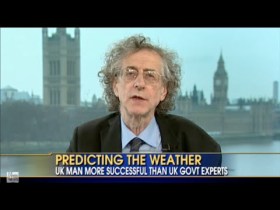
Piers Corbyn on religion of climate change
or go to
Aletho News Archives – Video-Images
Book Review
How the U.S. Navy Sold the Vietnam War
By Gareth Porter | TruthDig | March 27, 2019
Dr. Tom Dooley, whose best-selling book “Deliver Us From Evil” helped create a favorable climate of opinion for U.S. intervention in South Vietnam, has long been linked to legendary CIA officer Edward G. Lansdale and his black operations in Vietnam between 1954 and 1955. But the real story about Dooley’s influential book, which has finally emerged from more recent scholarly research, is that it was engineered by an official of the U.S. Navy’s Pacific Command, Capt. William Lederer.
Lederer is best known as the co-author, with Eugene Burdick, of the 1958 novel “The Ugly American,” which was turned into a 1963 movie starring Marlon Brando. Far more important, however, is the fact that from 1951 through 1957 Capt. Lederer was on the staff of the commander in chief of the U.S. Pacific Fleet (CINCPAC), Adm. Felix Stump. … continue
Blog Roll
 Aletho News
- “Inside Gaza” wins best documentary at Montreal’s Cinemania film festival
- Activists block German munitions plant over arms exports to ‘Israel’
- The Nasser Hospital attack and Israel’s relentless lies
- Could it be satan? No, Huckabee, just the Americans you work for
- AIPAC and more: Network of pro-Israel influence in US Congress
- Putin aide reveals Moscow’s stance on Europe at peace talks
- Imran Khan warns Pakistani judges he may die in prison
- IOF used Amazon facial recognition to track millions of Palestinians
- More EU Citizens Face Sanctions For Criticizing The Ukraine Proxy War
- In Mexico, the CIA Is Playing a Dangerous Game
- If Americans Knew
- An error has occurred; the feed is probably down. Try again later.
- No Tricks Zone
- New Study: Barents Sea Temperatures Were Warmer And Sea Ice Less Extensive In The 1700s Than Today
- German Authorities Start Initiative To Evaluate Public Register For Climate “Disinformation” Spreaders!
- Zonal Asymmetry of Temperature Change in the Antarctic Circumpolar Current
- New Study: The Net Fossil Fuel Contribution To Rising Atmospheric CO2 Has Been Zero For 500 Years
- Germany’s Green Energy Transition Becoming Increasingly Expensive…Another 6 Trillion Euros!
- Sudden Stratospheric Warming, Powerful El Niño Combination May Lead To Extreme Europe Cold, Energy Crisis!
- Two New Studies Find Thwaites Glacier Melt Cannot Be Driven By Human Activity Or A Warming Ocean
- E-Cars Reduce CO2 Emissions By Only 41% Compared To Internal Combustion Engine Vehicles
- Predictions Made By Renowned Climate Professor Over Past Decades Have Been Proven To Be Poor
- New Study Suggests Large Regions Of The Pacific Ocean Have Been Cooling For The Last 80 Years

