Moscow warns of ‘dangerous consequences’ as US moves to place missile defense system in South Korea
RT | July 8, 2016
The boosting of US missile defense potential in Asia and the Pacific undermines the existing global security balance, the Russian Foreign Ministry said after it was announced that Washington intends to place missile defense systems in South Korea.
“From the very beginning of the discussion of this issue we have consistently and invariably pointed at the most dangerous consequences of such a decision and called for our partners not to make this wrong choice. Unfortunately, our calls have remained unheard,” reads a Foreign Ministry statement released Friday.
Russian diplomats noted that the increase in the Asia-Pacific segment of the global missile defense system by the United States and its allies would undermine the existing strategic balance both in the region and beyond.
“Such actions, regardless of the arguments they are backed with, have the most negative effect on global strategic stability, the adherence to which is such a favored topic of discussions in Washington,” the statement reads.
The ministry also warned that the US steps threaten to increase regional tensions and create additional barriers to the peaceful settlement of the conflict between North and South Korea and nuclear disarmament on the Korean peninsula.
The Russian diplomats concluded by expressing hope that the United States and South Korea would once again consider all factors behind the decision and abstain from potentially dangerous actions.
Earlier on Friday, the South Korean Ministry of Defense announced that Seoul and Washington had reached an agreement to put a high-tech THAAD missile defense system in South Korea amid growing nuclear and missile threats from the North. According to South Korea’s Yonhap news agency, the system is expected to be in operation by the end of 2017.
THAAD – Terminal High Altitude Area Defense – is an advanced system designed to intercept short, medium, and intermediate-range ballistic missiles during their terminal phase of flight. Equipped with a long-range radar, THAAD is believed to be capable of intercepting Pyongyang’s intermediate-range ballistic missiles.
The announcement has also drawn criticism from Beijing. China’s Foreign Ministry said on Friday the system would destabilize the security balance in the region without doing anything to end the North’s nuclear program. “China strongly urges the United States and South Korea to stop the deployment process of the THAAD anti-missile system, not take any steps to complicate the regional situation and do nothing to harm China’s strategic security interests,” it said in a statement on its website.
Cheating Moscow: NATO’s Dangerous Expansion
By Jonathan Power | Dissident Voice | July 7, 2016
NATO has just announced a plan to send troops to the alliance’s eastern flank, close to the Russian border. NATO says it is attempting to deter potential Russian aggression.
The UK, the US, Canada and Germany will lead four battle groups to be based in Poland and the Baltic states. Diplomats say the troops will be a deterrent to Russian aggression by acting as a “tripwire” that would trigger a full response from the alliance if necessary
On Sunday the foreign minister of Germany, Frank-Walter Steinmeier, condemned Western “sabre-rattling and war cries”. He said, “Anyone who believes the symbolic tank parades on the Alliance’s eastern border will increase security is wrong”.
Apart from the appalling fact that the West is contemplating all out war against Russia there is the plain fact that it has expanded NATO in contravention of the solemn understandings given the Soviet Union at the end of the Cold War.
The deal was straightforward: The Soviet Union would agree to the reunification of East and West Germany and accept that East Germany would become part of NATO in return for a non-expansion promise.
It is the breaking of this promise that, more than any other one thing, has fuelled the resurgence of hostile Russian opinion against the West and prompted President Vladimir Putin to become increasingly determined to put the West in its place.
Now with this move the Russians, understandably, are livid.
There are a number of scholars and politicians from that era, including President H.W. Bush’s secretary of state, James Baker, who did most of the negotiating at that time with the Soviet president, Mikhail Gorbachev, who have since tried to re-write history and say there were no promises made.
But neither Baker nor the scholars can deny – and they do not try to – that in Moscow, on February 9th 1990, Baker told Gorbachev that “there will be no extension of NATO’s jurisdiction or NATO’s forces one inch to the East”, if Gorbachev agreed to German reunification.
To reinforce this message the next day the West German chancellor, Helmut Kohl and the foreign minister, Hans Deitrich Genscher offered the Soviet leaders similar terms. Later Baker confirmed publically at a State Department press conference that he agreed with Genscher. The US ambassador to Moscow at the time, Jack Matlock, who was in the room with Gorbachev and Baker, confirmed these words were said by Baker to Gorbachev.
But revisionist scholars have tried to obfuscate this understanding. It has been argued that US leaders saw these terms as being raised “speculatively” as part of an ongoing negotiation and far from a final deal. Thus the US was free to revise the offer and Gorbachev was made no final promise.
This is as Machiavellian an interpretation as one could dream up.
Common sense suggests that Gorbachev was not going to radically revise 45 years of East German and Soviet history without a very big quid pro quo. Since no other subject was on the table it is obvious that there was a quid pro quo and this was it. Say no more.
One scholar, Mary Sarotte, writes that the Soviet leaders failed to obtain “written assurances” against NATO expansion. That is right. But why should Gorbachev demand them when the Cold War was coming to an end so amicably and the widespread feeling was that there would never be enmity again and that the Soviet Union would become close to NATO, and maybe even seek future membership of it?
There is another political “scandal” from that period.
Behind Gorbachev’s back, as the US negotiators “were stressing limits on NATO’s future presence in the east, the US was privately planning for an American-dominated post-Cold War system and taking steps to achieve this objective”, according to Joshua Shifrinson, writing in the new issue of Harvard University’s quarterly, International Security:
In July 1990 Baker stated that a revamped CSCE (Conference on Security and Cooperation in Europe) which had Soviet membership would provide a ‘half-way house’ for those countries who want out of the Warsaw Pact but can’t join NATO and the European Union.
Somewhat paradoxically, Baker did not want to see a CSCE that overshadowed NATO. By October 1990 detailed discussions about the future expansion of NATO were underway in the State Department, albeit with the belief this would only happen if the Soviet Union behaved “badly”.
Contradictorily, the State Department in an internal study on NATO wrote that “we are not in a position to guarantee the future of these Eastern countries and do not wish in any case to organize an anti-Soviet coalition whose frontier is the Soviet border. Such a coalition would be perceived very negatively by the Soviets and could lead to a reversal of current positive trends in Eastern Europe”.
Over the last 25 years an anti-Soviet/Russian coalition is what evolved and that is why Russia has ended up confronting the West.
Jonathan Power is a TFF Associate and international affairs columnist, formerly with the International Herald Tribune, now syndicating to leading newspapers on all continents.
Trump advisor censures US for regime change attempts overseas
Press TV – July 7, 2016
The United States proactively gets engaged in regimes change attempts throughout the world, says a top foreign policy advisor to Republican presumed nominee Donald Trump on a visit to Russia.
Addressing Russian students at Moscow’s New Economic School, Carter Page accused Washington of taking “proactive steps to encourage regime change overseas.”
“This may understandably advance a certain level of insecurity,” Page said, adding, the post-Soviet world had also suffered from of the West’s double policies.
 Page (pictured) did not comment about ties between Washington and Moscow after the 2016 vote.
He also declined to say if he was visiting any officials of the Russian government.
In an interview with CNN last month, Russian President Vladimir Putin said Moscow will “work with any president that the American people will vote for.”
“I know that there are complex economic and political processes in the United States. At the moment, the world needs a country as strong as the US is. And we do need the US, too,” Putin said.
Putin also praised Trump for being “bright” as well as for proposing to “restore full-fledged Russian-American relations.”
Relations between Washington and Moscow are in tatters largely due to the Ukraine crisis. The US and its allies accuse Moscow of sending troops into eastern Ukraine in support of the pro-Russian forces. Moscow has long denied involvement in Ukraine’s crisis.
In an interview with Carter in March, Bloomberg described him as “a globe-trotting American investment banker who’s built a career on deals with Russia .”
US Missile Defense Test Failed Miserably, and the Pentagon Lied About It
Sputnik – July 7, 2016
After spending billions of dollars, the US government is having trouble getting its state-of-the-art homeland missile defense system to function according to plan, and it’s driven the Pentagon to lie about the program’s success rate.
On January 28, the Pentagon’s Missile Defense Agency conducted the first test flight of new so-called divert thrusters, to be used on anti-missile interceptors. A military statement deemed this a “successful test flight,” claiming the thrusters allowed the interceptors to stop a mock warhead.
“On this flight, we validated key design improvements in the divert and attitude control system, demonstrating improved performance, reliability and productibility,” said Michael Bright of Aerojet Rocketdyne, maker of the thrusters, in a statement.
“The overall goal of the Missile Defense Agency is to make a more capable and reliable system, and this successful test demonstrated significant progress toward reaching that goal.”
According to the Los Angeles Times, however, these claims were falsified. During the test, one of the thrusters failed. This caused the interceptor to lose control and the mock missile to slip through the defense shield.
“The mission wasn’t successful,” a project scientist, speaking on condition of anonymity, told the LA Times. “Did the thruster perform as expected? No, it did not provide the control necessary for a lethal impact of an incoming threat.”
A second scientist said that claims of success were “hyperbole, unsupported by any test data.”
Other engineers indicated that the faulty thrusters caused the interceptor to miss its target by “a distance 20 times greater than what was expected,” the LA Times reported.
The program, known as Ground-Based Midcourse Defense (GMD), has cost US taxpayers over $40 billion since 2004. It was designed as a means to prevent a potential nuclear attack, and involves 30 interceptors that can be launched from various terrestrial locations across the United States.
The thrusters have come under scrutiny before. Two unsuccessful tests in 2010 were attributed to the component, and ultimately led to the creation of the latest model. An earlier test of the new thrusters occurred in 2013 and resulted in failure.
According to a report from the US Government Accountability Office, these failures were the result of rushed engineering work and “omitting steps in the design process.”
When asked for comment by the LA Times, the Missile Defense Agency acknowledged that problems had occurred during the “successful” test.
“There was an observation unrelated to the new thruster hardware that has been investigated and successfully root-caused,” the agency said. “Any necessary corrective actions will be taken for the next flight test.”
The agency maintained that “the new thrusters performed as designed” and within “critical performance parameters.”
Imagining a Different Europe: Brexit and the Future of NATO
By Gary Leupp | CounterPunch | July 7, 2016
Everyone’s talking about the future of the European Union after the Brexit. Should we not also be wondering about the future of NATO?
The two organizations substantially overlap. Twenty-two countries are members of both; that is, the twenty-two nations are both military allies of the U.S. (which pays two-thirds of the alliance’s cost and controls its politics) and members of an economic union, which—while it of course does not include the U.S., which is 5000 miles away—is of much interest to the world’s only surviving superpower.
Of course the EU and NATO have very different purposes. As we all know, the EU represents an effort to create a common market throughout the continent, allow for free travel and employment between member-states, the formation of common standards, policies etc. We know there have been major downsides for some member countries, involving reduced sovereignty, uncontrolled immigration, indebtedness and austerity programs, etc. But the stated goal, to spread general affluence, and therefore prevent war, has been stated since the EU’s forerunner, the European Coal and Steel Community, was formed in 1951.
Thus, while it’s arguably none of the U.S.’s business, U.S. leaders express opinions on EU composition. (You might think that, as leaders of a competing trading bloc, with the same relationship to the EU that Boeing has to Airbus, they would maintain a politic silence. But both presidents George W. Bush and Barack Obama have urged the EU to admit NATO ally Turkey’s admission. And Obama recently raised a ruckus in the United Kingdom when he urged its electorate to reject Brexit.)
The purpose of NATO is less clear than that of the EU. Formed in 1949 in line with the “Truman Doctrine” pledging that the U.S. would fight communism wherever it threatened the “Free World,” it was supposed to be a defensive alliance between the U.S. and its European client states versus some future (imagined) Soviet aggression against those states.
That aggression needless to say never happened. In retrospect the Cold War appears a long period of stability, with the exception of the horrific wars the U.S. inflicted on Korea and Vietnam while the Soviets stood aside, and the war the Soviets waged in Afghanistan to suppress the rebels opposed to the secular Soviet-backed government (who were then backed by the CIA, because they were so anti-communist, that being the main thing), who went on to became the Taliban and al-Qaeda.
Europe itself was actually remarkably stable during that Cold War, from 1945 to 1989. Since then there’s been horrific violence, especially in southeastern Europe, much of it exacerbated by the U.S. and NATO.
After the collapse of the Soviet Union and the dissolution of the Warsaw Pact (formed in 1955 in belated response to NATO, after NATO decided to include West Germany) in 1991, you might have thought that NATO would dissolve too. But no; it redefined its mission as maintaining “security” in a newly insecure situation. Its purpose is in fact stated in the vaguest terms. Its real function is to preserve U.S. hegemony over post-Soviet Europe, expand to surround Russia and ultimately create the conditions for a Yugoslavia-type fracturing of the Russian state—which for some reason U.S. military leaders keep referring to as the “number one threat” or even “existential threat” to the U.S.!
How the U.S. Uses the EU
The U.S. attempts to use the EU for its own geopolitical ends, particularly for this confrontation with Russia.
For example: from late 2013 to February 2014 the U.S. State Department spent $5 billion in Ukraine in order to (in the words of Under Secretary of State for Eurasia Victoria Nuland, a former Dick Cheney aide, neocon married to neocon Robert Kagan and key Hillary crony) “support the Ukrainian people’s European aspirations”—meaning the hopes of many Ukrainians for their country to join the EU.
But what Nuland, the Pentagon and NATO leaders in Europe really wanted to do was to pull Ukraine into NATO, completing the creeping encirclement of Russia that had begun with NATO’s expansion to include Poland, Czechoslovakia and Hungary in 1999.
NATO now already includes 11 countries formerly part of the Soviet bloc (Warsaw Pact) or Yugoslavia, most added during Bush’s administration but two (Albania and Croatia) admitted since. In all cases, by the way, these states first received admission into NATO, then into the EU.
Bulgaria: joined NATO 2004, EU 2007
Croatia: NATO 2009, EU 2013
Czechoslovakia: NATO 1999, EU 2004
Estonia: NATO April 2, 2004, EU May 1, 2004
Hungary: NATO 1999, EU 2004
Latvia: NATO April 2, 2004, EU May 1, 2004
Lithuania: NATO April 2, 2004, EU May 1, 2004
Poland: NATO 1999, EU 2004
Romania: NATO 2004, EU 2007
Slovakia: NATO, March 29, 2004, EU May 1, 2004
Slovenia: NATO, March 29, 2004, EU May 1, 2004
Notice a pattern? First a country commits itself to an anti-Russian alliance with the U.S., committing 2% of its GDP to military expenses and pledging to go to war against Russia when called upon to do so. Then it gets access to the benefits of EU membership.
Back to Ukraine. Ukraine in early 2014 included the Crimean Peninsula, home to the Russian Black Sea Fleet from the 1780s, a vital naval port for the Russian state that has only a few warm-water ports. (Crimea had been turned over from the Russian Soviet Socialist Republic to the Ukrainian Soviet Socialist Republic by half-Ukrainian Premier Nikita Khrushchev in 1954. After the break-up of the USSR in 1991, Russia retained its traditional military presence on the peninsula by a treaty with the Ukrainian leaders.)
But the U.S. would like to expel the Russians and make Sevastopol a NATO port. (This is not only Vladimir Putin’s nightmare; it would be a nightmare for any Russian leader. Look at a map.)
In 2013 the president of Ukraine, Viktor Yanukovych, democratically elected in an internationally monitored election in 2010, negotiated with the EU for his country’s eventual entry into the union. A substantial portion of the population, especially in the western part of the country, favored this. But when Yanukovych realized that steps towards admission would involve accepting an austerity regime comparable to that inflicted on Greece, he opted out, instead accepting a generous Russian aid offer.
Nuland & Co. depicted this as a pro-Russian leader’s capitulation to Russian pressure; again, their talking point was “Ukrainian people’s European aspirations.” (In fact, Ukrainians were divided on the issue, with fewer than 50% in favor of EU membership.)
Ukraine is ethnically divided between ethnic Ukrainians (who speak a language related to Russian, although the two languages are not mutually intelligible) and ethnic Russians who have always spoken Russian. (Russian has always been a recognized official language in the country.) There has been much intermarriage between the two, but among the ethnic Ukrainians there are many Russophobes including neo-fascists who glorify Stepan Bandera, an anti-Russian Ukrainian leader who worked with the Nazis to round up Jews and fight the Soviets in 1941. (He was declared a “national hero” by Yanukovych’s predecessor Viktor Yushchenko, a pro-U.S. advocate of NATO admission. Yanukovych withdrew this award, but it has been reinstated by the current regime.)
Taking advantage of this Russophobia, the U.S. depicted Yanukovych’s change of mind as a betrayal of “European” dreams. Working with the neo-fascist Svoboda Party, among others, it assisted in the brutal putsch of February 22, 2014, that caused the president to flee for fear of his life. A new, pro-NATO government was immediately installed, with Arseniy Yatsenyev as prime minister.
“Fuck the EU!” …and then Use It!
This is where the story gets interesting, because it reveals what the EU means to the U.S., and what it doesn’t. In an intercepted phone conversation between Nuland and the U.S. ambassador to Ukraine a month before the coup, they discuss who will succeed Yanukovych once he’s toppled. She favors NATO proponent “Yats.” The ambassador mentions the the EU favors a different candidate, whom she thinks is inappropriate. They discuss how Yatsenyev will be legitimated by a UN official sent by Ban Ki-moon.
“So that would be great, I think, to help glue this thing and to have the UN help glue it,” she concludes, “and, you know, Fuck the EU.” (In other words, this is not about any European’s aspirations. It’s about ours.)
So the coup comes off as planned. The obviously prominent role of neo-fascists in the new regime, and the immediate revocation of the existing law protecting language rights frightened and angered the primarily Russian inhabitants of the Donbass region (where Yanukovych had his base of support). They refused to accept its legitimacy. (Their resistance is invariably represented by the U.S. press in the service of the State Department as a Moscow-inspired rebellion or even Russian “invasion.”)
Russia refused to recognize the new government and quickly moved to re-annex its historical territory of Crimea. The Russian-majority population of Crimea overwhelmingly voted in a credible referendum to reunite with Russia. The U.S. media often refers to this as another “invasion” although it was nothing of the sort; there were tens of thousands of Russian troops in place by longstanding agreement, who simply secured government buildings and the borders.
Hillary Clinton, among others, likened this move to Hitler’s annexation of the Sudetenland in 1938. That is to say: something that must not meet with appeasement. And so (people are taught to believe), the practical Russian response to U.S. efforts to complete the expansion of NATO is the problem, not NATO’s relentless advance against Russia itself. Russia under Putin is the worrisome aggressor, not the U.S. leaders who invade a new country like clockwork every few years, boasting that they need to do it because theirs is the “exceptional” nation.
Some in the Obama administration favored a military response to the separatists in the east; they wanted to further arm the new regime and encourage it to assert control over the Donbass if not Crimea. It is clear this was the view of U.S. Gen. Philip Breedlove, the “Supreme Allied Commander” of “NATO Allied Command Operations” in Europe. We know from intercepted emails exchanged between him and Nuland (whom he refers to affectionately as “Toria”) that he was frustrated by the failure of Obama to order the Ukrainian puppets to more forcefully invade the east. (Initial efforts to do this had resulted in mass desertions, or soldiers retreated in the face of unarmed citizens including old women shaming them into abandoning their mission. It was a tremendous embarrassment to the Kiev regime.)
Obama decided not to heed Breedlove. In place of hot warfare he chose economic warfare. Here is where the EU comes in. In July 2014 the union (that Nuland wanted to fuck) dutifully voted to impose economic sanctions on Russia. (Again, 22 of the 28 EU members are also NATO members; the only ones that aren’t are Sweden, Finland, Ireland, Cyprus and Malta.)
The U.S. is of course not an EU member but it had a reliable surrogate within the union: the United Kingdom, which has strongly argued for sanctions, their expansion and extension to the present. (Frank Holmes, managing editor of US Global Investors, calls Britain “the bloc’s strongest supporter of restrictions.” The conservative Washington D.C. website The Daily Caller calls it the U.S.’s “strongest E.U. ally against Russia”).
The UK, which had far less to lose from the sanctions than many other EU nations, was urging its partners to shoot themselves in the foot. It was asking them to punish Russia (and damage themselves). The continental Europeans went along, some grudgingly.
Regrets (and Maybe Rebellion?)
Many have come to regret it. The Czech and Hungarian leaders have long been questioning the sanctions and expressing displeasure. Of course they want, as new members of the EU and NATO, to be team players. But their people are suffering from lost trade and pressuring them to protest. Thus Czech President Milos Zeman has called the sanctions “not merely inefficient; on the contrary, they are counterproductive.” (Only 35% of Czechs according to a 2015 Gallop poll support the sanctions.)
Hungarian Prime Minister Viktor Orban calls the sanctions a “risk in the EU… very deep, of a strategic nature.” (European Council president Donald Tusk, a Pole, calls Orban a “Trojan Horse” for Russia while Orban says Tusk is “on the other side” for opposing an easing of sanctions.)
In May, Hungarian Foreign Minister Peter Szijjarto told Russian Foreign Minister Sergey Lavrov that his government “definitely cannot accept that a decision [by the EU, on extending sanctions] was made behind the scenes, that is, we are against using an automatic procedure.” (In Hungary, only 29% of those polled favor the sanctions.)
The Polish regime has been among the most supportive of the U.S. position; anti-Russian sentiment is deep in that country for various historical reasons, and 70% of those polled support sanctions. But the Polish farmers are suffering from them. One-third of the apples harvested in Poland two years ago went to Russia; now the trade is forbidden.
Meanwhile in Spain farmers burn EU flags over piles of rotting peaches to protest the collapse of their relations with the Russian marketplace. The European Commission keeps having to pay out millions of euros to partly compensate farmers and merchants for their losses due to sanctions.
French MPs in April this year voted for a resolution to lift EU sanctions on Russia. Minister of Economy Emmanuel Macros has vowed to work towards lifting them. Italian cabinet ministers and the lawmakers in Italy’s Upper House of Parliament also want to rethink them. Maybe they’re all Trojan Horses, but if so, that’s good.
The role of Germany in the EU, as the most populous and wealthiest country in Europe, is more important than ever following the Brexit. While it has been, along with France, a strong supporter of the sanctions and their continuation, public support is waning. In May a German pollster found that 36% of Germans want the sanctions scaled down, while 35% want them scrapped entirely.
The sanctions have had disastrous impact on the German economy. Since they were imposed exports have declined by about 20 billion euros. Alstom has lost a huge contract for the construction of the Beijing-Moscow railway line. The business community generally wants the sanctions dropped.
There appears to be a general feeling that the U.S. (which is feeling few effects from the sanctions it itself imposed on Russia) pressed the EU (especially through Britain) to take measures that are not in Europe’s interest. And some surely realize that what this is all really about is the U.S.’s desire to punish Russia for thwarting its effort to bring Ukraine into NATO—through that cynical device of Victoria (“Fuck the EU”) Nuland of supporting Ukraine’s “European aspirations.
As it happens, 67% of Germans oppose bringing Ukraine into NATO, and 45% oppose bringing it into the EU. Most importantly, German support for NATO has been plummeting; it was 73% in 2009 but was 55% last year. And when asked whether Germany, in the event of a Russian attack on an east European border state that is a NATO member, should fight on the side of that state, only 38% say yes according to a Spring 2015 Pew poll.
According to the same poll, that figure is 40% in Italy, 47% in France, and 48% in both Poland and Spain. In other words, over half the people of these countries oppose the very nature of NATO as “mutual defense” alliance.
This raises the real possibility of countries leaving NATO, as well as the EU. Czech president Milos Zeman has called for referendums on his country’s membership in both. German Foreign Minister Frank-Walter Steinmeier has criticized the recent joint maneuvers in Poland, in which 14,000 U.S. troops, 12,000 Polish troops, and 800 from Britain participated as “saber-rattling.”
“Whoever believes,” he warns, “that a symbolic tank parade on the alliance’s eastern border will bring security is mistaken. We are well-advised to not create pretexts to renew an old confrontation.” In other words, the U.S. is steering NATO towards war with Russia, which the Germans know is not a good idea.
Who would have imagined a few years ago that the UK would ever leave the EU? Imagine the Czech Republic leaving this confrontational NATO alliance, joining its prosperous neighbor Austria by opting for neutrality. Imagine the Germans (who have many reasons to be angry towards the U.S., including the fact that the NSA spies on all of them) becoming fed up enough to hold their own referendum and quitting the bloc.
There is something of a precedent. France shocked the U.S. when it pulled out of the NATO Integrated Military Command Structures in 1966, in order to, as President Charles DeGaulle put it “preserve French independence in world affairs.” (It remained committed in theory to the defense of alliance members but only rejoined with conditions in 2009.)
France, which has military bases all over the world and deploys troops routinely in Africa and elsewhere (it cooperated with the U.S. in overthrowing Aristide in Haiti in 2004, as if to apologize for having opposed the U.S. war in Iraq), is very different from Germany with its stiff constitutional limits on the use of its military and generally pacifistic population. Within the EU, it is likely to replace the UK as its most important hawkish member, while Germany is likely to urge reconciliation with Russia.
There are contradictions within both the EU and NATO. They are interwoven, and some look irresolvable. That again is a good thing.
FBI Investigation Produces No Indictment, But Proves Hillary Clinton’s a Serial Liar
By Dave Lindorff | This Can’t Be happening! | July 6, 2016
Hillary Clinton may or may not be a crook. That remains to be proven, though the sheer magnitude of the wealth that she and husband Bill have amassed since leaving the White House, and while she was serving as Secretary of State — nearly a quarter of a billion dollars earned by two people with no known skills capable of producing that kind of income — should raise questions. What can be stated now as fact though, is that Hillary is a serial liar.
If this wasn’t clear already from her long history of distortion and prevarication — like her false claim that she had to “duck to avoid sniper fire” during a state visit to Bosnia — it is clear now from FBI Director James Comey’s 11-page public report on his agency’s year-long investigation into her use of a private server for all her private and official emails during her term as Secretary of State.
That report has exposed her serial lying to both Congress and the public about that illegal use of private email service to handle her public business.
As the Associated Press reports, Clinton lied in March 2015 when she declared in one of her rare news conferences, “I did not email any classified material to anyone on my email. There is no classified material.”
But as Comey reports, she did. Quite often in fact. The FBI in its exhaustive investigation found at least 113 email chains –some of which had to be uncovered after they had been erased by Clinton’s private lawyers — contained material that was classified at the time of sending, including some that were classified Top Secret and that referred to a “highly classified special-access program.”
She lied again at that same press conference when she asserted, “I responded right away and provided all my emails that could possibly be work related” to the State Department.
Not true, according to the FBI, and also, of course, to the Inspector General of the State Department, with whose own investigation of her actions, Clinton simply refused to cooperate.
Clinton lied when she said earlier this month, in an NBC interview, “I never received nor sent any material that was market classified.” Comey says that in fact her system did handle emails that bore specific markings indicating they were classified.
Clinton lied when she tried, as she explained more than once, including in that same March 15 news conference addressing the issue, to claim that she had used her own Blackberry phone rather than a State Department secure phone, simply because she “thought it would be easier to carry just one device for my work and for personal emails instead of two.” In fact, Comey said his agents determined that Clinton had “used numerous mobile devices to view and send email,” all using her personal account. So much for wanting to use “just one device”! Comey said she also had used different non-government servers, all of them vulnerable to hacking.
Clinton lied again when she claimed that her private server was on “property guarded by the Secret Service and there were no security breaches.” She lied again when she added, “The use of that server, which started with my husband, certainly proved to be effective and secure.” Her campaign website adds the equally false assertion that “There is no evidence there was ever a breach.”
In fact, all Comey will say is that the FBI did not uncover a breach, but he adds that because of the sophisticated abilities of “hostile” forces (i.e foreign countries’ intelligence services) that would be engaging in any such hacking, “We assess it is possible that hostile actors gained access to Secretary Clinton’s personal email account.” They would just not leave any “footprints,” he explains.
We also know Clinton was lying when she said, “I opted for convenience to use my personal email account, which was allowed by the State Department.” The falsity of that particular lie was exposed by the State Department Inspector General, who in his own report on her private server scandal, found that she had never “sought or received approval” to operate a private server for her State Department communications, and added that as Secretary of State, she “had an obligation to discuss using her personal email account to conduct official business with State Department offices.”
Some of these violations that Clinton has objectively lied about may not be crimes. Others clearly are. At a minimum, Clinton deliberately sought to violate the requirements of the Freedom of Information Act, which make all but classified documents public records that are supposed to be made available on request to journalists and the public on request (and even many secret documents upon appeal). By conducting her official business on a private server, Clinton was assuring that no FOIA requests could touch her.
The question of Clinton’s “trustworthiness” is a huge issue among the public, with all but her die-hard supporters — a minority within the Democratic Party.
Maybe some people don’t care in these cynical times when it’s simply assumed that “all politicians lie,” but one hopes that those lies will relate to personal foibles and sins, not official business. A nation that celebrates great leaders like George Washington, who at least according to the national mythology once said, “I cannot tell a lie,” and Abraham “Honest Abe” Lincoln, for their integrity and forthrightness, surely can demand at least a semblance of truthfulness in its top leader.
Clearly Hillary Clinton has failed that test of leadership, and in a big way.
I’m concerned that the FBI and the State Department’s own Office of Inspector General, as well as Republicans in Congress, have missed the real import of Clinton’s lying. It is not that she violated rules and standards that may have led to national security secrets being hacked, serious though that may be. For one thing, powerful intelligence agencies like those of the Russians and Chinese, just like the US’s own National Security Agency, have the capability to hack even the government’s most secure servers.
What should really be getting asked, by government investigators, political critics and by any real journalists left out there, is why Clinton, as Secretary of State, was so insistent — even to the point of violating laws and State Department policies — on avoiding the reach of the Freedom of Information Act (FOIA). The answer to that has to take us back to the reality of the Clinton’s phenomenal success at vacuuming up vast sums of money from wealthy individuals, corporations, and even foreign potentates, both for their personal accounts as when either Clinton speaks at gatherings of bankers, pharmaceutical executives or military industry leaders, and for their Clinton Foundation, reportedly the recipient of over $2 billion in corporate and foreign government largesse.
Their success at raking in such piles of cash reeks of influence peddling, probably much of it conducted by phone and by email — and it’s the kind of thing that, if it were done by a Secretary of State on a government electronic device, would be vulnerable to a FOIA request.
On a private server, it’s the type of communications activity that Hillary Clinton’s private attorneys would have “wiped” from her hard drive to escape scrutiny when they erased thousands of emails they determined, with no official backstopping, to have been “private.”
Comey was wrong to recommend no prosecution of Clinton for her email practices, since some of her own State Department employees, as well as employees of the CIA and other agencies have been charged with and convicted of felonies for the same and even lesser infractions. But Clinton, as a Secretary of State and as the likely Democratic Party candidate for president, clearly lives on a higher plane that operates under a different set of rules. Only the “little people” get called to account for such crimes in the United States.
If the severely compromised US “Justice” Department cannot step up and issue an indictment based upon the findings of the FBI about Clinton’s email violations, it is up to the people of the United States to decide whether we want such a greedy woman — a confirmed serial liar ready to say anything necessary to obtain power — to be our next president.
Featured Video
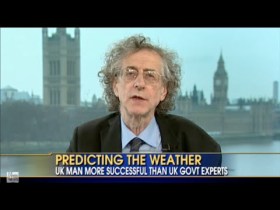
Piers Corbyn on religion of climate change
or go to
Aletho News Archives – Video-Images
New Documentary
“Inside Gaza” wins best documentary at Montreal’s Cinemania film festival
Palestine Information Center – November 16, 2026
MONTREAL – The documentary “Inside Gaza,” which chronicles the experiences of Palestinian journalists working with Agence France-Presse (AFP) while covering the Israeli war on the Gaza Strip, won the Best Documentary Award at the 32nd Cinemania International Francophone Film Festival held in Montreal, Canada.
Directed by Helene Lam Trong, the 72-minute film follows the daily lives of four AFP journalists who bear witness to the difficulties of reporting in a war-torn territory largely closed off to international media.
The film is compiled from material produced by the team on the ground, as well as from interviews conducted after they left.
The film also won the People’s Choice Award at the festival on Saturday. … continue
Blog Roll
 Aletho News
- “Inside Gaza” wins best documentary at Montreal’s Cinemania film festival
- Activists block German munitions plant over arms exports to ‘Israel’
- The Nasser Hospital attack and Israel’s relentless lies
- Could it be satan? No, Huckabee, just the Americans you work for
- AIPAC and more: Network of pro-Israel influence in US Congress
- Putin aide reveals Moscow’s stance on Europe at peace talks
- Imran Khan warns Pakistani judges he may die in prison
- IOF used Amazon facial recognition to track millions of Palestinians
- More EU Citizens Face Sanctions For Criticizing The Ukraine Proxy War
- In Mexico, the CIA Is Playing a Dangerous Game
- If Americans Knew
- An error has occurred; the feed is probably down. Try again later.
- No Tricks Zone
- Argentina’s Perito Moreno Glacier Joins Antarctica and Arctic In Defying Doomsday Melt Claims
- New Study: Barents Sea Temperatures Were Warmer And Sea Ice Less Extensive In The 1700s Than Today
- German Authorities Start Initiative To Evaluate Public Register For Climate “Disinformation” Spreaders!
- Zonal Asymmetry of Temperature Change in the Antarctic Circumpolar Current
- New Study: The Net Fossil Fuel Contribution To Rising Atmospheric CO2 Has Been Zero For 500 Years
- Germany’s Green Energy Transition Becoming Increasingly Expensive…Another 6 Trillion Euros!
- Sudden Stratospheric Warming, Powerful El Niño Combination May Lead To Extreme Europe Cold, Energy Crisis!
- Two New Studies Find Thwaites Glacier Melt Cannot Be Driven By Human Activity Or A Warming Ocean
- E-Cars Reduce CO2 Emissions By Only 41% Compared To Internal Combustion Engine Vehicles
- Predictions Made By Renowned Climate Professor Over Past Decades Have Been Proven To Be Poor

