The price of genocide: How US funding sustains an unraveling Israeli economy
By Ramzy Baroud | MEMO | August 28, 2025
In an important step toward the economic isolation of Israel due to its genocide in Gaza, Norway’s Government Pension Fund Global has decided to divest from yet more Israeli companies.
Norway’s sovereign wealth fund is the world’s largest, with total investments in Israel once estimated at $1.9 billion. The decision to divest was taken gradually but is consistent with the Norwegian government’s growing solidarity with Palestine and rising criticism of Israel.
Taking a leading role along with Spain, Ireland, and Slovenia, Norway has been a vocal European critic of the Israeli genocide and man-made famine in Gaza, actively contributing to the International Court of Justice’s investigation into the genocide, and formally recognising the state of Palestine in May 2024. This diplomatic and legal stance, coupled with its financial divestment, represents a coherent and escalating effort to hold Israel accountable for the ongoing extermination of Palestinians.
The Israeli economy was already in a state of freefall even before the genocide. The initial collapse was related to the deep political instability in the country, a result of Israeli Prime Minister Benjamin Netanyahu and his extremist government’s attempt to co-opt the judicial system, thus compromising any semblance of “democracy” remaining in that country. This resulted in a significant lowering of investor confidence.
The war and genocide, beginning on 7 October 2023, only accelerated the crisis, pushing an already fragile economy to the brink. According to reports from the Israel Ministry of Finance, foreign direct investments in Israel fell by an estimated 28 per cent in the first half of 2024 compared to the same period in 2023.
Any supposed recovery in foreign investments, however, was deceptive. It was not the outcome of a global rallying to save Israel, but rather a consequence of a torrent of US funds pouring in to help Israel sustain both its economy and the genocide in Gaza, along with its other war fronts.
Israel’s Gross Domestic Product was estimated by the World Bank to be around $540 billion by the end of 2024. The war on Gaza has already taken a considerable bite out of Israel’s entire GDP. Estimates from Israel itself are complex, but all data points to the fact that the Israeli economy is suffering and will continue to suffer in the foreseeable future. Citing reports from the Bank of Israel and the Ministry of Finance, the Israeli business newspaper Calcalist reported in January 2025 that the cost of the Israeli war on Gaza had already reached more than $67.5 billion. That figure represented the costs of the war up to the end of 2024.
Keeping in mind that the ongoing war costs continue to rise exponentially, and with other consequences of the war—including divestments from the Israeli market by Norway and other countries—future projections for the Israeli economy look very grim. The Israeli Central Bureau of Statistics reported that the Israeli economy, already in a constant state of contraction, shrunk by another 3.5 per cent in the period between April and June 2025.
This collapse is projected to continue, even with the unprecedented US financial backing of Tel Aviv. Indeed, without US help, the precarious Israeli economy would be in a much worse state. Though the US has always propped up Israel—with nearly $4 billion in aid annually—the US help for Israel in the last two years was the most generous and critical yet.
Israel is the recipient of $3.8 billion of US taxpayer money per year, according to the latest 10-year Memorandum of Understanding signed in 2016. Equally, if not more valuable than this large sum are the loan guarantees, which allow Israel to borrow money at a much lower interest rate on the global market. The backing of the US has, therefore, enabled investors to view the Israeli market as a safe haven for their funds, often guaranteeing high returns. This applies to the Norwegian sovereign wealth fund as it did to numerous other entities and companies.
Now that Israel has become a bad brand, affiliated with unethical investments due to the genocide in Gaza and growing illegal settlement expansion in the West Bank, the US, as Israel’s main benefactor, has stepped in to fill the gaps.
The US emergency supplemental appropriations act of April 2024 allocated a total of $26.4 billion for Israel. While much of the money was earmarked for defense expenditures, in reality, most of it will percolate into the Israeli economy. This amount, in addition to the annual military aid, allows the Israeli government to minimize spending on defense and allocate more money to keep the economy from shrinking at an even faster rate.
Additionally, it will free the Israeli military industry to continue producing new, sophisticated military technology that will ensure Israel’s continued competitiveness in the arms market. The military-industrial complex, a significant part of the Israeli economy, is thus not only sustained but given a fresh impetus by American aid, ensuring the war machine continues to function with minimal financial disruption.
All of this should not diminish the importance of divestment from the Israeli financial system. On the contrary, it means that divestment efforts must increase significantly to balance out the US push to keep the Israeli economy from imploding.
Moreover, this should also make US citizens, who object to their government’s role in the genocide in Gaza, more aware of the extent of Washington’s collaboration to save Israel, even at the price of exterminating the Palestinians. Indeed, the flow of funds from the US is not a passive action; it is an active collaboration that directly enables the Israeli genocide in Gaza.
The Oklahoma City Bombing: A Lesson in Government Lawlessness
By William L. Anderson • Ludwig von Mises Institute • August 14, 2025
[Blowback: The Untold Story of the FBI and the Oklahoma City Bombing by Margaret Roberts. (Bombardier Books, 2025; 399 pp.)]
On the morning of April 19, 1995, a truck bomb exploded outside the Alfred P. Murrah Federal Building in Oklahoma City, killing 168 people, including 19 children at a day care center in the building, and injuring hundreds more. As the FBI website tells readers, a single ex-soldier named Timothy McVeigh acted alone, being motivated by anti-government sentiment that came in the aftermath of the Waco massacre two years earlier.
The FBI version, of course, is the official version and the one repeated in history books and in the New York Times. McVeigh was aided by Terry Nichols, who helped him build a large fertilizer bomb that they placed in a rented Ryder truck that was destroyed in the explosion. Michael Fortier gave McVeigh some logistic help, but no one else was involved, just the “lone wolf” McVeigh and a couple of friends.
Using the organization’s vast investigative resources, the FBI quickly solved the case in the style of a Dick Wolf production. McVeigh had already been arrested when an alert policeman 90 miles away from Oklahoma City saw his getaway car had no license plate, so the FBI was able to get their man in custody. The original investigation also had McVeigh accompanied by a man called John Doe #2 when he rented the Ryder truck in Kansas, but soon afterward, the FBI insisted there had been no JD2, that he was a figment of the imaginations of everyone who said they saw him with McVeigh.
We know the rest of the story. McVeigh was convicted in federal court and executed at the federal prison in Terre Haute, Indiana, in 2001. Nichols was convicted both in federal court and Oklahoma state court, but juries deadlocked on the death penalty, so he is serving a life sentence at the fed’s so-called supermax prison in Florence, Colorado. Fortier, who provided valuable information to the FBI, pleaded to lesser charges and served a short prison sentence before he and his wife were whisked away in the government’s witness protection program. Case closed.
The FBI’s narrative was useful on two fronts. First, the organization was able to regain prestige after the disaster at Waco by supposedly solving this horrendous crime quickly. Second, by being able to frame the bombing as the result of anti-government rhetoric that had spread following Waco and the 1992 FBI killings at Ruby Ridge, Idaho, the Bill Clinton administration, the Democratic Party, and their allies in the legacy media were able to use the bombing to claim that Republicans and other critics of the administration were responsible for the mayhem.
But what if the FBI’s narrative is untrue and that several people were involved in the bombing, some of whom being either government informers or FBI agents who infiltrated right-wing paramilitary groups? Furthermore, what if federal agents lied about the existence of the so-called John Doe #2, and what if they lied about many other things tied to the bombing and subsequent investigation?
Margaret Roberts—the former news director of “America’s Most Wanted” and a celebrated journalist—has published a new book, Blowback, which successfully challenges the FBI and establishment media narratives about the case. Through interviews with people involved in the case and working with citizen journalists that didn’t buy the official line, Roberts has successfully presented alternative storylines that, frankly, are much more believable than what the FBI has given us, and presents her case in a book that is logical and easy to follow—no mean feat, given just how complicated the story really is.
Blowback involves two related events. The first, of course, is the Oklahoma City bombing. The second is the murder of Kenneth Trentadue in his cell at the Oklahoma City Federal Transfer Center August 21, 1995—a death the FBI to this day insists was a suicide. Thanks to a dogged investigation by Kenneth’s brother, Jesse—a former collegiate track star and respected attorney living in Salt Lake City—the FBI’s narratives on Kenneth’s death and the Oklahoma City bombing were exposed as lies, although that investigation came at great cost to Jesse.
(I have corresponded with Jesse Trentadue for many years and was familiar with his investigation, but until I read Blowback, I had not realized just how extensive that investigation has been.)
In the FBI’s account of the bombing, the agency claims:
The bombing was quickly solved, but the investigation turned out to be one of the most exhaustive in FBI history.
No stone was left unturned to make sure every clue was found and all the culprits identified.
The first statement is partially untrue and the second is an outright falsehood. Not only did the FBI refuse to follow leads provided by eyewitness testimony, but the agency threatened law-abiding citizens with prison when their own investigations began to prove that the FBI was lying. Unfortunately, because federal prosecutors, federal judges, and FBI agents have worked together to rig the outcomes, most of the principals in the Oklahoma City bombing will never have to worry about being brought to justice.
As pointed out earlier, the book deals both with the bombing and the Trentadue murder and then ties them together. We begin with the Trentadue case.
Kenneth Trentadue—a military veteran who in earlier years robbed banks to help pay for a drug habit—was picked up near the Mexican border in August 1995, on a parole violation and sent to Oklahoma City. In calls to his wife and family, Trentadue seemed hopeful and told them he would be released soon. However, on August 21, officials called the family to tell them that Kenneth had hanged himself in his cell, and that the prison officials wanted to cremate his body.
Kenneth’s mother and brother, Jesse, insisted on the feds shipping the body to them so they could have a proper burial. When the body was examined at the funeral home in Southern California, however, they were shocked. Roberts writes:
…Kenneth’s wife, mother, and sister had the staff remove heavy makeup applied by the prison to Kenneth’s body. Underneath, they discovered bruises, his cracked skull, possible stun gun burns, and an incision indicating that someone had cut Kenneth’s throat. (p. 12)
None of this made sense at first to the Trentadues. Kenneth was scheduled to be released soon and his calls to family members had been upbeat. Furthermore, the sheer logistics of how he could have hung himself with the bedsheet defied laws of physics. Furthermore, why did he have injuries and an incision in his neck, and why (as they found out later) was his jail cell splattered in blood?
Only later—thanks to a tip from journalist J.D. Cash of the McCurtain Daily Gazette in Idabel, Oklahoma—were they led to a possible explanation. Kenneth was seen as a near-dead ringer for the elusive JD2 right down to a tattoo that matched what the other alleged bomber had on his forearm. Had FBI investigators believed he was the second bomber, they certainly would have tried to get that information out of him through an “enhanced” interrogation at Oklahoma City. Instead, they allegedly killed him and then staged a fake suicide.
Whatever happened, Jesse Trentadue found that the FBI stonewalled him, and then FBI agents even met with federal prosecutors and other US Department of Justice officials to see if they could bring criminal charges of “obstruction of justice” against him, with one of those officials being then Deputy Attorney General Eric Holder, who was in charge of the cover up of Kenneth Trentadue’s murder that was called the “Trentadue Mission” by the Department of Justice, and later would serve as President Barack Obama’s US Attorney General. The DOJ under Janet Reno would not only ignore (and then harass) Trentadue; it also gave similar treatment to Sen. Orrin Hatch of Utah, who had seen the photos of Kenneth’s body and was demanding answers.
At least Hatch and Trentadue were able to create enough noise to have the DOJ go through the motions of an investigation of Kenneth’s death, but ultimately Holder made sure that there would be no indictment—and no US Senate investigation of the affair. Despite the physical impossibility that Kenneth managed to hang himself in a “suicide proof” cell after inflicting extensive physical trauma on himself, including slashing his own throat, the Holder directed grand jury conclusion was suicide.
(The Trentadue family later won a civil lawsuit in 2001 against the DOJ regarding Kenneth’s death, but the DOJ already has declared it never will pay a judgment to the family no matter what the courts have ruled.)
As Jesse investigated his brother’s death, he joined with others such as Cash to look closely into the FBI’s account of the Oklahoma City bombing and found that the government’s narrative was untrue. While the government and the legacy media insisted that their Timothy McVeigh “lone wolf” account was correct, Jesse and others found that the Clinton White House had been running a shadowy operation named PATCON (for “Patriot Conspiracy) to infiltrate the groups tied to the Christian Identity movement. Their investigation into PATCON would ultimately lead them to the Oklahoma City bombing itself.
Begun by the George H.W. Bush administration in 1991, PATCON supposedly was created to protect Americans from right-wing violence. However, PATCON soon would take on the characteristics of the FBI’s notorious COINTELPRO program of the 1960s and 70s to deal with threats from violent left-wing groups like the Weathermen, as well as the domestic spying programs against alleged Muslim extremists after the 9/11 attacks. As writers like James Bovard have noted, these infiltration programs have taken on a life of their own as those tied to the FBI would seek to enhance their importance by plotting many violent events that the programs allegedly were supposed to prevent.
Far from the Oklahoma City bombing being the work of the amateurish McVeigh and Nichols, Roberts describes in Blowback how she and others were able to trace McVeigh and his associates to the FBI-infiltrated groups that would provide support to him while he drifted into places like Elohim City in Oklahoma—a gathering place for disaffected people who had come to believe the US Government was corrupt and needed to be overthrown. In fact, as Roberts and others have documented, several FBI and ATF (Bureau of Alcohol, Tobacco, and Firearms) informants warned their handlers of the bombing plot or something similar, yet the feds did not act.
Not surprisingly, it seems that the FBI almost welcomed such attacks, as they legitimized the original purpose of PATCON and other programs. Writing about FBI informant John Matthews—who himself had contact with people who allegedly knew about the plans for the bombing—Roberts says:
As he [Matthews] and Jesse talked, Matthews revealed his disillusionment about PATCON. “It seems like the FBI was more interested in inciting violence than preventing it,” Matthews said. He had signed on believing his mission was to monitor the Ku Klux Klan and neo-Nazi groups on the far-right fringe. However, Matthews came to believe that inciting violence was the fundamental mission of PATCON. (p. 322)
Roberts—following the lead of Trentadue and others—has raised an important question: If the Oklahoma City bombing was not a “lone wolf” operation but rather was tied to shadowy figures, including embedded FBI agents and confidential informers, was it simply a case of a plot that got out of hand? Were people on the inside supposed to put the brakes on the whole operation, but something went wrong?
These questions are not easily answered, and Roberts does not take the conspiratorial plunge to claim that Oklahoma City was somehow a neatly-packaged FBI inside operation. Indeed, there is no way to prove such an allegation and Roberts, Trentadue, and others who have investigated the bombing have not taken that step into the abyss.
However, one can truthfully say that no person benefitted more from the Oklahoma City bombing than President Clinton. Just five months before, he and the Democratic Party had suffered huge setbacks as the Republicans had captured the US House of Representatives for the first time in 40 years and took the Senate, as voters were driven in part by anger at well-publicized abuses by the federal government and especially the Clinton White House.
By tying the bombing to any criticism of the federal government and of Clinton himself, the president was able to channel public anger about the blast toward conservative government critics in general and elected Republicans in particular, and Clinton and the Democrats were able to reverse some of their political losses the next year, as voters returned Clinton to the White House. As the San Francisco Examiner reported:
…under the heading “How to use extremism as issue against Republicans,” [Clinton adviser Dick] Morris told Clinton that “direct accusations” of extremism wouldn’t work because the Republicans were not, in fact, extremists. Rather, Morris recommended what he called the “ricochet theory.” Clinton would “stimulate national concern over extremism and terror,” and then, “when issue is at top of national agenda, suspicion naturally gravitates to Republicans.”
James Bovard also wrote that, following the bombing, his books on government spending and abuses of citizens were interpreted as welcoming things like Oklahoma City, including a hostile review of Freedom in Chains by the Los Angeles Times, with the reviewer declaring:
In Bovard’s defensive and disingenuous discussion of the bombing of the Oklahoma City federal building, he reveals that he is aware of the possible consequences of his words.
Blowback will not be reviewed in publications like The New York Times Book Review or the New York Review of (Each Other’s) Books (or if they are reviewed in those publications, the reviews will be hostile), but it is a book that one should read if only to rediscover the hard truth that government agents at all levels will lie and probably get away with it. While one imagines that the usual suspects will dismiss this book as a collection of falsehoods and wild conspiracies, the truth is that Roberts has managed to chronicle not only a sorry chapter in the modern history of US governance, but also has highlighted the fact that there are still heroic citizens among us doing their duty even when those charged with protecting citizens and enforcing the rule of law refuse to do so.
M.K Bhadrakumar: India Turns to China as U.S. Bullying Backfires
Glenn Diesen | August 27, 2025
M. K. Bhadrakumar was an Indian ambassador and diplomat for decades. Ambassador Bhadrakumar discusses Trump’s pressure and threats against India, and how this blunder has pushed India toward China and Russia.
US-Israeli scheme for Lebanon includes forced displacement, turning Beirut suburb into ‘refugee camp’: Report
The Cradle | August 27, 2025
There is a new US plan for a “clampdown” on Beirut’s southern suburb, which could potentially see the area come under the control of a foreign or Arab security force, according to a report released by Al-Akhbar newspaper on 27 August.
The southern suburb, a strong base of support for Hezbollah, was heavily bombarded by Israel during its brutal war on Lebanon last year. The suburb has been repeatedly hit by airstrikes since the ceasefire took effect.
According to Al-Akhbar, the plan aims to “treat the southern suburbs just like Palestinian refugee camps.”
The 1969 Cairo Agreement for years allowed Palestinian groups a degree of autonomy over refugee camps in Lebanon. Despite the agreement being declared null in the 1980s, the status of the camps has remained more or less the same.
However, Lebanese troops maintain checkpoints and a heavy presence around the camps. Palestinian camps in Lebanon have recently begun a symbolic disarmament process in line with the state’s efforts to monopolize control of weapons in the country.
The Al-Akhbar report frames the new US plan as part of Washington’s broader goal of disarming Hezbollah, which the Lebanese government vowed to achieve in a cabinet session in early August.
“The US proposal envisions checkpoints at all entrances [of the Beirut suburb], thorough searches of individuals and vehicles, and a tight control on goods, materials, and money flows. This mission would not be handed to the Lebanese army. Instead, the plan calls for a foreign security force, possibly an Arab one, to take on the task,” it said.
Al-Akhbar also said the plan falls in line with US efforts to “empty the southern border region.”
A recent report by Axios said there is a US plan for a “Trump economic zone” near the southern border, aimed at preventing Hezbollah from re-establishing its presence there. The report said this would happen with the help of Gulf financing.
During a press conference in Lebanon’s Presidential Palace on Tuesday, US envoy Tom Barrack confirmed plans for the economic zone.
“We have to have money coming into the system. The money will come from the Gulf. Qatar and Saudi Arabia are partners and are willing to do that for the south (of Lebanon) if we’re asking a portion of the Lebanese community to give up their livelihood,” Barrack said.
“We have 40,000 people that are being paid by Iran to fight. What are you gonna do with them? Take their weapon and say ‘by the way, good luck planting olive trees?’ It can’t happen. We have to help them,” he added, referring to Hezbollah members.
“We, all of us, the Gulf, the US, the Lebanese are all gonna act together to create an economic forum that is gonna produce a livelihood,” he went on to say.
This economic zone reportedly serves as an ethnic cleansing plan to remove residents of the southern border villages and prevent the return of those already displaced from there.
Lebanese MP and former head of Lebanon’s General Security Directorate Jamil al-Sayyed said in a post last week that “Envoy Tom Barrack has received the Israeli response to his mediation over the south.”
“The response included a ceasefire, the handing over of prisoners, and border demarcation, according to the following conditions: Lebanon must grant Israel the right to remain inside 14 villages and to fully or partially evacuate their residents. The villages Israel demanded in their entirety are: Odaisseh, Kfar Kila, Houla, Markaba, and Aita al-Shaab. The villages where Israel demanded to establish permanent military sites on their outskirts and forests are: Khiam, Ramiya, Yaroun, Aitaroun, Alma al-Shaab, Al-Dhayra, Marwahin, Maroun al-Ras, and Blida,” he added.
“If this news is true, and becomes official tomorrow or soon, it may be celebrated in our country as an ‘achievement’ similar to yesterday’s celebration over the symbolic handover of weapons in Burj al-Barajneh camp,” Sayyed went on to say.
Tom Barrack’s imperial tantrum in Beirut: When entitlement speaks
By Tala Alayli | Al Mayadeen | August 26, 2025
Thomas Barrack, Washington’s special envoy, breezed into Beirut today oozing of the usual arrogance, condescension, and the smug self-righteousness that American officials have long mistaken for diplomacy. In what he must have thought was a moment of wit, Barrack dismissed the Lebanese press as “uncivilized,” even likening journalists’ actions to those of animals.
It is telling, of course, that the representative of a country responsible for the post-1991 siege that killed half a million Iraqi children, which former US Secretary of State Madeleine Albright described as “worth it”, turning Afghanistan into an endless graveyard, and underwriting the daily massacres in Gaza, would accuse others of lacking civility.
American officials seem to have mastered this peculiar art: bombing entire nations by morning, then lecturing those nations on decorum by afternoon.
Barrack’s performance is not a slip of the tongue, but a look into the imperial psyche. To him, like most of Western society, Lebanon is not a sovereign country with a free press and a tradition of political debate; it is a space to be managed, where we are expected to smile politely while being lectured on democracy and modernity. Arabs are not clever, competent, and equal human beings, but mindless herd societies that must be subjugated.
And what is civility either way? Surely not the baby-killing machine in Gaza, which has been endlessly praised by the United States, the same administration calling us animalistic. Perhaps the definition must be de-Americanized to make sense.
Besides, it is almost comical that Thomas Barrack, a man who once found himself charged with embezzlement and caged in his house on arrest in the United States with a monitor chained to his ankle, now parades around Lebanon as a moral authority. This is the same envoy whose career has been shadowed by allegations of corruption and shady financial dealings.
If anything, Barrack’s legal entanglements reveal a pattern: entitlement is not just a political habit for American officials, it is a personal one. He walks into Lebanon not as a humbled man marked by scandal, but as an imperial messenger who believes that his past sins are irrelevant, that he is owed respect simply because he carries Washington’s seal.
The irony is maddening: an envoy representing an empire that thrives on plunder, brutality, and deceit, scolding journalists for their supposed lack of manners.
Then leave!
Perhaps the most infuriating was Barrack’s sense of self-importance. “Do you think this is fun for us? Do you think it is economically beneficial for Morgan and I to be here, putting up with this insanity? If that’s not how you’d like to operate, we’re gone.”
Does Barrack think it is fun for us to sit and witness his condescension? Or watch “Israel” obliterate our homes with US-made weapons? Or listen to American-Israeli discourse about how to make the region more agreeable to those who want to overtake our resources, our lands, our lives?
Also, if billions in military aid to the mega-maniacal occupiers is economically beneficial, then surely a trip to Beirut at the US’s own discretion is not a bank-shatterer.
If journalists doing their jobs was slightly too overwhelming for a diplomat who is certainly used to press conferences as such, then said diplomat must rethink his competence.
And if decorum and mutual respect are an overload of work, then leave!
What is it about humiliation?
Yet what is most shameful is not only Barrack’s insult. Such condescension is expected from American envoys. His companion, Morgan Ortagus, once strutted into the Baabda Palace and cheerfully applauded the terrorist pager operation that left thousands of citizens, including children, wounded and blind. “Israel”-born Amos Hochstein once got his afternoon coffee from a Starbucks at a moment of peak boycott and gladly allowed a desperate Lebanese bourgeois citizen to pay.
Equally shameful is the silence that followed. A room full of journalists, veterans of a region where press freedom is under constant attack, sat in silence. Not one voice rose to challenge him.
The Lebanese press corps prides itself on resilience. In a country where journalists have been assassinated, bombed, and silenced, surviving in the profession is no small feat. Yet resilience without dignity is hollow.
What good is endurance if it does not sharpen your spine? What meaning does the word “journalist” carry if you cannot call power to account, especially when that power spits in your face?
Thomas Barrack was a temporary guest; he’s on our land, in our home. When the Trump administration leaves office, he will go back to being an irrelevant nobody. He should not have been allowed to shame the people of this country into silence.
By letting his words pass unchecked, today’s journalists failed not only themselves but the very people they claim to represent. Journalism is not stenography. It is not about politely recording the musings of foreign officials, no matter how insulting. It is about holding those officials accountable, about asking uncomfortable questions, about reminding every diplomat and politician that they are guests in this country, not its overlords.
Dignity, unfortunately, cannot be faked. It is not something anyone can claim retroactively, in editorials or late-night debates. It must be demonstrated in the moment. And this is a disease Lebanon has been plagued with. Only a few understand the true meaning of dignity, while others embarrassingly fail to embody it.
Let us be brutally honest: the American envoy insulted Lebanese journalists to their faces and walked away unscathed. Tomorrow, he will fly back to Washington or to whichever embassy compound he calls home, and he will report that Lebanon is pliable, that it can be insulted with impunity, that this country is still a stage for American entitlement.
Potato Potato, Dignity… Delusion
Lebanon is no stranger to foreign interference. From colonial mandates to military occupations to today’s endless meddling, the country has had to endure a parade of foreign “experts” and “envoys” who arrive with prescriptions and leave with nothing but disdain for the very people they claim to advise.
But through it all, Lebanon’s press has often stood as a thorn in the side of power. That tradition is not something to be taken lightly.
Thomas Barrack’s words today were contemptuous, yes, but they were also a test of whether Lebanese journalists still have the fire to defend their dignity, to insist that Lebanon is not an American playground, that its press is not an expendable backdrop for imperial theatrics. That test was failed.
We cannot afford such failures in today’s political climate. With Gaza burning under Israeli bombs, with Western governments spewing propaganda to justify genocide, with Arab sovereignty under constant threat, the role of the press has never been more urgent.
The journalist’s duty is not to play pleasant host to foreign arrogance but to confront it. To expose it. To ridicule it when it deserves ridicule, and to eviscerate it when it crosses the line of civility.
Right now, the people who sat in that room, deluded by a false sense of dignity, instead of protesting the plain enslavement, have become a laughingstock to those who understand true pride. They have become sitting ducks in front of those who play God.
How disappointing.
Iran’s foreign minister: Entry of IAEA inspectors does not signal full cooperation

Abbas Araghchi, Iran’s foreign minister
Press TV – August 27, 2025
Iran’s foreign minister has confirmed the arrival of inspectors from the International Atomic Energy Agency (IAEA) following a months-long hiatus.
Abbas Araghchi, however, said their presence does not mean the resumption of full cooperation with the UN nuclear watchdog.
Speaking to reporters in Tehran on Wednesday, the foreign minister said the entry was authorized by Iran’s Supreme National Security Council (SNSC) and limited to overseeing the fuel replacement process at the Bushehr Nuclear Power Plant.
He said under a recent parliamentary law, all cooperation with the IAEA must be approved by the SNSC.
“No text has yet received final approval,” he added, referring to ongoing discussions about a new cooperation modality following the acts of aggression by the Israeli regime and the United States in June.
Iran has barred any new inspections since the attacks, citing safety concerns at damaged nuclear sites and criticizing the IAEA’s failure to condemn the strikes.
Earlier, Behrouz Kamalvandi, spokesman for the Atomic Energy Organization of Iran (AEOI), said the inspectors’ presence was tied to routine operations at the Bushehr facility and the need to maintain electricity supply to the national grid.
On August 26, IAEA Director General Rafael Grossi announced that inspectors were “back in Iran.”
In an interview with Fox News, Grossi said, “When it comes to Iran, as you know, there are many facilities. Some were attacked, some were not.”
“So we are discussing what kind of … practical modalities can be implemented to facilitate the restart of our work there.”
The developments come amid renewed diplomatic tensions, as Iran held talks in Geneva with Britain, France, and Germany over their threat to trigger the so-called snapback mechanism, a provision of the 2015 nuclear deal that would restore UN sanctions lifted under the accord.
European signatories to the Joint Comprehensive Plan of Action (JCPOA) have said they will wait until August 31 to decide whether to activate the mechanism.
Iran has reduced its cooperation with the IAEA in recent years in response to the withdrawal of the United States from the 2015 nuclear deal and the failure of Europeans to make up for the withdrawal.
Indian PM ‘ignored’ 4 phone calls by Trump amid US-triggered trade fight: Report
Press TV – August 27, 2025
Indian Prime Minister Narendra Modi has reportedly brushed off several attempts by Donald Trump to reach him on the phone as a trade fight between the countries, which has been triggered by the US president’s heavy-handed and unprecedented trade tariffs, spirals.
According to Germany’s Frankfurter Allgemeine Zeitung magazine, Trump has tried four times in recent weeks to get Modi on the line, but the Indian head of state has declined to answer.
Neither Washington nor New Delhi has confirmed the account, and the magazine piece did not cite its sources either.
‘Trauma trigger Trump’
Describing the situation at hand, however, the report wrote, “It is said on the subcontinent that Narendra Modi suffers from a trauma trigger called Trump.”
The report landed just as the White House rolled out a fresh round of penalties, namely a new 25-percent tariff on Indian goods, on top of existing measures, pushing the overall tariff rate to as high as 50 percent.
The move, Washington said, was in direct response to India’s stepped-up purchases of Russian oil.
On August 24, Japan’s Nikkei Asia had released a similar story, quoting Indian diplomatic analysts who said Trump had recently made “several attempts” to call Modi.
They added that Modi had repeatedly rebuffed him, deepening Trump’s irritation.
On the ground, Indian exporters are bracing for immediate fallout of the drastic tariff spikes.
Orders from the US are expected to shrink sharply after the collapse of trade talks and confirmation of steep new duties.
The first 25-percent levy is already in force; another 25 percent will take effect on August 27, as detailed in a notice from the US Department of Homeland Security.
Trump has, meanwhile, kept up his attacks. Earlier this month, he told CNBC that India and Russia had “dead” economies.
Trump alleged that New Delhi and Moscow’s gravitation towards one another amounted to their “fueling the war machine,” trying to claim that the former’s contribution to the Russian economy would prolong the conflict in Ukraine.
“And if they’re going to do that, then I’m not happy,” he added.
The US president had announced the initial 25-precent increase late last month as punishment for “trade barriers” and New Delhi’s purchase of military and energy supplies from Russia.
Russia ‘has no faith’ in German Nord Stream sabotage probe
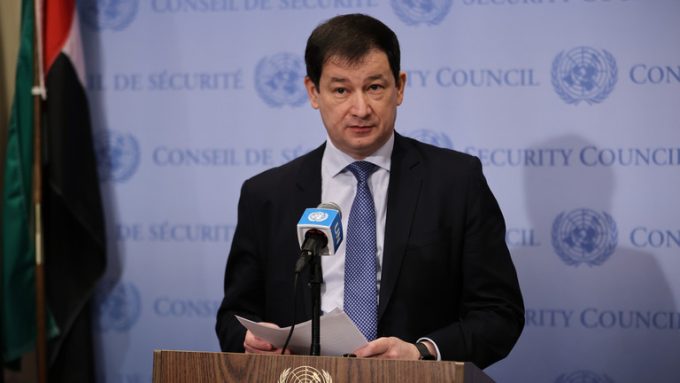
RT | August 27, 2025
Russia has accused German authorities of attempting to cover up the true circumstances of the 2022 Nord Stream pipeline explosions by blaming private “scapegoats” for what Moscow insists was likely a state-sponsored operation.
Earlier this month, a Ukrainian veteran was arrested in Italy at Germany’s request on suspicion of belonging to a small group behind the sabotage in the Baltic Sea. Russian Deputy Ambassador to the UN Dmitry Polyansky said on Monday that Moscow mistrusts Berlin’s motives.
Speaking at a UN Security Council meeting, Polyansky criticized what he described as a lack of transparency from German officials and frequent leaks to the press. He argued that Germany and its allies are steering public opinion toward a narrative in which “amateur” operatives driven by personal motives carried out the blasts, thereby clearing governments of any involvement.
“We have no faith in Berlin’s findings,” Polyansky said. “We urge the German authorities not to try to hide the truth behind a veil of secrecy, but to demonstrate a willingness to engage in genuine cooperation and reveal all the information at their disposal.”
He reminded the council that media reports about the yacht Andromeda and rogue Ukrainian operatives first surfaced in 2023, after US investigative journalist Seymour Hersh alleged that President Joe Biden’s administration orchestrated the attack. Hersh’s claims, Polyansky said, aligned with expert assessments that the operation required nation-state resources. The US has rejected the journalist’s accusations.
Polyansky described the theory promoted in Western media as resembling a spy novel, adding that it conveniently distracts from the possibility that the sabotage – which “directly harmed German economic and political interests” – could have been carried out by a NATO ally.
The Nord Stream pipelines were built to transport Russian natural gas directly to Germany. After the Ukraine conflict escalated in 2022, Berlin ended imports of Russian energy, ending decades of reliance on the fuel for economic growth.
China decouples from US energy as key exports crash to zero
Inside China Business | August 25, 2025
Resources and links:
The Illusion of Israeli Self Sufficiency in Intelligence
By José Niño | The Libertarian Institute | August 26, 2025
Casual onlookers salivate at the supposed brilliance of Israel’s intelligence services. From Mossad’s assassinations abroad to daring sabotage campaigns in hostile territory, the Jewish state has been elevated in popular imagination as a scrappy David with unmatched cunning, capable of pulling off operations that leave even world powers like the United States in awe. Books, films, and mainstream pundits reinforce this myth, presenting Israel’s intelligence machine as self-sufficient and independent.
But when one peels back the layers, the narrative quickly unravels. Israel’s most celebrated operations—from targeted killings in Europe to sabotage inside Iran—were rarely the product of Israeli ingenuity alone. They relied on cooperation with the CIA, NSA cyberwarfare expertise, European intelligence networks, and even covert collaboration with Arab regimes that publicly denounce Israel while privately working with it. Much like its dependence on U.S. military aid and diplomatic cover, Israel’s intelligence empire survives not through independence but through reliance on Western logistics, intelligence sharing, and political approval. What is sold as the story of a bootstrapping nation is a case study in multinational complicity.
According to investigative reporting by Israeli journalists Melman and Ronen Bergman, Israel’s intelligence community relied heavily on intelligence partnerships with Western and allied nations to conduct clandestine activities in foreign territories.
The foundation of this intelligence cooperation traces back to the aftermath of the 1972 Munich Olympics massacre. According to Dr. Aviva Guttmann’s research, which Melman has covered extensively, the Berne Club—a secret European intelligence alliance founded in 1969—provided crucial support for Israel’s subsequent assassination campaign against Palestinian operatives. This multinational intelligence network initially included Switzerland, West Germany, France, the United Kingdom, Italy, Luxembourg, Austria, the Netherlands, and Belgium, and later expanded to include the United States, Canada, Australia, and other nations. Through an encrypted communication system called “Kilowatt,” thousands of cables were exchanged among eighteen Western intelligence services after the system was established in 1971. The network functioned as a secret clearinghouse for raw intelligence. Shared reports contained the locations of safe houses, vehicle registrations, the movements of high-value targets, updates on Palestinian guerrilla tactics, and analytical assessments, all of which provided Israel with crucial operational support for its clandestine operations.
Direct American involvement in Israeli operations became particularly evident during the George W. Bush administration. The February 2008 assassination of Hezbollah commander Imad Mughniyeh in Damascus was reportedly approved by President Bush himself after being briefed by then-CIA Director Michael Hayden. This was not merely intelligence sharing but active operational participation. “The Mossad agent would ID Mughniyeh, and the CIA man would press the remote control,” a Newsweek report noted. The CIA designed and built the bomb that killed Mughniyeh, tested it at a secret facility in North Carolina, and smuggled it into Syria through Jordan, while Mossad provided intelligence and logistical support.
When it came to confronting Iran’s nuclear program, the United States and Israel collaborated on the creation of the Stuxnet computer virus in a joint operation codenamed “Olympic Games.” The malware was designed to sabotage centrifuges at Iran’s Natanz uranium enrichment facility. According to Ronen Bergman, the virus was developed with input from Israeli cybersecurity experts alongside the U.S. National Security Agency. This operation represented a quadrilateral effort involving the CIA, NSA, Mossad, and Israel’s military intelligence agency, AMAN. It was conceived during the administrations of W. Bush and Israeli Prime Minister Ehud Olmert and ultimately executed in 2010 under President Barack Obama and Prime Minister Benjamin Netanyahu.
The scope of American involvement extended to Israel’s broader targeted killing policies. Ronen Bergman revealed that during Ariel Sharon’s tenure, a secret deal was struck with then-U.S. National Security Advisor Condoleezza Rice that committed Israel to “significantly reduce the construction of new settlements in exchange for American backing of the war with the Palestinians and of Israel’s targeted killing policy” of high-value Palestinian figures.
American intelligence cooperation facilitated Israel’s campaign against Iran’s nuclear program, with Melman documenting extensive Western knowledge of and potential involvement in the assassination of Iranian nuclear scientists between 2007-2012. The Obama administration was aware of the assassination campaign carried out by the Mujahideen-e-Khalq (MEK) terrorist organization, which was being financed, armed, and trained by Mossad. Joint Special Operations Command (JSOC) reportedly trained MEK members starting in 2005, and U.S. intelligence was providing crucial information for these operations. As one former senior intelligence official told investigative journalist Seymour Hersh, “the United States is now providing the intelligence” for assassinations carried out “primarily by MEK through liaison with the Israelis.”
Israeli dependency on foreign support went beyond Western allies to include collaborationist elements in the Arab world. Bergman revealed extensive details about Mossad’s regional cooperation during Meir Dagan’s tenure (2002-2010) as director of the Mossad, including secret partnerships with Arab intelligence services that publicly condemned Israel while privately cooperating with it. These arrangements involved joint operations with countries that “share more or less the same set of interests” despite public hostility, coordination in counter-terrorism operations across the Middle East, and partnerships that enabled many operations attributed solely to Mossad.
The pattern of foreign dependence continues in contemporary operations. An August 2025 ProPublica report by Yossi Melman and fellow journalist Dan Raviv showcased Israel’s enlistment of Iranian dissidents for executing missions inside Iran during “Operation Rising Lion.” They specifically outlined Mossad’s strategic shift from using Israeli personnel to cultivating a “foreign legion” of Iranian and regional operatives to carry out activities ranging from support functions to covert action.
This pattern of intelligence reporting by Melman and Bergman reveals that Israel’s reputation for independent intelligence capabilities obscures a reality of extensive foreign dependence, particularly on Western intelligence services, for conducting operations that extend Israeli influence and security interests globally.
Far from being a model of independence, Israel’s intelligence record underscores how deeply its operations are embedded in Western power structures. The myths of self-sufficiency and unmatched brilliance collapse under the weight of evidence: Mossad’s reach is extended only because Washington, European capitals, and even regional neighbors provide the pipelines of intelligence, technology, and manpower that make its operations possible.
The true scandal lies not in Israel’s dependency but in the willingness of other nations to abet its destabilizing campaigns by supplying the bombs, intelligence streams, and diplomatic cover that allow Tel Aviv to operate with impunity. To strip away the mythology is to confront the uncomfortable truth that Israel’s “miraculous” intelligence victories are collective endeavors, outsourced across continents, exposing not a triumph of independence but a parasitic reliance on collaborators who enable its shadow wars.
The Palestine Chronicle case: When truth becomes the crime
By Mohamed El Mokhtar | MEMO | August 26, 2025
The Palestine Chronicle is not a militant organisation. It is a modest, independent publication, sustained by small donations and animated by a singular mission: to bear witness. It tells the untold stories of Palestine, documenting dispossession, resistance, and the endurance of a people condemned to silence. In a media landscape dominated by powerful conglomerates repeating the language of governments, the Chronicle insists on a journalism of proximity — grounded in daily lives, in the rubble of Gaza, in voices otherwise erased. Its true offense, in the eyes of its detractors, is not invention but truth.
At the heart of this endeavor stands Ramzy Baroud. His career is the antithesis of clandestine. For decades he has written, taught, and spoken in public, producing books translated into multiple languages, contributing columns to international publications, addressing audiences in universities and public forums across continents. He is not a shadowy figure; he is a man whose work has been consistent, transparent, and intellectually rigorous. His life is not untouched by the tragedy he describes: many members of his family were killed under Israeli bombardments. Yet while mainstream media rushed to amplify unproven allegations against him, they remained deaf to his personal grief. His tragedy was ignored, his integrity overlooked, his voice distorted — because his engagement is unbearable to those who would prefer silence.
A crime of conscience, not of law
He is an engaged journalist in the noblest sense: independent, lucid, unflinching. His so-called crime is not collusion with violence but fidelity to memory. That is why he is demonised — not for what he has done in law, but for what he represents in conscience. America, unable to silence Palestinian voices through censorship alone, now instrumentalises its justice system to achieve by indictment what it failed to achieve by argument. Having harassed universities, intimidated students, and punished professors for their solidarity with Gaza, it turns the courtroom into a new battlefield. And Congress, captive to the whims of its Zionist masters, joins the manhunt, targeting a journalist for the sole offense of telling the truth of his people. As for the mainstream press, it chooses cowardice: ignoring his family’s suffering, ignoring the emptiness of the charges, while echoing the accusations of power as if they were evidence.
Law twisted into a weapon
The complaint filed against Ramzy Baroud and the organization (People Media Project) that runs the Palestine Chronicle rests on the Alien Tort Statute, grotesquely overstretched to criminalise editorial decisions rather than acts of war. It alleges that by publishing articles from Abdallah Aljamal — described by Israel as a Hamas operative killed during a hostage rescue — the Chronicle “aided and abetted” terrorism. But here lies the first fissure: this characterisation of Aljamal comes exclusively from Israeli military sources, themselves a belligerent party. It has never been independently verified. The claim that he was both a journalist and a Hamas operative remains an allegation, not an established fact. To treat it as judicial evidence is to replace proof with propaganda.
Even if—hypothetically—Aljamal had, at the demand of a militant group, harbored hostages, such a circumstance would not in itself render him culpable: what ordinary civilian in a war zone can refuse the command of militants under threat of force? And even if it occurred, how could Ramzy Baroud have known of it? Even taken at face value, the allegation collapses upon scrutiny. No evidence demonstrates that the Chronicle or its editor had actual knowledge of Aljamal’s supposed operational role, nor that modest freelance payments — if any at all — bore any causal nexus to hostage-taking. The federal judge, in February 2025, dismissed the original complaint precisely for lack of proof of knowledge or intent. The plaintiffs returned with an amended filing, repackaged in rhetoric and pathos, but still devoid of the material elements required under international law: actus reus (a substantial contribution to the crime) and mens rea (intent or knowledge).
To equate the publication of articles with material support for terrorism is not jurisprudence but a juridical contortion. It is the substitution of law by politics, the criminalisation of journalism under the mask of counterterrorism. What is sought is not justice but intimidation — to cast suspicion on every Palestinian voice, to brand their words as weapons, their witness as crime.
Thus the legal emptiness is evident:
- Jurisdiction overstretched: the Alien Tort Statute (ATS) was never intended to criminalise editorial contracts.
- Elements unmet: no proven knowledge, no intent, no substantial assistance.
- Factual foundation unstable: the Hamas label rests on unverified allegations from one warring party.
- Political aim transparent: to silence Palestinians and punish one of their most articulate representatives for his independence.
This case is not justice. It is intimidation. It is not law. It is propaganda dressed in the robes of a courtroom. The allegation against Ramzy Baroud rests not on proof, but on the word of a belligerent army. An army that bombs, besieges, and kills — and then dictates who is journalist, who is terrorist, who is fit to speak. To transform those claims into evidence is to surrender law itself to war.
Ramzy Baroud is not a conspirator. He is a journalist of record, a man of books, a teacher, a witness. His own family has been buried under rubble. And yet, America has not mourned them, has not spoken of them. Instead, it chooses to hunt him — to turn his grief into accusation, his fidelity into crime.
Some congressmen have joined this manhunt, eager to please their Zionist patrons. Universities have been disciplined, their students silenced. The press, that great sentinel of truth, has abandoned him, repeating only the charges while ignoring his suffering. This is not democracy. It is servitude.
The elements of law are absent. There is no actus reus, no mens rea, no causal link. There is only suspicion. There is only the will to silence.
And so the true purpose stands naked: to criminalise the Palestinian word, to punish a journalist for speaking the truth of Gaza, to make an example of him so that others will be afraid to write.
But intimidation is not justice. A trial without evidence is not law. And silencing the witness will not erase the truth.
Law or servitude
Here one hears Thurgood Marshall’s axiom: “The Constitution does not permit the discrimination of silence.” One hears Cochran’s defiance: “If the proof is not there, the case cannot stand.” One hears Vergès exposing the colonial reflex that brands resistance as terror. One hears Vedel’s warning: that when law is bent to politics, law ceases to exist.
Ramzy Baroud stands here not accused, but accusing. He accuses a system that bends to power, a Congress that bows to lobbyists, a press that betrays its duty, and a nation that dares call itself free while shackling its own justice.
Therefore, the American justicial system has a choice: to lend its authority to propaganda, or to defend the very principle that sustains law — that guilt must be proven, not declared. To condemn Ramzy Baroud would be to condemn journalism itself. To acquit him is to restore some dignity to justice. The choice is clear.
Ukraine conflict marks end of Western dominance – former French ambassador
RT | August 26, 2025
The Ukraine conflict has highlighted a gradual shift in the global balance of power and has signaled the end of Western supremacy, former French Ambassador to the US Gerard Araud has claimed.
“We are experiencing the end of an era,” Araud wrote in the French magazine Le Point on Sunday, adding that the collapse of the order inherited from the end of WWII means the West no longer dominates international affairs.
He argued that the Ukraine conflict has shown that Western leaders are unable to accept this change, describing it as revealing “to the point of caricature the incomprehension and rejection of the world to come by European leaders.”
Araud suggested that one of the main reasons behind this shift is that the US, under President Donald Trump, no longer wishes to serve as the world’s “policeman,” leader, and “protector.” Trump has scaled down Washington’s involvement in Ukraine, urged European NATO members to take greater responsibility for their own defense, and prioritized domestic issues.
While lamenting the decline of Western power, Araud admitted that global affairs have always been defined by “power relations” in which “the strong imposed their law on the weak.”
Moscow has also repeatedly insisted that Western hegemony has ended and that a multipolar world is emerging, with interests increasingly represented by BRICS and the Global South. Russian officials have argued that the Ukraine conflict confirms this transition.
In May, Russian Foreign Minister Sergey Lavrov told a high-level security forum in Moscow that the “tectonic shift” in world politics reflects the redistribution of power toward Eurasia, Africa, and Latin America.
He also dismissed Western claims that multipolarity would lead to “chaos and anarchy,” stating instead that unipolar dominance, characterized by sanctions, interventions, and economic coercion, had triggered the major crises of recent decades.
Russia has consistently described the Ukraine conflict as a proxy war waged by the West and maintained that any settlement must address Moscow’s security concerns and the root causes of the crisis, including NATO’s continued eastward expansion.
Featured Video

Death Spikes & Rising Cancer In Our Youth Explained
or go to
Aletho News Archives – Video-Images
From the Archives
Politicians lie
By Mazin Qumsiyeh | Popular Resistance | August 18, 2013
There is no way to say this truth nicely: Politicians lie. That includes Japanese, American, Egyptian, Israeli, and Palestinian politicians! Is there something more common sense than that? Yet, so many citizens around the world believe their own politicians or wistfully acknowledge lies but think it is part of the job needed to run things. They believe even when politicians contradict themselves blatantly. This phenomenon is rather remarkable. It is a dissonance and disconnect from reality that many seem oblivious to. It is very dangerous because it can lead to accepting rationales for going to war. These can be deadly wars that lead to millions of lives lost as happened in what was called World War 1 and WW2. Even when incredible and declassified evidence abound, politicians continue to lie and old mythologies refuse to die. Here are just a few of the countless lies told to us over the past few decades… continue
Blog Roll
 Aletho News
- RSF military group defects, joins Sudanese army: State media
- Ireland goalkeeper refuses to play ‘Israel’ as squad weighs boycott
- China pushes back against US on Cuba, Iran
- Ukrainian Soldiers, Potential Mercenaries: Have Gun, Will Travel!
- Burnham’s UN debut… A masterclass in British disinformation
- Iran flights continue despite US aviation sanctions
- Global Tipping Points Lead the World Into a State of Entropy
- The day-after at the White House: USA and Xi Jinping
- The Geopolitical Balance in the Red Sea: The UAE Being Displaced by New Players
- Iraqi resistance group vows to stage airport sit-ins over Iran aerial blockade
- If Americans Knew
- Deconstructing Netanyahu’s pants-on-fire UN rant – Daily Update
- Trump betrayed voters with his campaign lies and prioritized a foreign country once he took office
- Netanyahu calls Israel’s war in Gaza ‘opposite of genocide’ in UN speech to near-empty hall
- Settler Kidnappings: Torture, Sexual Abuse and Terrorisation of Palestinian Abductees as Israel Deepens Annexation of West Bank
- Gaza winter nears as 162,000 tents become unusable, raising fears of humanitarian crisis
- Netanyahu says, “It’s the opposite of genocide”; UN says Gaza economy is world’s ‘most severe crisis on record’ – Daily Update
- Israel’s US-Backed Assault on Gaza Has Created the ‘World’s Most Severe Economic Crisis on Record’: UN
- ‘Protecting U.S. Citizens’… From Israel
- ‘This is where I live now, the back of a truck’: a day in the life of a grandmother in Gaza
- In UN Speech, Iran’s President Displays Pictures of Children Killed by US, Brings Attention to Israel’s Nuclear Arsenal
- No Tricks Zone
- New Study: Earth And Venus Surface Warmth Largely Explained By Convection And Lapse Rate, Not CO2 Or Radiation
- 2025 Nature Paper Claiming Worsening Global Drought Gets RETRACTED …Heavily Flawed
- New Study: ‘Global Drought Shows No Detectable Recent Acceleration Under Climate Warming’
- Economic Masterminds: German Socialists Suggest Taxing Productivity Gains Stemming From Using AI
- The South China Sea Has Not Been Cooperating With The Climate Change Narrative
- Energy Crisis: Germany Enters Heating Season With Historically Low Gas Reserve Fill Levels
- New Study: The Antarctic Ice Sheet Gained Mass From 2020-2024 Due To Staggering Snow And Ice Accumulation
- Study: Ocean Heating Rates From Thousands Of Years Ago ‘Dwarf’ Modern Ocean Heating Rates
- Climate Extremists Target, Attack Large-Scale Power Grid Infrastructure In Germany!
- New Study: Antarctic Ice Melt Has Contributed Less Than 1 Centimeter To Sea Level Rise In The Last 30 Years

