Kristi Noem’s Authoritarian Take on Travel
By Adam Dick | Peace and Prosperity Blog | May 6, 2025
Speaking Tuesday before the Homeland Security Subcommittee of the United States House of Representatives Committee on Appropriations regarding the implementation of REAL ID mandates on travelers, Department of Homeland Security Secretary Kristi Noem displayed succinctly in one sentence her disdain for the right of Americans to travel freely and her support instead for an authoritarian approach to travel.
“But we are telling people that this law will be enforced and it will allow us to know individuals in this country who they are and that they’re authorized to travel,” declared Noem regarding the starting the next day of REAL ID enforcement on travelers. Yet, the right to travel is a fundamental right long recognized by the US government and its courts. And the right to travel is the opposite of travel being allowed only when and to whom the government decides. Further, the right to travel includes the right to travel without showing your papers, updated in the age of mass surveillance to showing your REAL ID. An apparently peaceful person going about his business should be able to continue to do so without having to identify himself to any government agent or provide proof that the government has preapproved his movement from point A to point B. That’s freedom. The Noem approach, in contrast, is authoritarianism.
Adding to the outrageousness of this defense of REAL ID Noem offered is an assertion she made just before in her comments at the subcommittee hearing. Noem said that REAL ID would be imposed on travelers on Wednesday because after years — 17 years in fact — of delay of implementation “the Biden administration chose that it should go into place on May seventh and we intend to follow the law.” Hold on: Noem is really passing the buck to the Biden administration? President Donald Trump and his administration has spent a great amount of effort — via executive orders, regulation changes, and other actions — rescinding many decrees of the Biden administration. Trump and Noem could do the same regarding REAL ID. At a minimum, they could ensure four more years of delay as administration after administration has done before. Instead, they chose to move forward with imposing REAL ID on travelers. They cannot evade any of the responsibility on this. Trump and Noem are choosing to pursue the authoritarian course.
Shelter in your bunkers or leave our region: President of Yemen’s Supreme Political Council to Israelis
Al Mayadeen | May 6, 2025
President of Yemen’s Supreme Political Council, Mahdi al-Mashat, vowed on Tuesday that Sanaa’s response to Israeli and US aggression would be “devastating and painful,” and beyond what either party could withstand.
His remarks followed Israeli airstrikes targeting civilian infrastructure in Sanaa, including the airport, power stations, and factories.
“From now on, take shelter in your bunkers or leave our region immediately,” al-Mashat warned the Israeli occupation. “Your failed government can no longer protect you.”
He reaffirmed Yemen’s firm stance in supporting Gaza, stressing, “Our strikes are effective, and they will continue. We will not be deterred from our rightful stance in supporting our brothers in Palestine until the aggression ends and the siege on Gaza is lifted.”
Trump says aggression on Yemen suspended
The remarks came shortly after US President Donald Trump declared a halt to American airstrikes on Yemen, claiming Sanaa had promised to end Red Sea attacks on ships.
However, Ansar Allah leaders denied any formal commitment, with senior official Mohammed al-Bukhaiti stating that operations against US warships might pause if American strikes ceased, but vowed that military actions in support of Gaza and against the Israeli occupation would continue unabated.
Al-Mashat: Escalation will endanger Trump during his visits to the region
Later, al-Mashat said that authorities in Sanaa indirectly informed Washington that the continued escalation in the region will only affect the visits of “the criminal Trump” to the region. He said that Yemen did not inform the US of anything else.
“If the criminal Trump wants to stop his aggression and compensate [for the destruction] he left behind, that is up to him,” al-Mashat emphasized.
Oman’s Foreign Ministry confirmed it had brokered a ceasefire agreement aimed at de-escalation between the US and the authorities in Sanaa, with both parties agreeing not to target each other moving forward.
Yet the US State Department later clarified that the agreement applies strictly to maritime operations in the Red Sea. “If the Houthis [Ansar Allah] commit to not targeting ships, we will also reciprocate,” a spokesperson said.
‘Israel’ bewildered by Trump announcement
Meanwhile, the announcement from Trump sent shockwaves through the Israeli political establishment. According to Channel 14, the Israeli occupation leadership was blindsided by both Trump’s remarks on Yemen and his promise of a “major announcement” during his upcoming Middle East tour. The channel described the political mood as one of “confusion and disbelief.”
Amit Segal of Channel 12 described Trump’s message as a regional signal: “If I were Iranian, I would understand it as: hit ‘Israel’ and leave us alone.”
Tsvi Yehezkeli, Arab affairs analyst for Channel 13, speculated that the US may be pursuing a quiet agreement with Yemen. “I don’t see another explanation for this declaration,” he said, warning that the US disengagement puts “Israel” in a difficult position, effectively leaving it alone to face Yemeni retaliation. “This is no longer just about Red Sea shipping; it’s now about direct fire on Israel,” he added.
However, despite Trump’s claims of a breakthrough, Ansar Allah denied that any such concession had been made. In an interview with Bloomberg, Mohammed al-Bukhaiti, a member of the group’s Political Council, affirmed that military operations in the Red Sea and against “Israel” would continue until the aggression on Gaza ends and the siege on its people is lifted.
Oman brokers US-Yemen ceasefire, Israelis in dark regarding deal
Al Mayadeen | May 6, 2025
The Omani Foreign Ministry announced on Tuesday that it had successfully brokered a ceasefire agreement between the United States and the authorities in Sanaa, aimed at achieving mutual de-escalation.
According to a statement from Muscat, the agreement entails a commitment by both sides, Washington and the Sanaa-based government, not to target each other in future military operations.
“The Sultanate thanks both parties for their constructive approach that led to this welcome outcome,” the statement read, emphasizing Oman’s longstanding diplomatic efforts in mediating regional conflicts.
US President Donald Trump had earlier declared an immediate halt to US airstrikes on Yemen, claiming that Yemeni authorities had promised to cease attacks on vessels in the Red Sea.
‘Trump surprised us’
The declaration appears to have caught the Israeli occupation off guard, with Axios journalist Barak Ravid quoting a senior Israeli official saying, “We didn’t know about this. Trump surprised us.”
Despite Trump’s claims of a breakthrough, Ansar Allah denied that any such concession had been made. In an interview with Bloomberg, Mohammed al-Bukhaiti, a member of the group’s Political Council, affirmed that military operations in the Red Sea and against “Israel” would continue until the aggression on Gaza ends and the siege on its people is lifted.
Support for Gaza will not cease
While al-Bukhaiti indicated that attacks on US warships may pause if American strikes cease, he stressed that “we will definitely continue our operations in support of Gaza,” underscoring that the movement’s military actions are directly tied to the Israeli regime’s ongoing war on the Gaza Strip.
Ansar Allah “will not stop regardless of the consequences until the end of the aggression on Gaza and blockade on its people,” al-Bukhaiti stressed.
US to halt airstrikes on Yemen
Trump announced on Tuesday that Washington will halt its airstrikes on Yemen, claiming that his administration received a “promise” from Yemeni representatives to stop attacks on vessels in the Red Sea. Trump described the move as “good news” and a step toward de-escalation in the region.
Speaking during a press conference at the White House alongside Canadian Prime Minister Mark Carney, Trump said his administration trusts the Yemeni assurances despite the absence of a formal agreement. “The Yemenis don’t want to fight, and we’ll stop bombing them. We believe their word that they won’t target ships anymore,” he said.
He emphasized that the decision was made in light of what he described as a “genuine desire for calm” and reiterated that there is “no reason to continue the air raids as long as Yemen holds to its commitment to end naval operations.”
‘Israel’ conducts airstrikes on Yemen
Trump’s remarks came just hours after Israeli warplanes carried out airstrikes on the Yemeni capital, Sanaa, resulting in several casualties and injuries.
According to The Jerusalem Post, the Israeli occupation was not informed in advance about the US decision to halt its aggression on Yemen.
Al Mayadeen’s correspondent confirmed that Sanaa International Airport was targeted by a series of Israeli airstrikes.
Footage shared on social media platforms showed scenes of Israeli airstrikes reportedly targeting Sanaa International Airport.
Do Trump’s Slick Comments Put Iran Talks in Jeopardy?
By Ted Snider | The Libertarian Institute | May 6, 2025
U.S. President Donald Trump’s unexpected answer on Sunday to an interviewer’s question has thrown his administration’s nuclear negotiations with Iran into confusion.
Trump has consistently said that negotiations with Iran over its nuclear program are limited to preventing Iran from developing a nuclear weapon: “You know, it’s not a complicated formula. Iran cannot have a nuclear weapon.” But in an interview on NBC’s Meet the Press, when the interviewer asked Trump, “Is the goal of these talks limiting Iran’s nuclear program or total dismantlement?” Trump answered, “Total disarmament.”
There has been disagreement in the Trump team over, not just the goal of negotiations with Iran, but, more fundamentally, over negotiating with Iran. National Security Advisor Mike Waltz advocated for a military path, while Director of National Intelligence Tulsi Gabbard, Secretary of Defense Pete Hegseth and Vice President J.D. Vance advocated for caution. Vance urged fully exploring talks before settling for a military solution. Trump sided with the diplomacy camp, believing that “we can make a deal without the attack.”
According to reporting by The Washington Post, Trump fired Waltz as National Security Advisor because he opposed Trump and “wanted to take U.S. policy in a direction Trump wasn’t comfortable with because the U.S. hadn’t attempted a diplomatic solution.” Waltz maintained that “the time was ripe to strike Iran.”
Having agreed on the diplomatic path, there appeared to be confusion over the goal of diplomacy. Waltz said that the U.S. is demanding “full dismantlement,” and Trump’s special envoy Steve Witkoff said that “a Trump deal” means “Iran must stop and eliminate its nuclear enrichment and weaponization program.” But these statements had been at odds with Trump’s more limited stated goal. Until Sunday.
If there was a lack of clarity in America’s goals in negotiating, there was no ambiguity in Iran’s. Iran wanted a deal that the United States couldn’t walk away from, as they walked away from the previous 2015 JCPOA nuclear agreement, and they wanted negotiations to lead to three things.
The first is that negotiations have to lead to a cessation of U.S. threats of a military solution. Iranian President Masoud Pezeshkian had made it clear that “the language of threats and coercion is absolutely unacceptable… It is unacceptable for someone to come along and say, ‘Don’t do this, don’t do that, or else.’ I won’t come to negotiate with you.”
The second is that negotiations have to lead to the complete lifting of sanctions.
The third is that, while Iran’s Supreme Leader, Ayatollah Ali Khamenei, has fully empowered his team to negotiate, he has placed the firm limit that Iran will not negotiate “the full dismantling of Iran’s nuclear infrastructure.”
The American-Iranian talks were showing signs of success. Iran called the first round “constructive” and “respectful.” The U.S. called it “constructive” and “positive.” The first round led to a second, which led to an agreement to begin work on a framework for a potential deal and a third round of talks.
Then a flurry of confusing and contradictory statements made by U.S. officials in the past few days began to derail the talks.
First, Pete Hegseth returned to the language of threats. Referring to Yemen’s Houthi attacking vessels in the Red Sea, Hegseth “warned” Iran, “You know very well what the U.S. Military is capable of… You will pay the CONSEQUENCE at the time and place of our choosing.” From Iran’s perspective, what is the point in negotiating limits on your civilian nuclear program to avoid American bombs if the United States is going to bomb you anyway for another purpose?
Then Trump returned to the threat of sanctions, posting that “Any Country or person who buys ANY AMOUNT of OIL or PETROCHEMICALS from Iran will be subject to, immediately, Secondary Sanctions. They will not be allowed to do business with the United States of America in any way, shape, or form.”
Following those two statements, the fourth round of scheduled talks between the United States and Iran were postponed. They were allegedly postponed “[f]or logistical reasons.” However, a senior Iranian official said that “U.S. sanctions on Iran during the nuclear talks are not helping the sides to resolve the nuclear dispute through diplomacy” and that “[d]epending on the U.S. approach, the date of the next round of talks will be announced.”
Then came the unexpected threat to future talks. Trump told Meet the Press that the talks are not negotiating what the Iranians thought they were negotiating. The United States he said, is not negotiating verifiable limits on Iran’s civilian nuclear program, it is demanding “total dismantlement” of Iran’s nuclear program.
“That’s all you’ll accept?” the interviewer clarified. “Yeah, that’s all I’d accept,” Trump confirmed.
The interviewer then, wrongly, suggested that Trump’s statement was inconsistent with Marco Rubio, his Secretary of State’s, suggestion that the U.S. “would accept… a peaceful, civilian nuclear program.”
Trump’s statement is not inconsistent with Rubio’s, though, because Rubio’s statement that Iran can have a civilian nuclear program by importing uranium enriched up to 3.67% but no longer by enriching their own, is consistent with Trump’s statement that Iran would have to dismantle its enrichment capability.
Though Trump’s statement may not be inconsistent with Rubio’s, it did, at this point, become a little confused with itself. Trump suggested that Iran has no need of a civilian nuclear program “to make electricity” because “they have so much oil, what do they need it for.” Trump then, confusingly repeated his earlier formulation, saying, “The only thing they can’t have is a nuclear weapon.” He said, “I think that I would be open to hearing” about a civilian nuclear program to generate energy before seemingly shutting it down again with the observation that “civilian energy often leads to military wars.”
The recent return by Washington to military threats and sanctions are not helping negotiations that seemed to be on a path to possible success. Trump’s latest remark that Iran has to fully dismantle its civilian nuclear program and stop all enrichment appears to take away any motivation for Iran to negotiate. Since Trump has said that “If they don’t make a deal, there will be bombing,” it is imperative to clarify the confusion and the positions and get the fourth round of talks back on schedule.
‘A lot of people know’ who blew up Nord Stream – Trump
RT | May 6, 2025
US President Donald Trump has dismissed claims that Russia was behind the 2022 sabotage of the Nord Stream gas pipelines and suggested that the true culprit is widely known – without naming names.
Speaking at a White House press event, Trump said there was no need for a formal investigation to uncover who carried out the attack, which crippled a key energy route between Russia and Western Europe.
Three of the four Nord Stream pipelines, built to deliver Russian gas to Germany and the rest of Western Europe, were damaged by blasts at the bottom of the Baltic Sea in September 2022.
On Tuesday, a correspondent for libertarian financial blog ZeroHedge, which has been admitted to White House press events under the new administration, noted that Trump had previously rejected the Western narrative that Russia blew up its own pipelines, and asked the president if he was planning to initiate a probe to find out who was actually behind the attack.
“If you can believe it, they said Russia blew it up,” Trump responded. “Well, probably if I asked certain people, they would be able to tell you without having to waste a lot of money on an investigation. But I think a lot of people know who blew it up,” he added, without elaborating.
ZeroHedge suggested that Trump’s comment meant that “based on classified intelligence he knows exactly who was behind” the destruction of Nord Stream. It also “should put the ‘Russia destroyed its own vital and economically lucrative pipeline’ storyline to rest,” the outlet insisted.
In early February 2023, veteran investigative journalist Seymour Hersh published a report claiming that then US President Joe Biden had given the order to destroy Nord Stream. According to an informed source who talked to the Pulitzer Prize-winning journalist, the explosives that were detonated on September 26, 2022 had been planted at the pipelines by US Navy divers a few months earlier under the cover of a NATO exercise called ‘Baltops 22’. The White House denied the report, calling it “utterly false and complete fiction.”
Senior Russian officials, including President Vladimir Putin, have previously pointed the finger at the US as the possible culprit behind the Nord Stream explosions. They have argued that Washington had the technical means to carry out the operation and stood to gain the most, considering that the attack disrupted Russian energy supplies to the EU and forced a shift to more expensive US-supplied liquefied natural gas.
Gender-affirming care for minors under fire in sweeping US report
By Maryanne Demasi, PhD | May 4, 2025
Paediatric gender dysphoria has rapidly emerged as one of the most divisive and urgent issues in medicine today. In the past decade, the number of children and adolescents identifying as transgender or nonbinary has soared.
In the US alone, diagnoses among youth aged 6 to 17 nearly tripled—from around 15,000 in 2017 to over 42,000 by 2021—signalling a seismic shift not only in culture but in clinical practice.
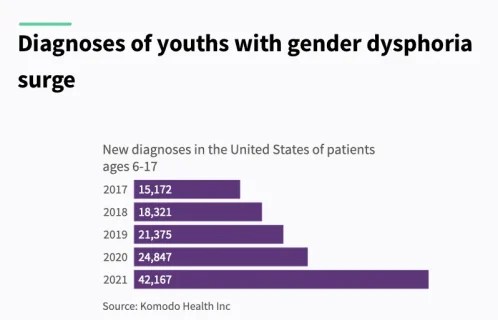
Children diagnosed with gender dysphoria—a condition defined by distress related to one’s biological sex or associated gender roles—are increasingly being offered powerful medical interventions.
These include puberty blockers, cross-sex hormones, and, in some cases, irreversible surgeries such as mastectomy, vaginoplasty, or phalloplasty.
An umbrella review from the US Department of Health and Human Services (HHS) states that “thousands of American children and adolescents have received these interventions,” despite a lack of solid scientific footing.
While advocates often claim the treatments are “medically necessary” and “lifesaving” the report concludes “the overall quality of evidence concerning the effects of any intervention on psychological outcomes, quality of life, regret, or long-term health, is very low.”
It also cautions that evidence of harm is sparse—not necessarily because harms are rare, but due to limited long-term data, weak tracking, and publication bias.
This 409-page report delivers a scathing review of the assumptions, ethics, and clinical practices driving gender-affirming care in the US.
An inversion of medical ethics
At the heart of the HHS critique is a reversal of medical norms.
“In many areas of medicine, treatments are first established as safe and effective in adults before being extended to paediatric populations,” the report explains. “In this case, however, the opposite occurred.”
Despite inconclusive outcomes in adults, these interventions were rolled out for children—without rigorous data, and with little regard for long-term, often irreversible consequences.
These include infertility, sexual dysfunction, impaired bone development, elevated cardiovascular risk, and psychiatric complications.
“The physical consequences are often irreversible,” the report warns.
Puberty blockers, frequently marketed as a reversible ‘pause,’ actually interrupt bone mineralisation at a critical growth stage—raising the risk of stunted skeletal growth and early-onset osteoporosis.
When followed by cross-sex hormones, as is common, the harms multiply. Known risks include metabolic disruption, blood clots, sterility, and permanent loss of sexual function.
Yet many clinics operate under a “child-led care” model, where a minor’s self-declared “embodiment goals” dictate treatment.
The report notes that some leading clinics conduct assessments “in a single session lasting two hours,” often with no robust psychological evaluation.
Consent and capacity
This raises a critical question: are children capable of consenting to life-altering medical interventions?
According to the HHS, informed consent means more than simple agreement—it requires a deep understanding of risks, alternatives, and long-term impact.
And by definition, children lack full legal and developmental capacity for medical decision-making.
“When medical interventions pose unnecessary, disproportionate risks of harm, healthcare providers should refuse to offer them even when they are preferred, requested, or demanded by patients,” the report states.
Supportive parents cannot shield clinicians from ethical responsibility. Many children who present for transition also have autism, trauma histories, depression, or anxiety—all of which can impair decision-making.
Yet clinicians frequently misread a child’s desire to transition as evidence of capacity.
The report warns that the current affirmation model “undermines the possibility of genuinely informed consent” and that the “true rate of regret is not known.”
This becomes especially urgent when the outcomes—sterility, bone loss, and sexual dysfunction—are permanent. Can a 13-year-old grasp what it means to forgo biological parenthood?
As the report suggests, the system has failed to distinguish between a young person’s wish to transition and their developmental ability to understand what that means long term.
A moral failure
The problem is not only medical—it’s moral.
The HHS accuses the medical establishment of abandoning its core duty: to protect vulnerable patients. Ideology and activism, it argues, have taken precedence over evidence and caution.
“The evidence for benefit of paediatric medical transition is very uncertain, while the evidence for harm is less uncertain,” it states.
Among the most disturbing trends highlighted in the report is the sidelining of mental health support.
Research suggests that most cases of paediatric gender dysphoria resolve without intervention. Yet clinicians continue to proceed with irreversible treatments.
“Medical professionals have no way to know which patients may continue to experience gender dysphoria and which will come to terms with their bodies,” the report explains.
The illusion of consensus
The report also takes aim at the idea that gender-affirming care enjoys universal professional backing. It reveals that many official endorsements come from small, ideologically driven committees within larger organisations.
“There is evidence that some medical and mental health associations have suppressed dissent and stifled debate about this issue among their members,” it warns.
Several whistleblowers have spoken out—often at considerable personal risk.
Jamie Reed, a former case manager at the Washington University Transgender Center, alleged that children were being rushed into medical transition without adequate psychological screening. Her testimony led to a state investigation and Senate hearing.
Clinical psychologist Erica Anderson, a transgender woman and former president of the US Professional Association for Transgender Health, has repeatedly raised concerns about the haste with which children are put on medical pathways.
Dr Eithan Haim, a surgeon in Texas, is now facing prosecution after revealing details about paediatric gender surgeries at a children’s hospital.
Rather than sparking debate, these whistleblowers have faced vilification, career damage, and in some cases legal consequences. The HHS suggests this culture of fear has stifled the scientific inquiry necessary for sound medicine.
Psychotherapy as an alternative
Instead of defaulting to hormones or surgery, the report urges a return to psychotherapy. Gender-related distress, it notes, often overlaps with broader psychological challenges that can be addressed non-invasively.
“There is no evidence that pediatric medical transition reduces the incidence of suicide, which remains, fortunately, very low,” the report finds.
Psychotherapy carries no documented harms and offers space for resolution and support. The HHS calls for greater investment in “psychotherapeutic management” as a safer and more ethical approach.
Restoring scientific integrity
Commissioned under President Trump’s Executive Order Defending Children’s Innocence by Ending Ideological Medical Interventions, the report responds to growing alarm over the medicalisation of minors.
Trump’s Executive Order directed federal agencies to evaluate practices to help “minors with gender dysphoria, rapid-onset gender dysphoria, or other identity-based confusion, or who otherwise seek chemical or surgical mutilation.”
It explicitly criticised “junk science” promoted by groups such as the World Professional Association for Transgender Health (WPATH), calling for a return to evidence-based standards and scientific discipline.
Rather than imposing new mandates, the HHS report focuses on delivering “the most accurate and current information available” to clinicians, families, and policymakers—urging caution and restraint.
“Our duty is to protect our nation’s children—not expose them to unproven and irreversible medical interventions,” said NIH Director Dr Jay Bhattacharya. “We must follow the gold standard of science, not activist agendas.”
Reform already underway
The HHS report lands amid a wave of legal reforms.
As of this year, 27 states have passed laws restricting or banning gender-affirming care for minors. These range from full bans on hormones and surgery to tighter consent requirements.
Nineteen of those laws were passed in 2023 alone, according to the Kaiser Family Foundation.
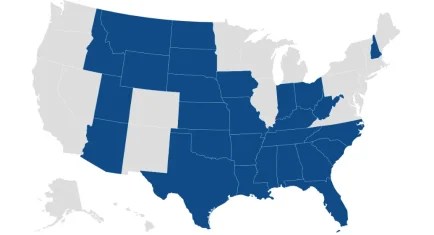
Over half of states have enacted laws/policies limiting youth access to gender affirming care
Though many face court challenges, the trend reflects mounting public concern over the medicalisation of gender-distressed youth. The HHS findings are expected to accelerate further scrutiny and legislative action.
Global shifts
The HHS review is part of a broader international movement to re-examine paediatric gender medicine.
In 2024, the UK’s Cass Review, led by paediatrician Dr Hilary Cass, delivered a landmark critique of NHS gender services. Cass concluded that the model had been adopted prematurely “based on a single Dutch study,” and lacked sufficient evidence.

Dr Hilary Cass, paediatrician
In response, the UK banned the routine use of puberty blockers and began closing the Tavistock gender clinic, replacing it with regional centres focused on holistic mental health care.
In Australia, the Queensland government took similar steps earlier this year, pausing all prescriptions of puberty blockers and cross-sex hormones for minors pending further review.
The move followed the suspension of Dr Jillian Spencer, a senior psychiatrist, from her clinical duties at Queensland Children’s Hospital after she raised concerns about the gender care protocols being used.
Her case has since become a focal point in Australia’s national debate on youth gender medicine.

Dr Jillian Spencer, paediatric psychiatrist, Queensland
A reckoning
The HHS report is more than a policy review—it is a warning.
It reveals that thousands of children—many struggling with underlying psychological issues—have been placed on a path of irreversible medicalisation without the basic safeguards expected in any other area of healthcare.
The report concludes that gender medicine has been practised backwards – treatments were introduced first, and only later did the search for evidence begin.
It calls for a course correction—one that puts evidence before ideology, and ethics above political expediency.
Whether institutions will act on its findings remains to be seen. But for families searching for answers, the report may finally provide the long-overdue clarity that has been obscured by years of activism and politics.
UCLA Gaza protesters sue over police violence, rubber bullet injuries
Al Mayadeen | May 5, 2025
A new lawsuit filed in Los Angeles Superior Court accuses law enforcement of police brutality during a violent crackdown on pro-Palestine protesters at the University of California, Los Angeles (UCLA) in spring 2024.
At the height of nationwide demonstrations against “Israel’s” war on Gaza, the UCLA encampment became a central site of student-led protest. On April 30, a pro-“Israel” mob attacked the encampment for more than four hours. Protesters say that police stood by as counter-demonstrators launched fireworks, sprayed chemical agents, and engaged in harassment and sexual assault, according to The Intercept.
The following day, Los Angeles Mayor Karen Bass, UCLA officials, and multiple law enforcement agencies coordinated plans to dismantle the encampment. On May 1, the encampment was forcibly cleared.
On February 12, 2025, Students for Justice in Palestine (SJP) and Graduate Students for Justice in Palestine (GSJP) were placed on interim suspension.
Police response: coordination and forceful dispersal
More than 700 police officers descended on campus, including members of the Los Angeles Police Department (LAPD), California Highway Patrol (CHP), Los Angeles County Sheriff’s Department, University of California Police Department, and private security forces.
During the raid, law enforcement fired over 50 rounds of rubber bullets into the crowd, striking multiple protesters in the head. Several individuals were hospitalized, including one who sustained internal bleeding and another whose hand bones were shattered, requiring surgery and extensive rehabilitation.
Protesters are now suing both the state of California, which oversees CHP, and the city of Los Angeles, which oversees LAPD. The suit argues that the use of rubber bullets by LAPD and CHP amounted to excessive force and violated protesters’ constitutional rights.
Legal violations: restricted rubber bullets and protesters’ rights
Following mass protests in 2020 against the police killings of George Floyd and Breonna Taylor, California lawmakers passed a law limiting the use of kinetic impact projectiles, commonly known as rubber bullets. The legislation bans their use at protests unless there is an objective and immediate threat to life or serious injury.
The lawsuit states that officers’ actions at the UCLA encampment violated this law. Attorney Becca Brown, representing the plaintiffs, emphasized that the indiscriminate firing of such projectiles is both illegal and dangerous.
“They cannot be used simply because someone is non-compliant,” she explained.
Despite UCLA’s revised protocols following 2020 to minimize reliance on external police forces, CHP, typically less involved in protest response, played a prominent role in the May 1 raid.
An LAPD after-action report later attempted to justify the force used, citing incidents like a protester throwing a traffic cone or removing a police helmet. However, the report admitted communication breakdowns among agencies and recommended improved command clarity.
Chilling effect: trauma, criminalization, and fear of future protest
The lawsuit includes plaintiffs such as a UCLA Ph.D. candidate, an undergraduate student, another student from a different university, and an architectural designer. All were struck with rubber bullets, several in the head. Beyond physical injuries, the plaintiffs say the crackdown has severely impacted their willingness to participate in future demonstrations.
“The encampment clearance by means of violence, excessive force, and kinetic energy projectiles traumatized Plaintiffs,” the complaint reads. “It justifiably made them less willing to engage in any further Palestine-related protest activity.”
One plaintiff, Abdullah Puckett, now fears future retaliation if he returns to protest. The complaint states that he is “more hesitant and afraid,” and has had to reevaluate the extent of his participation in pro-Palestine demonstrations.
Broader implications: political accountability and state repression
More than 200 people were arrested during the UCLA encampment clearance. LAPD later requested over $500,000 in reimbursement for the operation, which included 2,400 overtime hours, according to the Daily Bruin. The arrests resulted in criminal records for many students.
Lawyers say those records are now being used by the Trump administration to conduct background checks on international students and potentially flag them for deportation.
“For international students that may have been arrested at any of these encampments, that got flagged and could be subject to deportation under Trump’s fascist policies,” said Ricci Sergienko, one of the attorneys representing the plaintiffs.
Sergienko criticized Democratic leaders such as Governor Gavin Newsom and Mayor Bass, arguing that their actions laid the groundwork for broader state repression. “These attacks also happened in Democratic-run cities and blue states,” he said.
He also warned of mounting censorship in academia, pointing to a proposed bill in California that targets ethnic studies programs under the pretext of combating antisemitism. “That’s another attack on speech coming from the blue state, the liberal paradise of California,” he said.
During a recent screening of the documentary The Encampments at UCLA, police were once again called in. LAPD officers arrested three students.
Trump pushes for ‘total dismantlement’ of Iran’s nuclear program
RT | May 5, 2025
US President Donald Trump has said he wants Iran to completely scrap its nuclear program, as negotiations between the two countries have been postponed.
The president was asked by Kristen Welker on NBC’s Meet the Press on Sunday whether he was aiming to limit or completely abolish Iran’s nuclear program.
“Total dismantlement. Yes, that is all I would accept,” Trump said. He questioned the necessity of the Islamic Republic having nuclear technology for electricity generation.
“They have so much oil – why do they need it? … Civilian [nuclear] energy often leads to military wars. And we don’t want them to have a nuclear weapon. It’s a very simple deal,” he said.
“I just don’t want them to have a nuclear weapon because the world will be destroyed,” Trump added.
He made his remarks after Omani Foreign Minister Badr Al-Busaidi announced that the fourth round of indirect, mediated US-Iran talks, planned for Saturday, had been postponed indefinitely “for logistical reasons.”
The negotiations, previously described by both sides as constructive, have been overshadowed by tensions in Yemen, where the US and Britain have ramped up airstrikes against the Houthi militants.
Israeli Prime Minister Benjamin Netanyahu vowed to retaliate after a Houthi ballistic missile landed near Ben Gurion Airport outside Tel Aviv on Sunday, injuring eight people.
The Houthis said they were aiming for a “comprehensive air blockade” of Israel in solidarity with the Palestinians in Gaza. Iran denied directing the attacks, calling such claims “misleading.”
Trump withdrew the US from the 2015 UN-backed deal on Iran’s nuclear program during his first term in office, accusing the Islamic Republic of secretly violating the agreement. Tehran has denied any wrongdoing but has since rolled back its own commitments under the deal and increased its stockpile of enriched uranium.
Iranian Foreign Minister Abbas Araghchi warned last month that the country would resist any “pressure and threat” from the US.
HHS, NIH Launch $500 Million Project to Develop Universal Vaccines to Protect Against ‘Pandemic-Prone’ Viruses
By Brenda Baletti, Ph.D. | The Defender | May 1, 2025
The Trump administration is investing $500 million into research that will use an existing, traditional vaccine technology to develop vaccines that protect against multiple strains of “pandemic-prone viruses,” according to a joint press release from the U.S. Department of Health and Human Services (HHS) and the National Institutes of Health (NIH).
The investment will fund in-house development of universal vaccines for influenza, coronaviruses and multiple strains of viruses like H5N1 avian influenza and coronaviruses, including SARS-CoV-2, SARS-CoV-1 and MERS-CoV.
The new research program, Generation Gold Standard, appears to be a revamp of the Biden administration’s Project NextGen, according to The Wall Street Journal, which first reported the story.
Project NextGen, a $5 billion effort to fund new COVID-19 vaccines, was the successor program to Operation Warp Speed, a partnership between HHS and the U.S. Department of Defense. Several Project NextGen studies have been halted in recent weeks.
“Generation Gold Standard is a paradigm shift,” said NIH Director Jay Bhattacharya. “It extends vaccine protection beyond strain-specific limits and prepares for flu viral threats — not just today’s, but tomorrow’s as well — using traditional vaccine technology brought into the 21st century.”
HHS said the platform is adaptable for future use against RSV or respiratory syncytial virus, metapneumovirus and parainfluenza.
The project will focus on producing vaccines from chemically inactivated whole viruses, which is how flu viruses were made in the past, the WSJ reported.
According to the joint press release, researchers will develop the “next-generation, universal vaccine platform,” using a mechanism called a beta-propiolactone (BPL)-inactivated, whole-virus platform.
Dr. Meryl Nass expressed some skepticism about the announcement. “This holy grail in vaccinology has been sought for decades, so far unsuccessfully,” she told The Defender.
Nass said that BPL technology has been used in vaccine development for at least 70 years, and its value in producing vaccines is not a new discovery.
“The press release fails to tell us how this method is suddenly going to produce the holy grail that has long been sought of a universal flu or corona pandemic vaccine,” Nass said.
Epidemiologist Nicolas Hulscher from the McCullough Foundation also advised caution in interpreting the announcement. Hulscher said:
“These BPL-inactivated whole-virus vaccines represent a return to more traditional technology — likely offering broader and more durable protection than the narrow, spike-only focus of mRNA shots.
“However, it’s important to remember that any injectable product delivering toxic antigens — even if inactivated — can still result in serious adverse events, especially if distributed at scale without rigorous long-term, double-blind, placebo-controlled trials.”
HHS confirmed Wednesday that going forward, all vaccines will be required to undergo placebo-controlled trials.
‘A transparent vaccine platform will change the pharmacology world’
Other experts said that although it remains unclear at this point how this proposed vaccine development will play out, the news is encouraging because it directs payments to government researchers rather than to Big Pharma.
Children’s Health Defense (CHD) Senior Scientist Karl Jablonowski said the news that the agencies were committed to transparency was encouraging. Because of how private industry funds regulators, there has been an “inherent conflict” in vaccine development for some time, he said.
“The NIH could only promise transparency on a wholly government-owned product and process, as most of what transpires in private pharmaceutical companies lies beyond a citizen’s freedom of information rights,” Jablonowski said. “A transparent vaccine platform will change the pharmacology world.”
The Generation Gold Standard project includes research on a universal flu vaccine co-developed by NIH flu vaccine researchers Drs. Matthew Memoli and Jeffery Taubenberger, according to the WSJ. It will also research another universal flu vaccine and universal coronavirus vaccines.
CHD CEO Mary Holland said that the announcement was “interesting,” given that it doesn’t direct payments to Big Pharma and in light of the HHS announcement yesterday that all new vaccines will have to be tested against a placebo.
Clinical trials for universal influenza vaccines are scheduled to begin in 2026, with U.S. Food and Drug Administration approval targeted for 2029.
This article was originally published by The Defender — Children’s Health Defense’s News & Views Website under Creative Commons license CC BY-NC-ND 4.0. Please consider subscribing to The Defender or donating to Children’s Health Defense.
Fauci’s Replacement at NIAID a Cheerleader for Gain-of-Function Research
By Michael Nevradakis, Ph.D. | The Defender | April 29, 2025
A virologist who supports gain-of-function research and believes COVID-19 evolved naturally is the new acting director of the National Institute of Allergy and Infectious Diseases (NIAID), the agency Dr. Anthony Fauci led for 38 years.
Jeffery Taubenberger, M.D., Ph.D., a 19-year veteran of NIAID and chief of the institute’s Viral Pathogenesis and Evolution Section, replaced Dr. Jeanne Marrazzo, who was placed on leave last month by the Trump administration.
Citing an email from Dr. Matthew Memoli, deputy director of the National Institutes of Health (NIH), Science reported that Taubenberger’s first day as acting director was April 25. Taubenberger will head an institute with a $6.56 billion budget, making it the second-largest NIH branch, overseen by the U.S. Department of Health and Human Services (HHS).
Several researchers told Science that Taubenberger has a commendable track record, highlighting his work sequencing the Spanish flu virus of 1918.
Adolfo Garcia-Sastre, Ph.D., a virologist at the Icahn School of Medicine at Mount Sinai in New York, said Taubenberger “has made many critical contributions to the field of influenza, both in pathogenesis, animal models, human data, and vaccines.”
But critics point to Taubenberger’s public support of gain-of-function research and the zoonotic theory of COVID-19’s origins, which holds that the virus crossed over naturally from animals to humans.
They also criticized his past ties to Fauci and other controversial virologists, and his prior work on COVID-19 vaccines.
Gain-of-function research, which increases the transmissibility or virulence of viruses, is often used in vaccine development. Such research was conducted at the Wuhan Institute of Virology in China, prompting fears that the virus was developed at the lab and subsequently leaked.
Concerns over the safety of gain-of-function research previously led the U.S. government to implement a moratorium on such projects between 2014 and 2017.
“Gain-of-function research, if made safe, is a tremendous tool for forecasting the evolution of pathogens,” said Karl Jablonowski, Ph.D., senior research scientist for Children’s Health Defense. “The problem is that there is no such thing as a leak-proof laboratory, just as there is no such thing as an unsinkable ship. A lab leak is not inevitable, but it is a risk — one that we witness surprisingly often.”
Rutgers University molecular biologist Richard Ebright, Ph.D., a critic of gain-of-function research, said, “Taubenberger is part of the problem at NIAID, not part of the solution.”
Ebright said Taubenberger’s track record is at odds with HHS’ “Make America Healthy Again” agenda:
“Taubenberger’s views on the need for transparency and accountability at NIAID management, on the need for re-prioritization of NIAID funding to match disease burden, on the cause and cover-up of COVID, on reckless gain-of-function research and pathogen-resurrection research, and on biosafety, biosecurity, and biorisk management all appear to be diametrically opposed to those of HHS Secretary Kennedy.
“As such, Taubenberger’s appointment as acting director of NIAID is baffling.”
In a 2014 interview with the journal EMBO Reports, Taubenberger downplayed the risks of gain-of-function research, claiming it’s what “virologists have done for a hundred years.”
In a 2013 letter to the journal mBio, Taubenberger suggested that gain-of-function research replicates natural processes. He argued that Influenza A viruses “continually undergo ‘dual use experiments’ as a matter of evolution and selection.”
According to the American Society for Microbiology, dual-use research is a type of gain-of-function research that raises “important biosafety and/or biosecurity concerns.” It requires “a higher level of review” and is “subject to strict protocols.”
Jablonowski said Taubenberger’s dismissal of concerns over the safety of gain-of-function research overlooks its inherent risks.
“The problem with the argument is actually a problem with the policy it argues — it assumes an ill-willed actor intent on ‘deliberate misuse’ as the risk. Recent history has taught us that lab leaks pose a real and serious risk, no ill-willed actor needed. … Advocates of gain-of-function research do not include a realistic assessment of pathogen escape as part of a risk-benefit balance,” Jablonowski said.
While Taubenberger has been lauded for his role in sequencing the 1918 Spanish flu virus, some scientists were critical of this work, with Ebright calling the reconstruction of the 1918 virus “reckless.”
“Taubenberger … exhumed victims of the 1918 Spanish flu from the Alaskan permafrost to sequence and reconstruct the virus,” Jablonowski said. “It is a virus that killed 50 million people in two short years, and with its resurrection, could have reinitiated a pandemic.”
Taubenberger downplayed connections between COVID, lab leak
Taubenberger has sought to downplay any connection between gain-of-function research and the origins of COVID-19, instead claiming the virus emerged naturally.
In July 2020, Taubenberger and Fauci associate Dr. David Morens co-authored an op-ed in the American Journal of Tropical Medicine and Hygiene, suggesting that COVID-19 is “a virus that emerged naturally.”
In a later email to a Science reporter, on which Taubenberger was copied, Morens described the article as a publication that “defends Peter and his Chinese colleagues” — referring to zoologist Peter Daszak, Ph.D., former president of the EcoHealth Alliance, which collaborated with Wuhan scientists on gain-of-function research.
Jablonowski said the authors of the 2020 op-ed “are unfit for office at a scientific institution — not because they got the origins of COVID-19 wrong, but because they played the game of deceiving the world. One of the villains of COVID-19 was EcoHealth Alliance, and Taubenberger’s narrative casts it as the hero.”
In their op-ed, Fauci and Morens called for the development of “broadly protective vaccines” and suggested that the role of organizations like the Coalition for Epidemic Preparedness Innovations (CEPI) “should be extended and strengthened.”
In 2021, CEPI launched its “100 Days Mission” to develop infrastructure capable of delivering a vaccine for a future pandemic within 100 days. CEPI’s supporters include the Gates Foundation, World Economic Forum and Wellcome Trust.
According to his NIAID biography, Taubenberger has overseen research aimed at developing “broadly-protective coronavirus vaccines in pre-clinical animal studies.”
“Taubenberger is wrong about the dangers of gain-of-function research and also about the ‘zoonotic theory,’” said immunologist and biochemist Jessica Rose, Ph.D. “He needs to read EcoHealth Alliance’s DEFUSE proposal.”
Project DEFUSE, a 2018 grant developed by Daszak and co-authored by U.S. and Wuhan scientists, proposed engineering high-risk coronaviruses of the same species as SARS-CoV-2.
Although the U.S. government’s Defense Advanced Research Projects Agency rejected the proposal, some scientists have likened DEFUSE to a blueprint for generating SARS-CoV-2 in the lab, noting the similarities between the proposed work and key characteristics of SARS-CoV-2 that are not found elsewhere in nature.
Last year, HHS suspended all funding for EcoHealth Alliance after finding the organization failed to properly monitor risky coronavirus experiments.
The suspension came two weeks after a U.S. House of Representatives committee investigating the COVID-19 pandemic called for a criminal investigation of Daszak and a month after the U.S. Senate launched an investigation into 15 federal agencies that were briefed about Project DEFUSE in 2018 but said nothing.
Taubenberger collaborated closely with Fauci
According to U.S. Right to Know, “Most of the NIAID employees who helped Daszak maintain funding amid the pandemic still retain positions of influence at NIAID” — including Taubenberger and Morens, formerly a key aide to Fauci who is under investigation for allegedly using his personal email address to evade Freedom of Information Act requests for communications related to the origins of COVID-19.
Ebright said that Taubenberger has maintained longstanding collaborations with such figures, noting that he co-authored 14 papers with Fauci and 66 papers with Morens.
According to U.S. Right to Know, Taubenberger also collaborated with researchers who played a key role in promoting the zoonotic theory of COVID-19’s origins — including Daszak and several co-authors of “The proximal origin of SARS-Cov-2,” a March 2020 editorial published in Nature Medicine promoting the natural origin of COVID-19 that was later used to discredit proponents of the lab-leak theory.
Earlier this month, the Trump administration launched a revamped version of the government’s official COVID-19 website, presenting evidence that COVID-19 emerged following a leak at the Wuhan Institute of Virology. The CIA, FBI, U.S. Department of Energy, U.S. Congress and other intelligence agencies have endorsed this theory.
In a 1998 interview on PBS’ “American Experience,” Taubenberger suggested that a flu pandemic was inevitable. “The odds are very great, practically a hundred percent, that another pandemic will occur,” he said.
This article was originally published by The Defender — Children’s Health Defense’s News & Views Website under Creative Commons license CC BY-NC-ND 4.0. Please consider subscribing to The Defender or donating to Children’s Health Defense.
Agent Waltz?
By Daniel McAdams | Ron Paul Institute | May 3, 2025
The Washington Post is reporting today that recently-ousted National Security Advisor Mike Waltz may have been involved in activities even more nefarious than inviting journalists onto highly sensitive Signal group chats. It appears that what really angered President Trump is less Waltz’s incompetence (or worse) in keeping sensitive military communications secure, but rather his taking an active role in doing the bidding of a foreign government.
As the Post reported, in advance of Israeli Prime Minister Netanyahu’s February visit to the United States the US National Security Advisor to President Trump…
… appeared to have engaged in intense coordination with Netanyahu about military options against Iran ahead of an Oval Office meeting between the Israeli leader and Trump, the two people said.
That means that Mike Waltz was working with a foreign government to maneuver President Trump into a situation where war seemed the only option left to deal with Iran. That kind of manipulation is a classic neocon move and one that Waltz’s ideological allies managed with great success against President George W. Bush regarding Iraq.
According to one insider quoted in the article, Waltz, “wanted to take U.S. policy in a direction Trump wasn’t comfortable with because the US hadn’t attempted a diplomatic solution.”
That means the former NSA was working with a foreign leader to limit the diplomatic and military options his boss could choose from, i.e. he was working to hobble the United States so as to achieve an objective of a foreign regime.
The WaPo piece continues…
‘If Jim Baker was doing a side deal with the Saudis to subvert George H.W. Bush, you’d be fired,’ a Trump adviser said, referring to Bush’s secretary of state. ‘You can’t do that. You work for the president of your country, not a president of another country.’
To his credit, President Trump recognized that Waltz was blowing Bibi’s smoke at him and rather than bite at the trap sprung for him the President saw through the game and became annoyed possibly at both of them. The fiasco one month later, where Waltz claimed that neocon scribbler Jeffrey Goldberg’s contact information had somehow been “sucked up” into his phone and then presumably spit out again when it came time to invite top Administration officials onto a call to discuss military strikes on Yemen, may have been the straw that broke Trump’s waning patience in the man.
Last month, the Grayzone published leaked audio of Israel lobby AIPAC’s CEO, Elliott Brandt, “describing how his organization has cultivated influence with three top national security officials in the Trump administration – Secretary of State Marco Rubio, National Security Director Mike Waltz, and CIA Director John Ratcliffe – and how it believes it can gain ‘access’ to their internal discussions.”
Was the Waltz/Netanyahu trap for Trump the result of this “cultivated influence” that Brandt is bragging about? And if so, how much deeper does it go?
Whatever the case, it’s lucky for Waltz that he was “only” acting as an agent for our Greatest Ally ™ and Only Democracy in the Middle East ™. Otherwise he’d be soon enjoying the hospitality of Bukele’s All Male B&B rather than the rather more luxurious digs at 50 United Nations Plaza.
Featured Video

AIDS Inc. by Gary Null (2007)
or go to
Aletho News Archives – Video-Images
From the Archives
Clash of Civilization, Iran Part II
By Jamal Kanj – Intifada-Palestine.com – January 14, 2011
Israel’s survival kit is: perpetuate conflict, insecurity to rationalize collective hate and finally playing victim.
Devoid of conflict, Israel implodes internally; without hate, Zionism loses its justification; and playing eternal victim to continue blackmailing the West. Absence of this holy trinity, Israel ceases to exist.
From its inception, the house of Zion has mastered exploiting adversarial powers to advance Israel’s cause. For instance, their influence over the Democratic Party in the US began with President Truman’s bid for 2nd term election in 1948.
Responding to strong opposition from Secretary of State General George Marshall and Department experts urging against recognition of Israel, President Truman replied: “I’m sorry gentlemen but I have to answer to hundreds of thousands [Jewish voters] who are anxious for the success of Zionism. I do not have hundreds of thousands of [voting] Arabs among my constituents”
Zionists influence over liberal American politics was matched with the doctrinal school of Conservative theoreticians aligning the Republican Party’s platform with Israel’s objectives. The Neoconservative Zionists, coined Zioncons, invented the “Clash of Civilization” concept to fight Israel’s wars. … continue
Blog Roll
 Aletho News
- Merck Virologists Admitted to Falsely Certifying Vaccine Efficacy
- Mandatory Folic Acid for every man, woman & child
- Pro-Palestine protesters arrested outside UK’s ruling Labour Conference in Liverpool
- Mauritius denies landing permit to flight from Israel, forcing cancellation: Tour operator
- Israeli finance minister calls for genocidal war on West Bank, annexation of south Lebanon
- 12 Things Your Psychiatrist Was Trained Not to Tell You
- From Unipolar Universalism to Multipolar Civilizational Distinctiveness
- RSF military group defects, joins Sudanese army: State media
- Ireland goalkeeper refuses to play ‘Israel’ as squad weighs boycott
- China pushes back against US on Cuba, Iran
- If Americans Knew
- Israel forces Gazans to live in constant peril – Daily Update
- Deconstructing Netanyahu’s pants-on-fire UN rant – Daily Update
- Trump betrayed voters with his campaign lies and prioritized a foreign country once he took office
- Netanyahu calls Israel’s war in Gaza ‘opposite of genocide’ in UN speech to near-empty hall
- Settler Kidnappings: Torture, Sexual Abuse and Terrorisation of Palestinian Abductees as Israel Deepens Annexation of West Bank
- Gaza winter nears as 162,000 tents become unusable, raising fears of humanitarian crisis
- Netanyahu says, “It’s the opposite of genocide”; UN says Gaza economy is world’s ‘most severe crisis on record’ – Daily Update
- Israel’s US-Backed Assault on Gaza Has Created the ‘World’s Most Severe Economic Crisis on Record’: UN
- ‘Protecting U.S. Citizens’… From Israel
- ‘This is where I live now, the back of a truck’: a day in the life of a grandmother in Gaza
- No Tricks Zone
- New Study: Earth And Venus Surface Warmth Largely Explained By Convection And Lapse Rate, Not CO2 Or Radiation
- 2025 Nature Paper Claiming Worsening Global Drought Gets RETRACTED …Heavily Flawed
- New Study: ‘Global Drought Shows No Detectable Recent Acceleration Under Climate Warming’
- Economic Masterminds: German Socialists Suggest Taxing Productivity Gains Stemming From Using AI
- The South China Sea Has Not Been Cooperating With The Climate Change Narrative
- Energy Crisis: Germany Enters Heating Season With Historically Low Gas Reserve Fill Levels
- New Study: The Antarctic Ice Sheet Gained Mass From 2020-2024 Due To Staggering Snow And Ice Accumulation
- Study: Ocean Heating Rates From Thousands Of Years Ago ‘Dwarf’ Modern Ocean Heating Rates
- Climate Extremists Target, Attack Large-Scale Power Grid Infrastructure In Germany!
- New Study: Antarctic Ice Melt Has Contributed Less Than 1 Centimeter To Sea Level Rise In The Last 30 Years


