Hmm… interesting! https://t.co/oXjpx1keHX
— Alex (Sasha) Krainer (@NakedHedgie) April 7, 2024
Xi meets Lavrov, reaffirms China’s emphasis on partnership with Russia
By Yang Sheng | Global Times | April 9, 2024
Chinese President Xi Jinping met with Russian Foreign Minister Sergey Lavrov on Tuesday in Beijing. Chinese analysts said the meeting sends a strong signal that China will firmly develop its strategic partnership with Russia, despite pressure from the West. The China-Russia partnership continues to be key for the global strategic balance and the hope for promoting a multipolar world in which countries of the Global South will have greater roles to play.
Xi asked Lavrov to convey his sincere greetings to Russian President Vladimir Putin. Noting that this year marks the 75th anniversary of the establishment of diplomatic ties between the two countries, Xi said China and Russia have embarked on a new path of harmonious coexistence and win-win cooperation between major countries and neighbors, which has benefited the two countries and their peoples and contributed wisdom and strength to international fairness and justice, the Xinhua News Agency reported on Tuesday.
Earlier in the day, Chinese Foreign Minister Wang Yi held talks with Lavrov in Beijing, and both sides expressed hope for strengthening practical cooperation in various fields, Xinhua reported.
Wang, also a member of the Political Bureau of the Communist Party of China Central Committee, said that China is willing to work with Russia, in accordance with the consensus reached by the two heads of state, to strengthen the synergy of the two countries’ development plans and promote practical cooperation in various fields.
The top diplomats of the two countries held a joint press conference after their meeting. Wang mentioned “five always” at the press conference. For example, he said that the two countries should always follow the strategic guidance of head-of-state diplomacy, and should always adhere to the principle of no-alliance, no-confrontation and no-targeting at any third party.
China and Russia should always stay on the right course on major matters of principle. As permanent members of the UN Security Council and major emerging countries, China and Russia actively respond to the common aspirations and legitimate concerns of the people of all countries, advocate a new path of state-to-state relations featuring dialogue and partnership rather than confrontation and alliance, and actively promote the building of a community with a shared future for humanity, said Wang.
Yang Jin, an associate research fellow at the Institute of Russian, Eastern European and Central Asian Studies at the Chinese Academy of Social Sciences, told the Global Times on Tuesday that the remarks made by Xi and the “five always” raised by Wang provide a “framework and outline” for the future development of the China-Russia comprehensive strategic partnership of coordination.
Yet many voices from the West, mainly from the US as well as some senior NATO officials, insist on depicting the China-Russia relationship as akin to an “anti-West alliance,” which is completely wrong. By reaffirming the principles of “non-alignment, non-confrontation, and not targeting any third party,” China and Russia are refuting those voices with a clear stance, experts said.
Multipolar world
China always attaches great importance to the development of China-Russia relations, and stands ready to strengthen bilateral communication with Russia and enhance multilateral strategic coordination in BRICS and the Shanghai Cooperation Organisation (SCO), Xi said when meeting with the visiting Russian top diplomat.
Xi said that the two countries will show more responsibility, unite countries in the Global South in the spirit of equality, openness, transparency and inclusiveness, promote the reform of the global governance system, and vigorously lead the building of a community with a shared future for humanity.
China and Russia are trying to promote a multipolar world where developing countries and emerging economies of the Global South will play a greater role, which is the antithesis of the unipolar world dominated by the US, analysts said.
“China and Russia will not target any third party, but if hegemonic forces threaten China and Russia, or threaten world peace, China and Russia will stand together and fight to protect their own interests and safeguard world peace together,” said Li Haidong, a professor at the China Foreign Affairs University.
This is why China and Russia, as well as other members in the UN Security Council, are pushing an immediate cease-fire and the resumption of humanitarian aid to Gaza, even as the US vetoed these attempts time and again, before the Ramadan cease-fire resolution eventually passed on March 25, experts said.
Wang said at the joint press conference that Russia will hold the BRICS presidency this year, and China will take over the rotating presidency of SCO this year. The two sides will support each other’s chairmanship and light up the “moment of South” global governance.
Richard Sakwa, professor of Russian and European politics at the School of Politics and International Relations of the UK’s University of Kent, told the Global Times at a forum in Beijing on March 28 that China-Russia relations are “one of the key axes for international politics, and it’s not only very important but also necessary” to maintain the global strategic balance.
Lavrov said at the meeting with Wang that Russia supports the China-initiated Global Security Initiative, and is willing to deepen cooperation with China on multilateral platforms to promote the establishment of a more just and democratic international order.
The two sides also had in-depth exchanges on the Ukraine issue, the Palestinian-Israeli conflict, the situation in the Asia-Pacific region and other international and regional issues of common concern.
Ukraine crisis and counterterrorism
Wang said at the joint press conference with Lavrov that on the Ukraine issue, China hopes to see a “cease-fire and an end to the war as soon as possible.” China supports the timely convening of an international conference recognized by both Russia and Ukraine, with equal participation by all parties, and a fair discussion of all peace options, whether it is track one or track two, Wang noted.
Cui Heng, a scholar from the Shanghai-based China National Institute for SCO International Exchange and Judicial Cooperation, told the Global Times on Tuesday that “some Western countries have always blamed China for its ‘pro-Russia’ stance, but actually we are just asking for a mechanism that can be accepted by all parties and can treat everyone equally.”
“China’s stance is based on the desire to stop the bloodshed, but the US’ stance is to use the [Russia-Ukraine] conflict to weaken Russia as much as possible. The development of the crisis to some extent depends on the US presidential election later this year,” Cui noted “If Donald Trump is elected, there will be a chance to break the deadlock, but if Joe Biden gets reelected, we might also see some changes, as Washington and its allies might not be able to afford the war anymore.”
Xi stressed at the meeting with Lavrov that China supports the Russian people in following a development path that suits their national conditions, and supports Russia in combating terrorism and maintaining social security and stability.
At the joint press conference with Lavrov on Tuesday, Wang stressed that China must also pay attention to the resolution of other global and regional hot spot issues, including continuing to counter terrorism. “China once again reiterated its condemnation of the terrorist attack in Moscow and its condolences and support for Russia,” said Wang.
“The Chinese people are also victims of terrorism, and terrorism has always been a common threat facing mankind. The international community should resolutely combat all forms of terrorism with a ‘zero tolerance’ attitude, firmly support the efforts of all parties to maintain national security and stability, strengthen international anti-terrorism cooperation, coordinate development and security, and eliminate the breeding grounds for terrorism,” Wang remarked.
“I want to thank China for their condolences in connection with the terrorist attack in the Moscow Region on March 22, and for their support of Russia’s fight against terrorism,” Lavrov said during the meeting with Wang.
All those involved [in the terrorist attack] will be certainly punished, Russia’s top diplomat stated. “Our [Russia-China] cooperation on counter-terrorism will continue, including within the framework of multilateral institutions.”
China and Russia are two major powers in the SCO, and counter-terrorism cooperation between them and other SCO members is significant for regional peace and stability, especially when the threat of terrorism has reemerged in relevant regions, experts said. Apart from the discussion on the diplomatic level, the militaries, law-enforcement and intelligence agencies of the two countries will promote cooperation on combating terrorism, experts said.
Star wars coming – top US general
RT | April 9, 2024
The possibility of a conflict in space is no longer just theoretical, General Stephen Whiting, head of the US Space Command, said on Tuesday.
Speaking at the 39th Space Symposium at the command’s headquarters in Colorado Springs, Whiting painted an alarming picture of Russian and Chinese orbital capabilities.
China has built a “kill web over the Pacific Ocean to find, fix, track and, yes, target US and allied military capabilities,” Whiting said, describing Beijing’s efforts as moving at “breathtaking speed.”
Since 2018, Russia has doubled and China has tripled the number of their intelligence, surveillance and reconnaissance (ISR) satellites in orbit, while also testing and fielding anti-satellite weapons. Meanwhile, the US has “the world’s best space architectures,” but its military constellations are “optimized for a benign environment,” he said.
Russian and Chinese space weapons “hold at risk our modern way of life and how we defend this nation, and we must be able to deter and counter these threats when called upon to achieve space superiority,” the general said.
Whiting described a possible armed conflict in space as “economically and environmentally devastating, perhaps for decades,” and said the US wishes to keep things in the state of “enduring competition” instead.
The US is already working with Canada, Australia and the UK on Operation Olympic Defender, a program intended to “optimize space operations,” according to the Space Command. Whiting announced that Germany, France and New Zealand have been invited to join as well.
He also revealed that the command’s new Capability Assessment and Validation Environment (CAVE) has achieved “minimum viable capability.” The modeling and simulation laboratory will enable the US military to “derive better ways of deterring and planning to conduct operations for a war that’s never happened, and a war we don’t want to happen,” he said.
Washington recently accused Moscow of having undisclosed anti-satellite capabilities, possibly nuclear in nature. Russian President Vladimir Putin said the US claims were “unfounded” and a ploy to manipulate arms control talks. The Russian embassy in Washington has also accused the US of using “Russophobic slogans” to mask its own plans to militarize space.
UK and France Talk of Reviving WWI Alliance Over ‘Fear’ of Trump Return
Sputnik – 09.04.2024
In an op-ed penned on the 120th anniversary of the Entente Cordiale, a landmark agreement signed between the British Empire and France in 1904, British Foreign Secretary David Cameron and his French counterpart Stephane Sejourne penned an op-ed essentially calling for the revival of the alliance.
The two ministers argued that NATO must mobilize to deny Russia a victory in Ukraine, claiming that the UK and France, two of the military bloc’s founders and nuclear powers, “have a responsibility in driving the alliance to deal with the challenges before it.”
“We must do even more to ensure we defeat Russia. The world is watching – and will judge us if we fail,” they wrote in a piece published by The Telegraph.
Commenting on this development, Dr. John Laughland, a lecturer in politics and history at the Catholic Institute of the Vendée (ICES) in France and specialist in international affairs, observed that the UK and France are “two principal military powers in Europe” and do enjoy “quite a high level” of bilateral military cooperation.
He did point out, however, that though London and Paris “have indeed been strengthening that cooperation for some years now,” as Cameron and Sejourne wrote, he does not see “any substantial new initiatives” in the article, which he dismissed as “essentially just propaganda.”
Whereas the Entente managed to prevail in World War I in no small part due to the Russian Empire’s contribution to the cause, Dr. Laughland suggested that this new British-French axis would inevitably lean on the United States, “because everything that they say about the British-French Entente is in the context of NATO.”
“The current war is a NATO war. And so they are leaning on the Americans,” he remarked.
He suggested that France and the UK may be driven by the fear of Donald Trump’s reelection as the president of the United States.
“I think that the European powers, including France and Britain, are trying to pre-empt that outcome because whether rightly or wrongly, they fear that Trump would want to make peace in Ukraine, make peace with Russia,” the scholar mused. “But again, I regard this as just a piece of gesture politics, this article and this commemoration.”
Dr. Laughland also recalled a previous attempt by Cameron to partially revive the Entente in 2010 by signing military defense agreements with France during his premiership, with one of the outcomes of said deal being “the attack on Libya in 2011, which, as far as we understand, was a Franco-British initiative.”
“It was a French initiative which the British immediately supported. And the attack on Libya in 2011, which, of course, the Americans also supported, and then became a NATO attack, was an absolutely catastrophic war. It showed once again that NATO is an aggressive alliance,” he remarked. “I say once again, because, of course, NATO had attacked Yugoslavia in 1999. So unfortunately, it’s a very bad precedent, the 2010 agreement.”
Meanwhile, Mikael Valtersson, former officer of the Swedish Armed Forces and chief of staff of the Sweden Democrats political party, argued that the real reason for this talk about reviving the Entente Cordiale is the UK’s and France’s desire to “take a larger role in international politics” coupled with them realizing that they are not “big enough to do it on their own.”
“Both United Kingdom and France are also united in their nearly fanatical hard-line approach towards Russia. As they say in the article, Russia must lose and Ukraine must win,” he added.
According to Valtersson, this “hardline approach” towards Russia may be the reason why Germany was not included in this scheme as Berlin and Paris do not see eye to eye on how to deal with Moscow.
“The difference is that the French leader, President Macron in France, belongs to the belligerent anti-Russian camp, while the German leader Chancellor Scholz belongs to a more moderate grouping,” he explained. “These facts make a new Entante very fragile. Macron might be replaced as French president by a more nationalistic and pragmatic successor. Then the so-called alliance with the UK will be over and done with.”
Another reason for not including Germany might be the UK and France’s concerns that the German economic prowess would afford Berlin “too much influence” in such an alliance, not to mention London and Paris’ fears about Trump’s possible return to the White House, he noted.
“This talk about a revived Entente Cordiale might be an attempt from the UK and France to take over, or at least to prepare to take over, the leadership of the belligerent anti-Russian camp in the West. [It could be] Preparations in case the US abandons Ukraine,” Valtersson postulated. “But as I said earlier, it’s a weak alliance since a large part of the French population isn’t aboard.”
“But as long as the UK and France are united and work together with other belligerent states as the Netherlands, Poland, the Baltic and Nordic states, they probably can force Germany to slowly follow their lead in creating a prewar mentality in large part of Europe,” he added.
Russia launches terrorism probe into US and NATO officials
RT | April 9, 2024
Intelligence agencies and law enforcement are looking at certain Western government officials as part of an investigation into the funding of terrorist attacks such as the massacre at Crocus City Hall and the bombing of the Nord Stream pipelines, the Russian Investigative Committee announced on Tuesday.
The probe was launched after a referral by several Russian lawmakers, which accused the US and its allies of organizing the March 22 attack on the Moscow concert venue.
Investigators are currently looking at the potential involvement of “specific individuals from among government officials, people with civic and commercial organizations of Western countries,” said committee spokeswoman Svetlana Petrenko.
It has already been established that funding for terrorist attacks inside Russia has been funneled through Ukrainian companies, including the notorious Burisma Holdings – former employers of US President Joe Biden’s son Hunter – Petrenko added.
The Prosecutor General’s Office of Russia has also said it would follow the evidence leading to “persons and structures located in the US, Germany, France and Cyprus.”
In addition to last month’s Crocus City Hall attack, the investigation is looking at other terrorist acts, including the assassinations of prominent public figures and the bombing of the Nord Stream gas pipelines in international waters.
Investigators are establishing the connections between the direct perpetrators of terrorist acts and “foreign curators, organizers and sponsors,” Petrenko added.
Palestine’s Sacrifice
By Paul Larudee | Dissident Voice | April 8, 2024
Years ago, I made the statement that Palestinians had not sacrificed enough. It was meant to be a shocking statement, but it wasn’t a judgmental one. What I meant was that all of the terrible sacrifices that Palestinians had made up until that time had failed to liberate Palestine, and that we would know when adequate sacrifice had been made by the standard of whether liberation had been achieved.
I believe that we are reaching a vantage point where this accomplishment is now within view, or at least just over the horizon. If so, it is utterly astonishing, but the greatest part of the sacrifice is yet to come. We call it genocide, and although we are in the midst of it, we have not yet seen the worst.
Israel, which has spent its entire history building its image and cementing its relationships – security, technological, academic, economic and cultural – with the rest of the world, now perceives that it must allow itself to become a reviled international pariah in order to commit horrors that will preserve itself as a Zionist exclusivist enclave on stolen territory. Israel, in its desperation, has given up on all civilized pretenses and most links to the outside world, except its lifeline with the only superpower that can single-handedly transfuse enough arms and wealth to maintain its ability to wreak havoc upon its unwanted subjugated population and instill fear in its neighbors.
It has come down to this: From Israel’s perspective, it must commit genocide in order keep the Zionist dream of a Jewish state alive. There will be no de Klerk-Mandela moment, no integration, no truth commission, no mutual acceptance. The Israelis who believed in good will and mutual respect do not exist anymore, and their dream was a fantasy in any case, depending as it did upon tolerance in a society that required racist credentials for admission. Roughly a million of them emigrated in the decade prior to October 7th, 2023, and another million in the six months after. In the remaining Israeli population, fanaticism rules. It is the future of Israel, to the extent that it has any. Like the crusader castle at Acre, it will be a fortress that remains until it is no longer viable, losing its body of the faithful, unwilling to keep it going.
That is the future. At present, it is a fearful, enraged beast, ready to commit all manner of atrocities in order to resist the inevitable. As it makes no visible progress against its armed foes in Gaza, the West Bank and south Lebanon, it is now seeking to widen the war, with direct superpower military engagement. Although the US remains unlikely to take the bait, it is also ruled by a similar siege mentality, especially at the highest levels of government, which are impervious to popular will, and are wedded to interests that largely determine its composition, regardless of the party “in power”. One of those interests is the Israel lobby, which not surprisingly maintains especially strong control over US policy towards Israel. The practical implications are that, regardless how unpopular a government or its policy may be, it will not waver in its support for Israel – in effect a sock puppet with a teleprompter.
These factors will raise the cost of the Palestinian victory. Yet even those who are the victims of the greatest crime of this century refuse to accept a return to life in the concentration camp that was Gaza. Indeed, the ranks of Hamas and Islamic Jihad are swelling with more recruits than they can accept at present.
Will the crescendo of the world’s voices and actions prevent the worst from happening? Will the ships of aid and volunteers change the outcome? The demonstrations? The suspension of trade and exchange agreements? The isolation of Israel as a pariah? The alienation of Jewish youth from Zionism? I would like to think so, but as far as I can tell, none of this has any impact upon the thinking – much less the decisions – in Israel or the US. Our predictions for the future are projections of the past and present, and I see nothing in those projections that will avert the course of genocide. I would love to be wrong.
Paul Larudee is a retired academic and current administrator of a nonprofit human rights and humanitarian aid organization.
Desperados… NATO cranks up false-flag mode
By Finian Cunningham | Strategic Culture Foundation | April 9, 2024
It’s open season for false-flag provocations in NATO’s proxy war against Russia in Ukraine.
Russia is winning the war – now in its third year – and the NATO weapons laundering scam with its NeoNazi regime in Ukraine is coming apart. So what to do?
Only two weeks after a terror attack near Moscow that killed 144 civilians, which the Western media roundly attributed to Islamist jihadists and Western governments categorically asserted had nothing to do with the Ukrainian regime it sponsors, there now follows a spate of other false flags.
Russia is being accused of dropping chemical weapons on Ukrainian soldiers while also trying to blow up Europe’s biggest civilian nuclear power plant.
Over the weekend, Western media reports bore the hallmark signs of disinformation campaigns by peddling lame claims that the Russian military was dropping gas grenades on Ukrainian troops.
It was reported that chemical weapons were being used daily to target Ukrainian positions near Lyman and Chasiv Yar in Donetsk Oblast. The source of this information was purportedly an “American combat medic” serving in the ranks of the Ukrainian armed forces. That detail alone raises suspicion of planted disinformation.
The second realm of cloying propaganda is the sudden reappearance of reports that the Zaporozyhe Nuclear Power Plant (ZNPP) is coming under constant artillery fire from drones. Those attacks had gone into a lull since last year. Now they are back, as if by clockwork.
Western media have repeated their earlier pattern of trying to make out that it is not clear whether it is the Ukrainian or the Russian side that is firing on the ZNPP – thereby risking a nuclear catastrophe that would engulf Europe from radioactive fallout.
Rafael Grossi, the director of the United Nations nuclear watchdog, the International Atomic Energy Agency, is again shamefully indulging the Western media disinformation. Grossi confirmed that the ZNPP was hit at least three times in recent days and he warned of “a significant risk of a major nuclear accident” adding that “this cannot happen”. But Grossi feigns to be agnostic about who is carrying out the attacks. He did not specifically call out the Ukrainian side as the perpetrator.
The Western media affects the ambiguous notion that it could not confirm Ukrainian or Russian claims, thereby giving the impression that it could have been Russian strikes on the ZNPP.
That is ludicrous. Russian forces control the nuclear plant having taken it in March 2022 soon after intervening in Ukraine to halt the aggression of the NATO-backed regime. Russia has provided documented evidence to the UN that the Ukrainian side has been targeting the ZNPP repeatedly with US-supplied artillery and NATO logistics.
Yet the Western media and the UN’s IAEA indulge in the risible charade that Russian forces might be shelling a nuclear plant that they are in possession and control of.
The Western media claims that Russia is resorting to chemical weapons are also absurdly illogical. Why would Russia need to use such a weapon when it is already gaining the strategic upper hand in the war? Besides, Russia has verifiably destroyed all of its chemical weapons years ago as mandated by the 1997 CW Convention.
The same illogical scenario was seen when the Syrian Arab Army was in full control of the battlefield against NATO-backed mercenaries. It was the Western-sponsored cut-throat jihadists of Al Nusra Front and so on that were the ones who contrived chemical weapons attacks and the Western media would reflexively and wrongly blame the Syrian state forces. The provocation succeeded in Syria in triggering the United States, Britain and France to launch air strikes against the Syrian army.
Russia has no need – even if it had chemical weapons – to use them when it is decimating NATO’s proxy army of the NeoNazi Ukrainian regime.
Likewise, Russia commandeered the Zaporozyhe Nuclear Power Plant at an early stage in the conflict knowing that the NATO regime would otherwise use it as a terror card. How right Russia was. The NATO forces are once again stepping up efforts to bomb the ZNPP in an attempt to create a crisis that would presumably justify an escalation by NATO.
Just like the atrocious mass murder at the Crocus City Hall near Moscow on March 22, the NATO proxy war is shifting to all-out hybrid terrorism. The NATO axis has lost conventional warfare on the battlefield due to Russia’s superior firepower and military tactics.
The NATO powers are becoming desperate from the historic defeat. They have invested an unprecedented huge amount of political and financial capital in winning a proxy war to defeat Russia – and they stand to now lose with devastating losses.
This is the feverish context for French leader Emmanuel Macron mouthing off about sending NATO troops into Ukraine and other NATO leaders issuing desperate pleas for more weapons supplies and compulsory military conscription. Their insane proxy war is a monumental debacle that spells calamity for the political establishments in the West, including the lying propaganda news media.
Amid this desperation on a sinking ship of Titanic proportions, the NATO powers are going into full false-flag mode to create some frenetic distraction.
The trouble for them is that we have been here many times before, and the whole world can see through their sordid playbook.
Why Did Washington Insist on the Kosovo War?
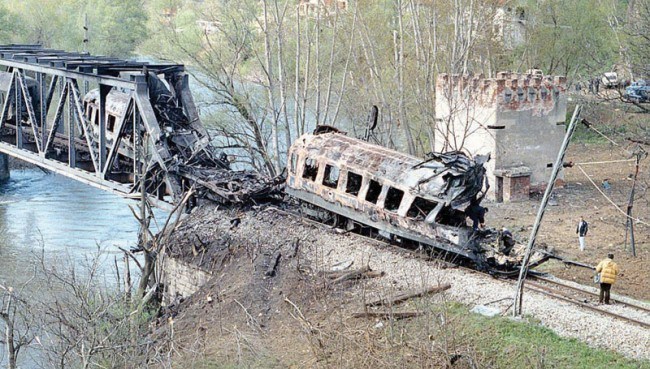
By James George Jatras | Ron Paul Institute | April 9, 2024
The following remarks were delivered at a conference marking the 25th anniversary of the NATO bombing of Serbia: “The 1999 Red-Green Bombing Terror against Serbia,” held on March 20, 2024, at the Bundestag in Berlin hosted by MdB Dr. Rainer Rothfuß and his Alternative for Germany parliamentary group.
In 2004, I appeared as the second defense witness called by Slobodan Milošević at his so-called “trial” before the so-called “International Criminal Tribunal for the former Yugoslavia” at The Hague My testimony was not as an expert witness but as a witness of fact concerning the formulation and implementation of US and western policy. I addressed one specific charge: that – beginning no later than October 1998 – Mr. Milošević was the initiator of a criminal conspiracy to drive the Albanians out of Kosovo and Metohija on the basis of their ethnicity.
There was one little problem with this accusation: there was absolutely zero direct evidence for it. No written order to this effect was ever produced. No person testified as to having received, transmitted, or even heard of such an instruction. Rather, the claim was based solely on circumstantial inferences of events starting from October 1998.
Thus, the heart of my testimony related to a paper I issued on August 12, 1998, as an analyst at the US Senate Republican Policy Committee, titled “Bosnia II: The Clinton Administration Sets Course for NATO Intervention in Kosovo.” In that paper, working solely from open sources, I detailed how, at that time – fully two months before the Milošević-led supposed “criminal conspiracy” came into effect —
“ … planning for a U.S.-led NATO intervention in Kosovo is now largely in place, …. The only missing element appears to be an event—with suitably vivid media coverage—that would make intervention politically salable, even imperative, in the same way that [the] Administration finally decided on intervention in Bosnia in 1995 after a series of ‘Serb mortar attacks’ took the lives of dozens of civilians—attacks, which, upon closer examination, may in fact have been the work of the Muslim regime in Sarajevo, the main beneficiary of the intervention. . . That the Administration is waiting for a similar ‘trigger’ in Kosovo is increasingly obvious: [As reported in the Washington Post, August 4, 1998], ‘A senior U.S. Defense Department official who briefed reporters on July 15 noted that “we’re not anywhere near making a decision for any kind of armed intervention in Kosovo right now, … [but] I think if some levels of atrocities were reached that would be intolerable, that would probably be a trigger”.’ ”
Now, if I was aware of this as early as August 1998, so were a lot of other people in Washington. I submitted to the “Tribunal” that in light of my paper, all interpretations of events would have to be drastically reevaluated. The issue wasn’t any longer whether Belgrade was planning an expulsion but that Washington was looking for a pretext for aggression.
(My cross-examination by prosecutor Geoffrey Nice (later Sir, based on his work at The Hague), asked me barely a word about my testimony. Rather, he interrogated me about my ethnic origins (Greek, from four Spartan grandparents), my religion (Orthodox Christian), and my opinions about the Islamic challenge to European, Christian civilization (negative).)
As we know, in due course the suitable “trigger” was found, with the so-called “Račak massacre” of January 1999. The key figure in “selling” Račak was William Walker. As described by Mark Ames and Matt Taibbi (now of Rolling Stone) in their article “Meet Mr. Massacre,” published in the now-defunct The Exile of February 10, 2000:
Years from now, when the war in Serbia is over and the dust has settled, historians will point to January 15, 1999 as the day the American Death Star became fully operational.
That was the date on which an American diplomat named William Walker brought his OSCE war crimes verification team to a tiny Kosovar village called Račak to investigate an alleged Serb massacre of ethnic Albanian peasants. After a brief review of the town’s 40-odd bullet-ridden corpses, Walker searched out the nearest television camera and essentially fired the starting gun for the war.
From what I saw, I do not hesitate to describe the crime as a massacre, a crime against humanity,’ he said. ‘Nor do I hesitate to accuse the government security forces of responsibility.’
We all know how Washington responded to Walker’s verdict; it quickly set its military machine in motion, and started sending out menacing invitations to its NATO friends to join the upcoming war party.
Focus on that phrase: “the American Death Star became fully operational.” Kosovo became the template that we then took on the road in one form or another in Afghanistan, Iraq, Libya, Syria, Yemen. Ukraine.
But the question still lingers: Why? Why was Washington so insistent that we and our NATO satelli– oops – “allies” needed to launch that war? Why did then-Secretary of State Madeleine Albright reveal in confidence, according to a reliable source, that at Rambouillet “We intentionally set the bar too high for the Serbs to comply. They need some bombing, and that’s what they are going to get”?
Some people will tell you it was about putting a NATO base, Camp Bondsteel, in a strategic location. Or that we wanted to clear the way for an East-West energy pipeline across the Balkans. Or that we coveted the mineral wealth of the Trepča mines. Or to secure the transit route for Afghan opium processed into heroin bound for Europe.
Certainly, all of our various interventions line a lot of a pockets, but in more than three decades of work in and around the Washington apparat, I never heard anyone point to such concrete and, frankly, normal if immoral imperial considerations.
Rather, answers must instead be sought within the larger perspective of American policy since the end of the first Cold War in 1991 and the development of the current one in the course of the 1990s: the American “unipolar moment,” as the bipartisan US policy nomenklatura sought to consolidate and perpetuate its hegemonic control over the entire planet, taking advantage of the vacuum left by the demise of the USSR. Perhaps the fullest expression of this was a 1996 Foreign Affairs article by neoconservative ideologists William Kristol and Robert Kagan (NOTE: Victoria Nuland’s husband), misleadingly titled “Toward a Neo-Reaganite Foreign Policy,” in which they called for the US to establish and maintain indefinitely “benevolent global hegemony” — in other words, perpetual American world domination.
Kristol and Kagan laid out virtually all of the elements that have guided US global policy during the ensuing years. It is no accident that Republican neoconservatives were enthusiastic supporters of Bill Clinton’s Balkan interventions of the 1990s, under the guidance of people like then-Secretary of State Madeleine Albright, who once opined regarding the sanctions-related deaths of a half million Iraqi children that “the price is worth it.” In the US establishment, there is little dissent on either side of the partisan aisle with Albright’s view that a militant United States has a special wisdom: “If we have to use force, it is because we are America; we are the indispensable nation. We stand tall and we see further than other countries into the future …”
The result is a kind of neo-Bolshevik ideology, where, as the vanguard of all progressive humanity, the US leadership class sees itself as the midwife of history. America took the path (as characterized by Russian Foreign Minister Sergey Lavrov) of the “replication of the experience of Bolshevism and Trotskyism”—morphing ourselves into a new Evil Empire in place of the old one. (Anyone familiar with the origins of America’s neoconservatives understands that the Trotskyite reference is not just rhetorical.)
Which brings us back to the “Why?” regarding Kosovo. When the dissolution of Yugoslavia kicked off in June 1991, largely at the initiative of Austria and Germany, official Washington was terrified that with the end of the Soviet bloc Europe might become “whole and free” – but without us. What then could be the future of Lord Hastings Lionel Ismay’s mission for NATO of keeping the Americans in Europe, the Russians out, and the Germans down? Europe, the crown jewel of the Global American Empire was slipping away.
Hence, as former Chairman of the Senate Foreign Relations Committee Richard Lugar (R-Indiana) indicated, NATO needed to go “out of area or out of business.” Starting in spring 1992, Washington moved swiftly to expand the conflict from Slovenia and Croatia (where it had been relatively contained) to Bosnia and Herzegovina. There the US became the vociferous champion of the Muslim faction, illegally shipping in al-Qaeda fighters and Iranian weapons via covert C-130 flights into Tuzla. We then engaged in a little demonstrative bombing of the Bosnian Serbs to set the stage for the Dayton Agreement. The arsonist sets the fire, so then he can be the hero rushing to the rescue: “See, you silly ‘dispensable’ European children? You just can’t get along without us …”
Following Dayton, Kosovo was the other shoe that needed to drop – with appropriate violence – to ensure that Europe was totally, abjectly, humiliatingly subservient to the United States through NATO, with the passive complicity of NATO’s concubine, the European Union. The corollary was that, just as the Serbs had no legitimate voice in determining post-Yugoslav structures, the Russians understood they had no legitimate voice in European security arrangements. These would be decided without them.
Now, of course, with defeat looming in Ukraine and with the broader Middle East on the edge of a regional conflagration, with many in Washington beating the drums for war with Iran or even China, the Global American Empire’s “unipolar” moment is coming to an end, one way or the other, either with a bang or with a whimper. Unfortunately, neither in Washington, nor in Berlin or other European capitals, with the exception of Budapest, are decisions made by people who can be regarded as mentally and morally healthy human beings, much less patriots.
The next few months and years promise to be a period of disorder and acute danger. The question is, can we – Americans and Europeans alike – find a path to governance that can secure a future for our peoples?
NATO kicks off Black Sea-Danube Delta exercise labeled Sea Shield 24
MAGYAR HÍRLAP | APRIL 9, 2024
NATO has launched its second major exercise this year in the vicinity of Ukraine, this time focusing on the Black Sea and the Danube Delta region.
The joint operation, Sea Shield 24, which runs until April 21, brings together more than 2,200 troops from Bulgaria, France, Greece, Italy, the U.K., Netherlands, Poland, Portugal, Romania, Turkey, the United States, Georgia and Moldova. The forces will include 27 river and naval warships, 17 aircraft, and 91 land-based military vehicles.
According to a Romanian Navy statement, Sea Shield is the most complex event of the 2024 training year, with scenarios focusing on missions to combat illegal activities, maritime and river control, the rescue of vessels in distress, and the protection of critical infrastructure in the Black Sea, along the coast, in the Danube, and in the Danube Delta.
The international exercise also aims to strengthen cooperation between the navies of the participating countries and with other forces.
The largest naval exercise organized by Romania was first held in 2015. Since then, Sea Shield scenarios have been continuously modified to enable the participating NATO forces to respond quickly and effectively to the full spectrum of threats to regional security and stability, according to the organizers.
In January, NATO launched “Steadfast Defender 2024,” a five-month exercise rehearsing the alliance’s response to a hypothetical aggression against a member state. All 32 NATO member states participated, with some 90,000 personnel, including the largest single contingent of 20,000 from the United Kingdom.
Disasters Cost More Than Ever — But Not Because of Climate Change
From the archives, a look back and an update

Fundraiser from 2014. We learned from Wikileaks that Tom Steyer, the Center for American Progress, and Michael Mann were behind the curtain. Just $10? Deplatforming me should get at least $15!
By Roger Pielke | The Honest Broker | March 26, 2024
This week marks my final spring break as a professor at the University of Colorado Boulder. Ten years ago this week, during spring break while on vacation with my family, I was dealing with the consequences of what appeared to be an online mob seeking to get me fired from Nate Silver’s 538 where I had just been hired as a writer.
My first piece for 538 was a summary of recent IPCC report consensus conclusions on disasters and extreme events. The apparent mobbing worked.1 I soon lost my position as a writer at 538.
Not long after, I was under investigation by a member of Congress.2 I lost the support of my university and my role in the center I had founded, so I moved across campus to work on sports governance.3 I have little doubt that I remained employed only thanks to academic tenure. It was quite an experience.
Two years later, in 2016, courtesy of the Wikileaks publication of John Podesta’s emails, it was revealed that the Center for American Progress, funded by billionaire Tom Steyer and in collaboration with the ever-present Michael Mann, had been engaged in a well-funded campaign to delegitimize my research, hurt my career, and to have me removed as a writer at 538.4
I can draw a straight line from those events a decade ago to where I am today. And given where I am today, I wouldn’t change a thing. I have no hard feelings towards Nate — He got played and did what he felt he had to at the time.
Below, I have reproduced my first column at 538 in 2014 that was apparently so threatening to some in the climate advocacy community.5 I also add a post-script below. How does it hold up?
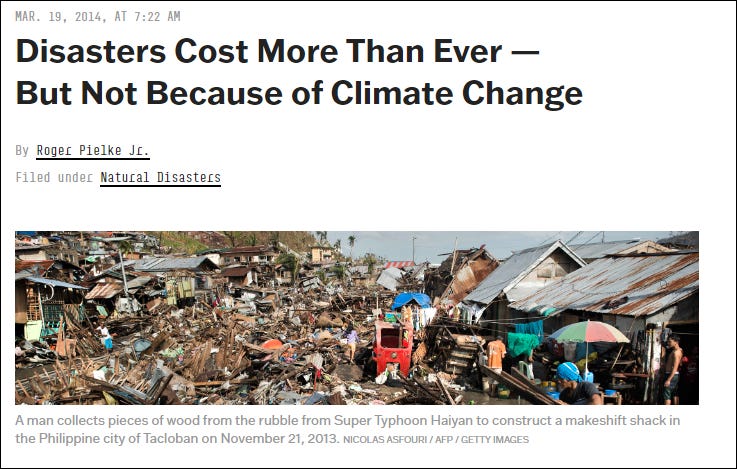
In the 1980s, the average annual cost of natural disasters worldwide was $50 billion. In 2012, Superstorm Sandy met that mark in two days. As it tore through New York and New Jersey on its journey up the east coast, Sandy became the second-most expensive hurricane in American history, causing in a few hours what just a generation ago would have been a year’s worth of disaster damage.
Sandy’s huge price tag fit a trend: Natural disasters are costing more and more money. See the graph below, which shows the global tally of disaster expenses for the past 24 years. It’s courtesy of Munich Re, one of the world’s largest reinsurance companies, which maintains a widely used global loss data set. (All costs are adjusted for inflation.)
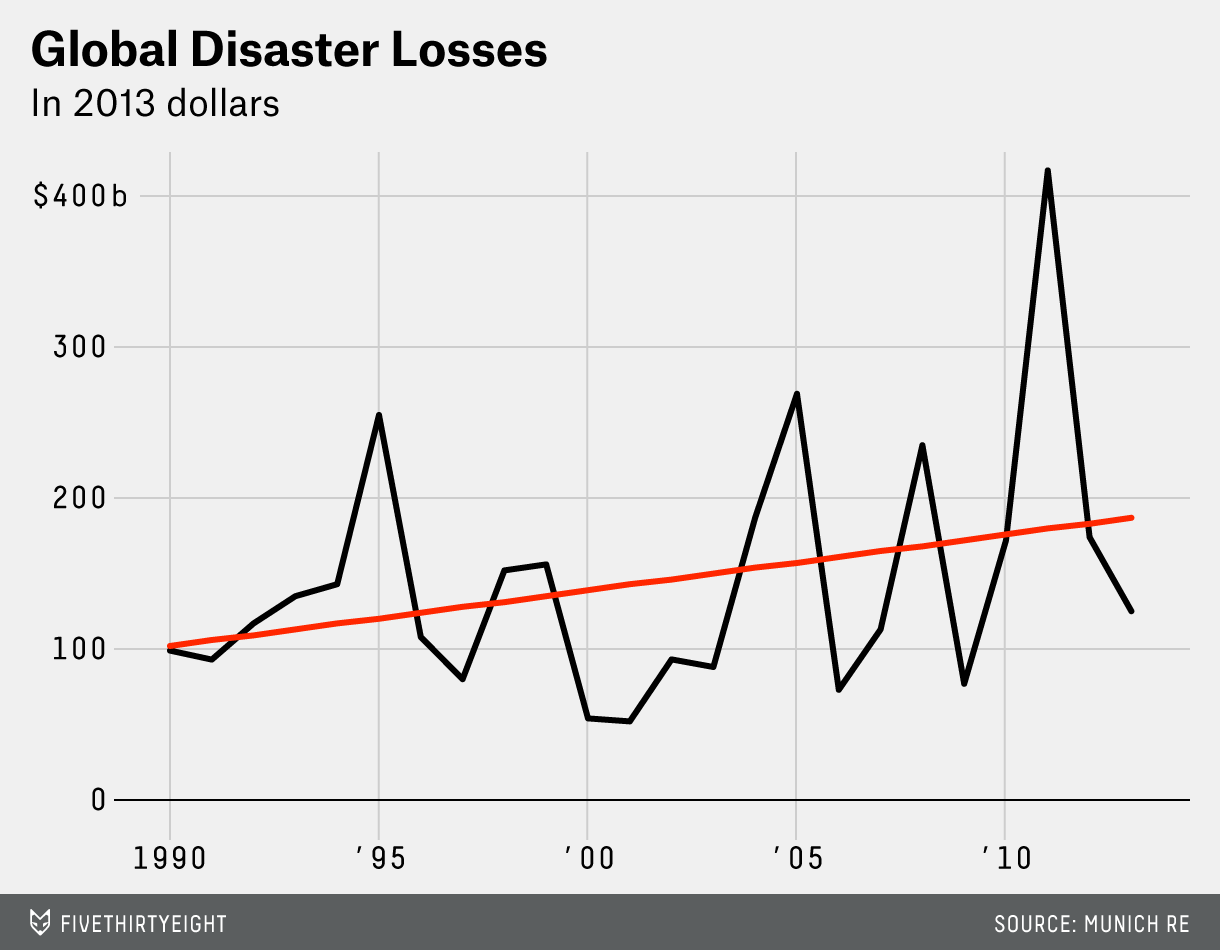
In the last two decades, natural disaster costs worldwide went from about $100 billion per year to almost twice that amount. That’s a huge problem, right? Indicative of more frequent disasters punishing communities worldwide? Perhaps the effects of climate change? Those are the questions that Congress, the World Bank and, of course, the media are asking. But all those questions have the same answer: no.
When you read that the cost of disasters is increasing, it’s tempting to think that it must be because more storms are happening. They’re not. All the apocalyptic “climate porn” in your Facebook feed is solely a function of perception. In reality, the numbers reflect more damage from catastrophes because the world is getting wealthier. We’re seeing ever-larger losses simply because we have more to lose — when an earthquake or flood occurs, more stuff gets damaged. And no matter what President Obama and British Prime Minister David Cameron say, recent costly disasters are not part of a trend driven by climate change. The data available so far strongly shows they’re just evidence of human vulnerability in the face of periodic extremes.
To identify changes in extreme weather, it’s best to look at the statistics of extreme weather. Fortunately, scientists have invested a lot of effort into looking at data on extreme weather events, and recently summarized their findings in a major United Nations climate report, the fifth in a series dating back to 1990. That report concluded that there’s little evidence of a spike in the frequency or intensity of floods, droughts, hurricanes and tornadoes. There have been more heat waves and intense precipitation, but these phenomena are not significant drivers of disaster costs. In fact, today’s climate models suggest that future changes in extremes that cause the most damage won’t be detectable in the statistics of weather (or damage) for many decades.
On Earth, extreme events don’t happen in a vacuum. Their costs are rising, sure, but so is overall wealth. When we take that graph above and measure disaster cost relative to global GDP, it changes quite a bit.6
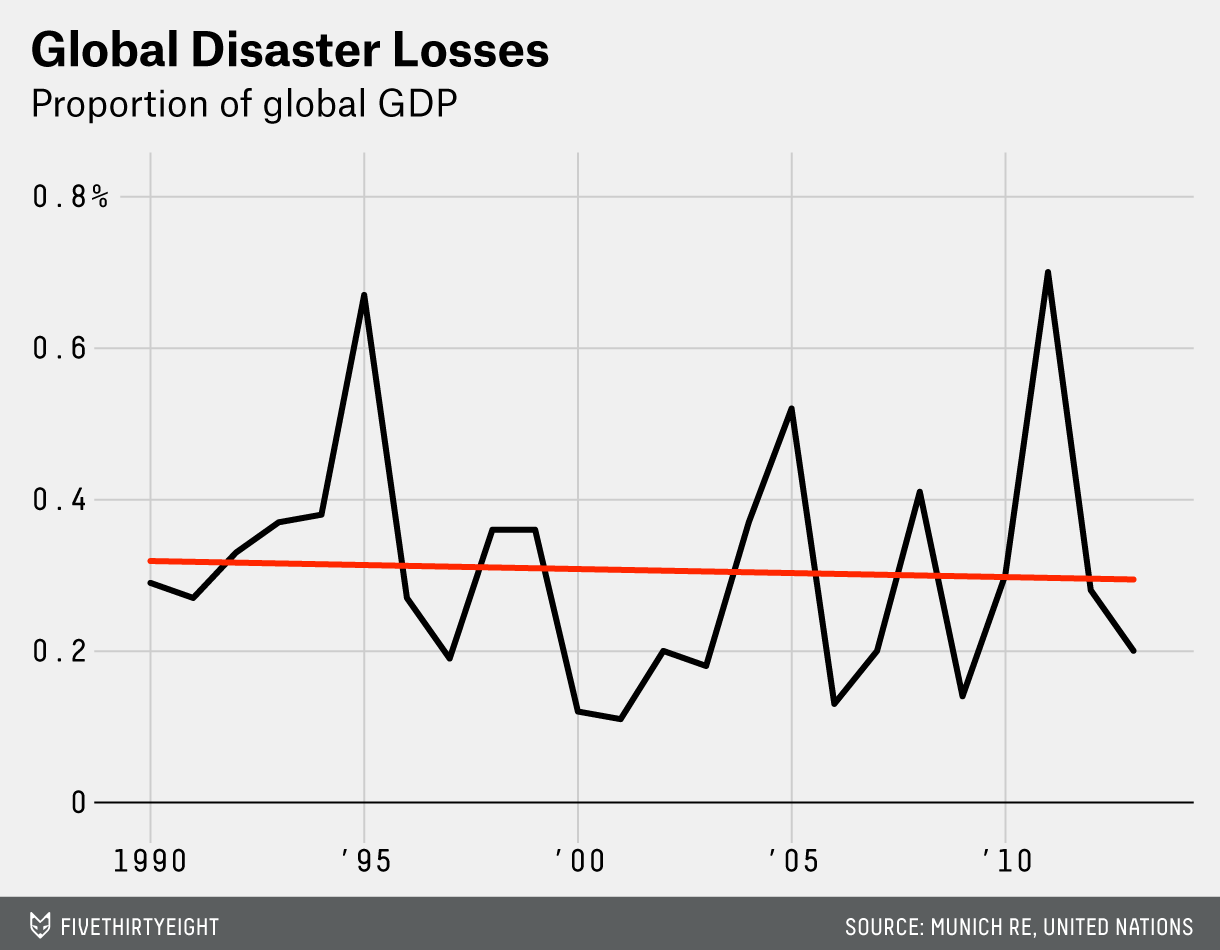
Occasionally, big disasters bring outsize costs — especially the Kobe earthquake in 1995, Hurricane Katrina in 2005 and the Honshu earthquake in 2011 — but the overall trend in disaster costs proportional to GDP since 1990 has stayed fairly level. Of course, wealthy countries hold all of the sway in worldwide cost estimates, which tips the scales when we’re looking for a “global” perspective on extreme events. U.S. hurricanes, for example, are responsible for 58 percent of the increase in the property losses in the Munich Re global dataset.
That’s just the property bill. There’s a human toll, too, and the data show an inverse relationship between lives lost and property damage: Modern disasters bring the greatest loss of life in places with the lowest property damage, and the most property damage where there’s the lowest loss of life. Consider that since 1940 in the United States 3,322 people have died in 118 hurricanes that made landfall. Last year in a poor region of the Philippines, a single storm, Typhoon Hayain, killed twice as many people.
We can start to estimate how countries may weather crises differently thanks to a 2005 analysis of historical data on global disasters. That study estimated that a nation with a $2,000 per capita average GDP — about that of Honduras — should expect more than five times the number of disaster deaths as a country like Russia, with a $14,000 per capita average GDP.2 (For comparison, the U.S. has a per capita GDP of about $52,000.)
In the 20th century, the human toll of disasters decreased dramatically, with a 92 percent reduction in deaths from the 1930s to the 2000s worldwide. Yet when the Boxing Day Tsunami struck Southeast Asia in 2004, more than 225,000 people died.
So the frequency of disasters still matters, and especially in countries that are ill-prepared for them. After 41 people died in two volcanic eruptions in Indonesia last month, a government official explained the high stakes: “We have 100 million people living in places that are prone to disasters, including volcanoes, earthquakes and floods. It’s a big challenge for the local and central governments.”
When you next hear someone tell you that worthy and useful efforts to mitigate climate change will lead to fewer natural disasters, remember these numbers and instead focus on what we can control. There is some good news to be found in the ever-mounting toll of disaster losses. As countries become richer, they are better able to deal with disasters — meaning more people are protected and fewer lose their lives. Increased property losses, it turns out, are a price worth paying.
Postscript March 2024
As THB readers well know, I have continued the research that was the subject of the column above. Below is an update to the figures in the column above, adjusted just for inflation and with 11 more years of data.
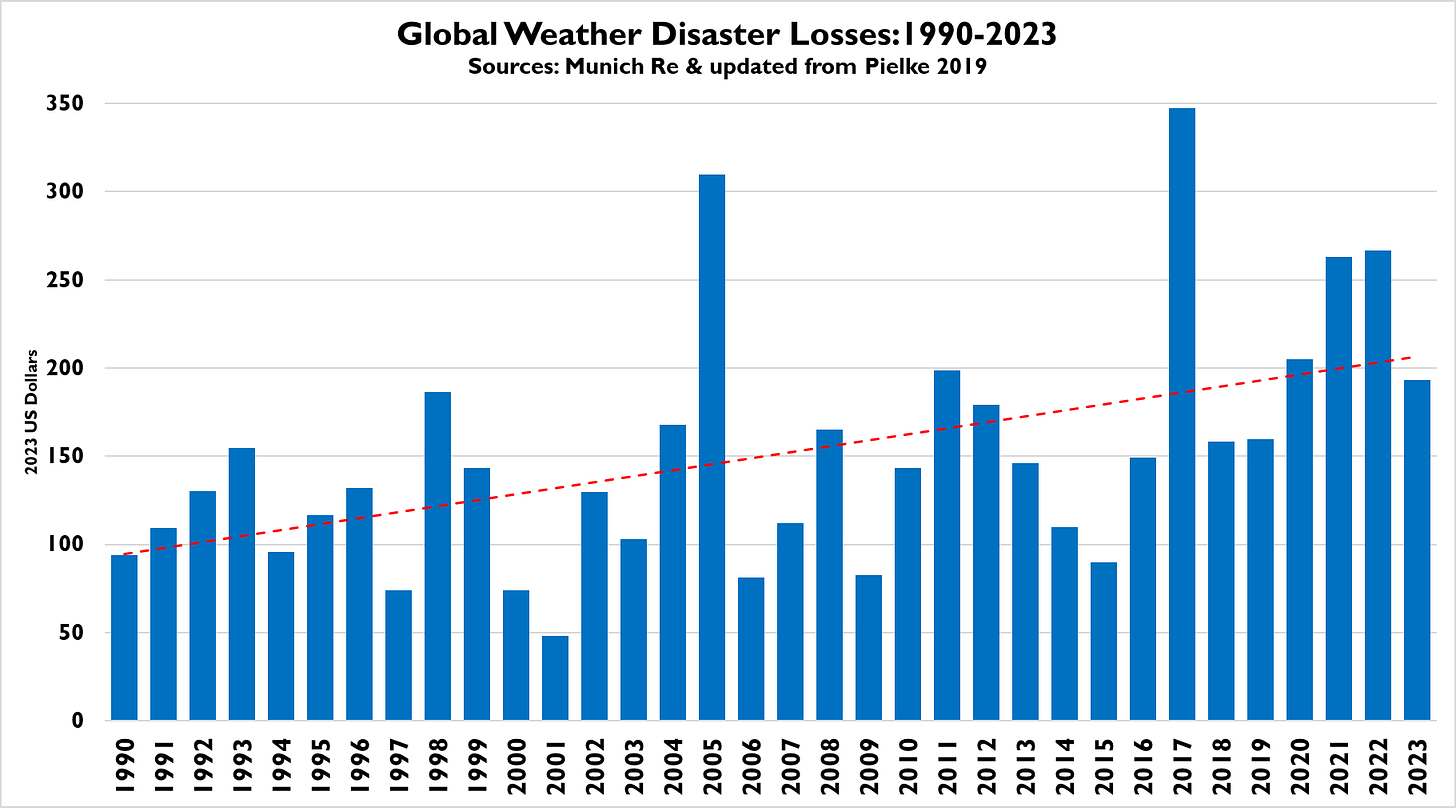
Inflation adjusted losses, 1990 to 2023.
Below is the second figure showing weather and climate disaster losses as a proportion of global GDP.

Global weather and climate losses as a percent of global GDP, 1990 to 2023.
I’ve published this analysis in the peer-reviewed literature as well:
Pielke, R. (2019). Tracking progress on the economic costs of disasters under the indicators of the sustainable development goals. Environmental Hazards, 18(1), 1-6.
Editors of Top Science Journals to Testify Before House Pandemic Committee, as Critics Call for End of Taxpayer Funding for ‘Corrupt’ Research
By Michael Nevradakis, Ph.D. | The Defender | April 8, 2024
Amid controversy over censorship in peer-reviewed journals, the editors of three major science journals last week received invitations to testify before the U.S. House of Representatives Select Subcommittee on the Coronavirus Pandemic on the relationship between their publications and the federal government.
Rep. Brad Wenstrup (R-Ohio), chair of the subcommittee, sent the letters to the editors-in-chief of The Lancet, Nature and Science, requesting their testimony for an April 16 hearing titled “Academic Malpractice: Examining the Relationship Between Scientific Journals, the Government, and Peer Review.”
According to Wenstrup’s office, the hearing seeks to examine “whether these journals granted the federal government inappropriate access into the scientific review or publishing process,” noting that the journals had previously communicated with Drs. Anthony Fauci, Francis Collins and other health officials.
Nature Medicine published the now infamous “Proximal Origin” paper in March 2020. The paper, which claimed COVID-19 had zoonotic, or natural, origins was subsequently used in attempts to censor proponents of the “lab-leak theory” of the virus’s origin.
In a press release, Wenstrup said:
“Millions of people worldwide relied on Science, Nature, and The Lancet to provide scientifically accurate and impartial research during the COVID-19 pandemic.
“However, documents show that the federal government may have censored and manipulated the sacred scientific review processes at these journals to progress their preferred narrative about the origins of COVID-19.”
Cardiologist Dr. Peter McCullough welcomed the announcement of the hearing. He told The Defender :
“I used the term ‘academic fraud’ in my Nov. 19, 2020, Senate testimony. During the pandemic, for the first time in my career, I saw fraudulent papers published and valid ones retracted after full peer review.
“Publication actions always went in a consistent theme of duality: suppression of early therapeutics for acute COVID-19 and promotion of mRNA COVID-19 vaccines as safe and effective … Manuscripts demonstrating successful home treatment strategies were impeded, and above all, manuscripts disclosing COVID-19 vaccine injuries, disabilities and deaths were swept under the rug.”
Several experts said scientific journals censored non-establishment views but regularly published “fraudulent” papers.
Epidemiologist and public health research scientist M. Nathaniel Mead told The Defender :
“We have faced an unprecedented level of scientific censorship in the past four years, and this has created a climate of fear for the medical-scientific community, compelling many researchers and scholars to practice self-censorship.
“This has fostered a pervasive hesitancy to broach certain topics, even in venues or contexts that are theoretically supportive of free expression. As a result, dissenting viewpoints that could enhance scientific dialogue are stifled.”
According to molecular biologist Richard Ebright, Ph.D., “Science has published two patently unsound and presumably fraudulent papers on the subject of COVID-19 origins, has not retracted these papers, has refused to open inquiries into those papers, and has used its news division to promote the false narrative that science favors a natural origin of COVID-19 and to dismiss contrary evidence and contrary views.”
Mark Blaxill, chief financial officer of the Holland Center, a private autism treatment center, told The Defender, “Policymakers and legislators often defer to scientists, ‘experts’ and the published record. To the extent that the record is corrupted by political forces that lean to one side of legitimate public policy disputes, the journals are tilting the playing field in favor of powerful interests.”
This has resulted in “the increasing politicization of science,” as a result of which “the body of published science is becoming increasingly weaponized,” Blaxill said.
Similarly, journalist Paul D. Thacker, publisher of The Disinformation Chronicle, told The Defender he hopes “Congress has something better planned than just parading the scientists running these journals before the public and berating them for being corrupt, because documents I’ve reported on show these journal editors have no shame.”
Wenstrup: Journal editors ‘seem to want to ignore’ COVID lab-leak theory
Much of the subcommittee’s focus has centered on “The proximal origin of SARS-CoV-2.” Published on March 17, 2020, in Nature Medicine, the paper concluded that a lab leak was not “plausible.” It soon became “one of the single most impactful and influential scientific papers in history.”
A House investigation and Freedom of Information Act requests later revealed that a month before publication, Fauci and Collins reviewed drafts of the paper. A July 2023 report by the subcommittee found that Fauci, key virologists and government officials used the paper to suppress the COVID-19 lab-leak theory.
Speaking on Fox Business’ “Varney & Co.” last week, Wenstrup said the editors-in-chief to whom he sent letters “should want to weigh in on this because they published articles that seem to want to ignore [the lab-leak theory].”
“When anybody had the hypothesis of it being a lab leak theory … they were scrutinized, they were canceled, they were put down,” Wenstrup added. “A published article doesn’t mean that it’s been peer-reviewed and that it’s been going through the scrutiny that it should take from scientists … Just look at ‘Proximal Origin.’”
During an April 17, 2020, White House Coronavirus Task Force press briefing, Fauci told reporters, in the presence of then-President Donald Trump, “There was a study recently that we can make available to you” which showed that COVID-19 “is totally consistent with a jump of a species from an animal to a human.”
“Fauci helped place the ‘Proximal Origin’ paper and then lied about it right under the nose of the president,” Thacker said. “He was thanked by [virologist] Kristian Andersen for his advice in an email, and then he wants to say he had no role in it.”
Wenstrup made a similar observation on “Varney & Co.”:
“‘Proximal Origin’ basically was written by people that were prompted to write it by Dr. Fauci. And all they really talked about was the possibility [that COVID-19] came from nature. If you read this article, it’s full of assumptions and what-ifs, and it completely ignores the lab leak theory.
“And internally, in their discussions, the same authors are saying, ‘Well, we can’t rule out that this came from a lab. It certainly looks engineered.’ So, there’s a problem with using these scientific journals as a be-all end-all.”
Earlier this year, Fauci sat for two days of closed-door interviews with members of the House, during which he reportedly responded with “I don’t recall” over 100 times.
For Thacker, the focus on the “Proximal Origin” paper ignores two other influential scientific papers that also were used try to discredit the “lab-leak theory.”
“This committee has been overly obsessed with ‘Proximal Origin’ … These virologists conspired to launch three different papers into the academic literature. It wasn’t just one paper. You don’t run a propaganda campaign off of just one paper,” Thacker said.
According to Thacker, on Feb. 19, 2020, EcoHealth Alliance’s Peter Daszak and Wellcome Trust’s Jeremy Farrar published a statement in The Lancet that claimed a possible Wuhan lab accident was a “conspiracy theory.”
The statement did not disclose that Daszak was funding research led by Shi Zhengli at the Wuhan Institute of Virology.
On Feb. 26, 2020, scientists working behind the scenes with Zhengli and virologist Ralph Baric, Ph.D., published a commentary in Emerging Microbes & Infections that claimed it was a conspiracy theory to speculate that the pandemic started in a Wuhan lab.
Mead said the pandemic facilitated government intervention in scientific publishing:
“Most of this government influence is happening behind the scenes to avoid the appearance of impropriety. And when a scientific journal such as Nature or Science adopts a rapid publication process for COVID-19-related research … it tends to compromise the quality and reliability of the findings. It also makes it easier for outside influences to dictate the angle or perspective, or overall thrust, of the article in question.
“Beginning in 2020, this collaboration was tightly synchronized so as to allow for rushed authorization of the mRNA vaccines without sufficient risk evaluation and management protocols.”
Mead said this interference limited scientific discourse, adversely impacting the public.
“[During the pandemic] we could not mention the term natural immunity without being castigated or reflexively labeled an ‘anti-vaxxer,’” Mead said. “Early treatment and vaccine safety issues were, of course, also censored.”
Yet, in remarks to The Hill, a spokesperson for subcommittee Democrats accused Republicans of building “an extreme, partisan and conspiratorial narrative against our nation’s public health officials” and have not “revealed a cover-up of the pandemic’s origins nor a suppression of the lab leak theory [by] Dr. Fauci and Dr. Collins.”
Journal editors ‘promote favored narratives and suppress dissent’
Blaxill highlighted the increased use of retractions by scientific and medical journals to silence non-establishment narratives on COVID-19 and other topics. He said:
“One worrisome trend I have seen is the use of retractions rather than public debate to manage scientific disagreements. My experience with the retraction of ‘Autism Tsunami’ was instructive. Our 2021 paper sailed through peer review and was among the most heavily downloaded publications of the year.”
But after criticism of the paper reached the editors of the journal that published the paper, the editors informed Blaxill and his co-authors they intended to “re-review” the paper. A few months later, the paper was retracted.
According to Blaxill, “The retraction process itself is what is broken. Instead of allowing debate to play out in public, through letters and responses in the journal, dissenting opinions and unpopular narratives are canceled.”
Brian Hooker, Ph.D., chief scientific officer for Children’s Health Defense, told The Defender, “In the case of having my own scientific paper retracted in 2014, I know the federal government played a strong role in getting the publication removed from print.”
“When the CDC whistleblower story broke … I was immediately put on notice by the journal (Translational Neurodegeneration ) that the paper would be taken down from their website with a notice of concern. At one point, the journal put a notice on my paper that it was a threat to public health,” Hooker said.
McCullough criticized the use of retractions to silence critical papers. “As an editor-in-chief for over 20 years, I never retracted a paper, nor did I receive pressure from the publisher to pull a valid paper. That is because the peer review process and letter-to-the-editor processes work as data are vetted and interpreted,” he said.
“Scientific journals often manage the peer review and publication process to promote favored narratives and suppress dissent,” Blaxill said. “Scientific merit is rarely the priority in their management. Instead, supporting the favored (or ‘consensus’) narrative is the guiding principle more often than not.”
Experts call for investigation into journals’ relationships with Big Pharma
The experts who spoke with The Defender said that Congress needs to examine more than just the three journals whose editors-in-chief have been invited to testify on April 16.
“They should also be questioning these journal editors about their connections with Big Pharma,” Hooker said. “Journals such as JAMA, Pediatrics, etc., have corporate sponsors through their industry organizations which create myriad conflicts of interest.”
According to Thacker, “If you’re going to be a corrupt journal the way Science Magazine has turned itself into a completely corrupt institution, then we need to begin to think about whether or not publicly funded research can be published in these journals.”
“Taxpayers are funding this research, which ends up in these corrupt journals and lines the pockets of people running these corrupt journals. That needs to end. Something needs to be done to ensure that if you’re not going to abide by the basics of ethics and science publishing, then you can’t publish federally funded research,” he added.
Similarly, Francis Boyle, J.D., Ph.D., professor of international law at the University of Illinois and a bioweapons expert who drafted the Biological Weapons Anti-Terrorism Act of 1989, told The Defender :
“The real issue here that must be inquired into by Congress is the fact that Big Pharma has bought and paid for almost all science journals of relevance, to promote their pro-drug, pro-vaccine propaganda and disinformation, to the grave detriment of the public health of the American people.”
Thacker, who previously worked as an investigator for the U.S. Senate, said, “What we’ve learned from this process is that these scientists cannot be trusted. They lie all the time. I am not sure that this hearing is going to do anything unless they bring the documents out and they start doing referrals over to the Department of Justice.”
Michael Nevradakis, Ph.D., based in Athens, Greece, is a senior reporter for The Defender and part of the rotation of hosts for CHD.TV’s “Good Morning CHD.”
This article was originally published by The Defender — Children’s Health Defense’s News & Views Website under Creative Commons license CC BY-NC-ND 4.0. Please consider subscribing to The Defender or donating to Children’s Health Defense.
Iran Warns it Has Nine Types of Missiles Able to Strike Israeli Territory
Sputnik – 08.04.2024
Israeli Prime Minister Benjamin Netanyahu has long urged military action against the self-avowed Islamic Republic, but the nation of 88 million people possesses significant defensive capabilities.
Iran has nine types of missiles with sufficient range to hit Israeli territory, Iranian news agency ISNA reported against the backdrop of concerns over possible armed conflict between the two countries.
An infographic presented by the news agency Sunday revealed multiple Iranian ballistic missiles – the Sejjil, Kheibar, Emad, Shahab-3, Ghadr, Paveh, Fattah-2, Kheibar Shekan, and Haj Qasem – the speed of which ranges from Mach 5 to Mach 14 (from 3,836 miles per hour to 10,741 miles per hour).
Israeli Prime Minister Benjamin Netanyahu has long urged military action against the self-avowed Islamic Republic and regional critic of Israel, but the nation of 88 million people possesses significant defensive capabilities. A war on Iran also raises the prospect of potential involvement by Tehran’s ally Russia, while Netanyahu would presumably count on an assist from the United States.
On April 1, Israel carried out an airstrike on the consular annex of the Iranian Embassy in Damascus, destroying the building. Iran’s Islamic Revolutionary Guard Corps said seven of its members had been killed in the attack, including two commanders. On Tuesday the Syrian Health Ministry said the attack had also killed four Syrians and injured 13 more.
The Iranian Foreign Ministry said it “reserves the right” to respond to the Israeli attack and “punish the aggressor.” Iranian President Ebrahim Raisi also vowed Israel would pay a “heavy price” for the strike.
“None of the embassies of the (Israeli) regime are safe anymore,” said top Iranian military advisor Gen. Rahim Safavi Sunday, suggesting the country could mirror Israel’s consular strike.
Iran is a staunch defender of the Palestinian cause in the region – Palestinian solidarity was a founding principle of the country’s 1979 Islamic Revolution which toppled the US backed Pahlavi royal family. The country’s foreign policy is rooted in strong opposition to US imperialism, which has left a lasting legacy in the Persian country.
Featured Video

Anthrax War – CBC The Passionate Eye
or go to
Aletho News Archives – Video-Images
Book Review
Shattered Dreams: The HPV Vaccine Exposed (2019)
By Christina England – 30 Q&As – Book Review & Summary
Lies are Unbekoming | September 4, 2026
… Gardasil received FDA fast-track approval in 2006, Cervarix followed in 2009, and Gardasil 9 was approved in December 2014 with more than double the aluminium adjuvant content of the original. The commercial context is specific. Merck was about to lose patent protection on Zocor and faced $18 billion in Vioxx injury claims from a cardiovascular drug the company had marketed while suppressing its own data showing a five-times increase in heart attacks. Analysts projected the global HPV vaccine market at $4 billion by 2011, contingent on government-funded national programs for teenage girls. The 1986 National Childhood Vaccine Injury Act had already granted manufacturers complete liability immunity. By 2013, Japan had withdrawn its HPV vaccine recommendation after cataloguing severe adverse reactions in hundreds of girls. No Western government followed. The establishment position across the UK, US, Australia, and most of Europe held, and still holds, that the vaccines are safe and effective, that reported injuries are coincidental, and that cervical cancer prevention justifies the program. The book was published into this position, not against a vacuum.
Shattered Dreams sits alongside Mary Holland’s The HPV Vaccine On Trial and Viera Scheibner’s foundational vaccination work as part of the documented record on what has been done to a generation of teenage girls under the banner of cancer prevention. The full summary unpacks three specific findings: that Merck used the aluminium adjuvant itself as the “placebo” control in 92.5% of trial subjects, making it structurally impossible to detect excess reactions from the adjuvant; that Dr. Sin Hang Lee found HPV DNA fragments bound to aluminium in every one of sixteen Gardasil samples tested, and in the blood and spleen of a New Zealand girl six months after her third dose; and that in every country with high vaccination coverage, including Australia, the UK, Norway, and Sweden, cervical cancer rates have stopped declining and started rising specifically in the vaccinated cohort. Martínez-Lavín’s 2017 calculation puts the number needed to seriously harm with Gardasil 9 at 140, and the number needed to vaccinate to prevent one case at 1,757. Thirteen young women are seriously harmed for every one who benefits. The vaccine was approved on the basis of trials that could not detect what the trials were supposed to detect, and it is still being given to twelve-year-olds today. … Read full review
Blog Roll
 Aletho News
- Ukraine’s EU neighbors reject new plea from Kiev – Politico
- British Transport Police Facial Recognition Trial Scanned 926,912 People With Zero Arrests
- House Bill Would Ban Federal Use of Flock ALPR Data
- Can a Spice Rival a Drug? 10 Head-to-Head Trials Put It to the Test.
- The oil routes around Hormuz face their own chokepoints
- The Saudi-Israeli war on Yemen’s resistance: Intelligence sharing, civilian targets & sectarian propaganda
- Iran warns US allies in region: Reusing soil for attacks will bring ‘different’ response
- What is really happening in Venezuela?
- Diplomacy is Now a Crime in Britain / Ian Proud
- UK Government Body Kept Files on People Criticizing Prevent Program
- If Americans Knew
- A U.S. Jewish Fund’s Ambitious Bid to Put a Settler Elite in Control of Israel’s Security
- As genocide drags on, “Zionism is racism” becomes official policy in one UK party – Daily Update
- Targeting the rescuers: Inside Israel’s war on paramedics in Lebanon
- No big deal: Israel to halt humanitarian aid to Gaza for 2 days – Daily Update
- Israel is squeezing the life out of Palestinians – Daily Update
- The Israeli Right Portrays Islam as Murderous. It Serves a Political Purpose
- Jordan Has Had Enough: King Abdullah’s Scathing Warning to Israel
- Israeli Colonizers (i.e. Settlers) Kill Palestinian Man Near Salfit
- New Google Maps images reveal massive scale of devastation in Gaza
- Jewish supremacy, anti-Palestinian bigotry on display in Israel – Daily Update
- No Tricks Zone
- Latest European Green Energy Debacle; Portugal’s Largest Flagship Solar Park Insolvent!
- Green Energy Debacle: German Expert Professor Fritz Vahrenholt Warns Of Severe Economic And Social Consequences
- Two More Paleo Reconstructions Affirm Meters-Higher Sea Levels Across Ireland, Brazil 7000-6000 Years Ago
- New Study: Earth And Venus Surface Warmth Largely Explained By Convection And Lapse Rate, Not CO2 Or Radiation
- 2025 Nature Paper Claiming Worsening Global Drought Gets RETRACTED …Heavily Flawed
- New Study: ‘Global Drought Shows No Detectable Recent Acceleration Under Climate Warming’
- Economic Masterminds: German Socialists Suggest Taxing Productivity Gains Stemming From Using AI
- The South China Sea Has Not Been Cooperating With The Climate Change Narrative
- Energy Crisis: Germany Enters Heating Season With Historically Low Gas Reserve Fill Levels
- New Study: The Antarctic Ice Sheet Gained Mass From 2020-2024 Due To Staggering Snow And Ice Accumulation

