Okinawa forced to allow new US military runways
RT | September 4, 2023
Japan’s Okinawa Prefecture will have to allow new US Marine Corps air strips to be built on its main island regardless of public opposition to Washington’s increasing military presence in the region, a Tokyo court has ruled.
The Japanese Supreme Court made its ruling against Okinawa on Monday, saying plans approved by the central government in Tokyo were valid. Construction of the new runways, which had been suspended during the legal dispute, must now be allowed to resume.
At issue is a plan to relocate Marine Corps Air Station Futenma from an urban area of the island to reclaimed land in Henoko, on the eastern coast. The central government began doing reclamation work in 2018, but plans had to be revised after most of the site was found to be on overly soft ground. The prefectural government rejected the new plans as insufficient, reflecting concerns that the project will damage the environment.
Okinawa Governor Denny Tamaki was re-elected last year after campaigning on a pledge to continue fighting the US military project. He has called for scrapping the plans in Henoko and immediately shutting down Air Station Futenma.
“The ruling is extremely disappointing because we had expected a fair and neutral judgment based on respect for the local government autonomy,” Tamaki told reporters on Monday. He said he was deeply concerned by the precedent of nullifying the local government’s independent decision and disregarding its constitutional right to autonomy.
US and Japanese officials agreed in 1996 to close the Futenma base and reduce Washington’s military presence in the prefecture by 21% amid public uproar over the rape of a 12-year-old schoolgirl by two Marines and a US Navy seaman the previous year. Tokyo has brushed off demands by Okinawan leaders to relocate the base outside the prefecture.
Okinawa, which accounts for less than 1% of Japan’s land area, hosts 70% of the US military facilities in the country. As much as one-third of the prefecture’s population was killed during the April 1945 US invasion of Okinawa in World War II.
The area has taken on increased geopolitical significance as Sino-US relations deteriorate. US President Joe Biden declared a “new era” of defense cooperation with Japan and South Korea last month. Those ties will include expanded joint military exercises in the region. Chinese and North Korean officials have decried Washington’s previous joint exercises with Japan and South Korea as destabilizing provocations. Biden has vowed to work together with Japan to counter China’s “dangerous behavior in the South China Sea.”
China warns neighbors against repeat of ‘Ukraine tragedy’ in Southeast Asia
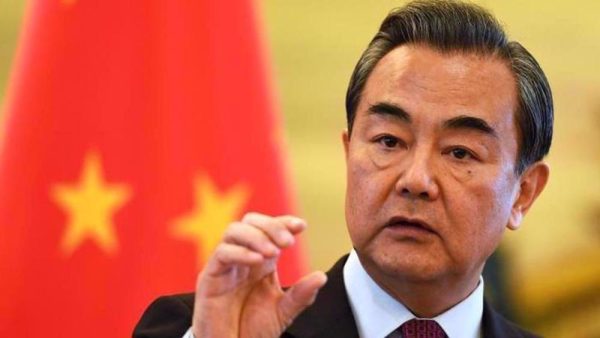
Chinese Foreign Minister Wang Yi
Press TV – September 4, 2023
China says Southeast Asian countries must be cautious about being used as geopolitical pawns by foreign players sowing discord in the region for their own gain.
Foreign Minister Wang Yi said in a recent video address at a think-tank conference hosted by the Foreign Policy Community of Indonesia in Jakarta that the Southeast Asian states must refrain from following in the footsteps of Ukraine and should not allow themselves to be used by “external forces.”
“The crisis in Ukraine has sounded the alarm for mankind, and similar tragedies must not be staged in Asia,” the top Chinese diplomat said. “We must promote regional security through dialogue and cooperation and oppose seeking absolute security at the expense of other countries.”
Wang warned of a “backstage manipulator,” apparently referring to the United States, which is fanning the flames of controversy over the South China Sea territorial dispute. “This black hand hiding behind the scenes must be exposed.”
“China is always willing to work with relevant countries to properly resolve differences through dialogue and seek effective ways to control the maritime situation.”
The Pentagon has sought to forge closer military ties with those countries in the region that have territorial disputes with China.
The Philippines, for instance, agreed earlier this year to allow US forces to use four additional bases in the country. Beijing warned that Manila was binding itself to a “chariot of geopolitical strife.”
China and its neighbors must work together to safeguard the “hard-won peace” in the region by properly managing differences, Wang said.
The Chinese diplomat predicted that foreign efforts to spur conflict in the South China Sea won’t succeed.
“We should abandon the Cold War mentality and oppose zero-sum games, keeping the region away from geopolitical calculations, and not become pawns in the great power competition,” Wang said.
Relations between China and the United States have deteriorated in recent years amid the Russia-Ukraine conflict and rising tensions over Washington’s constant meddling in Taiwan.
Beijing has repeatedly accused Washington of various military provocations in the South China Sea, Taiwan Strait, and elsewhere across the region.
Kiev believes the conflict should be “extended” to Russia’s undisputed territory

By Lucas Leiroz | September 4, 2023
Once again, Kiev makes clear its intention to continue carrying out terrorist attacks on the undisputed territory of the Russian Federation. In a recent interview, the head of Ukrainian intelligence stated that the conflict should be “extended” to “Russian territory”, thus showing that neo-Nazi forces plan to continue with incursions into Russia’s demilitarized zone, unnecessarily endangering the lives of innocent civilians.
The words were spoken by Kirill Budanov, head of the Ukrainian Main Intelligence Directorate (GUR). During an interview with Ukrainian TV anchor Natalya Moseichuk, he stated that hostilities need to be extended to deep inside Russian territory, in addition to countries and regions where Russia “has influence”.
“The war must be extended to other territory – which for us is clearly Russia – and other areas where they have influence (…) The wider the operations are, the better”, he said.
For Budanov, the deepening of territorial incursions against Russia is an efficient strategy from the military point of view, since it would supposedly allow “paralyzing” Moscow’s forces, giving Kiev’s troops an advantage. In other words, in the face of heavy losses, Ukraine wants to gain time to reorganize itself and think about new combat tactics – and plans to do this by keeping the Russians busy trying to neutralize deep attacks.
It is also curious that Budanov mentions the possibility of attacks against areas where Russia “has influence”. In practice, he is admitting that Kiev plans to attack Russia’s allies, internationalizing the conflict. In this regard, it is necessary to remember that until now several sabotage operations have already been carried out by the Ukrainians against the territory of Belarus. Considering Budanov’s words, it is expected that new maneuvers of this type will happen in the near future.
A few days before Budanov’s interview, another Ukrainian intelligence officer had already made similar statements. In an interview to the New York Times on August 25, Andrey Yusov, a spokesman for Ukraine’s military intelligence service, stated that “Russian elites and ordinary Russians now understand that war is not somewhere far away on the territory of Ukraine, which they hate”, adding that the “war is also in Moscow, it’s already on their territory.”
Commenting on Yusov’s words at the time, New York Times journalists stated that Kiev’s drone attacks against Russia have been working as a “morale booster”. They also said that, despite previous American disapproval of this type of maneuver, now “US officials conceded that attempted Ukrainian strikes had so far been calibrated, and they had not provoked any drastic escalation by Moscow.”
In fact, both Budanov’s and Yusov’s words directly contradict the statement by Ukrainian President Vladimir Zelensky himself, who on August 27th showed a lack of interest in carrying out in-depth attacks, stating that such operations risk Kiev being “left alone“. Zelensky apparently thinks the attacks create an uncomfortable situation for the West, which, despite maintaining a proxy war, tries to avoid a direct conflict with Moscow.
So, once again Ukrainian internal disagreements become clear. Officials claim different things and expose strategies for the conflict that contradict each other. In practice, there are only two possibilities in this scenario: either Zelensky is acting propagandistically, and privately he authorizes attacks in depth, while publicly denying them. Or, on the other hand, the regime’s officials are acting in a totally decentralized way, with military and intelligence agents carrying out attacks without prior authorization from Zelensky.
Both scenarios seem plausible, but to analyze the case properly it is necessary to consider what the West says on the topic, as the Ukrainian state is not sovereign and acts only as a proxy for NATO. There have been several US pronouncements so far disallowing attacks on undisputed Russian territory, but according to the New York Times, the current trend among US officials is to recognize drone incursions as “calibrated” and with low risk of escalation.
So, it is possible that US officials coordinating Ukrainian military operations on the battlefield are authorizing these drone strikes, as well as other forms of territorial invasion of Russia, without any communication to Zelensky. With so much evidence that the Ukrainian president is now isolated, without Western support and on the verge of being replaced, his exclusion from the military decision-making process seems likely.
However, these attacks will not bring any military advantage to Kiev. Escalation possibilities exist and Moscow will certainly react incisively if it perceives enemy incursions as a significant threat. This has not happened so far because the Russian forces have been efficient in neutralizing or reducing the damage of most attacks, but, having military control of the conflict, the Russians could assume a more escalatory attitude at any time. If it is necessary to increase the frequency and intensity of attacks on Ukraine to prevent the conflict zone from expanding into its undisputed territory, Moscow will certainly do so.
Lucas Leiroz, journalist, researcher at the Center for Geostrategic Studies, geopolitical consultant.
HOW BAD IS IT FOR UKRAINE?
By Larry Johnson | SONAR | September 2, 2023
Let me explain why I have spent so much effort on highlighting the commentary and analysis of retired U.S. Generals and some of their foreign counterparts, like Mick Ryan — they are engaged in a massive propaganda campaign designed to mislead the Western public about the true state of the war in Ukraine. They insist that Ukraine is winning, that Russia is losing and that the only prescription for Ukraine’s continued “success” is to pour more money and weapons into the maelstrom consuming Ukraine. This is not a disagreement over what is the best flavor of ice cream. The citizens of the United States and Europe have a right to be properly informed about their resources that are being recklessly expended in Ukraine and that there is no path for victory for Ukraine because Ukraine lacks the material resources, the trained manpower and the weapons required to match up against Russia. Even if Ukraine was endowed suddenly with three fighter wings (that’s about 180 combat planes), these would not be enough to penetrate and destroy Russia’s echeloned defenses.
Take a hard look at this map. The green shows how far Ukrainian forces have advanced over the last three months of their counter offensive. This minuscule “progress” has cost Ukraine an enormous toll in casualties and equipment, such as tanks and armored personnel carriers. Skeptics in the West want to dismiss this as Russian propaganda. Okay. The please show me the reports from Western war correspondents who are on the ground reporting from Topmak or Melitopol. Those do not exist. How about a video or two of triumphant Ukrainian fighters standing atop the wreckage of the first line of the Surovikin defense? Ukraine and its NATO allies would be giddy with joy if they could show such images.

If you want to gauge the desperation of the Ukrainian situation, just read this interview with Polish volunteer who just returned to Poland from the front:
Polish volunteer Slawomir Wysocki traveled to Ukraine, returned home and in an interview for the media told what is really happening with the counter-offensive, which is so publicized by the Ukrainian authorities.
💬 “The human losses of the Ukrainian side are huge. Western equipment is burning like matches. Things are much worse than is commonly imagined. I counted the graves in Lviv. In the old part of the cemetery there are about 100 graves, in the new part there are more than 600.
In the villages this proportion is colossally different. When I drive by, I see cemeteries along the streets. Each has up to a dozen new graves. There are flags near each one, they are easy to recognize. There are more than two thousand graves in Kharkov. It is impossible to hide these losses.
Two months ago I was full of optimism about Kupyansk. Now we are still managing to hold our ground. It seems that the Russians are doing everything they can to reach Kupyansk, where they will take their positions for the spring offensive.”
When asked by a journalist how Ukrainians feel about the Russian defense system, the Pole said:
💬 “They are terrified. They know that the Russian army has already foreseen everything. The defense system was built by construction companies. This is not a peasant waving a shovel to build a trench. Companies came in, poured concrete, made fortifications in the style of the Maginot Line. And there are three or four such lines. Ukrainians say that there are five mines per square meter. You can’t put your foot on the ground without one of them exploding”.
The journalist further asks, with this situation on the front and the growing losses, are there still people willing to fight? The volunteer replies:
💬 “There are no willing ones. They are looking for them on the streets. In Lviv there are “round-ups”, people are taken from construction sites, from bars. Recently I witnessed such a situation at the bus station in Lvov. Five policemen stood and checked everyone who wanted to leave Lvov.
Eight people were detained in this way. Many reasons for the current situation with mobilization originate in Bakhmut. It was such a plum, such a meat grinder that there was no one left to fight”.
If Ukraine was vanquishing Russian forces do you think that Zelenksy would be pressuring European nations, such as Germany, to round up military-aged Ukrainian refugees to send them back to Ukraine? According to the German paper, Bild :
“Surrender us the deserters!”: More than 160,000 Ukrainians of military age fled to Germany, they can be returned back.
Western pundits need to pay attention to what Putin and his Generals have said about the purpose of this “special military operation” — demilitarize and de-nazify Ukraine. This was not some idle political talking point. While Russia’s lack of big movement of massed forces frustrates many Western arm chair generals, Russia appears quite content to continue the systematic destruction of Ukraine’s ground, air and sea forces. Time favors Russia. But not Ukraine. Each passing day brings Ukraine closer to the precipice of disaster.
NATO may collapse by 2025 – academic
RT | September 3, 2023
The return of Donald Trump to the White House could spell the end for US military aid to Ukraine, leaving a divided Europe to foot Kiev’s bills and ultimately ending the NATO pact, academic Phillips Payson O’Brien claimed in The Atlantic on Saturday.
Opposition to arming Ukraine is now the position of Trump’s supporter base, who O’Brien estimated account for three quarters of the Republican Party’s electorate. Trump has repeatedly vowed to use military aid as leverage to force Ukraine into peace talks with Russia “within 24 hours” of his inauguration, while his two nearest competitors for the GOP’s nomination – Ron DeSantis and Vivek Ramaswamy – have also discussed restricting support for Kiev.
Of the three potential candidates, Ramaswamy has gone the furthest, suggesting that the US recognize Russia’s territorial claims in Ukraine in exchange for Moscow distancing itself from Beijing.
“If Trump or one of his imitators wins the presidency in November 2024, Europe could find itself faced with a new American administration that will halt all support for Ukraine,” O’Brien warned.
In this scenario, he continued, European nations would be unable to make up for the loss of US military aid, resulting in a military defeat for Ukraine. With the US out of the picture, Europe would be divided on the issue too, he added, with the Eastern and Baltic nations eager but unable to keep the arms flowing to Kiev, and Western nations like France and Germany more likely to seek peace with Russia.
“The result could be a legacy of bitterness and distrust at best, and a permanent fracturing of European cooperation at worst,” he stated.
A fervent supporter of Ukraine, O’Brien argued that European countries need to increase military production immediately to prepare for this possibility. However, with the Eurozone entering recession in the first three months of 2023 and industrial production down in Germany, European states are unlikely to be able to sustain the Ukrainian military on their own.
O’Brien’s predictions are based on the assumption that Ukraine will still be able to fight by 2025. According to Russian figures, Kiev lost 43,000 men in the first two months of its ongoing counteroffensive, without managing to penetrate the multiple layers of trenches and fortifications laid by Russia along the entire Kherson-Donetsk front line.
Before the operation began in early June, multiple Western media reports suggested that continued US and NATO military aid to Kiev depended on the success of the offensive. Now, almost three months in, the counteroffensive is widely regarded as a failure.
Biden’s Use of Aliases in Emails is a ‘Problem’, High-Flying DC Lawyer Says
By Ilya Tsukanov – Sputnik – 02.09.2023
The chairman of the Republican-controlled House committee investigating the Biden family over an alleged large-scale pay-to-play influence peddling scheme indicated this week that a formal impeachment probe may be “imminent.” The White House responded by mustering a lawyer-packed ‘war room’ to push back against any investigations.
Joe Biden’s use of an array of aliases during his tenure as Barack Obama’s vice president to communicate with his son Hunter “could cost him” politically, renowned Washington, DC-based attorney and legal analyst Jonathan Turley has suggested.
In an op-ed commentary on the revelations by the National Archives this week that there were over 5,000 emails potentially linked to Biden pseudonyms, which House Republicans want released ASAP, Turley indicated that the problem isn’t so much his use of aliases, as why the president may have used them.
“For many Americans, it is understandably unnerving to learn that their president has more aliases than Anthony Weiner. However, while the number seems unusual, the practice is not unprecedented,” Turley wrote, pointing to the use of fake names in communications between other Obama-era officials, including former Attorney Generals Eric Holder and Loretta Lynch.
“The problem” with the aliases used by the Bidens “is that there was ‘work’ being discussed on some of these emails, including official foreign travel plans and the hiring of associates of Hunter for high-level positions,” the legal analyst added.
“Most importantly, some emails are relevant to the clients of Biden’s son. Biden has previously lied that he knew nothing of those dealings, but these emails could reveal even more about his knowledge and involvement,” Turley stressed.
If they were somehow released, the emails could severely undermine the pro-Biden talking point being peddled by some Democrats that Hunter’s pay-to-play scheme was about selling the “illusion” of access to his powerful father, rather than access itself.
But foreign clients “obviously” thought that they were “buying more than an illusion for the millions they spent,” Turley argued, pointing to the example of a Ukrainian businessman who characterized Hunter as someone who was “dumber than his dog, but… paid him anyway for access to his father.”
The congressional testimony of former Hunter business associate Devon Archer also challenges the ‘illusion’ talking point, Turley added, recalling Archer’s recollections of Burisma executives “calling DC” for assistance while being probed for corruption by a Ukrainian prosecutor, who was subsequently fired after Biden’s personal intervention.
The National Archives and Records Administration could easily continue its “review” of the alias-based communications “until after the next election,” Turley indicated. On the other hand, Biden or former President Barack Obama could “easily allow the release of these emails to Congress” if they thought they could help prove the former vice president’s innocence.
“After all, the use of aliases has been defended on the basis that these emails are trivial or personal matters. If so, transparency will put all the allegations to rest. If it is not true, it would mean that Biden was using false names to convey important information to third parties, and the question would be why,” Turley stressed.
“The added resistance to the review of the emails only adds to an already strong case for an impeachment inquiry,” i.e. that “there is enough evidence to warrant an investigation into whether the Bidens were selling the illusion or the reality of influence.” Using its impeachment inquiry powers, Congress may be better able to “force” disclosures, and thus find “answers on the alleged corrupt practices,” he added.
“There should be no reason why the president would not want to clear the record, particularly in an election year. Otherwise, the effort to withhold this evidence could itself prove damaging, if material evidence of corruption or false statements are found,” Turley argued.
Representative James Comer, the chairman of the House Oversight Committee investigating the Biden family, said this week that “there’s consensus” among Republicans on an impeachment inquiry, pending House Speaker McCarthy’s approval. “I feel like that is imminent,” Comer said.
The White House reacted by hiring a team of two-dozen lawyers, legislative assistants and communications staffers for an “aggressive response” to any potential inquiry.
Soros Foundation Vows to Stop ‘MAGA-Style Republicans’ From Winning 2024 Election
By Ilya Tsukanov – Sputnik – 03.09.2023
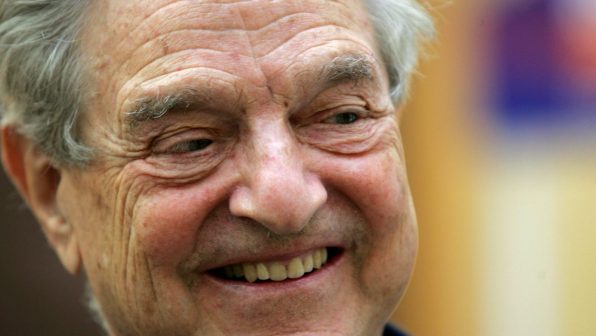
The Soros family has waged a years-long political war against Donald Trump and his supporters, with George Soros calling Trump a “danger to the world” and characterizing his ideas as a “threat to democracy.” Trump has alleged that “district attorneys hand-picked and personally funded by” Soros are behind the ongoing effort to put him behind bars.
Last month, George Soros’ Open Society Foundations soft power empire announced a dramatic scaling back of funding for operations in Europe, sparking an outcry from liberal activists, NGOs, and think tanks regarding the impact the end of the financial gravy train will have on their operations.
Alexander Soros, the 37-year-old son of the Hungarian-born US billionaire who took the reins at the OSF in June, responded with a manifesto-style appeal this week explaining the shift in focus under his leadership, assuring that the OSF isn’t really “leaving Europe,” and that the region “remains of huge strategic importance.”
Shift in Focus to Eastern Europe and US
Rather, Soros indicated, the shift in funding is the result of a shift in focus, from Western to Eastern Europe and the United States.
“The future of accountable, democratic government in Europe is now being determined not just in Paris and Berlin but also in Warsaw, Kiev and Prague,” he wrote. “This isn’t about funding levels – it’s about priorities as the focus of funding shifts back to the continent’s east,” Soros Jr. noted, recalling that, after all, his father’s soft power meddling in nations’ political affairs began in Eastern Europe in the 1980s.
Spending in Ukraine won’t be affected by the cuts, Soros assured, recalling with “pride” the $250 million in cash funneled into the country since the 2014 Euromaidan coup, and which played “such an important role in Kiev’s resilience” amid the ongoing NATO-backed proxy war against Russia.
The OSF will also continue to “support” operations in Moldova and the Western Balkans, per Soros, and Central European University – the Vienna-based school booted out of Budapest in 2019 amid allegations of meddling in Hungary’s politics.
The reorganization will also include a redoubling of Soros foundations’ efforts against Donald Trump and MAGA-style Republicans, Soros indicated, expressing concerns over the impact Trump’s possible return to power in 2024 would have on the OSF’s global agenda.
“As someone who spends up to half their time working on the continent and thinks former United States President Donald Trump – or at least someone with his isolationist and anti-European policies –will be the Republican nominee, I believe a MAGA-style Republican victory in next year’s US presidential election could, in the end, be worse for the EU than for the US. Such an outcome will imperil European unity and undermine the progress achieved on many fronts in response to the war in Ukraine,” Soros opined.
Accordingly, he noted, the OSF is being “adapted” to “be able to respond to whatever scenarios might emerge, on both sides of the Atlantic.”
Soros Jr. did not elaborate on concrete adjustments in OSF operations, nor the possible “scenarios” he mentioned. However, if the Soros soft power empire’s previously disclosed efforts are anything to go by, the strategy may include pouring even more of the estimated $1.5 billion per year that’s currently been shelled out from the financier’s hedge fund profits for OSF initiatives into US politics.
Trump’s “America First” approach to foreign policy, which the billionaire began discussing decades before ever running for office, sparked alarm with Soros’ liberal globalist vision of world affairs in 2016, when he began pumping millions of dollars into Hillary Clinton’s presidential campaign and super PACs affiliated with her candidacy.
After Trump’s surprise victory, Soros and his allies began plotting an anti-Trump “resistance movement,” which soon manifested itself in a series of street protests, court challenges to his domestic policies, low key communications with members of his administration, support for hawks in Congress lobbying a neoliberal foreign policy, and cash to fuel the conspiracy theory that Trump was a Kremlin agent. Soros’ open meddling in American politics led to petitions from Trump’s supporters demanding that the financier be declared a “domestic terrorist,” stripped of his assets, and expelled from the country.
As the Trump presidency progressed, the Soros empire turned its focus to lower key soft power campaigns, like lobbying tech giants to regulate social media, and campaign funding to dozens, if not hundreds, of of liberal prosecutors, gubernatorial candidates, and various other state and local officials in the 2018 and 2020 elections.
The effort has apparently paid off, with Trump’s defeat in 2020 allowing Soros to push his domestic agenda through into the next administration. An investigation last year found that a Soros dark money-linked think tank had influenced Biden administration policy across nearly two dozen different policy areas.
Earlier this year, after Trump made clear that he would be running for president in 2024, an unprecedented four criminal indictments totaling close to 100 felony counts were leveled against him, with charges ranging from the mishandling of classified governments, to his alleged attempts to overturn the 2020 election, to suspected falsification of records related to hush money payments to a porn star.
Trump, his supporters, and even some of his Republican primary challengers almost immediately connected Soros’ soft power influence operations to the historically unprecedented political “witch hunt” against the GOP frontrunner.
“Manhattan DA Alvin Bragg, who was hand-picked and funded by George Soros, is a disgrace. Rather than stopping the unprecedented crime wave overtaking New York City, he’s doing Joe Biden’s dirty work,” Trump said in March following his first indictment.
And although Soros has denied funding Bragg’s campaign, or even “knowing” the prosecutor, media investigations have confirmed that the billionaire donated at least a million dollars to the candidate, who had established himself as a Trump opponent, in 2021.
“I expect that Trump will be found guilty at least in some cases, and will be in jail by election day in November 2024, though that is not the general expectation today,” George Soros said in an interview last month. “If I am right, he is unlikely to win the election. But if I am wrong, the US will face a constitutional crisis that is likely to bring on an economic crisis as well,” he added.
With a little more than a year between now and election day, it remains to be seen what tricks Alexander Soros and the revamped OSF may be able to pull to stop Trump from entering the White House a second time.
Iran Hails Resistance Allies’ Push to Reshape World Order, Weaken US ‘Hegemony’

People raise Palestinian, Lebanese and Hezbollah flags during a rally in solidarity with the Palestinians, on the outskirts of the southern Lebanese village of Kfarkila, near a United Nations Interim Force in Lebanon (UNIFIL) armoured personnel carrier.
By Ilya Tsukanov – Sputnik – 02.09.2023
Iran joined the Shanghai Cooperation Organization and BRICS this summer, and has been working to expand bilateral cooperation with both Russia and China. Tehran is also the leader of an informal alliance of regional countries, including Syria, Lebanese militant group Hezbollah, and Iraqi Shia militias, known as the Axis of Resistance.
Iran’s foreign minister has praised the struggle in the Middle East to resist and undermine US dominance and create a new international order.
“The international system is undergoing fundamental changes and we are witnessing new actors in the international arena,” Foreign Minister Hossein Amir-Abdollahian said in a meeting with political groups in Beirut, Lebanon on Friday.
“The US is trying to maintain its hegemony, but the region and the world understand very well that America cannot exercise its hegemony, and on the contrary, the Resistance is powerful and can achieve its will powerfully,” Amir-Abdollahian added.
Today, the Iranian top diplomat said, “the position of the Resistance in the region cannot be ignored,” and is “being noticed by the West,” including as far as the Israeli-Palestinian crisis is concerned.
Separately, in talks with his Lebanese counterpart Abdallah Bou Habib, Amir-Abdollahian stressed that “the US sanctions regime cannot hinder the economic relations between Iran and Lebanon,” just as “it has failed to impact Iran’s cooperation with Iraq, Turkiye, Pakistan, Central Asia and the Caucasus.”
Iran is ready to provide further assistance to Lebanon to help Beirut resolve its long-running fuel and electricity crisis, he said. This includes readiness to build a network of power stations with a capacity of 2,000 megawatts.
Bou Habib praised Iran for its support for Lebanon in the nation’s time of crisis, and expressed readiness to further expand cooperation.
Lebanon’s political and economic crisis, which began in 2019, has left the country in economic ruin and run by a caretaker government. The post of president has been vacant since last October, when President Michel Aoun resigned at the end of his term.
Amir-Abdollahian also met with Hassan Nasrallah, secretary-general of the powerful Lebanese political party and militant group Hezbollah, which has forged close ties with Iran both in Lebanon and in Syria, where Hezbollah fighters backed by Revolutionary Guard Quds Force advisors have fought jihadist extremists for over a decade.
In the talks with Bou Habib, Amir-Abdollahian reiterated Iran’s long-stated position that “any normalization of relations with the Zionist regime will be detrimental to the entire region.” Iran will “continue to support and assist the Axis of Resistance, to preserve the Lebanese national interest, in the face of Israeli attacks and ambitions that threaten this entire region,” he said.
The Iranian diplomat also commented on the “positive developments” in relations between Iran and Saudi Arabia following the surprise normalization of relations earlier this year, saying that these processes “will have a positive impact on the entire region,” including for Lebanon.
At a press conference at the end of his visit, Amir-Abdollahian also rejected allegations by France – the European power which once controlled Lebanon as a colony, of meddling in Lebanon’s affairs.
“I advise Mr. Macron to focus on the situation inside France instead of paying attention to questions of interference in other countries,” he said. “Iran has always played the most constructive role in helping Lebanon,” he added.
Earlier in the week, the French president told a conference of French ambassadors that stopping Iranian “interference” was a “key element” in resolving Lebanon’s political standoff.
Amir-Abdollahian’s Beirut visit was preceded by a trip to Damascus on Thursday for talks with President Bashar Assad and other Syrian officials. Amir-Abdollahian slammed the illegal presence of US troops in eastern Syria, and blasted Israel for its ongoing campaign of airstrikes against the war-torn country.
Known to jealously guard its security and foreign policy independence, and the defense of its interests even against far larger and more powerful foes, including the US, Iran has dramatically ramped up cooperation with Russia and China in recent years as part of ongoing processes related to Eurasian integration. Iran joined the Shanghai Cooperation Organization in July, and acceded to the BRICS bloc late last month. Last week, a senior Islamic Revolutionary Guard Corps commander and advisor to Supreme Leader Ayatollah Ali Khamenei said that Iran sees a maritime-oriented economy and cooperation with Russia and China as keys to countering the impact of US sanctions.
Western leaders are all fighting for their survival in power
Where does this lead? To war!
By Gilbert Doctorow | September 1, 2023
I follow the Evening with Vladimir Solovyov shows as a professional duty, not for fun. The host is very often boorish and the panelists are variable in quality, with too many duds among them. However, every several days I am pleasantly surprised by the analytical talents of one or another panelist who gives us a fresh and often persuasive understanding of the drivers of global events.
One such case was last night when a panelist from MGIMO, the higher educational institution that has educated Russia’s diplomatic corps for decades, gave us his take on the danger of a new world war, meaning a nuclear holocaust, that we presently face. It is all because the political leaders in the United States and in Europe enjoy very low domestic ratings, face elections in the coming year or so and are desperate to hold onto power. For some losing power can mean being sent before courts for various crimes they have committed in office. War is the solution they seize upon in the hope of diverting attention from their personal failings and economic woes, as well as to clamp down on free expression of opposition to the powers that be.
So it is for Joe Biden. Tucker Carlson and Donald Trump have said as much in public over the past several days. But it is just as true of the European presidents and prime ministers. They are all buffeted by economic head winds, by rampant inflation, deindustrialization and falling living standards that they unleashed with their ill-considered imposition of sanctions on Russia. They all are highly unpopular. We know, for example, that German Chancellor Scholz is now among the least regarded politicians in his country. Macron is now rivaling former president Hollande, who came in at single digit numbers in polls before he abandoned his hopes of reelection. And what is the result? Scholz has become a war hawk and repeatedly has agreed to supply ever more deadly materiel to Kiev. Macron has come out as a hawk not only on Ukraine but now is a caricature colonialist on the question of participating in military operations against Niger to reinstall the French-backed comprador government.
Over in Poland, where an election is looming, the government of Prime Minister Mateusz Morawiecki is fighting for its life against a resurgent Civic Platform party. It has put in place a law aimed at sidelining the former prime minister and CP leader Donald Tusk over charges that he was soft on the Russians. Losing power might result in the chairman of the Law and Justice party, Jaroslaw Kaczynski being sent to trial, as is now demanded by Lech Walesa. The result? Poland has been building up its military forces on the border with Belarus and is preparing the public for an imminent outbreak of war.
And then there is the most recent example supporting the given line of analysis: what is going on in Estonia. Let us recall that in the past week there has been a political storm in Estonia when it became known that the husband of the viciously anti-Russian prime minister, Kaja Kallas, has been making millions of euros of profit from his logistics business assisting an Estonian company that has production in Russia. When confronted with this outrageous violation of the cut-off of relations with Russia that she has demanded of her fellow citizens since the war in Ukraine began, Kallas just shrugged it off as something she knew nothing about. However, we note that the drone attack that destroyed Russian military aircraft at the Pskov airport in Russia’s northwest region a day ago is said to have been launched from Estonian territory.
So far, Moscow has not reacted to what could and should be a casus belli with a NATO Member State. But how much longer will Putin show forbearance?
These are very dangerous times and the weakness of Western leadership points to more, not less war.
©Gilbert Doctorow, 2023
Featured Video

The Search for Truth: Charlie Kirk’s Assassination One Year Later
or go to
Aletho News Archives – Video-Images
From the Archives
The 9/11 “Double-Cross” Conspiracy Theory
BY LAURENT GUYÉNOT • UNZ REVIEW • SEPTEMBER 6, 2022
Is it true that “9/11 was an inside job”? Yes, insofar as Israel is “inside” the U.S. But for the 9/11 truthers who have identified Israel as the main perpetrators, “9/11 was an inside job” is at best a half-truth, and at worst an integral part of the Zionist operation, like a secondary flag sewn as a lining under the false flag of Islamism. Victor Thorn (1963-2017) wrote in his book 9/11 made in Israel: The Plot Against America (2011): “In essence, the ‘9-11 truth movement’ was created prior to Sept. 11, 2001 as a means of suppressing news relating to Israeli complicity. . . . The slogan ‘9-11 was an inside job’ was quite possibly the greatest example of Israeli propaganda ever devised.” In milder terms, it is “controlled opposition”.
A genuine truth movement would have pointed to Israel as the prime suspect from the start. From day one, it was obvious who would benefit. … continue
Blog Roll
 Aletho News
- Hormuz and the Looming Economic Catastrophe
- Dhubab offensive, media blitz and the rapid unraveling of Saudi-backed coalition’s new gambit
- Putin Conveys to Trump Iran’s Vision on Possible Conflict Resolution – Kremlin
- The Search for Truth: Charlie Kirk’s Assassination One Year Later
- ‘Harsh reality’: Iran says France seeks monopoly on power and intimidation, not peace for all
- When Will This White House Madness End?
- Huckabee aide goes to ‘unusual lengths’ to portray ‘Israel’ positively
- Trump Announces Diesel Supply Deal With Putin Following Phone Call
- MEP blasts ‘Euro-Gestapo’ for lecturing Russia on democracy
- Syria May Send Troops to Saudi Arabia Amid War with Ansar Allah
- If Americans Knew
- Israeli forces kill another child in Gaza – Daily Update
- Gaza ceasefire exists in name only, say more than 100 organizations
- Nearly 2 Million in Gaza Need Urgent Shelter Assistance as Winter Looms: IOM Chief Warns
- Suppressing Palestinian resistance: US charity under fire for AI monitoring of Gaza classrooms
- Thousands Are Held in Israeli Torture Camps. This Is What Happens Inside
- Israel puts Gaza’s sick, injured, newborn in peril – Daily Update
- Report claimed Mark Levin used by Israeli government to influence Trump
- Over 2,000 Gazans have died awaiting medical evacuation amid Israel’s continued siege
- How a U.S. Diplomat Suppressed and Altered Reports Critical of Israel
- 5 Palestinians Die from Israeli Strikes in Gaza as Relentless Attacks Continue
- No Tricks Zone
- New Study: 50 Years Of The Most Aggressive ‘Net Zero’ Policies Can Only Affect The Global Climate By 0.03°C
- US September “Heat” Was No Record…Many Records Set Decades Ago
- Latest European Green Energy Debacle; Portugal’s Largest Flagship Solar Park Insolvent!
- Green Energy Debacle: German Expert Professor Fritz Vahrenholt Warns Of Severe Economic And Social Consequences
- Two More Paleo Reconstructions Affirm Meters-Higher Sea Levels Across Ireland, Brazil 7000-6000 Years Ago
- New Study: Earth And Venus Surface Warmth Largely Explained By Convection And Lapse Rate, Not CO2 Or Radiation
- 2025 Nature Paper Claiming Worsening Global Drought Gets RETRACTED …Heavily Flawed
- New Study: ‘Global Drought Shows No Detectable Recent Acceleration Under Climate Warming’
- Economic Masterminds: German Socialists Suggest Taxing Productivity Gains Stemming From Using AI
- The South China Sea Has Not Been Cooperating With The Climate Change Narrative

