‘Worst Public Health Mistakes in History,’ Witness Tells COVID Pandemic Oversight Committee
By Michael Nevradakis, Ph.D. | The Defender | March 1, 2023
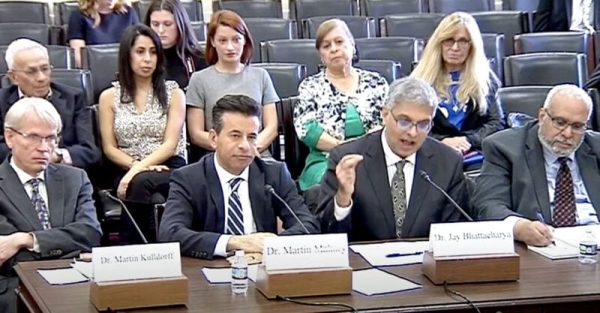
Convening for the first time on Tuesday, the Select Subcommittee on the Coronavirus Pandemic presented the testimony of four public health experts, as part of a roundtable: “Preparing For the Future By Learning From the Past: Examining COVID Policy Decisions.”
The agenda for the subcommittee, chaired by Rep. Brad Wenstrup (R-Ohio), focused on government policy pertaining to COVID-19, including vaccine mandates and other public health guidance.
In his opening remarks, Wenstrup said the subcommittee will examine the origins of COVID-19, policies surrounding gain-of-function, research, the impacts of lockdowns and other government policies, including school closures, and “vaccine and therapeutic development and the subsequent mandates.”
“We are here to deliver an after-action review of the past three years,” said Wenstrup. “To learn from the past, not just what went wrong, but what was done right, and to prepare for the future. This is work that must be done, must be done thoroughly, and must be done with reverence with an eye toward the truth and based on facts.”
The experts who testified included Jay Bhattacharya, M.D., Ph.D., professor of medicine at Stanford University; Martin Kulldorff, Ph.D., professor of medicine at Brigham and Women’s Hospital; Marty Makary, M.D., M.P.H., chief of islet transplant surgery and professor of surgery at Johns Hopkins University; and Georges C. Benjamin, M.D., M.A.C.P., executive director of the American Public Health Association.
In introducing the experts, Wenstrup said they can “help us chart a path forward; to help us understand what policies went wrong and how we, as a country, can improve.”
Wenstrup cited examples like the vaccine mandates imposed by the Biden administration, ignoring natural immunity, the harm caused to elders forced into nursing homes, and the consequences of stopping in-person learning and implementing remote work, particularly in the public sector.
“The American people deserve to know and understand how and why these impactful decisions were made,” said Wenstrup. “Did we create unnecessary fear in some, and dangerous ambivalence in others?”
“At the end of this process, our goal is to produce a product, hopefully bipartisan, based on knowledge and lessons learned,” he stated.
Ranking member Rep. Raul Ruiz (D-Calif.) focused on American lives lost during the pandemic, stating that it “was real and not a hoax” and “laid bare vulnerabilities and inequities in our public health infrastructure and our economy.”
“We need to understand the lessons, learn all the barriers of misinformation, disinformation, the politicization of this and avoid those for the fake of our nation, in order to save more lives,” Ruiz said.
Most of the witnesses shared critical words about the overall public health response to COVID-19, which Kulldorff described as “the worst public health mistakes in history.”
Makary said “public health officials have made many tragic mistakes during the pandemic,” including:
“Ignoring natural immunity, dismissing the lab leak as a conspiracy, closing schools, masking toddlers … pushing boosters for young people, bypassing FDA [U.S. Food and Drug Administration] expert panel customary votes that we’ve been using for decades, telling people to wash their hands like crazy.”
Bhattacharya said:
“The American people deserve answers to fundamental questions about the pandemic. On what empirical basis were schools closed? Did public health decision-makers consider the harms of their policies as thoroughly as their putative benefits? Why did authorities ignore recovered immunity or failure of the vaccine to prevent disease transmission?”
“Scientists and people vehemently disagreed about the wisdom of lockdowns, school closures, vaccine mandates and discrimination and so much else,” he added. “There’s near-universal agreement that what we did failed.”
Benjamin, the only expert who was generally supportive of the overall public health response, said, “We must remember the limited information we had when we made those decisions … and also the fact that our knowledge base and science continues to evolve over time.”
He added, “We created a safe and effective vaccine by every standard that we understand safety and efficacy today, in record time.”
Wenstrup praised the quick development of vaccines, describing it as “amazing,” but added, “but we knew from the trials that even people that were vaccinated got COVID” and “we also knew that vaccines produce variants and we should be expecting that.”
Citing the early public health response focusing on COVID-19 at the expense of other patients and health issues, he said one of his constituents, an elderly man, had an operation for “a painful hernia” canceled, ultimately resulting in his death.
Several experts addressed this type of inflexibility. Makary said that while “public health officials are not wrong for making recommendations based on the knowledge that they had at the time … that’s not actually what happened.”
“They were wrong because they refused to evolve their positions as the data became abundantly clear,” he said.
Nursing home policies, hospital visitation restrictions ‘a human rights violation’
Kulldorff said one of the two “major failures” of the public health response was “the failure to properly and optimally protect older Americans,” including “nursing home residents.” He described “sending sick people to nursing homes” as “criminal.”
“We also didn’t protect older working-age Americans in their 60s and 70s, while the ‘laptop class’ was often working from home, whether they were in their 20s or 30s or 40s,” he said. “The way we dealt with the pandemic was the worst assault on poor people, working Americans, the middle class [since] segregation and the Vietnam War.”
Kulldorff, who along with Bhattacharya helped draft the “Great Barrington Declaration” on “the damaging physical and mental health impacts of the prevailing COVID-19 policies,” said that when the group “proposed very concrete things for how to better protect older Americans” they were “slandered.”
Bhattacharya, in turn, said “the public health establishment … abandoned an essential commitment to science” in “sending COVID-19-infected patients back to nursing homes.”
Experts also addressed broader restrictions on hospital visitation during the pandemic. “To date, no randomized controlled trial has been conducted … against the cruel and inhumane hospital visitation policies that prevented people from seeing their dying loved ones,” said Makary, who described this failure as “a human rights violation.”
‘A house of cards that’s now falling apart’
Several of Tuesday’s witnesses focused on pandemic lockdown policies.
According to Bhattacharya, “By early 2022, about 95% of Americans had contracted COVID, despite the harsh countermeasures in most states.”
Bhattacharya described the policies as a “widespread violation of civil liberties.” He referenced a “Johns Hopkins University meta-analysis [finding] that lockdowns had failed to contain the spread of COVID.”
“At best, [lockdowns] temporarily protected the ‘laptop class’ who could work from home without losing their jobs, perhaps 30% of the population, while being served by the working class,” he added.
Kulldorff said such measures were themselves responsible for many deaths.
“Lockdown harms, school closures, people not going to medical visits … has killed many Americans and will continue to do so in the next few years,” he said, adding that “the lockdowns had enormously negative consequences on public health.”
For example, screening and treatment on cardiovascular disease and other ailments “plummeted,” Kulldorff said.
“The pandemic response is a house of cards that’s now falling apart,” he added.
Several of the experts focused on school closures, with Kulldorff stating, “I don’t think there’s anybody left who thinks that school closures were a good idea.”
Bhattacharya said school closures helped create “tremendous collateral harm” and “have set kids behind in ways that will lead them to worse outcomes as adults, including shorter, poorer lives.”
Mandates ‘ignored clear scientific data’
Bhattacharya questioned why “public health authorities ignore[d] clear scientific data that COVID infection [and] acquired immunity is as strong or stronger than vaccine-acquired immunity.”
“Vaccine mandates forced many frontline workers … to choose between their careers and a vaccine that provides less protection than the natural immunity they already had,” he said.
According to Makary, “Young healthy people were essentially spared from this pandemic,” with “an infection fatality rate no worse than influenza.” However, he said, the Centers for Disease Control and Prevention (CDC) denied knowledge of studies confirming these findings.
Benjamin said, “We were all kind of surprised the kids did kind of well,” although “there were some children that got … multisystem inflammatory syndrome.”
Defending the COVID-19 vaccines, Benjamin said:
“We have learned that if you do get native infection — meaning you aren’t immunized [and get infected], and then if you get vaccinated — you have a really, really, really robust response, and that’s great science and I’m glad we’re learning about that.”
Makary took a different view, saying, “The greatest perpetrator of misinformation during the pandemic has been the United States government” when it claimed “vaccinated immunity was far greater than natural immunity” and that “masks were effective.”
Makary referred to the recently published Cochrane meta-analysis showing that masks did not prevent the spread of COVID-19 while pointing out that myocarditis is “four to 28 times more common after the vaccine” but that the government has said “young people benefit from a booster.”
Kulldorff referred to the example of Sweden, describing it as the “one Western country who did very well during the pandemic” and that had “mostly voluntary measures” and a “very light approach,” instead of lockdowns and mandates.
“Sweden, together with other Scandinavian countries, [had] the least excess death in the world,” said Kulldorff.
Prompted by Rep. Mariannette Miller-Meeks, M.D. (R-Iowa), who said, “It wasn’t until I came to Congress that I found out infection-acquired immunity was a novel concept,” Kulldorff stated, “I guess we knew about it since 430 B.C., the Athenian Plague, until 2020, and then we didn’t know about it for three years, and now we know about it again.”
Makary said that since the time of the Athenian Plague, natural immunity had been observed, “and yet it was considered a conspiracy theory or something we couldn’t trust or believe in because we didn’t know the long-term protection. Well, we didn’t know the long-term protection of the vaccines either.”
“There has not been recognition that there is immunity after having had an infection,” said Kulldorff. There “was never a reason to mandate that vaccine for people that all had COVID. There was recently a study of mass vaccinations that shows [they] had zero or very little benefit.”
Benjamin, however, argued that in terms of natural immunity, “We generally don’t do that in medicine, particularly when we have a therapeutic option that will prevent it.”
“Many faced with these anti-scientific choices will never trust public health authorities again,” Bhattacharya said. “Public health bureaucrats operated more like dictators than scientists during the pandemic, sealing themselves off from credible outside criticism.”
As a result, said Bhattacharya, “I’ve seen a rise in vaccine hesitancy for essential vaccines like measles [and] DPT,” describing this as “quite alarming.”
Kuldorff concurred. “By forcing children to have a vaccine that they don’t need because they’ve already had the disease, that undermines the trust in other vaccines,” he said, characterizing this as “very, very serious.”
“It’ll take decades to restore some of this damaged trust” in public health authorities, added Makary.
Kulldorff said, “These failures are due to abandonment of basic principles of public health,” including an exclusive focus on one disease at the expense of all others, and “trying to suppress or eradicate COVID, which was impossible.”
Makary asked, “Why do we have the same policies for everybody?” He noted the “biases” of COVID-19 policy decision-makers, whom he described as “a small, non-diverse, like-minded group making all the decisions, and they were HIV researchers” even though “in HIV, there’s no natural immunity.”
“CDC and the FDA and people at the NIH [National Institutes of Health] made up their mind before the trials were completed,” said Makary. “They decided babies were going to get vaccines before the study was done. And then [they] found no statistically significant difference in efficacy between the two groups and they just authorized it anyway.”
“Why are we even doing trials? Why do we even have an FDA?” asked Makary.
Where do scientists whose careers were destroyed go to get their reputations back?
Ruiz said, “We are still dealing with the long-term implications of this public health crisis,” citing “the spread of misinformation or disinformation” as having “undermined the American people’s trust in our nation’s public health institutions and in each other.”
Ruiz said “misinformation” and “disinformation” may “lead to non-compliance or failure of therapeutics where people are making decisions that put themselves and their families in harm’s way.” But most of the experts took a different view.
Bhattacharya said that “under the banner of combating misinformation, government health agencies use their power to collaborate with social media companies to control the public conversation about COVID science and policy,” noting that he was put on a “trends blacklist” by Twitter as a result, leading to his participation in a lawsuit against the Biden administration based on censorship claims.
“I personally have faced censorship,” Bhattacharya said, “from government sources during the pandemic, including … slander and denigration. You need to involve outside voices respectfully in order to get the full set of people … or else bad decisions will get made, just as they were during this pandemic,” he added.
Kulldorff referred to the Great Barrington Declaration, saying that when it was presented, he and its authors were “slandered instead of taking it seriously,” while Bhattacharya said there was “a media campaign to take down our proposal, which tens of thousands of doctors, epidemiologists and scientists endorsed.”
“Where do the scientists whose careers were destroyed … go to get their reputations back?” he asked.
While Benjamin claimed, “There are many people out there who have a large bullhorn who have made it worse,” he conceded that “nobody should be censored.”
Michael Nevradakis, Ph.D., based in Athens, Greece, is a senior reporter for The Defender and part of the rotation of hosts for CHD.TV’s “Good Morning CHD.”
This article was originally published by The Defender — Children’s Health Defense’s News & Views Website under Creative Commons license CC BY-NC-ND 4.0. Please consider subscribing to The Defender or donating to Children’s Health Defense.
COVID-19 Vaccines Remain Pregnancy Category X
Products Should Never Have Been Administered in Pregnant Women and Those of Childbearing Age
By Peter A. McCullough, MD, MPH | Courageous Discourse | March 2, 2023
All drugs have a pregnancy category designation giving mothers and doctors guidance on what is known and how safe products are during pregnancy.
- Category A: The possibility of fetal harm appears remote. Extremely few drugs exist in this category (e.g., multiple vitamins).
- Category B: If there is a clinical need for a drug in this category, they are considered safe to use. Examples: acetaminophen, amoxicillin.
- Category C: These drugs should be given only if the potential benefit justifies the potential risk to the fetus. Examples: fluoroquinolones, gentamicin, saccharin, aspirin.
- Category D: There is positive evidence of human fetal risk, but the benefits from use in pregnant women may be acceptable despite the risk. They should only be used in pregnancy when the alternatives are worse. Examples: tetracyclines, ACE inhibitors, and most antineoplastics.
- Category X: The risk of use of the drug in pregnant women clearly outweighs any possible benefit. The drug is contraindicated in women who are or may become pregnant. Examples: thalidomide, oral contraceptives, statins, all COVID-19 vaccines.
I published an article in 2021 with Dr. Raphael Stricker, who advises one of the largest fetal loss centers in the country, warning women that the COVID-19 vaccine should be considered pregnancy category X. This designation should have been assigned by the vaccine manufacturers and agreed to by the FDA and properly placed on all vaccine program documents since pregnancy and childbearing age without contraception were exclusions from the EUA registration trials.
Shockingly, in the very first week of mass vaccination in December of 2020, news reels depicted well-intentioned pregnant mothers getting injected with synthetic lipid nanoparticles laced with long-lasting mRNA coding for the Wuhan Institute of Virology Spike protein. How could this be happening with no mutagenicity or teratogenicity studies? How could good clinical practice by doctors be abandoned?
Pregnant mothers and vaccine center workers didn’t seem to care. There were no assurances of gestational, peripartum, or long-term safety. Would the baby be affected by this brand-new technology? The regulatory agencies and medical colleges appeared to be in a tranced oblivion.
There are more than a dozen papers that extoll the virtues of mass vaccination and quickly conclude that COVID-19 vaccines are “safe” in pregnancy. Each paper has critical flaws including: 1) not randomized, 2) no comparator group, 3) limited time window and not entire term with continued follow-up, 4) incomplete capture of clinical events, 5) conflict of interest with American College of Obstetrics and Gynecology (ACOG) who received an undisclosed sum of money from the White House HHS COVID-19 Community Core Fund to promote vaccination.
In drug safety research, even if it is only one abstract, manuscript, or monograph that raises a serious safety concern, it should be pursued over those which failed to find the signal. Thorp and colleagues used CDC VAERS and compared COVID-19 vaccines to influenza vaccines and found in US cases, a 27-fold higher risk of miscarriage and more than a twofold increased risk across six categories of adverse fetal outcomes. Because the mRNA is now known to circulate for 28 days or more and the Spike protein causes clotting, bleeding, and is known to damage tissues, my conservative conclusion is that COVID-19 vaccination remains pregnancy category X—contraindicated.

McCullough PA. Lack of Compelling Safety data for mRNA COVID Vaccines in Pregnant Women
The American People Must Draw Red Lines Now
By Connor Freeman | The Libertarian Institute | March 2, 2023
Washington and NATO have rapidly escalated their war with Russia. The White House appears to have blown up the Nord Stream pipelines in a blatant act of war against Russia, not to mention Germany and other European allies.
The CIA is reportedly conducting sabotage attacks on Russian infrastructure and the Pentagon has tacitly endorsed Kiev’s drone strikes hundreds of miles deep inside the Russian mainland.
Along with an assortment of NATO commandos, U.S. troops, CIA, and Special Operations forces are on the ground in Ukraine as well. The White House has greenlit the transfer of Bradley armored fighting vehicles, longer range rockets, and M1 Abrams battle tanks to the battlefield.
Kiev is demanding hundreds of tanks. Concurrently, multiple European NATO members are sending their own main battle tanks to Ukraine, and a U.S. backed assault on Crimea is expected soon.
While Ukrainian President Volodymyr Zelensky goads London, Berlin, and Paris into handing over fighter jets, his country has already suffered more than 100,000 casualties, hundreds of Ukrainian troops are dying every day just over a battle for the eastern Donetsk city of Bakhmut.
In recent months, officials in Kiev have explicitly stated that Ukraine—a “de facto” NATO member—is “shedding blood” for a “NATO mission.” The goal is eliminating Moscow as a “threat” to the alliance by weakening, destabilizing, and disintegrating Russia.
In the process, Ukraine, the human battering ram, is being destroyed. But in the words of Madeline Albright, from the Empire’s perspective, “the price is worth it.”
Russia must be crippled before the Pentagon launches its impending war against China, “the big one,” which top military commanders and four star generals now warn will take place in only a few years.
In the meantime, experts and analysts continue to point out—along with even The New York Times—that we are systematically pushing “the United States and its NATO allies closer to direct conflict with Russia.”
What is the justification for this seemingly perpetual escalation? The U.S. war machine reasons that since Russian President Vladimir Putin has not yet ordered strikes on NATO territory or pushed the nuclear button, Washington and its NATO vassals can freely provide Kiev with increasingly advanced weapons and even support assaults against the Crimean Peninsula as well as the Russian homeland itself.
The aforementioned tanks will likely be used for the potential attacks on Crimea (read: Russian territory) currently being considered by the White House. Such an escalation could swiftly lead to World War III and a nuclear exchange.
Incidentally, the Bulletin of Atomic Scientists warns nuclear war is now a more likely possibility than at any time during the Cold War. In making their case for turning the clock to 90 seconds to midnight—for the first time—the group partly refers to the refusal of the United States, Ukraine, and its allies to come to the negotiating table.
BAS president and CEO Rachel Bronson said in a statement following the decision that the “U.S. government, its NATO allies and Ukraine have a multitude of channels for dialogue; we urge leaders to explore all of them to their fullest ability to turn back the clock.”
Last fall, Chairman of the Joint Chiefs of Staff Gen. Mark Milley was advocating a negotiated settlement between Kiev and Moscow. However, he was all but vetoed by the so-called diplomats in Antony Blinken’s State Department.
Former Israeli Prime Minister Naftali Bennett recently discussed how he attempted to mediate a peace deal with Russia and Ukraine in early March 2022. According to Bennett, both sides made major concessions and “there was a good chance of reaching a ceasefire.” He has now revealed the effort was overruled and ultimately “blocked” by President Joe Biden and former UK Prime Minister Boris Johnson.
According to current and former U.S. officials, that same month, Turkish brokered talks in Istanbul between the warring sides also established a workable foundation for a future settlement. The whole enterprise was squashed again by Johnson, acting on behalf of the “collective West.”
Even when U.S. military leadership expresses uneasiness about the war’s trajectory, the provision of heavy western-made tanks, or the sheer inability of Ukrainian forces to regain all the territory Russia has captured, the escalations continue anyway.
The hawkish Secretary General of NATO himself has said “I fear that the war in Ukraine will get out of control, and spread into a major war between NATO and Russia.”
Likewise, UN Secretary-General Antonio Guterres has warned “I fear the world is not sleepwalking into a wider war. I fear it is doing so with its eyes wide open.”
The American people must draw red lines now and stop their out of control ruling class waging wars against nuclear armed powers. As Roger Waters says, this is not a drill.
Our fellow countrymen have become dangerously desensitized to the thought of direct conflict with both Russia and China.
Tragically, our people have been numb for a long time. They have yet to truly reckon with our government’s mass murder marathon of the last 20 years including one million dead Iraqis, half a million dead Syrians, as well as the hundreds of thousands killed in Afghanistan, Libya, Pakistan, Somalia, and Yemen.
Designedly, our enemies in Washington need us to be numb to the inevitable results of their reckless, murderous policies.
The hawks will next try the same proxy war strategy in Taiwan, we will not get another chance to draw red lines.
We must demand all military aid be terminated, and that the White House and the State Department be forced to support or at least not interfere with negotiations.
We must demand an immediate end to this war now.
Connor Freeman is the assistant editor and a writer at the Libertarian Institute, primarily covering foreign policy. He is a co-host on Conflicts of Interest.
West demands South Korea to supply weapons to Ukraine
By Ahmed Adel | March 2, 2023
A South Korean supply of weapons to Ukraine could lead to Russia and China increasing their cooperation with North Korea. It is for this reason that Seoul is in no hurry to make a decision to support Ukraine, even if Washington and NATO continue to pile on pressure.
In February, it was reported that the US asked to purchase more artillery ammunition from South Korea. According to government sources cited by JoongAng Ilbo, Washington requested Seoul for artillery ammunition and is currently deliberating the matter.
It is recalled that the US bought 100,000 rounds of 155-millimetre howitzer artillery shells from South Korea to send to Ukraine in November. South Korea’s Defence Ministry said at the time that the ammunition purchase was with “the premise that the United States is the end user” so that they could replenish their depleted stockpiles.
The US wants South Korea to maintain distance from Russia and China. However, Russia and China are South Korea’s neighbours, not an ocean length away like the continental USA. This obviously factors into Seoul’s strategic thinking and will impact its decision on whether to support Ukraine, particularly as both countries could use any provocation as a pretext to boost cooperation with North Korea.
Although it might seemingly appear that Beijing has little interest in South Korea’s position relating to a far-off conflict, Seoul’s decision will signal just how easily it will capitulate to US interests. China and Russia will certainly be observing how Seoul responds to pressure from the US and from there make a decision on whether to boost their ties with North Korea.
Regarding the latest US request, a South Korean official, in speaking with Joong Ang Ilbo, said: “there is no change to our stance of not supplying lethal military aid to Ukraine.”
Ukrainian President Volodymyr Zelensky said he hopes for South Korean military support when responding to a question from a JTBC reporter at a press conference in Kiev on February 24, the one-year anniversary of the Russian military operation.
“We view weapons supplies to us positively,” Zelensky said, adding that he hopes South Korea “will find an opportunity to help Ukraine.”
It is recalled that Zelensky addressed South Korea’s National Assembly via video livestream in April 2022 and begged for anti-aircraft weapons. There was an evident lack of interest in Zelensky’s speech as only about 60 of the 299 sitting lawmakers were present during the address.
With South Korean lawmakers evidently not interested in sending weapons to Ukraine, a position that has been maintained by the government, pressure has been sustained by the US so that this policy can change.
Adding to this squeeze, NATO Secretary General Jens Stoltenberg called on South Korea to “step up” its military support to Ukraine during his January visit to the Asian country. There, Stoltenberg had the audacity to cite the example of several NATO member states that have revised their policies against exporting weapons to Ukraine. Stoltenberg evidently forgot that South Korea is not a NATO member, or perhaps even the very fact that South Korea is a Pacific country, and not an Atlantic one.
For now, Seoul’s support to Ukraine is not what NATO and the US are expecting. South Korea has only provided humanitarian aid, which, while helpful for citizens, does nothing to alleviate Ukraine’s lack of weapons and ammunition.
President Yoon Suk Yeol has set out to make South Korea a “global pivotal state,” and it is for this reason that the West is piling pressure on South Korea to make a firm stance on the Russia-Ukraine war. Due to South Korea’s rapid economic development and ambitions to grow its prominence on the international stage, the West wants Seoul to make more substantial contributions to global issues, but obviously in accordance to Western interests.
Although there is a likelihood that South Korea’s leaders would like to conform to Western demands, reality dictates that it must consider the consequences its actions can have, particularly in relation to North Korea, China, and Russia. It cannot be overlooked that all three countries are armed with nuclear weapons, with the North Korean nuclear issue being the overriding concern, at least from Seoul’s perspective.
This suggests that although South Korea wants to be a “global pivotal state” and “step up” as a foreign policy actor, as Yoon said, it will be difficult to achieve so long as most of its attention and resources are dedicated to the unresolved war in Korea. Given that the Korean War has not reached a peaceful resolution as only an Armistice Agreement was signed in 1953, South Korea must seriously consider how its actions against Russia could lead to closer ties between Moscow and Pyongyang, and how it could be perceived by China.
Ahmed Adel is a Cairo-based geopolitics and political economy researcher.
False hopes and broken promises litter the ground behind the UN Statement on Palestine
By Ramzy Baroud | MEMO | February 28, 2023
Rarely does the Palestinian Ambassador to the UN make an official comment expressing happiness over any official proceedings concerning the Israeli occupation of Palestine. Ambassador Riyad Mansour, though, is “very happy that there was a very strong united message from the Security Council against the illegal, unilateral measure” undertaken by the Israeli government.
The “measure” in question is a decision, on 12 February, by the far-right government of Israeli Prime Minister Benjamin Netanyahu to construct 10,000 new housing units in nine illegal Jewish settlements in the Occupied Palestinian West Bank. Predictably, Netanyahu was angered by the supposedly “very strong united message” from an institution that is hardly known for its meaningful action regarding international conflicts, especially in occupied Palestine.
Mansour’s happiness may be justified from some perspectives, especially as we seldom witness a strongly-worded position by the Security Council that is both critical of Israel and embraced by the US. The latter has used its veto in the council 53 times since 1972 — according to the UN itself — to block draft Security Council resolutions that are critical of the occupation state.
However, a close examination of the context of the latest UN statement on Israel and Palestine shows that there is little reason for Mansour’s excitement. The statement in question is just that; a statement, with no tangible value and no legal repercussions. It could have been meaningful if the language had been unchanged from its original draft. Not of the statement itself, but of a binding UN resolution that was introduced on 15 February by the UAE ambassador.
Reuters revealed that the draft resolution would have demanded that Israel “immediately and completely cease all settlement activities in the Occupied Palestinian Territory.” That resolution — and its strong language — was scrapped under pressure from the US and was replaced by a mere statement that “reiterates” the Security Council’s position that “continuing Israeli settlement activities are dangerously imperilling the viability of the two-state solution based on the 1967 lines.” It also expressed “deep concern”, actually, “dismay” with Israel’s 12 February announcement.
Netanyahu’s angry response was mostly intended for public consumption in Israel, and to keep his far-right government allies in check; after all, the conversion of the resolution into a statement, and the watering down of the language were all carried out with the prior agreement of the US, Israel and the PA. The Aqaba conference held two days ago is confirmation that such an agreement is indeed in place. Hence, the statement could not have come as a surprise to the Israeli prime minister.
Moreover, US media spoke openly about a deal, which was mediated by US Secretary of State Antony Blinken. The reason behind it, initially, was to avert a “potential crisis” which would have resulted if the US had vetoed the resolution. According to the Associated Press, such a veto “would have angered Palestinian supporters at a time that the US and its western allies are trying to gain international support against Russia.”
However, there is another reason behind Washington’s apparent sense of urgency. In December 2016, the then US Ambassador to the UN Susan Rice refrained from vetoing a similar UN Security Council resolution that strongly condemned Israel’s illegal settlement activities. This happened less than a month before the end of Barack Obama’s second term in the White House. For Palestinians, the resolution was too little, too late. For Israel, it was an unforgivable betrayal. To appease Tel Aviv, the Trump Administration gave the UN post to Nikki Haley, an ardent supporter of Israel.
Although another US veto would have raised a few eyebrows, it would have presented a major opportunity for the strong pro-Palestine camp at the UN to challenge US hegemony over the matter of the Israeli occupation of Palestine. It would also have deferred the issue to the UN General Assembly and other UN-related organisations.
Even more interesting, according to the Blinken-mediated agreement — reported by AP, Reuters, Axios and others — Palestinians and Israelis would have to refrain from unilateral actions. Israel would freeze all settlement activities until August, and Palestinians would not “pursue action against Israel at the UN and other international bodies such as the World Court, the International Criminal Court and the UN Human Rights Council.” This was the gist of the agreement at the US-sponsored Aqaba meeting as well. While the PA is likely to abide by this understanding — since it continues to seek US financial handouts and political validation — Israel will most likely refuse; in fact, practically-speaking, it already has.
Although the agreement reportedly stipulated that Israel would not stage major attacks on Palestinian cities, only two days later, on 22 February, Israel raided the West Bank city of Nablus. It killed 11 Palestinians and wounded 102 others, including two elderly men and a child.
Moreover, a settlement freeze is almost impossible. Netanyahu’s extremist coalition government is held together in large part by the common understanding that settlements must expand constantly. Any change to this understanding would almost certainly mean the collapse of one of Israel’s most stable governments in years.
Why, then, is Mansour “very happy”? The answer stems from the fact that the PA’s credibility among Palestinians is at an all-time low. Mistrust, if not outright disdain, of Mahmoud Abbas and his authority is one of the main reasons behind the brewing armed rebellion against the Israeli occupation. Decades of promises that justice will eventually arrive through US-mediated talks have culminated in nothing, so Palestinians are developing their own alternative resistance strategies.
The UN statement was marketed by PA-controlled media in Palestine as a victory for Palestinian diplomacy. Hence, Mansour’s happiness. But this euphoria was short lived.
The Israeli massacre in Nablus left no doubt that Netanyahu will not even respect a promise he made to his own benefactors in Washington. This takes us back to square one: back to where Israel refuses to respect international law, the US refuses to allow the international community to hold Israel to account, and the PA claims another false victory in its supposed quest for the liberation of Palestine. Practically, this means that Palestinians are left with no other option but to carry on with their resistance, indifferent — justifiably so — to the UN and its “watered-down” statements.
Early “Spring Exacerbation”
By Konstantin Asmolov – New Eastern Outlook – 01.03.2023
Those who closely follow the events on the Korean peninsula know that military exercises of the United States and the Republic of Korea take place every spring. The DPRK traditionally perceives them as a rehearsal for an invasion and responds with demonstration of force. Each side declares however that in response to the provocations of the other, it has the right to strengthen its defense capability thus getting trapped in a vicious circle. But although the actions of Washington and Seoul aggravate the situation no less, they do not make the front pages, unlike the news about launches or statements by the North, and this creates a picture in the public mind that Pyongyang is the culprit of tension.
On February 17, the Ministry of Defense of the Republic of Korea announced that in March South Korea and the United States would hold a joint 11-day Freedom Shield exercise. In response, the DPRK Foreign Ministry issued a statement, in which it threatened to take “unprecedented tough and decisive measures” for “disturbing military demonstrations that seriously violate the security interests of the DPRK.”
On February 18, North Korea resumed missile launches. An ICBM was launched towards the East Sea (Sea of Japan).
The reaction of Washington and Seoul was quite acute: if you recalculate the missile trajectory from a high-altitude to a more typical one, its range turns out to be 14,000 km. So it can reach the continental territory of the United States by a wide margin.
South Korean experts also noted that the launch had been managed by the Main Missile Directorate, and it was carried out by the same unit as the Hwasong-17 launch on November 18, and it took almost nine and a half hours to prepare the liquid-fuel ICBM for being started. In addition, they traditionally doubted that the missile had successfully entered the atmosphere: allegedly, a video of a descending missile filmed by a Japanese fighter shows that its warhead had been broken into pieces and disappeared from view after it caught fire. After the previous failure in November on September 3, North Korea released an improved Hwasong-15 ICBM with a lighter warhead. But this time the missile seems to have failed again to re-enter the atmosphere.
On February 19, the deputy department head of the Central Committee of the Workers’ Party of Korea (WPK), Kim Yo-jong published a press statement in which she castigated Washington’s desire to turn the UN Security Council into an tool for implementing a hostile policy against the DPRK. And although Kim Jong-un’s sister noted that “our ICBMs will never take aim at Seoul,” this phrase is not identical to “DPRK missiles are not aimed at Seoul” – the DPRK has enough other types of missiles and barrel artillery capable of reaching the capital of the Republic of Korea.
On the same day, February 19, South Korea and the United States conducted joint air exercises with the participation of American B-1B strategic bombers. For understanding: taking off from Guam, the B-1B can reach Pyongyang in two hours.
February 20 became an eventful day. First, Kim Yo-jong responded to critical statements about the February 18 launch in the style of “your experts are idiots.” In particular, the fighter did not film the disintegration of the warhead, but the separation of the so-called hypersonic glider from the missile head. The “first sister” summed up by saying that “in case of any direct and indirect alarm,” we will take appropriate response measures and “the frequency of using the Pacific Ocean as our training ground depends on the nature of the actions of American troops“.
Second, at about 7 a.m., the North launched eastwards two medium-range ballistic missiles from Sukchon, South Pyongan Province. It is noteworthy that the North Korean media covered the launch a mere hour after the fact.
In the context of the above, the experts of the Republic of Korea believe that the DPRK military might have simulated strikes on the Cheongju and Osan air bases (North Chuncheon Province) and Gunsan (North Jeolla Province), which are located at a 340 and 390 km distance from the missile launch site. It was from them that the planes of the US and South Korean Air Forces took off for joint exercises the day before.
Third, the ROK has imposed new unilateral sanctions against the DPRK. More precisely, in relation to four individuals and five organizations for their assistance to the nuclear and missile development of the North, as well as for evading the implementation of UN Security Council resolutions. This measure is being applied for the fourth time in the reign of Yoon Suk-yeol: new sanctions were introduced just ten days after the decision had been made to restrict Pyongyang’s illegal activities in cyberspace. Previously, these same individuals and organizations had been included in the US sanctions lists, so the step was purely formal.
Fourth, the “Korean” meeting of the UN Security Council eventually took place. In 2022, the UN Security Council held 10 meetings specifically devoted to discussing North Korea’s missile threats, but all of them ended without any results due to the opposition of China and Russia, who are permanent members of the Security Council with veto power.
In 2023, the scenario was resumed. The United States has called on the UN Security Council to hold North Korea accountable “for its recent missile provocations.” Nevertheless, China once again opposed taking any action against Pyongyang, accusing the United States of escalating tensions and provoking North Korea. Its representative reminded the world that the United States had announced joint military exercises at a higher level and on a larger scale, as well as the timely deployment of strategic assets on the Korean peninsula. Russia’s permanent representative to the UN also accused the United States of provoking North Korea. According to the Russian diplomat, the DPRK is simply responding with missile tests to unprecedented US military maneuvers, which are clearly anti-Pyongyang in nature.
On February 22, the military of South Korea, the United States and Japan conducted joint missile defense exercises in the waters of the Sea of Japan. It involved destroyers equipped with the system, which worked out actions for the exchange of information about ballistic missiles, procedures for their detection, tracking and interception. On the same day, a meeting of the Naval commanders of the three countries took place in Yokosuka.
On the same day, on February 22, the 8th U.S-ROK Deterrence Strategy Committee Table-Top Exercise (DSC TTX) was held at the Pentagon. The parties were represented by Heo Tae-keun, ROK Deputy Minister for National Defense Policy (DEPMIN), Siddharth Mohandas, Deputy Assistant Secretary of Defense for East Asia, and Richard Johnson, Deputy Assistant Secretary of Defense for Nuclear and Countering Weapons of Mass Destruction Policy (N-CWMD). The military reviewed measures to strengthen combat readiness in case of the real use of nuclear weapons by the North, and they studied a variety of possible scenarios.
Also on February 22, Deputy Minister of Foreign Affairs of the DPRK for International Organizations Kim Song Kyung criticized the “unfair and unbalanced” policy of the UN Secretary General, who “from year to year repeats illogical and deplorable nonsense, no different from the chatter of US State Department officials.” And if, because of this stance, “an undesirable situation arises”, he “will not get rid of the heavy responsibility for it.”
At dawn on February 23, North Korea responded to previous day’s exercise by conducting a launch of Hwasal-4 “strategic cruise missiles” capable of carrying nuclear warheads.
In an interview with the Korea Times, senior researcher at the Korean Defense and Security Forum, Shin Jung-woo said that the range of the missiles was 200 kilometers longer than those tested on January 25, 2022. However, in general, the description of the launch was assessed skeptically. According to a representative of the Joint Chiefs of Staff on February 24, the data obtained by ROK and US observation means do not correspond to the information voiced by the North and may be exaggerated. The military did not provide other details, referring to the fact that this could reveal the capabilities of the allies in the field of surveillance.
On February 24, the head of the DPRK Foreign Ministry Department for US Affairs, Kwon Jong-geun, chastised the UN Security Council meeting, at which, according to the North Korean diplomat, the United States “again found fault with our use of the right to self-defense.” But in addition to the customary rhetoric, there was something new. “The United States should bear in mind that the further continuation of their hostile and provocative acts against the DPRK, despite our repeated protests and warnings, can be considered a declaration of war against our Republic.” This is quite serious, given the new regulations for the use of North Korean nuclear weapons. In response, the US warned that North Korea’s use of nuclear weapons would lead to the end of the DPRK regime, and announced that it would continue to deploy specialized nuclear forces.
What will happen next? In February, the ROK and US military intend to conduct an additional Air Force exercise, and then in March the large-scale Freedom Shield exercise will take place, which will last 11 days, including its field component. The main trigger of the “spring exacerbation”. Moreover, negotiations are underway on the arrival at the port of Busan of an American nuclear aircraft carrier (presumably the Nimitz), which will take part in the exercise. Similarly, in 2022, the United States sent the Ronald Reagan to the peninsula. The Ministry of Defense of the Republic of Korea, however, refused to confirm this fact but stated that “the deployment of key US military assets took place in close consultation between South Korea and the United States“.
So, both sides do not intend to retreat, and it is highly likely that 2023 will equal 2022 in terms of the number of missile launches from the North, and even surpass it. However, seasonal exacerbation is seasonal for a reason: it happens within certain limits. And although non-core experts react to this saber rattling every time as if a war were on the threshold, one should rather be afraid of the probability of an irrational factor when, against the background of tension, someone may lose their nerves.
Konstantin Asmolov, PhD in History, leading research fellow at the Center for Korean Studies of the Institute of China and Modern Asia at the Russian Academy of Sciences.
Russian airlines surviving sanctions – Bloomberg
RT | March 1, 2023
Sanctions against Russian aviation have led to mixed results but have failed to cause the significant pain to the sector that was expected by Western countries, Bloomberg reported on Wednesday, citing industry analysts.
The Ukraine-related sanctions forced two of the world’s largest aircraft manufacturers, Boeing and Airbus, to stop doing business in Russia. Meanwhile, over 40% of the aircraft operating in Russia were owned by foreign lessors that demanded their property back shortly after the restrictions were introduced.
However, Russian air carriers are still operating 467 Airbus and Boeing jets versus the 544 a year ago, according to data from researcher Cirium, as cited by the news agency.
The country’s airlines reportedly keep flying the jets without software updates and other forms of support from Boeing and Airbus. Both manufacturers told the agency that they had stopped providing parts, maintenance or technical support to airlines or maintenance companies in Russia.
In February, Russian Federal Air Transport Agency head Alexander Neradko said that Boeing and Airbus planes operated by Russian airlines will be able to fly safely until 2030 if properly maintained.
In an attempt to isolate Russia, the US, EU, and a number of other countries closed their airspace to Russian airlines. However, despite losing many destinations, Russian carriers have reportedly increased the number of flights to Thailand, Türkiye, the United Arab Emirates, Armenia, Kyrgyzstan, and Tajikistan.
According to Cirium estimates, Russian airports are now served by some 270 international flights daily compared to 300 a year ago.
At the same time, Russia’s retaliatory measures forced EU and US carriers to make long and expensive detours on flights to Asia. Russian airspace is still open to airlines from nations that opted not to support the sanctions, such as the UAE, which has ramped up service.
“Clearly the sanctions didn’t work as the West thought they would, and the global aviation industry is a lot leakier than anyone thought,” industry consultant Richard Aboulafia told Bloomberg. “Yes, safety will deteriorate the longer these sanctions go on, but it’s clearly not going to bring connectivity within Russia and from Russia to a grinding halt.”
Korybko: There’s No Reason For India To Decouple Itself From Russia
By Andrew Korybko | March 1, 2023
As an economic expert, Renuka Sane’s heart might presumably be in the right place, but her suggestion to decouple from Russia is counterproductive from the perspective of India’s grand strategic interests. By following her well-intended advice, India would be abandoning its masterful balancing act between key players in the New Cold War that’s responsible for its rapid rise as a globally significant Great Power over the past year. It would also be voluntarily submitting itself to vassal status vis-à-vis the US-led West’s Golden Billion.
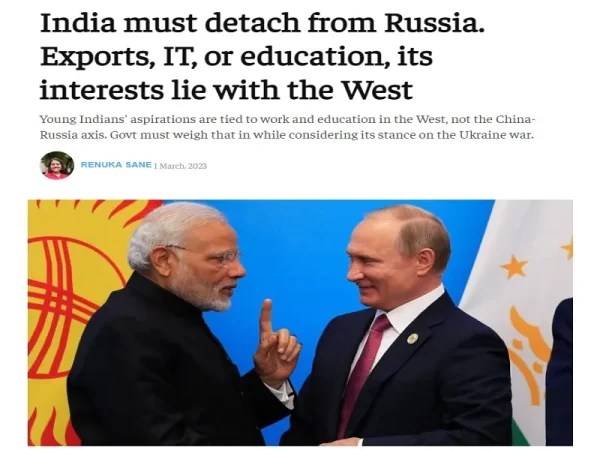
The Print, a popular Indian online media outlet, published an op-ed by Renuka Sane on Wednesday urging her country to decouple from Russia in order to please its Western partners. Titled “India must detach from Russia. Exports, IT, or education, its interests lie with the West”, the research director at Trustbridge, which works on improving the rule of law for better economic outcomes for India, shared plenty of details about Indian-Western economic, financial, and tech ties in order to make her case.
There’s no disputing the fact that these abovementioned relationships are incredibly important for India and far outweigh related ties with Russia. The problem, however, is the innuendo that pervades her text whereby she appears to regularly hint that her country’s Western partners might employ “state coercion” against it in response to Delhi’s defiance of their demand to distance itself from Moscow. The first such example of this is present in the second paragraph of her piece.
Sane writes that “State coercion limits engagement between individuals in two countries. Governments make such decisions based on a balance of economic interests and foreign policy. One arena where this plays out is visa diplomacy. Denial of visas is a lever of international relations and often used as a tool to influence actions by another State.” She then adds near the end of that paragraph that “Trade agreements may sometimes be driven primarily by geopolitical and strategic reasons.”
Sane continues this trend into the third paragraph where she opines that “The energy, support, and prioritisation for all these [Indian-US tech initiatives] on the part of the two governments are shaped by their security environment.” This part can be interpreted as her hinting that the US’ displeasure with the Russian dimension of India’s foreign policy could have consequences for bilateral cooperation, especially in the tech sphere.
Reinforcing this point, the fourth paragraph includes the following insight: “Information Technology is now India’s biggest industry, and the future of the Indian economy is tied to success in this sector. For further doubling of services exports, support and cooperation from Western governments is important.” Sane then adds at the end of the sixth paragraph that “India’s approach to the Ukraine war will shape the extent to which Western governments choose to support India’s services exports growth targets.”
The last two paragraphs more directly convey the implied purpose behind her latest op-ed. This is evidenced by her warning that “If global firms want to exit China on the grounds that it is an authoritarian country hostile to the West, then it is in India’s interest to look ‘un-China’ in the eyes of the world. Our equation and policies vis-a-vis Russia may shape the attitude of these global corporate players.”
Sane then ends her piece on the following ominous note: “India’s economic interests lie with the West, and the latter is extremely worried about Russia’s invasion of Ukraine.” Putting everything together and keeping in mind the excerpts that were shared, there’s little doubt that she’s concerned that the West – particularly the US – might punish India for its independent foreign policy towards Russia through economic, financial, and/or tech means, ergo her innuendo that it should ditch Moscow.
As an economic expert, her heart might presumably be in the right place, but her suggestion is counterproductive from the perspective of India’s grand strategic interests. By following her well-intended advice, India would be abandoning its masterful balancing act between key players in the New Cold War that’s responsible for its rapid rise as a globally significant Great Power over the past year. It would also be voluntarily submitting itself to vassal status vis-à-vis the US-led West’s Golden Billion.
India’s hard-earned strategic autonomy would be surrendered in exchange for literally nothing at all since it’s highly unlikely that her implied scenario of that de facto New Cold War bloc punishing her country through the related means that she warned about will ever come to pass. This South Asian Great Power is simply much too important to the Golden Billion for the latter to unilaterally decouple itself from the former for five reasons that will now be summarized.
First, India’s labor and market potentials are too large for the West to ignore, which directly segues into the second point of them envisaging that country functioning as a reliable re-shoring location for gradually reducing their presently disproportionate dependence on Chinese-based supply chains. Third, their support for India’s continued economic growth enhances its comprehensive capabilities to manage China’s rise, which aligns with their de facto New Cold War bloc’s geostrategic interests.
Fourth, no other country has anywhere near the previously mentioned characteristics that India has, meaning that there’s no viable alternative for the West with respect to those related opportunities in the event that they decide to decouple themselves from it as punishment for its foreign policy. And finally, the worst-case scenario that they want to avoid at all costs is pushing India into considering the “Chindia” scenario of combining its potential with China and jointly challenging the West.
That last-mentioned scenario is only foreseeable in the event that the West’s liberal–globalist elite succeed in punishing India for its foreign policy through economic and other means of the sort that Color Revolution mastermind George Soros implied last month are credibly in the cards. His de facto declaration of Hybrid War against India during the Munich Security Conference was alarming, but his more pragmatic and non-ideological peers might still rein him in and prevent this from materializing.
If they can’t, then they risk pushing India into seriously considering synergizing its economic, financial, and tech potential with China, which would deal a deathblow to Western dominance. In any case, this is a choice for the West itself to make and India shouldn’t voluntarily subjugate itself to the Golden Billion’s foreign policy demands out of desperation to avert the scenario of it being punished by them like Sane appears to be strongly suggesting throughout her piece.
Rather, India should maintain its multi-alignment between all key players, but never shy away from signaling to everyone that it always has backup plans in the event that any of them unilaterally decides to worsen their relations for purely zero-sum political reasons. There’s no indication that the West as a whole is seriously considering punishing India for its ties with Russia, Soros’ de facto declaration of Hybrid War against it notwithstanding, but they should still know what would happen if they do.
Blinken hopes to derail India’s relationship with Russia following Scholz’s failure
By Ahmed Adel | March 1, 2023
With Russia’s military operation in Ukraine evidently destroying NATO’s ambitions, Washington is becoming increasingly frustrated that Moscow has not been isolated. Russia did not economically collapse, as was predicted in the West, partly because of the robust and longstanding relationship it has with India. It is unsurprising that in only a matter of days, Germany and the US have pressured India to capitulate their sovereignty and serve Western interests instead of their own.
German Chancellor Olaf Scholz sought assurances from India on February 25 that it would not only refuse to block, but also support efforts to isolate Russia. Following his talks with Indian Prime Minister Narendra Modi, the chancellor refused to reveal what exactly they discussed in relation to Ukraine.
Although the contents of the discussion were cited as being confidential in nature, it is likely that Scholz did not want to humiliatingly admit that India refused to step back from its tried and tested relationship with Russia. Scholz did reveal though that he and Modi had discussed the war in Ukraine “very extensively and very intensely.”
It is noted that this trip was Scholz’s first official visit to India but his fourth meeting with Modi since taking office in 2021. Although they also discussed ways to boost economic cooperation, including through a free trade agreement between the European Union and India, it cannot be overlooked that US Secretary of State Antony Blinken arrived in New Delhi only days after Scholz.
Days before arriving in the Indian capital, Blinken said that countries like India, which have not joined the West in denouncing Russia’s military operation, were on a supposed trajectory away from alignment with Moscow. He stressed that the process would not occur “in one fell swoop.”
“There are countries that have long-standing, decades-long relationships with Russia, with the Soviet Union before, that are challenging to break off in one fell swoop. It’s not flipping a light switch, it’s moving an aircraft carrier,” Blinken said in an interview with The Atlantic on February 24.
However, for all of Blinken’s claims that India is moving away from Moscow, there is no actual suggestion that this is occurring. The US and India cooperate through the QUAD format, a naval bloc aimed against China, but this has not meant India’s submission to Washington, as the Americans evidently anticipated.
Although India has faced sustained and continued pressure from the West to distance itself from Moscow, New Delhi has thus far resisted, citing its longstanding ties with Russia and its economic and oil interests. It cannot be overlooked that Russia has been India’s largest weapons supplier since the Cold War-era, particularly since the US traditionally favoured Pakistan.
However, Washington in recent years has looked to turn New Delhi away from its main military supplier (but without wanting to adjust its policy to Pakistan).
“India for decades had Russia at the core of providing military equipment to it and its defences, but what we’ve seen over the last few years is a trajectory away from relying on Russia and moving into partnership with us and other countries,” Blinken said, without mentioning the fact that India is moving towards home-grown production, something that Russia is playing a key role in.
None-the-less, it is expected that Blinken, in the same way as Scholz, will try and convince India to change course regarding its ties with Russia.
As Bloomberg reported, citing Kpler’s lead crude analyst, Viktor Katona, “India purchased almost no Russian oil a year ago, but has become a crucial market after the US and European Union imposed sanctions on Moscow. The Asian country imported around 1.85 million barrels a day from Russia in February, close to its potential maximum of about 2 million barrels a day.”
The cold hard facts are that Moscow and New Delhi have a longstanding relationship that India will not break just for the sake of serving Western interests. Beyond the time-tested security ties, Russia offers energy hungry India the best deal for oil, something that will not be sacrificed because of a far-off war in Eastern Europe.
According to QUARTZ, India has in less than a year saved an estimated $3.6 billion by increasing Russian oil imports. This is a significant amount for a country that depends on imports to meet 85% of its petroleum needs.
It is recalled that in November 2022, Indian Foreign Minister S Jaishankar said “Russia has been a steady and time-tested partner. Any objective evaluation of our relationship over many decades would confirm that it has actually served both our countries very, very well.”
With this statement, he effectively confirmed a continuance of the current policy despite sustained pressure – a pressure that Scholz and Blinken are the latest to apply. They are however also the latest that were unable to convince New Delhi to change its policy regarding Russia.
Ahmed Adel is a Cairo-based geopolitics and political economy researcher.
Featured Video

Seyed M. Marandi: US-Iran War Inevitable: Kuwait and Bahrain May Fall
or go to
Aletho News Archives – Video-Images
From the Archives
Oil and the Israel Lobby
Reknowned economist M. Shahid Alam offers this excellent critique of Noam Chomsky’s defective analysis of the relative influence of Oil versus the Israel lobby over US foreign policy: … continue
Blog Roll
 Aletho News
- ICC ignored ‘very well-documented’ NATO crimes – ex-Libyan minister
- SNSC secretary dismisses US response to Iran’s conditions as ‘inadequate’
- Sanaa says Taiz roads open, secure for residents, warns Saudi forces
- Iraqi resistance group urges Saudi leadership to admit defeat, lift Yemen siege
- Trump’s Retreat: How Al-Aqsa Flood Took Down the US Empire
- Israel’s Military Actions in Lebanon Grossly Violate International Law — Lavrov
- Seyed M. Marandi: US-Iran War Inevitable: Kuwait and Bahrain May Fall
- Leaders Condemn Ansarallah Attack on Saudi Arabia While Ignoring Illegal War Against Yemen
- Leaked: Britain’s Covert Iraqi Psyops Network
- Yemeni Armed Forces Warn Airlines Against Using Saudi Airports, Exempt Mecca and Medina
- If Americans Knew
- After Oct 7, IDF policy allowed civilian casualties for even the lowest-ranking targets
- Israel’s Destruction of Southern Lebanon Intensified After the Cease-Fire
- The Last-Minute Decision That Gave Israel Its Name
- The American Conservative: How Trump Made the World Go Nuclear
- Meet the US generals and admirals advancing Israeli policy
- Opinion: Why news organizations should boycott Israel
- The Israeli witch hunt of Sami Abu Shehadeh exposes the lie of the ‘Jewish and democratic’ state
- No state has a ‘right’ to exist – least of all Israel
- Testimonies about Gaza’s civilian death toll expose Israel’s atrocities – Daily Update
- How Israel Conquered the Latin American Right
- No Tricks Zone
- New Study Suggests Large Regions Of The Pacific Ocean Have Been Cooling For The Last 80 Years
- Germany’s Green Energy Debacle: High Energy Costs Force Kahla Porzellan to Close After 182 Years!
- New Study: 50 Years Of The Most Aggressive ‘Net Zero’ Policies Can Only Affect The Global Climate By 0.03°C
- US September “Heat” Was No Record…Many Records Set Decades Ago
- Latest European Green Energy Debacle; Portugal’s Largest Flagship Solar Park Insolvent!
- Green Energy Debacle: German Expert Professor Fritz Vahrenholt Warns Of Severe Economic And Social Consequences
- Two More Paleo Reconstructions Affirm Meters-Higher Sea Levels Across Ireland, Brazil 7000-6000 Years Ago
- New Study: Earth And Venus Surface Warmth Largely Explained By Convection And Lapse Rate, Not CO2 Or Radiation
- 2025 Nature Paper Claiming Worsening Global Drought Gets RETRACTED …Heavily Flawed
- New Study: ‘Global Drought Shows No Detectable Recent Acceleration Under Climate Warming’

