Western plan to severely isolate Russia fails
By Lucas Leiroz | July 5, 2022
The Western world has tried to “isolate” and “cancel” Russia, but apparently this plan has failed and Moscow remains absolutely integrated with its major trading and strategic partners. China and India remain willing to cooperate with Russia widely, increasing current levels of bilateral trade. This demonstrates how the current situation in Eastern Europe cannot be resolved by coercive means.
The Chinese Ministry of Foreign Affairs pledged April 19 that it will strengthen cooperation with Russia, no matter what happens in the international scenario. The message comes in an official statement from the foreign ministry following a meeting held the day before between Chinese deputy MOFA Le Yucheng and Russian ambassador to Beijing Andrey Denisov. The document says:
“No matter how the international situation changes, China will, as always, strengthen strategic coordination with Russia to achieve win-win cooperation, jointly safeguard the common interests of both sides, and promote the building of a new type of international relations and a community with a shared future for mankind (…) In the first quarter of this year, the bilateral trade volume between China and Russia reached 38.2 billion US dollars, an increase of nearly 30%, [which] fully demonstrates the great resilience… of cooperation between the two countries”.
Later, commenting on the statement, Ambassador Denisov stated:
“Russia always regards developing relations with China as its diplomatic priority and is ready to further deepen bilateral comprehensive strategic coordination and all-round practical cooperation in the direction set by the two heads of state (…) [Further efforts to strengthen Russia-China ties] will continuously benefit the two peoples.”
Although it is a well-known fact that bilateral relations between Moscow and Beijing have improved substantially in recent years, forming an important axis of economic and diplomatic cooperation, the current message is of enormous importance, as it works as a response to recent US pressure against China. Last month, US President Joe Biden called his Chinese counterpart Xi Jinping and during an hour-long conversation “warned” about the possible “consequences” that would be suffered by Beijing if there was not an immediate end to its economic support for Russia.
Naturally, Xi ignored Biden’s threats and the Chinese foreign ministry maintained its stance of absolute neutrality on the ongoing conflict in Ukraine. Not mixing political and economic issues is a key point of the Chinese foreign policy tradition and this is exactly what is being applied now. Beijing refuses to maintain positions on any political event outside its strategic environment, which is why it keeps the Russian military operation off the agenda in Beijing-Moscow bilateral relations, continuing to have projects to improve cooperation, independently of such extra-economic issues.
However, it is not only the Chinese who show interest in cooperating with the Russians, ignoring the Western attempts of “cancellation”. Apparently, India is about to announce its highest ever level of trade cooperation with Russia in oil. According to reliable sources quoted by the Economic Times on April 19, state-owned companies in New Delhi are planning to buy as much Russian oil as possible in the short term, considering the expected availability and low prices of the commodity.
The Indian attitude sounds absolutely pragmatic and not ideological: faced with the conflict scenario, Indians seek to benefit from the availability of Russian oil, which arises as a consequence of the sanctions applied by the West to prevent the oil from entering the European market. With large quantities available and prices dropping, it is in India’s interest to acquire as many Russian barrels as possible and this is what is about to be done.
Obviously, this was not what the West expected from the Indians. The US has always tried to make its military partnership with India – focused on creating an “anti-China axis” – a kind of hierarchical relationship, in which Indians would automatically obey and align themselves with every decision taken by the Americans. However, despite the pressure in this direction and the constant US threats to cut ties with New Delhi, India remains convinced of defending its interests above all, making it clear that it will continue to cooperate with Russia in terms of both military trade and energy partnership.
It is impossible to look at such news and continue to believe the Western media narrative that “Russia is isolated”. Moscow has lost a part of world trade and even then, not completely, as Western countries have not yet managed to fully break off relations with Russia. On the other hand, it has not only preserved most of the global consumer market in emerging nations but has also boosted its ties with China and India, which indicates great economic support and, even more, the emergence of new intra-BRICS cooperation opportunities.
What all this means is simple to understand: the special military operation in Ukraine will not end through economic pressures, coercive measures and attempts at “cancellation”, but through the Ukrainian willingness to accept the peace terms, which are (as Russia insists) political and military neutrality and recognition of the sovereign republics of Donbass and Russian Crimea. As long as the Ukrainian government is unwilling to do so, Russia seems to continue the operation and have sufficient economic strength to maintain it.
Lucas Leiroz is a researcher in Social Sciences at the Rural Federal University of Rio de Janeiro; geopolitical consultant.
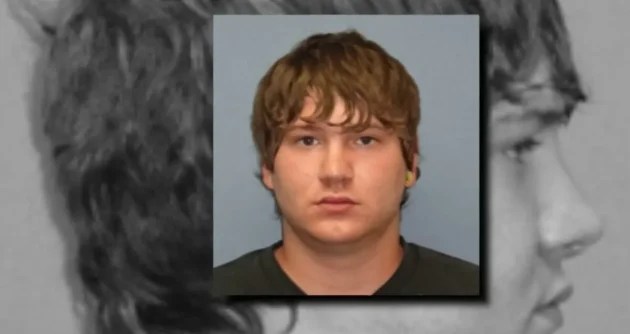
Parents Catch FBI In Plot To Force Mentally Ill Son To Be A Right Wing Terrorist
By Matt Agorist | The Free Thought Project | August 17, 2017
It’s become a near-weekly occurrence. Somewhere in some state, the FBI will announce that they’ve foiled yet another terrorist plot and saved lives. However, as the data shows, the majority of these cases involve psychologically diminished patsies who’ve been entirely groomed, armed, and entrapped by FBI agents. Simply put, the FBI manufactures terror threats and then takes credit for stopping them.
While many of these cases have garnered attention and been exposed in the alternative media, a recent case out of Oklahoma sets a new low for FBI and exposes how insidious these plots can be.
Through the hundreds of ‘foiled terror plots’ the FBI has ‘busted’ over the years, many of them have been focused on people of Middle Eastern descent or people associated with ISIS or al-Qaeda. This time, in the case of Jerry Drake Varnell, the 23-year-old diagnosed schizophrenic, accused of attempting to bomb a bank, the FBI fomented terror from a right wing dialogue.
In a June meeting with the agent, according to FBI documents, Varnell described himself as a believer in “Three Percenter” ideology, a right-wing group claiming to be committed to standing against and exposing corruption and injustice.
According to federal documents, Varnell drove what he believed was a stolen van containing a 1,000-pound ammonium nitrate bomb on Saturday morning to blow up an Oklahoma City bank. Vile, indeed.
However, if we backtrack just a bit, to when the FBI began grooming their would-be right-wing militia terrorist, the vileness comes directly from the government.
“The FBI knew he was schizophrenic,” Varnell’s parents declared on Wednesday in an open letter bravely published by NewsOK.
“Underneath his condition, he is a sweet-hearted person and we are extremely shocked that this event has happened. However, what truly has us flabbergasted is the fact that the FBI knew he was schizophrenic. The State of Oklahoma found him mentally incompetent and we, his parents have legal guardianship over him by the Court. These documents are sealed from the public, which is why no news media outlet has been able to obtain them. The FBI clearly knew that he was schizophrenic because they have gathered every ounce of information on him.”
Yet they knowingly continued to groom him, despite the clear immoral implications.
When they began grooming him, according to the family, the FBI knew that Varnell was declared mentally unfit to live by himself and that he was a paranoid schizophrenic. Without their criminal informant and the FBI tactics playing mind games with this vulnerable man, the idea of him committing an act of terror would have likely never materialized.
“What the public should be looking at is the fact that the FBI gave our son the means to make this happen. He has no job, no money, no vehicle, and no driver’s license, due to the fact that he is schizophrenic and we; his parents do everything we can possible to keep him safe and functional….. He has suffered through countless serious full-blown schizophrenic delusional episodes and he has been put in numerous mental hospitals since he was 16 years old. The FBI came and picked him up from our home, they gave him a vehicle, gave him a fake bomb, and every means to make this happen none of which he had access to on his own.”
The parents noted that during the setup, they suspected something was going on and Jerry’s father told the informant to stay away from their son. However, according to the parents, the informant “continued to sneak onto our residence. The FBI paid him to continue this operation and I believe they have cleared his criminal record.”
Because they knew Varnell had severe mental disabilities, the FBI should have had stopped their plans to do this and immediately sought an option of hospitalization. However, they pressed on.
Knowing a sane person would likely never attempt to blow up a bank, the FBI deliberately targeted a severely delusional and mentally ill person. This is wrong on so many levels. Will the next mass murderer they groom come directly from a mental institution?
“The FBI should have filed conspiracy on our son and had him committed to a mental institution. They should not have aided and abetted a paranoid schizophrenic to commit this act. There are many more facts that I will not make public that will support my son and the disturbing acts made by the FBI.
I realize that many will say my son could have found another person to commit this act. Yet, any person that has access to the materials and the state of mind necessary to bomb a building would not have any need for a schizophrenic who has no resources to contribute.”
Clifford and Melonie Varnell, Jerry’s parents make a powerful point. No one — other than the FBI — would’ve attempted to get a schizophrenic man with nothing to contribute to do their bidding as it would most likely be a futile effort — unless you are the FBI looking for an easy patsy to keep fear alive.
David Steele, a 20-year Marine Corps intelligence officer, the second-highest-ranking civilian in the U.S. Marine Corps Intelligence, and former CIA clandestine services case officer, had this to say about these most unscrupulous operations:
“Most terrorists are false flag terrorists, or are created by our own security services. In the United States, every single terrorist incident we have had has been a false flag, or has been an informant pushed on by the FBI. In fact, we now have citizens taking out restraining orders against FBI informants that are trying to incite terrorism. We’ve become a lunatic asylum.”
Indeed, we’ve become a lunatic asylum.
Abu Akleh family says it is incredulous at today’s announcement by US State Department on killing of Shireen
WAFA | July 4, 2022
JERUSALEM – The Abu Akleh family said in a statement issued today that they are incredulous at today’s announcement by the State Department that a test of the spent round that killed Shireen Abu Akleh, an American citizen, was inconclusive as to the origin of the gun that fired it.
Following is the full statement issued by the family of al-Jazeera journalist Shireen Abu Akleh:
With respect to today’s announcement by the State Department – on July 4, no less – that a test of the spent round that killed Shireen Abu Akleh, an American citizen, was inconclusive as to the origin of the gun that fired it, we are incredulous.
There were numerous eyewitnesses to the killing, and we have now had the benefit of reports from multiple local and international media outlets, human rights organizations, and the United Nations that an Israeli soldier fired the fatal shot, as there were no other armed elements in the area of Jenin where Shireen was murdered. The focus on the bullet has always been misplaced and was an attempt by the Israeli side to spin the narrative in its favor as if this were some kind of police whodunit that could be solved by a CSI-style forensic test.
The notion that the American investigators, whose identity is not disclosed in the statement, believe the bullet “likely came from Israeli positions” is cold comfort. We say this in light of the addition of a conclusory pronouncement that the killing was not intentional but rather the result of a purported Israeli counterterrorism raid gone wrong, which is frankly insulting to Shireen’s memory and ignores the history and context of the brutal and violent nature of what is now the longest military occupation in modern history.
The truth is that the Israeli military killed Shireen according to policies that view all Palestinians – civilian, press or otherwise – as legitimate targets, and we were expecting that an American investigation would focus on finding the responsible parties and holding them accountable, not parsing over barely-relevant details and then assuming good faith on behalf of a recalcitrant and hostile occupying power.
In other words, all available evidence suggests that a US citizen was the subject of an extrajudicial killing by a foreign government that receives billions of dollars in American military aid each year to perpetuate a prolonged and entrenched military occupation of millions of Palestinians. We were hoping that, for example, the FBI or other relevant authorities would open a murder investigation, much like they do in ordinary cases when American citizens are killed abroad.
Further, the United States should take action to clarify the extent to which American funds were involved in Shireen’s killing. To say that this investigation, with its total lack of transparency, undefined goals, and support for Israel’s overall position is a disappointment would be an understatement.
We will continue to advocate for justice for Shireen, and to hold the Israeli military and government accountable, no matter the attempts to obfuscate the reality of what happened on May 11. We continue to call on the American government to conduct an open, transparent, and thorough investigation of all the facts by independent agencies free from any political consideration or influence.
Our latest polls show twice as many people died from the vaccine as from COVID
These are third party polls. We don’t control the recipients. The people making the assessments of vaccine deaths are almost all people who took the shot.
By Steve Kirsch | July 3, 2022
Here are the last two external polls we ran:
Both show that the vaccine killed nearly twice as many people as COVID did.
The survey recipients are a broad cross-section of America and were selected by Pollfish.
For the Jun 30 poll, the numbers were 45 killed by the vaccine [Q16] vs. 23 killed by the COVID virus [Q18] and for the Jul 2 poll, the numbers were 38 [Q22] and 18 [Q24], respectively.
If the vaccines are safe and effective, how can they explain these poll results? This is objective poll data of the American people.
These are great polls to run past your blue-pill friends and have them explain it to you since they are the expert and you don’t know anything.
I predict silence from the medical community, the mainstream media, Congress, and the government agencies. Not even 60 Minutes is going to touch this data with a ten foot pole. Nobody will. They will just ignore it just as they have for my earlier polls.
Next step for us: run it against 5,000 people.
FBI rented Istanbul villa for Daesh suspects before alerting Turkish authorities, report reveals
MEMO | July 3, 2022
The United States’ domestic intelligence agency, the Federal Bureau of Investigations (FBI), is revealed to have rented a villa in Istanbul as a safe house for alleged members of the Daesh terror group, in a case that further proves the bureau’s use of entrapment methods.
According to the London-based news outlet Middle East Eye, a veteran undercover FBI operative named Kamran Faridi signed a tenancy agreement and paid the rent for a luxury villa on Istanbul’s seafront suburb of Silivri in 2015.
The property was then used as a safe house by several alleged members of Daesh, including a British man named Aine Davis, who is accused of being part of the terror group’s cell of British militants labelled the ‘Beatles’.
In November that year, Turkish security forces then raided the property arresting the six men hiding inside it. At the time, Turkish authorities hailed the interception of preparations for a major attack in Istanbul.
Almost seven years later, however, the news outlet’s report sheds light on the FBI’s involvement, citing court papers which show that Turkish prosecutors did not find evidence of any plot but rather that the raid was conducted after the bureau itself tipped-off Turkish authorities about a potential attack.
In a note dated April 2016, the prosecutors stated that “Sufficient evidence could not be obtained to file a public lawsuit… other than the intelligence report of a foreign country, which does not have the quality of evidence”.
While it is unknown whether Turkish officials knew of Faridi – the FBI operative – and his work for the bureau, Middle East Eye cited a source familiar with the matter as saying that the FBI approached Turkish officials in February 2016 to offer Turkish intelligence Faridi’s undercover services. According to the outlet, however, the officials rejected the proposal due to the operative already having been exposed.
Faridi – a 58-year-old of Pakistani origin who had worked for the FBI as an informant since the mid-1990s and then abroad numerous countries in the bureau’s Joint Terrorism Task Force during the two decades of the ‘war on terror’ – was reportedly fired from his service in 2020. He was then arrested and jailed the following year after sending death threats to his former superiors.
The former operative’s activities, however, especially in Istanbul as well as his work while being “loaned out” to other western intelligence agencies, is set to further draw light on the FBI and other agencies’ use of “entrapment” methods.
Under such methods, intelligence agencies attract, draw in, and recruit impressionable individuals to criminal or terrorist groups – or so the individuals are led to believe – before being set up, arrested, and prosecuted on charges of joining those groups. It has long been a controversial practice, but has been either denied or justified by agencies on the basis of rooting out potential terrorists.
As a result of that raid in 2015, Davis and two other suspected militants were convicted and jailed two years later on the charge of being part of Daesh – which they denied – while three other men arrested at the villa were released due to lack of evidence. According to the outlet, though, Davis is now scheduled to be deported from Turkey to the UK within days.
NATO boss lets the cat out of the bag: US-led bloc has ‘been preparing since 2014’ for proxy conflict with Russia
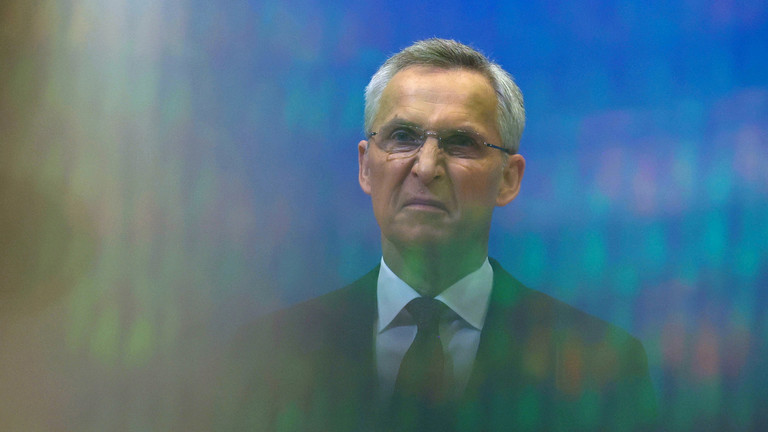
NATO Secretary General Jens Stoltenberg listens to questions during a media conference at NATO headquarters in Brussels on June 15, 2022. © AP Photo/Olivier Matthys
By Robert Bridge | Samizdat | July 3, 2022
NATO Secretary General Jens Stoltenberg may have said the quiet part out loud on Wednesday when he revealed to reporters that NATO’s push into Eastern Europe since 2014 was done specifically with Russia in mind.
“The reality is also that we have been preparing for this since 2014,” he said. “That is the reason that we have increased our presence in the eastern part of the alliance, why NATO allies have started to invest more in defense, and why we have increased [our] readiness.”
The NATO chief went on to insist that Russia has been “using force in the eastern Donbass since 2014.”
What he neglected to mention, though, was the role Western powers played in the outbreak of civil violence in Kiev on February 24, 2013 that led to the Maidan coup and, ultimately, to the current situation. The US and its influence on the ground in Ukraine, channelled through “civil society” groups it bankrolled, was largely responsibile for that mess.
Even Victoria ‘F**k the EU’ Nuland (then-US assistant secretary of state for European and Eurasian affairs) admitted as much in April 2014 when she said Washington had invested $5 billion dollars into “spreading democracy” in Ukraine – apparently because such efforts worked so well before.
Russia’s greatest ‘crime’ at the time was to provide an alternative route to national development for Kiev. The US Diplomatic Forces flew into swift action on November 21, 2013 when the government of then-Ukrainian president Viktor Yanukovych made the sudden decision not to sign the European Union-Ukraine Association Agreement (AA), which the West had been insisting upon, opting for closer ties to Russia and the Eurasian Economic Union. Here is where all the talk about “building democracy” was exposed as the lie it was.
“It would be a huge shame to see five years of work and preparation go to waste if the AA is not signed in the near future,” Nuland said at the December 13, 2013 US-Ukraine Foundation conference. “So it is time to finish the job.”
That sounds more like an implicit threat than any sort of call to democratic principles. As Ukraine would soon discover, Washington considers as ‘democratic’ only those countries that obey its will.
While Nuland was taking multiple trips to Kiev in the midst of the Maidan melee, passing out snacks alongside John McCain and the US Ambassador, very strange things were happening that have never been adequately explained.
To this day no definite result has come from investigations into the infamous ‘Maidan snipers’ that killed dozens of both protesters and police officers. Conflicting reports and claims by various sides name them as working for the embattled government, the protesters, Russia – all in the name of stoking tensions further. According to some of the snipers themselves, they received direct orders from a US officer. Would that be something that NATO (or someone linked to NATO) could have sanctioned? It’s impossible to say with any certainty, but the killings went far towards enraging the masses, which ultimately drove Yanukovych out of the country.
Meanwhile, Reuters, then not yet so sure of Kiev’s innocence, asked (back in 2014) why no one was charged with killing policemen, especially when it is considered that the prosecutors and the minister in charge of the investigation all played a part in fueling the uprising. By way of evidence, the General Prosecutor of Ukraine Vitaly Yarema was videotaped striking a traffic cop in the face during the protests. To what degree was Yarema and numerous other Kiev officials were corrupted and compromised by Western money will never be known, but it’s a question still worthy of asking.
Another thing to question is why the Western media barely reported Kiev’s shelling of the Donbass, home to millions of Russian speakers and passport holders, over the course of the last eight years? At the same time, numerous reports – many of them from Ukrainian citizens caught up in the fighting – describe atrocities and war crimes being committed by Ukrainian forces, many of them outright neo-Nazis, such the Azov Battalion. These forces have been indiscriminately bombing schools, hospitals and residential areas, and, to emphasize, these eyewitness accounts are coming from the Ukrainian people themselves.
Back to NATO and Ukraine. The brutal reality, as summed up by Jens Stoltenberg’s remark, is that Ukraine is already a de facto proxy member of NATO, and has been since at least 2014.
As the scholar John Mearsheimer explained, “The alliance began training the Ukrainian military in 2014, averaging 10,000 trained troops annually over the next eight years.”
The arming of Ukraine happened regardless of who was in the White House. In December 2017, the Trump administration, together with other NATO states, began sending ‘defensive’ weapons to Ukraine, while Kiev took a major role in military exercises held on the Russian border.
The US and Ukraine have been co-hosting Exercise Sea Breeze, yearly naval drills in the Black Sea. The July 2021 iteration was the largest to date, including navies from 32 countries. In September the same year, the Ukrainian army led ‘Rapid Trident 2021’, which the US Army describes as “A US Army Europe and Africa-assisted annual exercise designed to enhance the interoperability among allied and partner nations.”
The key word here is “interoperability,” which would give ‘non-NATO partner’ Ukraine much of what was already being given to regular paying client states. Yet Ukrainian President Volodymyr Zelensky just keeps asking for more, and NATO is happy to oblige.
Some may argue that Ukraine was absolutely right to join forces with NATO, considering that Russia had ‘annexed’ the Crimean Republic and absorbed it into its ‘empire’. That’s the view being sowed across NATO and its partner states. In reality, the Crimean population held a democratic referendum that asked whether they wanted to rejoin Russia as a federal subject, or if they wanted to restore the 1992 Crimean constitution and peninsula’s status as a part of Ukraine.
The result should have silenced the critics, but instead it just infuriated them more: a 97% vote for integration of the region into the Russian Federation with an 83% voter turnout. Consequently, President Putin signed a decree, after its formal ratification in the State Duma, recognizing Crimea as a sovereign state –without so much as a drop of blood being shed.
It would take a dyed-in-the-wool Russophobe to take in all of the above and not, at the very least, understand why Russia launched its special military operation in Ukraine.
Turkey, NATO joined at hips but think differently
BY M. K. BHADRAKUMAR | INDIAN PUNCHLINE | JULY 3, 2022
Turkey has had an uneasy history as a NATO member country. The push and pull of strategic autonomy constantly grated against a security guarantee the alliance offered and also a way of reinforcing its Western identity. The West wanted Turkey because of the Cold War.
The enigma still continues: Was Turkey’s shift from neutrality to alignment a real necessity in 1951? Did Stalin indeed cast an evil eye on Turkish lands? Would any other Kemalist leader than Ismet Inounu, an unvarnished Euro-Atlanticist whose conception of modernisation implied cooperation with the West, have succumbed to the Anglo-American entreaties?
The relations between Turkey and the Soviet Union remained relatively calm during the period of Turkey’s admission to NATO. In November 1951, Moscow actually directed a note to the Turkish Government protesting the latter’s decision to participate in NATO, which asserted that “it is quite obvious that the initiation to Turkey, a country which has no connections whatever with the Atlantic, to join the Atlantic Bloc, can signify nothing but an aspiration on the part of imperialist states to utilise Turkish territory for the establishment of military bases for aggressive purposes on the frontiers of the USSR.”
The ideological aspirations in becoming an integral part — at least within the framework of a military alliance — of the Western world played a decisive role in Turkey’s decision in 1951, whereas, in reality, there was no imminent or explicit Soviet threat to Turkey. On the other hand, Turkey’s geographical importance to both the West and to the Soviet Union gave her a particular value in an East-West context, which, to her credit, Ankara would successfully leverage to its advantage through subsequent decades.
Curiously, this complex inter-locking in some ways bears an uncanny resemblance to the current accession of Sweden and Finland to NATO. Russian President Vladimir Putin must have alluded to it obliquely when he told the media Thursday on the sidelines of the Caspian Summit in Ashgabat:
“NATO is a relic of the Cold War and is only being used as an instrument of US foreign policy designed to keep its client states in rein. This is its only mission. We have given them that opportunity, I understand that. They are using these arguments energetically and quite effectively to rally their so-called allies.
“On the other hand, regarding Sweden and Finland, we do not have such problems with Sweden and Finland as we have, regrettably, with Ukraine. We do not have territorial issues or disputes with them. There is nothing that could inspire our concern regarding Finland and Sweden’s accession to NATO. If they want it, they can do it,… let them do it. You know, there are rude jokes about stepping into unsavoury things. That is their business. Let them step into what they wish.”
While returning from NATO’s Madrid Summit, Turkish President Recep Erdogan underscored that by lifting Ankara’s reservations about Sweden’s and Finland’s membership, he advanced Turkish interests and he added the caveat that their accession is far from a done deal yet, and future developments would depend on their fulfilment of commitments under the memorandum of understanding they signed in Madrid with Turkey.
Indeed, both Sweden and Finland have bent over backward to give Turkey extensive anti-terrorism assurances that require changes in domestic legislation in return for Ankara withdrawing its veto against accession talks. Erdogan insists that what matters are not their pledges but the delivery of those pledges.
It is a tough sell domestically for both Sweden and Finland, since one of the pledges is the extradition of 76 Kurds, deemed as terrorists by Turkey. This is easier said than done, as the courts in Stockholm and Helsinki may have their own definition of a “terrorist”.
The Turkish National Assembly’s ratification is a must for the Nordic countries’ admission to be formalised at NATO level. There is some speculation that US President Joe Biden incentivised Erdogan to compromise, but, make no mistake, the latter’s warning about compliance by Sweden and Finland — as also the audible rumblings already on the left in Sweden — are reminders that the issue is still wide open.
After all, North Macedonia had been a NATO partner country since 1995 but could become a NATO member only in March 2020. And Greece’s reservation was that the newly independent former Yugoslav republic wanted to be known as Macedonia whereas Athens saw the name as a threat to its own region of Macedonia — and ultimately, Greece won. In comparison, Turkey’s concerns are tangible and directly impinge on its national security.
Turkey was never a “natural ally” of NATO. How far Turkey subscribes to NATO’s latest strategic concept of Russia being a “most significant and direct threat” is debatable. Arguably, Turkey would feel more at home with the alliance’s 2010 doctrine that called Russia a “strategic partner.” This would need some explanation.
Professor Tariq Oguzlu, a leading exponent of the changing dynamics of Turkish foreign policies in recent years from a structural realist point of view, wrote an analysis last week titled Madrid Agreement and the balance policy in Turkish foreign policy, which was interestingly featured by Anadolu, Turkey’s state news agency. Oguzlu explained the rationale behind Turkey’s decision not to veto the two Nordic countries’ accession:
“Turkiye began to change its perspective on NATO a long time ago due to its strategic autonomy and multilateral foreign policy understanding… Considering the realist turnaround in Turkish foreign policy in the last three years, it is quite meaningful that Türkiye did not veto NATO enlargement.
“On the one hand, the second Cold War between the West and Russia narrows the room for maneuver in Turkish foreign policy, while on the other hand, it increases Türkiye’s strategic importance. The most important challenge for Turkish foreign policy in the coming years will be the successful continuation of Türkiye’s strategic autonomy-oriented multi-faceted foreign policy practices in an environment of deepening international polarisation.
“The balance policy pursued between the West and Russia is one of the most important strategic legacies left to the Republic of Türkiye from the Ottoman Empire. It is a strategic necessity for Türkiye, which has a medium-sized power capacity, to follow a policy of balance in order to achieve national interests. The policies adopted by Türkiye since the start of Russia’s war on Ukraine until now and the stance displayed at the last NATO summit in Madrid show that this historical heritage is embraced and successfully executed.”
To put matters in historical context, in 1920, Mustafa Kemal formally approached Vladimir Lenin with a proposal for mutual recognition and a request for military assistance. The Bolsheviks not only responded positively but by throwing in their lot with the growing movement of Turkish nationalists, they helped shore up the new Turkish state’s southern borders. In the period from 1920 to 1922, Soviet Russia’s military help to Ataturk was almost 80 million lire — twice Turkey’s defence budget!
In 1921 in Moscow, the two sides concluded the “Treaty of Friendship and Brotherhood”, which resolved the territorial disputes between the Kemalists and the Bolsheviks. The north-eastern border of Turkey established then remains unchanged to this day.
However, both Moscow and Ankara understood that cooperation between Turkish nationalists and Russian communists would be short-lived. Soon afterward, Turkey deserted Moscow’s camp, banned the communist party, and, during the Nazi invasion, looked for an opportunity to invade the Soviet Caucasus if the Red Army collapsed. Nevertheless, Ataturk never forgot the help that Soviet Russia provided in his hour of need.
A historical perspective is needed to understand the US’ manipulation of Turkey — and of Sweden and Finland in the present-day context. Biden is following President Harry Truman’s footfalls. Washington has used the very same Cold-War tactic to draw Sweden and Finland into the NATO fold as it employed 70 years ago with regard to Turkey.
US Military Aid to Ukraine Will Only End With ‘Real Political Revolution’ in America, Analyst Warns
Samizdat – 03.07.2022
Since the start of the Russian special military operation in Ukraine, the US has supplied Kiev with unprecedented amounts of aid, chief among them being military. Moscow has repeatedly stated that this will only prolong and aggravate the conflict, which, however, has not affected the ever-increasing scale of support for Ukrainian authorities.
This Friday, Washington unveiled yet another $820 million package of security support for Ukraine, which includes two cutting-edge surface-to-air missile systems and four additional counter-artillery radars.
The Biden administration indicated the new package included extra ammo for High Mobility Artillery Rocket Systems (HIMARS) that were already given to Ukraine, noting US authorities almost weekly coordinate more and more new deliveries of arms and finances to Kiev counterparts amid pledges to give even more.
All this takes place against the backdrop of unprecedented in recent decades domestic inflation and an economic crisis that threatens to plounge the US into a recession comparable to the “Great Recession” of 2008.
Despite all that, US President Joe Biden said earlier this week that Washington plans to support Ukraine for as long as necessary, thus refuting allegations that some day the time would come when the well will dry up.
‘No Escape’ While Situation ‘Going to Get Worse’
US investigative journalist Daniel Lazare told Sputnik that in the current global situation the biggest problem for Washington is that it “is colliding head-on with reality.”
“The Ukraine war is not going well, Russia is advancing steadily, and few more arms shipments are not going to make much of a difference,” he explained. “The economy is in serious trouble, the sanctions that were supposed to bring Russia to its knees are backfiring spectacularly, while [US Treasury Secretary] Janet Yellen’s scheme for putting a cap on Russian oil prices is being met with worldwide derision.”
According to the pundit, the whole foreign policy of the US “seems to be heading for another crisis,” which prompted the journalist to ponder whether that really is “par for the course.”
“If confidence is plummeting, it’s because no one thinks the Biden administration is the least bit competent,” he said of the Biden administration’s recent poll numbers. “Yet all the alternatives are so much worse. Pretty grim, isn’t it?”
Per Lazare, there is “no escape” out of the situation the US is currently in, and all Biden can do is smile uneasily while UK Prime Minister Boris Johnson jokes about showing off his pecs.
“Things are only going to get worse,” he asserted.
‘This Will Only End When There Is Real Political Revolution in US’
Meanwhile, American geopolitical analyst Tom Luongo remarked that the ongoing conflict in the eastern European nation is nothing more than a “war between civilizations,” in US neoconservatives’ efforts to “forestall Russia taking control of Ukraine.”
Touching on Washington officials’ motives behind the ever-increasing aid to Kiev, Luongo told Sputnik that the American president, “as a proxy for the oligarchs in Davos, is acting on their behalf to ultimately weaken the US by sending weapons overseas and destroying US leadership and credibility.”
“This will only end when there is a real political revolution in the US,” he argued.
Asked about why the Biden administration is concentrated so much on the crisis abroad rather than resolving issues at home, the analyst asserted that the president was “put in charge to destroy the US.”
“Biden and his administration are vandals,” he claimed. “They are not acting in the US’s best interests but have subordinated our public policy to the wishes of foreign powers.”
According to Luongo, “too many conservatives want to align the DNC with China, but it’s clear that while China is helping erode the political cohesiveness of the US it is Davos and their Climate Change/technocracy agenda that is pulling all the strings.”
The expert offered that the incumbent administration is not interested in mitigating, for instance, the ongoing energy sector crisis, because it “is being run by traitors.”
More to that, Luongo believes the US economy cannot afford to sponsor Washington’s ambitions for a long period of time. The analyst argued there is sincere and well-organized pushback coming from “the most unlikely place,” which is some of the US biggest banks and the Federal Reserve, which is “aggressively tightening monetary policy to drain the world of dollars and break both the offshore euro, dollar markets and put China’s financial partners, namely Hong Kong, under sincere pressure.”
“If the Fed doesn’t do this now, the odds of a political disintegration of the US by the end of the decade rise dramatically,” the expert suggested.
Speculating about where the United States has again found huge funds to aid Ukraine this week, and how the budget is going to cover the next multi-million spending, he said that for 2022, the money used had already been allocated. However, according to Luongo, Congress eventually will have to sell debt into the market, either for domestic or foreign purchase, or for monetization by the Fed.
“The Fed is raising rates to stop the money spigot in DC by forcing Congress to act more responsibly,” Luongo explained. “Think of these spending allocations and pledges, like the $600 billion for global infrastructure to thwart China’s Belt and Road Initiative as attempts at blackmailing a reluctant Fed to monetize debt the world no longer wants to buy.”
The analyst also weighed in on the recent statement by the Federal Reserve Bank of Atlanta, which forecasted that the second quarter would see a 1% decline in the US GDP, a move that would in turn mark the beginning of recession.
Asked what were the chances of a “large-scale economic collapse” in this course of action, Luongo noted there is a significant difference between the recession and the latter. He emphasized the Fed should continue its current effort in order to compel resolution to numerous unresolved geopolitical challenges and imbalances.
“If it’s going to ‘act globally’ this is how it should do so, by taking away the punchbowl of offshore USD-based credit, Eurodollars, and regain control over its own monetary policy,” he pointed out.
According to Luongo, to balance the books from the last inflationary boom, one must pay a price that may include a severe recession and economic disruption in the US economy for “a year or two.”
“I think the worst of those effects on the US economy will be blunted by the complete collapse of the European economy and sovereign debt markets,” the expert concluded.
“However, it won’t last forever, two maybe three years, but it will be enough time to effect real political change. We’ll know at this year’s midterm elections what the American people really think about these things.”
Let Drivers Pay Price for World Domination, Says Biden
Meanwhile, just this Thursday, Biden told reporters that those behind the wheel in the US will be compelled to pay current record fuel prices for “as long as necessary.”
“As long as it takes so Russia cannot in fact defeat Ukraine and go beyond Ukraine,” Biden said. “This is a critical position for the world.”
A CNN report this week detailed that the US Department of Defense is considering 1,300 ideas from 800 companies to create new weaponry and commercial capabilities they might be able to produce to aid Ukraine in the near future.
The suggestions reportedly address several of the crucial needs that Ukraine has highlighted, including air defense, anti-armor, anti-tank, anti-personnel, coastal defense, drones, secure communications and counter battery.
Additionally, should the ongoing crisis last a long period, the US reportedly plans to increase the capability of its industrial base to serve Ukraine’s demands.
Ever since the conflict began in late February, the US has provided Kiev with over $54 billion in financial and military aid, including $40 billion package for aid to Ukraine that was passed by Congress in May.
According to the estimates, with the newest $820 million tranche, the US has provided Ukraine with $7.6 billion in military aid since the Biden administration took office in January 2021.
Following a request for assistance from the republics of Donetsk and Lugansk to protect themselves against Ukrainian forces’ escalating onslaught, Russia began a special military operation in Ukraine on February 24. According to the Russian Ministry of Defense statements, the civilian populace is not in risk because the operation is only focused on Ukrainian military facilities.
Covid shots for little kids are DOA
The fawning media coverage notwithstanding, uptake has been pitifully low
By Alex Berenson | Unreported Truths | July 2, 2022
Despite a massive media and government pressure campaign, American parents are overwhelmingly rejecting Covid vaccines for their young children.
About one week after the shots became available, barely 1 percent of children under 5 have received mRNA jabs for Covid, data from several states show.
Ohio:

Even in California, among the bluest states, only about 2 percent of kids under 5 have been jabbed.
Demand is likely to be near zero going forward. The recent history of Covid shots shows that the increasingly tiny minority of mRNA fanatics get themselves or their children jabbed or boosted quickly after regulators okay new doses. So pent-up desire for new shots is likely nonexistent.
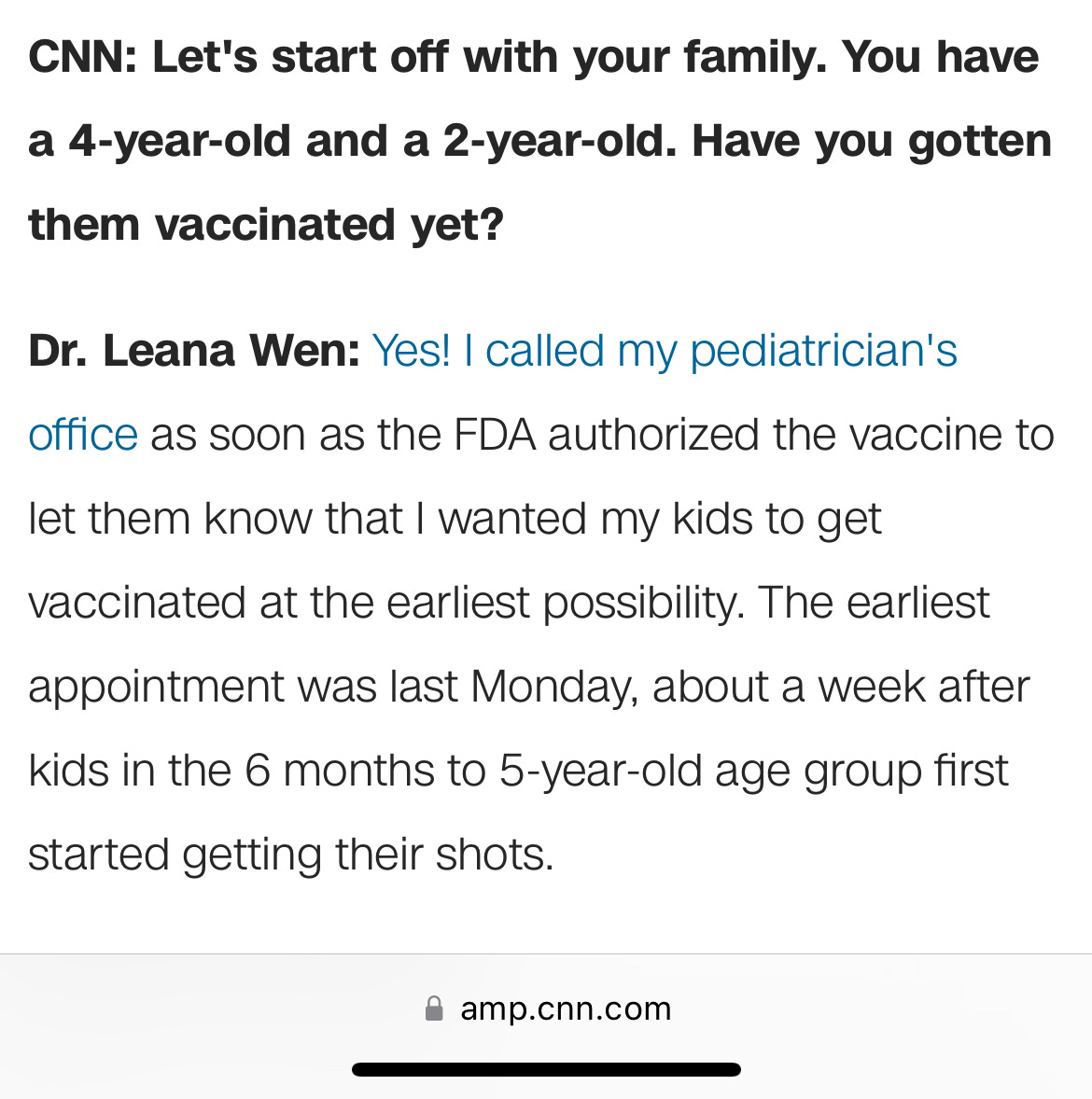
As usual, elite media outlets have largely refused to acknowledge this reality, instead running endless articles that seek to normalize and encourage the shots.
(CNN gonna CNN:)
But at this point many parents have seen and experienced the side effects of the vaccines for themselves. They also know firsthand that the shots do little if anything to stop Omicron infections (though they may not be aware how terrible the data truly are). And they know that Covid is a minuscule risk for children who are not already seriously ill, and that most kids have already been exposed.
(All the Sesame Street ads in the world can’t change reality. Congrats, Elmo. You’re in the 1 percent. Cute Band-Aid, though.)

But as it becomes clear just how few little kids have gotten the shots, any future media and public health pressure campaigns will look embarrassingly out-of-touch.
Someone may want to tell the Biden Administration: the less said about the pathetic decision to make these shots available for kids under 5, the better.
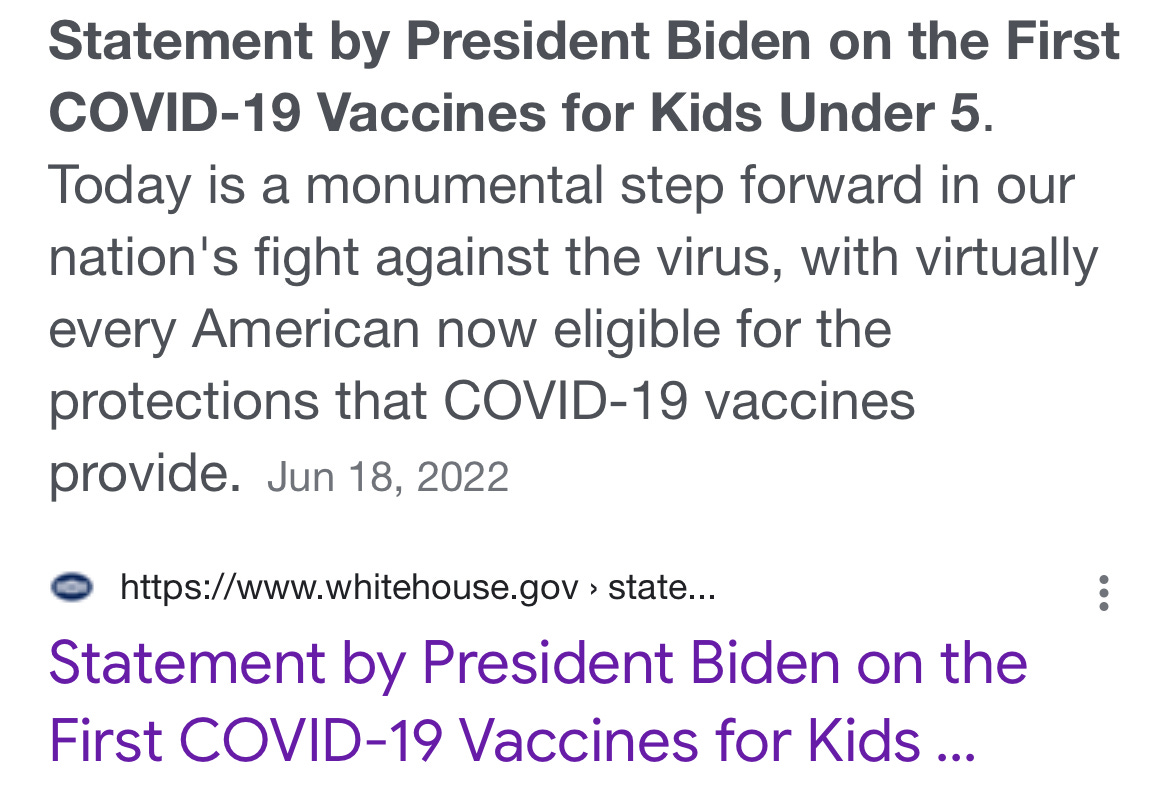
Oh, wait, too late.
Uncle Joe wins again!
The Insufferable Arrogance of the Constantly Wrong
BY CLAYTON FOX | BROWNSTONE INSTITUTE | JUNE 30, 2022
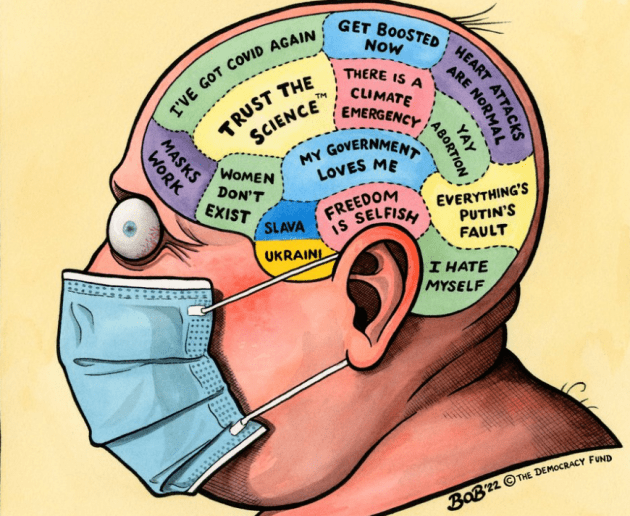
The media, and the people who work in and around it, the Blue Checks™ of Twitter, have upped the ante over the past few years regarding how far they are willing to go to enforce various preferred narratives.
Pick any major story of the past three years—e.g. Lab Leak, Jussie Smollett, Russiagate, Ukrainian Biolabs, Ivermectin, Hospitalizations From COVID v. With Covid, January 6th, ‘Transitory’ Inflation, and of course Hunter’s Laptop—and you will find absolutely hysterical narrative pushing up front followed by retractions, corrections, and outright denials as reality became undeniable.
In the meanwhile, our civilization was ripped apart, our citizens were gaslit and impoverished, and in countries across the Western world, innocent people were removed from polite society, branded as lepers, and fired from their jobs.
Why? Because there is one story that just won’t die and for which no corrections have been issued—the shibboleth that vaccination can prevent infection, transmission, and help “end” COVID.
While there is never an excuse for hateful rhetoric towards, and intervention in, the personal medical choices of law-abiding Americans, perhaps one could have, kinda sorta, understood the campaign if the new vaccines had provided long-lasting immunity and prevented community transmission. They do not.
Early on we were told: “Nine out of ten [vaccinated] people won’t get sick” (Columbia University feat. Run-DMC, February 12th, 2021, no this is not a joke); “Vaccinated people do not carry the virus, don`t get sick” (Dr. Rochelle Walensky, March 29th, 2021); “When people are vaccinated, they can feel safe that they are not going to get infected” (Dr. Anthony Fauci, May 17th, 2021).
And by mid-summer, 2021, we were still being told that unequivocally, these vaccines were a resounding success worthy of uncritical support. On July 27th in Scientific American, Dr. Eric Topol wrote, “Vaccination is the closest thing to a sure thing we have in this pandemic.” Not to be outdone, Dr. Anthony Fauci of the NIAID told CBS on August 1st, that the unvaccinated were responsible for “propagating this outbreak.”
But on July 29th, 2021, the Washington Post reported a scoop that the CDC was privately acknowledging that the vaccinated could spread COVID as easily as the unvaccinated. Occasionally, they are forced to report inconvenient facts. And August 5th, CDC Director Walensky told CNN’s Wolf Blitzer that, “They continue to work well for Delta, with regard to severe illness and death — they prevent it. But what they can’t do anymore is prevent transmission.”
While there is a mountain of medical literature available demonstrating quite clearly the failure of these vaccines to prevent infection and transmission, the August 5th declaration from the CDC Director should have made clear that being vaccinated is contributing in no way to the safety of others, nor to the eradication of this virus.
In fact, Israeli Health Minister Nitzan Horowitz was even caught on tape in September of last year explaining that the use of the Israeli Green Pass wasn’t intended to make a difference epidemiologically, but because it would help convince people to get vaccinated. And even vaccine poobah Bill Gates admitted in a late 2021 interview, that, “We got vaccines to help you with your health, but they only slightly reduce the transmissions.”
So there should be no question that continuing to suggest in any way that these shots are a panacea, and that those who refused to get them were plague spreaders, should have been thoroughly trashed by Fall 2021.
Nonetheless, on September 24th President Joe Biden coined his now famous phrase “a pandemic of the unvaccinated.” To our north, Prime Minister Trudeau called the unvaccinated science deniers, misogynists, and racists, and asked rhetorically whether Canadians should “tolerate” them.
And during the first week of January 2022, while kicking the unvaccinated out of French daily life and public spaces, French President Emmanuel Macron said he wanted the measures to “piss off” his unvaccinated citizens. With world leaders speaking this way, it’s no wonder so many Blue Check™ elites took up the banner!
Prominent media figures like Amy Siskind, Pulitzer Prize winner Gene Weingarten, and more have come out of the woodwork in recent months to share with us their enthusiasm for medical discrimination. Noted neurotic Howard Stern is all in on forced vaccination due to what must be his own debilitating fear of his mortality. Bill Kristol says the unvaccinated have “blood on their hands.”
David Frum, heir to Maimonides, writes, “Let the hospitals quietly triage emergency care to serve the unvaccinated last.” Charles M. Blow was “furious” at the unvaccinated. CNN contributor Dr. Leana Wen suggested that the unvaccinated should not be allowed to leave their homes. The Ragin’ Cajun even wants to punch the unvaccinated in the face!
All of the above links/stories were posted after Dr. Walensky’s unequivocal announcement that the vaccines do not prevent transmission.
And all of the self-satisfied segregationists are supported in their vitriol by the Blue Checks™ of the Medical Establishment, like Dr. Paul Klotman, President and Executive Dean of the Baylor School of Medicine, who said on camera back in January that he isn’t polite to friends and family who aren’t vaccinated. “Keep them away. I don’t do it respectfully, I tell them to stay away, and teach them a lesson.” Less vitriolic but equally problematic, the WHO’s COVID-19 “technical lead” Dr. Maria Van Kerkhove continued to push the lie that vaccination can prevent outbreaks as recently as January 26th, 2022. She is, as well, a Blue Check™. And yes, Dr. Anthony Fauci is still at it, even as of April 14th, 2022, telling MSNBC that harsh Chinese lockdowns could be used to get the population vaccinated so that “When you open up, you won’t have a surge of infections.”
The examples are legion. Blue Checks, Medical Blue Checks, Times Columnists, Radio Jocks, Presidents, and Prime Ministers have all espoused misinformation and/or hate speech regarding vaccination status. But they are all given intellectual cover by the official reporting of the fourth estate. Even in the face of all the evidence that there is no epidemiological basis for discrimination, our intellectual betters in the legacy media press onward the canard.
On August 26th, the Toronto Star ran an article entitled, “When it comes to empathy for the unvaccinated, many of us aren’t feeling it.” Then, on December 22nd, published an explainer which stated that two doses won’t stop you from spreading COVID-19. Comme ci, comme ca.
Back in February, MSNBC political contributor Matthew Dowd shared his insight that the unvaccinated do not believe in the United States Constitution, because if they did, they would get vaccinated for “We The People.” For the common good.
An examination of the New York Times reveals three articles written this year which overtly continue supporting the idea that the vaccines prevent transmission. First, on January 29th in a piece entitled, “As Covid Shots For Kids Stall, Appeals Are Aimed At Wary Parents,” the author cites “public health officials” who say that to aid in “containing” the pandemic, kids must also be vaccinated. (It is worth mentioning that the current vaccines and boosters being distributed were designed in February 2020 to provide an immune response to a version of the SARS-CoV-2 spike protein circulating prior to that, not entirely similar to what is circulating now.)
Then February 23rd, in a hit piece on the Surgeon General of Florida Dr. Joe Ladapo, the Times writes, “When public health officials across the country were urging vaccines as a way to end the pandemic, Dr. Ladapo was raising warning flags about possible side effects and cautioning that even vaccinated people could spread the virus.”
So, Dr. Ladapo was correct?
Finally, in a piece about Novak Djokovic published March 3rd, they write, “Djokovic was the only player ranked in the top 100 in Australia who had not received a Covid-19 vaccination, which experts have long said will not eradicate the virus unless most of the population receives one.”
They do not address the question of how a vaccine which does not prevent transmission can eradicate a virus. And they won’t. As Israeli Health Minister Horowitz candidly admitted, none of this is about epidemiology.
And even when mainstream media tacitly acknowledges the failures of the vaccines to prevent transmission, they skillfully elide the significance of this fact in order to allow them to continue to scapegoat the unvaccinated. In a dazzling display of sophistry, Time Magazine moved the Overton window in this January 12th, 2022 piece, “These Charts Show That COVID-19 Is Still A Pandemic of the Unvaccinated.”
The author states that due to the rapidly narrowing gap between cases in the vaccinated and unvaccinated, some readers might think that the phrase “pandemic of the unvaccinated” is no longer justifiable. But with the grace of a ballerina, Time goes on to tell us that because the vaccines are still showing efficacy against severe illness, the phrase is still kosher. If an unvaccinated person gets sicker than his vaccinated neighbor who contracted COVID at a fully vaccinated wedding, that unvaccinated person is still the problem!
New York Magazine isn’t lacking in similar gymnastics. On February 16th of this year, Matt Stieb published a piece entitled, “Is Kyrie Irving Going to Get Away With It?” Irving is the Brooklyn Nets player who famously chose not to be vaccinated, and has become a fetish object for the Covidian Left. Stieb acknowledges that Irving’s vaccinated teammates were getting COVID at such high rates that it forced Nets management to allow Irving back to play in away games but still calls the New York City ban on unvaccinated athletes “a rare public health mandate with real teeth.”
Just seven days later on February 23rd, Will Leitch, in the same publication, sighs, “Unfortunately, It’s Time to Let Kyrie Irving Play in New York.” He outlines all the reasons why epidemiologically it makes no sense to prevent athletes like Irving and Novak Djokovic from participating, but says, “It would feel like they got away with all their bullshit.” And also, they are “annoying.”
And this barely concealed hatred for the unvaccinated from media and government and Big Tech—even in the rare moments when writers such as Leitch acknowledge the failure of the vaccines to prevent transmission—has real consequences. People have lost their jobs. People have been arrested for trying to go to a movie theater.
Families got kicked out of restaurants, and patrons either cheered or remained indifferent, which is worse. A teenage boy at an uber-progressive and expensive Chicago prep school committed suicide after being bullied over an incorrect rumor he was unvaccinated. The stench of bad journalism rots people’s basic decency.
A January Rasmussen poll found that, “Fifty-nine percent (59%) of Democratic voters would favor a government policy requiring that citizens remain confined to their homes at all times, except for emergencies, if they refuse to get a COVID-19 vaccine…Forty-five percent (45%) of Democrats would favor governments requiring citizens to temporarily live in designated facilities or locations if they refuse to get a COVID-19 vaccine…”
As well as, “Twenty-nine percent (29%) of Democratic voters would support temporarily removing parents’ custody of their children if parents refuse to take the COVID-19 vaccine.” Unfortunately, these disturbing results are politically lopsided, but it’s no surprise when you consider who the readers of most legacy media platforms are.
The saddest thing is that these media outlets and their flag bearers really think their readers are all morons. The New York Times believes that, in the midst of the Omicron wave as boosted person after boosted person was getting COVID, they could tell you these particular vaccines are still the way to eradicate this thing, and expect you to deny reality and nod your head.
It calls to mind the quote attributed to Solzhenitsyn (or Elena Gorokhova), “The rules are simple: they lie to us, we know they’re lying, they know we know they’re lying, but they keep lying to us, and we keep pretending to believe them.”
We have ceded the better angels of our common cerebrum to people who may not have our best interests at heart, and a sycophantic laptop class who gleefully endorses their diktats and “fact-checks.” Collectively: Sophistry Inc.
Their behavior, endorsed by every single entity which holds power in our society, is destroying us, and has already poisoned us such that there may be no antidote. Yes, first they came for the unvaccinated, but that doesn’t mean they won’t come for you next.
U.S. Orders 2.5 Million More Monkeypox Vaccine Doses, as CDC Looks to Expand Vaccine for Kids
By Suzanne Burdick, Ph.D. | The Defender | July 1, 2022
The Biden administration today said it ordered 2.5 million more doses of Bavarian Nordic’s Jynneos monkeypox vaccine, bringing the total vaccine doses to be delivered in 2022 and 2023 to more than 4 million.
The news followed Tuesday’s announcement of the first phase of the U.S. government’s “national monkey vaccine strategy,” which will expand testing capabilities and make Bavarian Nordic’s Jynneos vaccines readily available to anyone exposed to the virus.
The U.S. Department of Health and Human Services (HHS) said the government’s “enhanced” nationwide strategy “will vaccinate and protect those at-risk of monkeypox,” as well as provide guidance to communities on how to respond to outbreaks.
“We are focused on making sure the public and healthcare providers are aware of the risks posed by monkeypox and that there are steps they can take — through seeking testing, vaccines and treatments — to stay healthy and stop the spread,” said Dr. Rochelle Walensky, director of the Centers for Disease Control and Prevention (CDC).
As part of the strategy, the CDC and HHS began shipping tests to five major laboratory companies across the country: Aegis Science, Labcorp, Mayo Clinic Laboratories, Quest Diagnostics and Sonic Healthcare.
The government, which for months has been buying more Jynneos doses to add to the national stockpile, is now distributing the vaccine. It’s currently making available 296,000 doses and expects to roll out 750,000 doses over the summer, with an additional 500,000 doses produced and released in the fall — for a total of 1.6 million doses this year.
The Jynneos vaccine is licensed for use in adults and is considered safer than Emergent BioSolutions Inc.’s ACAM2000 smallpox vaccine, which also can be used against monkeypox, the HHS said.
The vaccine will be made available to individuals “with confirmed and presumed monkeypox exposures,” said the HHS.
“This includes those who had close physical contact with someone diagnosed with monkeypox, those who know their sexual partner was diagnosed with monkeypox, and men who have sex with men who have recently had multiple sex partners in a venue where there was known to be monkeypox or in an area where monkeypox is spreading.”
Health officials seeking to expand use of monkeypox vaccine for kids, despite lack of safety data
U.S. health officials also are seeking to expand use of the monkeypox vaccine for children, Bloomberg reported.
The CDC is developing a protocol aimed at allowing use of the Jynneos vaccine in children “should cases in children occur,” Kristen Nordlund, a CDC spokesperson, said in an email to Bloomberg.
“I’m concerned about sustained transmission because it would suggest that the virus is establishing itself, and it could move into high-risk groups, including children, the immunocompromised, and pregnant women,” Tedros Adhanom Ghebreyesus, director-general of the World Health Organization (WHO) said in a Wednesday press briefing.
“We’re starting to see this with several children already infected,” he added.
There have been 350 cases so far of monkeypox in the U.S. — all adults — according to the CDC. The agency confirmed 5,115 cases worldwide.
The WHO confirmed two cases in children in the U.K. and said Wednesday it is following up on reports of cases in children in Spain and France.
No safety trials have been done in children for the Jynneos vaccine as of yet, partly because clinical research involving participants under the age of 18 must pose no more than “minimal risk” to children, which can be difficult for vaccine manufacturers to argue.
Commenting on the CDC’s actions, Dr. Meryl Nass, a member of the Children’s Health Defense scientific advisory committee, told The Defender, “It’s kind of extraordinary that they want to vaccinate everyone in the country before knowing what the safety issues are.”
Nass, an internist and biological warfare epidemiologist, said, “We don’t actually know” if the Jynneos vaccine prevents monkeypox in humans because it was developed as a smallpox vaccine, and prevention studies have been conducted using only animals.
“It is hard to believe that the [U.S. Food and Drug Administration (FDA)] gave this vaccine a license when you read the FDA reviewers’ comments in their own report,” Nass wrote in her June 23 substack newsletter.
“They could not test the vaccine for efficacy against smallpox because there is no smallpox, nor against monkeypox, because the disease is so rare,” Nass wrote. “So the FDA relied on neutralizing antibody titers.”
At the same time, the FDA admitted there is no established correlate of protection, Nass said.
“This means that there is no evidence that the titers represent actual immunity to infection,” Nass wrote. “So FDA relied on animal studies to simply guess the vaccine might be effective in humans.”
According to the FDA, the effectiveness of Jynneos for the prevention of monkeypox is “inferred from the antibody responses in the smallpox clinical study participants and from studies in non-human primates that showed protection of animals vaccinated with Jynneos who were exposed to the monkeypox virus.”
Jynneos, a replication-deficient live Vaccinia virus vaccine, was licensed in the U.S. in 2019, by the FDA for use in individuals 18 and over considered to be at high risk for smallpox or monkeypox.
In 2021, the CDC’s Advisory Committee on Immunization Practices (ACIP) voted to recommend Jynneos as a safer alternative to the ACAM2000 vaccine because of ACAM2000’s propensity to cause serious adverse effects, including myocarditis and pericarditis — i.e., inflammation of the heart.
However, Nass noted, Jynneos also was linked to heart inflammation, according to the FDA licensure review of the Jynneos smallpox-monkeypox vaccine which reported:
“Up to 18.4% of subjects in 2 studies developed post-vaccination elevation of troponin [a cardiac muscle enzyme signifying cardiac damage]. However, all of these troponin elevations were asymptomatic and without a clinically associated event or other sign of myopericarditis.”
These higher levels of troponin were not studied further, and the reviewers admitted they did not know if the Jynneos vaccine caused myocarditis, Nass said.
The Jynneos manufacturers said they would conduct an “observational, post-marketing study” in which they would “collect data on cardiac events that occur and are assessed as a routine part of medical care.”
But myocarditis — particularly asymptomatic forms of myocarditis that lack outer signs of the condition — could fly under the radar of the “routine part of medical care,” noted Nass.
The manufacturers would need to test for heightened troponin levels — something that is not typically done in “routine” check-ups.
The authors of a 2015 study reported evidence of heart injury following vaccination in a sample of 1,445 individuals who received a smallpox or trivalent influenza vaccine.
They found that chest pain, shortness of breath and/or palpitations occurred in 10.6% of those who received the smallpox vaccine SPX-vaccinees and 2.6% of those who received the trivalent influenza vaccine within 30 days of immunization.
Additionally, the study authors reported levels more than double the upper limit of troponin — a protein that flags cardiac injury — in 31 of the individuals who received the smallpox vaccine.
“Passive surveillance significantly underestimates the true incidence of myocarditis/pericarditis after smallpox immunization,” they concluded.
The authors added:
“Evidence of subclinical transient cardiac muscle injury post-vaccine immunization is a finding that requires further study to include long-term outcomes surveillance. Active safety surveillance is needed to identify adverse events that are not well understood or previously recognized.”
Suzanne Burdick, Ph.D., is an independent journalist and researcher based in Fairfield, Iowa.
© 2022 Children’s Health Defense, Inc. This work is reproduced and distributed with the permission of Children’s Health Defense, Inc. Want to learn more from Children’s Health Defense? Sign up for free news and updates from Robert F. Kennedy, Jr. and the Children’s Health Defense. Your donation will help to support us in our efforts.
Alex Berenson and Twitter to settle censorship lawsuit
By Cindy Harper | Reclaim The Net | July 2, 2022
Alex Berenson, a journalist, and author, has agreed to settle his lawsuit with Twitter. He sued the social media platform last year after it banned him.
Berenson was banned from Twitter for questioning the efficacy of the Covid vaccines.
“It doesn’t stop infection. Or transmission,” Berenson wrote on Twitter at the time. “Don’t think of it as a vaccine. Think of it — at best — as a therapeutic with a limited window of efficacy and terrible side effect profile that must be dosed IN ADVANCE OF ILLNESS.”
“And we want to mandate it? Insanity.”
Twitter flagged the tweet as “misleading,” and suspended his account.
Berenson took to his Substack, Unreported Truths, to break the news of the settlement. He didn’t share many details about the settlement because they are confidential. However, he did insist that he does not believe Elon Musk’s efforts to buy Twitter influenced the company’s decision to settle.
“At least from my point of view, Elon Musk had nothing to do with what’s happening here. I emailed Musk briefly about the suit in April, after Twitter accepted his offer and before Judge William Alsup rejected Twitter’s motion to dismiss and allowed my lawsuit to proceed. (At the hearing on April 28, Alsup himself raised the question of whether Musk’s purchase would make the lawsuit moot.) Musk didn’t email back. The last time I’ve heard from him was last year. Whether the deal played any role in Twitter’s decision to settle is a question you’ll have to ask them, but I mostly doubt it, given the fact that no one really knows if – much less when – it will close,” Berenson wrote in his Substack newsletter.
Featured Video

John Mearsheimer Talking Iran with Iran
or go to
Aletho News Archives – Video-Images
New Book
The silver that medicine dropped — four thousand years of clinical use, four decades to erase.
Colloidal Silver — First Edition, 2026, Paperback
Lies are Unbekoming | October 16, 2026
Silver was medicine. Not alternative medicine. Not folk medicine. Medicine. In surgery. In obstetrics. In the burn ward. In water treatment. In the household medicine chest. Every physician before 1938 knew this.
By the 1870s, silver nitrate was standard in surgical wound care across the leading hospitals of Britain, Germany, and the United States. Colloidal silver preparations — Collargol, Argyrol, Protargol — entered European and American practice through the 1890s and early 1900s and became standard antiseptics in military field medicine. By the time Fleming grew his first penicillin mould in 1928, silver was the first-line antimicrobial of the Western pharmacopoeia. The Lancet and the British Medical Journal carried the clinical reports in volume. The practice ran continuously through the Victorian era, the Edwardian era, the First World War, the interwar period. By 1980, almost all of it was gone.
What has not been treated at book length, until now, is how a four-thousand-year clinical record disappeared from mainstream medicine within four decades of the Flexner Report — and what the honest account of silver looks like once that record is reassembled.
Colloidal Silver reconstructs the pre-1938 record from The Lancet, the British Medical Journal, and the primary literature of the era; recovers Robert Becker’s bioelectric framework from the regeneration research the pharmaceutical model buried; and places silver inside a practical terrain-paradigm guide to its current place — in water, on the body, inside the body, and in the chronic conditions where antibiotics have failed. … continue
Blog Roll
 Aletho News
- Pharma- and Gates-Funded GAVI Seeks to Assure Parents
- John Mearsheimer Talking Iran with Iran
- Inside Bill C-22, Canada’s Patriot Act.
- China’s FM: Palestinian cause is ‘greatest injustice of the century’
- US sympathy for Palestinians surpasses support for Israelis
- Israeli rabbi permits occupiers to steal Palestinian olive harvest in West Bank
- Spanish firm sells Latvia vehicles equipped with Israeli tech despite arms embargo
- Saudi Arabia under fire… Yemen is burning down the House of Saud
- Israeli Spy Pollard stole the files, today’s it’s delivered through official channels
- Why Iran Didn’t Walk Away
- If Americans Knew
- NPR investigation finds evidence of widespread fraud at mall kiosks tied to Israeli skincare brand
- Tucker Carlson exposes Israeli Lies about the Oct 7th attack, Charlie Kirk, and the U.S.
- Israel has detained thousands of Palestinian children since Oct 7th – over half spent time in solitary, many uncharged
- Israeli Analysis: Is Netanyahu Planning an ‘October Surprise’ Attack Before Israel’s Election?
- Israeli settlers brutally attack Palestinians and Washington Post female photographer, 65
- Words Have Changed, Occupation Continues: The Reality of the Gaza Ceasefire
- Gaza’s child amputees are growing faster than their prosthetics allow
- Israel keeps Palestinians struggling just to survive–Daily Update
- Israeli firm used online ads to run vast spy operation, researchers say
- No, the world zionist movement is not an antisemitic conspiracy theory
- No Tricks Zone
- New Study Suggests Large Regions Of The Pacific Ocean Have Been Cooling For The Last 80 Years
- Germany’s Green Energy Debacle: High Energy Costs Force Kahla Porzellan to Close After 182 Years!
- New Study: 50 Years Of The Most Aggressive ‘Net Zero’ Policies Can Only Affect The Global Climate By 0.03°C
- US September “Heat” Was No Record…Many Records Set Decades Ago
- Latest European Green Energy Debacle; Portugal’s Largest Flagship Solar Park Insolvent!
- Green Energy Debacle: German Expert Professor Fritz Vahrenholt Warns Of Severe Economic And Social Consequences
- Two More Paleo Reconstructions Affirm Meters-Higher Sea Levels Across Ireland, Brazil 7000-6000 Years Ago
- New Study: Earth And Venus Surface Warmth Largely Explained By Convection And Lapse Rate, Not CO2 Or Radiation
- 2025 Nature Paper Claiming Worsening Global Drought Gets RETRACTED …Heavily Flawed
- New Study: ‘Global Drought Shows No Detectable Recent Acceleration Under Climate Warming’

