A Peace Deal Like No Other
Much ado about nothing, but Act 2 is coming up
By Philip Giraldi • Unz Review • September 22, 2020
It is odd that the White House is gloating over its claimed peace agreement in the Middle East at the same time as one of the signatories is bombing Syria, Lebanon and Gaza. It all suggests that peace in the region will exclude designated enemies and the friends of those enemies, since the ties among the three parties – Israel, United Arab Emirates (UAE) and Bahrain – is transparently in part an offensive alliance directed against Iran and its friends, to include Syria and Lebanon. A significant amount of the horse trading that preceded the gala signing ceremony in the White House involved who would get what advanced American weapons down the road. The UAE wants F-35 fighter bombers while Israel is already asking for $8 billion for more top-level weapons from the U.S. taxpayer to maintain its “qualitative edge” over its new found friends.
For the more sagacious readers who chose to ignore what took place, a short recap is in order. Last Tuesday President Trump hosted a White House signing ceremony during which Israel established formal ties with the two Arab states. The agreement was dubbed the Abraham Accord because it purports to build on the foundation provided by the fraternity, as one might put it, of the three Abrahamic religions, namely Judaism, Christianity, and Islam. More specifically, it created the mechanism for diplomatic, economic, and cultural ties between Israel and the two Arab countries. It should be observed that both the UAE and Bahrain are close to being client states of the U.S. Bahrain is in fact the home port of the U.S. Fifth Fleet that operates in the region and it also hosts headquarters of the U.S. Naval Forces Central Command (NAVCENT). Both countries have long had de facto semi-secret relations with Israel on security issues and Israelis have been able to travel to them as long as they do not do so on an Israeli passport. And they both also know that the road to improving already good relations with Washington passes through Israel.
Israeli Prime Minister Benjamin Netanyahu personally attended the ceremony, together with the foreign ministers of the UAE and Bahrain. Trump enthused “We’re here this afternoon to change the course of history” and presented a replica gold key to the White House to Netanyahu. It is not known if the two Arab ministers received anything beyond a “don’t let the door hit you in the ass on your way out.”
The president observed that the two Arab nations were the third and fourth to normalize relations with Israel, following on Egypt in 1979 and Jordan in 1994, and predicted that five more Arab countries might soon also recognize Israel. Oman and Qatar, which hosts the major U.S. airbase at Al-Udeid, are likely to be next in line as both have close ties to the United States and have never exhibited much hardline anti-Israeli fervor. The claim made before the signing, that Israel would stand down on its plan to annex much of the Palestinian West Bank as a quid pro quo for the agreement was not discussed at all, nor was it part of the document. It is generally believed that Israel will wait until after the U.S. election to make its move.
The Palestinians, who have been on the receiving end of Israeli nation-building were not invited. There were some demonstrations by Palestinians in Gaza and Ramallah denouncing the signing as it took place, together with chanting that “Palestine isn’t for sale.” Indeed, Palestinians are more-or-less invisible in Washington, having had their representational office closed by Trump in 2018 after he had been shown a fabricated video by Netanyahu in which Palestinian Authority President Mahmoud Abbas appeared to be calling for the murder of children. Secretary of State Rex Tillerson also viewed the video and informed the president that it was an obvious fabrication, but Trump was convinced by it.
The U.S. media, always inclined to applaud anything that advances Israeli interests, registered its approval of the agreement. And there were calls for awarding the Nobel Peace Prize to Trump for his miraculous achievement, not as ridiculous as it sounds as it is at least as well deserved as the one that was given to Barack Obama. Trump the peacemaker has a nice ring to it, and it quite possibly would pay off for the president in terms of votes and political contributions. Indeed, if one looks at the White House ceremony dyspeptically, it becomes clear that the whole event was staged for political purposes to advance GOP interests in the upcoming election. If it changes anything on the ground at all it actually worsens the chances for peace in the region. The UAE and Bahrain are now locked into a unified effort to oppose Iran by military force if necessary, with open support from Israel plus covert aid from Saudi Arabia as well as the full backing of the United States.
One might reasonably argue that the agreement was a win for Israel, the UAE and Bahrain, as they have succeeded in obliging the U.S. to support their own regional security interests for the foreseeable future. The media, defense contractors and politicians bought and paid for by Israel will be able to assert that the U.S. must retain significant forces in the region to defend Israel and friendly Arab states against the largely fictitious “Iranian menace.” It is unfortunately a major setback for United States efforts to limit its exposure to any and all political developments in an increasingly unstable Middle East. If the White House had really wanted to disengage from the quagmire that it has found itself in, it was an odd way to go about it.
And the Palestinians are left with nowhere to go, the presumption being that with lessening Arab support they will be reduced to begging Israel (and the U.S.) for a deal that will reduce them to the status of helots. That conclusion just might make them desperate and could trigger a new and even more bloody intifada.
The downside of the agreement is already beginning to play out as the United States is preparing to unilaterally impose sanctions on Iran that will include possible seizure of Iranian ships in international waters, while Secretary of State Mike Pompeo has also warned Russia and China against trying to sell weapons to Tehran. One might well ask, how exactly does Pompeo propose to do that? Will he shoot down Russian transport planes or sink Chinese and Russian flagged ships? How does one go from being crazy to being batshit crazy, and what about all those Americans and others who would prefer not to be on the receiving end of a nuclear exchange?
Trita Parsi, who follows the situation in the Middle East closely, has suggested that Pompeo might even be planning an October Surprise, which might amount to some kind of provocation or even a false flag operation that would result in open conflict with Iran with the U.S. arguing that the fighting is both lawful and defensive in nature.
Such a suggestion might be considered insanity, but there are signs that the U.S. is heightening its delegitimization campaign against Iran. Unconfirmable allegations from anonymous U.S. government sources are surfacing about an alleged Iranian plot to kill the U.S. Ambassador in South Africa. And, as of Saturday, Washington is now implementing its new sanctions regime and there is a distinct possibility that an Iranian vessel in the Persian Gulf might be seized, forcing Iran to respond. The U.S. Navy has already intercepted four Greek flagged tankers in the Atlantic Ocean on their way to Venezuela, claiming they were carrying Iranian petroleum products, which were then confiscated. Given the demonstrated propensity to use armed force, anything is possible. The thinking in the White House might be that a containable war against a recognized enemy might be just the ticket to win in November. Of course, once the fighting starts it might not work out that way.
Philip M. Giraldi, Ph.D., is Executive Director of the Council for the National Interest, a 501(c)3 tax deductible educational foundation (Federal ID Number #52-1739023) that seeks a more interests-based U.S. foreign policy in the Middle East. Website is https://councilforthenationalinterest.org, address is P.O. Box 2157, Purcellville VA 20134 and its email is inform@cnionline.org.
Pro-Women’s Rights Supreme Court Judge Ruth Ginsburg Utterly Ignored Palestinian Genocide
By Gideon Polya | Dissident Voice | September 20, 2020
On the occasion of the death of the remarkable, pro-women’s rights US Supreme Court judge but fervent supporter of genocidally racist Zionism, Ruth Bader Ginsburg (RBG), one notes that in her outstanding over 60 year career she was utterly silent about the human rights of Palestinians, and that women and children are 75% of the 14 million sorely oppressed Palestinians, the 7 million Exiled Palestinians, the 8 million Palestinian refugees, the 5 million Occupied Palestinians with zero human rights in the military-guarded Gaza Concentration Camp (2 million) and West Bank ghettoes (3 million), and the 2 million Palestinian Israelis living as Third Class citizens of Apartheid Israel under over 60 race-based laws.
Genocidally racist American and British Zionists played a key role in the Balfour Declaration and the defeat of Germany in WW1 that had the dreadful consequences of Nazi German anti-Jewish anti-Semitism, WW2, the WW2 Jewish Holocaust (5-6 million Jews killed through violence or deprivation) and the ongoing Palestinian Genocide (2.2 million Palestinian deaths from violence, 0.1 million, or from imposed deprivation, 2.1 million, since the Australia-assisted British invasion of the oil-rich Middle East in 1914).1
Silence is complicity. Kathryn Shihadah has written about these horrendous historical realities and has described Judge Ginsburg’s Palestinian Genocide-complicit silence as “Progressive Except Palestine” (PEP) (2017): “Ginsburg [first Jewish woman on the US Supreme Court] has pursued justice wholeheartedly all her life, and has throughout her career advocated for progressive causes. In 1972, she co-founded the Women’s Rights Project at the ACLU, and fought more than 300 gender discrimination cases between 1973 and 1974. But these admirable convictions we see in Ginsburg that are common among many Americans – empathy toward the marginalized, advocacy for defenseless – suddenly evaporate in certain situations. Perhaps it’s subconscious, but there lurks another loyalty ready to override the cause of true justice and compassion. Ruth Bader Ginsburg is among the many influential members of the P.E.P. Club: Progressive Except Palestine. For someone dedicated to liberty and justice for all, she is resoundingly silent on the issue of Palestine. Nowhere in her recently published collection of writings, My Own Works , do the words ‘Palestine’ or ‘Palestinian’ appear. Even ‘Arab’ is nowhere to be found, although she discusses the Holocaust, Zionism, and Israel.”
Kathryn Shihadah has further commented on the malignant impact of Zionist US Supreme Court judges on WW1, WW2, the Jewish Holocaust and the Zionist invasion of Palestine (2017): “Ruth Bader Ginsburg is [was] a big fan of the Supreme Court’s first Jewish justice, Louis Dembitz Brandeis. Brandeis is revered today as a great judge, but at the time of his appointment – 1916 – he was recognized by some as ‘unscrupulous’ in his methods and at times ‘unethical’ in his behaviour… In 1916, President Woodrow Wilson named Brandeis to the Supreme Court. As required, Brandeis officially resigned from his formal affiliations, including stepping down from his leadership role in Zionism. However, he zealously continued his work on a more informal basis, even from his Supreme Court chambers. Later, he would persuade the next 2 Jewish justices – Cardozo and Frankfurter – to join the ranks of the Zionist Organization of America, assuring a continued, subtle partiality toward the Jewish project… Samuel Landman, secretary of the World Zionist Organization, claimed in a 1936 article in World Jewry, that it was ‘Jewish help that brought USA into the war on the side of the Allies.’ The goal was not victory for the Allies, but real estate in Palestine, so Brandeis and associate Felix Frankfurter reportedly worked to ensure the war would last until Palestine was in the bag. They even reportedly sabotaged a potential opportunity to end the war in May 1917 (18 months early), which would have saved much destruction and many lives, including Brandeis’ fellow Americans. Eventually, of course, Germany was defeated. According to historian Henry Wickham Steed, one of Germany’s top generals considered the Balfour Declaration to be ‘the cleverest thing done by the Allies in the way of propaganda,’ and wished Germany had thought of it first. Landman further stated that Germany was aware of the Jewish connection, and, chillingly, this ‘contributed in no small measure to the prominence which anti-Semitism occupie[d] in the Nazi program’ only a few decades later. This horrific irony can not be overstated.”2
Seen in the light of this appalling history, at a personal level for me another ultimate consequence of malignant racist Zionism was the extermination of all but a dozen of my family in the ethnic cleansing of Jews from Hungary in 1944-1945. It is now too late to tell the famed human rights advocate but shamefully pro-Zionist and Palestinian human rights-ignoring Ruth Bader Ginsburg that silence is complicity.
Below is a 50-item summary of a century of horrors inflicted upon the Palestinians but utterly ignored by famed, pro-human rights, Jewish American Supreme Court judge, Ruth Bader Ginsburg:
(1). The ongoing Palestinian Genocide has been associated with 2.2 million Palestinian deaths from violence, 0.1 million, or from imposed deprivation, 2.1 million, since the British invasion of the Middle East in WW1.
(2). Eminent International law expert Professor Francis Boyle (University of Illinois) has stated: “The Palestinians have been the victims of genocide as defined by the 1948 Convention on the Prevention and Punishment of the Crime of Genocide, under which a government can be guilty of genocide even if it intends to destroy a mere “part” of the group”.
(3). Of 14 million Palestinians (75% women and children), 7 million are Exiled from Palestine, 5 million are Occupied Palestinians highly abusively confined under military rule to the Gaza Concentration Camp (2 million) or to West Bank ghettoes (3 million), and nearly 2 million are Palestinian Israelis living as Third Class citizens under over 60 Nazi-style, race-based laws.
(4). In 1880 there were 25,000 Jews (mostly immigrants) and 500,000 Indigenous Arab Palestinians living in Palestine.
(5). The Palestinian Genocide commenced with the famine deaths of 100,000 Palestinians associated with conquest of Palestine in WW1 by the British and the Australian and New Zealand Army Corps (ANZAC).
(6). Palestine became disposable British ”property” with the 1916 Sykes Picot Agreement that divided the oil-rich Middle East between the UK and France.
(7). The notorious Balfour Declaration from racist Lord Balfour to Zionist Lord Rothschild (2 November 1917) was sent only 2 days after the Australian cavalry charge victory over the Turks at Beersheba, Palestine (31 October 1917).
(8). The draft of the Balfour Declaration was strongly opposed by anti-racist Jewish British Government Minister Sir Edwin Montagu (only the second British Jew to enter the British Cabinet) as a grave injustice to the Indigenous Palestinians, and as “anti-Semitic and in result will prove a rallying ground for Anti-Semites in every country in the world”. Australia’s anti-racist Jewish Governor General Sir Isaac Isaacs, the first Australian-born Governor General, was also resolutely anti-Zionist.
(9). Orthodox Jewish rabbis, most notably the outstanding German rabbi Samson Raphael Hirsch (after whom my great grandfather was named), were resolutely opposed to Zionism.
(10). Fervently pro-Zionist Jewish British historian Professor Sir Martin Gilbert in a book on WW1 stated that the Balfour Declaration was offered as an inducement for Zionist Communists to keep Russia in WW1. Professor Martin Gilbert has documented about 20 suggested locations around the world for a Jewish state, and indeed genocidal racist Theodor Herzl (the founder of Zionism) suggested Argentina as an alternative to Palestine.
(11). The violent killing of Indigenous Palestinians commenced with the 10 December 1918 Surafend Massacre by Australian and New Zealand Army Corps (ANZAC) soldiers in which about 100 Palestinian villagers were massacred.
(12). Genocidally racist American and British Zionists played a key role in the Balfour Declaration and the defeat of Germany in WW1 that had the dreadful consequences of Nazi German anti-Jewish anti-Semitism, the horrors of WW2, the WW2 Jewish Holocaust (5-6 million Jews killed through violence or deprivation), the ongoing Palestinian Genocide and the ongoing, US-imposed Muslim Holocaust and Muslim Genocide.
(13). Zionists contributed to the WW2 Jewish Holocaust by collaborating with the Nazis before and during WW2, and opposing Jewish refugees finding sanctuary anywhere except Palestine.
(14). In 2020 there are 13.9 million Israeli subjects, these comprising 6.6 million Jewish Israelis, 1.9 million Indigenous Palestinian Israelis, 5 million Occupied Palestinians, and 0.4 million non-Jewish and non-Arab Israeli subjects. Jewish Israelis are a 47% minority of the subjects of Apartheid Israel, and Indigenous Palestinians are 50% of Apartheid Israeli subjects.
(15). UN General Assembly Resolution 3246 (29 November 1974) states in part: “7. Strongly condemns all Governments which do not recognize the right to self-determination and independence of peoples under colonial and foreign domination and alien subjugation, notably the peoples of Africa and the Palestinian people”.
(16). 90% of Palestine has now been ethnically cleansed of Indigenous Palestinian inhabitants in an ongoing war criminal ethnic cleansing that has been repeatedly condemned by the UN and most recently by UN Security Council Resolution 2334 that was unanimously supported except for a remarkable Obama US abstention.
(17). Apartheid Israel has also annexed and ethnically cleansed a small part of Lebanon and a large part of Syria.
(18). There are 8 million Palestinian refugees, 7 million Exiled Palestinians, 5 million Occupied Palestinians, and 1.9 million Israeli Palestinians, with all of these 14 million Palestinians variously excluded from all or part of Palestine, a land known as such for about 2,500 years after the Philistine coastal inhabitants of circa 1,000 BCE.
(19). 5 million Occupied Palestinians have zero (0) of the human rights set out in the 30 Articles of the Universal Charter of Human Rights.
(20). Nearly 2 million Palestinian Israelis live as Third Class citizens under over 60 Nazi-style race-based discriminatory laws and under threat of further genocidal mass expulsion.
(21). Despite massive and deadly imposed deprivation and repeated episodes of genocidal mass expulsion (800,000 in the 1948 Nakba or catstrophe and 400,000 in the 1967 Naksa or setback), Indigenous Palestinians today represent 50% of the subjects of Apartheid Israel (the ruling Jewish Israelis represent a 47% minority).
(22). 73% of the Indigenous Palestinian subjects of Apartheid Israel cannot vote for the government ruling them i.e. they are subject to egregious Apartheid that has been described by anti-racist Jewish and non-Jewish South African anti-Apartheid heroes as worse than Apartheid in South Africa.
(23). Dr H. F. Verwoerd (Prime Minister of South Africa from 1958 until his assassination in 1966 and the “Architect of Apartheid” in South Africa) at the UN (1961): “Israel is not consistent in its new anti-apartheid attitude… they took Israel away from the Arabs after the Arabs lived there for a thousand years. In that, I agree with them. Israel, like South Africa, is an apartheid state.”
(24). The “GDP per capita” is US$42,000 for Apartheid Israel but a deadly $3,000 for Occupied Palestinians.
(25). 50% of the egregiously mal-treated Occupied Palestinians are children and 75% are women and children.
(26). In the 21st century each year an average of about 550 Occupied Palestinians have been killed violently by Apartheid Israel, and a further average of about 4,200 have died annually from imposed deprivation.
(27). In the 21st century there have been 1,615 non-terrorism Israeli deaths from homicide by Israelis, 164 Israeli deaths from terrorism in Israel (excluding Jerusalem), 1,183 further Israeli deaths from terrorism elsewhere in Zionist-ruled Palestine, 9,505 Occupied Palestinian deaths by Israelis, and 72,000 Occupied Palestinian avoidable deaths from imposed deprivation (2017 estimates).
(28). In the period 1920 – February 2017 there were 3,847 Israeli/Zionist deaths from Palestinian violence as compared to about 100,000 Palestinians violently killed by Zionists and about 2 million Palestinians dying from imposed deprivation.
(29). In the 21st century each year an average of 70 Zionists are killed by Palestinians versus 550 Palestinians violently killed by Apartheid Israel, and through imposed deprivation, each year Apartheid Israel passively murders about 2,700 under-5 year old Palestinian infants and passively murders 4,200 Occupied Palestinians in general who die avoidably from deprivation each year. under Israeli Apartheid.
(30). There is a circa 10 year life expectancy gap between Occupied Palestinians and Israelis, this grossly violating Articles 55 and 56 of the Geneva Convention Relative to the Protection of Civilian Persons in Time of War that demand that an Occupier must provide life-sustaining food and medical services to the Occupied subjects “to the fullest extent of the means available to it”.
(31). UN experts have recently described conditions in the illegally blockaded and regularly shelled and bombed Gaza Concentration Camp as verging on the “unliveable”.
(32). Apartheid Israel has attacked 13 countries and occupied 5, whereas Iran that Apartheid Israel threatens with nuclear destruction has not invaded another country for 1,300 years (i.e. from the time of the Sassanian Empire).
(33). Arabic has been the main language of Palestine for 1,400 years, and Indigenous Palestinians are 50% of the subjects of Apartheid Israel. However Arabic was relegated to merely a “special language” in the recent Nazi-style Apartheid Israeli “Jewish Nation State Legislation”.
(34). In its genocidal treatment of the Palestinians, US-, UK-, Canada-, France- , EU- and Australia-backed Apartheid Israel ignores numerous UN General Assembly Resolutions and UN Security Council Resolutions, the UN Genocide Convention, the Geneva Convention, the Universal Declaration of Human Rights, the Rights of the Child Convention, the UN Declaration on the Rights of Indigenous Peoples, the UN Refugee Convention, the UN Convention on Apartheid, and many other aspects of International Law.
(35). Apartheid Israel has violently invaded the territory of 13 countries (this including planes and ships, to whit Egypt, Syria, Lebanon, Palestine, Jordan, Turkey, Iraq, Iran, Sudan, Libya, Uganda, Tunisia, and the US (the attack on the USS Liberty in 1967 that killed 34 and wounded 171), and has occupied the territory of 5 other countries, namely Egypt, Syria, Lebanon, Palestine, and Jordan.
(36). The 1950-2005 avoidable deaths (excess deaths) from deprivation in 5 countries variously occupied by Apartheid Israeli total 24 million.
(37). Of 5 million Occupied Palestinians (half of them children), many are routinely blackmailed through imprisonment, torture or denial of life-saving medical care to spy on fellow Palestinians for Apartheid Israel.
(38). 5 million Occupied Palestinians (half of them children) are excluded by armed military check points from Jews-only areas and Jews-only roads.
(39). 50% of Israeli children are physically, psychologically or sexually abused each year, but 100% of Occupied Palestinian children are subject to traumatizing human rights abuse by the serial war criminal Israel Defence Force (IDF) through actual or threatened deadly violence.
(40). With continuing deadly blockade and after repeated, large-scale destruction of homes, schools, hospitals and infrastructure, conditions in the Gaza Concentration Camp are appalling. Only about 30 Israelis gave ever been killed by home-made Gaza rockets but the grossly disproportionate Israeli bombing and shelling reprisals have devastated densely populated Gaza, and killed 4,600 and wounded about 20,000, most disastrously in 2008-2009 and in 2014.
(41). Since March 2018 the Israelis have killed about 200 unarmed Palestinians and wounded about 20,000 more out of scores of thousands of unarmed Occupied Palestinians protesting the Occupation weekly in Gaza (in the 1960 Sharpeville Massacre in Apartheid South Africa police killed 69 demonstrators and wounded 220 more).
(42). Apartheid Israel backed Apartheid South Africa and was variously complicit in the Guatemalan Mayan Genocide, the Sri Lanka Tamil Genocide, the Myanmar Rohingya Genocide, the Iraqi Genocide and the US-backed neo-Nazi Ukrainian Revolution.
(43). In repeated recent elections 6.6 million Jewish Israelis have overwhelmingly supported Apartheid, Occupation and the ongoing Palestinian Genocide.
(44). Apartheid Israel reportedly has up to 400 nuclear weapons, has 6 German-supplied submarine launch platforms, and helped Apartheid South Africa acquire nuclear weapons.
(45). Jewish Israelis overwhelmingly derive from Yemeni, Berber and Khazar converts to Judaism whereas it is actually the Indigenous Palestinians who are the descendants of the Jewish and non-Jewish inhabitants of Palestine at the time of that wonderful, Aramaic-speaking, Palestinian humanitarian, Jesus.
(46). Molecular biological and linguistic studies variously reveal that the Ashkenazim (the minority ruling Apartheid Israel) derive from Khazar converts to Judaism in the first millennium CE, and that there is a substantial prehistoric European ancestry amongst Ashkenazi maternal lineages.
(47). Zionist leaders from genocidal racists Theodor Herzl (Palestinian Genocide) and Winston Churchill (WW2 Bengali Holocaust) to genocidally racist Israeli prime ministers from David Ben Gurion to Benjamin Netanyahu have uttered deeply racist and indeed genocidal comments about Palestinians that would be totally unacceptable in the “politically correct Western democracies that back Apartheid Israel.3
(48). President John F. Kennedy and his brother Robert Kennedy unsuccessfully sought registration of Zionists as agents of a foreign power. Successive US administrations became beholden to the Zionists after Apartheid Israel acquired nuclear weapons by 1967 with French and US help.
(49). Successive US administrations have committed $6 trillion to Zionist-backed wars in which 32 million Muslims have died from violence (5 million) or deprivation (27 million) in 20 countries invaded by the US Alliance since the US government’s 9-11 false flag atrocity that killed 3,000 people.
(50). Over 30 million Americans have died preventably since 9-11 from “lifestyle choice” and “political choice” reasons. Thus successive US administrations have committed $6 trillion to killing over 30 million Muslims abroad instead of trying to keep 30 million Americans alive at home.
- For a detailed and documented analysis of the horrendous death toll in a century of Zionist-promoted wars and attendant holocausts and genocides see Gideon Polya, US-Imposed Post-9/11 Muslim Holocaust & Muslim Genocide, 400 pages, Korsgaard Publishing, Germany, 4 June 2020; and Gideon Polya, “Racist Mainstream ignores US-Imposed Post-9/11 Muslim Holocaust & Muslim Genocide,” Countercurrents, 17 July 2020. [↩]
- See Kathryn Shihadah, “Ruth Bader Ginsburg: at 84, where does she get her PEP (Progressive Except Palestine)?”, Israel-Palestine News, 20 December 2017. [↩]
- See “Zionist quotes re racism and Palestinian Genocide,” Palestinian Genocide. [↩]
 Gideon Polya is a biochemist, writer, humanitarian activist, and artist. His latest book is US-Imposed Post-9/11 Muslim Holocaust & Muslim Genocide (2020).
Iran says no need for European arms, will buy weapons from Russia, China
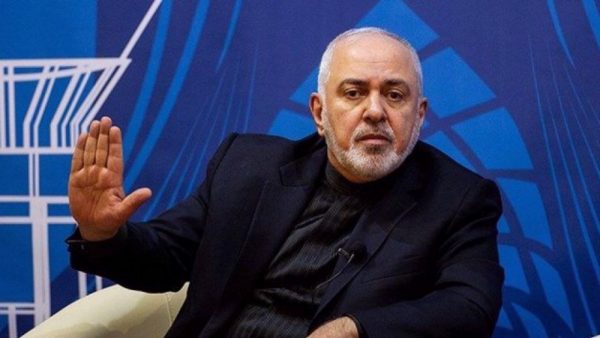
Iranian Foreign Minister Mohammad Javad Zarif
Press TV – September 20, 2020
Iran’s foreign minister says the country will meet its strategic needs by purchasing weapons from Russia and China, and has no need for European weapons once the UN embargo is lifted in October.
Mohammad Javad Zarif made the remarks in a televised interview on Saturday night in reaction to a possible initiative by France, Germany, and the UK to restrict the sale of weapons to Iran following the October expiration of the UN arms embargo against the Islamic Republic.
“We haven’t been a customer of European weapons, and they haven’t sold us weapons after the 1979 revolution. … They even ran a campaign during the 1980s imposed war [between Iran and Iraq] to prevent the delivery of arms to Iran,” Zarif said.
“We won’t force them to sell us weapons now, as we don’t need their weapons,” he noted.
Zarif said one-fourth of the arms purchases end up in the Persian Gulf region, while Iran is not part of this trade.
“However, Iran can meet its strategic needs through the countries it interacts with, like Russia and China; though it is self-sufficient in many cases, and is an exporter [of arms] itself,” Zarif said.
Thanks to God’s grace and the efforts of the country’s Armed Forces, “Iran has become self-sufficient in many cases, but in cases of need, other countries will have the right to trade with Iran once the UN embargo is lifted,” the Iranian top diplomat added.
Following a humiliating failure at the UN Security Council to secure an extension of the arms embargo against Iran, the United States recently threatened to use its “secondary” sanctions to block any arms trades with Tehran after the expiry of the UN ban next month.
US Special Representative for Venezuela and Iran Elliott Abrams claimed on Wednesday that Washington could deny access to the US market to anyone who trades in weapons with Tehran.
Sanctions “will have a very significant impact” on arms manufacturers and traders that seek to do business with Tehran, he told reporters.
The US initiative is expected to prevent European companies from selling weapons and military equipment to Iran.
‘Europe trying to save face after failure against US’
Zarif further pointed to the recent statement by France, Germany, and the UK in which they claimed they have “gone beyond their own commitments” towards Iran by launching the Instrument in Support of Trade Exchanges (INSTEX), a European mechanism which was supposed to facilitate trade with Iran amid the US sanctions.
“They are joking. The three self-proclaimed world powers failed to stand up to the US bullying. They failed, even though they may not have made so much efforts,” he said.
“Europeans had 11 commitments to fulfil, and the INSTEX was not even one of them, but a prerequisite for them. They failed to fulfil them and said Americans didn’t let them. If we accept their own words, they admitted Americans have kept them [from doing their part].”
“This is below Europe’s dignity. The economy of the European Union is bigger than America’s. Then why did you fail to resist the US’ bullying, which is now impacting you?” Zarif said, adding that the European statement is just meant to save their face.
His comments came in reaction to a statement by France, Germany and the UK delivered to the IAEA Board of Governors at the September 2020 meeting.
They said in the statement, “The E3 has worked hard to preserve the [2015 nuclear] agreement. We have gone beyond our own commitments to facilitate legitimate trade with Iran, including by introducing the INSTEX mechanism.”
‘Iran not to interfere in US elections’
In his Saturday interview, Zarif also denied the claim that the Islamic Republic is going to interfere in the upcoming US presidential elections.
“Despite Donald Trump’s claim that Iran is waiting for another person, these remarks only serve electoral purposes,” Zarif said.
“Iran is an independent country and does not meddle in US internal affairs,” he added.
Zarif said the US should first try to avoid coup plotting and violating people’s choices in other countries before accusing Iran of interfering in its elections.
He made the remarks in an apparent allusion to the CIA-orchestrated 1953 coup in Iran, which toppled the democratically-elected government of Prime Minister Mohammad Mosaddegh.
‘Israel would defend itself had it possessed enough power’
Zarif further referred to the recent deals signed by the United Arab Emirates and Bahrain to normalize their relations with the Israeli regime in the hope that Tel Aviv could bring them peace and security.
“Our neighbors unfortunately think the regime can defend them. If Israel had such a power, it would have defended itself against the Palestinian Islamic Jihad and Hamas,” Zarif said.
He expressed regret that a regional country is forced to sign a deal with Israel so that Trump can use it for his presidential campaign.
“This happens when a country depends on the US for its defense,” Zarif said.
Bahrain and the UAE signed US-brokered normalization agreements with Israel during a ceremony in Washington on Tuesday.
The controversial event was slammed by many Arab and Muslim figures as a blatant betrayal of the Palestinian cause.
Democrats not serious to stop US weapons sales to the Saudis: Former US diplomat
Press TV – September 18, 2020
The Democrats are not serious to put down the US sales of weapons to the Saudis and to Israel and other countries, says J. Michael Springmann, a former US diplomat in Saudi Arabia.
US Secretary of State Mike Pompeo’s top aides have been questioned by Congress over President Donald Trump’s dismissal of a top administration official while he was investigating billions of dollars of arms sales to Saudi Arabia.
Top aides to Pompeo went before a congressional panel on Wednesday to defend Trump’s decision to fire former Department of State Inspector General Steve Linick.
Springmann said, “There are two points to keep in mind when considering the House of Representatives’ investigation of the firing of Steve Linick, the former State Department Inspector General, back in May of this year.”
“The first, of course, is that Linick was probing the sale of huge amounts of weapons to Saudi Arabia for use in Yemen, and other issues. Apparently, it was alleged that Secretary of State Pompeo and his wife used government officials to do personal things for them. I’m not sure what that is and there are no specifics. Linick claimed he had been bullied when he was asking questions, and wanted answers and not getting them. And I think there’s something to that,” he told Press TV in an interview on Friday.
“The other issue, of course, is that this is an election year. In a bit more than a month and a half, we have general elections for president and a third of the Senate and all of the House of Representatives. So Elliot Engel, the Democrat, who’s been doing most of the questioning of Pompeo, was also one of the Democrats who led the impeachment proceedings in the House of Representatives against Donald Trump. Eliot Engel of course has lost his seat in Congress. He lost in a primary, and he will be on his way out. And in the primary, the people running against him charged him with taking more money from defense contractors than 144 Republicans in the House of Representatives. So, I think that Engel is playing politics. He’s a strong supporter of Israel and he is trying to do his very best to get Donald Trump out of office,” said Springmann who is based in Washington.
“So I think it’s a nasty combination of events, with Trump trying to sell more weapons to the Saudis than they need, and also Engel playing politics for all he’s worth. The real issue is that the Democrats all have defense contractors in their districts, or most of them I guess, or they get money from defense contractors so that when push comes to shove, the Democrats don’t really fight against this. Yes, they passed a resolution in the House of Representatives and tried to get the same resolution through the Republican-controlled Senate, but they didn’t have the votes to overcome Donald Trump’s veto,” he added.
“So if the Democrats were really serious, they would reject the money from the defense contractors and unite to put down the sales of weapons to the Saudis and to Israel and other countries that don’t need them but use them to harm their neighbors. Unfortunately, the Democrats are not united enough because they’re too busy playing politics and too busy taking the money from defense contractors to produce results,” he stated.
“In sum, we need to look at all sides of the matter and not just listen to Elliot Engel,” he concluded.
In May, Trump abruptly fired Linick from his position as the State watchdog, while he was probing the administration’s last year’s decision to allow $8 billion in military sales to Saudi Arabia, United Arab Emirates and Jordan despite congressional opposition.
Congress had objected to the transactions, warning that providing the Saudis with more weapons could contribute to the human catastrophe in war-torn Yemen, where the Kingdom has been waging a devastating war for more than five years.
An estimated 100,000 people have lost their lives in the Saudi war.
Congress had also expressed concern that the military transaction would possibly leave US officials vulnerable to war crimes charges.
“The news of Inspector General Linick’s firing did come as a surprise… Any time one is terminated, it naturally will raise some questions,” said Representative Michael McCaul, the committee’s top Republican.
Linick, who was responsible for preventing government waste, fraud and abuse, was also investigating allegations that Pompeo and his wife misused government resources by having department staff handle personal matters.
Representative Eliot Engel, the Democratic chairman of the House of Representatives Foreign Affairs Committee asked if Linick was fired “because he was getting closer and closer to matters that were embarrassing for Mr Pompeo and his family.”
Relations between Pakistan and Saudi Arabia in crisis
By Lucas Leiroz | September 17, 2020
In early August, the diplomatic crisis between Pakistan and Saudi Arabia increased considerably when Pakistani Chancellor Shah Mehmood Qureshi officially criticized the Arab country for its lack of support for Islamabad’s interests in the dispute with India over Kashmir. According to the Pakistani government, there should be greater cooperation between both countries due to the fact that they share religious ties, and this is not happening.
Qureshi recently said during an interview that Islamabad expects the Organization of Islamic Cooperation (OIC) to convene a meeting soon to discuss the issue of Kashmir. Furthermore, he said that if the OIC does not convene such a meeting, Pakistan itself will be obliged to organize a meeting of Islamic countries in order to obtain support in the dispute for Kashmir. Qureshi’s words were immediately received by the Saudis as a threat of conspiracy against the OIC for the creation of a new bloc, led by Islamabad.
There are three countries that unconditionally support Pakistan on the issue of Kashmir, which are Turkey, Iran and Malaysia. These countries, in December 2019, met at the Kuala Lumpur Summit, where they discussed various topics related to the entire Islamic world. Since then, Saudi Arabia sees the alliance of these countries as a threat to its interests and to the role of hegemony it exercises over the OIC. So, if Pakistan convenes a meeting with such countries, a major step will be taken towards the creation of a new group of Islamic nations.
Qureshi’s comment was made to warn the Saudis, but the consequences were disastrous. Riyadh immediately refused to give a third of the 3 billion dollars loan it had granted Pakistan in 2018, and the 3.2 billion dollars oil credit line that was also part of the 2018 deal has not been renewed.
Until now, Pakistan and Saudi Arabia have shared close ties, forming an important alliance in Asian geopolitics. Both countries have shared strategic ties of mutual interest for decades and on several occasions have supported each other diplomatically, economically and militarily. Examples of this shared interest can be seen in events such as the placement of Pakistani troops in the Saudi territory, joint military exercises, oil supply by Saudi Arabia amid sanctions on Pakistan due to its nuclear tests and several other cases of economic aid and diplomatic support.
But, occasionally, the interests of both countries have collided. There were reprisals after Pakistan’s refusal to send troops within the Saudi-led coalition in the 2015 Yemen war, for example. Interestingly, in Yemen Iran and Saudi Arabia face each other in a proxy war. Iran supports Pakistan in Kashmir, while the Saudis hesitate on this issue. Certainly, the cases are related, but that is not enough to explain the current crisis.
The geopolitics of the Islamic world is changing completely. The Arab countries’ peace agreements with Israel, mediated by the US, are becoming a strong trend. Saudi Arabia has already denied the possibility of entering into such an agreement, but the precedent set by Bahrain and the United Arab Emirates is significant and it is very likely that, over time, pro-Western Arab nations will gradually join peace with Israel. Such Arab nations have not changed their views on Palestine, but the current situation in the region has become too dangerous for them. These countries fear the advance of the Muslim Brotherhood supported by Turkey, which grew a lot in the Syrian War. And, above all, the rivalry with Iran cannot be ignored, especially when Tehran and Ankara progressively tighten their ties.
With Pakistan trying to get closer to the Kuala Lumpur Group – which includes Iran and Turkey – the tendency is for the Saudis to not only distance themselves increasingly from Islamabad, but also to carefully consider the possibility of joining peace with Israel, which, indeed, is the only condition for the kingdom to continue to receive the Western support it currently receives.
This “schism” in the Islamic world will be costly for Pakistan, which has always received great economic support from the Saudis. Currently, Saudi Arabia is home to around 2.5 million Pakistani expatriates, whose remittances contribute highly to Islamabad’s economy. Remittances abroad represent about 86% of Islamabad’s foreign reserves. Of these, 30% are inflows from the Saudi kingdom. In addition, Pakistan imports about a quarter of its oil from Saudi Arabia. In 2019, 74% of their bilateral trade, totaling 1.7 billion dollars, was due to oil imports. In addition, there are latent cultural issues. Saudi Arabia has in its territory the sacred sites of Mecca and Medina, where about 500,000 Pakistanis travel each year on pilgrimage.
However, economic and cultural issues tend to be overlooked when topics involve national security, defense and risks of war. A new bloc of Islamic nations is likely to emerge, rivaling the OIC, opposing Iran, Turkey and Pakistan against the Saudis. Interestingly, such a split will lead to an ethnicization of the geopolitics of the Islamic world, considering that Turkey, Iran, Pakistan and Malaysia are not Arab nations, and this may be another focus of tensions in the future.
Lucas Leiroz is a research fellow in international law at the Federal University of Rio de Janeiro.
Expert skeptical US would return to Iran nuclear deal under Biden
Press TV – September 15, 2020
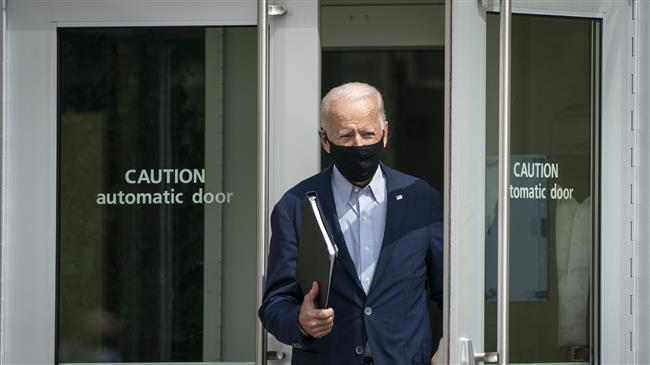
A former American Senate foreign policy analyst has expressed skepticism that a Joe Biden administration would re-enter into the nuclear agreement with Iran.
Democratic presidential candidate Joe Biden has said that if elected he will return the United States to the Iran nuclear deal as a starting point for follow-on negotiations.
Biden said in a recent article for CNN’s website that the US will rejoin the 2015 deal if Iran returns to what he called “strict compliance” with the nuclear accord, known as the Joint Comprehensive Plan of Action (JCPOA).
James Jatras, a former Senate foreign policy adviser in Washington, told Press TV on Tuesday that “It’s hard to know how much we can make of Joe Biden’s claim that he would return to the JCPOA, if he is elected president.”
“I noticed that he caveats that with ‘Iran must return to full compliance.’ And of course, we know that Iran has taken certain steps that she feels to be necessary given the US pullout from the agreement and the fact that the Europeans have failed to follow through with their obligations under the agreement,” he added.
“So I don’t know what Biden or more importantly his advisors, like Nick Burns or Evelyn Farkas, have in mind of what would constitute full Iranian compliance such that Biden could say: ‘OK, fine now, we’ll enter into this plan,’” he noticed.
“He also talks about follow on negotiations, which raises the specter that additional demands would be placed on Tehran before even a Biden administration would be comfortable re-entering the agreement. So I am somewhat skeptical that he would actually do that,” he observed.
Biden’s Republican rival, President Donald Trump, withdrew the US from the Iran deal over two years ago. Trump said it was a bad deal that needs to be re-negotiated.
Iran has time and again said it will not renegotiate the existing accord or make a new one with the US as long as sanctions remain in place.
Since scrapping the JCPOA in May 2018, the Trump administration has unleashed its “toughest ever” sanctions to bring Iran’s economy to its knees, but it keeps humming and is getting back on its feet.
Qatar, Pakistan rule out possibility of normalization with Israel
Press TV – September 15, 2020
A high-ranking Qatari official says Doha will not follow in the footsteps of neighboring Bahrain and the United Arab Emirates (UAE) to normalize relations with Israel, emphasizing that Doha will not take such a measure as long as the Palestinian issue is unresolved.
“We don’t think that normalization was the core of this conflict and hence it can’t be the answer,” Qatari Spokesperson for the Ministry of Foreign Affairs Lolwah Rashid al-Khater, said in an exclusive interview with Bloomberg television news network on Monday.
She added, “The core of this conflict is about the drastic conditions that the Palestinians are living under” as “people without a country, living under occupation.”
Last week, Bahrain joined the UAE in striking an agreement to normalize relations with Israel.
In a joint statement, the United States, Bahrain and Israel said the agreement to establish ties was reached after US President Donald Trump spoke with Israeli Prime Minister Benjamin Netanyahu and Bahraini King Hamad bin Isa Al Khalifah.
The deal came one month after the UAE and the Tel Aviv regime agreed to normalize ties under a US-brokered accord.
Bahrain will join Israel and the UAE for a signing ceremony at the White House hosted by Trump later on Tuesday. The ceremony will be attended by Netanyahu, Bahrain’s Foreign Minister Abdullatif Al Zayani and Emirati Foreign Minister Sheikh Abdullah bin Zayed Al Nahyan.
Elsewhere in her remarks, Khater pointed to the attempts, backed by Kuwait, to end the economic and diplomatic blockade Saudi Arabia and a number of its allies imposed on gas-rich Qatar in June 2017, noting that the efforts have not yet reached a tipping point.
“In the past couple of months, there have been messages and messengers going back and forth,” she said.
“It’s very early to talk about a real breakthrough,” but “the coming few weeks might reveal something new,” the top Qatari official pointed out.
“We’re beyond this point. The point we are at is engaging constructively in unconditional negotiations and discussions” that “do not necessarily need to include all parties at once,” Khater said.
Saudi Arabia, the UAE, Bahrain and Egypt severed diplomatic and trade ties with Qatar on June 5, 2017, after the quartet officially accused Doha of meddling in regional affairs and supporting terrorism.
The quartet later issued a 13-point list of demands in return for the reconciliation, which was rejected as an attack on Qatar’s sovereignty.
‘Pakistan won’t compromise on Palestine cause’
Meanwhile, Pakistani Prime Minister Imran Khan reacted to Bahrain’s normalization of ties with the Israeli regime following the UAE, saying, “Any recognition of Israel will face strong opposition from Palestinian people. We cannot make a decision which runs counter to the aspirations of the oppressed Palestinian nation. We will continue to support the fair resolution of the Palestinian issue.”
“If the whole world wants to recognize Israel, Islamabad would not do so and would never make a decision contrary to the wishes of the Palestinian people” Khan told Urdu-language 92 News television news network on Tuesday.
He underlined that the Pakistani government will never compromise on its fundamental principles of supporting Palestine and its liberation, as stated by the founder of Pakistan Muhammad Ali Jinnah.
“Until a just solution to the Palestinian issue is produced, any recognition of the Zionist regime is ruled out. How can we accept to normalize with the Zionists when the main Palestinian parties do not accept it?” the Pakistani premier said.
Democrats Go All-Out for Israel
Joe is a Zionist and Kamala panders to Jewish donors
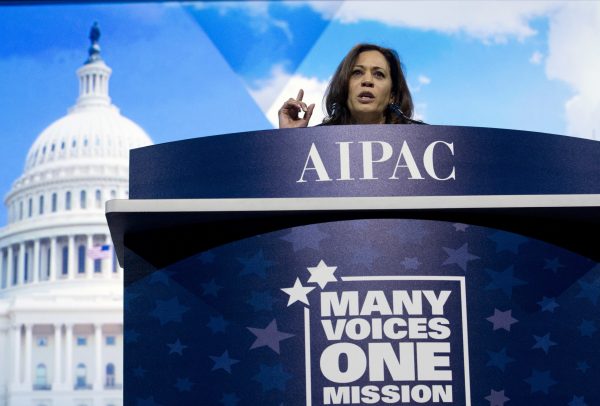
Sen. Kamala Harris speaks at the 2017 American Israel Public Affairs Committee (AIPAC) Policy Conference, March 28, 2017, at the Washington Convention Center. (AP Photo/Jose Luis Magana)
By Philip Giraldi • Unz Review • September 15, 2020
Those of us who have longed for an end to America’s military engagement in the Middle East have hoped for a candidate who was not tied hand and foot to Israel, which is the root cause of the badly-broken and essentially pointless U.S. foreign policy in the region. But the real tragedy is that in spite of Israel’s near-constant interference in government process at all levels in the United States, no candidate will mention it except in the most laudatory fashion. It will be praised as America’s best friend and closest ally, but there’s a price the U.S. has paid for all that balderdash while it has simultaneously been turning itself into the slave of the Jewish state will never surface.
The Democratic Party leadership is owned by Israel through its big Jewish donors whose billions come with only one string attached, i.e. that the Jewish state must be protected, empowered and enriched no matter what damage it does to actual U.S. interests. Number one Israeli-American billionaire donor Haim Saban has said that he has only one interest, and that is Israel. How such a man can have major influence over American foreign policy and the internal workings of one of its two major parties might be considered the death of real democracy. At the Israel America Council’s National Conference Nancy Pelosi explicitly put Israel’s interests before America’s: “I have said to people when they ask me if this Capitol crumbled to the ground, the one thing that would remain is our commitment to our aid… and I don’t even call it aid… our cooperation with Israel. That’s fundamental to who we are.”
Jews are not surprisingly considerably over-represented in the Democratic Party Establishment. The influence of powerful Jewish Democrats recently insured that there would be no criticism of Israel, nor mention of Palestine, in the party platform for November’s election. So extreme is the virulence of some Jews against the Palestinians that a liberal Zionist Rabbi Mark Winer speaking at a Joe Biden rally in Florida recently denounced “progressives” as infected with the “anti-Semitism virus” over their support for Palestinian rights and the Boycott, Divestment and Sanctions (BDS) movement. No one even sought to challenge him. Another progressive Zionist Rabbi Jill Jacobs tweeted about how liberals have to embrace Israel to avoid offending Jews. She wrote: While Israel is likely the most divisive issue in the progressive world, setting a litmus test that one cannot consider oneself pro-Israel, or support two states, would divide the vast majority of Jews from the left. Not what we need when fighting white nationalism.
So-called white nationalists therefore appear to be the preferred enemies of progressive Jews, requiring one to close ranks even – or perhaps especially – when Palestinians are being brutalized. Joe Biden does not venture into that extreme-think zone, but he has made his loyalties clear. He has said that “You don’t have to be Jewish to be a Zionist. I am a Zionist.” More recently he has denounced Trump as “bad for Israel.” And to demonstrate his bona fides, he kicked Democratic Party Palestinian-activist Linda Sarsour under the bus when she appeared on a DNC convention panel discussing how to appeal to Muslim voters. Biden’s campaign office issued a statement saying that he “… has been a strong supporter of Israel and a vehement opponent of anti-Semitism his entire life, and he obviously condemns her views and opposes BDS, as does the Democratic platform. She has no role in the Biden campaign whatsoever.”
With that lead in, it is difficult to imagine how Biden would suddenly recognize the humanity of the long-suffering Palestinians, to include those who are, like he claims to be, Catholic. Biden is close to AIPAC and has spoken at their annual convention a number of times. He is opposed to putting any pressure on the Jewish state at any time and for any reason, which presumably includes not even protecting U.S. interests or the lives and property of American citizens.
Biden also worked for President Barack Obama and was a colleague in office of Hillary Clinton. Both did the usual pander to Israel and neither was particularly well disposed to the Palestinians, though Obama talked the talk of a man of peace so effectively that he was awarded a Nobel Prize. Bear in mind that Obama personally disliked Israeli Prime Minister Benjamin Netanyahu, but he increased the money from the U.S. Treasury going directly to Israel to $3.8 billion per annum and guaranteed it for ten years, an unprecedented move. The fact is that money was and is illegal under American law due to the 1976 Symington Amendment, which banned any aid to any country with a nuclear program that was not declared and subject to inspection under the terms of the Nuclear Non-Proliferation Treaty. Obama, who claims to be a “constitutional lawyer,” surely was aware of that but rewarded Israel anyway.
One can expect nothing from Kamala Harris. Her husband is Jewish and she has made her career in California by sleeping with power brokers and pandering to Israel. She, like Biden, has been a fixture at the AIPAC annual conference. She has already made her mark with the party’s pro-Israel crowd by having a conference call with 1,800 Jewish Democratic donors, during which she repeatedly assured them a Biden-Harris Administration will never resort to cutting current levels of aid over any “political decisions that Israel makes,” adding personally “… and I couldn’t agree more.” She promised to demonstrate what she described as “unwavering support” for Israel. She also reminded the donors that Joe Biden had been behind the “largest military aid package” to any country ever when President Obama signed off on the $38 billion package in 2016.
Optimists point to the fact that the Democrats have now elected a number of congressmen who are willing to criticize Israel and they also cite opinion polls that suggest that a majority of registered Democrats want fair treatment for the Palestinians without any major bias in favor of the Jewish state. In spite of a news blackout on stories critical of Israel, there is broad understanding of the fact that the Israelis are serial human rights abusers. But those observations matter little in a situation in which the top of the party, to include those who manage elections and allocate money to promising prospective candidates, identify as strongly and often passionately friends of Israel. That is not an accident and one can assume that major effort has gone into maintaining that level of control.
How exactly this fissure in the Democratic Party will play out after November is anyone’s guess and, of course, if Trump wins there will be an autopsy to find out who to blame. Israel certainly won’t be looked at because no one is allowed to talk about it anyway, but some progressives at least will demand a review of a foreign policy platform that was heavy on intervention and global democracy promotion and light on getting along with adversaries, making it largely indistinguishable from that of the Republicans.
Israel for its part has played its cards carefully. It knows that either Biden or Trump will do whatever it wants, but it has deferred its planned annexation of much of the Palestinian West Bank, which will now take place after the election. It did that knowing that otherwise some liberals in the Democratic Party might try to turn Israel into an issue and split the Jewish community while also alienating Jewish donors and some Jewish voters if the annexation had taken place. After November 3rd, no matter who wins Israel will benefit and will have a free hand to do anything it wishes to the Palestinians. Or perhaps one should say the “remaining Palestinians” until they are all gone.
Philip M. Giraldi, Ph.D., is Executive Director of the Council for the National Interest, a 501(c)3 tax deductible educational foundation (Federal ID Number #52-1739023) that seeks a more interests-based U.S. foreign policy in the Middle East. Website is https://councilforthenationalinterest.org, address is P.O. Box 2157, Purcellville VA 20134 and its email is inform@cnionline.org.
Bahrain civil society groups reject normalisation agreement
MEMO | September 14, 2020
Civil society groups in Bahrain have rejected the government’s normalisation agreement with Israel which is expected to be signed formally in Washington DC on Tuesday. Seventeen organisations have issued a joint statement to this effect, with signatories including the General Federation of Workers’ Trade Unions in Bahrain, the Bahraini Bar Association and the Bahrain Women’s Association.
“We adhere to the constants of the Bahraini people regarding the just Palestinian cause and the provisions of the constitution that criminalise normalisation with the Zionist entity, in accordance with the official and popular Arab and Islamic consensus rejecting normalisation with this criminal entity,” said the groups. “All forms of normalisation with the Zionist entity initiated by some countries have neither produced peace nor restored the usurped rights of the Palestinian people, but have, rather, encouraged the enemy to commit more crimes against Palestine and the holy Arab and Muslim sites, foremost of which is Holy Jerusalem.”
The statement added that “what is known as a peace treaty between Bahrain and the Zionist enemy under the auspices of the US administration has brought about tremendous shock, resentment and widespread popular rejection among the Bahraini people, their political forces, civil society institutions, and all national actors and personalities.”
As a result, the signatories pointed out, nothing arising from the normalisation deal will have any popular legitimacy. “Generations of Bahrainis have believed in the just nature of the Palestinian cause,” they concluded.
Jewish settlers torch agricultural land in West Bank town of Mikhmas

Palestine Information Center – September 13, 2020
OCCUPIED JERUSALEM – A group of Jewish settlers on Saturday set fire to swaths of agricultural land belonging to Palestinian citizens in Mikhmas town in the northeast of Occupied Jerusalem.
According to local sources, a horde of settlers were seen touring an area near Mikhmas town before entering a Palestinian-owned grove and then setting trees ablaze.
Eyewitnesses said that the settlers fled the area and ran towards illegal settlements near the town.
Many olive trees were burned in the fire after the local residents experienced difficulty in extinguishing and controlling the flames due to the rugged nature of the area and the presence of Israeli soldiers who prevented them from reaching some plots of land.
Featured Video

When Israel Is Mighty
or go to
Aletho News Archives – Video-Images
From the Archives
US murdering 1 million Iraqis is democracy, Iran giving yogurt to Iraq is “domination”
By Ali Salaam | American Herald Tribune | July 31, 2017
The New York Times, owned by the Zionist Jewish supremacist Ochs-Sulzberger family, has no problem with Iraqi suffering as long as Iran is not the one behind it.
The Iraq War was a genocide of the Iraqi people by Zionist supremacists in the Bush administration. Over 1 million innocent people were killed based on a lie. American soldiers died in an Israeli war and now an average of 22 soldiers commit suicide every day because their consciences cannot cope with the fact they committed crimes in an illegal war that served no purpose other than to benefit Israel, not America.
Benjamin Netanyahu, Prime Minister of the Zionist regime, once said “We are benefiting from one thing, and that is the attack on the Twin Towers and Pentagon, and the American struggle in Iraq.”
Paul Wolfowitz had his sights on Iraq since his time in the first Bush administration. Former Israeli official and Bush administration official Richard Perle had his eyes on Iraq since at least his authorship of the Clean Break white paper. The Zionist regime had their eyes on Iraq since the 1980s when strategist Oded Yinon wrote his white paper in support of dividing the Arab-Muslim world along ethnic and sectarian lines. The global Zionist lobby has had their eyes on Iraq since Theodor Herzl stated that Eretz Israel’s true borders go from the Nile River in Egypt to the Euphrates River in Iraq. … continue
Blog Roll
 Aletho News
- Huckabee aide goes to ‘unusual lengths’ to portray ‘Israel’ positively
- Trump Announces Diesel Supply Deal With Putin Following Phone Call
- MEP blasts ‘Euro-Gestapo’ for lecturing Russia on democracy
- Syria May Send Troops to Saudi Arabia Amid War with Ansar Allah
- UK whines about losing billions to ‘Putin tax’
- Baghaei to Rubio: Distorted narratives cannot erase US record of broken commitments
- Houthis Don’t Have to Conquer Saudi Arabia to Make It Pay
- MOE: Nearly 22,000 Students and Education Workers Killed
- Guterres in Islamabad: Genocide, cowardice, and the cage of Imran Khan
- Johnson, Marandi say Yemen holds upper hand over Saudi Arabia
- If Americans Knew
- Gaza ceasefire exists in name only, say more than 100 organizations
- Nearly 2 Million in Gaza Need Urgent Shelter Assistance as Winter Looms: IOM Chief Warns
- Suppressing Palestinian resistance: US charity under fire for AI monitoring of Gaza classrooms
- Thousands Are Held in Israeli Torture Camps. This Is What Happens Inside
- Israel puts Gaza’s sick, injured, newborn in peril – Daily Update
- Report claimed Mark Levin used by Israeli government to influence Trump
- Over 2,000 Gazans have died awaiting medical evacuation amid Israel’s continued siege
- How a U.S. Diplomat Suppressed and Altered Reports Critical of Israel
- 5 Palestinians Die from Israeli Strikes in Gaza as Relentless Attacks Continue
- Report: Ceasefire Slows Killing but Leaves Devastation Intact
- No Tricks Zone
- New Study: 50 Years Of The Most Aggressive ‘Net Zero’ Policies Can Only Affect The Global Climate By 0.03°C
- US September “Heat” Was No Record…Many Records Set Decades Ago
- Latest European Green Energy Debacle; Portugal’s Largest Flagship Solar Park Insolvent!
- Green Energy Debacle: German Expert Professor Fritz Vahrenholt Warns Of Severe Economic And Social Consequences
- Two More Paleo Reconstructions Affirm Meters-Higher Sea Levels Across Ireland, Brazil 7000-6000 Years Ago
- New Study: Earth And Venus Surface Warmth Largely Explained By Convection And Lapse Rate, Not CO2 Or Radiation
- 2025 Nature Paper Claiming Worsening Global Drought Gets RETRACTED …Heavily Flawed
- New Study: ‘Global Drought Shows No Detectable Recent Acceleration Under Climate Warming’
- Economic Masterminds: German Socialists Suggest Taxing Productivity Gains Stemming From Using AI
- The South China Sea Has Not Been Cooperating With The Climate Change Narrative

