Palestinians are deprived of a political voice, and their leaders do nothing about it
By Ramona Wadi | MEMO | August 13, 2020
Palestinian refugees are at the core of Palestinian narratives. The international community has, however, classified Palestinian refugees as a humanitarian issue. In between these diverging depictions, the Palestine Liberation Organisation (PLO) seeks to grapple with both strands to push for “international protection” within the context of the coronavirus pandemic.
With international aid for Palestinian refugees barely enough for basic necessities and thus contributing to their increased vulnerability, the PLO has requested the UN to provide protection and financial aid for them. According to reports, “Such protection and support must continue until a solution for the issue of the refugees is found based on Resolution 194.”
The political exploitation of Palestinian refugees knows no limits. UN Resolution 194, which has been accepted blindly as the framework upon which a solution should be found, is rarely criticised for shifting accountability upon the colonised population, rather than the settler-colonial framework which usurps Palestinian territory and made Palestinians refugees in the first place. Resolution 194 is part of the international narrative on Palestine and has little to do with safeguarding the rights of refugees because it fails to call for the decolonisation of their land.
Palestinian refugees are not allowed a political platform at an international level. Hence the constant “speaking for” refugees within a humanitarian context that in turn justifies the international community’s role in deciding how the promotion of Palestinian refugees should be carried out in order to highlight the humanitarian paradigm. Humanitarian aid is about the international community first and foremost. The recipients are forced to play a part in this charade, which ignores Israel’s colonisation of Palestine as the cause of the whole issue.
Furthermore, the PLO’s request for aid promotes the international narrative of delays. Aid must be given until a solution is found, the PLO insists, yet how much emphasis is placed upon finding and implementing that solution? The international community and the Palestinian leadership have turned Palestinian refugees into accessories for political convenience. Indeed, there is hardly any mention of Palestinian refugees unless a humanitarian context is evoked, or if the UN inaugurates a project to exploit the illusion of “Palestinian autonomy”, which is non-existent in a humanitarian context rigged with deficiencies and political allegiances to the Zionist colonial project.
So I have a suggestion: how about remembering Palestinian refugees as the most prominent victims of Zionist colonisation; as people who have been deprived of their rights by the international community which allows that colonisation to continue unabated? Decades have passed since the UN Relief and Works Agency was mandated to provide for Palestinian refugees and bound to a “neutral” narrative, despite being funded by countries that prioritise their diplomatic and economic ties to Israel over and above human rights and justice. Palestinian autonomy for Palestinians, including refugees, is still a non-existent concept, because the international community has monopolised the politicisation of humanitarian aid without allowing Palestinians to participate in the process.
Each time the legitimate Palestinian right of return is tied to requests for humanitarian aid, the “right” is whittled down even further. Such rhetoric falsely equates Palestinians with a passive stance, one that the Palestinian Authority is fond of describing as “waiting”. Such projections are harmful to Palestinians; they are not waiting, they have been deprived of a political voice, and their leadership is doing nothing to counter this international violation of human rights.
Israel, UAE reach US-brokered agreement to establish full diplomatic ties
Press TV – August 13, 2020
Israel and the United Arab Emirates (UAE) have reached a deal that will lead to a full normalization of diplomatic relations between the two sides, in an agreement that US President Donald Trump apparently helped broker.
Under the agreement announced on Thursday, Israel has allegedly agreed to suspend applying its own rule to further areas in the occupied West Bank and the strategic Jordan Valley that Prime Minister Benjamin Netanyahu had pledged to annex, senior White House officials told Reuters.
Trump, in a tweet, called the agreement a “HUGE breakthrough,” describing it as a “historic peace agreement between our two GREAT friends.”
US Secretary of State Mike Pompeo, who spoke to reporters accompanying him on a trip to central European countries, said for his part that the agreement was an “enormous” step forward on the “right path.”
Israel’s Prime Minister Benjamin Netanyahu also tweeted that the deal marked “a historic day.”
Abu Dhabi’s Crown Prince Sheikh Mohammed Bin Zayed said on Twitter on Thursday that an agreement had been reached on normalising relations between the two countries.
The deal, however, has elicited sharp negative reactions from various Palestinian groups as well as their supporters from across the world.
The Palestinian Islamic Jihad Movement reacted rapidly by condemning the deal between the UAE and Israel.
The movement noted that normalization of ties between Tel Aviv and Abu Dhabi was a sign of submission on the latter’s part without having any effect on reducing conflicts in the occupied Palestinian territories.
Islamic Jihad movement also noted that the deal will, on the other hand, further embolden the Israeli occupiers.
Palestinian President Mahmoud Abbas has issued a statement, calling for an urgent meeting of Palestinian leadership to be held on the Israel-UAE deal to discuss its consequences.
Meanwhile, senior Palestinian official Hanan Ashrawi accused the United Arab Emirates of “normalization” with Israel after Thursday’s announcement of the so-called peace deal.
Ashrawi, who is a member of the executive committee of the Palestine Liberation Organization (PLO), said on Twitter, “The UAE has come out in the open on its secret dealings/normalization with Israel. Please don’t do us a favor. We are nobody’s fig leaf!”
Ashrawi also responded to Abu Dhabi’s crown prince’s tweet in a counter-tweet in which she reminded him of the sufferings of the Palestinian people at the hands of the Israeli occupiers.
May you never experience the agony of having your country stolen; may you never feel the pain of living in captivity under occupation; may you never witness the demolition of your home or murder of your loved ones. May you never be sold out by your “friends.” https://t.co/CBaNl1QQqx
— Hanan Ashrawi (@DrHananAshrawi) August 13, 2020
The spokesman for the Palestinian Islamic Resistance Movement, Hamas, Fauzi Barhum said the normalization of ties between the UAE and Israel is a reward for occupiers in return for their crimes and violations of Palestinian’s rights.
Sarah Leah Whitson, a pro-Palestinian activist, also took to Twitter to condemn the deal, saying it would not lead to any recognition of Palestinians’ rights.
“Israel won’t formally annex and exercise sovereignty over the land it has for all intents and purposes already annexed and exercises sovereignty over… ZERO for the rights of Palestinians,” she wrote.
The information minister of the Yemeni government in Sana’a also reacted by saying that the deal between the Israeli regime and the UAE was a show of defiance shown by the enemies of Islam to all Muslims.
Popular Resistance Committees, which is a coalition of a number of Palestinian groups, also reacted to the UAE-Israel deal by noting that the agreement reveals the high volume of conspiracies against the Palestinian people and their sanctities.
“This is like a poisonous dagger in the back of the Islamic Ummah,” the committees added.
Yemen’s Ansarullah movement has also vehemently slammed the deal as a provocative move.
Ansarullah’s spokesman Mohammed Abdul-Salam said the agreement brought to light what had been kept secret and proved that Zionist and American enemies will continue to destroy the region.
He added that this is not an anti-Iran deal alone, but is against the interests of the entire Arab and Islamic Ummah.
Meanwhile, deputy secretary general of the Popular Front for the Liberation of Palestine, Abu Ahmad Fuad, was quoted by al-Mayadeen news agency as saying that the UAE-Israel deal is a crime against the Palestinian people and their martyrs and will have no effect on the resistance front.
He added that the Palestinian people will continue to confront Israel’s daily attempts to annex more Palestinian territories.
“It is the Palestinian people who prevent further annexation of their lands by Israel, not the UAE and its leaders,” he said.
Egypt’s President Abdel Fattah al-Sisi, however, welcomed the agreement, saying, “I followed with interest and appreciation the joint statement between the United States, United Arab Emirates and Israel … I value the efforts of those in charge of the deal to achieve prosperity and stability for our region.”
Former Israeli soldier sues pro-Palestinian Toronto restaurant
By Yves Engler · August 11, 2020
As part of a well-organized, multilayered, Israel nationalist lobby bid to bankrupt a small left-wing restaurant a prominent Toronto interior designer sued Kimberly Hawkins for $800,000. Shai DeLuca is claiming the Foodbendersowner libeled him.
The suit was filed by RE-LAW LLP and the US-based Lawfare Project which harasses pro-Palestinian activists. The Lawfare Project, reports Nora Barrows-Friedman, is “a pro-Israel group that works to silence activists by filing lawsuits against them and smearing supporters of Palestinian rights as anti-Semites.”
In a statement of claim DeLuca said two posts on Foodbenders’ Instagram account on July 6 defamed him. One of the posts was apparently a screenshot of DeLuca’s Instagram account with the comment, “he’s literally gathering his other whining Zionist friends to attack Palestinians and others in support of @foodbenders.” A second post, reported Toronto.com, featured the statement, “this guy is one of the people who was attacking @foodbenders. He’s an IDF [Israel Defense Forces] SOLDIER (aka terrorist) yet he’s using the BLM [Black Lives Matter] movement for likes. How can you sit there and post about BLM when you have your sniper rifle aimed at Palestinian Children.”
DeLuca’s statement of claim suggests Foodbenders’ statements were libelous. But, on Twitter DeLuca describes himself as an “IDF sergeant (ret)” and a quick Google search demonstrates that he is an aggressive proponent of Israeli military violence. DeLuca publicly defended Israel’s 2014 onslaught on Gaza that left more than 2,000 Palestinians dead and has spoken at a number of international events promoting the Israeli military. DeLuca even claims IDF experience helps with interior design!
(In recent years the Israeli military has bombed Syria on a weekly basis and has multiple boots on Palestinian necks. In his 2008 book Defending The Holy Land: A Critical Analysis of Israel’s Security & Foreign Policy Zeev Maoz notes: “There was only one year out of 56 years of history in which Israel did not engage in acts involving the threat, display, or limited use of force with its neighbors. The only year in which Israel did not engage in a militarized conflict was 1988, when Israel was deeply immersed in fighting the Palestinian uprising, the intifada. So it is fair to say that during each and every year of its history Israel was engaged in violent military actions of some magnitude.” Maoz concludes: “None of the wars — with a possible exception of the 1948 war of Independence — was what Israel refers to as Milhemet Ein Brerah (‘war of necessity’). They were all wars of choice or wars of folly.”)
DeLuca works with the rabidly pro-Israel Committee for Accuracy in Middle East Reporting in America (CAMERA). Funded by Donald Trump mega-donor Sheldon Adelson, Seth Klarman and other anti-Palestinian billionaires, CAMERA regularly promotes the IDF and is “aligned with right-wing and hawkish political views”, reports the Jewish Forward.
In his statement of claim to the Ontario Court of appeal DeLuca presents his military service as simply a requirement that every Israeli must fulfill. “He grew up in the State of Israel where he served his compulsory term of military service as a sergeant in the Israel Defense Forces”, it notes. But, elsewhere DeLuca offers a more politicized depiction of his time in the IDF. Asked in 2018 by the Canadian Jewish News “What shaped your strong connection with Israel?” DeLuca responded: “I grew up in an extremely Zionist family. The matriarch of my family, my grandma, and I had a very special relationship. She always said that if she’d had the opportunity, she would’ve gone to Israel. She talked a lot about the importance of defending our homeland. This was really strongly instilled in me. From the age of 15, I knew that, at 18, I’d go do my army service in Israel. I finished high school in Toronto and in November 1995, I went into the Israeli army.”
When speaking to a pro-Israel Canadian audience DeLuca promotes fighting in the IDF but when a social justice activist reframes his actions as a moral outrage against Palestinians he claims to have been duty bound and the victim of malice. DeLuca’s position is not unique. After pro-Palestinian activists protested a presentation by Israeli military reservists at York in November, those who brought the ‘terrorists’ to the university and in some cases assaulted the protesters claimed they were the victims. In 2018 a private Toronto school that flew an Israeli flag and promoted its military also claimed “anti-Semitism” when pro-Palestinian graffiti was scrawled on its walls.
To get a sense of DeLuca’s extreme anti-Palestinian ideology, last week he retweeted ethnic cleansing denial, claiming Israel merely occupied mosquito infested lands. “The only ones that Zionism displaced were mosquitos,” he messaged. “The lands Zionists acquired to establish themselves were malaria ridden, and they reclaimed those lands.” This, of course, is complete nonsense.
It requires chutzpah to join a brutal occupation force halfway across the world, spend years promoting it and when called on it claim you are the victim. DeLuca should either stop promoting a violent foreign military or accept that people are going to criticize him for doing so.
…
For those interested in supporting Foodbenders please email: PALILEGALFUND@GMAIL.COM
Please email Cityline TV (info@cityline.tv) to say Shai DeLuca, who is a contributor, promotes a violent foreign army and denies the ethnic cleansing of Palestinians.
Iran and China terrify the Empire, but why?
By Aram Mirzaei | The Saker blog | August 11, 2020
The proposed 25-year deal between the Islamic Republic of Iran and the People’s Republic of China, titled “Comprehensive Strategic Partnership between I.R. Iran and P.R. China” has been heavily discussed recently. While not all details in the deal are clear, it has been described by Iranian and Chinese officials as specifying the roadmap of developing and deepening Tehran-Beijing ties in “Political”, “Executive Cooperation”, “Human and Cultural”, “Judiciary, Security and Defence”, and “Regional and International” domains.
It remains unclear when such a deal will be formally clinched. But Iran’s government says the two sides have so far finalized at least 75 percent of the draft version of the pact. Once concluded, the text of the deal will be discussed for final approval in Iran’s Parliament. However, many lawmakers are already critical of the government for not consulting the deal before entering into negotiations with China.
What has so far been made public is that the 25-year cooperation roadmap will cover economy, security and military areas. Iran will reportedly supply the PRC (People’s Republic of China) with oil for 25 years. In return, China will invest heavily in Iran’s infrastructure as well as banking and telecommunications sectors, amounting to some 400 billion dollars. Reactions, both inside and outside Iran have been mixed. Some inside Iran have criticized the deal since they believe that the Islamic Republic has negotiated it from a position of weakness, in order to escape the failing JCPOA deal and its aftermath – Washington’s maximum pressure campaign. Supporters of the deal argue that the deal is a political victory against what Beijing and Tehran have identified as a common opponent.
Naturally, the US State Department and anti-Iran Farsi media outlets based outside Iran have denounced the possible deal without even knowing all the details. The US State Department went on to issue tweets in Farsi, comparing the potential Iran-China accord to the 1828 Treaty of Turkmenchay which was a peace treaty between Qajar Iran and the Russian Empire. By the treaty, Iran had to cede to Russia control of most of its areas in the South Caucasus.
As per usual, social media is the main tool they use for their propaganda. Certain think tanks led by Western governments, particularly the United States spread rumours and lies. For instance, they have created various hashtags like “No to Iran Sellout!” This has been picked up by Iranian analysts too:
“Based on our monitoring of social media, we spotted the first analyses on the Iran-China cooperation plan in US media. What the mainly US media claim is reproduced in social media, particularly Twitter. Those who are active in cyberspace and social media include users affiliated with the Zionist regime, users affiliated with the Mujahideen Khalq Organization as they are supposed to insinuate wrong interpretations into public minds in Persian language. MKO agents based in Albania and benefiting from Western funding are involved. The Zionist regime and Saudi Arabia are also cooperating by spending money and offering human resources. From as early on as 1995, Iran has been aware of the importance of the Beijing- Tehran axis as a counterweight to the U.S.-led global order. Iran and China share a desire to engage in revisionist regional moves without wanting to start a large-scale war; to put an end to US imperialism and military supremacy in the Persian Gulf region. It is a valid question however, whether this will not lead to a Chinese show of military might in the region.
Our ties with some nations may be focused on a single aspect like agriculture, culture and energy. But with China, we have reached the conclusion that we can cooperate in academic, cultural and IT and economic sectors. And regarding the strategic aspects, our ties with some countries may be periodic. But the Islamic Republic of Iran and the People’s Republic of China eye long-term cooperation.“ – Hamed Vafai, China Affairs Analyst
The Iranians outside of Iran who oppose the deal are often pro-Western and echo the same lies spewed by Washington – for example when they claim that Iran has sold its soil to China, offering Beijing Iran’s Kish Island as a military base and so on. The sheer hypocrisy by Pro-US Iranians is mind-boggling. The things they accuse the Islamic Republic of doing for China are the same things their beloved “King” did for the US, if not even more. I don’t need to go into detail over how subservient the Iranian monarchy was to Washington.
Tehran has made it clear that this deal is to protect the Iranian economy from US sanctions, and that it will not cede any part of its soil to China. Tehran rejected the criticism saying is it aimed at appeasing the enemies of the Islamic Republic. “Unfortunately, a destructive line of propaganda has been initiated and directed from outside Iran against the expansion of Iran’s relations with neighbors and especially (with) China and Russia,” Iranian president’s chief of staff, Mahmoud Vaezi, said last week.
The Iranian foreign ministry spokesman, Seyed Abbas Mousavi dismissed unfounded claims of Iranian islands in the Persian Gulf being leased out to China, oil sold at exclusively low prices, or the deployment of Chinese armed forces in the Gulf, an invading force in Iranian waters that is. He said such claims were too ridiculous to even merit a denial. Apparently the Chinese response to the allegations was not so different.
So what’s in it for the parties involved?
There is no doubt that Washington’s withdrawal from the JCPOA and the subsequent sanctions imposed by Washington has left the Iranian economy in a very difficult position, especially since the EU has betrayed the deal as well. Part of the blame has been placed on the Rouhani government, which I believe to be wrong. It is counterproductive to assume that the Islamic Republic’s commitment to the JCPOA triggered the crisis since the pressure on Iran’s economy was no less severe before the JCPOA.
The trade deal itself is one of necessity as the West has failed to live up to their promises and proven once and for all that they can never be trusted. Not only have they reneged on their commitments, but they also continue to wage psychological warfare on Iran through propaganda and lies. Bearing in mind that Washington has forbidden many countries from doing deals with Tehran, I see no reason to be critical of this potential deal with the PRC as of yet. This is about the Islamic Republic’s very survival, something that the IRGC and the top leadership in Tehran have also recognized – which explains why they have remained so silent about it.
The potential partnership offers Iran a way out of the harsh US sanctions. For Iran this would translate into an injection of approximately 280 billion dollars for its energy sector and 120 billion dollars for manufacturing and transport infrastructure. In return for a discounted oil-flow to China and preferential Chinese access to various sectors of the Iranian economy, Iran would have its infrastructure given a much needed boost. The deal includes 100 projects which defy US unilateral sanctions against Iran.
China is the only remaining official buyer of Iranian oil and has strongly opposed Washington’s sanctions. It defies the US also economically together with Russia and Iran, as the three have attempted to replace the US dollar in their dealings, an act that inspired Pakistan and may have other regional states follow. Why wouldn’t the Islamic Republic with its free-falling rial want China as a potential shield against US sanctions and even motions at the UN Security Council? What other options does Iran have? To negotiate a new JCPOA with Washington, one which the US would at any time once more renege on? Besides, it should be known to all by now that the nuclear issue is not really why Washington is sanctioning the Islamic Republic.
The PRC is viewed in the West as a threat both because of its rising economic power, and more recently because of its potential political power, poised to challenge Washington’s hegemony. Crude accusations of Chinese imperialism and false expressions of “worry” for poor Asian and African countries aside, the West is worried because China’s entry into the Middle East would enhance Beijing’s position not only in West Asia, but in Central Asia and the Caucasus as well. For China, Iran could very well be a gateway into the Middle East, as it has historically also been. Iran has connections in Syria, Iraq and Lebanon where China has up until recently been absent, and their partnership could flourish as Iraq and Syria will rebuild their countries after decades of US imposed wars. The Islamic Republic can introduce lucrative projects to the Chinese who may not know the region quite well.
All this gives Washington clear reason to be annoyed since it would make the US sanctions rather useless. But Washington also knows that the implications of this potential deal are far greater than just helping Iran.
Washington knows that its position in the Middle East as the sole dominant power alongside Israel is being challenged by Russia, Iran and now China as well. The Zionist axis has lost the struggle for Syria and is desperately clinging onto the oil fields in the eastern parts of the country, they have lost in Iraq as Baghdad wants them out, and they will lose elsewhere too. Even Turkey – a NATO ally – is a loose cannon that Washington cannot trust, especially since Ankara has repeatedly refused to follow Washington’s orders. This leaves Washington with the vassal reactionary monarchies in the Persian Gulf and Israel as the only reliable “friends” of Washington’s. The birth of an alliance/united front with a common cause against the Zionist empire could potentially lead to an East-West divide situation not so different from the Cold War in Europe.
Personally, I welcome it. A bipolar balance in the region would deter Washington further from regime change attempts. The only reason for Washington’s audacity to start the Syrian and Iraqi wars were because of the power vacuum left after the dissolution of the Soviet Union – without a counter-weight against it, Washington has been free to do as it pleases in the region for the past 3 decades.
Necessity will drive China and Iran to deepen relations. Both share grievances against the US and its vassals, both are being threatened in their own regions by Washington and together with the Russian Federation, they can finally bring back a balance of power in the world. When it is all said and done, let’s see what these two ancient Asian cultures can achieve together.
Lebanon: The Paradise from Hell
By Jeremy Salt | American Herald Tribune | August 11, 2020
In the old days there was no more charming city in the eastern Mediterranean than Beirut. Set on a maritime plain with the mountains rising dramatically behind it, the scenery was magnificent, the culture charming, the people hospitable and the city rich in history.
Unfortunately, however, Lebanon’s prime geographical position sucked the country and its capital into the vortex of regional and international politics from the 19th century onwards. Sectarianism and the inability of the people to put the interests of their country ahead of their faith dragged it further down. There was no more potent weapon in the armory of scheming outside powers than this massive fault line running through Lebanese society.
Seizing Syria after the First World War, Britain and France chopped it up. Britain gave Palestine – southern Syria – to the Zionists. France kept the rest. In 1918 it occupied Beirut, with the support of the Maronite Christians and against the opposition of the Muslims. Moving across the mountains, it occupied Damascus after defeating a Syrian national force at Khan Maysalun, in the anti-Lebanon mountains about 25 kilometers from Damascus, in July 1920.
In October 1920 France separated Mt Lebanon and the maritime plain from the Syrian hinterland to create the republic of Grand Liban. Its strategic object was to cut a large segment of Syria’s Christians, the Maronites, off from the Syrian hinterland (which it then proceeded to divide even further along sectarian lines). Historically aligned culturally with France and the ‘west,’ the Maronites were hostile to what they saw as a Sunni Muslim-inflected Arab nationalism. In what they perceived as their own interests, they could be counted on to further French interests in the Near East.
Their sympathy for zionism reached the point in May, 1946, when the Maronite Patriarch, Antoine Arida, signed a ‘treaty’ with the Jewish Agency in which he acknowledged all core zionist claims, including the allegedly historical link with Palestine, the ‘right’ to open immigration “and independence” in a Jewish state. This ‘treaty’ was no more than the patriarch’s personal initiative, but it did represent broad Maronite identification with Zionism as an equally vulnerable minority presence in the Middle East.
As established under French supervision, the 1926 constitution describes Lebanon as “Arab in its identity and affiliation.” Elections to the Chamber of Deputies were to be held on a “national non-confessional basis” but at the same time – more than somewhat contradictorily – there was to be equal representation of Muslims and Christians in Parliament and proportional representation of the confessional groups within the two broader Muslim and Christian communities. The president was to be elected on the basis of two-thirds majority support in the Chamber.
In 1943 with Vichy France defeated in Syria and with Lebanon looking ahead to the end of the mandate, its Muslim (Sunni and Shia) and Christian leaders met to discuss what next. President Bishara al Khuri and Prime Minister Riad al Sulh fashioned the ‘national pact’ which has underpinned Lebanon’s ‘confessional democracy’ ever since. Broadly, Lebanon would remain only “affiliated” to the Arab world (rather than part of it) in return for a Christian pledge not to seek support from the ‘west.’
In its executive and parliamentary makeup, the president of the republic would always be a Maronite, the Prime Minister a Sunni Muslim, the speaker of the Chamber of Deputies a Shia Muslim, the deputy Prime Minister and deputy speaker of the Chamber a Greek Orthodox and the army chief of staff a Druze. Parliament would be elected on the basis of a 6-5 Christian-Muslim majority, this sectarian allocation of power applying across all state institutions.
Even by the 1930s it was doubtful that Lebanon had a Christian majority. It is for this reason that a census had not been held since. The Maronites would certainly not want to be confronted with the statistical proof of their shrunken minority status. On the available evidence now a census would show that the population is about 60 per cent Muslim, about evenly divided between Sunni and Shia. Of the 36 per cent of the Christian population, the Maronites account for perhaps 21 per cent. Talk of ‘Christian Lebanon’ is obviously misleading when the buk of the population is Muslim. Not only that, there is no consolidated Christian view, politically or religiously. Each confessional group has its own liturgies and political interests. The Maronites also have a long history of fighting savagely among themselves.
No Lebanese wanting to live in a proper democracy could possibly support the ‘confessional’ formula but with some modifications it has prevailed to the present day. It is the seedbed of all Lebanon’s problems. It has engendered corruption, endless feudal bargaining between the zaims – the sectarian political leaders – and it has kept Lebanon permanently open to meddling from outside.
Under British pressure the French finally withdrew from Lebanon in 1946. Lebanon’s first civil war had been fought in 1860s and the second was soon to come. In 1958 President Camille Chamoun abrogated the national pact by calling for western intervention to suppress the rising tide of support in Lebanon for Egypt’s President Gamal abd al Nasir. US marines landed on Beirut’s beaches from the Sixth Fleet but on this occasion the zaims managed to settle their differences themselves.
The third civil war followed in 1975 and lasted until 1989. Although sectarian affiliations would decide who died and who lived, the trigger for this conflict was the Palestine question. Driven out of their country in 1948, Palestinians flooded into Jordan, Syria and Lebanon, whose rickety social and political fabric could not withstand the pressure of this extra burden and finally collapsed.
Outside intervention in 1976 by Syria (at the request of the Arab League) and interference by the US and Israel turned Lebanon yet again into the epicentre of a regional and international power struggle. Tens of thousands of Lebanese died, with Israel’s invasion of 1982 alone ending the lives of about 20,000 people.
Succeeding in driving out the PLO, the Israeli invasion was the catalyst for the rise of a far more dangerous enemy, Hizbullah. By 2000 it had driven Israel out of southern Lebanon by standing firm in the war of 2006, so that zionist ground forces were unable to capture villages even a few kilometres from the armistice line, it again imposed humiliation on the enemy. Since then many of Israel’s senior political and military figures have warned that in the next round they will destroy Lebanon entirely, driving it back to the Stone Age or the Middle Ages, as they say. This is their ‘Dahiyya strategy,’ named after their widespread aerial destruction in 2006 of a largely Shia southern Beirut suburb of that name.
Spying for Israel
There is a chilling parallel between the port explosion and an event not nearly so destructive in damage and loss of life but the equivalent in its impact on Lebanon’s Lebanese social and political structure. This of course is the assassination of former Prime Minister Rafiq Hariri in February, 2005. Because of his sometimes difficult relationship with the Syrian government, it was Syria that was immediately blamed by Hariri’s son Saad, by Maronite Christian political factions and by ‘western’ governments. Syria was driven into a corner and forced to withdraw its remaining troops from Lebanon. They were few in number and stationed well away from the capital but the government in Damascus was humiliated internationally.
Four ‘pro-Syrian’ Lebanese army generals were arrested on August 30, 2005, and held in custody by the government for four years without being charged before being handed over to the UN-appointed Special Tribunal for Lebanon, which immediately released them for lack of evidence. The tribunal was established in 2009 on the basis of an agreement between the UN and the government of Lebanon but was never ratified by Lebanon’s Chamber of Deputies
In 2010 Hariri’s son, Saad, Prime Minister since November, 2009, admitted that he was wrong in accusing Syria: the charge had been “politically motivated” and the tribunal misled by false testimony against the four generals. Without apologizing or explaining how it came to be deceived, the tribunal proceeded in 2011 to lay charges of conspiracy to murder against four men linked with Hizbullah, Mustafa Amine Badreddine, Salim Jamil Ayyash, Hussein Hassan Oneissi and Assad Hasan Sabra.

*(Mustafa Amine Badreddine)
Badreddine was a cousin of Imad Mughniyah, a senior Hizbullah figure assassinated by Israel in Damascus in 2008. Badreddine himself was killed by an explosion near Damascus airport in 2016 but by that time another name had been added to the Special Tribunal’s list of accused, Hassan Habib Merhi, charged in 2012. These suspects are all being tried in absentia. Hasan Nasrallah says the charges are a politically motivated fabrication and that wherever they are, the men will never be handed over by Hizbullah.
The first important point to be made about the Special Tribunal is that it never canvassed the range of possible suspects. Against their record of extreme violence in Lebanon, the US and Israel would have to be high on the list of suspects but they were not even considered. The tribunal went straight for Syria and when that collapsed it went straight for Hizbullah.
On October 27, 2010, three of its agents went to Dr Iman Charara’s obstetrics clinic in Dahiyya, apparently with her prior approval but not with Hizbullah’s. Given the destruction of Dahiyya by Israel in 2006, this was understandable: Hizbullah had to be watchful about who was coming and going in the suburb. At the clinic the agents demanded the phone numbers and addresses of 17 patients dating back to 2003. They would all be the female relatives of Hizbullah members, but whoever they were, Dr Charara would have been violating doctor-patient confidentiality by surrendering this personal information.
Inside the clinic women waiting for their consultation physically attacked the three agents, calling them Israelis and Americans and seizing a computer, notebooks, a cell phone and other material, all later returned. (According to one account, largely based on the sight of a large hand, some of the women were actually men.)
The Special Tribunal made other extreme demands. It demanded and was apparently given access to the data base of all students at private universities from 2003-2006 but was blocked when it sought the fingerprints and passport details of all Lebanese along with all telephone and DNA records.
The second important point to be made about the tribunal is that its evidence is circumstantial and heavily based on totally compromised mobile phone calls. By the time of Hariri’s assassination, Israel had long since penetrated Lebanon’s two main telecommunications providers, with agents inside providing it with data that allowed it not just to monitor phone calls but to fabricate them.
In 2010, 50 employes of the Alfa state telecommunications company were arrested and charged with spying for Israel. They included two senior technical figures, Charbel Qazzi and Tariq Raba’a. In his confession Qazzi said he had first been contacted by Mossad in the 1990s. He had access to all passwords needed to enter mobile network computer systems remotely or online. These he had handed to Israel.
Raba’a was recruited by Mossad in 2001. He gave Israel full details of Lebanon’s mobile network plus the names of all Alfa employes. Israel’s infiltration included the tampering with BTS (base transceiver station) towers either physically or remotely and the use of a firewall manufactured by Israeli companies allowing Israel to install backdoors and give it access for remote logins.
A retired general who had spied for Israel from 1994-2009 provided Israel with Lebanese sim cards. In 2009 Hizbullah and Lebanese security exposed three Hizbullah members who had been spying for Israel. Their phones has been installed with a software program allowing a second line to be linked to their phones and a third person to access all their data. This ‘twinning’ on one sim card turned on when the phone was on and off when the phone was turned off.
Israel’s infiltration of the Lebanese telecommunications sector was so extensive that none of the calls allegedly connecting suspects to Hariri’s assassation can be regarded as authentic without the absolutely incontrovertible proof that the tribunal is unlikely to have. According to Hasan Nasrallah, Israel had gained complete control over Lebanon’s telecommunications network.
In August 2010, not long after the arrest of the Alfa spies, Nasrallah made an announcement he said he did not want to make because it would reveal how extensively Hizbullah had penetrated Israel’s electronic communications and drone surveillance. He said that for three months before his assassination (February 14, 2005), an Israeli drone had been shadowing Hariri, from his home in Beirut to the government offices, and from his home in the city to his home in the mountains. It had followed him along the corniche road on the day of his assassination.
According to Nasrallah, an Israeli AWACS plane was overhead and an Israeli agent on the ground when Hariri’s convoy was destroyed and the former Prime Minister and 21 others killed and hundreds injured. This evidence of possible Israeli involvement in the assassination was handed to the Special Tribunal by HIzbullah but apparently taken no further.
‘Hizbullah, Hizbullah, Hizbullah ..’
The trail to the destruction of Beirut’s port began in Batumi, Georgia, in September, 2013 when a Russian-owned ship, the MV Rhosus, set off for Mozambique loaded with 2750 tonnes of ammonium nitrate. The boat was owned by Igor Grechuskin, a ‘businessman’ in his early 40s, now living in Cyprus and last seen when photographed straddling a gleaming motorbike.

The Rhosus made it to Tuzla in Turkey and then Volos in Greece for refueling. After the crew could not be paid because the owner had run out of money the boat headed to Beirut to pick up additional cargo that could be sold in Aqaba. However, the excavators and road-making machinery stacked on deck were so heavy that the doors to the cargo hold buckled. In addition, there was no money to pay port fees and the Russian and Ukrainian crew had filed legal complaints over conditions and non-payment of salary. The ship also had a leak in the hull when it reached Beirut. The crew had been regularly pumping water out to keep it afloat.
Judged unsafe to sail and in breach of port and maritime regulations the Rhosus was allowed to go no further. By November 2014 the ammonium nitrate had been unloaded and stored in hangar 12. The crew was confined to the boat for 11 months before being released. Abandoned by its owner, the Rhosus sank close to the port’s breakwater in February, 2018.
There have been several spectacular explosions of ammonium nitrate in the 20th century. In 1921, at Oppau in Germany, a 4500-tonne mixture of ammonium sulfate and ammonium nitrate fertilizer exploded, killing 500-600 people. In 1947, fire on board a French freighter in the port of Texas City, Galveston Bay, ignited 2300 tonnes of ammonium nitrate, the explosion killing nearly 600 people.
The Beirut port explosion was one of the biggest in history outside the detonation of a nuclear bomb. The immediate port district was leveled, with the shock wave surging into the fashionable Gemmayzeh district and destroying or damaging apartment blocks and shops, restaurants and the clubs that were the centre of night life. The damage included the silos adjacent to the port where 80 per cent of Lebanon’s grain supplies were stored, leaving it with only enough to last a few weeks.
Negligence was obviously involved. The port customs authorities were aware of the danger and had made six requests between 2014-2017 for the ammonium nitrate to be be shifted but nothing was done.
The political finger-pointing started immediately. The Maronite Patriarch, Bechara Boutros al Rai, seized the opportunity to berate Hizbullah. Baha Hariri, one of Rafiq Hariri’s sons, claimed that “everyone in the city knows” that Hizbullah controlled the port. It was said to be storing arms and ammunitions which somehow triggered off the devastation on August 4. In fact, Hizbullah does not control the port and had no weaponry or ammunition stockpiled there.
In his reaction to the bombing, Nasrallah referred to Lebanese and Arab media commentators whose position had been decided in advance. In their view “the cause of the explosion in hangar number so-and-so at the port of Beirut was a Hizbullah missile warehouse that exploded and caused this unprecedented terror and cataclysm. Or, they said, it was stockpiles of Hizbullah ammunition, explosives or weapons. The bottom line is that it must have belonged to Hizbullah, whether it was missiles, ammunition, or explosives … and even when the authorities announced that it was not missiles, weapons, ammunition, explosives or anything like that but (ammonium) nitrate used as a fertilizer or an explosive, these people said that this nitrate belonged to Hizbullah, that it was Hizbullah that brought it, that it was Hizbullah that stored it for six years and again, Hizbullah, Hizbullah, Hizbullah …”
Fury swept the streets in the aftermath of the explosion. Demonstrators broke into government ministries in various parts of the city, cabinet ministers and members of parliament until the government of Prime Minister Hasan Diab finally fell, Diab saying that corruption was systemic and larger than the state.
The ‘west’ had already plunged into the crisis. President Macron immediately flew to Beirut, offering aid. Speaking like a French High Commissioner during the 1930s, he took it upon himself to call for a new political order and demand that Hizbullah stop serving the interests of another government. The US called for ‘peaceful’ regime change. At the same time, both Trump and Defence Secretary Mark Esper raised the possibility that the explosion had been the result of a deliberate attack.
President Michel Aoun called for some clear answers within a few days but like the Hariri assassination, clear answers to what exactly happened at the port of Beirut on August 4 may never be forthcoming.
Apparently (or clearly) photoshopped images of a missile about to strike the port soon filled the social media. Other material was more persuasive, with one video showing men walking along the street and pointing at something in the sky seconds before the shock wave hit them. Another clip shows a group of young women stopping to look up at the sky after apparently hearing something. Nasser Yassin, a professor at the American University of Beirut, described hearing a sound like a jet aircraft or a missile flying overhead a few seconds before the explosion … “we’re like 35 or 40 kilometers from Beirut, overlooking Beirut, and we heard this very clear.”
The general context is not complete without referring to the pending decision of the Special Tribunal. Due on August 7 it will be issued on the morning of August 18. Furthermore, in the week before the explosion tension had also been rising on the Israel-Lebanon 1949 armistice line, with Hizbullah denying an Israeli claim that it had launched an attack in the occupied Shaba’a farm zone following the killing of a Hizbullah fighter in Syria.
The ‘floating bomb’
The clear answer as to who benefits from the Beirut port explosion is Israel and the instability which has followed. Israel has periodically devastated Lebanon, killing tens of thousands of people. Its aircraft and drones routinely violate Lebanese air space, frequently launching missiles into Syria from Lebanon. It has run rings of spies in Lebanon for decades and has the entire country under surveillance from satellites, from human intelligence and from spying devices seeded from north to south. It badly wants Hizbullah destroyed and its political and military figures have repeatedly threatened Lebanon with an attack that will dwarf the destruction wrought in 2006. The port explosion has broken the government and put Hizbullah under extreme pressure domestically and from the outside.
A further consideration is that Beirut was always seen in Israel as a rival financial and business centre to Tel Aviv in the eastern Mediterranean. Decades of instability created by civil war, Israel’s repeated attacks and interference in its political and financial affairs by outside governments have wrecked the position the city held in the 1960s as a financial hub for the entire Middle East. Economic crisis – partly brought on by ‘western’ sanctions directed against Hizbullah – followed by the explosion in the port leave behind only the shards of this reputation.
Could Israel have arranged the destruction of the port? Given its long experience of causing chaos across the Middle East, the answer is obviously ‘yes.’ The ammonium nitrate was a floating bomb taken to Beirut and stored in a warehouse for six years. It only needed someone to light the fuse. Compared to the intricacy of other Israeli operations, this would surely be a comparatively simple matter.
So Israel could have done it, but would it have done it? Certainly, on the basis of its merciless destruction of Lebanon in the past, not to speak of its frequent devastation of Gaza, it would not have been impeded by moral considerations. Was it in any way responsible, or was the explosion wholly the outcome of utterly criminal negligence? An inquiry, international or Lebanese, may never be able to satisfactorily answer these questions.
Lebanon remains trapped in the mire of 1943. It is not a change of government that is needed but a change of the system and a change in the mentality of the Lebanese people so that they uniformly put their country ahead of sectarian loyalties. The old system needs to be torn up by the roots. Otherwise this blood-soaked cycle is never going to end. Lebanon will remain forever exposed to sectarian division stoked by regional and global powers in their own interests.
This cycle of disasters has been going on in Lebanon since the 19th century. It is part of ‘the game of nations’ as described by CIA agent Miles Copeland in his 1969 book of the same name, a ‘game’ in which the kings, presidents, prime ministers, army chiefs, entire countries and ordinary citizens across the Middle East are ultimately no more than expendable pawns on the board.
Jeremy Salt has taught at the University of Melbourne, Bosporus University (Istanbul) and Bilkent University (Ankara), specialising in the modern history of the Middle East. His publications include “The Unmaking of the Middle East. A History of Western Disorder in Arab Lands” (Berkeley: University of California Press, 2008.) His latest book is “The Last Ottoman Wars. The Human Cost 1877-1923” (Salt Lake City: University of Utah Press, 2019).
Horror in Beirut
By Philip Giraldi • Unz Review • August 11, 2020
The Establishment explanation for what occurred in Beirut’s port on August 5th is that the horrific series of explosions that killed hundreds, injured thousands and left hundreds of thousands homeless was a terrible accident that came about due to a multi-faceted failure by Lebanon’s corrupt and incompetent government. Or at least that is the prevalent narrative in the international media, but a more critical examination of what took place is a bit like peeling an onion only to discover that there are layers and layers of alternative possibilities that just might place the catastrophe in a broader context.
The story, which is generally being accepted, is that a Russian-leased but Moldovan flagged ship the Rhosus carrying nearly 3,000 tons of ammonium nitrate from Batumi in Georgia to Mozambique wound up unexpectedly in Beirut’s port in November 2013 due to a leak in the hull and mechanical problems. It was then impounded and blocked from exiting due to alleged general unseaworthiness as well as its inability to pay disputed debts and docking fees. The dangerous cargo was offloaded and stored in a Hanger number 12 in the port a year later. Ammonium nitrate can be used to make fertilizer but it also can also be used in explosives. The two ton “fertilizer bomb” used to destroy the federal building in Oklahoma City in 1995 killing 168 people was, for example, primarily ammonium nitrate.
The ship and cargo, which was supposedly destined for a Mozambican company that produced commercial explosives, was then de facto abandoned by its lessee and sat in the port with its Russian captain and three Ukrainian crewmen while the issue was being largely ignored by the Lebanese government. The crew were basically being held as hostages by the port authorities, unable to leave the ship and, it was claimed, frequently on the verge of starvation. They were eventually released and allowed to fly home in 2014 while the Rhosus itself, emptied of its cargo, reportedly sank in an unused corner of the port in 2018.
Both the crew and the port authorities were aware of how dangerous the offloaded cargo was, but the Lebanese government, which was having its own problems, did nothing to address the issue. Shafik Merhi, director of the Lebanese Customs Authority, wrote to government officials no less than six times between 2014 and 2017 requesting “urgent” steps be taken to secure the explosives, but he received no response.
The first explosion may have been started by a welder or even a smoker who somehow ignited fireworks or possibly even a storage site for munitions which then somehow caused the ammonium nitrate to explode. The second explosion has already been described as the largest ever that did not involve a nuclear weapon, though some have been suggesting that it did indeed involve an Israeli tactical nuke. If there is any residual radiation at the site surely that possibility will again be raised.
The blast devastated the port and the surrounding residential area and was felt as far as 120 miles away in Cyprus. Grain silos near the explosion were heavily damage, destroying an estimated 80% of the country’s grain supply at a time when there is already widespread hunger due to a deepening economic crisis that has produced many bankruptcies, a failure of health services and sharply declining standards of living. The problems have all been exacerbated by U.S. unilaterally imposed sanctions and Israeli meddling.
The narrative that the explosion had been a horrible accident was almost immediately widely accepted, but President Donald Trump was quick to describe it as an attack, saying “I’ve met with some of our great generals and they just seem to feel that . . . this was not some kind of a manufacturing explosion type of event. They seem to think it was an attack. It was a bomb of some kind.” However, the Defense Department subsequently refused to confirm Trump’s speculation and Secretary of Defense Mark Esper observed that “Most believe that it was an accident.”
Others also had some problems with the narrative. A cui bono? “who benefits” analysis inevitably suggests that Israel, which has been increasing its pressure both on Lebanon and particularly on Hezbollah recently, might well consider a totally wrecked Lebanese economy to be a gift insofar as that would increase political turmoil and could produce a reaction against Hezbollah. Israel is heavily involved in destabilizing neighboring Syria as well as Iran and has been specifically targeting Hezbollah as the connecting link in the frequently touted Shi’a “land bridge” extending from Iran to the Lebanese Mediterranean coast.
To be sure Israel has officially expressed shock and has denied any connection with the blast. It’s top government officials and Foreign Ministry have offered their condolences. It has even sought to send humanitarian aid to assist in the recovery, but, of course what governments say and do does not necessarily mean anything if there is a hidden agenda or policy. When governments say one thing and do another thing secretly, they frequently hide their actions, a practice which is described using the intelligence expression “plausible denial.”
Israel has not hesitated to attack Lebanon in the past, inflicting enormous damage on the country’s infrastructure and killing thousands of civilians during two major incursions and an actual occupation in 1982 and 2006. Over the past year, Israeli warplanes have flown repeatedly into Lebanese airspace to attack Syrian and alleged Iranian positions and has also staged ground attacks along the border. There has been considerable speculation that war between the two states is coming, particularly as it is widely believed that Israeli Prime Minister Benjamin Netanyahu needs a war as a distraction from the many scandals that he has been associated with.
Lebanese party of government Hezbollah, which is by invitation using its military wing to help Damascus, has become increasingly an Israeli target of choice as it is seen as an Iranian proxy. If indeed it was storing weapons at the port they might plausibly have been identified for destruction by Israel, but reliable sources in Lebanon insist that Hezbollah had no access to the area. Beyond that, at the end of July the Israeli defense minister specifically threatened to destroy Lebanese infrastructure. As the port of Beirut is the country key’s economic lifeline, it constitutes the primary infrastructure target.
Israel is known to have numerous intelligence agents operating in Lebanon, so it has the means to get into the port and set off an explosive intended either to ignite the ammonium nitrate or destroy Hezbollah weapons, if they actually exist. That would avoid having to send a bomber or a missile to do the job, though some have claimed that one video of the bombing shows an incoming missile.
Israel has long espoused the so-called Dahiya Doctrine, named after a suburb of Beirut that was devastated by the Israel Defense Forces in 1982-3. It endorses the employment of maximum lethal force against civilians and infrastructure to teach the “enemy” a lesson. It has been used in both Lebanon and more recently in Gaza with Operation Cast Lead and Operation Protective Edge.
Several observers of developments in the Middle East believe that Israel did in fact arrange for the explosion. Shortly after the blast a general in the Lebanese Army stated that the explosion had been caused by a tactical nuclear device intended to bring down the Lebanese government and ignite a civil war with Hezbollah. Indeed, aerial photography shows an enormous crater, at least several hundred yards across. American anti-Zionist Richard Silverstein also blamed Israel, writing on his Tikun Olam blog that “A confidential highly-informed Israeli source has told me that Israel caused the massive explosion at the Beirut port earlier today [when] Israel targeted a Hezbollah weapons depot at the port and planned to destroy it with an explosive device. Tragically, Israeli intelligence did not perform due diligence on their target… It is, of course, unconscionable that Israeli agents did not determine everything about their target including what was in its immediate vicinity. The tragedy Israel has wreaked is a war crime of immense magnitude.”
Silverstein clearly has a good high-level source in Israel but the information he obtains has sometimes been challenged. Some believe that he is being fed information that the Israeli government wishes to make public without having to admit to anything. If that is true in this case, the Israelis might want to be sending a message to the Lebanese and to Hezbollah, suggesting that the second explosion had not been intended and warning them against retaliation that would escalate the fighting. It would also warn Hezbollah that Israel is willing and able to strike anywhere in Lebanon and it might also turn ordinary Lebanese against Hezbollah because the suggestion would be that its actions had invited a devastating attack from Israel.
There have also been suggestions that something had to be done to the ammonium nitrate to make it explode like it did. Ammonium nitrate is not an explosive by itself, but serves as an oxidiser, drawing oxygen to a fire and making it rage faster and further. British security specialist Robert Emerson is speculating that the “…ammonium nitrate got something added to it accidentally, possibly oil or some other flammable compound. Ammonium nitrate smoke is more yellow, this is rather red. An investigation would ascertain if that is the case and where contamination took place.”
Other speculation is perhaps more sinister with a local journalist in Beirut claiming that security-agency sources revealed a routine check three months ago that discovered military-grade explosives together with tons of the chemical in Hanger 12 while a former U.S. Central Intelligence Agency officer, Robert Baer, told CNN that certain aspects of the explosion “suggest the combustion of military-grade material along with the ammonium nitrate.”
One of the better-quality videos of the explosions would appear to show a first explosion that might consist of fireworks or munitions going off followed by the huge explosion of the ammonium nitrate, which would more-or-less support the emerging standard narrative. Beirut residents, who have been demonstrating against the government since the incident, seem mostly to believe that it was no more than an accident due to bureaucratic incompetence. But that does not rule out that it was an inside job carried out covertly by the Israelis to weaken Lebanon and its arch-foe Hezbollah. If recent history has anything to teach us it is that whatever actually happened, the cover-up will begin right away. Likely no one will be punished in Lebanon and no one will seriously look into a possible Israeli role. The real losers will be the people of Lebanon who have lost their lives and homes in a horrific incident that never should have occurred.
Philip M. Giraldi, Ph.D., is Executive Director of the Council for the National Interest, a 501(c)3 tax deductible educational foundation (Federal ID Number #52-1739023) that seeks a more interests-based U.S. foreign policy in the Middle East. Website is https://councilforthenationalinterest.org, address is P.O. Box 2157, Purcellville VA 20134 and its email is inform@cnionline.org.
Israeli Official Reveals Reason behind Slowing down of American Migration to Israel
Palestine Chronicle | August 10, 2020
An Israeli official revealed on Monday the reason behind the slowness of immigration applications of Americans wishing to move to Israel.
According to the head of the immigration department at the Jewish Agency, Shay Felber, the US Federal Bureau of Investigation (FBI) has instituted a new policy on Americans wishing to migrate to Israel in the last few months.
“Every adult applying to immigrate to Israel from the United States is required to undergo an FBI background check, and an apostille –international notary certification – must be attached to the document that confirms that the applicant has no criminal record,” Felber was quoted by the Israeli daily Haaretz as saying.
In the last ten years, immigrants to Israel from North America have been exempted from this background check. This rule did not apply to immigrants from other parts of the world. But recently things have changed.
“Three months ago … the Interior Ministry announced that it was suspending the long-standing agreement that had allowed for the United States to be exempt,” Haaretz reported.
While Israeli officials have not revealed the reason behind the US decision, one possibility is that Americans with criminal records used their migration to Israel as an opportunity to escape the law.
“All documents required for aliyah (Jews moving to Israel), such as birth and marriage certificates, as well as proof of one’s Jewish background, must be apostilled,” Haaretz reported.
“But except for the case of FBI background checks .. the process is usually very quick. Obtaining apostilles for criminal background checks in countries other than the United States was also relatively simple.”
The Israeli official has also said that the Jewish Agency is working with the US to reduce the waiting period and to smooth out the migration process following the FBI’s decision.
“Felber told the Knesset Committee for Immigration, Absorption and Diaspora Affairs that Israel had in recent weeks submitted a proposal to the FBI that would dramatically speed up the process,” Haaretz reported.
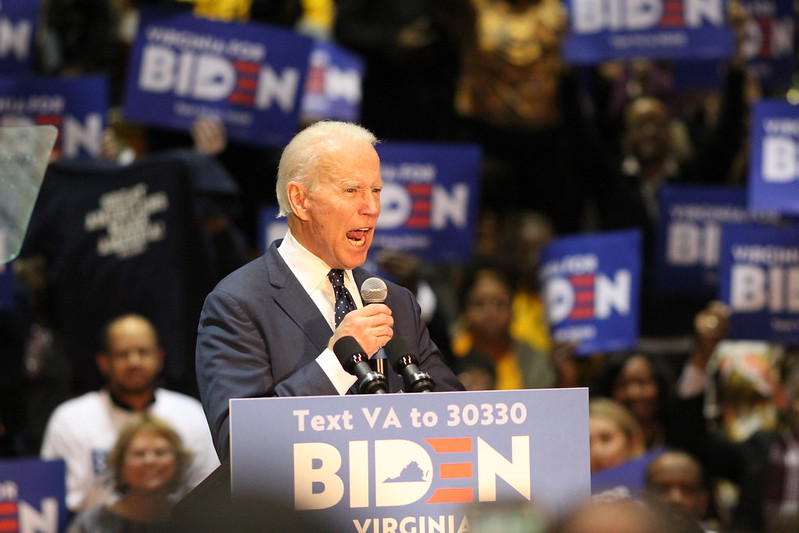
Biden orders removal of Israel occupation reference from election campaign
MEMO | August 8, 2020
US Democratic presidential nominee Joe Biden has ordered the removal of any reference to the Israeli occupation in his campaign programme just days before it was released on 15 July, Foreign Policy revealed on Thursday.
Vermont Senator Bernie Sanders, who withdrew his presidential campaign in favour of Biden, had agreed with Biden that he would include in the Democratic Party platform an assertion that Palestinians had a right to live free of foreign “occupation”, referring to Israel.
However, under pressure from pro-Israeli advocacy groups, Biden made a last-minute decision to remove any reference to the Israeli occupation, Foreign Policy reported three sources confirming.
Therefore, Biden aides asked the progressive leaders in the Democratic Party and urged them to drop their demand to declare Israel an occupying power, the magazine reported.
According to the magazine, Biden aides argued that the inclusion of the word “occupation” threatened to undermine unity within the Democratic Party.
“The question of whether to allow the text to refer to ‘occupation’ or use the phrase ‘end the occupation’ was taken to the vice president and he said ‘no’,” Jason Isaacson, chief policy and political affairs officer at the American Jewish Committee, told Foreign Policy.
“This is not an issue on which the party can bend because it would be contrary to the position of Joe Biden,” Isaacson added.
Foreign Policy noted that the retraction reflected Biden’s reluctance to reverse decades of staunch support for Israel.
It also stated that this retreat marked something of a victory for the party’s establishment, which has sought to preserve close relations with Israel, even as its Prime Minister Benjamin Netanyahu has moved increasingly close to the Republican Party and its standard-bearer, President Donald Trump.
“The party platform section on Israel and Palestine is a clear victory for those supporting a return to mainstream Democratic policies of the past and a loss for the progressives seeking more restrictive or conditional support for Israel,” Peter Mulrean, who served for three decades in the State Department and subsequently oversaw United Nations aid programmes for Palestinians, informed the magazine.
Lebanon: The Beirut Blast, Destabilisation, Chaos, And An Attempt At Regime Change
By Feroze Mithiborwala | OneWorld | August 9, 2020
Interference By The US & France In The Immediate Aftermath Of The Terror Attack
Statements by US Ambassador Dorothy Shea & French President Macron are clear pointers to this nefarious design.
USA Ambassador Shea issued a statement supporting the rioters stating, “The Lebanese people deserve leadership that listens to their demands for transparency and accountability.”
In fact MK Moshe Feiglin, an extreme right-winger from Israeli PM Netanyahu’s Likud Party, could not hide his happiness at the tragedy that had befallen Beirut. Feiglin wrote that he was, “sending his thanks to G-d, and all the geniuses and heroes really (!) who organized for us this wonderful celebration in honour of the Day of Love.”
Feiglin surely seems to know the “geniuses & heroes who organised” this massive terror attack. Interesting indeed, should I say, “Elementary my dear Watson!”
President Macron of France, the old colonial power, immediately flew into Beirut on the 6th of August, two days after the terror attack on the 4th of August & went on to say, “If reforms are not carried out, Lebanon will continue to sink. What is also needed here is political change. This explosion should be the start of a new era.”
This is the same Macron facing massive popular protests in France from hundreds of thousands of discontented & angry farmers, workers, students, and pensioners who are protesting against Macrons’ neo-liberal reforms and massive corruption. The Yellow Vest movement as it’s popularly called faces great repression and violence from the French police. Thus the pretentious & arrogant Macron is hardly qualified to preach to other nations. In fact, on a lighter note, the French are appealing to the Lebanese to keep Macron in Beirut as he’s a disaster for France.
Which country, which government, which army will permit an ambassador or a president of a foreign nation to make such provocative statements immediately in the aftermath of such a massive terror attack on their soil?
The entire Beirut port destroyed, more than a 150 dead and counting, more than 5,000 injured, with an unprecedented 300,000 people who have lost their homes. The population of Beirut itself is around a million, whilst the entire population on Lebanon is around 4 million. It will take between an estimated $10 to $15 billion to rebuild the port and the city. Beirut city itself has been declared a national disaster.
An online petition has been floated on Avaaz appealing to France to once again come & rule Lebanon under the French Colonial mandate for 10 years. This is truly pathetic & the collaborators will soon be exposed.
These are all clear signals for the collaborator forces to carry out a coup, ensuring US, French, Israeli & Saudi support.
Protesters Resort To Violence & Vandalism
Protesters have killed one policeman, even as many protesters have been injured in violent clashes with the police. A group of retired army officers too got into the act & took over the Foreign Ministry & announced that it was the HQ of the revolution & appealed to the protesters to take over other government buildings. Three hours later they were vacated by a contingent of the Lebanese Army.
The protesters are destroying, burning documents & files in key government ministries, namely Foreign Affairs, the Economic & the Environment Ministries. These are clear attempts to destroy the evidence & thus pre-empt the time-bound investigation being carried out by the government looking into the Beirut blast.
On their part, the Lebanese government, President Michel Aoun, PM Hassan Diab, and the Army have stated that the people have legitimate grievances and the right to protest. But the protests must be peaceful and the vandalisation of property, of government buildings, and destruction documents will not be allowed. PM Diab has also called for elections to be held within a period of 2 months.
Target: The Lebanese National Resistance
The target of this terror attack, contrived destabilisation & chaos is undoubtedly Hezbollah & all the constituents of Lebanese National Resistance that have all made great sacrifices whilst valiantly resisting the Israeli invasion of Lebanon in 1982. They have defended & successfully defeated Israel, when finally the Zionist military machine was forced to retreat in the year 2000, though yet they continue to occupy the Sheba farms.
This was followed by another Israeli invasion in 2006, where again the Lebanese National Resistance defeated Israel & ended their military domination of the region. Israeli terror, its military machine had finally been counter-balanced by the courage & resilience of the Resistance.
The Beirut Port Blast
In context of the Beirut blast, aspersions are being cast and anger mainly being directed against Hezbollah for storing weapons at the port, a charge that Sheikh Hassan Nasrallah has denied & scoffed at. Hezbollah is the primary target of the Israeli war machine and thus Hezbollah takes great precautions in hiding & securing its weaponry from being targeted by Israel. Thus a public place like the port is clearly out of the question. On his part, Sheikh Hassan Nasrallah has called for an open & transparent investigation into the Beirut blast.
Key Questions For The Investigation
The investigation will prove who were the real perpetrators & thus some of the key issues that they need to ascertain are the following:-
▪ Who controlled the port security?
▪ Was there a Hezbollah weapons depot?
▪ Who was responsible for the storage of the ammonium nitrate, since when was it present, why was it allowed to remain in the port?
▪ Was the destruction caused by an advanced potent weapon fired by a foreign nation?
▪ According to the Lebanese Army, there were 29 aerial incursions of Lebanese airspace by Israeli fighter-jets over the 1st & 2nd of August just 48 hours prior to the blast on the 4th of August.
▪Radar images of unusual patrols and reconnaissance operations of four US Navy spy planes on the Lebanon-Syria border are also part of the evidence. Was the US monitoring the operation leading to the massive attack on Beirut?
So Who Controls Access To The Port?
According to Steven Sahounie, a Damascus-based journalist & political analyst, “Hassan Koraytem is the General Manager of the Port Authority of Beirut, and a member of former Prime Minister Saad Hariri’s ‘Future Party’, which controls access to the Port.”
Thus once again we have the Hariri factor, the pro-US-Saudi ally in control of the port. Another key part of the mounting evidence of internal sabotage and an external attack.
On the issue of the ammonium nitrate, that does require further investigation, as it was clearly present in the port. Yet the “white mushroom cloud” that we all have witnessed is evidence of another volatile material, a new weapon, a new advanced missile, that has been ominously plausibly unleashed in this terror attack.
Here Lebanese President General Michel Aoun has publicly stated that, “The cause has not been determined yet. There is a possibility of external interference through a rocket or bomb or other act.”
In fact, US President Trump clearly stated that it was a “terrible attack”, and went on to say that “American generals told him that it was likely caused by a bomb.”
Trump’s public statement is remarkable indeed, as his generals clearly told their President that it was an “attack”.
This later led to denials by Defence Secretary Mark Esper, who insisted that it was an “accident”. Yet the White House Chief of Staff Mark Meadows defended the President and stated that Trump only told reporters on Tuesday what military officials had told him. “The president shared with the American people what he was briefed on, with 100% certainty I can tell you that.”
Clearly an attack by an external force, namely Israel, with the full knowledge of the US, France & Saudi Arabia cannot be ruled out. In my estimation, they are the real perpetrators of this vile act of terror. They have a history of such bloody acts, as we all well know.
The Lebanese National Resistance
In this hour of great peril, we stand in solidarity with the Lebanese people & the Lebanese National Resistance and both are intertwined. This remarkable nation has survived despite all the plots to divide the society & engineer civil wars.
Lebanon has survived despite the economic sanctions imposed upon them by the US, France and Saudi Arabia. This has created a severe economic crisis, leading to hyper-inflation & record unemployment rates. That even as Lebanese oligarchs have swindled the banks, leaving Lebanon burdened with gargantuan debt of around $90 billion. This compounded with the fact that the war on Syria itself has led to a great degree of political, economic and social destabilisation within Lebanon.
Do note that effigies of President Michel Aoun & Sheikh Hassan Nasrallah are being selectively burnt by protesters. This is despite the well-known fact that it was the US-Saudi-backed Hariri clan, the Future Party, their allies that control the key sectors of the economy and have gained enormously by their corrupt misrule of the country. Thus if the current Michel Aoun government arrests certain powerful corrupt leaders & individuals, Lebanon will descend into civil war, protected as they are by foreign powers & private militias.
The Lebanese Confessional Political System
According to noted Syrian-Palestinian analyst & Beirut-based journalist Laith Marouf, it is in fact the French gift of the sectarian parliamentary system that has been the bane of Lebanon. The entire political edifice is based on a “confessional system” whereby the political representatives are elected on the basis of their narrow religious and sectarian identities. This has ensured that Lebanon remains internally divided and thus weak. The political system itself is designed to prevent a larger Lebanese national identity from emerging, strait-jacketed as they are in a narrow religio-sectarian system.
This compounded with the fact that there is a disproportionate amount of foreign interference in domestic Lebanese affairs, due to which the government remains divided, weak & indecisive. This in fact provides the space for the unbridled loot & corruption of the ruling classes.
The Lebanese National Resistance
Yet, despite all these seemingly insurmountable hurdles, Lebanese society has given birth to one of the most remarkable national resistance movements of our times. A resistance movement that has withstood and defeated the combined might of the US & Israel over nearly four decades. This in itself is a miracle.
Basically, Lebanon is paying the price of standing with the Axis of the Resistance in the region, namely Palestine, Syria, Iraq, Iran & Yemen. These nations refuse to surrender their sovereignty and their independence to the might of the imperial, Zionist, collaborator nexus & are thus facing an outright war on both the military, and economic fronts.
Despite all the odds, this nation with a population of only 4 million continues to resolutely stand with the Resistance. An overwhelming number of the Lebanese people remain committed to the liberation of Palestine, of the entire region – and it is due to this very reason that they are paying the ultimate price.
All these plots have failed, that even as the Lebanese National Resistance has grown stronger & has gained legitimacy & respect across the world, much to the chagrin of the imperial-collaborator nexus.
We Stand With Lebanon
This is also an appeal to the International solidarity movements against Imperialism & Zionism, the international Palestine solidarity movements, the anti-war movements, to come out and expose this nefarious plot against the Lebanese National Resistance and the liberation movements across the region & the world. An appeal to come and stand with Lebanon and defend the Resistance that today is the vanguard and stands at the front lines & defends the world.
Feroze Mithiborwala is an expert on West Asian affairs, he is also the Founder-National General Secretary of the India Palestine Solidarity Forum and was the organiser of the First Asian Convoy to Gaza (2010) & the Global March to Jerusalem (2012).
Featured Video

When Israel Is Mighty
or go to
Aletho News Archives – Video-Images
From the Archives
US murdering 1 million Iraqis is democracy, Iran giving yogurt to Iraq is “domination”
By Ali Salaam | American Herald Tribune | July 31, 2017
The New York Times, owned by the Zionist Jewish supremacist Ochs-Sulzberger family, has no problem with Iraqi suffering as long as Iran is not the one behind it.
The Iraq War was a genocide of the Iraqi people by Zionist supremacists in the Bush administration. Over 1 million innocent people were killed based on a lie. American soldiers died in an Israeli war and now an average of 22 soldiers commit suicide every day because their consciences cannot cope with the fact they committed crimes in an illegal war that served no purpose other than to benefit Israel, not America.
Benjamin Netanyahu, Prime Minister of the Zionist regime, once said “We are benefiting from one thing, and that is the attack on the Twin Towers and Pentagon, and the American struggle in Iraq.”
Paul Wolfowitz had his sights on Iraq since his time in the first Bush administration. Former Israeli official and Bush administration official Richard Perle had his eyes on Iraq since at least his authorship of the Clean Break white paper. The Zionist regime had their eyes on Iraq since the 1980s when strategist Oded Yinon wrote his white paper in support of dividing the Arab-Muslim world along ethnic and sectarian lines. The global Zionist lobby has had their eyes on Iraq since Theodor Herzl stated that Eretz Israel’s true borders go from the Nile River in Egypt to the Euphrates River in Iraq. … continue
Blog Roll
 Aletho News
- When Will This White House Madness End?
- Huckabee aide goes to ‘unusual lengths’ to portray ‘Israel’ positively
- Trump Announces Diesel Supply Deal With Putin Following Phone Call
- MEP blasts ‘Euro-Gestapo’ for lecturing Russia on democracy
- Syria May Send Troops to Saudi Arabia Amid War with Ansar Allah
- UK whines about losing billions to ‘Putin tax’
- Baghaei to Rubio: Distorted narratives cannot erase US record of broken commitments
- Houthis Don’t Have to Conquer Saudi Arabia to Make It Pay
- MOE: Nearly 22,000 Students and Education Workers Killed
- Guterres in Islamabad: Genocide, cowardice, and the cage of Imran Khan
- If Americans Knew
- Gaza ceasefire exists in name only, say more than 100 organizations
- Nearly 2 Million in Gaza Need Urgent Shelter Assistance as Winter Looms: IOM Chief Warns
- Suppressing Palestinian resistance: US charity under fire for AI monitoring of Gaza classrooms
- Thousands Are Held in Israeli Torture Camps. This Is What Happens Inside
- Israel puts Gaza’s sick, injured, newborn in peril – Daily Update
- Report claimed Mark Levin used by Israeli government to influence Trump
- Over 2,000 Gazans have died awaiting medical evacuation amid Israel’s continued siege
- How a U.S. Diplomat Suppressed and Altered Reports Critical of Israel
- 5 Palestinians Die from Israeli Strikes in Gaza as Relentless Attacks Continue
- Report: Ceasefire Slows Killing but Leaves Devastation Intact
- No Tricks Zone
- New Study: 50 Years Of The Most Aggressive ‘Net Zero’ Policies Can Only Affect The Global Climate By 0.03°C
- US September “Heat” Was No Record…Many Records Set Decades Ago
- Latest European Green Energy Debacle; Portugal’s Largest Flagship Solar Park Insolvent!
- Green Energy Debacle: German Expert Professor Fritz Vahrenholt Warns Of Severe Economic And Social Consequences
- Two More Paleo Reconstructions Affirm Meters-Higher Sea Levels Across Ireland, Brazil 7000-6000 Years Ago
- New Study: Earth And Venus Surface Warmth Largely Explained By Convection And Lapse Rate, Not CO2 Or Radiation
- 2025 Nature Paper Claiming Worsening Global Drought Gets RETRACTED …Heavily Flawed
- New Study: ‘Global Drought Shows No Detectable Recent Acceleration Under Climate Warming’
- Economic Masterminds: German Socialists Suggest Taxing Productivity Gains Stemming From Using AI
- The South China Sea Has Not Been Cooperating With The Climate Change Narrative

