Lebanon-Israel border fire: Scandal or victory for Tel Aviv?
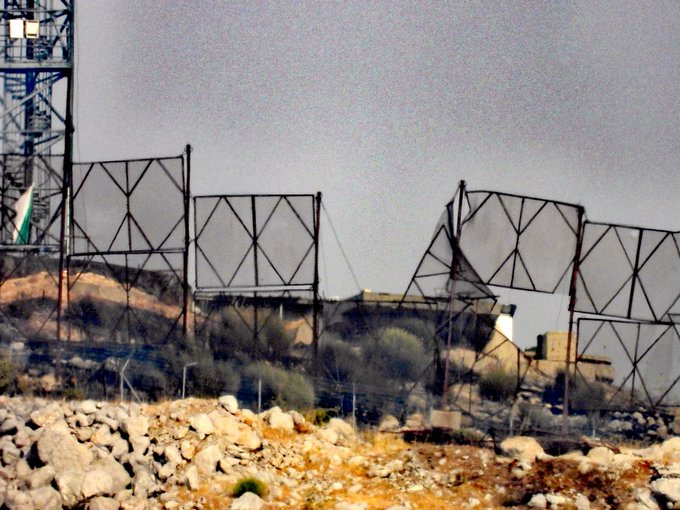
Photo: Fear of Hezbollah Pushes Israeli Artillery to Bombard Israeli Military Site
Middle East Observer | July 31, 2020
Description:
Senior Lebanese political analyst Anees Naqqash provides his analysis of the recent flareup on the Lebanese-Israeli border, an incident which is becoming the subject of many questions, theories and debates.
In this interview on Al-Manar TV, Naqqash says something ‘very strange and major’ occurred in this incident, and perhaps the ambiguity will be removed in the future. However, the senior analyst, who is closely-tied to Hezbollah, affirmed that the events at the border were a ‘major scandal for the entire state of Israel’.
Here’s the necessary context:
For days Israeli forces had been on high alert on the Lebanese border after Tel Aviv understood that a Hezbollah reprisal attack was imminent after the Lebanese group announced that one of its cadres (namely Ali Kamil Mohsen) had been killed by an Israeli airstrike near Damascus International Airport.
On the 27th of July, 2020, a military incident occurred at the border between Lebanon and Israel. Much debate ensued regarding what actually occurred. As the apparent cross-border fire unfolded on that Monday afternoon at the Shebaa Farms border region, Israeli media reported the developing situation minute by minute, albeit with contradictory accounts. Meanwhile, Hezbollah remained silent, while Lebanese media outlets like Al Mayadeen TV largely relayed Israeli media’s breaking news reports.
The final account that Israeli media and officials generally settled on hours later was this: the Israeli army had thwarted a Hezbollah infiltration attempt into Israeli-controlled territory, and that the army remains alert for any future attempts to breach the border.
Thereafter, when the dust had settled, Hezbollah issued a statement denying Israeli media reports that a Hezbollah infiltration attempt was foiled, and asserted that all the fire that was opened was carried out unilaterally by the Israelis. Hezbollah unequivocally asserted that there were no ‘clashes’, nor exchange of cross-border fire, nor ‘martyrs’ that fell from its side, but rather ‘terrified and anxious’ Israeli forces ‘firing at each other’.
The Hezbollah statement also assured that the reprisal for Israel’s killing of Ali Kamil Mohsen, one of its cadres in Syria, is undoubtedly coming.
Source: Al-Manar TV
Date: July 27,2020
Transcript:
Host:
Mr. Anees, let us return to the point raised by Mr. Hijazi (Al-Manar journalist) regarding the (various) scenarios. What are the potential scenarios that led the enemy entity (Israel) to this situation today? Is it truly the case that the huge (Israeli) confusion and tension (in anticipation of the promised Hezbollah reprisal), this idea (invoked initially by Nasrallah, that the Israelis ought to wait for the reprisal by) “standing on a leg and a half” , also after Hezbollah’s (media) statement, which we’re going to mention after a while, and I don’t know how much they’ll last standing on a leg and a half moving forward… what are the scenarios that led to this scene? Or is it truly a trick (by Israeli officials) aimed at getting rid of the burden of (Hezbollah’s promised) reprisal through any way possible, by say fabricating a story or scenario to reach this end?
Naqqash:
This scenario, in which (the Israelis purposefully) commit an attack against their own selves in order to prevent Hezbollah from responding by drawing a statement from Hezbollah (in which the Lebanese group can claim) that “We have retaliated and carried out our reprisal”, this (possibility) is abit unlikely, unless of course (the Israelis) are that stupid, But whoever knows Hezbollah well, knows that they won’t engage in such a game.
There’s something that I don’t know how we will reach one day, but something (in what occurred today) looks like the Ansariya operation (of 1997, which occurred at the Lebanese coastal town of Ansariya). When the Ansariya operation took place, Robert Fisk, the famous correspondent from The Independent, came to me and said, “Anees, my estimation of this operation is that it is impossible for it to have occurred in the manner in which it did.” In what sense (did Fisk mean)? (He meant that) Hezbollah (during the Ansariya operation) was awaiting the Israeli special forces in order to trap them, and these (Israeli special) forces do not move into action except by the command of the (Israeli) Prime Minister and (Israeli army’s) Chief of Staff, so this means complete secrecy, a large part of the (Israeli army) does not know about the movements (of these special forces).
Fisk continued, “So, I believe that Hezbollah was awaiting (the arrival of these forces at Ansariya), and there’s no way (this ambush could have occurred) except by (Hezbollah) having penetrated the Israeli (Chief of) Staff Command.” (Fisk) wasn’t joking at all. He said “my estimation”, and you know Fisk’s (journalistic) experience, he has extensive experience in the (Middle East) region for over 30 years. I replied to Fisk’s claim and told him, “No, I don’t think it required (Hezbollah) to penetrate the (Israeli Chief of) Staff Command. There’s something major that happened, maybe one day it will be clarified.”
What was the major thing (that was revealed later)? That an (Israeli) spy drone had been capturing images of an area (in the Lebanese town of) Ansariya, (Hezbollah) operatives (had intercepted this drone) and were collecting these images, which allowed them in turn to uncover the enemy’s intended target (i.e. Hezbollah anticipated where the Israeli special forces were intending to land and strike). They uncovered the enemy’s intended target via the enemy’s eye (in the sky). Through the enemy’s eye they prepared for them an ambush.
I believe the day will come when the major fact (behind today’s events) is revealed, because what happened today was very strange. It wasn’t merely a confused Israeli soldier who was firing a M16 or PKM, or even a single tank firing at an invisible target. Rather, it consisted of extremely heavy shelling from several (Israeli) sources of fire, all of which were targeting an (Israeli) military base, and this lasted for several minutes. The information was delivered to the (Israeli) prime minister and he (immediately) issued threats and assessed the (magnitude of the) situation. Something major occurred at this (military) site. I think that the enemy today is extremely confused to the maximum level possible. What happened to its forces? Who gave the order to open fire? What (is the nature of the) penetration that took place? What camouflage (tactics) were used?
During war, armies carry out spy missions, deception operations, I give him fake targets (to shoot at), and perhaps behind these fake targets his own forces could be stationed. All this occurs. What happened today? No one can say exactly what happened, but one thing could be said, “It is a scandal for the Zionist enemy and its army and its (entire) state as a (political) entity, because it is not just the (Israeli) Northern (Army) Command which is involved in this scandal, as I said in the beginning, from the Prime Minister, to the ‘Minister of War’, to the (local commanders) on the ground, all are embroiled in this scandal.
Something major has happened today, which is forcing (the Israelis) to reconsider their calculations. Great powers today are looking at this (Israeli) entity today and saying: something major has happened. This is an entity that cannot be relied upon (to achieve any military advances). This reminds us of reports written by great powers after 2006 which said that this army cannot win any (future) war, because its performance in 2006 was one of the worst performances, (a war waged against) only two thousand fighters from Hezbollah. Today the situation is (even) totally different in terms of (Hezbollah’s) numbers, equipment and weapons, but this is another issue. Yet the confusion that took place today, the scenario that caused a total collapse of the (Israeli) media and intelligence (apparatus), of the Chief of Staff, of the Prime Minister, to the (actual) Israeli base on the ground that bombarded the other military base.
Recently I received information that large plumes of smoke were rising from some (Israeli) bases. My estimates were that the enemy was evacuating from these bases and did not want (Hezbollah) to know that it had evacuated. This base (that was bombarded by Israel) was part of the scenario. Did the enemy evacuate this base in order to create this scenario? This would indicate the level of disgrace of the Zionist enemy, as it imagines Hezbollah would feel satisfied with this scenario and claim that it carried out this operation. It’s as if (the Israelis) are convincing themselves that (Hezbollah) might do such a thing. And this is impossible (Hezbollah would never do it) . As you heard today (the Israelis) saying: “What annoys us more is that Hezbollah did has not issued a statement yet.” And when the situation became clear, Hezbollah issued that very clear statement, and by doing so, revealed the weakness of the enemy, as it revealed Hezbollah had no hands in the clashes, and that the Israelis were clashing with themselves. Today there is a great defeat for the enemy at all levels, and this must be further closely studied.
(Important note: Please help us keep producing independent translations for you by contributing as little as $1/month here)
Israeli Colonists Steal Palestinian Water Tanks And Tents In Northern Plains
IMEMC News | July 30, 2020
A group of fanatic Israeli colonists, illegally squatting on stolen Palestinian lands, invaded Wednesday Khirbat Samra Bedouin community, in the West Bank’s N Plains, before stealing water tanks, tents, and equipment.
Mo’taz Bisharat, a Palestinian Authority official in charge of the Jordan Valley file, stated that the colonists stole sheds, tents, water tanks, and kitchenware from the families in the village, and fled the area.
Bisharat added that the colonists stole three water tanks, each with the capacity of 1.5 cubic meters, and kitchenware, owned by five Palestinian Bedouin families.
He added that the colonists also stole five tons of wheat and fodder and four tents used by the families.
The official stated that, while such assaults are frequent, usually targeting livestock, lands, and shepherds, the latest assault is a serious violation and escalation as it is targeting the families in their own dwellings, their tents where they reside.
Israel to Demolish Palestinian Village in West Bank, Displacing 200 People
Palestine Chronicle | July 30, 2020
The Israeli occupation authorities are set to demolish an entire Palestinian village near Jenin, in northern West Bank, displacing over 200 people, the Palestinian news agency WAFA reported.
Mahmoud Amarneh, head of the Farasin village council, told WAFA that Israeli occupation forces raided the village this morning and handed out 36 demolition orders for the entire structures and water wells in the village where 200 people live.
Amarneh added that the military warned the residents that the demolition will take place in the coming days.
According to Amarneh, the Israeli occupation government wants to take over the village in order to expand illegal settlements built in that area.
The village has a 200-year old well and several ancient buildings, he said, urging international intervention to prevent Israel from committing a massacre in the village.
Israel turning mosques into synagogues, bars
![The Omari Mosque in Tiberias, built by Zahir [Wikipedia]](https://i1.wp.com/www.middleeastmonitor.com/wp-content/uploads/2020/07/Tiberias.png?resize=1200%2C800&quality=85&strip=all&zoom=1&ssl=1)
The Omari Mosque in Tiberias, built by Zahir
MEMO | July 28, 2020
One of the landmarks of Tiberias, the mosque, also known as the Zaydani mosque, was built on the Mameluke architecture, with a big dome and a minaret.
“Like most Palestinians, the Tiberias residents have fled to Syria and Lebanon following the Nakba,” Kamal Khatib of the High Follow-up Committee for Arab Citizens of Israel, told Anadolu Agency.
“The Zaydani family, however, moved to the adjacent city of Nazareth,” he said.
Khatib said the Zaydani family had asked the Israeli authorities to give them permission to renovate the Umari mosque.
“The Tiberias Municipality, however, refused, arguing that it would renovate it, but nothing happened,” he said.
“Ever since the mosque has been closed with Israeli authorities banning worshippers and visitors from entering it,” he said.
The study also showed that 40 mosques were either destroyed, closed, or abandoned, while 17 others were turned into bars, restaurants, or museums.
For example, the Al-Ahmar Mosque in the northern town of Safed was turned into a concert hall, while Al-Jadid Mosque in the city of Caesarea was changed into a bar, according to the study.
Khatib recalled that mosques in the pre-Nakba era were teeming with worshippers. “After the Nakba, however, mosques were destroyed, particularly those in villages. Other mosques were either turned into synagogues, bars, museums, cafes or restaurants.”
Khatib lamented that the Israeli policy “disregards the sentiments of Muslims”, citing the al-Isaaf cemetery in Jaffa, where tombs were razed despite protests from local residents.
Khatib said Israeli authorities have enacted legislation to confiscate the property of Palestinians, who fled their homes.
“The Knesset (Israel’s parliament) passed the law of absentees, under which Israel confiscated buildings and property of Arab citizens [who left their homes to other areas],” he said.
Israel denies the accusations of using mosques for other purposes than worshipping.
In October 2015, the Israeli Foreign Ministry said there were around 400 mosques in Israel and that the number of worshippers doubled five times over the past 25 years.
Khatib, however, dismisses the Israeli claim, saying “The Israeli government has never built a mosque in the country’s history”.
US Democrats reject restrictions on military aid to Israel
MEMO | July 29, 2020
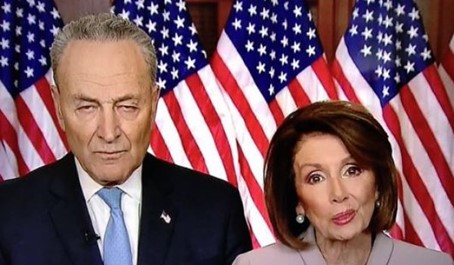
American Democrats voted overwhelmingly against a draft resolution which would restrict US military aid to Israel, reports revealed yesterday.
The draft resolution also condemned Israeli settlements, which have been labelled illegal by the UN Security Council.
The committee rejected the addition of the term “occupation” and refused to condition aid to Israel should the occupation state move forward with annexation efforts.
The amendment was introduced by Clem Balanoff, the Illinois director of the pro-Bernie Sanders non-profit “Our Revolution”.
Although 34 members voted in favour of the motion, 117 opposed it and five abstained.
Funding the PA strengthens Israel’s colonial framework
By Ramona Wadi | MEMO | July 29, 2020
Unsurprisingly, Israel’s decision to halt its annexation plans temporarily has been met with a resounding silence from the international community, rather than utilising the interlude to come up with a unified approach that holds Israel accountable for its open colonisation of Palestine.
Meanwhile, the Palestinian Authority persists with its absurd yet dangerous spectacle, professing a purportedly defiant stance while capitulating to international demands regarding the two-state compromise. The EU’s funding of this charade and its willing political actors has simplified the process for two-state diplomacy. Conversely, the Palestinian people will bear the brunt of the consequences of decades-long political failure.
Speaking about the PA’s financial crisis and in turn illustrating its dependence on external financial support, Prime Minister Mohammad Shtayyeh insisted that a complete dissolution of ties with Israel was still on the agenda. “We are continuing with a total halt to ties with the occupation,” he declared, “and we will not allow it to blackmail us, and therefore we will not receive the clearance funds from this month.”
With security coordination, once deemed “sacred” by PA leader Mahmoud Abbas, regulating every aspect of Palestinian politics and society, the tax revenues collected on the PA’s behalf by Israel are no exception. Israel is insisting on it delivering the funds through such coordination which the PA has halted in retaliation for the forthcoming annexation.
Stepping in to alleviate the PA’s financial deficit, the EU announced a €23 million contribution, allowing Ramallah the ability to pay reduced wages for Palestinian public employees working mostly in the health and education sectors.
If the EU and the PA refrain from misrepresenting the current political crisis as a financial setback, a different picture emerges of a decades-long compromise in which the international community funds the PA to play a role in maintaining the two-state compromise, while protecting Israel in the process. The EU has excelled in this strategy. By distancing Palestinian narratives from politics – the former solely serving the humanitarian enterprise – the EU is under no pressure to alter its stance, even when annexation, or the formalisation of colonial land grab, is imminent. Funding the PA does not create obstacles for Israel’s colonisation process, it actually strengthens Israel’s colonial framework. Furthermore, it creates the illusion of peacebuilding and Palestinian rights within the two-state framework.
The PA, meanwhile, seeks to frame its refusal to accept the tax revenues as an anti-colonial stance, even when its structure is heavily dependent upon the colonial framework. So far, it has not offered a coherent strategy that prioritises Palestinian rights and autonomy; EU funding is precisely about preventing such politics from emerging and the PA is an accommodating puppet. At a time when Palestinians are facing another visible round of internationally-forced displacement, the EU’s priority is to safeguard the PA’s existence. The blind acceptance of the EU’s financial aid for the PA as a pro-Palestinian endeavour needs to be challenged. Any trickle of benefits for Palestinians from EU funding is destroyed swiftly by Israel, while the peacebuilding illusion and the two-state framework provide Israel with the impunity to continue to colonise Palestine. As long as peacebuilding rhetoric exists, Israel remains safe from punitive measures.
What happened —and didn’t happen— at the Israel-Lebanon border?
By Sayed Hasan for The Saker blog | July 29, 2020
On the night of Sunday, July 19th, airstrikes hit Damascus International Airport. Though Israel didn’t claim responsibility for them, sticking to their longtime “zone of denial” policy, no one doubts they were the perpetrators. On Monday, the Syrian Army announced 7 soldiers were injured. It could have been one strike among hundreds of others, soon forgotten because of the lack of Syrian retaliatory measure. But the day after, Hezbollah announced the martyrdom of one of its combatants, Ali Kamel Mohsen, killed during the Israeli raid. As an Israeli commentator on Arab affairs put it in a tweet, this announcement “certainly changes the picture”. In fact, it is an understatement: it turned a tactical success into a PR disaster for the Netanyahu government, and a nightmare for the Israeli’s Army Northern Command and settlers living close to the Lebanese border. Because as everyone knew, a Hezbollah retaliation was inevitable.
We cannot understand what is happening now if we don’t put it in its larger context. Hezbollah’s rules of engagement against Israel in Syria were spelled out in January 2015, after Israel targeted two of their vehicles in Syria’s Quneitra region, killing 6 Hezbollah fighters (including Jihad Moghniyeh, son of Hezbollah’s martyred commander Imad Moghniyeh), along with an Iranian IRGC General. Back then, Nasrallah didn’t make any speech until the retaliation, which came out 10 days later, on January 28, when Hezbollah destroyed 3 vehicles in an Israeli convoy patrolling the occupied Shebaa farms, killing 2 to 5 soldiers —the sources differ— and wounding seven others (Israel retaliated by killing a Spanish UN soldier). Here is what Nasrallah stated in a speech two days later:
“The Resistance operation happened in broad daylight (just before noon), at the highest state of alert of the Israeli enemy, who until now is incapable of understanding how it happened. […] Because they are cowards and not (real) men, and because “They will not fight you (even) together, except in fortified townships, or from behind walls” (Quran, 59, 14), they struck us treacherously and didn’t dare to claim responsibility for the attack. As for Hezbollah fighters, because they are (real) men who don’t fear death, they attacked them frontally, face to face, and we claimed responsibility for the attack immediately after it happened. […] My message today is the following: from now on, any Hezbollah cadre or commander, any young Hezbollah (combatant) who will be assassinated (in Lebanon or in Syria), we will blame Israel for it, and we will consider it our right to retaliate anywhere, anytime and in any way we see fit.”
This equation was put in practice and even broadened in August 2019, after Yasser Dhaher and Hassan Zbib, two Hezbollah combatants, were killed in an Israeli airstrike in Damascus suburbs, and an Israeli drone attack against Beirut’s southern suburb, a Hezbollah stronghold, was foiled. Here is what Nasrallah stated in an August 25th speech:
“We will retaliate from Lebanon, and not (necessarily) from the Shebaa farms! I declare to the Israeli soldiers at the border tonight: wait for us against the (separation) wall (standing) on one foot and a half (be ready to flee for your lives)! Wait for us on one foot and a half! Wait for us (because we’ll certainly come at you)! In one day, two days, three days, four days… Just wait for us!”
While Hezbollah used to attack Israel exclusively in the Shebaa farms, a Lebanese territory occupied by Israel, they now vowed to strike anywhere, a dramatic development which put tremendous pressure on the Israeli side. Drastic & unprecedented measures were taken to foil Hezbollah’s retaliation: Israeli forces didn’t “hole up” in their bases as Nasrallah had advised them to, but went as far as evacuating all their positions close to Lebanon, in a width of 5 to 7 kilometers, and along the whole length of the border line. All Israeli defenses were activated. Strict security measures were taken to evacuate some settlements and forbid the remaining settlers to perform most daily activities —video footage showed empty streets & closed shops, most people being holed up in their house all day long.
For 8 days, the mighty Israeli army appeared as the “spider web” it was, frightened and terrorized, its border barracks and outposts left deserted —as was shown by an RT crew who got inside—, its vehicles abandoned with dummy soldiers inside, with tanks scattered everywhere for days hoping to lure Hezbollah to attack an empty target (see all security measures Israel took detailed in Nasrallah’s speech back then).
The psychological warfare is a key element to understand what is happening —and not happening— right now, even before we speak of the retaliation itself. As Nasrallah put it in his September 2nd speech,
“We warned the enemy that he had to expect us (any time) from now on. This is a strength point of the Resistance. We could have remained silent, refrained from threatening (Israel of an imminent retaliation), not revealing our intentions, keeping quiet as we say, for 1, 2 or 3 days, then hit them by surprise. The military know that one of the most important aspects of a military operation is the element of surprise. But we have not done so, because our fight against the Zionist entity has a major psychological component, affecting the morale and soul of the enemy (which we strive to undermine). So we told them from the beginning to wait for us, because we were coming. In itself, it is an enormous challenge issued by the Resistance.[…] [This high alert of the enemy and the evacuation of the border outposts] are part of the punishment (we inflicted on Israel). Before we retaliated with our military operation, some people were (ironically) asking: where is your response? But (this terror situation on the Israeli side) was already a punishment and a retaliation. […] [The whole world saw the staggering difference between] our good Lebanese people (who) was normally moving in border areas, whether in villages or fields, and led a completely normal life, [while Israeli settlers were forbidden to approach “their” fields in occupied Palestine and where holed up in their houses].”
Thus, Israel seemed humiliated and defeated even before the retaliation came. It did happen on September 1st, when a moving Israeli military vehicle was destroyed in broad daylight by three anti-tank missiles near Avivim barracks, killing or wounding its occupants. While Israel had promised to hit Lebanon hard and return it to the Stone Age via all channels (diplomatic, media, etc.) in case of retaliation, the IDF didn’t hit back at all, merely firing “defensive phosphorous strikes aimed at building a smokescreen to protect themselves from further strikes”, as Nasrallah put it. Israeli TV channels showed the evacuation of a seemingly badly wounded soldier by helicopter, and his arrival at a Haifa hospital.

But Netanyahu claimed there was not as much as a scratch in the Israeli side, and that everything had been staged in order to convince Hezbollah they had avenged their martyr and avoid any further escalation. While this seems like a PR stunt aimed at damage control (especially when we consider that on September 4th, Israeli media reported that a soldier stationed in the North was severely injured by a bizarre game of stone-throwing, suggesting a ludicrous cover-up only made possible by the strict military censorship), Nasrallah didn’t rule it out, and stated in a September 10th speech:
“Everything that was done by the Israelis in recent days, for example the Israeli dummy soldiers (in their vehicles), this shows the weakness of the Israeli army. And when things have come to what they called “the deception operation”, in which they allegedly staged the evacuation of soldiers with fake injuries that they carried on stretchers, covered in fake blood, and would thus have deceived Hezbollah (into believing that his goal was reached, to prevent him from launching new strikes). Let us imagine that you really tricked us: all that would prove is, in few words, that your renowned legendary and invincible army has turned into a Hollywood army, which makes movies for the cinema, because it became helpless on the ground, incapable, weak, fearful and cowardly, withdrawing from the border to a width of 5 to 7 kilometers (for fear of the promised response by Hezbollah.”
It would be difficult to conclude that this 2019 round ended in anything but a crushing defeat for Israel, be it on the military, psychological or PR level. Though all of this is little known to the Western public, where the media is but an echo chamber of the Israeli Army’s propaganda (even RT, Sputnik and most alternative media often take their claims at face value), there is no doubt that it was strongly present in the mind of Israel’s political & military leaders when they heard of a Hezbollah operative killed in their latest strike on Syria ten days ago. Israeli media reported the high alert status of the Army in the North, where military drills were canceled, reinforcements sent and units & defenses put in high alert in the expectation of an imminent Hezbollah attack. The usual huff and puff about Israel’s forceful response in case of an attack was heard from Netanyahu & Gantz. But as Israel is in the eye of the storm because of the coronavirus crisis & current civil unrest and daily & violent protests against Netanyahu, another round against Hezbollah, Israel’s most dreaded enemy, is the last thing they’d want. That’s why Israel took the unprecedented step of sending an apology letter to Hezbollah via the UN representative in Lebanon, as was reported by Lebanese & Israeli media, and confirmed by Hezbollah’s Deputy Secretary General Naim Qassem, though the latter wouldn’t speak of its contents, and only stated that Hezbollah didn’t and wouldn’t reply to it.
Commenting on this development, Senior Lebanese political analyst Anis Naqqash, closely linked to Hezbollah, stated the following in an interview to Al-Mayadeen on July 26:
Anis Naqqash: This letter is the greatest proof of Israel’s weakness and fear of Hezbollah’s response. (Recall that in the past) Israel slaughtered (civilians) by the hundreds, and did not apologize or send (explanatory) letters. Israel committed aggressions and occupied territories, and did not apologize or send (explanatory) letters. (But) today, fearing Hezbollah’s reaction, Israel sends an urgent letter via the UN as an apology, because they are afraid of the reaction.
First, the fact that Hezbollah did not make the contents of the letter public helps to make it irrelevant. If they had published it, they would have given the impression of wanting to make public what Israel said. Second, the fact that Hezbollah did not respond to the letter confuses Israel. Despite their apologies and asking for forgiveness, what is Hezbollah’s response? Absolute silence. This leaves Israel in a state of great disarray. (Hezbollah) has also confirmed (via its Deputy Secretary General) that Hezbollah will do what they have to do when the time comes, which also leaves more to fear (in Israel).
Therefore, today Israel is clearly in a state of continued confusion and fear, and the statements of Sheikh Naim (Qassem) today will not allow them to sleep peacefully, on the contrary, they are even more worried (after hearing him).
Journalist: Israel therefore stands on one foot and a half (Nasrallah’s formula to designate the fear and terror of Israeli soldiers, ready to flee at full speed at the slightest alarm) without even the Hezbollah Secretary General needing to speak (and warn them of an imminent response)?
Anis Naqqash: The last time he warned them, but this time they (already) know what to expect. It’s like an unruly pupil standing up and facing the wall on his own every time he does something silly. Today Israel stands up and faces the wall, and does so on one foot and a half, taking (drastic) precautions. No one can say if the response will come before the Eid-el-Kebir (on July 31st) or after, or even if the response will take the Eid festival into account or not. Everything is possible on the part of the Resistance.
Journalist: But isn’t the fact that Hezbollah has not made public the contents of the letter a sign of seriousness, respect and responsibility given that it is an official letter that has been delivered via the United Nations? Isn’t that an important sign (of maturity)?
Anis Naqqash: This can only be understood by comparison with what the Arab leaders and Presidents, and even the former leaders of the Palestinian resistance factions, used to do when they received such marks of attention from the (Israeli) enemy, or from the United States or Europe. The mere fact that one of these countries paid attention to them, made a mere gesture of consideration towards them, they were quick to show it to everyone (as a sign of pride), (boasting) that they had received a glance, a letter from such or such country, an apology, etc. Their opponents saw them as eager for any sign of recognition from the enemy.
As far as Hezbollah is concerned, it is quite the opposite. Hezbollah does not attach any importance to the enemy and its stances. Of course, they study them closely (one has to know its enemy very well), but they do not give them this importance; they don’t manifest this avidity (towards any sign of respect from the enemy). Hezbollah doesn’t rush to their people telling them, “Look, look, they’ve apologized to us!” The confidence of Hezbollah’s grassroots in the Resistance is much higher than that, and they know Israel is afraid of it regardless of what they can say in any letter. This is why Hezbollah does not attach importance to it and does not bother to respond to it, making it clear that for them, whether Israel sent the letter or not, it is the same thing and it will not change anything (about the inevitable response). We have to analyze this from the point of view of psychological warfare, of politics, in order to correctly assess the strategic capacities of the Resistance with regard to political, security and media battles. […]
While Israel’s “apologies” to Hezbollah are pathetic and can prevent in no way the inevitable retaliation, it must be emphasized that Israel certainly does everything it can to avoid hitting Hezbollah operatives when it strikes Syria —and therefore tries hard not to kill anyone at all—, going so far as warning them before hitting one of their vehicles, as we can see in this video from last April.
Israel was therefore left with the crushing pressure of the unknown, especially that Hezbollah didn’t comment on what it would do or not do, Naim Qassem merely stating that the rules of engagement previously stated where still in force, and that the coming days would answer everyone’s questions. There were no doubts in Israel & Lebanon that an imminent Hezbollah retaliation was coming. The pressure & nervousness —and downright panic— at the border are probably the cause of the death of an Israeli soldier on July 22 when his car crashed in the Shebaa farms, near the Lebanese border. As a Koweiti put it on Twitter, “Hezbollah’s silence is sometimes more powerful and painful to the Zionist enemy than their missiles, because they live hours, days and weeks in a state of fear, terror and high nervousness. Silence is a destructive weapon of psychological warfare against the Israeli entity, both at the political and psychological levels.” Avigdor Lieberman, former Israeli Defense Minister, stated that “I am still worried because the North is paralyzed by the killing of one single Hezbollah member in Damascus. Unfortunately, Nasrallah proved that he does what he says, an eye for an eye, a tooth for a tooth.”
On July 27th, the Israeli Army, parroted by the Western media (both mainstream and alternative), stated that the Israeli Army had foiled a Hezbollah attempt to infiltrate the Israeli-occupied Shebaa Farms, killing and wounding the operatives in the following skirmish while suffering no death or injuries itself. Later reports made no mention of Hezbollah casualties, alleging that their lives were willfully spared as a de-escalation measure. Here is the account of the “battle” by Haaretz’s military correspondent Amos Harel:
“While some of the details are still shrouded in fog, it’s clear that the IDF forces – soldiers from the Nahal Brigade, the elite Egoz unit and a tank crew – weren’t taken by surprise and were well prepared for their mission. An IDF lookout spotted the Hezbollah cell while it was still moving toward Har Dov (Shebaa Farms). When the cell had made it about 20 meters into Israel, in a hilly, wooded area where there’s no border fence, tanks and machine guns opened fire at it from a few hundred meters away.The Shi’ite militiamen quickly left the area.
There have been no reports of them taking casualties.
They entered Israel not that far from an IDF outpost and a road that serves troops in the area. (Har Dov is always closed to civilian traffic.) Their goal was presumably to carry out an attack – via sniper fire or bombs – on the IDF forces posted there. But given what has been reported about how the cell operated, the attempt does not seem to have been particularly sophisticated.
Thick vegetation makes it hard to hit an enemy moving cautiously even in broad daylight. The IDF has refused to say whether the soldiers were ordered to shoot to kill, or whether the plan was always to drive off the Hezbollah cell without causing casualties.
Nevertheless, there are fairly solid grounds for assuming that Israel deliberately decided on the latter course of action. Any such decision would have had to be made at the highest levels.
Had Hezbollah suffered losses in the incident, it might have felt compelled to mount an additional retaliation, and that could have escalated the situation along the border. Thus what looks like a tie with no casualties appears to be very convenient for both sides.”
This scenario makes Israel look good: according to this report, not only did they successfully foil an attack, but they did it with a concern for enemy human lives in order to avoid an escalation. Hezbollah’s “unsophisticated” attack, for a change, is supposed to make its outcome more plausible, and more acceptable to the Party of God, who can go along with it, claim he retaliated somewhat and climb down the ladder. Thus, this alleged round gives a military & PR victory for Israel, while allowing Hezbollah to save face, and Netanyahu & Gantz wasted no time in collecting their medal and warning Nasrallah that he was “playing with fire”, and that any further Hezbollah operations against Israel “would be a mistake and would be followed by a harsh military response”. Interestingly, both Netanyahu and Gantz left directly after reading their short statement, without taking any questions from the journalists. One wonders why they wouldn’t enjoy their victory.
This story is very unlikely, as the Israeli media themselves were quick to point out. In an article titled ‘Was Mount Dov incident another Hollywood show for Hezbollah?’, the Jerusalem Post recalled the Avivim mascarade and asked:
“In this day and age, everything is filmed. So where is the footage of the infiltrators crossing into Israel? Where is the drone footage of the area at the time of the incident?”
The IDF stated that they had footage of the incident and were considering releasing it, but haven’t done so far, which adds to the skepticism. Even Naftali Bennett, former Defense Minister, seemed to indirectly deny that any skirmish happenned, stating to Israel’s Channel 13 that in the region of the incident, one can get the impression that something is moving while there is nothing at all.
As for Hezbollah, they denied that anything at all had taken place in the following statement:
“It appears that the state of terror in which the Zionist occupation army and its settlers on the Lebanese border find themselves, the high alert status and the extreme concern over the Resistance’s reaction to the enemy crime which led to the martyrdom of our mujahid brother Ali Kamel Mohsen, as well as the enemy’s complete inability to know the intentions of the Resistance, all these factors made the enemy extremely nervous on the ground and in the media, and he behaves as someone afraid of his own shadow.
Everything that the enemy media claim about Israel thwarting an infiltration operation from Lebanese territory into occupied Palestine, as well as their claims that there were martyrs and wounded on the Resistance side as a result of the bombardments which took place near the occupation sites in the Shebaa farms, is absolutely not true. This is just a futile attempt to forge illusory & bogus victories.
The Islamic Resistance affirms that there has been no clash or shooting on its part in the events of the day so far. Rather, it was one single part, meaning the frightened, anxious and nervous (Israeli) enemy, who fired all the shots (against imaginary targets).
Our response to the martyrdom of our mujahedin brother Ali Kamel Mohsen, who found martyrdom in the Zionist aggression on the outskirts of Damascus International Airport, will inevitably come, and the Zionists have only to await punishment for their crimes.
Moreover, the strikes which took place today on the (Lebanese) village of Al-Habaria and hit a civilian’s house will not go unpunished.
The next few days will soon deliver their verdict (our response to all of this is imminent).
Victory comes only from Almighty God.
Islamic Resistance in Lebanon”
Even if it was a matter of Hezbollah’s word against Israel’s, given their respective PR record, it would be safe to trust Hezbollah’s account. In fact, the Israelis themselves believe Nasrallah more than their own leaders, as was shown by polls held in Israel, Hezbollah’s huge credibility being one of its great achievements. Anyway, Israel has gained nothing from what is most likely a new PR stunt. Whether the incident started as a mistake of Israeli troops firing at inexistent Hezbollah combatants conjured by their panicked imagination (IDF soldiers are world-class cowards), or whether it was all staged from the beginning in order to claim a fake victory before the inevitable, real retaliation, it is safe to believe that no Hezbollah attack happened.
However, it would be a mistake to think that all this show was futile. First, Hezbollah stated for the first time that the retaliation was coming indeed, though it was pretty much a given anyway. Second, they now have two reasons to strike back: their combatant killed in Damascus, and the attack against a civilian house, which puts all the Israeli settlers in the line of fire. Thus, Israel went from a bad situation to an even worse one. Back in August 2019, Nasrallah had already stated that the failed drone attack against Beirut’s southern suburb meant that from now on, the settlers would be seen as fair game:
« I declare to all the inhabitants of northern Israel and everywhere in occupied Palestine: do not live (normally), do not be in peace, do not feel safe, and do not think for one second that Hezbollah will accept such a scenario (where he would suffer such attacks in his neighborhoods without retaliating against settlers). »
Hezbollah still refrained from attacking settlements back then, focusing on military targets, but the latest escalation, even if it was likely accidental, could very well change their mind.
The only remaining question is when and where Hezbollah’s retaliation will come, and how will it unfold? As surprise is a major component of Hezbollah’s strategy, it would be vain to speculate, but Nasrallah gave us an interesting hint in his ‘Hollywood Army’ Speech:
“O Hollywood army, the lesson we draw from this experience, if indeed it is real (it remains to be proven true that you tricked us), is that the next time, you invite us not be content to hit one vehicle or one place, but several vehicles and several positions, so as not to be fooled by new Hollywood movies. (This comedy simulating injuries so that we’d stop hitting you) is a demonstration of weakness and helplessness (and not a sign of strength or intelligence).”
Also, many wonder if Hezbollah’s inevitable retaliation can lead to a war? It is most unlikely, and this idea has been dismissed by Hezbollah Deputy Secretary General, though he stated that they were always ready for war. But the daily threats heard from Netanyahu or Gantz should fool no one: Israel’s bite has never been a match for its bark, and their threats towards Hezbollah always turned out to be a damp squib. Netanyahu boasted of having won an imaginary round only because he knew that he had already lost the real one at all levels —military, psychological, PR—, and that when the deterrence & rules of engagement between Hezbollah and Israel change, it is only at the latter’s expense.
Quincy Rides Again
New think tank needs an Israel reality check
By Philip Giraldi • Unz Review • July 28, 2020
The Quincy Institute for Responsible Statecraft think tank launched last November. It has recently issued a roughly 15,000 word manifesto entitled “Ending America’s Misguided Policy of Middle East Domination.” For those who would find ten thousand words plus intimidating, the paper includes a more digestible 1,221 word executive summary which fairly accurately summarizes the document’s conclusions.
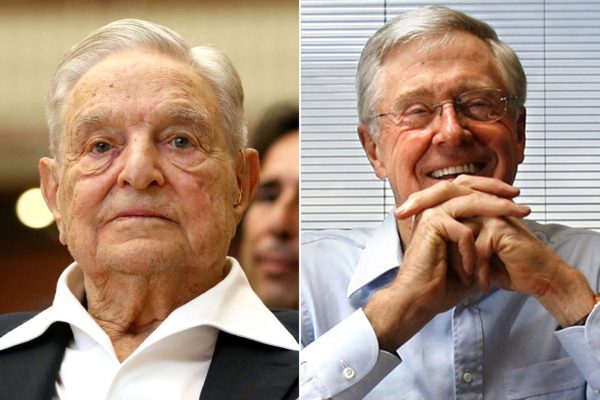
I have written about Quincy before, here and here and here. In short, while I would applaud a restrained foreign policy, particularly for the Middle East, I find Quincy unconvincing. It claims to promote “ideas that move U.S. foreign policy away from endless war and toward vigorous diplomacy in the pursuit of international peace” and further takes some pride in being non-partisan, though bipartisan might be a better description. To be sure, Quincy’s two major donors have been reported to be the highly controversial George Soros on the globalist left and the equally notorious Koch Foundation on the libertarian-lite right.
Soros in particular has been much in the news of late given his alleged propensity to fund and otherwise support groups and organizations that many would regard as conspiratorial or even violently radical, to include black lives matter and Antifa. Soros, a Hungarian Jew who is now a U.S. citizen, has been especially engaged in interventions to bring about “regime change” through “democracy movements” in Eastern Europe and he has exhibited a particular animosity towards Russia, making one suspect that his cash will influence what Quincy is allowed to say about the Kremlin.
The new Quincy report was co-authored by Paul Pillar, Andrew Bacevich, Trita Parsi and Annelle Sheline. I am not familiar with Sheline’s work, but Pillar, Bacevich and Parsi are all highly respectable and very knowledgeable about both national security and developments in the Middle East. To be sure, the paper includes a lot of useful information and insights into how various policies have evolved plus some very positive suggestions for extricating the U.S. from the Asian quagmire. But one should also accept that what is included in its agenda and how it is framed might be shaped by outside considerations, to include how Quincy is funded. It is not so much a matter of what the contributors write, but rather how it is spun and what is either minimized or not even addressed at all.
The ability to write about the Middle East in an even-handed “realistic” fashion, which is what the new article seeks to do, is based on the premise that there is equivalency among all of the players involved. That is, of course, nonsense. Many observers would note that the United States currently is in the Middle East and playing the role that it does mostly due to the immense power of Israel and its domestic lobby operating largely out of Washington and New York City.
Israel’s ability to make American presidents and the U.S. Congress do what it wishes is clearly visible wherever one chooses to look. The American people have gained nothing from giving Israel hundreds of billions of dollars and an endless supply of weapons while also looking the other way as Israel stole nuclear secrets and spied on the U.S. more than any other “friendly” country. What did the U.S. gain in recently moving the American Embassy to Jerusalem, in allowing Benjamin Netanyahu to annex the Golan Heights, in approving the bombing of Syria and Iran, or in permitting the systematic Israeli dehumanizing of the Palestinians?
A recent article by Professor Bacevich entitled “President Trump, Please End the American Era in the Middle East” appears to a precursor study to the current longer Quincy report. It is a good example of how self-censorship over Israel by authors works. The article particularly focused on the foreign policy pronouncements of Bret Stephens, the resident neocon who writes for The New York Times. Stephens, per Bacevich, has been urging constant war in the Middle East and worrying lest “we may be witnessing the beginning of the end of the American era in the Middle East.” Bacevich correctly described how “in the Middle East, the military power of the United States has played a large part in exacerbating problems rather than contributing to their solution.”
The overall message is sound, but in this case, it is interesting to note what Bacevich left out rather than what he included. He cited Iran seven times as well as Saudi Arabia, but, strangely enough, he never mentioned Israel at all, which a number of commenters on the piece noted. It rather suggests that there is a line that Bacevich is reluctant to cross. The omission is particularly odd as Israel is absolutely central to and might even be described as driving American policy in the Middle East and Bret Stephens, whom Bacevich excoriates, is a notable Israel-firster who once worked as the editor of the Jerusalem Post.
Bacevich also has produced an op-ed entitled “Foreign governments are messing with our elections the old-fashioned way” in the Boston Globe. It again fails to mention Israel at all in spite of that country’s enormous influence over the U.S. electoral process through the political donations provided by dual loyalty billionaires Sheldon Adelson and Haim Saban to Republicans and Democrats respectively. In fact, Bacevich has clearly indicated that there will be red lines, that the Quincy Institute won’t focus on “highlighting pro-Israel organizations or donors.” In other words, it will not criticize Israel’s Lobby as a key driving element in America’s interventionist foreign policy.
Bacevich is a smart man who knows perfectly well what Israel and its lobby represents but he also knows that anyone who wants to be a player in Washington DC has to avoid the Israel hot wire. The Quincy report includes, for example, lengthy separate sections on Iraq, Syria, Iran and Yemen but nothing similar on Israel. I have, however, excerpted all the citations of Israel in the full text. They are:
“U.S. military assistance—most prominently to Israel, Egypt, and Jordan, but also to armed proxy groups in Syria, Iraq, Afghanistan, and Libya—exacerbates abuses that contribute to instability… Unconditional U.S. military support for Israel has facilitated its continued occupation of Palestinian territory (potentially culminating in the annexation of the West Bank) and reduced incentives to pursue a peaceful resolution to the conflict.”
The bombing of the U.S. “embassy in Beirut, [was] a direct response to U.S. military intervention in Lebanon, which, in turn, was an attempt to deal with the consequences of the Israeli invasion of Lebanon a year earlier.”
“The Israel–Palestine conflict has been an especially salient example of such an issue, as underscored by how Palestinians opposing the Israeli occupation were in the forefront of the wave of international terrorism that began in the late 1960s. International terrorism sponsored by Palestinian organizations abated once the U.S. and Israel began engaging the Palestinians in the late 1980s.”
“In other cases, U.S. support for a militarily superior partner has tended to reduce that country’s incentives to resolve conflicts and instead opt to safeguard a status quo favorable to its interests but not to regional stability and U.S. interests. As the only state in the region with nuclear weapons and as a highly effective conventional military power in its own right—and with a qualitative edge conferred over many years by the U.S. and effective weapons development and manufacturing capacities—Israel no longer needs the U.S. to guarantee its security. Yet the U.S. sends Israel $3.8 billion in military aid annually. As of 2019, Israel had received $142.3 billion from the U.S. since 1949 —significantly more than any other nation.40 American military aid is sent regardless of whether Israel tries to resolve the conflict with the Palestinians. By persistently bolstering Israel’s qualitative military edge no matter what direction Israeli policy takes, U.S. assistance as currently structured does not incentivize Israel to pursue compromise, whether with the Palestinians or other neighbors.”
“… persistent U.S. antipathy creates a security dilemma for Iran. U.S. military support for Israel, Saudi Arabia, and the UAE causes Iran to perceive itself as under threat and to respond by trying to enhance its own security, partly by investing in paramilitary groups beyond its borders.”
“In Israel, where the well-reinforced assumption that unquestioning U.S. support will continue no matter what Israel does, it has long been evident that this has encouraged destructive Israeli practices such as the continued building of Israeli settlements in the Occupied Territories.”
“Such a rights-respecting policy would include making military assistance to Israel—for decades (and still) the largest recipient of such assistance—conditional on Israel ending its routine violation of human rights in the Occupied Palestinian Territories. These offenses include ongoing settlement expansion in the West Bank and East Jerusalem and attacks in Gaza that have failed to fulfill obligations to protect civilians. Israel is a nuclear and military superpower in the region that does not need American military aid to defend itself. As such, it should arguably not be a candidate for military aid in the first place. To the extent military aid should be provided to Middle Eastern states, priority should be given to those at risk of becoming failed states. If Washington decides to continue aid to Israel, it should be conditioned on changes to Israeli policies that advance stability and U.S. interests.”
“A consistent rights-respecting policy embedded in a broader approach to the region, one that emphasizes core U.S. interests, problem-solving diplomacy, and engagement with all relevant regional actors, would have consequences for how the U.S. has traditionally managed the Israel–Palestine conflict. The shortcomings of the U.S.–led peace process have become increasingly evident, all the more so as the Trump administration has abandoned any pretense of serving as an honest broker. It is a process that ill-serves U.S. interests as well as Israel’s long-term well-being, let alone its failure to help the Palestinians.”
“… there would be greater space for advancing negotiated and diplomatic solutions to various conflicts in the region, notably in the Saudi–Iran and Israel–Palestine cases.”
“For the United States, this means a significant reduction of arms sales, primarily to Saudi Arabia, Israel, and the UAE.”
Some of the citations regarding Israel are bundled with other countries, most particularly as related to arms sales and regional conflicts. Other excerpts correctly note that the status quo with Israel serves no American interests and is not even good for Israel, but the problem is that the solution is lame, or to describe it more properly, irrelevant. Distancing the U.S. from the region’s quarrels depends solely on disengaging with Israel first as American hostility towards an unthreatening Iran, Lebanon and Syria is a result of successful advocacy by the Jewish state. And serving as an “honest broker” vis-à-vis the Palestinians is sheer fantasy as it has never been the case for any U.S. administration due to effective Israeli pressure. If the Quincies were being honest, they would concede up front that the so-called peace plan currently being floated is a complete sell out to Israel. Any kind of shift in policy also assumes that Israelis want peace with the Palestinians, but opinion polls suggest otherwise, with many Israelis routinely referring to the Arabs as “terrorists.”
The only suggestion with any teeth to it is making military assistance to Israel conditional on its human rights record towards the Palestinians, but that in turn exposes the fundamental flaw in the arguments being made. The problem for the U.S. is not Israel per se but rather the enormously powerful domestic Israel Lobby which will make sure that nothing will be done to alter the status quo. The American government and media are completely dominated by Jewish billionaire-funded organizations that have repeatedly demonstrated that they have sufficient clout to stop any defections, witness the recent affirmation of the U.S./Israel relationship in the Democratic Party electoral platform and Joe Biden’s proud declaration that he is a “Zionist.” Quincy is delusional if it thinks that it can reorder the Middle East based on “realism and restraint” without the cooperation of Congress and the White House, which are bought and paid for and totally resistant to change.
So, Quincy has a lot of interesting ideas and the basic premise of non-interventionism is sound. But regarding the real fly in the ointment, Israel, it is pointless to urge “realism” in a situation that has not been realistic since 1947. Unfortunately, in America everything has a price and Jewish groups have been canny enough to buy Congress, the White House and much of the media at bargain prices to make sure that Israel stays protected. If you are not addressing that issue out in the open you are wasting your time. Not surprisingly, it would seem that any concerns over the reorganization of the Middle East as proposed by Quincy are most definitely not going to keep Benjamin Netanyahu awake at night.
Philip M. Giraldi, Ph.D., is Executive Director of the Council for the National Interest, a 501(c)3 tax deductible educational foundation (Federal ID Number #52-1739023) that seeks a more interests-based U.S. foreign policy in the Middle East. Website is https://councilforthenationalinterest.org, address is P.O. Box 2157, Purcellville VA 20134 and its email is inform@cnionline.org.
Israel blocks Palestinian mothers travelling with newborn babies
MEMO | July 27, 2020
The Israeli authorities have prevented two Palestinian women from leaving the occupied West Bank for Jordan because their newborn babies are not registered in the Zionist state, Wafa news agency has reported.
Although the babies are registered with the Palestinian Interior Ministry, they were not allowed to cross into Jordan via the Allenby Bridge.
A number of Palestinians have been denied travel recently at the Israeli-controlled border crossing with Jordan. The bridge connects the West Bank with the Hashemite Kingdom and is the sole designated exit and entry point for West Bank Palestinians travelling into and out of the Israeli occupied territories.
The women were attempting to travel to Jordan to be reunited with their husbands who work in the UAE, after giving birth in the occupied territories. Palestinian Authority Foreign Minister Ahmad Al-Dik condemned Israel’s actions and asserted the right of the babies to stay with their mothers.
“This stance by the occupation state is a violation of the Geneva Conventions,” he explained, “which guarantee freedom of movement for people under occupation, particularly since the two women carry valid documents for themselves and their babies issued by the State of Palestine, which is under occupation.”
Rights groups have pointed out that preventing Palestinians from travelling through this crossing is part of the political pressure put on them. It bears no relation to any valid security or other issues, they insisted.
Isabel Maxwell: Israel’s “Back Door” Into Silicon Valley
This is Part II of the series “The Maxwell Family Business: Espionage” and focuses on Isabel Maxwell. Part I can be found here.
By Whitney Webb | The Last American Vagabond | July 25, 2020
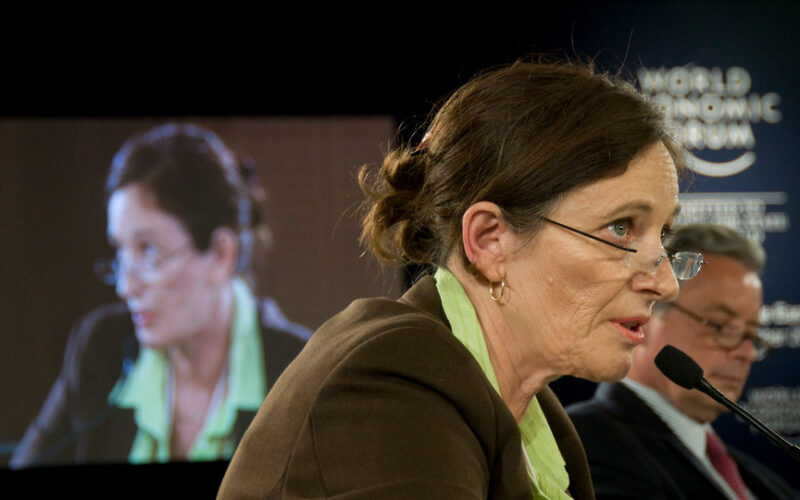
By moving in “the same circles as her father” and vowing to “work only on things involving Israel,” Isabel Maxwell became a pivotal liaison for the entry of Israeli intelligence-linked tech firms into Silicon Valley with the help of Microsoft’s two co-founders, Paul Allen and Bill Gates.
In 1992, Israel’s government created the Yozma Program at the urging of Chief Scientist of Israel’s Ministry of Industry and Trade – Yigal Erlich – as Erlich moved to leave that position. The Yozma Program aimed to “incentivize venture investment” by creating state-linked venture capital funds, which later spawned a myriad of Israeli hi-tech start ups with merging them with major, foreign technology companies. According to Erlich’s website, he had lobbied Israel’s government to launch Yozma because he had “identified a market failure and a huge need in Israel to establish for the first time a professionally-managed venture capital industry that will fund the exponential growth of high tech ventures coming out of Israel.” He then “convinced the Israeli government to allocate $100 million for his venture capital vision.”
Erlich’s vision would also result in the fusion of Israel’s hi-tech sector, which he helped to create, with Israel’s intelligence apparatus, with numerous Israeli hi-tech conglomerates created with funding from the Yozma program and its successors doubling as tools of Israeli espionage. Notably, not long before Erlich convinced Israel to place $100 million into this program, Israeli intelligence, thanks largely to the work of infamous spymaster Rafi Eitan, had learned the benefits of placing backdoors for their intelligence services into commercial software through the theft and subversion of the PROMIS software. As noted in Part I of this series, Israel’s bugged version of PROMIS was largely marketed by Robert Maxwell.
After the Yozma program was established, the first venture capital fund it created was called Gemini Israel Ventures and Israel’s government chose a man named Ed Mlavksy to lead it. Mlavksy, at the time, was the Executive Director of the Israel-U.S. Bi-national Industrial Research and Development Foundation (BIRD), where Erlich was Chairman of the Executive Committee. Mlavsky states that, while heading the BIRD foundation, “he was responsible for investments of $100 million in more than 300 joint projects between U.S. and Israeli high-tech companies.” BIRD’s connections to Gemini Israel Ventures and the Yozma Program in general are interesting, given that – just a few years prior – it had come under scrutiny for its role in the one of the worst spy cases in U.S. history – the Jonathan Pollard affair.
Jonathan Pollard had been a naval intelligence analyst turned Israeli spy who passed troves of documents regarding U.S. military technology (specifically nuclear technology) as well as clandestine U.S. intelligence operations to Israeli intelligence, specifically to the now defunct spy agency Lekem. Pollard’s handler was none other than Rafi Eitan, who had engineered Israel’s outsized role in the PROMIS software scandal. In the indictment of Pollard for espionage, it was noted that Pollard delivered documents to agents of Israel at two locations, one of which was an apartment owned by Harold Katz, the then-legal counsel to the BIRD foundation and an adviser to Israel’s military, which oversaw Lekem. Government officials told the New York Times at the time that they believed Katz “has detailed knowledge about the [Pollard] spy ring and could implicate senior Israeli officials.”
Journalist Claudia Wright, writing in 1987, openly speculated about whether the close ties between Katz and Pollard’s handlers meant that BIRD itself had been used to pass funds to Pollard or that BIRD funds themselves, most of which were provided by U.S. taxpayers as opposed to public claims of “joint” funding, had been used to pay Pollard for his “services” to Israel. In her article, she notes that Mlavsky had considerable discretion over the use of those funds while the U.S. official in charge of overseeing the U.S.’ interests in BIRD did “not know how investment is regulated” by the foundation. In addition, no U.S. official had access to any audit of the foundation, which were said to be conducted by an Israel-based accounting firm with no U.S. offices. The New York Times noted at the time that Katz specifically “may have knowledge of the method used to pay Mr. Pollard, who received tens of thousands of dollars from his Israeli handlers.”
After BIRD’s Mlavsky was chosen to head Gemini Israel Ventures, one of the first companies the firm invested in was called CommTouch (now known as Cyren and majority owned by Warburg-Pincus). Founded in 1991 by Gideon Mantel, a former officer in a “special bomb-squad unit” for the Israel Defense Forces (IDF), alongside Amir Lev and Nahum Sharfman, CommTouch was initially focused “on selling, maintaining and servicing stand-alone email client software products for mainframe and personal computers.” They specifically courted Original Equipment Manufacturers (OEMs), meaning companies whose products are used as components in the products of another company that are then sold to end users. Integration of its products into those of major software and hardware developers would allow CommTouch’s products to be widely used but unseen. A Wired article discussing CommTouch noted as much, stating that CommTouch products are meant “to be as seamless and unnoticeable as the copper is to a phone caller.”
However, from their founding through early 1997, CommTouch struggled to stay afloat, unable to turn a profit and unable to secure any notable deals or to expand its company beyond 25 employees. Yet, thanks to Gemini Israel Ventures and “grants” from Israel’s government, which were used to finance the research and development of its products, CommTouch managed to stay afloat. As late as 2006, CommTouch noted in official documents that the company “has a history of losses and may never achieve profitability,” further noting that they hemorrhaged millions of dollars a year in net losses. Clearly, the decision by Gemini Israel Ventures and Israel’s government to continue to pour money into a decidedly unprofitable company for several years was motivated by something other than profits.
At some point in early 1997, CommTouch decided to enter the U.S. market and began seeking out a new President for the firm who had “local clout.” “We knew exactly what we were looking for,” Gideon Mantel later told Wired ofCommTouch’s search, “Someone who knows her way around the Valley.” They found their woman in the daughter of Israeli “superspy” and PROMIS salesman par excellence, Isabel Maxwell.
An Intriguing Pedigree
Mantel and CommTouch allegedly chose to court Isabel Maxwell for their company’s presidency through an unspecified placement company and were “attracted to her expertise and insight in Silicon Valley when it sought her out.” The Israeli outlet Globes states that Gideon Mantel “went to Isabel Maxwell as soon as he arrived in Silicon Valley and realized that in order to progress, an e-mail solutions company like CommTouch needed help from someone who knew the rules of the game.” Wired offers a similar portrayal, further adding that it was “Gideon Mantel [who] got Isabel Maxwell to take the job.”
Mantel told Jewish Weekly that while Maxwell’s pedigree, i.e. being Robert Maxwell’s daughter, “was very intriguing at the beginning… it wasn’t her name that made the decision for us.” However, Mantel, in separate reports, compares Isabel to her father on numerous occasions when praising her professional abilities. For example, he told Haaretz that Isabel “is not cowed by anyone, and she never gives in…. She got all that at home. They taught her to go after things and not give up.” Similarly, he told Wired that “Like her father, she is a fighter,” later adding that “She always charges. She has no fear. Of course, it is from her father. It is in her blood.” Given that Robert Maxwell is rarely posthumously remembered (in media anyway) as “a fighter” and “fearless,” it goes without saying that Mantel views him with a degree of reverence that he also associates with his daughter Isabel.
Isabel, notably, has herself stated on several occasions that her acceptance of Mantel’s offer to be CommTouch’s President was also informed by her father’s controversial ties to Israel.
She told Haaretz that her reasons for accepting the CommTouch presidency was “from the heart” because it was “a chance to continue her father’s involvement in Israel,” leading her to reject other more lucrative job offers from actually established companies that she had received at the time. She similarly described her reasons for joining CommTouch to Jewish Weekly as “an affair of the heart,” adding that “it had to do with my father and my history.” The New York Times quoted her as saying that she had “considered other California-based Internet start-ups [in 1997], but felt a pull toward CommTouch and the Israeli connection.”
Isabel has some interesting views on her father, whom she describes as the “ultimate survivor,” and his involvement in Israel. She describes him as “highly complex,” adding that she doesn’t “have rose-coloured glasses about him,” but nonetheless says she is “proud” of his controversial legacy and that “if he were alive today that he would be proud of us too.” She said something similar to The Guardian in 2002, stating that “‘I’m sure [my father would] be thrilled to know what I’m doing now,’…. throwing back her head and laughing loudly.” In addition, when asked who the most influential person in her life had been, Isabel responded “My father was most influential in my life. He was a very accomplished man and achieved many of his goals during his life. I learned very much from him and have made many of his ways my own.”
Isabel told Haaretz around that same time that “When I was with him [her father], I felt power. Like being at the White House… Beyond that, it was a collective power, not my personal power. I was part of this unit,” apparently referring to her other siblings, Ghislaine and Christine among them, and suggesting that they were collectively extensions of their father’s power.
However, Isabel stands out from her other siblings, and even Ghislaine, in terms of a sense of loyalty to her father and to the state of Israel. According to Elizabeth Maxwell, Isabel’s mother, Isabel “is also loyal to the memory of her father, and to what Judaism represents in her life. All my children were brought up as Anglicans, but Isabel was very taken by the Jewish faith and the politics in Israel” compared to her other children, including Ghislaine.
Indeed, Isabel has close relationships to several prominent former Mossad officials and Israeli heads of state, with several of those relationships having been “forged by her father.” A now scrubbed report published by the Jerusalem Post in 2003, entitled “Isabel Maxwell Fights Back,” notes that “Maxwell travels in the same circles as her father, but she is more comfortable behind the camera, not in front of it…she is carrying on her father’s legacy in Israel, albeit in her own way.” It also noted that, by 2003, Isabel was visiting Israel every month, visiting her father’s grave on the Mount of Olives at least once every visit.
Arguably the most interesting part of the now-scrubbed Jerusalem Post article is the way in which Isabel views her father’s legacy. In discussing the book by Gordon Thomas and Martin Dillon, Robert Maxwell, Israel’s Superspy: The Life and Death of a Media Mogul, Isabel – even though she participated in interviews for the book – rejected its premise that her father was a “spy”and went on a private smear campaign against the book and its authors prior to its publication.
Tellingly, she does not object to the book’s contents regarding her father’s activities on Israel’s behalf, including his role in the PROMIS software scandal or Iran-Contra, but merely objects to the use of the word “spy” to describe those activities. “My father was certainly a ‘patriot’ and helped in back business and political channels between governments,” Isabel told the Jerusalem Post, “But that did not and does not make him a ‘spy.’” It could be said, then, that Isabel would view her subsequent career “in back business and political channels” via the “same circles as her father” as similarly “patriotic.” Yet, for those that consider her father a “spy” for his activities, that would also mean extending the same to Isabel, who self-identifies as Israeli.
Aside from her father’s own ties to Israeli intelligence, it is worth noting that Isabel’s own history – up to the point she joined CommTouch – involved her working for the Israeli intelligence front company used by her father to sell bugged PROMIS software in the U.S., Information on Demand, and subsequently the search engine Magellan, of which she shared ownership with her sister Christine (whose ties to U.S. intelligence will be explored in Part IV) and her sister Ghislaine, a sexual blackmailer and sex trafficker operating on behalf of U.S. and Israeli intelligence. Isabel’s past with both Magellan and Information on Demand were clearly known to CommTouch at the time of Isabel’s hiring. It also worth noting that, on several occasions, Isabel credits CommTouch’s success with the ties of all of its Israeli employees to the Israeli military and military intelligence, resulting in – per Isabel – a “dogged work ethic” and a “trained mind-set” among its Israeli workforce.
As will be shown in more detail in Part III of this series, upon departing CommTouch, Isabel deepened her already close ties to prominent Israeli politicians and intelligence officials, serving alongside ex-Mossad directors and counting former Israeli chief intelligence officers and heads of state among her “family friends” and business partners. This involvement continued during the period when her son was given a prominent position at the Middle East affairs desk at the State Department when it was headed by Hillary Clinton, who – as many are now aware – has close and controversial ties to Isabel’s sister, Ghislaine.
Microsoft’s Co-founders put CommTouch “On the Map”
Upon taking the job at the Israeli tech firm, Maxwell’s promotion of the company was called “almost messianic” even though her enthusiasm was described as “hard to fathom” given the lackluster performance of the company and its products. However, soon after becoming CommTouch’s president, her personal connections to prominent figures in Silicon Valley – forged through her past work at Magellan – paid off and the company announced new partnerships with Sun Microsystems, Cisco, and Nippon Telephone and Telegraph, among others. At CommTouch, Maxwell managed“all sales and marketing activities for CommTouch and co-direct[ed] strategic business development.”
Some reports have noted that Maxwell’s connections with prominent Silicon Valley figures were the key to her professional success, with Globes noting that “Everyone who has worked closely with Maxwell says that her advantage lies in her ability to help penetrate the market with a new product by opening the right doors,” an “advantage” also ascribed to her father while he sold bugged PROMIS software on behalf of Israeli intelligence. Yet, despite Isabel’s penchant for “opening the right doors,” reports well into Maxwell’s career at CommTouch still referred to the firm as “an obscure software developer.”
However, out of all the alliances and partnerships Isabel negotiated early on during her time at CommTouch, it was her dealings with Microsoft co-founders Bill Gates and Paul Allen that would put CommTouch “on the map.” Maxwell had previously negotiated a major deal with Microsoft’s Bill Gates earlier during her time as the McKinley Group/Magellan’s Executive Vice President, resulting in Microsoft announcing that the Maxwell-owned Magellan would power the search option for the company’s MSN service.
Yet, it appears that Microsoft’s co-founders did much more than put CommTouch “on the map,” but ended up preventing the collapse of its initial public offering, a fate that had befallen Isabel Maxwell’s previous company, the McKinely Group, not long before. Indeed, CommTouch kept pushing back its IPO until a massive investment from firms tied to Microsoft co-founder Paul Allen was announced in July 1999.
The investment from Allen’s Vulcan Ventures Inc. and Go2Net Inc resulted in a jump in “interest in the stock sale and in CommTouch, until now an obscure software developer,” according to a Bloomberg report, and also inflated their stock price immediately prior to their going public. The money from Allen-linked investment would be specifically used “to expand sales and marketing and build its presence in international markets.” Allen’s decision to invest in the company seems odd from a financial perspective, given that CommTouch had never turned a profit and had netted over $4 million in losses just the year before. Yet, thanks to Allen’s timely investment and apparent coordination with the company’s repeated delays of its IPO, CommTouch was valued at over $230 million when it went public, as opposed to a $150 million valuation just weeks prior to Allen’s investment.

Bill Gates at Deal Book Conference in New York, 2019
It’s not exactly clear why Paul Allen came to the rescue of CommTouch’s IPO and what he expected to gain from his investment. However, it is worth pointing out that Allen was among the members of an exclusive online community of elites set up in 2004 called “Small World,” whose membership also included Jeffrey Epstein and Epstein-linked figures like Lynn Forester de Rothschild and Naomi Campbell, as well as Petrina Khashoggi, the daughter of Adnan Khashoggi, a former client of Epstein’s. Small World’s largest shareholder was Harvey Weinstein, the now-disgraced media mogul who was a business partner of Epstein and was since accused by a number of women of sexual abuse.
Less than three months after Allen’s investments in CommTouch in October 1999, the company announced that it had struck a major deal with Microsoft whereby “Microsoft will utilize the CommTouch Custom MailTM service to provide private label web-based email solutions for select MSN partners and international markets.” In addition, per the agreement, “CommTouch will provide MSN Messenger Service and Microsoft Passport to its customers while building upon its Windows NT expertise by supporting future MSN messaging technologies.”
The agreement came less than two years after Microsoft had purchased Hotmail, which – up until the CommTouch/Microsoft agreement – had been one of CommTouch’s main competitors for its web-based e-mail services. In other words, this meant that Microsoft would use CommTouch’s “behind the scenes” software as the backbone of its web-based e-mail services, Hotmail included. “We are looking forward to further enhancing our relationship with Microsoft by integrating other state-of-the-art Microsoft products,” Gideon Mantel of CommTouch said upon the deal’s public announcement.
In December 1999, Microsoft then announced that it had invested $20 million in the company by purchasing 4.7% of CommTouch stock. The announcement pushed CommTouch stock prices from $11.63 a share to $49.13 in just a few hours time. Part of that deal had been finalized by Richard Sorkin, a recently appointed CommTouch director. Sorkin had just become a multimillionaire following the sale of Zip2, Elon Musk’s first company where Sorkin had been CEO.
It further appears that Bill Gates, then head of Microsoft, made a personal investment in CommTouch at the behest of Isabel Maxwell. In an October 2000 article published in The Guardian, Isabel “jokes about persuading Bill Gates to make a personal investment” in CommTouch sometime during this time frame.
The article then oddly notes the following regarding Isabel Maxwell and Bill Gates:
“In a faux southern belle accent, [Isabel] purrs: ‘He’s got to spend $375m a year to keep his tax free status, why not allow me to help him.’ She explodes with laughter.”
Given that individuals as wealthy as Gates cannot have “tax free status” and that this article was published soon after the creation of the Bill and Melinda Gates Foundation, Isabel’s statements suggest that it was the Bill and Melinda Gates Foundation Trust, which manages the foundation’s endowment assets, that had made this sizable investment in CommTouch. Furthermore, it is worth highlighting the odd way in which Isabel describes her dealings with Gates, speaking of her interactions with him in a way not found in any of Isabel’s numerous other interviews on a wide variety of topics (i.e. “purring”, speaking in a fake Southern accent). This odd behavior may have been related to Isabel’s previous interactions with Gates and/or the mysterious relationship between Gates and Epstein, alluded to in a 2001 Evening Standard article, and eyewitness testimony regarding Epstein’s and Ghislaine Maxwell’s comments about Bill Gates in 1995, discussed in Part I of this series.
After 2000, CommTouch’s business and clout expanded rapidly, with Maxwell subsequently crediting Bill Gates-led Microsoft and Paul Allen’s investment for the company’s shifting fortunes. Maxwell, as quoted in the 2002 book Fast Alliances, states that Microsoft viewed CommTouch as a key “distribution network,” adding that “Microsoft’s investment in us put us on the map. It gave us instant credibility, validated our technology and service in the marketplace.” By this time, Microsoft’s ties to CommTouch had deepened with new partnerships, including CommTouch’s hosting of Microsoft Exchange.
Though Isabel was able to secure lucrative investments and alliances for CommTouch and see its products integrated into key software and hardware components produced and sold by Microsoft and other tech giants, she was unable to turn the tide of the company’s dire financial performance, with CommTouch netting a loss of $4.4 million in 1998 and similar losses well into the 2000s, with net losses totalling $24 million in the year 2000 (just one year after the sizable investments from Microsoft, Paul Allen and Bill Gates). The losses continued even after Isabel formally left the company and became President Emeritus in 2001. By 2006, the company was over $170 million in debt.
The One-Woman Liaison Between Israel and Silicon Valley
Isabel Maxwell would leave her role at CommTouch in 2001, but remained President Emeritus for years afterward retaining a sizable amount of CommTouch stock then-valued at around $9.5 million. While Maxwell remained honorary president, CommTouch added Yair Shamir, son of former Israeli Prime Minister and friend of Robert Maxwell, Yitzhak Shamir, to its board. Yair Shamir, Chairman of the Israeli government owned corporation, IAI (Israeli Aerospace Industries) when he joined CommTouch’s board, had previously managed Scitex when it was owned by Robert Maxwell. After nearly collapsing due to its long-standing debt burden a few years later, CommTouch was rebranded as Cyren and, today, runs in the background of Microsoft, Google, Intel, McAfee and Dell products, among many others.
Haaretz wrote in 2002 that Isabel, as CommTouch was in dire financial straits, had decided to “work only on things involving Israel. Even the failure of CommTouch, the Israeli Internet company she headed, hasn’t deterred her: She still believes in the medium, and she still believes in Israel.” Maxwell would subsequently create “a unique niche for herself in high tech as a liaison between Israeli companies in the initial development stages and private angel investors in the US” as a private consultant, subsequently creating Maxwell Communications Network in 2006. That company offered “cross-border communications, funding and market research to leading venture capitalists and hi-tech companies in the US and Israel.” However, she notes that her “specialty” was in “helping Israeli high-tech companies.”
During this period (2001-2006), Isabel would also head an Israeli tech company that “protects children online,” at a time when her sister – Ghislaine Maxwell – was actively abusing and trafficking children as part of an intelligence-linked operation alongside Jeffrey Epstein. Isabel took the job at iCognito (now Pure Sight) “because it [the company] is in Israel, and because of its technology.” She also joined the board of the Israeli company Backweb alongside Gil Shwed, a famous alumnus of Unit 8200 (often likened to Israel’s NSA equivalent) and co-founder of Israeli tech giant Check Point, which is a long-time partner of CommTouch.
Isabel’s close involvement with former Israeli heads of state and heads of intelligence would only deepen after leaving CommTouch, particularly with former Israeli Prime Minister Shimon Peres. The Jerusalem Post described the Peres-Isabel relationship as “close” and “forged by her father.” Isabel was also in close contact with former Mossad deputy director David Kimche (until his death in 2010) and former head of Israeli military intelligence and Prime Minister Ehud Barak. Notably, Ehud Barak, in addition in being a major player in the Israeli-U.S. hi-tech scene, was also closely associated with Jeffrey Epstein and Isabel’s sister Ghisaline, having recruited Epstein for Israeli military intelligence and overseeing the Lekem agency at the time of the PROMIS scandal (including Robert Maxwell’s role) and the Pollard Affair as well as Israel’s involvement Iran-Contra. Barak was also a frequent visitor to Epstein’s island and slept over in New York apartments that were owned by Epstein’s brother and which housed many of Epstein’s underage “sex slaves.”
Also notable is the fact that Ghislaine Maxwell and Jeffrey Epstein would themselves become involved in Isabel’s world, i.e. the growing nexus between Silicon Valley and Israel, courting and allegedly blackmailing major Silicon Valley executives while also investing in Israeli intelligence-connected start-ups. During this time, Isabel was a major player in venture capital networks and other organizations aiming to further develop ties between Israeli intelligence-linked start-ups and U.S. tech companies, which is now part of an openly admitted Israeli intelligence operation (in which Microsoft plays a major role). The ties of Isabel, Ghislaine and Epstein to this hi-tech world of Israeli espionage, as well as Isabel having inspired what would later become Ghislaine’s TerraMar project and her ties to powerful groups like the World Economic Forum and even the Hillary Clinton-led State Department, will be explored in the next installment of this series.
Whitney Webb has been a professional writer, researcher and journalist since 2016. She has written for several websites and, from 2017 to 2020, was a staff writer and senior investigative reporter for Mint Press News. She currently writes for The Last American Vagabond.
Featured Video

When Israel Is Mighty
or go to
Aletho News Archives – Video-Images
From the Archives
US murdering 1 million Iraqis is democracy, Iran giving yogurt to Iraq is “domination”
By Ali Salaam | American Herald Tribune | July 31, 2017
The New York Times, owned by the Zionist Jewish supremacist Ochs-Sulzberger family, has no problem with Iraqi suffering as long as Iran is not the one behind it.
The Iraq War was a genocide of the Iraqi people by Zionist supremacists in the Bush administration. Over 1 million innocent people were killed based on a lie. American soldiers died in an Israeli war and now an average of 22 soldiers commit suicide every day because their consciences cannot cope with the fact they committed crimes in an illegal war that served no purpose other than to benefit Israel, not America.
Benjamin Netanyahu, Prime Minister of the Zionist regime, once said “We are benefiting from one thing, and that is the attack on the Twin Towers and Pentagon, and the American struggle in Iraq.”
Paul Wolfowitz had his sights on Iraq since his time in the first Bush administration. Former Israeli official and Bush administration official Richard Perle had his eyes on Iraq since at least his authorship of the Clean Break white paper. The Zionist regime had their eyes on Iraq since the 1980s when strategist Oded Yinon wrote his white paper in support of dividing the Arab-Muslim world along ethnic and sectarian lines. The global Zionist lobby has had their eyes on Iraq since Theodor Herzl stated that Eretz Israel’s true borders go from the Nile River in Egypt to the Euphrates River in Iraq. … continue
Blog Roll
 Aletho News
- When Will This White House Madness End?
- Huckabee aide goes to ‘unusual lengths’ to portray ‘Israel’ positively
- Trump Announces Diesel Supply Deal With Putin Following Phone Call
- MEP blasts ‘Euro-Gestapo’ for lecturing Russia on democracy
- Syria May Send Troops to Saudi Arabia Amid War with Ansar Allah
- UK whines about losing billions to ‘Putin tax’
- Baghaei to Rubio: Distorted narratives cannot erase US record of broken commitments
- Houthis Don’t Have to Conquer Saudi Arabia to Make It Pay
- MOE: Nearly 22,000 Students and Education Workers Killed
- Guterres in Islamabad: Genocide, cowardice, and the cage of Imran Khan
- If Americans Knew
- Gaza ceasefire exists in name only, say more than 100 organizations
- Nearly 2 Million in Gaza Need Urgent Shelter Assistance as Winter Looms: IOM Chief Warns
- Suppressing Palestinian resistance: US charity under fire for AI monitoring of Gaza classrooms
- Thousands Are Held in Israeli Torture Camps. This Is What Happens Inside
- Israel puts Gaza’s sick, injured, newborn in peril – Daily Update
- Report claimed Mark Levin used by Israeli government to influence Trump
- Over 2,000 Gazans have died awaiting medical evacuation amid Israel’s continued siege
- How a U.S. Diplomat Suppressed and Altered Reports Critical of Israel
- 5 Palestinians Die from Israeli Strikes in Gaza as Relentless Attacks Continue
- Report: Ceasefire Slows Killing but Leaves Devastation Intact
- No Tricks Zone
- New Study: 50 Years Of The Most Aggressive ‘Net Zero’ Policies Can Only Affect The Global Climate By 0.03°C
- US September “Heat” Was No Record…Many Records Set Decades Ago
- Latest European Green Energy Debacle; Portugal’s Largest Flagship Solar Park Insolvent!
- Green Energy Debacle: German Expert Professor Fritz Vahrenholt Warns Of Severe Economic And Social Consequences
- Two More Paleo Reconstructions Affirm Meters-Higher Sea Levels Across Ireland, Brazil 7000-6000 Years Ago
- New Study: Earth And Venus Surface Warmth Largely Explained By Convection And Lapse Rate, Not CO2 Or Radiation
- 2025 Nature Paper Claiming Worsening Global Drought Gets RETRACTED …Heavily Flawed
- New Study: ‘Global Drought Shows No Detectable Recent Acceleration Under Climate Warming’
- Economic Masterminds: German Socialists Suggest Taxing Productivity Gains Stemming From Using AI
- The South China Sea Has Not Been Cooperating With The Climate Change Narrative

